
We have stayed in enough Japanese ryokan, onsen hotels and family-run inns to learn one useful lesson: the word “ryokan” does not tell you nearly as much as you think it does.
Our stays ranged from an intimate Takayama inn with an 11-course dinner served in our room to a hulking Noboribetsu resort, a quiet Hakuba property, a forest guesthouse in Norikura and a family-run minshuku near the snow monkeys of Yamanouchi.
Tatami, futons, yukata and bathing connected them. Almost everything else changed.
One property may deliver private kaiseki, elaborate service and bedding laid out while you eat. Another may feel like a conventional resort wearing a yukata. A cheaper family inn may have rubber toilet slippers, no private shower and more warmth than the polished place charging three times as much.
This is the guide we could only write after getting things wrong, feeling awkward, eating far beyond reason and seeing several versions of the experience. I will explain the etiquette that matters, ignore the ceremonial fluff that does not, and show you how to read a booking before beautiful photographs and the phrase “traditional Japanese hospitality” hypnotize your credit card.
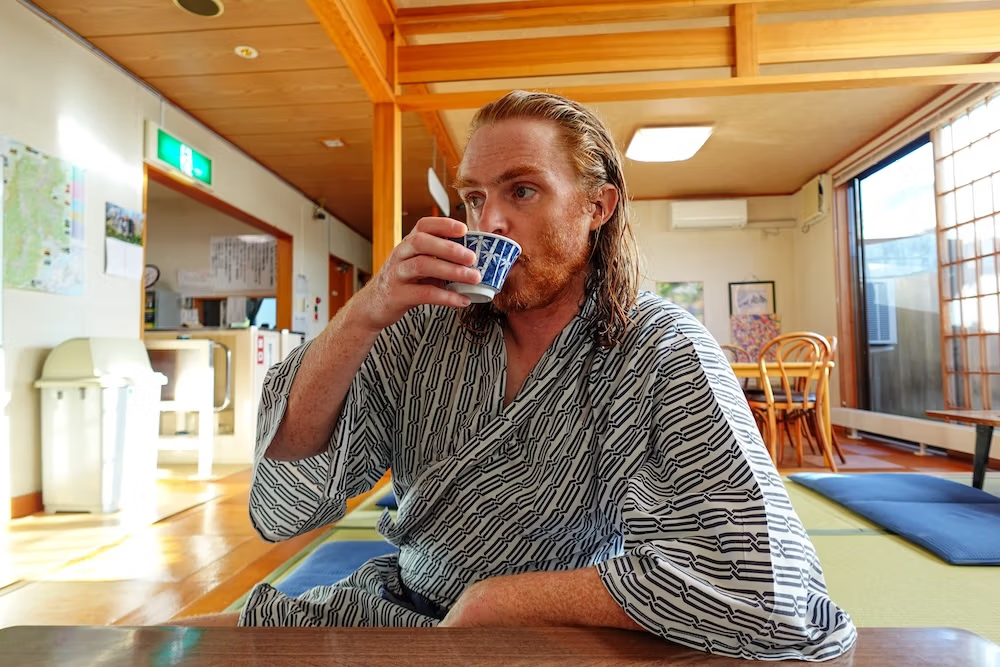
One of our firsthand ryokan videos from Japan on the Samuel and Audrey YouTube channel.
What a Ryokan Is—and Why the Label Is Not Enough
A ryokan is a Japanese-style inn. Simple definition. Messy category.
The Japan National Tourism Organization includes everything from old family properties to contemporary retreats and enormous resorts under that umbrella.
Tatami rooms, futon bedding, yukata, Japanese meals and communal baths are common. None is guaranteed.
Some ryokan have Western beds. Some sell room-only plans. Some give you a private toilet but send you down the hall to shower. Dinner might arrive course by course in your room—or you might join 400 hungry guests advancing on a crab buffet.
The label is the opening clue, not the solution. The room description, meal plan, bath details and service model tell you what you are actually buying.
Ryokan, Onsen Ryokan, Onsen Hotel and Minshuku
| Accommodation term | What it usually describes | What you still need to verify |
|---|---|---|
| Ryokan | A Japanese-style inn, which may be simple, luxurious, historic or contemporary | Meals, bath type, room facilities, bedding and service level |
| Onsen ryokan | A ryokan offering access to natural hot-spring water | Which baths contain onsen water, whether they are shared or private, and their hours |
| Onsen hotel or resort | A larger property built around hot-spring facilities | Buffet versus set meals, crowd levels, room style and whether service is personal or hotel-like |
| Minshuku | A smaller, commonly family-run Japanese guesthouse | Shared bathrooms, whether guests arrange their own futons, meal inclusion and amenities |
| Japanese-Western room | A room combining Japanese design or tatami with Western beds | How much of the room is actually Japanese-style and whether the bath is private |
Our stays covered most of the useful spectrum:
- Ryokan Seiryu in Takayama for the classic serviced experience.
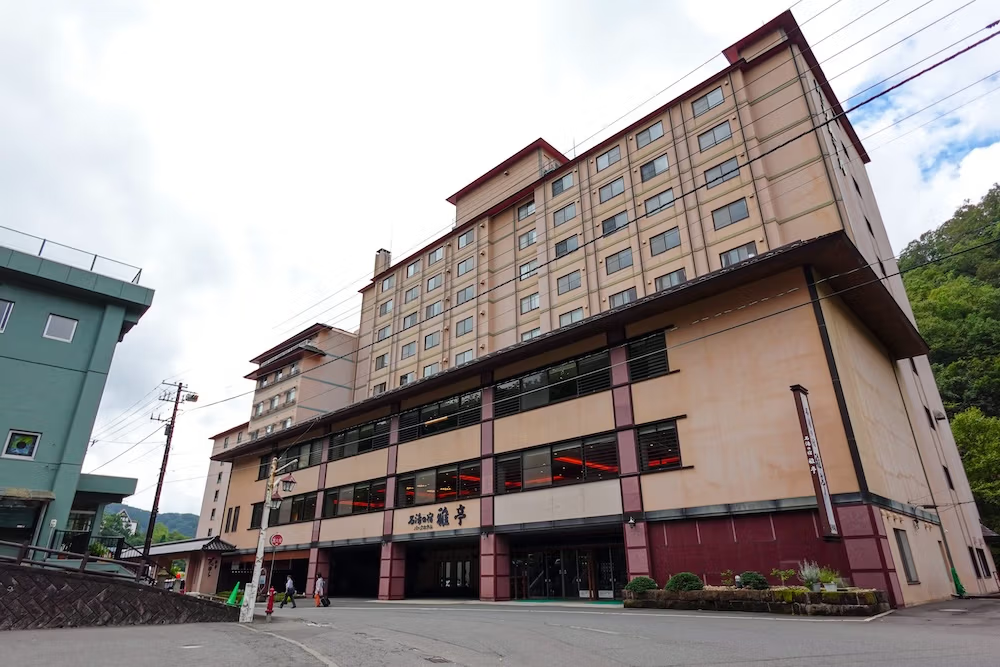
- A giant Noboribetsu onsen resort for scale, buffets and a large bathing complex.
- Hakuba Glad Inn Ebisuya for a quieter mountain stay with more independence.
- Raicho in Norikura for reservable private bathing in the forest.
- Minshuku Miyama in Yamanouchi for family hospitality with shared facilities.
Ryokan and Onsen Are Not the Same Thing
This distinction is not semantic fussiness. It can be the difference between booking private hot-spring water and paying extra for a perfectly ordinary bathtub sitting outside.
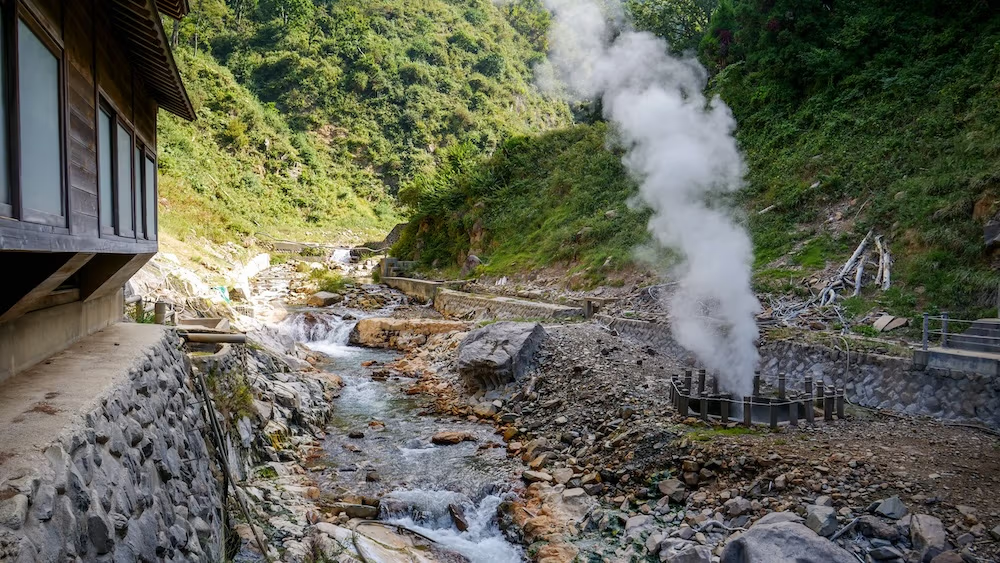
A ryokan is an accommodation. An onsen is a natural hot spring meeting Japan’s legal definition.
A ryokan may contain an onsen, an ordinary heated communal bath, a standard en-suite bathtub or no major bathing facility at all.
A listing saying “private bath” may mean a normal en-suite tub. “Open-air bath” tells you where the tub sits, not where the water came from. Even “large public bath” only describes the facility.
Marketing language becomes suspiciously flexible once steam enters the photograph.
Look for explicit wording such as natural hot spring, onsen water or a named source. When the listing is vague, ask. This is a much better use of an email than discovering the answer after stripping naked.
What Happens During a Traditional Ryokan Stay?
Our Takayama stay gives the cleanest start-to-finish example. Ryokan Seiryu delivered most of what first-time visitors picture: shoes off, tea, yukata, communal bathing, dinner in the room and futons appearing after the feast.
Use it as a model, not a contract. Japan contains too many ryokan for one tidy script.
1. Arrive Early Enough to Experience the Property
Check-in often starts in the middle of the afternoon. That is not permission to roll in at 7:58 p.m. for an 8:00 dinner looking pleased with your efficiency.
When food is included, the kitchen is working to a schedule.
In Takayama, we removed our shoes, chose a dinner time and received an actual introduction to the property. Nobody slid a key card across the desk while pointing vaguely toward a bank of elevators. The stay began the moment we entered.
The Japan Tourism Agency’s ryokan guidance warns that late arrival can mean losing dinner. Call immediately when transport goes sideways.
The sashimi is not sitting there indefinitely, growing more philosophical.
2. Remove Shoes Where the Property Instructs You
At a traditional entrance, outdoor shoes are removed at the genkan. Slippers may be provided for hallways. Those slippers come off before stepping onto tatami. Restrooms may have a separate pair of bathroom slippers.
Written down, the footwear rules sound like a small exam designed by slippers. In the building, they usually make sense.
Watch the floor level, copy what other people do and do not march triumphantly into the hallway wearing the toilet pair.
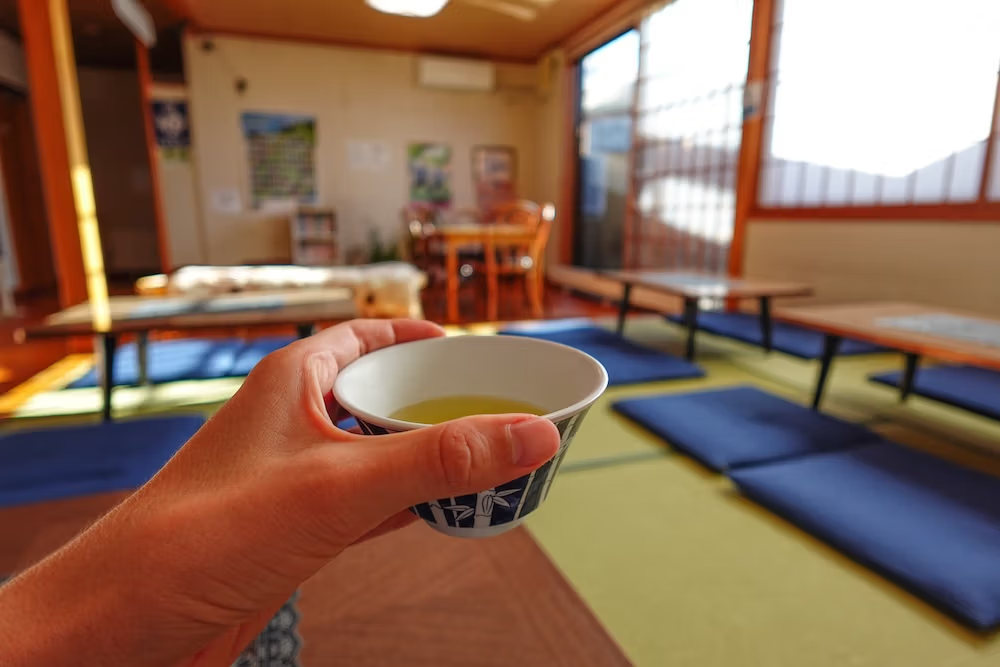
3. Tea and Sweets May Be Waiting in the Room
Several rooms greeted us with tea and something sweet. Takayama added an attendant and explanation. Hakuba added origami.
Other places gave us a key and left us to uncover the mysteries ourselves, which was also fine.
Enjoy the tea when it appears. Do not interrogate a two-star mountain guesthouse because nobody performed a formal welcome over wagashi.
4. The Room Changes Function During the Stay
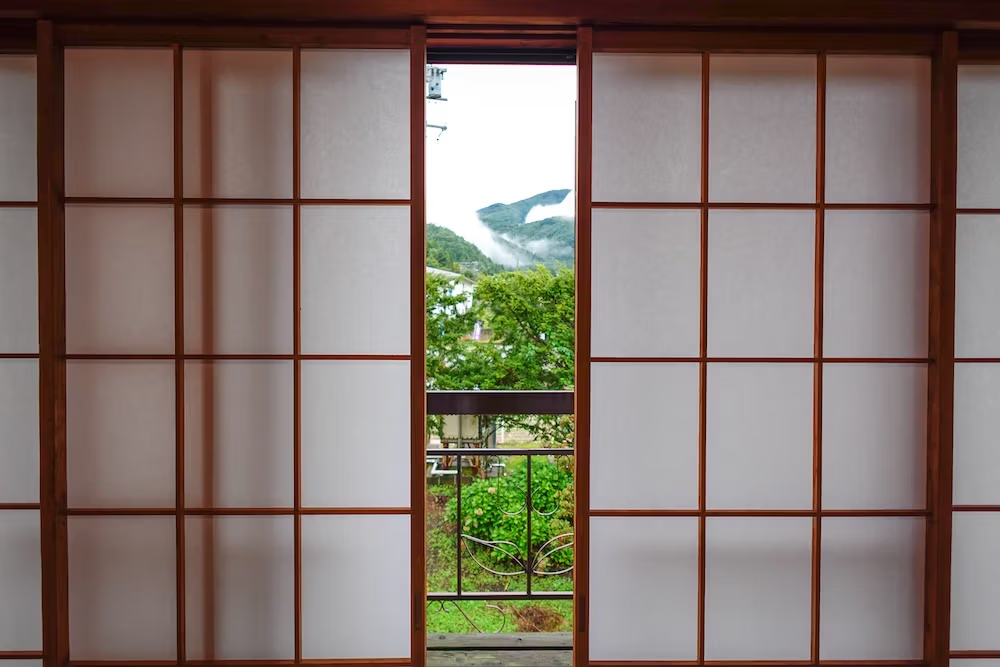
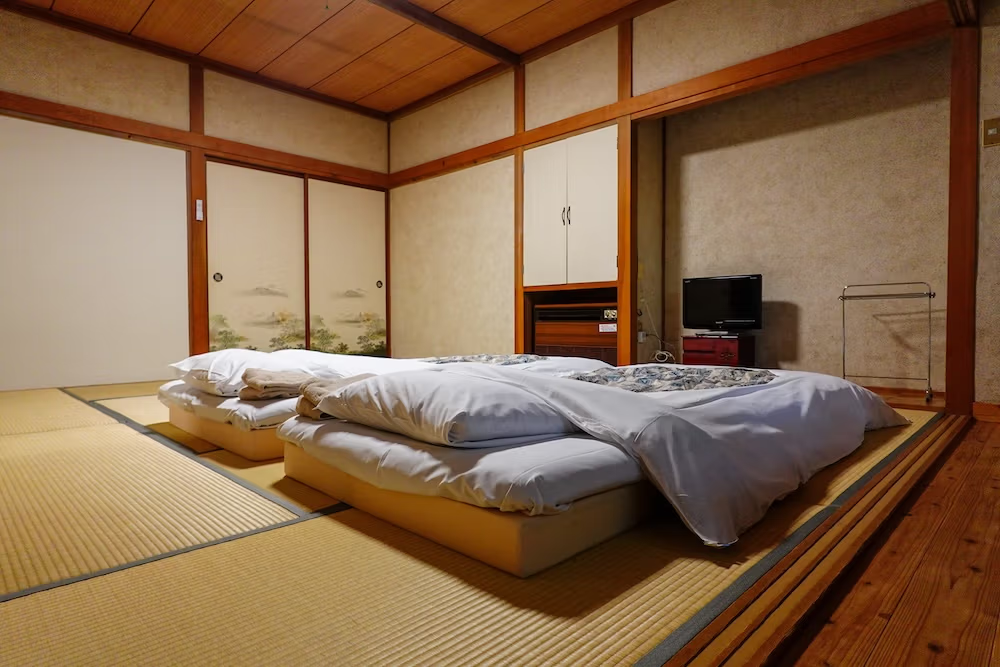
A traditional room can look almost aggressively empty at first: tatami, a low table, cushions, tea and a suspicious amount of floor.
That floor is doing several jobs. The room may become your lounge, dining room and bedroom within a few hours.
At Ryokan Seiryu, we ate dinner at the low table. Afterwards, staff removed the table and prepared our futons.
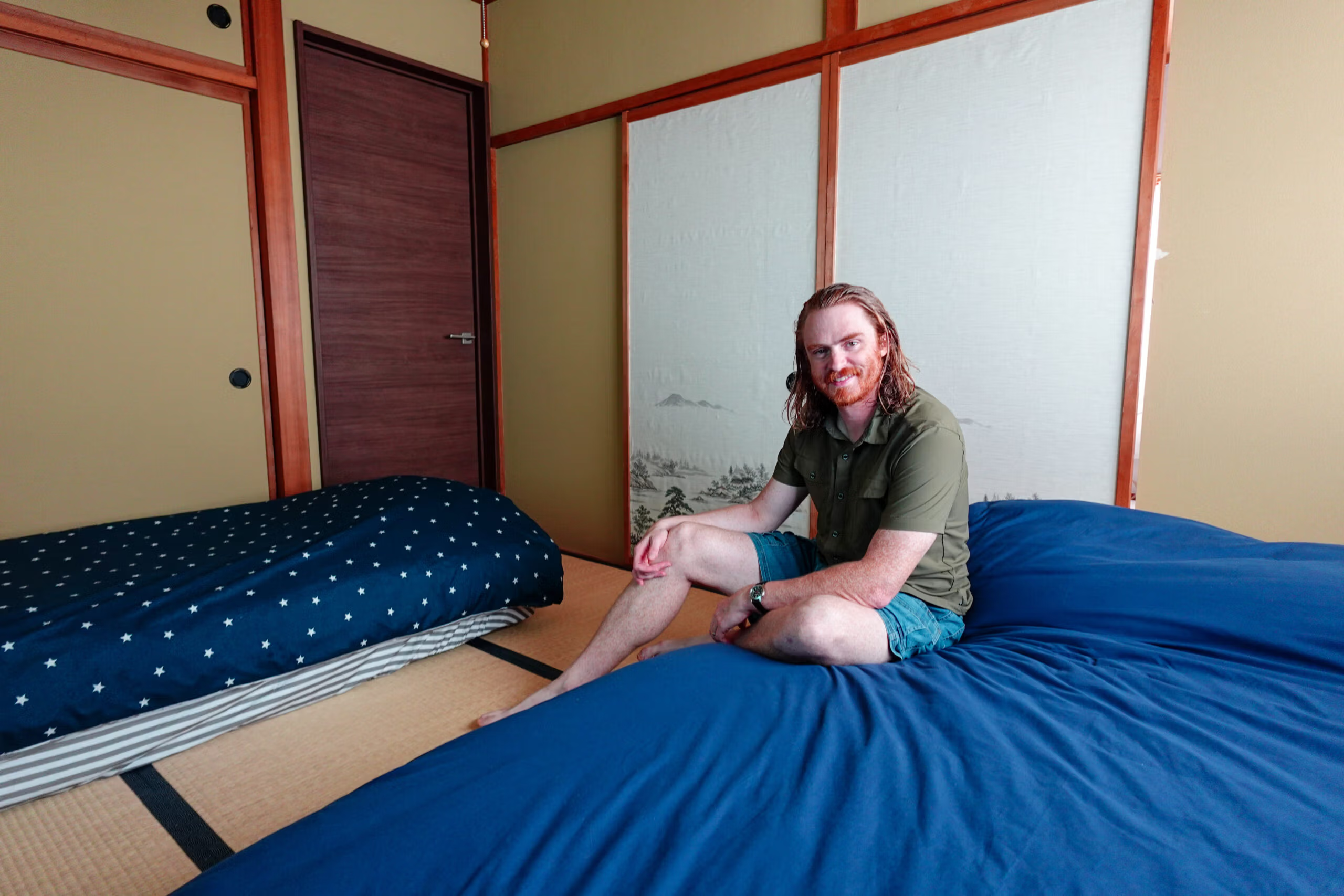
In Norikura, the room was large enough for the futons and table to remain set up simultaneously. At Minshuku Miyama, we stayed for two nights and simply left our bedding out, though it could have been rolled away into the closet.
That is why “Japanese-style room” is not enough information. It might mean elegant daily transformation by staff. It might mean your futon is already down and the closet contains the rest of the story.
5. Change Into the Yukata—Without Panicking About Perfection
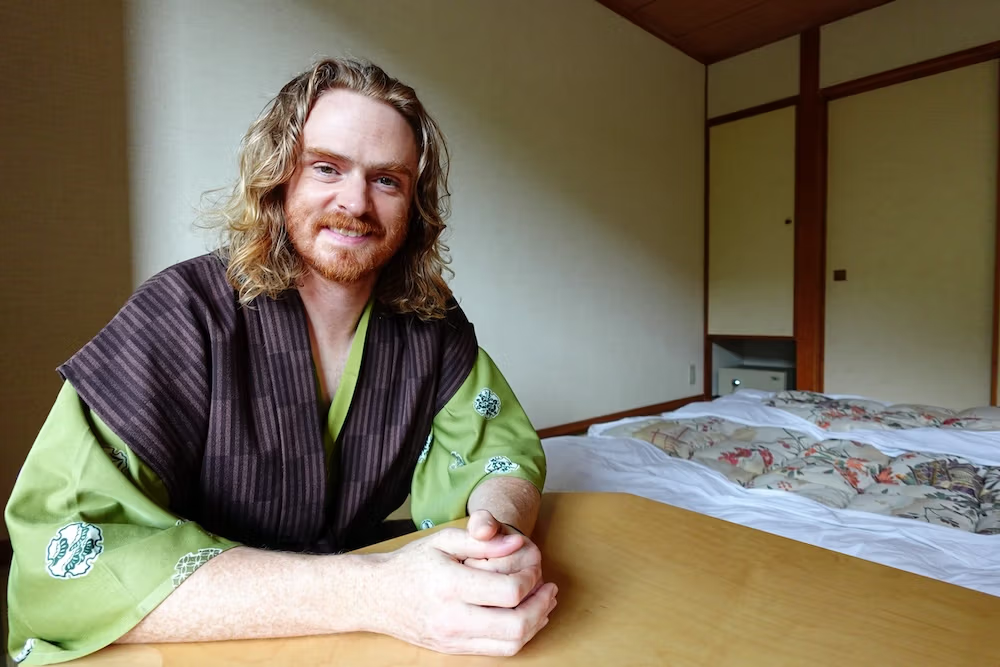
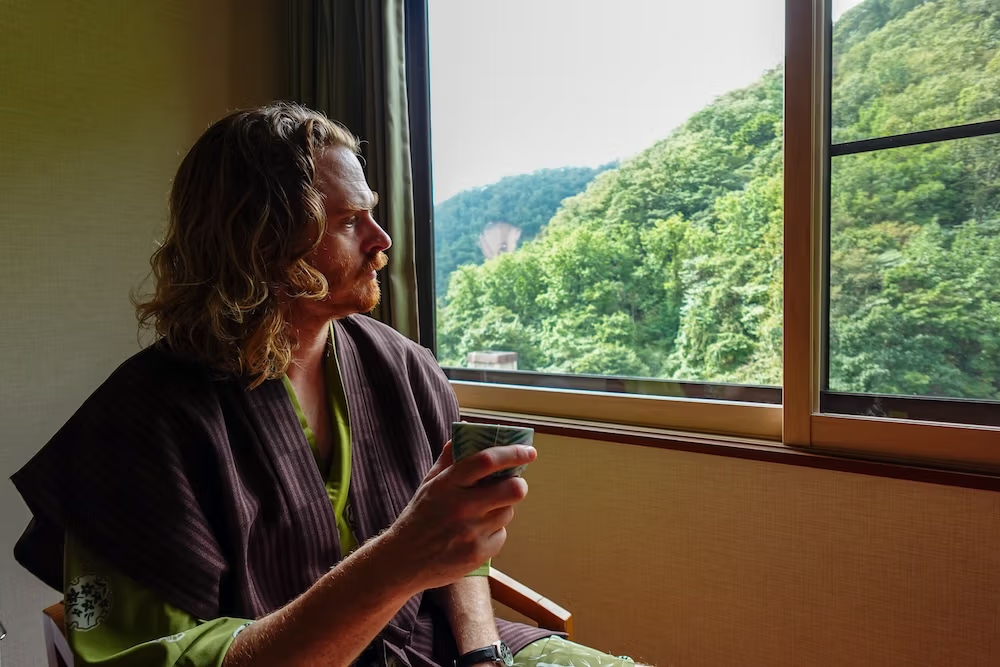
Most of our Japanese-style stays supplied a yukata, a light cotton robe worn around the property, to meals and to the baths.
The basic rule worth remembering is to wrap the left side over the right. Staff can help with sizing or the sash.
Our introduction to yukata was not graceful. Audrey was trying to determine which panel crossed first. Mine looked as though it had lost an argument with my knees.
Noboribetsu at least gave us several sizes, plus the sash and little vest, before releasing us into a building full of people who appeared far more competent.
Nobody is grading your robe technique. Wrap left over right, keep yourself covered and ask for another size when the current one makes you look like a disgraced sumo referee.
6. Bathe Before Dinner—or Whenever the Schedule Works
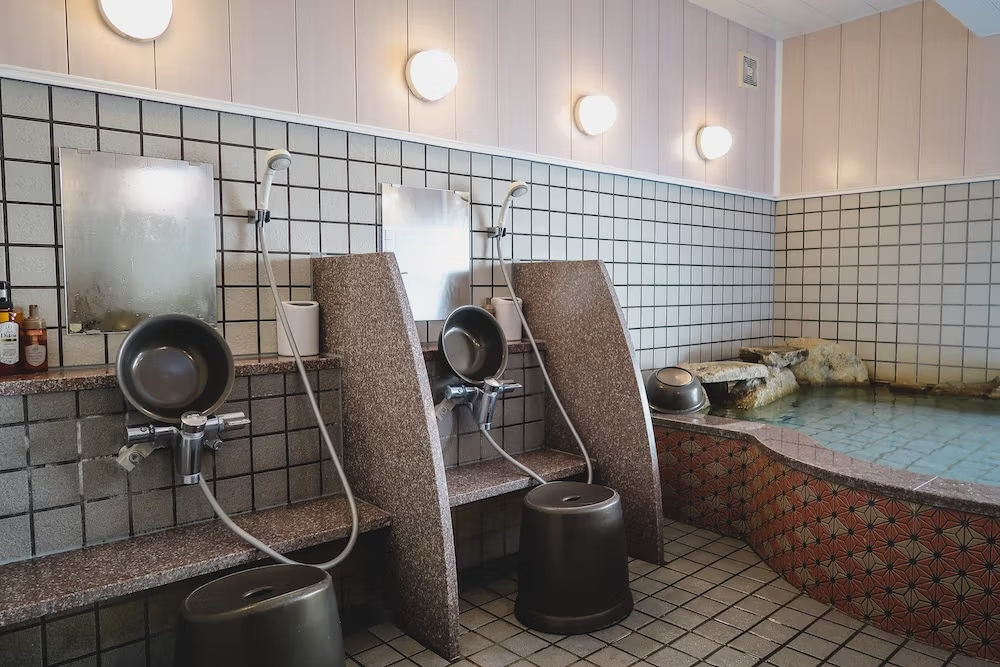
Bathing after check-in and again in the morning is popular. We often did both because once I discover unlimited hot water, restraint becomes theoretical.
Still, there is no sacred sequence. Read the hours and check whether the male and female facilities switch.
Audrey was genuinely nervous before her first communal bath. Japanese onsen normally means nudity, and motivational slogans about “embracing the culture” do not make walking naked into a strange room feel less naked.
I had already used bathhouses while living in South Korea, so I was calmer. Her first visit became much easier when the room turned out to be empty.
A few stays later, communal bathing had stopped feeling like a major diplomatic event.
7. Dinner Can Be the Event That Justifies the Price
Takayama brought the full assault.
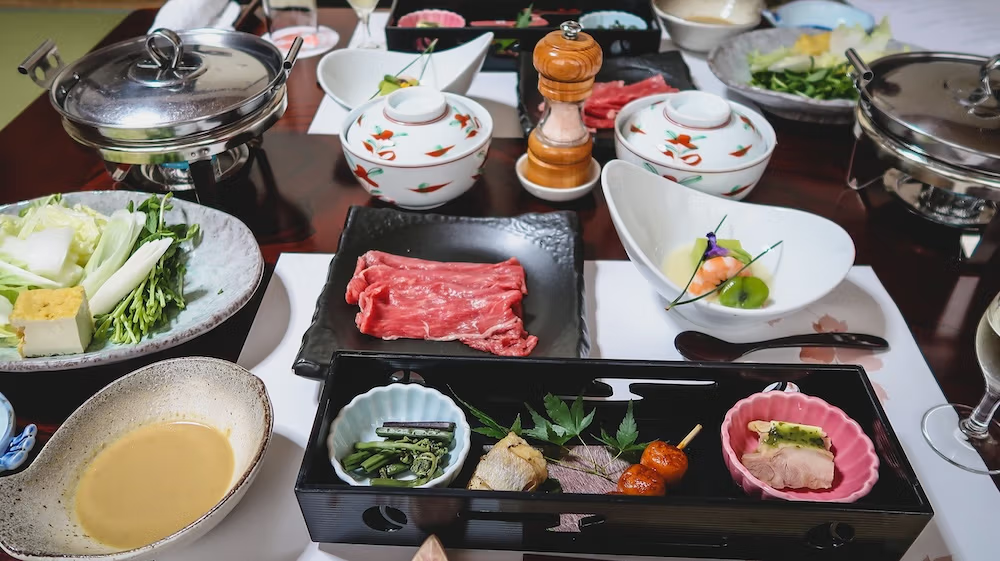
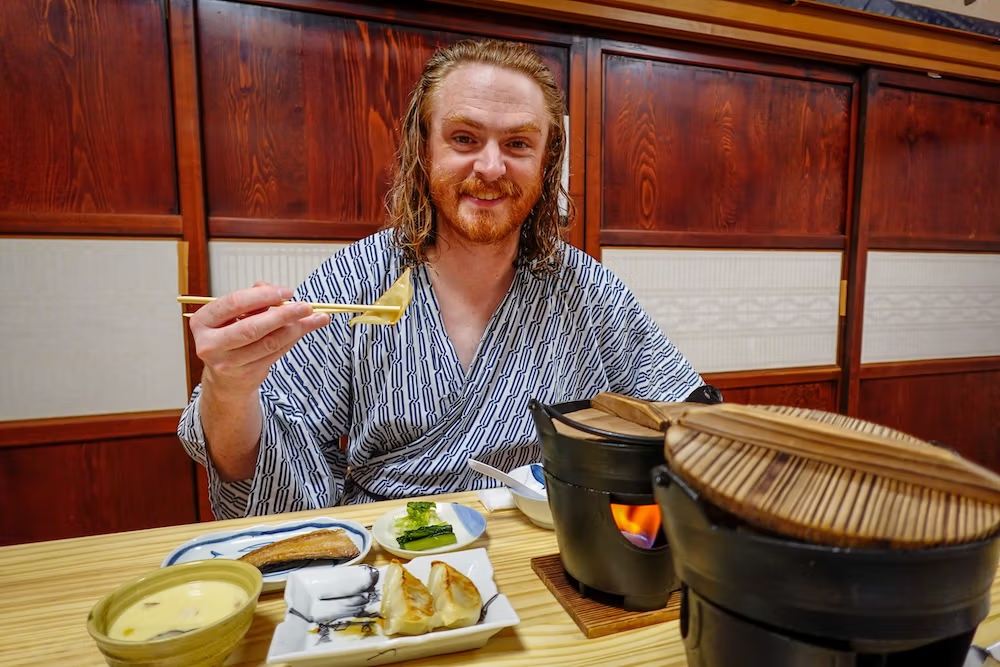
Quince wine, small appetizers, mackerel, green tofu, shrimp, roast pork, a steamed Hida beef bun, bonito sashimi, shabu-shabu, more Hida beef, rice, soup and dessert kept arriving.
At some point we stopped wondering how many courses remained and accepted that the table had won.
Audrey had wondered whether the ryokan was overpriced. Fair question.
By dessert, both of us understood the bill differently. We had bought dinner, breakfast, bathing, bedding, service and an entire evening where nobody needed to search Google Maps for the next activity.
The room was only one ingredient.
Our 11-course ryokan dinner in Takayama on the Samuel and Audrey YouTube channel.
8. Staff May Prepare the Futons While You Eat
After dinner, the low table had vanished and two futons covered the tatami.
It felt slightly magical, although the magic was performed by staff doing physical work while we ate ourselves into immobility.
Do not assume it happens everywhere. At simpler inns, the bedding may already be down. At some minshuku, guests may arrange it themselves.
If sleeping close to the floor is difficult, look for a Japanese-Western room or ask whether extra padding is available.
Our Takayama futon felt excellent. Context matters: the previous Airbnb bed had introduced my back to its internal wires for four consecutive nights.
This was less a scientific endorsement of floor sleeping than a successful escape from low-grade torture.
9. Breakfast May Be Traditional, Western or Both
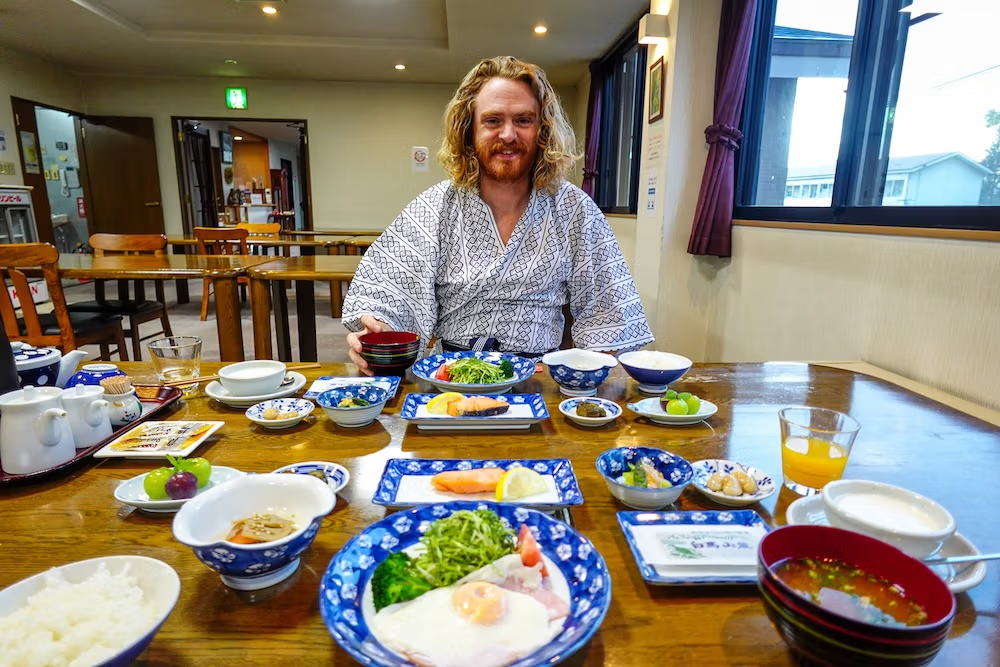
Breakfast moved us into a communal dining room. Rice, miso soup, fish, tofu, pickles, greens, salad, beef and tea covered the table in enough small dishes to make a continental buffet look emotionally vacant.
The exception was the runny egg.
I tried it. I did not enjoy it. The Hida beef restored diplomatic relations with breakfast.
Hakuba offered a different arrangement. Breakfast was optional and needed advance notice during our stay, mixing fish, rice and miso with yogurt, grapes, beans, eggs and ham.
Larger resorts may run buffets. Again: same broad category, different stomach.
How to Decode a Ryokan Booking Before It Decodes Your Wallet
The most important piece of ryokan etiquette happens before anybody hands you slippers: read the damned listing.
Two rooms at one property can include different dinners, different baths and different beds. Two inns using nearly identical photographs can produce opposite trips.
Slow down long enough to understand what the checkout page is actually selling.
| Booking question | Why it matters |
|---|---|
| Is the quoted price per room or per person? | Traditional plans are commonly priced per guest because meals and service form part of the rate. |
| Does the plan include dinner and breakfast? | Room-only, breakfast-only and half-board plans can appear beside one another. |
| Where will meals be served? | In-room kaiseki, a private dining room, communal set meals and buffet dining feel completely different. |
| Is the room Japanese-style or Japanese-Western? | This determines whether you sleep on futons, Western beds or a combination. |
| Does the room have a private toilet and shower? | Some traditional rooms share toilets, sinks and showers even when the listing photographs look luxurious. |
| Does “private bath” mean in-room or reservable? | An attached bath may be available throughout the stay; a charter bath may be limited to a short time slot. |
| Does the bath use natural onsen water? | An outdoor or private bath can still contain ordinary heated water. |
| What is the latest arrival time when dinner is included? | Arriving late can mean forfeiting a meal that has already been prepared. |
| Can the kitchen handle dietary restrictions? | Some kitchens can modify meals with advance notice; others cannot safely or realistically do so. |
| Does the property offer station pickup? | Rural inns may be far from the closest stop, and shuttles often require reservations. |
| Are children accepted and how are they charged? | Meal, bedding and facility charges can vary by age and property. |
| What is the cancellation policy? | Charges often increase sharply near arrival because rooms and meals were reserved together. |
Prices Are Often Per Person
Per-person pricing catches travellers who think in Western hotel rooms. Dinner, breakfast and service often scale with occupancy, so adding a second guest can do considerably more than nudge the total.
Compare the total for the entire group, then check meals, taxes, service charges and local bathing tax.
A cheap room-only rate beside an expensive half-board rate is not evidence that one property is a rip-off. It may be evidence that dinner exists.
Meal Plans Can Change the Entire Stay
- Dinner and breakfast: the classic full ryokan experience and the strongest choice when food is central to the property.
- Breakfast only: useful in towns with good restaurants or when the full dinner package is outside your budget.
- Room only: sensible in urban areas, but potentially awkward in remote onsen towns where restaurants close early or require transport.
For a first traditional stay, I would choose one properly fed night over two watered-down ones. Takayama convinced us. The meal was not a side benefit; it was half the argument.
Travellers trying to build a similar night can compare current Takayama ryokan on Booking.com.
Filter for dinner and breakfast, then read where those meals are served. A cheap room-only plan beside a premium kaiseki plan is not the same stay wearing a different price tag.
Takayama is also worth more than a hurried check-in and dinner. Browse current Takayama tours and day trips on GetYourGuide for old-town walks, food experiences and Shirakawa-go excursions.
Book a tour around the ryokan schedule, not across dinner. Missing a prepaid kaiseki feast because a day trip returned late is an impressive way to lose money twice.
Room Descriptions Matter More Than the Word “Traditional”
Read whether the room has:
- Tatami and futons.
- Western beds.
- A private toilet.
- A shower or bath.
- Stairs or elevator access.
- An open-air bath.
- A garden, mountain, river, street or parking-area view.
Room size is sometimes expressed through tatami count. Larger rooms help with children or large luggage, but layout matters as much as the number.
Ryokan Meals: From Private Kaiseki to Buffet Bedlam
Food can swallow a large portion of the rate and an even larger portion of the memory.
It is also where lazy assumptions go to die. Not every ryokan serves kaiseki. Not every kaiseki meal is private. Not every breakfast will thrill a traveller who regards grilled fish before coffee as a personal attack.
Private Kaiseki in Takayama
Takayama’s dinner was formal in structure but not in mood.
The pleasure did not come from staring solemnly at ceramics. It came from discovering what was under each lid, asking questions, eating too much and realizing Hida beef had apparently negotiated recurring appearances.
The attendant explained each course and controlled the timing. That service was part of the price.
When comparing premium meal plans, look past the course count and ask whether dinner is served in your room, in a private dining space or in a shared hall.
The Noboribetsu Resort Buffet
Noboribetsu went in the opposite direction: enormous building, many guests, organized groups and buffets for breakfast and dinner.
Tatami and yukata survived. Intimacy did not.
We arrived when the buffet opened because we believed this would beat the crowd. Several hundred other strategic masterminds had reached the same conclusion.
Crab and meat stations developed lines immediately. Waiting roughly half an hour produced a calmer room and fewer elbows.
The menu repeated, but there was enough red snow crab, tuna sashimi, seafood, meat, salad and assorted side dishes to build different meals.
The food was good. The atmosphere had all the romance of an airport lounge discovering shellfish.
That trade-off matters. Big onsen resorts may sacrifice personal service while delivering bath complexes a small inn could never build.
Neither model automatically wins. Decide what you care about before paying.
For this larger, bath-first version of the experience, compare Noboribetsu ryokan and onsen hotels on Booking.com.
Check whether the listing sits in Noboribetsu Onsen itself, which meals are included and how many bathing areas are available. “Near Noboribetsu” can cover more geography than your tired suitcase will appreciate.
Our complete Noboribetsu Onsen travel guide on the Samuel and Audrey YouTube channel.
Family-Run Meals at Minshuku Miyama
At Minshuku Miyama near Yamanouchi, we booked two nights with breakfast and dinner.
The building was simpler than Takayama, but the owners, meals and outdoor onsen gave the stay more personality than many polished hotels manage with an entire branding department.
Dinner arrived as a spread of small dishes, vegetables, rice, soup and changing textures.
It was not bargain-bin kaiseki. It was family-run hospitality doing its own thing, and doing it well.
Dietary Restrictions Must Be Discussed Before Arrival
Ryokan kitchens often plan menus and purchase ingredients in advance. The Japan Tourism Agency recommends contacting the property several days ahead and acknowledges that not every request can be accommodated.
Do not send “I am vegetarian” and hope everyone shares the same definition.
Explain fish-based dashi, eggs, dairy, wheat and cross-contamination where relevant. When the restriction is medical or religious, get confirmation before handing over money.
A small kitchen saying no is better than a polite yes followed by a bonito-flake ambush. Fixed menus, limited staff and advance purchasing create real constraints.
Onsen and Ryokan Bathing: What You Actually Need to Know
Onsen etiquette is often presented as though one wrong towel movement will cause an international incident.
It will not. The rules that matter fit on a short list.
- Undress in the changing area unless the property explicitly allows or requires swimwear.
- Wash thoroughly at the shower stations before entering the bath.
- Rinse away soap and shampoo.
- Keep towels and long hair out of the water.
- Enter quietly and do not swim or splash.
- Never photograph communal bathing areas when other guests could be present.
The JNTO onsen guide follows the same basic sequence. Most baths also post diagrams.
Wash first, keep the towel out of the water, lower the volume and leave the camera somewhere it cannot destroy several strangers’ morning.
Shared Baths, Reservable Baths and In-Room Baths
“Private onsen” sounds wonderfully clear until you discover it can describe several different arrangements.
- In-room bath: attached to your room and generally available whenever bathing is permitted.
- Reservable private bath: a communal facility booked exclusively for a limited period.
- Shared public bath: open to guests without a private reservation, usually separated by gender.
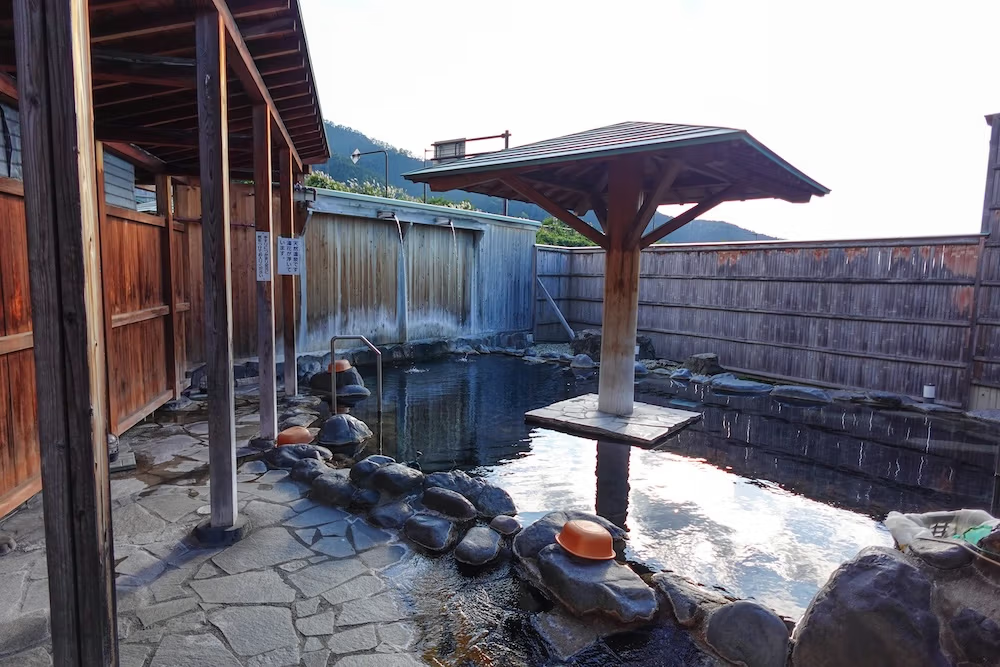
At Raicho in Norikura, we reserved 30-minute slots in indoor and outdoor baths. During our visit, three slots per day were available to us.
The outdoor bath required swimwear because it was potentially visible; the indoor bath followed the usual nude-bathing custom.
Property-specific rules beat confident generalizations every time.
Temperature produced another marital research finding.
I thought the outdoor water was perfect and could have stayed indefinitely. Audrey entered, announced that it was hot and behaved as though my nervous system required professional assessment.
The indoor bath was hotter again.
Our Norikura Kogen stay and private outdoor onsen experience.
Large Resorts Can Offer Far Better Bathing Facilities
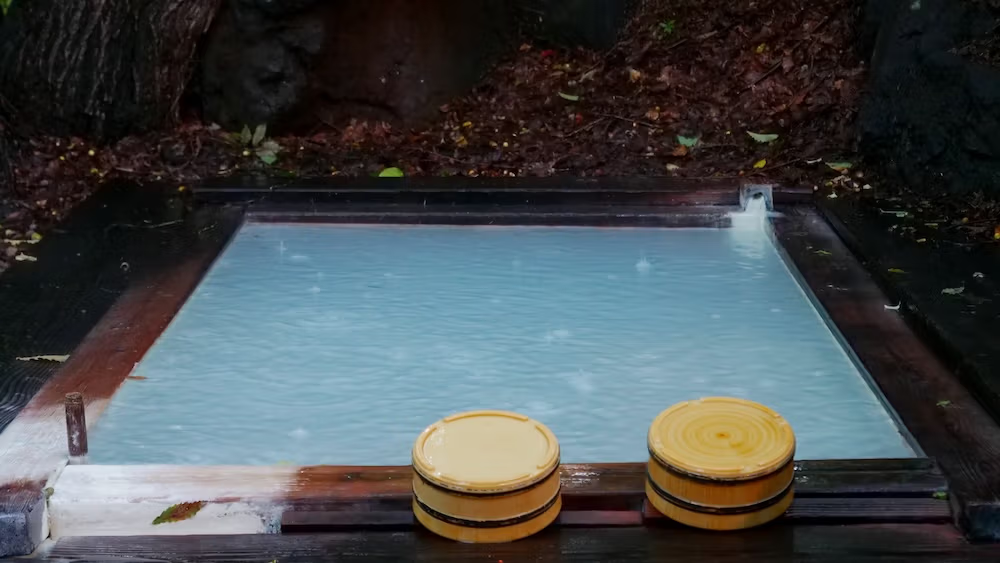
Noboribetsu could not compete with Takayama for intimacy, but its bath complex flattened it on scale.
Audrey counted seven or eight pools in the women’s section, including an outdoor bath.
Timing changed the experience. Audrey went during dinner and again around 4:30 in the morning. One visit was completely empty; the other had a single guest.
This is the sort of information worth losing sleep for—once.
Our verdict was inconveniently balanced. Small ryokan won on personal service. The giant resort won on bathing variety.
We were glad we had not spent the entire trip proving loyalty to one format.
What If You Have Tattoos?
There is no single national rule that every bathing facility follows.
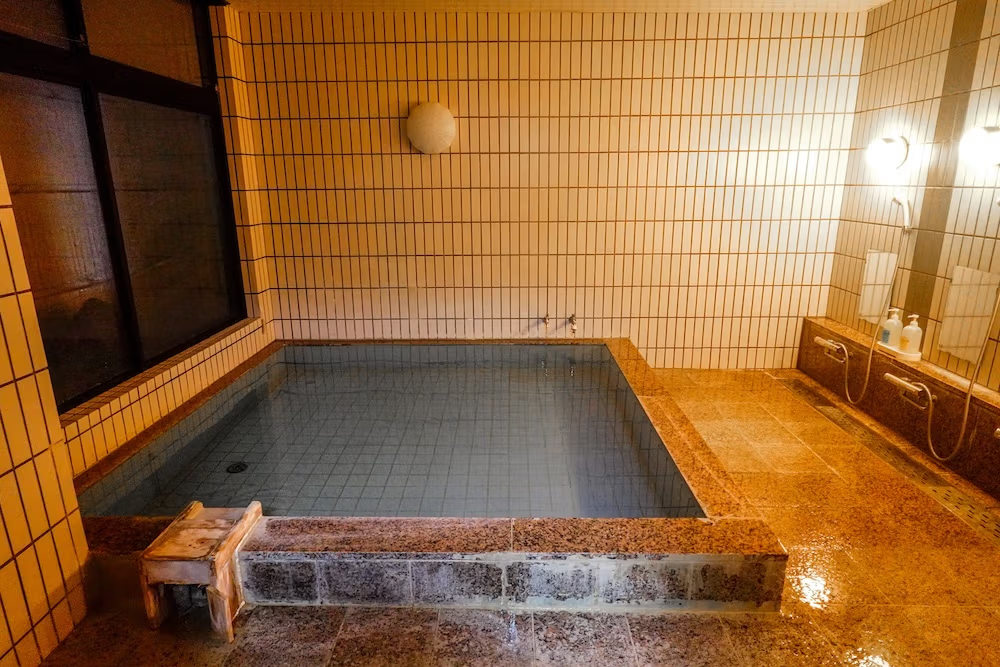
Some prohibit tattoos. Some accept small tattoos when covered. Some are openly tattoo-friendly. Others direct tattooed guests toward private baths.
Check the individual policy before booking. When the wording is unclear, email the property with the approximate size and location of the tattoo.
Do not assume a private bath automatically overrides every house rule.
Basic Onsen Safety
Hot water can turn relaxation into dizziness faster than pride admits.
The Japanese Ministry of the Environment advises hydration, gradual entry and avoiding baths after alcohol.
Your heroic sake-fuelled midnight soak is not improved by fainting.
Onsen feel wonderful after walking, hiking or simply surviving a train transfer with luggage. They are not magical cure-all soup.
Respect posted warnings and get medical advice when heat, pregnancy, cardiovascular issues or mobility limitations complicate bathing.
Five Ryokan-Style Stays, Five Different Lessons
Takayama: The Classic Full-Service Experience
Ryokan Seiryu delivered what many first-time visitors imagine: tea, a tatami room, yukata, segregated communal baths, dinner served privately, futons arranged while we ate and a traditional breakfast the next morning.
Choose this model when you want one concentrated introduction and are willing to spend more for the meal-and-service package.
Trying to save money by removing every feature can leave you with tatami and a question about what all the fuss was.
Noboribetsu: The Giant Onsen Resort
The Noboribetsu property was around ten storeys high, busy with guests and tour groups, and far less personal.
The room still had tatami, futons and yukata, but the operation felt like a major resort.
Its strength was scale: more pools, bigger facilities and enormous food selection.
Its weakness was feeling like a resort operation rather than a personal stay. Book it for bathing variety, not because the brochure used the word intimate.
Hakuba: A Quieter, More Independent Stay
We visited Hakuba outside ski season and may have been the only guests inside the four-level Hakuba Glad Inn Ebisuya.
Futons were already down. Bathing was available. Dinner was not part of the plan, so we went into town and ate pizza—an act that did not cause the ryokan gods to revoke our visas.
This model works for travellers who want tatami and bathing without committing every meal and hour to the property.
Check current rates at Hakuba Glad Inn Ebisuya on Booking.com, or compare other Hakuba properties with onsen.
Ski-season prices and availability can look nothing like the quieter period we experienced, so use our stay as firsthand context rather than a promise about today’s rate.
Another of our firsthand Japanese ryokan and onsen videos on the Samuel and Audrey channel.
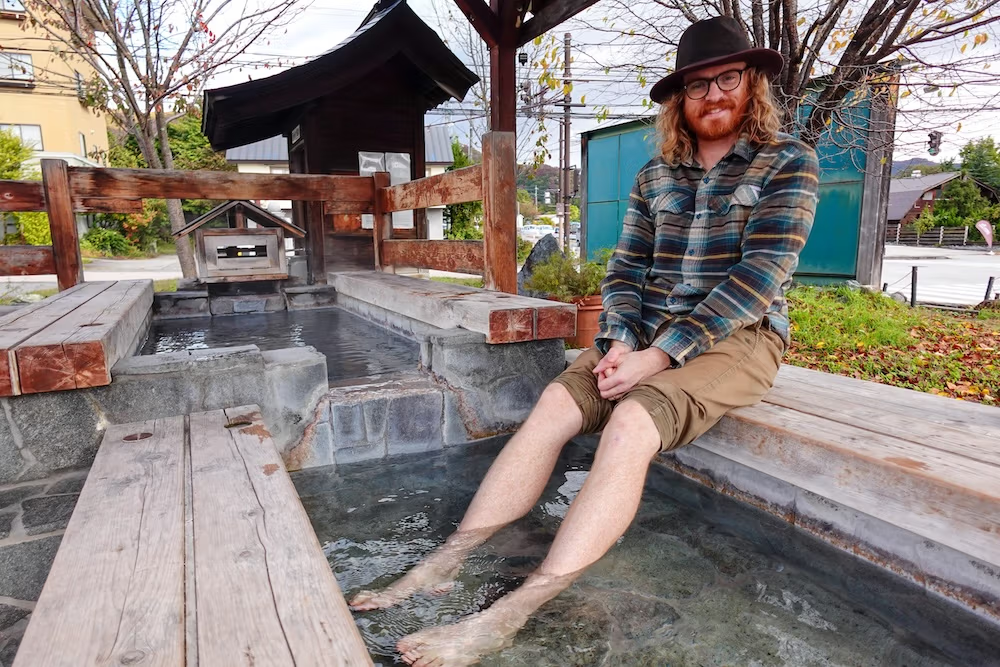
Norikura: When the Guesthouse Becomes the Destination
Norikura Kogen was not one of those destinations I had spent years dreaming about.
Raicho pulled us there: forest setting, private bath reservations and enough promise to justify bus timetables that seemed personally offended by spontaneity.
The room was generous by tatami standards, with futons already down, a low table, private bathroom and enough floor space that our luggage did not immediately turn it into a textile landfill.
A shared kitchen supplied tea and coffee. Rain reduced the hiking and increased the soaking.
By the end, Raicho was not the container around the trip. It was one of the reasons the trip worked.
The property is now listed as Raicho Onsen Inn. Check current rooms and availability at Raicho Onsen Inn on Booking.com.
Read the current private-bath system rather than assuming the exact time slots and swimwear rules from our visit remain unchanged.
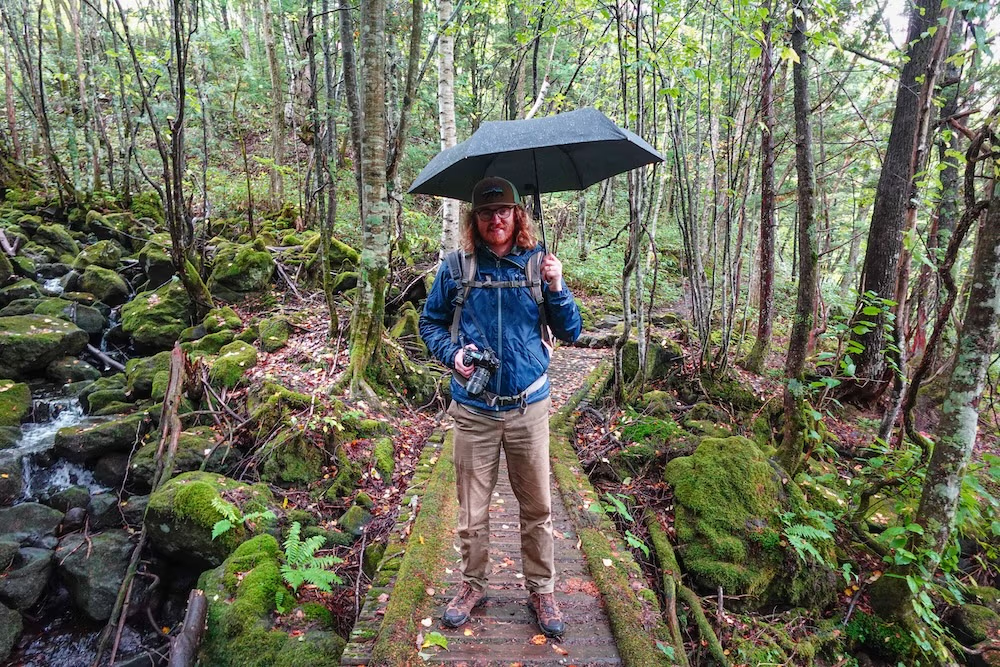
Yamanouchi: A Family-Run Minshuku With Shared Facilities
Minshuku Miyama was our first Japanese-style stay with shared hallway facilities.
Sinks sat outside the room. Toilets involved rubber slippers. Showers connected to the communal baths.
Luxury-hotel inspectors would have developed a twitch.
None of it mattered as much as expected. The owners were kind, dinner was generous and the outdoor onsen became one of our favourites.
By then, communal bathing had stopped feeling like a crisis and started feeling normal.
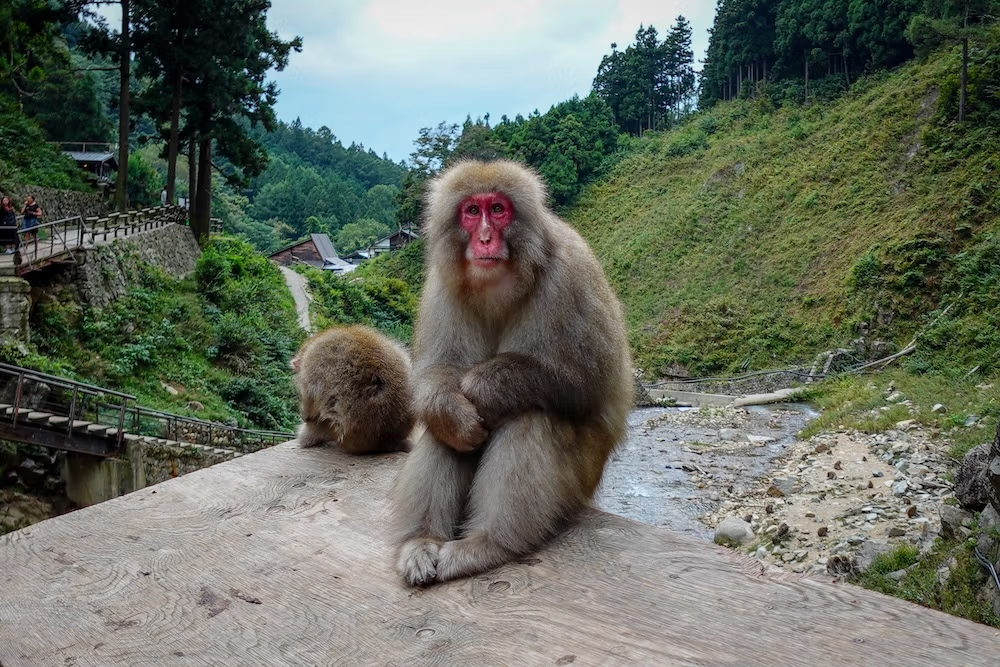
Staying nearby let us reach Jigokudani before the tour groups—and before the monkeys, which had not yet bothered to descend from the forest.
Eventually they appeared beside the path and hot spring, grooming, swimming and treating us with the indifference usually reserved for badly behaved tourists.
Check current availability at Minshuku Miyama on Booking.com, or compare other stays around Yudanaka and Yamanouchi.
Staying locally makes an early monkey-park visit much easier than commuting from a distant city.
Travellers who would rather bundle transportation and interpretation can compare current Nagano snow-monkey tours on GetYourGuide.
Read the departure city carefully. Some tours begin in Nagano, some in Hakuba and others attempt the whole operation from Tokyo, which is a very different day wearing the same monkey photograph.
Our Yamanouchi stay and visit to Jigokudani Monkey Park.
Which Version of the Ryokan Experience Should You Book?
| Your priority | Best starting point | What to inspect carefully |
|---|---|---|
| A complete first experience | Traditional ryokan with dinner and breakfast | Meal setting, futon service, bath access and arrival deadline |
| Private bathing as a couple | In-room open-air bath or reservable charter bath | Natural onsen water, privacy, time limits and additional cost |
| Extensive bathing facilities | Large onsen hotel or resort | Crowds, buffet dining, tour groups and room style |
| Lower cost and family hospitality | Minshuku or simple ryokan | Shared toilets, shared showers, bedding and cash payment |
| Western sleeping comfort | Japanese-Western room | Bed type, room layout and whether the design still feels meaningfully Japanese |
| Independent meals | Breakfast-only or room-only property in a town | Restaurant availability, opening hours and transport |
| Tattoo privacy or bathing anxiety | Property with confirmed private bathing | Written tattoo policy and whether the private bath is attached or timed |
| Accessibility | Modern or renovated ryokan with Western beds | Steps, elevators, thresholds, bathing entry and dining-chair height |
Ryokan for Couples, Families, Solo Travellers and Guests With Limited Mobility
Couples
A private bath can turn the stay into its own little retreat. It can also turn the room rate into a minor financial event.
A timed charter bath may deliver the privacy for less, provided 30 or 45 minutes does not make you feel as though relaxation now has a stopwatch.
Confirm whether the bath uses natural onsen water and whether it is attached to the room or booked separately.
Families
Tatami rooms can work well for families because futons are arranged according to occupancy rather than fixed bed count.
The complications are child charges, fragile furnishings, low tables, communal bathing and the property’s tolerance for noise.
Enter children accurately during the booking and confirm whether the rate includes child meals and bedding. Some ryokan welcome babies and children enthusiastically. Others restrict younger guests.
Solo Travellers
Solo ryokan stays can be glorious: your room, your bath timing, your enormous meal and nobody negotiating the thermostat.
The pricing is less romantic. Some properties barely discount single occupancy or refuse to release certain rooms for one guest.
Search with one traveller from the beginning and compare weekday inventory.
Limited Mobility, Knee Pain or Accessibility Needs
Historic charm often comes with stairs, floor-level bedding, low chairs, raised thresholds and baths requiring a confident step over a high edge.
A building can be culturally wonderful and completely wrong for your knees.
Ask direct questions before booking:
- Is there an elevator from reception to the room and baths?
- Can the room provide Western beds?
- Can meals be served at a conventional-height table?
- Does the bath have handrails, a shower chair and manageable entry?
- Is the toilet private and accessible?
How Many Nights Should You Stay?
For most first-timers, one or two nights is the sweet spot. Enough time to understand the rhythm. Not enough time for the multi-course dinners to begin feeling like an endurance sport.
- One night: enough for check-in, bathing, dinner, futon sleep, breakfast and checkout. This works well between larger cities.
- Two nights: better in a mountain area or onsen town where you want a full day to hike, wander, bathe or do very little.
- Three or more nights: worthwhile when the accommodation is a destination or regional base, but repeated elaborate meals and per-person pricing can become expensive.
Our two-night stays in Norikura and Yamanouchi worked because the surrounding destinations justified them. Takayama’s full-service sequence delivered its main impact in one night.
Rural Transport: Where the Dream Meets the Bus Timetable
Ryokan become more tempting precisely where transport becomes more annoying.
Mountain air, forest baths and a bus that left 11 minutes before you arrived often come as a package.
Norikura required a bus from Matsumoto, a transfer and a long wait because some services were roughly two hours apart during our visit.
The “town” was scattered among guesthouses, trailheads and facilities rather than gathered into a neat centre. The numbered stop beside our lodging mattered. The wrong one would have created an unwanted luggage hike.
Before leaving the city:
- Save the property name and address in Japanese.
- Confirm the correct station or bus stop.
- Check the final service of the day.
- Reserve any shuttle in advance.
- Allow enough time to arrive before dinner.
Luggage forwarding or a small overnight bag can save the trip from becoming a deadlift competition involving bus stairs and rain.
Common First-Time Ryokan Mistakes
- Assuming every ryokan has an onsen: verify the water source and bathing facilities.
- Booking the cheapest plan without noticing meals are excluded: compare like with like.
- Arriving late for dinner: fixed-course meals may not be recoverable after the service window.
- Assuming a private bath is attached to the room: it may be a 30- or 45-minute reservable facility.
- Waiting until check-in to mention an allergy: the kitchen may already have purchased and prepared the menu.
- Dragging suitcase wheels across tatami: lift the bag or leave it where staff advise.
- Walking on tatami in slippers: remove them first.
- Entering the bath without washing: shower before soaking.
- Bringing a towel, phone or camera into communal bath water: keep all three out.
- Assuming expensive means intimate: a premium onsen resort may still be enormous and crowded.
What to Pack for a Ryokan Stay
Most properties supply enough that packing should remain simple.
- Fresh socks, because shoes come off frequently.
- Medication and preferred toiletries.
- A small overnight bag.
- A dietary or allergy card translated into Japanese when needed.
- Approved tattoo covers when the property accepts them.
- Practical outdoor clothing for the destination around the inn.
Yukata, slippers, towels, soap, shampoo and basic toiletries are common but not guaranteed. Check the amenity list when staying somewhere simple.
When a Regular Hotel Is the Better Choice
A ryokan is not the morally superior way to sleep in Japan. Sometimes a business hotel is exactly what the itinerary needs.
Choose a regular hotel when you need:
- Late and flexible arrival.
- A predictable Western bed.
- Guaranteed en-suite facilities.
- Easy wheelchair access.
- Freedom to eat wherever and whenever you want.
- A cheap place to sleep between aggressive sightseeing days.
A ryokan makes sense when you are willing to give it part of the trip.
Check in late, skip the bath, rush the meal and leave at dawn, and you have purchased an experience you were too busy to experience.
A Practical Ryokan Booking Hub
These booking paths make sense for the experiences covered in this guide. They are not a ranking, and I am not pretending every property behind a marketplace link has received my personal blessing.
| Experience | Booking starting point | What to check |
|---|---|---|
| Classic serviced ryokan | Takayama ryokan on Booking.com | Dinner and breakfast, meal location, futon service and private bathroom |
| Large onsen resort | Noboribetsu ryokan and onsen hotels | Bath scale, buffet versus set meals, location and group-heavy facilities |
| Hakuba mountain stay | Hakuba properties with onsen | Ski-season pricing, meal plan, shuttle and distance from village restaurants |
| Norikura forest guesthouse | Raicho Onsen Inn | Bus access, current bath reservations, room facilities and seasonal transport |
| Family-run Yamanouchi stay | Minshuku Miyama | Shared facilities, meals, snow-monkey access and property pickup |
| Guided Takayama planning | Takayama tours on GetYourGuide | Return time, Shirakawa-go transport, language and whether lunch is included |
| Snow-monkey day trip | Nagano monkey experiences | Departure city, walking conditions, transport and time at the park |
Marketplace inventory changes. So do meal plans, bath rules and property names.
Use the links to compare what is bookable now, then read the final room and plan details like a suspicious adult rather than a traveller drunk on photographs of steam.
Our Ryokan Booking Checklist
- Confirm the total price for every guest.
- Check whether dinner and breakfast are included.
- Read where meals are served and what style they follow.
- Verify futons, Western beds or Japanese-Western layout.
- Confirm private versus shared toilet and shower facilities.
- Check whether bath water is natural onsen water.
- Understand whether a private bath is attached or reservable.
- Read tattoo rules before payment.
- Communicate dietary restrictions in advance.
- Check child charges and minimum ages.
- Ask specific accessibility questions when relevant.
- Confirm arrival time, last transport and shuttle reservations.
- Read cancellation and payment conditions.
Frequently Asked Questions
Is every ryokan in Japan also an onsen?
No. A ryokan is a type of Japanese accommodation, while an onsen is a natural hot spring. A ryokan may have natural onsen water, an ordinary heated bath, a private bathtub or no major bathing facility at all.
What is usually included in a traditional ryokan booking?
It depends on the plan. Some rates include dinner, breakfast, bathing access, yukata and futon service, while others cover only the room or breakfast. Check the meal plan, room facilities and bath details before paying.
How many nights should I spend at a ryokan?
For most first-time visitors, one or two nights works well. One night delivers the full check-in, bathing, dinner, futon and breakfast sequence, while two nights make more sense in a mountain area or onsen town.
Do I have to bathe nude at a Japanese onsen?
Communal onsen bathing normally means removing all clothing, washing before entering and keeping towels out of the water. A private or reservable bath is a practical alternative when communal nudity feels uncomfortable.
What should I check before booking a private onsen?
Confirm whether the bath is attached to the room or reserved for a limited time, whether it uses natural onsen water, and whether additional rules, charges or tattoo restrictions apply.
Can a ryokan accommodate vegetarian meals or food allergies?
Some can with advance notice, but not every kitchen can safely rebuild a fixed menu. Explain exactly which ingredients you cannot eat, including fish-based dashi or cross-contamination concerns, and receive confirmation before booking.
Can travellers with tattoos use a ryokan onsen?
Policies vary by property. Some baths prohibit tattoos, some accept covered tattoos, and others welcome tattooed guests or offer private bathing. Read the current policy and contact the property when the wording is unclear.
Are ryokan suitable for children or travellers with limited mobility?
Suitability depends heavily on the property. Families should confirm child charges, meals and bathing arrangements, while travellers with mobility needs should ask about stairs, elevators, Western beds, low seating and bath access.
Is Staying at a Ryokan Worth It?
For us, yes.
Not because every futon saved our backs, every breakfast converted us or every communal bath produced spiritual clarity.
Some things were awkward. Some were crowded. One egg remains unforgiven.
The best stays changed the pace of the journey.
Takayama gave us a private feast and a room that transformed around us. Noboribetsu showed the industrial-strength end of onsen culture. Hakuba gave us independence. Norikura made the guesthouse part of the destination. Yamanouchi proved that shared toilets and sincere hospitality can coexist without the universe collapsing.
They shared tatami, baths and robes. They were not interchangeable.
Choosing well matters far more than finding the listing with the most mist, bamboo and poetic adjectives.
For a first trip, one carefully chosen night can anchor the entire itinerary.
Stop moving. Put on the robe. Soak until your internal travel spreadsheet goes quiet. Eat what the kitchen spent the day preparing. Let the building be the evening.
Just read the booking first.
“Ryokan” begins the conversation. It does not settle it.