
Plenty of people do Noboribetsu as a day trip. They ride the bus up from the station, walk the boardwalks through Hell Valley, take a few steamy photos, maybe fit in a soak, and head back down. It’s a perfectly reasonable plan. The valley costs nothing to visit and nobody checks how long you’re staying.
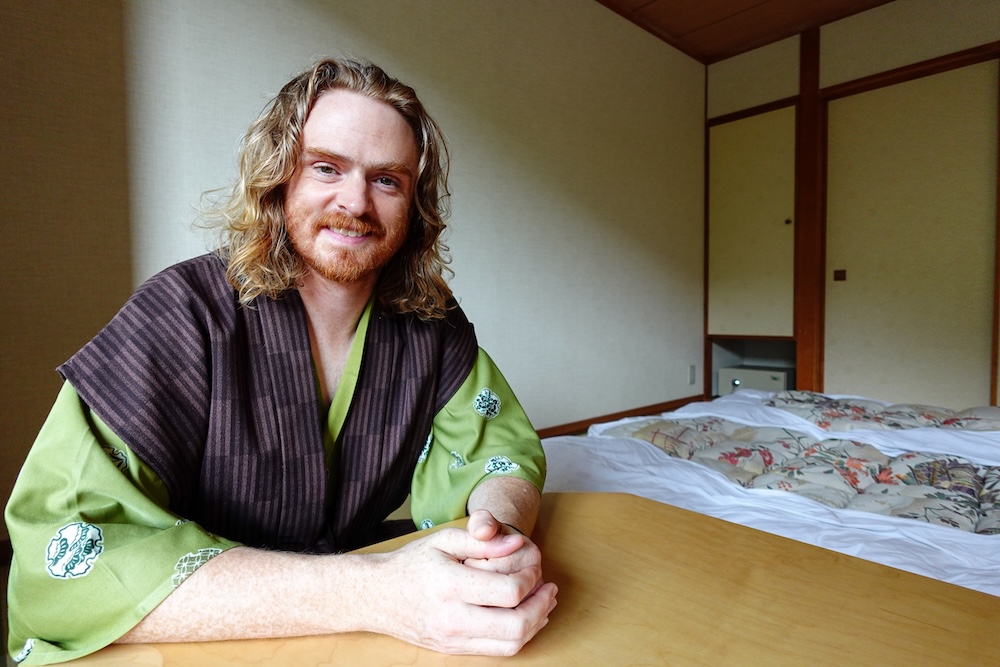
What you actually want to know is whether sleeping in the onsen town is worth the extra night and the extra money, and what you get for it. Audrey and I spent two nights in late September at Park Hotel Miyabitei, a big ten-storey resort hotel in the middle of Noboribetsu Onsen. I should declare my bias up front: I’m a huge onsen and baths guy. Audrey is less of a public-bath person. We still came out of it with the same answer.
The Short Answer: Yes, If You Came for the Onsen
Staying over was absolutely worth it. The baths were my happy place, and Audrey felt the same way about the stay as a whole. Her verdict counts for more than mine, because she didn’t arrive predisposed to love it.
Noboribetsu doesn’t have more sights than you can see in a day. What it has is a set of hours that day visitors mostly never get: the evening in a yukata with a long dinner, the baths at strange times of night when the pools empty out, and the town in the morning before the coaches arrive. Guests get all of that. Day visitors are largely back on the bus by then.
If you mainly want to see Hell Valley, the night adds less, and I’ll come to that. If the onsen is the reason you’re going, book the room. When you compare hotels in Noboribetsu, check that the address says Noboribetsu Onsen-cho. That’s the onsen town; anything near the station puts you a bus ride away from the baths and the valley.
What the Evening Adds: Yukata, Dinner and Futons
Into the yukata
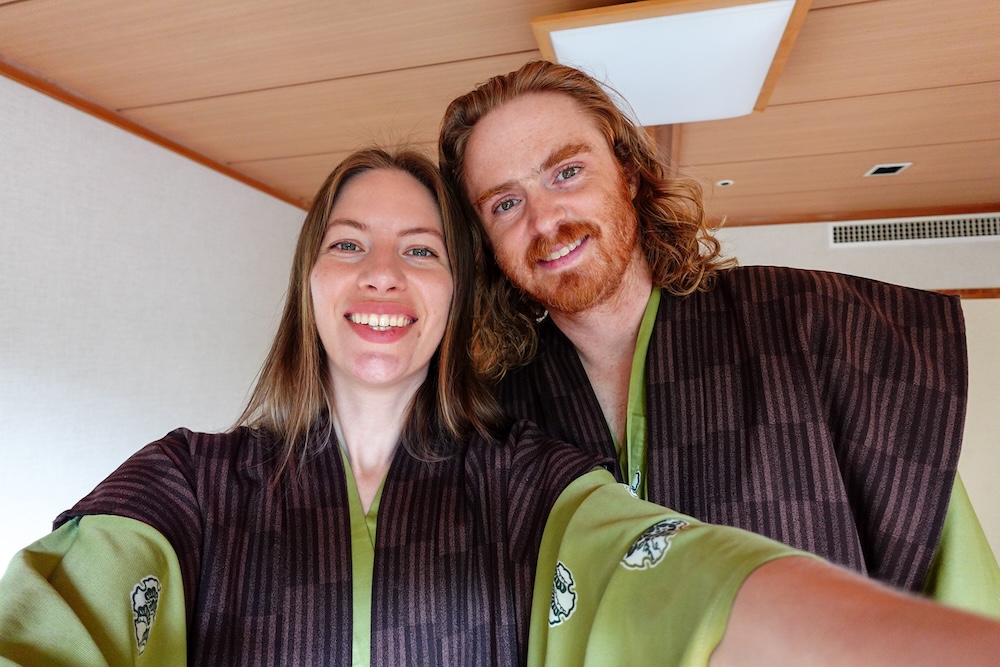
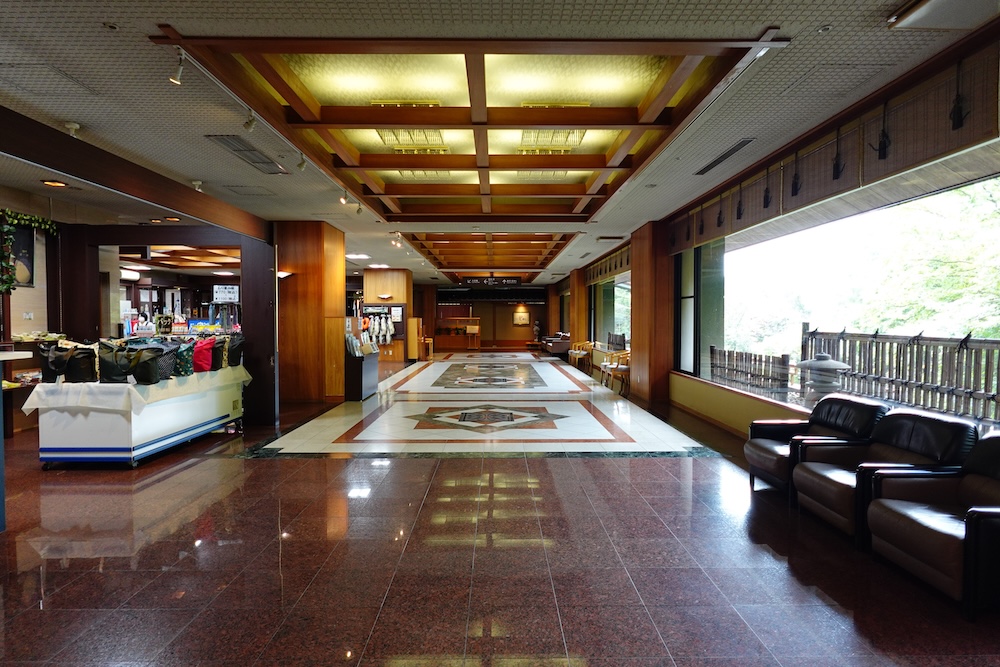
The shift starts at check-in. When we arrived, the lobby was full of people wandering around in yukata, the light cotton robes the hotel provides, looking comfortable and somehow stylish at the same time. We were the only ones still in street clothes, so we went upstairs to fix that.
The closet in our Japanese-style room had it all laid out: towels for the onsen, olive-green yukata, blue sashes and little vests to wear over the top. The robes came in three sizes and Audrey grabbed the smallest. I tied my sash in a little bow, which Audrey informed the camera I would not be showing anyone, and then we went down for the part of the stay I’d been looking forward to most.
Once you’re in the yukata you stop being a sightseer and start living on hotel time. You pad between the room, the baths and the dining hall in slippers, nobody expects you anywhere, and the rest of the day stops mattering.
The buffet that became a highlight
I expected dinner to be fine. It ended up being one of the big highlights of the stay.
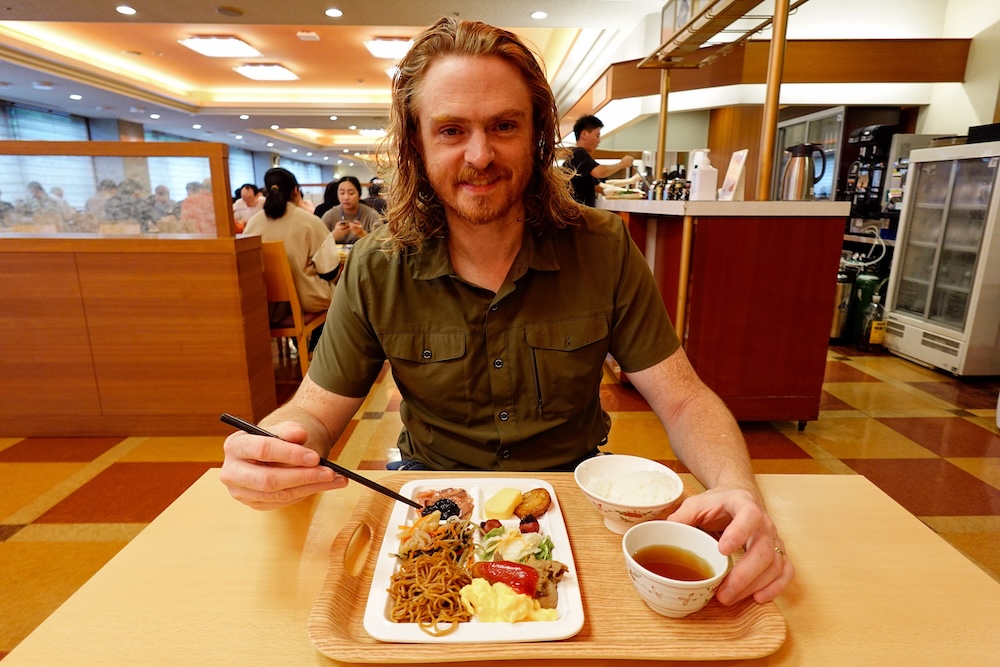
Dinner at Park Hotel Miyabitei is a large buffet in a dining hall, and the quality, selection and variety genuinely impressed me. We made the rookie move of arriving right at opening, along with everyone else, so we skipped the long queue for the main seafood and meat station and started at the salad bar and the hot appetizers. Between the two of us, the plates went roughly like this:
- Starters: pumpkin salad, shrimp salad, kimchi and takoyaki, with green tea.
- From the hot stations: a ginger hot pot loaded with cabbage, salmon, tuna, crab, shumai and a tempura prawn.
- Seafood: scallops, shrimp and sashimi, plus a bit of beef.
By my own count I did three rounds before dessert, and dessert was round four. The cream puffs were perfect little clouds filled with sweet cream. Drinks cost extra, so we stuck to tea and water.
Over the two nights there was red snow crab and tuna sashimi, plus plenty of other things we kept going back for. The one catch is that the menu is the same every night, so on a two-night stay you get some déjà vu. It’s tasty déjà vu, though, and you can build a different dinner each evening just by choosing different things.
The thing to check before you book is that the buffet isn’t automatic. The hotel sells breakfast-only plans as well as plans with dinner and breakfast. Book the cheaper one and you’ve thrown away a big part of what makes the evening worth having. If you want the same evening we had, check which Park Hotel Miyabitei plans include dinner before you pick a room.
Futons made while you eat
We came back from dinner to a different room. While we’d been eating, staff had moved the table aside and laid out the futons, with thick duvets in patterned covers that let the floral design show through. Earlier, Audrey had briefly been confused, assuming the room must carry on into a bedroom somewhere. It doesn’t. The same tatami room does both jobs, and someone quietly switches it from sitting room to bedroom while you’re working through the buffet. It’s a small thing, but it was one of the nicest touches of the stay.
The evening we didn’t have
I’ll be honest about our nights. We were still jet-lagged, so most evenings we were asleep by eight or nine. We didn’t wander the town after dark. We stayed in the hotel, ate, soaked and slept, completely immersed in that routine, and it suited us fine.
If you have more stamina than we did, the night has more to offer than we used. The walking path through Jigokudani, called Onibi no Michi, is lit every evening of the year from sunset until 9:30 p.m., and it’s free. We didn’t make it, so I can’t describe it from experience. Still, steam drifting through footlights in a volcanic crater is the obvious use of an evening if you’re not face-down on a futon by eight. You won’t linger over it if you’re keeping an eye on the last bus. If you want to see the valley’s colours as well, go before the sun goes down. On summer fireworks nights, evening access to the valley can be restricted, so check the tourism association’s notices if your dates fall in that season.
What the Night Adds in the Baths
My odd-hour soaks
This is the real case for staying. As a guest, you bathe on the guest timetable, and that includes the strange hours nobody else is using.
Jet lag had my body clock scrambled, so I went down whenever I happened to be awake. Some sessions I had the baths almost to myself. Others were busier, which is what you get in a hotel this size. Coming from my teaching years in Korea, when I was in a jjimjilbang most weeks, this was exactly my kind of place. After one long soak I came back to the room so wiped out I was ready for bed on the spot.
Audrey, the reluctant bather who went back
Audrey’s side of this is the one I’d listen to if you’re nervous. Public bathing isn’t really her thing, but she tried it, and then she went back. In the women’s section she counted seven or eight pools, one of them outdoors, and we both agreed the baths here beat those at the much smaller ryokan we’d stayed at years earlier.
She also worked out the timing. She went once during dinner, when everyone else was in the dining hall, and once at about 4:30 in the morning. One of those times she had the women’s bath entirely to herself, and on the other there was just one other woman. For a hesitant bather, a nearly empty pool is what turns trying it once into going back.
What the Morning Adds: An Early Bath and the Trails Before the Crowds
If I had to name the single biggest thing a day trip misses, it’s the morning: waking up for an early bath, then heading out to the footbath and the trails before the crowds arrive.
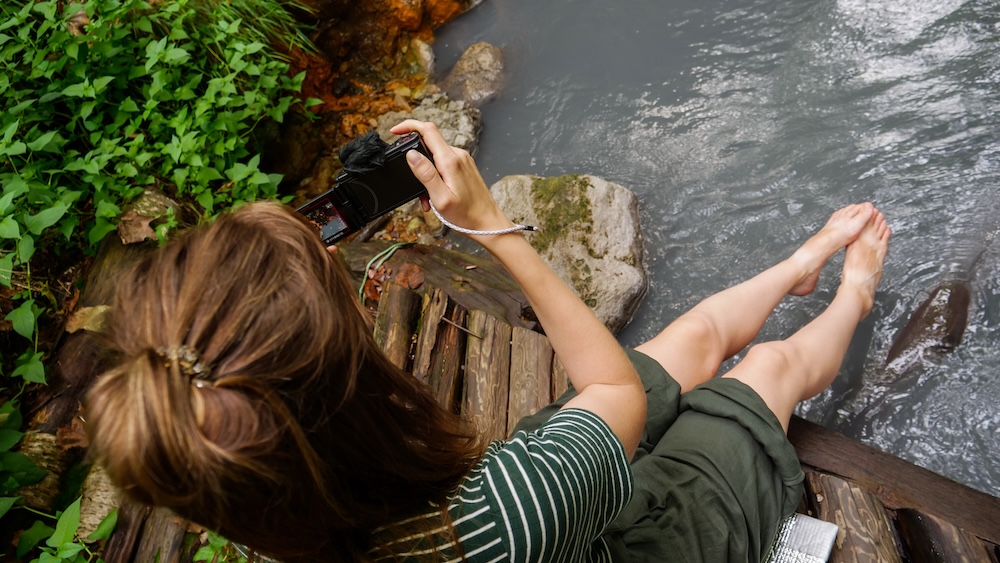
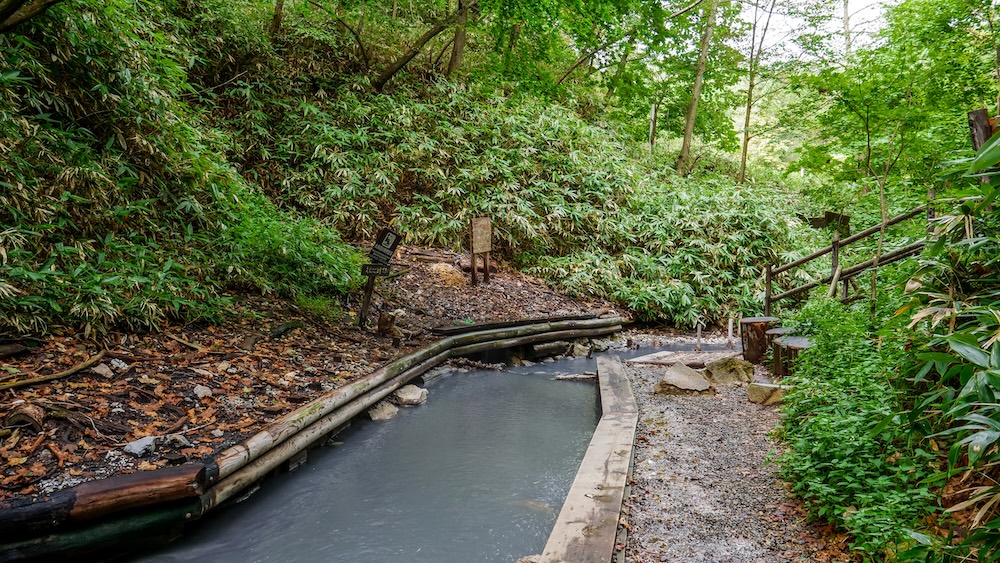
On our full day we were out early and the town was tranquil. We walked past hotel after hotel without seeing a soul. The natural footbath in the forest officially opens at 8:00, so early there means right at opening rather than at dawn, and at that hour we had it nearly to ourselves. The outdoor part of that day, the footbath and the walking through the steam, ranks among my favourite things we did anywhere in Japan.
The direct buses show how much of this a visitor misses. The one from Sapporo reaches the onsen town in the middle of the afternoon, and the one back leaves at 9:30 the next morning. You can’t do it as a same-day round trip, and anyone who arrives on the afternoon bus and sleeps somewhere else never sees the town at its best.
The last morning had its own small reward. Before checkout, we sat in our yukata with a pot of tea in the room and talked the trip over. That tea turned out to be one of Audrey’s favourite moments of the whole stay. Check-out is at 10:00, which leaves time for a last soak and a slow start before the bus.
What a Visit Can’t Give You
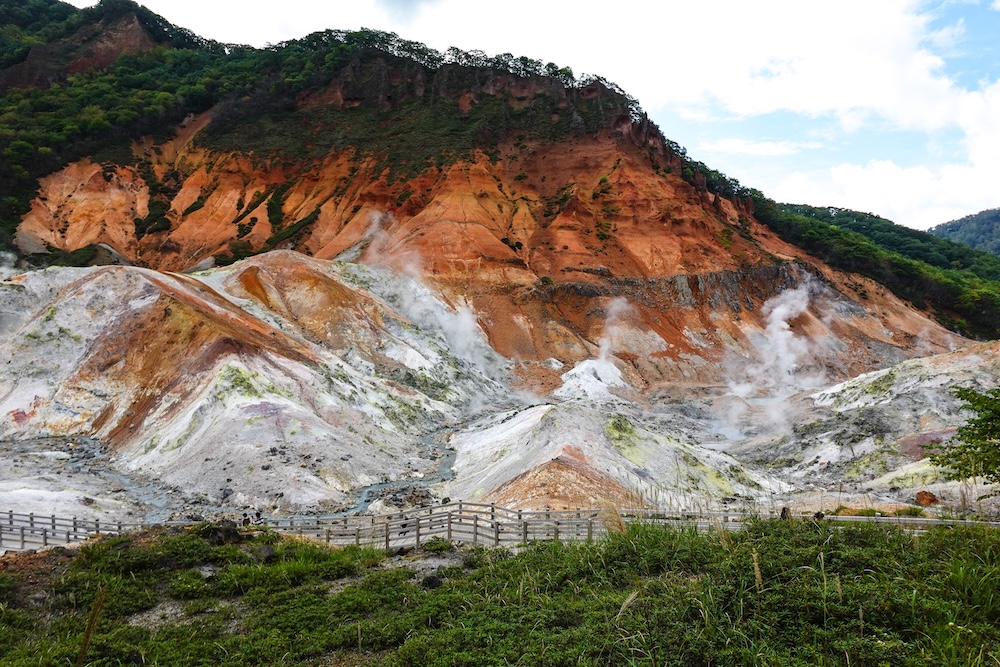
A day visitor still gets a lot, to be fair. Hell Valley is free and open to everyone, and so is the footbath. You can buy a day pass to a hotel bath, eat lunch in town and see the main sights in one long, full day.
What a visit can’t give you is the time on either side. Hotels that sell day passes mostly take their last bathers at 6 or 7 p.m., and the public bathhouse in town takes its last entry at 8:30. On busy dates some hotels stop selling day passes altogether, sometimes with only a couple of days’ notice, because their own guests fill the baths. The last bus down to the station leaves the terminal at about 8:30 p.m., so even a long day ends with you watching the clock. And by the time a day visitor arrives, the morning quiet has long gone.
If a night really isn’t possible, the next best thing is a day that guarantees you a proper soak instead of gambling on a day pass. One current option is a guided day tour from Sapporo with bath entry at Dai-ichi Takimotokan included. An English-speaking guide takes you through Hell Valley and out to the footbath before the soak. Most other day trips pair Noboribetsu with Lake Toya, so if you browse guided Noboribetsu day trips from Sapporo, check how long each one spends in town and whether a bath is included. I haven’t done any of these tours.
For me, that’s what the night is for: the whole onsen experience at the hours when it’s at its best, rather than one quick soak fitted between bus times.
When the Night Matters Less
Not everyone needs to stay. If you just want a break from a nearby city, a day trip or a single night will do the job: you’ll see the valley, maybe get a soak, and head home. If public baths don’t appeal and a big buffet doesn’t excite you, the night adds a lot less, and you’re mostly paying to sleep near a crater. Audrey going back for a second soak suggests the baths can win over reluctant bathers, but that’s a reason to give them a try, not a guarantee.
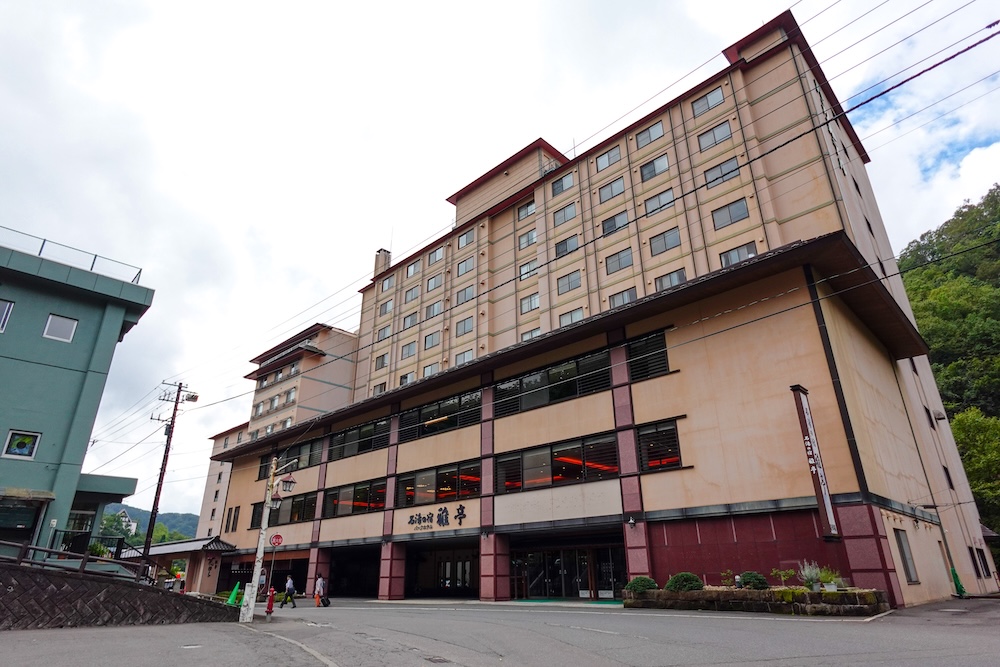
The kind of hotel matters too. Ours was a ten-storey resort with lots of guests, a dining hall and a fair bit of chaos at opening time, and it lacked the personal touch. There was no kaiseki, the traditional dinner where course after course of little plates is served in your room, the way a five- or ten-room ryokan would do it. What it did have was a bigger, better onsen than our small ryokan, and a short walk to everything. If the more intimate version appeals, look at smaller ryokan in the onsen town and check whether dinner is served in your room or in a dining hall. I’d try both styles at some point, because what you prefer may not match what we preferred.
Book the Night, Take the Dinner Plan
If the baths are any part of why you’re going to Noboribetsu, stay over. Book a room in the onsen town itself, not near the station, and take the plan with dinner. If you want the big-hotel version we had, with the big baths and the buffet, you can see current availability at Park Hotel Miyabitei. Then use the hours a day visitor never gets: soak while everyone else is at the buffet, or go down before dawn like Audrey did, and be at the footbath when it opens. If you’re less jet-lagged than we were, add the lit path through Hell Valley to your evening.
Frequently Asked Questions
Is it worth staying overnight in Noboribetsu Onsen?
Yes, if the onsen is part of why you’re going. Audrey and I spent two nights and both thought it was worth it. The night gives you the evening in a yukata, baths at quiet hours and the town before the day crowds arrive.
What do overnight guests get that day visitors don’t?
Time. Hotel day passes mostly take their last bathers at 6 or 7 p.m., the public bathhouse takes its last entry at 8:30, and the last bus down leaves the terminal at about 8:30 p.m. Guests can soak during dinner, late at night or before dawn, and be at the footbath when it opens at 8:00.
Is dinner included at Park Hotel Miyabitei?
Not automatically. The hotel sells breakfast-only plans as well as plans with dinner and breakfast. Dinner is a large buffet in a dining hall, and it was one of the highlights of our stay, so pick a plan that includes it.
When are the hotel baths quietest?
Audrey went once during dinner and once at about 4:30 in the morning, and one of those times she had the women’s bath to herself. I was jet-lagged and went at odd hours, and some sessions I had the baths almost to myself.
Can you see Hell Valley at night?
Every evening, the Onibi no Michi path through Jigokudani is lit from sunset until 9:30 p.m., and it’s free. We were asleep too early to walk it ourselves. On summer fireworks nights, evening access can be restricted.
Who should skip the overnight?
If you just want a quick break from a nearby city, a day trip or a single night will do. If public baths don’t appeal and a big buffet doesn’t excite you, staying over adds much less.
This article is also available in Spanish. [Leé la versión en castellano: ¿Vale la pena quedarse a dormir en Noboribetsu Onsen? Lo que suma la noche]
This article contains affiliate links. If you book through one of these links, I may earn a commission at no extra cost to you.