
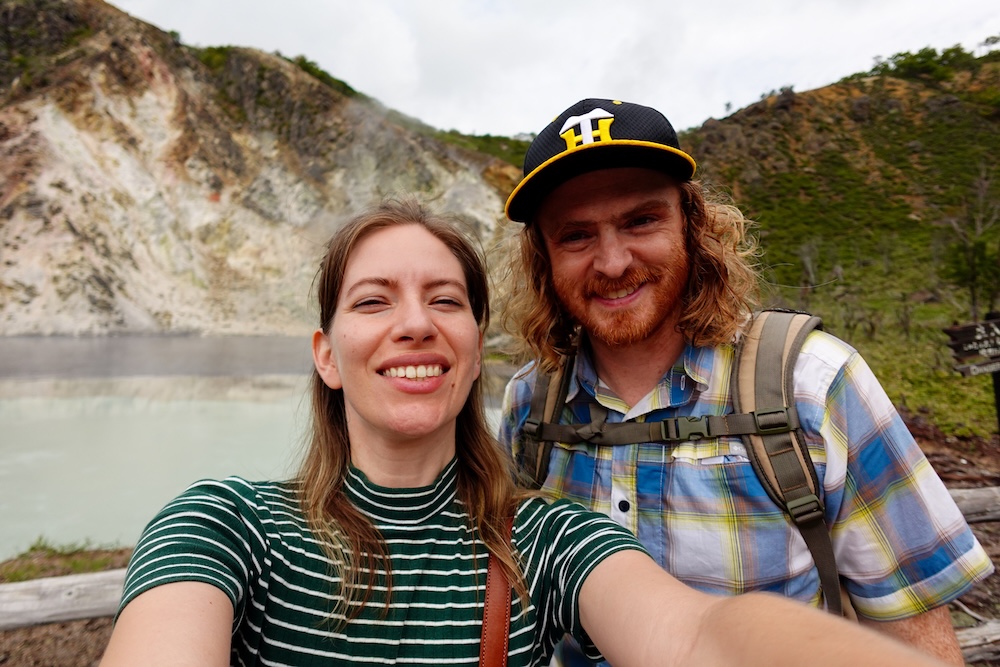
When Audrey and I visited Noboribetsu Onsen, one of our favourite mornings involved walking between two of the area’s most unusual natural attractions: the Oyunuma River Natural Footbath and Jigokudani Hell Valley. We started at the footbath, spent about half an hour soaking our feet in the hot river, and then continued through the forest toward Hell Valley. Between the trees, stairs, geothermal scenery and stops along the way, the outing took up our entire morning.
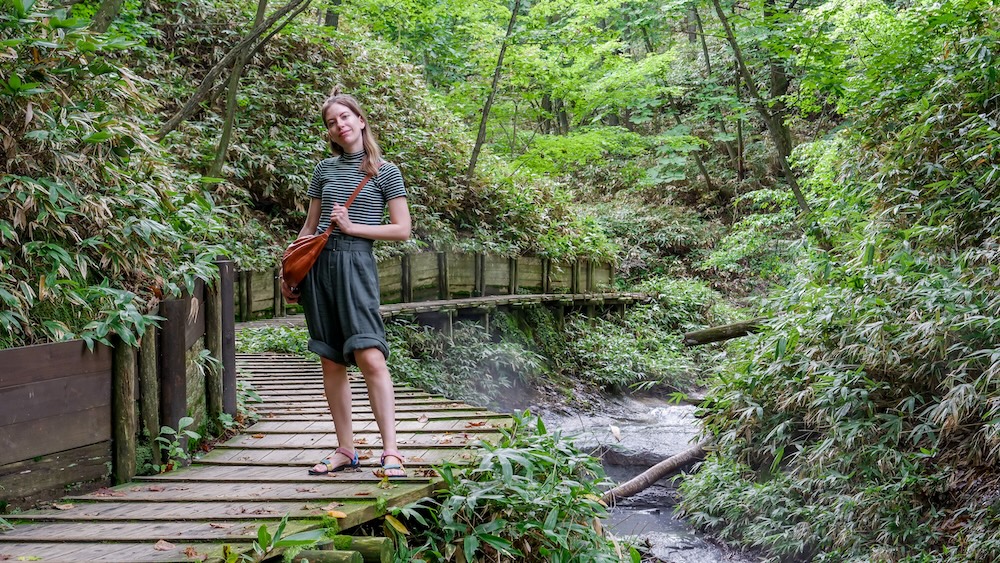
And I loved it. The forest walking was excellent exercise, the scenery kept changing, and there was always something interesting waiting around the next bend. Better still, the directional signs made navigation surprisingly straightforward. If you’re planning to walk from Hell Valley to the natural footbath, you’ll be travelling in the opposite direction to us, but the two attractions are connected by the same wider trail network. Here’s how to plan the route, what the walking is like and why I’d give it plenty of time.
How to Walk From Hell Valley to Oyunuma Natural Footbath
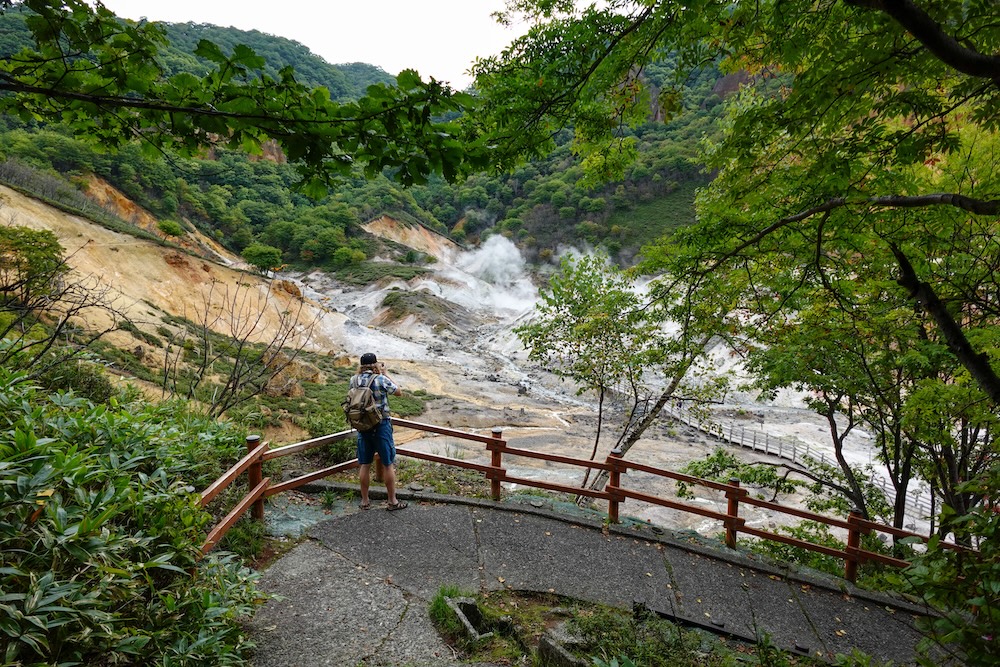
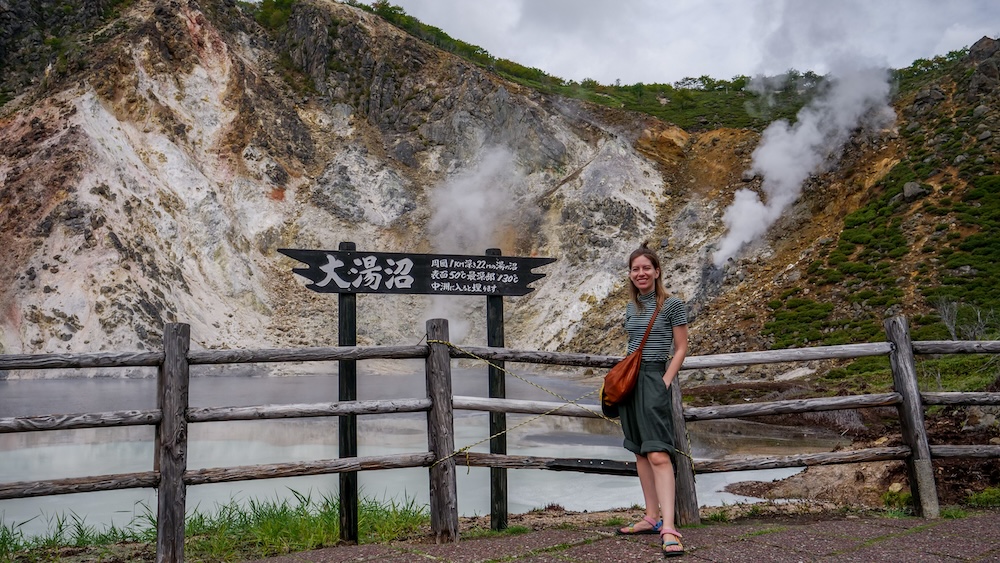
Start at Jigokudani’s main observation area, near the Park Service Center. This is where you’ll find the panoramic views across Hell Valley, with orange and white volcanic slopes, bubbling water and steam rising from the ground. The wooden boardwalk around the crater doesn’t continue uninterrupted to the footbath; you’ll need to join the surrounding forest trail network, where paths branch toward different geothermal attractions.
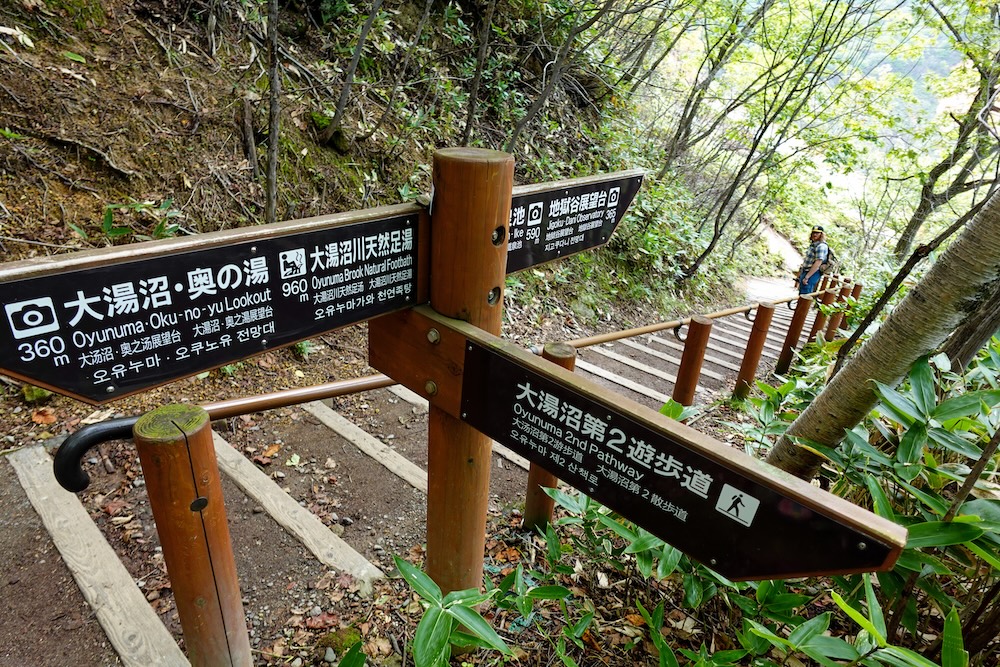
The official walking map identifies routes including Oyunuma Pathway 1, Oyunuma 2nd Pathway and Oyunuma Scenic Pathway. The Scenic Pathway serves the riverside footbath area, while other connections lead toward Oyunuma Pond and nearby viewpoints. Oyunuma Pond and Oyunuma River Natural Footbath are two different places. Oyunuma is a large geothermal pond; the footbath is farther downstream, where you can sit beside the river and soak your feet. Reaching the pond doesn’t necessarily mean you’ve reached the footbath.
As you leave Hell Valley, use the signposted forest connections toward Oyunuma, keeping an eye out for directions specifically identifying the natural footbath. At one forest staircase junction, signs point toward Oyunuma-Okunoyu Lookout, Oyunuma Brook Natural Footbath and Oyunuma 2nd Pathway. It’s exactly the sort of junction where reading the destination matters more than blindly following the next trail. If you’d like to include Oyunuma Pond, treat that as an additional stop rather than assuming it’s part of the quickest connection.
I’d keep the official Noboribetsu walking map accessible on your phone instead of trying to memorise every trail name. Audrey and I found the signs enormously helpful while travelling from the footbath toward Hell Valley, and I don’t remember any major navigation problems. Still, check the junctions carefully when heading in the opposite direction.
How Long Does the Walk Take, and How Difficult Is It?
You’ll find an approximate walking estimate of 20 minutes between Jigokudani and the natural footbath. That’s a useful starting point, but don’t confuse it with the time needed to enjoy both attractions. The official Jigokudani Pathway measures 568 metres with an estimated walking time of ten minutes; the Oyunuma Scenic Pathway is another 388 metres, with an estimated 15 minutes. Those are individual parts of the network, not a complete itinerary you can simply add together.
If you visit Oyunuma Pond along the way, allow additional time. Walking from Hell Valley to the pond is commonly estimated at approximately 20–30 minutes, and you still need to continue toward the riverside footbath afterward. We certainly weren’t racing with a stopwatch. We stopped for photographs, spent about half an hour at the footbath and explored Hell Valley, so the whole outing occupied our morning. I wouldn’t have wanted to rush it.
This is also why I’d be careful about booking a tightly scheduled excursion from Sapporo if your goal is to complete the full forest walk. For example, the listed itinerary for this Sapporo, Noboribetsu and Lake Toya day tour allows about 35 minutes at Jigokudani. That can work for a short look at Hell Valley, but it isn’t the same as dedicating a morning to walking all the way to the footbath.
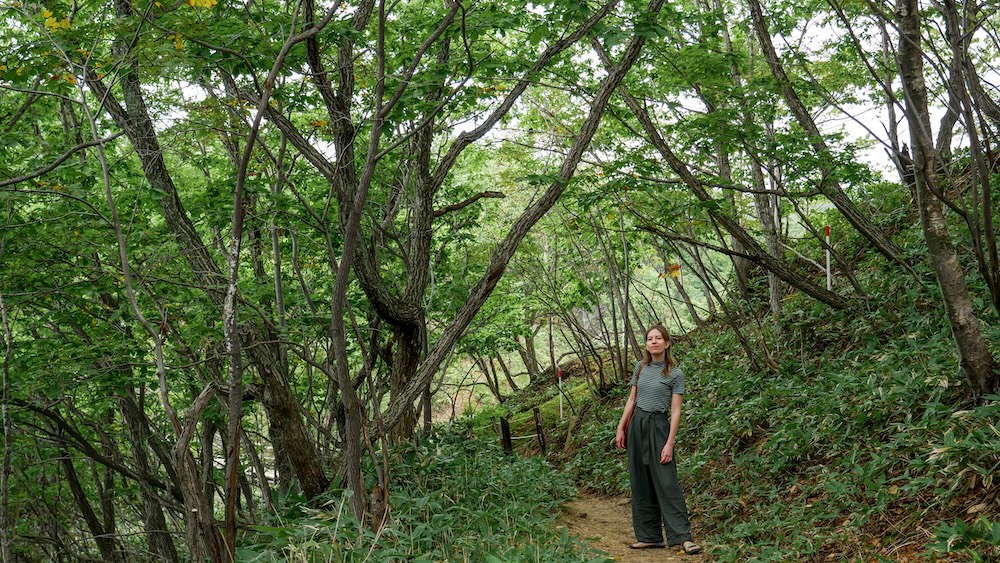
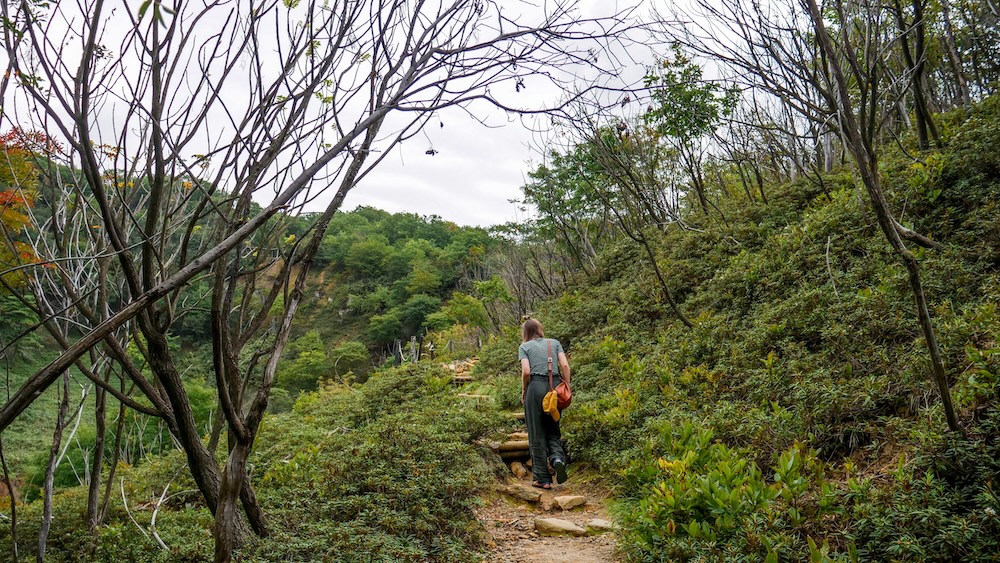
As for difficulty, I remember a good mixture of terrain: lovely forest sections, stairs and some steeper stretches that got the legs working. We didn’t encounter mud, although that doesn’t guarantee dry trails after rain. It was manageable for us and genuinely good exercise, but I wouldn’t describe it as a flat, effortless stroll. If you struggle with steps or uneven paths, the main Hell Valley boardwalk may be a more suitable choice than the longer connection.
What the Walk Between the Two Attractions Is Actually Like
One of my favourite things about exploring Noboribetsu was how dramatically the scenery changed. Hell Valley has its exposed volcanic earth, pale rocks and orange mineral deposits, while the surrounding paths lead into much greener terrain, with trees overhead and geothermal water moving through the landscape. I particularly enjoyed those wooded sections. You’d hike for a while, come across another unusual feature, stop to take it in and then carry on. The walking itself felt like part of the attraction.
At the natural footbath, steam rose from a river with an unusual milky, bluish-grey colour. We took off our shoes and settled beside the water, surrounded by trees and the sound of the stream. It was surprisingly hot at first, but once we adjusted to the temperature, it felt fantastic. I could have stayed there for ages, and we lingered for a good half an hour before continuing our walk.
Since we visited the footbath first, we enjoyed that relaxing stop before walking toward Hell Valley. I can see the appeal of doing it the other way around, especially if soaking your feet after some proper exercise sounds like your kind of reward. Either way, don’t treat the forest trails as dead time between two places you want to tick off a list.
Planning Your Walk: Return Route, Conditions and What to Bring
Before setting out, think about where you need to finish. Walking from Hell Valley to the footbath is only one part of your outing, and the return arrangements can substantially change the total distance. If you’re staying in Noboribetsu Onsen, you may be able to return toward town using a separate footbath approach rather than retracing the forest route through Hell Valley. That town-side connection is described as approximately 15–20 minutes on foot, depending on your starting point, and it includes a narrower forest path with steps.
We stayed for a couple of nights at Park Hotel Miyabitei, which gave us the freedom to devote the morning to walking rather than watching the clock for a departure. If you’re planning a similar overnight visit, you can check current room options at Park Hotel Miyabitei. Staying in the onsen district puts you in a different position from somebody visiting on a tight day-trip schedule.
If your car is parked near Hell Valley, you’ll need a route back to it. The natural footbath doesn’t have dedicated parking, and heading toward town won’t magically return you to your vehicle. Work out the return before settling beside the river, when the prospect of walking uphill again might feel rather less appealing.
Wear comfortable shoes with decent grip, carry drinking water and bring a small towel if you’re using the footbath. That towel came in particularly handy for us; after soaking in the warm river, drying your feet before pulling on socks and shoes is considerably nicer than continuing with damp feet.
Keep to the designated trails, respect barriers around geothermal features and don’t mistake the hot water at Oyunuma Pond for the established bathing spot downstream. Snow, ice, wet surfaces or temporary maintenance can also affect access. The scenic footbath path has experienced short closures before, so check the latest Noboribetsu access notices and pay attention to signs at the trail entrances, especially outside the warmer months.
Is It Worth Combining Hell Valley and the Natural Footbath in One Walk?
Absolutely. If you enjoy walking and have the time, I’d recommend combining both attractions. Audrey and I had a fantastic morning exploring the geothermal trails, and the forest sections were a big part of the fun. We got some proper exercise, enjoyed the quieter riverside setting and finished with memories of Hell Valley’s extraordinary volcanic scenery.
The only mistake I’d avoid is trying to squeeze the entire outing between tightly timed commitments. If you have limited mobility, poor trail conditions or very little time, enjoy the main Hell Valley viewpoints and save the longer connection for another occasion. Otherwise, give yourself a morning, follow the signs and leave time to sit at the footbath. I think you’ll enjoy the walk just as much as the destinations on either end.
Frequently Asked Questions
Can you walk from Hell Valley to Oyunuma Natural Footbath?
Yes. Jigokudani Hell Valley connects to the Oyunuma River Natural Footbath through a network of forest trails. You’ll need to leave the main Hell Valley boardwalk and follow the appropriate signposted pathways toward the footbath. I recommend carrying the official Noboribetsu walking map because several trails branch toward different geothermal attractions.
How long does it take to walk from Hell Valley to Oyunuma Natural Footbath?
An approximate walking estimate of 20 minutes is published for the connection, but the actual time depends on your chosen route. Visiting Oyunuma Pond adds more walking, and sightseeing or soaking your feet takes additional time. Audrey and I explored the attractions in reverse, spending approximately half an hour at the footbath, and our complete outing occupied the morning.
Is the walk between Hell Valley and the natural footbath difficult?
The route includes forest paths, stairs and some steeper sections, so it’s more demanding than staying on Hell Valley’s main viewing boardwalk. We found the walking manageable and enjoyable, with enough variation to provide good exercise. Visitors uncomfortable with steps or uneven terrain should approach the longer connection cautiously.
Are Oyunuma Pond and Oyunuma River Natural Footbath the same place?
No. Oyunuma Pond is a geothermal pond, while Oyunuma River Natural Footbath is farther downstream in a wooded riverside setting. They’re separate attractions connected by the wider walking network. Reaching Oyunuma Pond doesn’t mean you’ve reached the designated footbath.
Do you have to walk back through Hell Valley after visiting the footbath?
Not necessarily. A separate walking approach connects the footbath area with Noboribetsu Onsen town, potentially allowing you to finish without retracing the entire forest route. The best return depends on where you’re staying or whether you’ve parked near Hell Valley. Decide on your return route before beginning the walk.
What should you bring for the Hell Valley to Oyunuma Natural Footbath walk?
I’d bring comfortable shoes with good grip, drinking water, the current walking map and a small towel if you’re planning to soak your feet. The towel was particularly useful during our visit because we could dry our feet before putting our socks and shoes back on. Check current trail access notices, especially when snow, ice or maintenance could affect the paths.
This guide is also available in Spanish. [Leé la versión en castellano: De Hell Valley al baño natural para los pies de Oyunuma: guía de caminata]
This article contains affiliate links. If you book through one of these links, I may earn a commission at no extra cost to you.