
I came to Noboribetsu thinking I’d discovered some obscure hot-spring town in Hokkaido. I’d been scrolling around a map for stops between Hakodate and Sapporo, and its volcanic valley caught my eye. Then Audrey and I arrived to find enormous onsen hotels, demon statues everywhere and a well-established resort that clearly hadn’t been waiting for me to discover it.
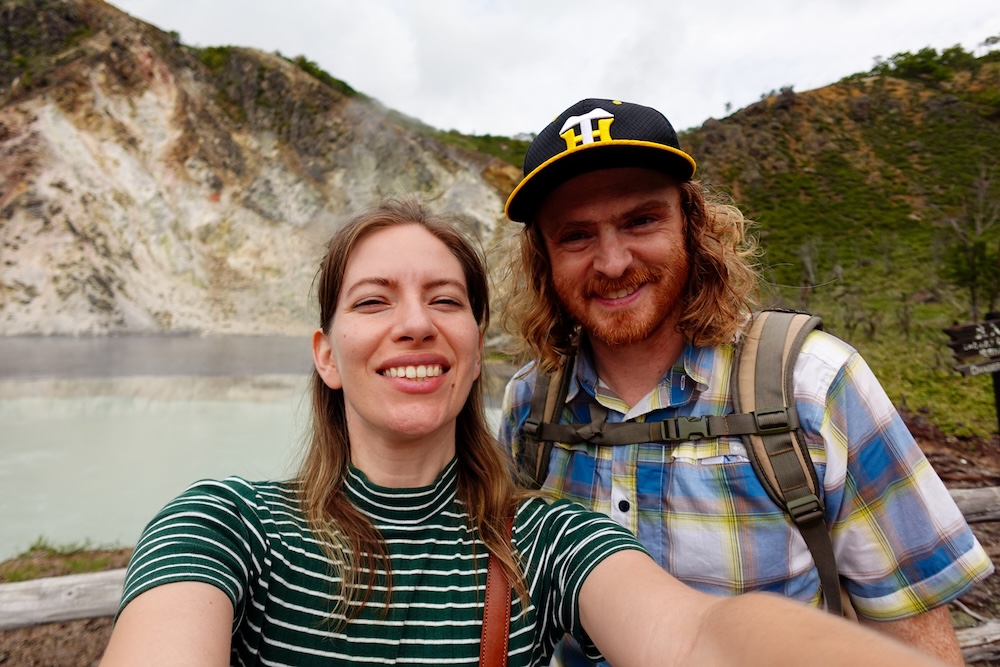
I didn’t mind being late to the party. We spent a couple of nights at Park Hotel Miyabitei, walked through steaming geothermal landscapes, ate some outrageously good ramen and soaked ourselves silly in the hotel baths. The standout, though, was an early-morning visit to the Oyunuma River Natural Footbath. We were sitting in a forest with our feet in a hot volcanic stream, barely another person around, and I remember thinking I could happily stay there for hours.
Our first day was mostly train, bus, hotel check-in, buffet dinner and a soak. We tackled most sightseeing after that. If I went back with two proper days available, I’d spread things out: one day for the footbath, Oyunuma and Hell Valley; the next for town attractions, food and more onsen time. Here’s how I’d do it.
First, Make Sure You Have Two Days in the Onsen Town
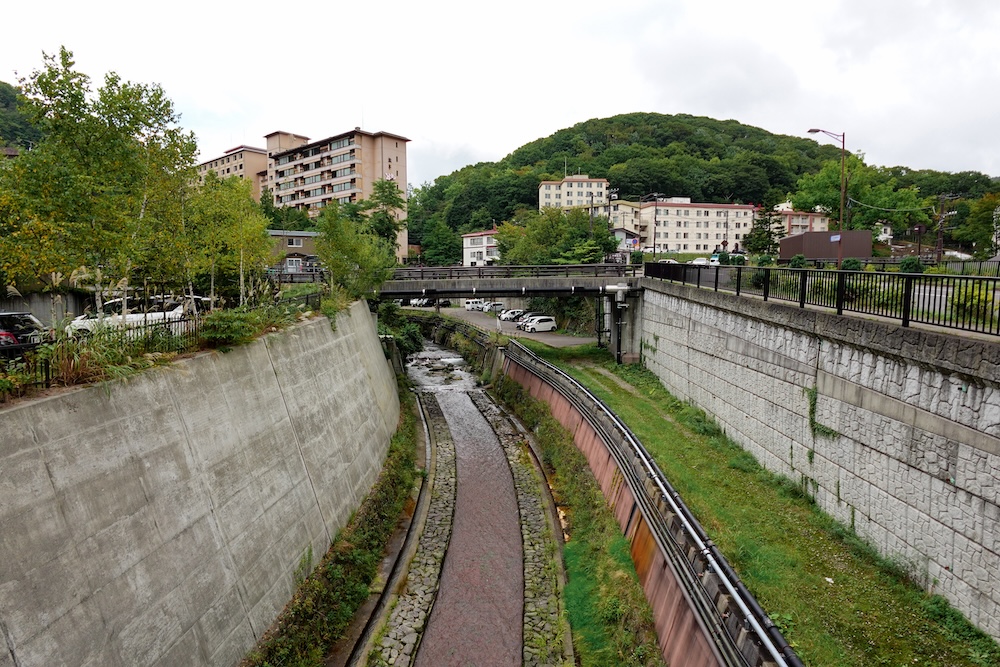
There’s a practical distinction that can throw your whole itinerary out before you’ve even started. JR Noboribetsu Station and Noboribetsu Onsen are different places, about eight kilometres apart. The train leaves you down near the coast. The hotels, Hell Valley and most of the attractions in this itinerary are farther inland, in the hot-spring district.
We travelled from Hakodate using a JR Hokkaido pass, then caught the public bus up to the onsen town and walked to our hotel. It was manageable without a car, but the transfer took time. Current Donan Bus services generally take around 15–25 minutes between the station and onsen district, depending on the particular route and stop, and the listed adult fare is ¥450 one way. Some buses continue to hotel-area stops while others terminate more centrally. Don’t assume your preferred stop is served by every departure, or that Suica and Kitaca will work on these buses. Check the Donan Bus timetable and route details and leave room for the wait between train and bus.
This itinerary assumes two substantial sightseeing days in Noboribetsu Onsen. One night could work with early arrival and late departure; two nights allow a much more relaxed stay. Reaching your hotel halfway through the afternoon doesn’t count as a full sightseeing day, as we found out ourselves.
For this itinerary, I’d choose accommodation in Noboribetsu Onsen itself rather than near the railway station. Being able to walk to the main attractions and return to your hotel for another bath is a large part of the appeal. You can compare hotels and ryokan in Noboribetsu Onsen to see which properties suit your dates and budget.
| Time | Day 1: Geothermal landscapes | Day 2: Onsen town and relaxation |
|---|---|---|
| Morning | Natural footbath and Oyunuma trails | Breakfast or a morning bath, then demon statues and Enmado |
| Midday | Hell Valley and the surrounding paths | Gokuraku Street and an unhurried ramen lunch |
| Afternoon | Finish exploring; head back to the hotel | Sengen Park, optional Yuzawa Shrine, something sweet |
| Evening | Buffet or dinner, followed by a hotel onsen | More bathing and dinner if staying another night; otherwise depart |
It’s a division of the days, not an hour-by-hour military operation. Your hotel and transport times will dictate the details.
Choosing a Hotel for This Two-Day Itinerary
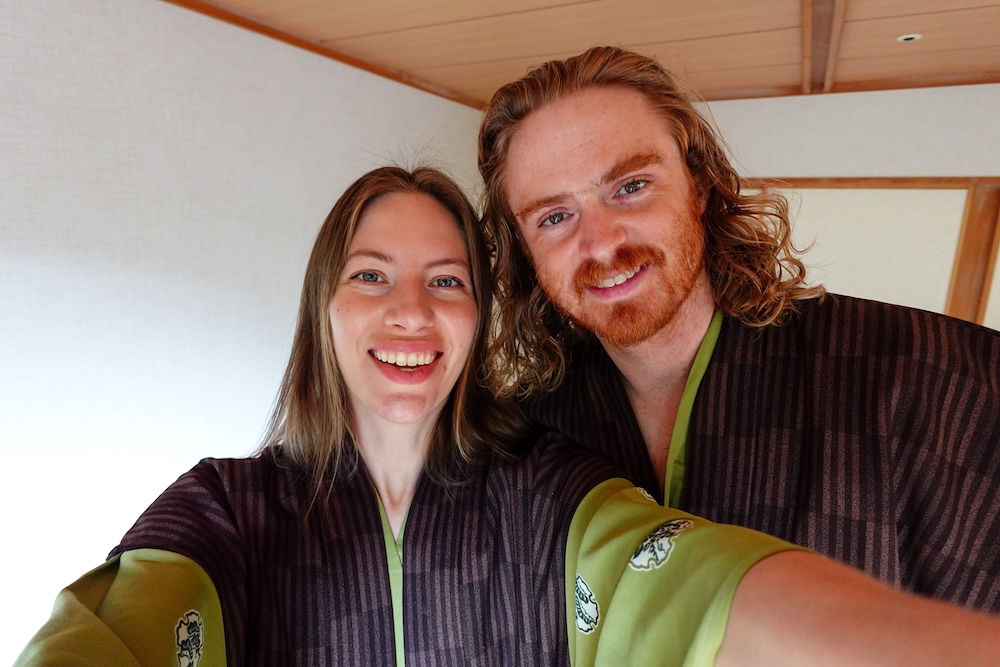
We personally stayed at Park Hotel Miyabitei, which suited us because we wanted extensive onsen facilities, buffet meals and a walkable base. I’d happily consider it again, with the understanding that it’s a large resort rather than a small, intimate ryokan. Check the available meal plans carefully, because breakfast-only and dinner-inclusive bookings aren’t necessarily the same thing.
If you’d prefer a smaller property with traditional multi-course dining, Takinoya Bekkan Tamanoyu is another option in the onsen district. It’s listed within walking distance of Hell Valley and offers hot-spring bathing and Japanese meals, although dinner arrangements need advance attention. We haven’t stayed there ourselves. For travellers who put particular importance on proximity to Hell Valley and substantial bathing facilities, Dai-ichi Takimotokan is also worth comparing. The right choice depends on whether you’d rather have a large bathing complex, a smaller ryokan atmosphere or a particular location within town.
Day 1: Oyunuma Natural Footbath, Forest Walks and Hell Valley
I’d give the geothermal side of Noboribetsu the best part of the day. On paper, several trails look short. In real life, you spend plenty of time stopping to look at steam rising from the ground, peer into vividly coloured pools or simply enjoy the forest. We found the walking manageable at our own pace, and the scenery kept getting more interesting as we went.
The Oyunuma area, natural footbath and Jigokudani are connected by walking trails, though there isn’t one obligatory loop that suits every hotel or season. Check the Noboribetsu Onsen walking map and current trail notices before setting out. I’d allow around three to five hours for the main outing, including photographs and a proper stop at the footbath. That’s an allowance for exploring, not a published completion time for a single route.
Start at the Oyunuma River Natural Footbath
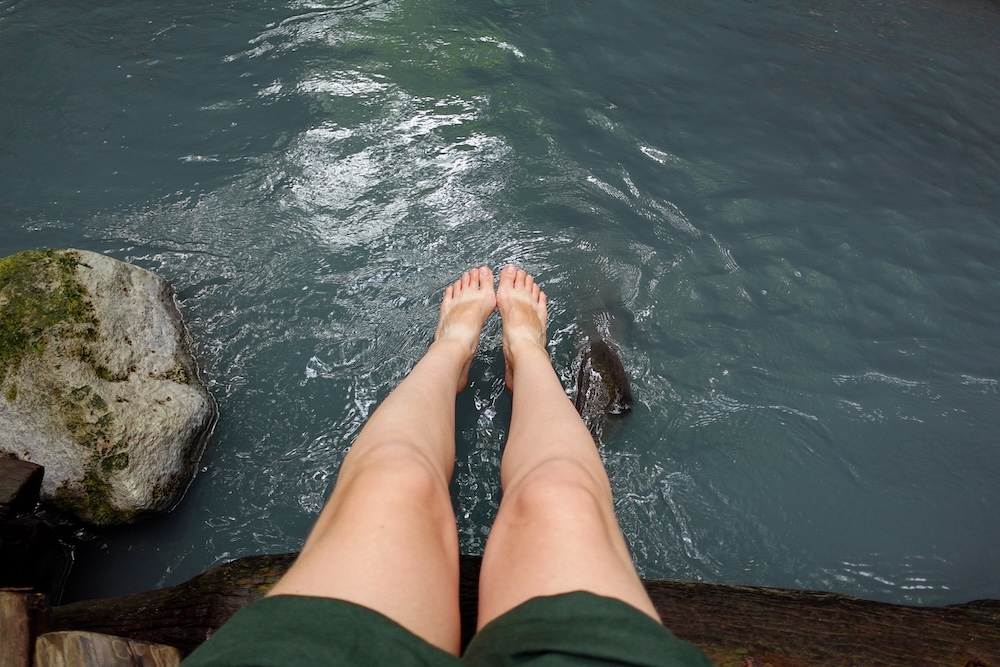
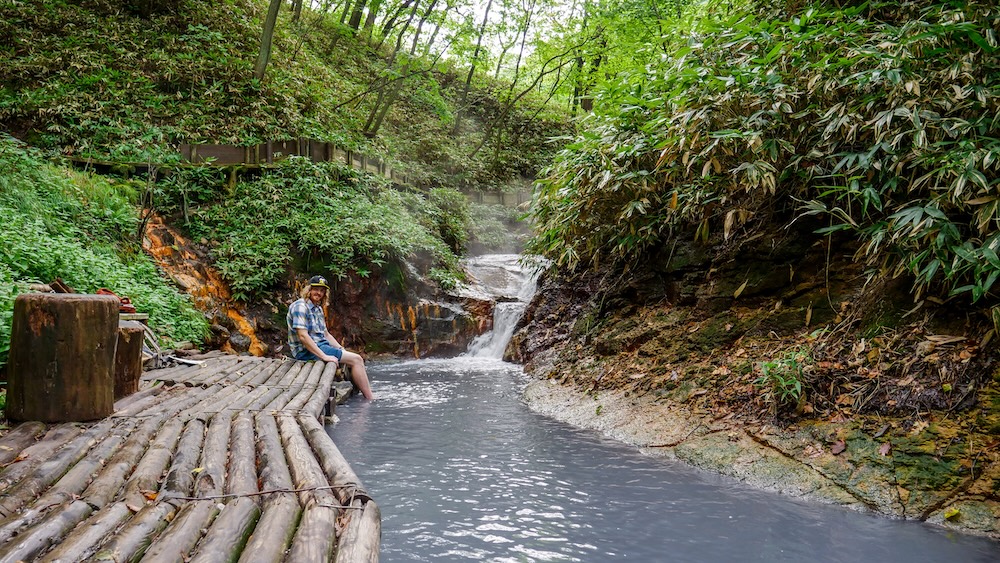
This was the magic moment for us. We’d gone out early after breakfast and followed the little trail down to a stream that was actually warm from geothermal activity. There were places to sit beside the water, steam rising between the trees and that unmistakable sulfur smell. At first the water felt surprisingly hot. Once my feet adjusted, I was in no hurry to move.
The water had a milky, grey-blue colour, and when I pushed my toes down I could feel fine black volcanic sand underneath. Being able to sit in that setting, with the sound of running water and almost nobody else there, was a completely different experience from using a hotel bath. We lingered for roughly half an hour, and I would happily have stayed longer.
A few people came and went, so I wouldn’t promise solitude. I’d still try to arrive early; the peaceful setting was a huge part of what I loved.
The footbath is free, with a listed visitor window of 8 a.m. to 5 p.m. and possible restrictions on the connecting trail, particularly in winter. Repairs can also cause short-term closures. Bring a small towel to dry your feet, wear shoes you can comfortably walk in and pay attention to the water temperature and any posted warnings. The attraction isn’t worth ignoring a closed trail to reach.
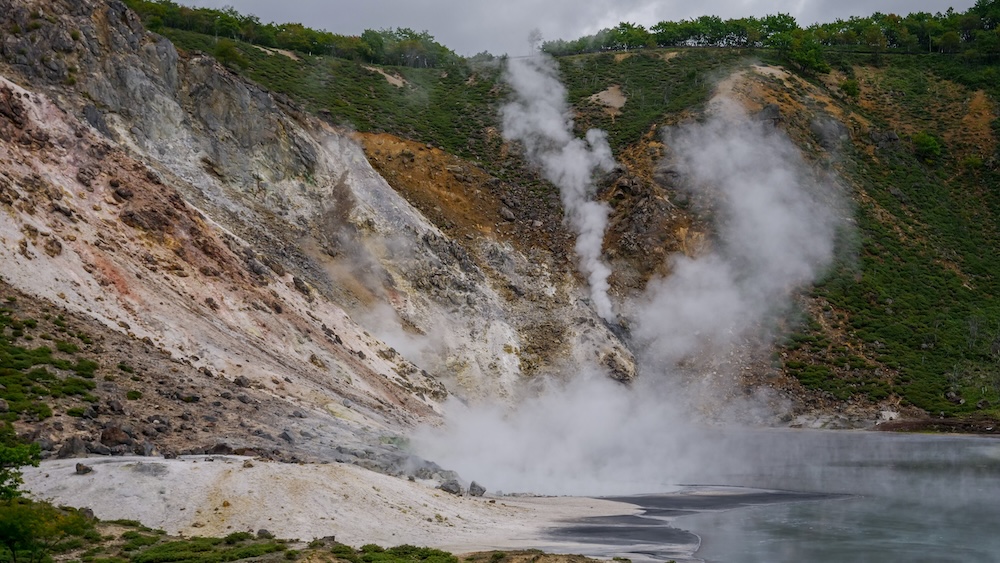
Wander Through the Oyunuma Geothermal Area
Once you’ve dried your feet, there’s more to see around Oyunuma. We passed bubbling water, steam vents and strangely coloured ponds, with the landscape changing between wooded sections and exposed geothermal ground. At one point we spotted three deer near a pond. That was a lovely bonus, although I wouldn’t build a wildlife safari into your schedule on the strength of our sighting.
The walking map shows individual paths with estimated times in the 10–20 minute range. For example, the Oyunuma Scenic Pathway is marked at about 388 metres and 15 minutes, while other paths connect toward Hell Valley and nearby viewpoints. Those short estimates make the area sound almost comically quick to visit. They’re for particular trail segments, though, not for getting from your hotel to the footbath, visiting Oyunuma, exploring Hell Valley and walking back.
We weren’t doing anything especially athletic. Reasonable fitness and an easy pace were enough for us, with new scenery appearing regularly along the paths. Still, these aren’t uniformly paved walks, and snow, ice, rain or closures can change what’s reasonable.
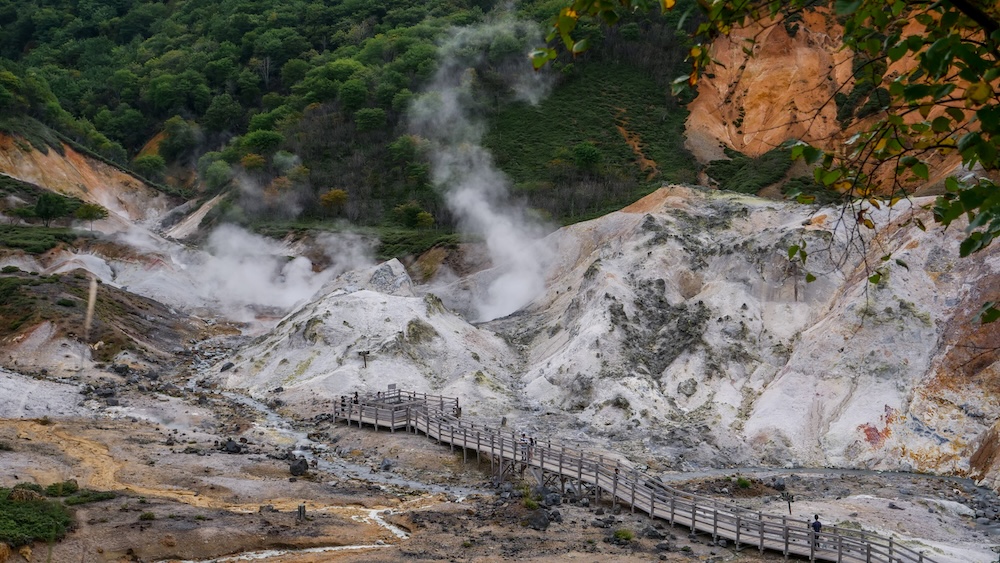
Explore Jigokudani, Better Known as Hell Valley
Hell Valley is the volcanic spectacle that first made me want to visit Noboribetsu. There are pale rocks, orange soil, hissing vents and bubbling water in a broad crater landscape roughly 450 metres across. The ground genuinely looks as though something unpleasant might be cooking underneath. Add the smell of rotten eggs and you have quite the sensory package.
We walked the designated paths and stopped repeatedly to take it all in. I remember being surprised by the warmth around some of the geothermal features. The weather itself wasn’t particularly hot, yet standing near certain vents felt humid and draining. It’s an active volcanic environment, so follow the barriers and stay where visitors are permitted.
If you’re looking at the map, a Jigokudani pathway is marked at roughly 568 metres and 10 minutes. You can obviously walk that section in much less time than a full morning, but I wouldn’t use that number as the amount of time to give Hell Valley. Take your photographs, look at the viewpoints, and choose the connecting paths that fit your energy and the day’s conditions.
A shorter visit is possible at the main observation deck, reached by a ramp with a listed maximum slope of 8%. Don’t assume the longer forest paths offer the same accessibility. Even with decent fitness, I noticed the localized heat more than I’d expected.
Head Back Before the Day Turns Into a Race
By now I’d be looking forward to a bath and some food rather than hunting down another five attractions. That’s one of the pleasures of staying here: you can return to your room instead of calculating how many minutes you have before the final bus back to the station.
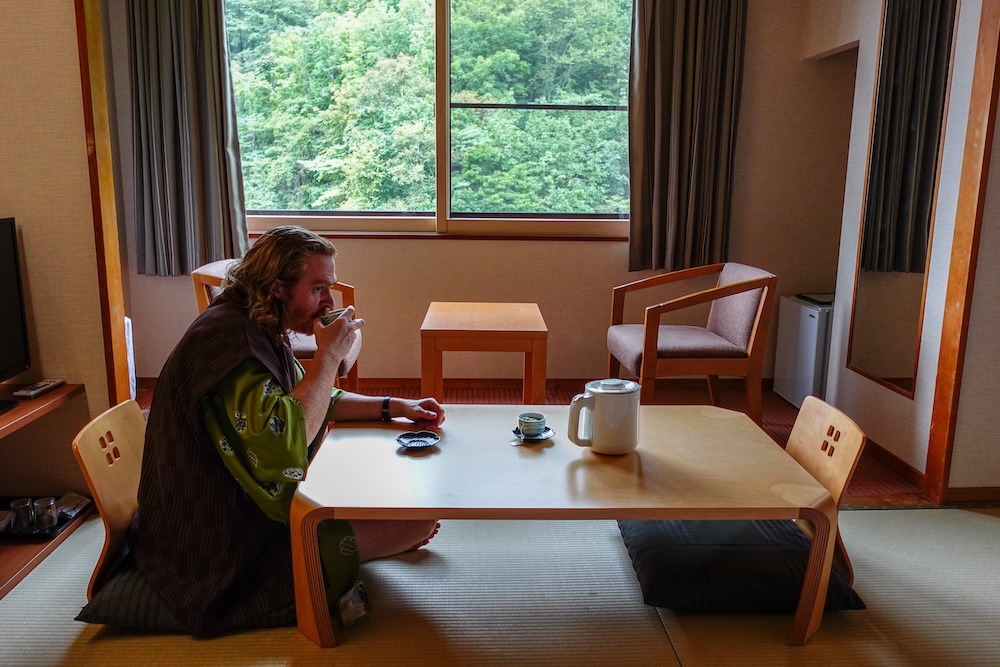
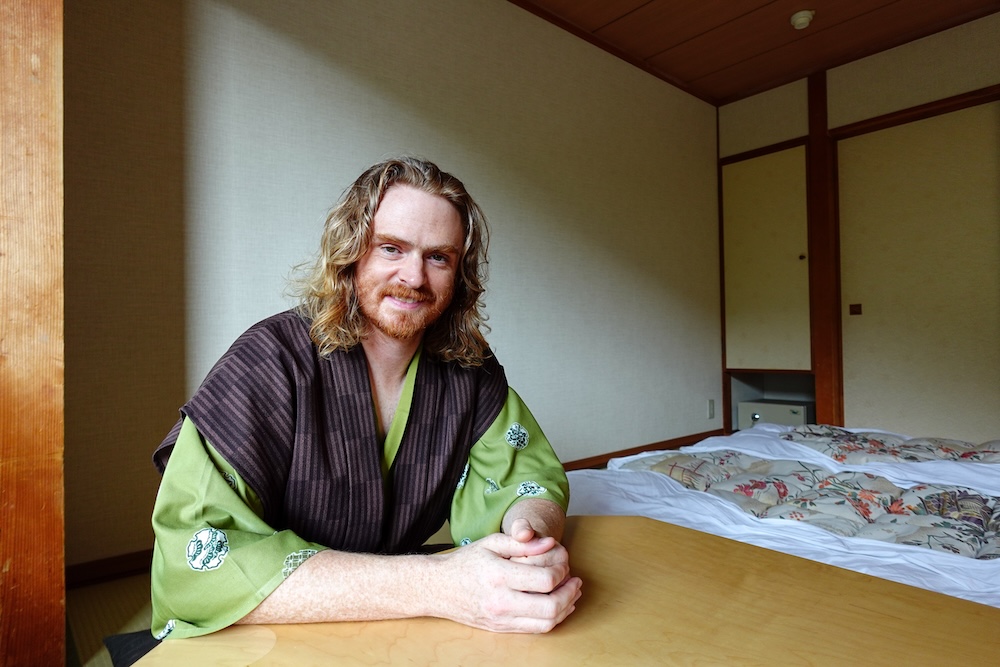
We stayed at Park Hotel Miyabitei, a large onsen resort where our Japanese-style room came with tatami flooring, yukata and futons that were laid out for sleeping. I remember initially puzzling over where the beds were supposed to go until the sleeping arrangement made sense. There were extensive bathing facilities and a big buffet, with dishes ranging from seafood and sashimi to hot food and desserts. We particularly enjoyed the crab.
It wasn’t an intimate little ryokan. The dining hall could be chaotic at opening, and after a couple of nights we noticed the menu was quite similar from one meal to the next. Still, we found plenty to eat, and the bath facilities were a major plus. The hotel’s published onsen hours currently run from 2 p.m. to 9:30 a.m. the next day, with a brief overnight cleaning interruption. Check dinner and bathing arrangements before you head out.
Day 2: Demons, Ramen, a Shrine and Another Soak
I’d start the second day without the pressure of a major hike. Noboribetsu Onsen is compact, and there’s enough strangeness around its streets to make a very enjoyable wander. If you’ve stayed overnight, you may already have been out for an early bath or breakfast. From there, let the town occupy a few hours without needing to fill every minute.
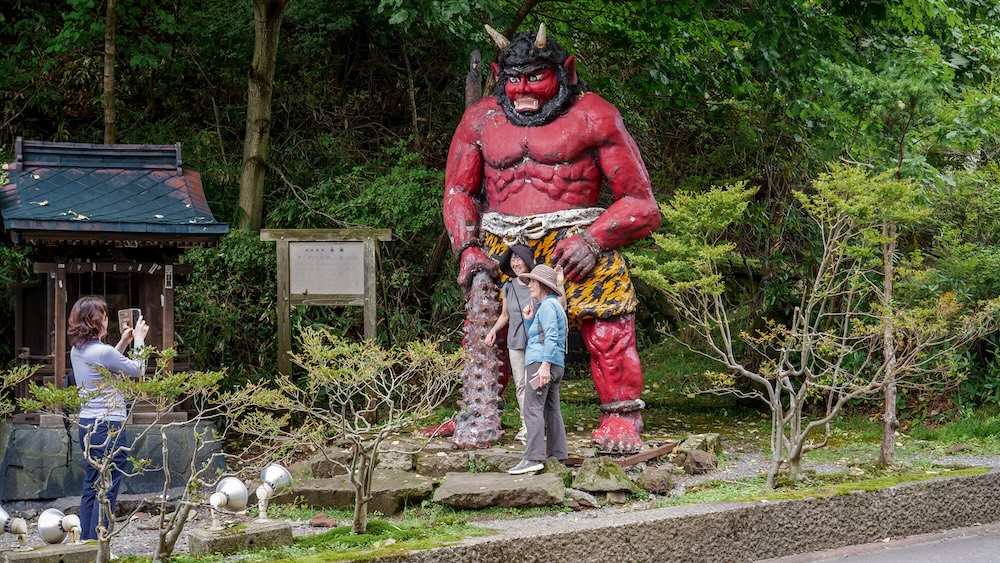
Meet the Oni and King Enma
One thing Audrey and I noticed almost immediately was the sheer number of demons around town. Huge blue and red oni stand around clutching spiked clubs, looking considerably less welcoming than the average Japanese tourism mascot. I kept thinking of Bam-Bam from The Flintstones when I saw some of those weapons, although I suspect their intended effect was a bit more fearsome.
The demon theme connects to Hell Valley and local folklore, but the statues are fun even without a mythology lesson. Along Gokuraku Street, stop at Enmado, where animatronic King Enma changes expression during scheduled presentations.
Published presentation times currently include 10 and 11 a.m., 1, 3 and 5 p.m., plus 8 and 9 p.m. shows. They can be suspended for maintenance, as happened temporarily in 2026, so check the current Enmado information if you’re keen to catch a transformation. I wouldn’t reorganize an entire day around one performance, but it’s easy enough to build a town walk around a time that works.
Stop at Sengen Park, Then Consider Yuzawa Shrine
Sengen Park has a geothermal feature that we visited more than once, and the difference between visits was striking. On one occasion the water was bubbling; another time steam was rising much more vigorously. The geyser is described as becoming active at intervals of roughly three hours, which gives you an idea of why the scene can vary. It isn’t a scheduled show. Pop by when you’re in the area, and if something is rumbling away, enjoy it.
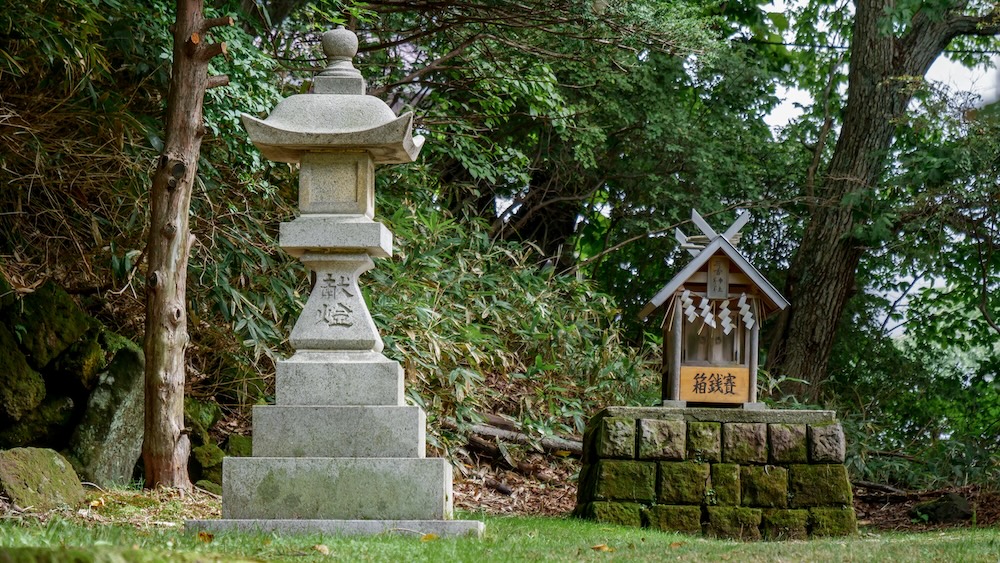
Yuzawa Shrine is another stop I’d consider, especially if you fancy a bit more walking after the easier town circuit. We climbed a steep stone staircase past colourful demon guardians and had the quiet shrine grounds to ourselves. After all the oversized hotels and larger-than-life demons, that little pocket of tranquillity was a nice change.
The staircase is considerably more effort than wandering past the shops, particularly when wet or icy. If you’re tired or short on time, you can omit the shrine without spoiling the day.
Eat Enma Ramen and Leave Room for Ice Cream
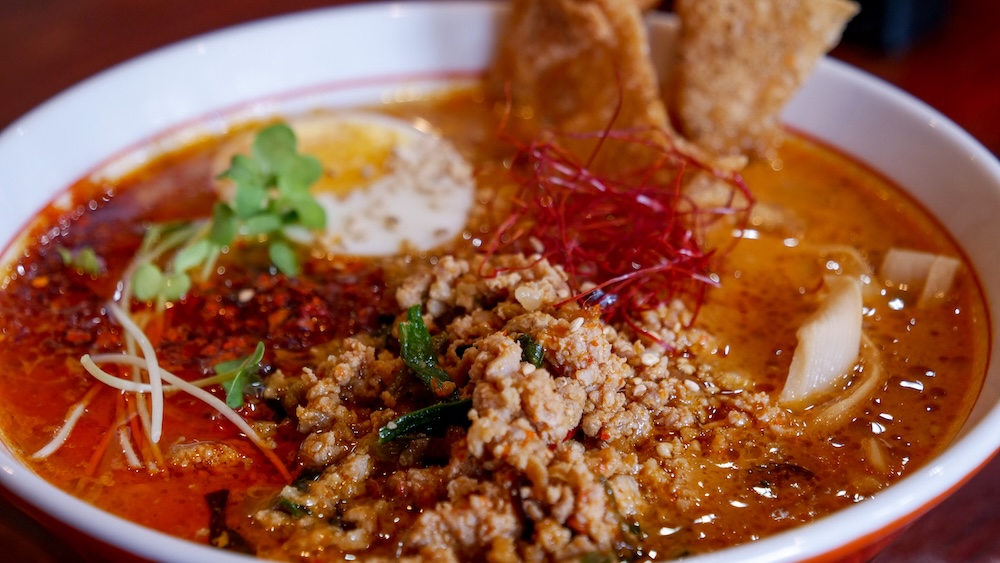
Now for a moment of personal suffering. Audrey ordered the Enma Ramen at a small ramen place near Enmado. It arrived looking spectacular: colourful, fiery, nutty and packed with flavour. I had ordered a pork ramen with a rich miso broth, which was excellent in its own right. Then I tasted Audrey’s bowl and immediately realized I’d made the wrong choice.
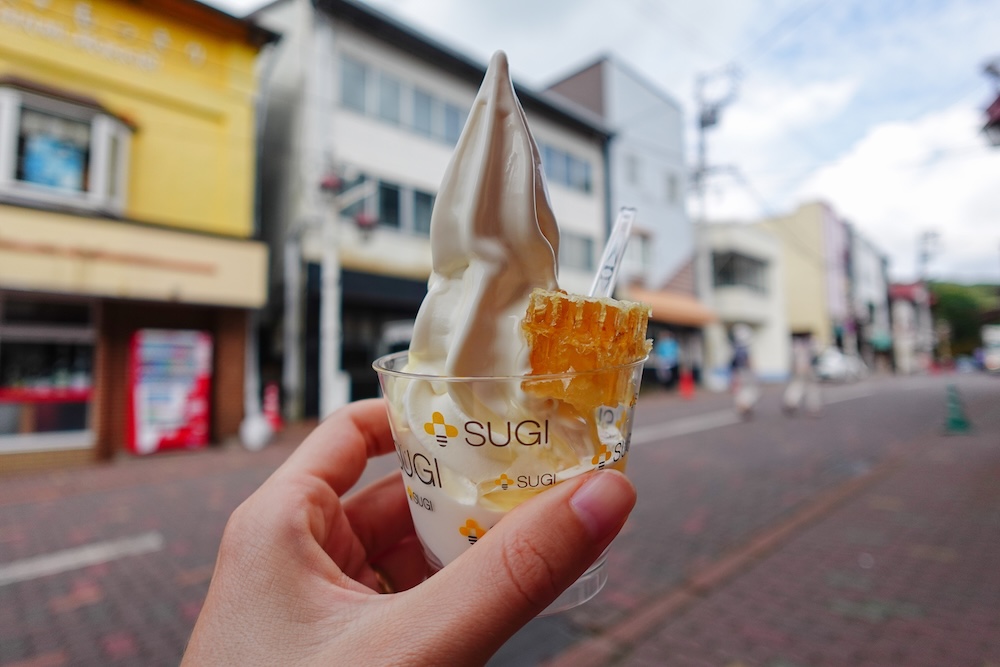
I declared it the best ramen I’d ever had. We also had dumplings, and later tried honeycomb ice cream with creamy soft serve and honey slowly working through the dessert. Excellent eating between geothermal excursions.
I can’t reliably pin down the exact restaurant now, so I won’t point you toward the wrong doorway or promise that the same dish is still available. Find somewhere operating in the central streets and leave yourself time for lunch.
The Second Onsen Session Is Part of the Plan
Here’s where I’d get good value out of staying another night. After a relatively gentle town day, head back to the hotel and use those baths again. At Park Hotel Miyabitei we had a much bigger onsen setup than at a small ryokan we’d stayed in on an earlier Japan trip, and the variety was one of the things we liked most.
Audrey especially enjoyed the women’s bathing area, where she remembered seven or eight pools, including an outdoor bath. She tried different times and once had the whole area to herself. That was her experience, not a promise that hotel baths will be empty at a particular hour. I was perfectly happy with the general routine of changing into a yukata, soaking and eventually becoming tired enough to go to bed. Jet lag helped; we were sometimes calling it a night around eight or nine.
If your two sightseeing days involve only one hotel night, the timing is trickier. Park Hotel Miyabitei currently lists checkout at 10 a.m. and bathing access until 9:30 a.m. on departure morning, so you can’t assume you’ll be allowed back into the baths after a day of sightseeing. Enjoy a morning soak before checkout, arrange a second night or independently confirm a suitable day-use bath. If you’re staying somewhere else, follow that property’s rules rather than borrowing ours.
If Your Two Days Aren’t Really Two Full Days
I know the ideal schedule looks tidy on paper, but that’s not how every trip across Hokkaido unfolds. We arrived from Hakodate, and by the time we’d dealt with the train, bus, walk to the hotel and check-in, we had no great desire to dash off on a major hike. Dinner and a soak were a perfectly good welcome to Noboribetsu.
Arriving in the afternoon? Keep the arrival day easy, then do the geothermal circuit on your next substantial day. If you’re leaving soon afterwards, you’ll have to trim the town attractions, and that’s fine. What you don’t have is two full days of sightseeing; if you want this complete schedule, arrive earlier or allow more time in town.
Leaving after checkout? Decide what to do with your luggage and how you’ll get back to the station before heading off sightseeing. Noboribetsu’s tourist information centre advertises storage for roughly ¥500–¥700 per item during daytime hours, but the service can be suspended, so check storage availability before relying on it. Collecting bags and making the bus connection both take time. Missing a train because you fancied one last foot soak would be an unfortunate way to end the trip.
Trails closed or weather looking nasty? The footbath approach and some forest paths can be restricted, particularly in winter or during maintenance. Don’t go around barriers. Check current local trail information, enjoy the Hell Valley viewpoint if it’s accessible and use the extra time for town stops or the onsen. We didn’t visit Noboribetsu in winter, so I wouldn’t pretend our comfortable walking experience covers snowy or icy conditions.
Not keen on long walks or steep stairs? The Hell Valley observation deck is a separate proposition from the longer nature trails, and Yuzawa Shrine is optional. There are also physical limitations inside some hotels: Park Hotel Miyabitei notes steps between the changing area and its main bathing facilities. Check access at the specific places you intend to use rather than assuming that a generally walkable town means every attraction and bath is easy to reach.
Would I Spend Two Days in Noboribetsu Again?
Absolutely, especially if onsen culture is part of the reason you’re coming. I wouldn’t pretend that every demon statue, small shrine and steam vent demands its own appointment. The main geothermal area is compact enough that an energetic visitor can cover a lot in one day, and I’d rather be upfront about that than invent a second day of compulsory attractions.
But I remember that early morning with my feet in the Oyunuma River more vividly than I remember the order of most of our other stops. We had room to linger, time to explore Hell Valley without racing through the viewpoints, and a hotel where another long soak was waiting when we got back. That’s the version of Noboribetsu I’d choose again. If you’ve got two days, use the extra time to enjoy being there rather than proving how many things you can fit into it.
Frequently Asked Questions
Are two days enough to visit Noboribetsu?
Yes. Two substantial sightseeing days give you time to explore Hell Valley, Oyunuma and the natural footbath, then spend a more relaxed day visiting the onsen town, eating and enjoying the hot springs. I’d happily allow two days again, especially if relaxation is part of your reason for visiting.
Do you need two nights for this Noboribetsu itinerary?
Not necessarily. One night can work if you arrive early and leave late, but two nights make it easier to enjoy the hotel baths and meals without rushing. Audrey and I stayed a couple of nights, and our first day was largely spent arriving and settling into the hotel.
Can you explore Noboribetsu Onsen without a car?
We did. We arrived by train from Hakodate, took a public bus from JR Noboribetsu Station and explored the onsen district on foot. The station is approximately eight kilometres from the hot-spring town, so allow time for the bus connection and check which stop your service uses.
How long should you allow for Hell Valley, Oyunuma and the natural footbath?
I’d allow roughly three to five hours for the main geothermal outing, including walking, viewpoints, photographs and time at the natural footbath. We spent around half an hour at the footbath alone. Actual timings depend on your route, walking pace and which trails are open.
Is the walking around Noboribetsu difficult?
I found the walking manageable with reasonable fitness and an unhurried pace, although some geothermal sections felt surprisingly hot. Forest trails can have uneven surfaces, and Yuzawa Shrine has steep stone steps. The shorter Hell Valley observation-deck visit is a different undertaking from the longer walking routes.
Can you visit the Oyunuma River Natural Footbath in winter?
Access can be restricted during winter, and temporary trail closures are also possible for repairs or safety reasons. We didn’t visit Noboribetsu in winter, so check current access information before planning your walk and never bypass a closed trail.
Where should you stay for a two-day Noboribetsu itinerary?
I’d stay in Noboribetsu Onsen itself, near the walking trails and town attractions, rather than by the railway station. We stayed at Park Hotel Miyabitei and enjoyed its extensive bathing facilities and buffet meals. The trade-off was a large-resort atmosphere rather than a small, intimate ryokan.
This guide is also available in Spanish. [Leé la versión en castellano: Itinerario de 2 días en Noboribetsu: Valle del Infierno, onsen y más]
This article contains affiliate links. If you book through one of these links, I may earn a commission at no extra cost to you.