
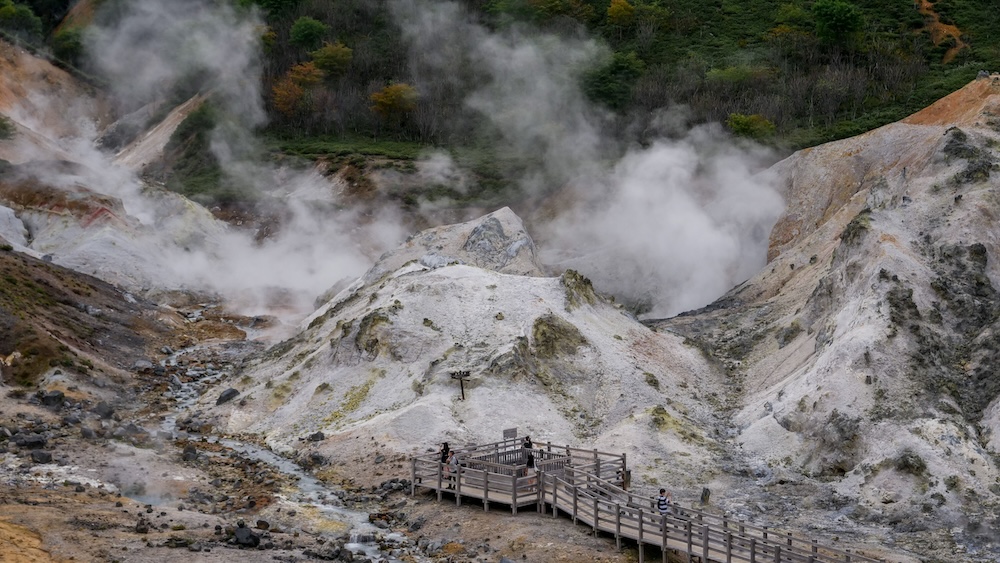
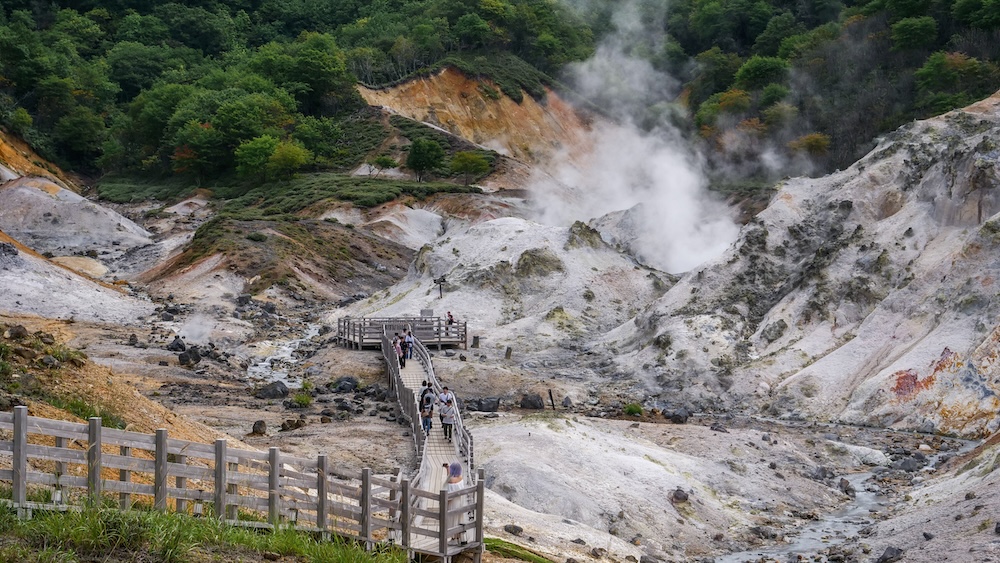
I’ve been to plenty of scenic places where you arrive at a viewpoint, admire the landscape, take a few photographs and move on. Jigokudani Hell Valley in Noboribetsu, Japan, deserves more attention than that. The first view across the crater is spectacular, with orange earth, pale rocks and steam escaping from the ground, but what really won me over was how the boardwalk allows you to experience the landscape from entirely different perspectives.
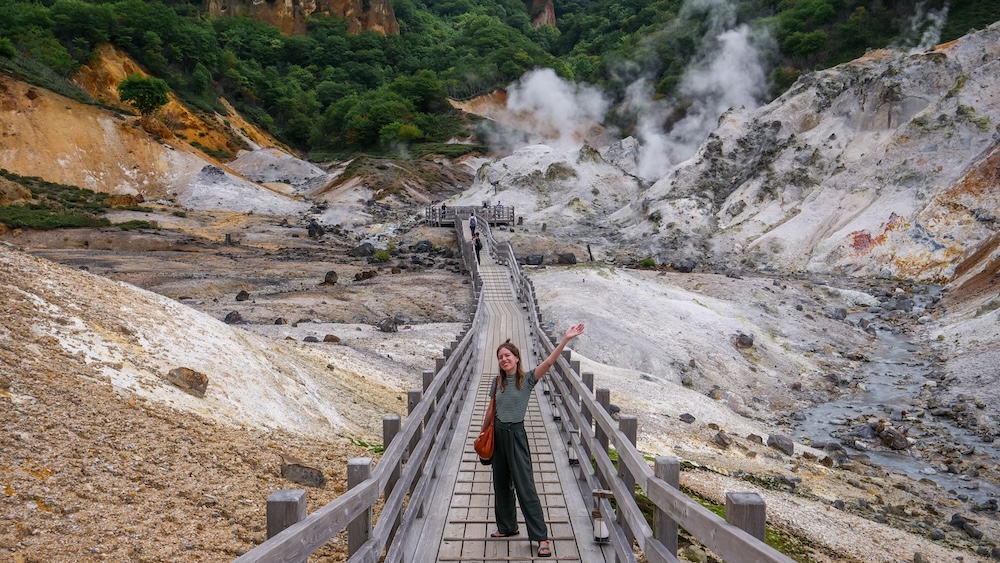
Audrey and I explored Hell Valley during our two-night stay in Noboribetsu Onsen. We mainly followed the principal boardwalks and connected to a few surrounding trails, although I certainly wouldn’t pretend we walked every route in the forest. The geothermal scenery ended up being one of my favourite outdoor experiences in Japan, and a big reason was how thoughtfully the visitor infrastructure had been designed. The crowds and occasional blast of geothermal warmth were very real, too. Here’s what the walking experience is actually like, how to reach Jigokudani and how much of the surrounding area is worth adding to your plans.
What Makes Jigokudani Hell Valley So Different?
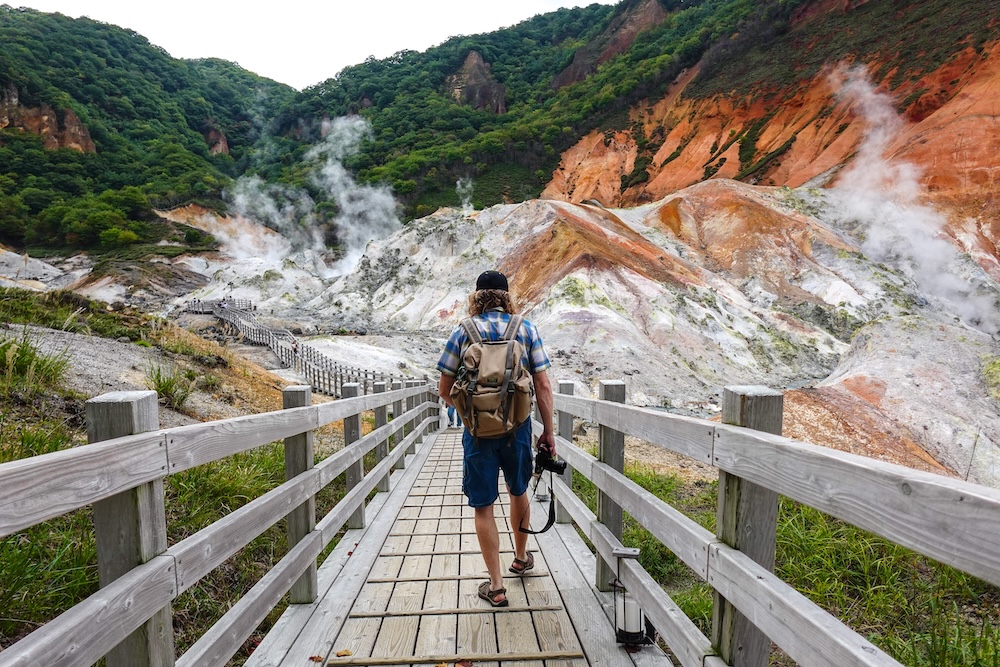
Jigokudani translates to Hell Valley, and the name starts making sense as soon as you see the place. It sits just above Noboribetsu Onsen in southwestern Hokkaido, within Shikotsu-Toya National Park. The volcanic crater is approximately 450 metres across and covers around 11 hectares, with fumaroles, hot-water outlets and mineral-stained ground associated with volcanic activity around Mount Hiyori. The wider geothermal system releases roughly 10,000 tonnes of naturally emerging hot-spring water a day, helping supply the baths that make Noboribetsu such a popular onsen destination.
There’s something rather satisfying about soaking in a hot spring at your hotel and then heading out to see the landscape connected to all that thermal activity. Although, personally, I was quite happy to appreciate the boiling water in Hell Valley from the correct side of the safety railing.
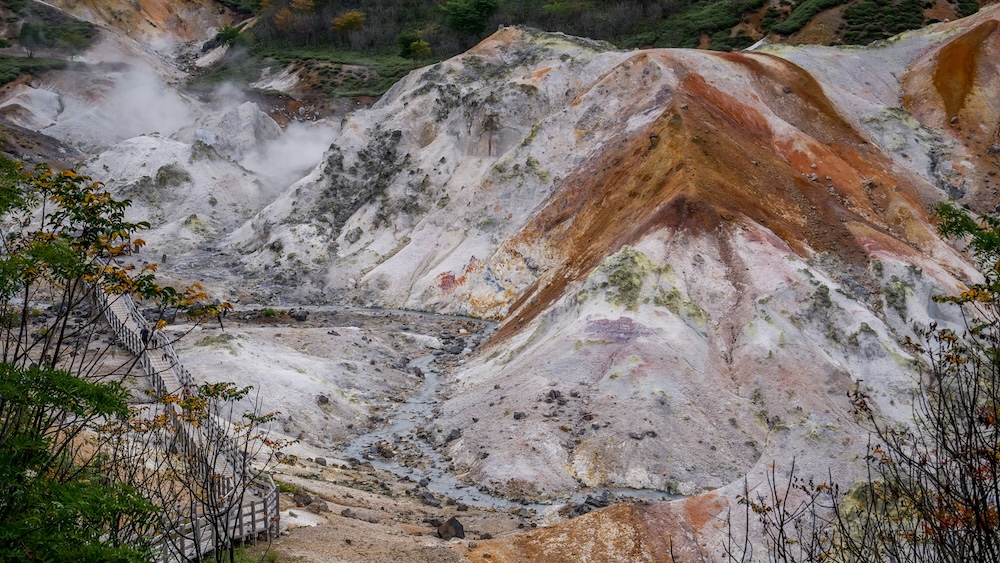
What I remember most vividly is the colour of the earth. Some surfaces were almost bleached white, while others turned such a vivid orange that the ground looked as though it was on fire. Steam escaped from different vents, and we could see and hear water bubbling away. Then there’s the sulfur smell, with its unmistakable rotten-egg aroma. It’s quite the sensory package, and considerably more interesting than walking around looking at an ordinary patch of dirt.
It genuinely felt otherworldly. We weren’t standing in front of some long-dormant geological exhibit; there was activity happening all around us. Just be aware that Oyunuma and Oku-no-Yu, while nearby and linked by the wider trail network, are separate geothermal attractions. You can have an excellent Jigokudani visit without trying to cover every steaming corner of Noboribetsu in one outing.
Why I Loved Walking the Jigokudani Boardwalk
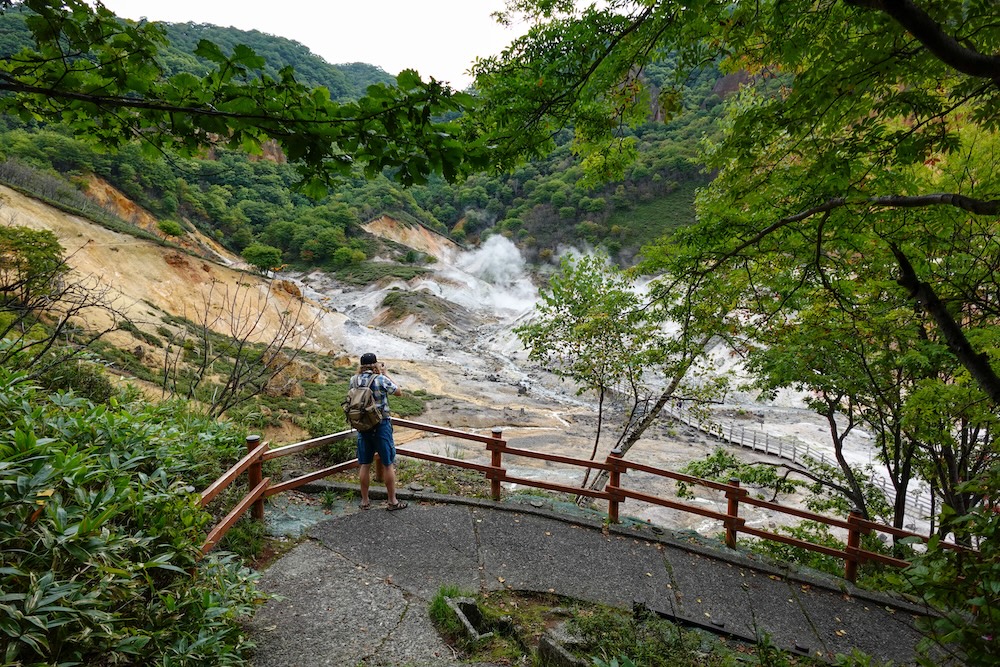
I’ve visited wonderful natural attractions where the visitor infrastructure felt like something somebody thought about five minutes before opening day. You get one viewpoint, a sign, perhaps a muddy path, and that’s your lot. Hell Valley was the opposite. The boardwalk and viewpoints have been arranged in a way that genuinely improves the experience, allowing you to appreciate the overall volcanic landscape and then gradually examine its smaller details.
That’s what impressed me most. The terrain is extraordinary on its own, but the way the paths reveal it gives you a reason to keep going instead of taking one photograph and declaring the attraction finished.
Start With the Big Panoramic Views
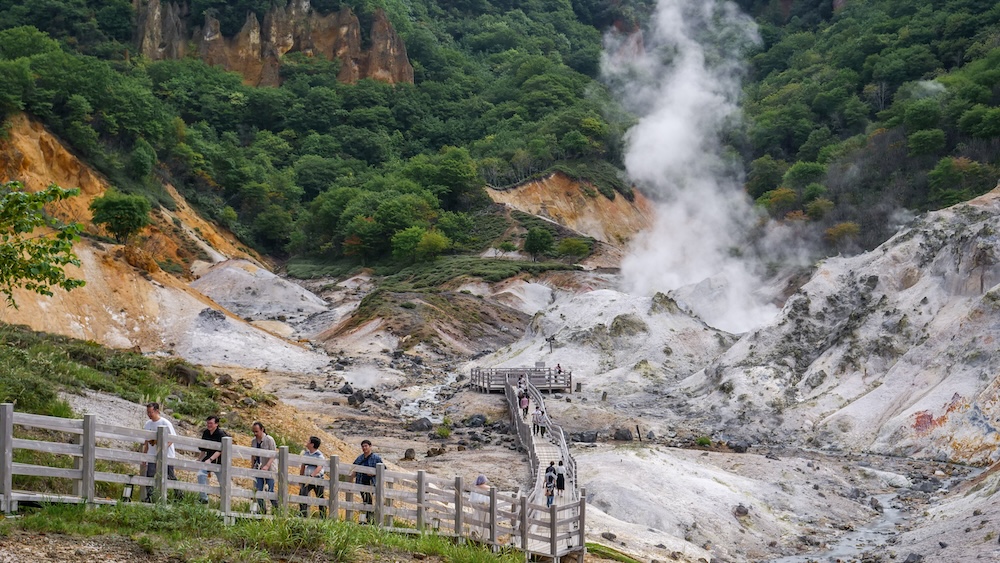
From the main observation area, you get a tremendous overview of the crater. Pale slopes, orange streaks, scattered vegetation and columns of steam all sit together in one sweeping scene. The official walking map also identifies Jigoku-Dani 2nd Lookout and Jigokudani Haridashi Lookout, although I wouldn’t worry about collecting every viewpoint like stamps in a passport. The principal panorama already gives you a convincing introduction, particularly if you’re short on time or don’t want to walk farther.
Something else surprised me as a photographer: other people can actually make the landscape look more impressive. I’m normally delighted when nobody wanders into my composition, but at Hell Valley the tiny figures along the boardwalk help communicate the scale of those enormous exposed slopes. Without a person in the frame, you might be looking at an interesting arrangement of colourful rocks. With one, you suddenly understand how much ground you’re looking across. I still enjoyed finding quieter compositions, but I didn’t spend the visit wishing every other tourist would disappear.
Keep Walking for the Close-Up Details
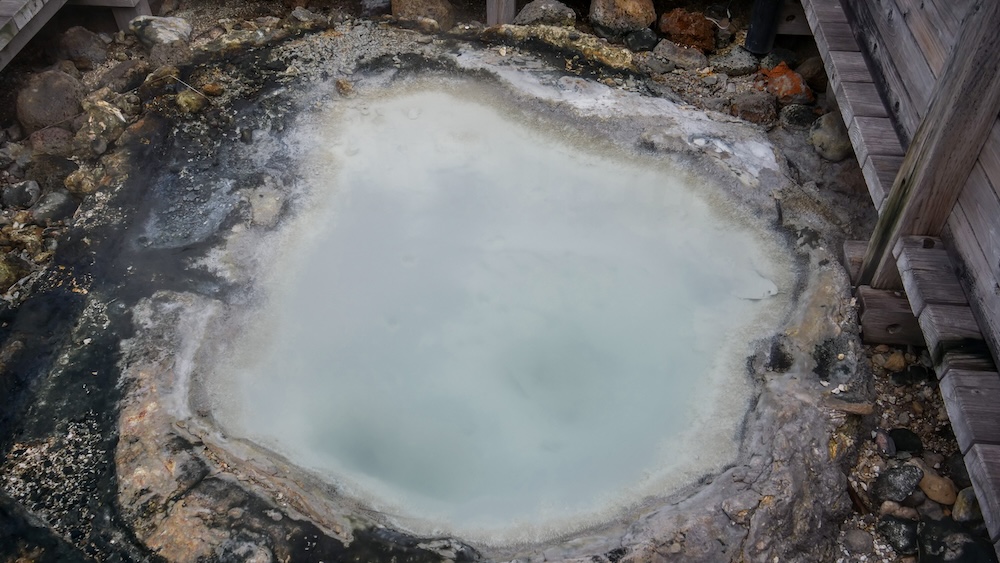
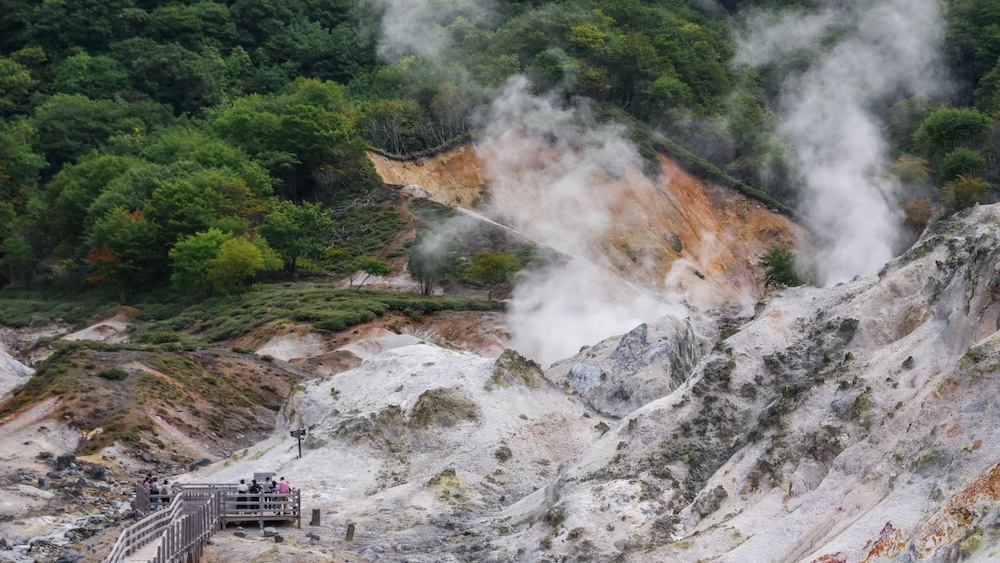
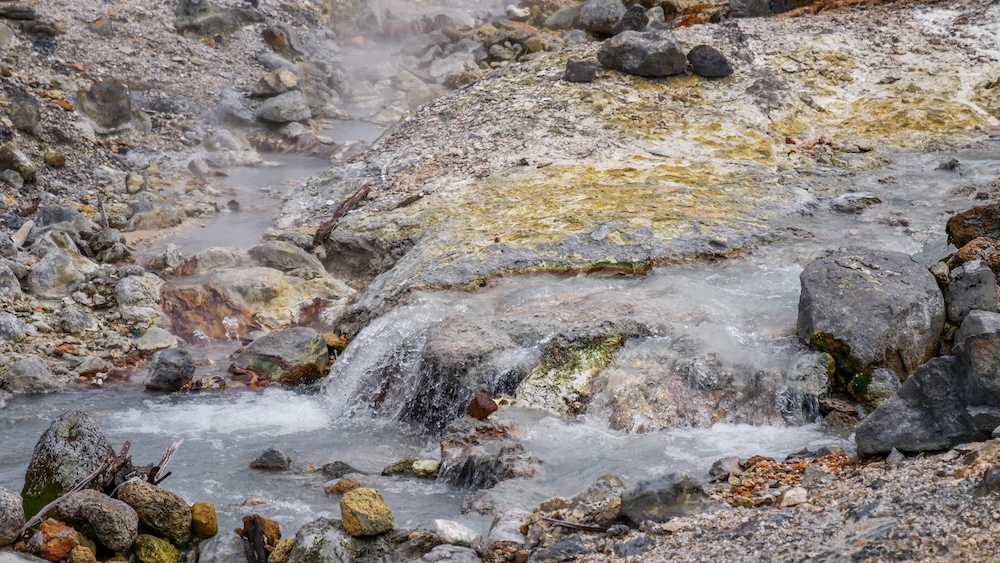
This was my favourite part of the boardwalk. As we continued, the landscape stopped looking like one enormous crater and became a collection of fascinating little details. You could appreciate individual steam vents, changes in the colours and textures of the ground, and the way vapour moved across the rocks. It reminded me of switching from landscape photography to macro photography, except you’re doing it with your feet rather than changing lenses.
I also liked that the closer views didn’t make the big panorama redundant. Looking back across the crater after spending time near the geothermal features gave me a better appreciation of how all those smaller elements fit together. It’s an attraction where walking a little farther actually changes what you’re seeing, rather than simply delivering the same photograph from a slightly different angle.
The official Jigokudani Pathway measures 568 metres, with a mapped walking estimate of ten minutes. Don’t mistake that for the time you’ll necessarily spend at the attraction. It’s a pathway measurement, not a sightseeing schedule, and I found myself stopping constantly. The whole pleasure of a place like this is giving yourself permission to linger whenever something catches your attention.
One named feature along the central path is Tessen Pond, a small geothermal pool reached by a wooden approach. It has a history of geyser activity, although its spouting isn’t as dramatic as it once was. I wouldn’t build the outing around expecting an eruption; there’s enough activity along the broader boardwalk without one particular pool having to perform on demand.
Where the Boardwalk Meets the Longer Forest Trails
The main Jigokudani walking area is part of a larger network, and this is where visitors can accidentally turn a short attraction stop into a more substantial hike. The official map identifies separate routes including the Funamiyama Pathway, Oyunuma Pathway and Oyunuma Scenic Pathway. They lead toward wooded slopes and other geothermal sights, but they aren’t simply more of the same level wooden boardwalk.
We connected to a few of those other trails but concentrated on the principal Hell Valley paths. If you’re tempted to carry on toward Oyunuma or the natural footbath, check the trail connections and return route first. It’s perfectly reasonable to enjoy Jigokudani itself and save the wider geothermal walking system for another outing.
Which Hell Valley Walk Should You Choose?
You don’t need to walk every trail on the map to experience Hell Valley properly. Noboribetsu even has a casual sightseeing course of roughly 30 minutes focused on Jigokudani, while the connecting forest routes are a different proposition altogether. I’d start with what you want to see and how much walking appeals to you, rather than assuming the longest possible route is automatically the best.
| Walking option | What you’ll experience | Best for |
|---|---|---|
| Main observation area | Broad crater views, colourful ground and rising steam | A shorter visit or less walking |
| Principal Jigokudani boardwalk | Panoramas plus closer geothermal views around the central path and Tessen Pond | Photographers, landscape lovers and comfortable walkers |
| Longer connecting trails | Forest walking and routes toward Oyunuma and other geothermal areas | Travellers planning a more substantial outing |
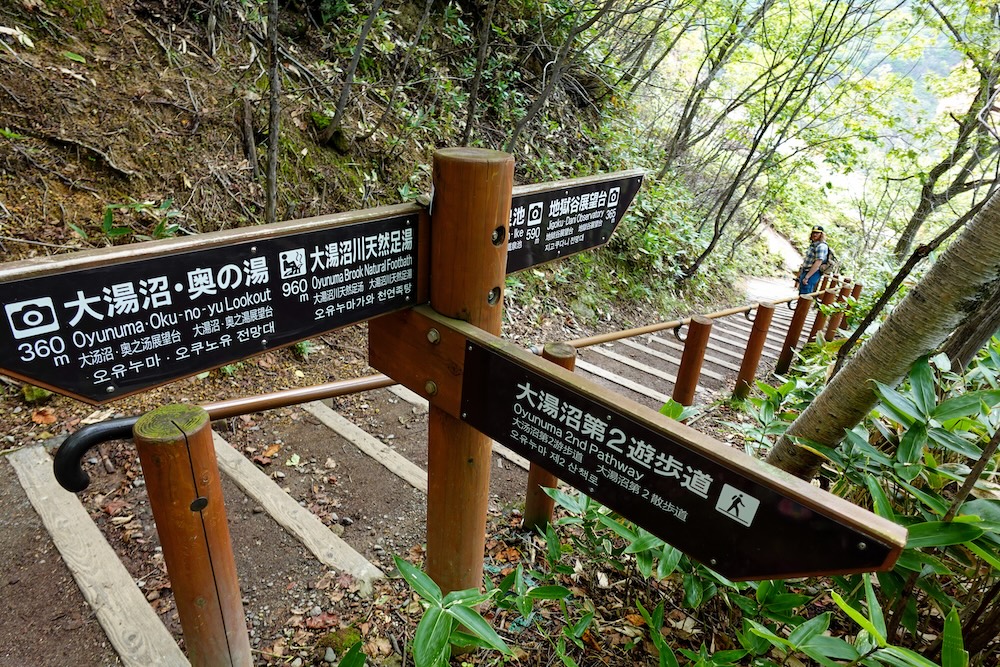
I’d choose the middle option if you have the time and physical ability. It’s where I felt the thoughtful boardwalk design paid off most, and where the experience grew more interesting with every change of perspective. But there is absolutely no shame in stopping at the main viewpoint. The longer connections require different footing and more planning, so don’t wander into them merely because the next sign looks inviting.
For anyone travelling with a fixed departure time, I’d make Hell Valley the priority and treat the surrounding trails as optional. The principal boardwalk delivers the very thing you’ve come to Noboribetsu to see: the steaming crater at close range. By contrast, the walk to Oyunuma and the natural footbath is a separate outing with its own route choices. It’s worth doing when it fits your day, but rushing both would undermine the pleasure of either.
How to Get to Jigokudani Hell Valley
The important geographical distinction is between JR Noboribetsu Station and Noboribetsu Onsen. They’re approximately eight kilometres apart, and Hell Valley is up in the hot-spring district rather than beside the railway station. Audrey and I travelled by train from Hakodate, caught the public bus uphill and explored the onsen town without a car. It was a practical arrangement, although your transport connection deserves a little advance planning.
Walking From Noboribetsu Onsen
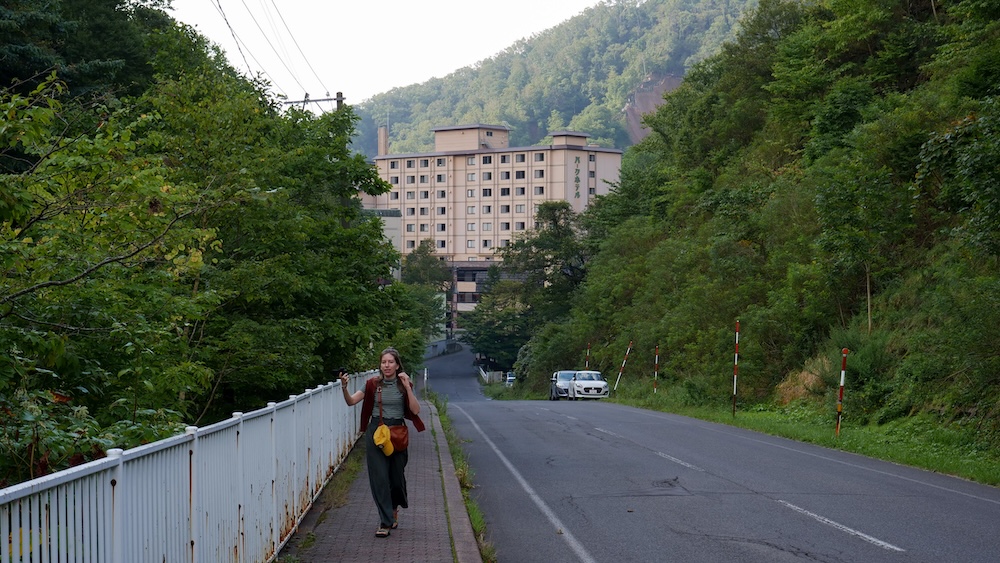
The principal Hell Valley boardwalk area is approximately five minutes on foot from Noboribetsu Onsen Bus Terminal, depending on your exact destination. The Park Service Center near the entrance provides a useful landmark. If you’re planning to spend time exploring the geothermal attractions and enjoying the hot springs, you can compare hotels and ryokan in Noboribetsu Onsen rather than accidentally booking accommodation nearer the station.
We spent two nights at Park Hotel Miyabitei, a large onsen resort with Japanese-style rooms, hot-spring baths and buffet dining. We enjoyed the stay, even though it felt more like a bustling resort hotel than an intimate traditional ryokan. It was convenient being able to explore the district on foot and return for a soak, without turning every outing into a transport operation.
That convenience is the strongest reason I’d consider staying in Noboribetsu Onsen rather than treating Jigokudani as a hurried stop between other destinations. It doesn’t mean you need two nights as we did, or that an overnight stay is necessary to see the crater. You simply have more freedom to walk, pause for photographs and enjoy the hot springs without spending the entire visit watching the clock. For us, those activities complemented each other beautifully.
Another option to investigate, particularly if proximity to the crater is your priority, is Dai-ichi Takimotokan near Hell Valley, listed at roughly five minutes’ walk from Jigokudani. We haven’t stayed there, so I can’t offer a personal verdict on its rooms or service. Whichever hotel you choose, watch for narrow or absent sidewalks on some approach roads. We encountered cars coming along surprisingly quickly while walking around town.
Arriving by Train and Bus
Donan Bus connects JR Noboribetsu Station with the onsen district. The adult one-way fare is currently listed at ¥450, while one published service takes approximately 27 minutes, depending on the route and stops. We waited around half an hour for our bus, which wasn’t a disaster, but it would matter considerably more if you were trying to squeeze the attraction between two train journeys. Don’t calculate your sightseeing time as though the moment you step off the train you’re already standing beside the crater.
There’s also a slightly awkward payment detail: Suica and Kitaca aren’t accepted on these services, while Visa contactless payment is available only on specified routes. I’d check the current Donan Bus timetable and payment information before travelling rather than hoping the next bus appears at precisely the right moment.
Visiting on a Guided Day Tour From Sapporo
If you’re based in Sapporo and don’t fancy organizing a train and bus connection, guided day trips can combine Jigokudani with other Hokkaido attractions. The question I’d ask isn’t just whether Hell Valley is included, but how much time you’ll actually have there. This Sapporo day tour of Noboribetsu and Lake Toya advertises a ten-hour excursion, but its sample itinerary allows approximately 35 minutes at Jigokudani. That may be fine for the main panorama, though it’s not how I’d choose to explore the boardwalk with a camera.
A private Noboribetsu and Lake Toya tour from Sapporo presents a different itinerary with a longer window around Jigokudani and additional geothermal stops, subject to conditions. Before paying for either, confirm the actual stop length and what’s adjustable. We haven’t taken these tours ourselves. For my travel style, the freedom to linger was a big advantage of visiting independently, but I can understand wanting the transport taken care of on a busy Hokkaido itinerary.
Driving and Parking
Hell Valley itself is free to enter, but the managed parking area currently charges ¥500 for an ordinary passenger car. Under the operator’s conditions, that allows one same-day use at each of the Jigokudani and Oyunuma lots, not unlimited re-entry at either. Oyunuma parking also closes during winter road restrictions, generally around late November through late April. We didn’t drive here, so check the current parking and access information rather than treating our car-free experience as driving advice.
What Hell Valley Actually Feels Like: Steam, Heat and Crowds
Photographs capture the colours, but they don’t do much for the sounds, smells or temperature. We heard water bubbling, smelled the sulfur and felt warmth and humidity near the active geothermal features. The general outdoor weather wasn’t particularly hot, yet standing beside some of those steaming areas felt as though somebody had turned up the thermostat. I was surprised by how physical the experience was; the crater wasn’t merely something unusual to look at.
The railings are there for a reason. Hot water and unstable geothermal ground don’t become safe because a feature looks interesting in a photograph, so stay on designated paths and respect the barriers. One of the things I appreciated about Jigokudani was how the constructed walkways gave us close perspectives without having to do anything reckless to obtain them.
Was Hell Valley Crowded?
Definitely busier than the Oyunuma River Natural Footbath, where we’d arrived early and found relatively few visitors. Jigokudani wasn’t some secret little corner of Hokkaido waiting for us to discover it, but the crowds didn’t spoil our visit. By lingering and exploring more of the boardwalk, we sometimes found stretches that felt comparatively quiet, even while other parts of the attraction were busy. You shouldn’t expect the place to yourself, though, and I think it’s better to arrive with realistic expectations.
I’d have enjoyed coming back earlier in the morning or later in the afternoon to see how the atmosphere and light changed, but we visited Hell Valley only once. I can’t promise either time is reliably quiet. Besides, I came away with plenty of photographs in which those tiny human figures added a sense of scale, so the other visitors occasionally earned their keep.
What to Know Before Visiting Hell Valley
Free Entry, Trail Conditions and Night Lighting
Jigokudani has no admission fee and generally no fixed outdoor opening hours, although individual paths can close for maintenance, weather or safety reasons. The illuminated Onibi no Michi route is currently advertised from sunset until 9:30 p.m., while lighting at the main observatory is separately listed until approximately 11 p.m. Those are different arrangements, and neither means the full forest network is illuminated. We didn’t visit Hell Valley at night, so I can’t offer a personal comparison with the daytime experience.
The official Noboribetsu walking map is useful for understanding the connections between viewpoints and longer paths. Check current notices as well, particularly if you’re planning to continue toward Oyunuma or visit when snow and ice may affect the trails. A line on a map doesn’t guarantee every segment is open today.
Footwear and Geothermal Conditions
You don’t need serious hiking equipment for the main viewing area, but I’d wear comfortable shoes with decent grip if you’re going farther. Wooden boardwalks, steps and natural forest paths behave differently underfoot, particularly when wet. Carry some water and remember that areas close to the steam can feel warmer and more humid than the surrounding weather suggests. We didn’t walk Jigokudani in winter, when snow, ice and closures can make the longer routes a very different proposition.
What About Visitors With Limited Mobility?
There’s a documented ramp from the Park Service Center to Jigokudani Observation Deck, with a maximum gradient of 8%. That’s a meaningful shorter-access option for seeing the main panorama without committing to the wider trails, although an 8% slope can still be demanding for some people. It also doesn’t establish that every boardwalk or forest path is wheelchair-accessible. If mobility is a major consideration, check the current condition of that particular approach rather than relying on somebody else’s blanket description of Hell Valley as an easy walk.
Is Jigokudani Hell Valley Worth Visiting?
Absolutely. If you enjoy unusual landscapes, photography and a bit of exercise while sightseeing, I think you’ll have a fantastic time. I was captivated by the volcanic colours and constant steam, but the thoughtful boardwalk design is what made the place so memorable. We could admire the whole crater from a distance, carry on for the smaller details and never feel as though the attraction had shown us everything in its first five minutes.
That doesn’t mean everybody needs to tackle the longer walking routes. If mobility is difficult or you’re more interested in Noboribetsu’s food and cultural attractions, the main viewpoint may be enough. For me, though, the reward was taking my time along the principal boardwalk and discovering what the changing perspectives revealed. I’d happily return at another time of day, but even with the crowds we encountered, our single visit was well worth it. Give yourself room to explore if you can; Hell Valley is much better enjoyed at walking speed than as a hurried photograph from the entrance.
Frequently Asked Questions
Is Jigokudani Hell Valley free to visit?
Yes. There is no admission fee for Hell Valley, although parking costs extra. Individual walking paths can close for maintenance, weather or safety reasons, so check current notices if you plan to explore beyond the main viewpoint.
How long does it take to walk the Jigokudani boardwalk?
The official Jigokudani Pathway is 568 metres long, with a mapped walking estimate of ten minutes. That is not the total time for your visit. I recommend allowing extra time for the viewpoints, geothermal details and photographs.
Can you visit Hell Valley without a car?
Absolutely. Audrey and I took a bus from JR Noboribetsu Station to Noboribetsu Onsen and explored on foot. The principal Hell Valley boardwalk area is approximately five minutes’ walk from the onsen bus terminal.
Is Hell Valley crowded?
It was noticeably busier than the natural footbath when we visited, but I still enjoyed it. Some longer stretches of the boardwalk felt comparatively quiet, and other visitors helped give scale to my photographs. I wouldn’t count on having the crater to yourself.
Can visitors with limited mobility see Hell Valley?
A ramp connects the Park Service Center with Jigokudani Observation Deck, with a maximum gradient of 8%. That does not mean the entire boardwalk or forest trail network is accessible. Check the current approach conditions against your mobility needs.
Can you walk from Hell Valley toward Oyunuma?
Yes, the wider network has connecting forest trails toward Oyunuma and other geothermal attractions. Those routes involve different walking surfaces and require more planning than the central Jigokudani boardwalk. Check the official map and any closures before continuing.
Can you visit Jigokudani Hell Valley at night?
The outdoor valley generally has no fixed opening hours. The illuminated Onibi no Michi route is advertised from sunset until 9:30 p.m., while the main observatory has separately listed lighting until approximately 11 p.m. We did not visit at night, and those times do not mean every forest trail is illuminated.
This guide is also available in Spanish. [Leé la versión en castellano: Guía de Jigokudani Hell Valley: senderos, vapor y cómo visitarlo]
This article contains affiliate links. If you book through one of these links, I may earn a commission at no extra cost to you.