
Noboribetsu is built around hot water. The hotels compete on the size and number of their baths, the whole town draws its springs from a steaming volcanic valley, and you could happily spend a stay drifting from one soak to the next. So people are often surprised when I tell them that one of the things Audrey and I still talk about, not just from Noboribetsu but from our entire trip to Japan, is sitting beside a river in the forest with our feet in the water. There was no ticket, no changing room and no one asking us to follow a set of bathing rules. Yet it has stayed with me more than almost anything else we did there.
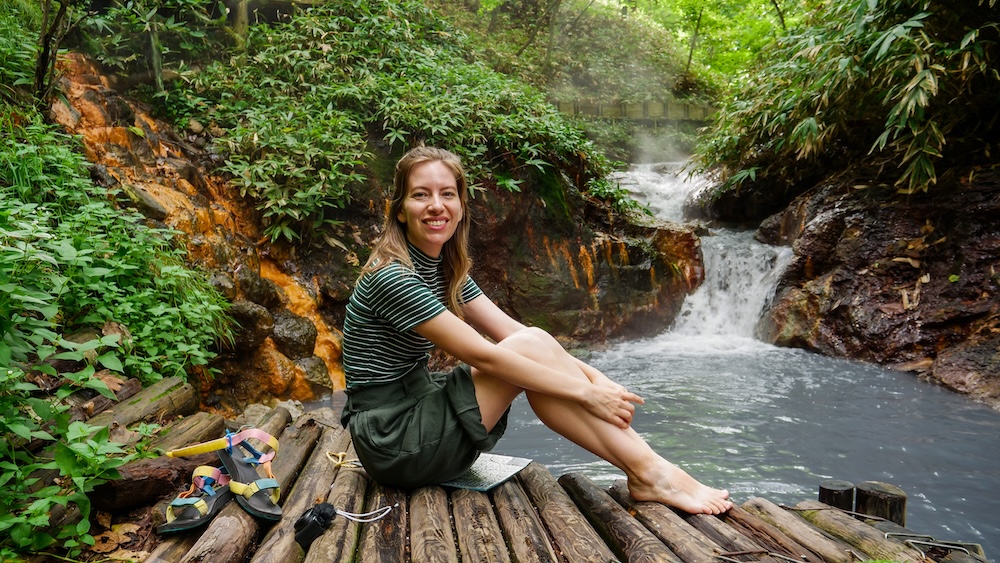
I’ve thought a fair bit about why, and I don’t think the footbath alone explains it. It was where we’d just come from, who each of us is when it comes to hot water, and what it did to the rest of our day.
We Arrived Craving Exactly This
By the time we reached Noboribetsu, we’d been in cities for a while, first Tokyo and then Hakodate. Both were worth it, but what we were craving, big time, was rural Japan without the crowds: a morning where the only thing happening was whatever nature felt like doing.
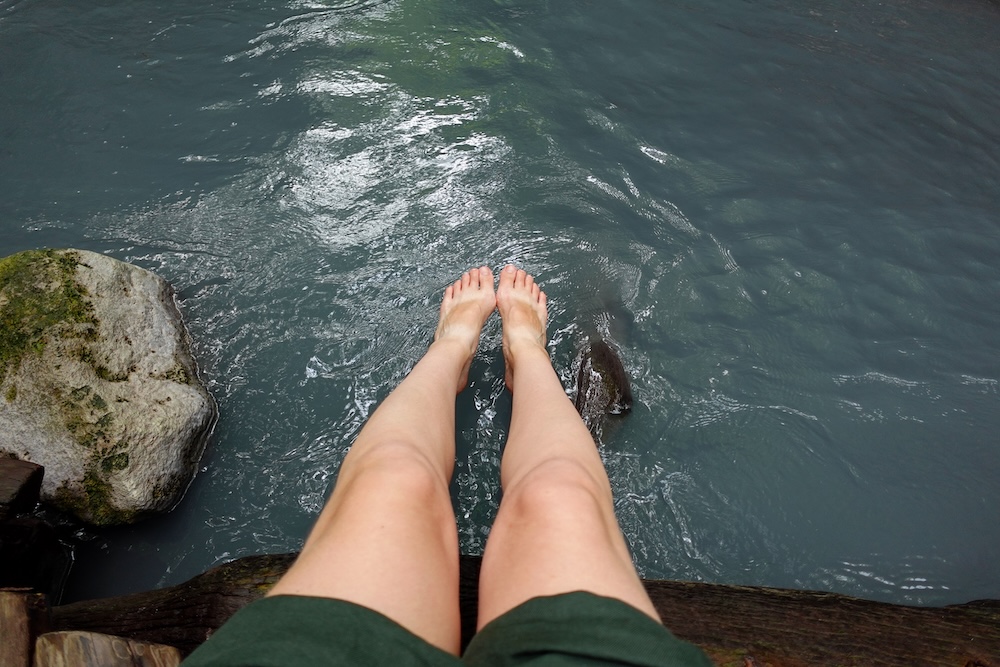
That’s exactly what we got. We were staying at Park Hotel Miyabitei, a big resort-style onsen hotel up in the hot-spring town, and on our sightseeing day we walked straight out to the footbath shortly after breakfast. For a while we had it almost to ourselves. A couple was just finishing up when we arrived, and even later there were only a handful of people scattered along the bank. I’d honestly expected it to be busy, given how much attention Noboribetsu gets, and the quiet caught me off guard in the best possible way. Being able to walk there from our room before the day got going made a real difference, so if you’d like that same early start, check current rooms at Park Hotel Miyabitei and see what your plan includes.
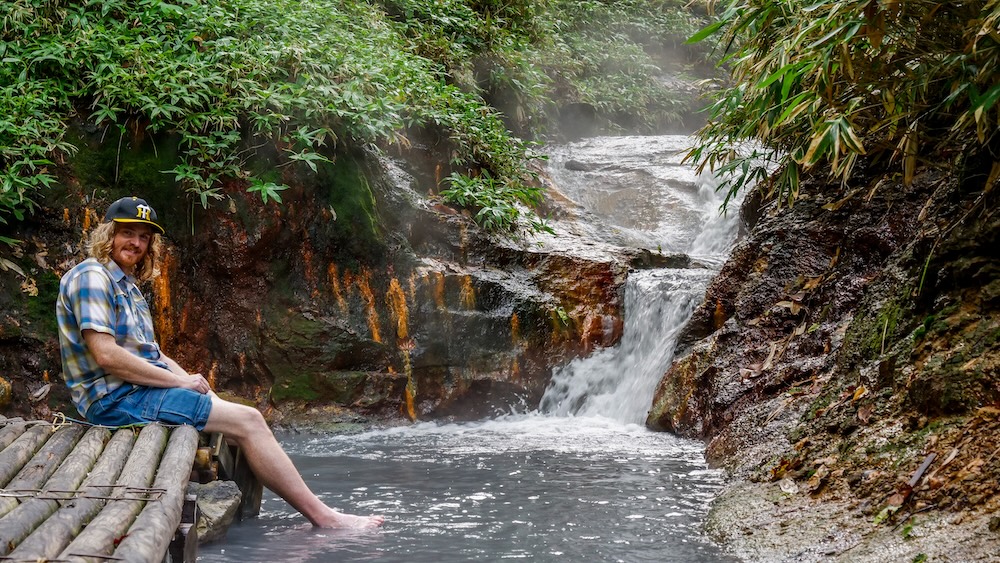
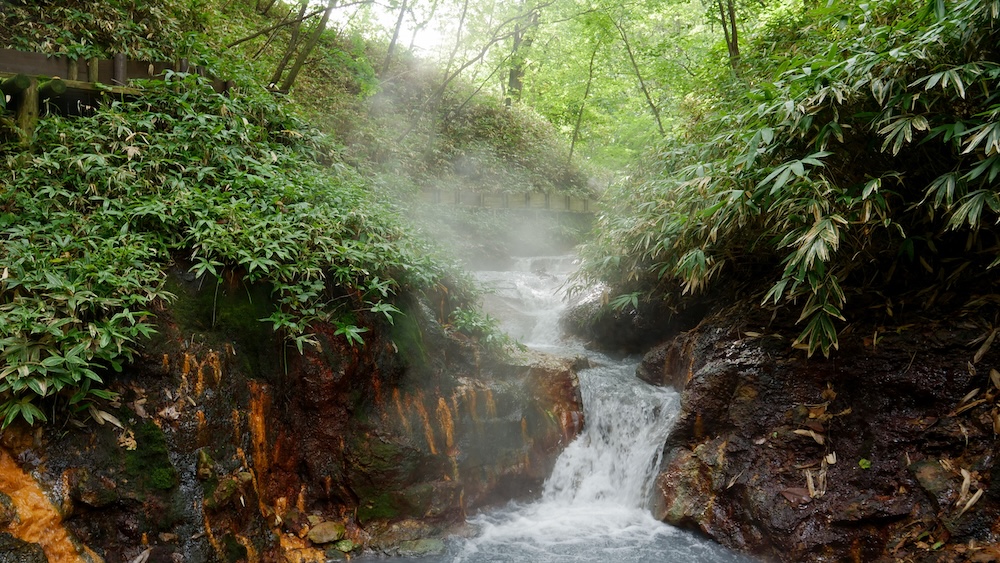
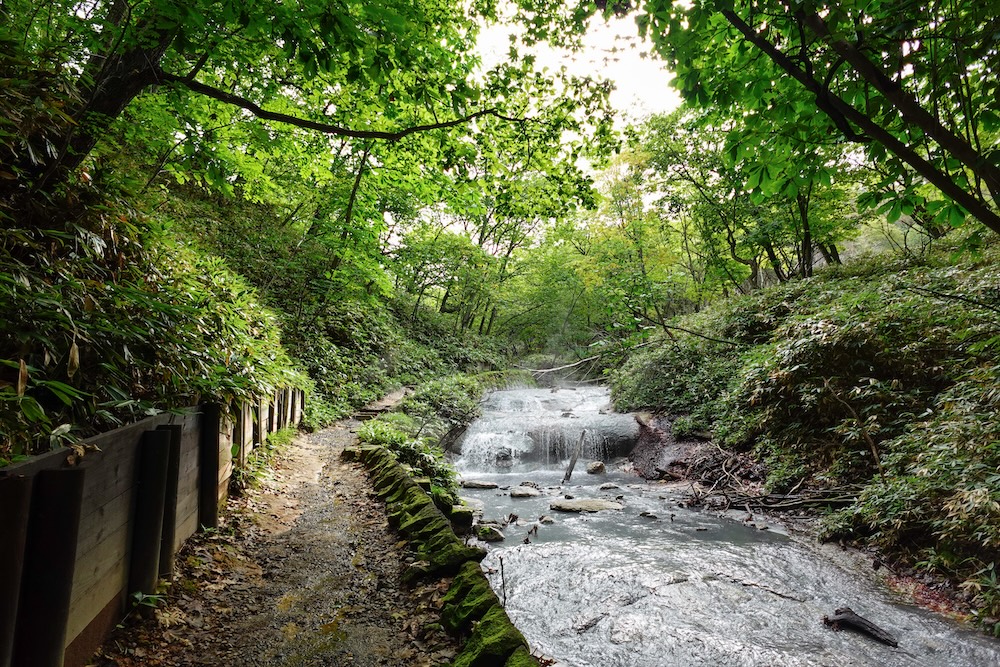
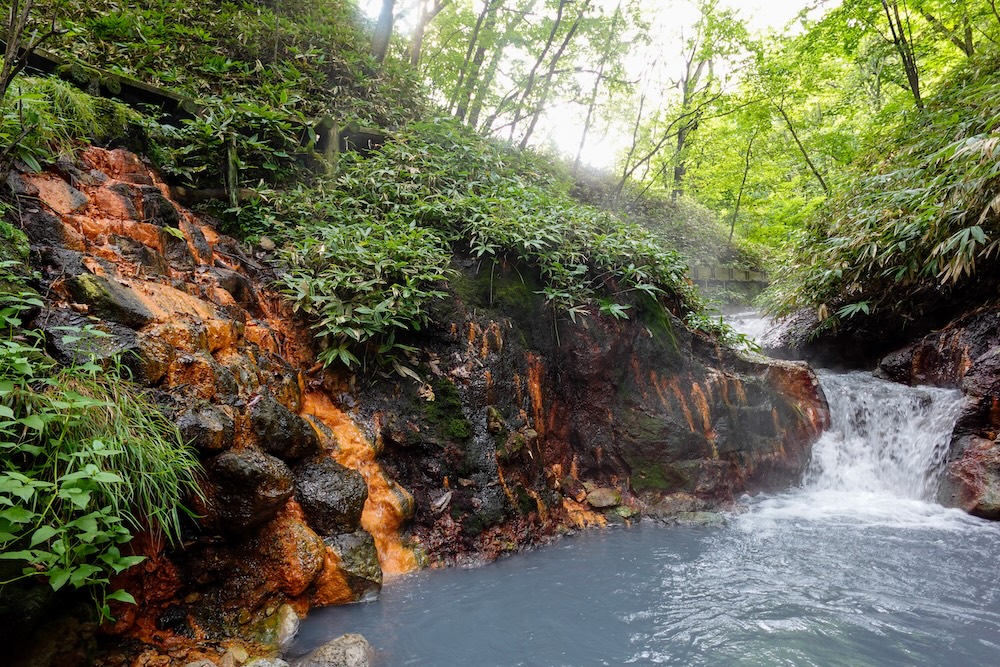
The setting did the rest. A milky grey-blue river ran between the trees with steam drifting off its surface, the rocks along the banks were stained in shades I couldn’t name, and the air smelled unmistakably of sulphur. At one point one of us asked whether we’d ever been anywhere quite like this, and neither of us could come up with an answer.
Why a Sauna Regular Fell for a Footbath
I should explain that I’m not a casual bather. I spent several years teaching English in South Korea, and somewhere along the way I fell hard for jjimjilbang and sauna culture, to the point where I was going every single week. If you’ve never been, a jjimjilbang is a large indoor bathhouse and sauna complex, with separate bathing pools, heated floors and kiln-style sauna rooms, and many are open around the clock. It’s heat and hot water refined almost to a science, and all of it happens indoors.
So I’ve sat in a lot of very hot rooms. Yet sitting on that riverbank in Noboribetsu, I remember saying I could literally do this all day, and I meant it. It wasn’t the temperature that won me over, and it certainly wasn’t luxury. It was being outside. I could look up into lush trees, watch the steam rise off the water on its own, see the colours shift across the rocks and listen to the river running past my feet. Something about that combination is deeply soothing. I said at the time that you could arrive with your head full of anxiety and problems and leave with a clear mind, and I’d say the same today.
What you’re actually sitting in makes it even better. The river is hot-spring water overflowing from Oyunuma, a crater lake left behind by a volcanic eruption, and it leaves that source at around 130°C. By the time it reaches the footbath it has cooled a great deal, but the whole river is still a natural hot spring, and the temperature changes from one spot to the next along the bank. That explains the little shock when your feet first go in. The water is hot enough to make you hesitate, until you either get used to it or shuffle along to a slightly cooler patch. Then you push your toes down into the black volcanic sand on the bottom and forget why you hesitated in the first place.
After all those weekly visits to carefully engineered bathhouses, I wouldn’t have predicted that a riverbank with some wooden seating would beat them. It did.
Audrey Loved It for Different Reasons
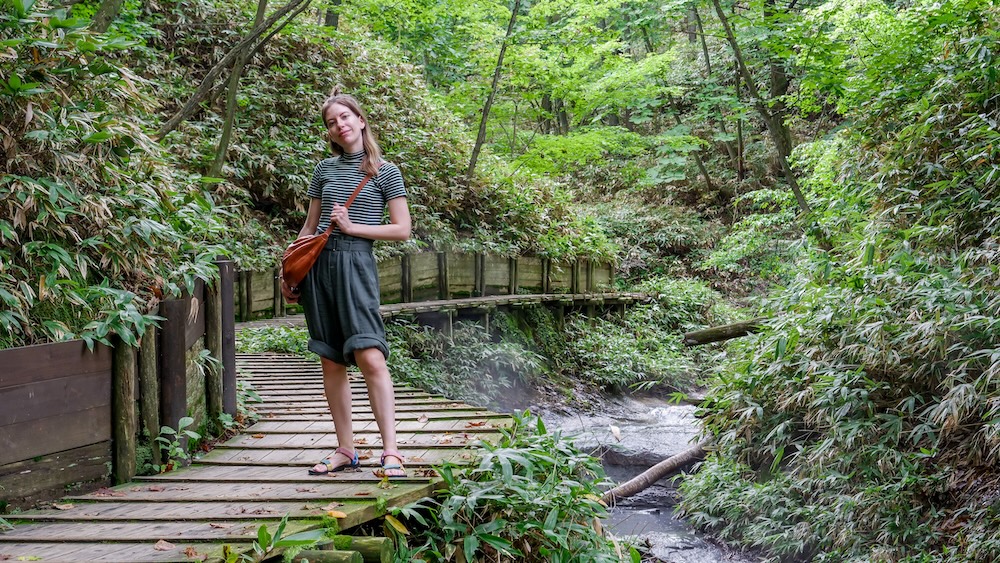
This is the part I find most convincing. Audrey isn’t really an onsen or hot-bath person, and she doesn’t go looking for hot water the way I do. Her main contribution to the sulphur conversation that morning was asking whether the smell was coming from the river or from me. And yet she loved the footbath every bit as much as I did, mainly for the natural setting and how relaxing it was.
That matters, because it would be easy to write off my enthusiasm as a hot-water fanatic getting his fix. Audrey came at it from the opposite direction and ended up in exactly the same place. For me, the hot water got me in and the setting won me over. For her, the setting was the whole point, and the warm water was simply part of it. When something wins over two very different people for two different reasons, I take that as a sign it’s genuinely special and not just a match for one person’s taste.
It Set the Tone for the Rest of the Day
We stayed about half an hour, which doesn’t sound like much. But when we finally lifted our feet out, they felt cleansed and refreshed in a way that’s hard to describe until you’ve done it, and that feeling came with us up the trail. Before we left, I remember asking whether this could just be the whole day’s plan, and saying I’d be perfectly fine if it was. I didn’t want to leave.
We did leave, of course, and walked on through Oyunuma and into Hell Valley. Looking back, though, the footbath shaped that whole hike. We set off calm and unhurried rather than rushing from one sight to the next, and the rest of the morning felt like a continuation of that half hour by the river.
Years on, it’s still one of the clearest memories I have of our time in Japan. If you’ve been moving through the big cities and you’re starting to feel it, or if you love hot springs but have never sat in one that’s actually a river, I think it could do for you what it did for us. And you don’t have to be a hot-bath person to love it, as Audrey proved. Our visitor guide to the Oyunuma River Natural Footbath covers the practical side of getting there.
If you’re only coming down from Sapporo for the day, one guided trip pairs Hell Valley with the forest walk out to the natural footbath and handles the transport for you. We haven’t taken it ourselves, so check how long the guided Hell Valley and footbath trip lets you linger before booking, because rushing this one would miss the point. Better still, spend a night up the hill. If our hotel isn’t your style, compare other places to stay in the Noboribetsu Onsen district so you can walk out to the river first thing.
My advice is simply to go early, take your time, and don’t be surprised if it ends up being the part of Noboribetsu you remember most.
Frequently Asked Questions
Why is the Oyunuma footbath so memorable?
For me it was the setting: lush trees overhead, steam rising off the water, multicoloured rocks and the sound of the river. Coming straight from Tokyo and Hakodate, a quiet forest morning was exactly what Audrey and I were craving.
Is the Oyunuma footbath worth it if you’re not a hot-bath person?
Yes. Audrey isn’t really an onsen or hot-bath person, but she loved the footbath for the natural setting and how relaxing it was. It won us both over for different reasons.
Where does the footbath’s hot water come from?
The river is hot-spring water overflowing from Oyunuma, a crater lake left behind by a volcanic eruption, and it leaves that source at around 130°C. By the time it reaches the footbath it has cooled a great deal, and the temperature changes from spot to spot along the bank.
How long should you spend at the Oyunuma footbath?
We stayed about half an hour, and it set the tone for the rest of our day. Going early helped, since we had it almost to ourselves shortly after breakfast.
How does the footbath compare with a Korean jjimjilbang?
A jjimjilbang is a large indoor bathhouse and sauna complex with separate bathing pools, heated floors and kiln-style sauna rooms. After years of going weekly in South Korea, I wouldn’t have predicted a riverbank with wooden seating would beat them, but being outside made all the difference.
This article is also available in Spanish. [Leé la versión en castellano: Por qué el baño de pies de Oyunuma fue una de nuestras experiencias favoritas en Noboribetsu]
This article contains affiliate links. If you book through one of these links, I may earn a commission at no extra cost to you.