
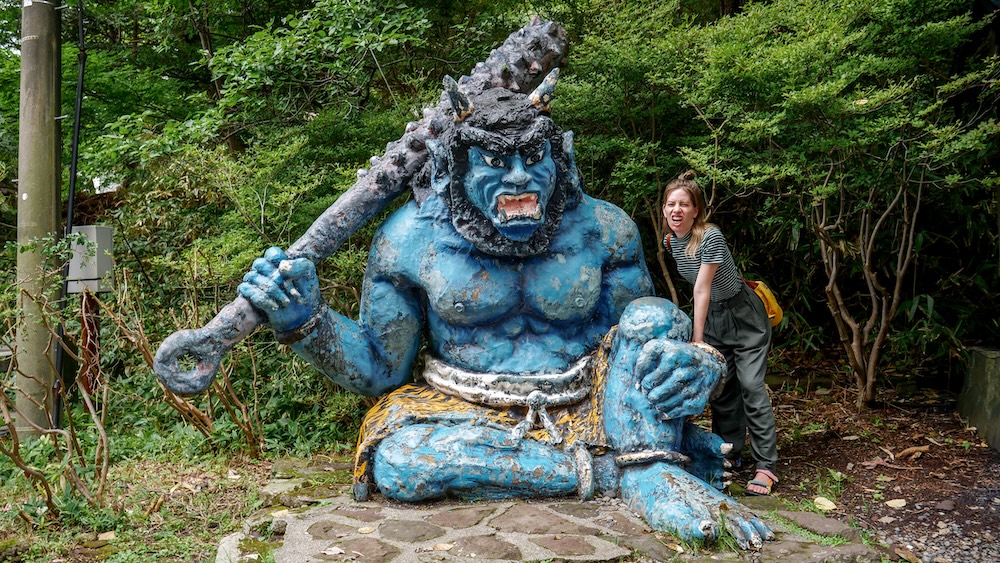
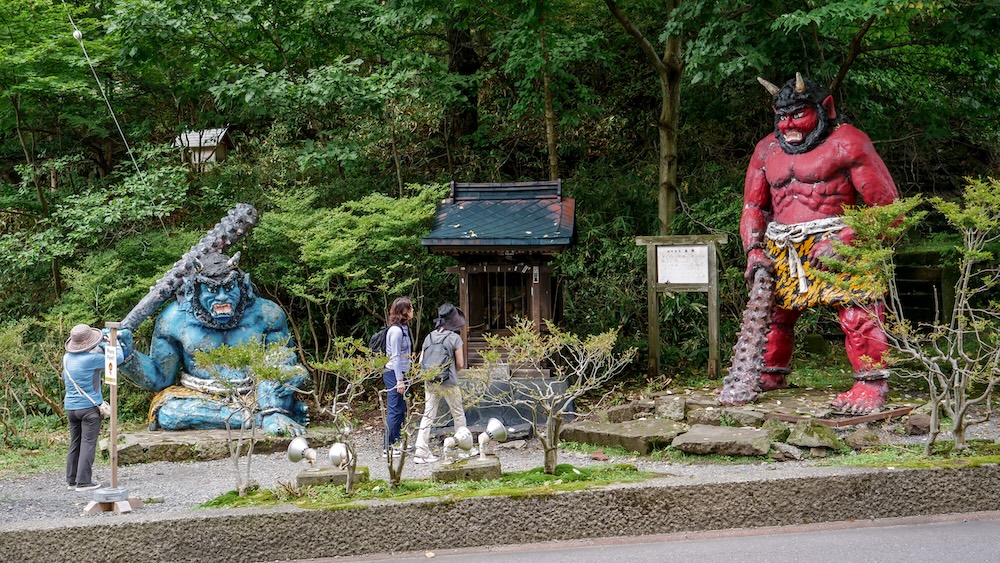
One of the first things Audrey and I noticed when we walked into Noboribetsu Onsen was the demons, and it wasn’t just one or two. There were giant blue figures with horns and clubs near the start of town, another pair guarding a shrine at the top of a steep staircase, a mechanical king of hell sitting in a hall on the main street, and even a set of demons offering to help with your exams, your love life or your business. Google Maps labelled the big blue ones “welcome demons.” With those fangs, horns and spiked clubs, it felt like a not-so-friendly welcome.
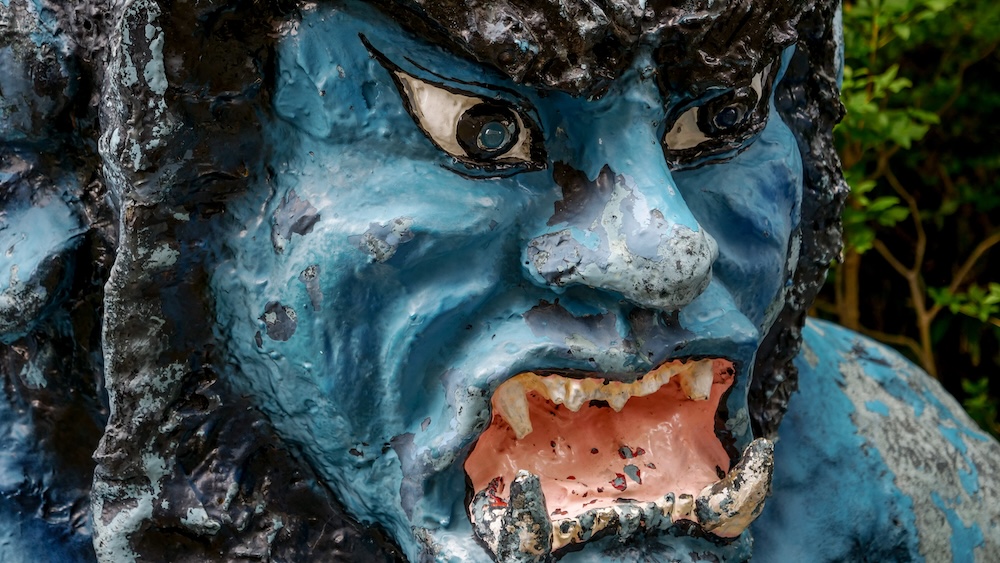
So why are they everywhere? The short version: Noboribetsu sits beside a volcanic crater called Hell Valley, the town has a legend about demons who were put to work guarding its hot springs, and over roughly sixty years it has built a whole identity around that story. Once you know who’s who, the demons stop being slightly unnerving and start being a lot of fun to spot.
It Starts With a Valley Called Hell
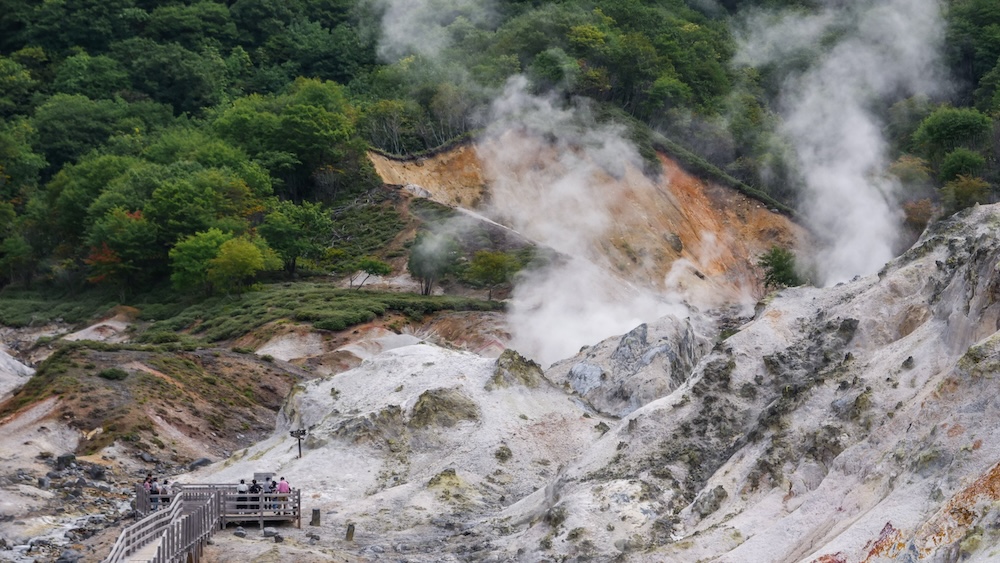
The demons make sense the moment you see Jigokudani. The name means “Hell Valley,” and the crater earns it: about 450 metres across, formed by a volcanic eruption, with steam pouring from the ground, boiling pools and rock stained orange, white and rust. It’s also the main source of the water that feeds Noboribetsu’s hot springs.
In Japanese Buddhism, hell, or jigoku, has traditionally been imagined as a realm of scorching and freezing regions beneath the earth. A valley that hisses, bubbles and smells of sulphur fits that picture uncomfortably well. And once a place looks like hell, people start wondering who lives there. In Japanese folklore, the answer is oni, usually translated as demons or ogres.
Why Noboribetsu’s Demons Guard the Hot Springs
Traditional oni are not the kind of creatures you’d expect a spa town to adopt as mascots. In Japanese folklore they’re fearsome giants of enormous strength, usually drawn with horns and fangs and carrying a heavy iron club called a kanabō, and they’re generally thought to have arrived in Japan from China along with Buddhism.
Noboribetsu’s own legend is what turns them into something else, and it’s the real answer to the question in the title. The town calls its demons Yukijin, a name written with the characters for hot water, demon and god. As the town tells it, these demons were once evil and tormented people, which angered the Ezo gods who protected the northern lands. Their punishment was a new job: guarding the healing waters of Hell Valley.
So the demons scattered around town are reformed troublemakers serving out a sentence as guardians of the hot springs. In the legend, the Yukijin emerge from Jigokudani each year with torches, then drum and dance to gather up people’s illnesses, misfortunes and bad luck before burning them away as fireworks, praying for everyone’s health and good fortune.
That explains the look, too. A guardian is supposed to be intimidating, and a cuddly one wouldn’t scare off much of anything. The town clearly has fun with them all the same. At Yuzawa Shrine, a red demon and a blue demon stand at the top of the stairs, each gripping a spiked club and looking properly ferocious. Standing in front of them, though, the comparison that popped up was Bam Bam from The Flintstones. That blend of menacing and slightly cartoonish turned out to be a pretty good summary of the demons all over town.
King Enma Isn’t One of the Demons
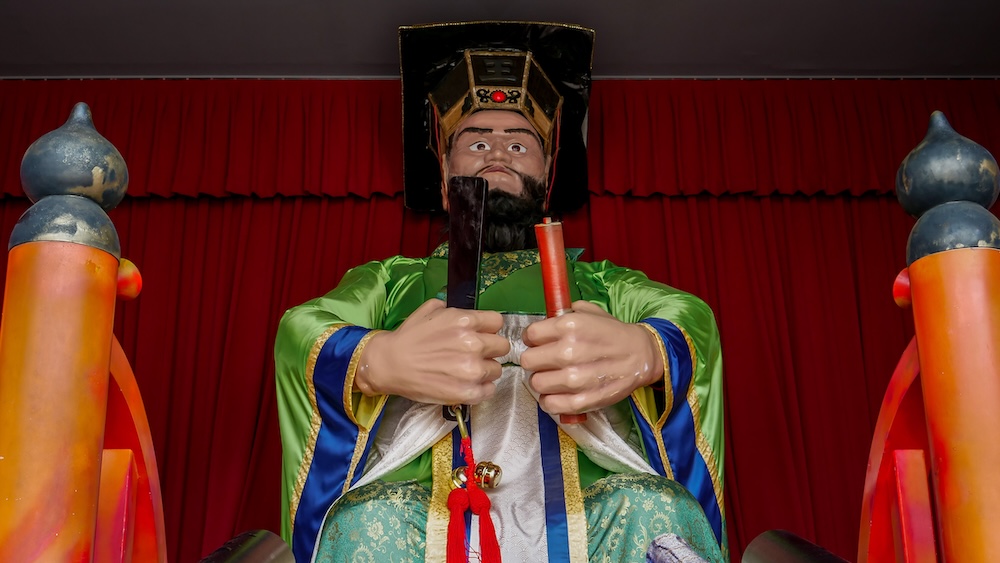
The figure people mix up most is King Enma. A short walk from Hell Valley, Enmado houses a giant mechanical statue of him. Several times a day, his calm expression switches to fury: his face turns red, his brows shoot up and fangs appear. We stopped at Enmado on our way down into town for lunch, and in a place full of odd sights, it’s one of the oddest.
Enma isn’t an oni, though. In Japanese Buddhist mythology, Enma-ō, or Great King Enma, rules hell and judges the dead, and he’s the Japanese form of Yama from Indian tradition. He’s usually shown with a fierce face, a judge’s cap and a sceptre of office. In that tradition, the oni are the enforcers who carry out his sentences, and Enma is the one handing them down.
His place in Noboribetsu is also far more recent than the legend. The town’s Hell Festival began in 1964, and Enma’s statue arrived in 1993 to celebrate the festival’s 30th anniversary. He stands about 5 metres tall seated and roughly 6 metres when he rises. Every August he leaves his hall during the festival to pass judgment in the street, accompanied by a crowd of Yukijin who briefly take over the town. We weren’t there for the festival, but on paper it’s where the two traditions finally meet: a Buddhist king of hell leading Noboribetsu’s own guardian demons through the streets.
| Figure | Who they are | Their role | Where you’ll meet them | Old or new? |
|---|---|---|---|---|
| Oni | Horned, club-carrying demons of Japanese folklore | Fearsome enforcers in tradition | Throughout the town’s imagery | Ancient folklore |
| Yukijin | Noboribetsu’s own reformed oni | Guardians of the hot springs | Statues, the festival, the fireworks | Local legend, celebrated in modern events |
| King Enma | The Buddhist judge of the dead | Judges souls; not an oni | Enmado and the August festival | Buddhist tradition; statue from 1993 |
| Welcome demons | Large statues greeting visitors | A slightly intimidating welcome | Around town and at the station | Modern statues |
| Luck demons | Statues tied to particular wishes | Business, exams and love | In town | Modern statues |
Old Legend or Modern Branding?
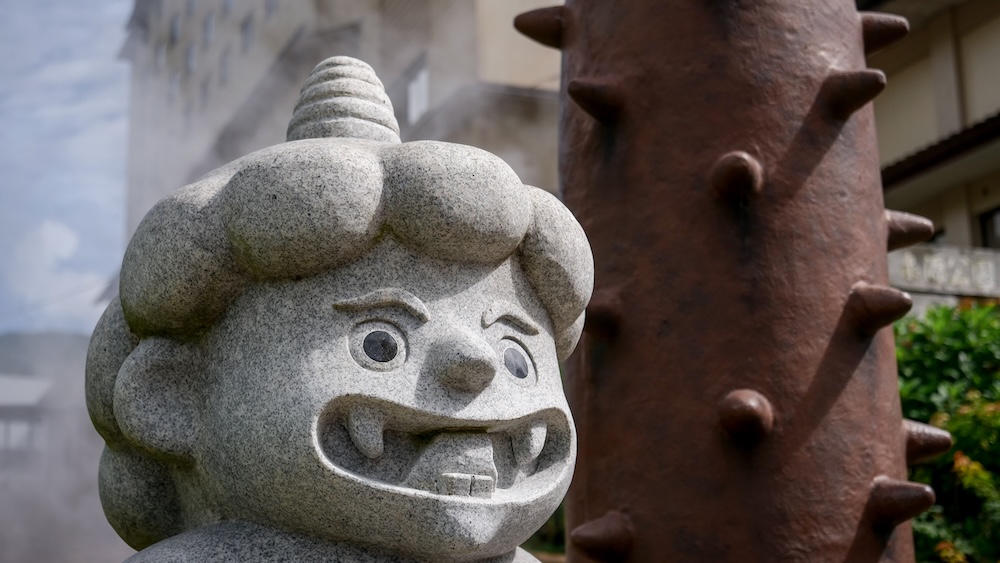
Honestly, it’s both. The legend gives the demons their meaning, while much of what you actually see was built to celebrate it, and fairly recently. The Hell Festival dates from the 1960s, Enma’s statue from the 1990s, and the Demon Fireworks at Hell Valley, where performers dressed as Yukijin gather up the crowd’s misfortunes and fire them into the sky, from the mid-2000s. There are now around a dozen demon statues spread across Noboribetsu, including an 18-metre giant at the expressway turn-off and the welcome demons we met near the start of our walk. If you’re hoping to catch the fireworks, the dates change from year to year, so check the current event schedule before you plan around them.
Since the fireworks and the festival both happen in the evening, they’re really only practical if you’re sleeping in the onsen town rather than heading back down to the station. We stayed at Park Hotel Miyabitei, a big resort-style hotel within walking distance of the main street, so wandering out after dinner would have been easy. If you’re timing a visit around the demons’ big nights, check current rooms at Park Hotel Miyabitei, or compare other places to stay in the Noboribetsu Onsen district to find something within walking distance of Hell Valley.
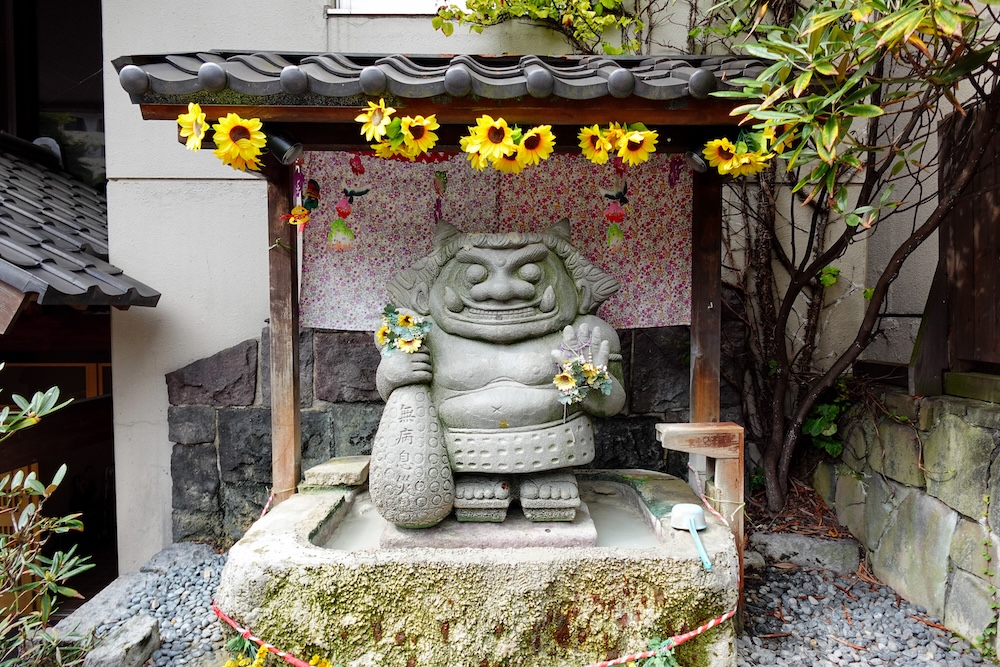
The luck demons are where the branding gets most playful. Among the town’s official statues are demons dedicated to business success, passing exams and finding love. Choosing was easy for us. Exams are well behind us, and we’re already married, so the love department is covered. Business prosperity it was.
I think that’s why the theme works rather than feeling like a gimmick. Pure modern mascots would wear thin quickly, and ancient folklore on its own could feel remote to a visitor walking past. Noboribetsu has taken a genuine local legend about demons protecting its hot springs and built a whole streetscape around it, from shrine guardians and a mechanical king of hell to a statue that promises to help your business.
Knowing the story changes how the demons read. The fangs and clubs are still there, but they stop looking like a strange theme bolted onto a spa town and start looking like the town telling you exactly what that steaming valley is meant to be: dramatic, a little frightening, and in the end looking out for you. If you want to track them down for yourself, our Noboribetsu demon guide covers where to find them.
Frequently Asked Questions
Why are there demon statues all over Noboribetsu Onsen?
They connect directly to Jigokudani, the steaming volcanic crater beside town whose name means Hell Valley. Because the bubbling, sulphur-scented valley resembles the Buddhist underworld, local folklore associated it with oni, and over the past sixty years the town has built its streetscape and events around a legend of reformed demons guarding the hot springs.
What is the difference between traditional oni and Noboribetsu’s Yukijin?
Traditional oni in Japanese folklore are fearsome, club-carrying giants of enormous strength. Yukijin are Noboribetsu’s own reformed demons; according to local legend, the Ezo gods punished them for tormenting people by putting them to work protecting the healing waters of Hell Valley and praying for visitors’ health and good fortune.
Is King Enma at Enmado one of the Noboribetsu demons?
No, King Enma is not an oni. In Japanese Buddhist mythology, Great King Enma rules hell and judges the dead, while the oni act as the enforcers who carry out his sentences. His mechanical statue inside Enmado switches from a calm expression to a furious red face several times a day.
Are the demon statues and events in Noboribetsu ancient or modern?
While the Yukijin story draws on older folklore, the physical statues and festivals around town are relatively modern. The annual Hell Festival began in 1964, the mechanical King Enma statue arrived at Enmado in 1993 for the festival’s 30th anniversary, and the Demon Fireworks at Hell Valley started in the mid-2000s.
Do you need to stay overnight in Noboribetsu Onsen to see the demon fireworks or festival?
Yes, staying in the onsen town is the only practical way to see them because both the Demon Fireworks and the August Hell Festival take place in the evening. When Audrey and I stayed at Park Hotel Miyabitei within walking distance of the main street, it made wandering out into town after dinner easy without having to head back down to the station.
What do the luck demon statues in Noboribetsu represent?
Several modern statues in town are tied to specific wishes, including passing exams, finding love and achieving business prosperity. Since exams are well behind us and Audrey and I are already married, we focused on the demon dedicated to business success.
This article is also available in Spanish. [Leé la versión en castellano: ¿Por qué hay demonios por todas partes en Noboribetsu?]
This article contains affiliate links. If you book through one of these links, I may earn a commission at no extra cost to you.