
The first transportation decision Audrey and I made in Noboribetsu wasn’t particularly glamorous. We’d arrived by train from Hakodate and needed to get from JR Noboribetsu Station to our hotel up in the hot-spring town. Taxis were outside; the cheaper bus wasn’t leaving immediately. Pay more and get moving, or wait?
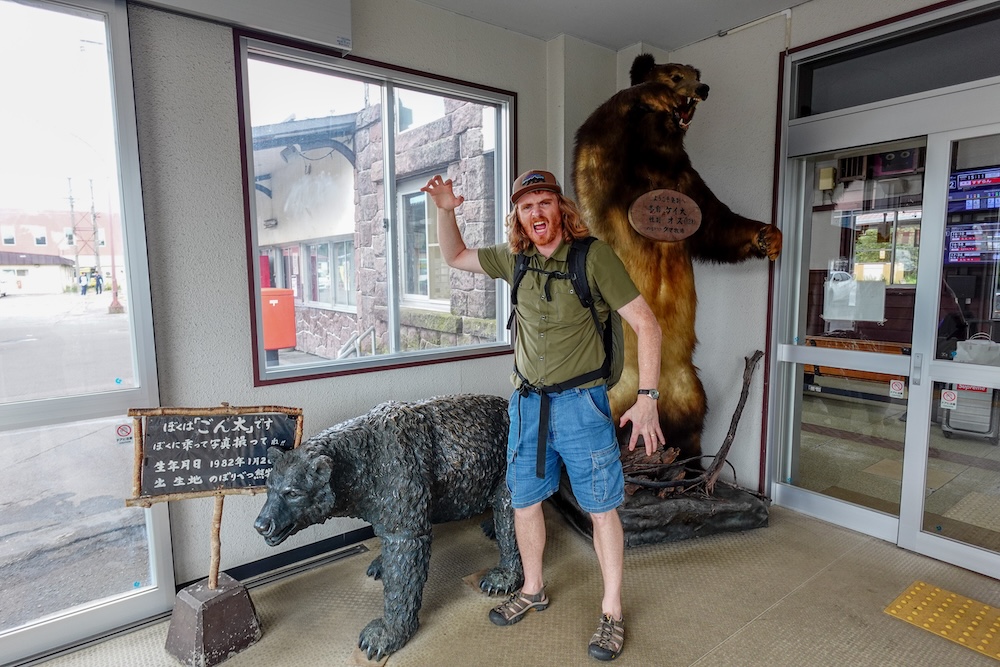
We had two nights in Noboribetsu Onsen and nothing pressing to do except settle in. The bus won. We waited roughly half an hour, rode up to the resort district, and spent the rest of our visit exploring on foot. Hell Valley, Oyunuma, the natural footbath, restaurants and demon statues: no rental car, and certainly no chauffeur whisking us between steaming holes in the ground.
For our particular trip, it was ideal. But the detail that matters is where we were staying, how much time we had and how comfortable we were with hills. Skip those questions and even a straightforward train journey can leave you wondering why your hotel is nowhere near the station.
Noboribetsu Station and Noboribetsu Onsen Are Two Different Places
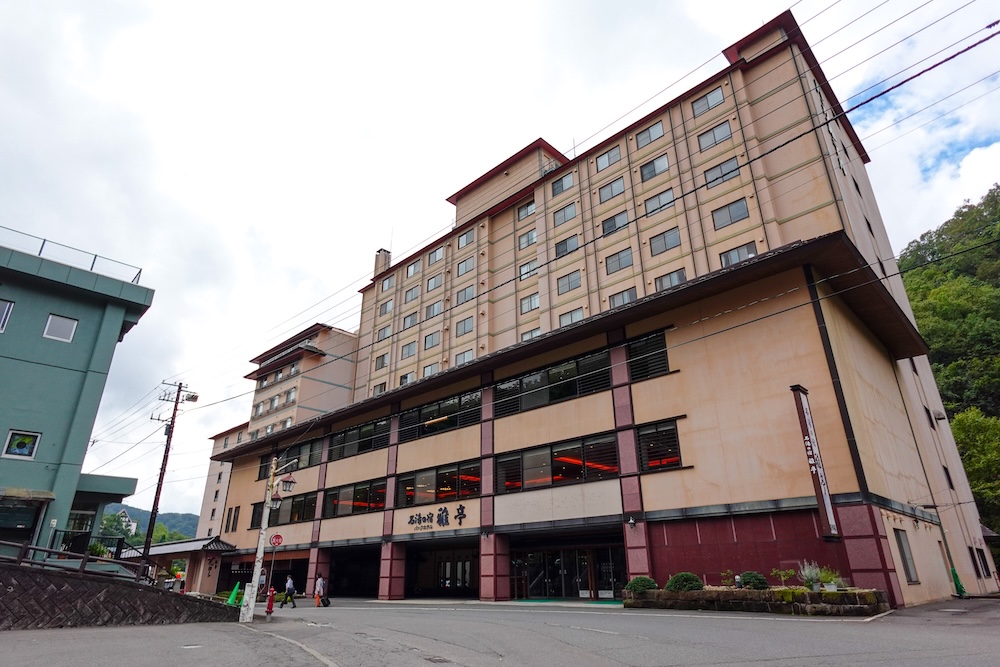
This distinction catches the essential geography of a visit. JR Noboribetsu Station is approximately eight kilometres from Noboribetsu Onsen, the uphill resort district where you’ll find many of the ryokan, hotels and geothermal attractions. Arriving at the railway station is the beginning of your last transfer, not the end of your journey.
Buses and taxis link the station with the resort. There are several onsen-area stops, so check which serves your hotel before dragging a suitcase uphill from the wrong one.
We stayed at Park Hotel Miyabitei, which turned out to be a convenient base for walking. That choice made a real difference. Noboribetsu Onsen is relatively compact, but it isn’t flat, and a hotel that looks close on a map may involve more climbing than you’d expect. Before booking, I’d check the property’s position relative to the bus stops and attractions you most want to visit.
How to Get to Noboribetsu Onsen From Hokkaido’s Main Gateways
From Sapporo, Hakodate or New Chitose Airport, compare the complete journey to the onsen district, including connection waits and the final bus stop.
Sapporo to Noboribetsu Onsen: Train, Bus or Tour
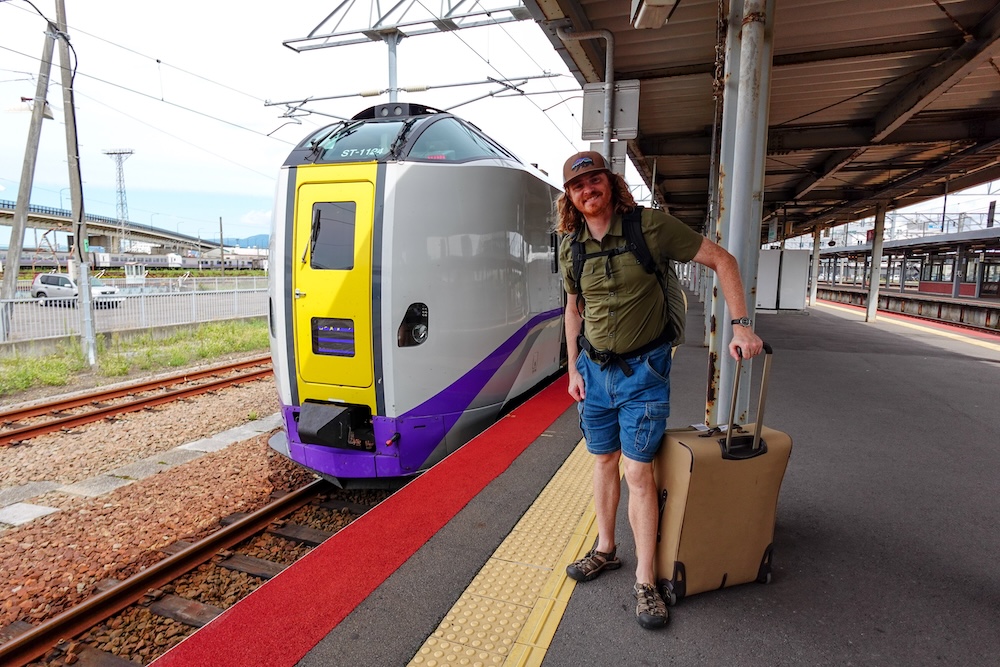
JR Hokkaido’s limited express Hokuto and Suzuran trains run along the Sapporo–Noboribetsu corridor. The train portion is commonly estimated at around 70 minutes, after which you still need the local bus or a taxi. We travelled this corridor in the other direction when we continued onward to Sapporo, so I won’t pretend we personally made the Sapporo-to-Noboribetsu arrival.
For a price comparison, JR Hokkaido gives ¥4,890 as an illustrative standard adult one-way rail fare between Sapporo and Noboribetsu. Add the published ¥450 local bus fare and you’re looking at ¥5,340 for the rail-and-bus combination before any discounts or pass benefits. Check actual fares and connections for your date.
The alternative is Donan Bus’s Express Onsen-go, which runs from Sapporo toward the onsen district without the railway-station transfer. Published adult fares are ¥2,800–¥3,800, with a journey of approximately one hour and 50 minutes. It sounds like an obvious winner until you look at the timetable: the regular direct departure from Sapporo is listed at 1:40 p.m., while the regular return leaves Noboribetsu Onsen at 9:30 a.m. Not exactly a convenient pair for someone planning a full day trip and a leisurely return to Sapporo. Advance reservations are required, generally at least two hours before departure. Check the current Express Onsen-go timetable rather than building a day around a service that doesn’t fit.
Organized tours remove the connection hassle. For example, you can check a shared Sapporo tour covering Hell Valley and Lake Toya. It visits multiple places, so don’t assume you’ll have time to wander the onsen town or enjoy a long soak. Read the actual stops before booking.
Hakodate to Noboribetsu: The Railway Route We Used
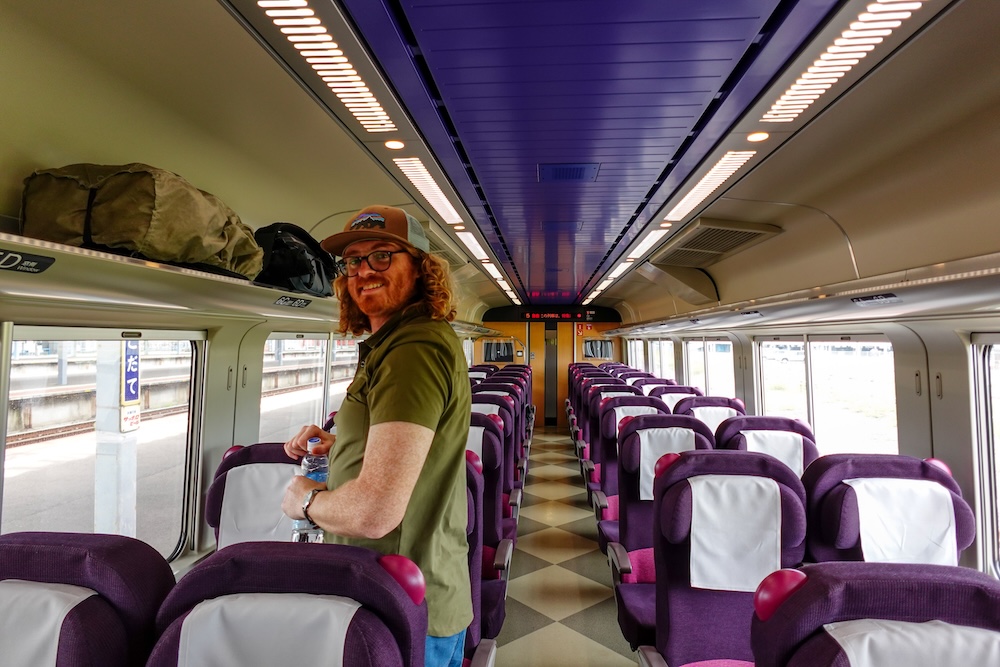
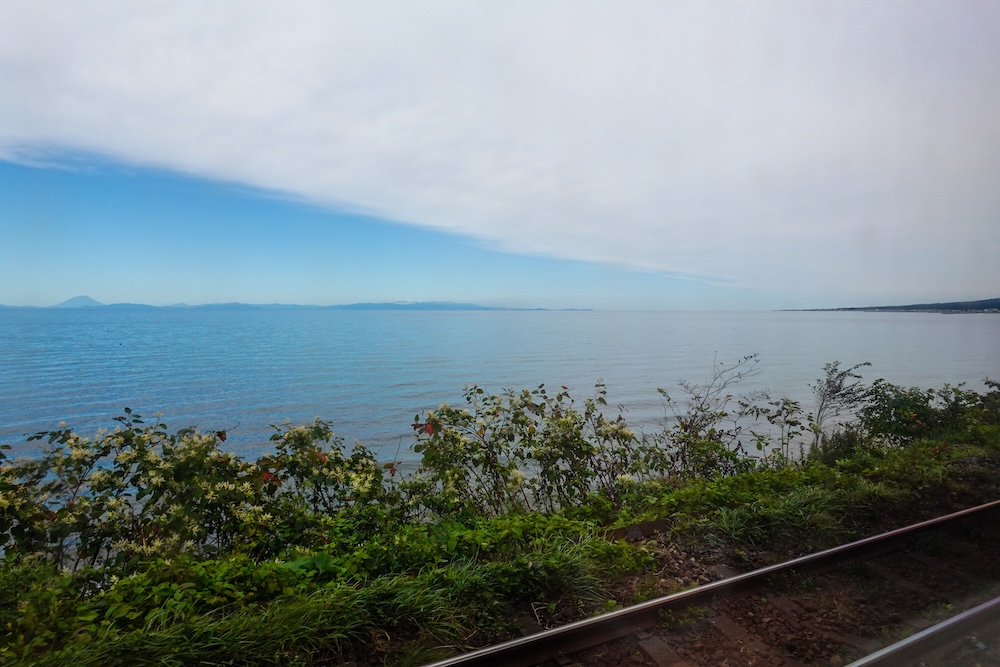
We came up from Hakodate using a JR Hokkaido rail pass and got off at Noboribetsu. The relevant limited express is the Hokuto, and the rail journey is generally around two hours and 25 minutes. After that, you’re still eight kilometres from the hot-spring district.
Our two-night stay made the bus wait irrelevant; if you’re squeezing Noboribetsu between Hakodate and Sapporo, it matters more. Check your train arrival against the onward bus, allow for luggage and remember that a booked seat on the Hokuto doesn’t magically transport you to your ryokan. You’ll want to budget time for that second leg, especially if you have a fixed arrival or check-in plan.
New Chitose Airport to Noboribetsu Onsen
From New Chitose Airport, a direct bus can save you a couple of changes if the departure matches your flight. Donan Bus publishes an Express Noboribetsu Onsen Airport-go service at approximately one hour and 15 minutes, with adult fares listed at ¥1,900–¥2,400. Services are limited, require advance online reservations, and don’t necessarily serve the same hotel stops. Check the airport bus timetable and stopping pattern before making plans.
Rail is another option: take the airport train to Minami-Chitose, change to a suitable limited express for JR Noboribetsu, and finish with the local bus or taxi. Some airport bus services reach the railway-station area rather than the onsen district, which means you still need that final connection. We didn’t arrive through New Chitose on this trip, so I’d choose based on actual flight and transport times instead of assuming the word direct guarantees a convenient hotel arrival.
Do You Need a JR Hokkaido Rail Pass?
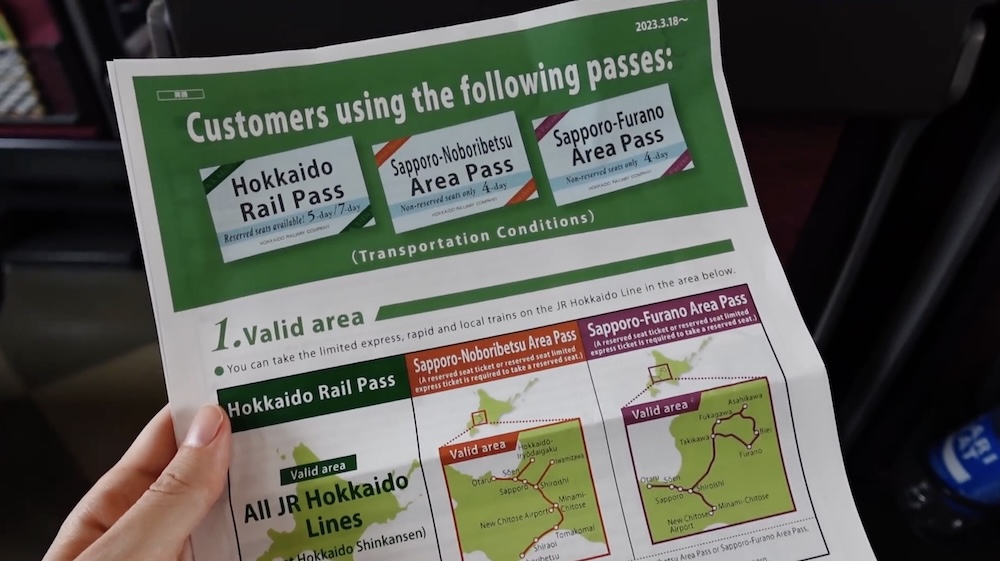
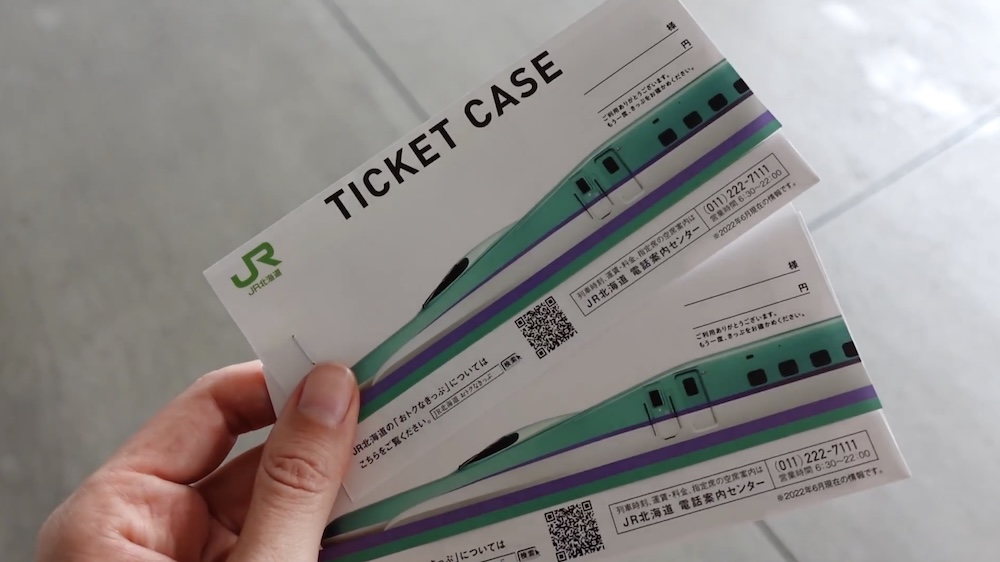
We used a JR Hokkaido pass to travel around the island, but a rail pass isn’t automatically a bargain. The Sapporo–Noboribetsu Area Pass currently covers four consecutive days within a defined area that includes Sapporo, Noboribetsu, Otaru and the airport rail connection. Listed adult pricing is ¥10,000 through eligible advance-purchase channels or ¥11,000 at designated stations. It doesn’t cover the Hakodate leg of our route.
The wider Hokkaido Rail Pass offers five-, seven- and ten-day options, with advance-purchase five-day adult prices starting at ¥22,000. Compare it against your actual rail journeys. And remember that the Donan Bus transfer to Noboribetsu Onsen isn’t included in these JR rail passes.
JR Hokkaido’s limited express trains have reserved seating. With ordinary tickets, you’ll need the basic fare and the appropriate reserved-seat limited express ticket; passholders should arrange a seat reservation before boarding. The JR Hokkaido pass information and reservation instructions are worth checking before you commit to a particular departure.
JR Noboribetsu Station to the Onsen Town: Bus or Taxi?
Outside the station, we saw waiting taxis and the bus timetable. We weren’t in a hurry, so we chose the bus. The roughly half-hour wait was manageable, and the savings suited our trip.
Local Bus: Cheaper, but Check the Actual Departure
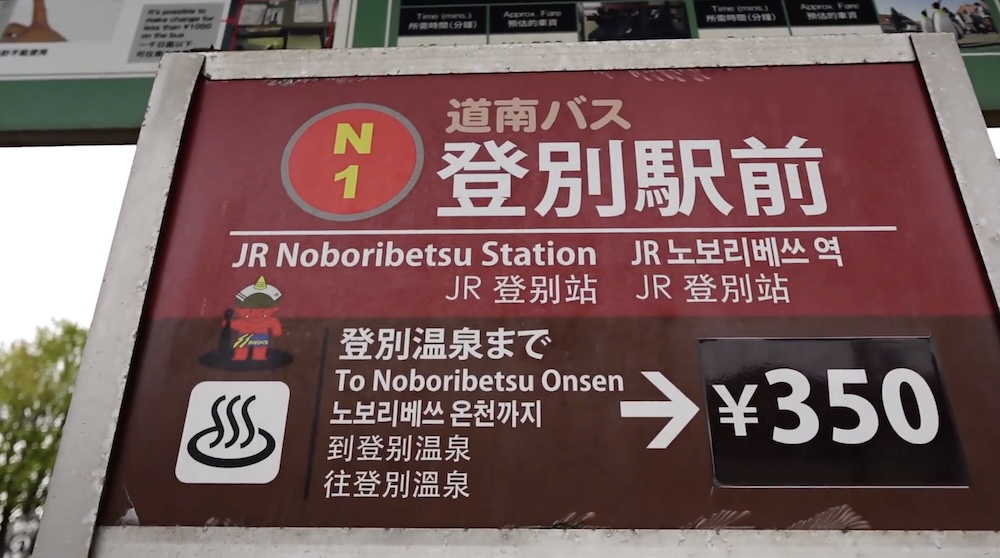
The current adult one-way fare to Noboribetsu Onsen is ¥450. Our old station photograph shows ¥350, which is what the bus cost when we visited; don’t use an old photo to budget for a new trip. Two adults at the currently published fare would pay ¥900 one way.
Donan Bus has several service patterns. Some buses serve the main onsen terminal while others continue to stops such as Dai-ichi Takimotokan, Park Hotel Mae or Ashiyu Entrance. The complete route to the farther Ashiyu Entrance terminus is listed at approximately 27 minutes, while central stops are reached sooner. This is why a single claim that the bus always takes 15 minutes can be misleading.
The less obvious issue is payment. Suica and Kitaca aren’t accepted on these routes. Visa contactless works on certain designated services, but not every route pattern. Have another suitable payment method available and check the current station-to-onsen schedule. Departures aren’t every few minutes.
Taxi: More Expensive, but Potentially Worthwhile
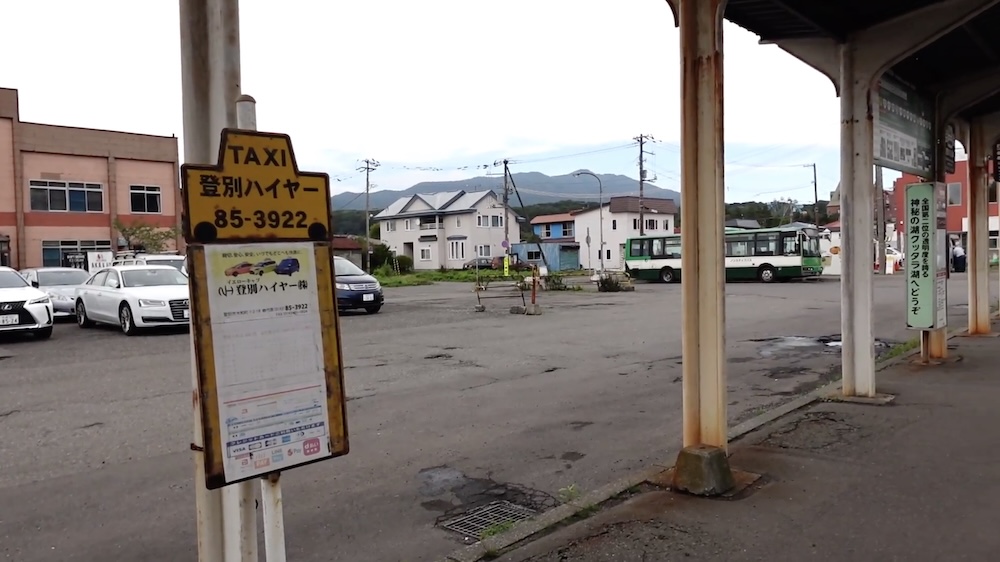
We saw taxis at JR Noboribetsu Station, although we didn’t ride in one. For a present-day comparison, Dai-ichi Takimotokan gives an approximate ¥2,800 fare and 13-minute journey between the station and its hotel. That’s an estimate to one property, not a universal fare or promise that a car will always be waiting.
If you’re travelling as a group, carrying awkward luggage, dealing with mobility limitations or trying to make the most of a short visit, I’d seriously consider the taxi. For the two of us, with plenty of time, the bus was a comfortable choice. A direct hotel drop-off may be worth the cost after a long train journey.
Getting Around Noboribetsu Onsen on Foot
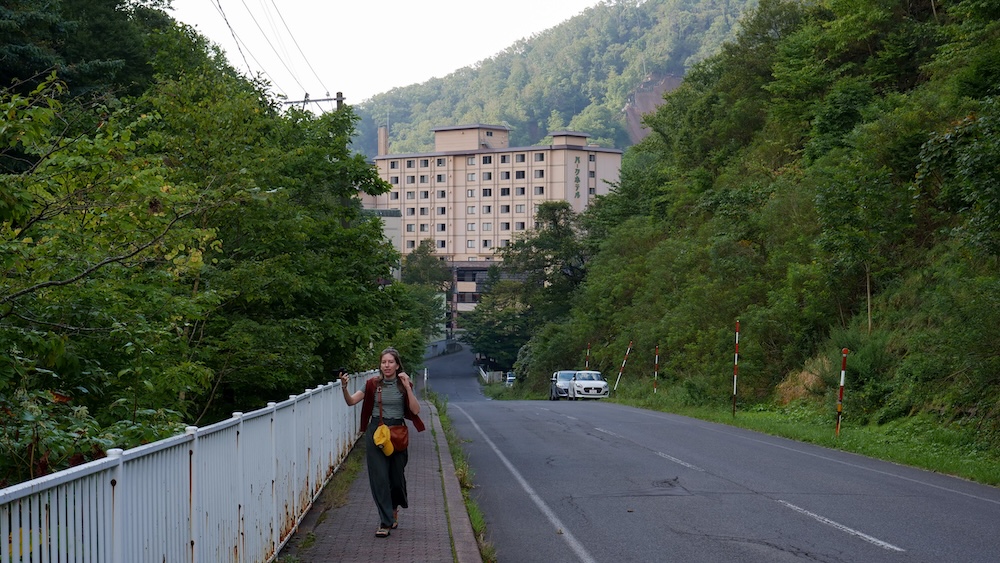
Once we’d settled into Park Hotel Miyabitei, the transport decisions were mostly over. We walked to restaurants, the demon statues, Sengen Park, Hell Valley and the geothermal sights beyond town. I love a destination where you can get some proper exercise and encounter the next attraction under your own steam—which, in Noboribetsu, is usually accompanied by plenty of actual steam coming out of the ground.
The Central Streets Are Manageable, but Not Flat
Park Hotel Miyabitei worked well as a walking base for us. Gokuraku Street, smaller cultural attractions and the approach to Hell Valley are connected by streets and paths within the central resort district. We could explore or eat without arranging another ride. If you’re choosing a base for the same kind of car-free visit, compare hotels in the Noboribetsu Onsen district for a convenient position relative to the bus stops and trails.
The catch is the terrain. Noboribetsu Onsen has hills, bends in the roads and steps around various attractions. If you’re reasonably fit and like walking, that’s not necessarily bad news. I regarded it as good exercise. But don’t judge a hotel-to-attraction walk solely by the straight-line distance on a map. The official Noboribetsu Onsen walking map helps show how the local routes connect.
Hell Valley, Oyunuma and the Natural Footbath
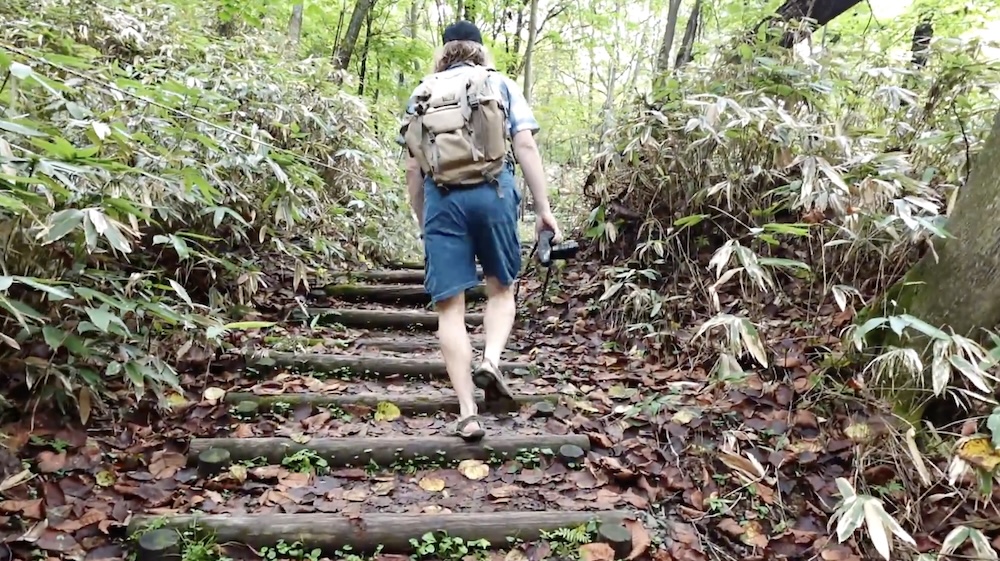
We also walked from town through the geothermal areas, including Hell Valley, Oyunuma and the Oyunuma River Natural Footbath. None of it felt prohibitively difficult for us, and the progression was wonderful: walk for a while, climb or descend a little, then find yourself looking at another extraordinary volcanic scene. Having the freedom to linger at the footbath without worrying about collecting a car was a pleasure.
The official map gives the Jigokudani Pathway as 568 metres, or roughly 10 minutes. Other Oyunuma path segments are individually listed at approximately 300–450 metres, with 10–15-minute estimates. Those are sections of the walking network, not complete walking times from your hotel. Leave room for connecting paths, hills, photo stops and the fact that Noboribetsu keeps producing places where you want to stand and stare.
Driving doesn’t eliminate that walking: the natural footbath has no car park, and Oyunuma parking is another 15 minutes away on foot.
The Roads Without Sidewalks Deserve Attention
I don’t want to oversell the pedestrian conditions. Some roads had proper sidewalks; others didn’t, and on one stretch we noticed vehicles passing fairly quickly. The roads were serpentine and hilly, so we made a point of paying attention to what was coming around the bends. We never found it frightening, but sensible road awareness is part of the experience.
Stairs and forest paths are another consideration. There’s an accessible ramp between the Park Service Center and Hell Valley’s observation deck, with a published maximum gradient of 8%, but that doesn’t mean the whole walking network is step-free. I wouldn’t generalize our comfortable walking experience to visitors with limited mobility, nor to winter conditions we didn’t personally encounter.
Driving Into Noboribetsu Onsen and Where to Park
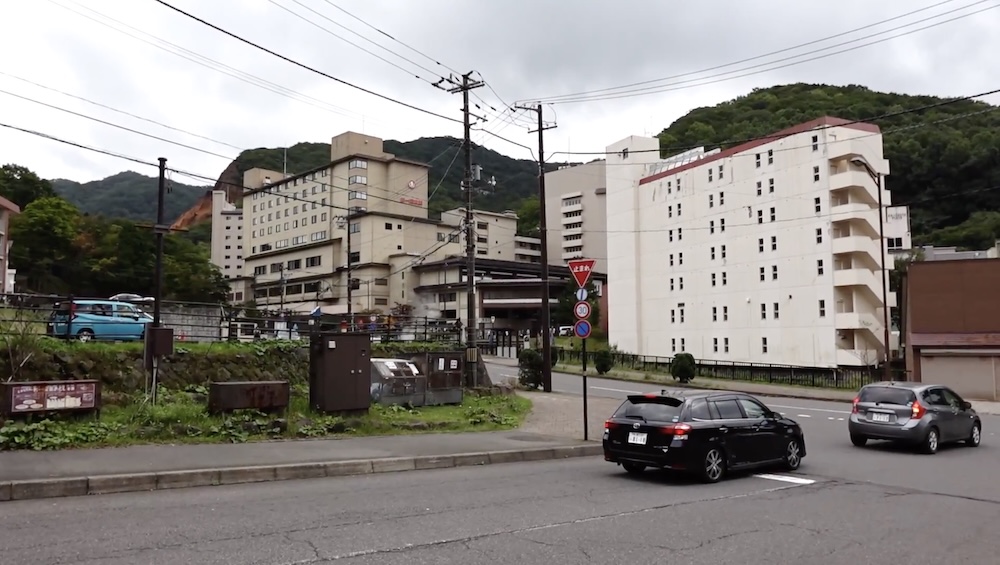
We didn’t rent a car. For our itinerary, we didn’t need one. It’s more appealing if you’re continuing to outlying attractions or building Noboribetsu into a wider Hokkaido road trip. If that trip starts at New Chitose Airport, you can compare rental cars at the airport before deciding whether the flexibility outweighs rental costs, tolls and parking. The resort district is around six kilometres from Noboribetsu-Higashi Interchange on the Do-O Expressway, but once you arrive you’ll still need to think about where to leave the car.
Parking in the Onsen Town
One practical improvement for motorists is Noboribetsu Onsen Parking, a municipal facility opened in December 2025. It has 141 ordinary-car spaces, potentially fewer when snow reduces usable capacity, and operates 24 hours a day. Its published charge is ¥500 per 24 hours normally, rising to ¥800 on designated busy dates.
There are no usual paper tickets or entry barriers: cameras recognize number plates, and drivers enter their plate number at a payment machine before leaving. Cash and cashless payments are supported. It’s about a five-minute walk from Gokuraku Street, and roughly 15 minutes from Hell Valley depending on your destination. Check the current municipal parking rules for busy-date pricing and instructions.
Overnight visitors should check hotel parking first. Dai-ichi Takimotokan, for example, publishes complimentary guest parking; other hotels may have different terms.

Parking at Hell Valley, Oyunuma and Other Attractions
The main geothermal areas use different parking arrangements from the municipal town lot. Here are the distinctions that matter:
| Where you’re parking | Published ordinary-car charge | Practical catch |
|---|---|---|
| Noboribetsu Onsen public parking | ¥500 per 24 hours; ¥800 on designated dates | Central base; you’ll walk onward to attractions |
| Jigokudani / Hell Valley | ¥500 | Separate attraction parking rules |
| Oyunuma | ¥500 | Seasonal closure during the winter road-closure period |
The Hell Valley and Oyunuma car parks operate a same-day shared-use arrangement allowing one use of each under the applicable conditions. That can save paying twice if you’re driving between the attractions, but it isn’t unlimited re-entry. Oyunuma’s parking area normally closes from late November until late April, depending on the road and weather; check the current operator rules before going.
Two more small but consequential details: Sengen Park has no dedicated parking, and neither does the Oyunuma River Natural Footbath. For Sengen Park, the Hell Valley lot is a nearby option, approximately five minutes away on foot. From Oyunuma parking, the footbath still requires the walk mentioned earlier. Having a car gives you flexibility, but it doesn’t provide a parking space at the edge of every steaming pool.
Which Transport Option Would I Choose?
For reasonably fit visitors staying centrally for a couple of nights, I’d choose train, local bus and walking. That’s what worked for us, and the exercise was part of the pleasure.
If I were arriving late, travelling with substantial luggage or working against a tight clock, I’d put more value on a taxi. A suitably timed direct bus from Sapporo or New Chitose Airport can also remove the railway-station transfer. Organized tours suit visitors who prefer transport handled for them, although you’re giving up some independence over timing and stops. A Noboribetsu-focused guided day trip from Sapporo covers Hell Valley, the natural footbath and an onsen bath, with rail and local bus fares included; it still involves walking. For a group wanting to set its own route, there’s also a private-driver day tour from Sapporo that can combine Noboribetsu and Lake Toya. The driver isn’t a sightseeing guide, and stops should be agreed ahead of time. For someone exploring dispersed parts of Hokkaido, renting a car may offer the flexibility that would be unnecessary for our central onsen-town stay.
Anyone with mobility restrictions should check specific access routes and vehicle arrangements in advance. A taxi might reduce walking to a hotel, for example, but it won’t remove the steps along every geothermal trail.
Two Small Logistics That Can Save an Annoying Afternoon
Check the return bus before deciding on your train. Donan Bus publishes individual departures rather than a guaranteed every-few-minutes shuttle, and not every service starts or ends at the same onsen stop. Work backward from your train with time for the bus-stop walk, potential waits and boarding at the station. A fixed onward train deserves more planning than our leisurely arrival.
If your room isn’t ready or you have time after checking out, Noboribetsu Onsen has a baggage-storage service at Noboribetsu Onsen-cho 60, with published daytime hours around 9:00 a.m.–4:30 p.m. The available official information doesn’t agree on the exact fee, so confirm the charge directly rather than budgeting around one unverified number. The baggage-storage details are worth checking, particularly if you’re planning a walk before or after your hotel stay.
Would I Visit Noboribetsu Onsen Without a Car Again?
Absolutely. We arrived by train from Hakodate, took the cheaper bus, and walked for two nights without feeling that a car was the missing ingredient.
I would make a different call with a tight schedule, less comfortable walking conditions or attractions farther afield. But for a reasonably active visitor staying centrally, sort out that final journey from JR Noboribetsu Station and you can leave most of the transport decisions behind. There are better things to do in Noboribetsu than spend your hot-spring getaway studying a taxi fare chart—starting with the hot springs themselves.
Frequently Asked Questions
Is Noboribetsu Station the same place as Noboribetsu Onsen?
No. JR Noboribetsu Station is approximately eight kilometres from the uphill onsen district. You still need a local bus or taxi to reach the main hotels and hot-spring attractions.
How much is the bus from JR Noboribetsu Station to Noboribetsu Onsen?
The published adult one-way fare is ¥450. Audrey and I took this cheaper option, although the fare was ¥350 during our visit. Check the current timetable and carry a suitable payment method because Suica and Kitaca are not accepted.
Can you visit Noboribetsu Onsen without a car?
Absolutely. We stayed for two nights and walked from Park Hotel Miyabitei to Hell Valley, Oyunuma, the natural footbath and the central attractions. I would do it again, provided I had enough time and was comfortable walking uphill.
Is Noboribetsu Onsen easy to walk around?
We found it manageable and enjoyed the exercise, but the roads are hilly and winding. Some stretches lack sidewalks, and geothermal trails include steps and uneven paths. It will not suit every mobility level.
Should I take a bus or taxi from Noboribetsu Station?
The bus is considerably cheaper when its departure suits you. A taxi can make more sense with heavy luggage or a tight schedule. One hotel publishes an approximate ¥2,800 taxi fare and 13-minute transfer, but actual fares vary.
Where can I park in Noboribetsu Onsen?
The public Noboribetsu Onsen Parking facility has 141 ordinary-car spaces and charges ¥500 per 24 hours normally, rising to ¥800 on designated busy dates. Hell Valley and Oyunuma have separate paid parking, with seasonal restrictions at Oyunuma.
Does a JR Hokkaido rail pass cover the bus to Noboribetsu Onsen?
No. JR rail passes can cover eligible railway journeys to JR Noboribetsu Station, but the Donan Bus transfer into the hot-spring district requires separate payment.
This guide is also available in Spanish. [Leé la versión en castellano: Cómo llegar a Noboribetsu Onsen y moverse: trenes, colectivos, taxis, caminatas y estacionamiento]
This article contains affiliate links. If you book through one of these links, I may earn a commission at no extra cost to you.