
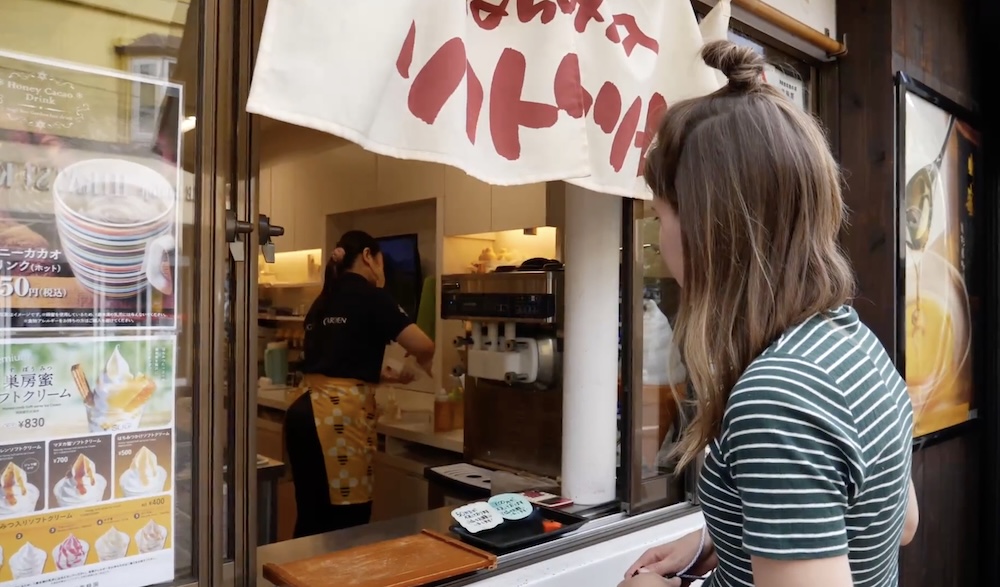
Lunch in Noboribetsu Onsen had been a bowl of fiery Enma ramen, so by the time we wandered back onto the main street, something cold and sweet felt less like a treat and more like first aid. The honeycomb soft serve at Sugi Bee Garden’s walk-up window answered that call. Audrey did the ordering, and we agreed to share one cup. I announced I’d try a little bit without stealing the whole thing, and a few spoonfuls later I was apologizing that I should have saved her some. It was the first honeycomb ice cream I’d ever had, and it raised the question anyone walking past that window will ask: is a cup that cost us ¥830 actually worth it?
What You Get in the ¥830 Cup
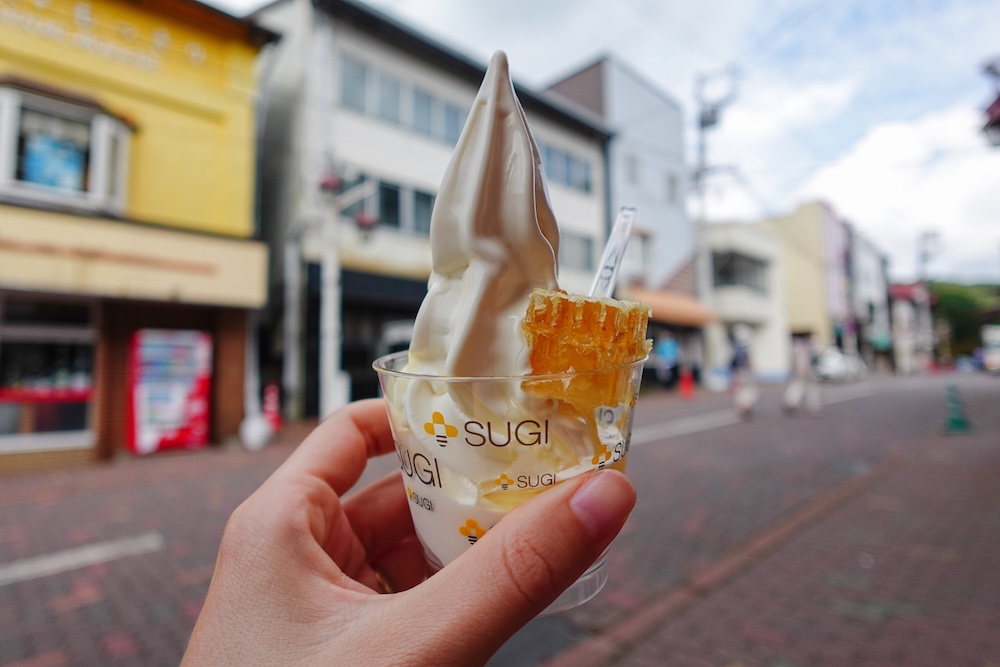
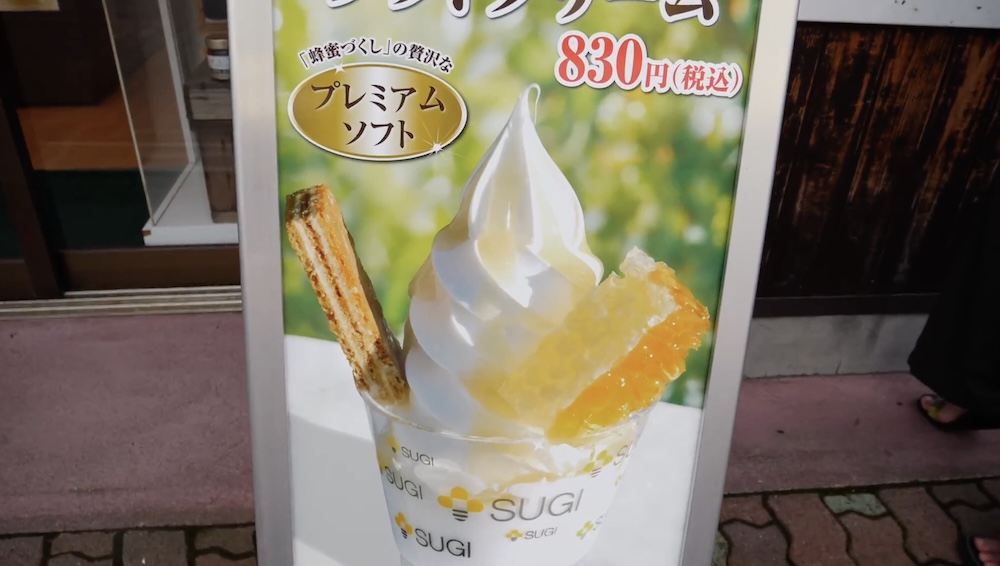
It isn’t a cone. It comes in a clear plastic cup printed all over with the SUGI logo. The poster out front billed it as a “premium soft,” honey-themed through and through, and the cup lives up to the description:
- a tall swirl of white soft serve;
- a honey wafer pushed down one side;
- a thick, glistening slab of comb honey on the other;
- a final drizzle of honey that slowly drips down into the cup while you’re still deciding where to start.
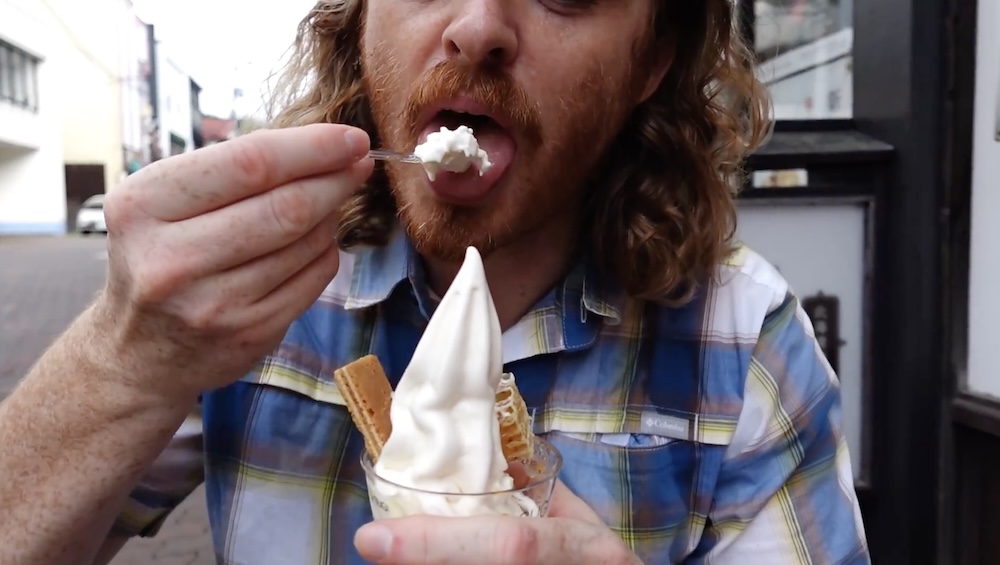
The soft serve was especially creamy, and it was sweet without tipping into sugary. The best spoonfuls were the ones that caught some of that honey running down the side.
What it isn’t is a Noboribetsu specialty, whatever the setting suggests. Sugi Bee Garden is a beekeeping company from Kumamoto, down in Kyushu, founded in 1946, and it runs around 50 of its own stores across Japan, including branches in Hakodate and Otaru. I’m fairly sure we’d seen these same cups earlier on the trip, I think in Hakodate, but we’d walked past without buying one. The soft serve has honey blended into it, the wafer is a honey wafer, and the comb is imported (from Hungary, at least at some branches) rather than pulled from hives in the hills above Hell Valley. That doesn’t make it any less delicious. It just changes the decision: you’re buying a beekeeper’s signature cup that happens to be on Noboribetsu’s main street, not a taste you can only get here.
As for the price, we paid ¥830 in 2023. The same cup has since cost ¥900 at other Sugi Bee Garden branches, so expect to pay around that now.
The Honeycomb Is Only Good While There’s Honey in It
The comb is what you’re really paying for, and while it’s full of honey it’s the best thing in the cup. The trouble starts once you’ve chewed the honey out. I tried the comb itself, and what’s left after the honey is gone is a lump of wax that tasted pretty weird. Once the honey is done, it ain’t tasty.
Beeswax is edible, but your body doesn’t really digest it, and people who eat comb honey regularly tend to chew out the honey and spit out the wax. Think of it as honey-filled chewing gum, and stop chewing when the flavour runs out.
Honeycomb or a Cheaper Honey Soft Serve?
The honeycomb cup sits at the top of a whole ladder of honey soft serves at the window. This was the menu when we visited:
| Option on the 2023 menu | Price then | What it is | Who it suits |
|---|---|---|---|
| Honeycomb soft serve (巣房蜜ソフトクリーム) | ¥830 | Honey soft serve, honey wafer, a slab of comb honey and a honey drizzle | Anyone curious about comb honey. This is the one we shared. |
| Manuka honey soft serve | ¥700 | Soft serve with manuka honey | Manuka fans. We didn’t try it. |
| Honey-drizzled soft serve | ¥500 | Soft serve with honey poured over | The value pick if creamy soft serve and honey is what you’re after |
| Honey-mixed soft serves | ¥400 each | Several flavours with honey mixed in | A simpler, cheaper cup |
Prices have probably moved since then, so check the board. The logic shouldn’t change, though. Most of the premium is for the comb. If the comb doesn’t excite you, the drizzled cup covers most of what we loved about ours for a few hundred yen less.
Finding Sugi Bee Garden in Noboribetsu Onsen
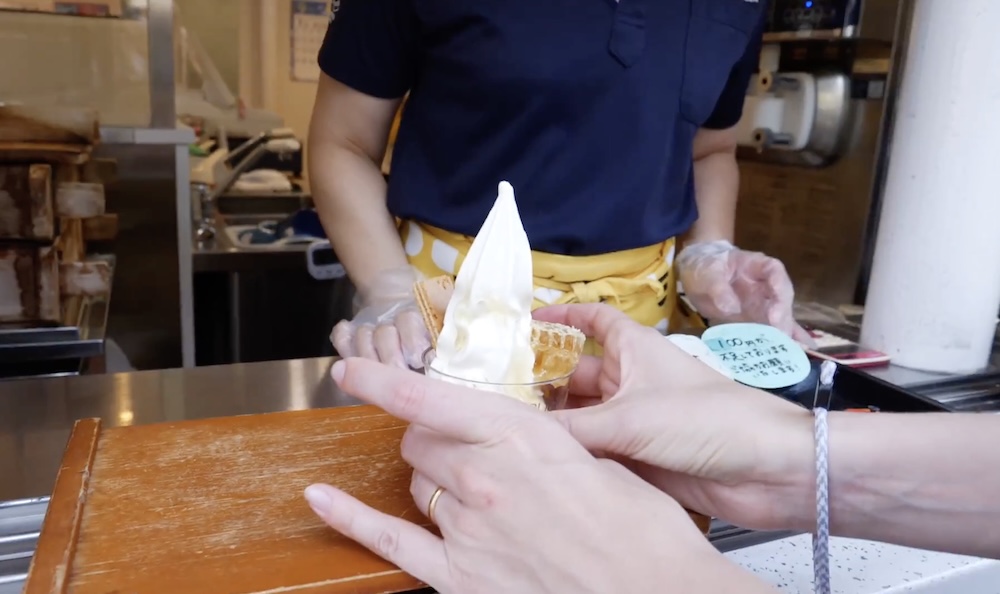
The shop is at Noboribetsu Onsen-machi 49, on the main street close to Enmado, roughly a six-minute walk from the bus terminal. You order soft serve at the window facing the street, and we ate ours standing outside under a grey sky. It’s open roughly 9:30 a.m. to 6:15 p.m., with hours shifting by season and no regular closing day. That makes it easy to fit around lunch, a walk through Hell Valley or an afternoon soak. There’s no parking.
When we visited, a handwritten note at the window seemed to be asking customers for small change, so a few coins in your pocket can’t hurt.
Staying in town makes this the easiest dessert decision in Noboribetsu. We were sleeping a short walk away at Park Hotel Miyabitei, so wandering out for soft serve between meals and baths took no planning at all. If you want the same setup, you can check rooms at Park Hotel Miyabitei. If you’d rather pick your own base, compare onsen hotels in Noboribetsu, and choose one in the onsen town itself so the main street is on your doorstep.
Day-trippers have it easier here than at the town’s lunch-only ramen counters, because the window stays open for most of the day. Any trip from Sapporo that gives you free time in the town itself, and not just at the Hell Valley viewpoints, should leave room for a cup. If you’re coming that way, it’s worth browsing day trips that include Noboribetsu with an eye on how long each one actually spends in the onsen town.
Is It Worth the Stop?
Yes, once, and ideally shared. The soft serve is genuinely high quality, and the honey running through the cup is the best part. If you’ve never tried comb honey, this is an easy, low-risk introduction right on the main street. It’s not cheap, though, and it’s the same cup Sugi Bee Garden sells all over Japan. If you’ve already had one in Hakodate, Otaru or anywhere else, Noboribetsu doesn’t owe you a second. If all you want is honey soft serve, the drizzled cup gets you there for less.
If you do go for the honeycomb, enjoy the honey and don’t bother finishing the wax. And if someone tells you they’ll take only a little bit of yours, keep an eye on them.
Frequently Asked Questions
What comes in Sugi Bee Garden’s honeycomb ice cream?
It’s served in a clear SUGI-branded cup rather than a cone: a swirl of honey soft serve, a honey wafer, a thick slab of comb honey and a final drizzle of honey. The soft serve was especially creamy and sweet without being sugary.
How much does the honeycomb soft serve cost?
We paid ¥830 in 2023. The same cup has since cost ¥900 at other Sugi Bee Garden branches, so expect to pay around that now and check the board when you order.
Should you eat the honeycomb wax?
You can, since beeswax is edible, but your body doesn’t really digest it. I tried the comb after the honey was gone and the leftover wax tasted pretty weird. Chew out the honey and spit out the wax, like honey-filled chewing gum.
Is honeycomb ice cream a Noboribetsu specialty?
No. Sugi Bee Garden is a beekeeping company from Kumamoto, founded in 1946, with around 50 of its own stores across Japan, including Hakodate and Otaru. The comb is imported, from Hungary at least at some branches, so it’s a chain’s signature cup that happens to be on Noboribetsu’s main street.
Is there a cheaper option than the honeycomb cup?
Yes. When we visited, the menu also listed a manuka honey soft serve for ¥700, a honey-drizzled soft serve for ¥500 and honey-mixed soft serves for ¥400 each. If the comb doesn’t interest you, the drizzled cup covers most of the experience for less.
Where is Sugi Bee Garden in Noboribetsu Onsen, and when is it open?
The shop is at Noboribetsu Onsen-machi 49, on the main street close to Enmado and roughly a six-minute walk from the bus terminal. It’s open roughly 9:30 a.m. to 6:15 p.m., with hours shifting by season and no regular closing day. There’s no parking.
This article is also available in Spanish. [Leé la versión en castellano: Helado con panal de miel de Sugi Bee Garden en Noboribetsu Onsen: ¿vale la pena la parada?]
This article contains affiliate links. If you book through one of these links, I may earn a commission at no extra cost to you.