
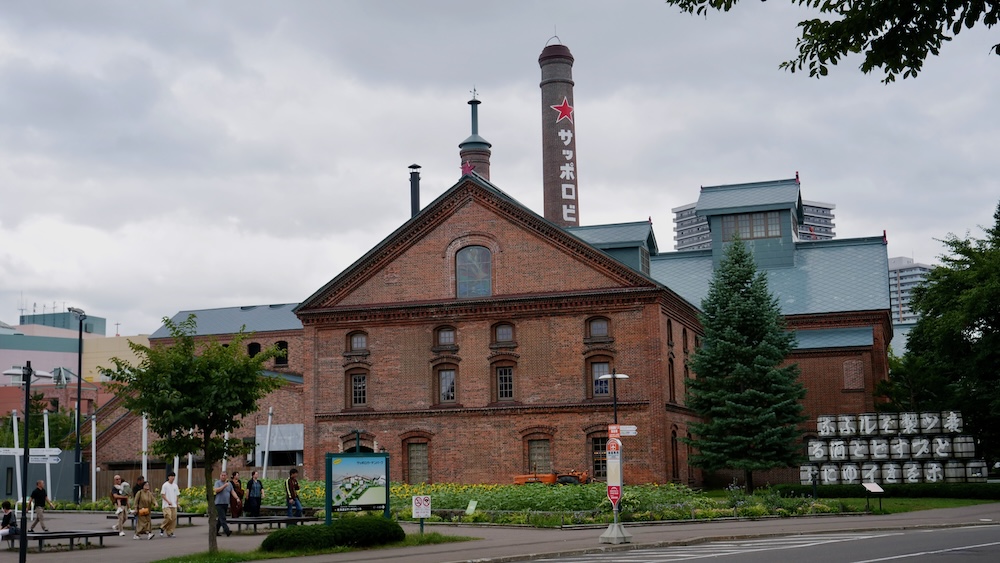
I had two things on my mind when Audrey and I arrived at the Sapporo Beer Museum: the enormous red-brick building in front of us and the possibility of having a cold beer at the end of our visit. It was a hot, humid day, we’d taken the metro and walked a few blocks, and both prospects were looking pretty good.
The building won me over immediately. It’s huge, for one thing, and inside we found old brewing equipment, machinery, posters and beer labels from different eras. I have a soft spot for museums that let you get close to old machinery and advertising from another era. We worked our way through the displays before settling in for a tasting flight. As museum afternoons go, I had no complaints.
What I didn’t appreciate at the time was the significance of a five-pointed star that kept appearing in the beer’s imagery. I noticed it at the museum, but only became more conscious of the repeated motif when looking back over our visit afterward. If you’d asked me what it meant while we were there, I probably would have said, “It’s the beer logo, isn’t it?” And then gone back to my tasting.
Well, yes, but there is more to it. The star turns up on buildings around Sapporo too, including places Audrey and I visited without paying much attention to the decorative details. It turns out that little beer logo has a story well beyond the brewery.
The North Star Came Before the Beer
The five-pointed star originally belonged to the Kaitakushi, a government commission established in 1869 during Japan’s Meiji period. It oversaw Hokkaido’s administration and development, including agriculture, new industries and public buildings. The government brewery would become one of those projects.
The emblem represented Polaris, the North Star. It’s a fitting choice for an institution operating in Japan’s far north, given the star’s longstanding association with direction and navigation. The five-pointed emblem is sometimes called the Goryōsei. By the time it turned up on beer labels, it already had a history of its own.
A Kaitakushi ship flag from 1872 displayed a red five-pointed star against dark blue. The following year, a red star on white flew above the commission’s Sapporo headquarters. The design also appeared on buildings and goods, so it was already part of the institution’s identity before the brewery opened.
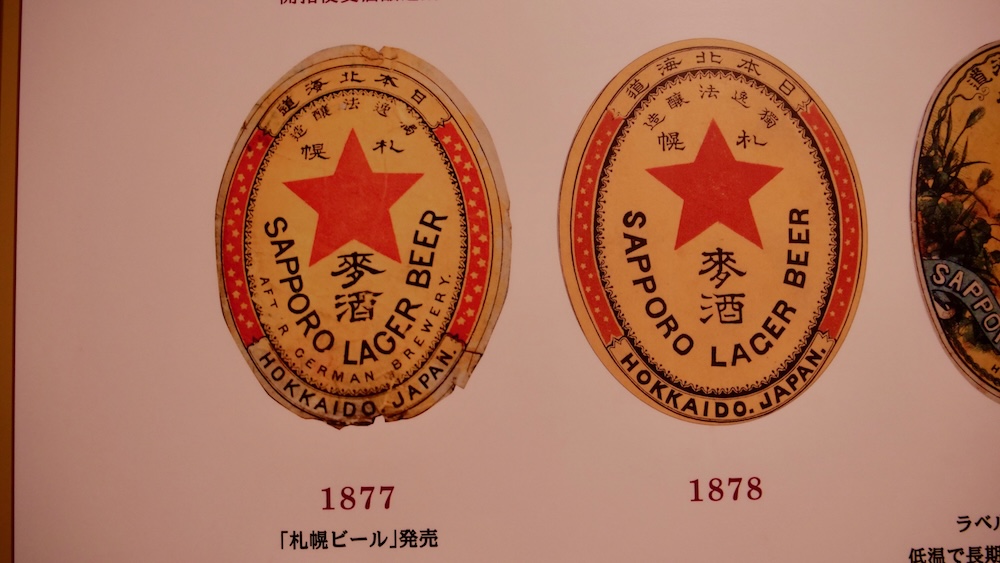
The brewery opened in 1876, and the star appeared on an early Sapporo beer label in 1877. That’s the key to the mystery: Sapporo Beer adopted an existing emblem. I’d had the relationship backward when I assumed it was simply the brewery’s design.
That period was also part of a much longer story in Hokkaido. Indigenous Ainu communities had lived on the island for generations, with their own languages, traditions and livelihoods. As Japanese administration and settlement expanded, land use changed and some traditional activities, including fishing and hunting, faced restrictions. It’s useful background to the Sapporo that took shape during the Meiji era, even if the star itself is what first catches your attention.
How a Government Star Became Sapporo Beer’s Identity
The Kaitakushi established its brewery in Sapporo in September 1876. Murahashi Hisanari helped organize the project, while Nakagawa Seibei, who had trained as a brewer in Germany, took charge of making the beer. When the first Sapporo beer went on sale in 1877, the red star was already part of the label’s identity.
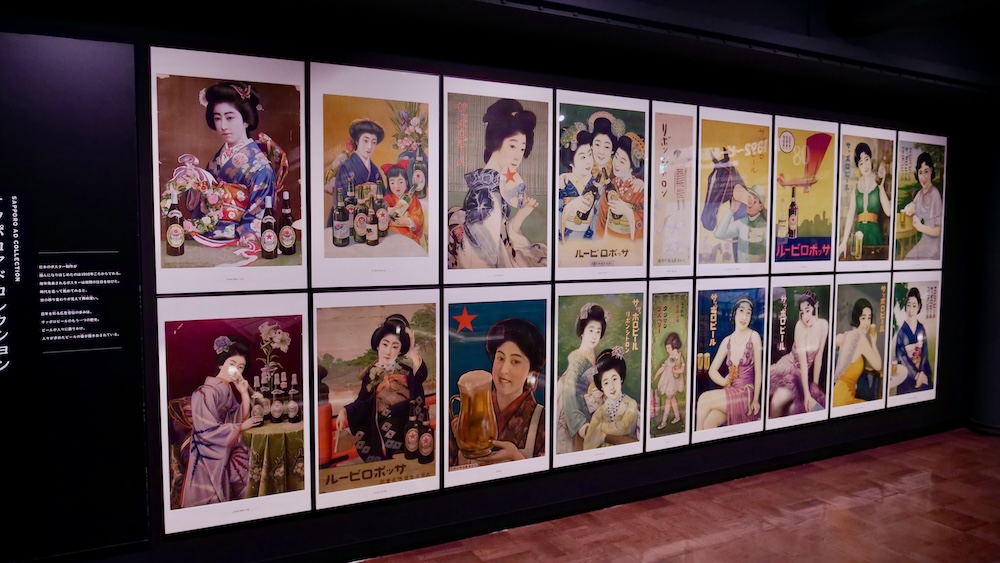
Looking back at the old labels and advertisements we saw in the museum, the connection is easier to appreciate. I was more interested in the old machinery and magnificent brick setting at the time, but the star keeps popping up in the designs. It went from being a government emblem to something people could recognize on a bottle of beer.
The Kaitakushi closed in 1882, but the brewing operation continued. It was privatized in 1886, a Sapporo beer company was established in 1887, and the business eventually became part of Dainippon Beer in 1906. Ownership and company names changed again over the years. The star, however, stuck around.

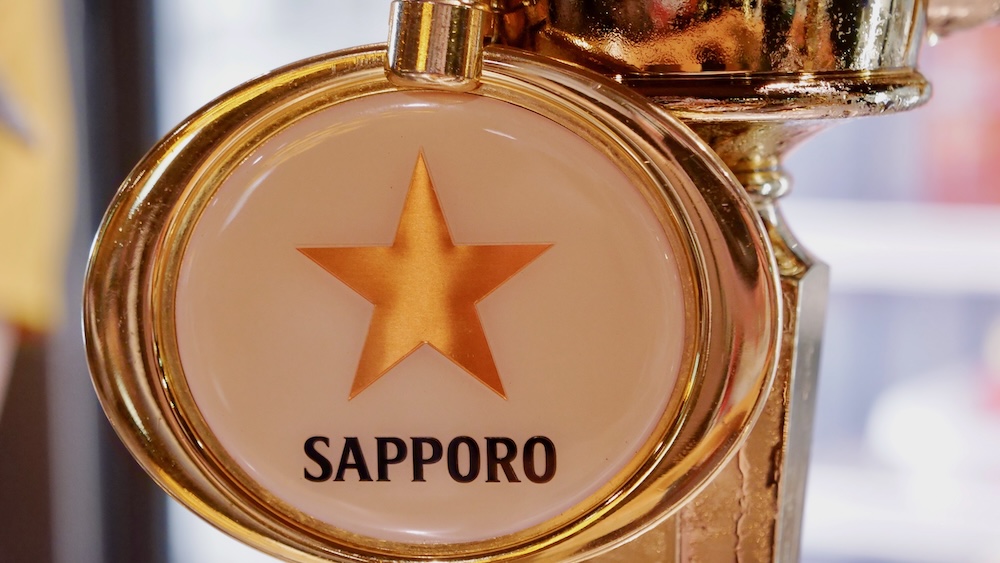
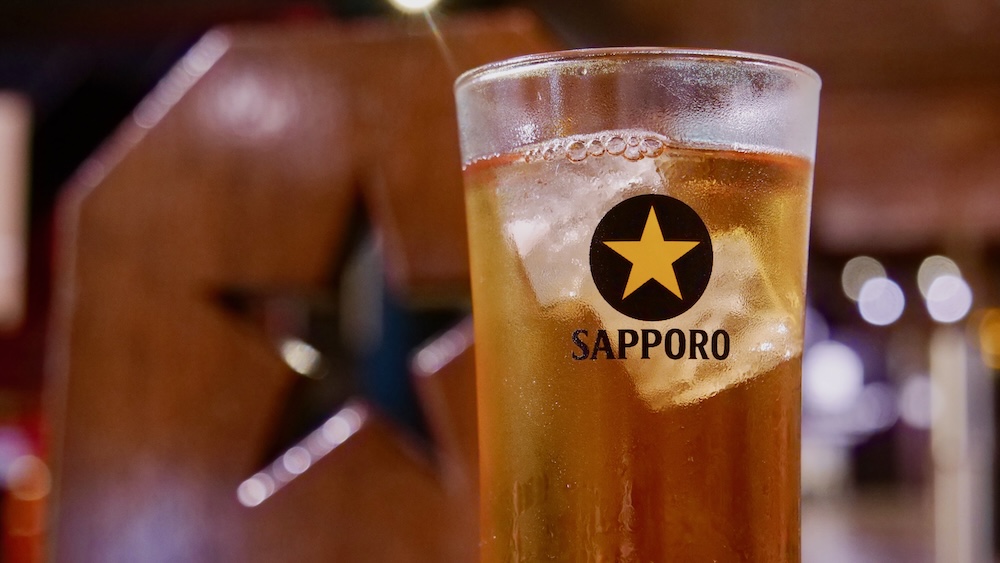
And here’s where the colours can get confusing. The historic Kaitakushi star was red, but the star on familiar modern Sapporo Beer branding is often gold. Sapporo Lager Beer retains a prominent red star and is affectionately known as Akaboshi, meaning “red star.” These are related uses of the emblem, not evidence that every Sapporo beer label has always looked the same.
During our tasting, I went through three beers and came away preferring Black Label. Audrey was much less interested in ranking them; she isn’t a big beer drinker and found the differences fairly subtle, although she liked Classic and the third sample. In the moment, the priority was enjoying something refreshing in an air-conditioned room. I’m not going to pretend we were sitting there discussing Meiji history between sips. But there’s something rather remarkable about a nineteenth-century government insignia surviving long enough to end up on a beer we’re still drinking today.
Where to Look for the Stars Around Sapporo
The fun part is that you can still spot versions of the emblem around Sapporo, especially if you remember to look up. Some are on buildings from the Kaitakushi’s own time; others appear on later structures. They’re often tucked into gables or rooflines rather than placed at eye level, which probably explains how I managed to miss so many of them.
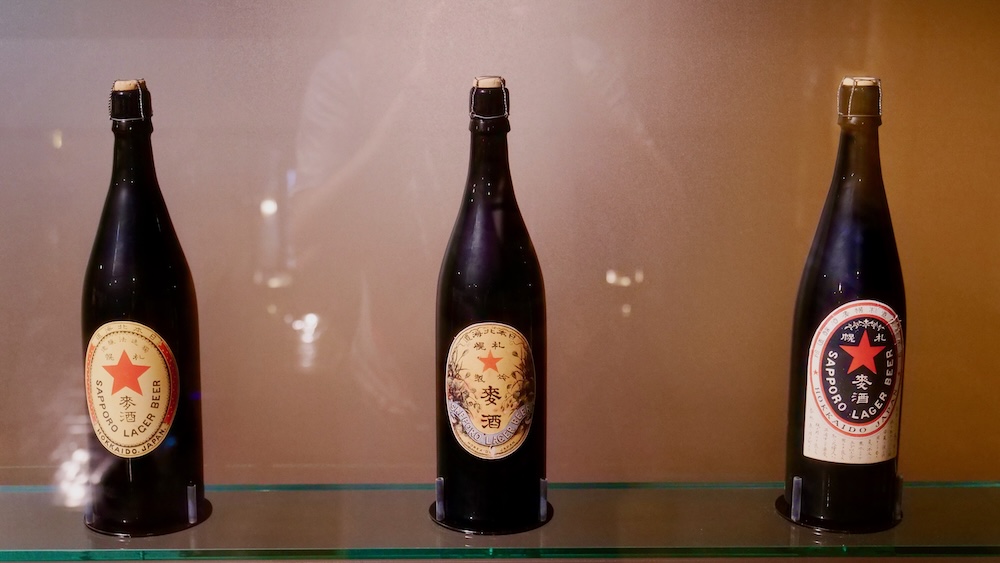
Sapporo Beer Museum and the Original Brewery Site
The red-brick complex Audrey and I visited is a good place to recognize the symbol, including the red star on the historic chimney and its appearance in the museum’s label displays. But the museum’s own building has a slightly unexpected history. It was constructed in 1890 for the Sapporo Sugar Company, then adapted for brewing-related industrial use. The museum opened there in 1987.
In other words, the building that impressed me so much isn’t the original 1876 Kaitakushi brewery. That earlier operation occupied a different site, associated today with the Sapporo Factory complex. The museum and the original brewery are both meaningful parts of the story, but they’re not interchangeable places.
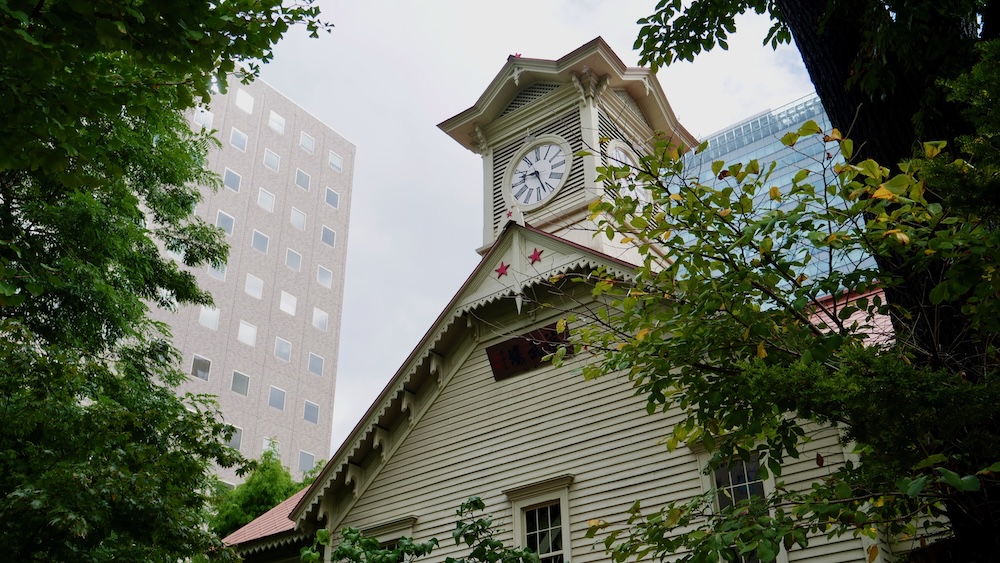
Sapporo Clock Tower: Seventeen Stars
We also visited the Sapporo Clock Tower, which dates to 1878 and originally served as a drill hall for Sapporo Agricultural College. It’s the kind of wooden, Western-influenced building that feels almost comically out of place amid the modern office blocks. I remember the clock and the architecture; I can’t claim I walked around counting stars.
The building has 17 five-pointed stars worked into its decoration. You can pick out two red ones just below the clock in our photograph, right on the front gable. Unlike the Beer Museum’s current building, the Clock Tower actually dates from the Kaitakushi era. That’s a detail I’d pay much more attention to on a return visit.
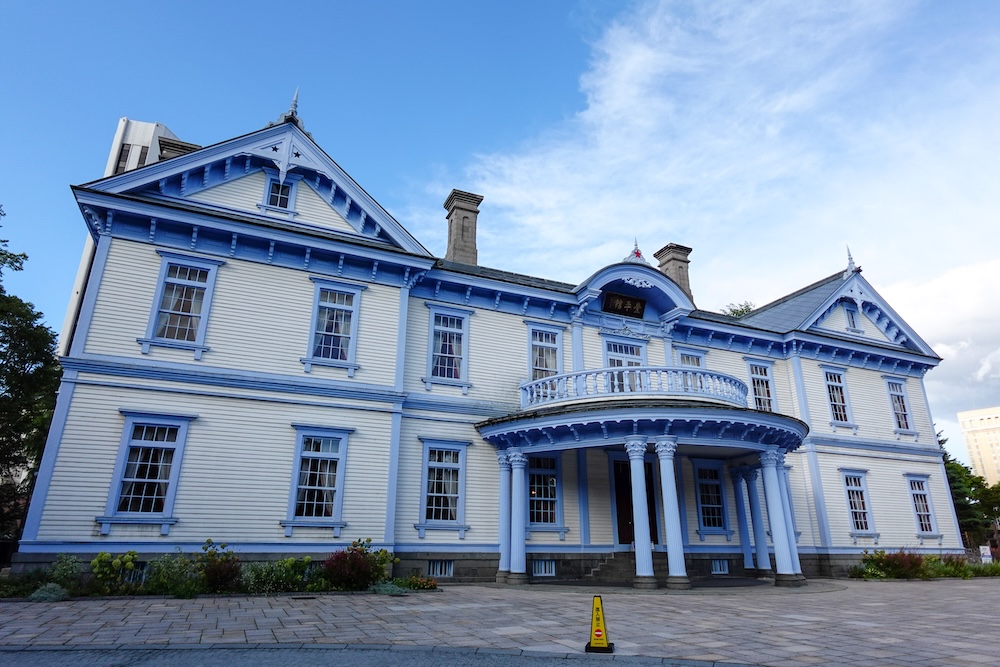
Hoheikan and the Red-Brick Government Office
Another stop on our trip was Hoheikan in Nakajima Park, a Western-style hotel completed in 1880 under the Kaitakushi. I remember its blue-and-white exterior much more clearly than the interior, which we found a little bare. Look closely at our photograph and you’ll find black stars in the gable and a red one above the central entrance. They were there all along; I just wasn’t paying attention to them.
The Former Hokkaido Government Office, often called Akarenga because of its red brick, has star decoration too, including above a central dormer window. Audrey and I didn’t visit this building. It was completed in 1888, after the Kaitakushi had been abolished, which makes it a different sort of example: the emblem remained part of the region’s official visual language even after the commission itself disappeared. Following extensive restoration, the building reopened in 2025.
Between the museum chimney, the Clock Tower and Hoheikan, you don’t need to go far to start noticing the pattern. Even so, the stars aren’t all identical, and the buildings didn’t all go up at the same time. It’s worth knowing what you’re looking at rather than assuming every star-shaped ornament is an original Kaitakushi decoration.
If you would rather explore a few of these places with a local guide, a customizable private Sapporo walking tour lists the Clock Tower, Former Hokkaido Government Office, Sapporo Factory and Beer Museum among its possible stops. It is a general city tour, not a dedicated red-star history tour. You choose which sites interest you and agree on a realistic route with the guide; entrance fees and local transportation are extra.
So Why Does Sapporo Have So Many Red Stars?
Because a simple North Star emblem became part of Sapporo’s identity long before it appeared on a familiar beer label. The Kaitakushi used it on flags and buildings, Sapporo Beer carried it forward, and you can still find red, black and gold variations around the city. It’s the kind of small detail that’s surprisingly easy to overlook until somebody points it out.
I’m glad we encountered the star through the Beer Museum, even if I didn’t fully appreciate it at the time. I loved the old brick building, the equipment and posters, and I’d happily return for another tasting. Next time, though, I’ll pay a bit more attention to what’s on the labels—and to those little stars above the doorways and rooflines. Sapporo had been showing them to us all along. I was just a little slow to catch on.
Frequently Asked Questions
Why does Sapporo have so many red stars?
The five-pointed star originally represented Polaris, the North Star, for the Kaitakushi government commission. It later appeared on Sapporo Beer labels and survives in decorations on historic buildings.
Did Sapporo Beer invent the red star?
No. The Kaitakushi used its star emblem before the brewery opened in 1876. The design appeared on an early Sapporo beer label in 1877.
Why is the Sapporo Beer star sometimes gold instead of red?
The historic Kaitakushi star was red, but modern Sapporo Beer branding often uses gold. Sapporo Lager Beer still carries a red star and is known as Akaboshi, meaning red star.
Where can I see Kaitakushi stars in Sapporo?
Look at the Sapporo Beer Museum chimney, the Sapporo Clock Tower and the roofline of Hoheikan. The Former Hokkaido Government Office also has star decoration, although it was built after the Kaitakushi ended.
How many stars are on the Sapporo Clock Tower?
There are 17 five-pointed stars in the Clock Tower’s architectural decoration. Two red stars are visible on the front gable beneath the clock.
Is the Sapporo Beer Museum the original Kaitakushi brewery?
No. The museum occupies an 1890 building originally constructed for the Sapporo Sugar Company. The original government brewery opened at a different site associated today with Sapporo Factory.
This article is also available in Spanish. [Leé la versión en castellano: ¿Por qué Sapporo tiene tantas estrellas rojas? Cerveza, edificios y la historia de Hokkaido]
This article contains affiliate links. If you book through one of these links, I may earn a commission at no extra cost to you.