
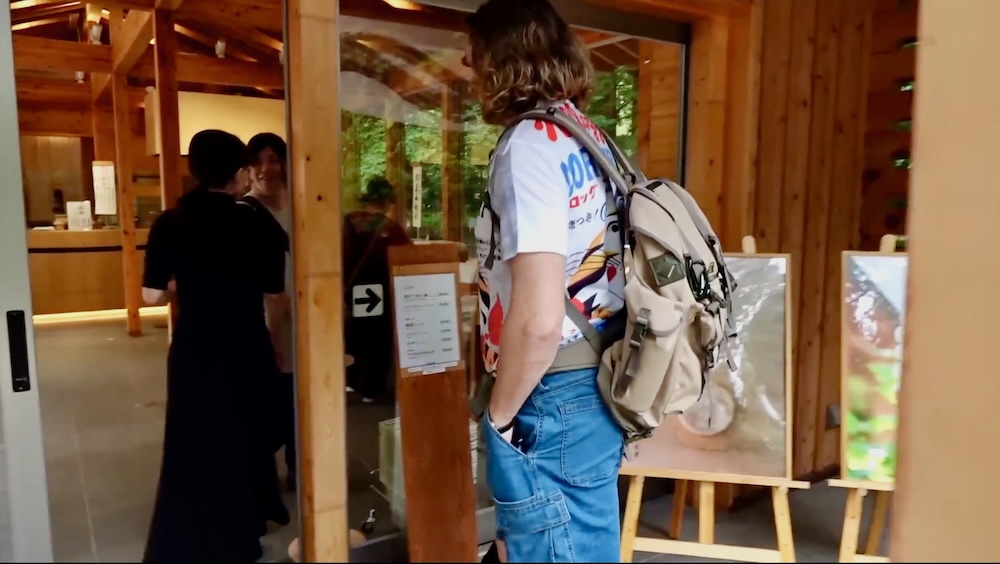
We’d finished at Hokkaido Jingu’s main shrine and were wandering back through the grounds when we passed a small timber building among the trees, its windows hung with white noren curtains painted in broad black brushstrokes. It turned out to be a teahouse selling tea, coffee and a shelf of sweets, and we couldn’t resist going in. By the time we came out, we had two iced green teas and six sweets between us, which was roughly the moment the visit tipped into what one of us called a piggy dessert situation. We carried the lot to a log table under the trees and tried to work out what half of it actually was.
If you visit the shrine, you’ll likely end up somewhere similar, facing the same small puzzles. There are two teahouses on the grounds with almost the same name, each famous for its own mochi. The names on the shelf rarely tell you what’s inside. And if you grew up on North American desserts, the sweetness may not land the way you expect. This is which teahouse is which, what to order, what everything on our table turned out to be, and why the whole spread tasted gentler than I’d expected.
Two Teahouses at Hokkaido Jingu: Making Sure You’re at Jingu Chaya
The teahouse we wandered into was Jingu Chaya, which simply means “shrine teahouse.” That’s where the confusion begins, because the grounds hold two teahouses with nearly identical names, and each sells a grilled mochi filled with sweet bean paste that you won’t find anywhere else.
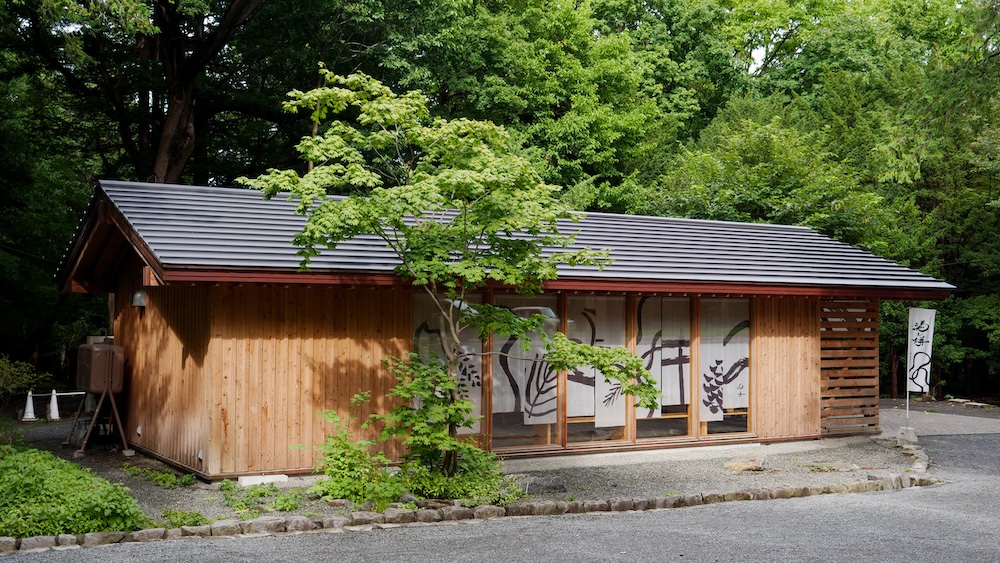
Jingu Chaya is the newer of the two: a small, modern timber building among the trees, with an order counter inside and outdoor seating close by. By most accounts it’s run by the Sapporo confectioner Kinotoya, and its signature is fukure mochi. The quickest way to confirm you’re in the right place is to look for 神宮茶屋 printed on the paper sleeves and shelf labels.
The other is Rokkatei’s Jingu Chaya branch, run by the well-known Hokkaido sweets company and located in front of the Reiwa torii gate. Its speciality is Hangan-sama, a grilled mochi made with buckwheat flour and filled with chunky red bean paste, named for Yoshitake Shima, the official often called the father of Hokkaido’s development. It’s usually paired with free self-service hojicha, and it isn’t sold during the first eleven days of January. We never noticed Rokkatei’s teahouse on our visit, so I can’t compare the two mochi. But when someone tells you the mochi at “Jingu Chaya” is a must, it’s worth asking which teahouse they mean.
Fukure Mochi: The Sweet Everyone Was Ordering
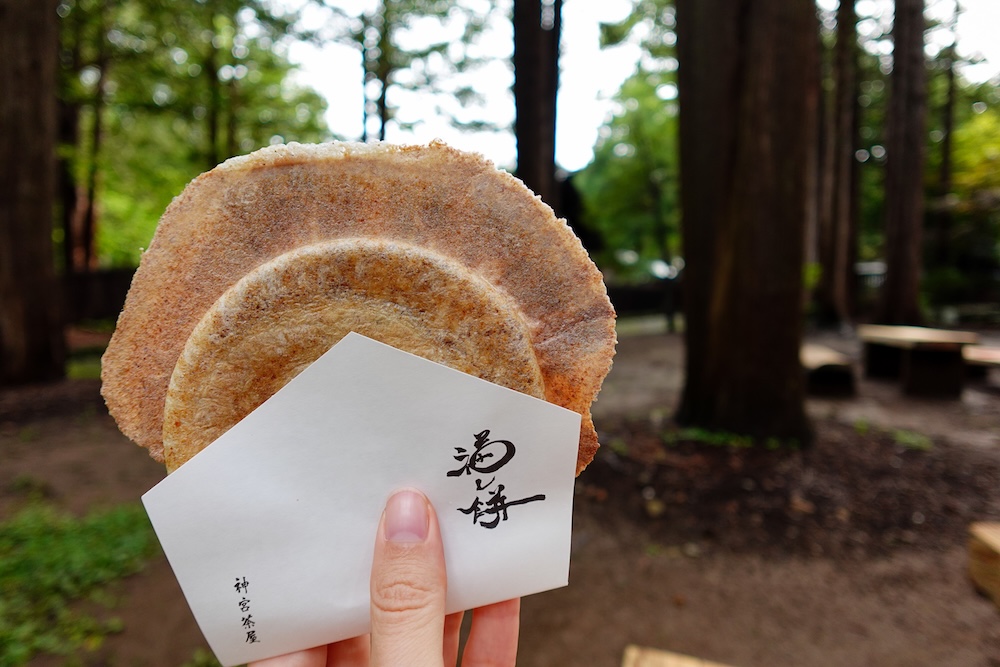
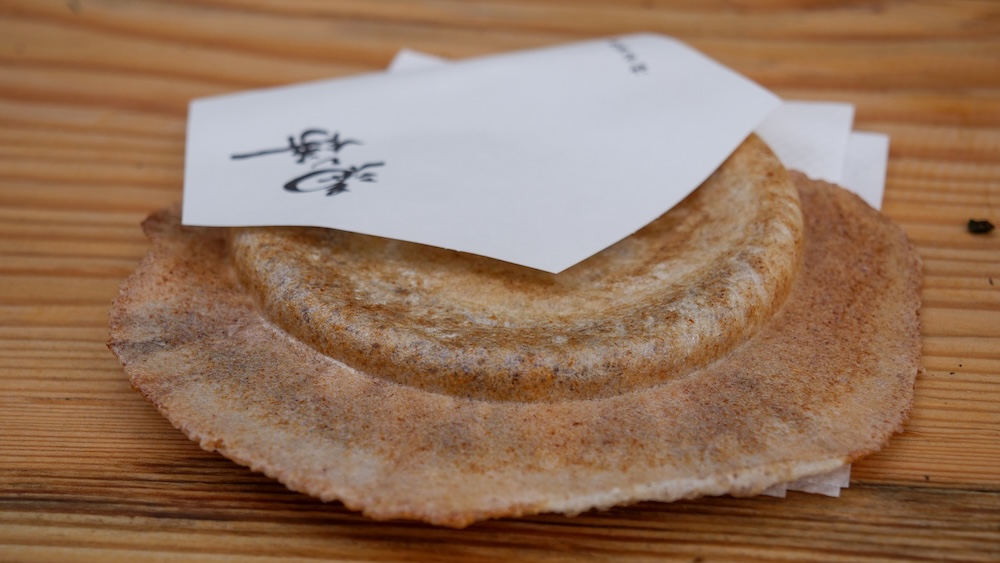
We didn’t need a menu to know what to order, because fukure mochi was what everyone else in the teahouse seemed to be getting. Watching it made explained why. White mochi sat on the counter, and the staff pressed each one to order in a machine that looked a lot like a waffle iron. It came out flattened and crisp-edged, tucked into a pentagonal paper sleeve printed with its name, 福れ餅, in loose calligraphy.
What you get is a thick, chewy centre inside a thin, lacy brim that turns crunchy where it met the hot plates, with red bean paste in the middle. The contrast is the point. It’s crunchy outside and soft and chewy within, and the bean paste brings just enough sweetness to tell you it’s dessert without tipping into sugary. It’s essentially pressed glutinous rice with a filling, about as simple as a sweet gets, and it was the one on our table with the most character and the strongest sense of place.
I didn’t keep track of what we paid for it, and prices change anyway, so check at the counter. If you order only one thing at Jingu Chaya, make it this.
Tea and Five More Sweets Under the Trees
What We Ate
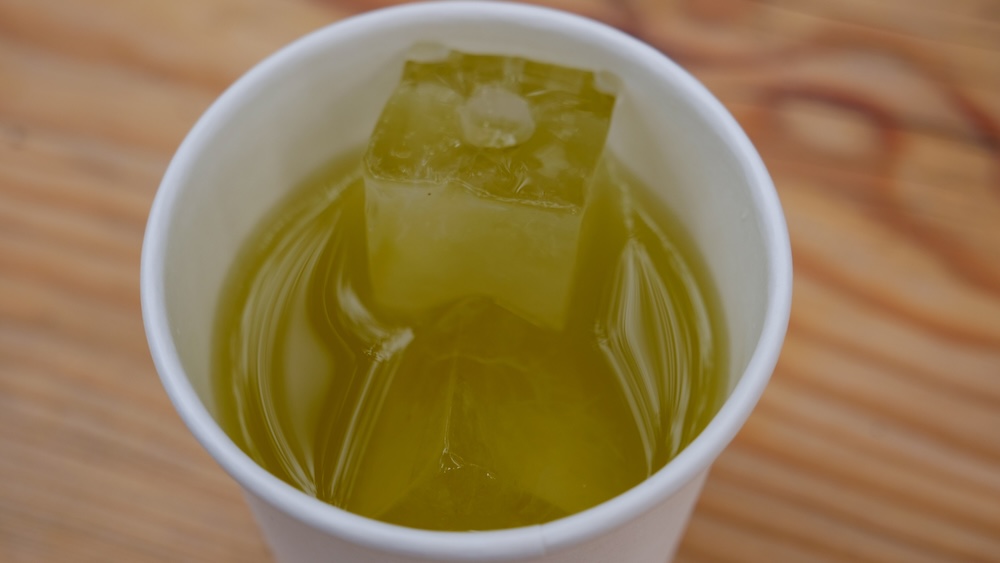
Alongside the fukure mochi we ordered iced green tea, which was nice and refreshing, and agreed on three treats each. We took everything outside to the wooden tables and log stools under the tall trees beside the teahouse, with the shrine road and a few parked cars just visible through the trunks, and turned it into a small afternoon tea in the woods.
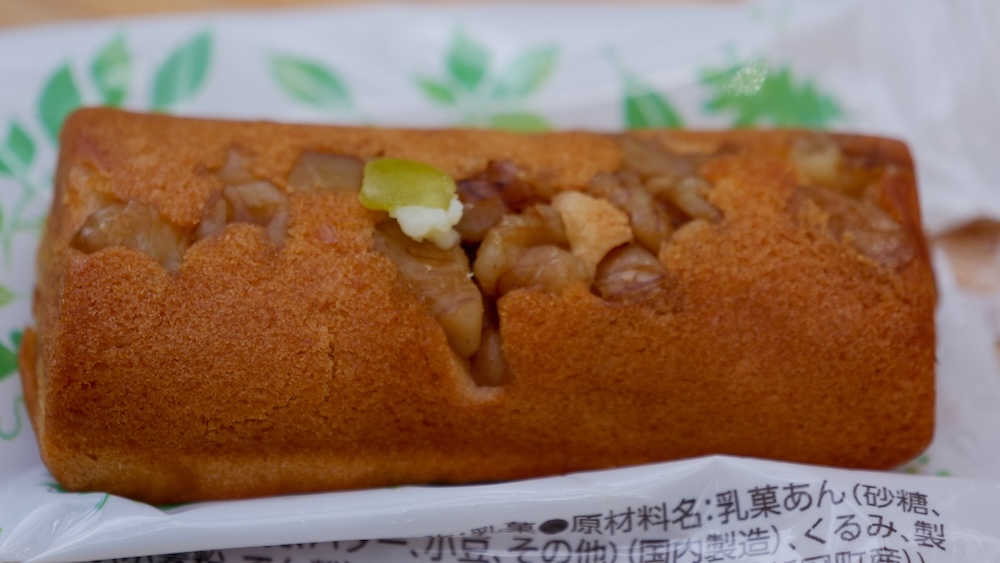
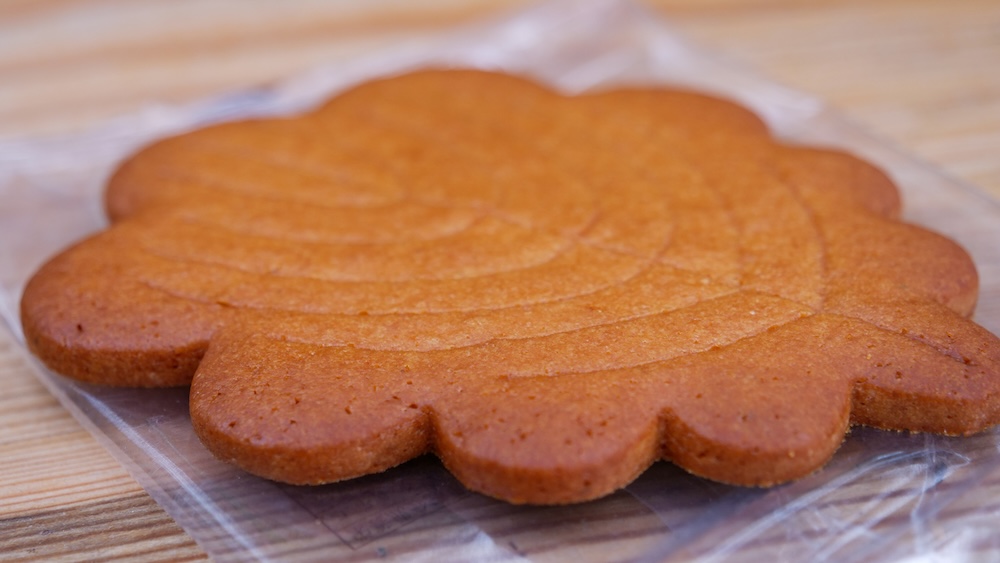
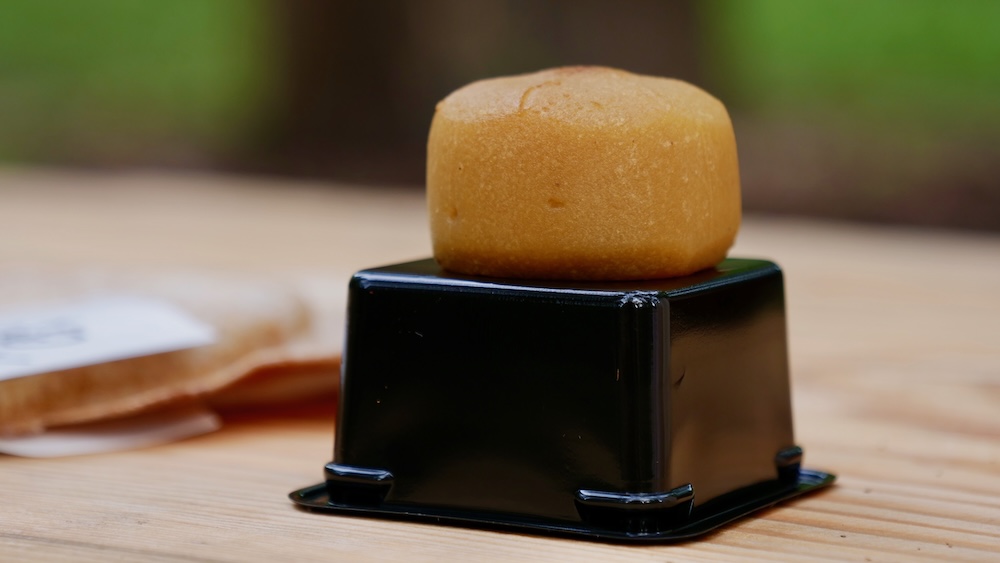
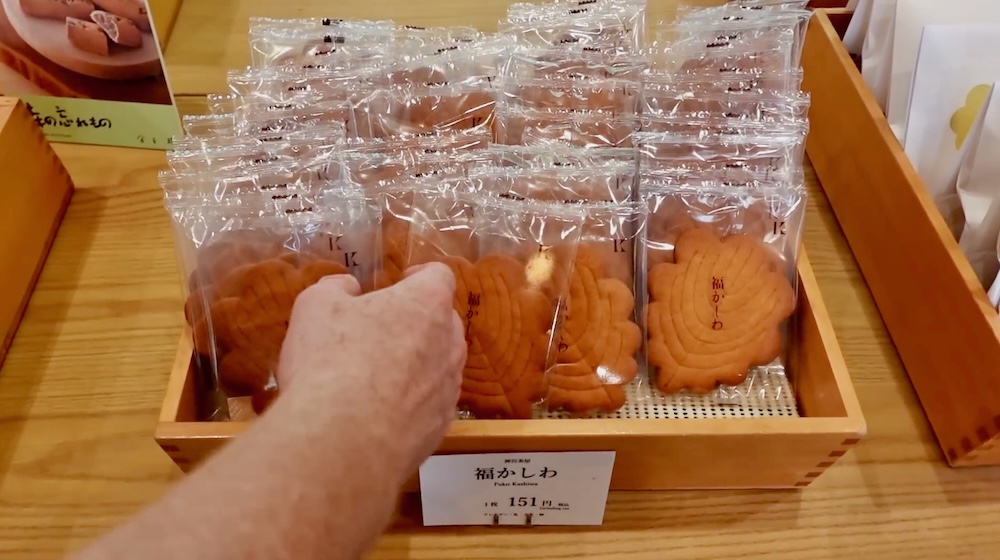
The Fuku Kashiwa was a cookie shaped and scored like an oak leaf, a little crunchy and sweet, but very light and mild about it. The Lost Article of the Forest won a favourite vote. It’s a small cake shaped like a fallen log, studded with walnuts on the outside, soft right through, and filled with a smooth milk-based bean paste. The An Potato had a golden, sweet-potato-style shell around a dense centre of red bean paste.
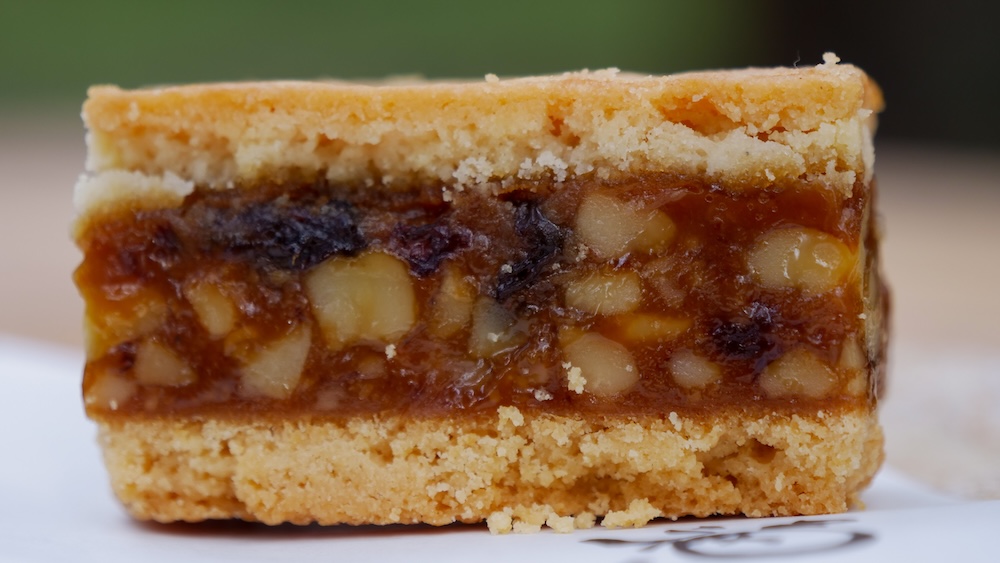
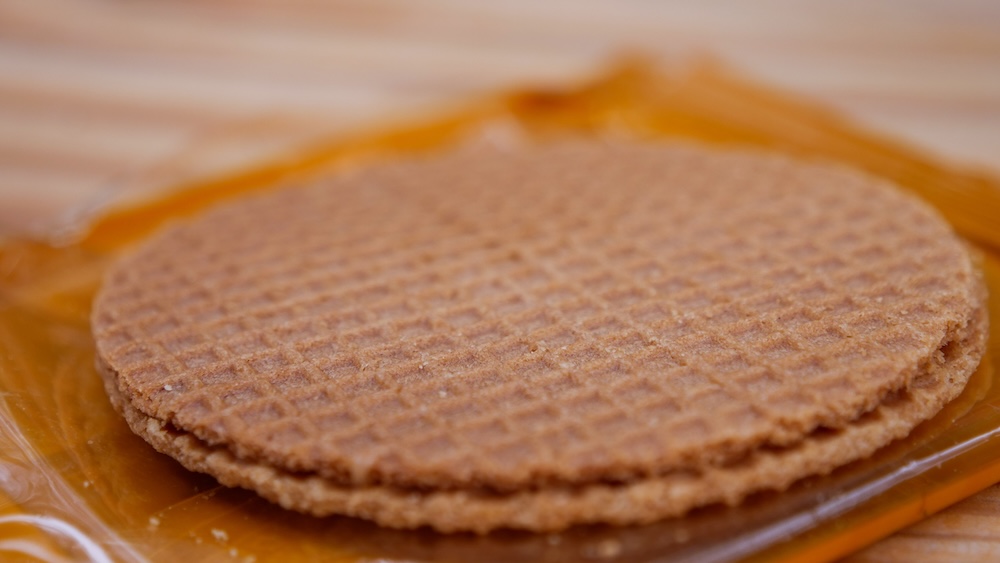
The Dank-U! was a thin waffle cookie with a layer of paste inside. You’re supposed to balance it on top of a hot drink and let the steam soften it. Ours was too small to sit on the cup, and we’d ordered iced tea anyway, so that plan was doomed from the start. The last item, a walnut and raisin bake called Kurumi & Raisin, made the order, but I can’t tell you much more about it than its name.
| Sweet | What it is | Maker (from the label) | Jingu Chaya’s own? |
|---|---|---|---|
| Fukure mochi (福れ餅) | Mochi pressed to order, crisp brim, red bean paste inside | Jingu Chaya | Yes |
| Fuku Kashiwa (福かしわ) | Oak-leaf-shaped cookie (¥151 when we visited) | Jingu Chaya | Yes |
| Lost Article of the Forest (森の忘れもの) | Log-shaped cake with walnuts and milk-based bean paste | Packaged | Not confirmed |
| Hokkaido An Potato (北海道あんぽてと) | Sweet-potato-style pastry with red bean filling | Wakasaimo, Lake Toya | No |
| Dank-U! | Waffle cookie with paste filling | Dank-U! | No |
| Kurumi & Raisin (くるみとレーズン) | Walnut and raisin bake | Charlotte | No |
Decoding the Names
At the counter, the names were more puzzle than help. Some told us almost nothing about what was inside. “Lost Article of the Forest” doesn’t exactly announce a walnut cake. Others seemed to have no name at all. Only when we looked at the packaging afterwards did the shelf make sense: it’s a mix of two kinds of sweets. The fukure mochi and the Fuku Kashiwa carry Jingu Chaya’s own name. The rest are packaged sweets from other Hokkaido confectioners, such as the An Potato from Wakasaimo, a sweets maker from the Lake Toya area.
There’s nothing wrong with the packaged ones. Ours were all very nice, and they’d travel well as souvenirs. But if you want something particular to this stop, reach for the items printed with Jingu Chaya’s name, starting with the mochi.
Why the Sweets Tasted Less Sweet to Us
Partway through our tasting, I put into words what I’d been noticing. What I like about Japanese desserts is that the sweetness isn’t the sugary kind. It doesn’t overpower you, make your teeth hurt or leave you with a headache. It’s subtle enough that you can actually appreciate it. These aren’t 1,000-calorie slabs of cake. You can nibble your way through several, which, with six sweets on the table, was exactly the plan.
I want to be careful with that, because it’s our impression, not a law of Japanese baking, and some wagashi are very sweet on their own. But a few things likely explain why our spread read as gentle. Traditional Japanese sweets lean on bean paste and rice rather than butter, cream and frosting. The pieces are small, made to be finished in a few bites. And they’re designed to go with tea: wagashi developed alongside the tea ceremony, where the confection’s soft sweetness is meant to temper the bitterness of green tea, and each makes the other easier to enjoy. With an iced green tea under the trees, the fukure mochi and the bean-paste sweets sat right in that balance.
Even the leaf-shaped cookie, about as Western a sweet as we ordered, fit the pattern: nice and sweet, but very light and mild about it. That’s one afternoon and six sweets, not a study. If you’re used to North American bakery portions, though, expect a lighter touch.
Visiting Jingu Chaya: Hours, Prices and When to Go
Jingu Chaya is inside the Hokkaido Jingu grounds, an easy stop after the main shrine, which is about a ten-minute walk from Maruyama-koen Station on the Tozai subway line. Its hours have been listed as roughly 9 a.m. to 4 p.m., with last orders shortly before closing, so plan a morning or early-afternoon visit and check current hours before you set off.
Those daytime hours are the main reason to think about where you’re staying. A base in the Maruyama area, or anywhere along the Tozai Line, makes it easy to reach the shrine early, walk the grounds and still have time for tea before the counter closes. If you’re still choosing, you can compare hotels near Maruyama Park.
We found Jingu Chaya by accident, which worked out fine, but if you’d like context on the shrine as well as the sweets, there’s a guided option. One current hour-long Hokkaido Shrine tour with a mochi tasting at Jingu Chaya starts in Maruyama Park, includes a purification ritual and a fortune draw, and finishes with a sweet rice cake at the teahouse. We didn’t take it, so treat it as an option rather than a recommendation.
Prices change, so the counter is your guide. As a reference point, the Fuku Kashiwa cookie was ¥151 when we visited. Fukure mochi is pressed to order, so expect a short wait when it’s busy. On a fine day, take everything outside to the log tables under the trees. That’s where this works best.
What to Order at Jingu Chaya
Start with the fukure mochi: it’s the reason to stop, and it was the best texture of anything we tried. Add one more sweet for variety, ideally another with Jingu Chaya’s name on the label, get a green tea to go with them, and eat outside under the trees. If you want to compare, Rokkatei’s Hangan-sama is the other teahouse’s take on the same idea, a short walk across the grounds.
Frequently Asked Questions
What is the difference between Jingu Chaya and Rokkatei’s Jingu Chaya?
They’re two separate teahouses on the Hokkaido Jingu grounds with nearly identical names. Jingu Chaya is the newer one and is known for fukure mochi, while Rokkatei’s Jingu Chaya branch sits in front of the Reiwa torii gate and is known for Hangan-sama, a buckwheat mochi filled with chunky red bean paste. Look for 神宮茶屋 on the sleeves and labels to confirm you’re at Jingu Chaya.
What is fukure mochi?
Fukure mochi is Jingu Chaya’s signature sweet: white mochi pressed to order in a machine that looks like a waffle iron. It comes out with a thick, chewy centre, a thin crisp brim and red bean paste inside, served in a pentagonal paper sleeve. It was the sweet with the most character on our table.
Which sweets at Jingu Chaya are the teahouse’s own?
Of the six we ordered, only the fukure mochi and the Fuku Kashiwa oak-leaf cookie carried Jingu Chaya’s name. The others were packaged sweets from other Hokkaido makers, such as the An Potato from Wakasaimo of the Lake Toya area, which make easy souvenirs.
What are Jingu Chaya’s opening hours?
Its hours have been listed as roughly 9 a.m. to 4 p.m., with last orders shortly before closing. That makes it a morning or early-afternoon stop, so check current hours before you go.
How do you get to Jingu Chaya?
Jingu Chaya is inside the Hokkaido Jingu grounds, and the main shrine is about a ten-minute walk from Maruyama-koen Station on the Tozai subway line. We stopped in after visiting the main shrine.
Are Japanese sweets less sweet than Western desserts?
That was our impression at Jingu Chaya rather than a rule, and some wagashi are very sweet on their own. Bean paste and rice bases, small portions and a tradition of pairing sweets with bitter green tea help explain why our spread tasted gentle compared with North American desserts.
This guide is also available in Spanish. [Leé la versión en castellano: Dulces japoneses en Hokkaido Jingu: fukure mochi en Jingu Chaya, té y por qué nos resultaron menos dulces]
This article contains affiliate links. If you book through one of these links, I may earn a commission at no extra cost to you.