
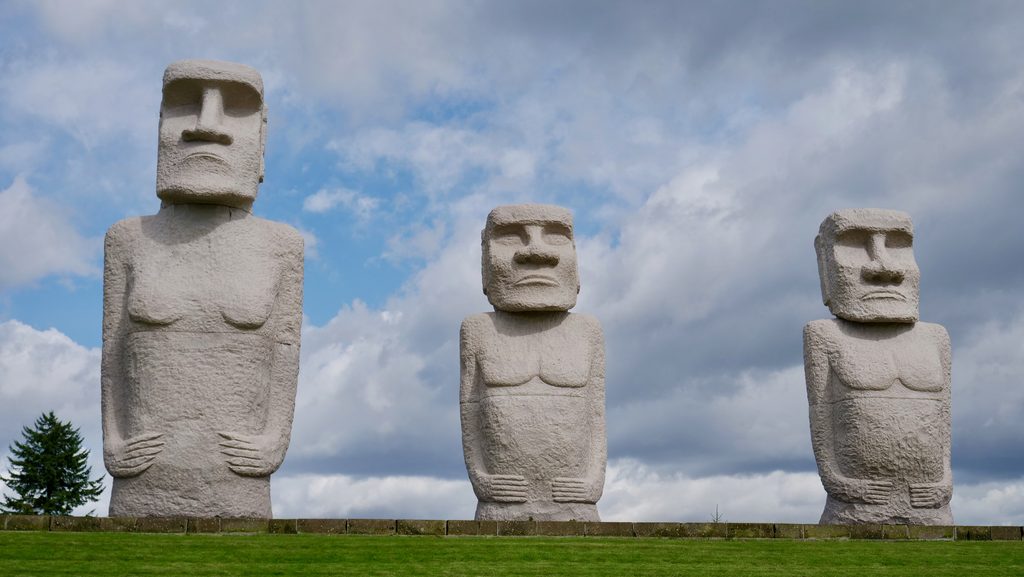
Audrey pulled off a pretty good surprise on our trip to Sapporo. She’d found an unusual attraction south of the city, but wouldn’t tell me what it was. We rode the subway to the end of the line, caught a bus out toward the mountains, and before long I was looking at a row of giant stone faces. “I didn’t know we were going back to Easter Island today,” I told her.

The joke had some history behind it. In 2016, we’d spent almost a week on Rapa Nui with my parents, seeing the original Moai on an island so remote that the journey itself felt like part of the adventure. Seven years later, here were 33 versions of those familiar faces in a cemetery in Hokkaido. I loved the absurdity of it, but the question almost asked itself: why on earth are there Moai statues in Sapporo?
Why Are There Moai Statues at Makomanai Takino Cemetery?
The reason is connected to remembering the dead. The Moai at Makomanai Takino Cemetery were installed as symbols of respect for ancestors, an idea that crosses religious boundaries and fits the purpose of a cemetery. There is a relationship to what the originals represented on Rapa Nui, although the Japanese statues belong to a very different cultural setting.
There’s also a more down-to-earth part of the story. Makomanai Takino wanted its grounds to feel less gloomy and more welcoming to families. Rather than making a cemetery somewhere people dreaded visiting, the idea was to create a landscaped place where different generations might spend time together while remembering loved ones. An enormous row of stone faces certainly makes an impression. I can testify to that much; I wasn’t even expecting to find them.

The cemetery gives Moai an additional Japanese interpretation, connecting mo with mirai (future) and ai with ikiru (to live). It’s a piece of Japanese wordplay about carrying a person’s memory into the future, not an explanation of the word’s meaning in the Rapa Nui language. The group is also identified by an inscription as the Thirty-Three Moai Jizō. That places the statues within the cemetery’s own memorial vocabulary; it doesn’t turn the ancient Moai of Rapa Nui into Buddhist figures.
It’s tempting to assume the statues arrived when the cemetery opened in 1981, but that date belongs to the cemetery, not to a verified installation of the Moai. The statues were already being photographed here in 2002. Their exact commissioning date and complete construction story are less clear, and I wouldn’t pin them to a particular year without stronger documentation.
What Do the Original Moai of Rapa Nui Represent?
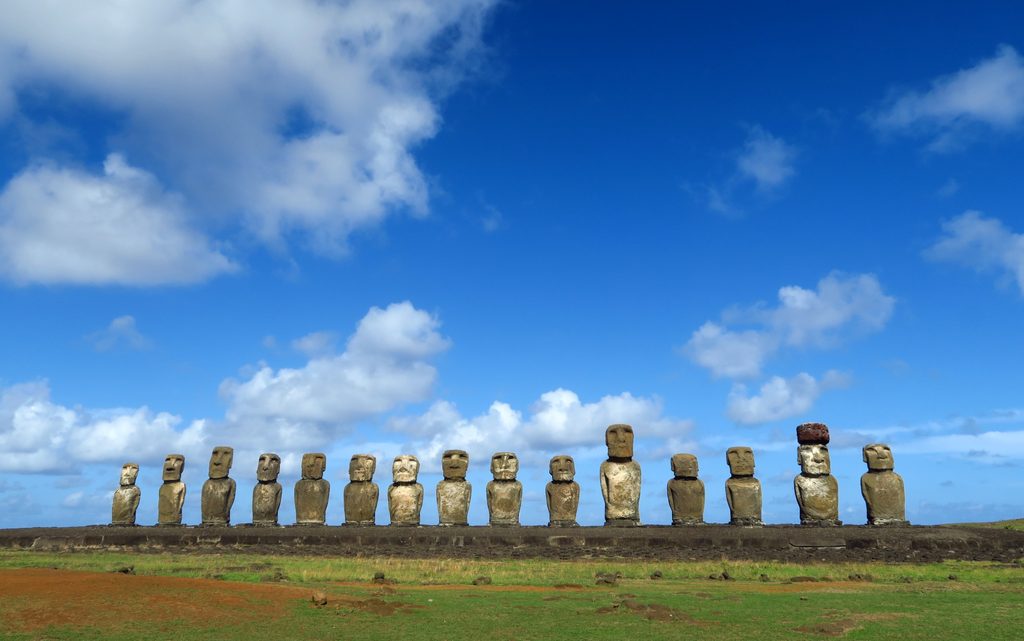
The original Moai belong to the Indigenous Rapa Nui people, who created these monumental figures as part of a far wider ceremonial and ancestral landscape. Many were placed on stone platforms known as ahu, associated with ancestral chiefs and their communities. They carried ideas of spiritual authority, protection and the continuing relationship between the living and their ancestors. Many faced inland, toward the communities with which they were connected.
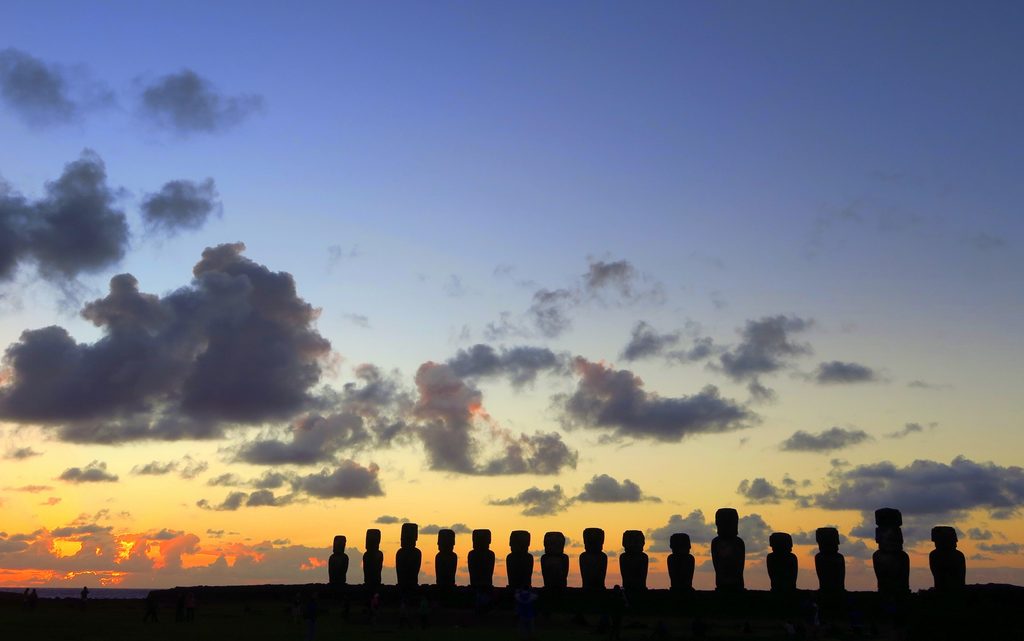
This is where a simple “they both honour ancestors” explanation starts to fall short. Rapa Nui has roughly 900 Moai and more than 300 ceremonial platforms. These are the remains of a complex island culture, spread across a landscape where the statues, the platforms and the communities belonged to one another. The Sapporo replicas borrow the recognizable form and a related theme of remembrance; they don’t transplant that history to Japan.
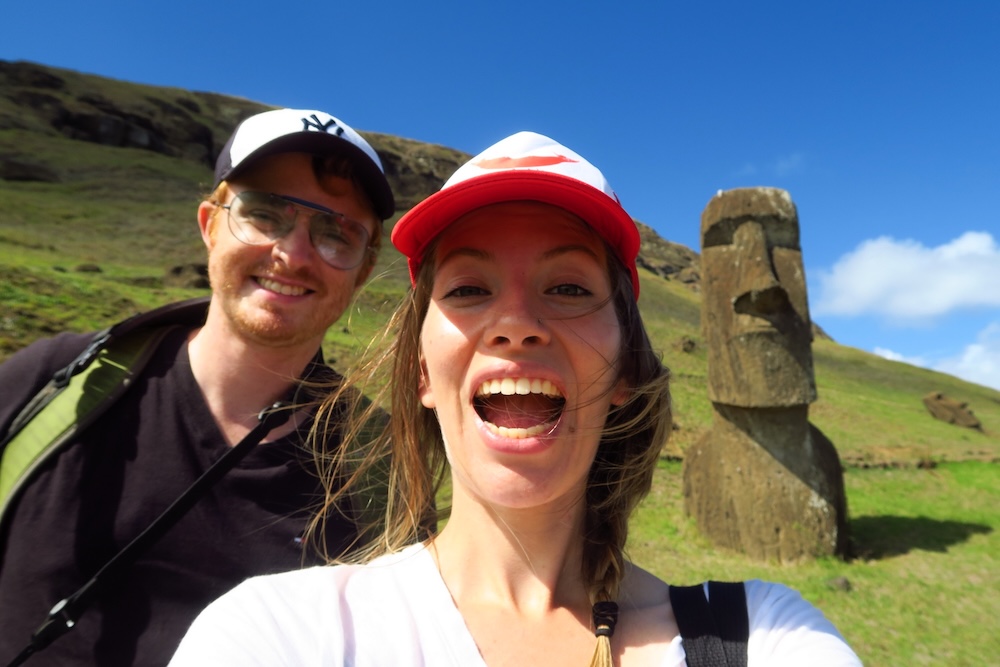
I remember being struck by the size of the originals, but also by the setting. Rapa Nui was unlike any small island we’d visited before: isolated, full of history and almost surreal in the way the statues appeared across the landscape. We had enough time for early drives to see the sunrise, outings around sunset and hikes through the mornings and afternoons. Looking at our old photographs now brings back those different moments, even if I couldn’t put an exact site name to every statue we saw.
From Easter Island to Sapporo: Our Experience Seeing Both
Audrey hadn’t just chosen a random oddity from a Sapporo sightseeing list. She knew how fondly we both remembered our trip to Chile, and finding Moai in Japan struck her as the kind of quirky surprise I’d appreciate. She was right. When those familiar faces appeared, my first reaction was disbelief, followed pretty quickly by nostalgia.
It’s difficult to explain the feeling without sounding sentimental, but seeing them was like hearing an old favourite song you haven’t played in years. Suddenly I was thinking about that week on Rapa Nui with Audrey and my parents. We had shared something pretty special out there, and I hadn’t expected a bus ride into the countryside outside Sapporo to bring it all rushing back.

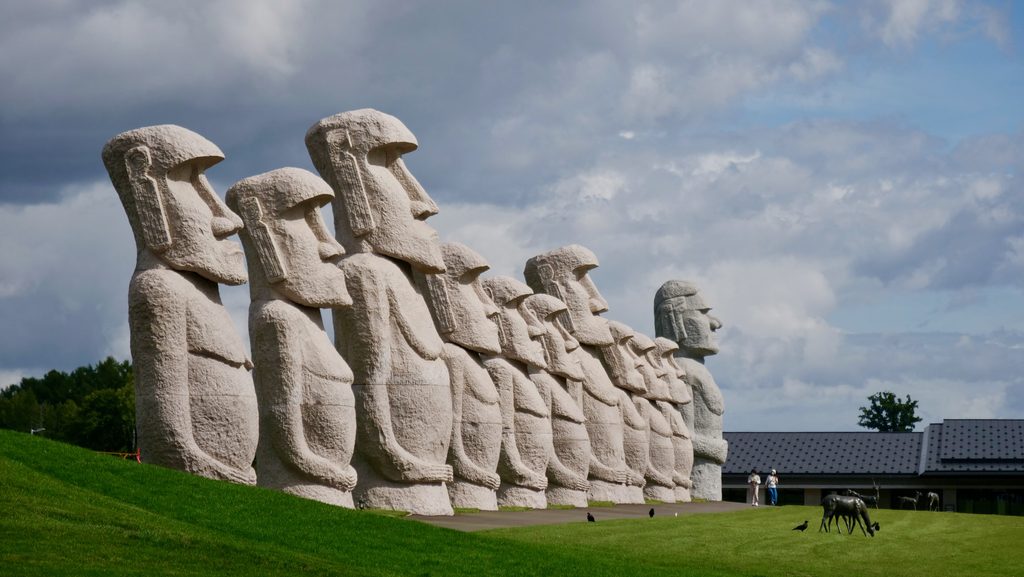
Of course, the actual experiences were worlds apart. On Rapa Nui we’d explored a remote island with original statues woven into its cultural landscape. In Sapporo, the figures stood in orderly rows on immaculate grassy slopes, with wooded Hokkaido mountains behind them. There were even deer sculptures nearby. I joked that this was a bit of a Disney-fication of the experience, although I meant it affectionately. The originals have a history and significance no replica could carry; the Japanese versions are still impressive in their own peculiar way.
And there’s a difference between borrowing an image and pretending to reproduce the place it comes from. Once you understand the cemetery’s intention—to make remembrance more approachable, and to connect the dead with future generations—the Moai don’t seem quite so out of place. I wouldn’t confuse that interpretation with Rapa Nui tradition, but I can appreciate why the statues were chosen here.

What Are the Moai Statues in Sapporo Actually Like?
They’re big. The largest of Makomanai Takino’s 33 Moai reach approximately 9.5 metres and weigh around 120 tonnes; smaller ones are about 6.5 metres and 60 tonnes. Standing beside them, or looking along the row as the figures get smaller in the distance, gives you a better sense of scale than a single close-up photograph.
The statues stand near the entrance to the cemetery, arranged along landscaped slopes. We photographed them from several angles, with lawns, mountains and those unexpected deer sculptures completing the scene. Their pale stone faces are immediately recognizable, but the surroundings couldn’t be mistaken for Rapa Nui. This is Hokkaido, through and through.

Makomanai Takino is a working cemetery, so stick to the visitor areas and respect the memorial spaces. You don’t need a ticket for general cemetery access; the separately ticketed Hill of the Buddha is a different attraction on the grounds. For current visitor arrangements, there’s the cemetery’s official information. Getting here without a car takes a subway-and-bus journey, which is worth planning rather than improvising.
If you’d rather avoid sorting out those connections, one guided day trip from Sapporo that includes the Moai statues lists a 30-minute stop here, along with the Hill of the Buddha and other sights before continuing to Otaru. It’s a much broader outing than our independent visit, so check the current itinerary before booking. If the Moai are your main priority, make sure they’re still included rather than assuming every cemetery tour stops at them.
I wouldn’t travel to Sapporo expecting a substitute for Easter Island. But I went away thinking Audrey had found something far more interesting than a row of novelty statues. For the cemetery, the Moai are about remembering ancestors. For us, they unexpectedly brought back a family trip from seven years earlier. I suppose the sculptures did their job rather well.
Frequently Asked Questions
Why are there Moai statues in Sapporo?
The 33 Moai replicas at Makomanai Takino Cemetery represent respect for ancestors and remembrance across generations. The cemetery also wanted to create a more welcoming, family-friendly memorial environment. The statues borrow a recognizable form from Rapa Nui, but their meaning in Japan belongs to a different cultural setting.
How many Moai statues are at Makomanai Takino Cemetery?
There are 33 Moai-style statues at the cemetery. They vary considerably in size, with the largest reaching approximately 9.5 metres tall and weighing around 120 tonnes. The smaller examples are approximately 6.5 metres tall and weigh about 60 tonnes.
Are the Moai statues in Sapporo authentic Easter Island statues?
No. They’re modern Japanese replicas, not original statues transported from Rapa Nui. Audrey and I visited the original Moai on Easter Island in 2016, so seeing the replicas in Sapporo seven years later was particularly nostalgic. The originals belong to a distinct Indigenous cultural and ceremonial tradition.
What do the original Moai on Rapa Nui represent?
The original Moai were created by the Indigenous Rapa Nui people and are associated with ancestors, spiritual authority and community protection. Many stood on ceremonial platforms called ahu, often facing inland toward the communities they represented. Their cultural significance extends far beyond their recognizable carved faces.
What does Moai mean at Makomanai Takino Cemetery?
The cemetery gives Moai an additional Japanese interpretation, connecting mo with mirai, meaning future, and ai with ikiru, meaning to live. This expresses the idea of carrying people’s memories into future generations. It’s Japanese symbolic wordplay, not the original meaning of Moai in the Rapa Nui language.
Can you visit the Moai statues without paying for the Hill of the Buddha?
Yes. General access to Makomanai Takino Cemetery is free, while the Hill of the Buddha has a separate admission charge. The Moai stand near the cemetery entrance. Respect the permitted visitor areas and remember that the surrounding grounds are an active cemetery.
This article is also available in Spanish. [Leé la versión en castellano: ¿Por qué hay estatuas moái en Sapporo? La historia del cementerio Makomanai Takino]
This article contains affiliate links. If you book through one of these links, I may earn a commission at no extra cost to you.