
If I had one spare day in Sapporo, I’d catch a train to Otaru. And I say that having spent a couple of nights in Noboribetsu, where Audrey and I wandered through steaming volcanic landscapes, soaked our feet in a naturally heated river and did our level best to make the most of the hotel onsen. We loved Noboribetsu. We’d recommend it in a heartbeat. But for a single day away from Sapporo, I’d still pick Otaru.
There’s a difference between the best place to visit and the best place to visit for one day. If you’re spending four hours getting somewhere and back, that’s four hours you aren’t wandering around, eating, taking photographs or getting sidetracked by something you hadn’t planned. Otaru is close enough to Sapporo that you can start early, finish late and have a proper day in between. Noboribetsu makes you work harder for that time, and the sprawling attractions around Furano and Biei present another set of problems altogether.
Our Hokkaido trip gave us a useful perspective on this, though we didn’t make conventional return day trips to either Otaru or Noboribetsu. We travelled from Hakodate to Noboribetsu by train, stayed a couple of nights, continued to Sapporo and later took the train to Otaru. After a night there, we left Hokkaido on an overnight ferry to Niigata. I wouldn’t change that journey. Having the extra time was a luxury, and it let us discover why both places deserved more than a quick photograph and a dash back to the station.
Most visitors using Sapporo as a base won’t have that luxury for every excursion. So here’s how I’d weigh the options, including destinations farther afield that we didn’t visit ourselves, where a tour or rental car can make a genuine difference. The aim is to choose a day you’re going to enjoy, rather than collect as many dots on a map as possible.
The Best Sapporo Day Trips at a Glance
| Destination | The main reason to go | Without a car | The catch |
|---|---|---|---|
| Otaru | Canal, warehouses, glass, music boxes, food and cafés | Easiest: frequent direct trains and a walkable central area | Outer districts need more time and transport |
| Noboribetsu | Hell Valley, geothermal trails and hot springs | Doable: limited express plus local bus; tours for regional combinations | Travel cuts into the time available for the volcanic walks |
| Furano and Biei | Lavender and flower fields in season, Blue Pond and countryside | Selective DIY: rail and some local buses; tours help join the sights | Famous attractions are spread out and seasons matter |
| Jozankei | A hot-spring outing closer to Sapporo | Direct or connecting buses | Choose the bath before choosing your bus |
| Lake Shikotsu | Lake scenery and outdoor activities | Possible via Chitose; car or tour simpler | Less convenient last-mile transport |
| Lake Toya | Lake, volcanoes and viewpoints | Long coach journey or train plus transfer | Substantial return travel time |
| Yoichi | Nikka distillery and a quieter coastal-town outing | Train via Otaru | Fewer trains and advance bookings for guided distillery tours |
| Shakotan | Cliffs, sea views and the western coastline | Difficult without a car or suitable tour | Weather and trail restrictions can change plans |
| Asahiyama Zoo | A wildlife-focused day near Asahikawa | Train plus bus, or a guided trip | A full day once transfers are included |
They’re very different outings. A lavender field, a volcanic valley and a distillery shouldn’t be ranked as though they promise the same day.
If you’re planning several outings, I’d stay somewhere with easy access to JR Sapporo Station or the subway rather than choose a hotel because it’s close to one attraction. You can compare Sapporo hotels and their locations; for a wider look at which departure points and routes are currently offered, browse day tours departing from Sapporo. A meeting point that looks central on a map isn’t necessarily near your hotel at seven in the morning.
Otaru: The Day Trip I’d Choose First
The journey is part of the appeal—or rather, how little of a journey it feels like
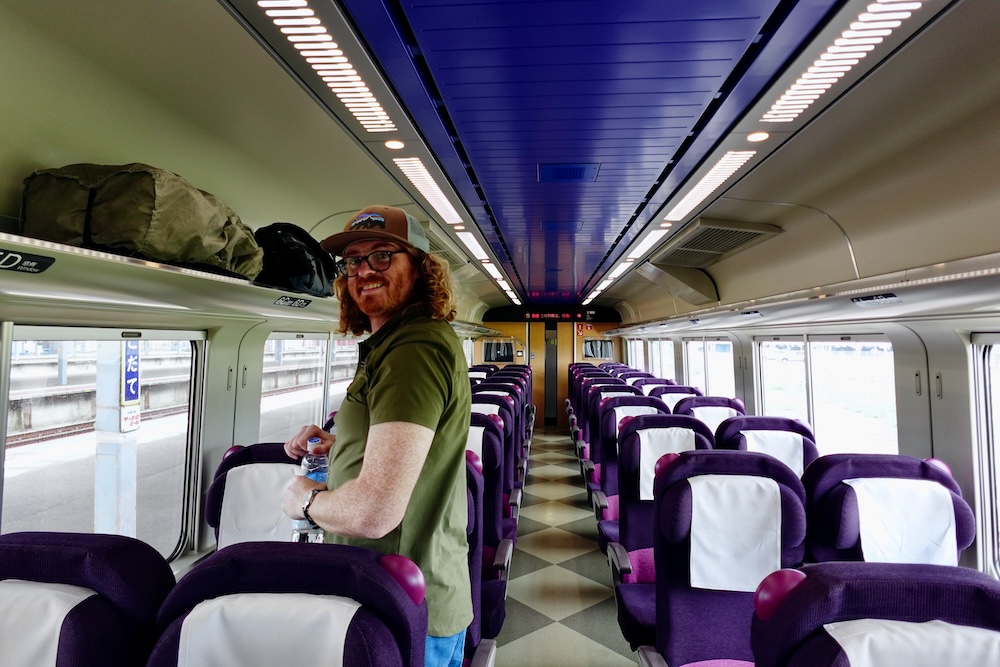
I remember taking the train from Sapporo to Otaru and thinking it felt more like a regional commute than a proper intercity trip. We weren’t settling in for a long travel day or mentally preparing ourselves for a series of connections. We got on the train, made ourselves comfortable, and before long we were in a different city.
The quicker trains cover the journey in roughly 32–35 minutes. A standard adult ticket is currently ¥800 one way, so you’re looking at about ¥1,600 for the return train before meals or attractions. You need to allow for getting from your hotel to Sapporo Station and from Otaru Station to your first stop, of course, but there isn’t much logistical drama in the main rail leg. It was one of the things that made me think, even at the time, this would be a great day trip.
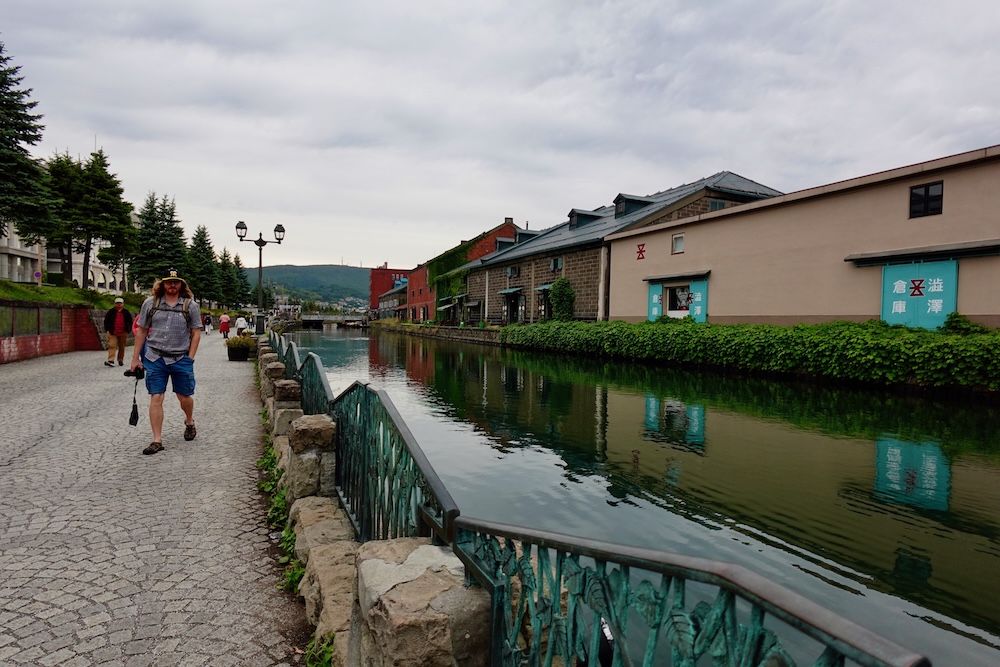
And Otaru rewards that easy start. The old port city has historic warehouses, a handsome canal, craft shops, places to eat and atmospheric little stops that sit close enough together to explore on foot. Some cities ask you to spend half the day on public transport between major attractions. In central Otaru, we could wander from one thing to the next and let the day develop as we went along.
We had about 24 hours there, including a night at Plumhouse Guesthouse before our ferry departure. That property is listed as Plum House Otaru today, so you can check current rooms at Plum House Otaru if you’re considering the same overnight stop. The overnight stay divided our sightseeing between two periods, so I wouldn’t pretend we tested a perfectly timed Sapporo return itinerary. But we did see an awful lot of central Otaru, and I would happily take on most of those same experiences during a long day from Sapporo.
What made Otaru so entertaining
I’d start around the canal and old warehouse district. Otaru’s port history is visible in the stone buildings, preserved facades and former commercial spaces that now house shops and restaurants. I liked the contrast with the bigger-city atmosphere we’d been enjoying in Sapporo. It didn’t take much walking before we were poking around shops selling intricate glassware, which turned out to be an attraction in itself.
Some of the glass pieces were wonderfully delicate, and some came with prices that made me particularly conscious of where my elbows were. You know those shops where you suddenly become convinced your backpack is twice its normal size? This was that kind of place. We enjoyed looking at the craftsmanship and watching glasswork taking place, although we didn’t make anything ourselves. If you want a hands-on workshop, you’ll need to allow for a booked session; browsing a shop is a different proposition.
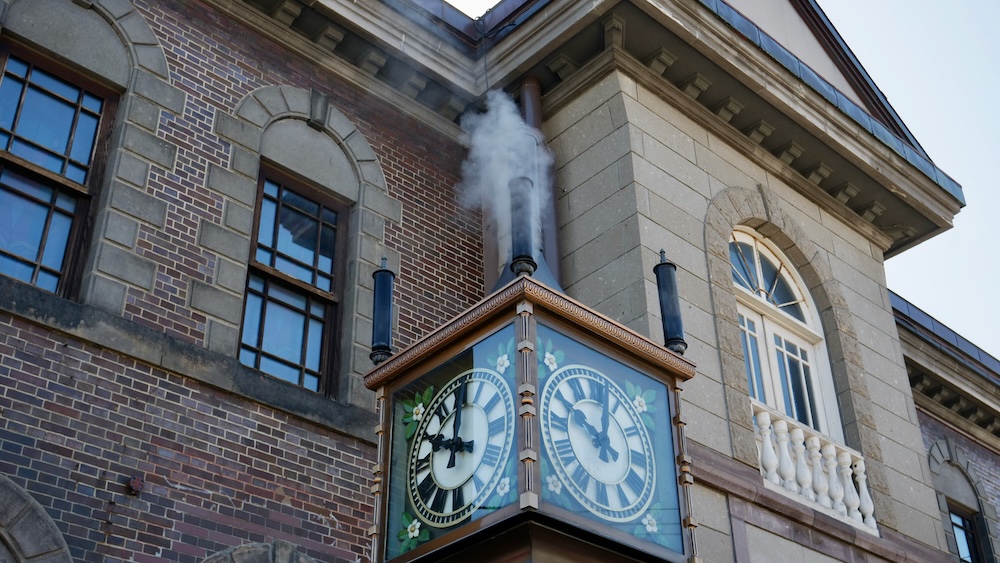
Sakaimachi Street has more of this browsing appeal, with gift shops, sweets and other places that are easy to wander into without a complicated plan. Around the Marchen Crossroads area, we watched the Steam Clock put on its little show before visiting the Otaru Music Box Museum. I had imagined a fairly conventional museum, perhaps with old exhibits and explanatory panels. Instead, much of the main hall felt like a vast shop full of music boxes, each trying to contribute its own tune to the general racket. I enjoyed it, though I did wonder how the staff coped with hearing all those melodies day after day. For the history behind the canal, old banks and former railway, there’s a private guided walk through central Otaru that starts at Otaru Station. I’d treat the guide as an optional upgrade, not a substitute for the easy train journey.
Kitaichi Hall made an even bigger impression on us. We stopped at this café illuminated by petroleum lamps and settled in for cake and drinks. The low lighting and old-fashioned interior gave the place an atmosphere you don’t find at your average coffee counter. It was one of my favourite stops in Otaru, and precisely the sort of place I’d hate to reduce to a two-minute photograph because my itinerary was running behind.
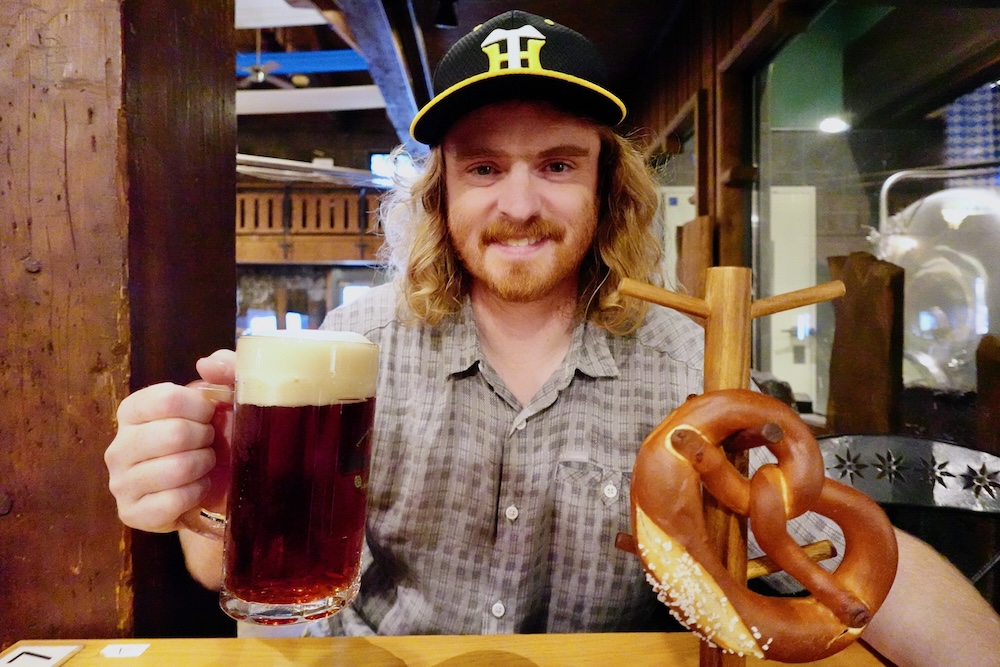
We didn’t exactly go hungry, either. Our first meal in Otaru was at Beef Cutlet Otaru Kurosawa, where part of the fun involved finishing the meat on a little heated surface at the table. Later we visited Otaru Beer in a historic warehouse. The beer and brewery surroundings won me over more than all of the German-style food did, but that was part of the fun of exploring somewhere new. A place can give you a memorable afternoon without every item on the menu being a home run.
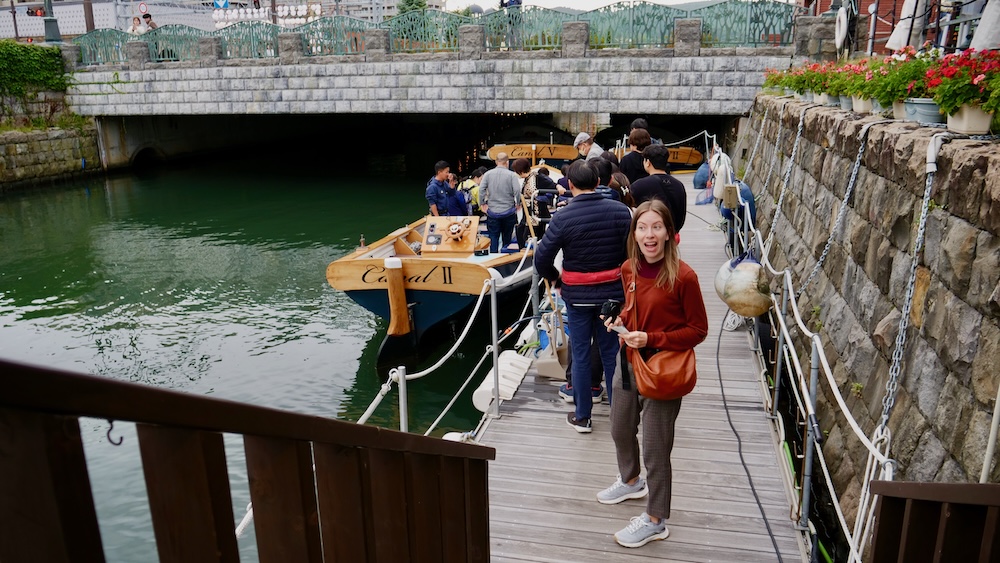
Then there was the canal cruise. We’d already been walking along the water when we noticed a boat preparing to depart, so we bought tickets and joined it. The trip took us beyond the obvious canal photographs and into more of the old port and industrial landscape. Seeing those warehouses and waterways from the boat added something that walking alone hadn’t given us. We went on a whim, but I’d actually plan around it if I were making a return day trip.
The cruise is currently about 40 minutes, with published adult fares of ¥1,800 by day and ¥2,000 at night. You’ll also want to be there at least 15 minutes before departure. Timetables vary and boats can be affected by the weather, so a 40-minute cruise isn’t necessarily a 40-minute gap in your day. I’d check a suitable departure before committing to a long lunch or an afternoon workshop. If you’re travelling independently on the standard train and taking a daytime cruise, the basic return transport plus the boat comes to roughly ¥3,400 per adult, before food and anything else you fancy.
How I’d use one full day—and what I’d leave for another visit
With an early train and a late return, I’d aim to see the central shopping district, the Music Box Museum and Steam Clock, enjoy a proper meal, spend time at Kitaichi Hall and leave room for the canal. I’d try to take the boat if a departure fitted comfortably. Depending on how much you browse, you might rearrange the order, but the advantage of Otaru is that you aren’t committing to a lengthy drive between every stop.
I’d be a little more selective about adding attractions beyond the centre. Mt. Tengu, Shukutsu, the aquarium and the northern coast offer reasons to explore Otaru more deeply, but they aren’t part of the same simple walking circuit we enjoyed. You could visit one of them instead of some central stops; I wouldn’t automatically pile them on top of everything else. A private guide or a tour also has more to offer when the itinerary extends to Yoichi or Shakotan than when all you want is a canal stroll and a look around Sakaimachi. For the former, you can see a private Sapporo–Otaru–Yoichi itinerary; check which stops you actually want, since eight hours won’t cover every possible detour.
Our overnight stay gave us breathing room before the ferry to Niigata. A full day from Sapporo would still let you experience an awful lot of central Otaru without constantly calculating the next connection.
Noboribetsu: I’d Go for Hell Valley, but I’d Watch the Clock
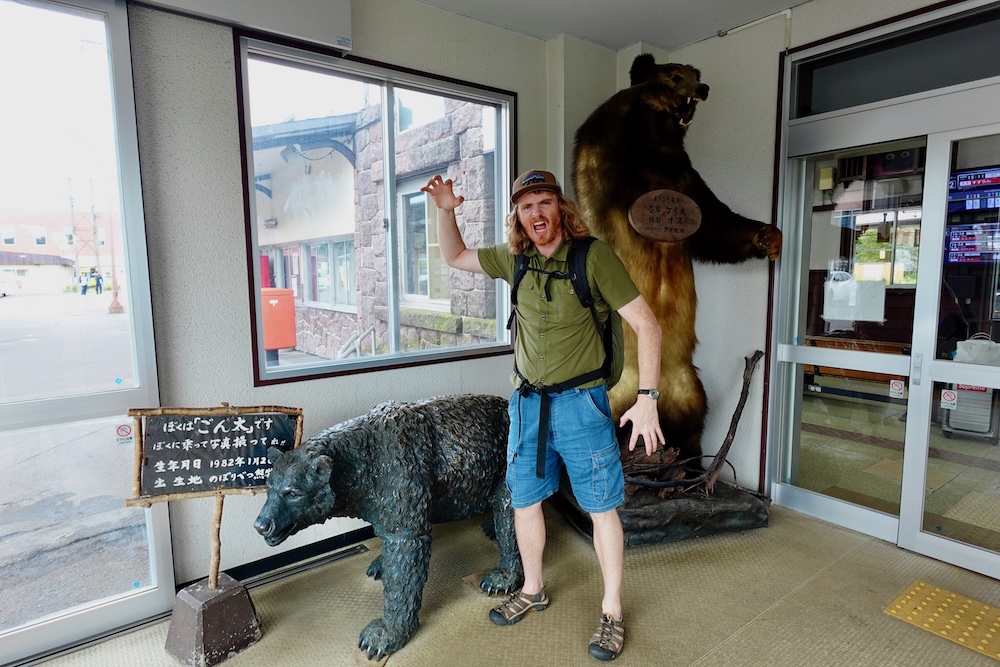
Otaru charmed me with its old streets and easy wandering. Noboribetsu hit me with steam, sulfur and an entire town decorated with demons. We hadn’t experienced many places quite like it. The surrounding forest is beautiful, but then you come upon bubbling water and steaming ground that remind you there are powerful things happening beneath the surface. It’s a strange combination of peaceful woodland and volcanic activity, and I loved it.
We reached Noboribetsu after travelling up from Hakodate. From JR Noboribetsu Station we took a local bus to Noboribetsu Onsen, the hot-spring district in the hills where Hell Valley and the main geothermal attractions are found. We spent a couple of nights there at Park Hotel Miyabitei, which gave us time for long walks and repeated visits to the hotel onsen. That was a wonderful way to experience the place. A day trip from Sapporo would feel considerably more compressed.
First, the journey: Noboribetsu Station isn’t the hot-spring town
The limited express from Sapporo takes approximately 70 minutes to JR Noboribetsu Station. The published standard reserved-seat fare is currently ¥4,890 one way, and JR Hokkaido’s limited express trains use reserved seating. After you arrive, you’re still a bus ride away from Noboribetsu Onsen. The local bus is currently ¥450 one way, with the journey taking up to about 27 minutes depending on where you get off.
On those published fares, a straightforward return by limited express and local bus works out to roughly ¥10,680 per adult before food, bathing or other activities. That figure assumes the quoted fares both ways; check for changes and any tickets or passes that affect your actual journey. More importantly, add time for the bus connection. If you arrive just after one departs, the train’s impressive travel time doesn’t help much.
There’s a reserved direct coach between Sapporo and the onsen district as well, but a service existing doesn’t mean its schedule makes sense for sightseeing. The currently published Onsen-go departure from Sapporo is in the afternoon, while the return-direction service leaves Noboribetsu Onsen in the morning. Those departures aren’t a workable same-day pair. I’d make sure I had a sensible return journey before setting out, particularly if I planned to walk beyond the main Hell Valley viewpoint.
Hell Valley is where I’d spend my time
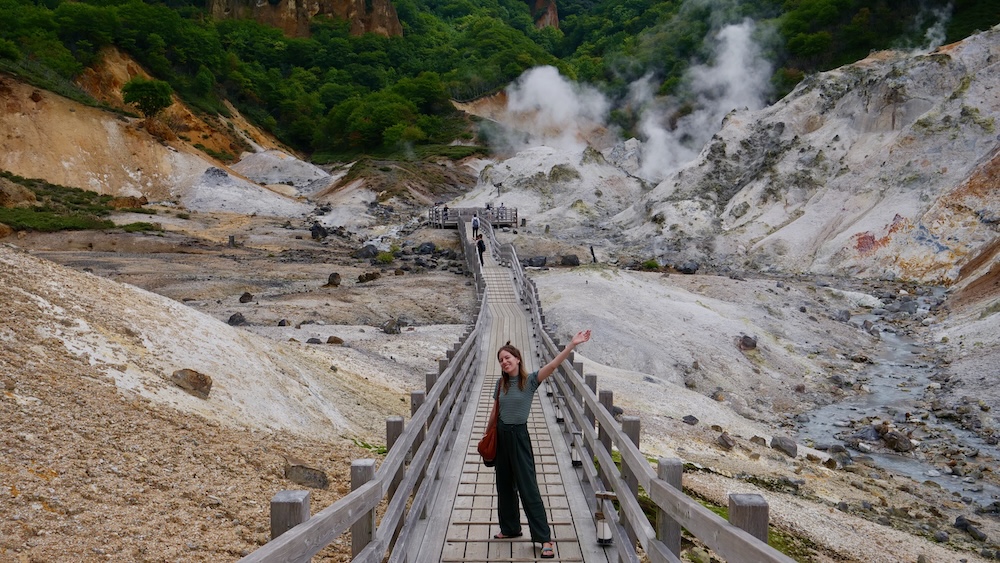
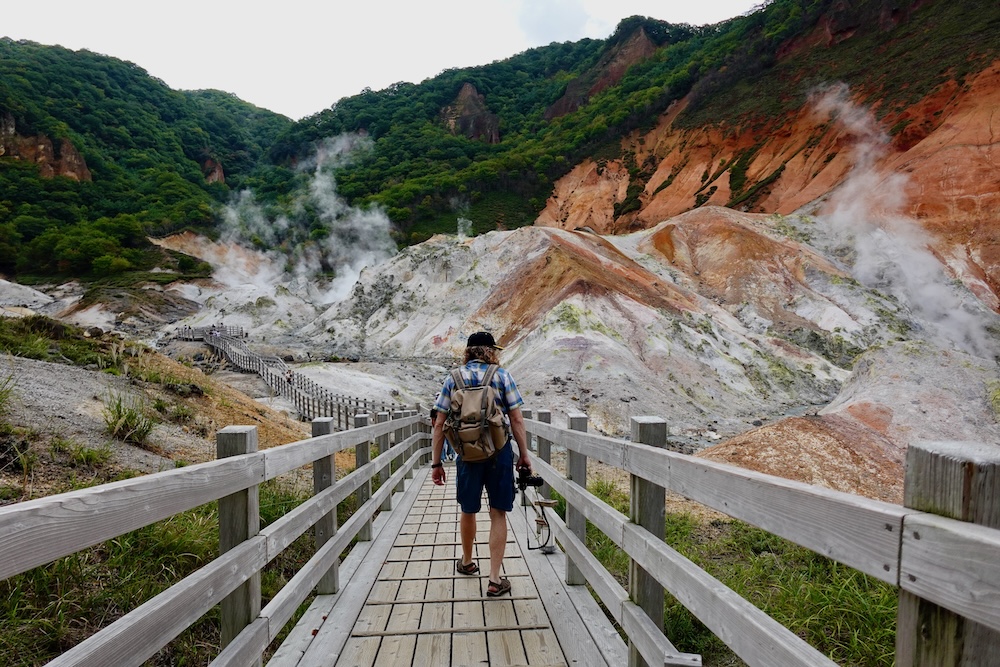
If you tell me you’ve only got a day and want to visit Noboribetsu, my recommendation is uncomplicated: see Jigokudani, better known as Hell Valley. The volcanic landscape was one of our favourite daytime experiences in Japan. We followed the designated paths through pale, mineral-streaked terrain with steam venting around us, bubbling water nearby and the unmistakable smell of sulfur in the air. You can feel the geothermal warmth in places. It’s one thing to see photographs of a steaming valley; it’s quite another to walk through one.
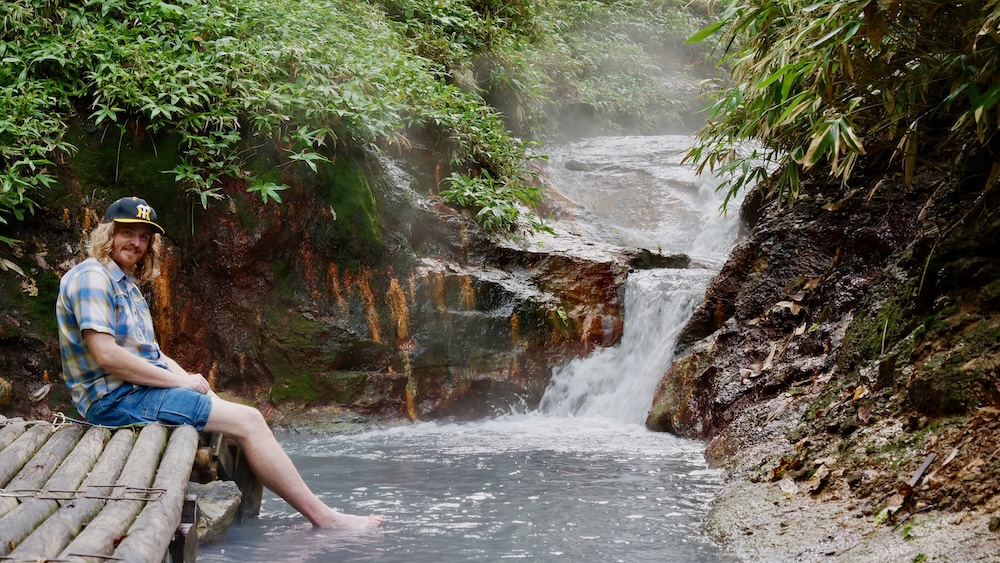
Audrey and I also explored the wooded trails toward the Oyunuma River Natural Footbath. At the river, steam was rising from milky grey-blue water, and the dark volcanic sand felt quite different underfoot from an ordinary stream bed. We took our shoes off, eased into the hot water and eventually settled in for about half an hour. Initially I thought it was almost too hot, but once we’d adjusted, I could have stayed there for ages. Bring a small towel so you can dry your feet before putting your socks back on. It’s a tiny practical detail you’ll appreciate afterward.
That footbath was a highlight, and I’d want to include it on a return visit. But I wouldn’t promise someone making a day trip from Sapporo that they’d have time for the full walk. The distance, open trails and time available all matter; geothermal paths can be restricted by weather or safety work. If your connections only leave time for Hell Valley’s main viewpoint, enjoy that properly rather than racing toward a second attraction you may not reach.
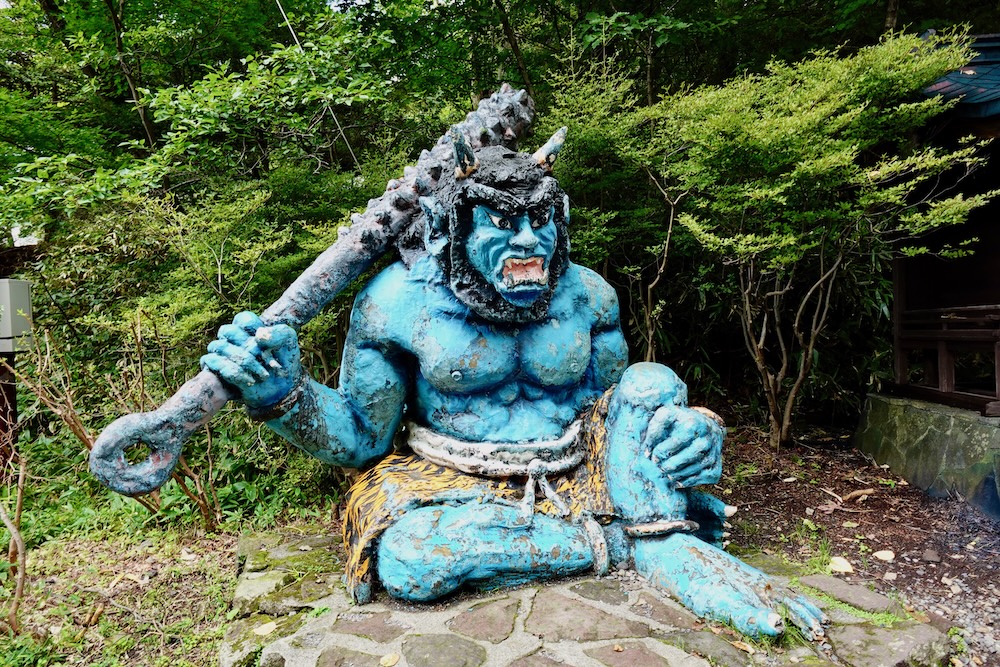
There are plenty of other peculiar things around town. We encountered large oni statues, visited the King Enma attraction and Yuzawa Shrine, and saw the geyser at Sengen Park. We also ate some fiery Enma Ramen that gave us plenty to talk about. All of that added character to our stay, but I wouldn’t prioritize a dozen small stops above Hell Valley on a short excursion. The volcanic scenery is the experience I’d regret missing.
Is a guided tour the better use of a day?
It can be, depending on what sort of day you want. A guided coach trip avoids the limited-express reservation, the local bus transfer and the need to sort out the return. It can also combine Noboribetsu with Lake Toya and other places that would be cumbersome to link independently. When the independent return rail-and-bus fare is already significant, the value of having someone else deal with the transport deserves serious consideration.
The catch is the timetable inside the tour. One currently advertised Noboribetsu–Lake Toya day tour from Sapporo allocates approximately 35 minutes to Hell Valley before moving on to other stops. That may be perfectly acceptable if you want a taste of Hokkaido’s volcanic scenery plus viewpoints around Lake Toya. But 35 minutes isn’t going to give you the same experience we had following woodland trails and soaking our feet beside a steaming river. The tour is selling a regional circuit. I wouldn’t book it expecting an afternoon devoted to Noboribetsu.
I’d look closely at the actual minutes at Jigokudani, whether the footbath is included, which extra admission charges apply and how much time is spent travelling between stops. A smaller group or private outing may offer more flexibility, but only if the specific itinerary allows it. One alternative is a private Noboribetsu and Lake Toya car tour that advertises route customization; I’d ask about your preferred Hell Valley time and the footbath before assuming either is possible. There’s no point paying for flexibility that disappears once you’ve read the booking conditions.
If Noboribetsu itself is the reason you’re travelling, the train-and-bus journey might be worth the extra organization. If you mainly want to see several landscapes in one day, a suitable regional tour could be the more convenient choice. There’s a reasonable argument for either; just be clear about what you’re buying.
The part of Noboribetsu that doesn’t squeeze into a day trip
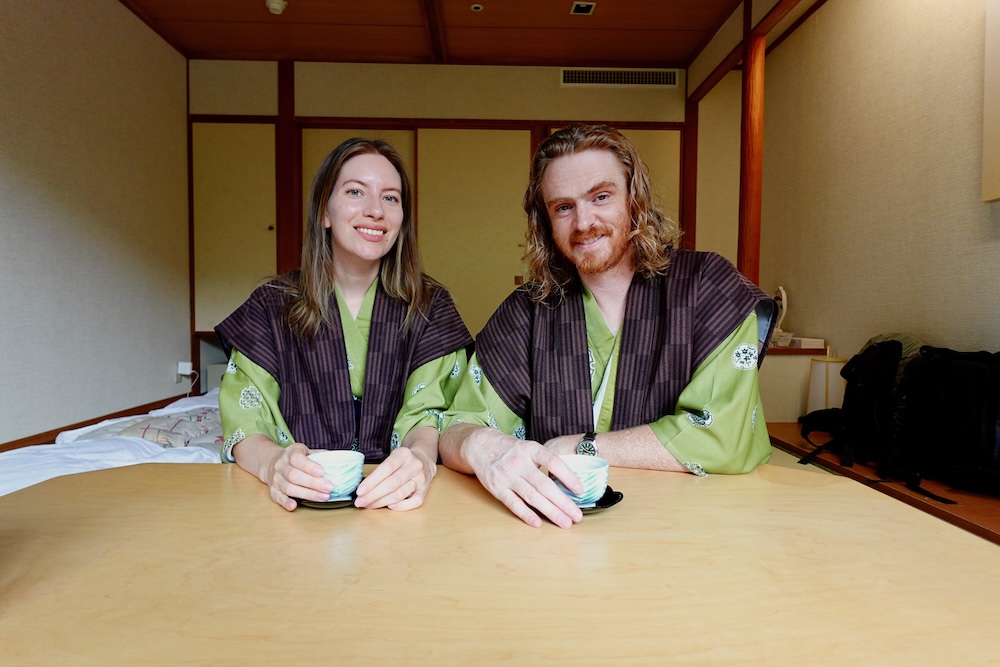
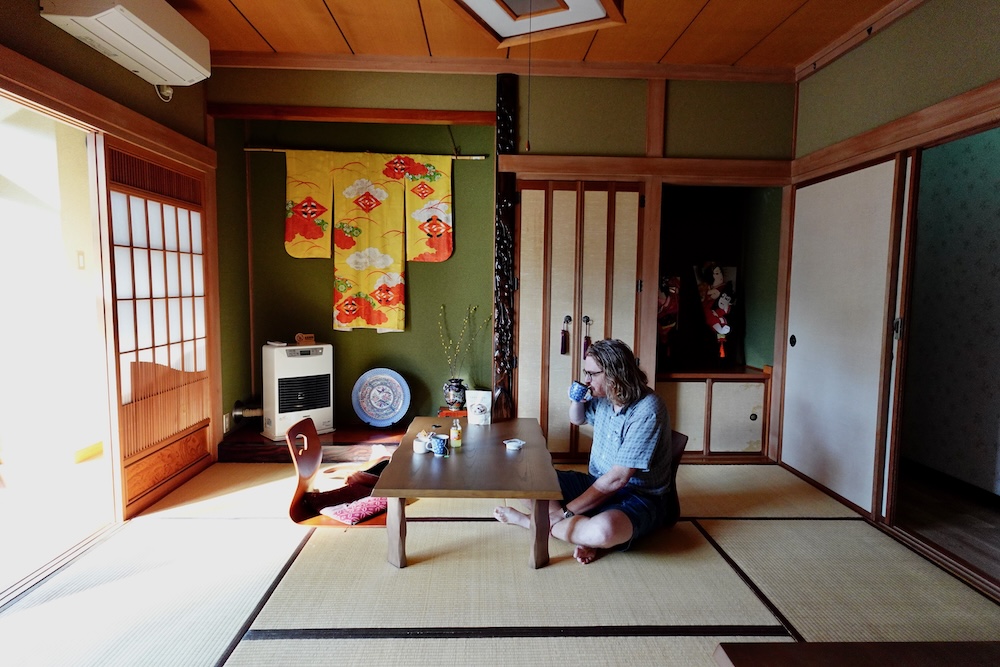
Park Hotel Miyabitei gave us a Japanese-style room with tatami and futons, yukata to wear, buffet meals and hot-spring baths we used more than once. If that sounds more appealing than an all-day return journey, you can check room options at Park Hotel Miyabitei; look carefully at whether dinner and breakfast are part of the rate you select. Audrey found quiet stretches in the women’s bathing facilities. After walking all afternoon, we could soak and take our time over dinner.
Miyabitei felt more like a sizeable onsen resort than an intimate traditional inn, and we enjoyed it on those terms. A viewpoint stop would have been a very different trip.
There are day-use baths in Noboribetsu Onsen, including public and hotel facilities with their own opening windows and charges. If you want to bathe without staying overnight, choose a specific place and check the current rules in advance. Don’t assume every hotel welcomes walk-ins whenever it suits your train schedule. You may be able to fit in a bath and Hell Valley, but a long trail walk, leisurely soak, lunch and return train are not automatically compatible.
Would I make the trip from Sapporo just for Hell Valley? If the landscape was high on my list and I had only one available day, yes, I’d consider it. But if I could spare a night, that’s how I’d prefer to experience Noboribetsu again. There’s a lot to enjoy when you aren’t constantly checking the time. If a smaller inn or a different bathing setup appeals more than the large hotel we used, you can compare other places to stay in Noboribetsu Onsen.
Furano and Biei: The Countryside Trip Where the Transport Decision Matters Most
If Otaru is a relatively simple train trip and Noboribetsu is a long journey to a fairly concentrated destination, Furano and Biei have another problem: many of the things people want to see are spread around the countryside. Getting off a train in Furano or Biei is only the beginning of the journey.
Audrey and I haven’t explored this region ourselves, so I can’t give you a personal verdict on a particular farm, viewpoint or tour. But I’d be very careful about planning it from a photograph of purple lavender fields. First, those fields need to be flowering. Then you need to work out where they actually are, how you’ll travel between them, and whether there’s enough time to get back to Sapporo.
Furano’s flowers, Biei’s landscapes—and the season you’re travelling
Farm Tomita is one of the region’s best-known flower destinations. Its traditional lavender field generally flowers from late June into late July, with early to mid-July often the strongest period. Other fields have their own flowering windows. Lavender East is a separate location about four kilometres away, with a shorter seasonal opening period. Arriving outside the lavender peak doesn’t necessarily mean Farm Tomita is shut, but it does mean those sweeping purple rows may not be the scene that greets you.
The wider region offers more than lavender. Biei is known for its rolling agricultural countryside and the Shirogane Blue Pond, where the water’s colour can change with light and conditions. Shirahige Falls and other scenic stops are often included in excursions. They’re also not all conveniently grouped beside a train station, however compact they might look when a tour operator squeezes their photographs into one collage.
Furano and Biei are about 34 kilometres apart, roughly a 40-minute drive under ordinary conditions. Blue Pond involves another journey from central Biei. That’s before allowing for a busy car park, walking to viewpoints or the time you actually want to spend looking at the place. On a Sapporo day trip, those local distances are every bit as important as the initial journey out of the city.
I’d choose one of three ways to visit
A focused trip by public transport: Rail services can get you into the region, and some local buses reach places such as Blue Pond. The seasonal Furano Lavender Express connects Sapporo directly with Furano on selected dates, while the Furano–Biei Norokko train serves the seasonal Lavender Farm Station near Farm Tomita when operating. These aren’t trains to assume will run every day of the year. If I were travelling independently without a car, I’d choose a limited number of reachable sights, line up the local services and make sure the return journey worked before trying to add anything else.
An organized countryside tour: This makes a great deal of sense if your wish list includes Farm Tomita, Blue Pond, a waterfall and other dispersed stops. Sapporo-origin tours commonly run for a full day, with some itineraries around ten hours. For example, you can check a small-group Blue Pond and Furano flower-fields tour, which lists multiple countryside stops and has date-specific options. A coach removes the bother of coordinating several local services, but it also fixes the order and the time available at each stop. I’d pay more attention to the actual itinerary and season than the number of impressive photographs on the booking page. If the trip is all about lavender, make sure the lavender stop is the one you want and that the tour operates when the fields are likely to be at their best.
A rental car: This provides the freedom to spend longer where you like, take breaks and avoid a tour’s fixed stops. You can compare rental cars in Sapporo for your intended date, checking pickup location, insurance, parking and the total cost rather than just the headline daily rate. It’s particularly useful when the attractions you want are spread over rural roads. The other side of the bargain is a long day behind the wheel, navigation, parking and whatever weather Hokkaido chooses to throw at you. Blue Pond parking, for example, has a published standard-car charge of ¥1,000 following a 2026 increase. I would be especially cautious about taking on unfamiliar snowy roads just because renting a vehicle appears cheaper than a tour.
I’d compare a good guided tour with a rental car if I wanted the main Furano and Biei sights in one day. For a group wanting their own vehicle without doing the driving, a private Biei–Furano countryside day trip is another option; its driver and transport are not the same thing as an accompanying attraction guide. Public transport is better suited to a narrower plan.
Other Day Trips Worth Considering
There are other worthwhile excursions, especially if you have a particular interest in bathing, lakes, the coast or wildlife.
Jozankei: A hot spring closer to Sapporo
If you liked the sound of Noboribetsu’s bathing experience more than its volcanic trails, Jozankei deserves attention. The reserved Kappa Liner connects central Sapporo with Jozankei in roughly an hour, and there are connecting-bus options through Makomanai. This means more of the day can be spent relaxing instead of travelling.
The practical trick is selecting your bath first. Hotels and day-use facilities set their own hours, fees and access conditions, and the stop that’s convenient for one property may be a poor choice for another. Jozankei won’t give you Hell Valley or the same geothermal walking experience. I’d consider it for a more straightforward onsen-focused outing, and it may spare you a substantial transport commitment if bathing is the main attraction. If you prefer sightseeing rather than booking a bath, a guided Jozankei and Hill of the Buddha day tour includes a short Jozankei stop alongside other sights. It isn’t a dedicated onsen-bathing package.
Lake Shikotsu: A day for the lake rather than the town
Lake Shikotsu is a natural choice for someone interested in mountain and lake scenery. Driving from Sapporo takes roughly 70 minutes in ordinary conditions, making it a plausible self-drive outing. Without a car, regular public transport usually means travelling via Chitose and joining a bus toward the lake. That extra connection makes spontaneous plans less appealing.
I’d look at what activities are operating in your season before setting out, then check the return bus if travelling independently. Winter is its own proposition: a Lake Shikotsu Ice Festival excursion from Sapporo is listed for the event season, but festival dates and admission arrangements need checking before booking. This is one of the places where a car or appropriate guided outing can change the experience considerably, particularly if you want freedom beyond the main lakeside area.
Lake Toya: More than a quick scenic stop
The direct reserved coach from Sapporo to Toyako Onsen takes approximately two hours and 45 minutes each way, with a published adult fare of ¥3,700 one way. Do the return calculation and you’ve spent about five and a half hours travelling before seeing much of the lake. It’s possible, but I wouldn’t describe it as a relaxed day out.
Lake Toya is often bundled with Noboribetsu in regional tours. That’s a useful way to see several volcanic landscapes without driving yourself, as long as you’re happy with relatively short stops. If the lake is the main reason for the journey, I’d weigh a car or overnight stay against the long coach return rather than assume a combination itinerary is the best fit. You can compare onsen hotels around Lake Toya if you’d rather stay by the water and leave more time for the scenery.
Yoichi: Build the day around the distillery
Yoichi is a good candidate if you’re interested in Nikka’s Yoichi Distillery. It’s roughly 30 minutes beyond Otaru by train, and the distillery is only a short walk from JR Yoichi Station. The complication is that trains on the Otaru–Yoichi stretch are less frequent, so connections deserve attention.
The standard guided distillery tours require advance reservations and are conducted in Japanese; the museum, shop and other visitor facilities have separate arrangements. If the tour is what you’re going for, secure the booking and then work out your trains. Pairing Yoichi with Otaru is possible, but it means giving up some of the leisurely central-Otaru sightseeing I enjoyed. There is also a separately offered private Yoichi whisky museum visit and tasting; check exactly what’s included rather than confusing it with Nikka’s own free Japanese-language tour. I wouldn’t pretend you can have both full days for the price of one.
Shakotan: For the coastline, with a big seasonal caveat
Shakotan’s coastal cliffs and sea views offer another side of western Hokkaido, especially for visitors with a car or a suitable tour. This is a destination where I’d check road conditions and viewpoint access before getting attached to a particular photo. Strong wind and seasonal restrictions can alter the day substantially.
There’s an especially important current limitation: the final portion of the Cape Kamui trail has been closed for safety-fence work since October 5, 2026, with reopening anticipated around early April 2027. The Shimamui Coast’s path down to the beach has also been closed, although the viewpoint remains accessible. Check the latest status before setting off. If you’d prefer not to drive the peninsula, compare a Shakotan, Yoichi and Otaru day tour, but confirm which viewpoints are accessible on your date; a tour listing doesn’t reopen a closed trail. I wouldn’t append Shakotan to a full central-Otaru day unless I was consciously sacrificing a lot of what makes Otaru fun.
Asahiyama Zoo: A different reason to leave the city
For a wildlife-focused day, Asahiyama Zoo near Asahikawa is a credible option. The rail journey from Sapporo to Asahikawa is roughly 80 minutes, followed by around 40 minutes on a bus to the zoo, plus whatever connection time you need. That makes it a proper full-day excursion rather than a quick outing.
Check the zoo’s seasonal opening days and programmes if there’s something particular you want to see. Some organized trips, including a Sapporo tour combining Asahiyama Zoo and Blue Pond, pair the animals with Biei scenery. I’d look carefully at how long they leave you at the zoo. If the animals are the reason you’re going, I’d rather have enough time there than spend half the afternoon being driven to a second attraction.
Train, Tour or Rental Car: Where I’d Spend My Money
Choose the experience first, then work out which transport option leaves you the most time to enjoy it. Extra buses and taxis can erase an apparent saving, while tours sometimes trade depth for the number of stops.
For central Otaru, take the train. A guide earns its price for interpretation, private arrangements or excursions beyond the walkable centre, not for solving a difficult journey from Sapporo.
For Noboribetsu, decide between depth and range. Independent rail and bus leave more freedom for Hell Valley and the footbath; a regional tour can cover several places without complicated transfers. If you’re after a long soak and an onsen-town dinner, consider spending the night.
For Furano/Biei, a tour or car can earn its keep. Tours handle the gaps between rural stops; driving gives you flexibility but comes with parking, navigation and potentially difficult weather. Compare time at each attraction, extra admission costs and the actual pickup and return arrangements.
Jozankei and Yoichi can work well on public transport when the schedules line up. Lake Shikotsu and Shakotan give a car more practical value, while Lake Toya forces you to confront the long return journey.
When I’d Turn the Day Trip Into an Overnight Stay
I’ve seen how easy it is to keep adding attractions when they look close on a map. Start with the last bus and train home, plus the time needed to reach your hotel in Sapporo. The hours left in the middle are your real sightseeing budget.
Otaru is forgiving. Even if you wander longer than expected through a glass shop or decide to have another drink at Kitaichi Hall, the central attractions remain within a relatively compact area and the railway connection is straightforward. If you want a second day for outer Otaru, you can compare hotels in Otaru near the station and canal rather than rush home. Noboribetsu is less forgiving if you’ve committed to a train-and-bus return and the natural footbath is still a walk away. A tour can remove the return-connection worry, but its fixed stops introduce another sort of deadline.
Furano and Biei demand a different kind of discipline: the distances between attractions are real, and a beautiful flower-field photograph doesn’t tell you anything about train schedules or the date of peak bloom. Lake Toya’s long coach journey is another place I’d ask whether sleeping closer to the scenery might make the whole trip more enjoyable.
We had the good fortune to give Otaru a proper visit and Noboribetsu a couple of restorative nights. A return day trip can’t recreate those stays, and it doesn’t need to. Protect the experiences you most want instead of trying to squeeze our whole journey into one afternoon.
So, Which Day Trip Would I Actually Pick?
For a first visit to Sapporo with one free day, Otaru would be my choice. I’d take an early train, give myself time to enjoy the canal and the old warehouse streets, get lost in the glass shops, visit the music boxes and stop for something good to eat. If the cruise timetable worked, I’d get on the boat again. I’d rather come back slightly disappointed that I hadn’t squeezed in one more café than spend the entire day watching the clock.
I’d send a traveller to Noboribetsu if Hell Valley were the experience they most wanted, with the warning that the return journey and the last-mile bus need proper planning. For lavender fields and countryside scenery, Furano/Biei could be superb in the right season with the right tour or car. Jozankei is the more convenient choice when the main objective is a hot-spring soak, while the lakes, coast and zoo serve other interests.
Audrey and I loved both Otaru and Noboribetsu, and I’m glad we gave them the time we did. On a day trip, I’d rather come home having enjoyed one place thoroughly than having raced through three and barely remembered any of them.
Frequently Asked Questions
What is the easiest day trip from Sapporo without a car?
I would choose Otaru. The quicker trains take roughly 32–35 minutes from Sapporo, and the canal, historic warehouses, glass shops and music boxes are concentrated in a walkable central area.
Can you visit Otaru and return to Sapporo in one day?
Yes. An early train and an evening return leave time for Otaru’s main central sights, with a canal cruise if the departure fits. Audrey and I stayed overnight rather than making a same-day return, but I’d happily plan a full day there.
How do you get from Sapporo to Noboribetsu Hell Valley?
Take a limited express train to JR Noboribetsu Station, then a local bus into Noboribetsu Onsen. The train takes approximately 70 minutes and the bus can take around 27 minutes; allow additional time for the connection and the walk to Hell Valley.
Is a guided Noboribetsu and Lake Toya tour better than going independently?
It depends on your priorities. A regional tour can combine several scenic stops without arranging train and bus connections, but one listed itinerary allows only about 35 minutes at Hell Valley. I’d travel independently if I wanted more time for the geothermal walks and natural footbath.
Can you visit Furano and Biei from Sapporo without a car?
Yes, but choose your sights carefully. Trains reach the region and some local buses serve attractions such as Blue Pond. For several scattered countryside stops in one day, an organized tour or rental car can be more practical.
When is the best time to see lavender in Furano?
Farm Tomita’s traditional lavender field generally blooms from late June to late July, often looking its best in early to mid-July. Other fields have different flowering windows, so check the specific location and travel dates rather than assuming lavender is blooming all summer.
What is a closer hot-spring day trip from Sapporo than Noboribetsu?
Jozankei is a good alternative if soaking is your priority. It’s roughly an hour from central Sapporo by the reserved Kappa Liner, with other connecting-bus options. Choose a day-use bath first because facilities have different hours and entry rules.
Should you stay overnight in Otaru or Noboribetsu instead of taking a day trip?
You don’t need to stay overnight to enjoy central Otaru. Noboribetsu is a different decision: Audrey and I loved having a couple of nights for Hell Valley, the natural footbath, hotel onsen and leisurely meals. I’d favour an overnight stay there if hot springs are a major part of the trip.
This guide is also available in Spanish. [Leé la versión en castellano: Mejores excursiones de un día desde Sapporo: Otaru, Noboribetsu, Furano y más (con o sin auto)]
This article contains affiliate links. If you book through one of these links, I may earn a commission at no extra cost to you.