
I’ve spent the better part of 15 years grinding out itineraries across the globe, and I can tell you straight up: Nuremberg requires a specific game plan. You’re dealing with a city that balances heavy 20th-century history with hyper-preserved medieval infrastructure. Before we even get into the logistics, here is your most critical piece of intelligence for this trip: if you want to explore the subterranean rock-cut cellars, you have to book your English-speaking timeslot weeks in advance. It’s the single highest friction point for ticket availability in the entire city. The moment you step off the train, the sharp scent of roasting pork and marjoram hits the cold Franconian air, letting you know exactly where you are. This travel guide strips away the fluff to give you the hard routing, current realities, and unfiltered advice on what’s actually worth your time.
Planning your Nuremberg route requires acknowledging the sheer density of the footprint. You are navigating centuries of the Holy Roman Empire layered directly on top of the darkest episodes of WWII. Figuring out which sandstone towers justify the thigh-burn to climb, which museum requires a full half-day commitment, or how to pace your pork intake without hitting a wall takes strategy. And then there’s the regional rail network: deciding where to route yourself next. We found that breaking the city down by distinct physical zones solves those dilemmas, especially when dealing with the realities of current ticket prices and crowd bottlenecks.
Families can leverage the pedestrian-heavy zones to avoid traffic friction, though pushing a stroller over these historic cobbles is a severe workout. Couples might grab a table on the uneven stones for late-night beers. Solo travelers can easily merge into brewery crowds or spend hours reading placards in the expansive museums without feeling rushed. You’ll quickly see why we consider this a highly functional German gem.
Let’s dig into the actual pavement-pounding realities: from the punishing stone steps of church spires to the damp chill of underground bunkers, here is the granular breakdown of what actually works right now.
Top 10 Things To Do in Nuremberg, Germany For Visitors
Below are 10 hard-signal recommendations based on our boots-on-the-ground experience navigating Nuremberg’s old town and outer perimeters.
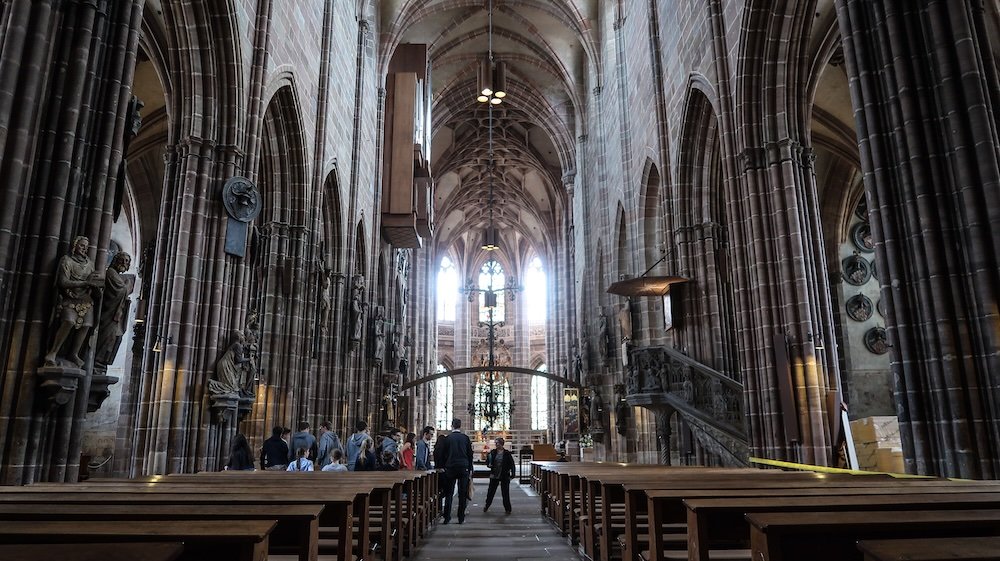
1) St. Lorenz Gothic Church (St. Lawrence Church in Nuremberg)
St. Lorenz is a massive Gothic anchor that dictates the pedestrian flow in the southern part of the old town. You can’t miss it, and you shouldn’t. The moment you cross the threshold, the temperature drops noticeably, and the chill of the original stone floor seeps right through your shoe soles. It holds centuries of cultural heritage, having been painstakingly reconstructed after taking heavy damage in WWII. While entry is technically free, we found that there is currently a very strongly worded push for a small donation at the door to fund ongoing structural repairs. The sheer scale of the vaulted ceilings forces you to look up, straining your neck to take in the intricate stone carvings that survived the bombings. It’s an incredibly quiet space that swallows the noise of the busy shopping street outside.
- If the tower access is unlocked, make the climb. Your calves will burn, but the roofline perspective is unmatched. However, know that it’s frequently closed off due to staffing shortages.
- Organ practices happen sporadically; if you catch one, the bass reverberates physically in your chest.
- Watch your step near the entrance—the worn sandstone dips where millions of feet have shuffled through.
Tip: Check the informational placards near the back. They show raw, gritty photos of the 1945 rubble, adding massive context to the pristine nave you are standing in today.
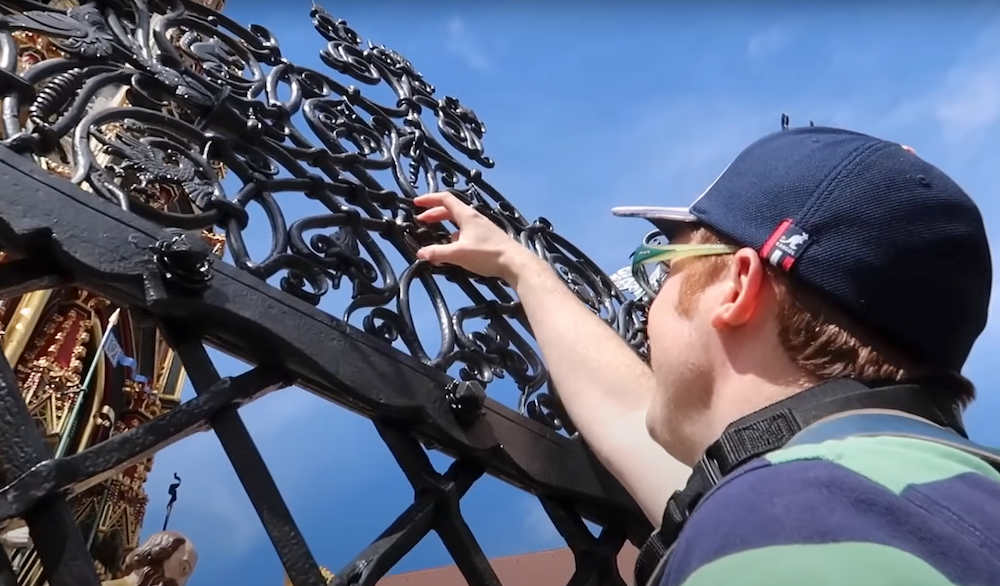
2) Rings for Good Luck (Nürnberg Schöner Brunnen)
The Schöner Brunnen (Beautiful Fountain) sits right in the crosshairs of the Hauptmarkt. It’s a towering, gilded Gothic spire that practically demands you pull your camera out. But here is my contrarian take: honestly, waiting to spin the brass rings is the most overrated five minutes in Nuremberg. It is a massive localized bottleneck. You are literally just fighting a wall of tour groups to touch a piece of metal that is icy cold in the winter and perpetually greasy in the summer. Legend dictates that spinning the seamless golden ring brings good luck. Sure, it takes two minutes if the square is empty, and it puts you right in the center of the market action where you’ll hear the clatter of vendor carts. But if the line is deep, skip it. Go buy a coffee instead.
- Hit this spot before 9 AM if you genuinely want a clean photo without strangers in the frame.
- There are actually two rings. The shiny brass one is the famous one; the black iron one on the opposite side is supposedly the original.
- Keep an eye on your pockets here. Dense crowds clustered around a distraction make for prime pickpocket territory.
Tip: Spin the ring away from yourself if you do join the mob. Locals will be quick to correct you if you spin it the wrong way.
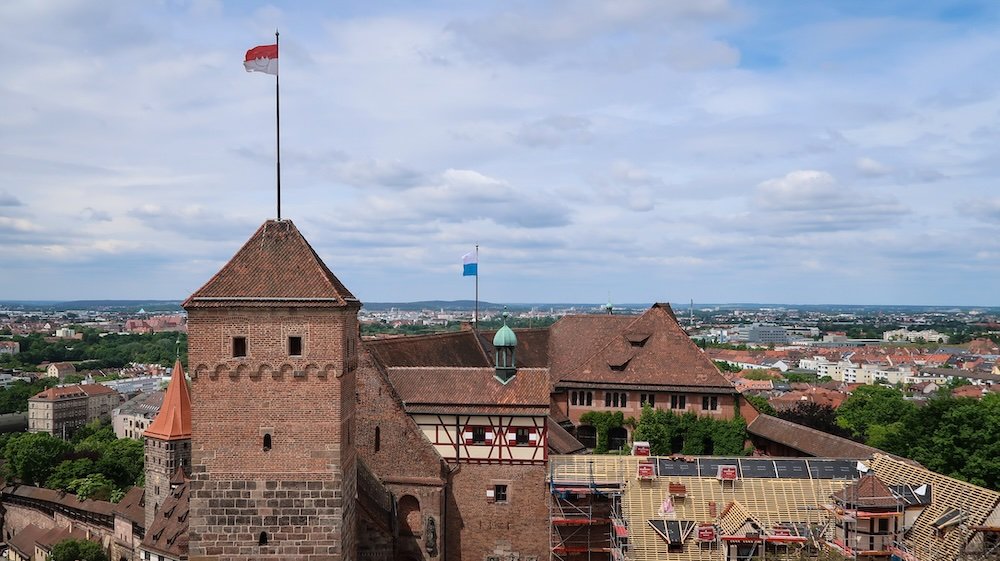
3) Nuremberg Castle (Nürnberger Burg)
The Nuremberg Castle complex sits on a massive sandstone ridge, and getting up there requires a legitimate, lung-expanding hike up steeply pitched cobblestones along Burgstraße. Local sources regularly confirm this is where tourists burn out quickest. This was the seat of power for the Holy Roman Empire, and its defensive scale is obvious the minute you lean against the rough, grit-covered parapets. The wind whips significantly harder up here, biting at your face in the cooler months, but the payoff is a sprawling view of the red-pitched roofs below. The interior museum requires an entry fee—currently hovering around €7 to €8 for a combined ticket—and walks you through the evolution of medieval weaponry and armor. The inner courtyards are free to roam and give you an immediate sense of the brutal, utilitarian architecture of the era.
- The Imperial Chapel is a highlight—a dual-level Romanesque structure where the Emperor physically sat above his subjects.
- Wear shoes with serious traction. The sloped cobbles leading up to the gates become incredibly slick after a light rain, and we’ve seen plenty of people slip.
- Skip the audio guide if you are short on time; the visual scale of the defensive walls is the real draw here anyway.
Tip: Visit the castle gardens (Burggarten) on the southern tier. The crunch of the gravel paths and the quiet isolation make it the best place to rest your legs after the brutal climb up.
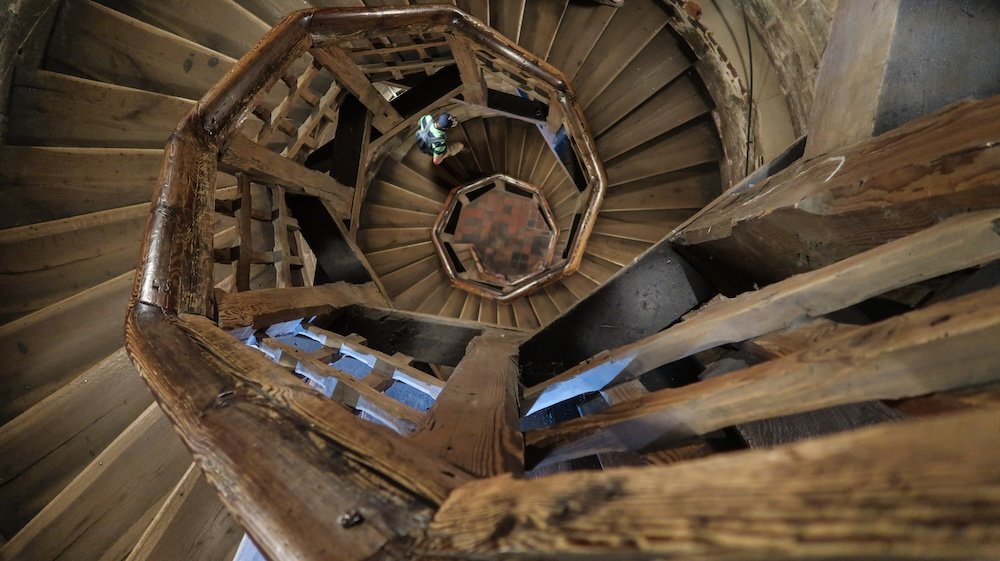
4) Sinwell Tower + Deep Well (Sinwellturm)
Sitting squarely in the castle complex is the Sinwell Tower. This is not for the faint of heart or the bad of knee. You are going to haul yourself up a tight, spiraling wooden staircase where the air smells distinctly of old timber and dust. When you finally hit the viewing platform, your reward is an unobstructed, 360-degree drafty vantage point that makes the entire city look like a map. Just across the courtyard is the Deep Well. This is a guided-only experience (usually included in your main castle ticket) where they lower a rig holding candles down a 50-meter shaft carved directly into the rock. Watching the light shrink and listening to the delayed, echoing splash of water hitting the bottom is a weirdly visceral reminder of siege attractions and survival mechanics.
- The wooden stairs in the tower are highly polished by foot traffic and quite slippery. Grip the rail tightly.
- The Deep Well presentation happens at scheduled intervals. Verify the time when you buy your ticket and circle back.
- If you are claustrophobic, the well house gets incredibly crowded when the guide closes the door to drop the candles.
Tip: Check the weather before doing the tower climb. If there is low cloud cover or heavy rain, the visibility from the top is zero, making the punishing climb a complete waste of energy.
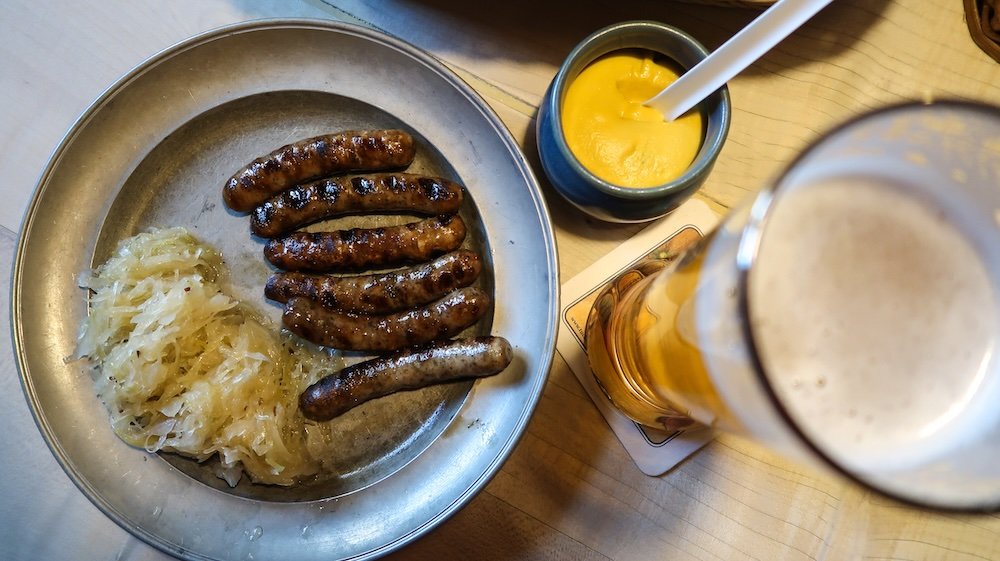
5) Nürnberger Rostbratwurst – Eating Nuremberg Sausage at Bratwursthäusle
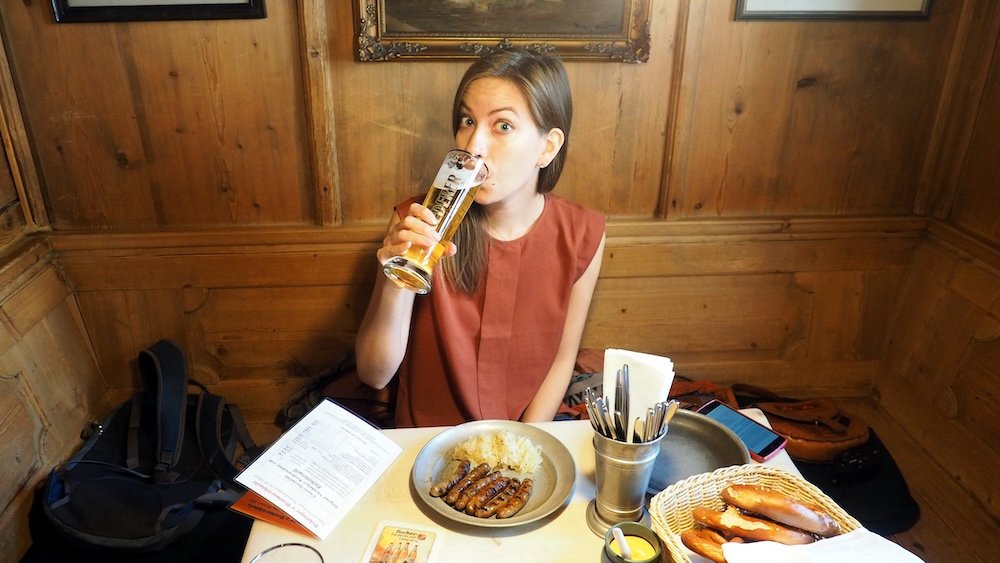
Let’s talk about caloric intake. Nürnberger Rostbratwürste are not the giant, thick sausages you find in Munich. These are finger-sized, aggressively spiced with marjoram, and grilled directly over an open beechwood fire. At Bratwursthäusle, right next to St. Sebald church, the smoke from the grill actually stings your eyes a bit when you walk through the door. The casing has an audible, greasy snap when you bite into it. You order them by the half-dozen (or dozen, we won’t judge), and they arrive on a pewter plate resting on a mound of tangy, warm sauerkraut. It’s heavy, salty, and ranks as some of Germany’s finest sausages for a reason. Be warned though: traditional spots like this heavily prefer cash, and fighting over a card machine when the place is slammed is a rookie mistake.
- Order a “Drei im Weckla” (three in a bun) from the takeaway window outside if you don’t want to commit to a noisy sit-down meal.
- They serve them with spicy brown mustard, but try the first one plain to actually taste the beechwood smoke profile.
- The restaurant gets incredibly loud and humid during peak dinner hours. Expect to share a table with strangers.
Tip: Ask the server for extra horseradish (Kren). The sharp, nasal-clearing burn cuts perfectly through the heavy fat of the sausages.
6) Underground Tunnels (Förderverein Nürnberger Felsengänge)
Beneath the streets sits a massive, multi-level maze of rock-cut cellars known as the Felsengänge. When you cross through the heavy iron door from the street, the temperature plummets to a constant, bone-chilling 10°C (50°F), and the air smells like damp limestone and ancient yeast. Originally carved out over centuries to ferment and store red beer, these tunnels became a critical survival infrastructure during WWII, sheltering tens of thousands of citizens during the bombing raids. The guided tour forces you through narrow, dimly lit corridors where you have to duck under low rock ceilings. It is a profoundly eerie and fascinating walk. Current pricing usually sits around €12, but the real friction is availability—do not just show up expecting an English tour.
- You absolutely must bring a jacket, even if it is 35°C (95°F) outside. You will freeze otherwise.
- The ground is uneven, hard-packed dirt and slick rock. Leave the sandals at the hotel.
- The English tours sell out rapidly. Secure this online the moment you confirm your travel dates to avoid getting turned away at the door.
Tip: Book the specific tour that ends with a tasting at the Altstadthof brewery. A cold red beer is the perfect chaser after an hour in the caves.
7) Pretty Street (Weissgerbergasse)
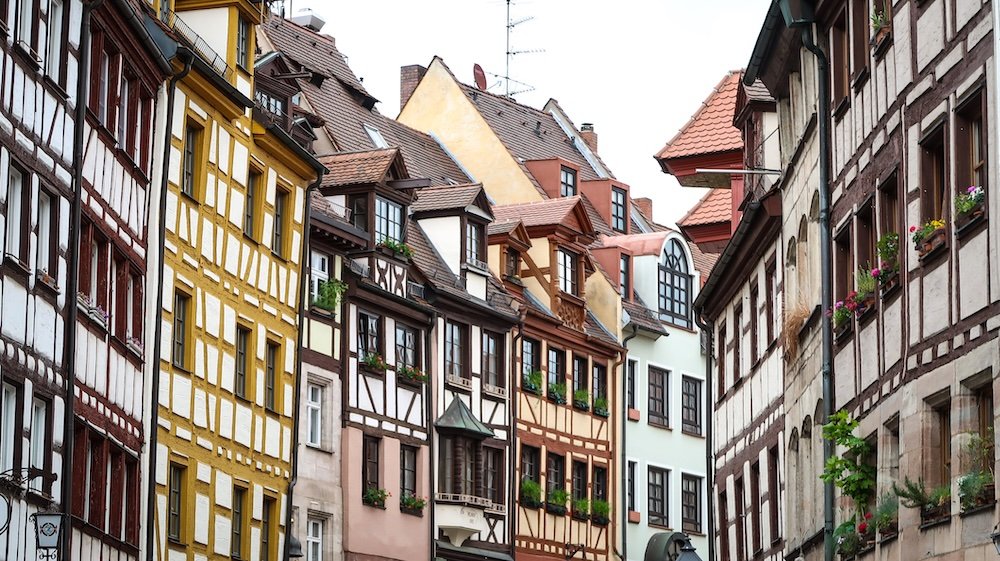
If you want the classic, half-timbered Franconian aesthetic, map your way to Weissgerbergasse. This street survived the war largely intact, giving you a dense row of historical artisan houses leaning slightly over the uneven cobblestones. You can feel the sharp edges of the stones through thin-soled shoes as you walk, making this an absolute nightmare if you decided to wear heels. It’s highly photogenic, meaning you’ll be dodging other people’s tripods and poses. However, it’s also highly functional. It’s packed with small coffee roasters and local bars. The smell of fresh espresso wafts out of the heavy wooden doors, making it a perfect spot to drop your bags, order a caffeine hit, and rest your legs.
- Walk the street from south to north to get the slight uphill perspective for photos.
- Many of these ground floors are active businesses; be mindful not to block doorways while getting your shot.
- The evening vibe here shifts dramatically from coffee to craft beer and wine.
Tip: Try ducking into one of the tiny artisan shops here. They often sell high-quality local goods rather than the mass-produced trinkets found near the main squares.
8) Albrecht Durer’s House (Albrecht-Dürer-Haus)
Located right at the base of the castle walls is the Albrecht-Dürer-Haus. This massive, timber-framed structure was the actual residence of Germany’s most famous Renaissance artist. Inside, the floorboards creak loudly under your weight, and the air carries a faint, distinct scent of old wood and beeswax. For an entry fee typically under €8, they’ve reconstructed his workshop, complete with heavy printing presses, which gives you a mechanical understanding of how he produced his legendary woodcuts. An audio guide is included with admission, and it does a solid job of explaining the brutal economics of being a working artist in the 1500s.
- The staircases between floors are incredibly steep and narrow. Take your time.
- Watch the live printing demonstration on the top floor. Hearing the heavy press slam down adds great sensory context.
- The square outside, Tiergärtnertor, is where locals gather in the evening to drink beer sitting right on the pavement.
Tip: Allocate roughly 45 to 60 minutes here. The rooms are detailed, but the physical space is tight, so you move through it relatively quickly.
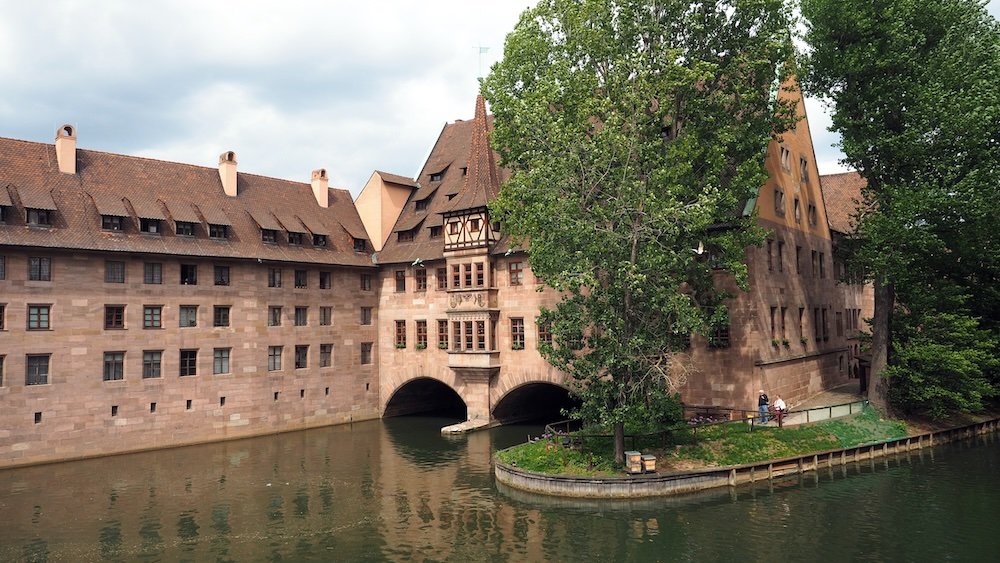
9) Bridge and Hospital (Heilig-Geist-Spital)
The Heilig-Geist-Spital sits physically spanning a channel of the Pegnitz River. When you stand on the nearby Museumsbrücke (Museum Bridge) to look at it, you get hit with the damp, slightly mossy smell of the slow-moving water below. Built in the 1330s as a facility to care for the sick and elderly, its arches drop directly into the river currents. It is undeniably the most photographed architectural angle in the city. You will absolutely be jockeying for elbow room along the bridge railing with other travelers trying to frame the perfect shot, especially during the golden hour when the sun hits the terracotta roof tiles.
- The interior operates as a restaurant serving heavy, traditional Franconian fare. It’s atmospheric but priced heavily for the tourist crowd.
- Walk down to the water level pathways for a less obstructed, lower-angle view of the arches.
- The bridge can get remarkably windy, acting as a funnel for the air moving down the river channel.
Tip: Return here after 9 PM. The crowds vanish, the structure is lit up with floodlights, and the black water creates a perfect mirror reflection.
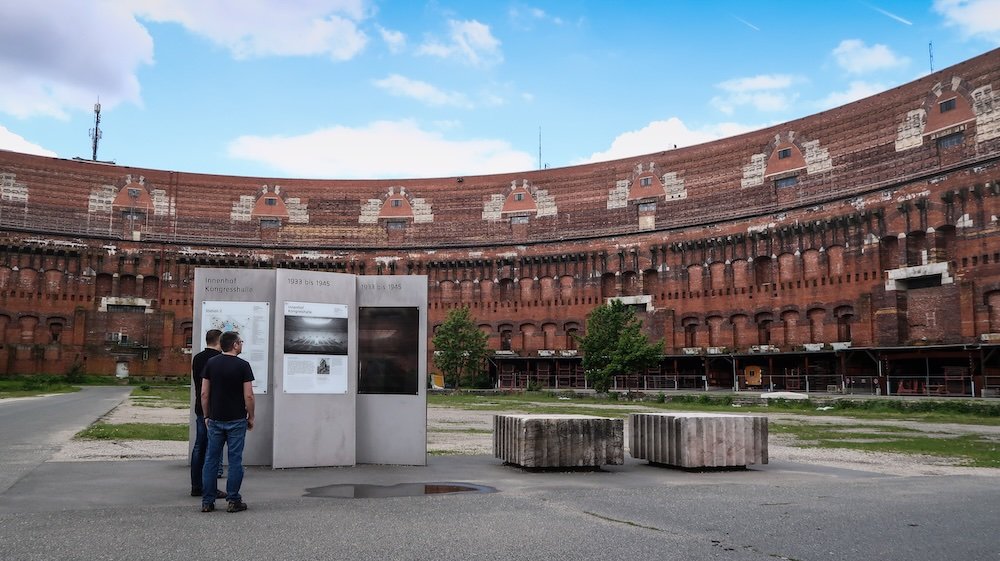
10) The Documentation Center Nazi Party Rallying Grounds (Dokumentationszentrum Reichsparteitagsgelände)
You cannot understand Nuremberg without confronting this footprint, but you need the current ground truth. The museum is housed in the northern wing of the unfinished, brutally massive Congress Hall. Walking into the stark, glass-and-steel spear that pierces the brick facade, the acoustics go dead. It feels intentionally oppressive. However, consensus travel advice will tell you to block out half a day for the main exhibition. We found that currently, the massive permanent exhibition is closed for long-term remodeling. They are operating a smaller, interim exhibition instead. It still packs a serious punch breaking down the mechanics of propaganda, but it’s physically much smaller. Stepping out onto the viewing platform over the interior courtyard, the cold wind whipping across the empty, colossal space leaves a physical knot in your stomach.
- The audio guides offer essential English narration, essential for non-German speakers.
- Because of the current interim setup, you won’t need the three hours previously recommended, but plan for at least 90 minutes.
- The grounds outside (Zeppelin Field) require a substantial walk. The sheer scale is exhausting and totally exposed to the elements.
Tip: Prepare mentally. This is a heavy, draining experience. Do not schedule a dense, fast-paced activity immediately after this. Go get a coffee and process what you just saw.

What To Eat and Drink in Nuremberg, Germany
Introduction: Franconian Flavors
Franconian food is not designed for diets; it is designed for caloric survival. It’s heavy on pork, starch, and rich gravies that coat the back of a spoon. When you walk past a local kitchen, the thick aroma of roasted meat and fried onions is unavoidable. Here is the operational breakdown of what to put on your plate, ensuring you hit the critical things to do for your palate without wasting stomach space.
Traditional Dishes to Try
- Nürnberger Rostbratwurst: The benchmark. Tiny, spiced heavily, and served by the plateful. The char on the casing crunches audibly when you bite in.
- Schäufele: A massive pork shoulder. The defining feature is the thick layer of fat and skin that is roasted until it blisters into a hard, salty crust. You practically need a chisel to crack it, but the meat underneath pulls apart with a fork.
- Lebkuchen: Authentic Nuremberg gingerbread. It’s dense, sticky, heavily spiced with cloves, and leaves a lingering warmth in your mouth.
These dishes are the bedrock of the local economy. You will leave the restaurant smelling like gravy and smoke, and you won’t regret it.
Breads, Pretzels, and Pastries
Bread culture is a German fundamental. A proper Franconian pretzel (Brezel) is thick on the bottom, thin and crispy on the crossed arms, and leaves a fine dusting of coarse salt and flour on your fingertips. In the mornings, bypass the hotel breakfast and hit a local bakery (Bäckerei). Grab a Nussecke—a heavy triangle of shortcrust pastry, apricot jam, and chopped nuts dipped in dark chocolate. It weighs a ton and provides enough sugar to power you up the castle hill.
Tip: If the pretzel is pale and soft all the way through, it’s a bad bake. Look for a deep, dark brown crust.

Beer and Beverages
Franconia has the highest density of breweries per capita on the planet. This is not the place to order a generic Pilsner. The regional specialty is Rotbier (red beer). When the bartender slides the heavy, half-liter glass mug across the wooden table, the condensation immediately slicks your palm. It has a slightly malty, toasted caramel profile. If you want something lighter, Franconian white wines are excellent and historically served in a flat, round flask called a Bocksbeutel.
- Look for “Kellerbier” on tap. It’s cloudy, unfiltered, and usually has a very low carbonation bite.
- Pace yourself. The standard pour is half a liter (a Seidla), and the alcohol content can sneak up on you.
- If you need to rehydrate, order an Apfelschorle. It’s sparkling water cut with apple juice, and it’s tart and refreshing.
Tip: Sip deliberately. Clinking glasses is mandatory, but you must make direct eye contact with the person you are toasting, or German superstition guarantees seven years of bad luck.
Street Food & Night Snacks
If you are burning the midnight oil, street stalls are your primary fuel source. You’ll smell them before you see them. The crunch of paper-wrapped roasted almonds (Gebrannte Mandeln) is a constant soundtrack in the pedestrian zones. In winter, wrapping your freezing, bare hands around a thick ceramic mug of steaming Glühwein (mulled wine) is an absolute necessity to regain feeling in your fingers.
Tip: When you buy a mug of Glühwein, you pay a “Pfand” (deposit). Return the sticky, empty mug to get your few Euros back, or keep it as a cheap souvenir.
Vegetarian & Modern Twists
Surviving Franconia as a vegetarian used to mean eating side salads and plain potatoes. Now, the infrastructure has adapted. Even the oldest beer halls serve heavy, starch-based meatless options. The physical chewiness of a good, cheese-laden Käsespätzle (egg noodles baked with strong cheese and topped with crispy fried onions) will leave you just as lethargic as a pork roast.
- Look for “Kloß mit Soß” on menus—a massive potato dumpling swimming in gravy (just verify the gravy isn’t meat-based).
- The outer neighborhoods (like Gostenhof) have a dense cluster of dedicated vegan and modern dining spots.
- Bakeries are your best friend for quick, cheap, meat-free carb loading.
Tip: Try the street markets (like the one at Hauptmarkt) to buy fresh, local produce if you want to assemble a clean lunch and dodge the heavy tavern German comfort food.
Tours For Visitors To Nuremberg, Germany
Why Consider a Guided Tour?
You can walk Nuremberg blind, but you’ll miss the context of the pavement you are standing on. Tours efficiently package the heavy historical data of Germany into digestible routes, saving you the friction of constantly checking maps. A good guide points out the shrapnel damage still visible in the sandstone walls. Here are the most effective ways to deploy your time.
Walking Tours
The standard Old Town walking tour is a two-hour physical grind over varying degrees of cobblestones. Your arches will ache by the end of it. However, it effectively knocks out the Hauptmarkt, Schöner Brunnen, St. Sebald Church, and forces you up the steep incline to the Castle walls. The value here is the localized anecdotes—the guide explaining why specific rooflines are pitched a certain way, or pointing out flood markers carved into the stone bridges centuries ago.
- Dodge the massive 30-person umbrella-following groups. Pay the slight premium for a small group (8-10 people) so you can actually hear the guide over the street noise.
- Wear your thickest-soled shoes. The uneven paving stones are brutal on flat sneakers.
- Franconian weather turns fast. Bring a compressible rain shell, as tours rarely cancel for a drizzle.
Tip: Book the first slot of the morning. You want to be at the castle viewpoints before the mid-morning heat and the bulk of the day-trippers arrive.
WWII / Nazi Rally Grounds Tours
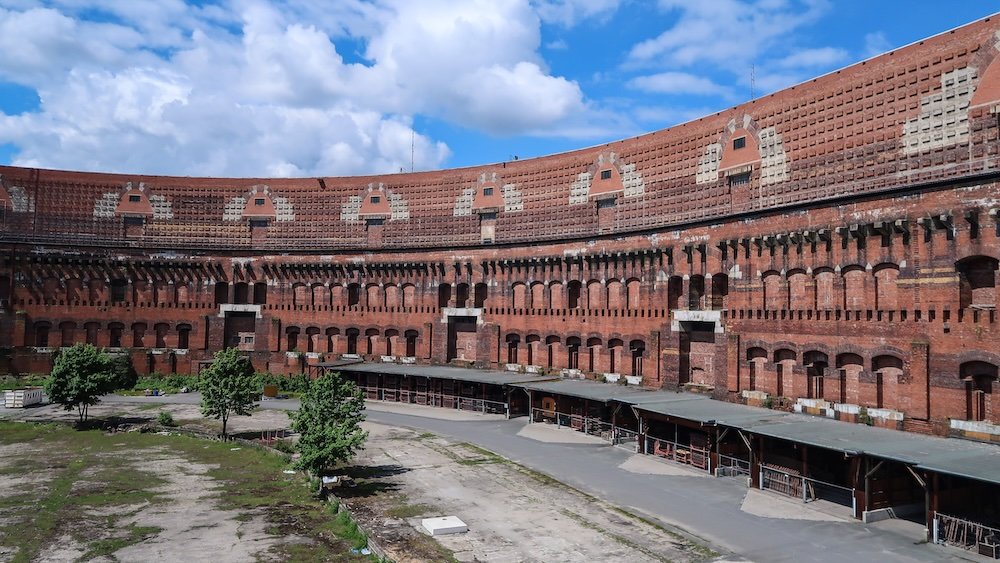
This requires a bus or tram ride to the southern edge of the city. Guided tours of the Rally Grounds cover a vast, exposed footprint. You will be walking across the actual overgrown, gravelly terraces of the Zeppelin Field, where the grit crunches loudly under your boots. A live guide here is highly recommended over just wandering alone; they physically map out where the colossal structures were meant to go and explain the manipulative architecture of the Congress Hall. Some extensive tours bundle a bus ride over to Room 600 in the Palace of Justice, the wood-paneled courtroom where the Nuremberg Trials took place.
- Room 600 is an active courtroom. Access is not guaranteed if a trial is in session.
- The rally grounds offer zero shade. In the summer, the sun beats down on the concrete and stone mercilessly. Bring water.
- This is heavy processing. You will not leave this tour in a chatty mood.
Tip: Combine this tour with an afternoon gap. Go sit in a park or grab a quiet meal. Do not stack this with another museum.
Food & Drink Tours
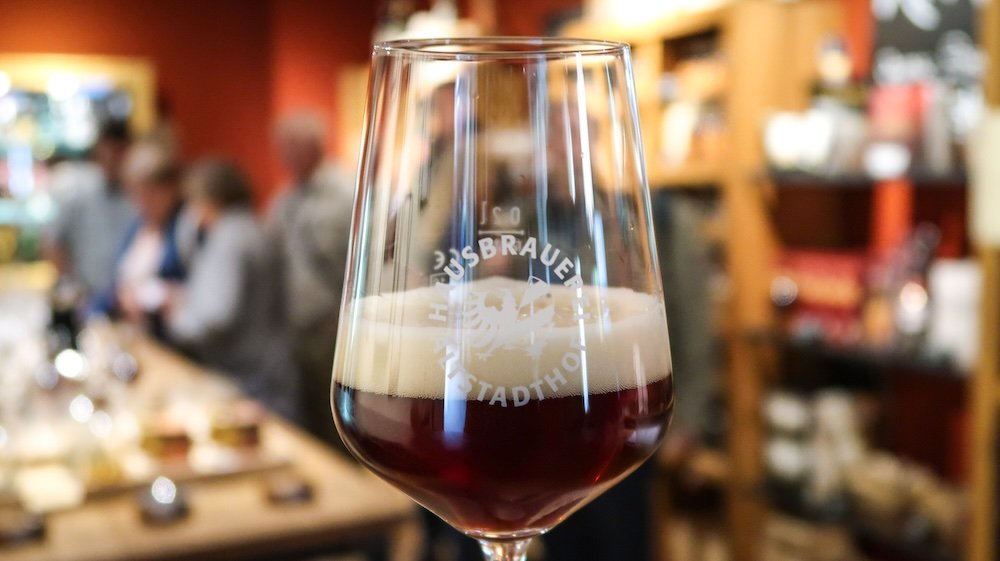
A culinary tour solves the menu-paralysis problem. Instead of guessing, you follow a local into cramped, humid sausage kitchens where the smell of rendered fat clings to your clothes. You’ll be handed paper plates of bratwurst, ending up with sticky fingers from the sharp mustard. A good guide takes you into the subterranean cellars to taste the Red Beer directly from the source, explaining the medieval brewing laws while you lean against the cold rock walls.
- Communicate dietary restrictions immediately upon booking, though know that Franconian food tours lean heavily on meat and gluten.
- Pace your intake. Eating four sausages at stop one means you will struggle at stop three.
- The Lebkuchen tasting will redefine your understanding of gingerbread. It’s soft, dense, and nothing like the brittle cookies back home.
Tip: Check the starting location. Arrive slightly hungry, but maybe drink a coffee beforehand to keep your energy up for the walking segments.
Castle & Old Town Segway/Bike Tours
If your feet are shot, mechanized tours are highly efficient. The hum of the Segway tires on the pavement and the wind rushing past your face as you glide up the inclines toward the castle walls is a relief. Bikes offer a wider operational range, allowing you to easily exit the old town perimeter and cruise along the dirt paths flanking the Pegnitz River. The physical vibration of the handlebars as you hit the cobblestone sections is noticeable, but it covers ground quickly.
- Segways require a mandatory 15-minute balance and braking orientation in a flat square before you set off.
- Biking within the pedestrian zones requires intense situational awareness. Tourists step backward without looking constantly.
- Helmets are provided. Wear them. Wet tram tracks are notorious for grabbing bike tires and throwing riders.
Tip: Assess your comfort with sharing the road. While there are bike lanes, you will be interacting with German vehicular traffic on the outer ring.
Seasonal & Custom Tours
If you arrive in December, you are here for the Christkindlesmarkt. A seasonal tour navigates the chaotic grid of wooden stalls. The intense smell of cinnamon and roasting almonds is overwhelming. A guide will drag you out of the main crush to show you the specific stalls selling authentic plum figures (Zwetschgenmännle) rather than imported junk. If you hate crowds, hire a private guide. They adapt on the fly, rerouting you down empty alleys when the main squares bottleneck.
- Market tours require serious cold-weather gear. Standing still while listening to a guide drops your core temperature rapidly.
- Private tours are expensive but allow you to control the exact pacing and skip anything that bores you.
- Evening tours dealing with the Night Watchman mythology offer great, moody lighting for photography.
Tip: Compare the focus. If you are an architecture nerd, ensure the private guide has specific credentials, not just generalized street knowledge.
Nuremberg Accommodations Guide: Hotels, Guesthouses and Hostels
Introduction: Where to Stay
Securing your basecamp in Nuremberg dictates your daily friction levels. Lodging options for nearly every budget and style exist, but geography is everything. You want to find things to do within a ten-minute walk, or you’ll burn too much time commuting. Here is the layout.
Old Town (Altstadt) Hotels
The Altstadt is the premium zone. You step out of your lobby directly onto the cobblestones. The physical reality of these historic buildings means you might feel the low rumble of early morning delivery trucks vibrating through the old windowpanes. Rooms are often oddly shaped, carved into spaces that were originally grain stores or merchant homes centuries ago. The convenience is unmatched—you can drop your daypack off mid-afternoon and be back out in the market square in three minutes.
- Verify elevator access. Hauling a 20-kilo suitcase up three flights of narrow, winding wooden stairs gets old fast.
- Air conditioning is not standard in historic buildings. If you visit in August, your room might be an oven.
- You pay a premium for the location, especially during the December markets or major trade fairs.
Tip: Look closely at the map. If your hotel is directly over a popular pub or near Weissgerbergasse, expect late-night street noise echoing off the stone facades.
Around the Main Station (Hauptbahnhof)
If you are using Nuremberg as a launchpad for day trips, the zone around the Nuremberg Hauptbahnhof is purely functional. You will hear the distant, high-pitched squeal of train brakes if you leave your window open. The aesthetic here is concrete and efficiency. Major international business chains dominate the blocks right across from the station entrance. The food options nearby lean heavily toward late-night kebab shops and station bakeries. It lacks charm, but you can roll out of bed and be on a high-speed ICE train in ten minutes flat.
- The walk into the old town takes exactly 10 minutes through the pedestrian tunnel under the old city walls.
- The area immediately around the station gets a bit gritty after dark. Just keep moving.
- These hotels cater to corporate travelers; the Wi-Fi and water pressure are usually highly reliable.
Tip: Request a room facing the inner courtyard rather than the street to completely kill the traffic and tram noise.
Mid-Range & Boutique Spots
Sitting just outside the medieval ring wall, you hit the residential neighborhoods. These guesthouses offer a much quieter night’s sleep. The sheets are crisp linen, the breakfast spreads usually feature homemade jams, and the owners actually have time to point out a non-touristy dinner spot on a paper map. You trade immediate convenience for neighborhood authenticity. You’ll be walking roughly 20 minutes to hit the castle, or relying on a quick U-Bahn ride.
- These spots have very limited room counts. Booking at the last minute usually means you get locked out.
- Parking is vastly easier here than navigating a rental car into the cramped, pedestrian-heavy Altstadt.
- Reception desks may not be staffed 24/7. Communicate your arrival time clearly to get your key code.
Tip: Check the proximity to the nearest U-Bahn station. A five-minute walk to the train offsets the distance from the center entirely.
Hostels & Budget Lodging
Backpackers have a few dedicated outposts here. The sensory reality of a 6-bed dorm is universal: the low hum of the mini-fridge, the metallic clank of cheap padlocks, and the smell of drying boots. The main youth hostel is actually housed inside the Imperial Castle complex. It requires a brutal uphill hike with your backpack, but sleeping inside 500-year-old walls at a budget price is a massive win. You trade privacy for extreme cost efficiency and a heavy communal vibe.
- Earplugs are non-negotiable gear. Wood floors amplify the sound of every late-night arrival.
- Bring your own towel, or expect to pay a few Euros to rent a scratchy one at the front desk.
- The communal kitchens get wrecked during peak dinner hours. Cook early or eat out.
Tip: Skim the recent reviews specifically checking for bedbug reports and hot water consistency. Those are the two metrics that matter.
Luxury & Upscale Choices
If you have the budget, there are a handful of properties that deliver serious comfort. We’re talking thick, plush carpets that absorb the impact on tired heels, heavy blackout curtains, and rain showers that run dangerously hot. Some sit right on the edge of the old town, offering expansive window views of the illuminated castle walls at night. The service is highly polished, usually anticipating your need for a dinner reservation or a cab before you even ask.
- The in-house restaurants at these tiers often serve elevated, modernized versions of Franconian classics.
- They feature solid spa facilities—a dry sauna after a freezing day at the Christmas market is a game-changer.
- Valet parking is standard, which removes the massive headache of finding a secure garage.
Tip: Snag these rooms on Friday or Saturday nights during the off-season. When the corporate expense accounts leave for the weekend, rates often drop.
Day Trips From Nuremberg, Germany
Why Day Trips?
Nuremberg’s rail connectivity is elite. You can base yourself here and systematically strike out into the Franconian countryside, hitting things to do beyond city walls without ever changing hotels. We found that utilizing the local VGN network tickets often saves you cash compared to buying straight DB regional fares. Here are the top day trip targets that justify the train ride.
1) Bamberg
Bamberg is an architectural heavy-hitter that escaped WWII intact. The visual hook is the Old Town Hall, impossibly balanced on an island in the middle of a rushing river. But the logistical reason to come here is the beer. Bamberg is the undisputed home of Rauchbier (smoked beer). Taking a long pull from a glass of Schlenkerla leaves an intense, smoky aftertaste in the back of your throat that essentially tastes like liquid bacon. The regional train ride from Nuremberg runs under an hour, making the commute trivial.
- The town is built on seven steep hills. Your quads will get a workout hiking up to the Michaelsberg Abbey.
- Buy a “Bamberger Hörnla” from a bakery. It looks like a croissant but has a much denser, buttery bite.
- The local breweries operate with fierce independence. Do not ask for a mass-market beer here.
Tip: Book your return train for later in the evening. The riverside beer gardens hit their peak atmosphere right as the sun goes down.
2) Rothenburg ob der Tauber
Rothenburg ob der Tauber is the textbook definition of a walled medieval city. You can literally walk the entire perimeter on the covered, wooden ramparts. The old wooden planks rattle under your boots, and the narrow viewing slits offer views down into incredibly well-maintained private gardens. It takes about 90 minutes to two hours by train from Nuremberg, requiring a few quick local transfers. It is undeniably overrun with tour groups during the day, but the physical preservation of the town is staggering.
- The town hall tower requires a climb up ladders so steep you have to use your hands. The view is worth the vertigo.
- Buy a Schneeballen (snowball). It’s strips of fried dough rolled into a ball and covered in powdered sugar that gets all over your jacket when you bite into it.
- The Night Watchman tour in the evening is famous. The guide plays heavily to the crowd, but it’s highly entertaining.
Tip: Explore the walls early. Arrive by 9 AM, walk the perimeter, and get out of the main square before the mega-buses roll in at 11 AM.
3) Würzburg
Würzburg trades the heavy timber architecture for sweeping Baroque facades and steep vineyards. The UNESCO-listed Residence Palace is massive; stepping inside, the sheer scale of the frescoed ceilings forces you to stop walking. Standing on the Alte Mainbrücke (Old Main Bridge) at sunset, leaning against the cold stone railing with a chilled glass of local Silvaner wine in your hand, is the definitive Würzburg experience. A direct ICE train blasts you from Nuremberg to Würzburg in just under an hour.
- The hike up to the Marienberg Fortress is steep and fully exposed to the sun. Sweat is guaranteed.
- Buy wine in the iconic “Bocksbeutel”—a flat, round bottle that feels substantial and heavy in your hand.
- The Residence requires you to join a guided tour to see the most impressive rooms. Check the English schedule.
Tip: Check the bridge crowds. You buy a glass of wine from the restaurant right on the bridgehead and walk out onto the span. You pay a deposit for the glass.
4) Franconian Switzerland (Fränkische Schweiz)
If you have had enough concrete and cathedrals, Franconian Switzerland is your outdoor pressure valve. This is an area of dense forests, jagged limestone pillars, and ruined castles. Hiking here means dealing with muddy boot treads and scrambling over sharp rocks. The air smells intensely of pine. Public transport here is fragmented; to actually execute a hike or visit the stalactites in the Devil’s Cave (Teufelshöhle), you really need to rent a car for the day to control your own logistics.
- The cave temperature is permanently cold. The damp air will cut right through a t-shirt.
- Stop in a random village for lunch. The density of tiny, family-owned microbreweries hidden in these valleys is astounding.
- The roads are incredibly twisty and narrow. Drive defensively.
Tip: Pack serious hiking footwear. The limestone trails become dangerously slick with even a hint of morning dew.
5) Regensburg
Regensburg survived the war and maintains a gritty, highly authentic medieval core. When you walk across the 12th-century Stone Bridge, you can hear the powerful rush of the Danube river churning through the stone arches directly under your feet. It’s a university town, so the heavy historical architecture is contrasted with a loud, aggressive bar and cafe scene. The Gothic cathedral dominates the skyline, its blackened spires looking incredibly sharp and intimidating. It takes roughly an hour by direct train from Nuremberg.
Bullet Points
- Eat at the Historische Wurstkuchl (Historic Sausage Kitchen) right next to the bridge. It’s smoky, cramped, and operates like a machine.
- The Thurn und Taxis Palace is still privately owned by the royal family, offering a glimpse into absurd, gilded wealth.
- Wander the narrow alleyways (Gassen) off the main squares. The shadows cast by the tall patrician houses keep them cool even in high summer.
Tip: Join a short boat ride to the Walhalla monument. It’s a literal replica of the Parthenon sitting on a hill overlooking the river, and the scale is wild.
Nuremberg Transportation Guide
Overview: Get Around Easily
You can walk the core of Nuremberg, but eventually, you will need to utilize the transit grid to hit the outer things to do itinerary items like the rally grounds. The German public transit system is ruthless about efficiency and ticketing. Here is how you move without getting fined.
Nuremberg Card & Public Transit
The Nürnberg Card is a physical plastic card (or digital scan) that unlocks 48 hours of frictionless movement. You swipe it, and you don’t worry about zone maps or ticket machines. Current prices hover around €33, and it covers all U-Bahn, S-Bahn, trams, and buses, plus entry into almost every museum that matters. If you plan to hit the Castle, the Documentation Center, and the Germanic National Museum, the math instantly works in your favor. If you get caught riding without a validated ticket, the plainclothes inspectors will issue a heavy fine on the spot. No excuses.
- Buy it at the tourist info office right across from the main train station upon arrival.
- It is valid for 48 consecutive hours from the first time you use it, not just two calendar days.
- If you only plan to walk the old town and drink beer, skip the card. It’s overkill.
Tip: Assess your energy levels. If you aren’t going to grind out at least two major paid museums a day, buy a simple “TagesTicket Plus” (day ticket) from a machine instead. It covers up to two adults, making it insanely economical for couples.
U-Bahn & S-Bahn
The U-Bahn (subway) pushes a blast of stale, warm air up the escalators as the trains pull into the station. It is fast, highly frequent, and the U2 line connects the airport to the main station in exactly 12 minutes. The S-Bahn (commuter rail) runs on the surface lines and is heavier hardware, used primarily to push out into the suburbs or start your day trips. The digital boards on the platforms are fiercely accurate down to the minute. If it says the train arrives in 2 minutes, be standing near the edge.
- Nuremberg runs driverless U-Bahn trains on the U2 and U3 lines. Stand at the very front window for a surreal tunnel view.
- Doors do not open automatically. Push the glowing button on the door when the train stops.
- During rush hour (7-9 AM, 4-6 PM), you will be packed shoulder-to-shoulder with commuters. Keep your backpack down.
Tip: Download the VGN app immediately. It calculates exact platform numbers and handles digital ticket purchases, saving you from fighting the physical kiosk screens in German.
Trams & Buses
Trams offer great surface-level recon. The rhythmic clatter of the steel wheels on the tracks is a constant background noise in the city. The tram network circles the old town walls, making it highly effective for bypassing the pedestrian bottlenecks in the center. Buses fill the dead zones. The suspension drops down to curb level at stops, making them highly accessible, but they are subject to surface traffic delays, particularly near the station intersections.
- Validate paper tickets in the small yellow stamping machines immediately upon boarding.
- Buses require you to push the stop button well in advance. Drivers will blow past a stop if no one signals.
- Nightliner buses run on weekends from 1 AM to 5 AM, saving you a long, cold walk back to the hotel.
Tip: Confirm the end destination illuminated on the front of the tram. Boarding the right line in the wrong direction is a classic rookie error.
Taxis & Ride-Sharing
You’ll spot the ranks of beige Mercedes taxis idling near the Hauptbahnhof. Sliding into the back seat, you smell the distinct scent of heavy leather and diesel. They run strictly on the meter. They are expensive, but if you are hauling heavy pelican cases of camera gear or arriving at 2 AM in the rain, the cost is entirely justified. Uber and FreeNow operate here, but they generally dispatch licensed taxi drivers anyway due to strict local transit laws.
- Do not try to hail a cab randomly on the street. Walk to a designated taxi stand (Taxistand).
- Ask “Karten?” (Cards?) before getting in. Most take credit cards now, but a broken machine is a common excuse.
- Tipping is a simple rounding up. If the fare is 13.50, hand them a 15 and say “Stimmt so” (Keep the change).
Tip: Avoid relying on taxis during the massive international toy fair (Spielwarenmesse). The queue at the station can take over an hour.
Biking & Walking
Nuremberg is fiercely walkable. However, the cobblestones are brutal. After six hours, you will feel the impact radiating up into your knees. Renting a bike via the VAG_Rad app system is cheap and effective for pushing out to the Wöhrder See lake. The physical vibration of the handlebars over the old town paving stones will rattle your teeth, so stick to the paved red bike lanes that parallel the main roads.
- Bike lanes are sacrosanct in Germany. If you are walking and step into a red lane without looking, a cyclist will absolutely yell at you.
- Crossing the pedestrian bridges over the Pegnitz is easiest on foot; cyclists are legally required to dismount there anyway.
- Pack blister tape. You will hit 20,000 steps a day easily.
Tip: Plot a route that avoids the massive incline up to the Burg if you are on a heavy, non-electric rental bike. You’ll end up pushing it halfway up.
| Activity / Route | Current Cost / Time | The Reality Check | Pro-Tip |
|---|---|---|---|
| Nuremberg Castle & Well | Around €8 / 2-3 Hrs | Worth it. The views are unbeatable, but skip the audio guide if you’re in a rush. | The cobblestone hike up Burgstraße will destroy weak knees. Take it slow. |
| Documentation Center | Varies (Reduced) / 1.5 Hrs | Skip if short on time. The massive main hall is currently closed for major remodeling. The interim exhibit is good, but smaller. | If you want the full WWII legal scale right now, pivot to Courtroom 600 at the Palace of Justice instead. |
| Underground Tunnels | Approx. €12 / 1 Hr | Best for history geeks. It gets freezing cold and the history of beer and bombs is fascinating. | Do not just show up. English tours sell out weeks in advance online. |
| Schöner Brunnen Ring | Free / 15 Mins | Skip it. It’s an overrated bottleneck. The fountain is pretty, but the line to touch the ring is a time sink. | Watch your pockets. Distracted tourists in a tight cluster attract pickpockets. |
| Day Trip to Bamberg | Under 1 Hr by train | Highly Recommended. The smoked beer and perfectly intact architecture are world-class. | Buy the VGN “TagesTicket Plus” if traveling as a pair; it covers the regional trains and local transit way cheaper than DB tickets. |
Nuremberg trip-planning questions answered: practical tips, local advice & first-time visitor FAQ
How many days do you really need in Nuremberg for a first visit?
You need three full days. Less than that, and you are just running from the Castle to the Documentation Center and leaving exhausted. Three days allows you to handle the massive medieval footprint, dedicate a half-day to the heavy WWII processing at the rally grounds, and still have enough runway to drink a red beer in a subterranean tunnel without checking your watch. If you want to push out to Bamberg or Rothenburg, bolt on a fourth day. Don’t try to cram a day trip into a 48-hour window.
Is Nuremberg worth visiting if I’m already going to Munich and other Bavarian cities?
Yes. Munich is polished and sprawling; Nuremberg is compact, fortified, and feels grittier. You get the towering imperial sandstone architecture slammed right up against the raw, unfiltered history of the 1930s. The regional pride here is fierce—they are Franconian, not Bavarian, and they will correct you on the distinction. The food profile is heavier, the beer is darker, and the layout of the walled city forces a totally different pace than the wide avenues of Munich.
What is the best time of year to visit Nuremberg and how bad is winter weather?
The operational sweet spot is late September through October. The air is crisp, you need a jacket, but you aren’t shivering. December is the peak draw for the Christkindlesmarkt, and you need to understand that Franconian winters are aggressively cold. The wind cuts right through denim. You will be dealing with near-freezing temperatures, grey skies, and shoulder-to-shoulder crowds holding steaming mugs of Glühwein just to retain body heat. Summer (July/August) means dealing with heavy tour bus traffic and the stark reality that old German buildings trap heat like an oven.
Is Nuremberg safe for solo travelers and are there any areas I should avoid?
It’s exceptionally safe. The Altstadt is heavily monitored, brightly lit, and populated late into the night. Your primary threat is pickpockets working the dense crowds near the Schöner Brunnen or the Christmas market stalls. The blocks immediately surrounding the Hauptbahnhof (main station) have the standard, slightly sketchy energy of any major European transit hub past midnight. You’ll see some loitering and hear some yelling, but if you keep a brisk pace and mind your own business, you won’t encounter any physical friction.
Should I buy the Nürnberg Card or just pay for attractions and tickets individually?
Run the math based on current prices. The card costs roughly €33 for 48 hours. If you pay a la carte for the Castle (around €8), the Germanic National Museum (around €8), and buy a two-day transit pass, you are already grazing the cost of the card. If you are a museum grinder who moves fast, buy it. If you plan to spend six hours sitting in a cafe in Weissgerbergasse and only look at churches (which are mostly free), the card is a complete waste of capital.
Can I visit Nuremberg as a day trip from Munich, or is it better to stay overnight?
You can execute a day trip—the ICE high-speed rail connects them in just over an hour. You’ll step off the train, hike the castle, eat a plate of bratwurst, see the Hauptmarkt, and get back on the train. It’s doable, but it’s a tactical strike, not an exploration. You miss the golden hour when the day-trippers evacuate and the floodlights hit the city walls. If you actually want to understand the city’s complex layers, secure a room and stay the night.
How should I split my time between the old town, the Documentation Center, and day trips?
Dedicate Day One entirely to the Altstadt interior. Burn your calories climbing the Castle, walk the walls, and navigate the underground tunnels. Day Two is your heavy history run: take the tram south to the Documentation Center (remembering the main hall is currently closed, so view the interim exhibit), walk the massive Zeppelin Field, and maybe hit the Palace of Justice. Day Three is your extraction day—hop on an early train to Bamberg to drink smoked beer, or route over to Würzburg to tackle the Baroque palaces before returning to Nuremberg for dinner.
Is Nuremberg a good destination for families with kids?
Yes, because the medieval infrastructure acts like a giant playground. The castle towers, the deep well demonstration, and the cavernous tunnels hold a kid’s attention far better than a standard art gallery. You can bribe them through an afternoon of walking with cheap, massive pretzels and sweet Lebkuchen. The major friction point for parents with strollers is the cobblestones; pushing small wheels over uneven rocks for five miles will vibrate your arms to a pulp. The heavy WWII sites are generally too bleak and complex for younger children.
How walkable is Nuremberg and do I need to use public transport much?
The interior within the medieval walls is completely walkable, and frankly, public transport inside the core is unnecessary. But understand that “walkable” here means dealing with significant vertical elevation toward the northern castle sector and brutal, uneven surfaces. Your feet will swell. You will only need to pull out a tram ticket or hit the U-Bahn when you want to punch out to the Rally Grounds, the Zoo, or if your hotel is situated a mile outside the city gates.
What should I know about food, vegetarian options, and eating on a budget in Nuremberg?
Traditional dining here is a protein-heavy gauntlet. If you eat a massive pork shoulder for lunch, you will need a nap. Budget travelers can survive purely on “Drei im Weckla” (three sausages in a bun) grabbed from takeaway windows, and bakery sandwiches. Vegetarians are no longer relegated to eating side salads. Almost every tavern now serves heavy Käsespätzle, and the city has a strong, modern cafe scene that caters heavily to plant-based diets. Just confirm that the potato salad doesn’t have bacon chunks hidden in it—it usually does.
Is Nuremberg’s Christmas market really that special, and how do I avoid the worst crowds?
It is genuinely spectacular, and it is genuinely chaotic. The smell of the spices and the visual impact of the red-and-white striped stalls against the gothic churches is unmatched. To survive the crush, avoid Friday and Saturday nights at all costs. The crowd density becomes physically immobilizing. Hit the stalls at 10 AM on a Tuesday if you actually want to look at the wooden crafts. Do your Glühwein drinking at the smaller, peripheral markets near the secondary churches to avoid getting elbowed.
How accessible is Nuremberg for travelers with limited mobility?
It’s a tough environment. The modern U-Bahn network is highly accessible with elevators and level boarding, but the historic surface is unforgiving. The Altstadt is paved with rough, historic stones that grab wheelchair casters and walking sticks. The hike to the castle is steep, and access to the towers or the underground cellars involves tight, winding staircases with zero elevator retrofitting. You can easily access the main squares and the modern museums, but the historic fortifications will present serious physical barriers.
What should I pack for a trip to Nuremberg in terms of clothes and gear?
Pack for utility, not fashion. You need thick-soled boots or heavy walking shoes. A thin sneaker sole will leave your feet bruised from the cobbles within 48 hours. Bring a highly compressible rain shell; Franconian weather shifts rapidly from sun to a cold drizzle. If you come in winter, pack heavy wool layers, gloves, and a hat—standing still on stone ground pulls the heat right out of your body. Bring a power bank; your phone battery will tank from constantly mapping out the winding side streets.
Are there any cultural norms or etiquette tips I should know before visiting Nuremberg?
Be direct. The service culture here is efficient, not overly conversational. Walk into a busy beer hall, locate an empty spot at a long wooden table, make eye contact, ask “Ist hier noch frei?” (Is this free?), and sit down. You will be sharing tables. When clinking beer glasses, look the person in the eye. At the Documentation Center and rally grounds, maintain a low volume. These are active sites of heavy historical reckoning, and treating them like a casual selfie backdrop is deeply frowned upon.
Nuremberg Travel Guide: Final Thoughts
Nuremberg forces you to engage with it physically. You can’t passively observe things to do that satisfy curious travelers; you have to climb the sandstone steps, brave the chill of the beer cellars, and chew through the heavy pork shoulders. Every day might blend cathedral visits with the raw wind whipping off the Pegnitz River.
The footprint here is a massive contradiction. You are standing on the glory of the Holy Roman Empire while looking at the exact architectural remnants of the Nazi propaganda machine. The sensory whiplash of walking out of the brutally stark Congress Hall and taking a tram back to a lively, cinnamon-scented medieval square is jarring. But that is exactly why this city demands your time.
Franconian hospitality hits you through the stomach. The beechwood smoke from the bratwurst grills will permeate your jacket, and the dense, sticky bite of real Lebkuchen will ruin the boxed stuff for you forever. Use the rail network to push out to Bamberg or Rothenburg to catch your breath, but expect to return to Nuremberg with tired legs and a heavy stomach.
Lock down your logistics early. Secure a bed in the Altstadt, buy your tunnel tickets weeks out, and wear boots that can handle the stones. If you approach Nuremberg with the right gear and respect for its complex layers, it will deliver one of the most substantial travel experiences in Europe.
This guide is also available in Spanish. [Lea la versión en castellano: Guía de viaje de Núremberg: 10 cosas para hacer en Núremberg, Alemania]