
Gasoline Alley was one of those places inside Heritage Park that quietly became much more substantial once Audrey and I walked through the doors.
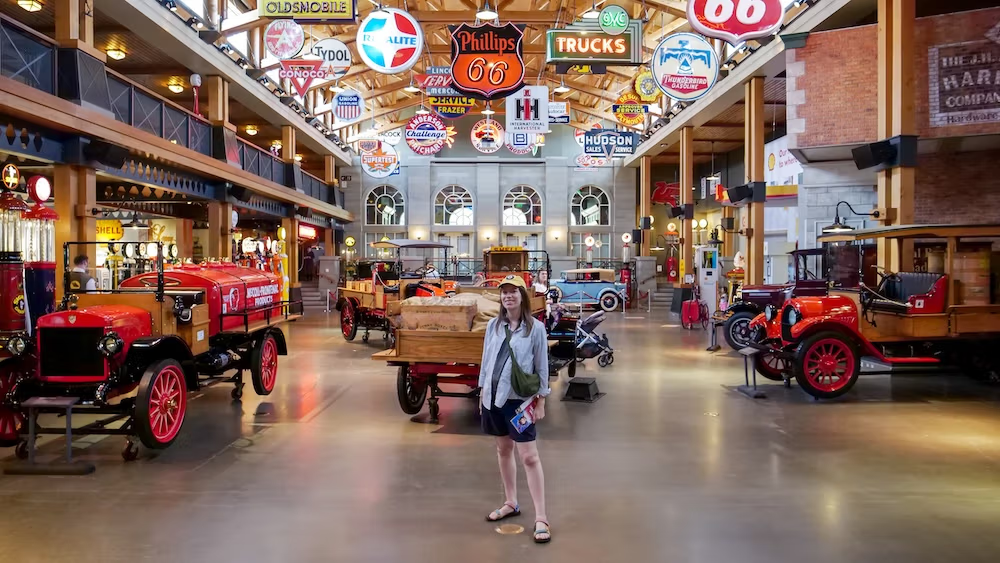
Obviously, there are old cars. Lots of them. Polished bodywork, huge wheels, gleaming chrome and machines from an era when nobody seemed terribly interested in making one vehicle look exactly like the next.
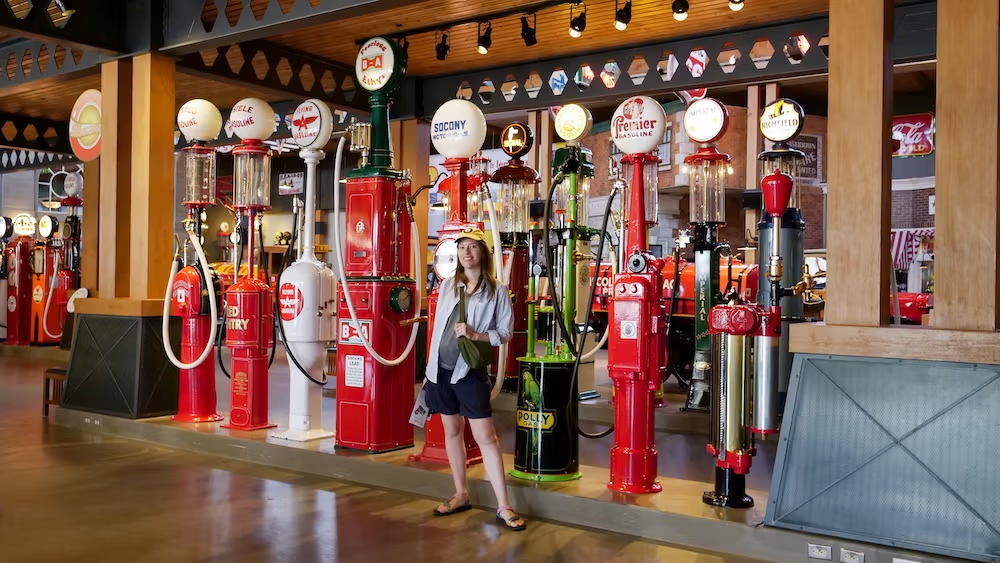
But when I looked back at our visit, our photos were almost as full of gasoline pumps, old signs and petroleum branding as they were cars. That is what makes Gasoline Alley more interesting than the name “car museum” would suggest. You are looking at the whole commercial world that grew around driving: vehicles, fuel, dealerships, advertising, service stations and the visual clutter of an industry discovering how much money could be made once everybody wanted an automobile.
If you are already visiting Heritage Park, Gasoline Alley is easy to treat as another box to tick before returning to the historical village. I wouldn’t approach it that way if cars, transportation history, old advertising or industrial design interest you even slightly.
There is more going on in here.
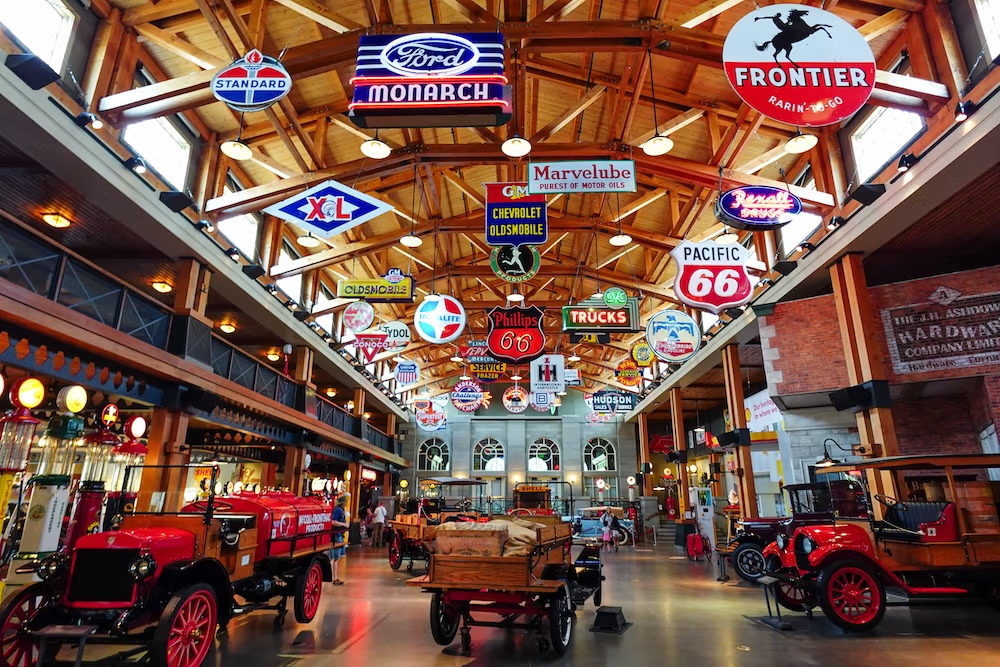
Gasoline Alley Is Really a Museum About the Rise of Motoring
The permanent collection broadly follows the automobile from around the turn of the 20th century through the 1950s.
That is a fascinating stretch of time because cars went from strange new machines sharing roads with horses to an ordinary part of North American life. The vehicles changed, but so did everything around them.
You suddenly needed places to buy gasoline. You needed pumps to dispense it, businesses to repair cars, dealers to sell them, parts departments to keep them running and advertising to convince you that one brand of fuel or automobile was somehow going to transform your existence.
Gasoline Alley puts those pieces together.
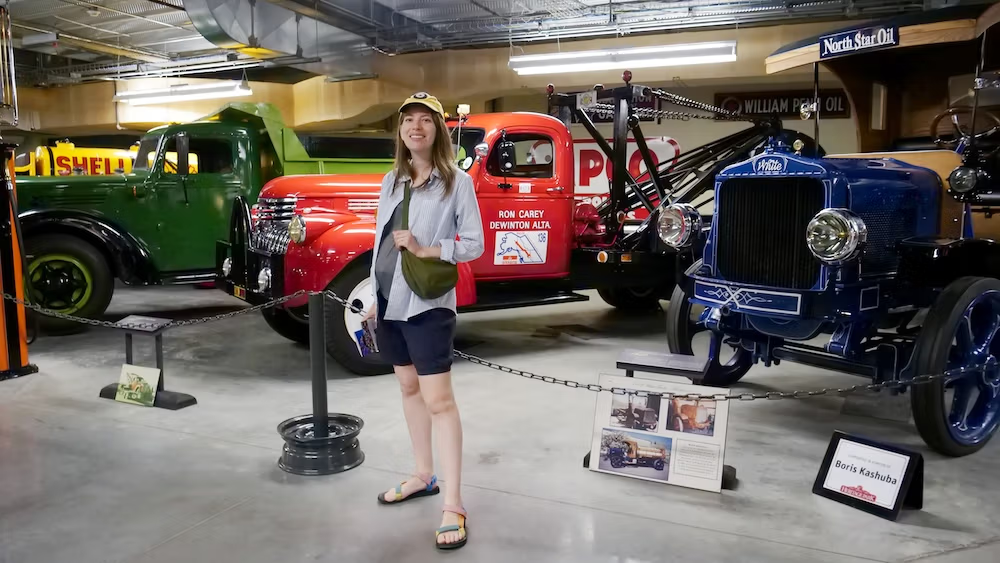
The collection grew from material assembled by Calgary businessman Ron Carey, including restored vehicles, gasoline pumps and other motoring artifacts. Heritage Park eventually incorporated the collection into Gasoline Alley when the museum opened in 2009 as part of its expansion into a destination with more year-round attractions.
That backstory explains why the museum feels unusually cohesive, but I wouldn’t go inside worrying about memorizing provenance. The fun is in looking around. The historical story starts revealing itself through the objects.
The Cars Grab You First
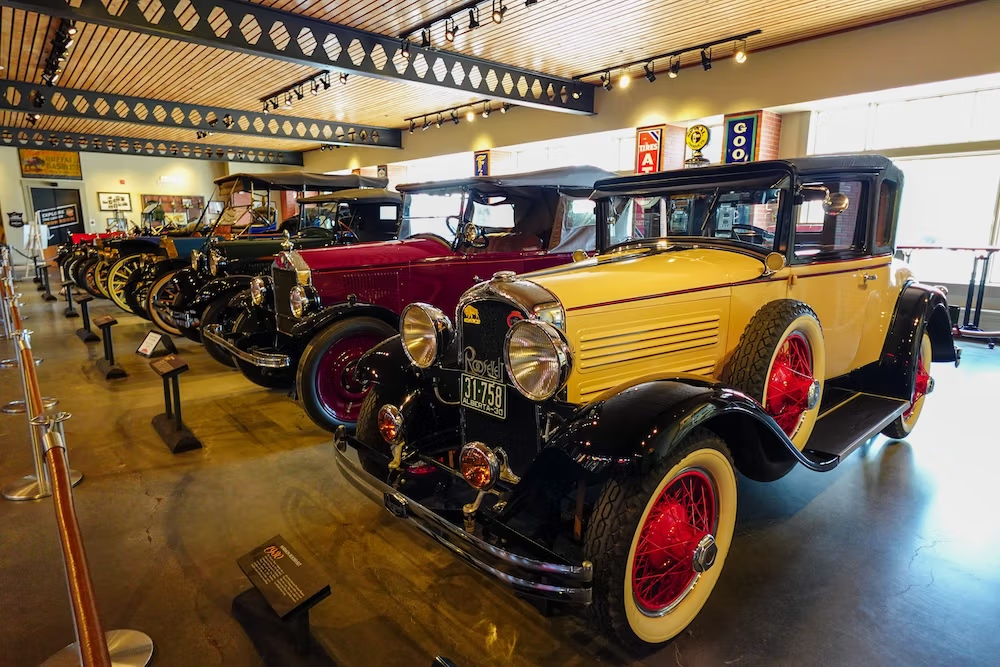
There is no getting around it: the vintage vehicles are the headline act.
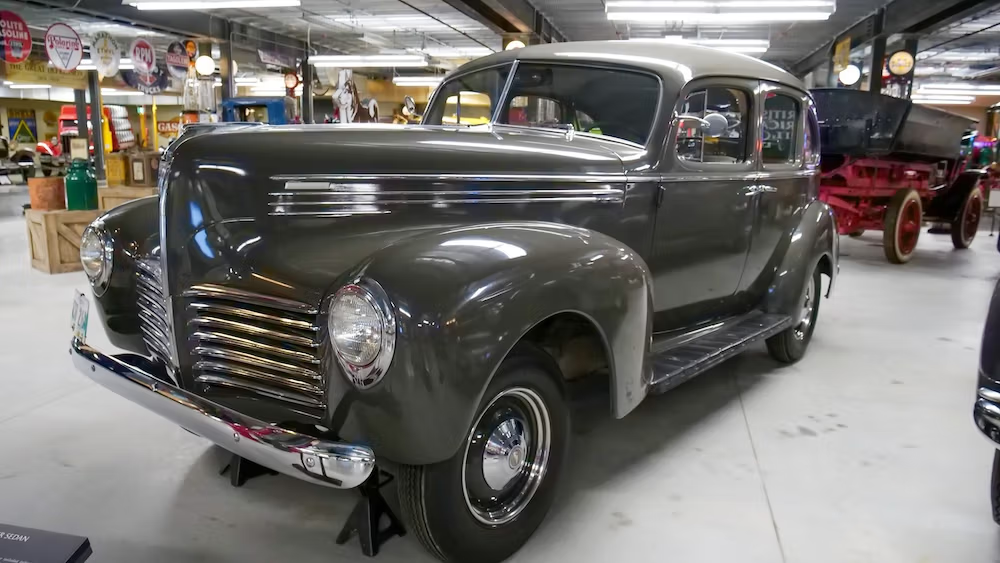
One thing I liked about walking through Gasoline Alley was the amount of visual change from one era to another. Early automobiles could still look as though somebody had taken a horse carriage, removed the horse and begun experimenting. A few decades later, the basic idea of what a car should look like had changed enormously.
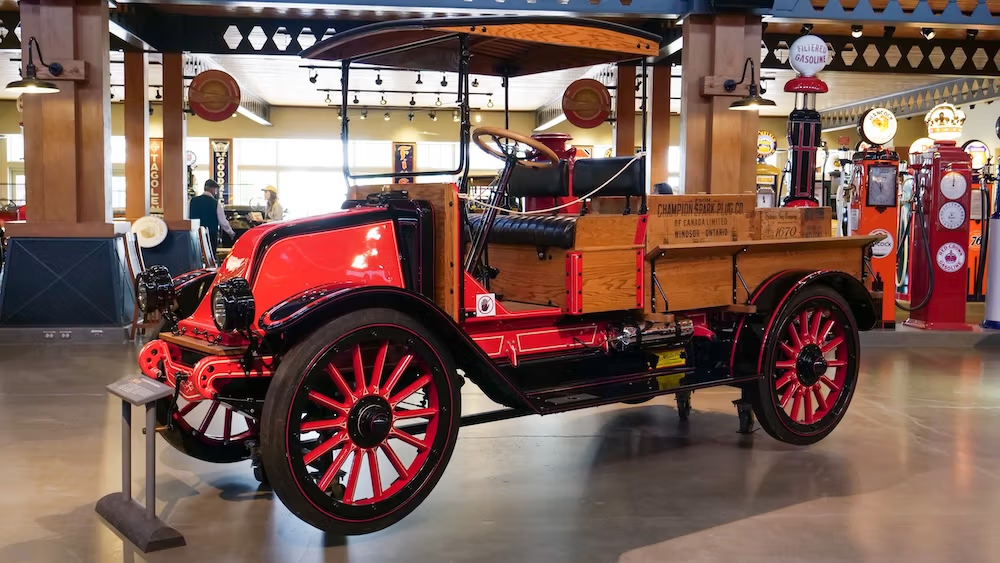
The collection includes examples such as a 1909 McIntyre Model M, one of the high-wheel machines from the “horseless carriage” era, and a 1911 Overland from the Brass Era.
Those names are useful for understanding the period, but Gasoline Alley doesn’t require you to turn into an amateur automotive historian before entering. You can simply walk around and notice what changed: wheel size, body shape, cabins, materials, proportions and the amount of machinery that once sat exposed.
Audrey and I spent plenty of time photographing the vehicles, but I actually think the museum gets better when you stop staring exclusively at the cars.
Because then you notice the pumps.
The Gas Pumps May Be the Most Distinctive Part of the Museum
Modern gas pumps are aggressively forgettable.
I cannot remember the last time I stood at one and thought, “Somebody really nailed the design on this thing.”
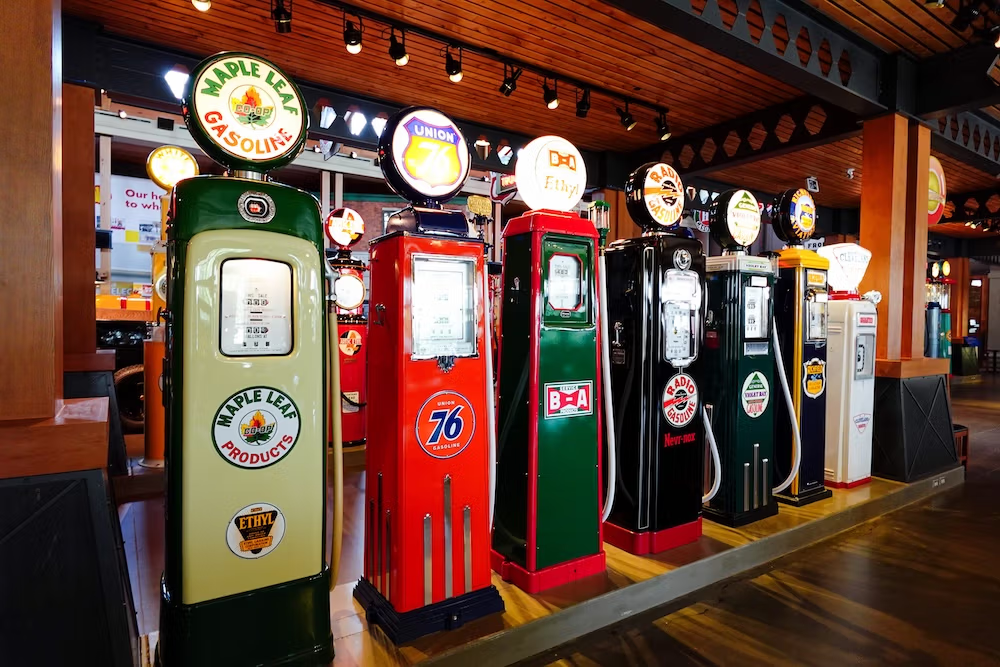
The pumps inside Gasoline Alley come from a different world. Many are colourful, tall, heavily branded and topped with globes or logos designed to be recognized from the road.
There are enough of them that they stop feeling like props parked beside vintage automobiles and become a major part of the collection in their own right.
That matters historically too. Cars are only useful if you can fuel them, and mass motoring required an entire network of places where drivers could reliably buy gasoline. Petroleum companies suddenly had motorists passing through communities with money to spend, and branding became part of the roadside landscape.
Gasoline Alley preserves a substantial collection of restored pumps alongside petroleum-company products and signs.
Heritage Park makes some very large promotional claims about the size of that collection. I don’t think you need any of them.
Stand among that many old pumps and the point is fairly obvious.
There are a lot.
Then Start Looking at the Signs
The signage was another reason Audrey and I kept stopping.
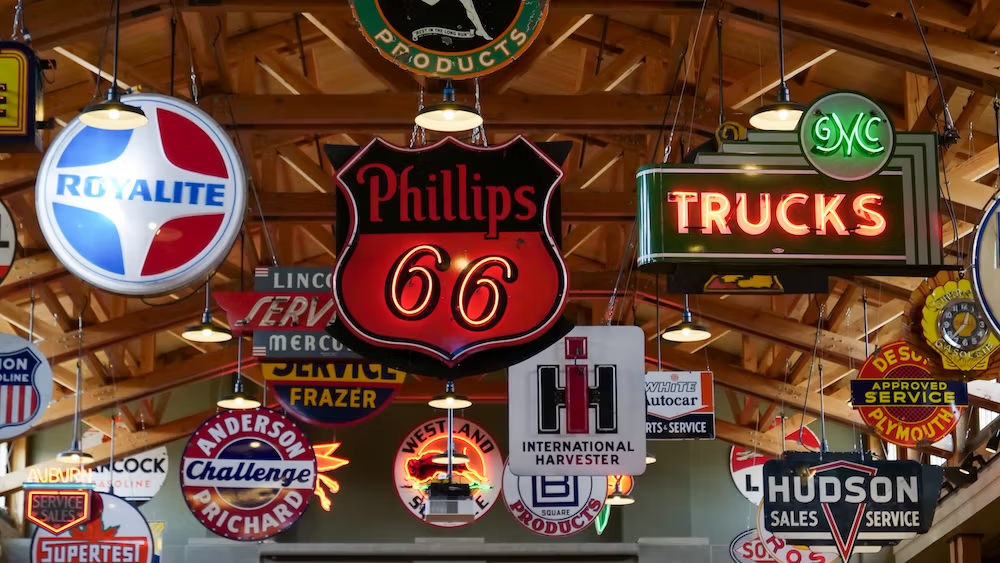
Old petroleum logos, painted advertising and colourful branding sit around the vehicles and pumps, and collectively they make the museum look completely different from a sterile room filled with machinery.
Some of the designs are wonderfully unsubtle. There was clearly no committee standing around saying, “Perhaps the branding needs another seven shades of beige.”
What interests me about those signs is that they show another side of motoring history. A car tells you something about engineering and transportation. Advertising tells you what companies thought people wanted from driving: freedom, modernity, convenience, status and adventure.
And, naturally, whichever gasoline happened to be for sale underneath the sign.
That gives Gasoline Alley another audience beyond people who can identify vintage automobiles at twenty paces. If you like graphic design, old advertising, commercial history or just photographing gloriously dated branding, there is plenty here to occupy you.
Where Calgary Fits Into the Motoring Story
Gasoline Alley is in Calgary, but it would be misleading to pretend every car, pump and sign inside has a specifically Calgary history.
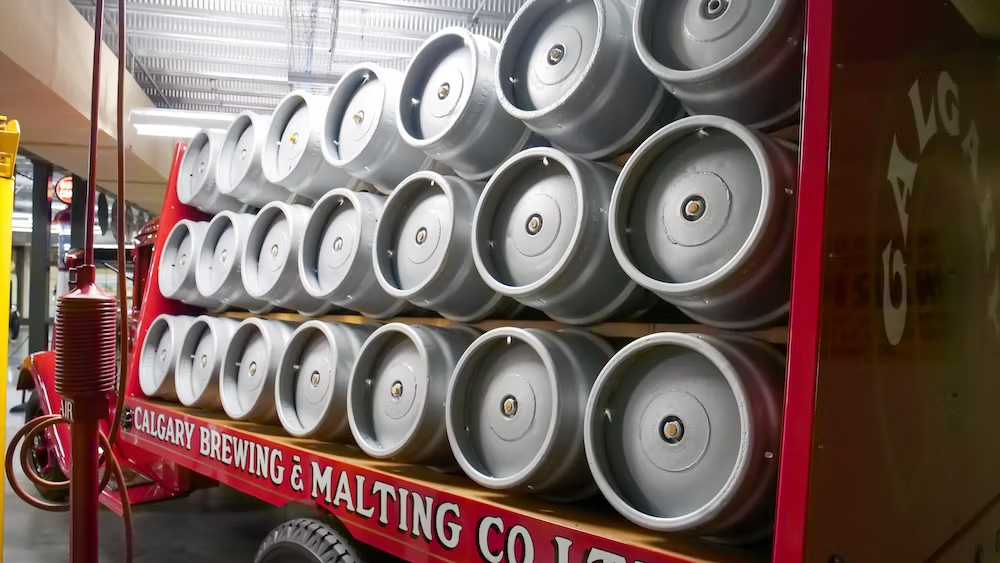
The collection mixes broader automotive history with Alberta stories and some genuinely local Calgary material.
One of the best examples is the recreated Gasoline Alley Showroom and Mezzanine, which draws on the history of General Supplies Limited.
The company was founded in Calgary in 1910 by electrical engineers and initially dealt in electrical and mechanical equipment used on public works around Alberta. During the First World War, the business acquired Calgary’s Chevrolet agency.
From there, its relationship with automobiles grew considerably. General Supplies moved into new and used vehicle sales, parts, servicing, final assembly and used-car reconditioning.
I like that story because it puts some flesh on the vague phrase “motoring history.” Cars did not simply appear on Calgary streets. Businesses had to change around them.
People needed somewhere to buy a vehicle, somebody to fix it, parts when it broke, fuel to keep it moving and eventually another customer willing to buy it used. An entire commercial system developed alongside the automobile.
That Calgary story sits inside a museum that also covers Alberta road travel and wider changes in motoring. It is a regional collection with specific local threads rather than a building full of artifacts that all originated in Calgary.
That distinction is worth keeping straight.
Why I Wouldn’t Rush Through Gasoline Alley
Gasoline Alley is the kind of museum that rewards different levels of attention. You can walk through, admire some beautiful cars, photograph the old pumps and continue with your Heritage Park day. There is nothing wrong with that.
But somebody genuinely interested in transportation history could spend far longer looking at the vehicles, reading displays and inspecting details that the rest of us would breeze past.
That is why I wouldn’t give you a rigid “allow exactly 60 minutes” recommendation. Audrey and I did not stand there running a stopwatch during our own visit, and pretending there is one correct duration would not help much anyway.
Ask a simpler question: Is Gasoline Alley one stop during your Heritage Park day, or is Gasoline Alley one of the reasons you want to visit Heritage Park?
If it is just one stop, keep enough momentum to enjoy the rest of the property. If vintage vehicles, petroliana, transportation history or old commercial design are genuinely your thing, give yourself room to wander. There is enough material here for your attention to disappear very quickly.
Heritage Park already has a habit of doing that to your schedule.
How Gasoline Alley Fits Into a Full Heritage Park Visit
Gasoline Alley is located in Heritage Plaza, before the main entrance gates to the Historical Village. Audrey and I visited it as one component of a much larger Heritage Park day, which is how most summer visitors are likely to encounter it.
If you want the broader Heritage Park experience but would rather not organize the trip from central Calgary yourself, there is also a current guided bus option that leaves from Calgary Tower, includes Heritage Park admission and gives you the afternoon to explore independently. Gasoline Alley Museum is included in the park access. We did not use this tour—we reached Heritage Park by Calgary Transit—but for somebody who mainly wants the transport handled for them, you can check current availability for the Heritage Park bus tour.
There are important limitations before treating that as the easy option for everybody: the current listing excludes children under five, wheelchair users and people with mobility impairments, and some included Heritage Park experiences remain seasonal.
If you are visiting independently during the main season, think of Gasoline Alley as one substantial part of the larger property rather than a separate excursion. Outside that season, though, the museum starts playing a very different role.
Gasoline Alley Doesn’t Follow Exactly the Same Season as Heritage Park
This is probably the most useful logistical distinction to understand.
Gasoline Alley is a year-round component of Heritage Park, while the Historical Village operates on a more seasonal calendar.
During the main 2026 summer season, Gasoline Alley is open daily from 10 a.m. to 5 p.m. and is included with regular Heritage Park admission.
Current full Heritage Park admission is $39.95 plus GST for adults aged 16–64, $31.95 plus GST for seniors 65+, and $27.95 plus GST for children aged 3–15. Children two and under enter free.
Those numbers make sense if you are going for the whole Heritage Park experience.
Outside certain full Historical Village operating days, however, Gasoline Alley can become a much cheaper standalone visit. Current 2026 museum-only admission on applicable dates is $14.95 plus GST for visitors 16 and older and $8.95 plus GST for children aged 3–15.
That is a completely different proposition from paying for a full day at Heritage Park.
There is also a currently listed Calgary sightseeing tour built specifically around this off-season setup. It combines a guided city bus tour with admission to Gasoline Alley Museum and a stop inside the collection rather than paying for the full Historical Village experience. The current product operates during the October-to-May shoulder season from Tuesday through Sunday and requires guests to be able to step into the vehicle; it is listed as unsuitable for people with mobility impairments. If that combination matches your trip better, you can see current availability for the Calgary tour with Gasoline Alley Museum.
The Historical Village eventually closes for winter while Gasoline Alley continues under its own off-season schedule, so don’t interpret “year-round” as “the exact same hours every day of the year.”
Check the current Heritage Park admission and operating information before making a dedicated trip, particularly in the shoulder season.
A Short Gasoline Alley Visit Has a Useful Parking Loophole
If you are driving, there is another distinction worth knowing.
Heritage Park’s current daytime parking rate is $13 for the first seven hours between 6 a.m. and 6 p.m. That is straightforward enough if you are settling in for most of a Heritage Park day.
Gasoline Alley visitors can currently get up to 90 minutes of complimentary parking.
The catch is important: you still have to register your licence plate at the pay machine.
It would be unfortunate to discover that “free parking” had somehow become the most expensive exhibit of the day.
If Gasoline Alley is your only stop and you expect to stay within that 90-minute window, the complimentary period makes a short museum visit much more attractive. If you know you are the type who will read every vehicle placard and photograph every pump, I would not build an itinerary around beating the parking clock.
The current Heritage Park parking information is worth checking before you go because rates and conditions can change.
Accessibility Is Easier Here Than in Parts of the Historical Village
Gasoline Alley itself is listed as wheelchair accessible and has washroom facilities.
That matters because the experience is quite different from wandering Heritage Park’s outdoor historical areas, where old buildings and uneven terrain can introduce more complications.
Audrey and I did not assess the museum from a mobility-access perspective, so I would not pretend our walk through the building tells you what somebody using a wheelchair or other mobility aid will experience.
One practical detail does apply across Heritage Park: wheelchairs, mobility scooters, strollers and wagons are not currently available to rent on-site. If somebody in your group needs one, arrange it beforehand rather than assuming you can pick one up after arriving.
Who Should Make Gasoline Alley a Priority?
For antique-car and transportation enthusiasts, this one is easy.
Gasoline Alley deserves proper time.
The same goes for anybody interested in petroliana, vintage trucks, fuel pumps or the early commercial world surrounding car ownership.
But I would not limit it to that crowd.
I found the surrounding material almost as important as the vehicles themselves. The signs, colours, old petroleum branding and service-station equipment keep the museum visually lively and give you a way into the history even if vehicle specifications are not your idea of a thrilling afternoon.
On the other hand, Heritage Park is huge. If your time is tight and antique cars, advertising and transportation history leave you stone cold, I would not force Gasoline Alley to the top of your list simply because it is included.
That is the advantage of understanding what is actually inside before you go.
For Audrey and me, Gasoline Alley added a completely different layer to our Heritage Park day. We went from historical buildings and old-fashioned transportation into this bright indoor world of polished vehicles, fuel pumps and advertising, and it felt like another branch of the same larger story about how Western Canadian life changed.
The cars will probably get you through the door.
Just don’t spend the whole visit looking only at the cars.
Frequently Asked Questions
What can you see inside Gasoline Alley Museum?
Gasoline Alley combines restored vintage cars and trucks with historic gasoline pumps, petroleum-company branding, old advertising and other motoring artifacts. The collection broadly follows the rise of the automobile from around the turn of the 20th century through the 1950s.
Is Gasoline Alley Museum included with Heritage Park admission?
During the main Historical Village season, Gasoline Alley is included with regular Heritage Park admission. On applicable dates outside full Historical Village operation, museum-only admission is also offered, so the ticket setup depends on when you visit.
Can you visit Gasoline Alley without doing the full Historical Village?
Yes, on applicable dates Gasoline Alley operates as a standalone museum even when the Historical Village is not running. It is a year-round component of Heritage Park, although its exact operating days and hours change seasonally.
How much time should I allow for Gasoline Alley Museum?
I would base the visit on your interest rather than an exact number. A casual Heritage Park visitor can move through reasonably efficiently, while someone interested in vintage vehicles, petroliana, advertising or transportation history can easily give the collection much more attention.
Is parking free for Gasoline Alley Museum?
Heritage Park normally charges for daytime parking, but Gasoline Alley visitors can currently use up to 90 minutes of complimentary parking. You still need to register your licence plate at the pay machine, and the current conditions are worth checking before your visit.
Is Gasoline Alley Museum wheelchair accessible?
Gasoline Alley is listed as wheelchair accessible and has washroom facilities. Audrey and I did not assess the museum from a mobility-access perspective, and Heritage Park currently does not rent wheelchairs, mobility scooters, strollers or wagons on-site.
This guide is also available in Spanish. [Leé la versión en castellano: Guía de Gasoline Alley Museum: autos, surtidores e historia automovilística de Calgary]
This article contains affiliate links. If you book through one of these links, I may earn a commission at no extra cost to you.