
Edinburgh is one of my favourite cities in Europe. Not “favourite” in the lazy travel-writer sense where every second city receives the same compliment. I genuinely love the place.
My first visit was several years earlier for Hogmanay, where I experienced the most memorable New Year’s celebration of my life. When the opportunity came to return during early autumn, I did not require much convincing.
This time, Audrey and I were travelling with our friend Rob, and a rather large percentage of the visit revolved around eating and drinking. We joined a walking food tour along the Royal Mile, descended into the original Edinburgh Gin Distillery and attempted to create respectable bottles of Scotch whisky at The Scotch Whisky Experience.
I use the word “attempted” deliberately.
My whisky-blending confidence was considerably stronger than my whisky-blending ability.
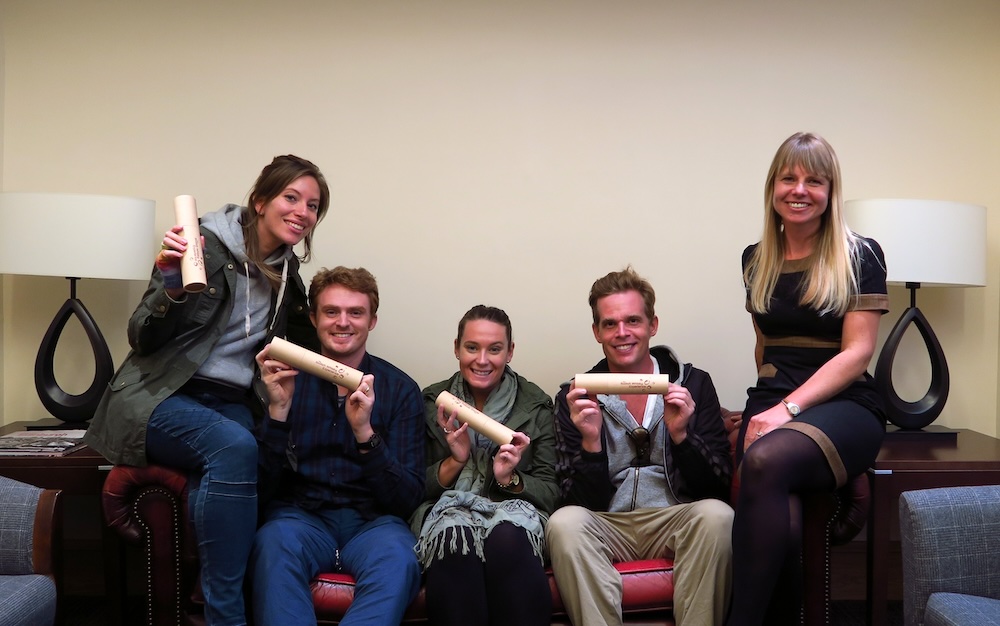
This is not a generic roundup assembled by reading three booking pages and pretending I emerged from the process smelling faintly of peat smoke. We personally took all three experiences. We photographed them, filmed them and wrote about them at the time.
Audrey also documented each tour from her own perspective, which turns out to be useful because Audrey and I are two separate people. We did not always order the same thing, notice the same details or agree about which flavour deserved another pour.
There is one substantial wrinkle: we visited in 2016.
Edinburgh’s food-and-drink landscape has not been frozen in amber waiting for me to update this article. Eat Walk Edinburgh now follows a different format. Edinburgh Gin has moved to an entirely new distillery. The Scotch Whisky Experience remains beside the castle, but the private blending session we took is not one of its standard public tours today.
I have therefore separated what genuinely happened to us from what visitors can book now. The stories, photographs and videos preserve our experience. The planning sections explain what has changed so you do not arrive at an old address demanding access to a leather-lined gin cave that no longer belongs to the tour.

Edinburgh is world renowned for its medieval Old Town, neoclassical buildings and hulking castle. It is also an excellent city for travellers who prefer learning through their stomachs.
Traditional pubs, specialist food shops, whisky rooms and gin experiences are packed into a compact centre. Between them, you get closes, crooked staircases, wet cobblestones, dark stone buildings and hills that look perfectly reasonable on Google Maps until your calves begin filing a formal complaint.
Our Three Edinburgh Food and Drink Tours at a Glance
| Experience | What We Did | Best Suited To | What Has Changed |
|---|---|---|---|
| Eat Walk Edinburgh | Three-hour Canongate food walk with shops, tastings, lunch, beer and cheese | First-time visitors wanting the broadest introduction to Edinburgh food | The present tour uses a different collection of pubs and restaurants across central Edinburgh |
| Edinburgh Gin Distillery | History, botanicals and guided tasting inside the former Rutland Place basement distillery | Gin beginners, cocktail drinkers and people who need entertainment with their alcohol education | The distillery has moved to The Arches on East Market Street |
| The Scotch Whisky Experience | Private sensory test, tasting and Blend Your Own session followed by the whisky collection | Whisky beginners, enthusiasts and couples who enjoy unnecessary competition | The standard public tours differ from our private blending session |
If I had to reduce the decision to one sentence: choose the food tour for variety, the gin experience for atmosphere and the whisky experience for the most structured introduction to a Scottish spirit.

Eat Walk Edinburgh Food Tour
Let’s start with food. Always a sensible place to begin.
With Eat Walk Edinburgh, we joined the Canongate three-hour tour covering a decent stretch of the lower Royal Mile. We popped in and out of cafés, restaurants, specialist shops and pubs while spending the gaps between tastings meandering through closes—Scots for the narrow alleyways and passages peeling away from the main streets.
The walking was important.
If there is one thing we are good at, it is eating. A few streets between courses allowed us to pretend that we were burning off the previous stop rather than merely creating enough internal space for the next one.
Haggis for Breakfast at Itchycoo
Our tour began at Itchycoo Bar & Kitchen inside the Radisson Blu on the Royal Mile. We met our guide, Julie, received an introduction to the day and were soon facing mini haggis bites alongside grilled mushroom and tomato skewers.
It was around ten in the morning.
Audrey paired hers with a virgin Bloody Mary because she had decided that making it genuinely bloody at that hour would be a little aggressive. Rob and I showed less restraint around the haggis and happily took responsibility for Audrey’s share.
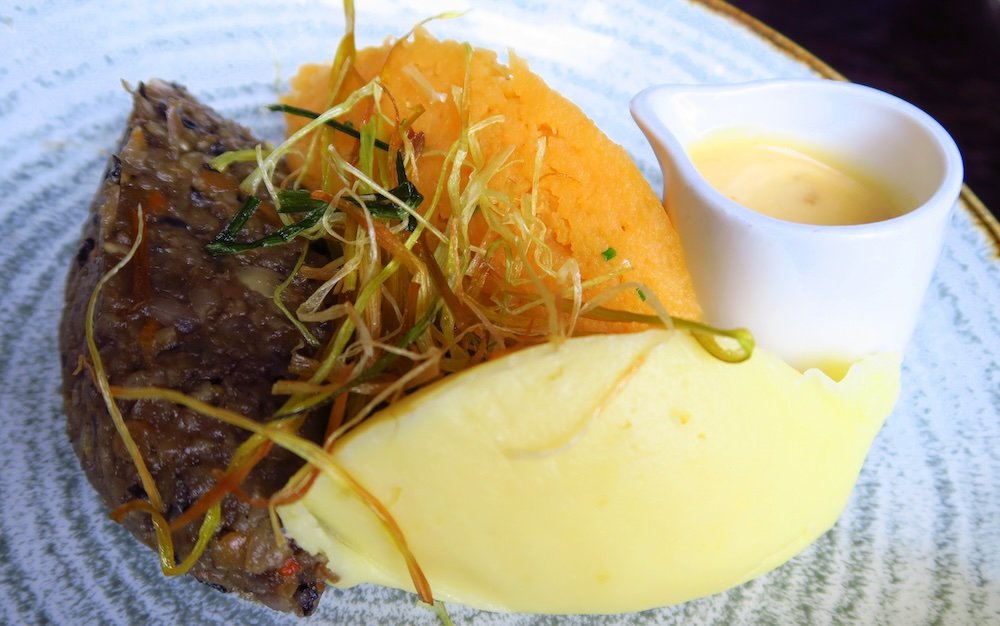
Rob compared the flavour to Thanksgiving stuffing. I had first tried haggis during our earlier Scotland trip and liked it immediately, so eating it again—even at breakfast—did not feel remotely heroic.
It was rich, savoury and properly Scottish. More importantly, it was food. I was on board.
Once we began walking, Julie gave us earpieces so we could hear her above the Royal Mile traffic and avoid losing the group whenever one of us stopped to film a doorway, church or suspiciously photogenic pile of fudge.
The equipment made us look less like food tourists and more like extremely conspicuous intelligence agents whose entire operation had been compromised by three cameras and a haggis slider.
Scottish Producers at Cranachan & Crowdie
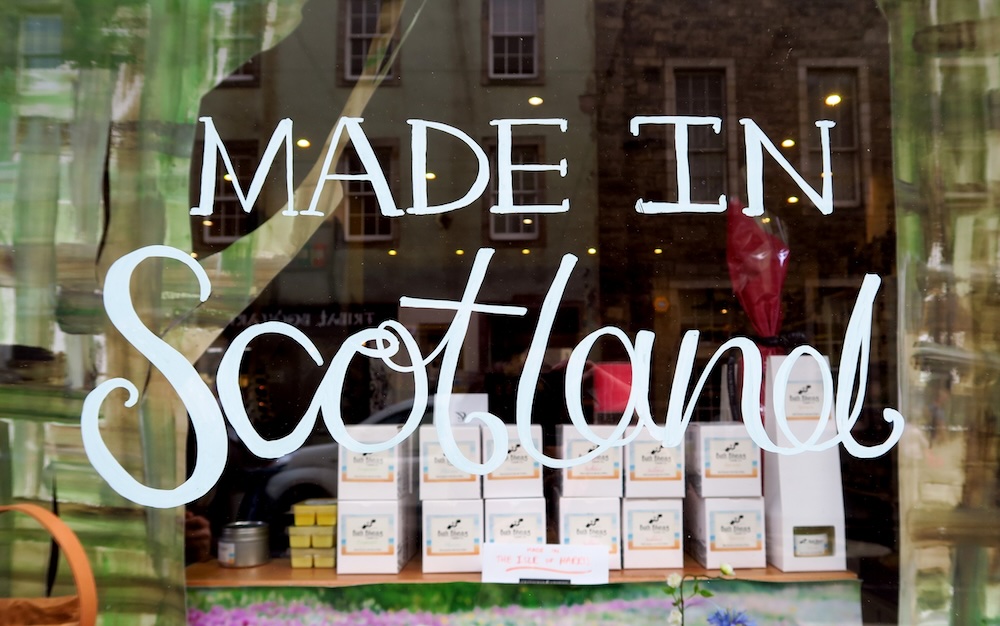
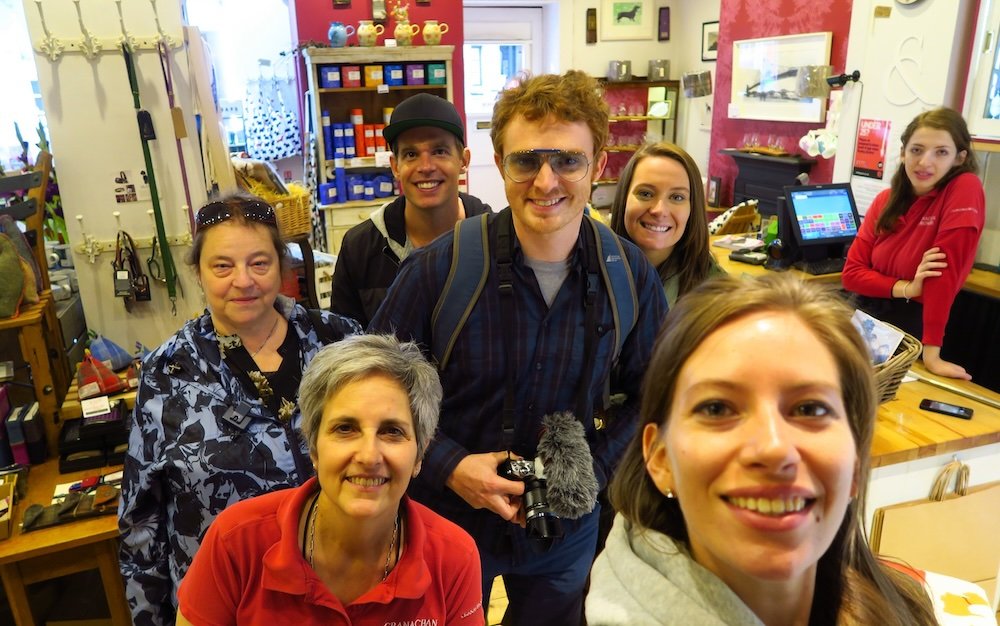
The next stop was Cranachan & Crowdie, a compact shop that worked with hundreds of suppliers from across Scotland. Shelves were loaded with cheeses, preserves, chocolates, teas, biscuits and the sort of edible souvenirs that are far more useful than another tartan keychain destined to spend fifteen years inside a drawer.
We sampled venison with Ooft! sauce, which lived up to its name by delivering a respectable kick. The venison was slightly gamey without being overpowering and reminded me a little of pepperoni.
Then came one of the strangest combinations of the tour: Orkney smoked cheddar dipped into whisky-infused chocolate.
Cheese and chocolate do not immediately sound like natural roommates. On paper, the pairing reads like something invented by a person who had been locked overnight in a gift shop and forced to survive on whatever remained.
It worked.
The smoky, salty cheese and sweet chocolate bounced off one another surprisingly well. I went back for seconds, which is usually the moment when my skepticism officially resigns.
This stop captured what I liked most about the food walk. We were not merely being handed anonymous samples while someone shouted the ingredients at us. We met people who could explain where products came from, why they stocked them and how small Scottish producers fitted into Edinburgh’s food scene.
That conversation matters. Food tastes better when it comes attached to an actual person and a place rather than a laminated tasting card.
The Fudge House and an Unnecessarily Difficult Decision
Our next challenge involved considerably less cultural courage and considerably more sugar.
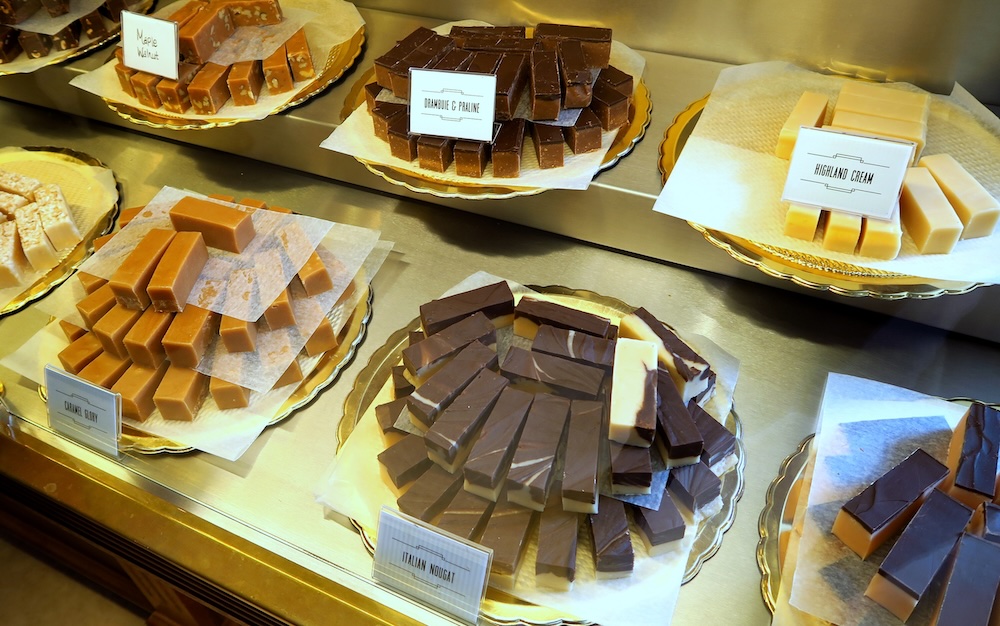
The Fudge House specialized in handmade fudge and had more than twenty flavours lined up behind the counter. Audrey gravitated toward peppermint chocolate. I was especially enthusiastic about the Scottish Highland cream fudge, which was creamy, rich and sweet enough to make moderation feel like a personal insult.
As part of the tour, we could choose one bar to take with us.
One.
Selecting a single flavour may have been the hardest decision I made all week. Some people visit Edinburgh and wrestle with profound questions about history, politics and identity. I stood in front of a fudge counter experiencing a moral crisis over whether to choose Highland cream.
Campbeltown Loch Whisky at Cadenhead’s
After the fudge, we shifted from sweet food to Scotch whisky at Cadenhead’s. We did not conduct a full tasting there, but we learned about the independent bottler and left with a small bottle of Campbeltown Loch blended Scotch.
By this point, my red hair had been attracting comments around Scotland. I was repeatedly told that I looked Scottish.
This was flattering and almost convincing, provided I kept my mouth shut and did not expose the Canadian accent.
The illusion usually survived until I opened with something culturally sophisticated like, “Oh yeah, that’s pretty good, eh?”
Scottish-Scandinavian Lunch at Hemma
We had already eaten haggis, venison, whisky chocolate, cheese and fudge.
Naturally, it was now time for lunch.
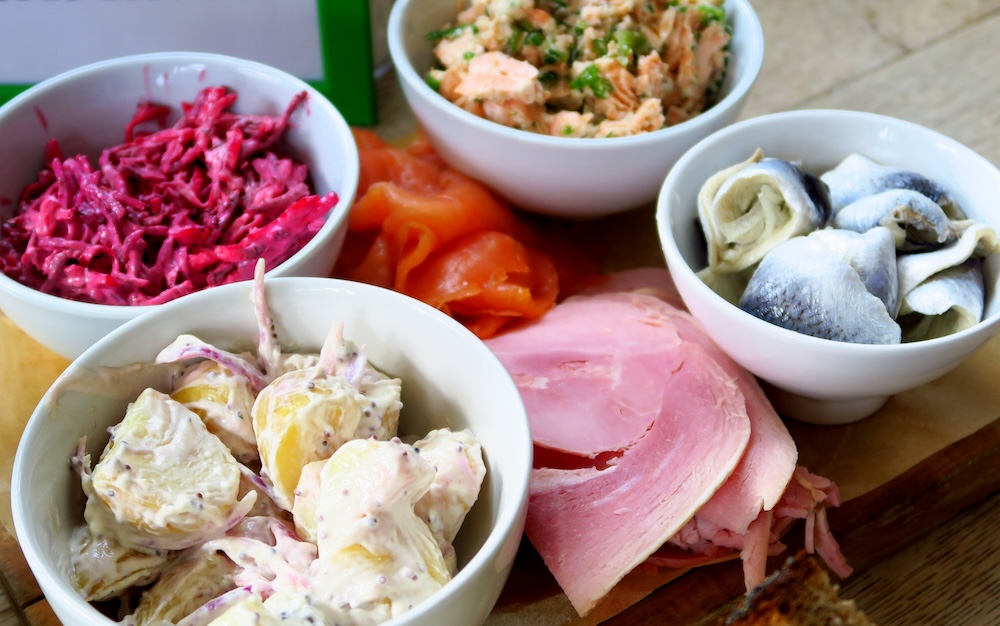
Hemma had a warm, colourful atmosphere and served us a Scottish-Scandinavian smörgåsbord. The spread included smoked salmon, pickled herring, beetroot salad, potato salad, smoked ham, eggs, bread and butter.
This was not one of those elegant tasting plates where three decorative leaves arrive on a slab of slate and the waiter explains that hunger is part of the concept. It was a proper spread.
Audrey’s favourite combination was the herring with beetroot salad, which was saying something because she also enjoyed both salmon preparations. We assumed this substantial lunch represented the conclusion of the tour.
So we ate accordingly.
That assumption proved costly.
Beer and Cheese at Holyrood 9A
After finishing lunch and reaching the stuffed-beyond-belief phase, we learned there was still beer and cheese ahead at Holyrood 9A.
I had stopped being hungry several venues earlier. Hunger was no longer relevant. We had crossed into competitive eating territory without anyone bothering to issue numbers or arrange an ambulance.
I sampled a dark porter with a slight chilli infusion. It had some of the roasted character of a Guinness, with just enough heat to make itself known, and tasted surprisingly refreshing after the walking.
The tour concluded over Scottish cheese and drinks, with the group free to remain at the pub afterward. Nobody was being hurried toward the door, although by that point I was more likely to be rolled out than leave under my own power.
I loved the blend of classic Scottish flavours, modern interpretations and Scottish-Scandinavian fusion. The food was memorable, but my favourite part was speaking with the people behind the businesses.
Talking one on one with someone passionate about what they produce makes you appreciate what you are eating rather than merely inhaling another sample and shuffling toward the next stop.
The hardest part of the tour was self-control. The food was simply that good.
My wardrobe was not loose enough to accommodate all of the additional calories.
Audrey documented the stops and her own favourite tastings in her Eat Walk Edinburgh food tour account.
In this video you can watch our complete Eat Walk Edinburgh experience.
What Eat Walk Edinburgh Is Like Now
Our Canongate itinerary was the route we experienced in 2016. Do not arrive expecting the same sequence of shops, restaurants or dishes. Food tours rotate venues. Businesses change. Menus evolve. Fudge, mercifully, remains fudge.
The current Edinburgh experience is still roughly three hours, but it is presented as a progressive meal across several locally owned pubs and restaurants in the Old and New Towns. The meeting area is near St Giles’ Cathedral, and only part of the experience is spent walking. Most of your time goes toward sitting, eating, drinking and listening to stories—which is exactly how a food tour should allocate its resources.
- Food: Expect the current tour to add up to a substantial meal rather than a procession of toothpick-sized samples.
- Drinks: Standard, alcohol-free and whisky-upgrade arrangements may be available when booking.
- Venues: Restaurants and dishes rotate. Treat our route as a historical account, not a scavenger hunt you are required to recreate.
- Dietary needs: Tell the operator before booking. Waiting until a plate of haggis reaches the table is not a strategy.
- Mobility: Edinburgh comes with slopes, cobbles and historic buildings. Discuss your specific needs directly with the operator.
For the latest route and direct availability, consult the official Eat Walk Tours Edinburgh page.
If Eat Walk is unavailable on your dates, another currently bookable option is this small-group Edinburgh food tour with haggis, Scotch and traditional dishes. It is a different operator and a different experience from the one we took, but it solves the same basic problem: how to taste several Scottish foods without spending half your trip researching menus.

Our Edinburgh Gin Distillery Tour
I’m going to start by being honest.
Not all vineyard and distillery tours are interesting.
I have suffered through tours where a guide droned on about production quotas, fermentation temperatures and stainless-steel tanks while the audience slowly lost the will to drink.
Facts are useful. Ninety consecutive minutes of facts delivered in the vocal rhythm of an appliance manual are less useful.
Fortunately, our Edinburgh Gin Distillery tour was nothing like that.
Audrey approached it from a different starting point than I did. Until that Scotland trip, she had never really drunk gin. She tried her first proper gin and tonic at an event near Inverness, liked it far more than expected and arrived in Edinburgh as a fresh convert with the zeal of someone who had discovered an entire alcoholic category had been unfairly withheld from her.
Downstairs to the Original Rutland Place Distillery
Our visit took place in the former Edinburgh Gin Distillery at Rutland Place in the West End. We descended underground into a dimly lit space with leather seating and were handed gin and tonics almost immediately.
That was a promising opening.
The drink came with orange peel, which added a bright citrus aroma and provided a gentler introduction before we began tackling gin neat.
This is a teaching method I support. Lecture briefly. Provide drink. Continue.
Abby, Edinburgh’s Gin History and the Botanicals
Our guide, Abby, entertained us with dark stories connected to Edinburgh’s historic gin craze. Instead of presenting a dry chronology, she told stories about the city, the people drinking early gin and the alarming quality of what passed for gin at the time.
The tales involved polluted water, uncontrolled drunkenness, murder and one particularly grim rumour about a dead cat improving the flavour of a barrel.
It was not a ringing endorsement of early distilling standards.
We then turned to botanicals. Juniper gives gin its defining character, while ingredients such as coriander and angelica root help construct the aromas and flavours around it. Mason jars were passed around so we could smell different botanicals and attempt to identify them.
This sensory exercise was engaging enough that Audrey briefly believed it might prepare her for the whisky aroma challenge the following day.
It did not.
Cannonball Gin and the Gin Den
After the history and botanicals, we moved into what I can best describe as a gin den: a cosy cave-like space wrapped in leather seating and designed for groups to settle around a table.
We began gently enough with gin and tonic.
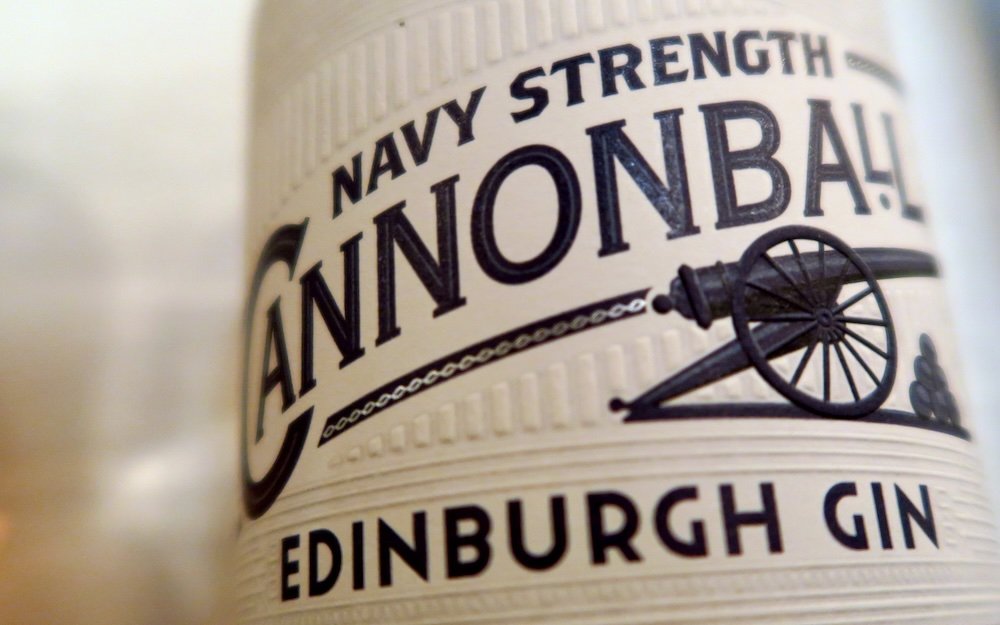
Then Cannonball arrived.
Cannonball was Navy Strength gin at 57.2% alcohol. Somewhere during the tasting we started calling it “military grade,” which was not technically precise but captured the emotional experience of raising the glass toward my face.
It was potent.
Very potent.
The sort of drink that introduces itself firmly, rearranges the furniture and begins opening your mail.
We also sampled Seaside Gin and several flavoured liqueurs. Audrey especially liked the light floral sweetness of elderflower, while rhubarb and ginger provided another approachable option. I found myself surprisingly enjoying some of the stronger variations more than expected.
The setting made the tasting feel social rather than instructional. Nobody was peering down at us from a podium while demanding tasting notes involving pencil shavings and damp saddle leather.
We sat, sniffed, drank, talked and laughed.
We became so comfortable in the gin den that I could have spent the rest of the afternoon there.
I’m glad there was nobody visibly enforcing a strict time limit. Otherwise, we might have been removed.
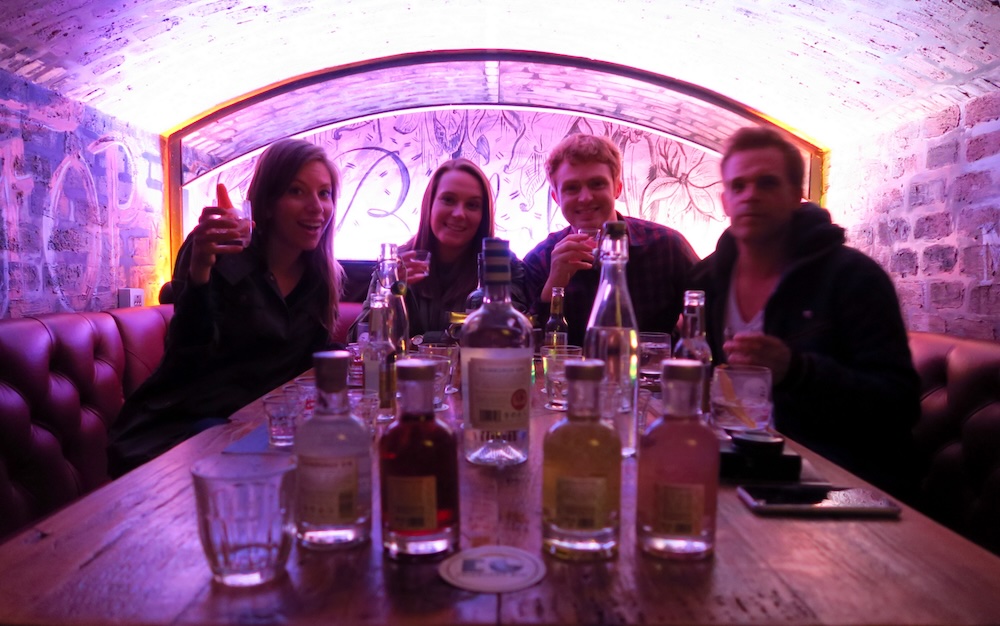
When it was finally time to leave, we said an emotional farewell to the gin den and discussed stumbling back to the hotel for a nap before dinner.
The afternoon had started with botanical education and ended with us becoming sentimental about underground furniture.
That is a successful distillery tour.
For Audrey, the experience completed a rapid conversion from someone who had barely tried gin to someone with a favourite liqueur and a much clearer understanding of the spirit. She tells that story in her Edinburgh Gin Distillery tour account.
Watch our video to see the original Rutland Place distillery, botanical lesson and gin-den tasting.
Important Update: Edinburgh Gin Has Moved
The visitor experience shown in our photographs and video is no longer the current Edinburgh Gin Distillery.
Edinburgh Gin has moved from the old Rutland Place basement to The Arches on East Market Street in the Old Town, close to Edinburgh Waverley Station. The new facility has its own stillhouse, tasting rooms, Flavour Arch and a completely redesigned visitor programme.
In other words: our experience is real, but it is historical. Do not book today and then complain because Abby is not waiting in the same basement with the same leather cave and a bottle of Cannonball.
The current Classic Tour and Tasting runs for roughly 75 minutes and covers Edinburgh’s gin history, botanicals, production and guided samples with mixers and garnishes. The new distillery is wheelchair accessible, and its tours are for adults aged 18 and over.
- Address: Navigate to The Arches on East Market Street, not the former Rutland Place distillery.
- Age: The current tours and tastings are for adults, and photo identification may be required.
- Atmosphere: The new site has its own identity. Our underground gin-den experience belongs to the earlier distillery.
- Booking: Reserve ahead when your preferred time matters, especially during weekends and Edinburgh’s festival periods.
You can check current availability for the new experience through The Edinburgh Gin Distillery Classic Tour and Tasting at The Arches.
For the full range of classes and direct information, consult the official Edinburgh Gin website.
The Scotch Whisky Experience in Edinburgh
Whisky tour anyone?
Before moving forward, let’s establish one thing: in Scotland it is “whisky” without the “e.”
I made the mistake of saying whiskey on camera while standing outside in the autumn cold, although my more urgent concern was that I had forgotten my jacket.
My solution was to drink whisky and claim it was a practical warming strategy.
This is the kind of science I practise while travelling.
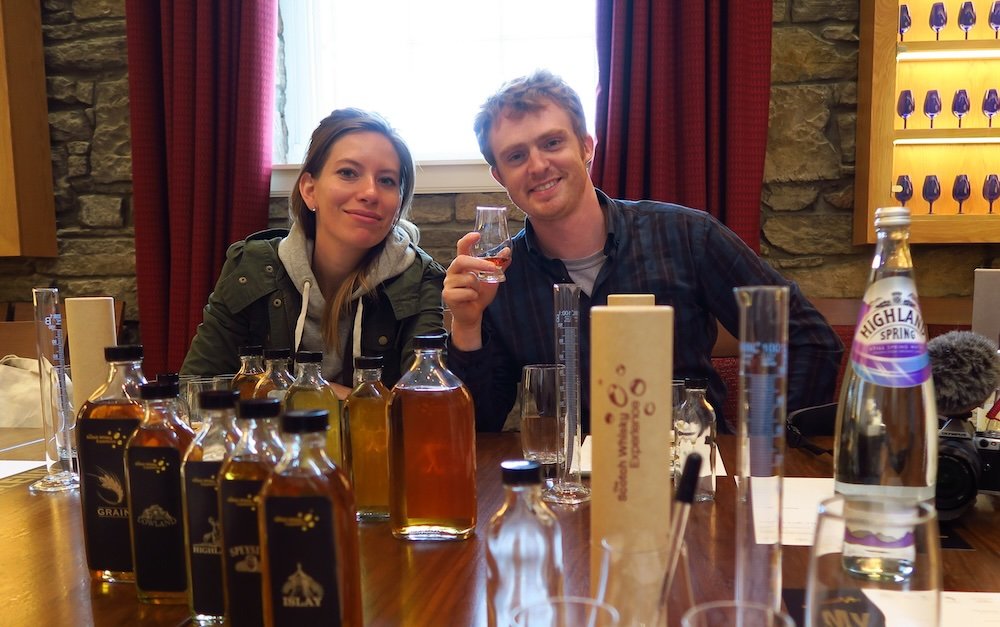
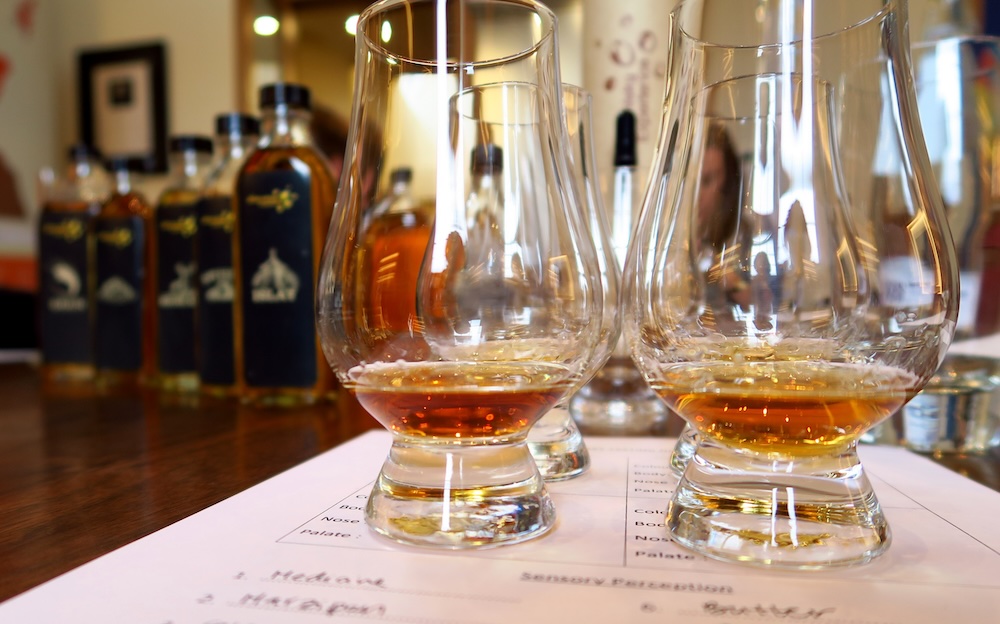
Visiting The Scotch Whisky Experience was easily one of the highlights of my time in Edinburgh. We took a private Blend Your Own session in the Blender’s Room, beginning with a sensory perception test before tasting regional styles and constructing our personal blends.
The Ten-Aroma Humiliation
Ten small glass jars containing scented cotton were passed around the room. None of the ingredients had been dumped directly into whisky. They represented aromas that can emerge through ingredients, fermentation, distillation and maturation.
Our job was to identify them.
Easy enough, I thought.
It was not easy.
Audrey’s guesses included medicine, marzipan, sugar cane, candy, books in an attic, butter, peaches, vinegar, Vicks VapoRub and one aroma so unpleasant that she simply labelled it “poison.”
She correctly identified marzipan and vinegar.
I also scored a pathetic two out of ten. My correct answers were cinnamon and “fireplace,” which was actually smoke. Calling that twenty percent may have been mathematically accurate but emotionally generous.
Let’s just say I am not going to quit my day job of travel blogging and making videos to become a professional nose anytime soon.
My nose is mostly decorative.
Blending Sam ‘I’ Am Shazzam
With the humiliation complete, it was time for redemption in the Blender’s Room.
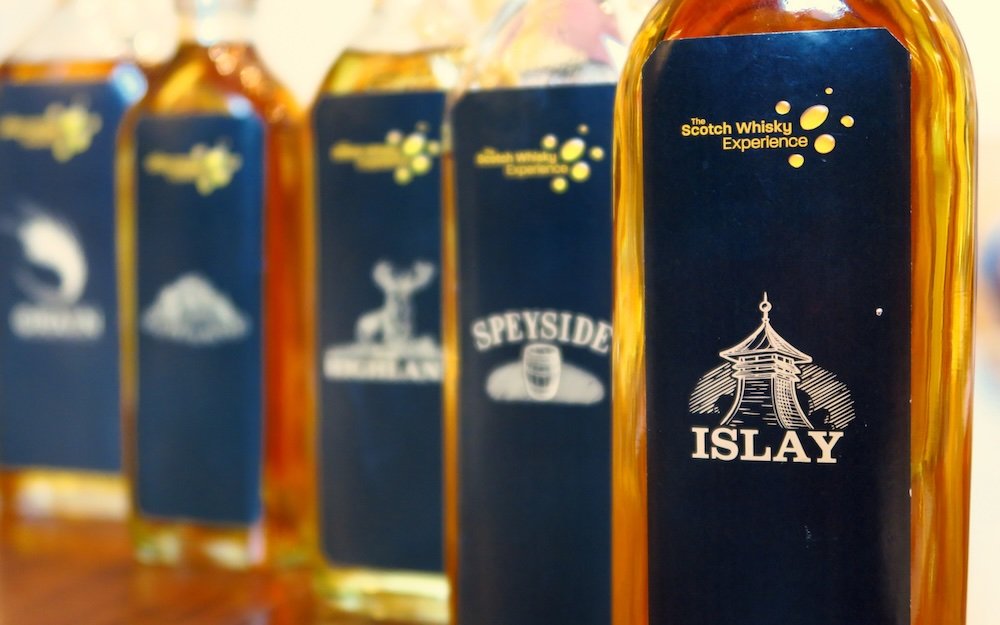
We had single grain whisky alongside Highland, Lowland, Islay and Speyside components. The basic guidance was to use grain whisky as the backbone and then build the personality of the blend using the regional styles.
I approached the task with the quiet restraint of a man who had just scored two out of ten on the prerequisite exam.
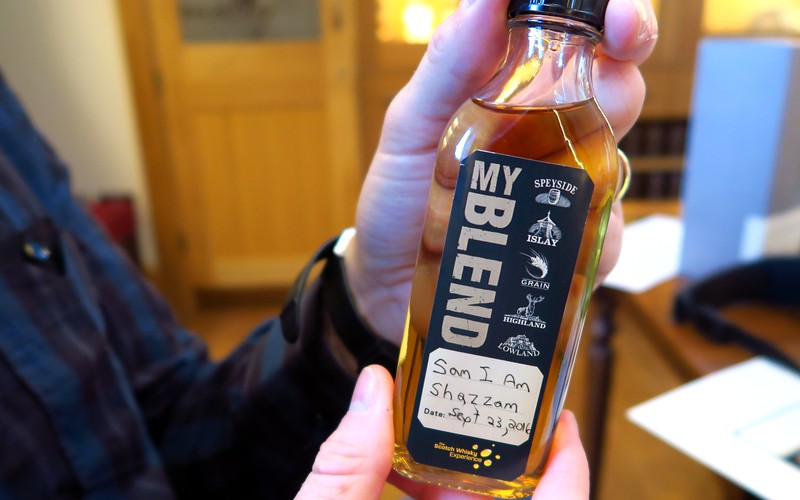
I named mine “Sam ‘I’ Am Shazzam.” On the label, I promoted myself to “Sir Samuel George of Alexander” and used 60% grain with 15% Speyside as part of the recipe.
The concept was that the final whisky would be smoky, strong and sophisticated—much like its creator.
Yeah.
That was a bit of a stretch.
Audrey Wins—with a Little Professional Assistance
At the end, we asked our instructor to nose the finished blends without knowing who had created each one.
Guess who won?
Not me.
Audrey.
There was, however, a small footnote missing from my original account.
Audrey had been understandably concerned about creating an undrinkable souvenir and followed quite a bit of advice from the instructor. During the blind comparison, the instructor unknowingly selected the blend she had helped design.
Audrey therefore won fairly according to the rules, but with professional coaching that my proudly independent “strong and sophisticated” masterpiece had foolishly rejected.
Was it cheating?
No.
Was I above mentioning it years later in a rebuilt article?
Also no.
History has corrected the record.
The 3,384-Bottle Whisky Collection
We finished inside the remarkable whisky collection: 3,384 bottles glowing behind glass.
The collection was assembled over decades by Claive Vidiz, a whisky enthusiast from São Paulo, Brazil, before finding a permanent home in Edinburgh. Bottles ranged from everyday labels to rare historical examples, including one dating to 1897 and another to 1904.
Walking inside felt like entering a glass maze filled with several thousand expensive decisions.
For collectors, this is the ultimate wall of temptation. You could spend hours staring at the labels and still leave knowing you had missed something tucked into a corner three metres behind your left shoulder.
Audrey shares her aroma worksheet, blending strategy and suspiciously well-coached victory in her Scotch Whisky Experience article.
Which Scotch Whisky Experience Tour Can You Take Now?
Our Blend Your Own session was a private group activity. It should not be confused with the standard public tour menu currently sold by The Scotch Whisky Experience.
| Current Experience | Approximate Length | General Format | Age Positioning |
|---|---|---|---|
| Silver Tour | About 50 minutes | Introduction to Scotch whisky, regional aromas, one dram and the collection | Family-friendly, with a soft-drink alternative for younger guests |
| Gold Tour | About 75 minutes | Deeper guided tasting with several regional whiskies | Adults only |
| Taste of Scotland | About 3 hours | Extended whisky experience combined with a Scottish meal | Adults only |
The introductory and Gold experiences currently run for roughly 50 to 75 minutes, include access to the famous collection and can be reserved through The Scotch Whisky Experience Tour and Tasting.
For the exact current lineup, consult the official Scotch Whisky Experience tours page.
Visitors specifically interested in blending should contact the attraction about private group possibilities. Do not purchase an ordinary ticket and arrive carrying an empty bottle, a confident grin and a demand to create “Shazzam II.”

Which Edinburgh Food or Drink Tour Should You Choose?
Choose Eat Walk Edinburgh if food is your main priority
This gives you the broadest introduction to Edinburgh’s food culture. It also provides the most city context because you move between venues rather than remaining inside one attraction.
It is my pick for a first-time visitor who wants a progressive meal, local stories and enough recommendations to continue eating independently afterward.
The main danger is overconfidence. Do not treat the early tastings as a warm-up buffet and then act surprised when lunch and cheese appear later.
Choose Edinburgh Gin if you prefer cocktails, botanicals and social tasting
You do not need to arrive as a gin expert. Audrey had barely started drinking it, and the combination of stories, botanicals, mixers and sweeter liqueurs gave her several ways into the subject.
The current distillery differs from the one we visited, but it remains the obvious choice for travellers who hear “whisky tasting” and immediately begin searching for the nearest gin and tonic.
Choose The Scotch Whisky Experience for the clearest whisky introduction
The attraction is built to explain whisky to people who may not know their Islay from their Speyside. Its location beside Edinburgh Castle also makes it easy to combine with an Old Town sightseeing day.
Whisky enthusiasts can choose a deeper tasting. Beginners should not feel intimidated.
Our aroma scores demonstrate that the bar for admission is considerably lower than the bar for competence.
How to Plan All Three Experiences Without Destroying Yourself
You could theoretically force all three into one heroic day.
I would not recommend it.
The food walk is designed as a substantial progressive meal. The gin and whisky experiences involve guided tastings. Stacking everything together would turn a pleasant introduction to Edinburgh into an endurance event for your stomach, palate and liver.
There are no medals. Edinburgh will still be there tomorrow.
A sensible two- or three-day arrangement
- Day 1: Eat Walk Edinburgh, followed by an otherwise flexible evening and possibly a horizontal recovery period.
- Day 2: The Scotch Whisky Experience beside Edinburgh Castle, with a proper meal before or afterward.
- Day 3: Edinburgh Gin at The Arches, leaving time to enjoy the bar or continue exploring the Old Town.
With only two days, place the food tour on one day and separate the gin and whisky activities with several hours, food and plenty of water on the other.
Water is not an admission of defeat. It is what allows you to remember which bottle you liked.
Where the current experiences are located
- Eat Walk Edinburgh: The current meeting area is close to St Giles’ Cathedral in the Old Town.
- The Scotch Whisky Experience: Castlehill, immediately below Edinburgh Castle.
- Edinburgh Gin: The Arches on East Market Street, close to Waverley Station.
All three are central, but Edinburgh’s hills, cobblestones and staircases can make short map distances feel longer. Comfortable shoes are more useful than fashionable optimism.
Where to Stay for an Edinburgh Food and Drink Trip
You do not need to choose accommodation based solely on alcohol, but staying centrally removes one annoying decision at the end of every tasting.
The most convenient areas are the Old Town around the Royal Mile and the streets near Waverley Station. From there, the three current experiences are walkable or reachable with a short bus, tram or taxi ride.
These are logistical suggestions rather than hotels we personally stayed in during this trip:
- Radisson Blu Hotel, Edinburgh City Centre sits directly on the Royal Mile. Our historical Eat Walk tour began inside the building at Itchycoo, and the hotel remains well positioned between Edinburgh Castle and the lower Royal Mile. It also has an indoor pool and sauna, which feels almost suspiciously civilized after a cold day on the cobbles.
- Market Street Hotel is opposite Waverley Station and especially convenient for the new Edinburgh Gin Distillery at The Arches. It also places you between the Old and New Towns, which is useful when your itinerary involves both sightseeing and repeatedly asking bartenders for “just one final recommendation.”
Old Town accommodation can be noisy, expensive and crowded during August and Hogmanay. The compensation is that when a whisky tasting ends, you can walk home instead of attempting to decode public transport while your notes app contains the phrase “smoky but friendly???”
Before You Book
- Reserve important time slots: Weekends, summer festivals and Hogmanay periods can sell out. Edinburgh in August is not the time to wander around announcing that you prefer spontaneity.
- Carry photo identification: Adult tastings may operate a Challenge 25 policy.
- Eat before spirit tastings: The food tour provides a meal. Gin and whisky tastings do not replace one, no matter how many calories you suspect are hiding in the glass.
- Declare dietary needs early: Do this during booking, not when the guide is holding a plate containing the exact ingredient you cannot eat.
- Confirm accessibility directly: Historic Edinburgh includes slopes, cobbles and old buildings. Ask about the exact route and facilities you require.
- Photograph bottles you like: Tasting notes become increasingly unreliable after several samples.
- Do not plan to drive: All three experiences are reachable from central Edinburgh without a car. Your whisky education does not need a dangerous practical examination afterward.
Frequently Asked Questions About Edinburgh Food, Gin and Whisky Tours
Are the tours shown in your photographs still exactly the same?
No. Our experiences took place in 2016. Eat Walk Edinburgh has changed its route and venue format. Edinburgh Gin has moved from Rutland Place to The Arches on East Market Street. The Scotch Whisky Experience remains beside Edinburgh Castle, but our Blend Your Own session was a private group activity rather than one of today’s standard public tours.
Which tour is best for someone who knows nothing about gin or whisky?
Both spirit attractions are designed to welcome beginners. Edinburgh Gin uses botanicals, history and guided tasting to explain flavour. The Scotch Whisky Experience introduces production and regional styles before the tasting. You do not need prior expertise, as our two-out-of-ten aroma scores prove rather convincingly.
How hungry should I be before Eat Walk Edinburgh?
Arrive with an appetite. The current tour is intended to add up to a complete meal, and our historical route certainly did. A light breakfast makes more sense than a full Scottish fry-up immediately beforehand unless you possess the digestive capacity of a competitive Labrador.
Can non-drinkers enjoy these experiences?
Eat Walk Edinburgh may offer an alcohol-free arrangement when booked in advance. The introductory Scotch Whisky Experience includes a soft-drink alternative, although age rules differ between tours. Edinburgh Gin’s current experience is adults-only, so non-drinkers should contact the distillery before booking to confirm what alternatives are available.
Can children join?
The Scotch Whisky Experience’s Silver Tour is family-friendly, with a soft drink supplied instead of whisky to younger guests. Its deeper tasting experiences are adults-only. Edinburgh Gin’s current distillery tours are for adults. Food-tour age policies can change, so families should confirm directly with Eat Walk Edinburgh before booking.
Can I still blend my own whisky?
Our Blend Your Own session is not listed as one of the standard public tours. The Scotch Whisky Experience accepts private and group enquiries, so contact the attraction directly if blending is the main reason for your visit. Do not assume it comes bundled with an ordinary admission ticket.
Are the experiences accessible?
The new Edinburgh Gin Distillery and The Scotch Whisky Experience provide accessibility information, while the food-tour operator asks guests to discuss mobility requirements in advance. Edinburgh’s historic centre contains steep streets and uneven surfaces, so contact each operator with your precise needs rather than relying on a broad label.
Do I need to book in advance?
Advance booking is sensible whenever a specific day or time matters. It becomes especially important during weekends, August festivals, holidays and Hogmanay. These experiences operate with scheduled departures and limited capacity. Turning up during the Fringe and announcing “There are three of us” is not a reservation system.
Final Thoughts on Eating and Drinking Around Edinburgh
These three experiences worked because they approached Edinburgh from genuinely different angles.
Eat Walk Edinburgh transformed the city into a moving meal and introduced us to producers, specialist shops and combinations we would never have discovered by wandering blindly.
Edinburgh Gin avoided the usual distillery-tour lecture by combining grim history, botanicals and a dangerously comfortable tasting den.
The Scotch Whisky Experience converted our complete lack of sensory talent into an entertaining competition and sent us home with bottles bearing our own questionable recipes.
If I could choose only one for a first visit, I would begin with the food tour because it provides the broadest introduction to both Edinburgh and Scottish flavours.
If whisky is the reason you came to Scotland, the decision is obvious.
And if you prefer cocktails, botanicals and sweeter spirits, Edinburgh Gin may turn you into a convert just as it did Audrey.
Just pace yourself.
Edinburgh rewards curiosity. It does not reward trying to complete a food tour, a Navy Strength gin tasting and a whisky flight before dinner while wearing shoes with no grip.
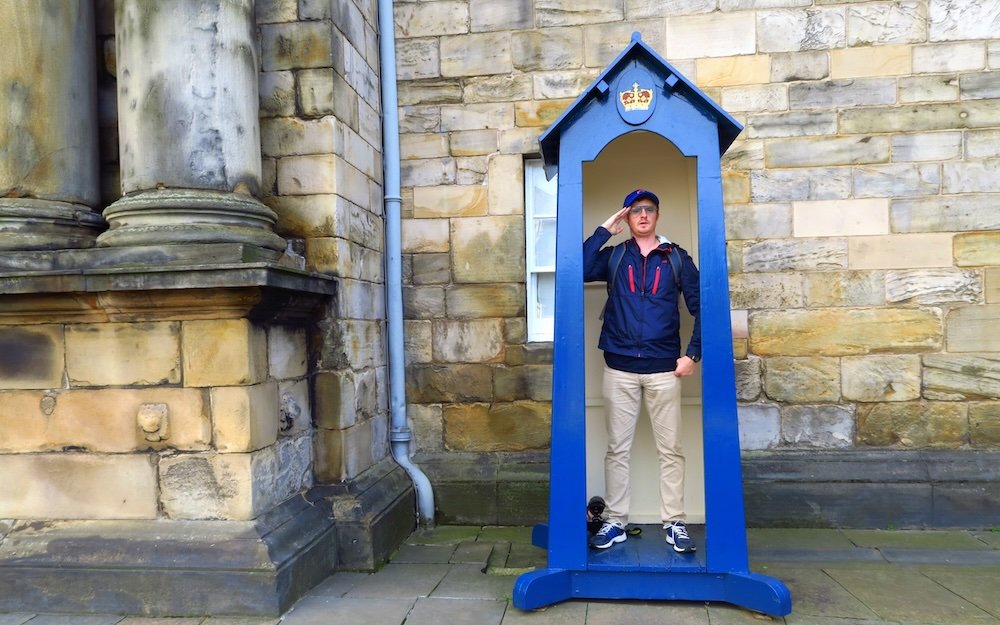
I hope you did not read this article on an empty stomach. Which of the three experiences interests you most: the walking food tour, the gin distillery or the whisky tasting? Have you tried haggis, Navy Strength gin or blending your own Scotch? Let me know in the comments below.
This trip was part of a partnership with VisitBritain and iambassador.
Gotta say those bottles look very nice! 😀
Such a nice post! You captured great pictures in your post. I really add this in my list.
Thanks for sharing it.
Love it, man. Makes me wanna go eat my way through Edinburgh
Amazing post.Actually I am a big fan of Whiskey. The short description here seems so fascinating to me.I like that so much as a Whiskey lover.
Thank you! Glad to hear you appreciate a good Scotch Whisky 🙂
Looks amazing, but I don’t think I’ll ever develope a tast for whiskey!
Thank you Stephanie! I don’t think Audrey ever will either. I’ve really come to appreciate it more over the years.