
If you want to experience the absolute pinnacle of Argentine barbecue, the first step is remarkably simple: make sure you don’t drive an hour deep into the Chubut province a full twenty-four hours before the fires are actually lit.
We learned that the hard way.
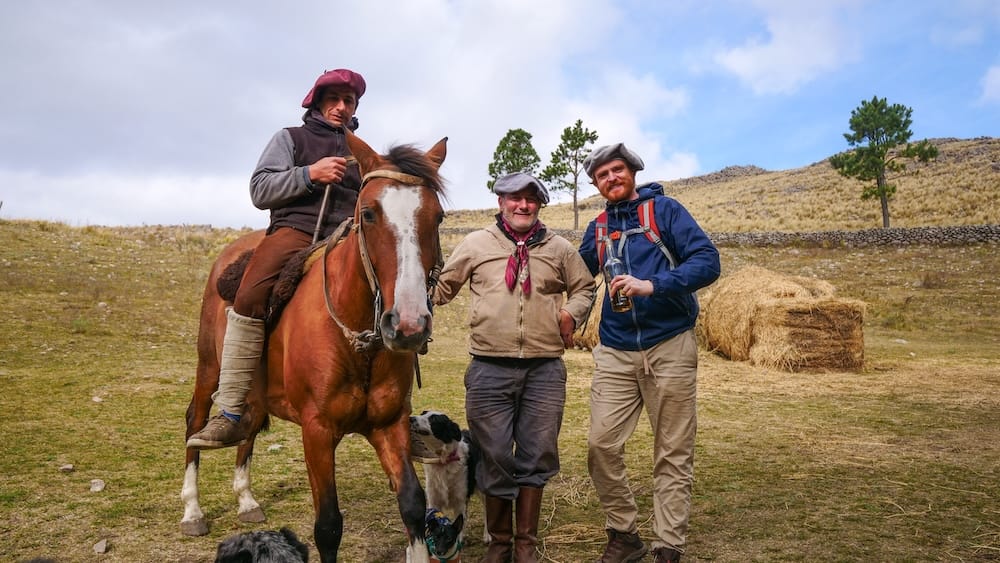
Originally, the plan was to attend the Fiesta Nacional del Asado in Cholila, a legendary gathering where 10,000 kilos of premium beef and 300 Patagonian lambs are splayed across iron crosses and slow-roasted over open trenches. We were ready. We were hungry. We drove all the way out there, only to be met with a very quiet field and a local who politely informed us that the meat wouldn’t be ready until tomorrow at noon.
Cue the frantic, stress-eating pivot to a tiny local spot called La Cocina de Lily just to cope with the disappointment. But as they say in the travel game, a sea of misadventures often leads to the best stories. We ended up killing time exploring the abandoned, wind-blasted ruins of Butch Cassidy’s old Patagonian ranch, only to return the next day to the most visceral, smoke-drenched, meat-heavy spectacle of our lives.
That is the reality of Patagonia. It is not a manicured, perfectly timed brochure. It is a rugged, punishing, wildly hospitable frontier that operates on its own schedule. If you are coming down here expecting a romanticized, theme-park version of “cowboy life,” the steppe is going to chew you up and spit you out. But if you want to know what real Gaucho culture actually looks, smells, and tastes like, you are in the right place.
Welcome to the ultimate, un-sugarcoated guide to navigating the estancias, the festivals, and the culinary rites of passage in the deep south of Argentina and Chile.
The Steppe Lexicon: How to Speak (and Survive) Gaucho
Before we dive into the heavy logistics of navigating these massive ranches, we need to set the table. When you arrive in deep Patagonia, you aren’t just crossing a provincial border; you are entering an entirely different cultural and linguistic ecosystem.
If you don’t know the difference between a puestero and a parrillero, or if you assume a facón is just a standard kitchen utensil, you are going to stick out instantly. Even worse, you might accidentally insult the very people preparing your dinner.
[Samuel’s Linguistic Reality Check]
When we first arrived down south, I thought my standard conversational Spanish was going to carry me through. I was dead wrong. The vocabulary of the steppe is highly specific, deeply traditional, and utterly non-negotiable. You don’t “barbecue” down here, and you don’t wear “pants.” You need to know the terms of engagement before you step off the bus.
To save you the embarrassment of looking like a completely oblivious outsider, here is your crash course in the essential terminology. Think of this as the ultimate cheat sheet to the steppe.
The Ultimate Patagonian Gaucho Lexicon & Faux Pas Matrix
| The Term | The Literal Item / Definition | The Patagonian Reality (How it’s actually used) | The Tourist Faux Pas Risk |
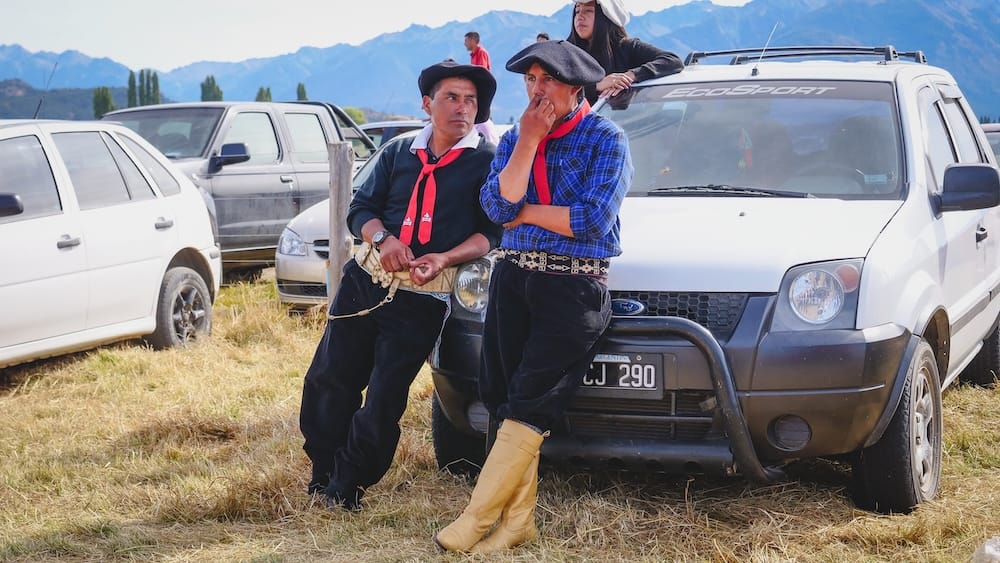
| El Puestero | The Outpost Rider | These are the true, hardened, solitary Gauchos of the deep south. They live in isolated, wind-battered shacks (puestos) miles away from the main estancia, managing the flocks entirely alone for months at a time with only their dogs, horses, and a radio. | Low. But understand they are not customer service reps; they are survivalists. Treat them with immense, quiet respect. |
| Bombachas (de Campo) | Traditional Riding Trousers | Baggy, pleated, heavy-duty cotton trousers buttoned tightly at the ankle to fit inside riding boots. They are incredibly practical for horseback riding in 100 km/h winds. | Medium. They look incredibly comfortable, but if you buy a pristine, brand-new pair in an El Calafate boutique and wear them to a working estancia, you are essentially wearing a costume. (Learn from my green glasses mistake—stick to your hiking pants). |
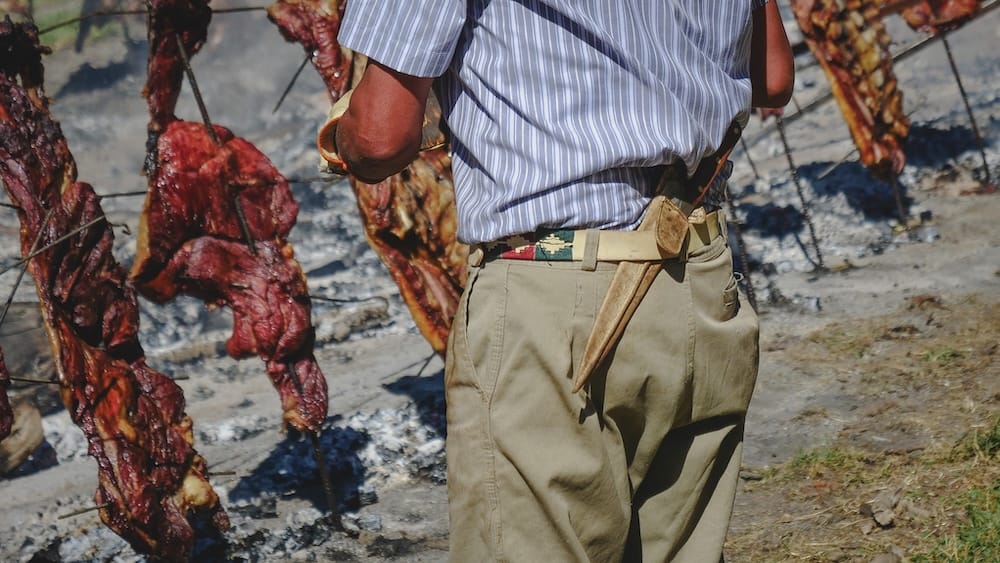
| El Facón | The Carbon Steel Knife | A long, fearsome, fixed-blade knife worn horizontally tucked into the back of a woven sash (faja) or leather belt. It is an extension of the Gaucho’s right arm—used for everything from shearing to slicing a piece of cordero right in front of their own lips. | High. Never, ever touch another man’s facón without explicit, invited permission. (And if you buy one as a souvenir, absolutely remember to put it in your checked luggage before hitting the airport). |
| Mate & Bombilla | The Gourd & The Metal Straw | Mate is the bitter, highly caffeinated herbal infusion that fuels the region. The bombilla is the metal filtering straw. It is a deeply communal ritual passed around a circle to share warmth, calories, and conversation. | Extreme. Saying “Gracias” when you accept the gourd means “Thank you, I am done, do not serve me anymore.” You only say it when returning it for the final time. Furthermore, stirring the bombilla is treated as a direct insult to the person who brewed it. |
| La Jineteada | Horse Taming / Rodeo | A raw, violent, and highly celebrated display of traditional horsemanship. Riders attempt to stay on unbroken, wildly bucking horses for a set number of seconds (usually 8 to 14) using only spurs and a leather strap. | Low. This is a spectator sport for tourists. Just stand back, enjoy the sheer adrenaline, and stay completely off the wooden fencing. |
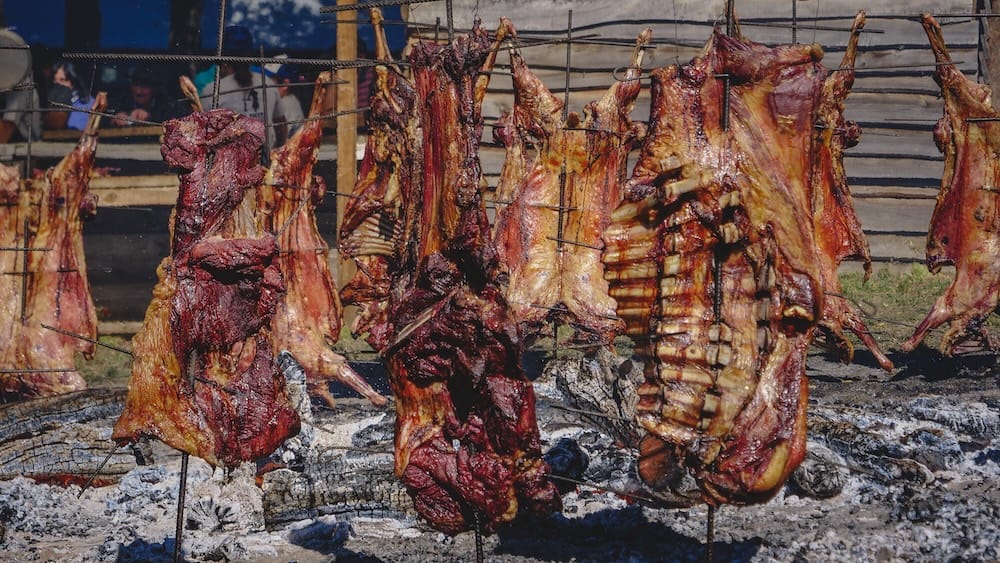
| Asado al Asador | Barbecue on the Iron Cross | The culinary holy grail. Splaying a whole Patagonian lamb (cordero) or a side of beef on a massive iron cross and slow-roasting it vertically over an open wood trench fire for 4 to 6 hours. | High. Do not touch the grill, the meat, or the fire. The parrillero (grill master) is the undisputed king of the domain. Offering to “help” is deeply offensive. |
| La Estancia | The Patagonian Ranch | The massive, self-sustaining agricultural properties that dominate the landscape. They can range from a few thousand acres to the size of small European countries. | Medium. Don’t assume you can just “drop in” on an estancia. They are private, working properties. You must have pre-booked tours, transfers, or lodging. |
The Cultural Spectacle: When the Brochure Meets the Hangover
There is a distinct moment when you realize you are a tourist playing dress-up. For me, it happened just outside of El Bolson.
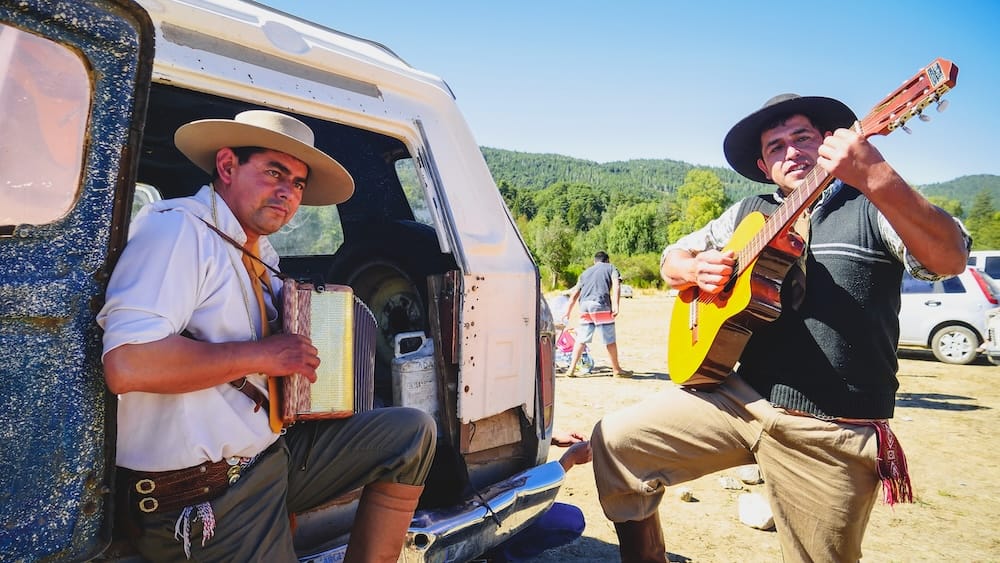
Our incredible Airbnb host, Valentin, had casually invited us to a local Gaucho party. I wanted to look the part. I went to a local artisan market, bought a beautiful, traditional wool Gaucho hat, and proudly placed it on my head—completely oblivious to the fact that I was pairing it with my signature bright green plastic Korean eyeglasses. I looked less like a rugged puestero and more like a confused time-traveler.
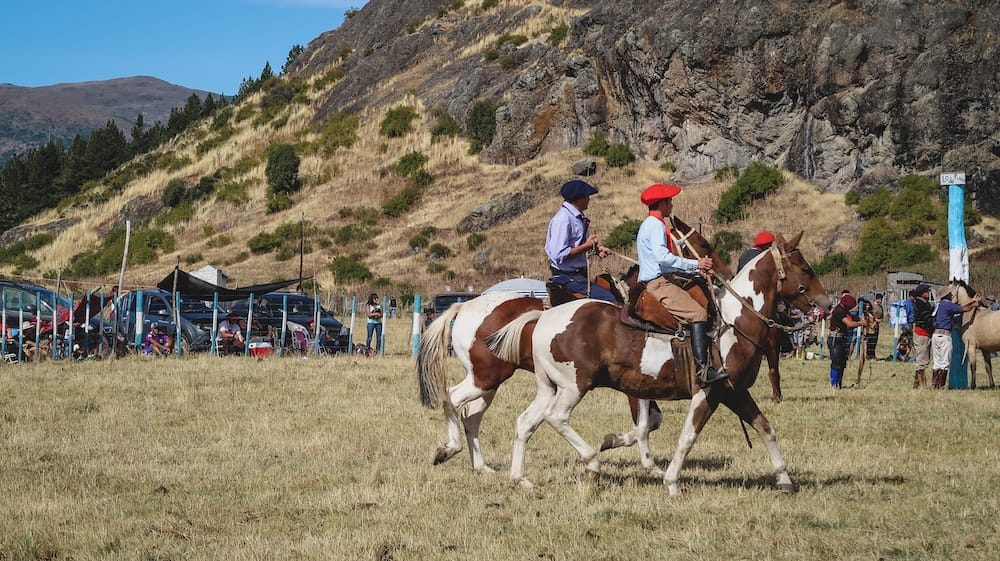
We arrived at the field expecting high-speed barrel racing, intense jineteadas (traditional rodeo), and non-stop action. What we found was a stunningly beautiful, sun-drenched field filled with deeply hungover cowboys. They had partied so relentlessly the night before that the actual events had ground to a near-standstill. Entire families had pitched tents for a three-day bender. The local stray dogs were so wildly overfed on dropped premium beef that by 2:00 PM, they were actively turning up their noses at free bones.
[Samuel’s Festival Reality Check]
If you are planning to attend a regional Gaucho festival, abandon your North American itinerary mindset. These are not tightly scheduled corporate events. They are massive, multi-day community reunions. The “events” happen when the hangovers subside and the horses are ready. Bring a camp chair, buy a $3 street-crepe loaded with excessive amounts of dulce de leche while you wait, and settle into the rhythm.
If you want to catch this authentic, unpolished chaos for yourself, you have to time it right. The big events don’t happen in the dead of winter. They happen when the weather breaks.
Patagonian Gaucho Festival Survival Matrix
| Festival & Location | The Timeline | The Signature Chaos | The Micro-Logistics & Friction Points |
| Fiesta Nacional del Asado (Cholila, Chubut) | Annually in early February (Usually the first weekend). | 10,000 Kilos of Beef: Roasting simultaneously. The smoke is visible for miles. | Logistics: Arrive by 11:30 AM to secure a communal table. The smoke will ruin your clothes. Do not wear anything you plan to re-wear on your trip without heavy laundering. |
| Fiesta Provincial de la Soberanía (Carmen de Patagones) | March 4-8. | Massive Jineteadas: The premier horse-taming and rodeo event of the eastern steppe. | Logistics: Highly local. Cash is absolutely mandatory. Bring exact change (ARS) for food stalls, as vendors run out of small bills by 2:00 PM daily. |
| Fiesta Nacional del Gaucho (Gen. Madariaga – Pampas border) | Mid-December. | Destrezas Criollas: Elite horsemanship and traditional dancing. | Logistics: Accommodation in the immediate area sells out 6 months in advance. You must book a rental car in Buenos Aires and drive down. |
Decoding the Estancia: Where You Sleep, What You Pay, and How You Survive the Drive
You cannot understand Patagonia without understanding the Estancia (the traditional ranch). But let’s strip away the Instagram filters for a second. The distances down here are colossal. A “quick pop over to a neighboring estancia” can mean a three-hour drive on roads that will literally rattle your teeth loose.
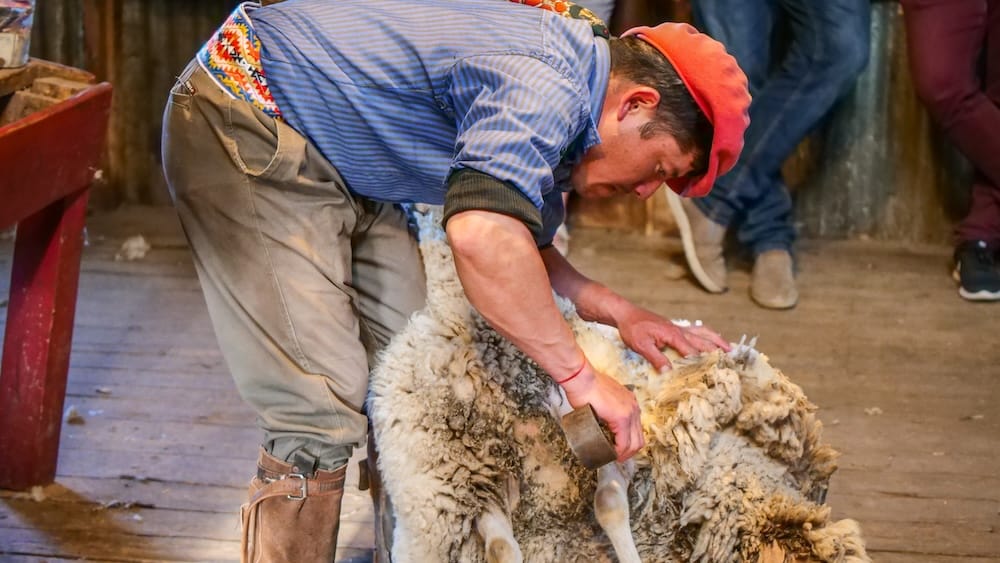
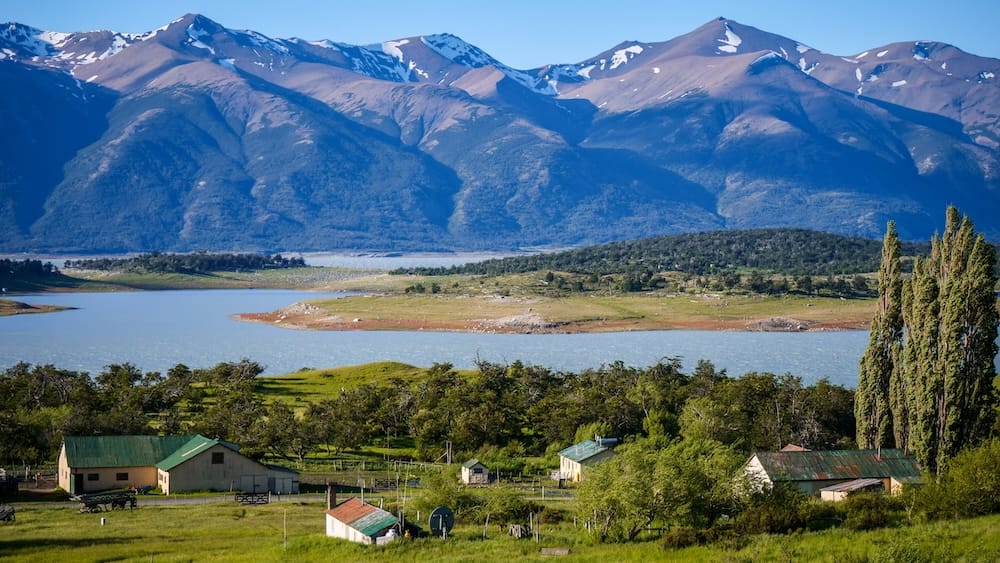
We spent an unforgettable afternoon at Estancia Nibepo Aike, located deep within Los Glaciares National Park near El Calafate. It is one of the most famous working ranches in the region, offering an incredible look into sheep shearing, cattle herding, and traditional pioneer life. The scenery is violently beautiful. But getting there requires navigating what locals whisper about in hushed tones: Provincial Route 15.
Route 15 is 55 kilometers of brutal, unpaved, washboard gravel. Every single day, overly confident tourists in rented Chevy Onix hatchbacks try to drive it at highway speeds. They blow out tires, crack oil pans, and incur massive undercarriage damage fees from the rental agencies. If you are self-driving to Nibepo Aike, you must keep your speed strictly under 40 km/h. If a tire blows, do not slam on the brakes on the loose gravel. Better yet? Surrender your pride and pay for the estancia’s private 4×4 minivan transfer. It is worth every single penny to not spend your vacation changing a tire in 100 km/h winds.
And if you are aiming for the ultra-remote, high-end isolation of Estancia Cristina, the friction is entirely weather-dependent. Estancia Cristina is accessible only by boat across the north branch of Lake Argentino. The Patagonian wind—known locally as La Escoba de Dios (The Broom of God)—routinely gusts so hard that the port authority at Punta Bandera abruptly closes the lake.
[Samuel’s Itinerary Lifesaver]
Never, ever book an Estancia Cristina day-trip on the final day of your Patagonian itinerary. If the port authority grounds the boats due to wind (which happens frequently), your non-refundable trip is canceled, and you fly home empty-handed. Book it for your first or second day in El Calafate to build in a 48-hour rescheduling buffer.
Let’s look at the hard numbers so you can budget this out.
Estancia Investment & Effort Blueprint
| The Estancia | Financial Reality (Prices fluctuate with inflation) | The Effort Required | The Authentic Payoff |
| Nibepo Aike (El Calafate) | Day Tour: ARS $162k – $194k Overnight: USD $126 – $264/night | Medium: Brutal 55km gravel drive (Route 15). Pre-book the transfer. | High: Authentic sheep shearing, historical outbuildings, and a legendary Asado in the main dining hall. |
| Estancia Cristina (Lake Argentino) | Day Tour: USD $180 – $380 Overnight: USD $1,600+/night | High: Requires a strict 8:30 AM boat departure from Punta Bandera. Weather dependent. | Elite: 4×4 off-roading to private Upsala Glacier viewpoints. Unmatched remote luxury. |
| Estancia Tecka Lodge (Chubut Province) | Custom pricing / All-inclusive | High: Extremely remote. Requires private transport from Esquel or Bariloche. | Culinary Genius: Home to Chef Pito Cocinero, who literally uses a riverside water wheel to power his spit roast. |
| Cerro Guido (Torres del Paine, Chile) | Day Tour: ~USD $240 Overnight: USD $1,500+/night | Medium: Located just outside the National Park borders. Easy paved/graded access. | High: Authentic sheepdog working demonstrations and Puma tracking safaris. |
The Culinary Rite of Passage: No Forks, Just Fear
If you want to eat like a true puestero, you need to abandon your modern dining sensibilities. Forget white tablecloths. Forget silverware.
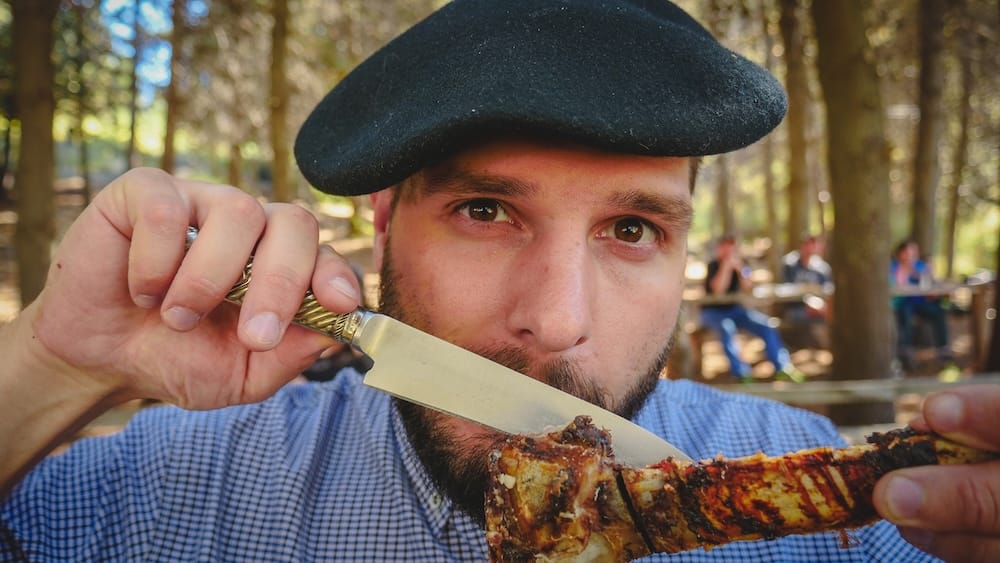
At the Gaucho party in El Bolson, we experienced the ultimate culinary rite of passage. The meat—a whole Patagonian lamb (cordero)—had been splayed on an iron cross and slow-roasted over an open wood fire for hours. When it was finally time to eat, there were no polite portions. You were handed a hunk of greasy, scalding hot, perfectly salted meat and a piece of crusty bread.
To eat it, you need a Gaucho knife. I had purchased a gorgeous, custom-made carbon steel blade specifically for this trip. It was terrifyingly sharp. The technique is primal: you bite into the meat, pull it tight, and slice the chunk off right in front of your lips. One wrong move and you give yourself an involuntary Joker smile. But sitting there, hands dripping with fat, using bread as a napkin, slicing meat off the bone with a terrifying blade while washing it down with local Malbec? It is a sensory experience that no five-star restaurant in Buenos Aires can ever replicate.
But the food culture here is heavily guarded by unwritten rules. If you break them, you instantly out yourself as an oblivious outsider.
The Patagonian Culinary & Cultural Toolkit
- The Sacred Grill: At estancias like Nibepo Aike, they will gladly invite you to watch the parrillero prepare the Asado. You can take all the photos you want. But the grill is sacred ground. Do not offer to help flip the meat. Do not ask to adjust the fire. Do not suggest seasoning. Touching a Gaucho’s grill is a massive breach of etiquette. Look, but do not touch.
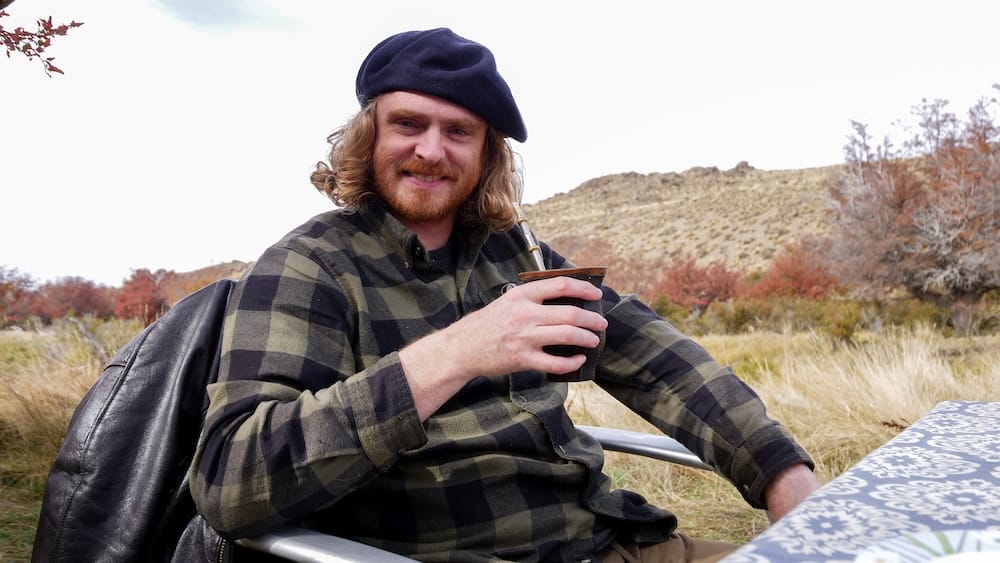
- The “Gracias” Mate Trap: Mate (the caffeinated, herbal tea passed around in a hollowed-out gourd) is the lifeblood of the steppe. If a Gaucho hands you the gourd, drink it completely. But whatever you do, do not say “gracias” when you take it. In this culture, saying “gracias” means “Thank you, I am done, do not serve me anymore.” You will be skipped on the next round. You only say it when handing the gourd back for the final time. Furthermore, never stir the metal straw (bombilla). It implies the brewer did a bad job.
- The Malbec Coma and the Siesta: You cannot consume a pound of roasted lamb and half a bottle of heavy red wine at 1:00 PM and expect to go on a grueling hike. The “Malbec Coma” is real. This is exactly why the siesta is enforced. From roughly 1:00 PM to 5:00 PM, rural Patagonian towns turn into ghost towns. Do not expect to find an open cafe. Do not expect to go shopping. Surrender to the rhythm and take a nap.
If you want to see exactly how ridiculous I looked trying to eat scalding lamb with my new knife, you can check out our full Cholila and El Bolson misadventures on our YouTube channel.
The Invisible Logistics: Cash Deserts and Staged Shows
We need to talk about the micro-frictions that ruin generic itineraries. The stuff the glossy magazines leave out.
The first is the financial reality. Argentina’s economy is notoriously complex, and while credit cards are becoming more accepted in hubs like Bariloche, deep Patagonia still operates on a “cash is king” basis. But here is the massive, trip-ruining catch: the ATMs in tourist hubs like El Calafate and El Chaltén frequently run completely, utterly empty by Saturday afternoon.
If you roll into town on a weekend expecting to pull out Argentine Pesos to pay for a last-minute horseback ride, tip your parrillero, or buy a handmade leather belt at a festival, you will be entirely out of luck.
[Samuel’s Cash-in-Hand Warning]
Never rely on Patagonian ATMs on a weekend. The logistical fix is simple: Bring crisp, unblemished, high-denomination USD or EUR bills. Alternatively, use Western Union to wire yourself money at the highly favorable “Blue Dollar” rate while you are still in Buenos Aires, physically extract the brick of cash, and bring it south with you.
The second invisible friction is managing your expectations regarding the actual agricultural work. Many tourists arrive in peak summer (January or February) expecting to see a bustling, chaotic, fully operational sheep-shearing estancia. What they get instead is a staged, 15-minute demonstration with one very confused sheep in a barn, while the rest of the flock grazes quietly miles away.
Why? Because Patagonia is overwhelmingly dedicated to sheep, not cattle. And the sheep cycle waits for no tourist.
Seasonal Rhythm & Reality Check: When to Actually Go
| The Month | The Agricultural Reality | The Tourist Experience | The Weather Friction |
| September – October | The Shearing Season (La Esquila). The winter coats are removed. This is massive, chaotic, sweaty work. | The Authentic Peak. If you want to see a real working estancia functioning at maximum capacity, this is the time. | High Friction. Spring winds are violent. If it rains, shearing stops immediately because the wool must be dry. |
| November – December | Lambing and Marking. Managing the new flocks, tagging, and organizing the herds. | Highly Active. Great for seeing Gauchos working with sheepdogs and moving massive herds across the steppe. | Medium Friction. Weather is warming up, but snow is still possible at higher elevations. |
| January – February | Peak Summer. The heavy agricultural work is mostly done. The animals are out to pasture. | The Staged Reality. You will get fantastic weather, beautiful horseback rides, and great Asados, but the “work” demonstrations are purely for show. | Low Friction. High season prices. You must book estancias 6 months in advance. |
| May – August | Deep Winter. Estancias batten down the hatches. Many remote lodges close entirely. | The Ghost Town. Limited access. Many tours cease operations due to impassable roads. | Extreme Friction. Heavy snow, freezing temperatures, and very short daylight hours. |
The Economics of the Estancia: Wool vs. Tourists
Everyone talks about the romance of the Gaucho, but how do these massive ranches actually survive?
When we were sitting at that long wooden table at Estancia Nibepo Aike, tearing into perfectly roasted lamb, it was easy to get swept up in the historical fantasy. You look out the window at the sprawling, wind-blasted steppe and imagine hundreds of rugged horsemen managing millions of sheep, just like they did during the golden age of Patagonian livestock in the early 1900s.
But then you talk to the owners, look at the actual numbers, and reality hits you like a 100 km/h gust of La Escoba de Dios.
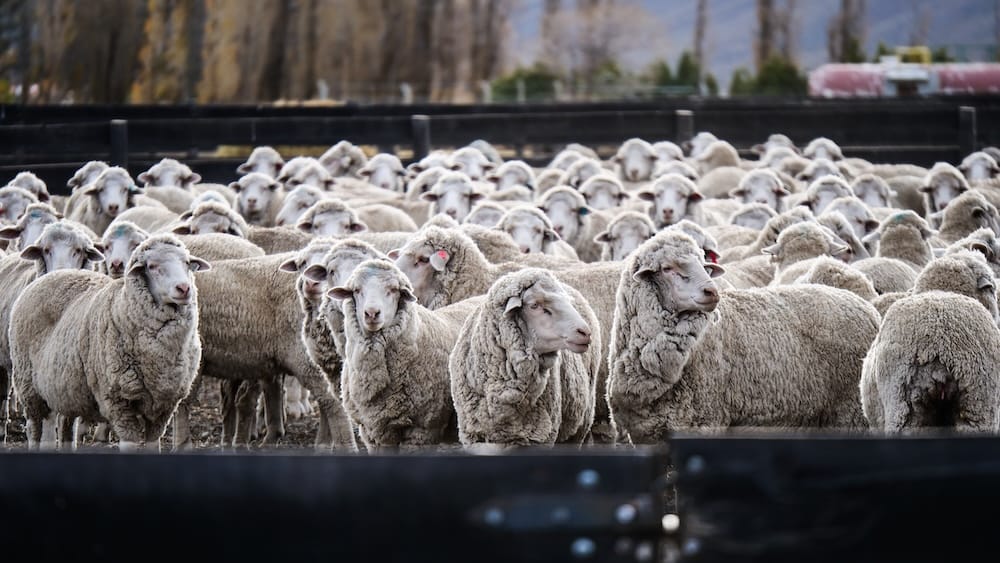
The traditional Patagonian wool market is largely on life support. Following the massive boom years of the early 20th century, the global explosion of synthetic fibers decimated the demand for high-end Corriedale and Merino wool. Today, a sprawling 6,500-acre farm—or even a colossal 250,000-acre operation like Estancia Cerro Guido over on the Chilean side—might only employ a tiny handful of actual, full-time Gauchos. The romantic image of a massive brotherhood of horsemen has been quietly replaced by a few highly skilled workers utilizing automated shearing machinery, GPS tracking collars on the herds, and four-wheelers to cover the punishing distances.
So, how do the massive wooden gates stay open? The answer is you.
[Samuel’s Conservation Reality Check]
It is incredibly easy to look at a USD $200 to $250 day-tour price tag and immediately dismiss it as an overpriced “tourist trap.” I get it. We are always hunting for value on the channel. But in deep Patagonia, that fee is not padding a corporate profit margin. It is a literal conservation investment. Your tourism dollar is what keeps the historical adobe outbuildings from collapsing into the dirt and ensures the Gauchos are paid a living wage to remain on the land.
Many estancias have realized that their cultural heritage is now their most valuable export. By opening their doors to agro-tourism, they are successfully funding the preservation of their own history. Instead of selling off the land or abandoning the flocks entirely, they have pivoted.
Here is exactly how the modern estancia economy breaks down, and where your money actually goes when you book that excursion.
The Estancia Economic Survival Matrix
| The Economic Pillar | The Historical Reality (1920s) | The Modern Reality | How Your Tourist Dollar Funds It |
| Wool Production | The absolute backbone of the economy. Millions of sheep dominated the region. | Profit margins are razor-thin due to global synthetic fiber dominance. Flocks are significantly smaller. | Subsidizes the baseline agricultural losses, allowing the estancia to keep a working flock of 10,000+ sheep purely to maintain the ecosystem and cultural practice. |
| Gaucho Employment | Massive teams of men required for manual herding, shearing, and predator control. | A localized, dying breed. Only a handful of elite horsemen are employed per massive acreage. | Pays direct, competitive salaries to the remaining puesteros, ensuring the generational knowledge of horsemanship and sheep-handling isn’t lost to city migration. |
| Predator Management | Leoneros (Puma hunters) were employed to actively hunt and eradicate pumas to protect the sheep. | Hunting is illegal. Estancias now employ Maremmano guardian sheepdogs and GPS tracking for coexistence. | Funds the expensive breeding, training, and veterinary care of the guardian dog programs, keeping both the sheep and the local puma populations alive. |
| Infrastructure | Fully self-sufficient micro-villages with their own schools, blacksmiths, and supply lines. | Crippling maintenance costs for remote, century-old pioneer buildings battered by extreme weather. | Pays for the literal upkeep of the wood, adobe, and iron. It keeps the water-wheel spit roasts turning and the roofs from caving in under winter snows. |
The Gaucho Diet & Longevity Reality Check
We’ve joked about the “Malbec Coma,” but how do the actual puesteros survive and perform grueling physical labor on a diet that historically consists almost entirely of roasted meat, torta fritas (fried dough), and Yerba Mate?
If you look at the modern wellness industry, the traditional Gaucho diet is a cardiologist’s absolute nightmare. Down here on the steppe, there are no organic smoothie bowls or macro-tracking apps. Historically, the harsh, wind-blasted soil of deep Patagonia meant that agriculture was nearly impossible. Aside from the occasional boiled pumpkin (zapallo), fresh vegetables simply did not exist in the daily rotation.
The diet was—and in many remote outposts, still is—built entirely around caloric survival in freezing temperatures.
[Samuel’s Longevity Reality Check]
I find the Gaucho diet absolutely fascinating because it completely shatters my own health routines. Back home, I am meticulously focused on longevity. I take 40 different supplements a day, follow a systematic workout routine, track my weight down to the pound (currently sitting at 172, aiming for 160!). Then I come to Patagonia and watch a 65-year-old Gaucho out-hike, out-ride, and out-work me after consuming nothing but half a pound of animal fat, a pile of fried dough, and hot herbal tea. It is a wildly humbling reality check on human resilience.
So, how do they do it without suffering from massive nutritional deficiencies? The secret weapon is not in the meat; it is in the gourd.
Yerba Mate is the lifeblood of the steppe. To a tourist, it looks like a bitter, highly caffeinated social tea. To a Gaucho, it is a liquid survival mechanism.
It is incredibly common to see puesteros working 14-hour days in the freezing Patagonian wind, having consumed no solid food since sunrise, fueled entirely by the continuous sipping of Mate. It isn’t just about the caffeine buzz. Yerba Mate is a profound nutritional powerhouse that fills the massive gaps left by the meat-and-dough diet.
The Steppe Survival Diet: Nutritional Breakdown
| The Dietary Staple | The Traditional Preparation | The Brutal Reality | The Biological Function |
| Cordero / Capón (Patagonian Lamb/Mutton) | Roasted over an open wood fire (Asado al Asador). Nothing is wasted, including organs and heavy fat caps. | Extremely high in saturated fats and cholesterol. Zero fiber. | Provides the massive, slow-burning caloric density required to physically survive sub-zero winter temperatures on horseback. |
| Torta Fritas (Fried Cakes) | A simple dough of wheat flour, water, salt, and heavily fried in beef tallow or lard (grasa de vaca). | Pure, unrefined carbohydrates and animal fat. Traditionally eaten on rainy days when open fires are impossible. | Instant, cheap energy. Easy to carry in saddlebags for days at a time without spoiling. |
| Yerba Mate (The Liquid Vegetable) | Steeped in a hollowed gourd with water strictly heated to 75°C (never boiling) to preserve the nutrients. | The extreme heat and shared bombillas (straws) can be abrasive, but it is consumed continuously throughout the day. | The Master Key: Acts as a powerful appetite suppressant while delivering high doses of B-Vitamins, Vitamin C, Zinc, Magnesium, and powerful antioxidants (polyphenols) that prevent scurvy and aid in breaking down the massive intake of animal fat. |
| Zapallo (Pumpkin/Squash) | Boiled into a mush or heavily charred directly in the embers of the Asado fire. | The only consistent source of dietary fiber available in the remote southern camps. | Aids in digestion and provides necessary complex carbohydrates missing from the meat-heavy rotation. |
The Complete Picture: Embracing the Dust
If you are looking for a sterile, perfectly curated vacation, stick to the luxury wine lodges of Mendoza. (And don’t worry, we cover exactly how to do that in our upcoming destination guides).
But if you want to feel the pulse of Argentina, you have to embrace the dust of Patagonia. You have to accept that the wind is going to rip your hat off and deposit it into a glacial lake. You have to accept that your meticulously planned schedule will be derailed by a hungover cowboy, a closed port, or a 24-hour miscalculation.
When you sit at a long wooden table at Estancia Tecka Lodge, smelling the woodsmoke from Chef Pito’s water-wheel spit roast, tearing into a piece of crusty bread, and sharing a bottle of Malbec with people who live in one of the harshest, most beautiful environments on earth—you realize that the friction is the point.
The smoke will permanently infiltrate your favorite jacket. Your rental car will probably have a new rattle. You might accidentally insult someone by saying “thank you” for a cup of tea. But you will leave with a deep, marrow-level understanding of a culture that refuses to be tamed by the modern world.
Just do me a favor: leave the bright green plastic glasses at home.
If you want to see the visual proof of these massive fires, the 10,000 kilos of beef, and the sprawling beauty of the estancias, make sure to check out our deep-dive video on this exact trip over on our YouTube channel Samuel and Audrey.
The Estancia Decision Matrix: Pick the Right Patagonia Ranch Experience
| Traveler Type | Best Estancia Style | Why It Works | Trade-Off |
|---|---|---|---|
| First-time Patagonia visitor | Tourist-friendly working estancia | Gives you horses, shearing demos, asado, and history in one manageable package | Some demonstrations may be partially staged in summer |
| Authenticity-first traveler | Remote sheep estancia during spring | Best chance of seeing real shearing and active flock work | More weather, more friction, more difficult access |
| Scenic luxury traveler | Lake-access or glacier-access estancia | Strongest wow-factor and comfort | High cost and lower day-to-day realism |
| Food-focused traveler | Culinary estancia with signature asado program | Best for fire-cooking, lamb, wine, and long-table atmosphere | You may see less actual ranch labor |
| Wildlife traveler | Estancia with puma or sheepdog focus | Strong for conservation and land-management insight | More dependent on timing and weather |
| Family traveler | Basecamp-style estancia with easy access | Easier with children and less punishing logistics | Less raw frontier feeling |
FAQ: Patagonian Gaucho Culture
What is the best time of year to see real Gaucho culture in Patagonia?
Depends. If you want to see actual, chaotic, sweaty agricultural work like sheep shearing, you need to go in September or October. If you go in January or February during peak tourist summer, the heavy lifting is already done. You’ll get fantastic weather and great horseback riding, but the agricultural “work” you see will likely just be a staged 15-minute demonstration.
Do I need to speak fluent Spanish to visit an estancia?
Not necessarily, but it helps. The guides at high-end, tourist-facing spots like Estancia Cristina or Nibepo Aike speak excellent English. However, if you are attending a local community event like the Fiesta Nacional del Asado in Cholila or hanging out with the actual puesteros deep on the steppe, you will want basic Spanish. When in doubt, just smile, accept the meat, and let the Malbec do the translating.
How much cash should I bring for a day at a Patagonian ranch?
A lot, and ideally in USD. Patagonian ATMs in staging towns like El Calafate regularly run completely dry by Saturday afternoon. Bring crisp, unblemished US dollars to exchange locally at the Blue Dollar rate, or wire yourself money via Western Union before you leave Buenos Aires. Do not rely on plastic out on the steppe to tip your guide or buy a souvenir.
Is the food at an estancia safe for vegetarians or vegans?
Barely. The traditional Gaucho diet is essentially roasted lamb, fried dough, and Yerba Mate. Tourist-focused estancias will absolutely whip up a basic salad, some grilled pumpkin (zapallo), or pasta if you ask well in advance, but do not expect a robust, creative plant-based menu. If you don’t eat meat, prepare yourself for a lot of bread and cheese.
Can I rent a car and drive to these estancias myself?
Technically yes, but beware. The 55-kilometer drive down Provincial Route 15 to places like Nibepo Aike is punishing, washboard gravel. Tourists routinely blow out rental car tires, lose control, and get hit with massive undercarriage damage fees because they drive too fast. If you self-drive, keep it strictly under 40 km/h. Honestly, surrender your pride and just pay for the estancia’s private transfer.
What should I wear to a Gaucho festival?
Layers, not costumes. Leave the bright green plastic glasses and brand-new, perfectly clean riding pants at home—you will just look like a tourist playing dress-up. The Patagonian wind (La Escoba de Dios) is relentless and will rip a loose baseball cap right off your head. Wear sturdy hiking boots, a heavy windbreaker, a hat with a chin strap, and clothes you don’t mind smelling like woodsmoke for the next five days.
Are estancias in Patagonia family-friendly for toddlers?
Choose wisely. We travel with our daughter, Aurelia, and taking a 15-month-old into a working agricultural environment with 100 km/h winds, giant sheepdogs, and open fire pits is intense. If you have a toddler, skip the rugged outposts that require three-hour 4×4 off-road transfers. Stick to the “basecamp” style lodges with heated yurts or estancias that offer easy, flat access to the main dining halls.
Is it considered rude to refuse mate if a Gaucho offers it to me?
Absolutely. If you are offered the gourd, it is a sign of immense hospitality and acceptance. Take it, drink the entire amount until the metal straw slurps, and hand it back to the brewer. Just remember the golden rule: do not say “gracias” until you are completely finished and don’t want any more.
Project 23 Argentina: This guide is also available in Spanish. [Lea la versión en castellano: Cultura Gaucha en la Patagonia — Cómo es en Realidad]