
Shoulder season in Patagonia gets sold with three very attractive promises: fewer people, lower prices and better photographs.
I am fond of all three.
I am also suspicious whenever travel planning starts sounding that tidy.
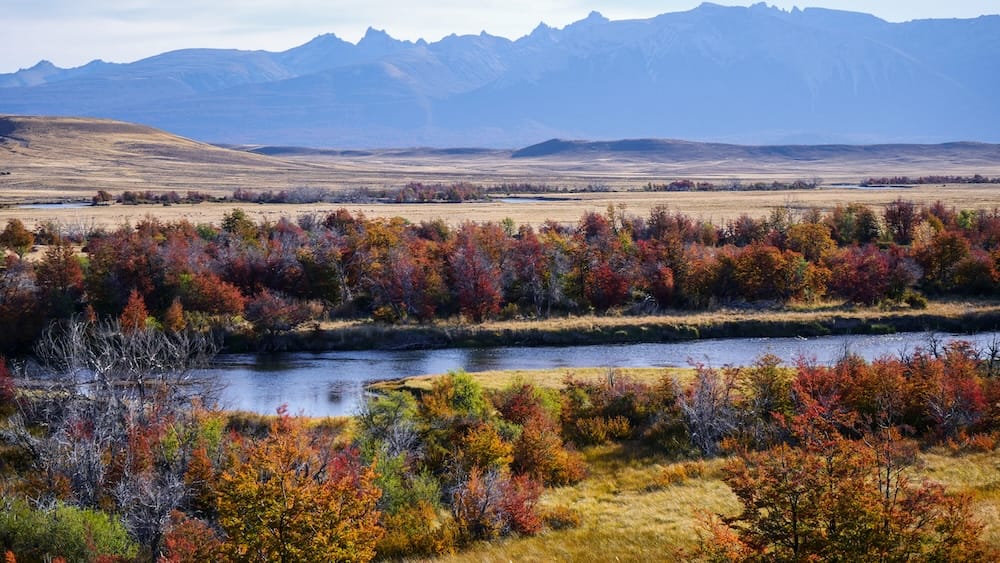
Our autumn journey through northern Argentine Patagonia delivered the blazing foliage, empty trails and private-feeling experiences we had hoped for. At times, it felt like we had somehow slipped into Patagonia after everyone else had gone home. We rode through fallen leaves outside Esquel, visited a vineyard with nobody else around, hiked beside quiet lakes and watched snow begin appearing above valleys painted yellow, orange and red.
Then the wind arrived at an estancia and cancelled every outdoor plan we had for the day.
Restaurants were closed. Accommodation was shutting down for winter. Rural buses were running less frequently. One lake town had lost nearly all its summer businesses, and a lodge we assumed was beside Route 40 turned out to be another 35 kilometres down an unpaved road.
Patagonia had not become cheaper, quieter summer. It had become something else.
That distinction matters.
Shoulder season can be a brilliant time to visit Argentine Patagonia, especially if you care about photography, autumn colour, solitude and slower travel. It can also expose every weak assumption in your itinerary. The traveller who thrives during this period is rarely the one with the most ambitious plan. It is the one who can move things around when Patagonia decides Tuesday is cancelled.
Our strongest firsthand experience is from autumn in Bariloche, Río Negro and Chubut. Spring follows a different rhythm, while El Chaltén, El Calafate and Ushuaia play by their own regional rules. I am not going to pretend one April road trip made us experts on every version of shoulder season across a region stretching thousands of kilometres.
What it did teach us was how to recognize when travelling outside peak summer is genuinely an advantage—and when it is merely a bargain-looking trap wearing a fleece jacket.
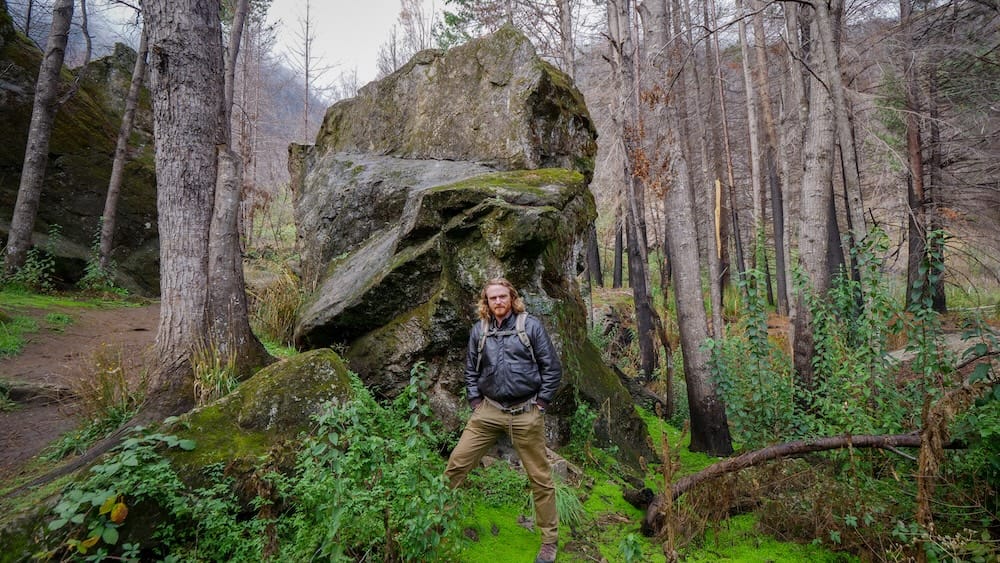
There Is No Single Patagonia Shoulder Season
The first problem is the phrase itself.
“Shoulder season” sounds like a clean block on the calendar. March to May for autumn. September to November for spring. Pick one, book a room and enjoy having the national park to yourself.
Patagonia laughs at this sort of administrative optimism.
March, late April and May can feel like three different seasons. The same is true of September, October and November.
March may still carry much of the summer tourism network. Excursions are running, daylight remains generous and rural accommodation is open. By late April, some of those services begin thinning out. May can feel far closer to winter operationally, even if a travel calendar still labels it autumn.
Spring moves in the opposite direction. A town can be active again while its higher trails remain buried in snow. Boat trips may restart before mountain refuges. Roads can be clear in the valley while the hiking route you planned still requires winter-level judgment.
Latitude adds another complication.
Bariloche has enough year-round infrastructure that it remains a workable base through much of autumn and spring. Esquel and Trevelin stay interesting, but rural transport becomes less forgiving. El Calafate often maintains substantial tourism activity into early autumn, while El Chaltén becomes more dependent on exact trail conditions and seasonal transport. Ushuaia functions all year, though the available experiences change dramatically.
A national park being open tells you almost nothing on its own.
The entrance road may be open while the visitor centre is closed. A trail may exist but be covered in ice. Toilets, food concessions, boat services, public buses and guided departures can all follow separate calendars. One operator may still be working while the business next door has packed up until spring.
The useful planning question is therefore not:
Is Patagonia open in April?
It is:
Will the specific experience I am travelling for still operate in this destination during my actual dates?
That question is considerably less romantic. It is also the one that prevents you from standing outside a locked door while wind removes circulation from your face.
Autumn Was Not Patagonia Fading Away
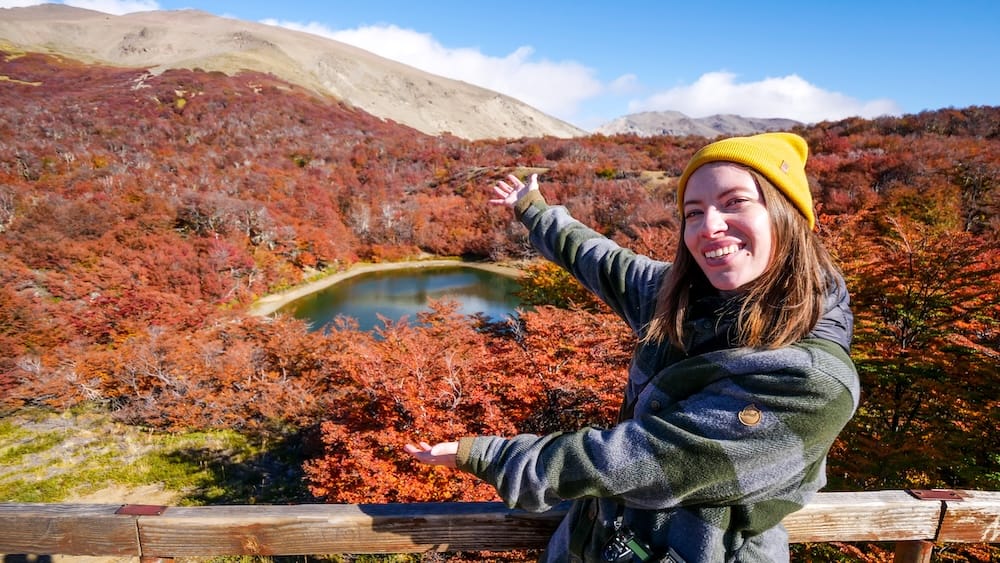
When we reached the Bariloche area in autumn, the landscape looked like someone had been wildly irresponsible with the saturation slider.
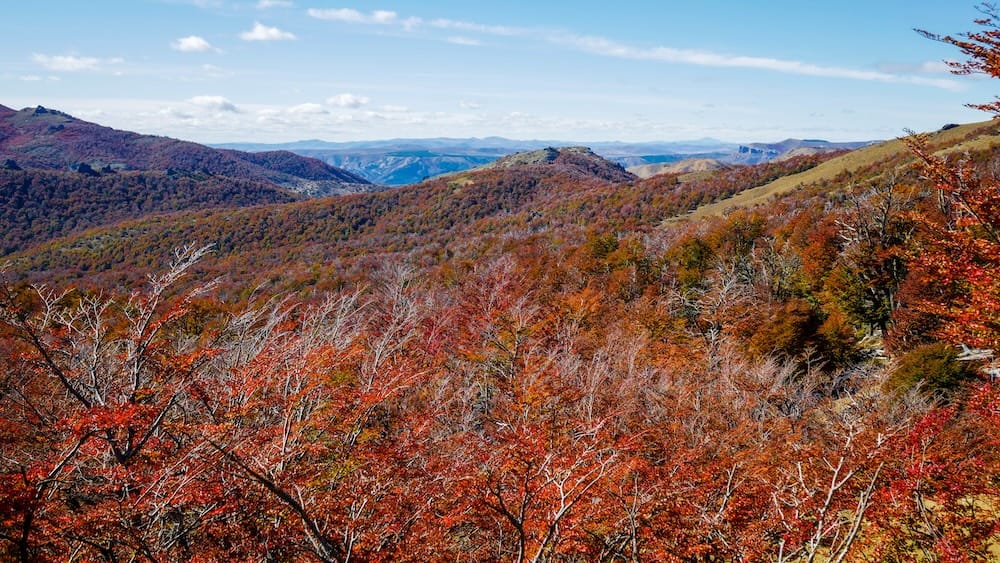
Yellow, orange and red leaves covered the hills. Quiet roads wound past forests already changing colour, while the first traces of winter sat higher in the mountains. We had visited parts of the region in summer before, but this felt like a different Patagonia.
The colours were not a small bonus. They changed the entire mood of the trip.
At Laguna Verde, red foliage framed the water. Around Esquel and Trevelin, autumn colour spread across the valleys below snow-dusted peaks. At rural estancias, frosty mornings made warm interiors, heavy meals and fireplaces feel like part of the journey rather than places to hide until the weather improved.
One of my favourite days came during a horse trek outside Esquel.
The air was crisp. The light was soft. Hooves crunched through fallen leaves as we climbed into the hills with hardly anybody else around. When we reached the viewpoint, I could not put my camera down.
This is saying something because I am usually very capable of putting a camera down when food appears.
That ride became one of the strongest experiences of our Patagonia journey. The landscape was beautiful, but the season also changed how we moved through it. We were not rushing behind another group or trying to frame photographs between people. We could stop. We could listen. We could take far too many versions of essentially the same mountain photograph and call it professional diligence.
Audrey enjoyed autumn for slightly different reasons.
She loved the colours, but she was equally enthusiastic about the cosy side of the season: warm rooms, fires, cakes, heavy food and the moral permission to wear nearly every layer she owned.
On one cold Bariloche morning, we started hiking at around freezing. Audrey had bundled up like mobile insulation. Her hand was so cold that I described it as a vampire’s hand, which was accurate, though perhaps not medically useful.
The day warmed as we moved, and by afternoon the conditions were genuinely pleasant.
That became another autumn surprise. A freezing start did not automatically mean a miserable day. Cold mornings often developed into comfortable afternoons once the sun rose and we began hiking or riding.
Still, foliage is not something I would schedule with surgical precision.
Patagonia is too windy, too large and too variable for promises about one perfect week. A strong storm can strip exposed trees. One valley may be glowing while a higher route already feels like winter. Colour arrives differently depending on elevation, latitude and the year’s weather.
Travel for the season, not one photograph.
If the leaves peak exactly when you arrive, fantastic. If they do not, you still have softer light, colder air, quieter roads and a landscape in the middle of changing its mind.
Fewer People Changed the Entire Experience
Saying shoulder season has “fewer crowds” makes the advantage sound like a shorter queue for the toilet.
Sometimes that is useful. It is rarely the whole story.
Fewer people changed the rhythm of our days.
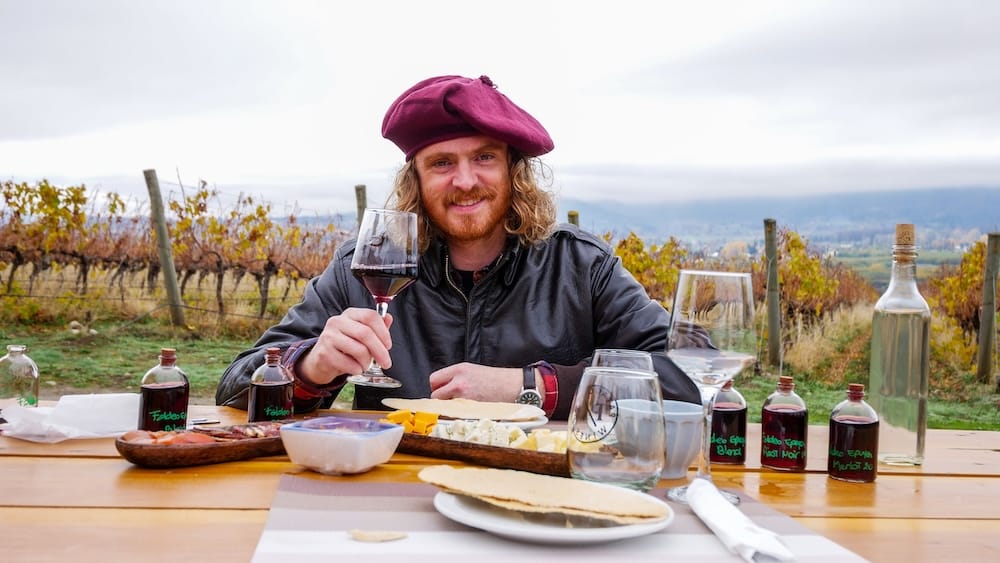
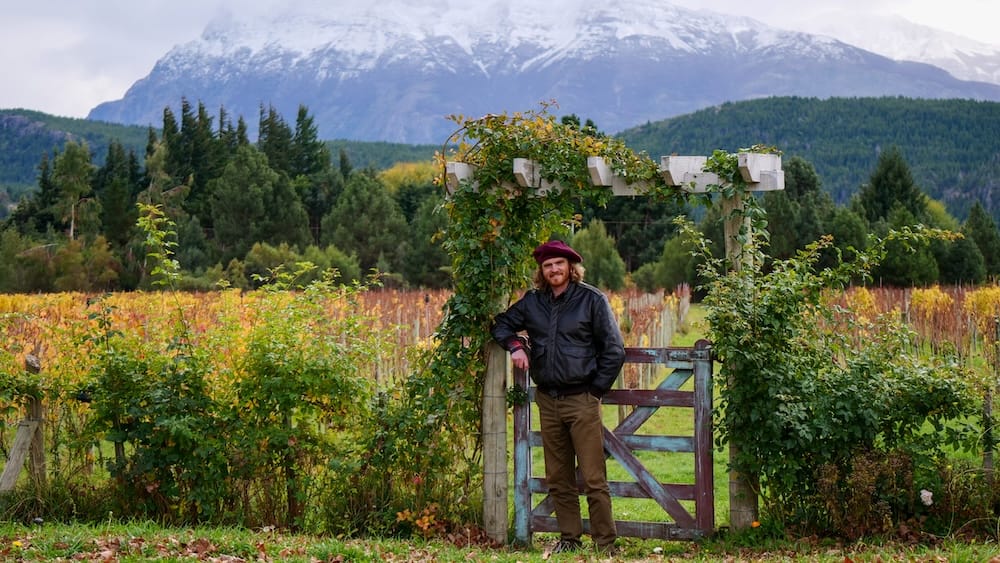
In El Hoyo, we visited a vineyard and were the only guests. We hiked to a waterfall without encountering other groups. At Laguna Willmanco outside Esquel, our companions were mostly cows, ducks and one bee that had taken an unhealthy interest in us.
Horse treks felt more personal. Viewpoints had space. We could linger over photographs without sensing fifteen people behind us mentally begging us to move.
A quiet rural winery also becomes a different experience. Nobody is rushing the conversation because another group is already pulling into the parking lot. Guides can respond to the pace of the people actually standing in front of them.
Trevelin was especially striking.
During our autumn visit, it felt calm, local and comfortably removed from the churn of bigger tourism centres. I called it the antidote to Bariloche. That was a genuine reaction to the place and the season in which we experienced it.
It is not a permanent law.
Visit Trevelin during spring tulip season and the same town can fill with visitors. Accommodation demand rises, local roads become busier and the tranquillity we enjoyed is no longer guaranteed. Bariloche has its own autumn spikes around Easter and major festivals.
A shoulder month can still contain peak days.
That is one of the easiest details to miss. Travellers check the climate chart and forget the event calendar. They assume April or October will be quiet because it sits outside January and February.
Then they arrive during the one weekend everybody else has also chosen.
If your dates overlap Easter in Bariloche or the tulip season in Trevelin, check actual room inventory before assuming you will have low-season choice. You can compare current accommodation in Bariloche or see what is available in Trevelin for your dates before locking the rest of the itinerary.
Before booking, also check festivals, public holidays, school breaks, races and major local events. Avoiding three busy dates can matter more than choosing the supposedly perfect month.
“Closed for the Season” Did Not Always Mean the Trip Was Over
Patagonia’s seasonal shutdowns are selective, which makes them both less frightening and more confusing.
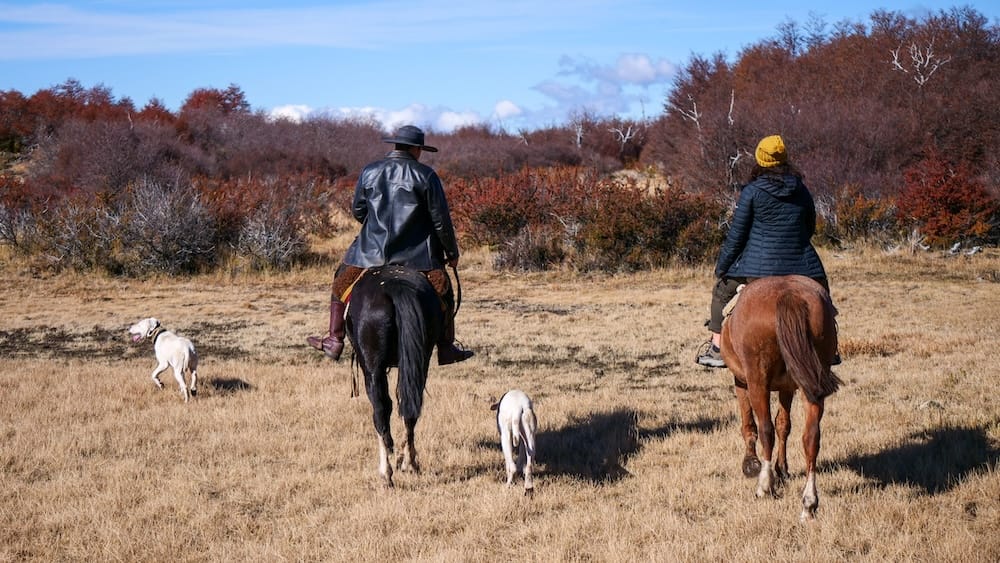
Near Esquel, we learned that a glamping property had stopped accepting overnight guests. That sounded final. Yet its mountain horse trek was still operating as a day activity.
The accommodation season had ended. The experience had not.
At Puerto Patriada near El Hoyo, the summer version of the lake had almost vanished. The kayak and paddleboard businesses were shut. Cafés and ice-cream places were quiet. Nobody was treating the beach like a warm-weather playground.
We could still walk beside the water, hike, photograph the fog and enjoy a lakeside atmosphere that would have been impossible in high summer.
For someone whose main goal was kayaking, the visit would have been a failure.
For us, the emptiness was part of what made it special.
The same pattern appeared elsewhere. Around Bariloche, hiking and horse trekking continued during our April stay. At Estancia Tecka, we went fly fishing, explored the ranch and experienced autumn on a working estancia. Vineyards welcomed visitors even when other rural businesses had already reduced their season.
The term “open” is too blunt to be useful.
A destination can remain open while losing most of the services that make a particular itinerary work. Conversely, one hotel or attraction can close while the larger trip remains perfectly viable.
You need to break the plan into pieces:
- Is the exact trail accessible?
- Is registration required?
- Does the bus run on the day you need it?
- Are toilets and visitor facilities operating?
- Has the refuge opened or closed?
- Is the excursion running, even if the attached accommodation is not?
- Can you eat nearby, or should you carry food?
That final question became more important than expected.
In Esquel, we tried several restaurants before finding one open. Around Lago Puelo on a Sunday, it felt as though the whole town had decided eating out was a summer activity.
Eventually, hunger stops being a charming local inconvenience and becomes the central editorial concern of the day.
Shoulder season rewards travellers who enjoy improvising. It is less charming when you are hungry, wet and discovering that your third restaurant choice is also locked.
Patagonia Can Cancel Tuesday
At Estancia Arroyo Verde, we woke expecting a day of outdoor activities.
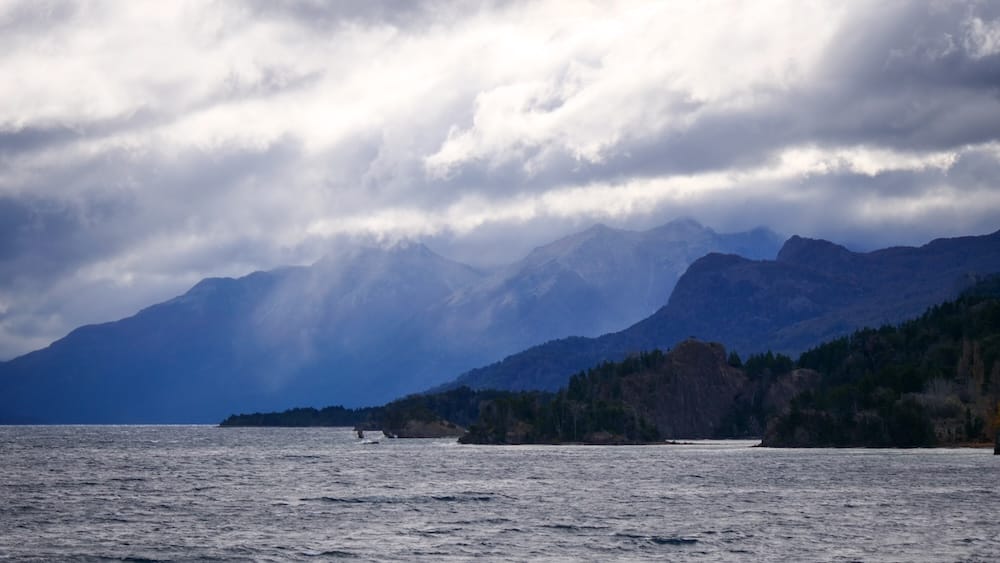
Instead, wind tore across the lake so violently that the water looked like the ocean. Hiking was cancelled. Horse trekking was cancelled. Anything involving voluntarily stepping outside seemed increasingly foolish.
There was no clever workaround.
Patagonia had cancelled Tuesday.
The next morning could barely have been more different. The wind dropped, the sun came out and we completed the activities that had been impossible the previous day.
“What a difference a day makes” is a cliché until you have watched an entire lake change personality overnight.
We saw similar reversals elsewhere.
In El Hoyo, the weather made the day look like a total write-off. Then it cleared in the afternoon. We hiked to a waterfall, enjoyed the window and watched the rain return as we came down.
In Esquel, we cycled to Laguna Willmanco ahead of the forecast and reached our hotel just as drizzle began. Around El Bolsón, we used the one dry day in our schedule for the major horse trek.
None of this means poor weather politely clears at 2:00 p.m.
Sometimes it stays poor. Sometimes the wind strengthens. Sometimes the mountain remains hidden for the entire visit and your expensive waterproof jacket becomes the most successful member of the team.
The important variable is not luck. It is flexibility.
A shoulder-season trip becomes fragile when one specific activity on one specific day determines whether the journey was worthwhile.
If you have three days in one region and several things you would genuinely enjoy, the weather can rearrange the trip without destroying it. If you have one afternoon and one exposed hike, you are effectively negotiating with Patagonia from a position of no leverage.
Backup plans should also be local.
An indoor activity three hours away is not a backup. It is a second itinerary.
Our most useful alternatives were simple: a sauna after cycling, a jacuzzi while rain hit the windows, a long meal, a vineyard visit, pizza and beer beside a fire.
Audrey naturally excelled at this form of emergency planning.
Give her a cold rainy afternoon, a fireplace and access to cake, and morale improves with suspicious speed.
I was not suffering either.
There is something deeply satisfying about coming in from bad weather, hanging wet clothes everywhere and eating food heavy enough to count as structural reinforcement.
Shoulder season changes what a successful day looks like. The outdoors still matters, but the recovery becomes part of the experience.
The Cheapest Room Can Still Produce an Expensive Trip
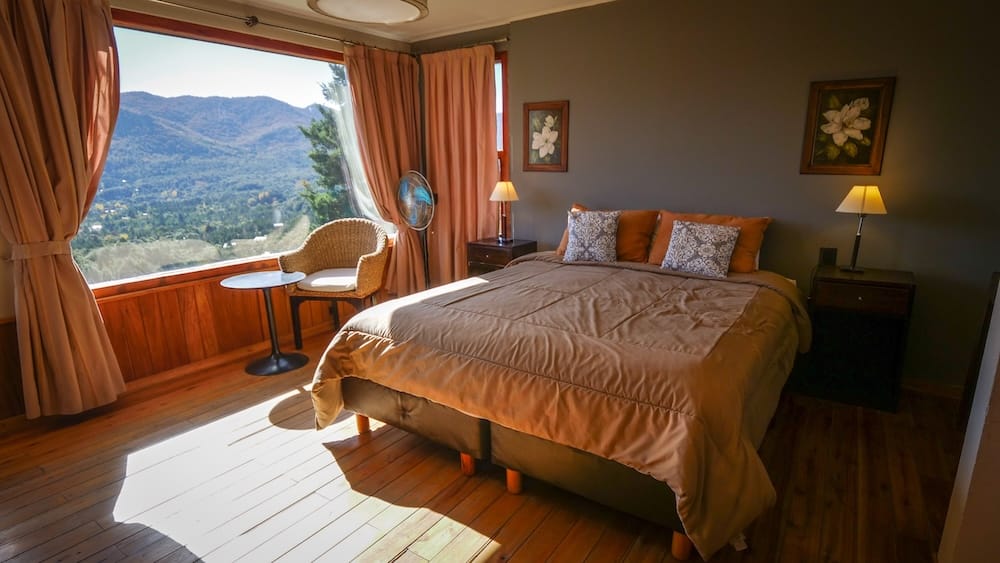
During our Bariloche-area visit, Audrey found a room listed for more than US$100 through one booking channel and available for US$66 when booked directly with the property.
That was a meaningful saving.
It was also one room, during one trip, booked several years ago.
“Patagonia is cheaper in shoulder season” is plausible. It is not a universal law.
Prices still rise around Easter, festivals and spring events. Some properties reduce their rates, while others close completely. Fewer open hotels can mean less choice rather than an overflowing discount bin.
The room price is only one part of the arithmetic.
A reduced bus schedule may force you to hire a taxi, rent a car or add another night. A cancelled excursion can require rearranging accommodation. Closed restaurants may push you toward self-catering, which is excellent when planned and less impressive when your dinner ingredients are crackers, wine and whatever survived three days at the bottom of a backpack.
Transport is where many shoulder-season savings become questionable.
Access between Esquel and Los Alerces National Park is much more frequent during the summer peak than during the rest of the year. Long-distance routes such as Bariloche to El Chaltén follow seasonal schedules. La Trochita departures vary by route and month rather than operating as a constant turn-up-and-go service.
Then there are the distances.
Our arrival at Estancia Tecka was a useful lesson in the dangers of interpreting a Patagonia map too casually.
We believed the property was just off Route 40. Technically, it was connected to Route 40. In practical terms, the lodge was another 35 kilometres down an unpaved road.
The estancia had to send a driver to collect us.
At the scale of Patagonia, 35 kilometres can look like a rounding error. At the side of a highway with luggage, it feels more significant.
Never assume a map pin near the road means you can casually walk in.
If you plan to build the trip around rural parks, vineyards and estancias, compare the rental cost against the taxis, missed buses and extra nights you may otherwise accumulate. Booking.com has live comparisons for car rentals in Bariloche and rental cars from Esquel Airport. A car is not automatically necessary, but in shoulder season it can buy back a great deal of flexibility.
A cheaper hotel is still a bargain when the rest of the trip works. It becomes less impressive when reaching the trail requires a rental car you did not otherwise need.
My rule would be simple: establish that the itinerary functions first. Treat any price saving as a bonus afterward.
Autumn and Spring Are Different Trips
Autumn and spring are grouped together because both sit outside summer.
They should not be planned as interchangeable versions of the same season.
They move in opposite directions.
Autumn: Patagonia Closing Gradually
Autumn offers foliage, softer light, colder air and the first visible approach of winter.
For us, it produced some of the best photography and most atmospheric days of the trip. Fires, warm meals and cosy accommodation felt connected to what was happening outside. Trails and vineyards were quieter. Horse treks took on a completely different mood.
At the same time, daylight shortened and services began winding down. Rain became more influential. Higher routes could move toward winter conditions before towns below felt fully cold.
The question in autumn is usually:
Have I arrived before the experience I want closes?
That answer may differ for the hotel, bus, trail and excursion.
Spring: Patagonia Reopening Unevenly
We have not personally travelled through Argentine Patagonia during spring shoulder season, so I am keeping this section firmly outside our firsthand record.
Spring brings longer days, snowmelt, flowers and the staggered return of warm-season activities. Around Bariloche, lower areas may become mild while snow remains higher in the mountains. Trevelin’s tulip fields create one of Argentine Patagonia’s most distinctive spring events.
They also attract crowds.
That matters because spring is often marketed as an automatically quiet alternative to summer. Trevelin during tulip season can be busy and heavily booked. A spring landscape may be opening while local accommodation demand temporarily feels close to peak season.
Farther south, spring can remain unstable and windy. High trails may still hold winter conditions. Mud and snowmelt can complicate routes even when towns feel active.
The spring question is the reverse of autumn:
Have I arrived after the experience I want reopens?
A café, boat service, mountain trail and rural hotel may each give you a different answer.
The Same Month Means Different Things Across Patagonia
The easiest way to make sense of shoulder season is to divide Argentine Patagonia into practical regions.
Bariloche and the Northern Lake District
Bariloche is one of the more forgiving shoulder-season bases because it retains substantial year-round infrastructure.
Restaurants, accommodation and city services do not vanish when summer ends. Autumn colour can be exceptional, while hiking, horse trekking and scenic driving remain possible depending on the conditions.
That was our experience in April.
The mountains still require current information. A route that is straightforward in summer can become a snow or ice outing. Trail registration may apply, and conditions at elevation can be far more serious than the weather beside the lake in town.
Easter and major festivals can also create sudden demand.
Bariloche is a strong option for travellers who want autumn atmosphere without losing every urban convenience. Before fixing the rest of the route, you can compare Bariloche hotels and apartments for your dates.
Travellers who prefer to keep several weather-dependent options available can also compare current Bariloche tours and departure dates. A guided excursion will not control the weather, obviously. It can, however, make it easier to see which activities are actually being sold during your travel window.
Bariloche is not permission to treat the mountains as though January has simply become quieter.
Esquel, Trevelin and the Chubut Andes
This region supplied our richest autumn material.
We found empty countryside, vineyards, horse trekking, autumn colour and a wonderfully slow rhythm. Trevelin felt calm and local during our visit. Esquel worked as a practical base for outdoor excursions and rainy-day recovery.
Transport is the weakness.
Rural services become thinner outside summer, and reaching Los Alerces National Park or other outlying attractions can be much easier with a car. Restaurants may also operate selectively, particularly on quieter days of the week.
For access and a larger pool of everyday services, compare accommodation in Esquel. For a smaller-town atmosphere closer to the Welsh heritage and spring tulip area, check current stays in Trevelin.
Spring changes the atmosphere again. Trevelin’s tulip season attracts visitors precisely because it is spectacular, which means the town may be far busier than someone expecting a sleepy October escape.
This region is an excellent fit for travellers who want rural landscapes and slower travel. It becomes less forgiving when every movement depends on a bus lining up perfectly.
El Chaltén and El Calafate
Our experience in this part of Patagonia was not during shoulder season, so the guidance here comes from current operating patterns rather than personal autumn travel.
Late March and early April can retain much of the southern tourism network. El Calafate’s main season often extends through Easter, and major glacier excursions may continue beyond the busiest summer weeks.
The picture changes as autumn advances.
Some rural accommodation operates only through April. Long-distance transport becomes more seasonal. El Chaltén’s trails do not disappear, but registration, snow, wind and reduced services change what is practical.
May is not merely March with fewer people.
Early spring carries the opposite risk. Buses and businesses may be returning while higher trekking routes remain winter-like.
For a shoulder-season trip with several glacier excursions and indoor backup options, El Calafate is generally the more forgiving base. You can compare current accommodation in El Calafate and see which El Calafate tours are operating on your dates.
If trekking around Fitz Roy is the point of the journey, research El Chaltén separately rather than assuming Calafate conditions transfer north. It is worth checking both available places to stay in El Chaltén and current guided activities and day trips around El Chaltén. Tour availability is not proof that every trail is in good condition, so park updates still control the hiking decision.
The southern region can work extremely well outside peak summer. It demands more precise checking than a broad “Patagonia is beautiful in April” statement suggests.
Ushuaia and Tierra del Fuego
Ushuaia remains a functioning city throughout the year, though the available activities change sharply.
Autumn becomes colder. Spring is often windy and unstable. Penguin navigation generally follows an October-to-April window, while winter tourism revolves around a different set of experiences.
The city does not simply move between open and closed. It shifts between tourism seasons.
This makes Ushuaia more resilient than an isolated trekking village, but it does not guarantee the one excursion you care about will be operating.
As elsewhere, the decision depends on whether that missing activity is optional or the entire reason for travelling.
Because the city itself remains a useful base, you can compare current places to stay in Ushuaia. Then check Ushuaia tours available during your exact dates to see whether the excursion mix matches the season you are considering.
Who Is Shoulder Season Actually Good For?
Shoulder season suited us because we had enough time to rearrange activities, enjoyed photography, did not need every restaurant to be open and could appreciate a cold rainy afternoon beside a fire.
The best fit has less to do with being rugged than with being flexible.
| Your travel style | Better fit | Higher risk |
|---|---|---|
| Time in each region | Several days | One or two tightly scheduled days |
| Outdoor priorities | Several interchangeable activities | One non-negotiable hike or boat trip |
| Transport | Rental car or confirmed transfers | Dependence on infrequent rural buses |
| Weather tolerance | Comfortable rearranging plans | Needs a predictable clear day |
| Service expectations | Fine with partial openings | Needs full restaurant and excursion choice |
| Main motivation | Autumn colour, photography, solitude or spring flowers | Summer facilities and maximum variety |
| Crowd planning | Checks events and holidays | Assumes every shoulder month is quiet |
| Research style | Confirms exact trails and services | Stops after reading that the destination is open |
A traveller with five days around Bariloche and several possible outings has room to adapt.
Someone with two nights in El Chaltén and one life-defining hike has far less margin. If the weather removes that trail, the season has not merely altered the itinerary. It has removed the reason for the trip.
Families, travellers with limited mobility and anyone relying on specific accessible facilities need to verify each attraction directly. Mud, snow, closed toilets and reduced transport can change practical accessibility even when the destination continues welcoming visitors.
Shoulder season is not automatically harder. It is simply less forgiving of vague planning.
Would I Choose Patagonia in Shoulder Season Again?
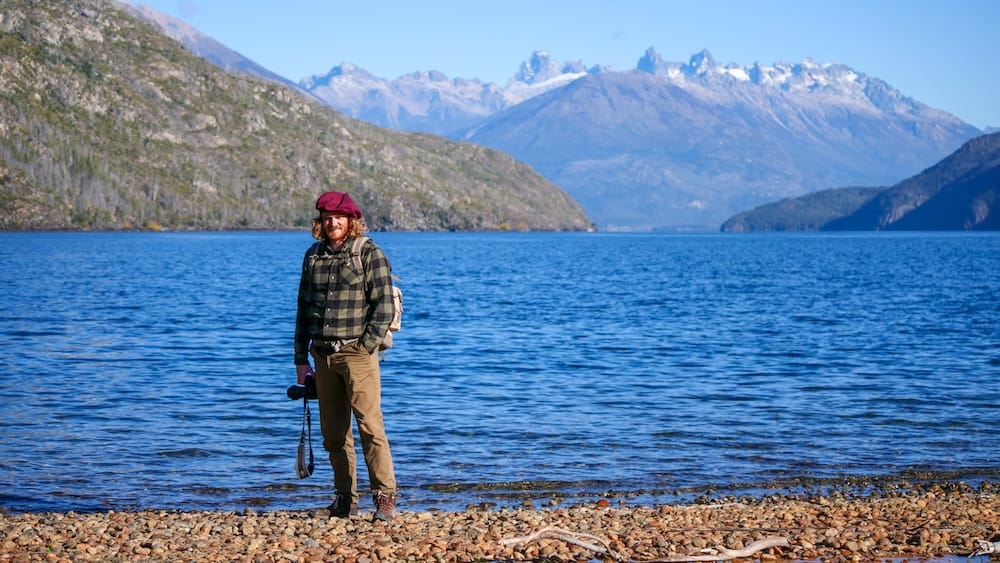
Absolutely—especially autumn in northern Argentine Patagonia.
Some of the most memorable landscapes and peaceful experiences of our trip came during this period. We rode through fallen leaves, photographed snow above autumn valleys and visited places that felt entirely different from their summer versions.
I would return.
I would also plan the trip with fewer bases, more breathing room and less confidence in my own beautiful spreadsheet.
I would check the exact activity rather than stopping after confirming the destination exists. I would keep the best-looking weather day free for the most exposed outing. I would carry food more often. I would verify rural transport and ask what “near Route 40” means in actual kilometres.
And I would treat lower prices as a welcome surprise rather than the foundation of the trip.
That is my decision rule for Patagonia in shoulder season:
Choose it when the seasonal landscape, solitude and slower pace are central to why you are travelling—and when losing one plan will not destroy the journey.
Choose peak summer when long daylight, frequent transport, broad access and the widest possible choice matter more than quiet trails.
Shoulder season can show you a version of Patagonia that most summer visitors never see.
It can also show you every weak assumption in your itinerary.
Sometimes before lunch.
Frequently Asked Questions
What months count as shoulder season in Patagonia?
There is no single Patagonia-wide calendar. March to May and September to November are useful seasonal labels, but the practical window changes by destination, elevation, transport schedule and the activity you want to do.
Is Patagonia cheaper during shoulder season?
It can be, but lower prices are not guaranteed. Some properties reduce rates while others close, and savings can disappear if reduced transport forces you to rent a car, take taxis or add extra nights.
Does everything close outside the summer peak?
No. Closures are selective. A lodge may stop taking overnight guests while still offering day activities, or a lake may remain accessible after its cafés and equipment rentals have shut for the season.
Is autumn or spring better for visiting Patagonia?
They offer different trips. Autumn brings foliage, softer light and a gradual reduction in services, while spring brings longer days, snowmelt and an uneven reopening of trails, accommodation and excursions.
Do you need a rental car in Patagonia during shoulder season?
Not everywhere, but a car can make rural areas around Esquel, Trevelin, vineyards, estancias and national parks easier to manage when public transport runs less frequently.
Who is Patagonia shoulder season best suited to?
It suits flexible travellers who can spend several days in one region, rearrange outdoor plans and enjoy seasonal scenery even when one activity, restaurant or transport connection is unavailable.
How should you plan for shoulder-season weather in Patagonia?
Build several interchangeable activities into each regional stay and keep the best-looking weather day for the most exposed outing. Extra time improves flexibility, but it cannot guarantee clear conditions.
Project 23 Argentina: This article is also available in Spanish. [Leé la versión en castellano: Patagonia en temporada media: ventajas ocultas y sorpresas]
Disclosure: This article contains affiliate links. If you book through one of these links, we may earn a commission at no extra cost to you.