
Edmonton is a funny city to sightsee because it refuses to organize itself neatly for visitors.
You can spend a perfectly respectable day downtown, see the Legislature, wander around ICE District, dip into the river valley and come away thinking you’ve got a decent handle on the place.
Then you cross the river to Whyte Avenue and realize you’ve been seeing only one version of Edmonton.
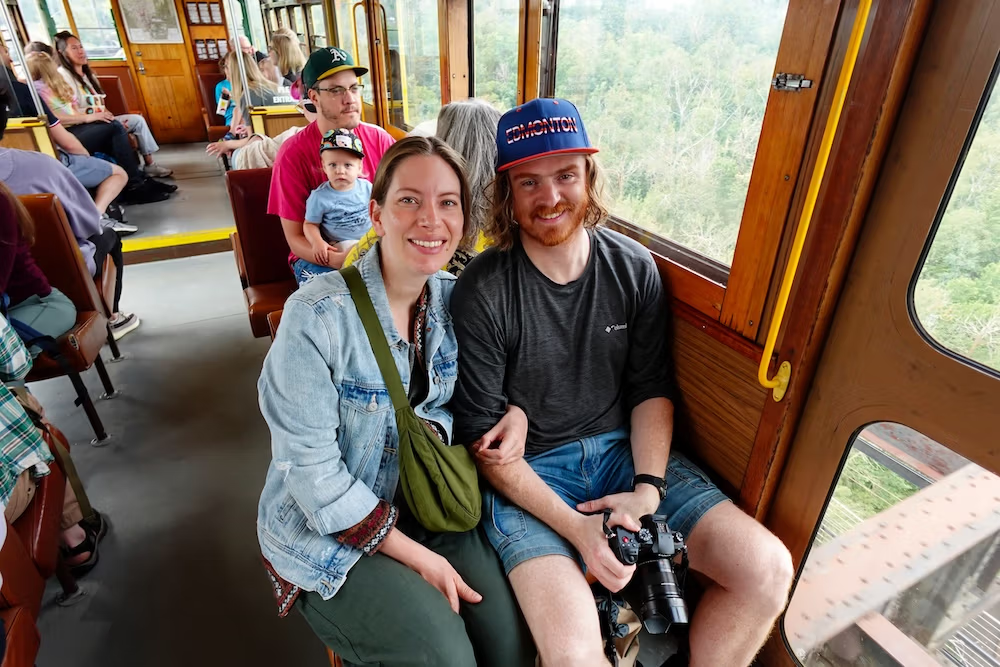
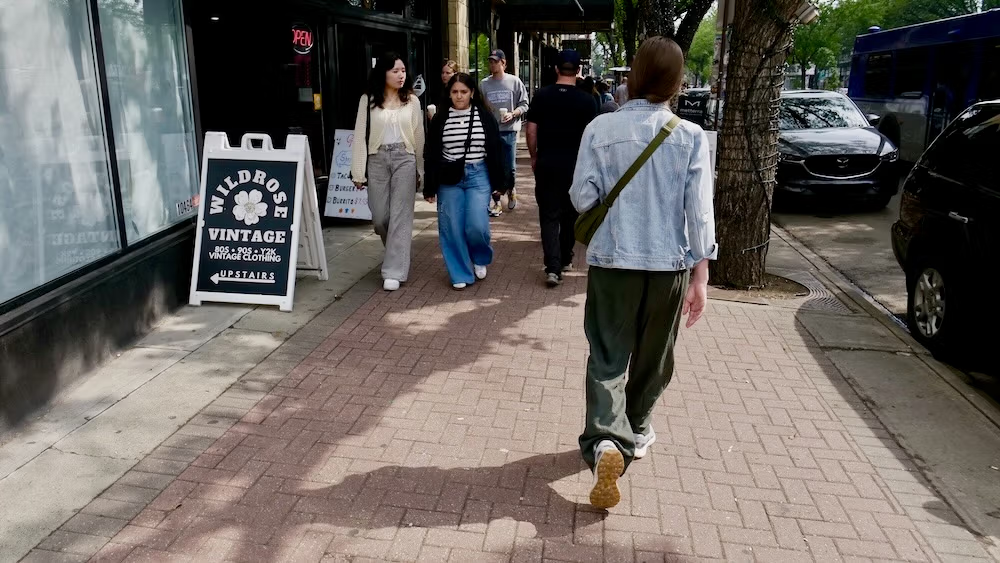
That happened with Audrey. I used to live here when I was a university student, so Old Strathcona and Whyte Avenue were already baked into my idea of the city. When I brought her over there on our return trip, she told me it changed her perception of Edmonton.
That stuck with me.
The river valley matters. Whyte Avenue matters. 124th Street brings another neighbourhood into the mix. West Edmonton Mall sits way out west doing its own ridiculous West Edmonton Mall thing. Edmonton’s interesting bits are scattered around enough that choosing a tour isn’t simply a matter of finding the one with the best reviews.
You first have to decide what problem you want the tour to solve.
The main Edmonton options currently fall into five useful categories: walking, sightseeing trolley, bike, Segway and food tours. We didn’t personally take these commercial tours, so I’m not going to review guides I’ve never met or pretend I know what a particular group dynamic feels like.
What Audrey and I did do was explore Edmonton extensively ourselves. We walked the core and river valley, used transit, rode the High Level Bridge Streetcar, joined a guided Alberta Legislature tour, explored Whyte Avenue and Old Strathcona, and ate our way around enough restaurants to make elastic-waist trousers seem like prudent travel gear.
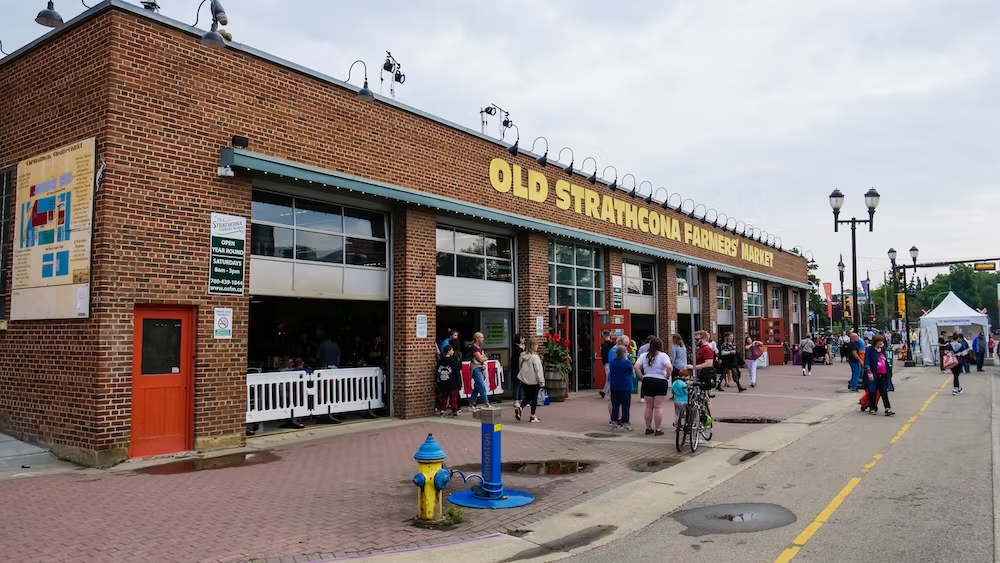
And because I used to live here, I have a pretty firm opinion about which parts of Edmonton are worth getting beyond your hotel to see.
So instead of ranking completely different products from one to ten, I’m more interested in this question:
What kind of Edmonton do you want your tour to show you?
If you’re already at the booking stage and mainly want to see what is available for your dates, you can compare current Edmonton tours and activities on GetYourGuide. The rest of this guide is about deciding which type actually makes sense for your trip.
Start with what you’re actually trying to see
A walking tour and a trolley tour might both last several hours, but they’re solving almost opposite problems.
The walking tour slows Edmonton down. You’re concentrating on Downtown, hearing the stories and noticing things you would probably march straight past on your own.
The trolley spreads Edmonton out. It connects districts that are annoying to combine on foot and can double as sightseeing transportation.
Cycling lets you cover serious ground while spending more time inside the river valley rather than looking down at it from above.
Segway tours narrow the focus even further. For a first-time rider, this is primarily a river-valley activity rather than an introduction to the whole city.
Food tours throw the usual sightseeing checklist out the window and spend several hours getting to know one neighbourhood through restaurants and local businesses.
That’s why there isn’t one Edmonton tour I’d call the obvious winner.
There are, however, some pretty obvious matches depending on how you like to travel.
Edmonton walking tours: best for understanding Downtown
The main guided walking option concentrates on central Edmonton over roughly three hours and four to five kilometres.
That makes it the most focused of the major tour formats.
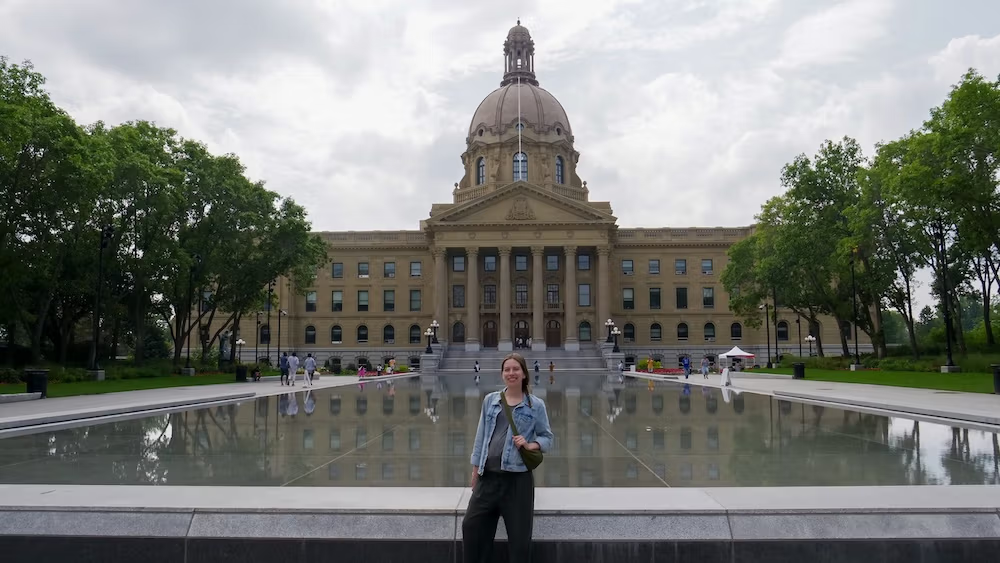
You’re around Jasper Avenue, central architecture, the Legislature area and the edge of the North Saskatchewan River Valley rather than racing across town trying to collect neighbourhoods.
And I think that’s exactly how a walking tour should work.
Audrey and I walked plenty of central Edmonton independently. Physically getting around isn’t the reason I’d pay for a guide. The value is having somebody explain the city while you’re standing inside it.
We got a taste of how much that can change an experience when we toured the Alberta Legislature.
We’d already seen the building. We could have walked around outside, admired the architecture and continued with our day. The guided visit gave the place a completely different layer.
We also learned a practical lesson by accident.
We hadn’t locked down our tour well in advance and ended up getting the last two spaces after somebody cancelled. Other visitors arrived after us wanting to join and couldn’t.
Nothing catastrophic happened. We got lucky.
Still, it’s the kind of tiny travel friction you remember because it could easily have gone the other way.
A city walking tour gives you the same basic advantage on a larger scale: somebody else provides the interpretation while you concentrate on looking around.
If that sounds like the kind of introduction you want, you can check current availability for the three-hour Edmonton City Highlights Walking Tour.
Where I would temper expectations is geographic coverage.
Downtown is important, but if that walking tour became your entire Edmonton sightseeing experience, I think you’d leave with an incomplete picture of the city.
That isn’t a criticism of the tour. Four or five kilometres on foot simply can’t do the same job as a vehicle covering multiple districts.
Think of the walking tour as depth in the centre, not Edmonton in its entirety.
There’s also enough walking involved that footwear and weather aren’t throwaway details. Edmonton has never been shy about producing inconvenient weather, and three hours on foot feels rather different when it’s hot, wet, smoky, windy or properly cold.
For travellers who enjoy walking and want history and local context without devoting an entire day to sightseeing logistics, though, this is probably the cleanest place to start.
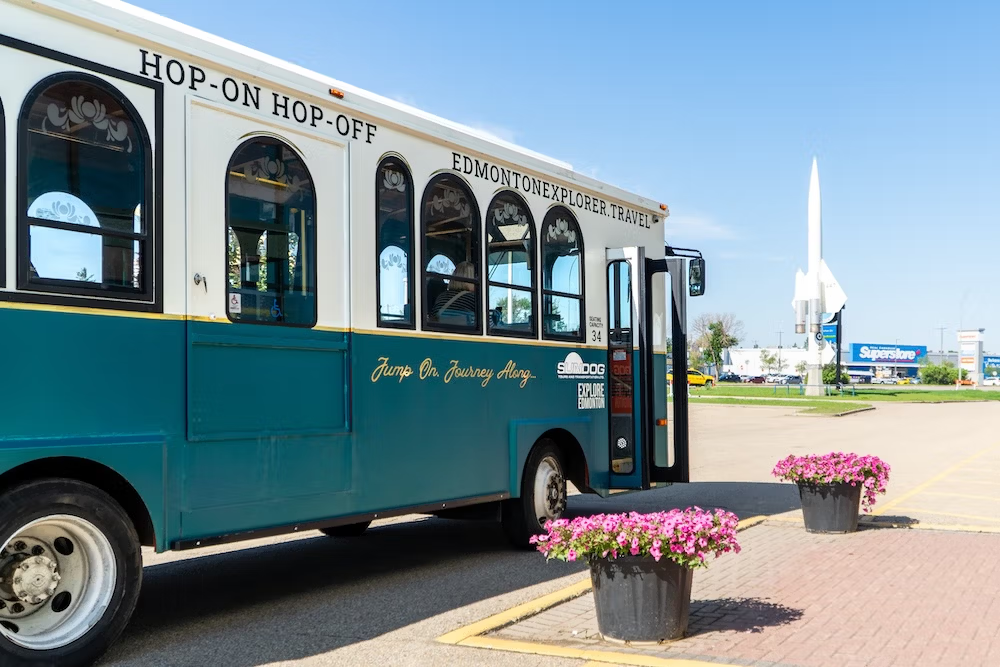
Edmonton Explorer trolley: the easiest way to understand the city’s scale
If I were visiting Edmonton for the first time and had very little sense of the geography, this is the format I’d look at hardest.
Edmonton Explorer uses two connecting hop-on, hop-off loops with 20 stops spread across a surprisingly large piece of the city.
And I mean large.
The current network connects areas including the Legislature, ICE District, Whyte Avenue, 124th Street, the river valley, Fort Edmonton Park and West Edmonton Mall.
That list immediately tells you what makes the trolley different.
It’s not just a guided ride.
It can function as part of your transportation plan.
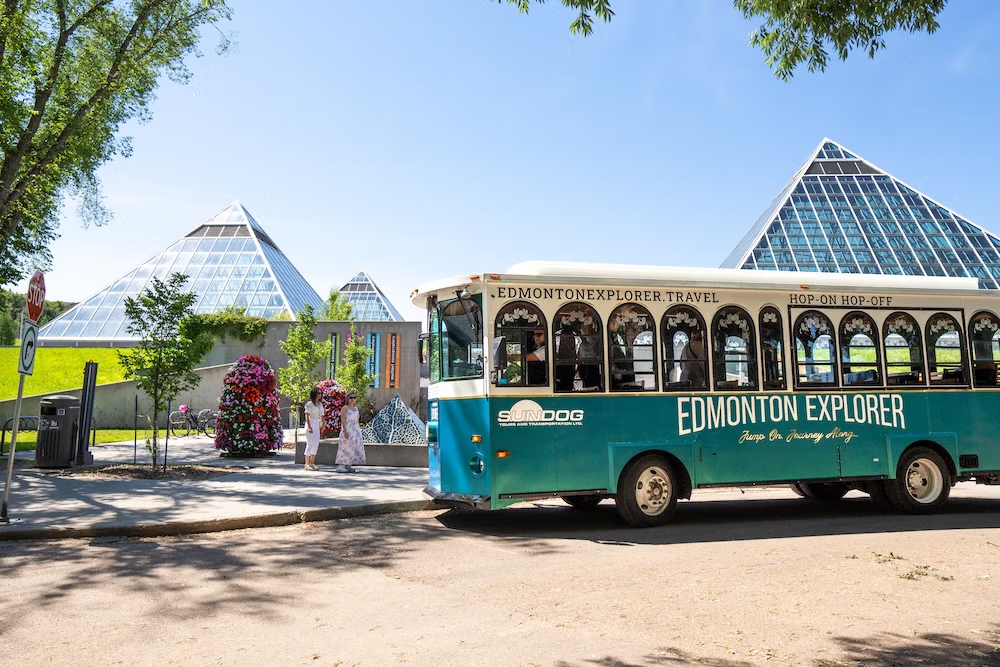
That matters in Edmonton because the distances start stacking up quickly. Downtown to Whyte Avenue is one thing. Add 124th Street. Add West Edmonton Mall. Suddenly your charming little walking itinerary has turned into an accidental endurance event.
Audrey and I reached these places through our own mixture of walking, LRT, buses and other transport, but we were deliberately working out the city as we went.
The trolley removes some of that mental load.
You can get aboard, orient yourself and hop off when something interests you. Travellers who want that broad first-day overview can check Edmonton Explorer trolley passes and current departure availability.
The catch is that this isn’t urban transit running every few minutes. The loops currently take roughly 90 to 120 minutes, so getting off requires at least a little thought.
If you jump off somewhere, spend longer than expected and watch the next trolley disappear, that decision has consequences.
Personally, I’d rather know that before booking than imagine I’m buying some magical door-to-door sightseeing conveyor belt.
The value is breadth, not limitless flexibility.
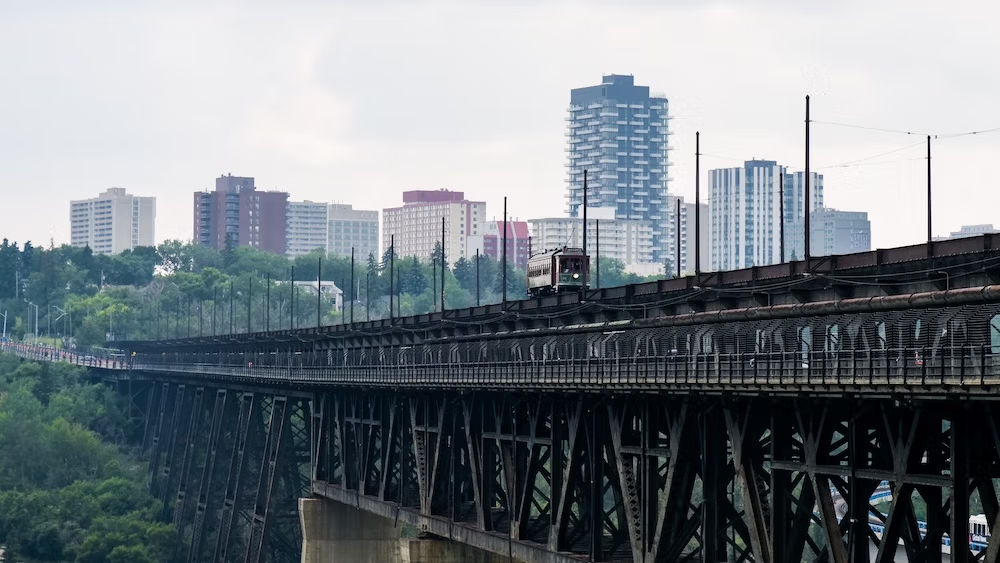
Don’t confuse the trolley with the High Level Bridge Streetcar
This distinction is worth making because Edmonton has another old-fashioned-looking vehicle that visitors may encounter.
Audrey and I rode the High Level Bridge Streetcar round trip and absolutely loved it.
I had seen the streetcar when I lived in Edmonton but had never bothered to ride it. That’s one of those classic resident-versus-tourist contradictions. You can live somewhere for years, ignore an attraction the entire time, come back much later with a camera and suddenly think it’s brilliant.
I thought it was super fun.
But the streetcar is its own historic experience. It crosses the High Level Bridge on a specific route and the journey itself is the attraction.
Edmonton Explorer is the sightseeing network.
In fact, its route connects with the streetcar terminals, so you could potentially use one to reach the other.
For somebody who wants the widest introduction to Edmonton with the least physical effort, the trolley has the strongest case of anything in this article.

Edmonton bike tours: much more city in the same three hours
The guided city bike tour also lasts around three hours.
That’s about where the similarities with the walking tour end.
Instead of covering four or five kilometres, you’re looking at roughly 17 kilometres by bicycle.
That changes the shape of the day completely.
The bike route moves through central Edmonton, the North Saskatchewan River Valley and Old Strathcona, which is exactly the combination I’d want from an active city tour here.
I have a major soft spot for the river valley.
When I lived in Edmonton, it was my tranquil escape. I’d go walking, jogging and inline skating along the trails, and returning there years later was one of the experiences that made the city immediately familiar again.
From street level, Edmonton can sometimes feel like roads, towers and enormous distances.
Drop into the river valley and the personality changes.
You’ve got trees, slopes, bridges, trails and the river running through the middle of everything. There are places where the skyline is still right there, but psychologically it feels much farther away.
A bike is particularly well suited to that environment because you can cover substantial ground without turning the tour into a race between attractions.
The current guided tour includes a standard bicycle and helmet, with an e-bike option available. Riders need previous cycling experience, and there are age and height requirements.
If that combination of city sightseeing and river-valley riding appeals to you, you can see current dates for the Edmonton City Bike Tour.
That last bit about riding experience deserves more attention than the cheerful phrase “bike tour” sometimes gets.
Seventeen kilometres is a real outing.
Edmonton isn’t the Rockies, but the river valley isn’t a billiard table either. Trail surfaces and gradients vary, and some grades are legitimately challenging.
I’d be wary of anybody describing this as universally easy.
If you are already comfortable on a bike, that’s a different matter.
Then the distance becomes the attraction rather than the problem.
You get more Edmonton than you could reasonably see on foot while remaining physically connected to the places you’re passing through.
That’s also the key distinction between biking and the trolley.
On the trolley, the vehicle helps you reach the neighbourhood.
On a bike tour, moving through Edmonton is part of the experience.
For active travellers, I think that’s a big advantage.
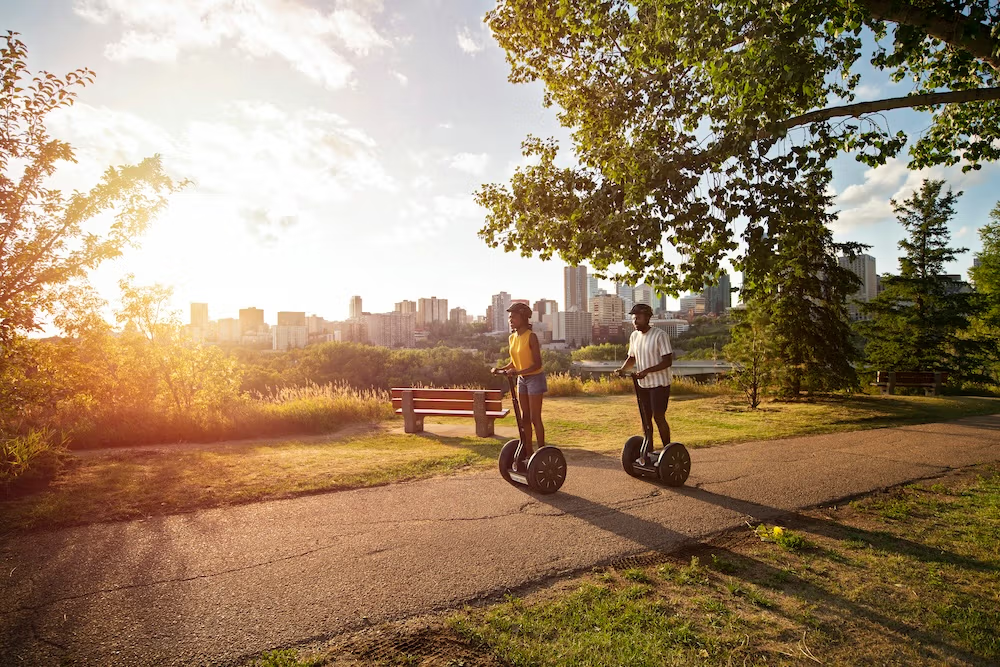
Edmonton Segway tours: more river valley, less city checklist
Segway tours occupy their own odd little corner of Edmonton sightseeing.
And I mean that affectionately.
The standard beginner tours start around Louise McKinney Riverfront Park and concentrate on the river valley.
So if you’re imagining a grand Segway sweep of Downtown, Whyte Avenue, Rogers Place and West Edmonton Mall, gently remove that image from your brain.
This is a much more focused outing.
Another useful detail is how the timing works.
The introductory experience includes training before you head into the park with the guide. That’s worth knowing because a one-hour booking doesn’t mean you’ll spend every minute cruising around the river valley.
And frankly, I’m okay with that.
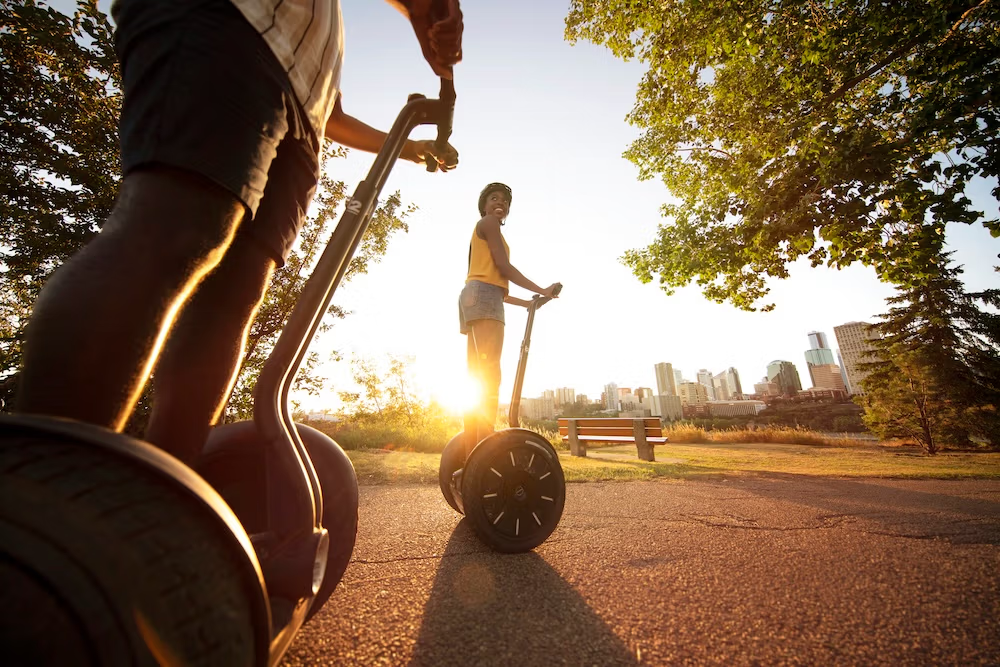
I’ve never ridden one of these Edmonton Segway tours, and if I were climbing onto a self-balancing machine for the first time, I’d prefer somebody spend a decent chunk of time making sure I wasn’t about to launch myself into the North Saskatchewan River.
The standard tours also come with participation requirements, including age and weight limits and closed-toe shoes.
If the Segway itself is part of the attraction for you, you can check availability for the Louise McKinney Park Segway tour.
So I wouldn’t judge Segway against the trolley or bike tour on city coverage.
That’s the wrong contest.
The appeal here is spending guided time in the river valley while trying a mode of transport that is part of the entertainment itself.
If you’ve only got one day in Edmonton and want a comprehensive introduction, I’d look elsewhere first.
If you’ve already got your city sightseeing covered and the idea of gliding around the river valley sounds fun, now the Segway starts making a lot more sense.
Anyone with mobility or medical concerns should check suitability directly before booking. The current activity requirements exclude people with mobility impairments and wheelchair users, so this isn’t a product I’d treat as a lower-mobility alternative to walking.

Edmonton food tours: forget the landmarks and pick a neighbourhood
This is the category Audrey and I came closest to recreating ourselves.
Not because we joined an organized food tour.
We didn’t.
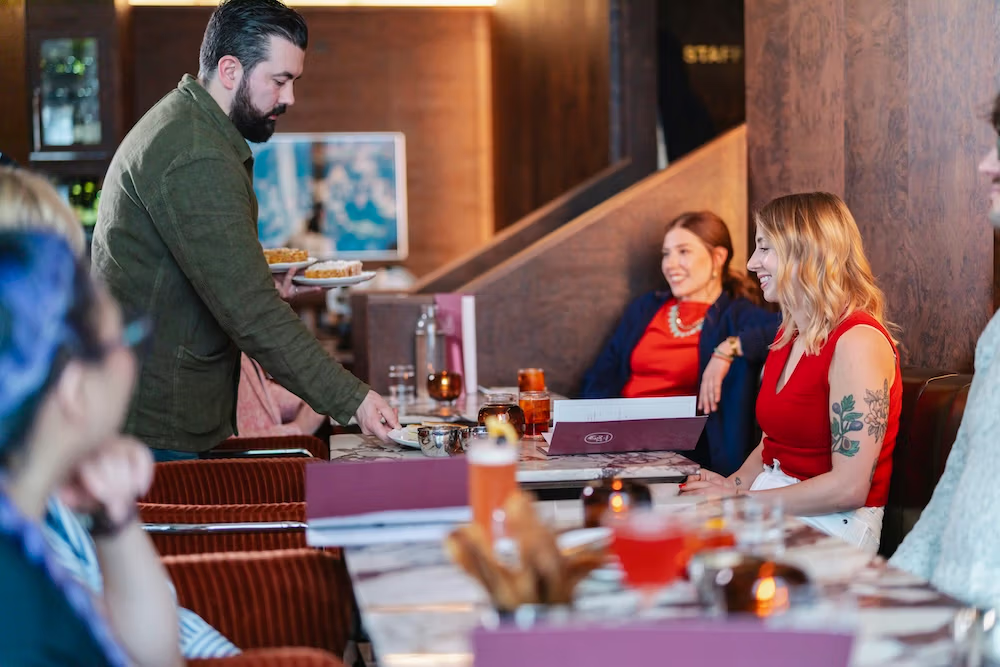
We simply spent an impressive percentage of our Edmonton trip either eating, discussing what we were about to eat or recovering from what we’d just eaten.
A rigorous research program.
We ate tacos and ceviche at West Edmonton Mall, visited a sports bar around Rogers Place, went for donair, returned to my old Cajun-Creole haunt on Whyte Avenue, had Eastern European comfort food and finished another morning with a serious brunch.
That reminded me of something Edmonton did for me years ago.
When I moved here for university, it was the first large city I’d lived in. Edmonton exposed me to foods and cuisines that just hadn’t been part of my life before.
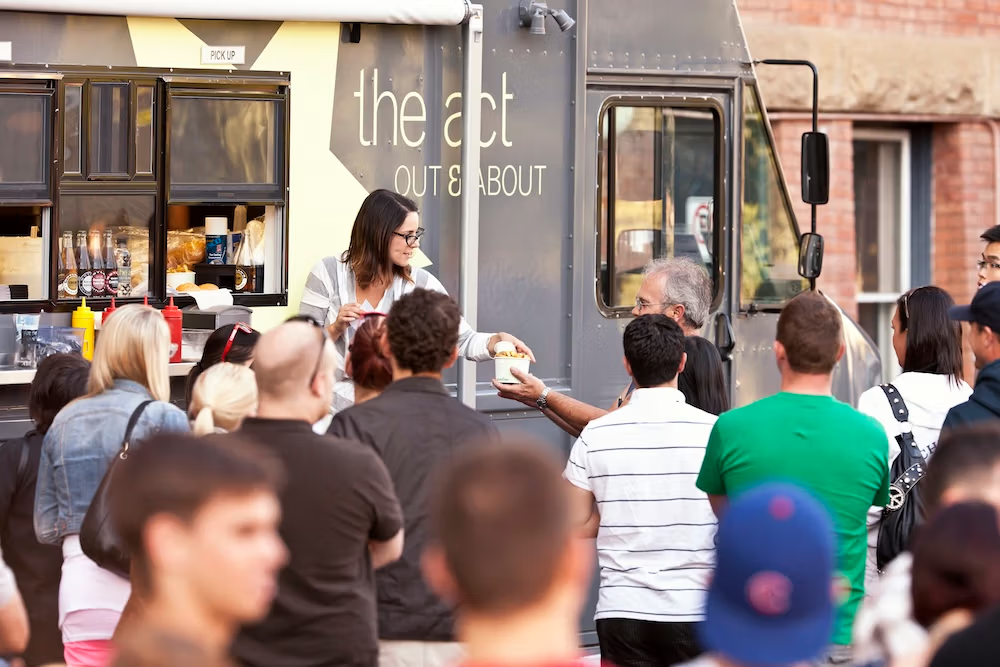
That diversity is still one of the things I most enjoy about the city.
Current organized food tours take that idea and concentrate it into particular neighbourhoods.
Whyte Avenue and Old Strathcona
This is the food-tour area I have the deepest personal connection with.
When I was a student, Whyte Avenue was where I’d go for restaurants, nightlife, shops and general wandering around.
During our return trip, I called it the cultural lifeblood of Edmonton.
A little dramatic? Maybe.
Wrong? I don’t think so.
Old Strathcona has a combination of restaurants, independent businesses, festivals, nightlife and street life that gives it a completely different texture from Downtown.
Audrey noticed that difference immediately.
Current food walks spend roughly three hours exploring the area through multiple tastings and neighbourhood context.
I wouldn’t obsess too much over the exact advertised number of restaurant stops because those details can shift.
The more important question is whether you want to spend several hours understanding this particular part of Edmonton.
If the answer is yes, food is a pretty enjoyable way to do it. You can check current availability for the Whyte Avenue food walk on Expedia.
124th Street food tours
The other major neighbourhood option is 124th Street.
Again, this isn’t a tour for somebody trying to maximize monuments per hour.
You’re committing several hours to one district and moving between local food businesses rather than charging across the city.
That’s the attraction.
Some current booking descriptions disagree on the exact number of food stops, so I wouldn’t choose this tour because one listing promises one extra tasting.
I’d choose it because I wanted to explore 124th Street.
That’s the more durable distinction. If that sounds like the neighbourhood you’d rather use your appetite to explore, you can see current availability for the 124th Street food walk on Expedia.
Edmonton Food Bike Tour
Then somebody apparently looked at a normal food tour and decided it suffered from an unacceptable shortage of bicycles.
I respect the ambition.
The Food Bike Tour currently runs for around four hours, combining food stops with casual cycling that includes river-valley riding.
This is potentially a very Edmonton combination.
Food plus river valley.
It also demands more from you than a walking food tour. Cycling ability matters. Weather matters. Equipment matters.
By contrast, the walking tours let the restaurants and neighbourhood carry most of the experience.
So my decision would be simple.
If the meals and neighbourhood are the priority, walk.
If you want food to be part of a broader active outing, take the bike. The current Expedia version packages the experience as an e-bike tour, and you can check the Edmonton Food Bike Tour and current e-bike availability on Expedia.
We’ll go much deeper into Edmonton’s individual food-tour choices in our dedicated guide to Edmonton food tours, because the differences between Whyte Avenue, 124th Street, food biking and brewery experiences deserve more room than they should take up here.
The five tour formats show five different Edmontons
This is the part I find more interesting than ranking companies.
Put the actual routes beside one another and the differences become obvious.
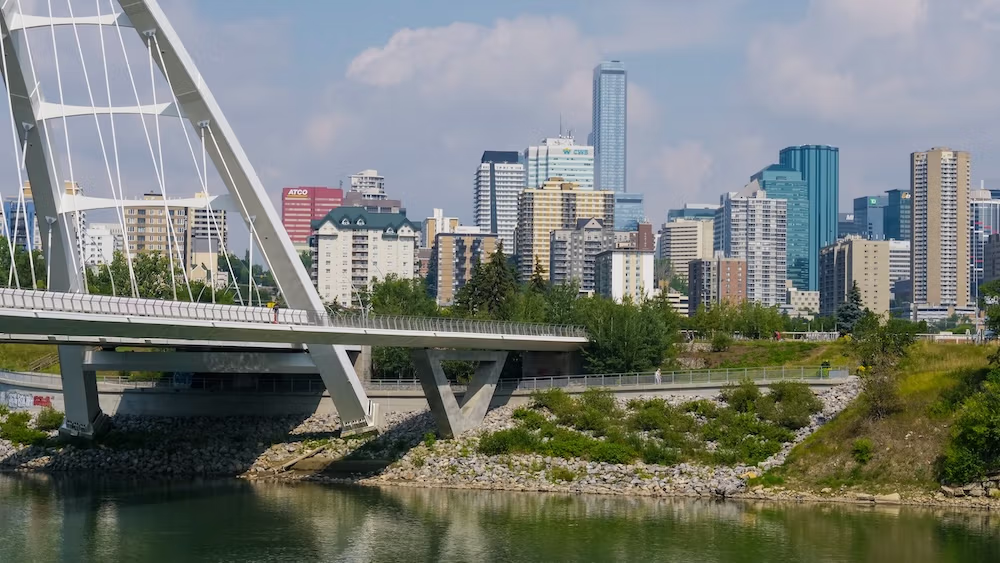
The walking tour gives you a concentrated Downtown Edmonton.
The trolley gives you the widest city, stretching between central sights, neighbourhoods and major attractions farther west.
The bike tour gives you Edmonton through movement: river-valley trails, central areas and Old Strathcona.
The Segway tour mostly gives you the river valley.
The food tours deliberately shrink Edmonton down to a single neighbourhood and let you explore that piece in greater detail.
Here’s how I’d match them to different trips:
| Your priority | Best tour format to consider | Main compromise |
|---|---|---|
| First-time overview of Edmonton | Edmonton Explorer sightseeing trolley | Broad coverage means less depth in each place |
| Downtown history and interpretation | Edmonton City Highlights Walking Tour | You won’t see much of Edmonton beyond the core |
| Active city and river-valley sightseeing | Edmonton City Bike Tour | Requires cycling ability and more physical effort |
| River-valley activity without cycling | Louise McKinney Park Segway Tour | Beginner tours are geographically narrow and include training time |
| Food and neighbourhood immersion | Whyte Avenue Food Walk on Booking.com | You sacrifice broad sightseeing for neighbourhood depth |
| Food plus an active outdoor outing | Edmonton Food Bike Tour on Expedia | Longer, more weather-dependent and requires cycling |
| Less walking with widely spaced sights | Edmonton Explorer sightseeing trolley | You need to plan around loop timing |
| Lower fixed cost and plenty of walking | Edmonton City Highlights Walking Tour | Three hours and several kilometres on foot |
I wouldn’t use that as a scorecard.
It isn’t trying to prove that trolley beats bike 9.2 to 8.7 or anything equally silly.
These are different tools.
Pick the one that fixes something awkward about the trip you’re already planning.
Would I book an Edmonton tour or explore independently?
Both.
That’s probably the least glamorous answer, but it’s how I’d approach the city.
Audrey and I did most of Edmonton independently. We walked, took public transit, rode the High Level Bridge Streetcar and planned sightseeing around different parts of town.
That worked partly because I’m familiar with Edmonton and partly because we were happy to spend time figuring things out.
A first-time visitor doesn’t necessarily need to do that.
If Downtown is just a collection of buildings to you, take the walking tour and give those buildings some context.
If you look at an Edmonton map and start wondering how on earth West Edmonton Mall, Whyte Avenue, 124th Street and Downtown are supposed to belong to the same sightseeing day, the trolley suddenly becomes very appealing.
If you’d rather spend three hours moving through the river valley than sitting in a vehicle, get on the bike.
If riding a Segway through the river valley sounds like the fun part rather than merely the transportation, that’s your answer.
And if your travel philosophy is closer to ours and food has a suspicious habit of becoming the day’s main attraction, pick a neighbourhood and eat your way through it.
The one thing I wouldn’t do is assume Downtown equals Edmonton.
Coming back after all those years reminded me just how much of the city exists beyond the obvious central sights.
Audrey figured that out the moment we reached Whyte Avenue.
Whatever tour you choose, I’d make sure it helps you see a version of Edmonton you weren’t already going to find on your own.
Frequently Asked Questions
Which Edmonton tour is best for a first-time visitor?
If you want the broadest introduction with the least physical effort, I would look hardest at the Edmonton Explorer trolley. It connects widely spaced visitor areas, while a walking tour gives you more depth in Downtown.
What is the difference between the Edmonton Explorer trolley and the High Level Bridge Streetcar?
The Edmonton Explorer is a hop-on, hop-off sightseeing network designed to connect different parts of the city. The High Level Bridge Streetcar is a separate historic ride on a specific route, where crossing the bridge is part of the attraction.
How demanding is an Edmonton bike tour?
The guided city bike tour covers roughly 17 kilometres in about three hours, so it is a real cycling outing rather than a short novelty ride. Previous cycling experience is required, and the river valley includes varied surfaces and gradients.
Is an Edmonton Segway tour a good way to see the whole city?
Not really. The beginner Segway experience is much more focused on the river valley around Louise McKinney Riverfront Park, and training takes up part of the booking. I would choose it for the activity itself rather than comprehensive city coverage.
Should I choose a Whyte Avenue or 124th Street food tour?
I would choose based on the neighbourhood you want to explore rather than the advertised number of tastings. Whyte Avenue and Old Strathcona have the strongest personal connection for me, while 124th Street gives you another Edmonton dining district.
When does the Edmonton Food Bike Tour make more sense than a walking food tour?
Choose the bike when you want food to be part of a broader active outing that includes river-valley riding. If the meals and neighbourhood are the priority, a walking food tour is the simpler fit.
Did Audrey and I personally take the commercial Edmonton tours in this guide?
No. We explored Edmonton extensively ourselves, including walking the city and river valley, riding the High Level Bridge Streetcar, taking a guided Alberta Legislature tour, exploring Whyte Avenue and eating around the city. The commercial tours here are compared without pretending we personally took them.
This guide is also available in Spanish. [Leé la versión en castellano: Mejores tours en Edmonton: a pie, trolley, bicicleta, Segway y gastronomía]
This article contains affiliate links. If you book through one of these links, I may earn a commission at no extra cost to you.