
Edmonton day trips get ridiculous surprisingly quickly.
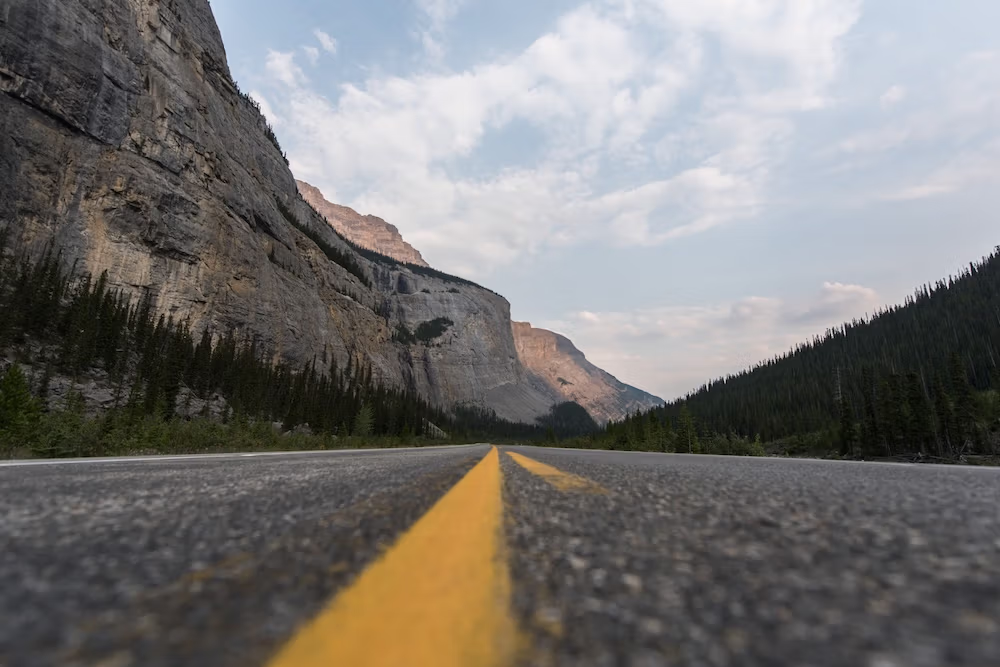
On a map, Jasper looks like a perfectly reasonable blob to the west. Then you check the actual logistics and discover that a current 12-hour Edmonton day tour spends more than eight of those hours driving.
Eight hours.
At that point you’re no longer planning a casual excursion. You’re entering into a fairly serious relationship with a vehicle.
I used to live in Edmonton, and returning years later with Audrey reminded me how deceptive distances can feel in Alberta. The province is enormous, Edmonton sits far from the mountains, and a destination being technically reachable before bedtime doesn’t necessarily make it a good day trip.
So that’s the standard I’m using here.
We didn’t personally take the current guided excursions in this guide, and I’m not going to pretend old Alberta travel somehow counts as testing them. What I can do is judge the geography honestly, compare what the current tours actually involve, and ask the question that matters most:
After all the driving is finished, do you still have enough day left to enjoy where you went?
That produces a much shorter list than some Edmonton day-trip guides.
I’m perfectly happy with that.
I’d rather recommend seven trips that each solve a different problem than hand you 50 pins and quietly disappear.
First, decide how much road you actually want
I don’t think Edmonton needs a hard day-trip radius.
A 90-minute drive can make sense when the destination is substantial enough to carry most of the day. A 30-minute drive can feel pointless when there isn’t much waiting at the other end.
What matters is the ratio.
How long are you travelling?
How much useful time do you get once you arrive?
And does the destination give you something Edmonton itself doesn’t?
Using that test, the options in this guide fall into three fairly obvious camps.
The University of Alberta Botanic Garden, Ukrainian Cultural Heritage Village, Elk Island National Park, Wabamun Lake and Reynolds Museum are all easy enough that transportation doesn’t dominate the outing.
Métis Crossing requires more commitment. You’re looking at roughly three hours of driving over the full day, but there is enough cultural programming there to justify making it the day’s main event.
Then there’s Jasper.
Jasper belongs in its own category: possible, but demanding enough that I think most travellers should question whether they really want to do it this way.
That distinction matters because famous destinations get a free pass in travel planning.
Nobody gets excited about driving 370 kilometres.
They get excited about Jasper.
Unfortunately, you still have to drive the 370 kilometres.
If the self-drive side of this guide is already sounding more useful than a tour, you can compare current Edmonton rental cars on Booking.com. One rental can open up most of the shorter trips below, which makes more sense than paying for separate transportation every time you leave the city.
Elk Island National Park is the easiest day trip to recommend
If somebody asked me for one day trip from Edmonton without giving me any other information, Elk Island National Park would be my starting point.
It’s only around 35 kilometres east of the city, yet the experience is completely different from spending another day around Edmonton’s neighbourhoods and museums.
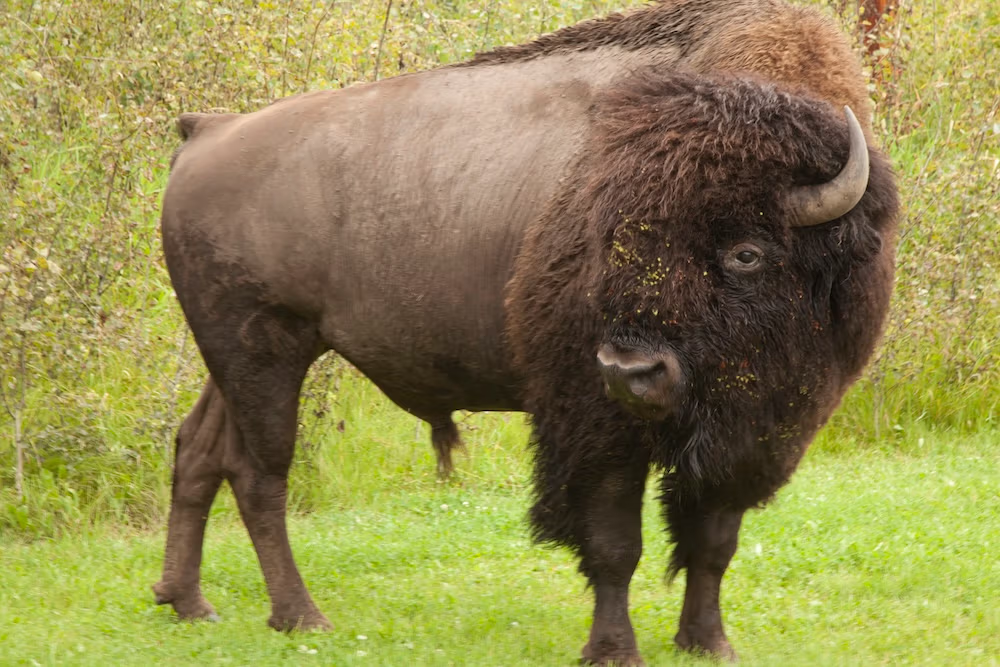
The headline attraction is wildlife, especially bison.
The important part is that these are wild animals moving around a national park rather than performers waiting beside a sign marked PHOTO OPPORTUNITY.
You might see them.
You might not.
Timing, temperature and luck all play a part.
That uncertainty is also what makes the guided-versus-self-drive decision genuinely interesting here.
Why I’d lean toward driving yourself
If I already had a rental car, I’d probably drive.
Elk Island is close enough that paying somebody purely to handle the highway doesn’t solve a particularly difficult problem.
Having your own vehicle also gives you something more useful than convenience: control over the clock.
You can leave Edmonton early.
You can linger if wildlife is active.
You can move between areas of the park without working around a fixed group itinerary.
And if you’ve had a satisfying few hours and want to head back to Edmonton for dinner, you can.
That’s especially valuable with wildlife because the experience isn’t running on a timetable.
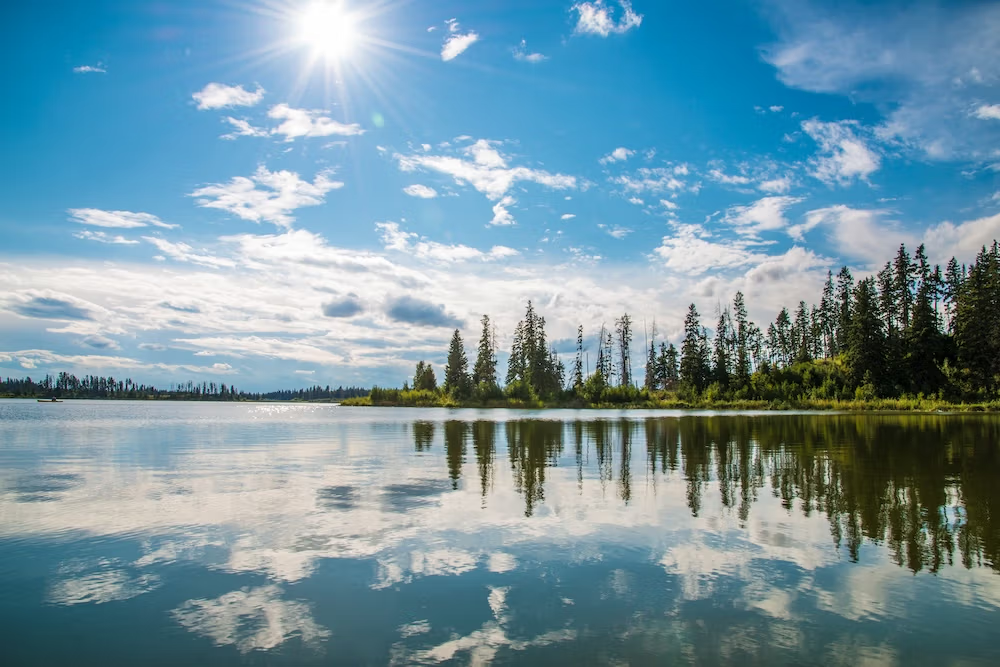
The park also gives you more than bison. Astotin Lake and the surrounding landscape mean you can easily turn the outing into a combination of wildlife watching, walking and simply spending time outside Edmonton.
I would check current park conditions before leaving. Trail access has been affected by storm damage in 2026, and conditions can change faster than an evergreen blog post ever will.
Wildlife rules aren’t optional either. Parks Canada requires visitors to keep substantial distance from animals. If a bison happens to be near the road, that is not your cue to wander over and test whether your travel insurance includes poor judgment.
When the guided Elk Island tour makes more sense
There is also a current private Edmonton-origin tour built around Elk Island.
It runs for roughly eight hours with Edmonton pickup and drop-off, a driver-guide and a wildlife-focused itinerary that includes areas around Astotin Lake.
I can see the appeal immediately if you don’t want to rent a car.
You wake up at your accommodation, somebody handles the transport, and the entire day is already structured around the park.
It can also make sense if wildlife is your main interest and you’d rather have somebody familiar with the area guiding the outing than figure everything out independently.
If that solves the problem you’re trying to remove, you can check current availability for the private Elk Island bison safari.
What the tour cannot provide is guaranteed wildlife.
No one can.
That’s an important line for me because tour marketing and animal behaviour don’t always cooperate.
So my Elk Island decision comes down to this:
Already have a car and value freedom? Drive yourself.
No car, or you’d rather hand the logistics to somebody else? The guided tour becomes much more attractive.
Either way, Elk Island gives you a lot of actual destination for relatively little road time.
That’s exactly what I want from an Edmonton day trip.
Ukrainian Cultural Heritage Village: a lot of Alberta history for a short drive
Just beyond Elk Island sits one of the easiest cultural excursions from Edmonton.
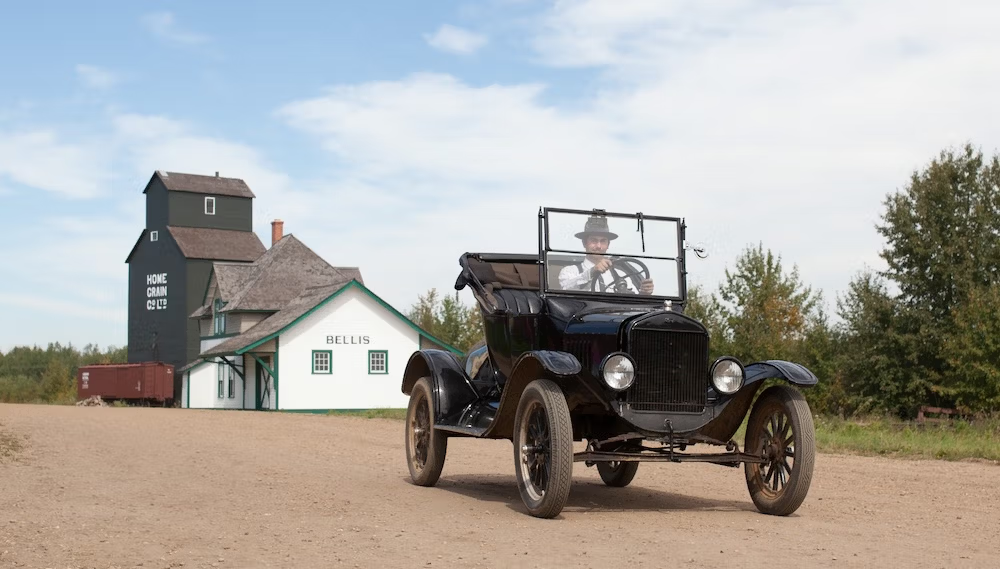
The Ukrainian Cultural Heritage Village is around 50 kilometres east of the city and works as an outdoor living-history experience centred on Ukrainian settlement in east-central Alberta.
You don’t need an entire day merely to justify the drive.
A typical visit can fill a few hours, which makes this a good option if you want to leave Edmonton without turning the departure itself into an expedition.
The important limitation is seasonality.
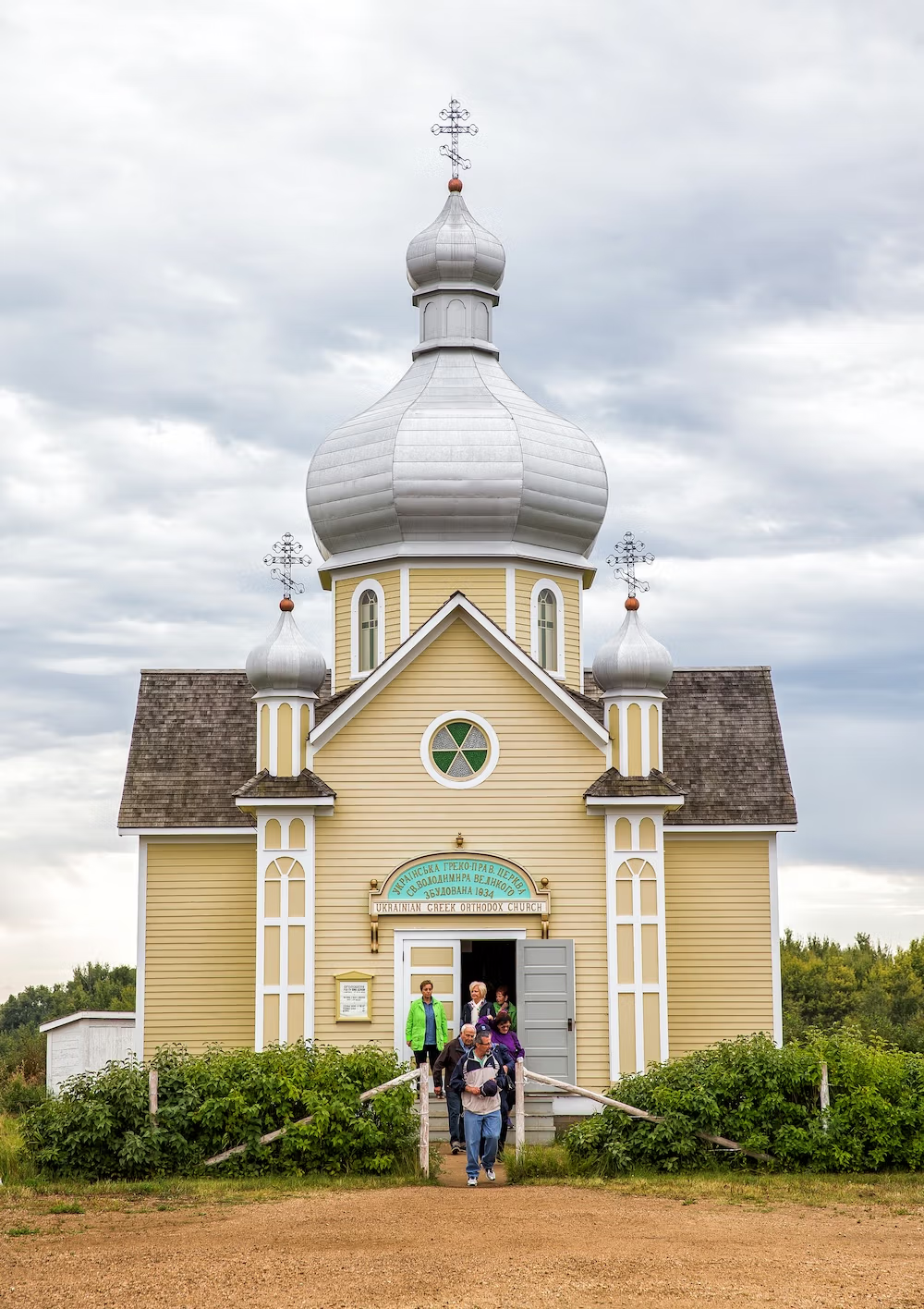
This isn’t a conventional indoor museum that you can casually slot into any Tuesday in February. Its main visitor season runs through the warmer months, and much of the experience happens outdoors.
That also matters for mobility.
Expect gravel and dirt roads, uneven terrain and historical buildings that weren’t exactly designed with twenty-first-century accessibility standards in mind. Mobility equipment is available, but I’d still look closely at your own needs before assuming every part of the site will be straightforward.
What I like about this option is how different it feels from another Edmonton museum day.
You’re not simply driving out to look at more display cases.
The landscape and historic buildings are part of the experience.
I wouldn’t go hunting for a dedicated guided transfer from Edmonton here. The drive is short enough that self-driving makes much more sense for most travellers.
University of Alberta Botanic Garden: barely a day trip, which is part of the appeal
The University of Alberta Botanic Garden is only around 15 minutes southwest of Edmonton.
Calling it a day trip is probably giving the drive an inflated sense of importance.
Still, I think it belongs here because not everybody wants to burn through a tank of gas in order to feel like they’ve escaped the city.
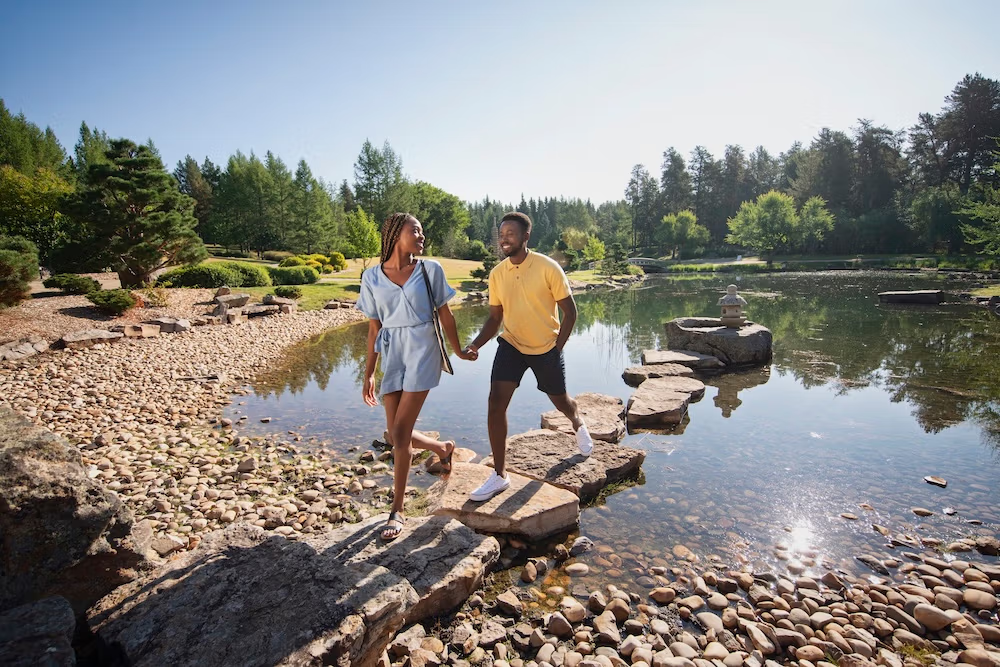
The garden covers a substantial area and includes spaces such as the Aga Khan Garden, Kurimoto Japanese Garden, Indigenous Peoples Garden and indoor showhouses.
I’d treat it as a slower half-day rather than trying to manufacture a twelve-hour adventure out of it.
That can be exactly what you need.
Audrey and I tend to travel pretty hard when we’re filming. Museums, meals, transportation, more filming, another meal because obviously that requires documentation too.
Eventually even things you enjoy start feeling like scheduled appointments.
A few hours wandering through gardens can be a very useful change of pace.
And because you’re so close to Edmonton, there is virtually no pressure to “get your money’s worth” out of the drive.
You can go, enjoy the gardens and return to the city without feeling that the day needs another four attractions stapled onto it.
For this one, self-drive is the obvious choice.
There simply isn’t enough transportation friction to justify turning the journey itself into a commercial tour.
Wabamun Lake Provincial Park: go when the weather is on your side
Wabamun Lake Provincial Park is around 60 kilometres west of Edmonton and fills a completely different role.
This is your lake day.
Beach.
Swimming.
Boating.
Walking.
Picnic.
Possibly doing very little at all, which remains one of travel’s most underrated activities.
I wouldn’t go to Wabamun looking for a structured sightseeing itinerary.
The lake is the point.
That also means weather has more power over this day trip than almost anything else in this guide.
A sunny summer day and a gloomy cold afternoon are basically two different products.
Self-driving fits that reality nicely.
If the forecast looks questionable, you can change plans.
If the weather turns after lunch, you can leave.
If everybody is having a great time, stay.
Current low-water conditions have affected boat-launch access in 2026, so anybody planning to bring a boat should check the latest park information first rather than assuming normal operations.
For a simple beach or outdoor day, though, the broader appeal is straightforward.
Wabamun gives you a proper change of scenery without making you spend hours and hours getting there.
Reynolds Museum: when Alberta weather decides it hates your outdoor plan
A day-trip guide built entirely around parks and lakes works beautifully until Alberta produces weather.
Then suddenly everybody is wet and pretending they’re still having fun.
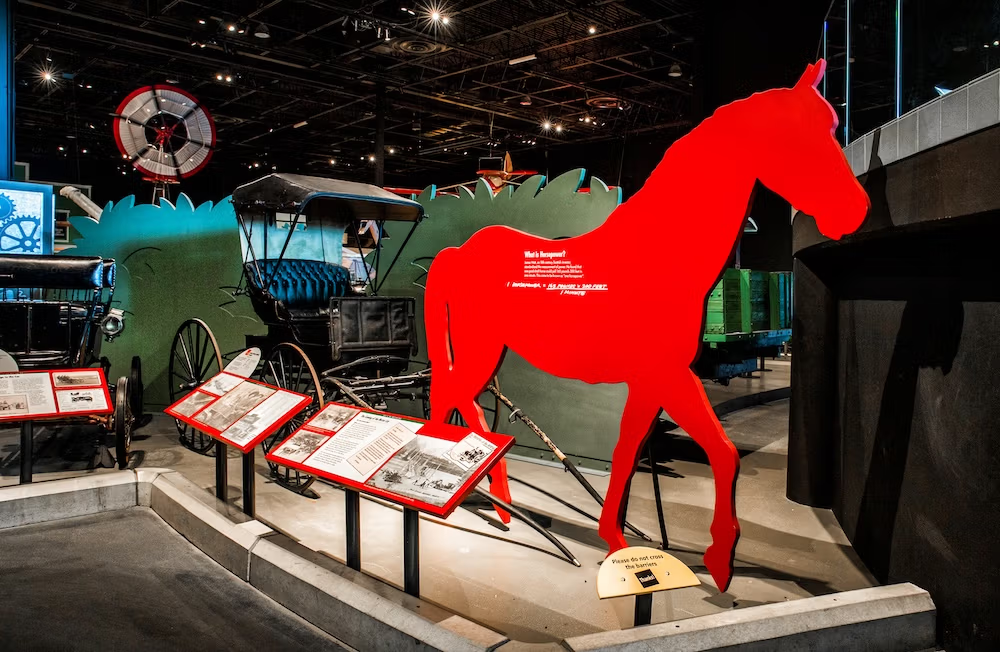
Reynolds Museum in Wetaskiwin is around 65 kilometres from south Edmonton and gives you one of the strongest indoor alternatives on this list.
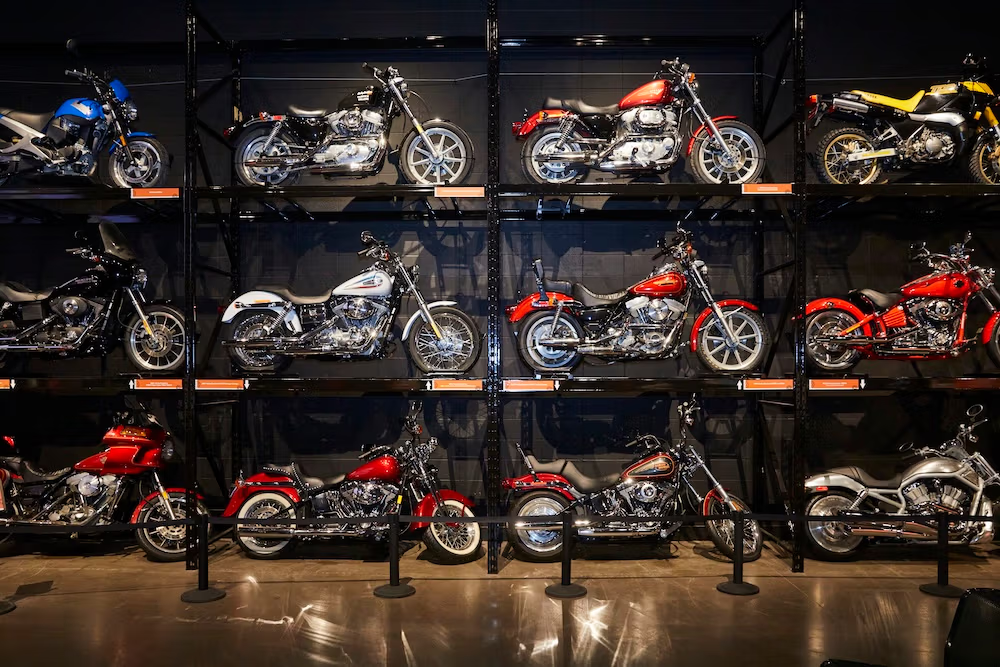
Its focus is transportation, machinery, agriculture and aviation.
That makes it more specialized than a general museum, which I think is a good thing.
If you’re interested in vehicles, mechanical history or the role machinery played in Alberta, you can make a proper outing of it.
If none of those things interest you, don’t visit simply because I needed another entry in a day-trip article.
That’s one of the advantages of keeping the list short.
You can admit when something is meant for a particular traveller.
The logistics are refreshingly uncomplicated.
There is free parking, accessible parking, wheelchairs are available, and you’re not planning your day around wildlife appearances or whether somebody remembered sunscreen.
It is also far less dependent on summer weather than most of the outdoor choices here.
For a cold, rainy or otherwise uncooperative day, Reynolds suddenly becomes much more attractive.
And once again, self-driving is the sensible model.
You’re not trying to solve a difficult transportation puzzle.
You’re driving to Wetaskiwin, spending time at a museum and coming back.
Sometimes travel planning gets to be that easy.
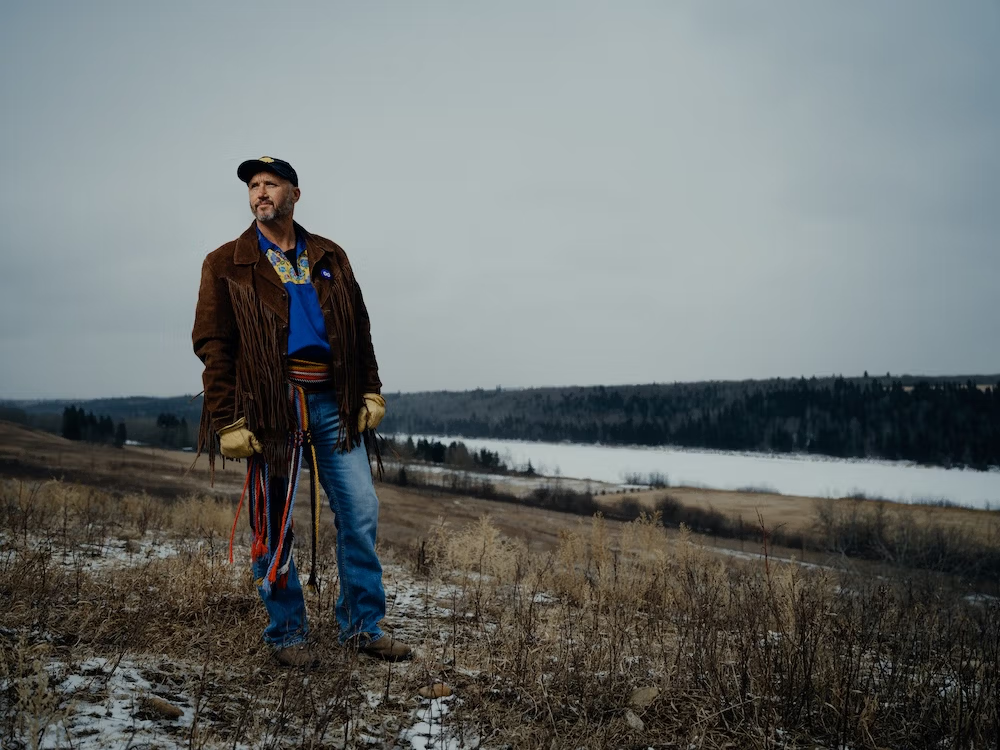
Métis Crossing: drive yourself, then let the guiding happen where it matters
Métis Crossing is where I’d stop calling the journey “quick.”
It’s around 1.5 hours northeast of Edmonton.
That gives you roughly three hours of driving over the course of the day before you’ve explored anything.
I still think it earns inclusion.
The reason is depth.
Métis Crossing isn’t just somewhere you pull over, take three photographs and continue down the highway. It offers grounds to explore independently alongside bookable cultural and wildlife experiences.
That creates a much more interesting model than the usual guided-versus-self-drive debate.
You can drive yourself there.
Then you can pay for guidance onsite, where interpretation actually adds something.
Current experiences include Métis cultural programming and guided wildlife experiences, which is exactly where I think expert interpretation has more value than simply having somebody chauffeur you along the highway.
Transportation and expertise aren’t the same service.
Sometimes you need both bundled together.
Sometimes you don’t.
This is a good example of the second case.
If you’re comfortable driving, I’d much rather control my own Edmonton departure and return, then spend the money on the part of the day where somebody’s knowledge genuinely changes what I’m seeing.
There are a few practical quirks worth knowing.
Cell service in the immediate area is limited or unavailable, although guests have Wi-Fi access onsite. Fuel is available in nearby communities rather than at Métis Crossing itself.
None of this is expedition-level planning.
Still, knowing it before you go is preferable to discovering that your phone has become a decorative rectangle halfway through the day.
Métis Crossing falls into my long but worthwhile category.
The road time is noticeable.
The destination is substantial enough to absorb it.
Guided day tours from Edmonton are useful when they remove real friction
Edmonton doesn’t currently have an enormous regional guided-tour market.
That’s worth understanding because commercial booking sites can make it look as though there’s an endless catalogue of “Edmonton day trips” when some results are city activities or even tours departing from somewhere completely different.
The two regional guided trips that stand out for this article are Elk Island and Jasper.
And the reason I’d book them is completely different.
At Elk Island, a guide can add wildlife-focused structure and remove the need to rent a car.
At Jasper, the guide can save you from personally spending most of the day driving.
That second benefit is considerably more dramatic.
For the shorter Edmonton excursions, I generally think a car wins because the driving is manageable and independence is genuinely useful.
You decide when to leave.
You decide how long to stay.
You don’t need to coordinate your bathroom schedule with nine strangers.
You can abandon the lake if the weather turns foul.
You can spend another hour at a museum if you’re enjoying it.
But once the road itself becomes exhausting, independence starts losing some of its shine.
Which brings us to the most controversial “day trip” in this guide.
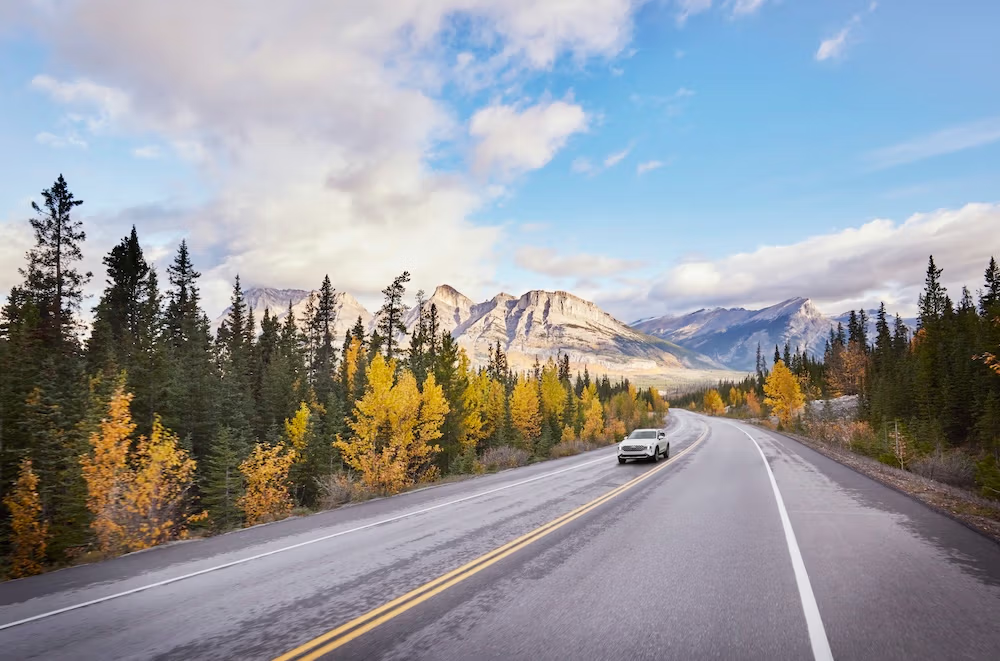
Jasper from Edmonton: this is where the day-trip idea starts creaking
Jasper National Park is around 370 kilometres west of Edmonton.
That number alone doesn’t really communicate the problem.
The current private Edmonton-to-Jasper day tour does.
It’s roughly 12 hours long.
More than eight hours are spent driving.
Read that again if necessary.
I did.
Eight-plus hours in a vehicle leaves fewer than four hours for everything else the day is supposedly about.
And “everything else” still includes getting out of the vehicle, viewpoints, bathrooms, food, walking, Jasper town and the actual attractions you’ve travelled all that way to see.
This is why I don’t think “possible” is a particularly useful standard for a day trip.
Of course Jasper is possible.
You can leave early.
You can drive west.
You can see some spectacular places.
You can drive all the way back.
The question is whether that’s how I’d choose to experience Jasper.
For most travellers, no.
When the guided Jasper tour earns its keep
The current private tour from Edmonton includes pickup and drop-off and aims to fit places such as Athabasca Falls, Jasper town, Pyramid Lake and Patricia Lake into the day, with additional stops depending on time and conditions.
The biggest advantage is obvious.
You’re not driving.
On an outing with more than eight hours of road time, that is a meaningful service.
I would absolutely rather sit in the passenger seat for that day than spend four-plus hours sightseeing and then face a huge return drive to Edmonton myself.
If this is the only version of Jasper that fits your schedule, you can check current dates for the private Edmonton-to-Jasper day trip.
But I wouldn’t confuse that with the tour making Jasper close.
It doesn’t.
You’re still in the vehicle for most of the day.
You’re just not responsible for keeping it between the lines.
Road conditions, weather, daylight and park restrictions can also change what actually fits, so this is one trip where I’d check current conditions shortly before departure and not become emotionally attached to a rigid list of stops.
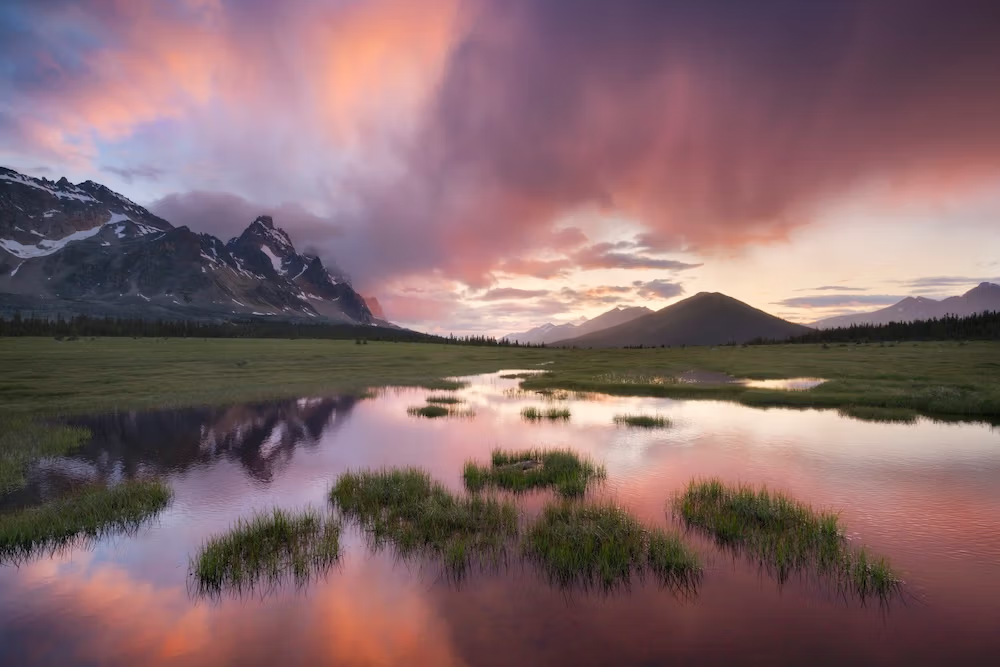
Who might still want to do it?
There is a traveller for whom the Jasper day trip makes sense.
You may have only one day available.
Edmonton may be your fixed base.
You may have no realistic chance to return to Alberta.
And seeing Jasper may matter more to you than having an easy day.
Fair enough.
Travel isn’t always about maximizing efficiency.
Sometimes you willingly do something exhausting because the alternative is not doing it at all.
I’d simply go into this one with the correct expectations.
You’re signing up for a very long day with a lot of road time, not slipping out of Edmonton for a relaxed mountain excursion.
Why I’d normally stay overnight
If I had any flexibility at all, I’d stay in Jasper.
The problem isn’t the national park.
The problem is the return journey.
An overnight immediately removes the need to cram 740 kilometres of round-trip travel into the same day as your sightseeing.
That gives you room for weather.
Room for meals.
Room to stop somewhere because you genuinely like it rather than because your schedule grants you 23 minutes.
And, perhaps most importantly, room to experience Jasper without constantly thinking about the drive back to Edmonton.
If you can turn the outing into an overnight instead, you can compare current accommodation in Jasper on Booking.com before committing yourself to the same-day return.
This is one of those places where I think travel articles sometimes try too hard to be helpful.
The reader asks, “Can I do Jasper as a day trip?”
We want to say yes because yes sounds useful.
The better answer is:
Yes, but I wouldn’t choose it unless your schedule leaves you no better option.
Guided tour or self-drive? Here’s how I’d choose
For most of the destinations in this guide, I’d drive myself.
The reason isn’t philosophical.
It’s practical.
The closer destinations simply don’t create enough driving burden to make guided transportation automatically worthwhile.
Elk Island is close enough that flexibility around wildlife can be more valuable than having somebody else behind the wheel.
The Botanic Garden is so close to Edmonton that the transport barely warrants discussion.
Wabamun is better when you can respond to weather.
Reynolds Museum is straightforward.
Ukrainian Cultural Heritage Village is an easy drive.
Métis Crossing is farther away, but I like the hybrid solution there: drive independently and use a guide once you reach the experience where interpretation matters.
Jasper flips the equation because the road has become the problem.
Here’s the simplest version:
| What you want | Day trip I’d consider | Best transport fit | The catch |
|---|---|---|---|
| Wildlife and nature without a huge drive | Elk Island National Park | Self-drive for flexibility; guided Elk Island tour if you don’t want a car | Wildlife never works to your schedule |
| Cultural heritage close to Edmonton | Ukrainian Cultural Heritage Village | Self-drive | Seasonal and largely outdoors |
| A slow half-day away from the city | University of Alberta Botanic Garden | Self-drive | More reset than grand road trip |
| Summer beach and lake time | Wabamun Lake Provincial Park | Self-drive | The weather can make or break it |
| A year-round indoor outing | Reynolds Museum | Self-drive | Best if machinery, vehicles and aviation actually interest you |
| A deeper cultural day | Métis Crossing | Self-drive + guided experience onsite | Around three hours of driving in total |
| Jasper when one day is genuinely all you have | Jasper National Park | Guided if it must be one day | More than eight hours of a roughly 12-hour tour can be spent driving; an overnight stay is usually the better option |
If the self-drive rows are the ones that fit your trip, you can compare Edmonton rental cars for your travel dates rather than trying to arrange separate transportation for several different outings.
I wouldn’t rank these from one to seven.
That would be useless.
Somebody choosing between a beach day and an aviation museum doesn’t need me assigning decimals to them.
They need to know which outing fits the day they actually have.
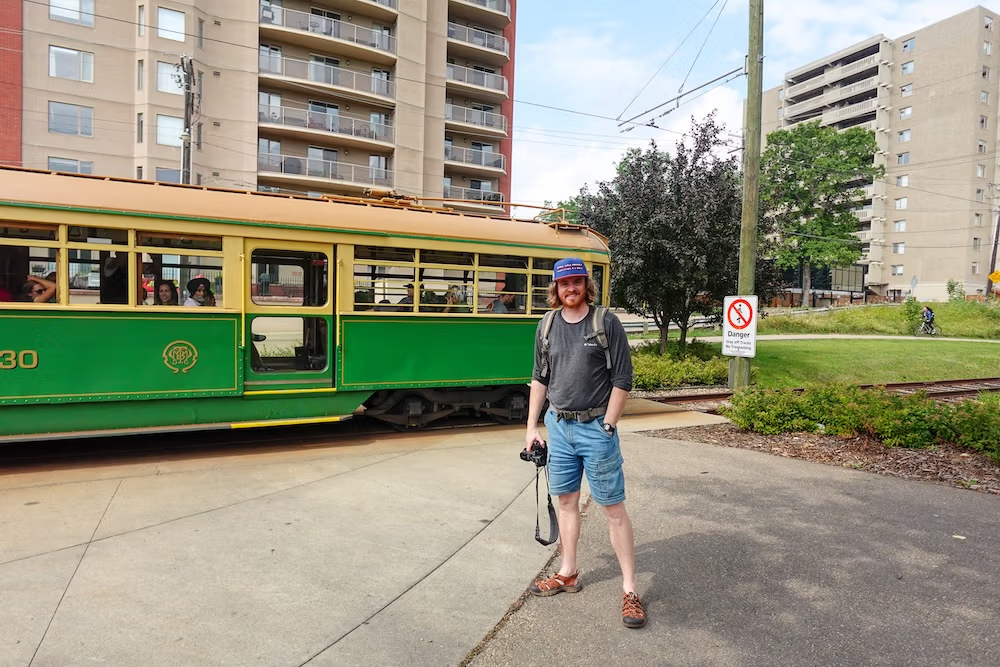
Sometimes the best Edmonton day trip is no day trip at all
The slightly awkward thing about writing a day-trip guide is that the entire format assumes leaving Edmonton must somehow improve your holiday.
It doesn’t.
Audrey and I spent enough time rediscovering Edmonton to be reminded how much is already inside the city once you stop reducing it to Downtown.
There’s the river valley.
Whyte Avenue and Old Strathcona.
West Edmonton Mall.
Museums.
The Legislature.
ICE District.
And, importantly in our household, an alarming amount of food.
If you’ve got a reasonably long Edmonton stay, I think getting out for one regional day is a great idea.
Elk Island would be my first choice for most visitors because the time equation is so good. You get a genuine change of environment without sacrificing half the day to the highway.
After that, I’d choose according to interest rather than fame.
History? Ukrainian Cultural Heritage Village.
Gardens and a slower pace? The Botanic Garden.
Summer lake weather? Wabamun.
Mechanical history or miserable weather? Reynolds.
A deeper cultural experience worth a longer drive? Métis Crossing.
Jasper?
Only if you understand exactly what you’re signing up for.
A famous destination isn’t automatically a good day trip just because somebody managed to draw an arrow to it from Edmonton.
The best choice is the one where the road gets you somewhere worthwhile without becoming the main thing you remember.
Frequently Asked Questions
What is the easiest day trip from Edmonton to recommend?
Elk Island National Park would be my starting point for most visitors. It is only around 35 kilometres east of Edmonton, gives you wildlife, lakes and outdoor scenery, and delivers a genuine change of environment without sacrificing half the day to driving.
Should I take a guided tour or drive myself on an Edmonton day trip?
For most destinations in this guide, I would drive myself because the distances are manageable and flexibility is genuinely useful. Guided transport becomes more compelling at Elk Island if you do not want a car, and especially for Jasper because the road time is so substantial.
Is Jasper really practical as a day trip from Edmonton?
It is possible, but I would not choose it for most travellers. Jasper is around 370 kilometres west of Edmonton, and the current roughly 12-hour private day tour can spend more than eight hours driving, leaving comparatively little time for Jasper itself.
What is the best way to visit Métis Crossing from Edmonton?
I like the hybrid approach: drive yourself the roughly 1.5 hours from Edmonton, then use guided cultural or wildlife experiences once you arrive. That keeps control of your transportation while paying for interpretation where it actually adds value.
Is Wabamun Lake Provincial Park worth visiting in poor weather?
I would choose Wabamun primarily when the weather is on your side. The appeal is the lake itself, with beach time, swimming, boating, walking and picnicking, so a cold or gloomy day changes the experience substantially.
Is the Ukrainian Cultural Heritage Village a year-round day trip?
No. Its main visitor season runs through the warmer months, and much of the experience is outdoors. I would also keep the gravel roads, uneven terrain and accessibility of historic buildings in mind when planning a visit.
Which Edmonton day trip works well when the weather is bad?
Reynolds Museum is one of the strongest indoor options in this guide. It is around 65 kilometres from south Edmonton and focuses on transportation, machinery, agriculture and aviation, so it makes the most sense if those subjects genuinely interest you.
This guide is also available in Spanish. [Leé la versión en castellano: Mejores excursiones desde Edmonton: tours guiados y opciones para manejar por tu cuenta]
This article contains affiliate links. If you book through one of these links, I may earn a commission at no extra cost to you.