
The thing that surprised me most about Calgary in summer was how little effort it took to be outside.
I had always filed Calgary mentally under a few obvious categories: Stampede, airport, downtown office towers, gateway to the Rockies. Then Audrey and I finally spent a few days properly exploring the city and discovered that a huge chunk of our trip involved simply walking. Downtown spilled into Chinatown, Chinatown nudged us toward the Bow River, the Bow led to parks, and even one of Calgary’s strangest public spaces turned out to be sitting on top of a parking garage.
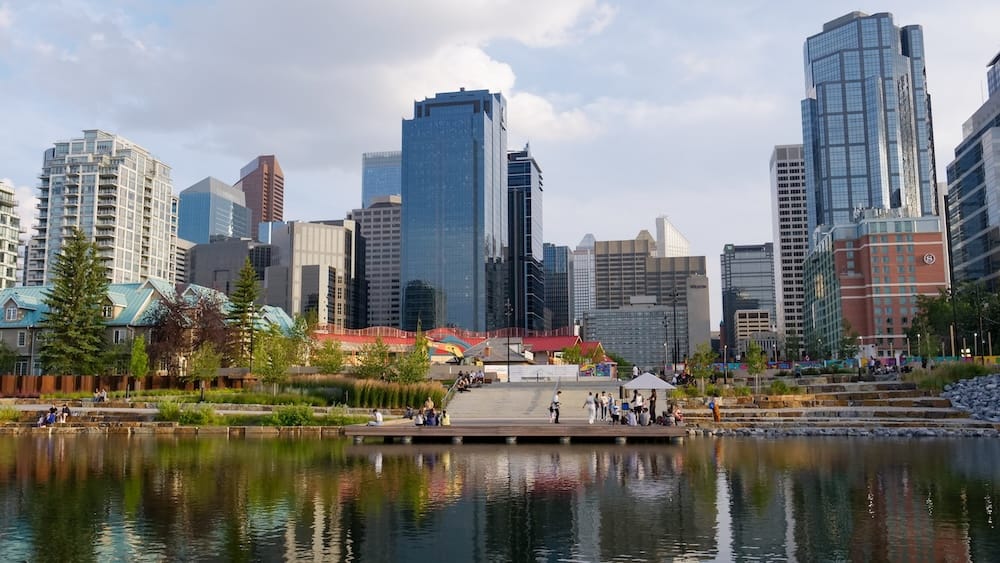
It was also genuinely summer. We had hot days where shade mattered. We stopped at Sien Lok Park partly because the greenery looked inviting and partly because standing in direct sun had lost some of its charm. We walked Prince’s Island Park on a lively summer evening. On another hot afternoon, we followed the Bow River while watching people rafting and paddling downstream and immediately started questioning why we had remained on dry land.
That experience changed how I would plan a summer trip here. I would not try to collect every outdoor attraction Calgary can technically offer. Some are tiny detours. Some can fill most of the day. Others require a bike, a raft, transportation or considerably more planning than “we have two free hours and the weather looks nice.”
So instead of a giant list where a rooftop park and a full-day living-history attraction somehow receive equal billing, these are the outdoor things I would prioritize according to the kind of summer day you actually want.
If Prince’s Island Park, the Bow River, Peace Bridge and walking central Calgary are high on your list, I would put more value on staying centrally than on being beside one particular attraction. I do not have a Calgary hotel from this trip that I am recommending by name, so I would rather compare current hotels in Downtown Calgary and choose a base that keeps the central part of the trip easy to do on foot.
Start with Prince’s Island Park and the Bow River
If I had only a few hours of good weather in Calgary, I would start here.
Prince’s Island Park was one of Audrey’s favourite surprises from our visit. She actually called it “such a pleasant surprise,” which sounds mild until you consider how many attractions we visit for work and how difficult it becomes for a city park to genuinely catch us off guard.
The setting had a lot to do with it.
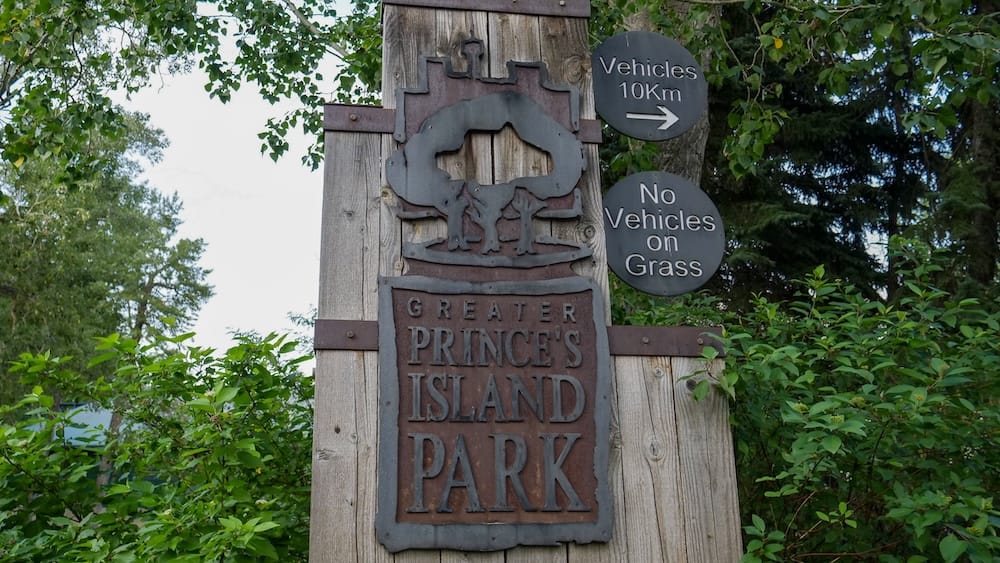
Prince’s Island covers roughly 20 hectares right beside downtown, so it has enough space to feel like a real park rather than a carefully landscaped apology for all the concrete around it. We visited on a summer weekend toward evening and kept running into little scenes that made us slow down: cyclists, people out walking, wedding groups taking photos, musicians and even a woman dancing flamenco.
I am not promising Calgary will issue you a flamenco dancer with every park visit.
That was simply our evening.
What stuck with me was how relaxed the whole area felt. Calgary has a substantial skyline, but Prince’s Island gave us breathing room without requiring us to leave the centre of the city. That contrast became one of the reasons I enjoyed Calgary more than I expected.
You also do not need to treat the park like a formal attraction. There is no need to arrive at 10:03, march through five approved highlights and leave triumphantly at 11:17. Walk, sit down, have a picnic or keep going toward the river if you feel like it. That lack of commitment is part of the appeal.
Keep following the Bow River
We did exactly that on another hot day when Audrey and I walked along the Bow toward The Confluence.
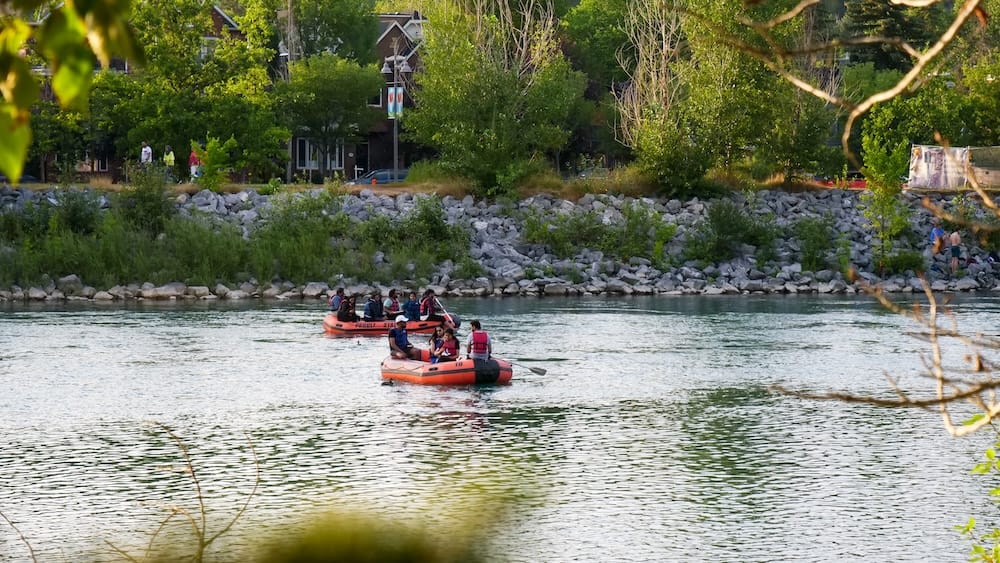
This is where summer Calgary started making me jealous of strangers. People were rafting. People were paddling. People were floating downstream while we continued walking beside them like two responsible pedestrians who had clearly failed to plan the more entertaining option.
We were certainly tempted.
We did not get on the river ourselves, so I am not going to turn twenty minutes of envy into a fake rafting review. But walking beside the Bow was still one of my favourite ways to experience Calgary because the city changed character so quickly once we reached the water.
You can spend the morning around towers, museums and busy streets, then hit the river and suddenly the day feels completely different.
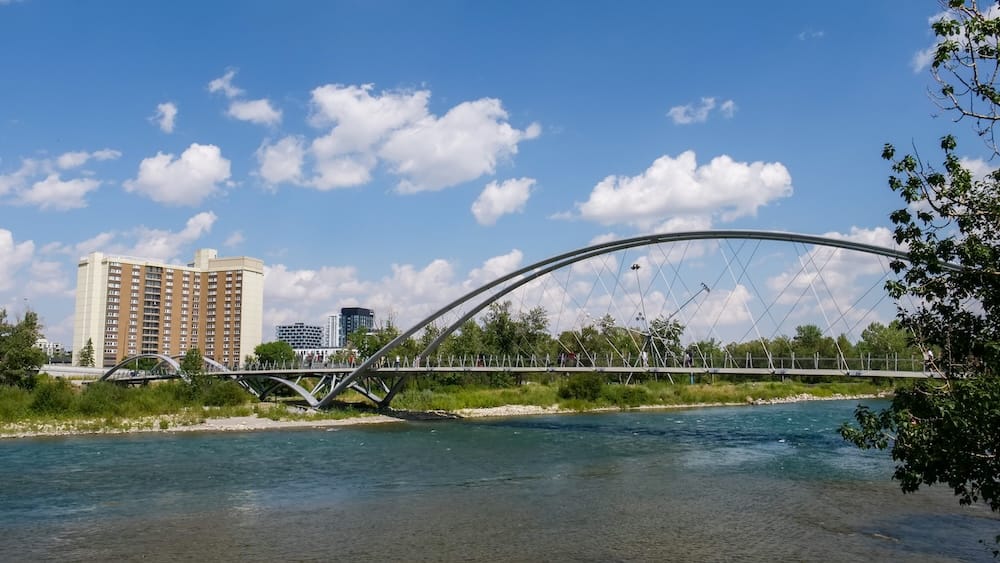
There is some practical friction in 2026. Flood-barrier construction along portions of the north side of the Bow is affecting sections of the pathway network. Peace Bridge and the Prince’s Island pedestrian bridge remain open, but nearby routes can involve temporary detours.
This is exactly the kind of situation where I would avoid memorizing somebody’s “perfect Calgary river loop.” Check Calgary’s live Pathways and Bikeways map and adjust.
The river is still there.
Your favourite turn-by-turn itinerary may not be.
Fold Peace Bridge into the river walk
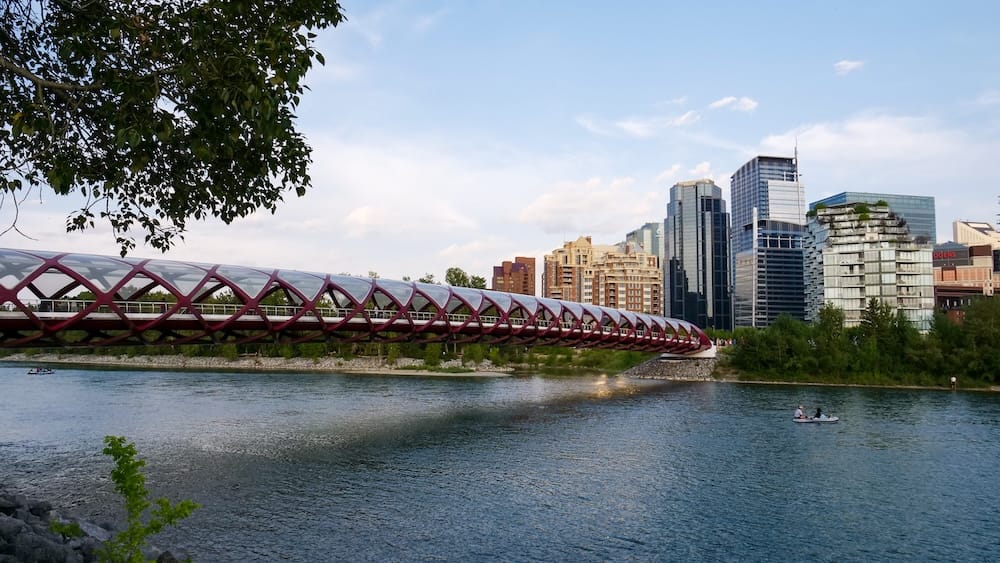
Peace Bridge is one of Calgary’s most recognizable pieces of outdoor architecture, and I think it works best when you do not ask too much of it.
It is a bridge.
A very photogenic red bridge, yes, but still a bridge.
That is why I would combine it with Prince’s Island Park and the Bow rather than building a separate chunk of the day around it. Walk through the park, follow the water, photograph or cross Peace Bridge, enjoy the contrast between the river and downtown skyline, then keep moving.
That gives the bridge context. It also gives you an easy way to extend the outing without turning a simple summer walk into a military operation involving twelve stops and three alarms on your phone.
With the current pathway work nearby, this is another place where flexibility beats a rigid route.
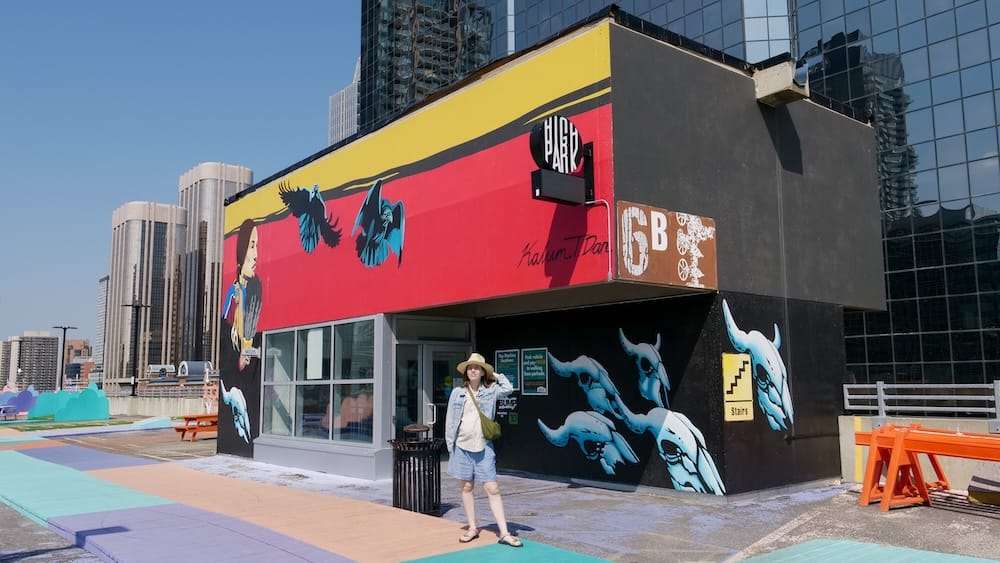
High Park is Calgary’s strange little rooftop detour
High Park is not the outdoor experience I would prioritize first in Calgary.
It may be the one I would have the hardest time explaining to someone who has never seen it.
You take an elevator to the roof of a parking garage in Beltline and emerge into a public space with swings, colourful furniture, murals, installations and skyline views.
Audrey called it “quirky and fun.”
Perfect.
We wandered around, took photos and enjoyed views toward Calgary Tower and the surrounding downtown buildings. We also happened to have the rooftop almost entirely to ourselves, which was fantastic for us but not something I would assume happens every time.
The genuinely useful bit of firsthand advice is less glamorous: finding High Park was more confusing than being at High Park.
It sits on top of City Centre Parkade at 340 10 Ave SW. Use the public entrance from 10 Ave SW and take the elevator to Level 6.
Knowing that in advance removes most of the mystery.
I would treat High Park as a short add-on for people who like public art, photography and odd urban spaces. It is not another Prince’s Island Park, and it does not need to be. Part of Calgary’s outdoor appeal is that not every green or public space is trying to perform the same job.
Sometimes you just want to sit on a swing six floors above a parking garage and look at the skyline.
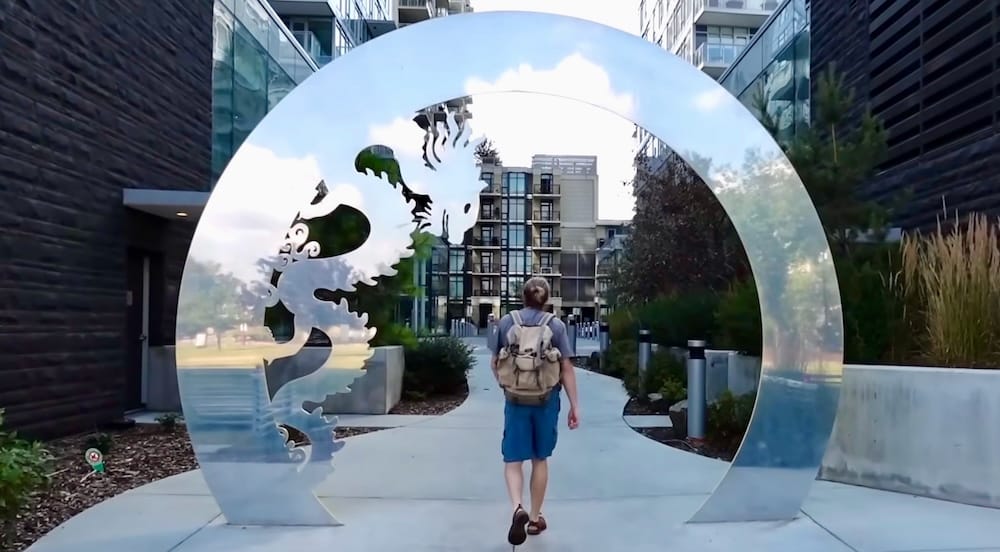
Walking around central Calgary counts as an outdoor activity
One of the stranger realizations from our trip was that, before travelling farther south to Heritage Park, Audrey and I had basically explored central Calgary on foot.
We kept expecting to need transit more than we did.
That does not mean all of Calgary is wonderfully walkable. It absolutely sprawls once you move beyond the centre. But around downtown, Chinatown, East Village, Eau Claire and the nearby part of Beltline, we found it easy to connect a surprising number of places without constantly getting on and off buses or trains.
Audrey put it nicely when she said Calgary almost felt like a smaller city that you could cover on foot. The second part of her observation mattered even more: we could do it without ending up exhausted.
Summer walking also produced some of the smaller moments I liked about Calgary. We kept encountering murals without following a formal street-art route. At Sien Lok Park in Chinatown, greenery and shade were enough to make us stop on a hot afternoon. We could wander until something looked interesting rather than treating every transition as dead time between attractions.
That does not mean I recommend walking twelve kilometres through direct afternoon sun just to prove you can. We used shade. We went indoors. We drank cold things. Travel is more enjoyable when basic thermoregulation is allowed.
If you like exploring on foot but would rather have somebody else impose some structure on the wandering, there is currently a three-hour guided Calgary city highlights walking tour. It covers downtown landmarks including Stephen Avenue and also goes through parts of the +15, so it is not an exclusively outdoor experience. Audrey and I did not take this tour; we explored central Calgary independently, but I can see the appeal for a first-time visitor who wants the walking without also having to figure out the route.
If you are staying centrally, I would still leave space in the itinerary for walking without necessarily attaching a named attraction to every half hour. Calgary was good to us when we did that.
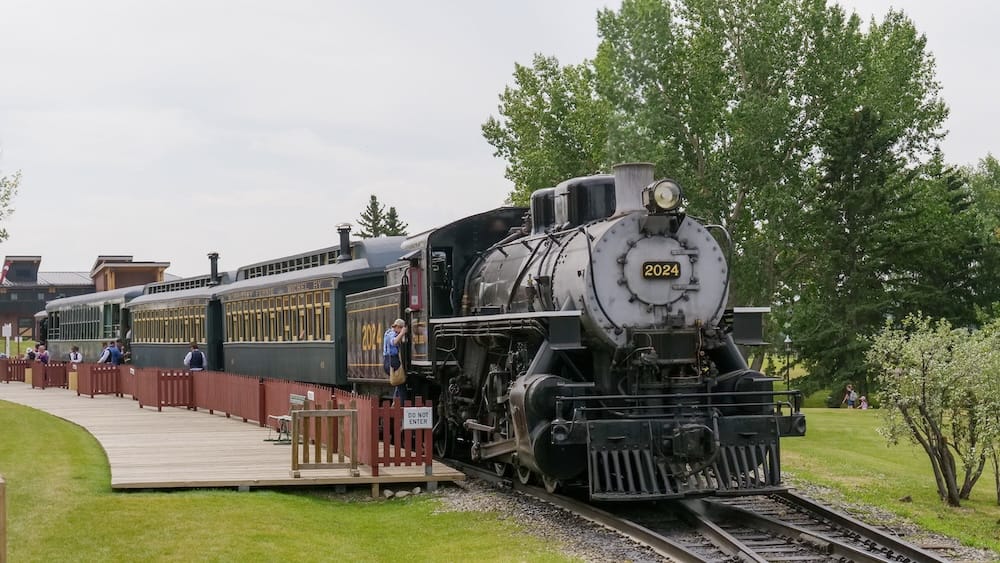
Heritage Park is where the commitment gets serious
Heritage Park almost got cut from our trip.
We looked at the location, realized we would need to leave the central area using transit and started doing the classic travel-planning calculation: Is this actually worth the effort, or should we find something easier nearby?
I am glad we went.
Very glad.
Heritage Park is not a place I would casually squeeze into an afternoon between three other attractions. We spent a substantial part of the day moving through historic streets, entering buildings, riding old-fashioned transport and generally discovering that there was far more to do than we had expected.
We took the steam train. We rode the streetcar. We went out on the boat. At one point all the vintage transportation was bringing out the inner kid in us, which was not the direction I expected the day to take when we were standing around earlier wondering whether the trip out there was worth bothering with.
By the end, the answer was obvious.
Yes.
For the 2026 season, Heritage Park’s Historical Village operates daily from May 16 through August 30, then shifts to weekends and Thanksgiving Monday through October 12. Current hours are 10 a.m. to 5 p.m., and regular adult admission for ages 16–64 is $39.95 plus GST.
General admission currently includes major experiences such as the steam train, S.S. Moyie boat, wagon rides, Midway rides and Gasoline Alley Museum. Midway games cost extra, parking is not included, and individual ride schedules vary enough through the season that I would check the current Heritage Park information before building your entire day around one particular ride.
The practical distinction is important. Prince’s Island Park can be whatever amount of time you have. Heritage Park wants a real piece of your day.
If getting there from central Calgary is the part you would rather not organize yourself, a current Heritage Park bus tour from central Calgary runs for about seven hours, includes access to Heritage Park and brings you back downtown at the end of the day. The streetcar component is subject to seasonal availability. We did not take this tour—we used Calgary transit and visited independently—but it directly solves the bit of the day that initially made us question whether we wanted to go at all.
The site is also a mixture of outdoor and indoor experiences rather than a pure outdoor attraction, but summer is when moving through the enormous historical village, riding the transport and spending hours around the grounds fits naturally into a Calgary outdoors itinerary.
We eventually reached the point where we had been walking around in the heat for hours and needed ice cream.
I consider that a respectable ending to most summer activities.
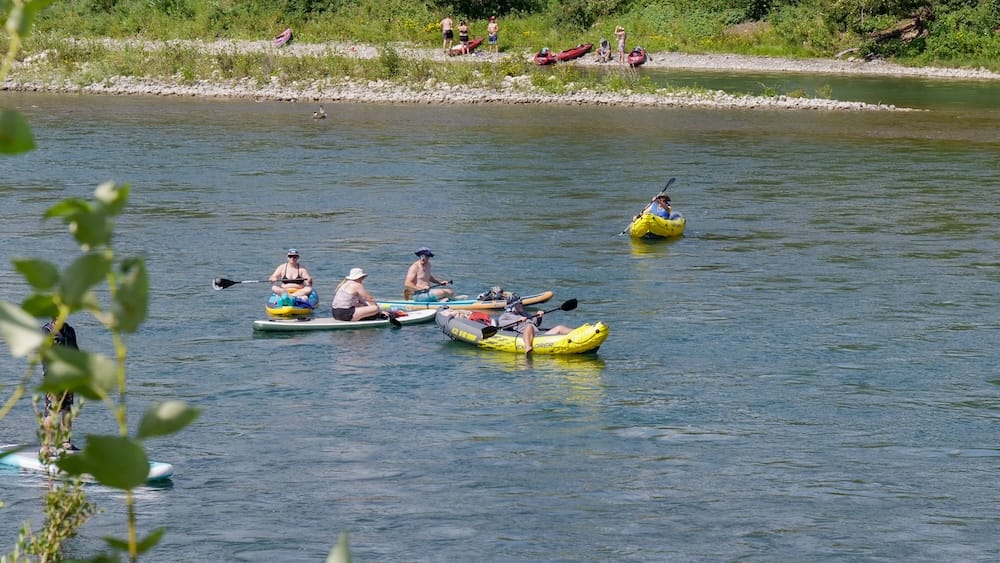
Floating the Bow is the outdoor activity I most wish we had tried
This is where I need to separate what looked fantastic from what we actually did.
We watched plenty of people floating, rafting and paddling the Bow.
We did none of those things.
But if I returned to Calgary in summer, getting onto the river would be high on my list.
There is more involved than buying something inflatable and throwing yourself into the current. Calgary allows human-powered watercraft such as rafts, kayaks and canoes on the Bow, but this is still a moving river with hazards, changing water levels and actual rules.
Everyone on a watercraft is required to wear a properly fitting PFD or life jacket. Calgary also advises using equipment designed for river use rather than pool toys and ordinary inner tubes, carrying the required safety gear and checking current river conditions before setting out.
Then there is the logistical issue nobody can solve through positive thinking:
You float downstream.
Your car does not.
Depending on your launch point, take-out point and river flow, the outing can vary dramatically in length. Commercial routes tend to define a more manageable section, often somewhere around a few hours, but even then you need to know where you are getting off and how you are getting back.
One current bookable option is a private self-guided Bow River rafting trip in Calgary that includes PFDs, paddles and a safety kit. It is not guided, and shuttle transportation is not included in the base booking, so those are still planning details rather than problems magically erased by paying for the raft. We did not use this service.
That is a very different proposition from our Bow River experience, which consisted of walking until we got jealous of people with boats.
Before going on the water, check Calgary’s current river-floating and water-safety guidance. This is one of those cases where the official information matters more than whatever somebody’s uncle remembers doing fifteen summers ago.
If you choose this activity, I would let the river be the main event rather than cramming it into an already overloaded sightseeing day.
Cycling the river pathways gives you much more range
Cycling solves a different problem.
We saw plenty of bikes around Prince’s Island and the Bow, but Audrey and I walked these areas ourselves. I cannot give you a firsthand Calgary cycling review.
What I can see clearly is why a bicycle makes sense. The river corridor continues far beyond what most people are going to cover casually on foot. Renting a bike lets you connect more of central Calgary without spending half the day wondering why your calves have launched a formal protest.
If you would rather make it a structured outing, there is currently a three-hour Calgary and Bow River bike tour that includes a standard bike and helmet and travels through areas including the Bow River, Prince’s Island Park, Eau Claire and Peace Bridge. Audrey and I did not take it, so I am treating it as an alternative for covering more ground rather than attaching a personal verdict to it.
On Calgary’s shared pathways, cycling speed is generally capped at 20 km/h unless otherwise posted, and riders are expected to keep right and signal when passing.
The bigger practical issue in 2026 is the same one affecting walkers: construction. Parts of the river pathway network are being rerouted temporarily, so I would check the live map before riding instead of trusting an old route saved on somebody’s blog.
I still think walking is the easiest option for a first visit because that is what worked so well for us.
Cycling makes more sense when your priority is covering ground.
St. Patrick’s Island is an easy riverfront extension
St. Patrick’s Island is one of the places that we did not personally visit, but I would keep it on the summer radar because it fits naturally into central Calgary rather than demanding another major excursion.
The island covers about 31 hectares in the Bow River between East Village and Bridgeland, with walking and cycling paths, public spaces, river channels and downtown views.
Its biggest advantage is geographic.
If your day is already taking you through East Village or along the eastern stretch of the Bow, this can extend the outing without changing the entire plan.
Would I abandon Prince’s Island just to collect another Calgary island?
No.
That is exactly the behaviour I am trying to talk you out of.
But if you are already heading east and want more outdoor time, St. Patrick’s makes sense.
Nose Hill Park is where Calgary starts feeling much less urban
Nose Hill is a completely different choice.
At roughly 1,129 hectares—more than 11 square kilometres—it is vastly larger than the central parks we experienced and gives you native grassland, trails, wildlife habitat and elevated views.
We did not visit Nose Hill on this trip, so I cannot tell you what the walk felt like from personal experience.
What I can tell you is that I would not plan it for the same reason as Prince’s Island.
Prince’s Island works beautifully because you can combine it with downtown Calgary. Nose Hill is more appealing when you want to leave that environment behind and spend your time in open prairie.
That distinction is more useful than pretending every park in Calgary belongs on one ranked list.
If you have limited time in the city, I would stay closer to the Bow. If you specifically want grassland, trails and a larger natural landscape, Nose Hill gives you something the downtown parks cannot.
Fish Creek Provincial Park is the bigger nature outing
Fish Creek takes the scale even further.
We did not visit during this Calgary trip, but it earns a place here because it gives outdoor-focused visitors an option that is fundamentally different from walking beside downtown.
There are roughly 44 kilometres of paved pathways, 34 kilometres of granular pathways and another 43 kilometres of designated single-track trails.
That is enough trail to eliminate any concern that you might accidentally finish the entire park before lunch.
Walking, cycling, birding and wildlife watching can all become the centre of the outing rather than something you fit around sightseeing.
There is a significant current caveat. Reconstruction is affecting portions of Fish Creek’s roughly 19-kilometre Central Corridor Pathway in 2026, with temporary closures and detours changing as the work progresses.
If Fish Creek is going to consume a big chunk of your day, check the latest Alberta Parks pathway information before choosing exactly where you want to go.
This is not the outdoor option I would choose first on a short Calgary city break.
It is the one I would consider when the point of the day is nature.
Which Calgary summer outdoor experience actually fits your day?
This is the comparison I wish more destination lists made.
High Park, rafting the Bow and Heritage Park are all “summer things to do in Calgary,” but that tells you almost nothing about which one belongs in your itinerary.
| Outdoor experience | Best use of your time | Cost | Activity level | Main friction | Our experience |
|---|---|---|---|---|---|
| Prince’s Island Park + Bow River | Flexible central outing | Free | Easy to moderate | Current pathway detours | We did it |
| Peace Bridge | Short riverfront add-on | Free | Easy | Best combined with a longer walk | We did it |
| High Park | Quick urban detour | Free | Easy | Finding the Level 6 rooftop access | We did it |
| Central Calgary walking | Flexible sightseeing | Free or guided-tour cost | Easy to active | Heat on longer summer days | We did it extensively |
| Heritage Park | Major part of a day | Paid | Moderate | Transport, admission and seasonal schedules | We spent most of a day there |
| Bow River floating | Several-hour activity | Usually paid if renting | Moderate | Safety gear, conditions and return transport | We watched but did not participate |
| Cycling river pathways | A few hours or flexible | Rental/tour cost if needed | Active | Route changes and current construction | We did not cycle |
| St. Patrick’s Island | Flexible riverfront extension | Free | Easy | Most useful when already in East Village | We did not visit |
| Nose Hill Park | Larger natural outing | Free | Depends on route | Less convenient than central parks | We did not visit |
| Fish Creek Provincial Park | Larger nature-focused outing | Free | Varies widely | Scale plus current pathway work | We did not visit |
For a first summer visit, I would make the decision this way.
If you want minimal planning, stay central and combine Prince’s Island Park with the Bow.
If you have only a short gap, add High Park or Peace Bridge.
If you want a major attraction that happens to work especially well in summer, give Heritage Park the time it deserves.
If you want an active experience, decide whether you would rather be on the river or covering more ground by bike.
And if what you really want is nature rather than city sightseeing, look farther out toward Nose Hill or Fish Creek.
That is a much more useful distinction than whether one park ranks seventh and another ranks twelfth on somebody’s list.
What I would prioritize next time
If I returned to Calgary tomorrow in summer, the Bow River would still control the day.
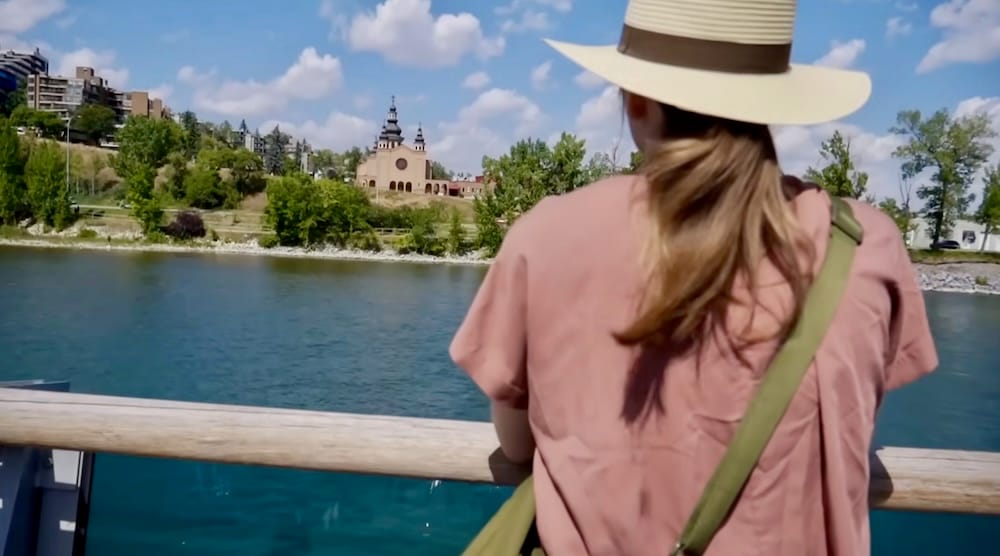
I would go back to Prince’s Island because it was one of the places that changed my impression of Calgary from a city I had mostly passed through into somewhere I genuinely enjoyed spending time. I would keep walking along the river because that mix of skyline, water and open space is one of the things Calgary does particularly well.
High Park can remain the odd little rooftop bonus.
Heritage Park already proved me wrong once. I would happily make the trip again when I had enough time to give it most of the day instead of treating it as a box to tick.
The bigger change would be getting onto the Bow.
We spent one hot afternoon watching people drift past while we stayed on the pathway, and I remember thinking that they had probably made the better summer decision.
Next time, I would like to test that theory.
Until then, my Calgary summer rule is pretty simple: start with the outdoor experiences that require almost no effort to enjoy, then decide how ambitious you actually want the day to become.
Calgary is very good at giving you both options.
Frequently Asked Questions
What are the best outdoor things to do in Calgary in summer?
For a first summer visit, I would start with Prince’s Island Park and the Bow River, then choose something more involved depending on your time and energy, such as Heritage Park, cycling, river floating or a larger nature outing.
Is Prince’s Island Park worth visiting if I only have a few hours?
Yes. It was one of Audrey’s favourite surprises in Calgary, and its central location makes it easy to combine with the Bow River and Peace Bridge without committing most of the day.
Can you float or raft the Bow River in Calgary?
Yes, human-powered watercraft such as rafts, kayaks and canoes are allowed, but everyone on a watercraft must wear a properly fitting PFD or life jacket. You also need to plan your launch, take-out point and transportation back.
How much time should I allow for Heritage Park?
I would give Heritage Park a substantial part of the day. We spent hours exploring the historical village, riding the steam train, streetcar and boat, and still found considerably more to do than we had expected.
How do you get to High Park in Calgary?
High Park is on top of City Centre Parkade at 340 10 Ave SW. Use the public entrance from 10 Ave SW and take the elevator to Level 6. Finding the rooftop was more confusing for us than the actual visit.
Are Calgary’s Bow River pathways affected by construction in 2026?
Yes. Flood-barrier construction is affecting portions of the pathway network along the Bow in 2026. Peace Bridge and the Prince’s Island pedestrian bridge remain open, but nearby routes can involve temporary detours.
Did we personally raft, kayak or cycle in Calgary?
No. Audrey and I walked the Bow River corridor and watched plenty of people rafting, paddling and cycling, but we did not do those activities ourselves. Our firsthand outdoor experiences included the river walk, Prince’s Island Park, High Park, central Calgary walking and Heritage Park.
This guide is also available in Spanish. [Leé la versión en castellano: Mejores cosas para hacer al aire libre en Calgary en verano]
This article contains affiliate links. If you book through one of these links, I may earn a commission at no extra cost to you.