
Heritage Park was the one Calgary attraction Audrey and I nearly overthought ourselves out of visiting.
Up to that point, Calgary had been remarkably easy. We were staying centrally, walking almost everywhere and drifting from Chinatown to downtown attractions, parks and the river without much logistical drama. Heritage Park looked different. It sat farther south, we’d need the CTrain plus a bus, and we started doing that slightly ridiculous traveller calculation where a perfectly manageable journey begins to feel like an expedition because you’ve become accustomed to walking out the front door and immediately sightseeing.
We even wondered whether there was something else nearby we could combine it with to make the effort feel more worthwhile.
By the end of the visit, that concern seemed rather silly.
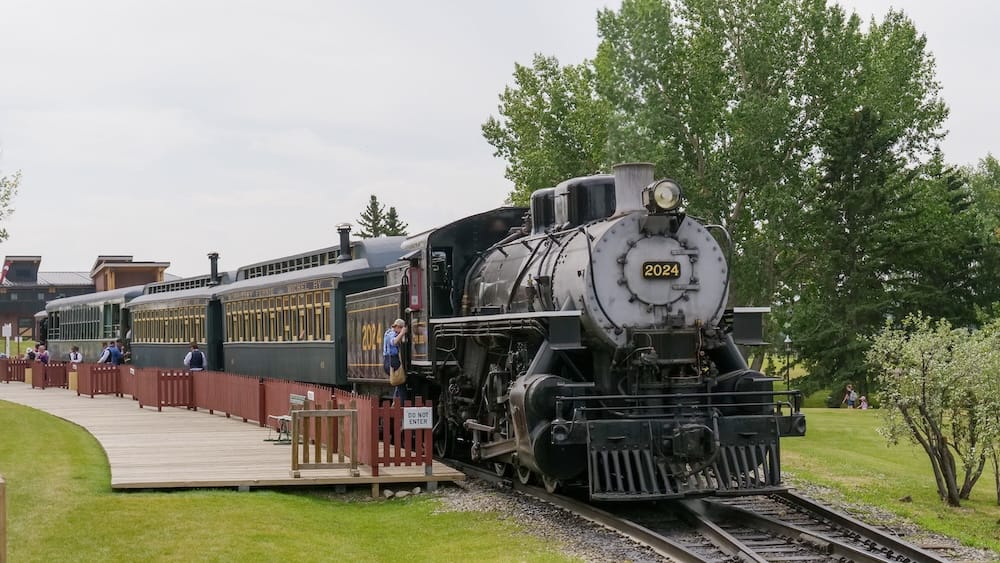
Heritage Park gave us one of the fullest days of our Calgary trip. We wandered through historic buildings, talked with interpreters, rode old-fashioned transportation, explored Gasoline Alley, saw animals, ate lunch inside the park, walked around in the summer heat and eventually reached the point where ice cream stopped feeling optional. After all that, we still hadn’t made it to the Antique Midway.
That is probably the most useful thing I can tell you before you go: Heritage Park is much bigger, more varied and more time-consuming than the words “living history museum” suggest.
13:16 – Heritage Park
14:50 – Gasoline Alley Museum
The Historical Village itself covers 65 acres. The broader Heritage Park property occupies 127 acres beside the Glenmore Reservoir, with more than 180 exhibits spread across several historical areas and attraction types. You have buildings and interpreters, trains and streetcars, a paddlewheeler, Gasoline Alley, farm animals, Indigenous interpretation, the Midway and multiple places to eat.
Trying to “do Heritage Park” as though it were one museum with a front door, six galleries and an exit is where the planning starts to go sideways.
If Heritage Park is already going on your Calgary itinerary, it is worth seeing what is actually bookable for your dates before the day itself. GetYourGuide has a dedicated Heritage Park page where you can compare current Heritage Park tours and ticket options. The products are not all equivalent, so I would still choose based on whether you simply need access or want transportation and additional sightseeing bundled with it.
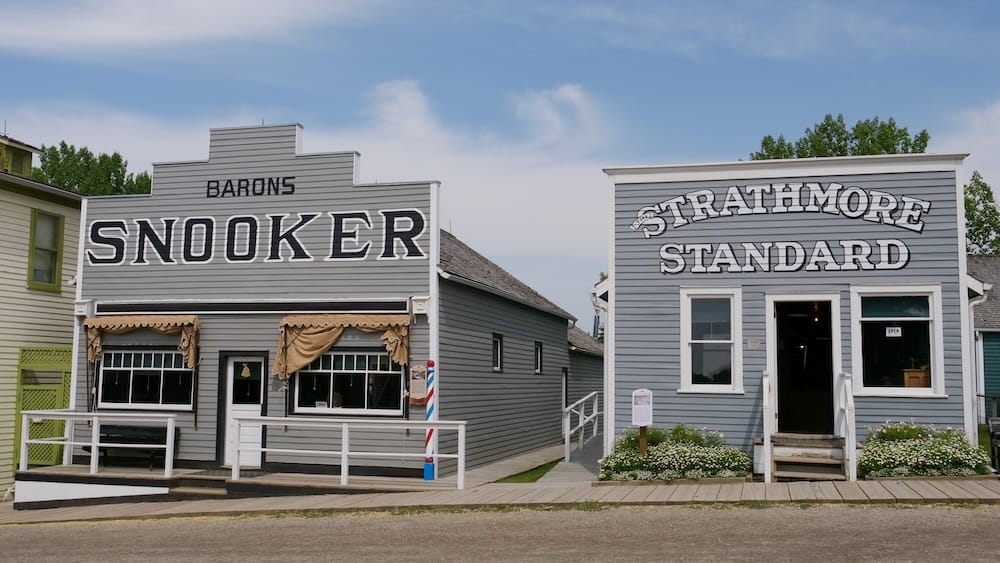
Heritage Park Is More Like a Small Historical Town Than a Museum
The core of Heritage Park recreates different eras of Western Canadian life from the 1860s through the 1930s. The current Historical Village includes an 1860s fur-trading fort and First Nations Encampment, an 1880s pre-railway settlement and a prairie railway town representing the early 20th century, along with ranch, farm and railway areas.
That sounds very tidy when you describe it on paper.
It doesn’t feel tidy once you’re inside, which is part of the fun.
You can walk out of a historical building and hear a steam train arriving somewhere nearby. A horse-drawn wagon might pass you on the road. You wander into another building because an interpreter is doing something interesting, then somehow end up in Gasoline Alley looking at antique cars and old petrol signs.
The park does have a structure, but our visit never felt as though we were marching through a chronological museum curriculum.
I liked that.
The downside is that your sense of time gets absolutely mugged.
A building that looks like a five-minute stop can become twenty because someone inside is demonstrating a historical trade. A train you planned to “grab whenever” suddenly has a timetable. Lunch appears. You walk farther than expected. Then Audrey says something about ice cream and any remaining commitment to efficiency disappears.
If I were visiting for the first time now, I’d have the current Heritage Park map saved on my phone before arriving. You don’t need to follow it like battlefield instructions, but it helps enormously to know where the major areas sit in relation to each other.
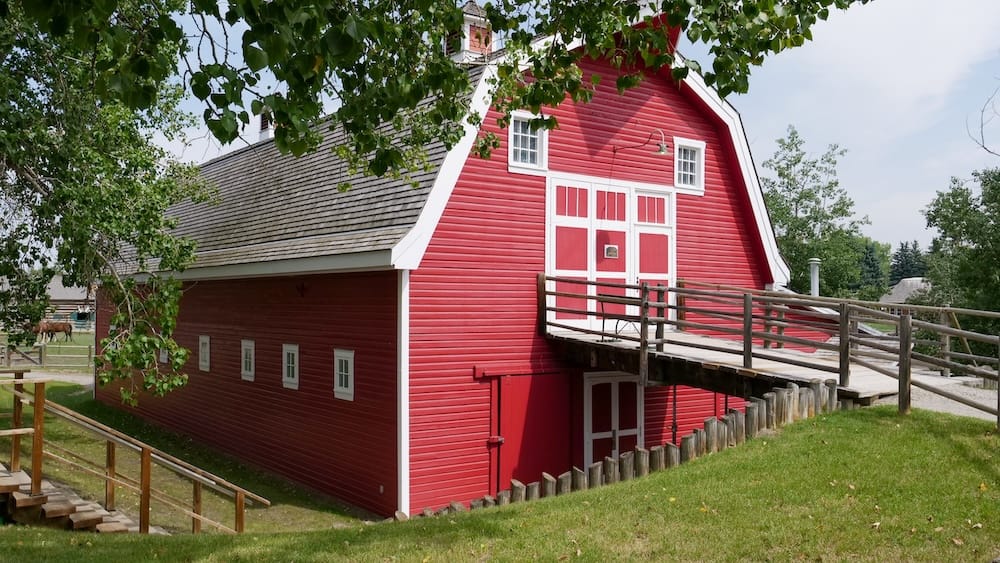
Start With the Historic Village and Go Inside the Buildings
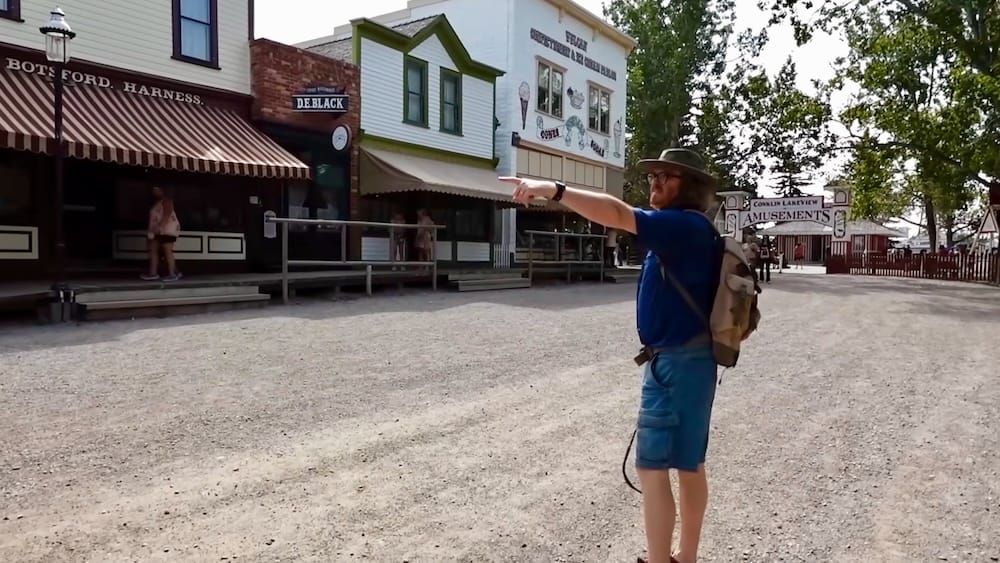
The historic buildings are what make Heritage Park feel like a living place rather than an outdoor collection of old structures.
We went inside plenty of them, and the interpreters were a big part of why I enjoyed the experience. You’re not simply staring through a doorway at a frozen room while trying to decipher what year the butter churn came from. People are working in period roles, demonstrating skills and talking about how daily life functioned.
That gives you permission to slow down.
I wouldn’t try to visit every building simply because it is there. With a site this large, that becomes the historical equivalent of trying to eat every item at a buffet because you technically paid for access to all of it.
Choose the buildings that catch your attention. If an interpreter is doing something interesting, stick around. If another building doesn’t grab you, keep walking.
Heritage Park also runs scheduled demonstrations and activities, and those can change from day to day. If blacksmithing, printing, farming demonstrations or another specific historical program is important to you, check the day’s activities when you arrive rather than assuming you’ll wander into it eventually.
That was one thing I’d plan more deliberately on another visit.
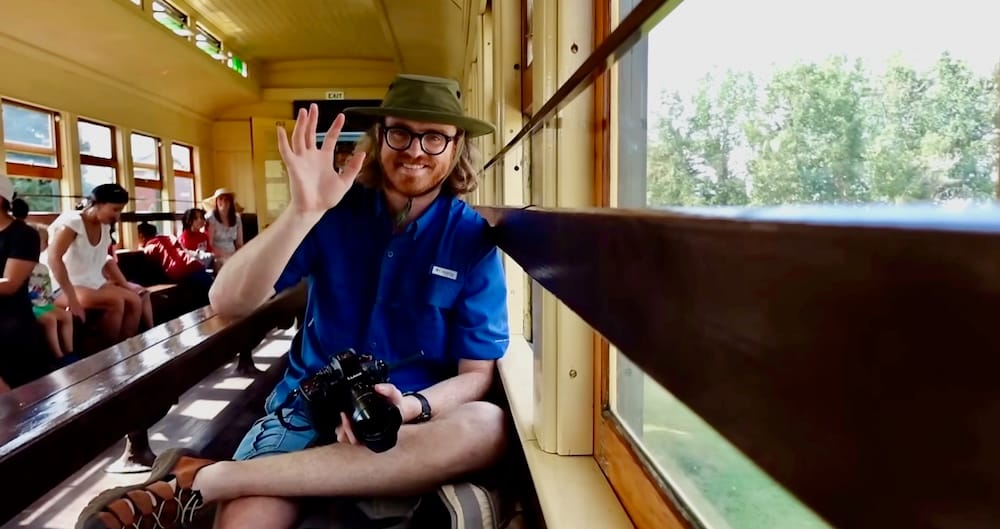
The Steam Train Is Worth Building Part of the Day Around
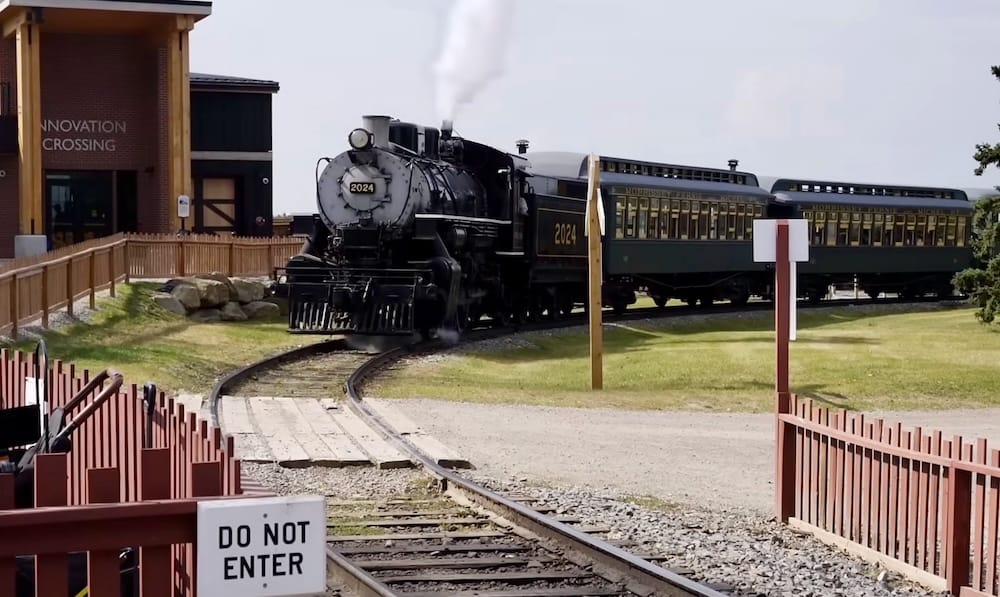
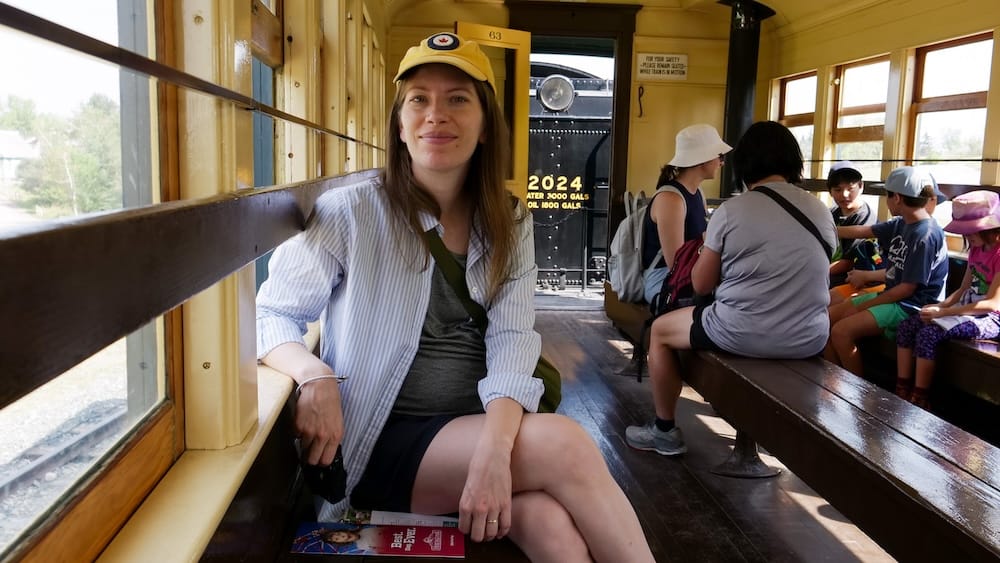
I was disproportionately excited by the steam train.
Audrey was filming while I was busy trying to capture the train arriving, which should tell you approximately how much dignity I maintain around old railways.
The train is useful because it performs two jobs at once. It’s an attraction, obviously, but it also moves you between different parts of Heritage Park. On a 65-acre historical site, that is considerably more helpful than a decorative little loop around a parking lot.
For the 2026 season, the train runs daily during the main summer period and switches to weekend operation later in the season. It follows a timetable and serves multiple stations around the park.
I wouldn’t obsess over every departure before arriving. I’d simply check the current Heritage Park schedules early enough that I wasn’t constantly discovering trains departing five minutes before I reached the platform.
Historic transportation turned out to be one of the highlights of our day, and it was also one of the things that made Heritage Park feel playful rather than relentlessly educational.
We kept describing it as bringing out the inner kid in us.
I stand by that assessment.
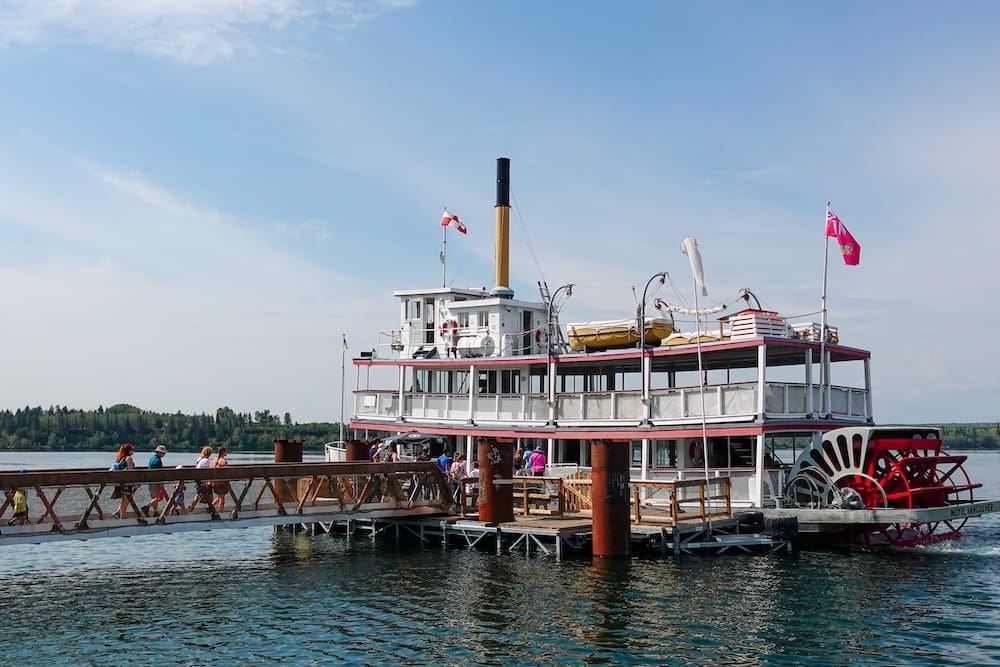
Take the S.S. Moyie Out on the Reservoir
The S.S. Moyie gives Heritage Park another completely different rhythm.
It’s a paddlewheeler that cruises the Glenmore Reservoir, and the ride currently takes about 25 minutes. During full summer operation, departures run at scheduled intervals throughout the day rather than continuously.
That quarter of an hour or so difference between “quick boat ride” and an actual 25-minute cruise matters when you’re planning.
You have to reach the dock. You may wait for departure. Then you’re on the water for nearly half an hour.
I enjoyed having that interruption in the middle of the historical wandering. You go from old wooden buildings and dusty roads to sitting on a boat looking back toward the shoreline, and suddenly Heritage Park doesn’t feel like a museum at all.
The Moyie operates daily during the main summer season and moves to weekend-only operation later in the season, so this is another experience I’d check before visiting outside peak summer.
If the boat is high on your list, treat the departure time as an anchor and let the nearby wandering fit around it.
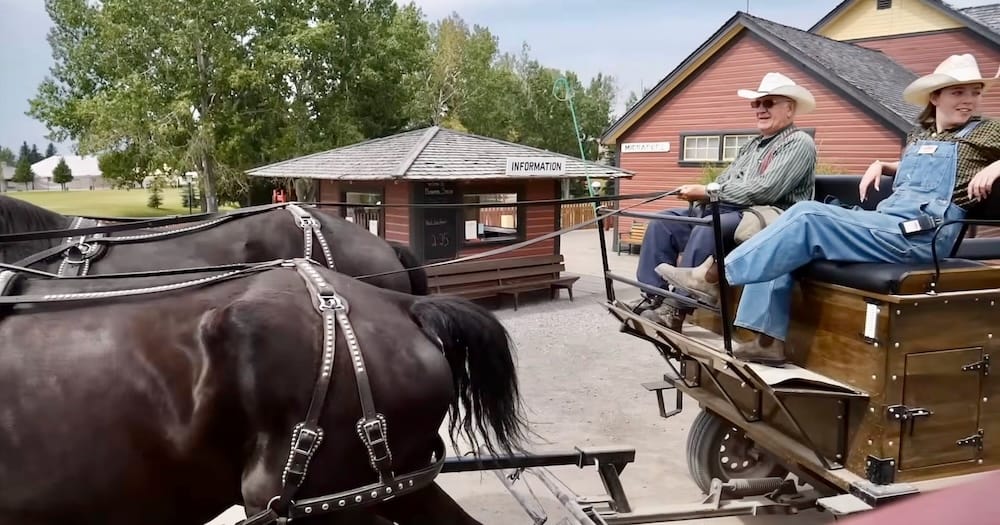
Streetcars and Wagons Are Part of the Fun Too
Heritage Park keeps leaning into transportation.
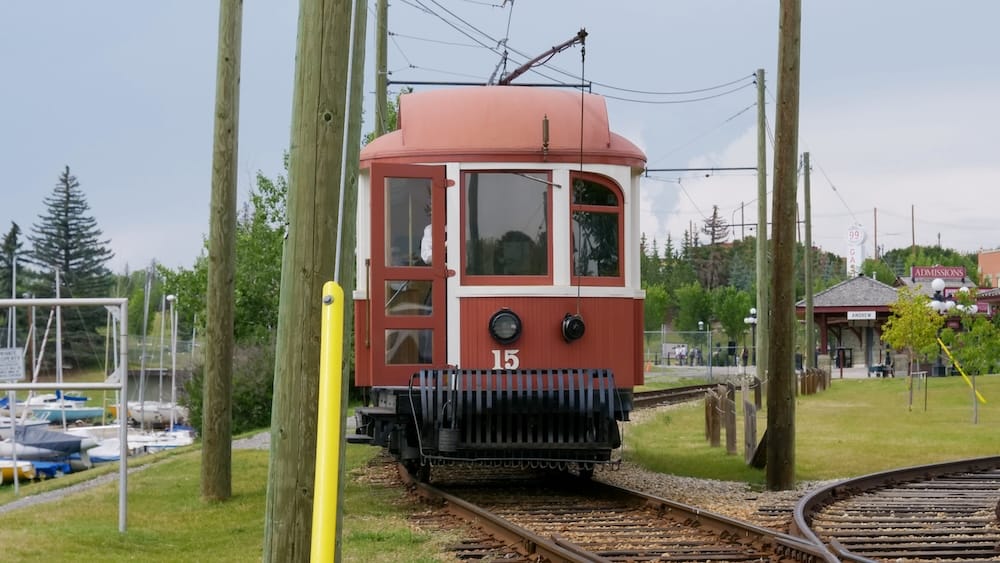
There is an electric streetcar, horse-drawn transportation and tractor-drawn wagon rides at different points in the operating season. We encountered several of these during our visit, although the train and paddlewheeler are the two I can most confidently speak about as actual rides we took.
What I loved was the way the transport became part of the atmosphere.
You don’t spend the day walking between exhibits while all the “historic” things sit motionless around you. Vehicles are moving. Trains are arriving. Wagons are passing. There is a little more life and noise than I expected.
Most of the major historic transportation is included with general admission, which also helps. You’re not being asked to make another financial decision every fifteen minutes.
The operating calendars do vary, though, particularly outside the main summer period. Heritage Park is one of those attractions where checking whether the park itself is open doesn’t necessarily tell you whether every specific thing you want is running.
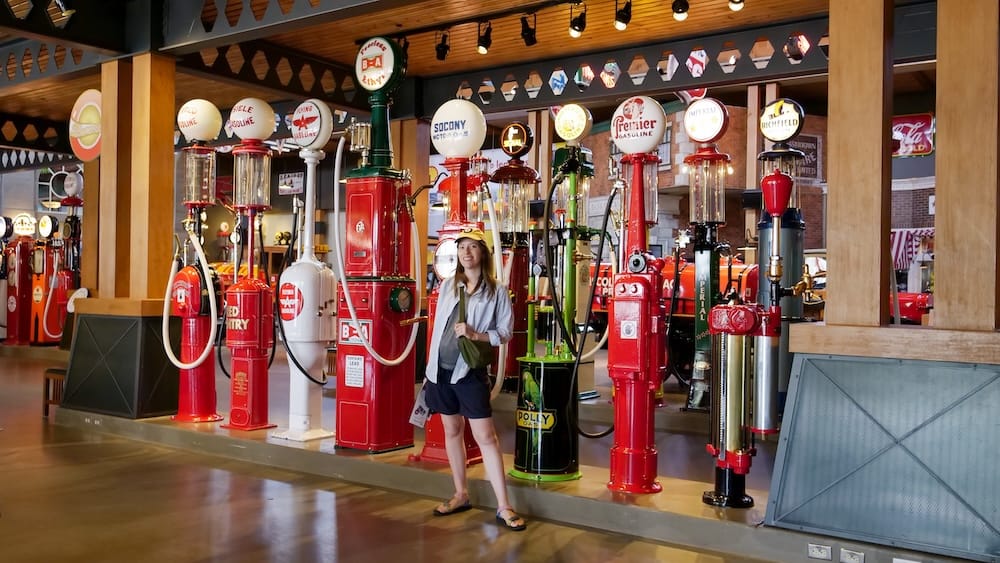
Don’t Rush Gasoline Alley
Gasoline Alley could easily be an attraction by itself.
It sits within Heritage Park and is filled with antique vehicles, gas pumps, signs and automotive memorabilia covering roughly the early 1900s through the 1950s.
We photographed the life out of that place.
The old cars are interesting, but I also liked all the smaller visual details around them: petrol branding, signs, pumps and advertising from an era when apparently nobody had discovered bland corporate design yet.
Gasoline Alley is indoors, which also makes it a welcome change of environment if you’ve already been walking around outside for hours.
It is included with Historical Village admission and operates as a year-round component of Heritage Park, even though the full Historical Village follows a more limited seasonal calendar.
The biggest mistake would be assuming you’ll “do Gasoline Alley quickly on the way out.”
You might. We did not.
If you’re genuinely interested in automotive history, give it proper time. If cars leave you completely cold, that’s another place where you can reclaim part of your day for the village, train, boat or Midway.
Heritage Park gets easier to plan once you stop pretending every attraction inside it deserves equal attention.
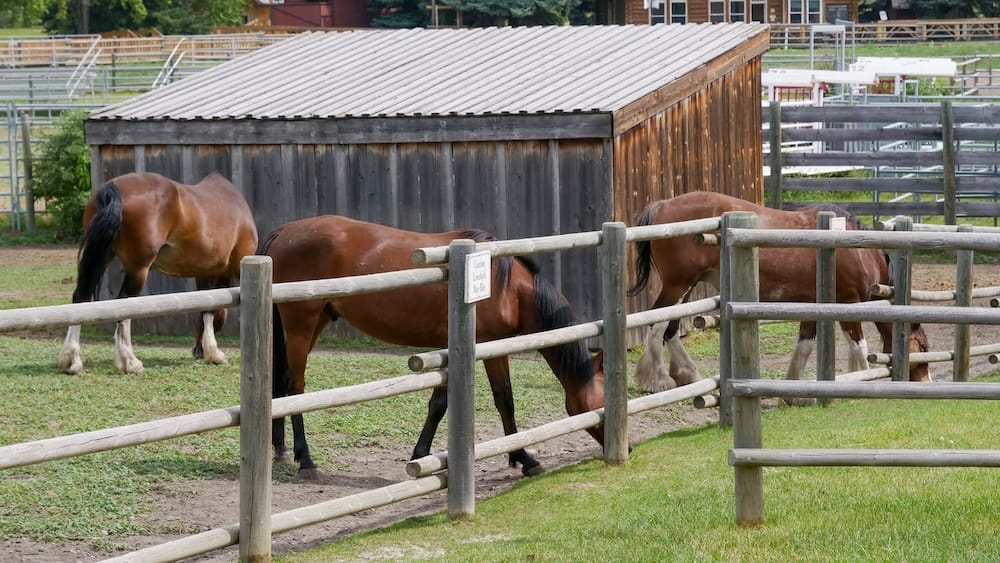
The Farm and Outdoor Areas Make the Park Feel Much Bigger
There is considerably more open space here than the historical town streets suggest.
The current park layout includes Ranch & Farm Life areas, animals and a First Nations Encampment alongside the settlements and railway town. We encountered animals and several of the more rural parts of the site while wandering around.
That changes the feeling of the visit.
You’re not simply walking down one reconstructed Main Street. You move between different environments, and the Glenmore Reservoir gives parts of Heritage Park a much more open setting than I expected.
It also means this is physically more demanding than an indoor museum.
During our visit it was hot, and we’d been walking for hours. By mid-afternoon, we were well past the stage of pretending temperature and hunger had no influence on our intellectual appreciation of Canadian history.
They absolutely did.
We Somehow Missed the Entire Antique Midway
Despite having what we described afterward as an action-packed visit, we never reached the Antique Midway.
That’s how I know we underestimated Heritage Park.
The current Midway includes rides such as the Big Eli Ferris Wheel, the Whip and Dangler Swings. The rides are included with general admission, while the Midway games cost extra.
For families, this could easily become a substantial part of the day. Some of the rides also have height restrictions or require adult accompaniment for smaller children.
Audrey and I weren’t travelling with a child on this Calgary trip, so I’m not going to pretend I can tell you what Heritage Park is like with a stroller, a toddler or a kid who has decided the Ferris wheel is now more important than the entirety of Western Canadian history.
What I can say is that we both came away thinking the park had obvious family appeal. Trains, boats, animals, rides and interactive historical areas give children a lot more variety than a conventional museum.
The Midway also illustrates why prioritizing matters.
We didn’t decide to skip it.
We simply ran out of Heritage Park before Heritage Park ran out of things to do.
Check the 2026 Operating Calendar Before You Go
This is the planning detail I would pay the most attention to.
For the 2026 season, the Historical Village operates daily from May 16 through August 30, then switches to weekends plus Thanksgiving Monday from August 31 through October 12. Regular Historical Village hours are 10 a.m. to 5 p.m.
That’s a seven-hour normal operating day.
But Heritage Park is not one uniformly seasonal attraction.
Gasoline Alley and some of the shops and restaurants in Heritage Plaza operate on broader schedules, including outside the full Historical Village season. Meanwhile, the train, S.S. Moyie, streetcar, wagon rides and other experiences have their own operating calendars.
So seeing that “Heritage Park is open” does not automatically mean you’re getting the same experience we had during a full summer visit.
If you’re travelling in July or August, most of this becomes simpler.
If you’re visiting during the shoulder season, I’d check three things before leaving:
- whether the Historical Village is operating;
- whether the specific rides you care about are running;
- whether there are any same-day operational changes.
The current Heritage Park admission and operating calendar and the park’s live operation updates are both worth checking before you leave. Weather or maintenance can affect individual experiences even when the park itself remains open.
Five minutes on your phone beats reaching the dock and discovering the boat is not sailing that day.
How Long Do You Actually Need?
I’ll deal with this question in more detail separately because the answer depends heavily on what you care about, but I would resist treating Heritage Park as a quick two-hour museum unless you’re intentionally choosing only a few parts.
We dedicated a major chunk of our day to it.
We went through buildings, rode transportation, visited Gasoline Alley, had lunch, stopped for ice cream and kept moving through the grounds. At the end, we were still talking about everything we hadn’t reached.
A full Historical Village day currently runs from 10 a.m. to 5 p.m., but that does not mean everybody needs seven hours.
A visitor who mainly wants Gasoline Alley and a quick wander through the village has a very different job from someone hoping to ride the train, take the paddlewheeler, talk with interpreters, eat lunch, visit the farm and finish at the Midway.
What stretches the visit isn’t just the acreage.
The Moyie takes about 25 minutes once you’re on it. The train follows a timetable. Demonstrations happen on schedules. A sit-down lunch takes time. Walking between areas takes time. Going into a building and actually talking with somebody inside takes far longer than snapping a photograph from the road.
None of those things individually destroys your itinerary.
Together they eat it alive.
Getting to Heritage Park Without a Car Is Quite Manageable
The journey looked more irritating before we did it than it actually was.
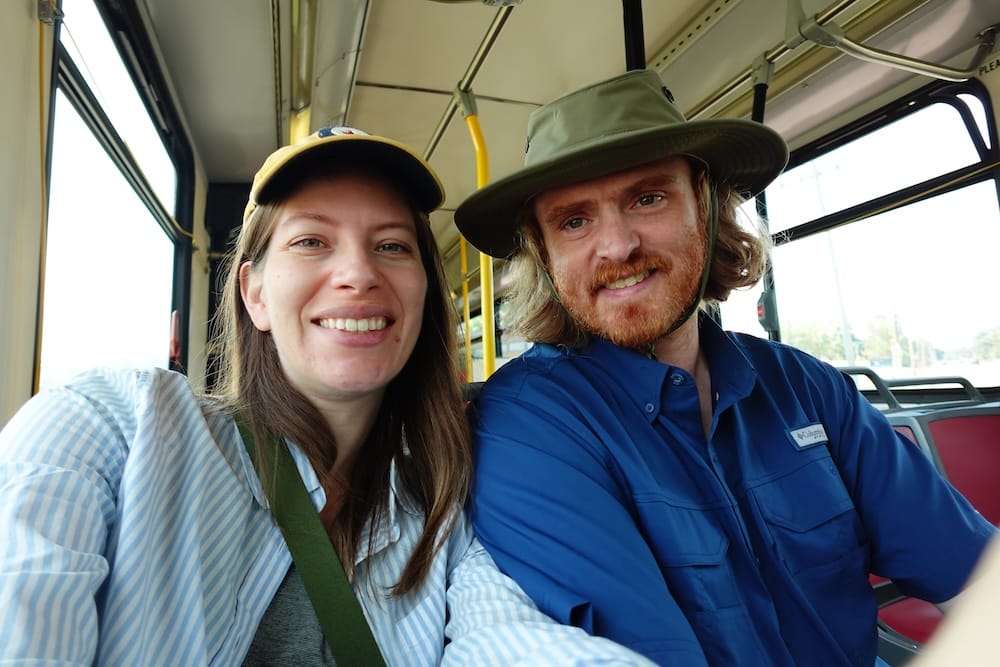
We took Calgary’s CTrain south and then connected to a bus. This was unusual for our Calgary trip because almost everything else we’d done had been reachable on foot from central Calgary.
In 2026, seasonal Route 402 connects Heritage CTrain Station with Heritage Park from May through October and runs approximately every 20 minutes during its operating period. Route 20, MAX Teal and MAX Yellow also serve the area, with the transit stop roughly a five-minute walk from the park entrance.
The current adult Calgary Transit fare is $4 and includes 90 minutes of travel on buses and CTrain.
If you’re staying centrally without a car, I would have no hesitation using transit again.
Just understand the difference between this and downtown sightseeing. You’re not stepping outside your hotel and wandering five blocks. You need to get south on the CTrain and then make the final bus connection.
Once we’d actually done it, though, I remember thinking our earlier deliberation had been much ado about very little.
Heritage Park was worth the extra effort.
If that CTrain-and-bus connection is exactly the part putting you off, there is another option that fits this article unusually well: a current seven-hour Heritage Park Historical Village bus tour starts at the Calgary Tower, includes a guided introduction to Calgary before arrival, covers Heritage Park admission, then leaves you to explore the park independently for the afternoon before the bus collects you for the return downtown. What is operating inside Heritage Park still depends on the season. The current tour listing is also not suitable for children under five, wheelchair users or people with mobility impairments, so this is not a universal shortcut. For an independent adult visitor who mainly wants to remove the transportation hassle, you can check current availability for the Heritage Park bus tour.
I also wouldn’t choose an entire Calgary accommodation base solely to be close to Heritage Park. The attraction worked perfectly well as a day trip from central Calgary for us, while staying centrally made nearly everything else on our visit easier. If you’re still deciding where to base yourself, you can compare current Calgary hotel options rather than locking yourself into one neighbourhood for the sake of a single attraction.
Driving Is Easier, but Parking Isn’t Free
We didn’t drive, so I can’t tell you whether the parking lots feel delightful, chaotic or spiritually neutral at peak arrival time.
The current arrangement is straightforward.
Heritage Park has six on-site parking lots using Calgary’s ParkPlus system. Daytime parking currently costs $13 for the first seven hours between 6 a.m. and 6 p.m., which lines up almost perfectly with the regular 10-to-5 Historical Village operating day.
There is also a complimentary 90-minute parking period for shorter visits to places such as Gasoline Alley and Heritage Plaza businesses, but you still need to register your licence plate.
For someone already exploring Calgary by car, driving is obviously simpler than making the CTrain-and-bus connection.
For someone travelling Calgary without a vehicle, I wouldn’t rent one solely for Heritage Park. We didn’t need one.

Eat Before You Become Angry at the 19th Century
Food became increasingly important as our day wore on.
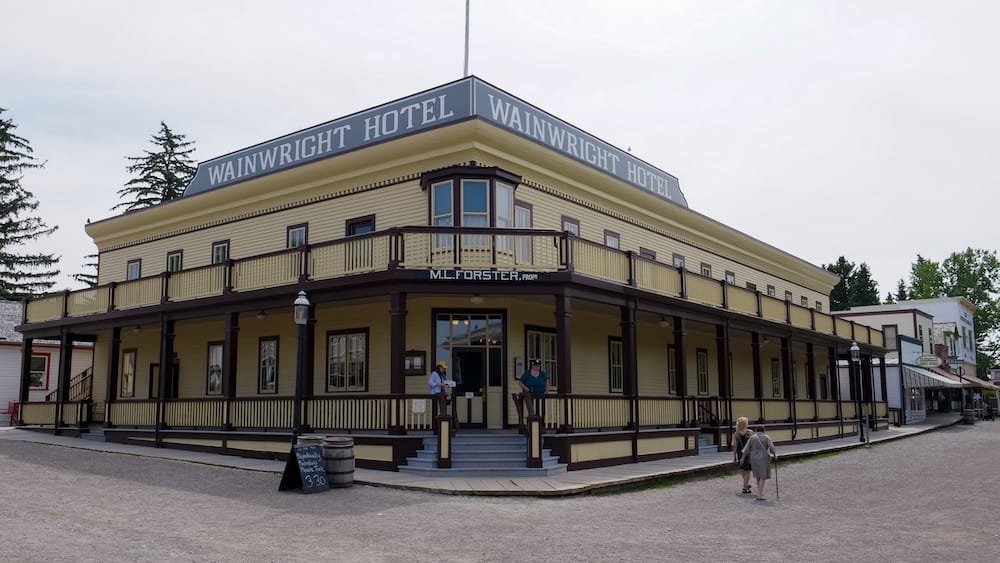
We stopped for lunch at the Wainwright Hotel inside Heritage Park. On our visit, I had been jonesing for a burger for several days, so my historical curiosity briefly took second place to Alberta beef.
Audrey ordered loaded baked-potato-style fries with bacon, cheese, tomato, sour cream and green onions.
Later in the day we had been walking around in the heat for roughly three hours when ice cream suddenly became the obvious next historical activity.
I chose Rocky Mountain Coffee. Audrey had Saskatoon Berry.
The coffee flavour was one of those things I selected partly because it sounded regionally appropriate, only to discover I’d happily eat it even if it had absolutely no connection to the Rockies whatsoever. Strong coffee, sweet, creamy. It disappeared quickly.
Those exact dishes and flavours were part of our visit and may change, but Wainwright Hotel remains part of Heritage Park and there are multiple other places to eat around the property.
For planning purposes, the specific burger matters less than the lesson.
If you’re here for several hours, stop and eat.
Yes, lunch costs you sightseeing time. So does becoming tired, hungry and irrationally annoyed at an innocent blacksmith because you haven’t eaten since breakfast.
The Walking Is Real
Heritage Park is not physically brutal, but it does ask more of you than a compact indoor museum.
We were there on a hot summer day and spent hours outside. Heritage Park’s historical terrain can be uneven and slippery, and you’re moving through old buildings, outdoor paths, farm areas and large open spaces.
I would wear comfortable shoes without giving it a second thought.
Summer visitors should also treat water, shade and sun protection as actual planning considerations. We reached the point where stopping for ice cream was as much about taking a break from the heat as eating dessert.
Accessibility is more nuanced than simply saying Heritage Park is “wheelchair accessible.”
The park has accessible routes, an accessible railcar, a courtesy bus for guests with limited mobility and improvements in newer areas such as Resource Ridge. The current map also marks accessible washrooms, baby-care facilities and first aid.
At the same time, historical buildings and uneven terrain inevitably create some limitations.
One particularly important detail: Heritage Park does not currently rent wheelchairs, mobility scooters, strollers or wagons.
If someone in your group needs that equipment, arrange it beforehand rather than assuming you’ll pick one up at the entrance.
Who Will Enjoy Heritage Park Most?
I think Heritage Park works especially well for people who enjoy history more when they can move through it.
I like museums, but I also have limits. Give me four straight hours of display cases and eventually I’m no longer learning; I’m just slowly migrating toward the gift shop.
Heritage Park keeps changing the activity.
Go inside a historical building. Talk with an interpreter. Ride a train. Visit the farm. Walk through Gasoline Alley. Take a boat onto the reservoir. Stop for food. Watch something being demonstrated.
That variety made the day work for us.
Railway and transport enthusiasts have plenty to occupy them. People interested in automobiles can lose themselves in Gasoline Alley. Families have animals and the Antique Midway layered onto the historical attractions. Visitors genuinely interested in Western Canadian history can spend considerably longer with the interpreters and buildings than we did.
If you dislike living-history attractions altogether, Heritage Park probably isn’t going to perform some miraculous personality transplant.
But if your hesitation is simply that it looks like a lot of effort for “a museum,” I had the same concern.
I changed my mind.
What I’d Do Differently Next Time
I wouldn’t plan every hour.
That sounds exhausting, and part of what I enjoyed about Heritage Park was wandering into things we hadn’t specifically targeted.
But I would arrive knowing my three priorities.
For me, that would mean checking the train schedule, checking the S.S. Moyie departures and deciding which major area I absolutely didn’t want to miss. I’d also look at the live park schedule for any demonstrations or temporary closures before leaving central Calgary.
Then I’d stop planning.
Heritage Park works best with some structure and plenty of slack. The structure keeps you from accidentally missing the boat, train or section you cared about most. The slack gives you room to spend twenty minutes in a building because the interpreter is interesting, linger over lunch or follow a streetcar simply because it looks fun.
Most importantly, I would no longer arrive with the assumption that I ought to see everything.
We tried to cover a lot and still missed the Midway entirely.
Next time, I’d consider that part of the plan.
Frequently Asked Questions
How much time should I allow for Heritage Park?
I would not treat Heritage Park as a quick museum stop unless you only want a few specific areas. We spent a major part of the day there and still missed the Antique Midway, so a longer visit gives you much more room for rides, buildings, food and wandering.
Can you visit Heritage Park without a car?
Yes. Audrey and I used Calgary Transit, combining the CTrain with a bus connection to Heritage Park. It took a little more planning than our downtown sightseeing, but once we did it the trip felt straightforward enough.
What should I check before visiting Heritage Park?
Check whether the Historical Village is operating on your date, whether the rides you care about are running, and whether there are any same-day operational changes. Individual attractions can follow different schedules.
Is Gasoline Alley included with Heritage Park admission?
Gasoline Alley is included with Historical Village admission and also operates as a year-round component of Heritage Park. It is substantial enough that car enthusiasts may want to protect dedicated time for it.
Are the rides at Heritage Park included with admission?
Most of the major historic transportation and Midway rides are included with general admission, while the Midway games cost extra. Operating dates and schedules vary, so it is still worth checking what is running.
Is Heritage Park easy to walk around?
Heritage Park involves a lot of outdoor walking, and some historical terrain can be uneven or slippery. The park has accessible routes, an accessible railcar and a courtesy bus, but it does not currently rent wheelchairs, mobility scooters, strollers or wagons.
This guide is also available in Spanish. [Leé la versión en castellano: Guía de Heritage Park Calgary: qué ver y cómo planificar tu visita]
This article contains affiliate links. If you book through one of these links, I may earn a commission at no extra cost to you.