
I can usually tell when a local food or drink has become part of a city’s identity because I start making exceptions for it.
I do not normally order alcohol with breakfast. Yet Audrey and I were having brunch at The Beltliner in Calgary, I saw a Caesar on the menu, and my reaction was basically: I’m in Calgary. This has to happen.
That is what interests me most about the Caesar. I had already decided it was worth ordering before taking the first sip because Calgary had attached enough meaning to the drink that trying one here felt like part of visiting the city.
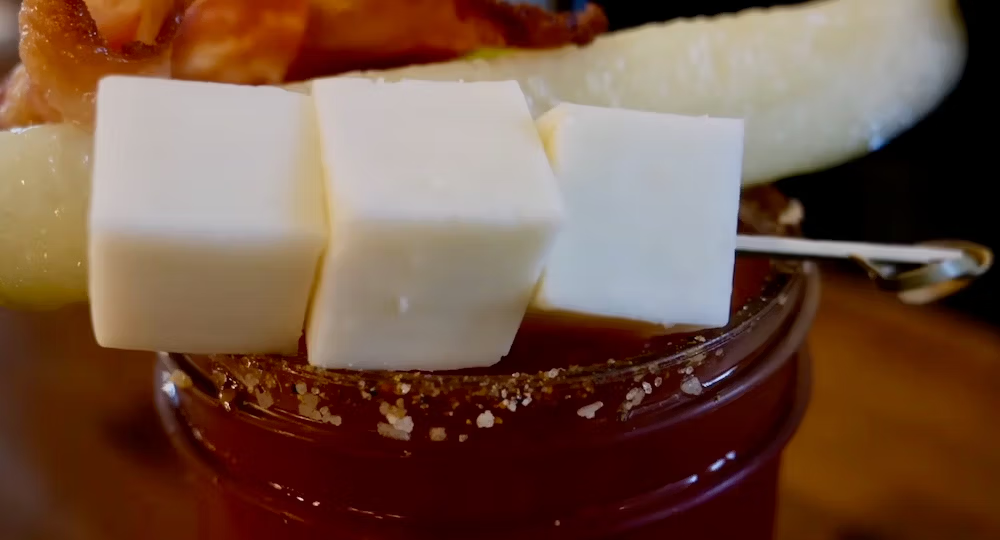
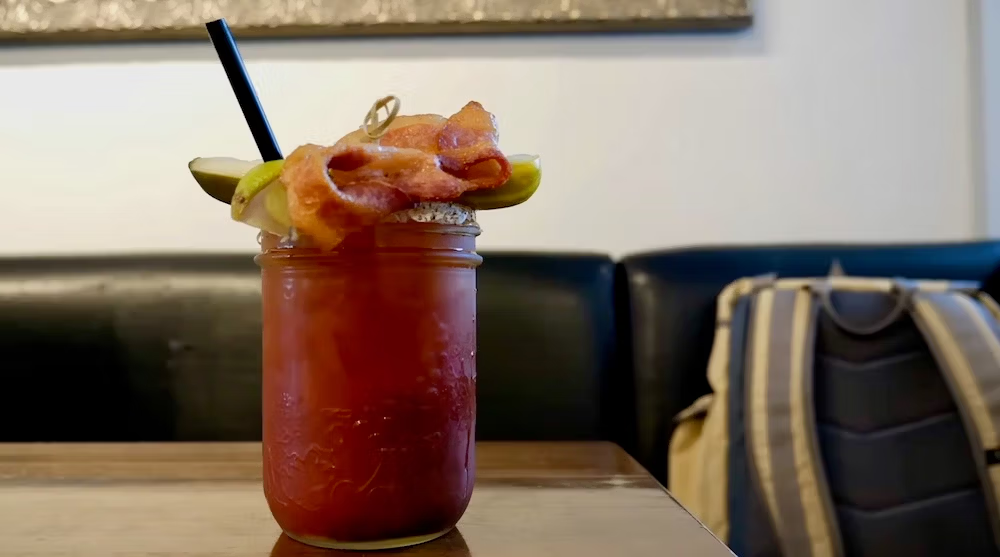
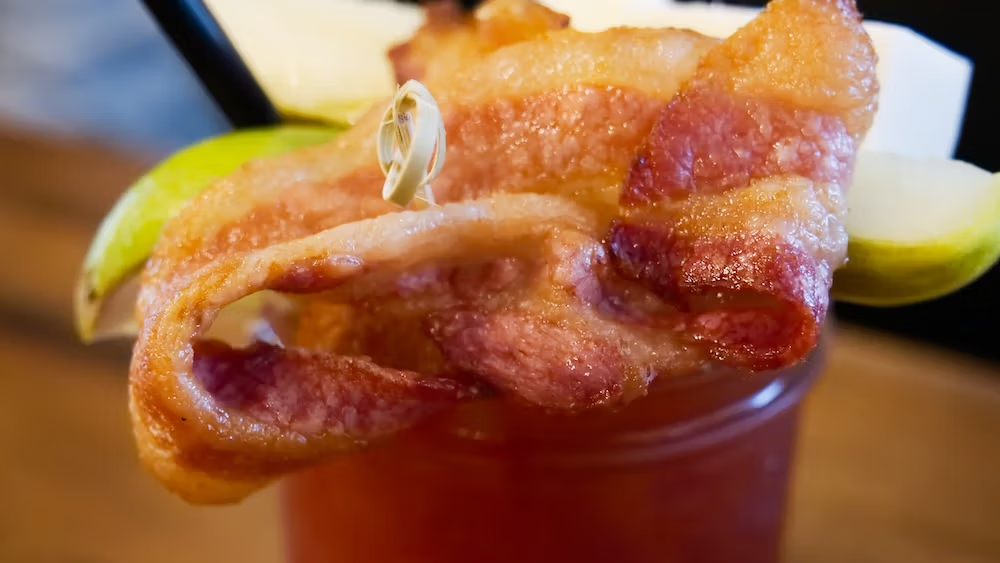
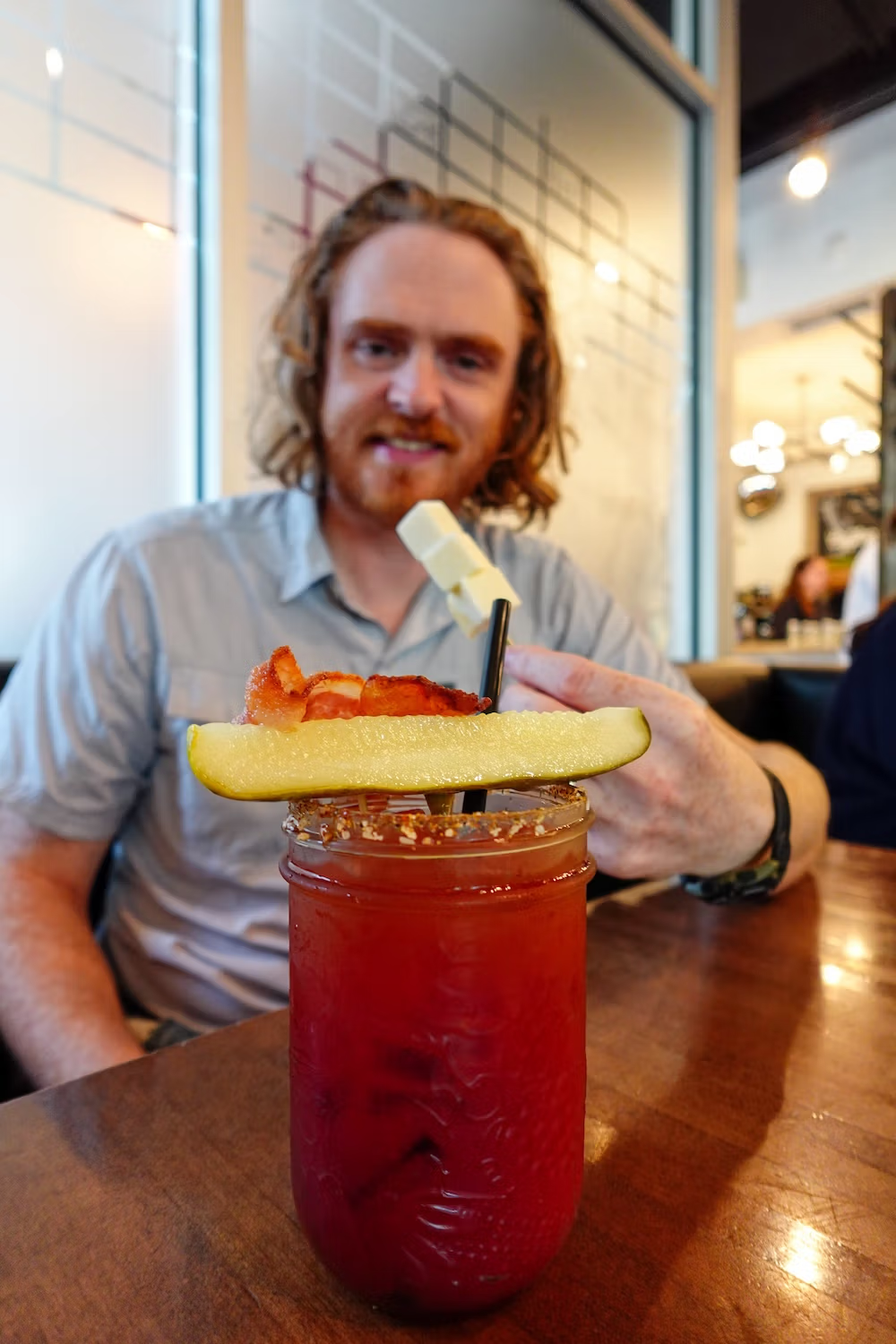
Mine was hardly a sacred reproduction from 1969. It had spicy gin instead of vodka, extra heat, a seasoned rim, lime, pickle, cheese and bacon. The first sip was tangy, zesty and potent enough that my immediate review was, “It wakes you up.”
Still accurate.
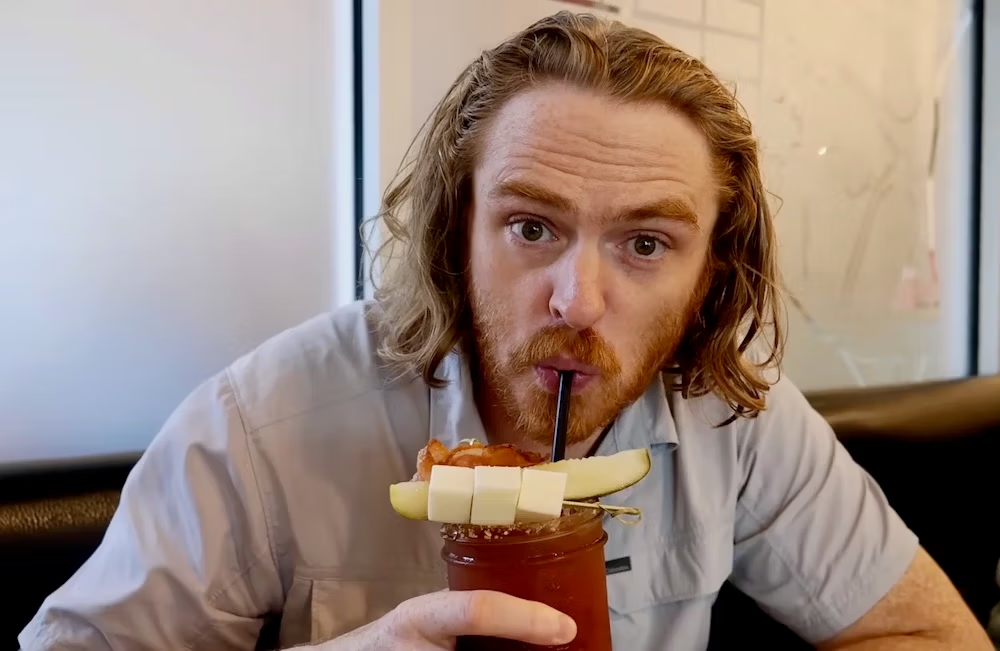
I liked it a lot. But the story behind the glass turned out to be even better, because Calgary’s claim to the Caesar is both stronger and messier than the usual legend.
Similar clam-and-tomato cocktails existed before Walter Chell. Commercial Clamato existed before his Caesar. There was even a vodka-and-Clamato cocktail being promoted before 1969.
None of them became the Caesar.
Walter Chell’s drink did.
And that distinction is the key to understanding what Calgary actually gave Canada.
What is a Caesar?
A classic Caesar is a savoury cocktail built around a clam-and-tomato base, normally Clamato, with vodka, Worcestershire sauce, hot sauce and seasoning. A celery-salt-style rim, lime and celery are common.
After that, bartenders can wander pretty far from home. Vodka becomes gin or tequila. Heat levels climb. The garnish can remain a celery stalk or develop into something that requires an engineering permit.
The clam-and-tomato base is what holds the identity together. It is also the basic reason a Caesar is not simply another name for a Bloody Mary, which uses ordinary tomato juice. I have a separate Caesar-versus-Bloody-Mary comparison for the full argument; here, the more interesting question is how this Calgary cocktail became Canadian.
Walter Chell created the Caesar in Calgary in 1969
The solid historical ground begins at the Calgary Inn.
Walter Chell, born in Montenegro and trained in the European hotel industry, was managing the Owl’s Nest restaurant when the hotel prepared to open an Italian restaurant called Marco’s in 1969. Chell was tasked with creating a signature cocktail.
His inspiration is tied to spaghetti alle vongole, the Italian combination of pasta and clams. Translating that savoury clam profile into a tomato-based cocktail eventually produced the drink that became the Caesar.
The Calgary Inn is now The Westin Calgary, so the birthplace still exists in downtown Calgary.
That part of the history is sturdy: Walter Chell, Calgary Inn, 1969, Caesar.
The exact original recipe is less tidy. Later versions often present precise measurements as though somebody laminated Chell’s first recipe card for future cocktail historians. In reality, accounts differ over whether he initially used fresh clam material or commercial Clamato, and the seasonings vary between retellings.
The naming story is fuzzy too. Several versions involve a customer tasting the drink and saying some variation of “Bloody Caesar.” The earlier name Bloody Caesar is real, and Canadian usage eventually shortened it to Caesar, but the exact barroom quotation changes depending on who is telling the story.
I am happy leaving the dialogue alone. The drink and the name survived; that matters more than polishing an old one-liner into certainty.
The awkward bit: Calgary was not first to mix clam, tomato and vodka
This is where the story gets better by becoming less perfect.
By the 1950s, a drink called the Smirnoff Smiler was already combining tomato, clam, vodka and Worcestershire sauce. Then, in October 1968, commercial Clamato was being promoted alongside a cocktail called the Clam Digger, made with vodka and Clamato.
Chell created the Caesar in 1969.
So Clamato did not appear because of the Caesar, and neither did the idea of adding vodka to it.
That sounds like a problem only if Calgary’s claim depends on winning an ingredient patent in the court of cocktail history.
Being first to combine ingredients is one kind of invention. Creating the version people remember is another.
Canadians did not build a national cocktail culture around the Smirnoff Smiler or walk into bars asking for Clam Diggers. Chell gave his drink a recognizable identity, a durable name and a starting point from which it could spread.
They started ordering Caesars.
That is Calgary’s stronger claim.
How the Caesar escaped Calgary and became Canadian
The missing middle of this story is surprisingly fast.
Within roughly five years of Chell creating the Caesar, it had become popular across western Canada. There is also a documented Toronto reference to a Bloody Caesar from 1973. That does not mean Toronto’s first Caesar was served that year, but it does show the drink moving far beyond Calgary only a few years after its creation.
Commercial Clamato probably helped. Not because the Caesar caused Clamato to exist—it plainly did not—but because a bottled clam-and-tomato mixer made the central flavour easy to reproduce.
I would not give one product all the credit. Restaurant adoption, marketing, word of mouth and the basic fact that people enjoyed the drink all mattered. But easy replication is useful when a cocktail is trying, accidentally or otherwise, to conquer a country.
The language changed with it. “Bloody Caesar” increasingly became simply “Caesar,” and the word developed into a distinctly Canadian cocktail term. Outside Canada it often needs explanation; here, you can just order one.
You only get to remove half the name once people already know what you mean.
That is why I prefer this cultural evidence to splashy claims about hundreds of millions of Caesars being consumed every year. The drink did not merely sell well. It became part of Canadian vocabulary.
Is the Caesar really Canada’s national cocktail?
Calling the Caesar Canada’s national cocktail is reasonable cultural shorthand. Calling it the unofficial national cocktail is even safer.
“Official” is where the story gets slippery.
There were campaigns in 2009 and 2010 trying to have the Caesar formally recognized as Canada’s official cocktail. In December 2010 it was celebrated in the House of Commons, where a statement recognized its Calgary origin and encouraged Canadians to recognize it as the national cocktail.
That is meaningful. It is not the same thing as Parliament passing legislation or formally declaring an official national cocktail.
The stronger claim still circulates as fact, and Calgary does not need it. The Caesar became Canadian enough that people began treating it as a national drink without requiring the government to stamp a seal on the glass.
That is culture doing the work.
Then Canadians started putting breakfast on top of it
The modern Caesar has become a magnificent excuse for bartenders to get carried away.
Vodka can become gin or tequila. Spice levels climb. Rims get elaborate. Then the garnishes start multiplying until celery looks like it has been demoted.
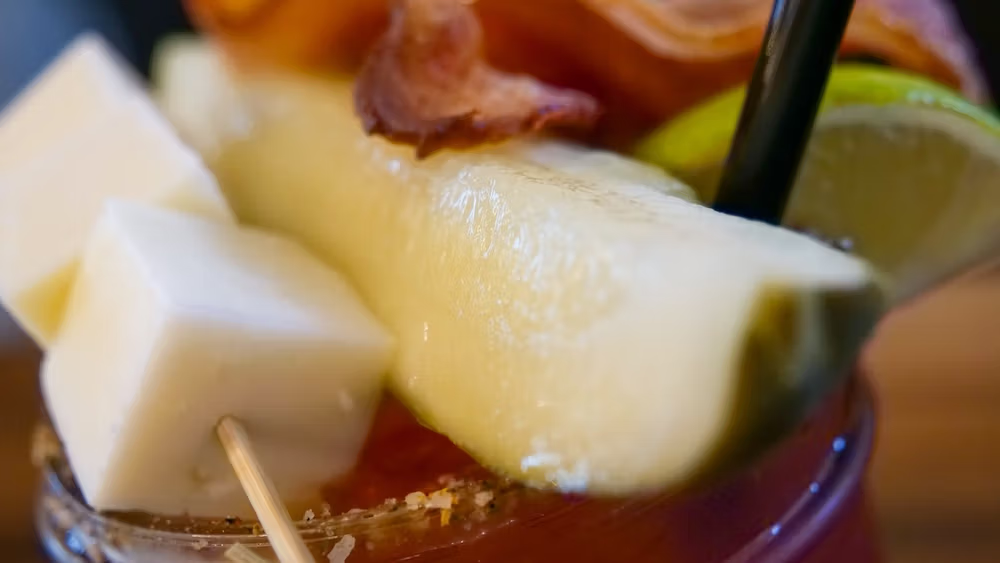
My Beltliner Caesar was already doing its part. I ordered the spicy-gin version with extra heat, lime and pickle, then added cheese skewers and bacon. At that point you are drinking your cocktail and eating around the perimeter.
I am not complaining.
The first sip delivered tang and zest, followed by the spicy gin making sure I knew it was present. “It wakes you up,” I said, which remains accurate.
I was also eating a rather ridiculous French toast at the time, so breakfast had taken an interesting turn: sweet sourdough on one side, spicy red cocktail with bacon and cheese on the other. Subtlety had left the table.
Sometimes I try a local specialty because the story is irresistible, then walk away thinking the history was better than the actual eating or drinking. The Caesar was not like that.
The Calgary connection got me to order it. The flavour made the decision worthwhile.
And the extravagance fits the larger history. The Caesar has a strong enough identity to absorb different spirits, more heat and increasingly ridiculous garnishes without losing what makes it recognizable.
What Calgary actually gave Canada
Calgary gave Canada the Caesar.
That sentence works without pretending Walter Chell invented every ingredient or every possible predecessor.
Clam-and-tomato cocktails existed before him. Commercial Clamato existed before him. Vodka mixed with Clamato existed before him.
Then Chell created the Caesar at the Calgary Inn in 1969. Within about five years it was popular across western Canada. By 1973 it was appearing in documented Toronto usage. “Bloody Caesar” gradually became simply “Caesar,” and the drink developed an identity that became distinctly Canadian.
That is a substantial legacy.
More than fifty years later, I arrived in Calgary as somebody who almost never drinks alcohol with breakfast, saw a Caesar on the menu and immediately made an exception.
“One in Calgary.”
It had to be done.
Frequently Asked Questions
What is a Caesar cocktail?
A Caesar is a savoury cocktail built around a clam-and-tomato base, normally Clamato, with vodka, Worcestershire sauce, hot sauce and seasoning. Celery-salt-style rims, lime and celery are common, although modern versions can vary considerably.
Who created the Caesar in Calgary?
Walter Chell created the Caesar at the Calgary Inn in 1969 while developing a signature cocktail for the opening of the hotel’s Italian restaurant, Marco’s. The Calgary Inn is now The Westin Calgary.
Did Walter Chell invent the first clam, tomato and vodka cocktail?
No. Similar drinks existed earlier, including the Smirnoff Smiler in the 1950s, while a vodka-and-Clamato drink called the Clam Digger was being promoted in 1968. Chell’s achievement was creating the Caesar that acquired a lasting name and Canadian identity.
How did the Caesar become a Canadian drink?
Within roughly five years of its 1969 creation, the Caesar was already popular across western Canada, and a Bloody Caesar appears in documented Toronto usage from 1973. Over time, “Bloody Caesar” became simply “Caesar,” a distinctly Canadian cocktail term.
Is the Caesar officially Canada’s national cocktail?
The Caesar is commonly treated as Canada’s national or unofficial national cocktail, but that is different from a formal parliamentary designation. Campaigns in 2009 and 2010 sought official recognition, and a 2010 House of Commons statement encouraged Canadians to recognize it as the national cocktail.
What was the Caesar I tried in Calgary like?
Mine at The Beltliner was a spicy-gin variation rather than the classic vodka version, with extra heat, a seasoned rim, lime, pickle, cheese and bacon. I found it tangy, zesty and potent enough that my first reaction was, “It wakes you up.”
This guide is also available in Spanish. [Leé la versión en castellano: Guía del Caesar de Calgary: el cóctel que la ciudad le dio a Canadá]