
Banff has a funny way of making indoor activities feel vaguely irresponsible. You’ve come all the way to the Canadian Rockies, the mountains are right outside, and every decent patch of weather seems to demand that you use it. Lake Louise, viewpoints, river walks and trails all compete for the same limited hours.
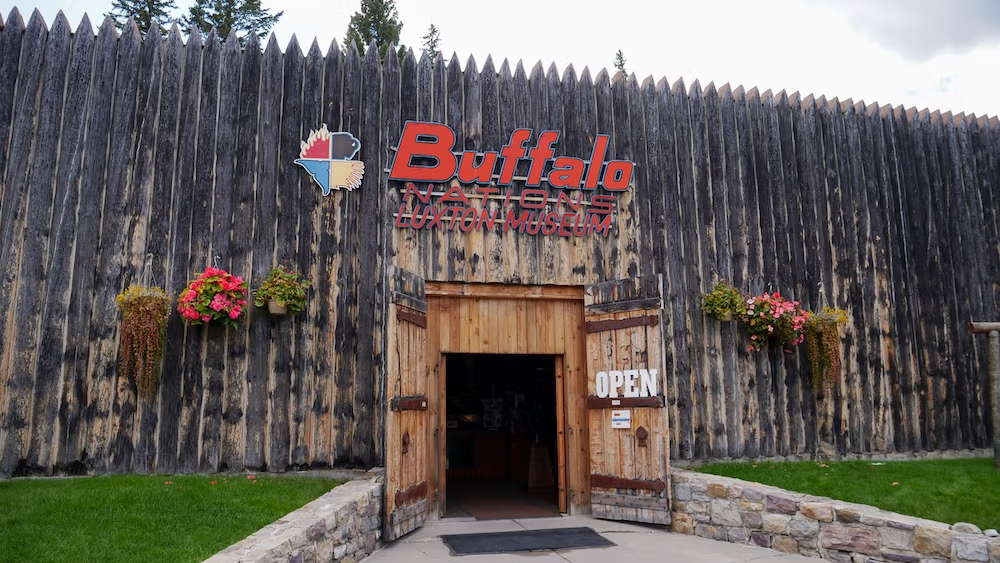
Audrey and I still ended up spending more than an hour at Buffalo Nations Museum, and we were glad we did. We had just finished Banff Park Museum, crossed the Bow River and continued to what was then commonly called Buffalo Nations Luxton Museum. I could easily have imagined it becoming a quick stop: look around, take in a few displays, tick off another Banff attraction and keep moving.
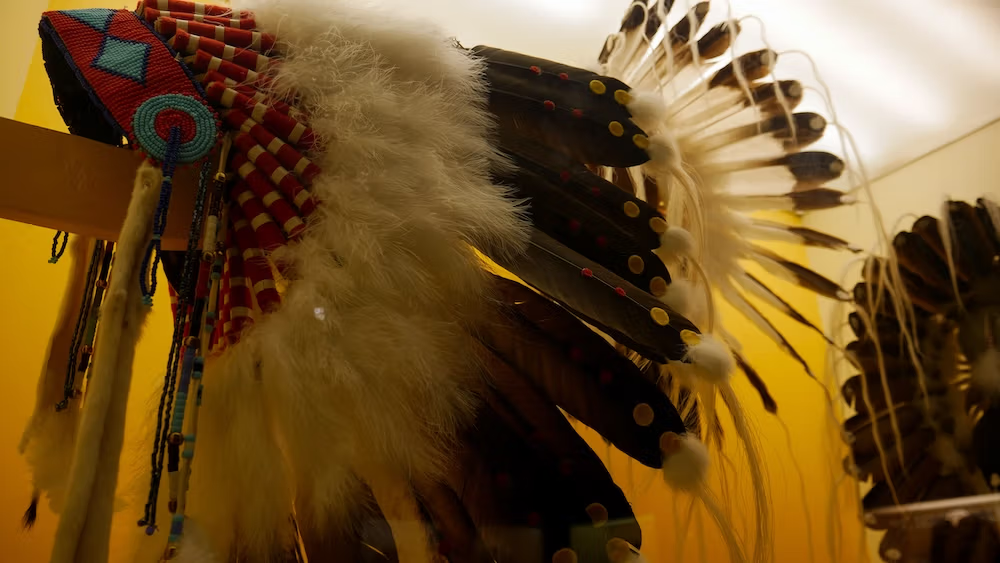
Instead, the museum kept giving us reasons to stay. We saw clothing, beadwork, feathered headdresses, dioramas and an interactive language display, then sat down for a documentary that was playing. By the time we left, a possible quick stop had become a proper visit. That is basically the key to whether I think Buffalo Nations Museum is worth your time: it rewards attention far more than speed.
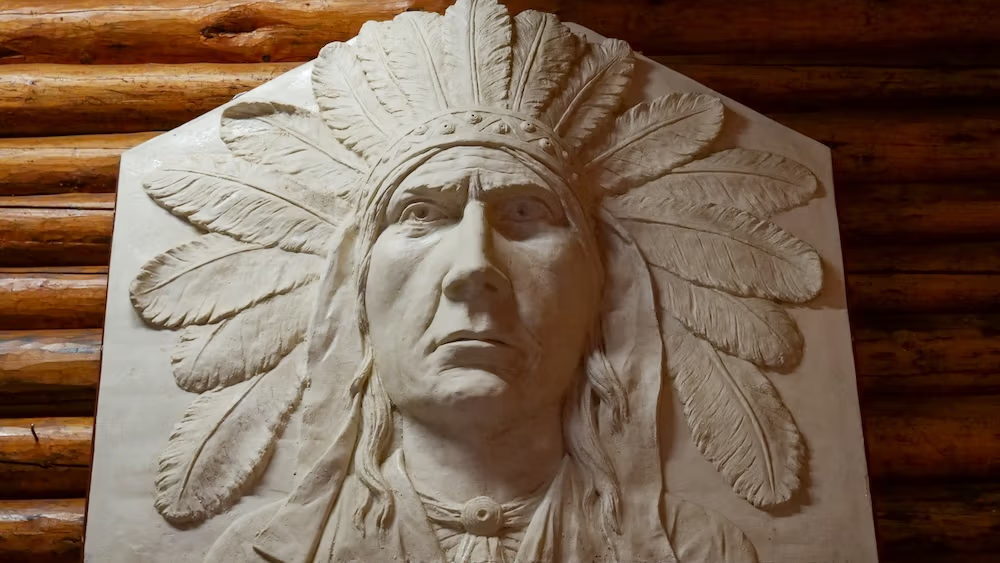
What Kind of Museum Is Buffalo Nations Museum?
Buffalo Nations Museum is an Indigenous cultural museum in Banff operated by the Buffalo Nations Cultural Society. Its interpretation encompasses the Blackfoot Confederacy — Siksika, Piikani and Kainai — as well as Tsuut’ina, Stoney/Nakoda and Cree peoples, while the wider Society includes members connected with Treaty 6 and Treaty 7 communities and Métis communities.
That context matters because older descriptions can make the museum sound like little more than a historical collection of Indigenous objects. There is plenty of material culture inside, but its role today is broader, connecting historical objects and traditions with living cultures.
You may also still encounter the older Buffalo Nations Luxton Museum name. The institution traces its origins to the Luxton Museum of the Plains Indian, opened by Norman Luxton in 1953, and “Luxton” still survives on older tourism pages, historical references and signage. Today, the institution uses Buffalo Nations Museum, so if you find both names while planning, you’re looking at the same place.
What We Saw Inside Buffalo Nations Museum
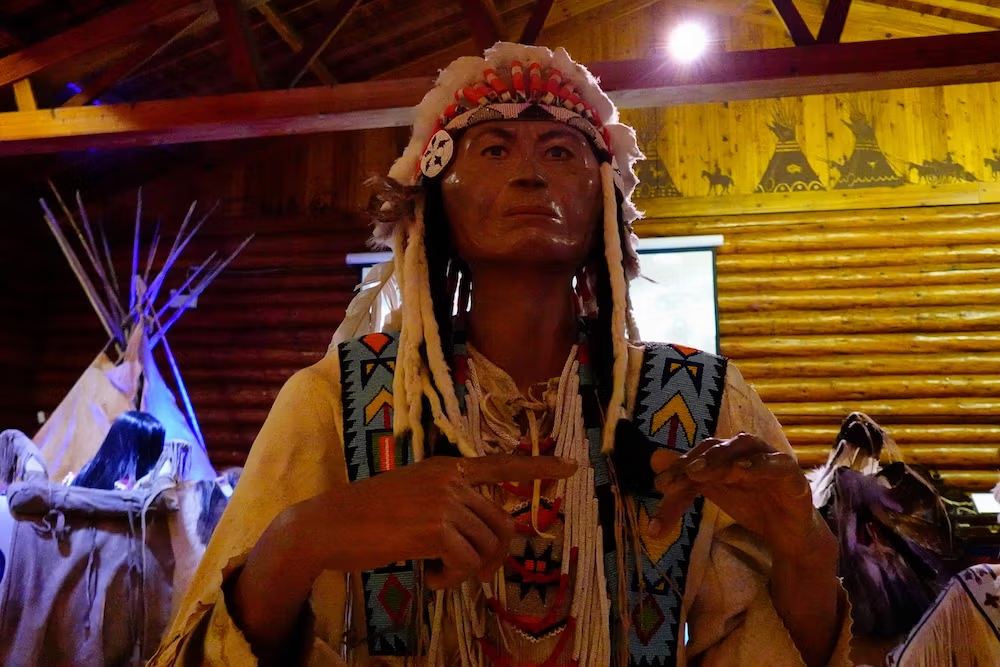
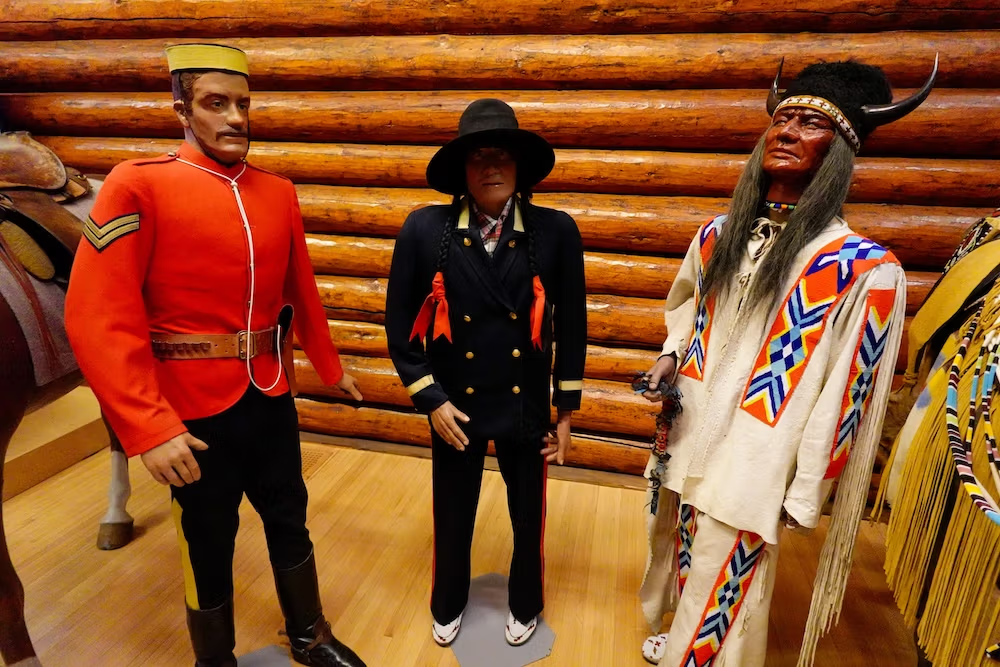
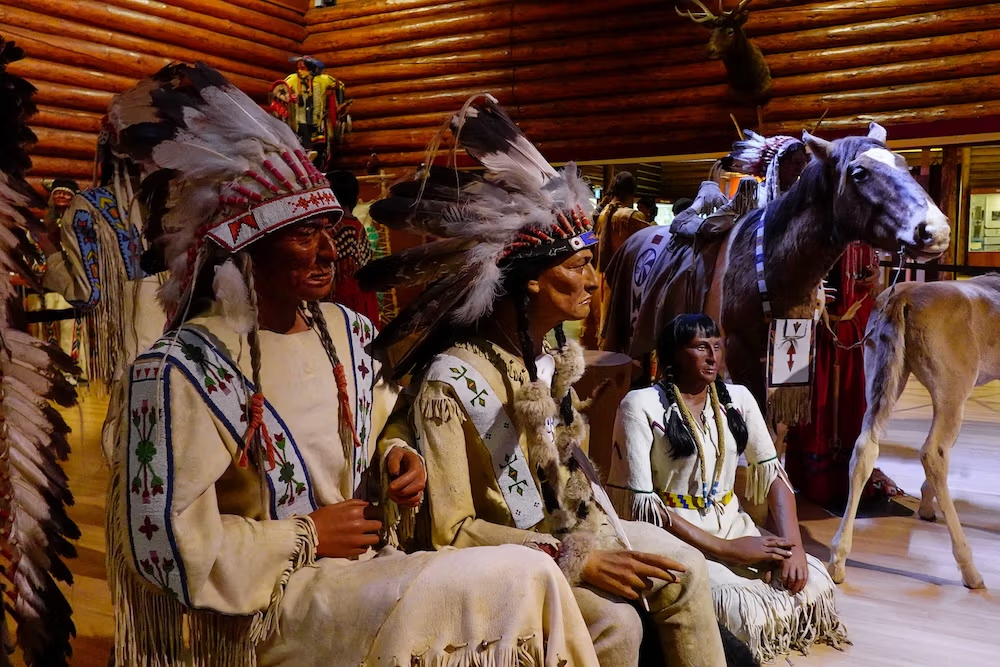
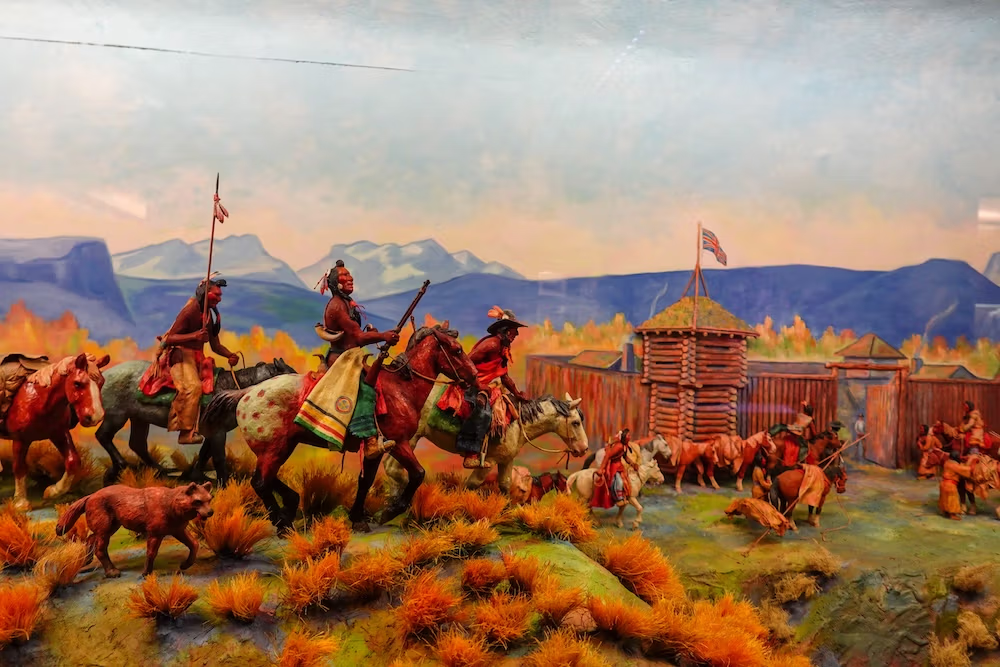
The museum is fairly compact, but our visit never felt like one small room stretched into an attraction. We moved through dioramas depicting aspects of traditional life and saw clothing, beadwork, feathered headdresses and other cultural material. The museum continues to highlight ornamented regalia, a decorated tipi, quillwork, hunting equipment and objects connected with Indigenous arts and daily life.
The visual variety helped. I lose steam when a museum becomes a relentless procession of objects demanding the same level of reverence. There are only so many antique chairs a person can admire before wondering whether the chair is judging him back. Here, larger scenes and detailed craftsmanship broke up the experience.
The Language Interactive We Used
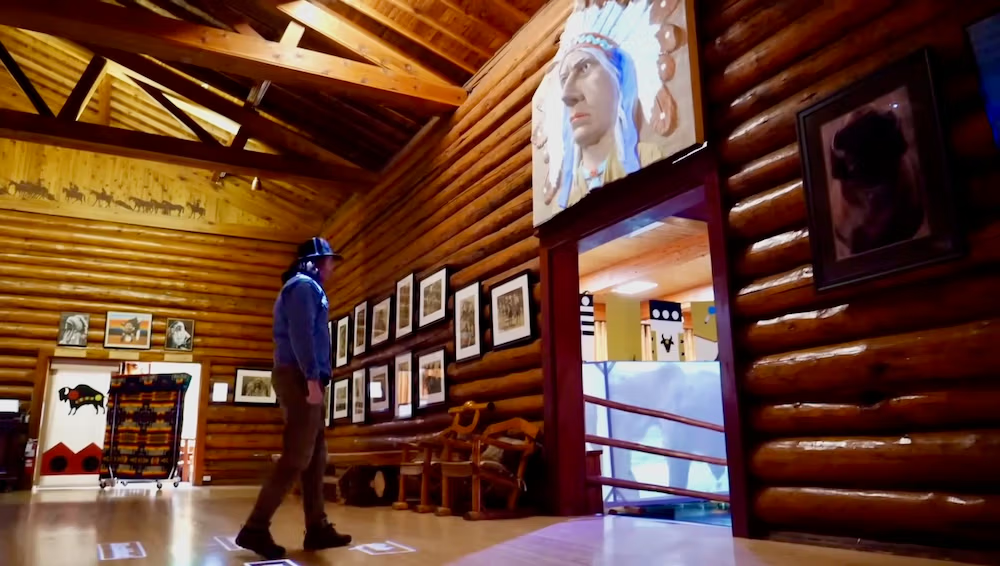
One of the smaller things I remember particularly well was an interactive language display. During our visit, you could select one of the First Nations languages represented and hear a greeting. It was simple, but it gave us another way to engage with the cultures being presented rather than just reading another paragraph on a wall.
I wouldn’t promise that the exact installation Audrey and I used is still there in the same form. Museum displays and technology change, although language preservation and technological interpretation remain part of the museum’s broader work. For us, it was a memorable part of the visit, but not something I’d guarantee today.
The Documentary That Made Us Stay Longer
The documentary was the real turning point. We could have finished the displays and continued with our Banff day, but a film focused on Blackfoot culture was playing and we decided to stay. That choice pushed our visit beyond an hour and made the museum feel substantially more worthwhile than the quicker stop it might otherwise have been.
Film and reading areas remain part of the current museum environment, although I would not assume that the exact documentary we watched is still showing or that a particular film runs on a fixed schedule. The broader lesson from our visit still holds: how long Buffalo Nations Museum takes depends heavily on how much you choose to engage.
How Long Should You Spend at Buffalo Nations Museum?
I’d allow roughly 1–2 hours for an engaged visit. That fits our experience: Audrey and I stayed for more than an hour, with the documentary being one of the main reasons we didn’t move on sooner. Because the standard museum experience is self-guided, someone concentrating mostly on the physical displays could certainly finish faster.
| How you visit | Time to allow |
|---|---|
| Faster walk through the main displays | Under an hour is possible |
| Engaged self-guided visit | Around 1–2 hours |
| Visit with film or additional programming | Likely toward the longer end |
Those aren’t official appointment slots. They’re simply more useful than declaring that the museum “takes one hour” as though somebody rings a bell at minute 60. I also wouldn’t give yourself 20 minutes and expect the same value.
Admission, Hours and Location
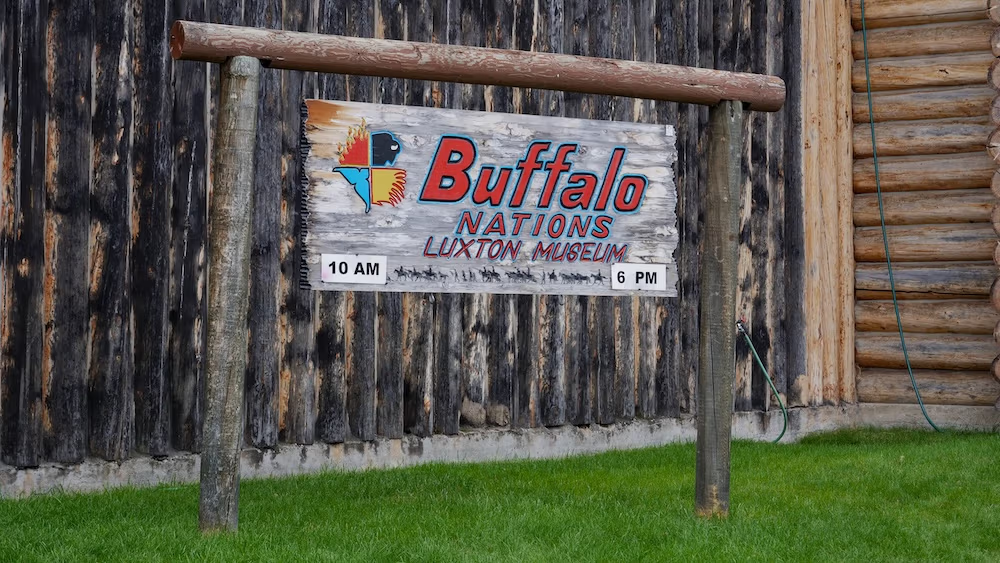
Current regular adult admission is C$15, with C$12 for seniors 60+, C$7 for youth ages 7–17, and free admission for children under 7. GST is included. The museum currently lists its hours as 10:00 a.m. to 6:00 p.m. daily and operates year-round. These details can change, so I’d recheck them before visiting.
If you prefer to arrange admission online before you arrive, Expedia currently lists a standalone museum ticket. I’d still compare the live booking details with the museum’s current information before purchasing. You can check the current Buffalo Nations Museum admission ticket.
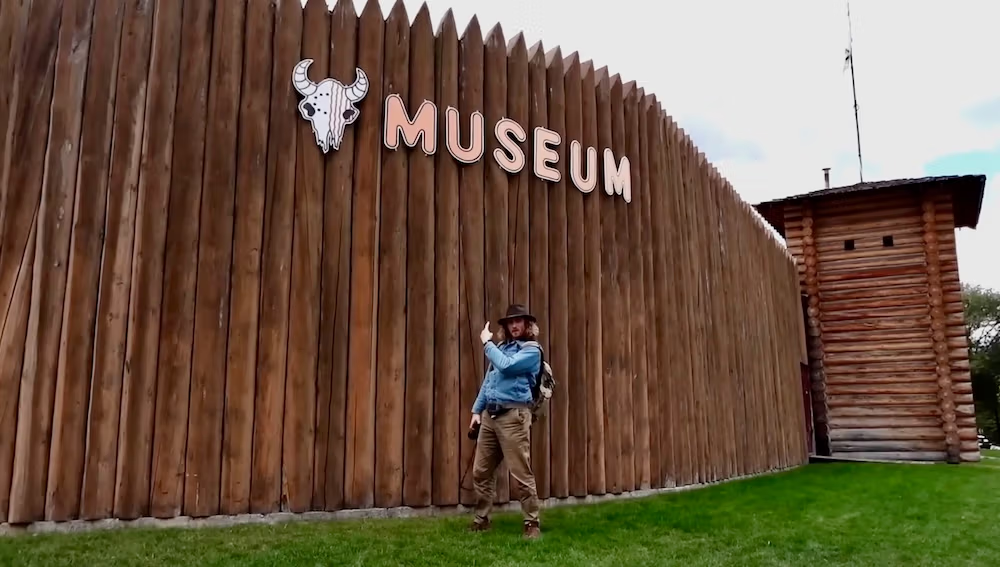
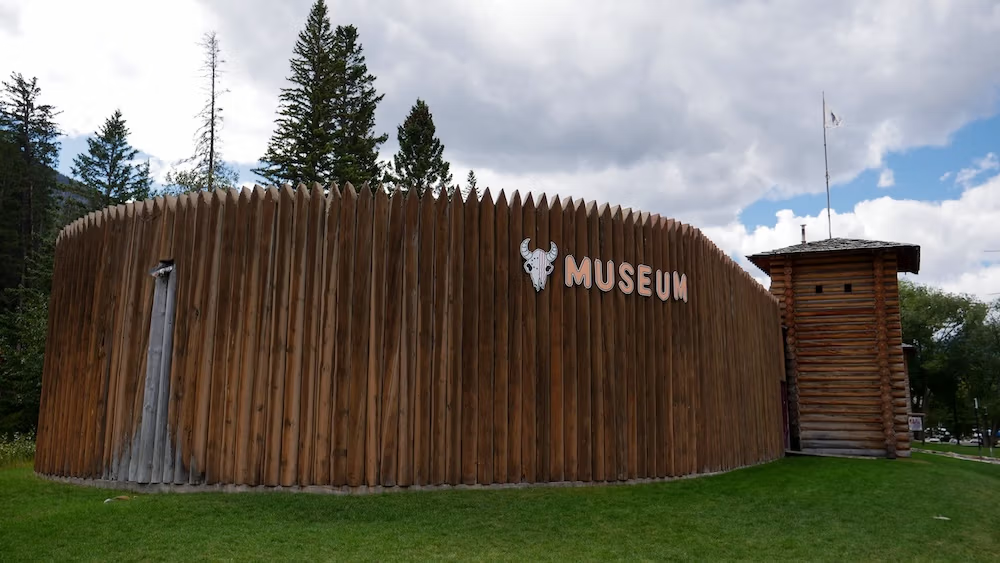
The museum is at 1 Birch Avenue, beside the Bow River and across from Banff Central Park, so it fits easily into a day around town. Audrey and I reached it on foot after Banff Park Museum, crossing the river between the two. If you are driving, the museum currently advertises free parking, including tour-bus parking.
Current visitor information lists Buffalo Nations Museum as wheelchair accessible. I’d treat that as a general classification rather than assuming every room or display works equally well for every mobility need. If accessibility is central to your visit, confirm the specifics directly. I’d also confirm the washroom situation if it matters to your plans because current information is inconsistent.
The Standard Visit Is Self-Guided, but There Can Be More
For an ordinary visit, the museum is primarily self-guided, which helps explain why visit times vary. You can linger where something catches your attention and move faster through the parts that don’t.
The museum also advertises interpretive experiences involving local Elders along with activities such as smudge ceremonies, dancing and drumming, art classes, feather painting and beadwork workshops. Special cultural events can add storytelling, demonstrations and guided interpretation, but I would not assume all of this comes automatically with a normal C$15 walk-in ticket. Availability can depend on the day, programming and advance arrangements.
Audrey and I did not take one of those guided or special-program experiences, so my review is based on the self-guided museum visit we actually had. If an Elder-led experience or a particular workshop is a major reason you want to go, check what is actually scheduled.
There is also a different option for travellers who want somebody to connect Buffalo Nations Museum with Banff’s wider history. A current three-hour small-group history and heritage walking tour includes museum admissions and guided museum visits, with Buffalo Nations Museum among the stops. I haven’t taken the tour, and the listing involves roughly six miles of walking plus several mobility, health and age restrictions, so it is not the easier option for everyone. If the format suits you, you can check current availability for the Banff history and museum walking tour.
Who Will Get the Most From Buffalo Nations Museum?
The strongest fit is somebody who genuinely wants Indigenous cultural interpretation to be part of a Banff trip. If you enjoy clothing, craftsmanship and material culture, and you’re willing to spend time with film, language and interpretation rather than simply walking past objects, the museum gives you plenty to work with.
It also works well if you want something cultural without committing half a day. An hour or two is significant enough for the museum to feel like a proper activity while still leaving room for the outdoor experiences probably dominating your Banff itinerary.
I’d be less insistent if museums generally do nothing for you and your Banff time is extremely limited. If you have one afternoon and have spent years dreaming about a particular lake or trail, I’m not going to pretend cultural completeness requires you to abandon that plan and dutifully inspect every museum in town. Interest matters more than checklist completion.
I’d also resist treating Buffalo Nations Museum purely as a rainy-day fallback. Yes, it is indoors and useful when Banff’s weather turns miserable, but Audrey and I found enough to hold our attention without needing bad weather to justify being there.
Is Buffalo Nations Museum Worth It?
Yes — if Indigenous cultures and regional interpretation are genuinely part of what you want from Banff, I think Buffalo Nations Museum is worth visiting. Our own behaviour is probably the clearest reason: Audrey and I had plenty of other things we could have been doing, yet we stayed for the documentary and ultimately spent more than an hour inside. We didn’t walk out regretting the time.
At the current C$15 adult admission, I don’t think the ticket price is the main decision. In Banff, the scarcer resource is often your time. If you have 1–2 hours, care about the subject and are willing to slow down enough to engage with the interpretation, Buffalo Nations Museum earns that chunk of your day.
If, on the other hand, you have little interest in museums and plan to march through simply because somebody put it on a Banff checklist, I wouldn’t force it. The museum isn’t enormous, and speed strips away much of what made our own visit worthwhile.
Audrey and I walked in after another museum expecting to continue with our day, then found ourselves staying longer because something inside gave us a reason to. That’s still how I’d approach Buffalo Nations Museum: don’t go just to collect another Banff attraction. Go when you’re prepared to give it your attention.
Frequently Asked Questions
Is Buffalo Nations Museum worth visiting?
Yes, if Indigenous cultures and regional interpretation are genuinely part of what you want from Banff. I think the museum is most worthwhile when you can give it enough attention rather than rushing through as a checklist stop.
How long should I spend at Buffalo Nations Museum?
I’d allow roughly 1–2 hours for an engaged visit. Audrey and I stayed for more than an hour, while a faster self-guided walk through the main displays can take less time.
How much is admission to Buffalo Nations Museum?
Current regular admission is C$15 for adults, C$12 for seniors 60+, C$7 for youth ages 7–17, and free for children under 7. Prices can change, so check again before visiting.
Is Buffalo Nations Museum self-guided?
The standard museum visit is primarily self-guided, so you can move through the galleries at your own pace. Additional cultural programming may be available, but it should not be assumed to come with a normal walk-in ticket.
Is Buffalo Nations Museum the same as Buffalo Nations Luxton Museum?
Yes. The museum was previously known as Buffalo Nations Luxton Museum, and older references may still use that name. The institution now uses Buffalo Nations Museum.
Where is Buffalo Nations Museum in Banff?
The museum is at 1 Birch Avenue beside the Bow River and across from Banff Central Park. Audrey and I reached it on foot after visiting Banff Park Museum.
This article is also available in Spanish. [Leé la versión en castellano: Reseña de Buffalo Nations Museum: qué ver, cuánto tiempo dedicarle y ¿vale la pena?]
This article contains affiliate links. If you book through one of these links, I may earn a commission at no extra cost to you.