
We hadn’t planned much time for the Spiral Tunnels. We’d been driving the Trans-Canada Highway, still riding the high of Lake Louise and Moraine Lake, when we spotted a train chugging along in the distance and our guide made the call to pull off. It felt almost incidental, the kind of stop you make because the timing happens to work rather than because it was circled on an itinerary.
That’s actually the right way to think about this one. If you’re planning a Yoho day and wondering whether the Spiral Tunnels deserve a real spot on your list or just a maybe-if-we-have-time afterthought, here’s the honest answer: it’s worth pulling off for, and you don’t need a train to show up to get something out of it.
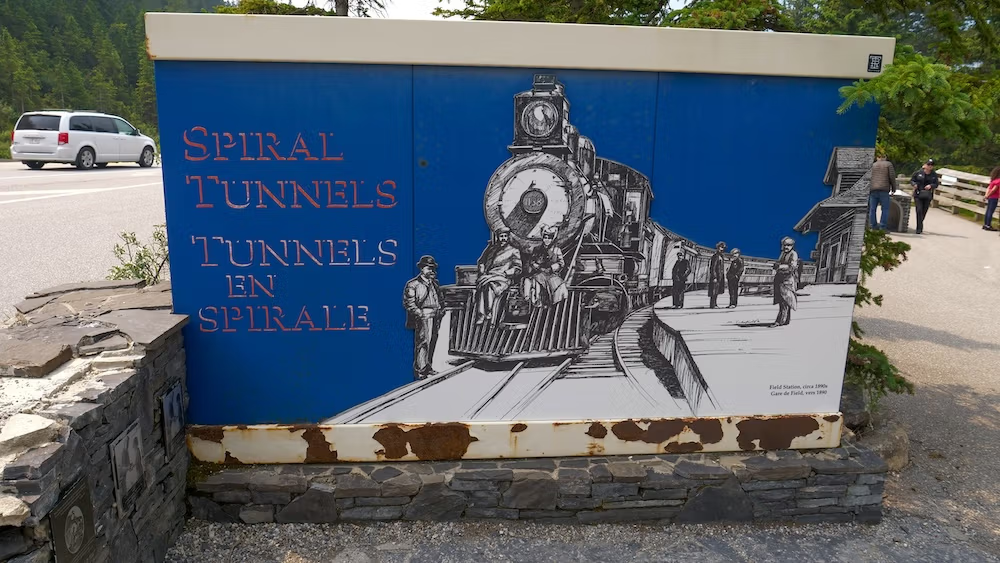
What the Spiral Tunnels Stop Actually Is
The Trans-Canada Highway through this stretch of Yoho National Park follows the path of what used to be called the Big Hill, and it earned that name for good reason. When the Canadian Pacific Railway first pushed through Kicking Horse Pass in 1884, engineers built a section of track with a 4.5 percent grade, one of the steepest stretches of railway ever attempted in North America. Trains derailed on it regularly, and people died. That’s not a minor engineering footnote; it’s the reason the tunnels exist at all.
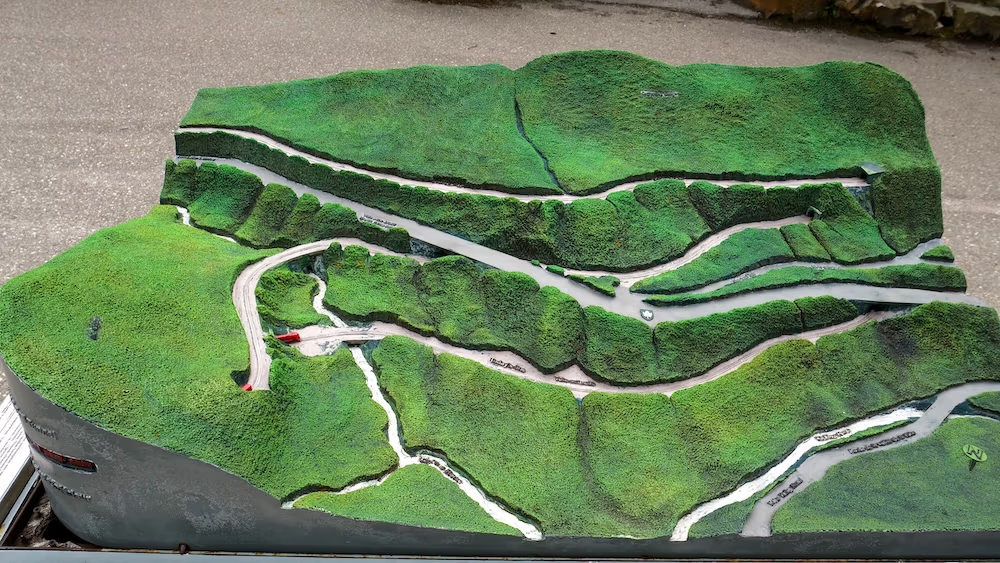
The fix, completed in 1909, was genuinely clever: two spiral tunnels bored into Mount Ogden and Cathedral Mountain, inspired by a similar solution used in Switzerland, each roughly 900 metres long. Instead of climbing or descending the mountain in one steep shot, a train enters a tunnel, spirals around inside the mountain, and emerges having gained or lost elevation gradually enough to stay under control. It’s the kind of solution that sounds simple once you understand it and thoroughly disorienting the first time you watch it happen, since a train that’s still visibly inside the mountain can also be visibly coming out the other side.
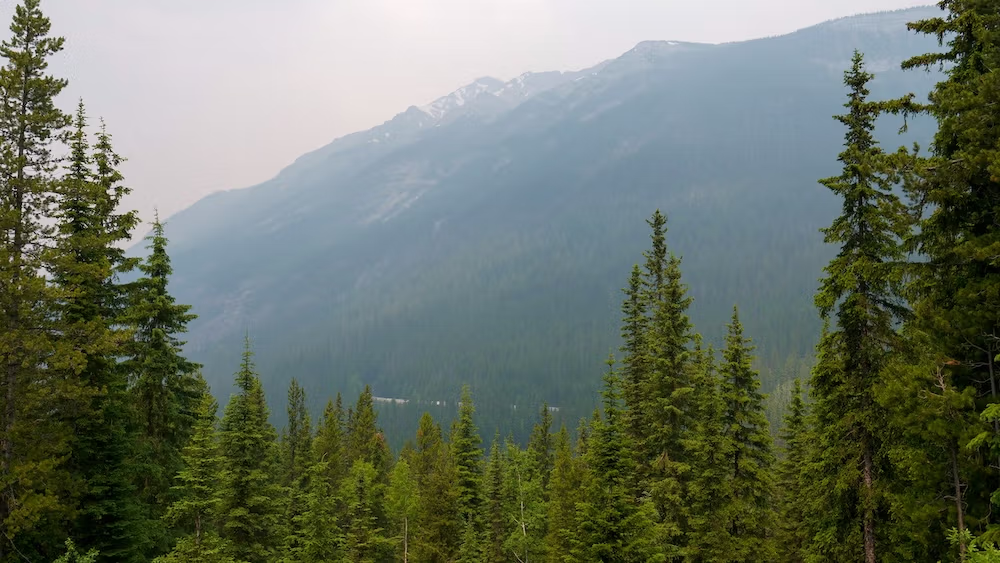
What You’ll See Even Without a Train
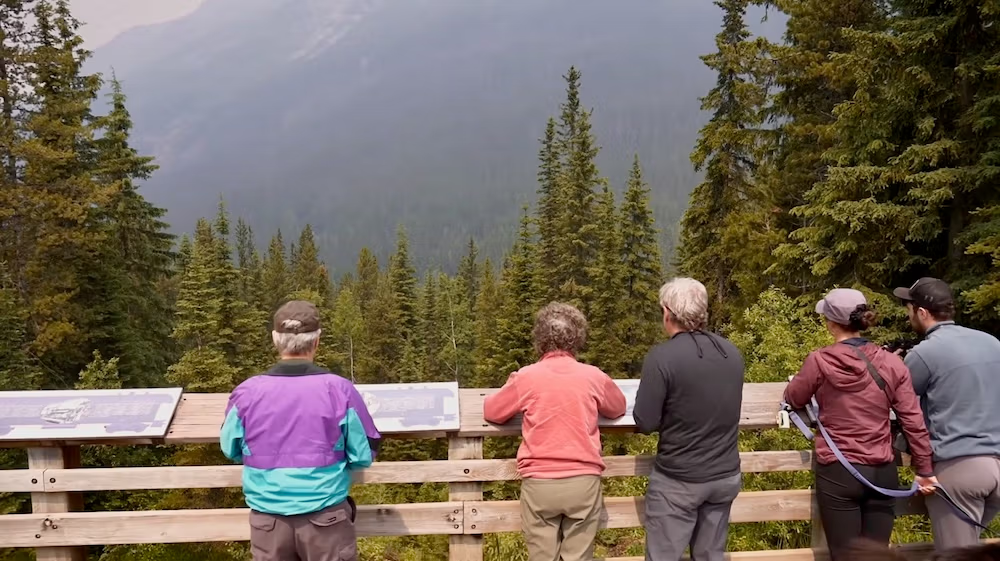
This is the part that matters most if you’re deciding whether to stop: there’s a real reason to be there before any train shows up. We pulled into what’s known as the Lower Spiral Tunnel Viewpoint, a large pull-off directly on the highway, and had time to take in the scenery and look over what was actually there while we waited. It’s not just a gravel shoulder with a view of some trees. There’s a proper viewing platform and interpretive displays that lay out how the tunnels actually work, including a model that makes the whole spiral concept click in a way that’s hard to get from a written description alone.
That the crowd there felt substantial isn’t a coincidence, either. More than 120,000 people stop at this viewpoint each summer, which tracks with a small exchange we had with our guide about whether it felt as busy as usual. It clearly is a popular spot, and clearly has been for a while.
One thing I can’t promise you: a working bathroom. We didn’t need one, but accounts of what’s actually available at the pull-off conflict enough that I wouldn’t count on it. If that’s a concern, handle it in Field before you get there, since the town is close by and reliably has facilities.
Watching the Train: What Actually Happened, and What to Expect
We got lucky. After a few minutes of looking around, we heard it before we properly saw it, and then someone in our group basically shouted it into existence: I saw it, I saw it, oh, there it is. Audrey’s father and I walked down toward the platform with our guide to get a proper look, while Audrey stayed back with the baby, who was more interested in a nap than a train. Split experiences like that are a normal part of traveling with a toddler, and nobody made a big deal of it.
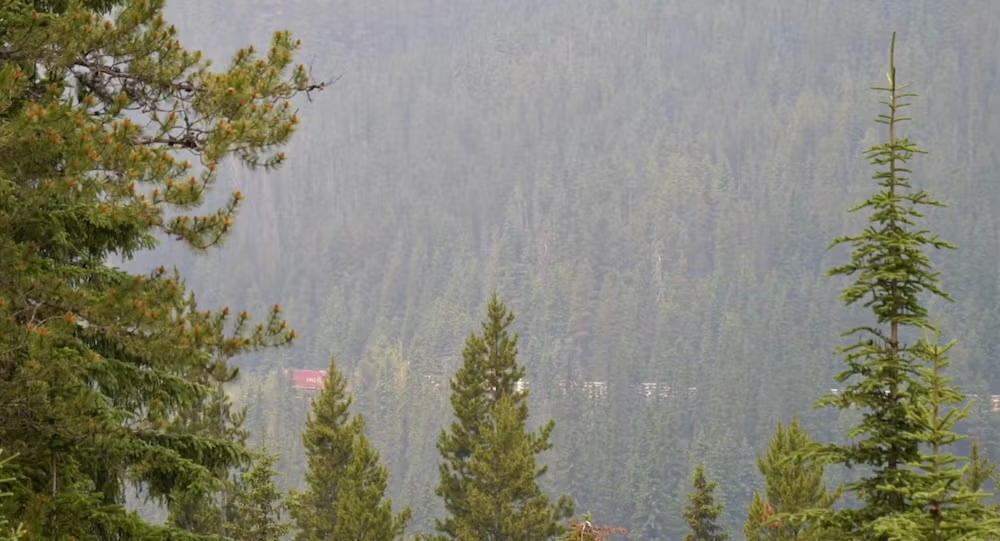
From the platform, the length of the train is what actually throws you. The head end can already be emerging from one portal while the rest of it is still visibly working its way through the mountain, which is a strange thing to process the first time you see it: the same train, at two different elevations, moving through solid rock at once.
Here’s the part I want to be straight about: we got fortunate. On average, 25 to 30 trains pass through the tunnels each day, but not on any fixed or published schedule, so there’s no reliable way to time your visit around one. Some people pull off and watch a train spiral through within minutes, exactly as we did. Others linger for a good while and leave without seeing a thing. If a train happens to come through while you’re there, it’s a genuine bonus. It’s not something the stop owes you.
Getting There: Access, Parking and How Long to Stay
Worth knowing before you go: there are actually two official Spiral Tunnels viewpoints, and they’re not interchangeable.
| Viewpoint | Location | Tunnel You’ll See | Best For |
|---|---|---|---|
| Lower Spiral Tunnel Viewpoint | Directly off the Trans-Canada Highway, about 7.4 km east of Field | Mount Ogden tunnel | Most Banff-based day-trippers driving the highway; larger, better-equipped stop |
| Upper Spiral Tunnel Viewpoint | About 2.3 km up Yoho Valley Road | Cathedral Mountain tunnel | Travelers already heading up Yoho Valley Road toward Takakkaw Falls |
If you’re driving the highway and see the sign, you’re almost certainly looking at the Lower one, which is the stop we made.
You’ll need a valid Parks Canada pass to stop here, the same day pass or Discovery Pass that covers Banff, Yoho, and the other Rocky Mountain national parks — nothing extra required specifically for this pull-off. Unlike some of Yoho’s other stops, this viewpoint sits on the Trans-Canada Highway itself, which stays open year-round, so you’re not dealing with the seasonal road closures that affect places deeper in the park.
Parking is a highway pull-off rather than a proper lot, and it can fill up during busier midday hours in summer. Realistically, this is a short stop. Ten to twenty minutes covers it comfortably unless you get lucky with a train and want to linger for the full show, in which case give it a bit more.
If you’d rather not drive it yourself, this stop is a regular fixture on guided Yoho day trips from Banff, Canmore, and Calgary, usually bundled in alongside Takakkaw Falls, Emerald Lake, and Natural Bridge. Travellers without a car can browse current Yoho day tour options to find one that includes it.
Is It Worth Stopping?
Yes, and you don’t need to gamble on train timing to justify it. The history alone is worth a few minutes of your Yoho day: a dangerous stretch of railway solved by an idea clever enough that people are still explaining it to strangers at a highway pull-off more than a century later. The viewpoint itself is well set up for exactly that kind of quick, informative stop, and it doesn’t ask much of your schedule to fit in.
If a train happens to spiral through while you’re there, you’ll understand immediately why people pull off the highway for this. If it doesn’t, you’ll still have gotten a good story and a clear picture of how the mountain around you got tamed enough for a railway to cross it. Either way, it earns its ten minutes.
Frequently Asked Questions
Is the Spiral Tunnels viewpoint worth stopping for?
Yes. The history behind the tunnels and the interpretive displays at the viewpoint make it worth a short stop on their own, regardless of whether a train happens to pass through while you’re there.
Will I definitely see a train at the Spiral Tunnels?
No, and I wouldn’t plan around it. On average, 25 to 30 trains pass through the tunnels daily, but not on any fixed or published schedule, so there’s no reliable way to time a visit around one. We got lucky and watched one pass, but that’s a bonus, not something the stop guarantees.
Which Spiral Tunnels viewpoint should I visit?
If you’re driving the Trans-Canada Highway, you’re almost certainly looking at the Lower Spiral Tunnel Viewpoint, about 7.4 km east of Field. It’s the larger, better-equipped of the two official viewpoints. The Upper viewpoint sits about 2.3 km up Yoho Valley Road for those already heading that way toward Takakkaw Falls.
How long should I plan for this stop?
Ten to twenty minutes covers it comfortably. Give it a bit more if you get lucky with a train and want to watch the full show.
Do I need a separate pass to stop at the Spiral Tunnels viewpoint?
No. The same Parks Canada day pass or Discovery Pass that covers Banff also covers Yoho National Park, so nothing extra is required specifically for this pull-off.
Is there a bathroom at the Spiral Tunnels viewpoint?
I wouldn’t count on it. Accounts of what’s actually available at the pull-off conflict, so if that’s a concern, handle it in Field before you arrive, since the town is close by and reliably has facilities.
Can I visit the Spiral Tunnels without a car?
Yes. This stop is a regular fixture on guided Yoho day trips from Banff, Canmore, and Calgary, usually bundled in alongside Takakkaw Falls, Emerald Lake, and Natural Bridge.
This guide is also available in Spanish. [Leé la versión en castellano: Guía del mirador de los túneles en espiral: ¿vale la pena parar en Yoho?]
This article contains affiliate links. If you book through one of these links, I may earn a commission at no extra cost to you.