
Columbia Icefield is one of those places that becomes more confusing the longer you research it. You start with a simple idea—go see a glacier—and before long you’re trying to understand the difference between Columbia Icefield, Athabasca Glacier, the Discovery Centre, the Ice Explorer, the Skywalk and several other glacier experiences that all sound vaguely related.
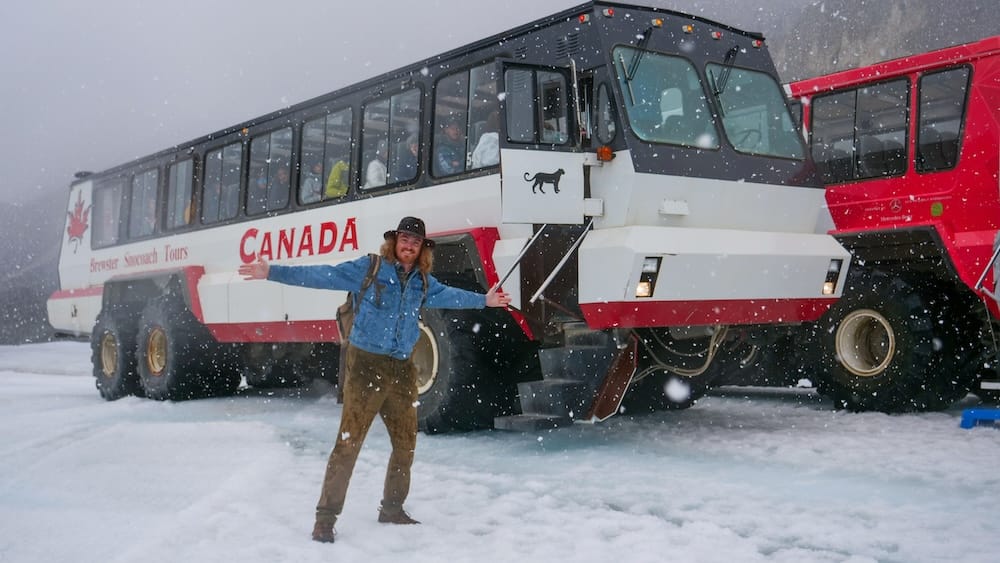
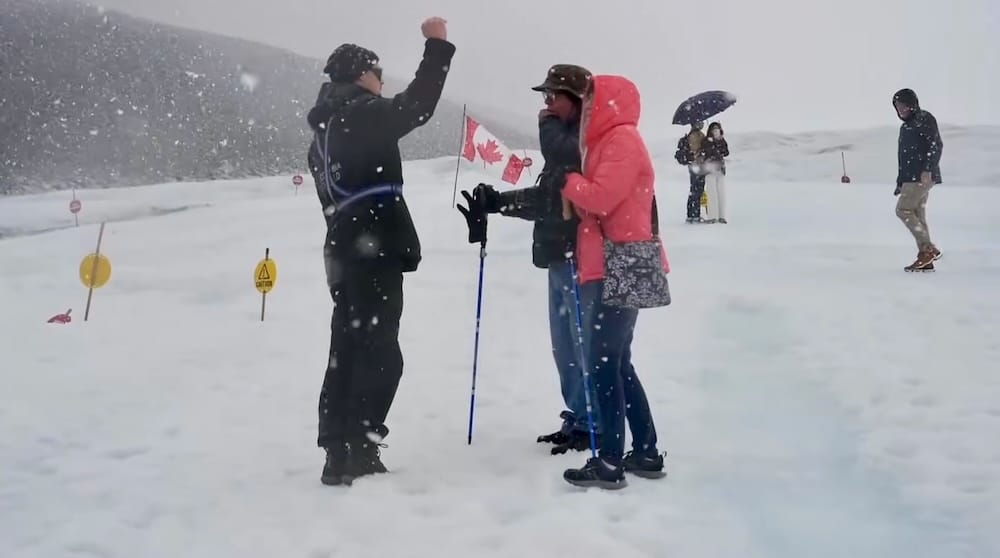
Audrey and I visited Columbia Icefield on a full-day excursion from Banff, and the part we remember most vividly was riding the enormous Ice Explorer down to Athabasca Glacier and stepping onto the ice during an early-September snowstorm. It was cold enough to make our hands miserable, ice was blowing into our faces, visibility kept changing, and then shortly after we returned to the Discovery Centre the sun came out again. It was a very Canadian Rockies way to experience a glacier.
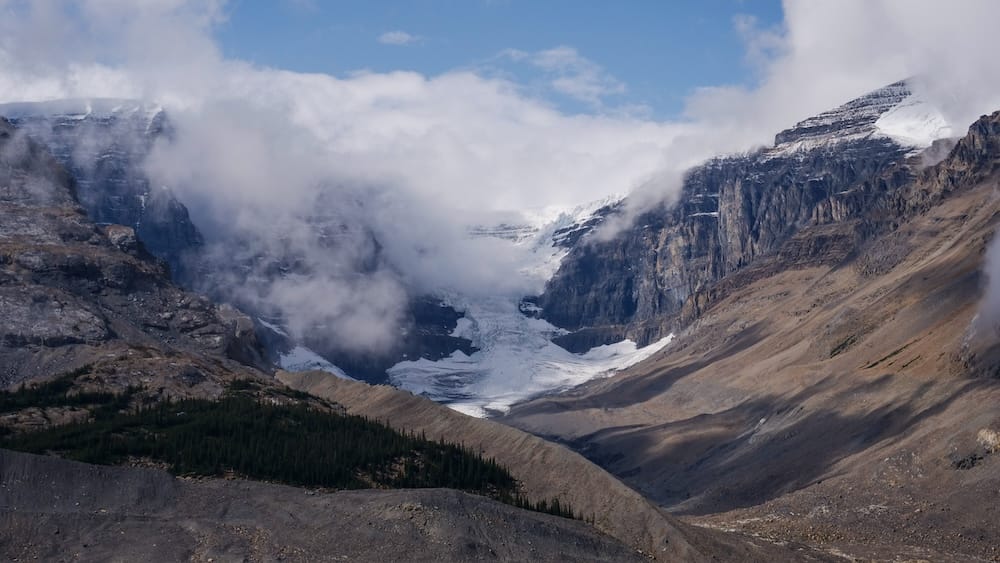
Our visit also helped me understand something that is easy to miss when you’re booking online: you do not need to buy the Ice Explorer experience simply to see Athabasca Glacier. You can visit the glacier area independently, walk toward the toe of the glacier, spend time at the Discovery Centre, book the Skywalk, take the classic Ice Explorer onto a managed area of glacier ice, choose a smaller-group vehicle-assisted experience, or commit to a proper guided glacier hike.
Those are very different versions of a Columbia Icefield visit. The best one depends on how close you want to get to the glacier, whether actually standing on the ice matters to you, how much physical effort you want, how much time you have and how much you’re prepared to spend. Once you understand those distinctions, the whole place becomes much easier to plan. If you already know you want a paid experience and mainly need to see what is bookable for your dates, you can compare current Columbia Icefield tickets and tours.
Columbia Icefield, Athabasca Glacier and the Discovery Centre: What Is What?
The first thing to get straight is the geography, because Columbia Icefield and Athabasca Glacier are often talked about as though they are interchangeable.
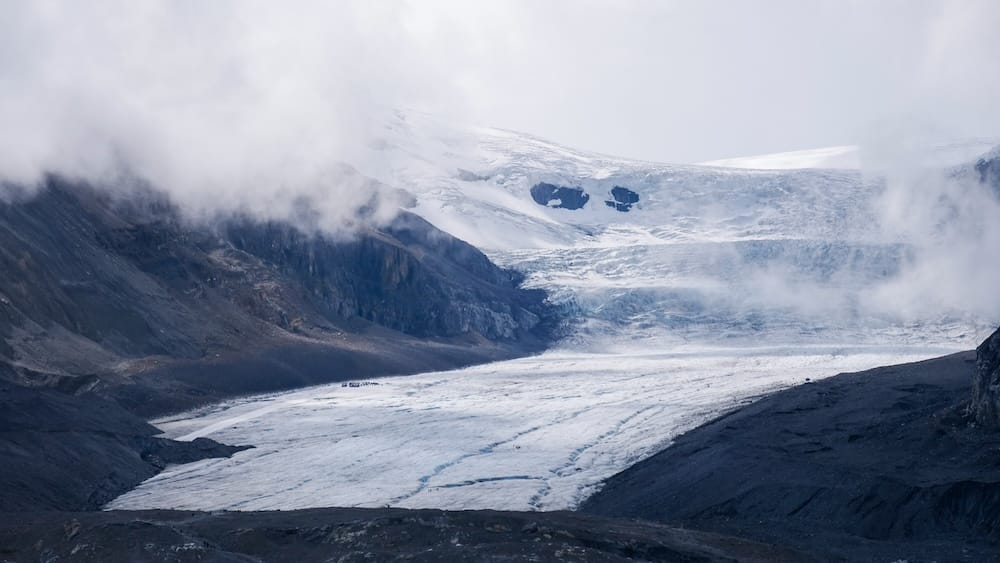
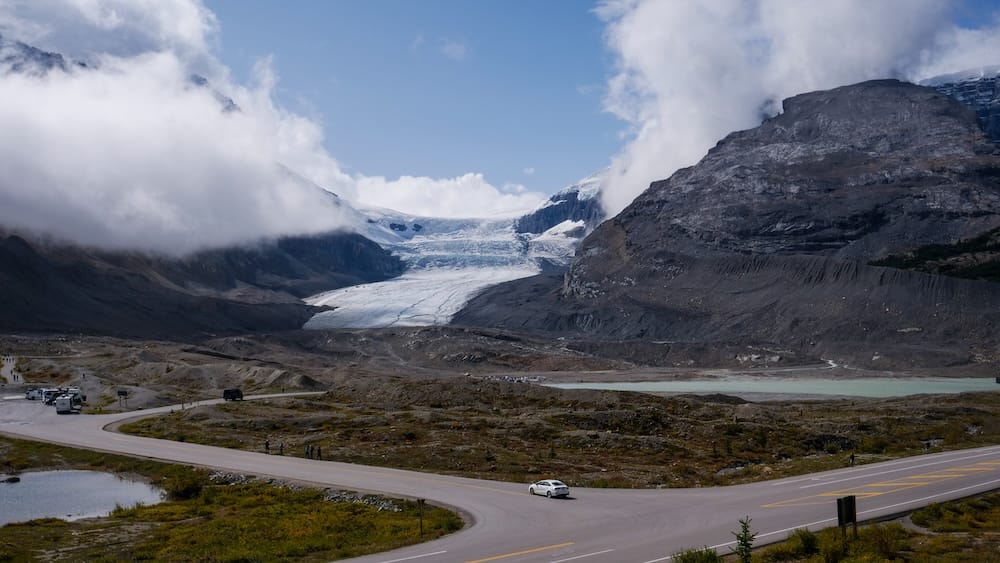
They aren’t. Columbia Icefield is the enormous mass of ice feeding several glaciers in the Canadian Rockies, while Athabasca Glacier is one of the glaciers flowing out from it. When most travellers say they’re going to “visit Columbia Icefield,” Athabasca Glacier is usually the glacier they are actually approaching from the Icefields Parkway.
That matters because you don’t drive up to a giant plateau called Columbia Icefield and wander around on it. The visitor experience is concentrated around Athabasca Glacier and the facilities on the opposite side of the highway.
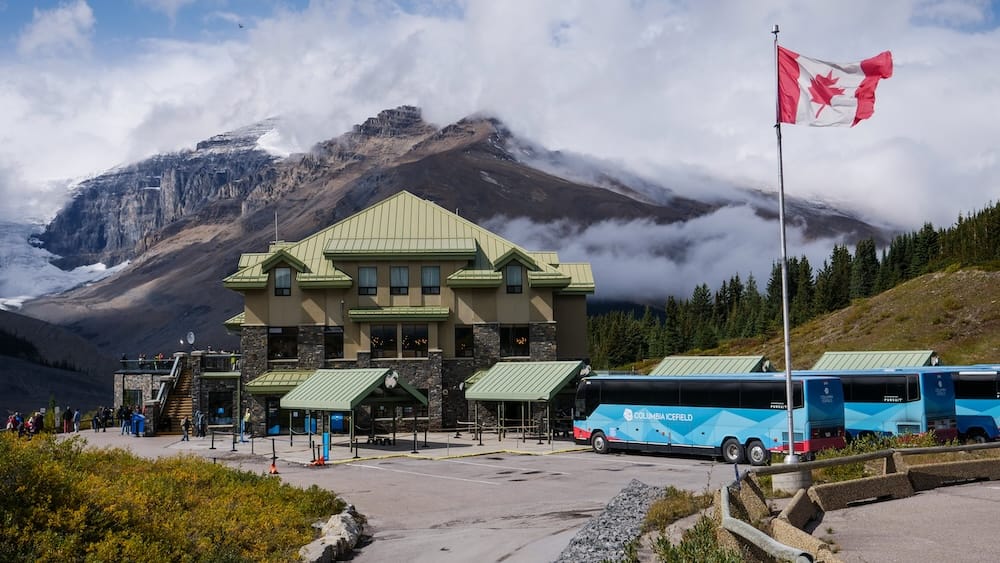
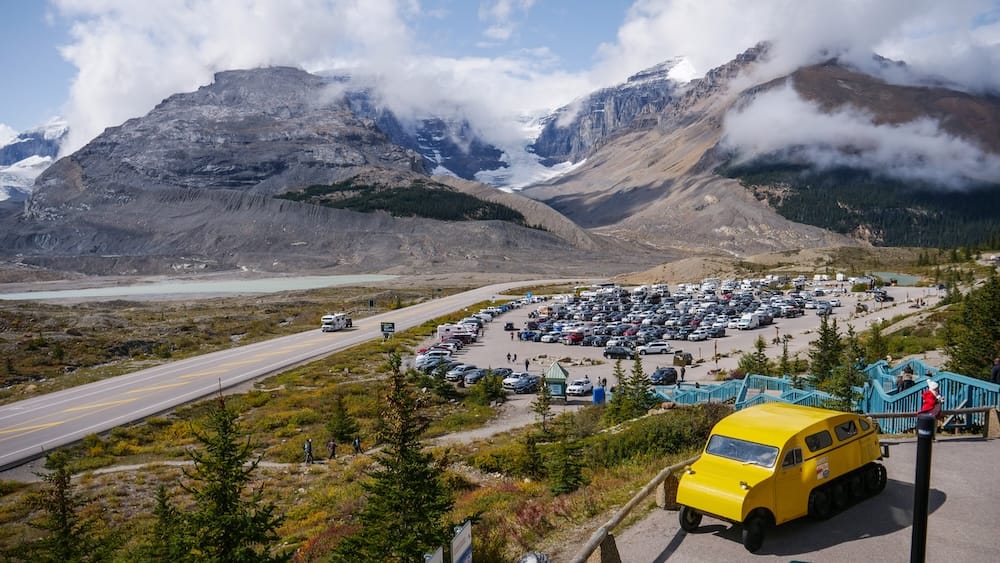
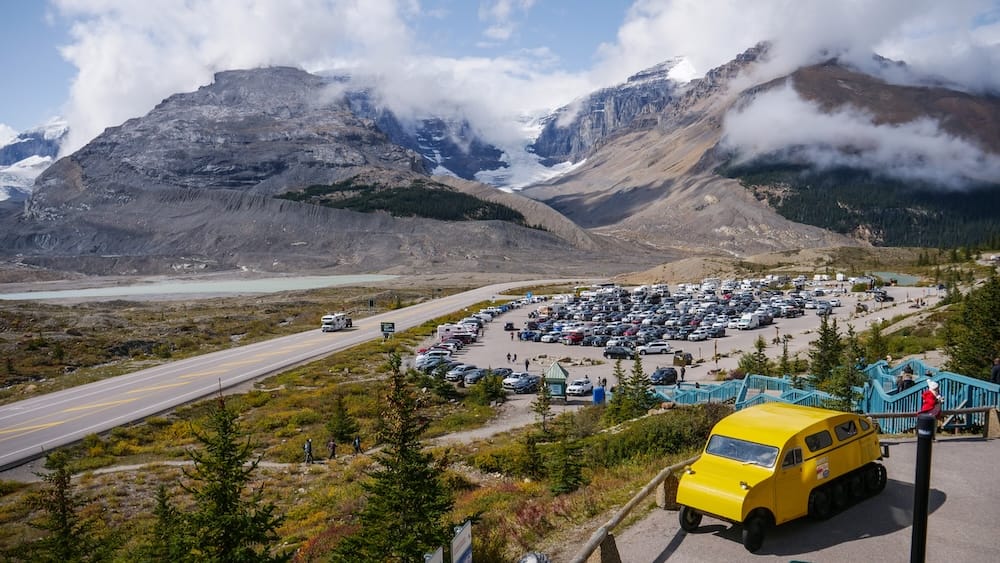
The main building is generally called the Columbia Icefield Discovery Centre, though you may also see the commercial operator refer to it as the Glacier Discovery Centre. This is the hub for the classic Columbia Icefield Adventure and Skywalk, and Parks Canada also provides visitor information inside. During our visit, this was where the day shifted from driving through mountain scenery to deciding whether we wanted to go farther and actually stand on Athabasca Glacier.
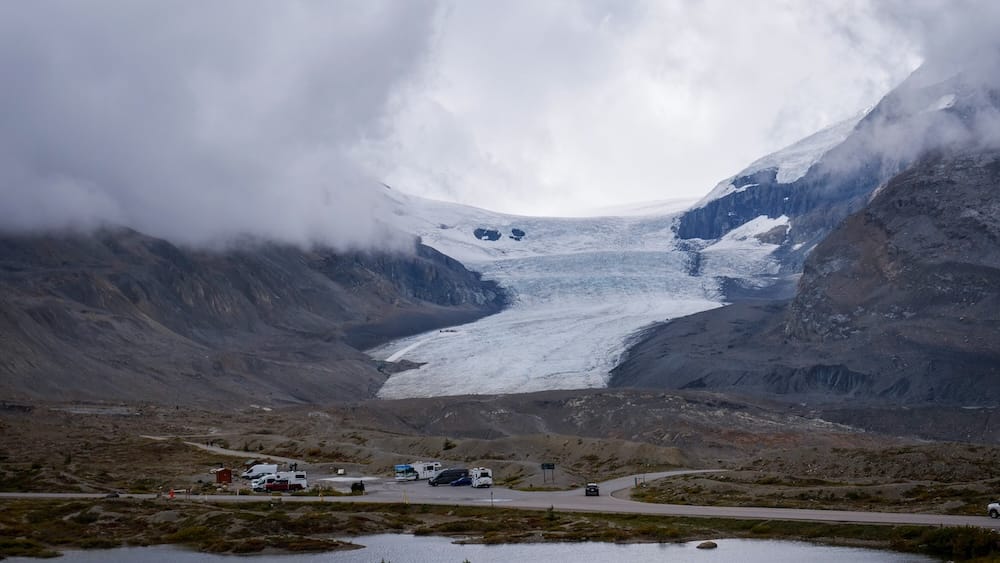
Across the highway is Glacier Road and the independent access toward the Toe of the Athabasca Glacier. That is a separate experience from buying one of the commercial attractions, which is the first big planning distinction to understand.
Geographically, Columbia Icefield also belongs to the broader Icefields Parkway and Banff–Jasper corridor. We came from Banff, as many visitors do, but the visitor-facing Athabasca Glacier area is in Jasper National Park. I would therefore think of Columbia Icefield as its own major Parkway destination rather than simply another attraction “in Banff.”
How Visiting Columbia Icefield Actually Works
There are really two decisions involved in a Columbia Icefield visit: how you’re getting there and what you’re doing after you arrive. Those questions often get bundled together when you’re shopping for tours, but they don’t have to be.
You can drive the Icefields Parkway yourself, park and explore independently. You can self-drive and then add a paid glacier experience at the Discovery Centre. Or you can join a guided day trip from Banff or another base and let somebody else handle the driving, with the glacier attractions either included or offered as additional components depending on the product.
If your wider Rockies trip begins in Calgary and you want the flexibility of driving the Parkway yourself, you can compare current Calgary car-rental options. If you’d rather avoid a long day behind the wheel from Banff, one current full-day option includes Banff pickup and drop-off together with the Ice Explorer and Skywalk; you can check current Banff-to-Columbia Icefield tour availability.
From Banff, Columbia Icefield is already a serious outing. The direct drive is roughly two and a half hours before you add scenic stops, wildlife delays, traffic or weather. From Lake Louise, you continue roughly another 125–130 kilometres north on Highway 93N.
And this is not a road where I would want to race from A to B simply to keep an appointment. When we travelled north, the drive itself was a huge part of the experience. We stopped for glacial lakes and viewpoints and spent plenty of time simply staring at the scenery. Those places deserve their own planning, though, so I would separate time spent travelling the Icefields Parkway from time spent actually visiting Columbia Icefield.
Once you reach the Discovery Centre, the paid attractions operate from there. If you have booked the classic Adventure, you’ll check in before being transferred toward the Ice Explorer. Skywalk visits also use transport from the Discovery Centre rather than working like a normal roadside viewpoint where you pull in and out whenever you feel like it.
If you’re only visiting Athabasca Glacier independently, you do not need to enter that paid attraction system. You still need a valid national park pass to travel the Icefields Parkway, but seeing the glacier itself does not require an Ice Explorer ticket.
Can You See Athabasca Glacier Without Buying a Ticket?
Yes, and this is probably the most useful fact to know before you start comparing expensive Columbia Icefield products.
Across from the Discovery Centre, Glacier Road leads toward parking closer to Athabasca Glacier. From there, the Toe of the Athabasca Glacier Trail gives independent visitors a much closer look at the landscape without buying one of the commercial attractions.
The trail is approximately 1.8 kilometres return, with around 60 metres of elevation change, and roughly an hour is a reasonable walking-time estimate. Parks Canada rates it moderate, which is worth noting because “short glacier viewpoint trail” can sound more effortless than the actual terrain.
That means the free version of Columbia Icefield is not simply a distant roadside photograph. You can get out, walk toward the glacier, see how far the ice has retreated and spend meaningful time in the landscape.
What you should not do is turn “I can reach the glacier area independently” into “I can walk wherever I want on the glacier.”
Seeing the glacier and walking onto it are different things
Athabasca Glacier has hidden crevasses and unstable ice, particularly around the toe. Parks Canada explicitly warns visitors not to cross safety barriers or walk independently onto glacier terrain, and people have died after falling into crevasses here.
So the important distinction is quite simple: you can visit and see Athabasca Glacier without paying for a commercial attraction, but that does not make unguided glacier travel safe or appropriate.
If the thing you really want is to stand on glacier ice, that is where one of the controlled or professionally guided experiences becomes materially different from the independent visit.
What Is the Athabasca Glacier Ice Explorer Experience?
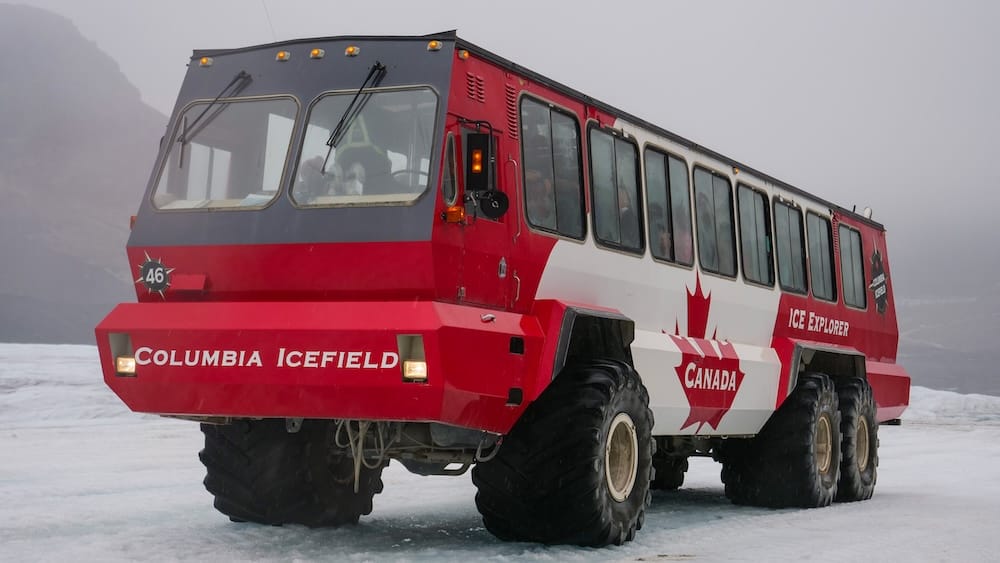
The Ice Explorer is the classic paid Columbia Icefield experience and the one Audrey and I personally completed.
The vehicle itself is hard to ignore. These are enormous all-terrain machines, and neither of us had done anything similar before. I remember boarding and immediately feeling that the transportation was becoming part of the attraction rather than simply a means of reaching it.
Then comes the descent. The route down toward Athabasca Glacier includes a remarkably steep section, and from inside that huge vehicle it felt a little like being on the world’s slowest and heaviest roller coaster. During our visit we could also see that we were heading directly into increasingly nasty weather, which added another layer of drama to the descent.
The current Columbia Icefield Adventure generally takes around 2.5 to 3 hours from start to finish and combines the Ice Explorer, a managed stop on Athabasca Glacier and the Columbia Icefield Skywalk. The Ice Explorers can carry up to about 56 passengers, so this is very much the larger-group, high-capacity version of going onto the glacier.
If this is the version you want, you can check current Ice Explorer and Skywalk ticket availability.
One number is especially important when setting expectations: visitors currently spend roughly 15 to 25 minutes outside on the glacier. That is enough time to walk around the maintained area, take photos and experience what it feels like to physically stand on Athabasca Glacier, but it is not an extended glacier expedition. If you’re imagining several hours exploring the ice, this is not that product.
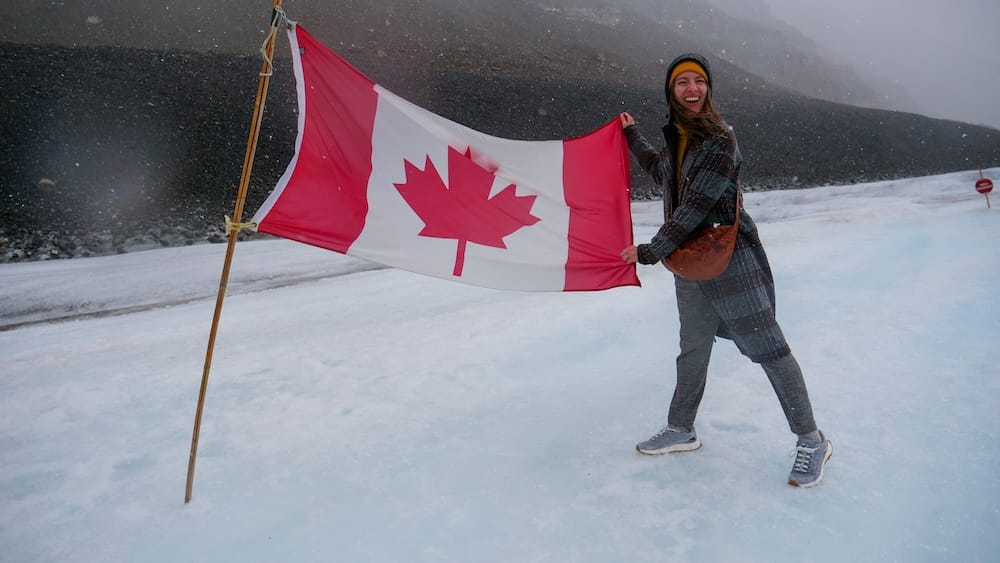
For us, those 15–25 minutes were memorable enough. The weather turned into proper winter conditions while we were out there, with falling snow, ice pellets, low clouds and fog. The cold was intense enough that numb hands became part of the experience, but oddly enough the rough weather didn’t ruin it for us. If anything, it made the place feel more severe and massive.
I loved it, although I would save the full question of whether the Ice Explorer justifies the cost for a dedicated review. For this guide, the main thing to understand is what it adds: the classic Adventure takes you from looking at Athabasca Glacier to standing on a controlled section of it without requiring a major hike.
Other Ways to Experience Columbia Icefield
One reason I would no longer explain Columbia Icefield as simply “free viewpoint versus Ice Explorer” is that the current options cover a much wider range of experiences.
Columbia Icefield Skywalk
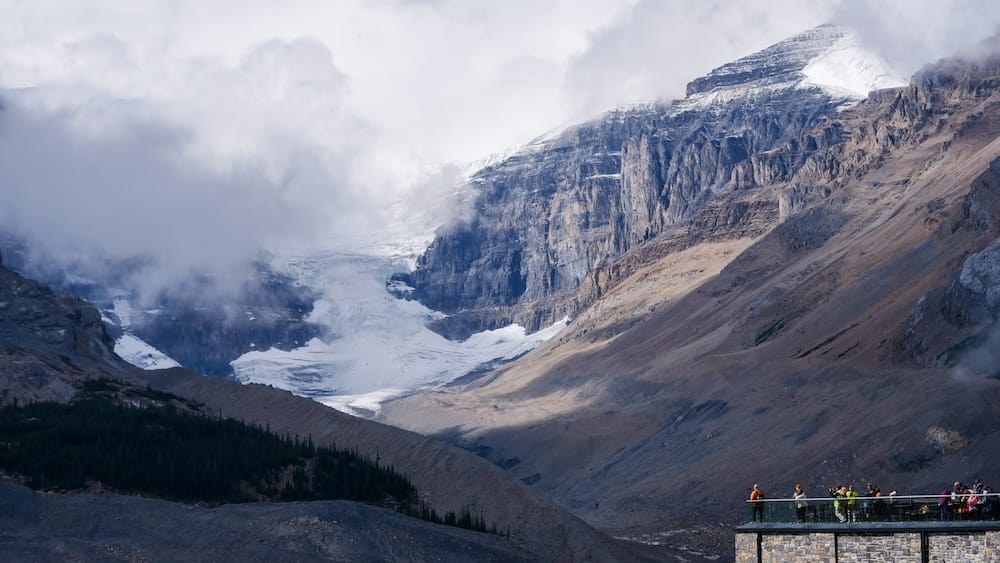
The Skywalk does not put you onto Athabasca Glacier at all. Instead, you follow an approximately one-kilometre interpretive walkway to a glass-floored platform suspended about 280 metres above the Sunwapta Valley.
The Skywalk is included in the classic Columbia Icefield Adventure, but it can also be booked separately. If you only want this part of the experience, you can check current Skywalk-only ticket availability.
If your goal is specifically to say, “I stood on Athabasca Glacier,” a Skywalk-only ticket will not do that. If you’re interested in mountain scenery, the canyon, geology and the sensation of stepping onto a glass platform high above the valley, it offers a completely different type of experience.
Ice Odyssey
A newer option called Ice Odyssey sits somewhere between the big Ice Explorer and a full glacier hike.
The current format lasts around two hours and is limited to 10 guests, compared with the much larger Ice Explorer vehicles. A smaller all-terrain vehicle transports the group to a different glacier location, where guests get out with guides and spend time on the ice. The experience can also include trying mountaineering-style equipment.
If the smaller-group format is what attracts you, you can check current Ice Odyssey dates and availability. Because this is a more specialized product, I would verify its live status before making it the centrepiece of a day.
That smaller group size is a meaningful difference if you want more interaction and less of a large-attraction feel. It is not simply a premium version of the classic Adventure, though. Boarding the vehicle involves a ladder, there is currently a minimum age of six, and the accessibility profile is therefore different.
Guided Athabasca Glacier hikes
At the active end of the scale are proper guided glacier walks, which are fundamentally different from the Ice Explorer experience we did.
A classic half-day guided Athabasca Glacier hike is currently around 3.25 to 3.5 hours, covers roughly 5 kilometres and involves about 200 metres of elevation change. Longer full-day outings can reach around six hours, 8.5 kilometres and approximately 330 metres of climbing.
For readers who want the glacier itself to become the main activity rather than a short stop, there is a current guided Athabasca Glacier hiking option that covers roughly 5 kilometres with a certified guide and glacier equipment.
Those numbers change the meaning of “walking on Athabasca Glacier.” With the Ice Explorer, the vehicle does most of the work and your time on the ice is short and controlled. On a guided hike, the glacier itself becomes the day’s activity. You’re spending substantially more time moving through the terrain rather than simply experiencing one prepared section of it.
I would therefore choose between these options based on how deeply you actually want to engage with the glacier, not on which product sounds most impressive in a booking description.
What Is at the Columbia Icefield Discovery Centre?
The Discovery Centre is useful even if you’re not doing the Ice Explorer.
There is Parks Canada information inside, along with maps, washrooms and an interpretive film about the Icefield. Seasonal food options are also concentrated here, which matters more than it might sound when you’re spending a long day on the Icefields Parkway.
This is remote mountain travel. You are not passing a town every few kilometres where you can casually stop for a coffee, bathroom or meal, so the Discovery Centre becomes a practical reset point as well as an attraction hub.
For the classic Adventure and Skywalk, it is also where the paid experience begins. If you have a timed booking, arriving roughly 30 minutes early gives you some breathing room for parking, bathrooms and check-in rather than turning the start of a glacier visit into an unnecessary sprint.
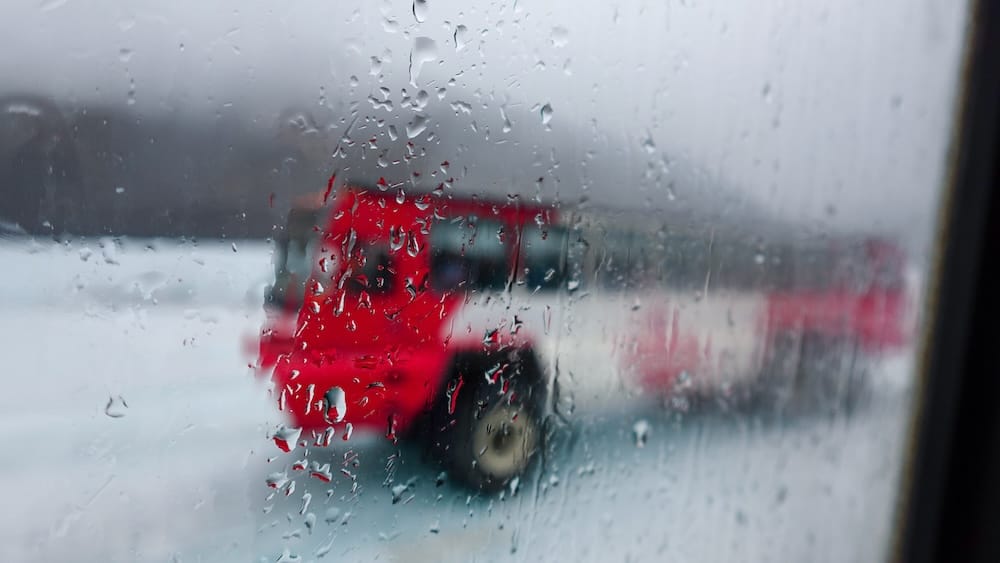
When we came back from Athabasca Glacier, we were cold, wet and dealing with camera equipment that had taken a beating from the snow. Then the sun appeared outside almost immediately, which was a pretty good introduction to how little control you have over conditions here.
How Much Time Should You Allow at Columbia Icefield?
There isn’t one honest number because “visiting Columbia Icefield” can describe everything from a relatively quick independent glacier stop to a six-hour guided hike.
If you’re visiting independently and walking the Toe of the Athabasca Glacier Trail, the trail itself takes about an hour. Once you add parking, looking around and perhaps going into the Discovery Centre, I would think in terms of a couple of hours rather than treating the glacier as a five-minute photo stop.
The classic Columbia Icefield Adventure takes roughly 2.5 to 3 hours, plus your early-arrival buffer. A Skywalk-only visit is closer to a one- to two-hour experience once transportation is included, while Ice Odyssey runs for around two hours.
A classic glacier hike moves the commitment up to roughly 3.25–3.5 hours, and a full-day guided glacier outing can occupy around six hours before you even think about the drive.
That difference becomes especially important if you’re based in Banff. A direct drive to Columbia Icefield is already roughly two and a half hours each way before sightseeing, and a guided Banff-based excursion can take around 10.5 hours door to door.
If that amount of driving is exactly the part you want to remove from the day, you can see current guided Columbia Icefield departures from Banff before deciding whether the convenience is worth paying for.
In other words, don’t ask only, “How much time do I need at Columbia Icefield?” Decide first what type of Columbia Icefield visit you’re talking about. A one-hour glacier trail and a six-hour guided ice hike may take place in the same landscape, but they create completely different days.
Weather at Columbia Icefield Can Change the Experience Fast
Our visit happened in early September, and we went from relatively ordinary mountain weather to snow, ice pellets, fog and poor visibility while standing on Athabasca Glacier. By the time we were back at the Discovery Centre, sunshine was breaking through again, and views that had been hidden earlier in the day were suddenly visible on the return drive.
That does not mean September visitors should expect snow, nor would I plan a trip assuming the weather will conveniently clear later. What our day illustrated is the much broader reality of the Icefields Parkway: snow can fall at any time of year, and conditions can change quickly over short distances.
Even during summer, Columbia Icefield can bring strong wind, cold rain and wet snow. That affects much more than whether you feel slightly chilly. Weather can change visibility, road conditions, photography, how long you comfortably want to remain outdoors and, at times, the operation of paid attractions.
Our camera equipment certainly noticed the conditions. I remember getting back aboard and trying to clean up wet gear while still thinking the whole thing had been completely worth the discomfort.
The practical lesson is straightforward: don’t prepare for Columbia Icefield based solely on how pleasant things feel when you leave Banff or Lake Louise. This environment gets its own vote.
How Difficult and Accessible Is a Columbia Icefield Visit?
The answer depends entirely on which part of the visitor system you choose, which is why I would avoid describing Columbia Icefield as simply “easy” or “difficult.”
For an independent visit, the Toe of the Athabasca Glacier Trail is short but officially rated moderate, with 1.8 kilometres of walking and about 60 metres of elevation change. The independent glacier-side parking and approach also use rougher surfaces than the main visitor-centre environment.
The classic Ice Explorer Adventure requires far less sustained walking and is likely the most straightforward option for many travellers who want to stand on glacier ice without committing to a hike. You still need to manage vehicle boarding, transfers and outdoor glacier conditions, so “low effort” should not be confused with “effort-free.”
Accessibility is also more nuanced than saying the whole attraction is wheelchair accessible. The Discovery Centre has accessible facilities, and wheelchair-accessible classic Adventure departures can be arranged at specific times. Current policy asks travellers who need one of those departures to organize it at least 72 hours in advance.
There is also a fairly surprising detail at the Discovery Centre itself: the lower public area involves 75 stairs, although alternative pathways and accessible parking routes are available.
The Skywalk follows an approximately one-kilometre relatively level interpretive route, whereas Ice Odyssey requires climbing a ladder to enter and exit the vehicle. A specialist glacier hike raises the physical requirement substantially again, with several kilometres of walking over rock and glacier terrain.
So if mobility is an important part of your planning, compare the exact component you want rather than relying on a broad statement that Columbia Icefield is “accessible” or “good for non-hikers.”
Which Columbia Icefield Experience Makes Sense for You?
This is how I would reduce the current options to a practical decision:
| What you want from the visit | Where I would start |
|---|---|
| See Athabasca Glacier while keeping costs down | Visit independently and walk the Toe of the Athabasca Glacier Trail |
| Enjoy dramatic scenery without going onto glacier ice | Independent visit or compare Skywalk-only availability |
| Stand on Athabasca Glacier without a major hike | Classic Columbia Icefield Adventure / Ice Explorer |
| Do the famous large Ice Explorer experience | Check the Ice Explorer and Skywalk ticket |
| Get a smaller-group, vehicle-assisted glacier experience | Check Ice Odyssey availability |
| Spend serious time hiking and exploring glacier terrain | Compare the guided Athabasca Glacier hike |
| Need a more mobility-friendly way to reach glacier ice | Investigate an accessible classic Adventure departure and arrange accessibility needs in advance |
| Want to visit from Banff without driving | Check current guided departures from Banff |
If I only wanted to see Athabasca Glacier, I would not feel pressured to spend heavily just because I had driven all the way up the Parkway. The independent trail gives you a genuine glacier visit.
If the goal were standing on the ice without turning the day into a physical expedition, I would look at the classic Ice Explorer. That is the niche it filled for us, and the contrast between looking across at the glacier and then actually being out on it was meaningful.
If I wanted considerably more time engaging with the ice, however, I would skip the assumption that the biggest vehicle must automatically be the deepest experience and investigate a guided glacier hike instead. Ice Odyssey sits between those two ideas, trading the high-capacity format for a smaller group while still using a vehicle to reach the glacier.
Whichever option you choose, compare what is actually included before comparing headline prices. Current tour inventory can be confusing because a product may advertise Columbia Icefield prominently while treating the Ice Explorer as an optional extra. A cheaper-looking day tour is not necessarily cheaper once you add the glacier experience you thought was included.

Practical Things I Would Check Before Driving to Columbia Icefield
Columbia Icefield is remote, seasonal and weather-sensitive enough that I would verify a few things shortly before travelling rather than treating any article—including this one—as a permanent timetable.
The main paid attractions generally operate from spring into October, with the core 2026 season running from May 1 to October 12, weather permitting. Individual experiences can have different operating periods or temporarily pause, so check the exact product you’re considering.
For self-drivers, check the current Icefields Parkway road and travel conditions as well. Snow is possible in any month, and the conditions around Columbia Icefield can be very different from what you left behind in Banff.
You will also need a valid national park pass for the Parkway even if your plan is simply to walk the free Toe trail rather than purchase a glacier attraction.
I would download maps and booking information before leaving a reliable connection. Cell service along the Icefields Parkway is extremely limited, with only limited seasonal coverage around Columbia Icefield itself, so this isn’t a great place to discover that the confirmation number you need is buried in an email you can’t load.
For paid experiences, give yourself enough time to park, use the bathroom and check in rather than arriving at the exact departure minute. And bring clothing that can cope with conditions being much colder, wetter or windier than expected.
Early September looked at our itinerary and apparently decided to audition for January.
How I Would Plan a Columbia Icefield Visit
I would not begin with the question, “Is the Ice Explorer worth it?” I would begin with something more basic: what do I want my relationship with Athabasca Glacier to be?
If seeing the glacier from close range is enough, visit independently, walk toward the toe and don’t feel as though you’ve somehow done Columbia Icefield incorrectly because you skipped the expensive attraction.
If you’ve always wanted to physically stand on glacier ice but don’t want to spend half a day hiking across it, the classic Ice Explorer is designed for exactly that middle ground. That was our experience, and I still remember the gigantic vehicle, the steep descent and stepping out into blowing snow on Athabasca Glacier. Readers ready to book that version can check current Ice Explorer and Skywalk availability.
If the large-group format doesn’t appeal and you want more interaction, Ice Odyssey offers a smaller-scale alternative when operating. If you want the glacier itself to become the adventure rather than one stop within the day, a proper guided hike goes much deeper.
That’s the planning system I wish were clearer when people first encounter all these names and booking options. Columbia Icefield is the setting. Athabasca Glacier is the ice most visitors come to see. The Discovery Centre is the hub. The Ice Explorer is one way onto the glacier—not the definition of the entire visit.
Once you separate those pieces, you can spend your time and money on the version that actually matches the experience you came for.
Frequently Asked Questions
Can you visit Columbia Icefield without buying an Ice Explorer ticket?
Yes. You can visit Athabasca Glacier independently and walk the Toe of the Athabasca Glacier Trail without buying a commercial attraction ticket. You still need a valid national park pass for the Icefields Parkway, and you should not cross safety barriers or walk independently onto glacier ice.
How long should you allow for a Columbia Icefield visit?
It depends on what you choose to do. The Toe of the Athabasca Glacier Trail takes about an hour, the classic Columbia Icefield Adventure takes roughly 2.5 to 3 hours, and a full-day guided glacier outing can take around six hours before driving time.
What does the Columbia Icefield Adventure include?
The classic Columbia Icefield Adventure combines the Ice Explorer, a managed stop on Athabasca Glacier and the Columbia Icefield Skywalk. Visitors currently spend roughly 15 to 25 minutes outside on the glacier, so it is a short controlled ice experience rather than an extended glacier hike.
Is the Columbia Icefield Skywalk the same as walking on Athabasca Glacier?
No. The Skywalk is an approximately one-kilometre interpretive walkway leading to a glass-floored platform above the Sunwapta Valley. It does not take you onto Athabasca Glacier, although it is included with the classic Columbia Icefield Adventure.
How difficult is visiting Columbia Icefield?
Difficulty varies by experience. The Toe of the Athabasca Glacier Trail is short but rated moderate, the classic Ice Explorer involves far less sustained walking, and guided glacier hikes can cover several kilometres over rock and glacier terrain.
What weather should you prepare for at Columbia Icefield?
Conditions can change quickly, and snow can fall at any time of year. During our early-September visit we experienced snow, ice pellets, fog and poor visibility before sunshine returned later, so I would bring layers and prepare for colder, wetter and windier conditions than you may have in Banff.
This article contains affiliate links. If you book through one of these links, I may earn a commission at no extra cost to you.