
Audrey’s hands were curled and stiff by the time we got back on the vehicle, and she held them up to the camera to prove it. “We got proper winter weather in early September,” she said. “Look at my hands, I cannot feel them, I can barely move them.” Then, without missing a beat, she added that it was snowing, that the ice pellets were hitting her in the face, and that it was an amazing experience anyway.
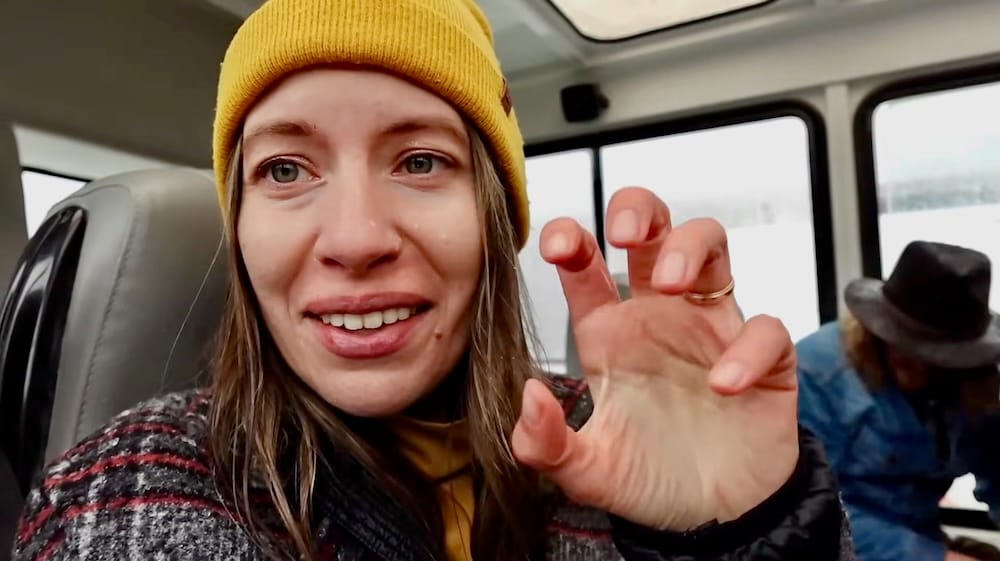
That’s the whole story in miniature: real discomfort and real enthusiasm, sitting right next to each other, neither one canceling out the other. I’ve written elsewhere about what the Ice Explorer ride onto Athabasca Glacier actually involves. If you’re weighing whether to book something close to what we did — pickup from Banff, the drive along the Icefields Parkway, the Ice Explorer ride onto the glacier itself — you can check current departure times for a similar small-group tour from Banff. This piece is narrower and more useful than a tour rundown, though. This is about what we had on when the weather turned, what the people who’d actually prepared for it were wearing a few feet away from us, and what I’d tell you to pack instead.
What We Actually Had On
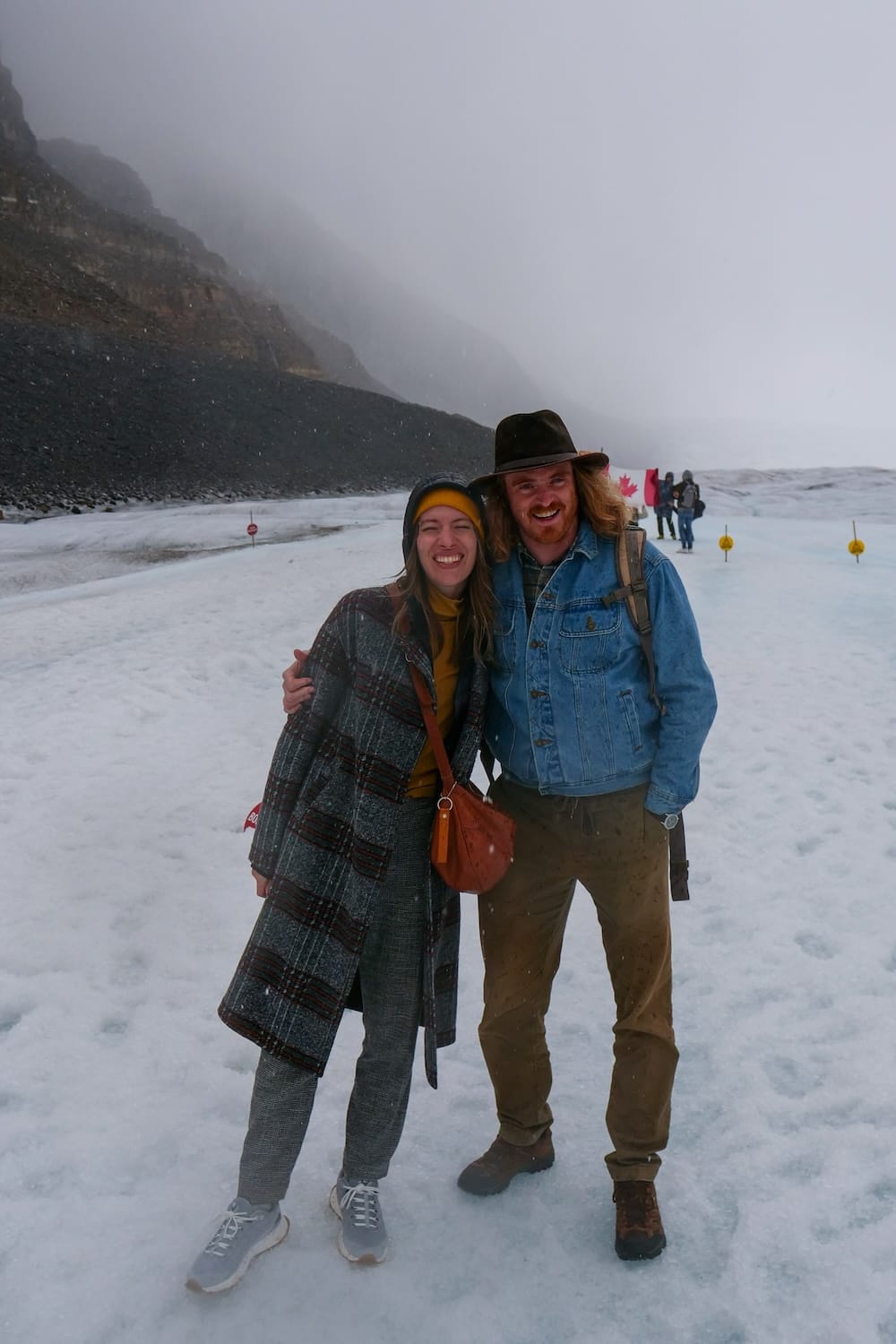
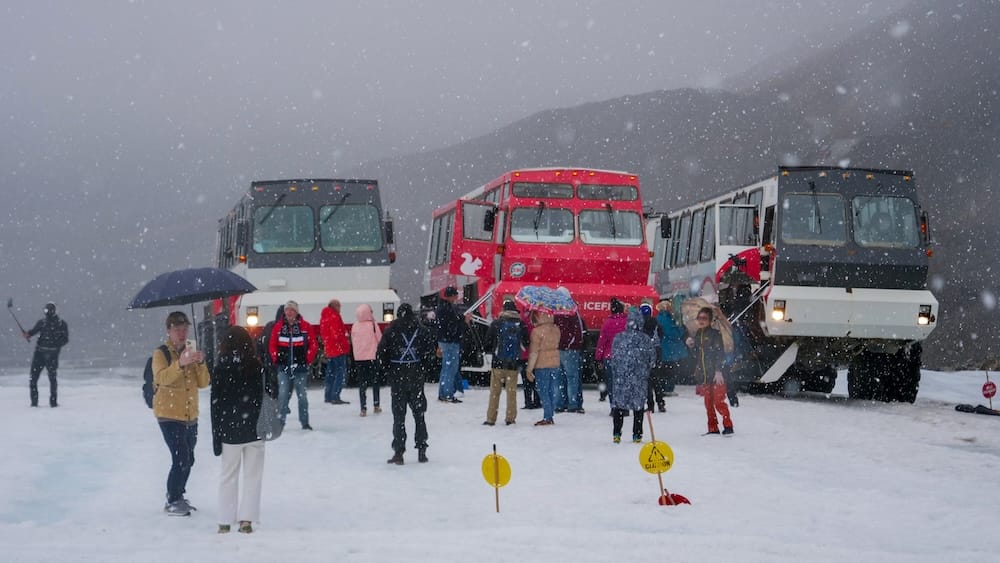
I was in a denim jacket, a wide-brim hat, and actual hiking boots. Audrey was in a long grey plaid wool coat with matching trousers, and a pair of plain sneakers — a good outfit for a day of photographs at a scenic overlook, and exactly the wrong one for a glacier in a snowstorm. The gap between those two things is what caught up with us.
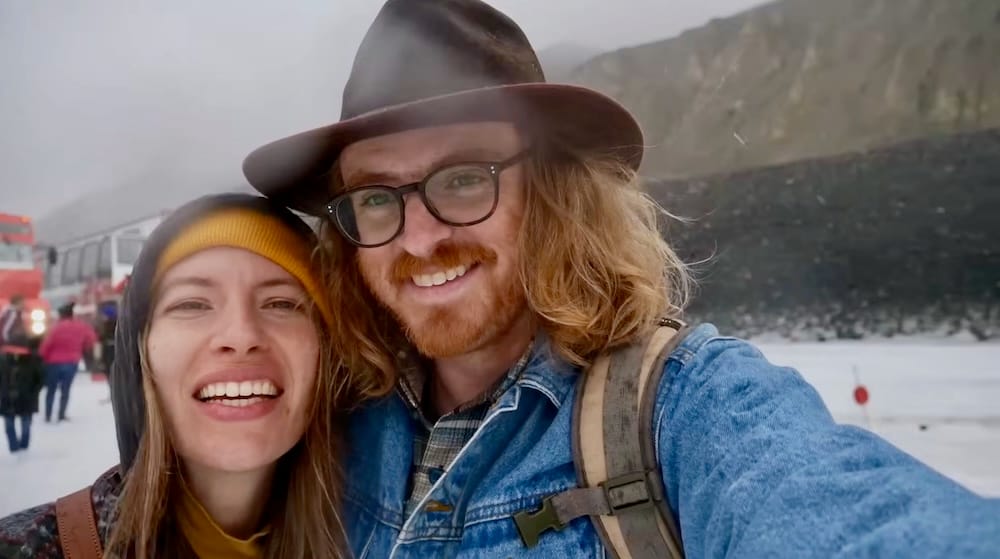
Audrey didn’t have gloves, and that’s the detail that mattered most. It’s obvious in the photo from that moment: her bare hand is stiff and curled, exactly the shape you’d expect from someone who just said she couldn’t feel it. My hiking boots put me a step ahead of her on footwear, but a denim jacket isn’t wind-resistant or waterproof any more than a wool coat is. Neither of us had a proper outer shell, and neither of us had planned for a temperature swing that severe.
When Audrey asked how I was holding up, I didn’t say anything about being cold. I said I was trying to salvage my camera. That’s a genuinely different reaction than hers, and it’s stayed with me since — she felt the cold first, and I went straight into damage control on my gear, which turned out to matter almost as much as the clothing did.
What Being Actually Prepared Looked Like
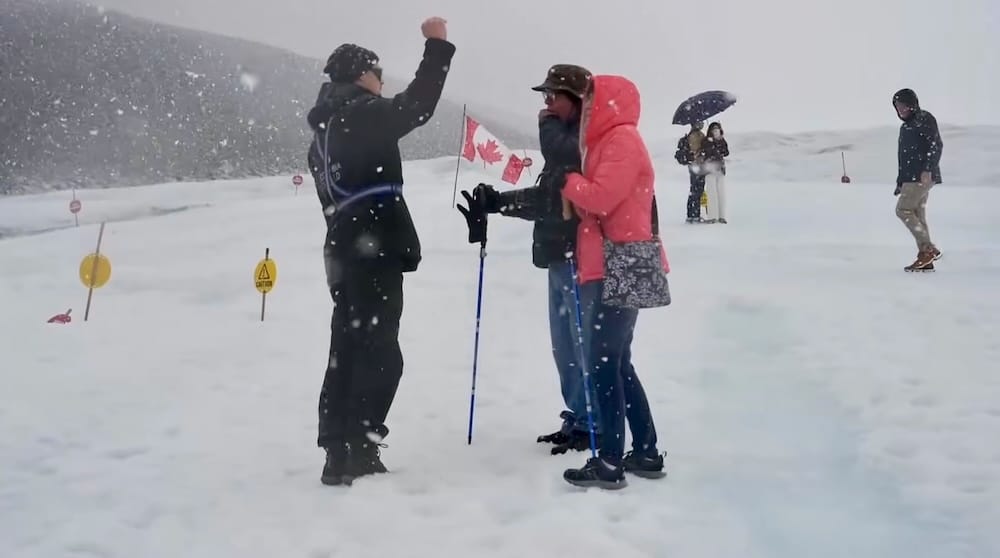
A few feet away from us, on the same patch of ice, in the same storm, there were people in insulated snow pants, proper winter jackets, real gloves, and hiking poles. It’s an odd thing to notice in the moment and a genuinely useful thing to notice afterward, looking back at the photo: we weren’t on some remote, ungeared expedition. We were standing next to people who’d simply dressed for the day that actually happened, rather than the one they’d pictured.
Here’s the part that surprised me once I looked into it afterward: my hiking boots and Audrey’s sneakers were both, in a technical sense, fine. Current guidance for visiting the glacier calls for closed-toe shoes with sturdy soles, and it specifically allows for either hiking boots or running shoes — it doesn’t demand technical mountaineering footwear for the section of ice visitors actually walk on. Footwear wasn’t our failure. The missing piece was the outer layer and the gloves. A wool coat, however warm it looks, isn’t built to block wind and snow the way a proper shell is, and there’s no substitute for gloves when your hands are the thing making direct contact with sub-zero wind for twenty-plus minutes.
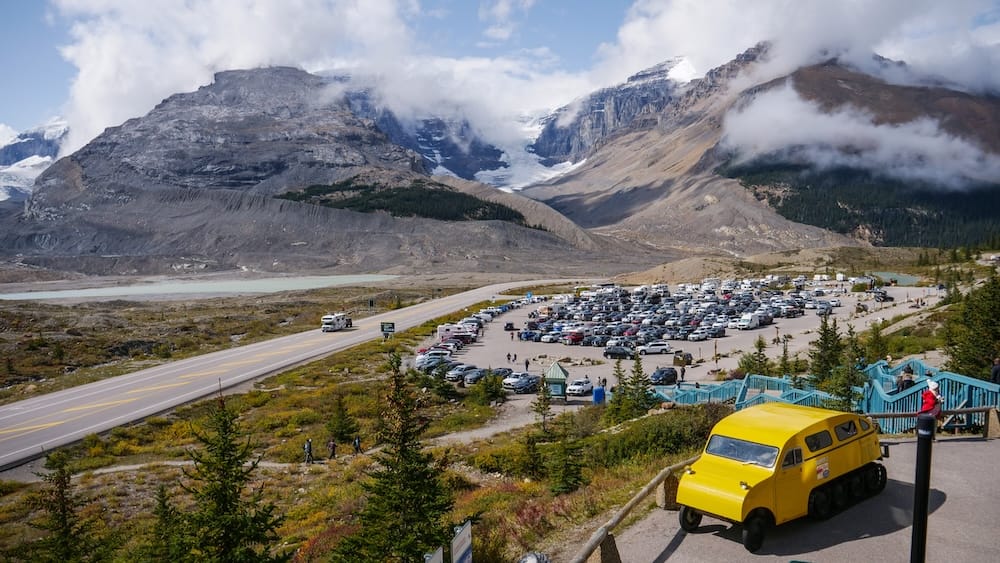
Why the Glacier Runs So Much Colder Than the Parking Lot
Here’s the mechanism behind all of this, and it’s not really a September story at all, even though that’s when it happened to us. The glacier surface typically runs about 15 degrees Celsius colder than the Discovery Centre parking lot you drive up to, a gap driven by elevation and by cold air spilling directly off the ice. That’s a big enough swing that dressing for the parking lot, where it might genuinely feel mild, tells you almost nothing about what you’ll feel twenty minutes later standing on the ice.
I’d assumed, before I looked into it, that we’d just gotten unlucky with an early-autumn cold snap. It turns out snow has been recorded on the icefield in every month of the year, including August. September didn’t do anything special to us. We just happened to be there on a day when the ordinary gap between valley and glacier tipped over into an actual storm, and that gap exists in July as much as it does in September.
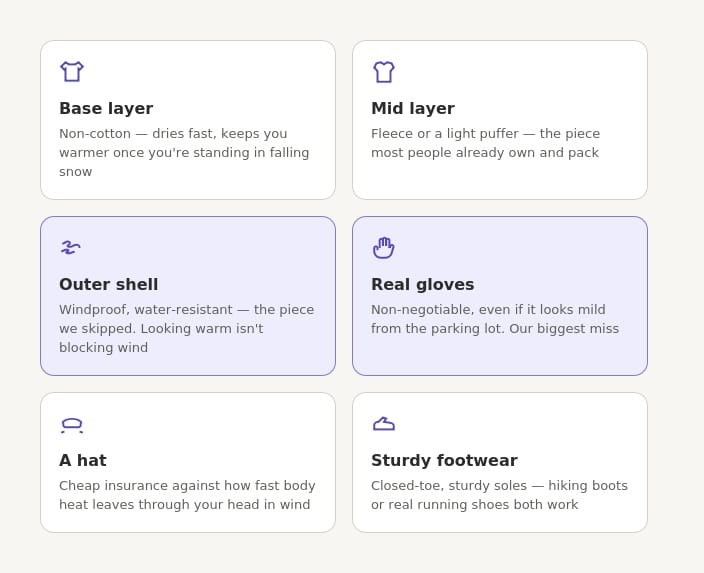
What I’d Actually Pack
If I were doing this again, none of it is exotic. Here’s the shortlist:
| What to bring | Why it matters |
|---|---|
| A non-cotton base layer | Cotton holds moisture against your skin once you’re standing on ice in falling snow; anything else dries faster and keeps you warmer |
| An insulating mid-layer | Fleece or a light puffer over the base layer — this is the piece most people already own and already pack |
| A windproof, water-resistant outer shell | The piece we skipped. A coat that looks warm isn’t the same as a coat that blocks wind and snow, which is the actual job on the ice |
| Real gloves | Non-negotiable, even if it looks mild from the parking lot. This was our biggest miss |
| A hat | Cheap insurance against how fast body heat leaves through your head in wind |
| Closed-toe shoes with sturdy soles | Hiking boots or real running shoes both work — you don’t need technical mountaineering footwear for this |
One thing I hadn’t planned for and would now: protecting the camera. Snow gets into everything the moment your bag is open, and the bigger risk isn’t really the storm itself but what happens afterward, when you bring a cold, damp camera straight into a warm vehicle and let condensation form inside it. A simple plastic bag or a proper rain sleeve over the camera while you’re shooting, a microfiber cloth to wipe it down, and sealing it in an airtight bag before you go back inside to let it warm up slowly — small things, none of which occurred to either of us until we were already standing there trying to keep a lens clear in falling snow.
We’d do the trip again in a heartbeat, storm and all. I’d just bring gloves this time, and I’d stop dressing for the photo I wanted and start dressing for the glacier I was actually going to stand on.
Frequently Asked Questions
What should I wear to visit the Columbia Icefield?
A proper windproof, water-resistant outer shell, warm layers underneath, gloves, a hat, and closed-toe shoes with sturdy soles. Hiking boots or real running shoes both work fine for the section of ice visitors actually walk on.
How much colder is it on the glacier than at the Discovery Centre?
The glacier surface typically runs about 15 degrees Celsius colder than the Discovery Centre parking lot, mostly because of elevation and cold air spilling directly off the ice. That gap is easy to underestimate if you’re only checking the weather for the valley.
Is it only risky to visit in September, or can it snow at other times of year?
It’s not a September-specific risk. Snow has been recorded on the icefield in every month of the year, including August. We happened to get caught in it in early September, but the underlying temperature gap between the valley and the glacier exists year-round.
Are sneakers or running shoes okay for the glacier, or do I need hiking boots?
Either works. Current guidance calls for closed-toe shoes with sturdy soles, and it specifically allows hiking boots or running shoes. Footwear wasn’t actually our mistake that day, even though it might seem like the obvious culprit.
What’s the biggest mistake people make when dressing for this?
Dressing for how it feels in the parking lot rather than for the glacier itself. A coat that looks warm isn’t the same as one that blocks wind and snow, and gloves are easy to skip if it looks mild when you start the day. That combination is exactly what caught us out.
How do I protect my camera or phone in the snow?
Keep it covered with a simple plastic bag or a rain sleeve while you’re shooting, wipe it down with a microfiber cloth, and seal it in an airtight bag before bringing it back into a warm vehicle so condensation doesn’t form inside it.
This article is also available in Spanish. [Leé la versión en castellano: Qué llevar al Columbia Icefield: nuestra experiencia con una tormenta de nieve en septiembre]
This article contains affiliate links. If you book through one of these links, I may earn a commission at no extra cost to you.