
Banff makes the idea of choosing the “best tour” surprisingly messy. A private day visiting Lake Louise and Moraine Lake, a giant canoe on the Bow River, a Western cookout, a Columbia Icefield excursion and a six-day horseback trip can all get lumped together under Banff tours, even though they have almost nothing in common once you actually start doing them.
Audrey and I have experienced several of these formats over different trips to Banff, while I also spent six days travelling through the backcountry on horseback. Looking at them side by side, I don’t think it makes much sense to rank them from first to seventh and declare a winner. A 90-minute canoe outing and a six-day horse trek aren’t competing for the same piece of your holiday.
The more useful question is what do you want the tour to change about your trip? Maybe you want somebody else to sort out transportation to Lake Louise and Moraine Lake. Maybe you’re travelling with a toddler and grandparent and need flexibility more than efficiency. Perhaps you want one huge scenic day where you can sit back and let somebody else drive, or you’re tired of looking at mountains through a window and want to paddle, ride or disappear into the backcountry for a while.
Once you frame it that way, the choices become much easier.
How I Would Compare Banff Tours
The biggest mistake, in my opinion, is starting with star ratings or price. Those numbers can be useful within a category, but they tell you very little when the experiences themselves are fundamentally different. Time is a much better first filter.
| Guided experience | Typical commitment | Best suited to | Main trade-off |
|---|---|---|---|
| Bow River Big Canoe | About 1.5 hours | Short active experience | You participate rather than simply sit back |
| Western wagon and cookout | About 3 hours | Relaxed scenery, food and atmosphere | Less focus on major Banff landmarks |
| Short horseback ride | 1–4 hours plus check-in | Travellers who specifically want to ride | Age, weight and physical requirements |
| Lake Louise + Moraine Lake group tour | About 4.25 hours for one current format | Iconic lakes with transportation handled | Less control over your time |
| Private sightseeing | Half day to full day | Families, mixed-age groups, custom pacing | Usually a higher-cost format |
| Columbia Icefield day tour | About 10.5 hours from Banff for one major current option | One big scenic excursion | Takes virtually the entire day |
| Six-day backcountry horse trek | 6 days / 5 nights | Deep adventure and immersion | Huge time and physical commitment |
That range alone explains why a generic “Top Banff Tours” list can be misleading. One experience fits between breakfast and lunch; another takes over your entire day; the longest effectively becomes the trip.
If you already know that you want at least one guided experience but haven’t settled on the format, you can compare current Banff tours and availability before narrowing the choices using the trade-offs below.
I would also think about how involved you want to be. On a sightseeing tour, most of the work is done for you. On the Big Canoe, you’re paddling. On horseback, you’re listening to the guide, reacting to the horse and staying physically engaged. Once you move into a multi-day backcountry trip, the guided experience begins dictating where you sleep, when you eat and what your days look like.
Then there is flexibility, which mattered far more to us once we started travelling around Banff as a multigenerational family.
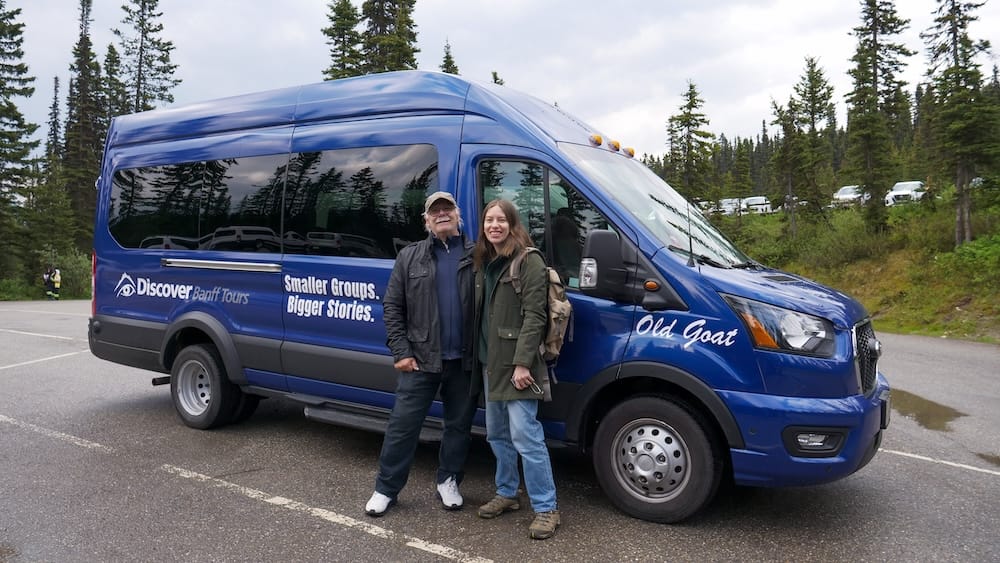
Private Sightseeing Tours: When Flexibility Is the Upgrade
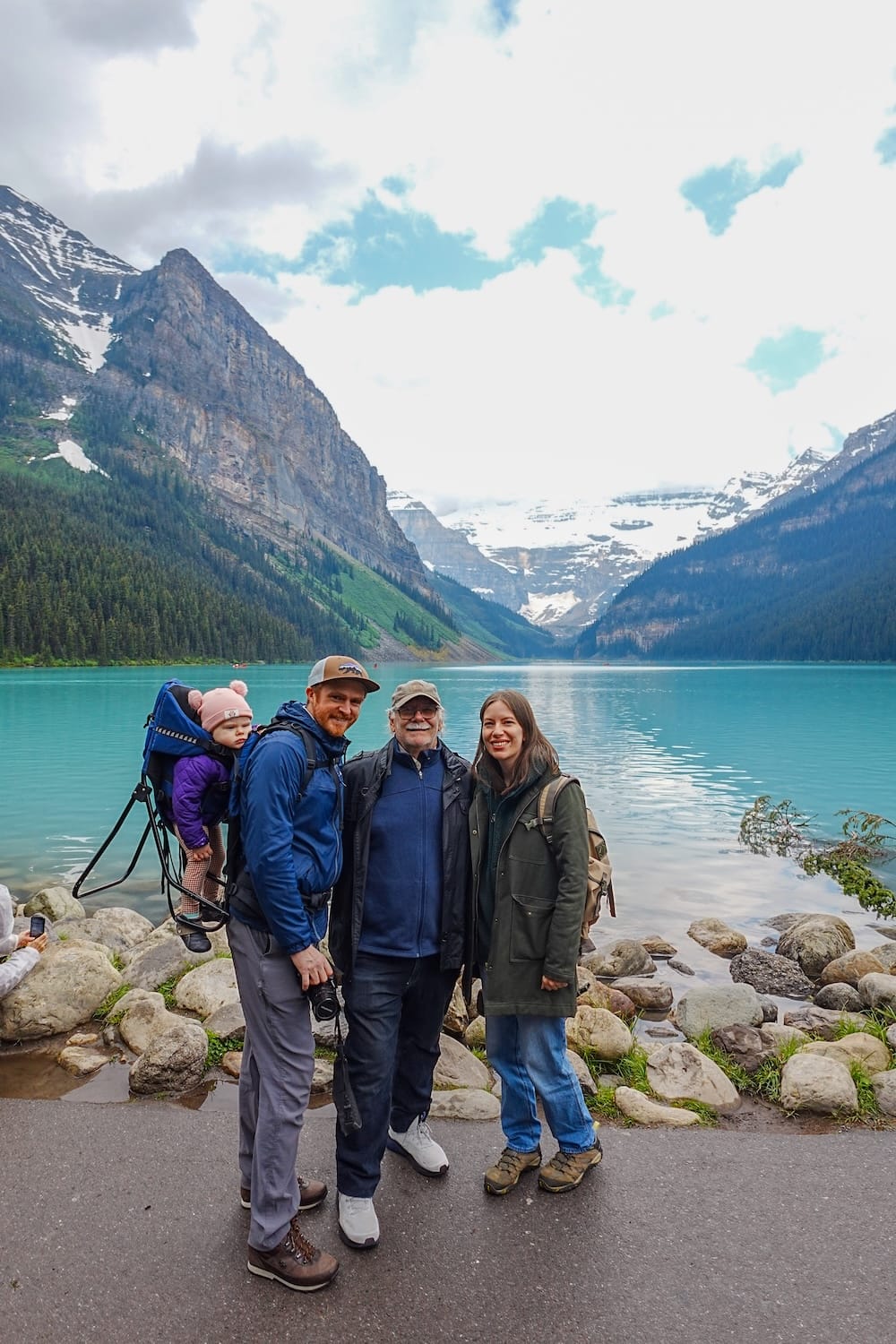
We took a private sightseeing tour with Audrey’s dad and our toddler, Aurelia, on a day that combined Banff and Yoho National Parks. On paper, that sounds like four people going sightseeing together. In reality, it was a toddler with toddler needs, a grandparent moving at his own pace and two parents trying to keep everybody fed, reasonably cheerful and moving in approximately the same direction.
That was where the private format made sense for us. We could stop when somebody needed a snack, change Aurelia without feeling like an entire bus was waiting, take short breaks and adjust the pace when necessary. Our guide kept the day moving, but we never felt that we had to sprint back to a vehicle because twenty strangers were checking their watches.
Audrey summed it up afterward by saying that going private had been a great idea for our family. I felt the same way, not because private touring is automatically better, but because the flexibility solved a problem we genuinely had.
Travellers who want that same basic format can see a current private Lake Louise and Moraine Lake tour option. We did not take this particular listing, so I would treat it as a current booking option rather than as the exact tour I’m reviewing from personal experience.
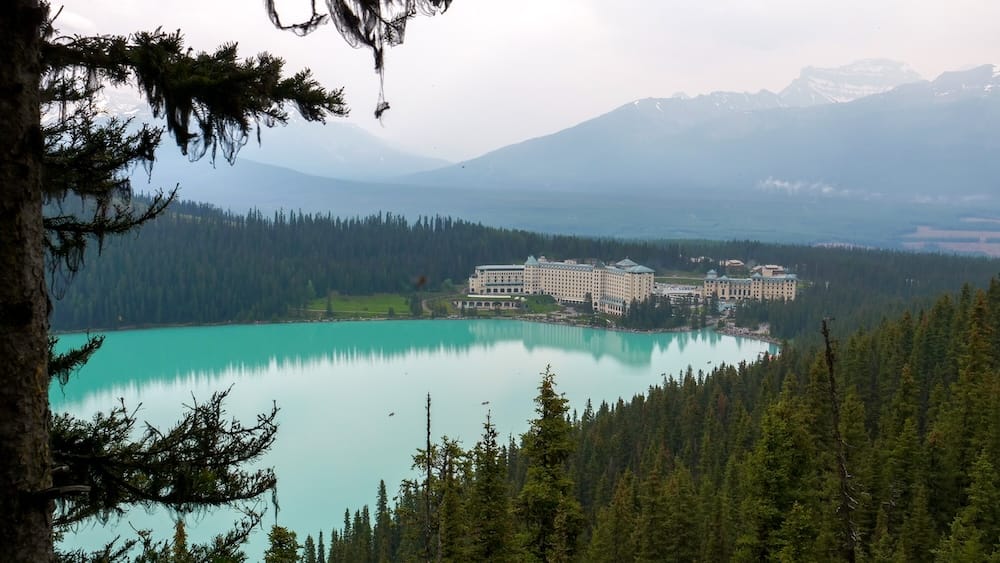
Lake Louise and Moraine Lake Tours
Lake Louise and Moraine Lake also have a transport issue that makes organised touring more useful than it might appear at first glance.
Personal vehicles are not permitted on Moraine Lake Road, so renting a car doesn’t make the access question disappear. Parks Canada shuttles and other authorised transportation remain options, but a licensed commercial tour can bundle the logistics into the sightseeing day. Because these rules can change, it’s worth checking the current Parks Canada Lake Louise and Moraine Lake transportation information before locking in your plans.
One current group format from Banff combines Lake Louise and Moraine Lake in roughly 4.25 hours with hotel pickup and drop-off. That is a very different proposition from our long private day, and for plenty of travellers it may be exactly what they need. If your thinking is, “I want to see both lakes and don’t want to spend half my planning time sorting out transportation,” you can check the current half-day Lake Louise and Moraine Lake tour.
You’re trading some control over how long you stay in each place, but you also remove a layer of logistical fiddling. Private touring starts becoming more interesting when your group is the reason a fixed schedule might be awkward. That could mean a toddler, grandparents, different walking speeds or simply people with very different ideas about how quickly a sightseeing day should move.
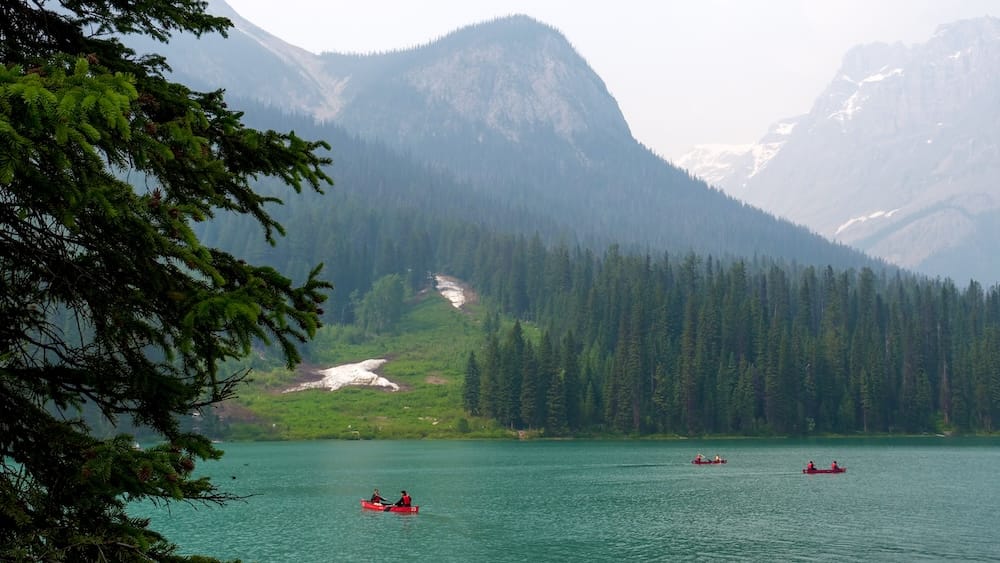
A Full Banff–Yoho Day Is Another Level Again
Our private day went well beyond the two lakes. We visited Lake Louise, hiked to Fairview Lookout, continued to Moraine Lake and eventually crossed into Yoho National Park for additional sightseeing. We were picked up around 9:00 in the morning and were still out exploring at 7:00 that evening. It was flexible, but nobody could accuse us of taking it easy.
Current full-day tours can likewise combine Banff National Park with places such as Emerald Lake and Natural Bridge in Yoho, sometimes alongside additional stops. If that broader style of day appeals more than a lakes-only outing, you can compare a current full-day Banff and Yoho tour.
It is worth keeping the geography straight because once you’re following a Banff-based tour itinerary, it becomes very easy to mentally classify everything as Banff. Emerald Lake and Natural Bridge are in British Columbia, even if your morning started in Alberta.
For me, that is the clearest way to decide whether paying for private touring makes sense: are you actually going to use the flexibility? We did. A group of independent adults moving at the same speed might not value it nearly as much.
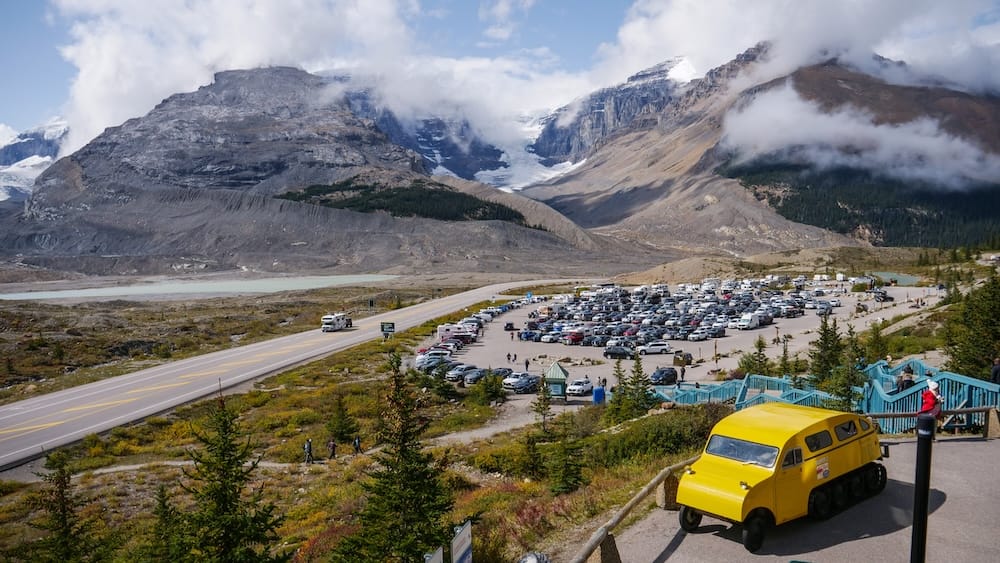
Columbia Icefield Tours: Give This One the Day
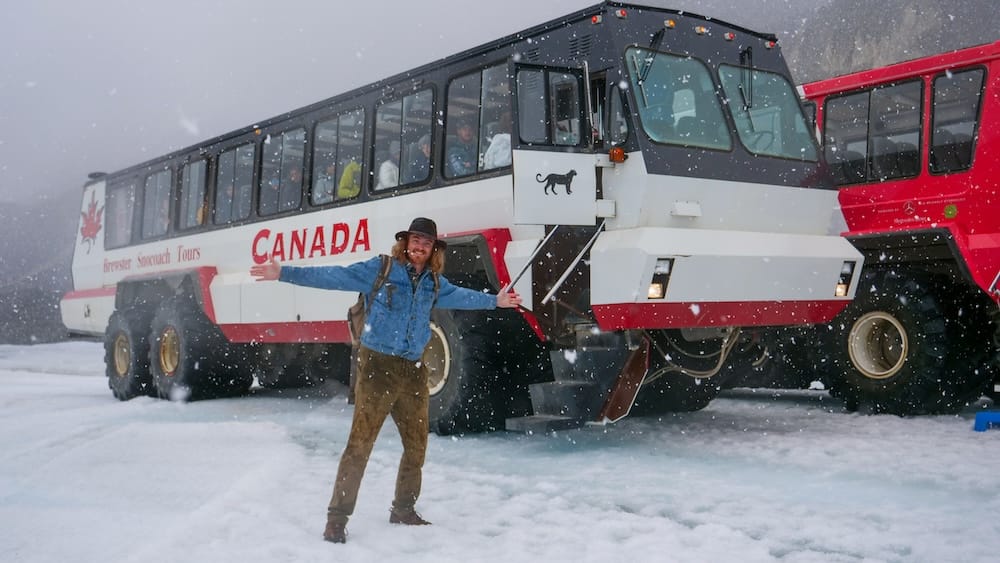
The Columbia Icefield sits at almost the opposite end of the ordinary day-tour spectrum. Audrey and I travelled there from Banff along the Icefields Parkway before continuing onto the Ice Explorer and Athabasca Glacier. Calling it a glacier tour makes it sound as though you pop up the road, stand on some ice and return in time for lunch. That is not the scale of the outing.
One major current Banff-to-Columbia Icefield tour runs for about 10.5 hours. The Icefield attraction itself is only one part of the day because the journey north through the Rockies is part of what you’re paying for.
That has real itinerary consequences. If you only have two days in Banff, using one of them for Columbia Icefield is a massive decision. If you’re staying five days or a week and want one substantial excursion, suddenly it fits much more naturally.
The Journey Is Part of the Experience
We genuinely enjoyed the drive. Lakes, glaciers and mountain walls keep appearing along the Icefields Parkway, and it is one of those routes where somebody is constantly pointing out the window at something else. You are still spending a lot of time in transit, though, so I wouldn’t book Columbia Icefield while imagining that I could casually wedge it between a morning activity and dinner plans back in Banff.
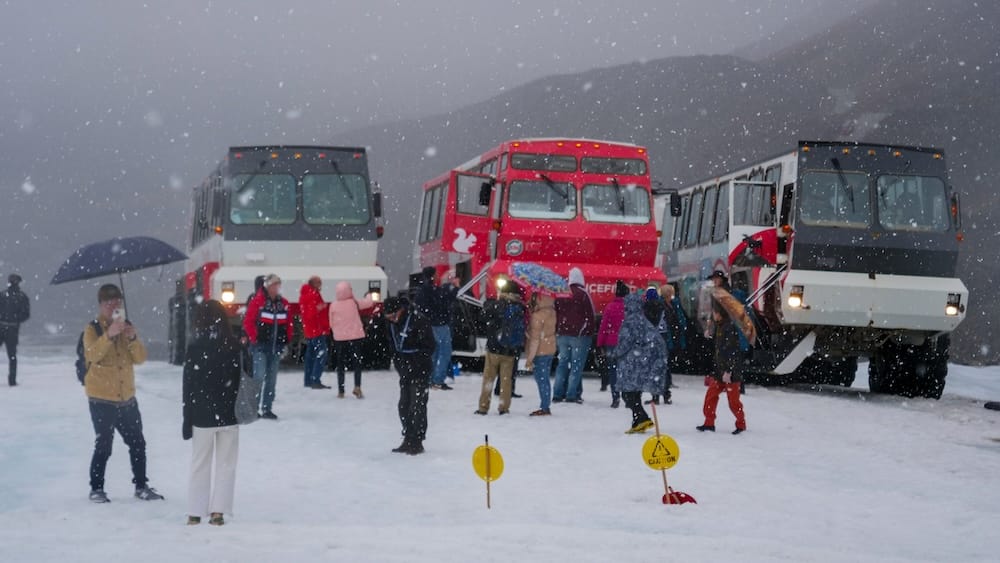
Weather can also change the mood in a hurry. When we reached Athabasca Glacier, conditions turned on us with snow, low cloud and ice pellets. Audrey got back into the vehicle with hands so cold she could barely move them, while I was trying to rescue a camera that had taken considerably more weather than I would have preferred.
Strangely enough, we still loved it. In our particular case, the ugly weather made the place feel even more enormous and wild, although I wouldn’t recommend actively hoping for an ice-pellet facial just to enhance the atmosphere. The practical lesson is simpler: dress for mountain conditions rather than whatever Banff town happened to look like over breakfast.
Where the Ice Explorer Fits
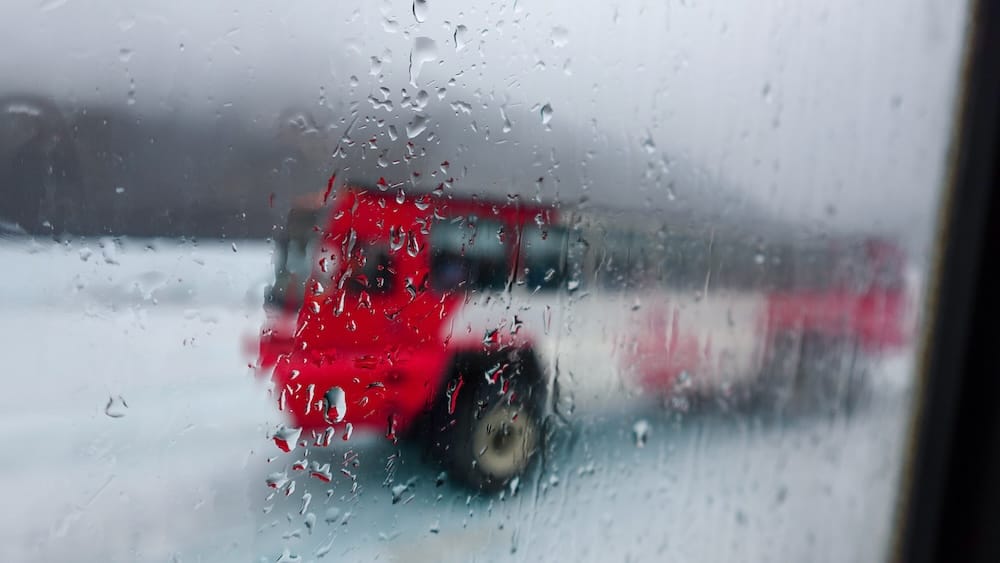
We rode the Ice Explorer and stepped onto Athabasca Glacier, which turned a scenic road trip into something more tangible. Current full-day packages can bundle transportation, the Icefield Adventure, the Skywalk and other inclusions depending on the product.
This is where headline-price comparisons become especially useless. A full-day excursion with transport and major paid components bundled together shouldn’t be judged against a 90-minute activity by asking which one costs less. The real question is whether the Columbia Icefield deserves one of your Banff days.
If it does, the current Athabasca Glacier and Columbia Icefield day trip from Banff is the closest bookable match among the options I checked to the type of guided full-day experience we did.
For us, it was worth giving up the day.
Bow River Big Canoe: Short, Scenic and Actually Participatory
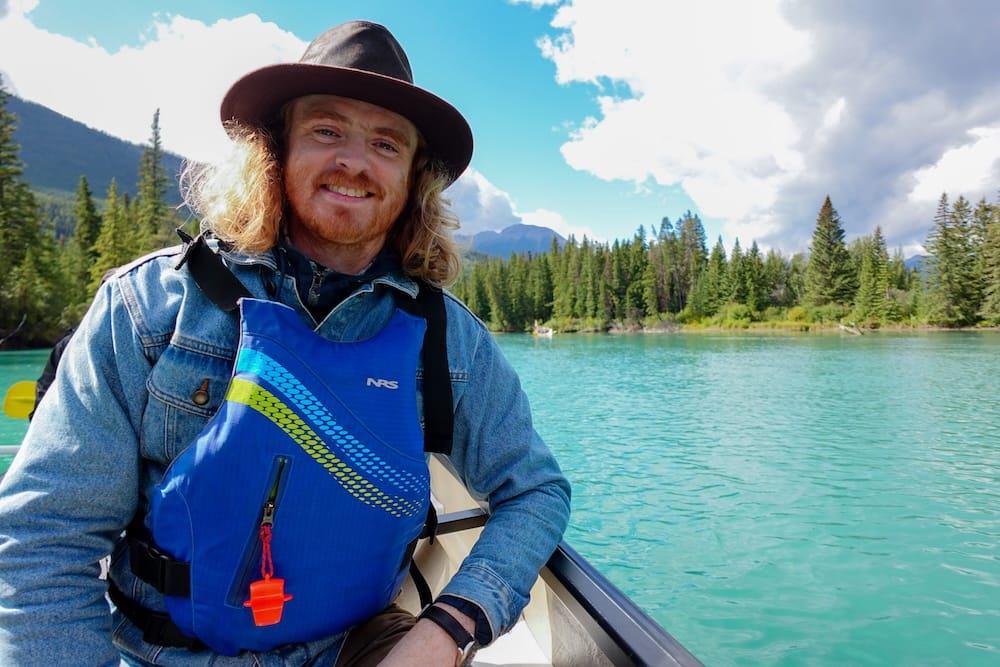
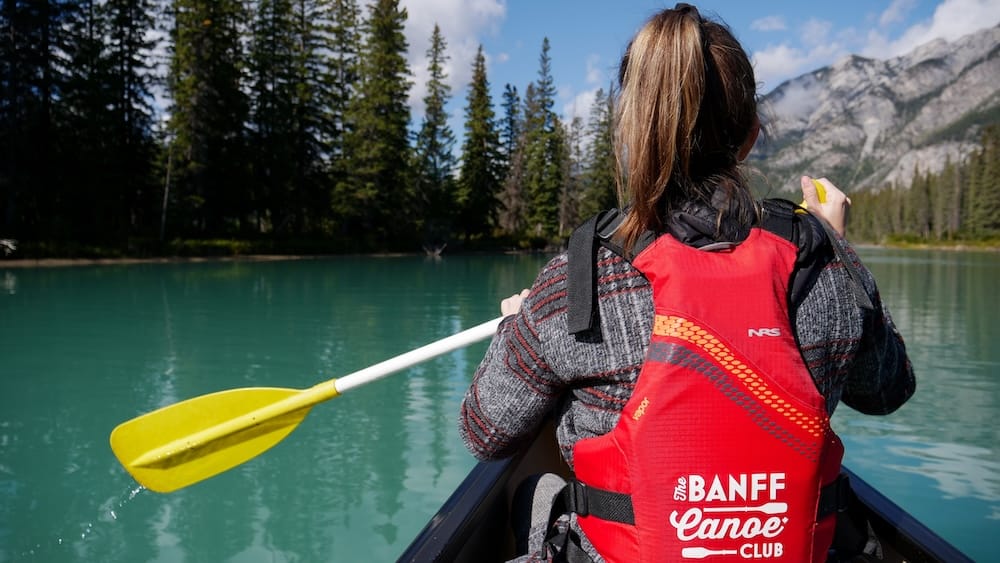
The Big Canoe was almost the antidote to the Columbia Icefield day. Instead of devoting ten hours to an excursion, you’re looking at roughly 90 minutes on the Bow River, and instead of seeing everything through a vehicle window, you help move the canoe.
Audrey and I had a blast. Our group paddled upriver together, passing beaver dams and osprey nests, and then the rhythm changed on the return as we could relax more and let the river help carry us back. We came off the water talking about how it might be one of the nicest ways to enjoy the scenery around Banff.
The current format still includes a guide, paddling instruction and the necessary equipment, and you don’t need previous canoeing experience. What I like about this experience is that the participation level sits in a sweet spot: you are doing something rather than simply being transported, but it doesn’t require turning the day into an endurance test.
There is a small logistical wrinkle because tours meet at the Banff Canoe Club rather than collecting you from your hotel, but a 90-minute activity is still remarkably easy to fit around everything else you’re doing in Banff. If that sounds like your kind of outing, you can check current Big Canoe River Explorer availability.
If you want a guided experience that feels active without eating your entire day, the Big Canoe is one of the strongest fits we tried.
Western Wagon and Cookout: Banff at a Slower Pace
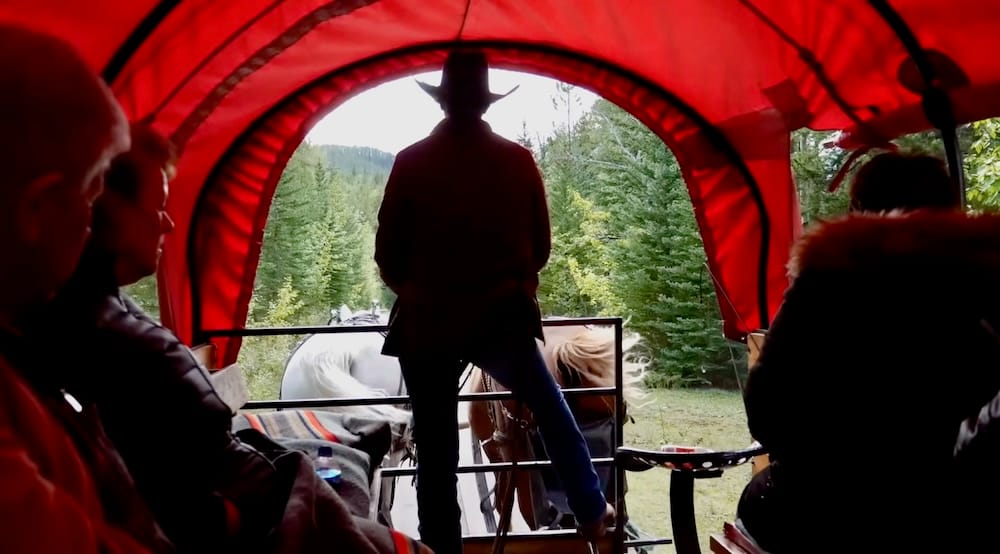
Our covered-wagon and Western cookout had almost nothing in common with the canoe except that both fit comfortably into part of a day. This one was about slowing down. We travelled beside the Bow River in a covered wagon, chatted with our guides and eventually reached the cookout area, where we had time to relax, try some roping and settle in for a rustic meal.
During our visit, dinner included steak, potatoes, coleslaw, cornbread and baked beans. I had brought the cowboy hat but not the cowboy boots, so my transformation into a rugged Western figure remained incomplete.
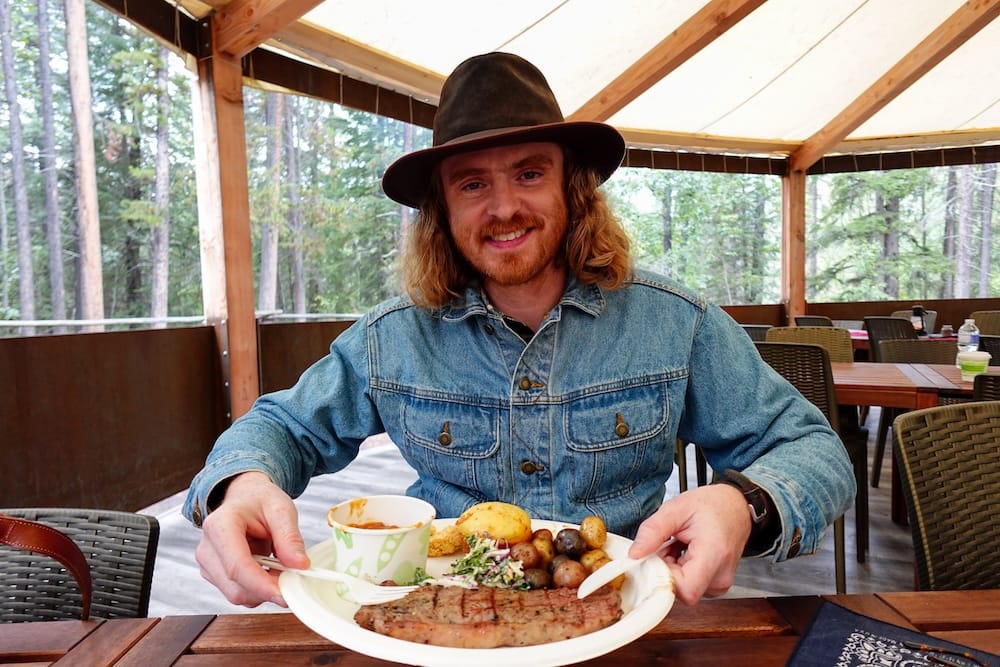
I liked the experience because it wasn’t trying to maximise the number of famous viewpoints we could see before sunset. We were out in the landscape, but the food, horses, people and atmosphere were as important as the scenery.
Current wagon-and-cookout outings run for around three hours and follow the same broad idea. There is also a horseback version leading to the cookout, although Audrey and I only experienced the wagon. Those two formats have very different barriers to entry: the wagon works for a much wider range of ages, while the horseback version comes with more demanding rider requirements.
For the purposes of choosing among Banff tours, though, I think the decision is straightforward. If a relaxed Western outing with scenery, food and a bit of fun sounds more appealing than another rapid-fire list of viewpoints, you can check the current wagon ride and Cowboy Cookout.
Horseback Riding: An Hour in the Saddle or Six Days in the Backcountry
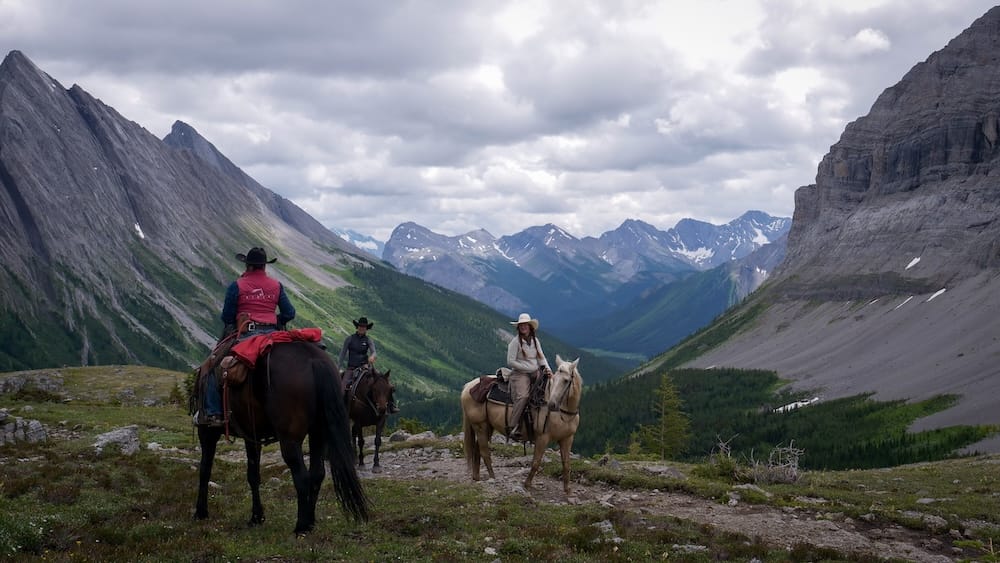
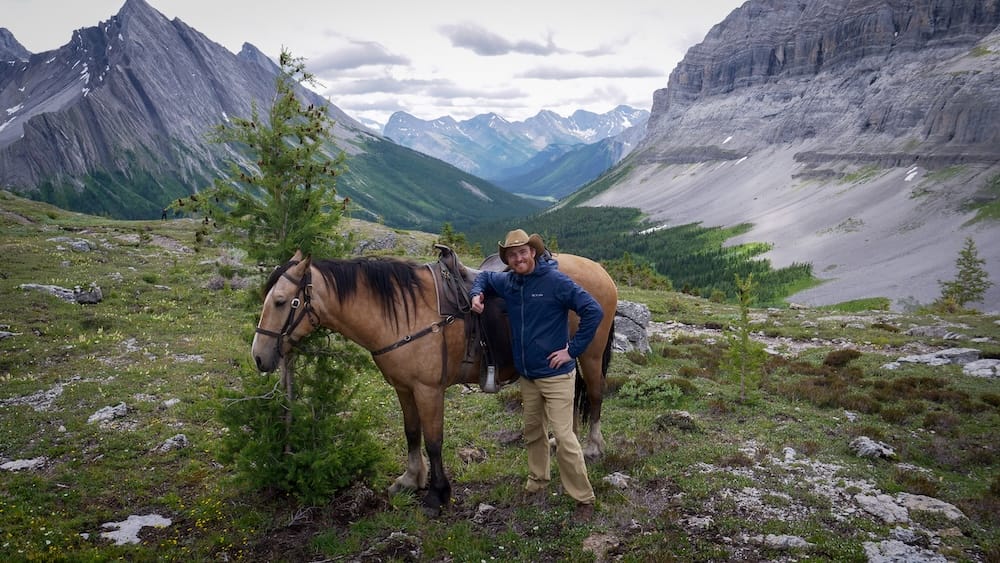
Horseback riding is where the word tour starts stretching almost to breaking point. Current standard trail rides around Banff range from about one to four hours. I went in a slightly different direction and spent six days and five nights travelling through the backcountry on horseback.
They share horses. After that, the similarities start disappearing.
Short Trail Rides: Sample the Experience
I haven’t personally done the current one-, two-, three- or four-hour Banff Trail Riders products, so I wouldn’t pretend to tell you which individual route I liked best. What I can do is explain where they fit compared with the other guided experiences in this article.
Standard trail rides currently start at age eight and generally have a maximum rider weight of 230 lb / 104 kg. You need appropriate footwear and clothing, and even the shortest ride asks you to arrive roughly 30 minutes before departure for check-in and preparation.
That means a one-hour ride is not literally a one-hour gap in your itinerary. You’re getting organised, receiving instructions, meeting your horse and then riding, while also remaining responsible for listening to the guides and controlling the animal appropriately.
For somebody who has always wanted to try horseback riding in the Canadian Rockies, that makes a short ride an appealing way to sample the experience without turning an entire Banff holiday into a horse trip. A straightforward place to start is the current one-hour Bow River horseback ride, although I haven’t personally taken that specific short ride.
I, meanwhile, managed to turn my Banff trip into a horse trip quite successfully.
Six Days at Halfway Lodge Is Another Kind of Trip
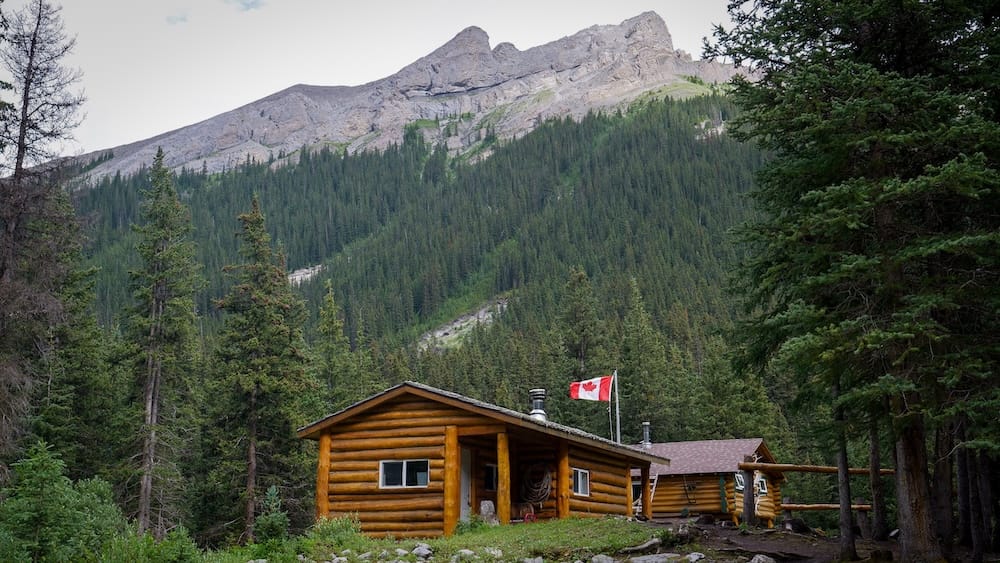
My six-day Halfway Lodge adventure remains one of the most memorable trips I’ve done in Canada. For five of those days, we were typically riding for around five to six hours including breaks, travelling through forests, crossing creeks and moving into increasingly dramatic mountain terrain while staying at Sundance and Halfway lodges along the way.
There was also a rest day for the horses when we hiked instead, but the larger point is that the trip developed a daily rhythm completely unlike a normal Banff activity. You woke up there. You ate there. You rode for hours. You spent the evenings with the same small group. Weather mattered, horses had personalities and you needed to pay attention.
I wasn’t approaching it as some fearless cowboy either. I’ve described myself before as a reluctant adventurer, which still feels about right. I like being outside and pushing beyond my normal routine, but I have no burning desire to jump out of planes or hang from cliffs by a rope. Six days on horseback pushed me without turning the experience into something I dreaded.
The current Halfway Lodge trip remains six days and five nights, with accommodation and meals included. Participants currently need to be at least nine, stay within the 230 lb / 104 kg rider limit and meet the operator’s physical and riding requirements.
By the later days, I also understood something that you simply can’t replicate by extending a one-hour ride to two hours. After enough time away from phones, normal routines and whatever nonsense had been occupying my brain before the trip, I felt genuinely removed from ordinary life.
That’s the distinction I’d use when comparing these horseback options. A short ride is an activity you add to Banff. The six-day trip becomes the way you’re experiencing Banff. If you’re seriously considering that deeper end of the spectrum, you can check the 6-Day Halfway Lodge Backcountry Trip by Horseback.
So Which Banff Guided Experience Fits Your Trip?
Once I stop trying to rank completely different experiences against each other, the choices become much clearer.
If you’re travelling with a toddler, grandparents or a group that moves at very different speeds, I would investigate private sightseeing first. Our family used the flexibility constantly, which made the extra control meaningful rather than theoretical.
If your main priority is Lake Louise and Moraine Lake without dealing with the transport puzzle yourself, a structured lake tour solves a very specific problem. You’re trading some freedom over timing for a simpler day.
For travellers with enough time who want one major excursion, Columbia Icefield makes sense as the centrepiece of a day rather than something added around other plans.
If you want short active participation, the Bow River Big Canoe is much easier to slot into an itinerary. We loved the scenery, but part of what made it memorable was actually being involved.
If your ideal afternoon involves food, horses, scenery and a slower pace, the Western wagon and cookout has a completely different personality from a sightseeing circuit.
If riding a horse is the point, start by looking at a short trail ride and choose the duration that fits your confidence and schedule, while checking the current eligibility rules before getting attached to a specific product.
And if you’re searching for a genuine adventure rather than another Banff activity, the six-day backcountry trip sits alone at the far end of this spectrum. It requires more time and physical commitment than anything else here, which is also the reason it can deliver a much deeper experience.
Check the Friction Before You Book the Scenery
Beautiful photographs make every tour look easy. The boring details are what determine whether the experience actually fits your trip.
Start with the real time commitment. A short horseback ride requires advance check-in, while Lake Louise and Moraine Lake tours come with fixed pickup schedules. Columbia Icefield effectively takes the day. A six-day horse trek needs the rest of your Banff itinerary built around it rather than squeezed around it.
Physical participation also varies enormously. The canoe involves paddling. Horseback riding has age, weight, clothing and physical-control requirements. A wagon requires very little physically, while vehicle-based sightseeing can still involve walking or optional hikes once you arrive.
I’d be equally cautious with the phrase family-friendly. It doesn’t mean much unless you know the family. The current Big Canoe allows very young children, the wagon works for a broad age range, ordinary horseback riding starts later, and the multi-day horse trek has stricter requirements again. Travelling with Aurelia has made me much less interested in broad labels and much more interested in the fine print.
Cancellation rules deserve the same attention because they can differ not only between tours but between booking channels for the exact same product. That’s one detail I would always check live before paying, especially for an expensive excursion or multi-day trip.
Banff’s mountains are reasonably dependable. Tour inventory, access rules and booking conditions are not.
The Best Banff Tour Depends on What You Want Help With
After trying so many different kinds of guided experiences around Banff, that is the decision rule I would use. If the headache is transportation and lake access, book something that simplifies transportation. If the challenge is travelling with people who need different pacing, private touring can buy you breathing room. If you want to participate rather than watch, paddle or get on a horse. If you’re looking for one big excursion, give Columbia Icefield the full day it requires. If food, atmosphere and a slower afternoon sound better than another checklist of viewpoints, the Western cookout has its own appeal.
And if what you really want is to disappear into the mountains for nearly a week, you’re no longer shopping for another Banff activity. You’re planning a different kind of trip.
That’s why I wouldn’t crown one experience the best Banff tour overall. The best fit is the one where the guide, transportation and structure solve a problem you actually have—or create the kind of experience you came to Banff hoping to find.
Frequently Asked Questions
What is the best Banff tour for a multigenerational family?
For our family, private sightseeing worked especially well because we were travelling with a toddler and grandparent. The extra flexibility let us stop for snacks, diaper changes and breaks without forcing everyone into a fixed group pace.
Do you need a tour to visit Moraine Lake?
No. Personal vehicles are not permitted on Moraine Lake Road, but Parks Canada shuttles and other authorised transportation remain options. A guided tour is useful if you want to bundle transportation with sightseeing rather than manage the access logistics yourself.
How much time should I allow for a Columbia Icefield tour from Banff?
One major current Banff-to-Columbia Icefield tour takes about 10.5 hours, so I would treat it as the main event of the day rather than something to squeeze between other Banff activities.
Is the Bow River Big Canoe a full-day activity?
No. The Big Canoe is roughly a 90-minute guided outing, making it much easier to fit around other plans. You still participate by paddling, but you do not need previous canoeing experience.
How long are horseback riding tours in Banff?
Current standard trail rides range from about one to four hours, plus check-in and preparation. The six-day Halfway Lodge trip is a completely different commitment and effectively becomes the way you experience Banff rather than an activity added to the day.
Which Banff guided experience is best if I only have a few hours?
The Big Canoe, Western wagon and cookout, and shorter horseback rides all fit into part of a day. The better choice depends on whether you want active paddling, a relaxed food-and-atmosphere outing, or time in the saddle.
This article is also available in Spanish. [Leé la versión en castellano: Mejores tours de Banff comparados: cuál encaja con tu viaje?]
Our private Banff–Yoho tour was a partnered experience. Our Columbia Icefield day trip, Bow River Big Canoe and covered-wagon Western cookout were sponsored by Viator. This article contains affiliate links. If you book through one of these links, I may earn a commission at no extra cost to you.