
Hakodate is a particularly good city for viewpoints because seeing it from somewhere new actually changes your understanding of the place. Mt. Hakodate gives you the broad geography of a city wedged between two bodies of water. Goryokaku Tower turns a fort that feels sprawling at ground level into a perfectly recognizable star. Hachimanzaka uses the street itself to frame the harbour, while Mashu-maru puts you out on the waterfront looking back toward the city.
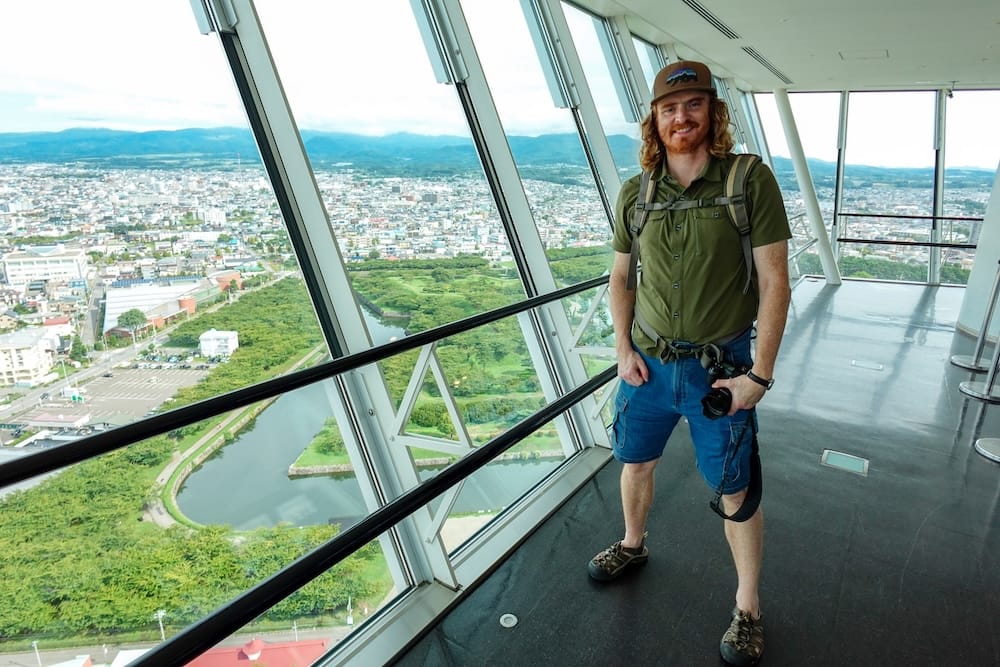
Audrey and I experienced all of those during our stay, and what surprised me most was how little duplication there was between them. Before visiting, I assumed Mt. Hakodate and Goryokaku Tower would be two elevated versions of roughly the same cityscape. Once we had done both, that idea went out the window.
So I would not rank Hakodate’s viewpoints from first to eighth and pretend there is one universally correct order. A much more useful question is: what do you actually want to see?
| Viewpoint | Best for | Cost | Effort | Our experience |
|---|---|---|---|---|
| Mt. Hakodate | Big-picture city geography | Paid Ropeway if you ride up | Low with Ropeway | Firsthand, daytime |
| Goryokaku Tower | Star fort + city panorama | Paid | Low | Firsthand |
| Goryokaku Park walls | Moat and fort views | Free | Light walking/stairs | Firsthand |
| Hachimanzaka | Classic street-to-harbour view | Free | Uphill walk | Firsthand |
| Mashu-maru | Shipboard harbour and city views | Paid museum admission | Low | Firsthand |
| Motomachi Park | Easy harbour view while sightseeing | Free | Light walking | Firsthand |
| Hakodate waterfront | Ground-level port atmosphere | Free | Walking | Firsthand |
| Cape Tachimachi | Open coast and Tsugaru Strait | Free | Moderate walk | Not personally visited |
Mt. Hakodate Gives You the Big Picture
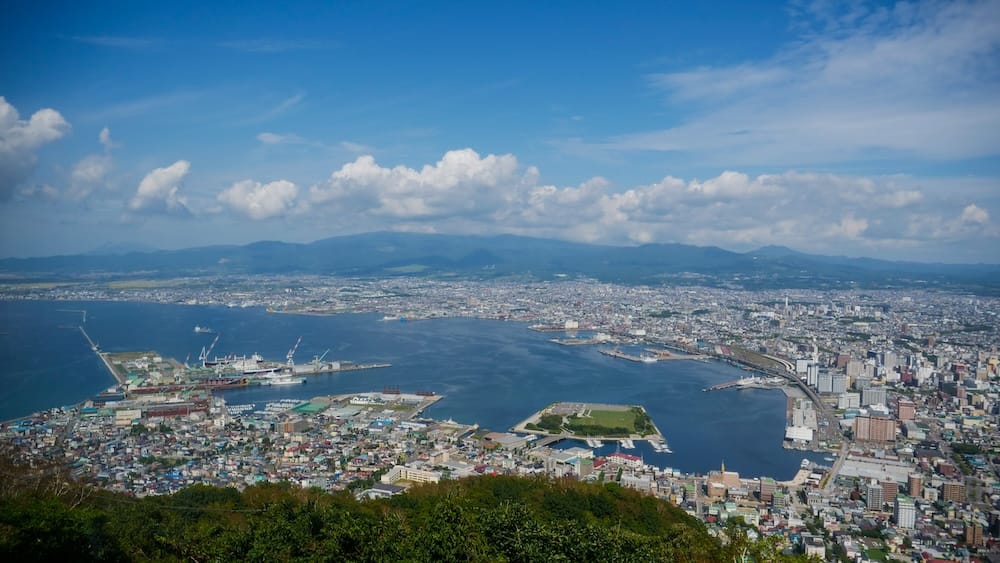
If I could use one viewpoint to explain the geography of Hakodate to somebody who had just arrived, it would be Mt. Hakodate.
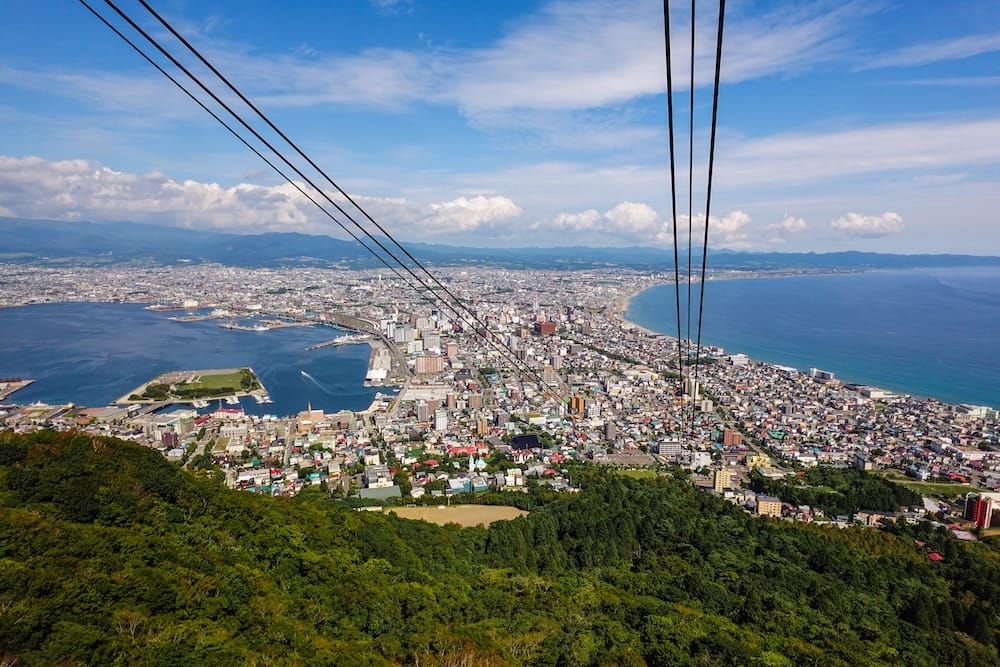
We took the Ropeway up during the day in clear weather, and the biggest surprise was not simply that the panorama was beautiful. It was that I finally understood what I had been walking around. Until then, most of our sightseeing had concentrated on the port, waterfront and historic western side of Hakodate, which made the city feel much more compact than it really is.
From the summit, the scale changed immediately. We could make out the harbour on one side, another coastline on the other, ships on the water, mountains in the distance and more open-looking land beyond the dense urban area. I remember realizing that we really had no idea how Hakodate was laid out until we were standing above it.
Mt. Hakodate rises to 334 metres, and its position at the southwestern end of the city is what makes the view so useful. Rather than staring down at one attraction, you can see Hakodate stretched between Hakodate Bay and the Tsugaru Strait. It feels less like an observation deck overlooking a landmark and more like somebody has unfolded the city map beneath you.
The Ropeway currently takes roughly three minutes to reach the summit, with adult tickets priced at ¥1,800 return or ¥1,200 one way. That makes this one of the more expensive views in the article, although you are also paying for the Ropeway experience rather than simply entering an observation deck.
There was another benefit on our visit that I appreciated more than expected: a breeze. We had been walking around Motomachi in hot, humid weather, so reaching the summit and getting some cooler air felt pretty wonderful.
Daytime Is the View We Personally Experienced
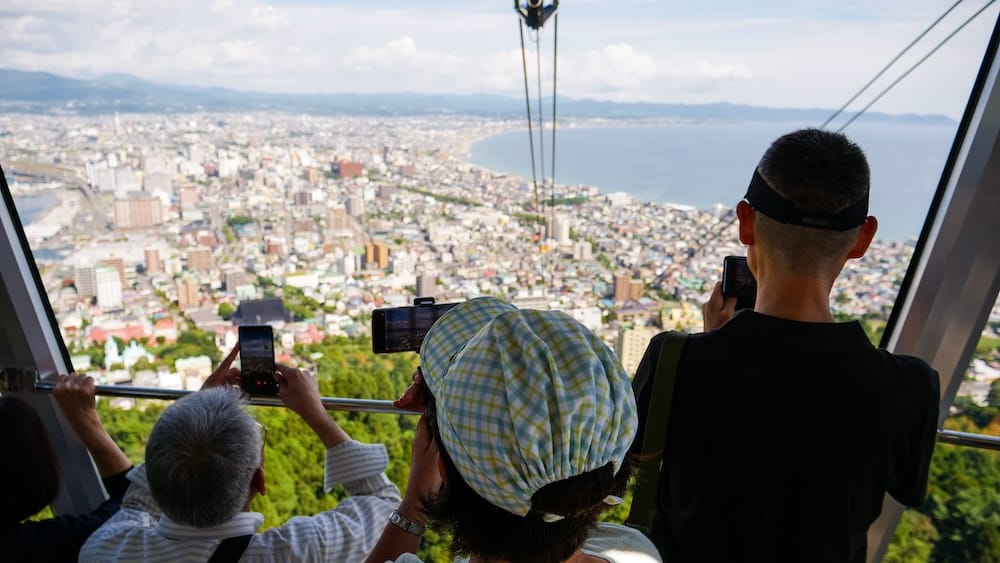
Mt. Hakodate is famous for its night view, but Audrey and I visited during the day, and I do not want to blur that distinction.
I actually think daylight deserves more credit than it sometimes gets. If your goal is to understand Hakodate, being able to distinguish shorelines, neighbourhoods, ships, mountains and the transition from the urban core toward more open land is incredibly useful. The city makes sense in a way it simply had not from street level.
Sunset and nighttime turn the experience into something different, with the lights becoming much more of the attraction. Sunset is also one of the busiest periods at the summit, so travellers who want a calmer visit may prefer another time of day.
I cannot compare the daytime and night experiences personally because we only saw the former. What I can say is that I would never treat daytime Mt. Hakodate as the consolation prize. For orientation alone, it was one of the most useful views we had anywhere in the city.
If you would rather connect the viewpoint to the historic western side of Hakodate instead of piecing the route together yourself, there is a current guided option that combines the waterfront, Motomachi, Hachimanzaka and the Ropeway. You can check the Historic Port Walk and Mt. Hakodate Ropeway tour, which currently offers both daytime and evening versions. We did not take this tour ourselves; our visit was independent.
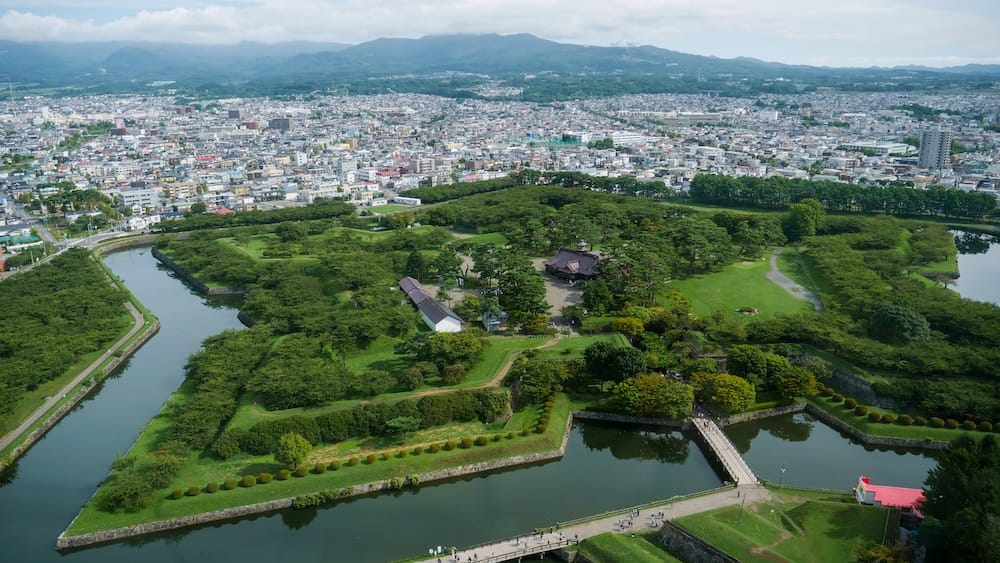
Goryokaku Tower Shows Hakodate From a Completely Different Direction
I went into Goryokaku Tower with a fairly narrow expectation. I wanted to see the star-shaped fort from above.
That would have been enough. Goryokaku is impressive at ground level, but when you are walking across bridges, beside the moat and through the park, its geometry is difficult to appreciate. Once you get above it, the five-pointed shape suddenly becomes obvious.
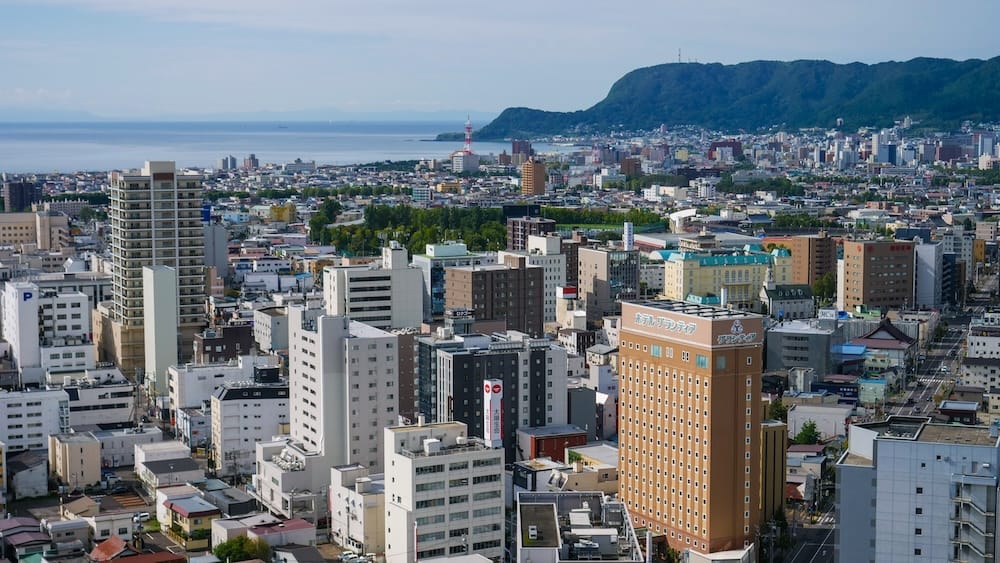
What caught us off guard was how much else we could see. From the observation deck, the view extends well beyond the fort to a large section of Hakodate, including the harbour in the distance. We had almost absurdly good conditions that morning—sunshine, blue skies and excellent visibility—so the city looked enormous.
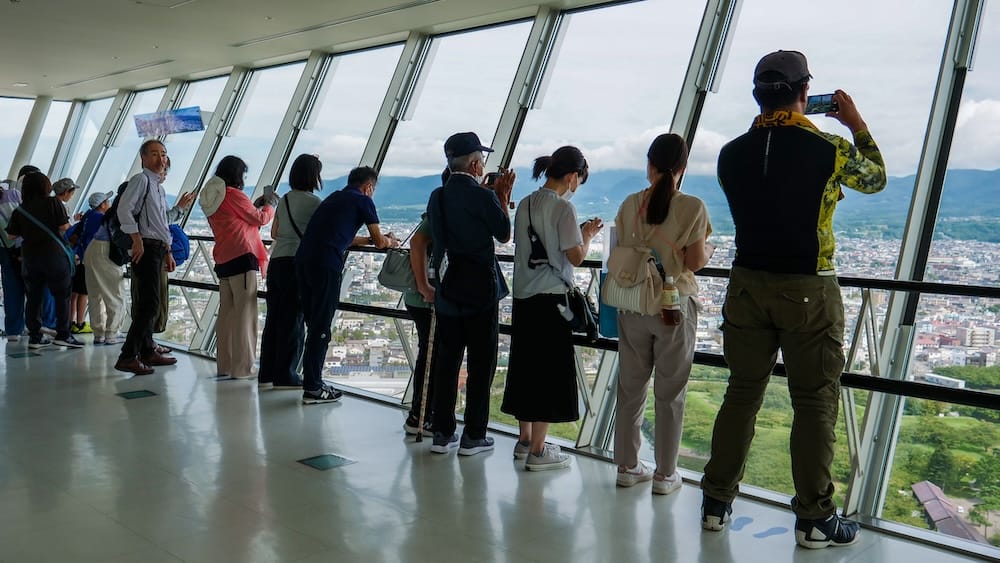
The upper observation deck sits about 90 metres above ground, while the tower itself reaches 107 metres. That is dramatically lower than Mt. Hakodate, but the lower height is part of what makes the experience feel different. You remain visually connected to the city rather than looking down on it from a mountain.
Current adult admission is ¥1,200, with regular opening hours from 9:00 to 18:00. If you already know you want to visit the observation deck and prefer to arrange admission ahead of time, you can check current Goryokaku Tower ticket availability on Booking.com.
Goryokaku also sits in a separate part of Hakodate from Motomachi and the western waterfront, so this is something you plan around rather than casually adding to the same walk as Mt. Hakodate.
If the history of the fort matters as much to you as the panorama, there is also a current guided option covering Goryokaku Park, the Hakodate Magistrate’s Office and the Tower observation deck. You can see details for the Goryokaku Star Fort and Tower guided tour. Again, this is a researched option rather than a tour Audrey and I personally took.
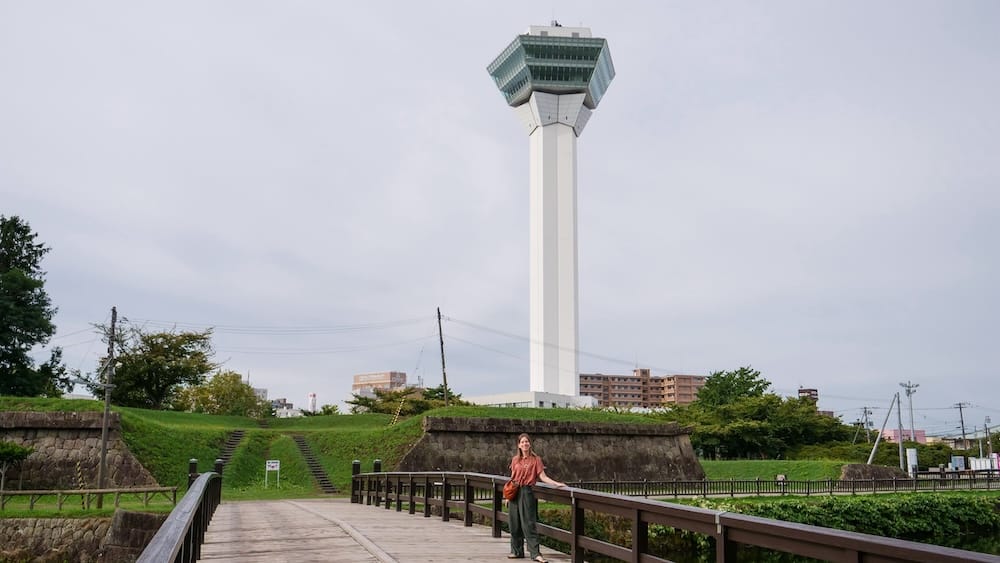
The Free Park Walls Give You a Lower View Before You Pay
Before Goryokaku Tower opened, Audrey and I had time to wander through the park. That ended up improving the whole visit because the tower did not become our only perspective on the fort.
We crossed bridges, walked alongside the moat and eventually found steps leading onto a higher section of the fortifications. From there, we had a nice elevated view across the moat with mountains beyond the park. It felt almost like stumbling onto a small secondary viewpoint before the headline attraction had even opened.
It obviously cannot compete with the tower if your goal is to understand the full star shape, but that is not really the point. The park is currently free to enter, which means Goryokaku gives you both a ground-level and modestly elevated experience before you decide whether to pay for the observation deck.
Do You Need Both Mt. Hakodate and Goryokaku Tower?
If your schedule and budget allow it, I would not skip one merely because you are visiting the other. When we reached the top of Goryokaku Tower, our immediate reaction was that it offered a completely different perspective from Mt. Hakodate. That was not something I expected before doing both.
Mt. Hakodate is better for seeing Hakodate as a geographic whole. Goryokaku Tower makes the fort the foreground and the city the backdrop. We will compare these two viewpoints much more deeply in a separate article, but for this guide the important conclusion is straightforward: they are not redundant.
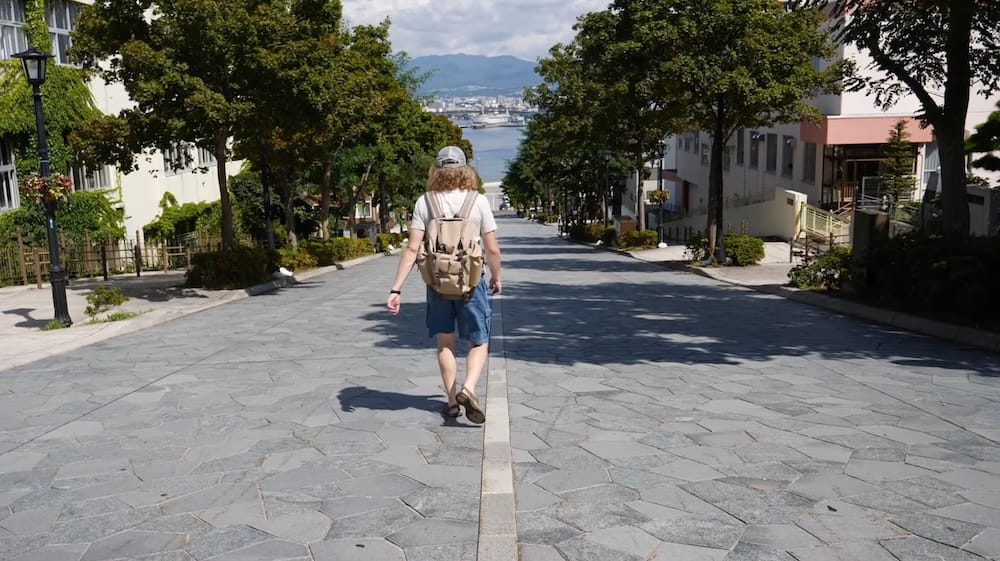
Hachimanzaka Is the Classic Street-to-Harbour View
Hachimanzaka gives you almost the opposite experience from standing on an observation deck. You are still right in the middle of Hakodate, with buildings and trees lining the road, but the street drops in such a clean line toward the waterfront that the harbour becomes the natural end point of the composition.
We deliberately climbed Hachimanzaka because we wanted that view. Unfortunately, we also chose a hot and humid day to do it, and somewhere during the ascent my sophisticated travel commentary deteriorated into repeating, “The heat, the heat, the heat.” Apparently living near the Rocky Mountains had not transformed us into elite humid-weather hill climbers.
The climb is not some epic hike, but Hakodate’s hills become much more noticeable after you have already spent several hours sightseeing. That is especially true if you have been stingy with tram rides and decided your legs can handle everything.
Hachimanzaka is about a five-minute walk from the Suehirocho tram stop and does not require admission. Because it is an active street rather than a formal viewing platform, you still need to pay attention to traffic when stopping for photographs.
This is probably my favourite example in Hakodate of a view that does not need much height to work. The framing does all the heavy lifting.
If You Want One More Slope, Motoizaka Is Different Enough to Matter
Hakodate has a whole network of slopes around Motomachi, so Hachimanzaka is not the only place where the hill itself becomes part of the view.
We did not specifically visit Motoizaka as a viewpoint, but it is one researched alternative that feels different enough to mention without turning this article into a catalogue of every inclined street in western Hakodate. The composition is more architectural, with the Old Public Hall, Motomachi Park, the former British Consulate and old Hokkaido Government branch office around this part of the district, plus glimpses toward the bay and occasional trams.
If Hachimanzaka is the clean harbour-axis view, Motoizaka is more about historic Hakodate layered into the scenery.
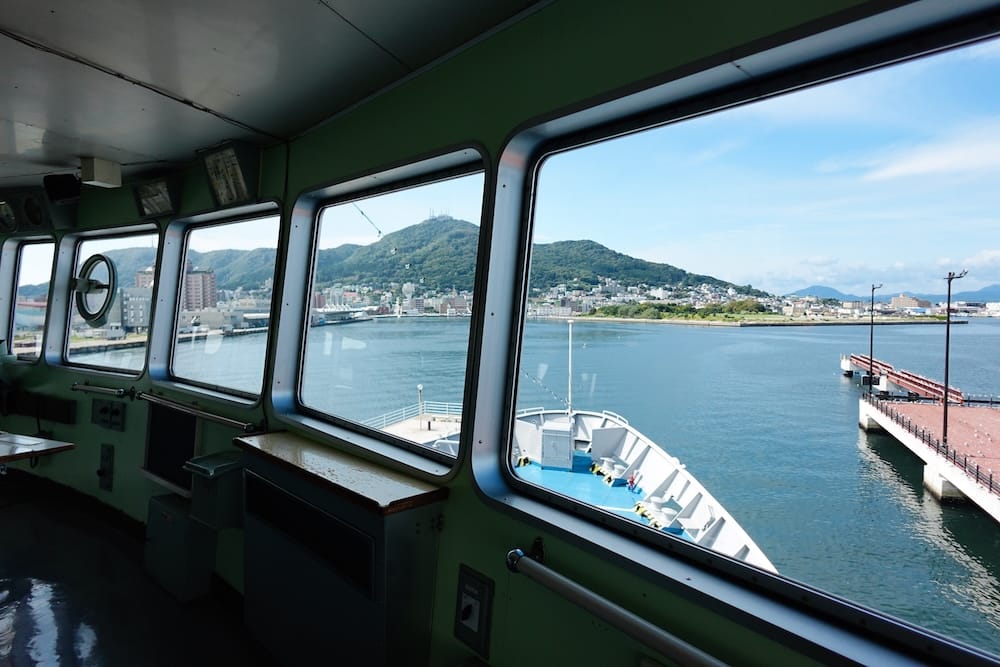
Mashu-maru Gives You a Harbour View From the Ship Itself
Mashu-maru was not on our sightseeing plan.
We were wandering around the port without much of a plan—and, if I am being generous, only a vague sense of direction—when we came across a huge ship docked along the waterfront. We decided to investigate, paid admission and discovered that it was the preserved former railway ferry that once connected Hokkaido with Honshu.
We ended up loving the place, partly because it was such an unplanned find and partly because it was much more interactive than we expected. One thing I had not anticipated at all was how good the city views were from aboard the ship.
At the time, we commented that somebody could enjoy coming aboard for the views even if ships were not their main interest. I would soften that slightly now because the museum itself is a big part of why the stop worked for us, but the scenic value is real. From the open deck, you can look back toward Hakodate and Mt. Hakodate from right on the harbour, which creates a completely different relationship with the city than simply walking beside the water.
Adult admission is currently ¥500, making Mashu-maru considerably cheaper than Hakodate’s two major elevated paid viewpoints. I would not suggest paying just because you need another observation platform; that undersells the museum and oversells the scenery as a standalone attraction. But if the ship already interests you, the view is a genuinely worthwhile bonus.
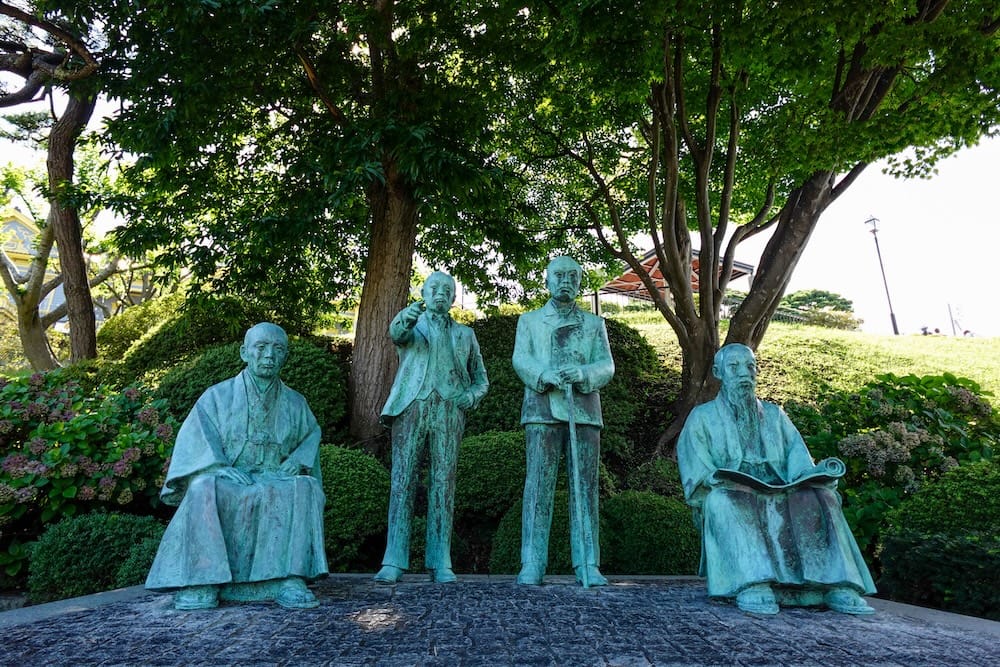
Motomachi Park Is a View You Get Naturally While Exploring
Motomachi Park sits in a category of attraction I tend to appreciate more and more when travelling: the place you do not need to turn into a major event.
Audrey and I passed through while making our way downhill toward the waterfront after exploring the churches and historic buildings around Motomachi. The park gave us a natural place to slow down and look toward Hakodate Bay without adding another complicated sightseeing stop to the day.
It is normally free to enter, and because it sits right inside the historic district, the park fits easily into an existing Motomachi walk. That makes it very different from Mt. Hakodate or Goryokaku Tower, where you deliberately go somewhere for the view.
I would not cross Hakodate solely for Motomachi Park. If you are already nearby, though, it is exactly the kind of place that makes a walking route better without asking much from you.
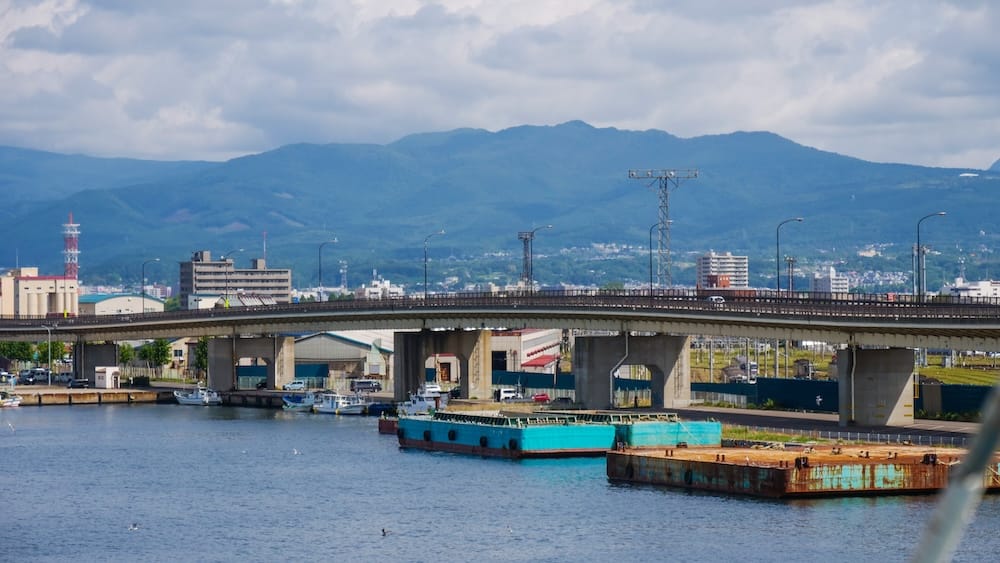
The Waterfront Gives You Hakodate From Ground Level
There is something slightly strange about visiting a port city and spending the whole trip trying to get as high above the port as possible.
Some of the most enjoyable stretches of our time in Hakodate were right at water level. Around Mashu-maru, the harbour and the Kanemori Red Brick Warehouses, the scenery comes from being beside the port rather than looking down at it.
There is no single observation deck here that I would crown the definitive Hakodate waterfront viewpoint. The pleasure comes from moving through the area: looking across the harbour, watching ships, seeing Mt. Hakodate rising behind parts of the city and shifting between working-port scenery and the more polished Bay Area around the brick warehouses.
That also makes the waterfront one of the easiest scenic experiences to work into a trip. If you are moving between Hakodate Station, Mashu-maru, Kanemori and Motomachi, you are already there.
No ticket, no elevator and no Ropeway required. Just give yourself enough time to wander instead of treating the waterfront as dead space between attractions.
Cape Tachimachi Adds an Open-Coast View
Cape Tachimachi is the major viewpoint in this article that Audrey and I did not personally visit, but it still earns a place because it offers something none of our firsthand stops really did: an outward-looking view across the Tsugaru Strait rather than another perspective over Hakodate Bay.
The cape sits at the southeastern end of Mt. Hakodate, where coastal cliffs rise roughly 30 metres above the sea. In clear conditions, views can extend across the strait toward Aomori and the Shimokita Peninsula.
That changes the visual character completely. Mt. Hakodate looks back across the city, Goryokaku Tower looks over the fort and surrounding urban area, and Hachimanzaka aims downhill toward the harbour. Cape Tachimachi turns away from the city and looks out to sea.
Getting there also requires more commitment than stopping at Motomachi Park. From the Yachigashira tram terminus, the walk is roughly 15 minutes, and the viewpoint itself is free. Vehicle access is seasonal, but that distinction matters: winter road restrictions do not automatically mean pedestrians are forbidden from reaching the cape, so current conditions are worth checking if you visit during colder months or unsettled weather.
Because we did not go ourselves, I cannot tell you whether it would have cracked my personal top three or whether I would consider the detour essential. What I can say is that it belongs in this article for a much better reason than filling out the list: it gives you a type of scenery the other viewpoints do not.
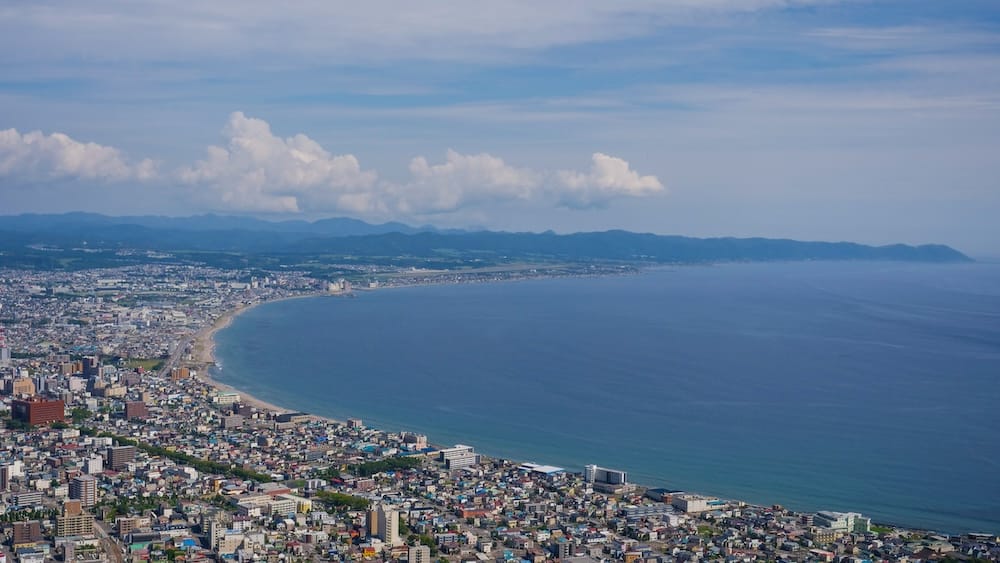
Which Hakodate View Should You Prioritize?
For a first visit with time for only one major panorama, I would start with Mt. Hakodate. It was the viewpoint that helped us understand the city as a whole, and seeing Hakodate stretched between the harbour and coastline gave context to everything we had already been exploring on foot.
If the geometry and history of Goryokaku are what interest you, the Tower does a completely different job. The aerial view of the star fort is the obvious reason to go, but we were pleasantly surprised by how much of Hakodate you can see beyond it.
For something free, Hachimanzaka is the easiest recommendation because the composition is immediately distinctive and it slots naturally into Motomachi sightseeing. Your legs may have some opinions about the word “free,” especially on a hot day, but your wallet should remain untroubled.
Mashu-maru is the wildcard. I would visit because the ship and museum interest you, then treat the harbour view as a very good bonus. Motomachi Park and the waterfront work in a similar way: their strength comes from improving sightseeing you were already going to do rather than demanding their own time block.
And if you have extra time and want a real change from the urban harbour scenery, Cape Tachimachi is the most obvious shift in perspective, replacing the city with the Tsugaru Strait and open coast.
If your priority is seeing several of Hakodate’s major areas without repeatedly working out tram connections and sequencing on your own, a current customizable private walking tour lets travellers choose two to three sights on a four-hour version or three to four on a six-hour version. The available choices include Mt. Hakodate, Goryokaku Park, Motomachi and the Bay Area, so it can be shaped around several of the viewpoints discussed here. You can check the customizable Hakodate private tour options. We explored these places independently, so I would see the tour as an alternative for travellers who would rather trade some DIY logistics for a guide and a more structured day.
The main mistake would be assuming Hakodate has one famous view and everything else is just a weaker version of it. That was not our experience at all. Mt. Hakodate helped us understand where the city was, Goryokaku Tower showed us how the fort sits within it, Hachimanzaka turned the harbour into the end of a street, and Mashu-maru moved us out onto the waterfront itself.
They are all looking at Hakodate, but they do not show you the same city.
Frequently Asked Questions
What is the best viewpoint in Hakodate for a first visit?
For a first visit with time for only one major panorama, I would start with Mt. Hakodate. The daytime view helped us understand Hakodate’s overall geography, with the city stretched between the harbour and coastline.
Are Mt. Hakodate and Goryokaku Tower redundant?
No. We found the two views genuinely different. Mt. Hakodate gives you the broader geography of the city, while Goryokaku Tower puts the star-shaped fort in the foreground and Hakodate beyond it.
What is the best free view in Hakodate?
Hachimanzaka is my easiest free recommendation because the street itself frames the harbour and it fits naturally into a Motomachi walk. Goryokaku Park, Motomachi Park and the waterfront also provide worthwhile free perspectives.
Did we see the famous night view from Mt. Hakodate?
No. Audrey and I visited Mt. Hakodate during the day, so I cannot personally compare the daytime and night experiences. Daylight was excellent for seeing the city’s shorelines, neighbourhoods and overall layout.
Is Mashu-maru worth visiting just for the view?
I would not pay for Mashu-maru solely because you want another observation platform. We enjoyed the museum itself, and the views back toward Hakodate and Mt. Hakodate were a genuinely worthwhile bonus.
Did we visit Cape Tachimachi ourselves?
No. Cape Tachimachi is the main viewpoint in this guide that Audrey and I did not personally visit. I included it because its open-coast view across the Tsugaru Strait adds a perspective the other viewpoints do not.
This guide is also available in Spanish. [Leé la versión en castellano: Mejores vistas de Hakodate: Mt. Hakodate, Goryokaku Tower y más]
This article contains affiliate links. If you book through one of these links, I may earn a commission at no extra cost to you.