
Rain changed our plans in Hakodate, but it never came close to ruining the day. We had already spent plenty of time walking around the waterfront, climbing through Motomachi and generally using our legs far more than was necessary, so when the weather turned wet we simply became a little less ambitious.
Audrey and I started looking for things we could do indoors. What surprised me was how easy that was.
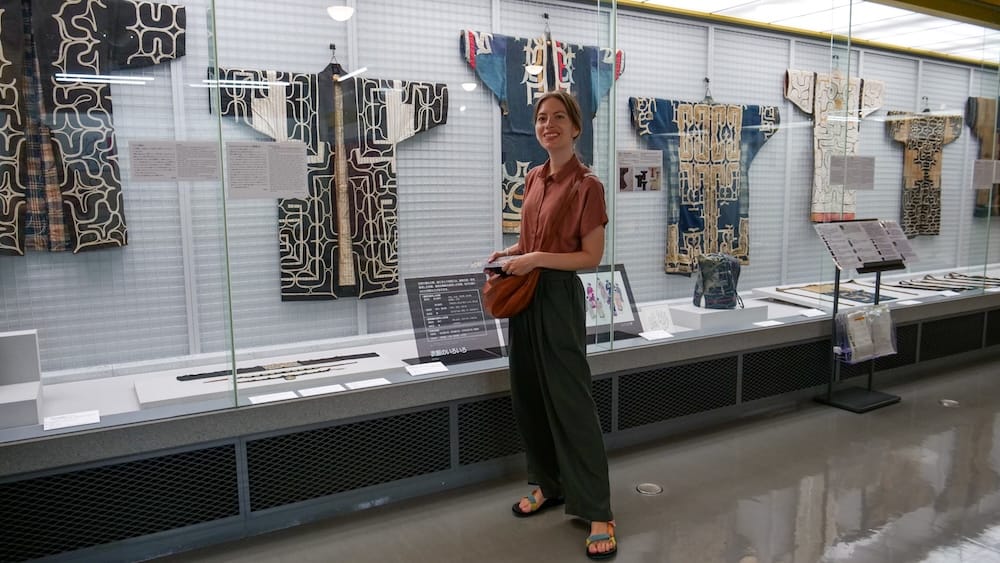
We visited two completely different museums, stopped for a steaming bowl of shio ramen and finished the day feeling like we had discovered another layer of Hakodate rather than merely hiding from the rain. Looking back at the rest of our stay, there were several other places we visited that would also work well in bad weather.
There is an important distinction, though. A place having a roof does not automatically make it a great rainy-day attraction.
The Museum of Northern Peoples barely loses anything when it rains. Goryokaku Tower technically keeps you dry, but if the clouds swallow the view, a big part of the reason for going up the tower disappears with it. Mashu-maru sits somewhere in the middle: there is plenty to explore indoors, but good weather makes the harbour views and exterior portions of the ship better.
That is how I would plan a rainy day in Hakodate. Start with the places whose main appeal survives the weather, use food as part of the day rather than an interruption, and keep the more view-dependent attractions flexible if your schedule allows.
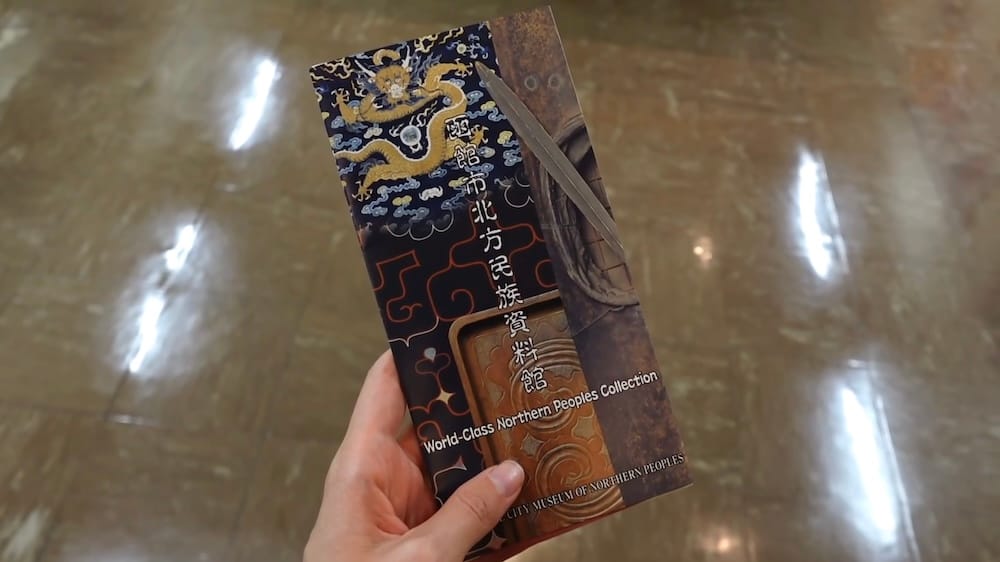
The Museum of Northern Peoples was our first rainy-day win
When we realized we had a genuinely wet day ahead of us, one of the first places we chose was the Hakodate City Museum of Northern Peoples.
I am not someone who automatically hunts down museums in every city. Audrey is generally more naturally interested in them than I am, which means my personal museum scale tends to run from “I am being a supportive husband” to “okay, this is actually really interesting.”
This one landed firmly in the second category.
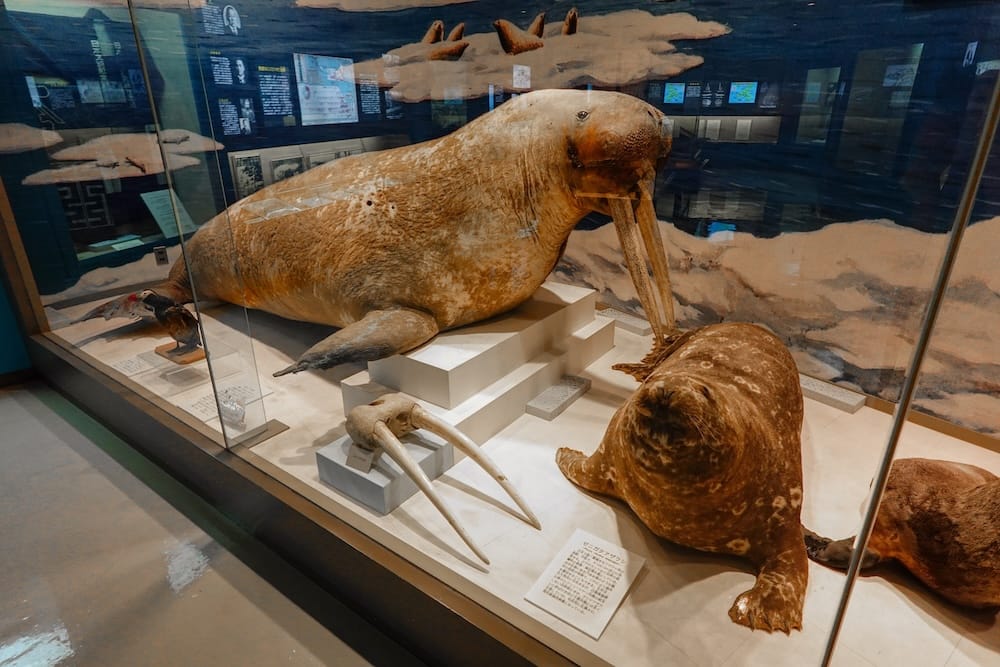
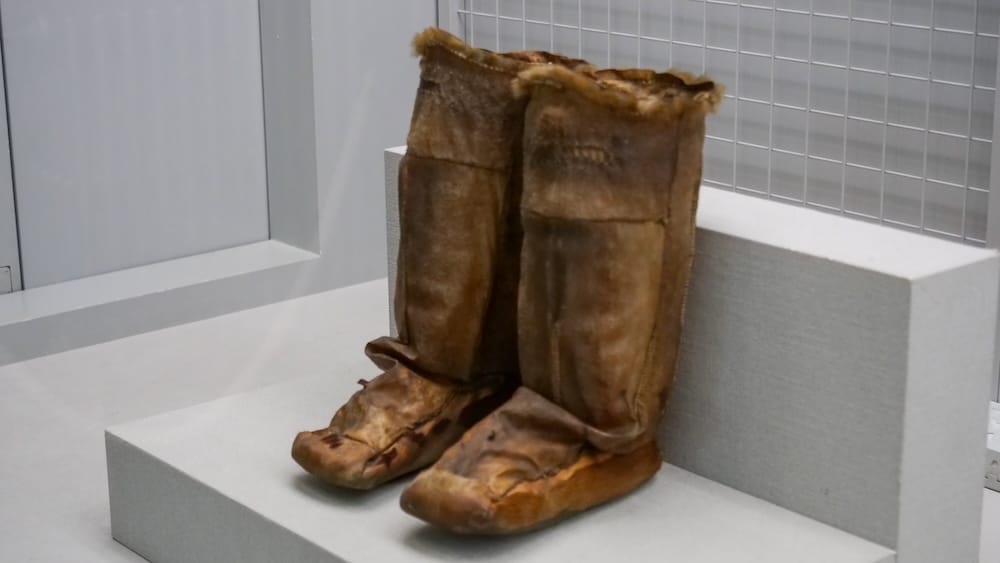
I had expected something focused quite narrowly on Hokkaido, but the exhibits opened up a much broader look at northern cultures and the ways people adapted to extremely cold maritime environments. Clothing, tools, food traditions, hunting and fishing gave the museum enough range that I never felt like I was moving from one display case to another while secretly wondering how long Audrey planned to read every label.
For a rainy day, it also has one enormous practical advantage: it is extremely easy to reach. The museum is about a minute on foot from Suehiro-cho tram stop, so you are not spending fifteen minutes getting soaked before you finally make it inside.
Adult admission is currently ¥300, which makes it an easy addition to a bad-weather day. More importantly, it never felt like somewhere we had settled for because the weather had taken away something better.
I would have been happy we visited on a sunny day too. That is probably the best test of a rainy-day attraction.
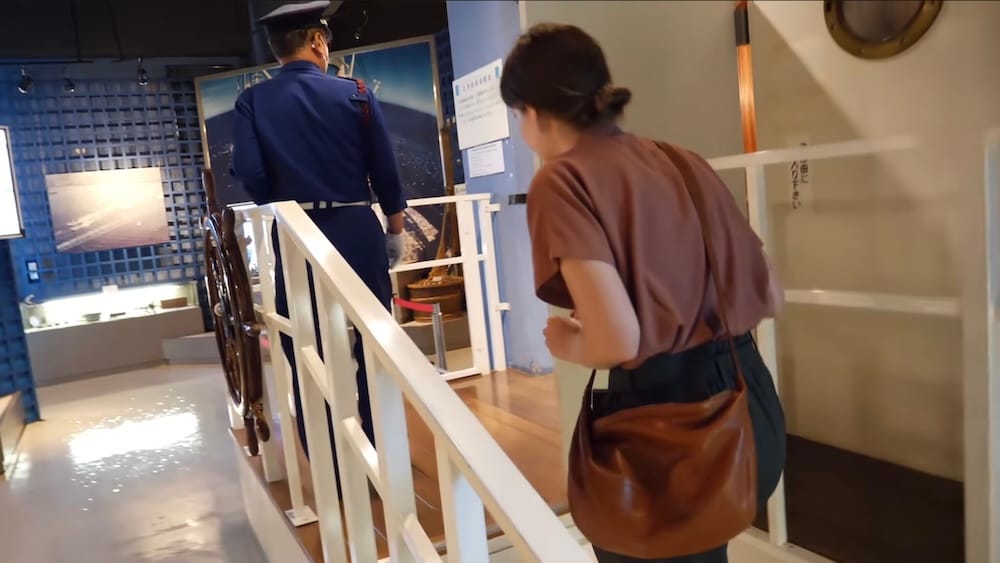
The Hokuyo Museum was nothing like the first museum
The rain kept going, and later we decided to visit another museum. Normally, two museums in one day would be starting to push my personal limits, but in this case it worked because the Hakodate City Hokuyo Museum was completely different from the Museum of Northern Peoples.
The focus here is Hakodate’s relationship with northern-ocean fishing, with exhibits connected to fishing vessels, maritime work and life at sea. It is smaller and quirkier, and then there is the fishing-boat simulator.
Audrey tried it, and a few moments later she was looking noticeably less enthusiastic about life as a fisherwoman. The simulator rocks you around as though you are on a boat in rough seas, and Audrey started feeling dizzy before the experience was over. She was very pleased to discover that the ride lasted only a few minutes.
Three minutes was enough. Three hours would have been a different review entirely.
That silly little simulator is part of why the museum stuck in my mind. It gave the visit some personality and made the experience feel quite different from the cultural exhibits we had seen earlier in the day.
The simulator is still part of the museum, and adult admission is currently just ¥100. The main rainy-day drawback is access: from Goryokaku-koen-mae tram stop, there is roughly a ten-minute walk, which is not a problem in drizzle but feels considerably longer when the rain is coming sideways.
I would not try to pick a winner between these two museums because they answer different interests. If northern cultures, clothing, tools and daily life interest you most, I would lean toward the Museum of Northern Peoples. If fishing history, maritime work and something a little more interactive sound better, the Hokuyo Museum makes more sense. If you have time for both, they do not feel repetitive.
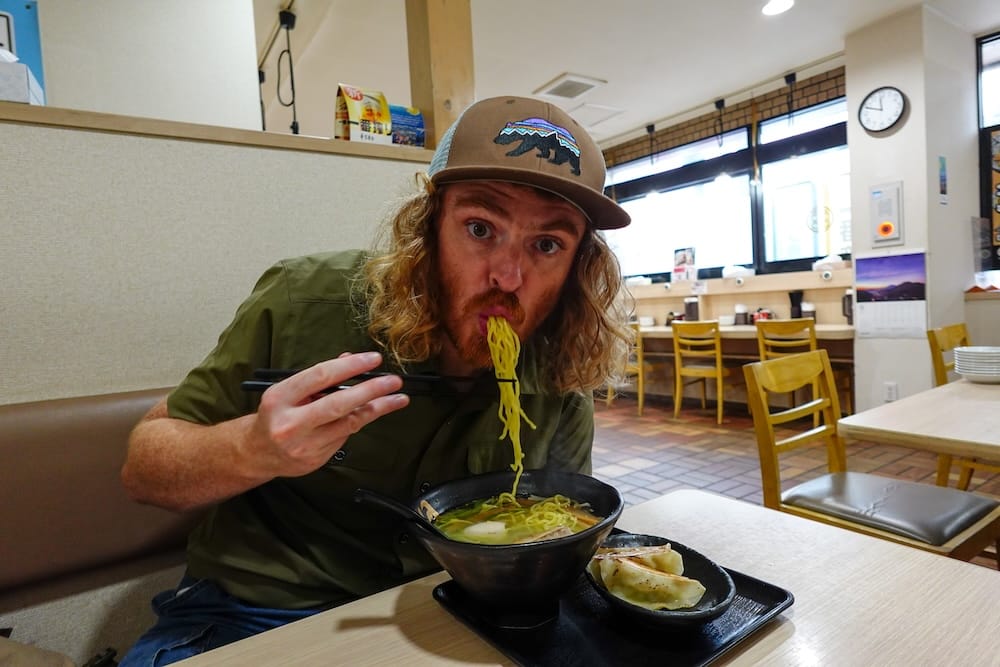
Shio ramen is a perfectly respectable rainy-day activity
There is also a point where my enthusiasm for museums starts losing badly to my enthusiasm for lunch. Fortunately, Hakodate had an excellent answer.
During our rainy day, Audrey and I stopped at Yondaime Ramen for shio ramen. We already wanted to try Hakodate’s salt-based ramen style, but once we were damp and hungry, a hot bowl of noodles suddenly sounded like one of the smartest sightseeing decisions we had made all day.
Ordering it was slightly less impressive. The restaurant used a ticket machine, and while we were trying to work out what to order, we managed to get something different from what we intended. Our plan was to have one salt ramen and one butter-and-corn ramen.
We ended up with two versions of shio ramen. There are worse travel disasters.
Mine came with broiled pork, while Audrey had a lighter clear broth. Both were hot, filling and exactly the sort of meal I wanted while the rain continued outside.
I think food deserves more credit in rainy-day planning. There is no prize for aggressively collecting indoor attractions because you are determined to prove the weather did not affect your trip. If rain has already slowed the day down, taking longer over ramen, sushi, coffee or another warm meal can be part of enjoying Hakodate rather than lost sightseeing time.
Our ramen stop certainly felt that way.
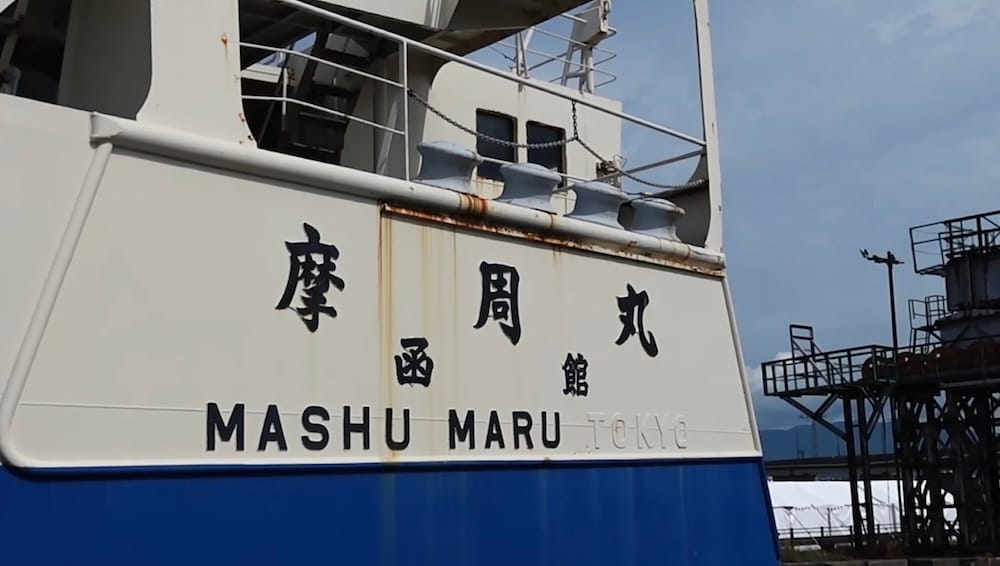
Mashu-maru is still good in rain, but better when you can see outside
Mashu-maru was one of our favourite discoveries in Hakodate, and we had not planned to visit it at all. After the Morning Market on another day, Audrey and I were wandering around the port without much direction when we noticed this enormous ship sitting near the waterfront. Curiosity won, we paid admission and went aboard.
It turned out to be the preserved Seikan railway ferry Mashu-maru, and we ended up loving it.
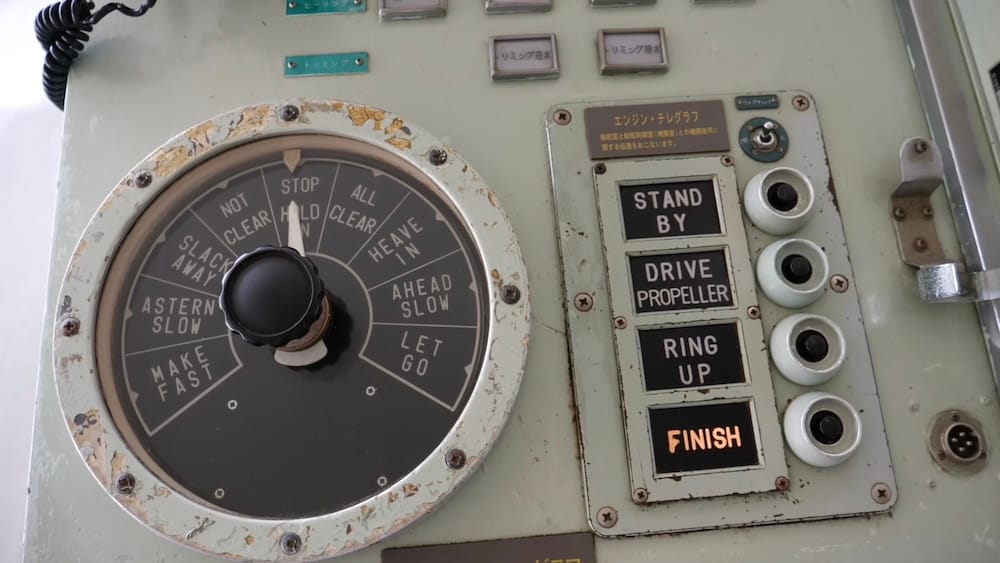
A large part of the experience is indoors. You can explore preserved areas such as the bridge and radio room, look at the old equipment and get a sense of what operating the ferry was actually like. I especially liked that it felt tangible rather than overly polished. There was machinery everywhere, buttons to look at and the feeling that you were exploring a real working vessel rather than a generic maritime exhibit.
That makes Mashu-maru a very legitimate rainy-day choice. It is also only about five minutes on foot from Hakodate Station, which matters when you are trying to minimize soggy transfers. Adult admission is currently ¥500.
But I would still prefer to visit when the weather is at least halfway decent. Part of what we enjoyed was looking back over Hakodate and the harbour from the ship. There are exterior deck areas as well, and those can be affected by strong wind, snow or icy conditions.
So my verdict is fairly simple: if you are interested in the ship itself, go even if it is raining. If the harbour views and outdoor deck experience are a major reason you want to visit, clearer weather gives you more.
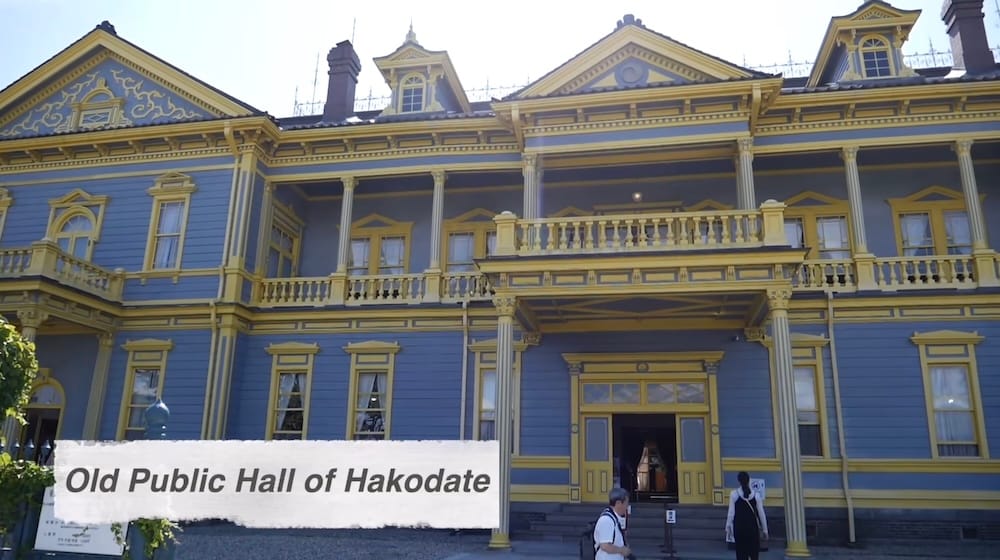
Old Public Hall works well if the rain is not too miserable
Motomachi is one of the parts of Hakodate I most enjoyed walking around, although it is not exactly designed to protect you from weather. The neighbourhood climbs uphill from the waterfront, and much of its charm comes from wandering between churches, historic buildings and viewpoints.
One place where you can get properly indoors is the Old Public Hall of Hakodate Ward.
Audrey and I bought our tickets, removed our shoes, put on the provided slippers and wandered through the rooms of this distinctive blue-and-yellow Western-style building. We skipped the costume experience and simply explored the interior, which was enough for us.
The building itself is a good rain option. Getting there is the part to think about. It is roughly seven minutes on foot from Suehiro-cho tram stop, and because you are in Motomachi, some of that neighbourhood walking involves slopes. Adult admission is currently ¥300.
In light rain, I would happily combine the Old Public Hall with other Motomachi stops. If it were absolutely hammering down, I would probably favour places where the tram deposits me almost at the door.
Rain makes seven minutes feel surprisingly negotiable.
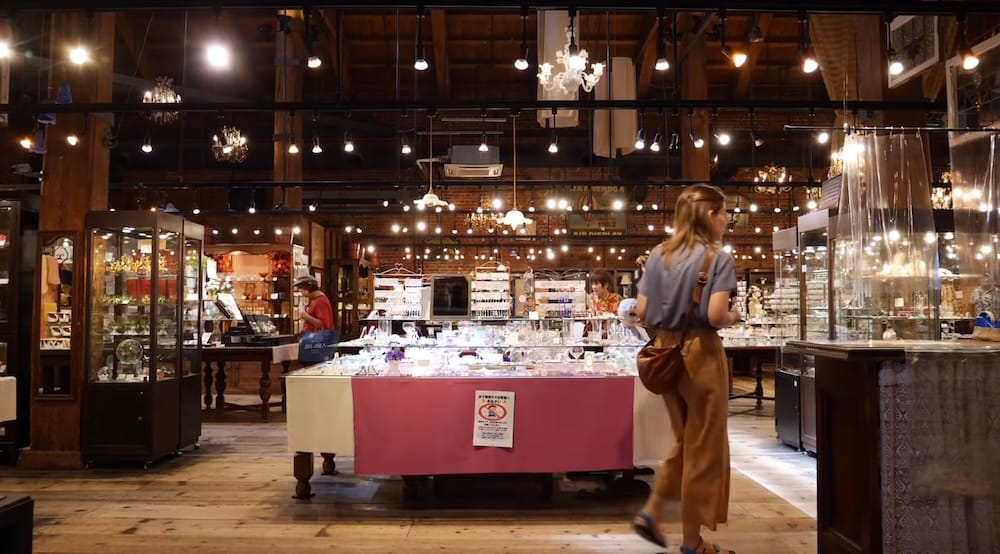
Kanemori Red Brick Warehouses are good for slowing the day down
The Kanemori Red Brick Warehouses are another easy place to spend time when the weather turns. These former waterfront warehouses now contain shops, restaurants and places to stop for snacks. We wandered through them during our stay, and they are particularly useful when you have reached that point in the day where you are happy to browse around, eat something and stop pretending every minute needs to qualify as serious sightseeing.
Entry to the commercial complex is free, and it is about five minutes on foot from Jujigai tram stop.
I would not describe the whole area as completely weather-proof, though. The warehouses are spread across separate buildings, and part of the appeal is being along the waterfront. If the weather is miserable, you can absolutely spend time indoors, but you lose some of the atmosphere you get from wandering outside between the buildings.
This is another place I would happily visit in rain while acknowledging that decent weather makes the broader experience better.
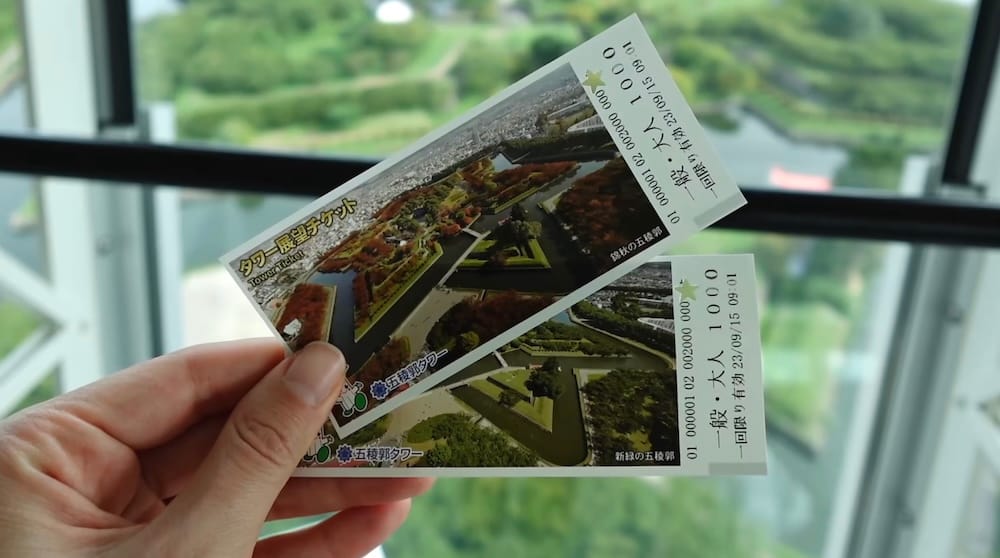
Goryokaku Tower is indoors, but I would check the visibility first
Goryokaku Tower is the clearest example of why “indoors” and “good in bad weather” are not always the same thing. The observation decks are enclosed, there are historical displays, shops and a café, and the glass atrium at ground level works regardless of the weather.
But the reason I would pay to go up Goryokaku Tower is the view.
Audrey and I got extremely lucky on our visit. We had blue skies and excellent visibility, which allowed us to see the full star-shaped fort below, the surrounding city and even the harbour farther away. I had expected the view to be mostly about Goryokaku itself, so seeing how much of Hakodate opened up around it was one of the pleasant surprises.
Heavy cloud could change that experience dramatically. Current adult admission is ¥1,200, considerably more than the museums, and you also have around thirteen minutes of walking from Goryokaku-koen-mae tram stop.
If it is lightly raining but you can still see across the city, I would consider going. If Hakodate has disappeared into a grey wall, I would save the tower for another day if you have that flexibility. Being dry at the top is not much consolation if the thing you paid to see has vanished.
Which Hakodate indoor attractions hold up best in rain?
This is how I would separate the places we visited. The important question is not just whether you can get indoors, but how much of the actual experience remains when the weather deteriorates.
| Indoor attraction | How rain affects it | Outdoor approach | Current adult admission | My rainy-day take |
|---|---|---|---|---|
| Hakodate City Museum of Northern Peoples | Very little | ~1 min from tram | ¥300 | One of the strongest choices |
| Hakodate City Hokuyo Museum | Very little once inside | ~10 min from tram | ¥100 | Excellent, with a wetter approach |
| Mashu-maru | Some loss of deck/view value | ~5 min from station | ¥500 | Very worthwhile, better with visibility |
| Old Public Hall | Mostly unaffected indoors | ~7 min from tram | ¥300 | Strong Motomachi option |
| Kanemori Red Brick Warehouses | Waterfront atmosphere reduced | ~5 min from tram | Free entry | Good for shelter, food and browsing |
| Goryokaku Tower | View can be heavily affected | ~13 min from tram | ¥1,200 | Check visibility first |
If it were raining hard, the Museum of Northern Peoples would probably be my easiest choice simply because the experience holds up so well and the tram-to-door walk is almost nothing. The Hokuyo Museum is equally strong once you get inside, but you have to earn it with a longer walk.
Goryokaku Tower is the opposite end of the spectrum. The building protects you from the rain; the weather does not necessarily protect the view.
A few indoor Hakodate options we did not visit
There are several other indoor places that can fill gaps in a rainy day, although Audrey and I did not personally visit them.
One of the easiest is Hakodate Miraikan, also known as Future Center Hakodate, inside Kiralis close to Hakodate Station. It has interactive digital exhibits and is only a few minutes on foot from the station, so it makes particular sense when minimizing time outside is the priority.
In the same building, Hakodate Kids Plaza is an all-weather indoor play space specifically for families with children. Our daughter was not travelling with us in Hakodate, so this was not part of our trip, but I can see the appeal for parents staring out the hotel window at a full day of rain. Adults cannot enter on their own, so this one is genuinely family-specific.
Over near Goryokaku, the Hokkaido Hakodate Museum of Art gives you another indoor option if art interests you more than fishing or cultural-history museums.
I would not cross Hakodate in a downpour simply to collect these places. Their usefulness depends heavily on where you already are. Future Center makes much more sense if you are near Hakodate Station; the art museum is more useful if you are already spending time around Goryokaku.
That becomes increasingly important once it starts raining.
Rain makes Hakodate’s spread-out layout much more noticeable
Hakodate feels extremely walkable when you are exploring one area at a time, but the city is more spread out than it initially appears. The station and waterfront sit in one part of the sightseeing map, Motomachi climbs away from there, and Goryokaku is farther across the city. Our accommodation was also outside the main sightseeing areas, so Audrey and I became very familiar with the tram during our stay.
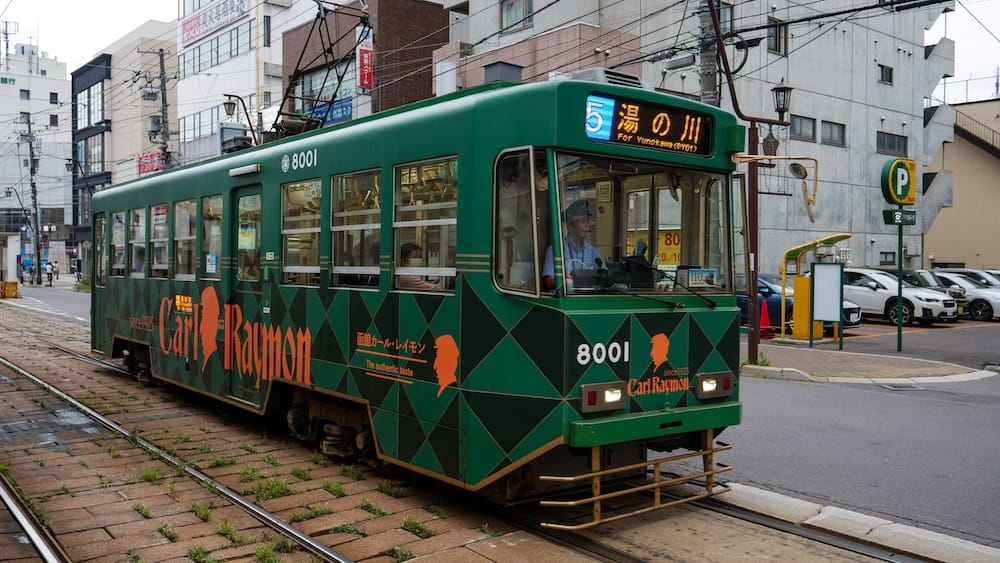
On a rainy day, I would lean on it even more. Routes 2 and 5 cover much of the useful central sightseeing corridor, linking the station area with the Bay Area, Motomachi and onward toward other parts of the city. The mistake would be trying to create some heroic cross-Hakodate indoor-attraction marathon simply because technically everything on your list has a roof.
If the rain is heavy, I would cluster things. Around Hakodate Station and the waterfront, Mashu-maru, food stops and the Kanemori area can fill a surprisingly large chunk of the day without enormous transfers. Around Suehiro-cho, the Museum of Northern Peoples pairs naturally with the Old Public Hall if you are willing to deal with a little rain and Motomachi’s slopes. Around Goryokaku, the Hokuyo Museum, Goryokaku Tower and the Museum of Art give you several options, but the walking distances from the tram are longer.
There is also a bookable option for travellers who would rather reduce the number of wet transfers and let somebody else connect the city. A current private Hakodate tour with a licensed guide and vehicle lists pickup from the Hakodate port or the main city area and allows a customizable selection of up to four stops, with options including the Museum of Northern Peoples and Kanemori Red Brick Warehouse. We did not take this tour, so I would treat it as an alternative for travellers who value a private vehicle and guide rather than as a personal recommendation from our trip.
This is the part of rainy-day planning that often gets ignored. You can spend six hours choosing indoor attractions and still get soaked moving between all of them.
Where you stay can make a rainy Hakodate day easier
Our own accommodation was away from the main sightseeing areas, which did not bother us much in decent weather but became more noticeable once we were trying to minimize unnecessary walking in the rain. I would not recommend our unnamed accommodation simply because we happened to stay there, but I would pay much closer attention to location on a future Hakodate trip.
If you want the easiest access to Hakodate Station, Mashu-maru, the Morning Market and the waterfront side of the city, you can compare hotels near Hakodate Station. Travellers who want to spend more time around Motomachi and the western historic district can instead compare accommodation near the Old Public Hall and Motomachi. If Goryokaku Tower, the Hokuyo Museum and that side of the city matter more to your plans, you can see hotels around Goryokaku.
I would choose the area that matches the attractions you are most likely to visit rather than trying to identify one universally perfect base. Hakodate’s tram makes the city manageable, but when the weather is foul, removing even one unnecessary cross-city journey starts to feel like a small luxury.
What I would actually do if it rained again
If we had another rainy day in Hakodate, I would not start tearing apart the itinerary. I would lower the ambition.
That was essentially what worked for us the first time. We stopped trying to have an outdoor-heavy sightseeing day, leaned into museums, took a longer break over hot ramen and discovered that Hakodate had far more indoor depth than I had expected.
I would prioritize the places whose main value survives bad weather: the Museum of Northern Peoples and Hokuyo Museum first, then historic interiors or Mashu-maru depending on where I happened to be. I would use the warehouses as an easy place to browse, eat or wait out a shower, and I would keep Goryokaku Tower flexible until I knew whether there was actually a view waiting at the top.
Most of all, I would use the tram rather than trying to prove anything about my waterproof shoes.
Rain made our day in Hakodate less ambitious, but it did not make it worse. It simply changed what kind of day we had.
Frequently Asked Questions
What are the best indoor things to do in Hakodate on a rainy day?
The Museum of Northern Peoples and the Hakodate City Hokuyo Museum were our strongest genuinely weather-proof choices. Mashu-maru, the Old Public Hall and the Kanemori Red Brick Warehouses also work well, while Goryokaku Tower depends much more on visibility.
Which Hakodate museum is better for a rainy day?
I would not force a winner between the Museum of Northern Peoples and the Hokuyo Museum because they are so different. The first focuses on northern cultures and daily life, while the second centres on fishing and maritime history and includes a fishing-boat simulator.
Is Goryokaku Tower worth visiting when it rains?
It can be, but I would check visibility first. The observation decks are indoors, yet the view is the main reason I would pay to go up. If low cloud hides Hakodate and the star-shaped fort, I would save the tower for clearer weather if possible.
Is Mashu-maru a good rainy-day attraction in Hakodate?
Yes. Much of Mashu-maru can be explored indoors, including preserved ship spaces and equipment, so it still works well in rain. I would prefer clearer weather if harbour views and the exterior deck experience are important to you.
How should I get around Hakodate when it rains?
We relied heavily on Hakodate’s trams, and I would use them even more on a wet day. Hakodate is walkable within individual areas but spread out overall, so grouping attractions around the station and waterfront, Motomachi or Goryokaku can reduce unnecessary wet transfers.
Where is the most convenient area to stay for rainy-day sightseeing in Hakodate?
There is no single perfect base for everyone. Staying near Hakodate Station is convenient for Mashu-maru and the waterfront, Motomachi suits the western historic district, and Goryokaku makes more sense if that cluster of attractions matters most to your trip.
This guide is also available in Spanish. [Leé la versión en castellano: Hakodate en un día de lluvia: mejores cosas para hacer bajo techo]
This article contains affiliate links. If you book through one of these links, I may earn a commission at no extra cost to you.