
For three days in Hakodate’s centre, a rental car for two people comes to roughly ¥28,000, against ¥4,800 in tram day passes. The extra money buys you a permit to carry, parking to pay for, tram tracks down the middle of the street, and a mountain road that’s closed to you after dark. The one trip that really does call for a car isn’t the one most people would guess.
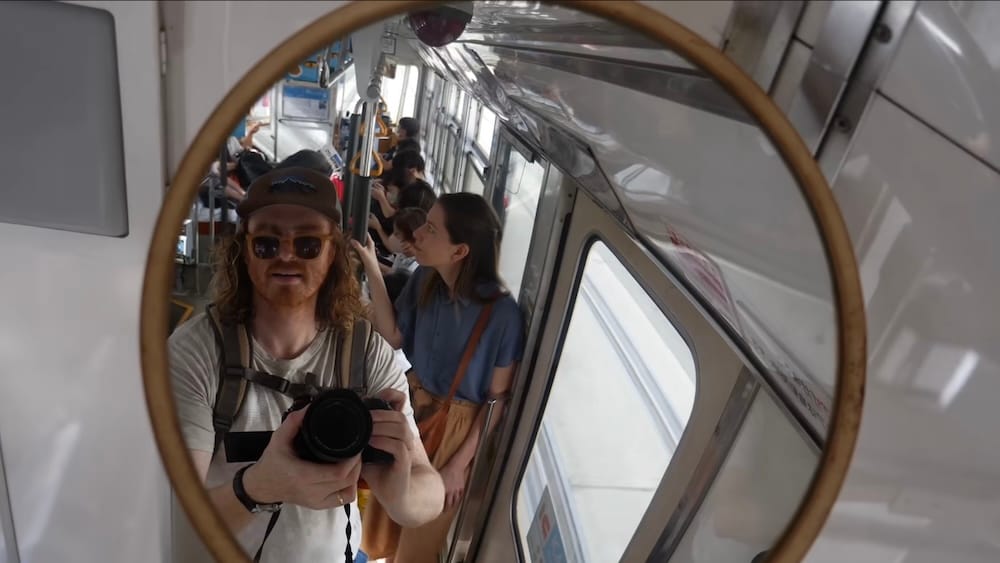
Audrey and I stayed in a hotel away from the centre with tram lines 2 and 5 running past it, and most days we rode the tram to reach an attraction and then explored on foot. We never rented a car, and truth be told we never seriously considered one. So the tram side of this comparison is something we lived, and the car side is how the system works: the licence rules, the rates, the parking. I’m keeping those two apart on purpose. If you want the broader picture that includes buses and walking, I covered it in How to Get Around Hakodate.
Does Your Trip Leave the Tram Network?
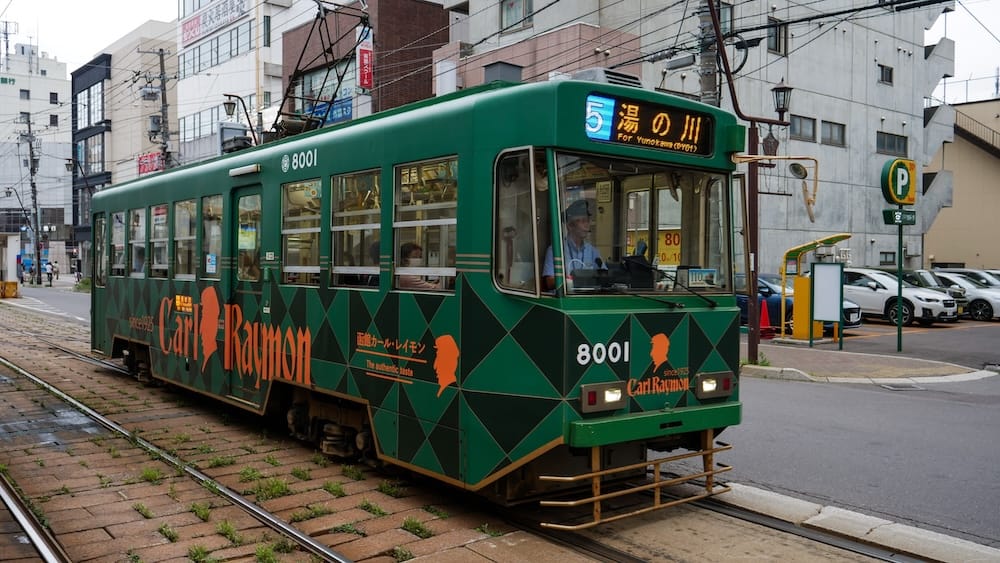
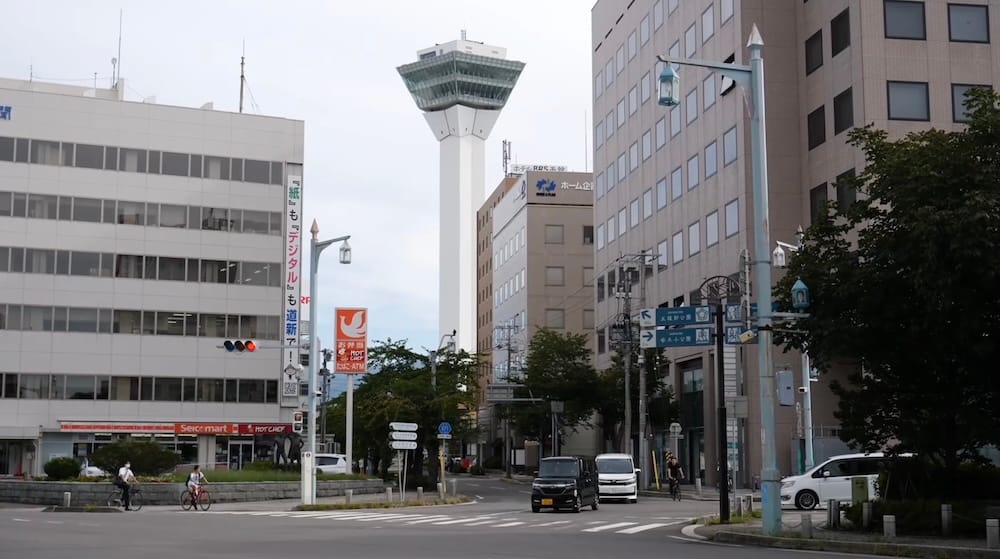
Inside the city, the tram and a car barely compete. The two routes share a trunk from Yunokawa through Goryokaku-koen-mae and Hakodate Station to Jujigai, then split, with Route 2 heading for Yachigashira and Route 5 for the dock. That covers the market, the waterfront, Motomachi, the Ropeway base and Goryokaku, which was everything we did. Hakodate is very pedestrian-friendly and very spread out, and if you’re staying away from the centre the way we were, the tram is one of the best ways to get around it. What decides whether you’d want a car is whether your plans leave that line, and it’s tempting to assume that anything beyond the line needs one. Onuma is the obvious test of that assumption, and it fails it.
What the Tram Costs
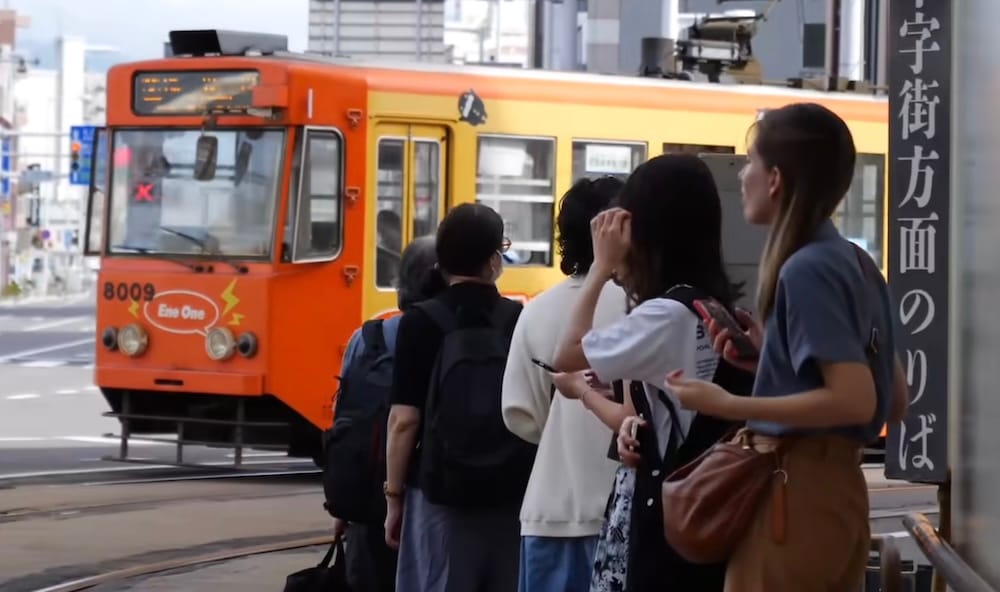
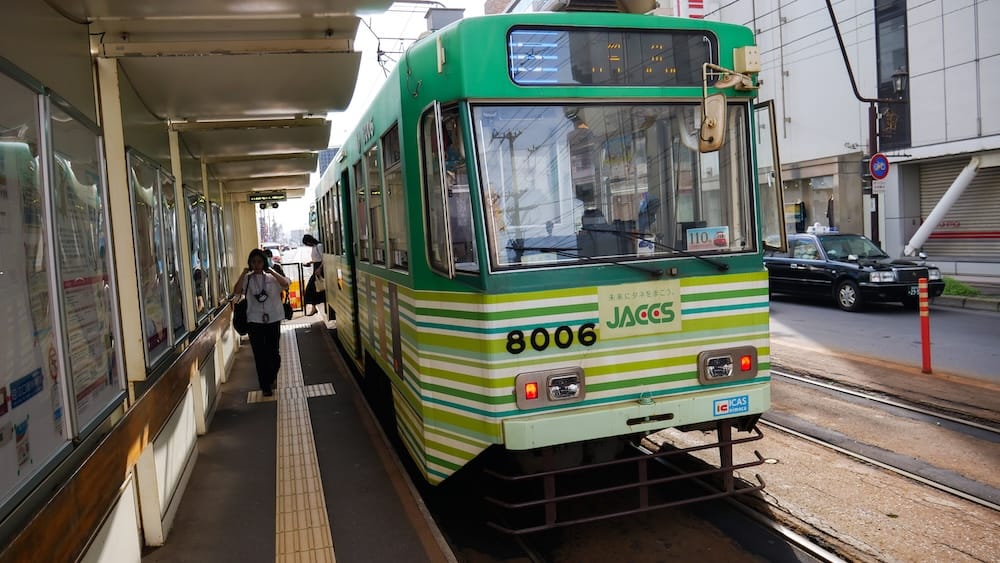
An adult ride is ¥250 to ¥300 depending on distance, a range that took effect in December 2025, and a one-day pass is ¥800. It was affordable, it kept coming, and it saved our legs for the hills. On the weekday timetable that took effect in May 2026, trams run about every eight minutes through the middle of the day on the shared stretch and about every sixteen minutes on each route beyond Jujigai. Weekends run on a separate timetable, so if you’re there on a Saturday or Sunday, check the official timetable. For three city days, a pass each day comes to ¥2,400 per person, and that’s the number a car has to beat. I worked through the leg-by-leg version of this, walking against riding, in Hakodate Walking vs Tram.
What a Car Adds Inside the City
The Permit and the Rate
Japan accepts only an International Driving Permit issued under the 1949 Geneva Convention, carried with your home licence, and it lets you drive for up to a year from the day you enter the country. A permit issued under the 1968 Vienna Convention isn’t valid, and drivers from a handful of countries use an official Japanese translation of their licence instead, so work out which category you’re in before you fly, because the permit has to be issued at home.
Base rates for the cheapest classes run about ¥6,450 to ¥6,600 for up to 12 hours and about ¥7,600 to ¥8,600 for up to 24 hours, with one major operator starting at ¥9,790. Those are “from” prices, Hokkaido’s peak season pushes them higher, and extras like a damage waiver, an ETC card or a child seat add anywhere from a few hundred yen to about ¥1,100 each. The 12-hour rate is the number that matters later.
Driving and Parking Among the Trams
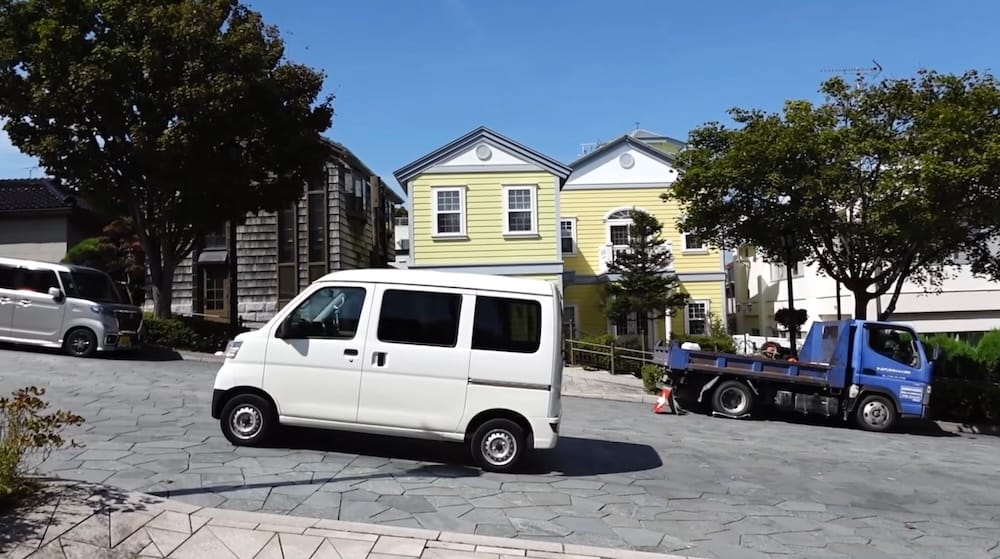
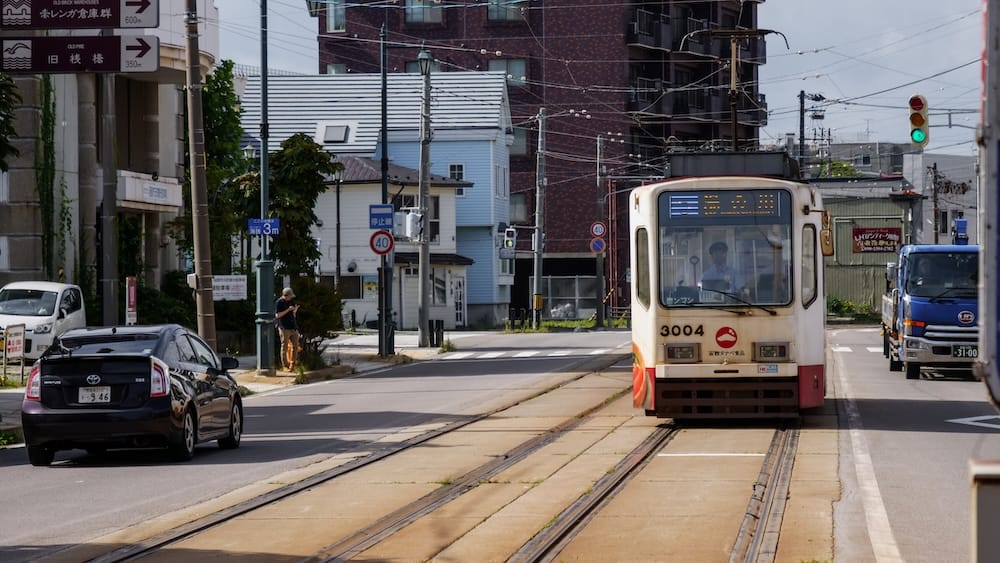
Japan drives on the left, and Hakodate’s trams run in the road itself. Cars generally aren’t allowed on the track area except where a sign permits it or to cross for a turn, and under the Road Traffic Act you have to stop behind a tram that’s letting passengers on and off, unless the stop has a safety island, in which case you slow down and pass. None of it is hard, but it’s a fair amount to absorb on the morning you’re also relearning which way to look.
Parking is where the arithmetic bites. The city’s Motomachi lot has 93 spaces, open-air ones around the clock and a multi-storey with only its top floor available, and no daily maximum. It’s listed at ¥200 for the first hour and ¥100 for each half hour after that, though an older city page showed higher rates, so trust the sign over any figure I give you. Four hours there comes to roughly ¥800 to ¥1,200. The lot at the Ropeway base has 47 spaces at ¥300 for the first hour and ¥150 per half hour, and it fills at weekends, holidays and summer holidays, with queues to get in. Goryokaku has a 97-space city lot listed at ¥200 for the first hour, on an older figure, and a private lot near Suehirocho is listed at ¥220 per half hour with a 12-hour cap of ¥800. As I work it out, a car saves ten to fifteen minutes on a typical city leg, and parking eats most of that.
The Mountain Road Won’t Take You Up at Night
In 2026, private and rental cars are kept off the summit road in the evening, from 17:00 to 22:00 between April 17 and September 30 and from 16:00 to 21:00 between October 1 and November 8. A car that goes up earlier has to come down before the restriction starts, and the summit parking lot can’t be used during it. From about November 9 the road is planned to close to all vehicles until mid-April. So the signature evening trip up Mt. Hakodate is one your rental can’t make. The Ropeway is also out of service for maintenance from October 20 to November 8 this year, and the Mt. Hakodate bus, about half an hour from the station at ¥700 one way, isn’t covered by the combined tram-and-bus pass.
Where a Car Actually Earns Its Rental
Onuma is a train trip. From Hakodate Station the local train takes 34 to 47 minutes and costs ¥680 one way, the limited express takes 25 to 30 minutes for ¥1,840 in total, and the park is a five-minute walk from Onuma-koen Station and free to enter. Driving takes 35 to 40 minutes, so a car buys you nothing there. Trappistine has an hourly bus from the station through the morning and into the early afternoon, about 47 minutes and ¥500, and Yunokawa is about half an hour on the tram.
The Jomon sites are different. Kakinoshima, the Hakodate Jomon Culture Center beside it and Ofune, about ten minutes’ drive on, are World Heritage sites up the coast at Minamikayabe, and they take about an hour to reach by car. The bus, route 99 from stop 6 at the station, takes about 90 minutes to the Kakinoshima stop and about 100 to Ofune, at ¥1,500 and ¥1,600 each way per adult, and then you walk 5 to 10 minutes because the buses don’t reach the entrances. It’s a local route bus, not a sightseeing shuttle, so check the current timetable before you build a day around it. The Culture Center is closed on Mondays and on the last Friday of each month, and it has 33 free parking spaces.
Here the 12-hour rate earns its mention. For two adults the bus costs about ¥6,000 to ¥6,400 for the round trip, while a 12-hour base rental is about ¥6,600 plus fuel and any extras. The money is close, and the car saves you roughly an hour to an hour and a half on the road and frees you from the timetable. Audrey and I didn’t go to any of these places, so I can’t tell you what the drive is like, only what it saves.
If you’ve decided that’s the day for a car, you can compare current rental options in Hakodate by pickup point and dates before you commit. And if you don’t hold the permit, or simply don’t fancy driving on the left, the same day is sold as a private half-day tour with pickup, and its listed stops include Ofune, the Culture Center and the geyser park at Shikabe. It’s priced per group of up to three, listed from about US$410 at the time of writing, which is several times the cost of the rental. The driver speaks Japanese only, with translation apps for everything else, so it’s a way to skip the paperwork and not a way to get a guide. Tolls and parking are included and entrance fees aren’t, and I haven’t taken it, so you can see current departures and pickup details for the Heritage Trail tour and judge it for yourself.
Pricing It by Itinerary
Here’s how three itineraries compare for two adults on a three-day trip, assuming base rental rates, about four hours of municipal parking a day, and no fuel, tolls or extras.
| Itinerary | Tram, rail or bus | Car | My call |
|---|---|---|---|
| City only | ¥2,400 each in day passes, ¥4,800 for two | About ¥28,000 (3 days at about ¥8,500, plus parking) | Tram |
| City plus a day at Onuma by local train | ¥2,960 each (two day passes plus the ¥1,360 return), ¥5,920 for two | Still about ¥28,000 | Tram and train |
| City plus a Jomon day | City day passes plus ¥6,000–6,400 for the bus | City days on the tram, plus one 12-hour rental at about ¥6,600 plus fuel | A one-day rental, or the bus if you can live with the timetable |
The limited express to Onuma is ¥3,680 return each, ¥7,360 for two, which runs close to a day’s rental, so it’s the local train that makes the case. The Jomon row moves with the size of your party. With three or four people the rental splits and the bus fares don’t, and the car comes in under the bus’s ¥3,000 or more per person for the round trip.
When Winter or a Bigger Party Changes the Answer
Audrey and I only saw Hakodate in warm weather, so winter is beyond what I can tell you from experience. The first snow arrives around November and can linger into April. One major operator fits snow tyres as standard on its Hokkaido rentals and charges ¥1,650 per 24 hours extra for four-wheel drive, and the mountain road, as I mentioned, closes to all vehicles for the winter. The tram and the train to Onuma don’t depend on that road, which tilts winter further toward public transport. A bigger party tilts the other way, but only for the Jomon day.
Where I’d Draw the Line
For a first visit centred on the city, skip the car. The tram costs a fraction of it, reaches everything we wanted, and spares you the licence rules, the parking and the evening restriction. If your plans stay on the tram line or stretch to Onuma by train, the answer doesn’t change. A car earns its place on one kind of day, the Jomon trip, and there I’d rent for a single day, take the 12-hour rate if it fits, and hand the keys back before dinner. If that day is on your list, you can price a one-day rental for your dates and see how it stacks up against the bus. Audrey and I never had that day in Hakodate, so that’s the plan I’d make from the numbers, not something we tried.
Frequently Asked Questions
Is it worth renting a car in Hakodate?
For a first visit centred on the city, I’d skip it. The tram costs a fraction of a car, reaches everything we wanted, and spares you the licence rules, the parking and the evening restriction on the mountain road.
How much does a rental car cost compared with the tram for three days?
For two adults, three city days come to about ¥4,800 in tram day passes (¥800 per person per day), against roughly ¥28,000 for a car, based on about ¥8,500 a day at base rates plus around four hours of parking daily. That leaves out fuel, tolls and extras.
Do I need a special licence to drive in Japan?
Yes. Japan accepts only an International Driving Permit issued under the 1949 Geneva Convention, carried with your home licence, and it allows driving for up to a year from the day you enter the country. A 1968 Vienna Convention permit isn’t valid, and drivers from a handful of countries use an official Japanese translation instead, so check your category and arrange the permit before you fly.
Can a rental car drive up Mt. Hakodate at night?
No. In 2026, private and rental cars are kept off the summit road in the evening, from 17:00 to 22:00 between April 17 and September 30 and from 16:00 to 21:00 between October 1 and November 8. The road is planned to close to all vehicles from about November 9 until mid-April.
Do I need a car to visit Onuma from Hakodate?
Onuma is a train trip. The local train takes 34 to 47 minutes and costs ¥680 one way, the limited express takes 25 to 30 minutes for ¥1,840 in total, and the park is a five-minute walk from Onuma-koen Station and free to enter.
When does a rental car make sense in Hakodate?
On a day at the Jomon sites. They take about an hour to reach by car and about 90 to 100 minutes by the route 99 bus at ¥1,500 to ¥1,600 each way. For two adults, a 12-hour base rental at about ¥6,600 plus fuel comes close to the bus fares and saves time and the timetable, and with three or four people the car costs less per person.
How often does the Hakodate tram run?
On the weekday timetable that took effect in May 2026, trams run about every eight minutes through the middle of the day on the shared stretch and about every sixteen minutes on each route beyond Jujigai. Weekends use a separate timetable, so check it if you’re travelling on a Saturday or Sunday.
What are the rules for driving among Hakodate’s trams?
Cars generally can’t drive on the track area except where a sign allows it or to cross for a turn, and you have to stop behind a tram that’s letting passengers on and off, unless the stop has a safety island, in which case you slow down and pass. Japan also drives on the left.
This article is also available in Spanish. [Leé la versión en castellano: Tranvía de Hakodate o auto de alquiler: ¿qué conviene más?]
This article contains affiliate links. If you book through one of these links, I may earn a commission at no extra cost to you.