
We didn’t walk into Tanukikoji for the history or for a shopping list. We walked in because Sapporo was having one of those hot, sticky September spells nobody packs for in Hokkaido, and we needed a roof and some air conditioning more than we needed another sight. Tanukikoji had both, along with the better part of a kilometre of shops to drift through while we cooled off. Within a few minutes we’d agreed on its best feature, and it was the air conditioning. That’s not a line you’ll find on a tourism poster, but it says a lot about how most travellers actually end up using this place.

Tanukikoji is on nearly every list of things to do in Sapporo. What those lists rarely tell you is what it’s like once you’re inside, which end to start from, what it’s genuinely good for buying, and whether it deserves more than a passing stroll. That’s what I want to sort out here. We were there to browse and cool down, not on a shopping mission, so where I talk about what to buy, I’m describing what the street does well rather than reviewing a bag of purchases.
My short answer: give Tanukikoji 30 to 90 minutes as a covered browse between Odori and Susukino, and lean on it hardest when the weather is working against you. Don’t cross town for it unless you’ve got a shopping list it suits.

What Tanukikoji Actually Is
Tanukikoji is a covered pedestrian shopping street running east to west through central Sapporo. Odori Park sits to the north and Susukino to the south. It’s about 900 metres long with around 200 shops, and a single roof covers the whole thing from West 1-chome to West 7-chome, intersections included.
When we described it on camera that day, we called it a covered pedestrian street several blocks long, shops packed in on either side, and simply massive. Later we settled on “a maze of stores,” which is closer to how it feels once you start ducking into buildings and riding escalators up through them. The street itself is straight. The shops are where you get lost.
It’s also old, by Hokkaido standards. Once the Kaitakushi, the government commission charged with developing Hokkaido, set up in Sapporo, merchants and eateries began gathering around what’s now 2-chome and 3-chome. By around 1873 the area was known as Tanukikoji, which makes it one of the island’s oldest shopping streets at roughly 150 years. The roof came much later: the first arcade went up around the turn of the 1960s, and the current one dates to the early 1980s.
Tanuki is the Japanese raccoon dog and koji means a lane, but nobody is entirely sure how the street got the name. The usual explanation is that raccoon dogs once lived around here. The more colourful one involves shop women who beckoned customers in with a certain tanuki-like charm. Either way, the street has fully committed to the mascot. There’s even a small tanuki shrine tucked partway along the arcade.
How the Blocks Differ
Tanukikoji isn’t uniform from one end to the other, and knowing roughly what each stretch is like helps you decide where to start.
| Block | What it’s like | Good for |
|---|---|---|
| 1-chome to 3-chome | The oldest stretch, with long-established merchants, craft shops and souvenir shops near where the street began | Older shops and Hokkaido souvenirs |
| 4-chome and 5-chome | The busy middle, with chains, trend shops, fast food, karaoke and the big discount stores; the underground mall from Odori Station surfaces at 4-chome, and the tram runs past | One-stop shopping and arriving from the subway |
| 6-chome and 7-chome | More local-leaning, with small food alleys tucked off the main street | Casual eating and a slightly less touristy feel |
The roof stops after 7-chome. The block beyond it, 8-chome, still gets called Tanukikoji, but it’s really a separate, uncovered street. Renovated old buildings there house cafés and select shops, and it’s worth a look on a dry day. It just won’t do anything for you in a downpour.

What to Expect When You Walk In
Inside, Tanukikoji feels less like a polished mall and more like an old high street that someone put a lid on. Souvenir shops sit next to drugstores, game centres, chain restaurants, izakaya and a supermarket that still serves people who actually live nearby. It’s busy and a bit noisy, and it’s very easy to wander for longer than you meant to.
The claw machines. The game arcades got us first. They’re stocked with stuffed toys and other prizes you can try to win by steering a claw, and our verdict at the time still stands: they’re never rigged in your favour. The prize always seems to slip out of the talons at the last second. If you’re travelling with kids, or you’re simply stubborn, set a budget before you start feeding coins and lower your expectations accordingly.
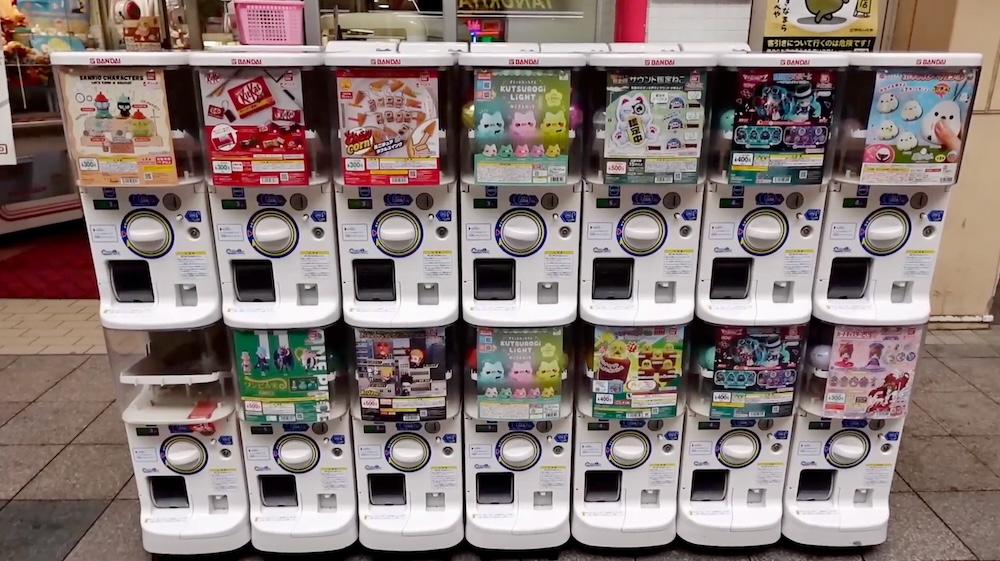
If you’d like someone to decode the whole culture for you, there’s a private arcade-and-shopping outing with a local guide. It spends about an hour and a half on crane games and the endless rows of capsule-toy machines, with a drugstore and supermarket run thrown in. We haven’t done it, and it won’t make the claw any kinder, but at least you’ll understand how you lost.
The “everything” stores. The real rabbit holes are the big multi-floor discount stores. We disappeared into one, riding escalators up and down through it. At one point Audrey turned to me and asked what you could actually find in a place like that. The only honest answer I had was “literally everything you’ve ever imagined or not imagined.” She worked her way past makeup, food and snacks. At some point I was asked to choose between a cat and a dog. I said cat without hesitating, and Audrey leaned towards the dog. Then we headed up to the fourth floor to look at the cameras, because of course we did.
The biggest store on the street. That’s MEGA Don Quijote in 4-chome. It’s currently open 24 hours, with tens of thousands of items across food, everyday goods, medicine, clothing, electronics and brand-name products. It connects straight to the underground mall, so you can walk in from beneath the street without ever seeing the sky. A second, smaller Don Quijote has since opened nearby in 3-chome.
Food, briefly. You won’t go hungry here, but food isn’t the main reason I’d send you. The little food alleys in 6-chome and 7-chome are the most local-feeling places to grab something. In 2-chome there’s Tanukikoji Lion, which opened in 1914 as a beer hall and is considered the oldest in Hokkaido. It still pours draft Sapporo, which makes a tidy bookend if you’ve already done the Sapporo Beer Museum. And if one historic beer hall leaves you curious about the rest of the city’s brewing, a guided evening craft-beer crawl that wraps up in Tanukikoji works through ten local brews, starting near the TV Tower.

What to Buy at Tanukikoji
Tanukikoji’s real strength as a shopping street is convenience. You’ve got several genuinely useful categories within a few minutes’ walk of each other, and all of it is under a roof.
Souvenirs and snacks. These are the obvious place to start. The older blocks have long-running souvenir shops, and Hokkaido snacks and sweets turn up all along the arcade, including on the shelves of the discount stores. If you’re the person who always ends up buying gifts on the last day, this is about as efficient as Sapporo gets.
Drugstores. They’re scattered along the whole length, and between them and the discount stores you can compare skincare, cosmetics and everyday medicine without trekking across the city.
Cameras and electronics. A compact Bic Camera branch in 5-chome sells cameras, electronics, travel gear and, slightly randomly, sweets, and it currently stays open until 23:00. The big discount stores carry electronics too. Given how quickly the camera floor pulled us in, I suspect plenty of you will end up there as well.
Everyday shopping. The supermarket and convenience stores are handy if you’re staying centrally and want breakfast supplies or cheap drinks for the hotel room.
If you’ve got a real list and no Japanese, the hard part isn’t finding the shops. It’s reading labels, asking about sizes and finding a substitute when the thing you wanted is sold out. One currently listed private option is a guided shopping hunt through central Sapporo that finishes in Tanukikoji. It runs for about two and a half hours, starting at Sapporo Station and working through the underground shopping streets and Odori before ending with roughly half an hour in the arcade. The guide helps with communication and tracking down specific items. We haven’t taken it, so treat it as an option for the list-makers rather than something I’ve tested.

The New Tax-Refund Rules for Visitors
If you’re planning a big souvenir haul, this is the part that matters most, and plenty of shop signs and older guides haven’t caught up with it yet. Japan has recently switched its tax-free shopping system for visitors to a refund method. You no longer get the tax knocked off at the till. You pay the full tax-inclusive price at a tax-free shop, then claim the 10% consumption tax back when you leave the country.
The claim happens at your final departure airport or seaport within 90 days of purchase. You scan your passport at a tax-free terminal before you check your bags, and if the terminal flags you, you show your purchases to customs. At New Chitose and other major airports, you can start the process online through Visit Japan Web.
The rules that catch people out:
- Minimum spend: It’s ¥5,000 before tax per shop, per day.
- Goods must leave Japan with you, and they have to be with you when you go through the process. Once your bags are checked, it’s too late.
- Don’t consume what you’re claiming on: Snacks and cosmetics no longer need sealed bags, but anything you eat or use before you fly isn’t eligible for the refund.
- Keep each receipt complete: If one item from a receipt is missing, the whole receipt fails.
In practice, budget for the full price up front, keep your tax-free purchases together in your carry-on, resist the snacks, and leave yourself extra time at the airport. The Japan National Tourism Organization’s guide to the new tax-free system has the full details and is worth reading before a big shopping day.

A Covered Escape from Heat, Rain and Snow
This is where Tanukikoji earned its spot on our trip. As Audrey put it, we’d got so hot that we needed air conditioning. We needed to get out of the sun and away from the heat, and a long covered street full of shops was exactly the right answer.
It’s worth being clear about what the arcade actually does, though. The roof keeps off sun, rain and snow along the full stretch from 1-chome to 7-chome, but the street itself isn’t climate-controlled. The relief comes from the shops, so on a hot day the trick is to treat the arcade as a corridor between air-conditioned doorways. Our heatwave was an unusual spell for September rather than something to count on. In winter the same logic works in reverse, though I’m going on how the street is built rather than experience there: a roof overhead and heated stores either side make Tanukikoji one of the easier places in central Sapporo to keep moving when it’s snowing.
The other useful trick is underground. The Sapporo Chikagai underground shopping mall surfaces at 4-chome and leads back towards Odori Station. Between the two, you can cover a good part of the distance between Odori and Susukino while spending very little time out in the weather.

Getting There
Tanukikoji is easy to reach from almost anywhere central:
- Odori Station (Namboku, Tozai and Toho lines) is about a 5-minute walk. Alternatively, follow the underground mall and surface at 4-chome.
- Susukino Station (Namboku Line) is about 3 minutes away.
- The tram stops right on the street, at a stop that’s simply called Tanukikoji.
Shop hours vary from store to store, and there’s no dedicated parking, so treat this as a walking or transit stop. If you’re in town in late July or early August, the Tanuki Matsuri festival usually livens up the arcade.
Tanukikoji also makes a good case for where to base yourself. Stay within a few blocks of it and you’re between Odori and Susukino, a short walk from both subway hubs. You’ll have the arcade as a covered corridor on bad-weather days, and a 24-hour Don Quijote for late-night snack runs. If you’re still choosing a base, compare hotels within walking distance of Tanukikoji. The options run from compact business hotels to bigger names along both the Odori and Susukino sides.

Is Tanukikoji Worth Visiting?
Yes, as long as you use it for what it’s good at. The covered stretch is only about 900 metres, so walking it end to end barely registers. Your time goes on drifting in and out of stores, not on covering ground. That makes the decision simpler than the “must-visit” labels suggest.
First-timers staying centrally: 30 to 60 minutes as part of a walk between Odori and Susukino is plenty. Start at the 1-chome end if you like older shops. If you’re coming from Odori Station, surface from the underground mall at 4-chome and you’ll be dropped straight into the busy middle.
Shoppers with a list: If you need souvenirs, snacks, cosmetics or electronics, it’s genuinely efficient. Allow 60 to 90 minutes, and remember you’ll pay full price at the till and claim the tax back on your way out of Japan. If you’d rather have a local alongside you, it’s worth taking a few minutes to compare guided shopping tours in Sapporo before you go, since they vary a lot in length and focus.
Bad-weather days: On a sweltering or snowy day, it’s one of the easiest places in the city to keep moving in comfort, which is exactly how it won us over.
Families: Kids will love the game centres. Just don’t promise anyone a prize.
Travellers with no interest in shopping: Walk through it once on your way somewhere else. It has history and character, but browsing is the whole point, and without that it isn’t worth a special trip.
As for us, we went in overheated and came back out cooler. We confirmed that the big stores really do stock literally everything, and we got one more reminder that a claw machine will never, ever be on your side. For an unplanned hour in central Sapporo, I’ll take that.
Frequently Asked Questions
How long is Tanukikoji Shopping Street?
It’s about 900 metres long with around 200 shops. A single roof covers the whole stretch from West 1-chome to West 7-chome, intersections included, running east to west between Odori and Susukino in central Sapporo.
How much time do you need at Tanukikoji?
For most first-timers staying centrally, 30 to 60 minutes as part of a walk between Odori and Susukino is plenty. Shoppers working through a list of souvenirs, snacks, cosmetics or electronics should allow 60 to 90 minutes.
Is Tanukikoji good on a rainy, snowy or very hot day?
Yes, which is exactly how it won us over on a sweltering September afternoon. The roof keeps off sun, rain and snow from 1-chome to 7-chome, but the street itself isn’t climate-controlled, so the real relief comes from ducking into the air-conditioned or heated shops along the way.
Can you still shop tax-free at Tanukikoji?
You can, but Japan has recently switched to a refund method. Visitors pay the full tax-inclusive price at a tax-free shop, spend at least ¥5,000 before tax per shop per day, and claim the 10% consumption tax back at their final departure airport or seaport within 90 days, before checking their bags. Anything eaten or used in Japan isn’t eligible.
What’s the nearest station to Tanukikoji?
Susukino Station on the Namboku Line is about 3 minutes away, and Odori Station on the Namboku, Tozai and Toho lines is about a 5-minute walk. From Odori you can also follow the underground mall and surface at 4-chome, and the tram stops right on the street at Tanukikoji.
Which end of Tanukikoji should you start from?
Start at the 1-chome end if you like older shops, since 1-chome to 3-chome hold the longest-established merchants and souvenir shops. Coming from Odori Station, the underground mall drops you at 4-chome in the busy middle, among the chains and big discount stores.
Is Tanukikoji open 24 hours?
The arcade itself is a public street, but shop hours vary from store to store. The big exception is MEGA Don Quijote in 4-chome, which is currently open 24 hours, while the compact Bic Camera in 5-chome currently stays open until 23:00.
Is Tanukikoji worth visiting if you don’t like shopping?
Walk through it once on your way somewhere else. It has history and character, but browsing is the whole point, so I wouldn’t make a special trip if shopping doesn’t appeal.
This guide is also available in Spanish. [Leé la versión en castellano: Guía y reseña de la calle comercial Tanukikoji: qué comprar, qué esperar y si vale la pena visitarla]
This article contains affiliate links. If you book through one of these links, I may earn a commission at no extra cost to you.