
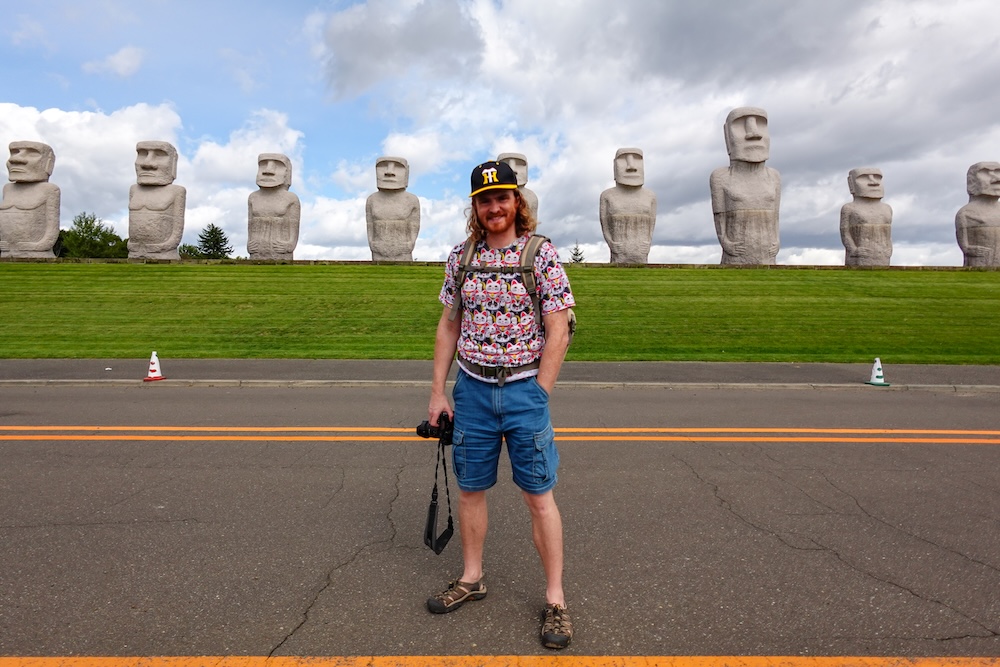
Audrey had a surprise planned for me on the outskirts of Sapporo. All I knew was that we’d be riding the subway to the end of the line, then catching a bus farther into the countryside. We were already a long way from the familiar city streets when we stepped off and I looked up at a row of giant stone faces. Moai. In Japan. I remember telling Audrey I hadn’t realized we were going back to Easter Island that day.
The destination was Makomanai Takino Cemetery, and the Moai were only the beginning. There’s also an enormous seated Buddha approached through a concrete tunnel, plus a Japanese version of Stonehenge. We saw all three, struck a gong, briefly explored the burial areas and managed to get off the bus one stop too early along the way. It’s a strange combination of things to visit on a day out in Sapporo, but I enjoyed the lot. The Hill of the Buddha was my clear favourite.
If you’re thinking of making the journey, the monuments are only half the decision. Getting there without a car takes planning, and there’s more walking on the grounds than the photographs might suggest. Here’s what stood out to us and what I’d want to know before doing the trip again.
Why Visit Makomanai Takino Cemetery?
Makomanai Takino Cemetery opened in 1981 in the southern outskirts of Sapporo, where the city gives way to forests and mountains. The full property covers roughly 180 hectares. It’s a functioning cemetery, with graves and memorial spaces spread across extensive grounds, though the three monuments that attract most sightseeing visitors occupy a more concentrated area.
That distinction is worth remembering. Audrey had discovered the cemetery while hunting for obscure Sapporo attractions, and on paper the combination of a Buddha, Easter Island-inspired statues and Stonehenge sounded almost ridiculous. In person, the scale was impressive, and the setting felt very different from spending another afternoon around Odori Park or the central shopping streets.
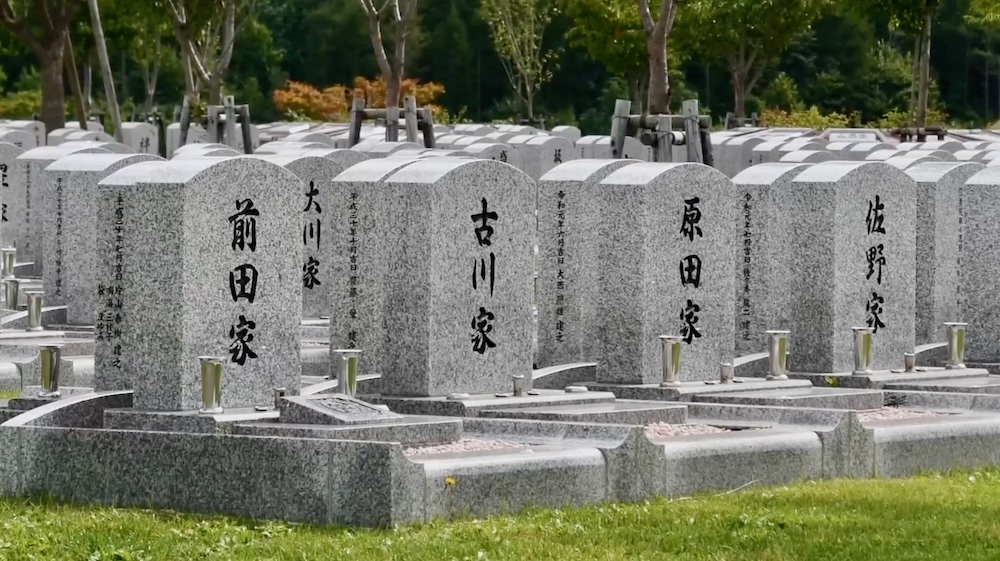
It’s also a place where people come to remember family members. We saw rows of gravestones and religious figures beyond the showpiece attractions, and visitors need to give those areas the respect and privacy they deserve. You can appreciate the oddness of the monument collection without treating the entire cemetery as a playground.
19:51 – Moai Statues
20:12 – Hill of the Buddha
20:53 – Stonehenge
The Three Main Attractions at Makomanai Takino Cemetery
Hill of the Buddha: My Favourite of the Three
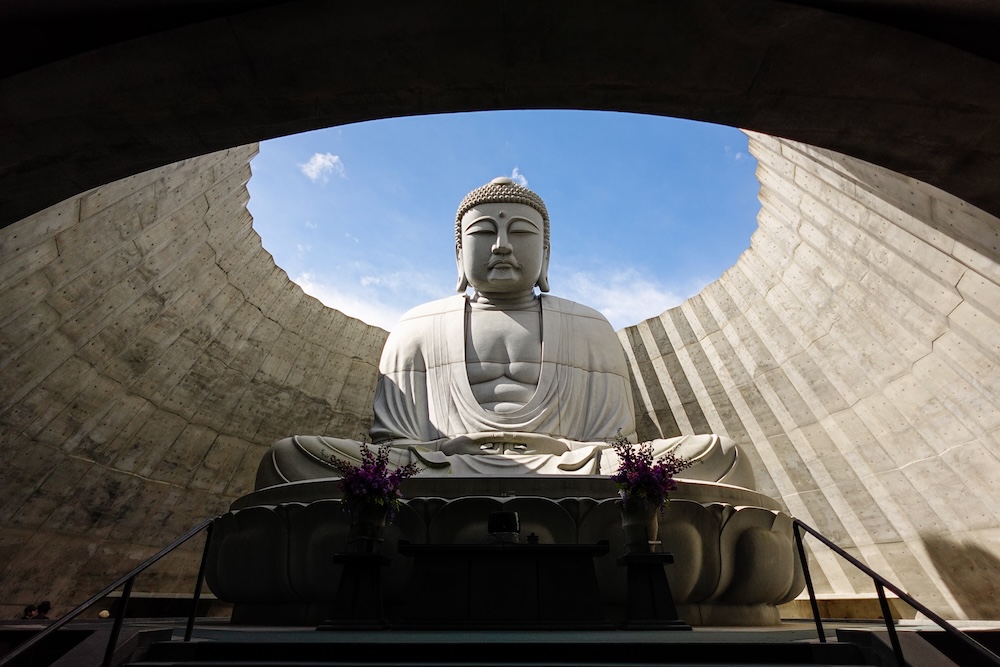
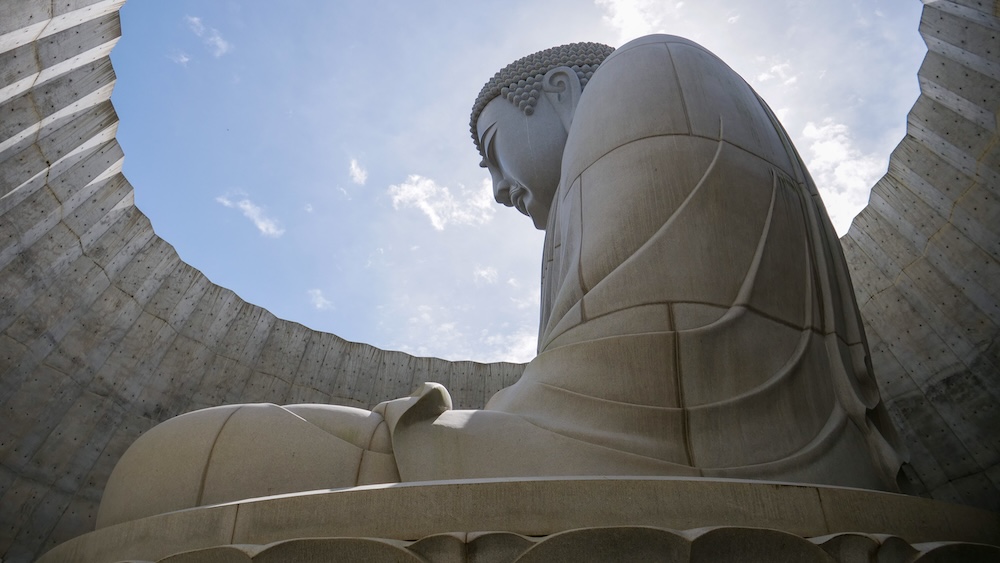
The Hill of the Buddha was the reason this outing went from amusingly unusual to something I’d actively recommend. The seated statue is 13.5 metres tall and weighs about 1,500 tonnes, but its size alone doesn’t explain the effect. Tadao Ando designed the surrounding landscape and architectural approach around an existing Buddha. From outside, the hill hides most of the statue, leaving its head visible above the greenery.
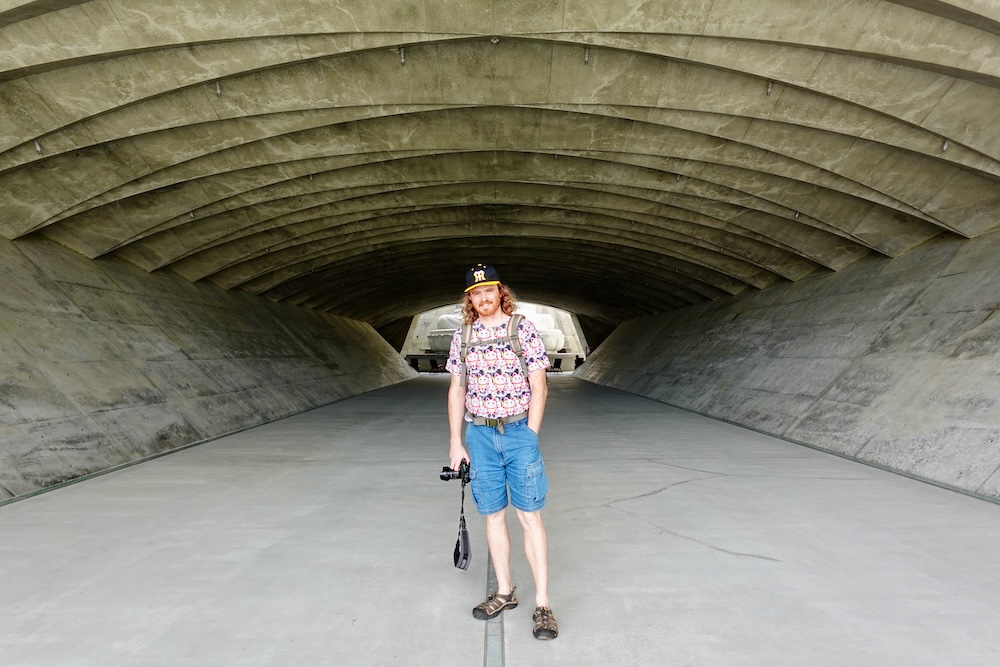
You don’t march straight up and stand at its feet. The approach stretches about 135 metres, passing a water garden before entering a 40-metre concrete tunnel. I remember how much I liked that tunnel. After the open grounds, the enclosed passage controls what you can see, and then suddenly you’re looking up at the Buddha sitting inside a vast circular opening to the sky. The architecture makes the reveal feel earned, rather than giving you the entire attraction at first glance.
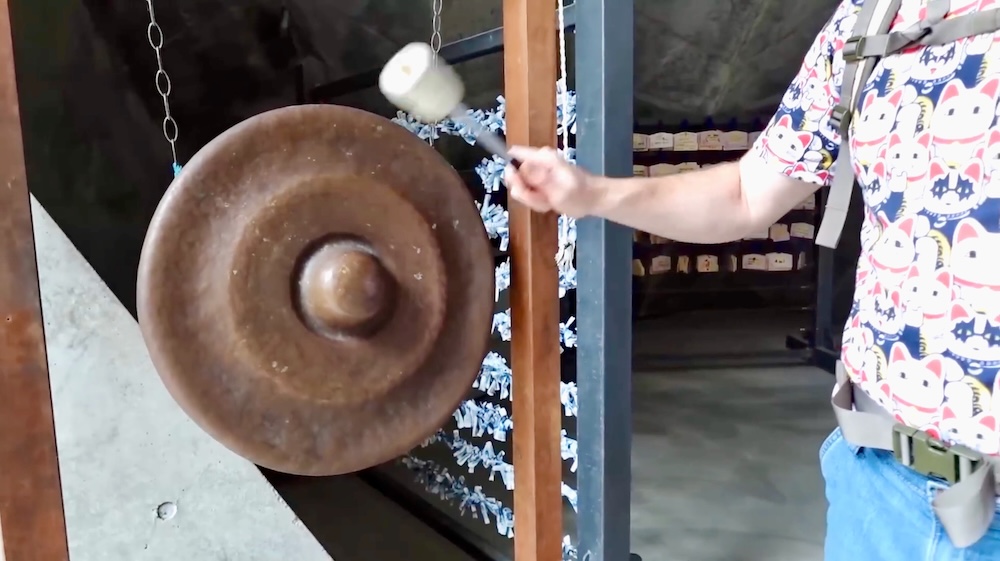
There’s some legwork involved in reaching it. Nothing about our outing resembled a mountain hike, but it wasn’t a case of hopping out of the bus, snapping a photograph and leaving either. We also came across a large gong, which I got to strike. That was one of the smaller moments I particularly enjoyed. Follow any on-site instructions for bells and memorial instruments rather than assuming everything is there for tourists to try.
The hillside is planted with roughly 150,000 lavender plants, which normally flower around July. We visited in September, so our experience was of the architecture and the statue, not a hill in peak purple bloom. That seasonal difference matters when you’re comparing your travel dates with the spectacular lavender photographs online.
I liked the setting far more than I expected to. Even if the cemetery had contained only the Hill of the Buddha, I would have considered the journey a good one.
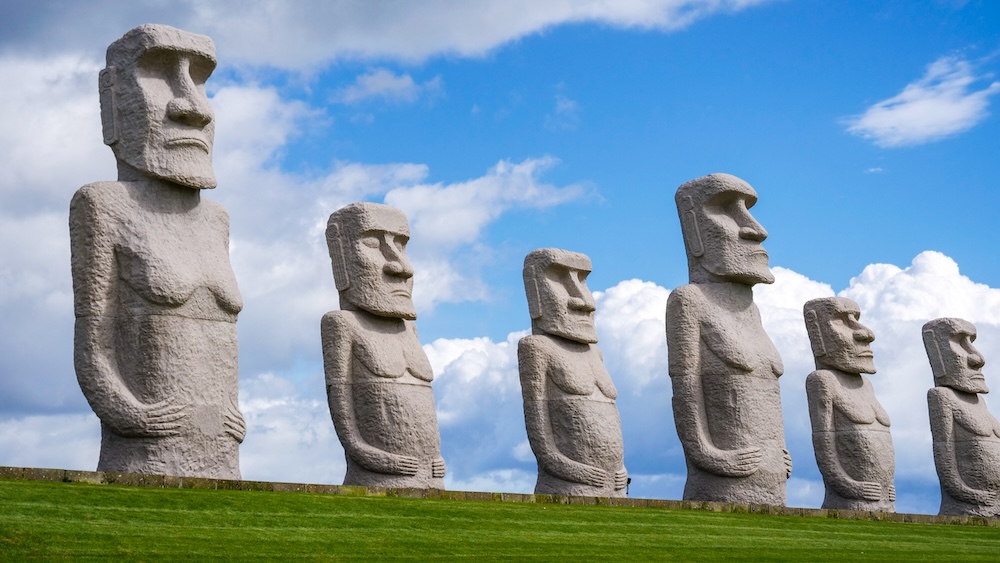
The Moai Statues: Easter Island, With a Japanese Twist
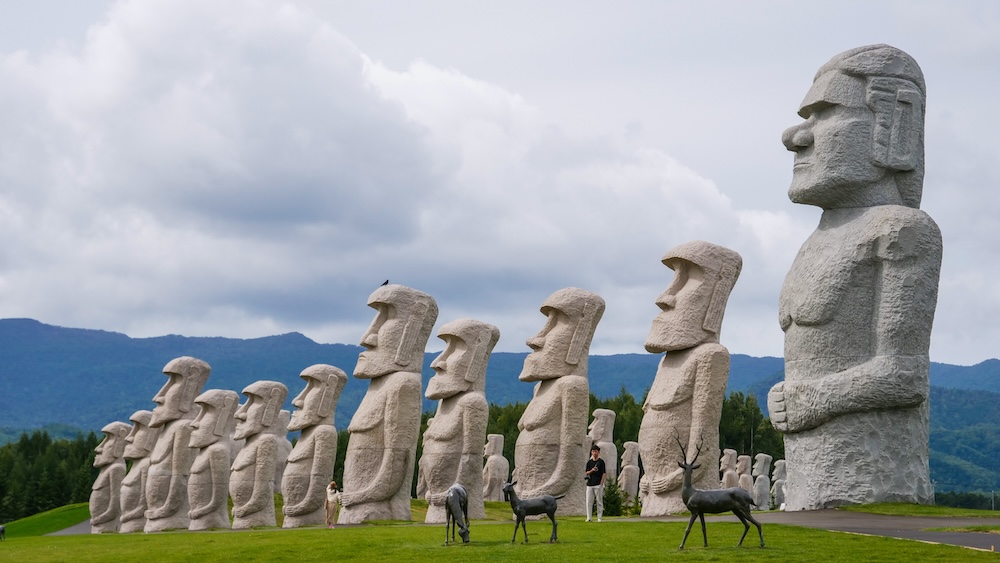
The Moai were the first thing we noticed after getting off the bus, which explains why Audrey was so keen to see my reaction. I’d already visited Rapa Nui, so finding a line of those unmistakable faces in the countryside outside Sapporo was a peculiar experience. Audrey had kept this bit of the itinerary secret. Fair play to her—it’s not an easy surprise to top.
There are 33 Moai statues at the cemetery, and the biggest are approximately 9.5 metres high and weigh around 120 tonnes. The long rows, lawns and mountains behind them make for terrific photographs. Whatever you think of replicas, they’re not small or half-hearted.
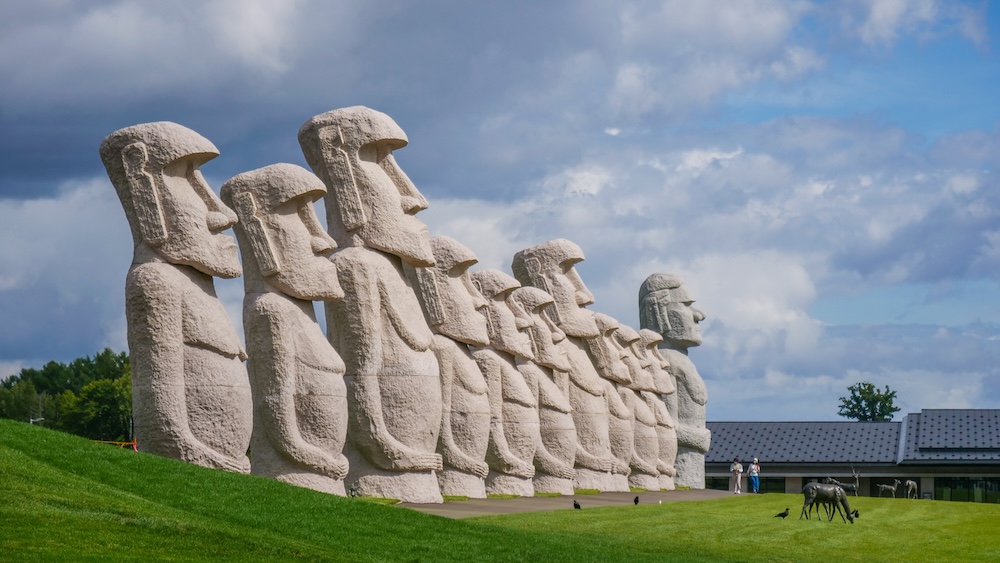
The cemetery connects their presence with the remembrance of ancestors. That’s an important distinction from treating them as random decorations. The original Moai on Rapa Nui belong to that island’s Indigenous cultural history and landscape; the versions here have been adopted into a Japanese memorial setting.
Did they transport me back to Easter Island? Not a chance. I called it the Disney-fication of the experience, which was my joking way of saying that a replica can be entertaining without carrying the weight of the original place. Seeing Moai on Rapa Nui is on another level entirely. Still, I thought these were fascinating, and they came second in my ranking. You don’t need to have visited Easter Island to enjoy the sheer surprise of finding them here.
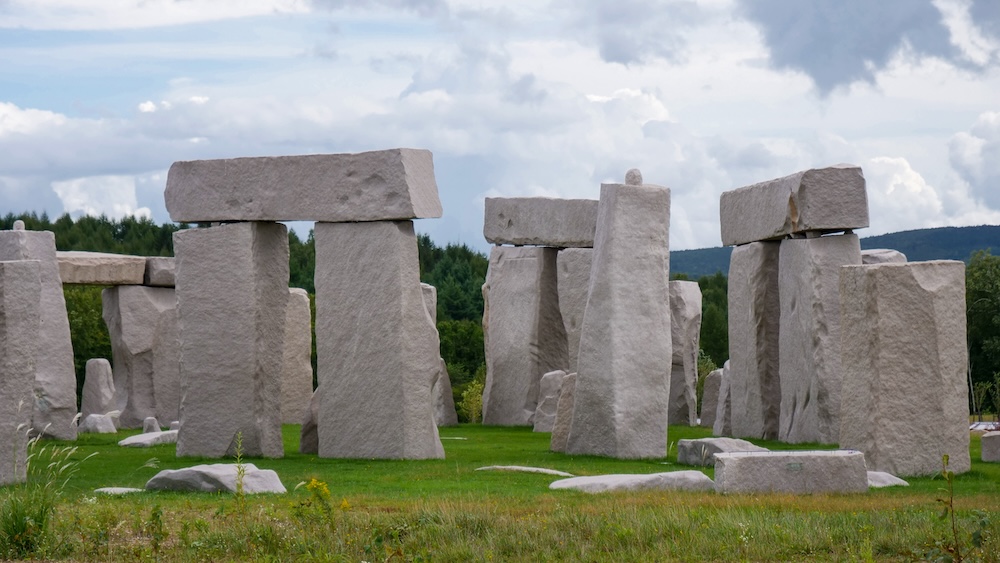
Stonehenge: An Unusual Final Stop
By the time we reached the cemetery’s Stonehenge replica, we’d already been on our feet quite a bit. The upright stones and horizontal lintels were recognizable immediately, although we couldn’t walk across the grass to get closer. Audrey pointed out the restriction and we let my camera zoom do some of the work. I wasn’t particularly bothered. We’d seen plenty already, and I was beginning to feel it in my legs.
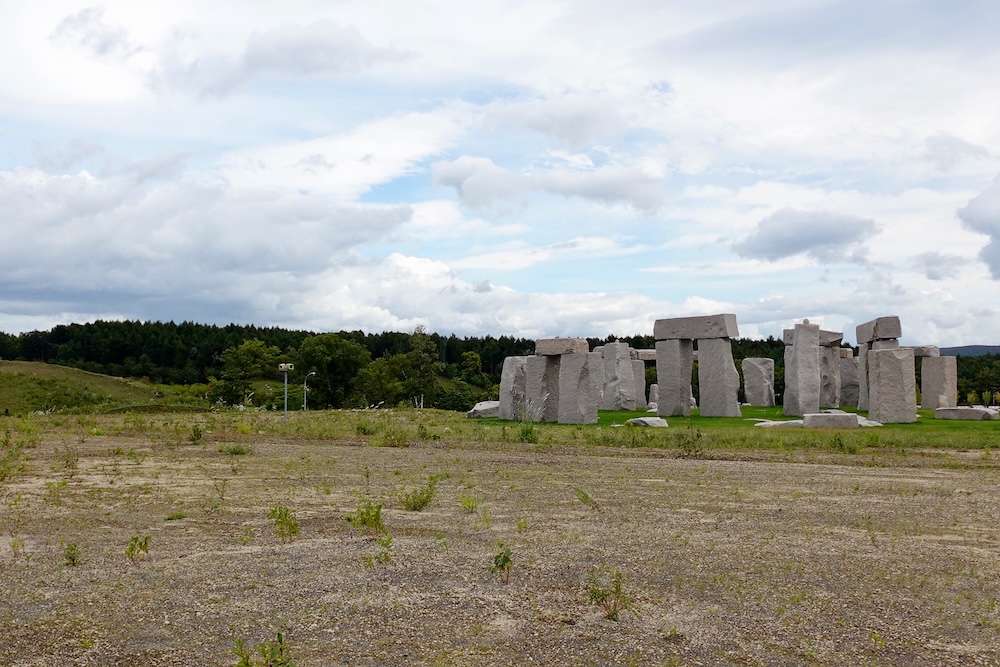
Stonehenge also has a memorial role here. The cemetery connects it with a permanent memorial and collective burial arrangement, rather than using it purely as a decorative nod to the prehistoric monument in England. The operator restricts entry to the interior, so visitors should stick to the permitted viewing areas.
Stonehenge came third for me, but that isn’t a polite way of saying I disliked it. Seeing a Buddha, Moai and Stonehenge during one cemetery visit was genuinely entertaining. By the last monument, I was simply ready to give my feet a break.
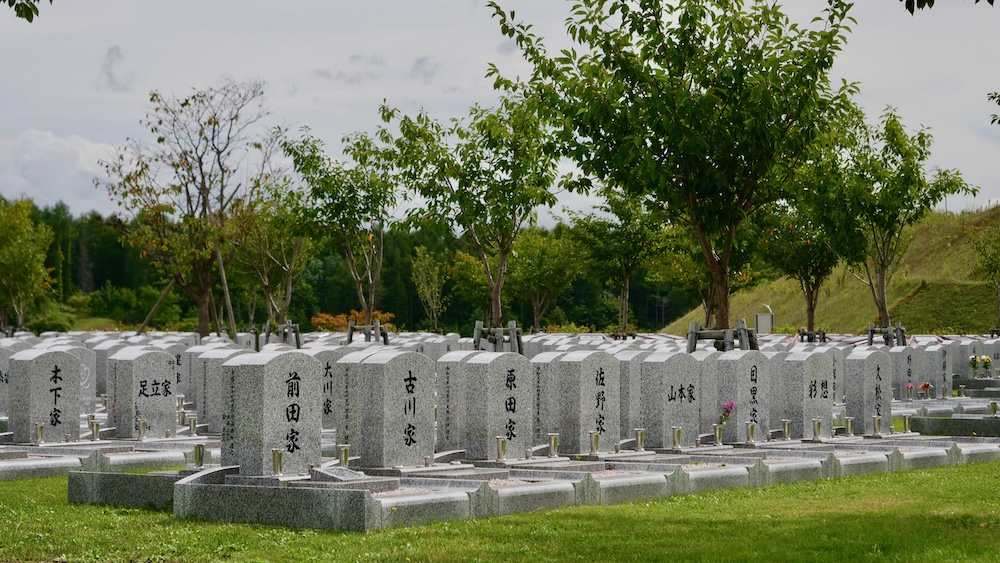
Don’t Forget This Is a Working Cemetery
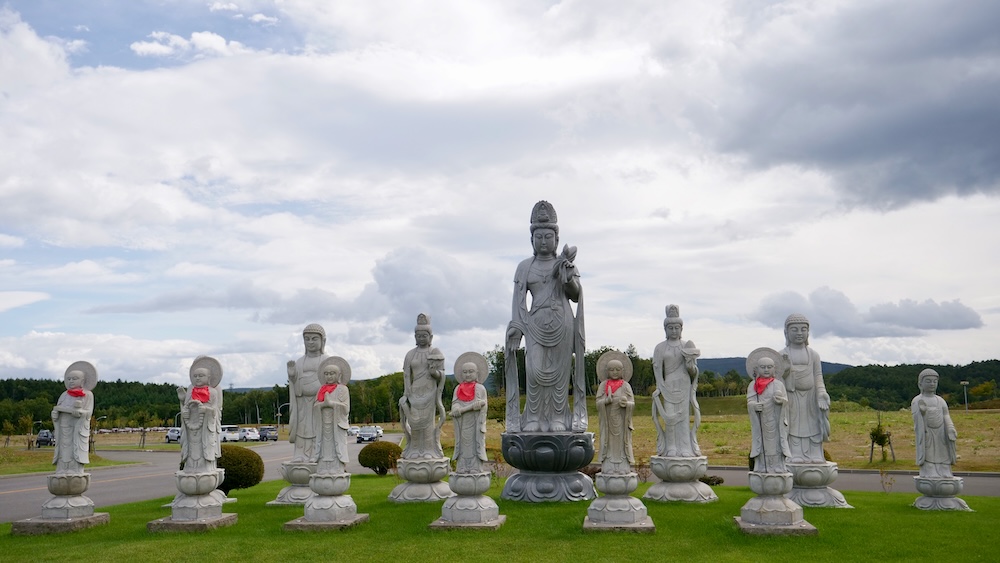
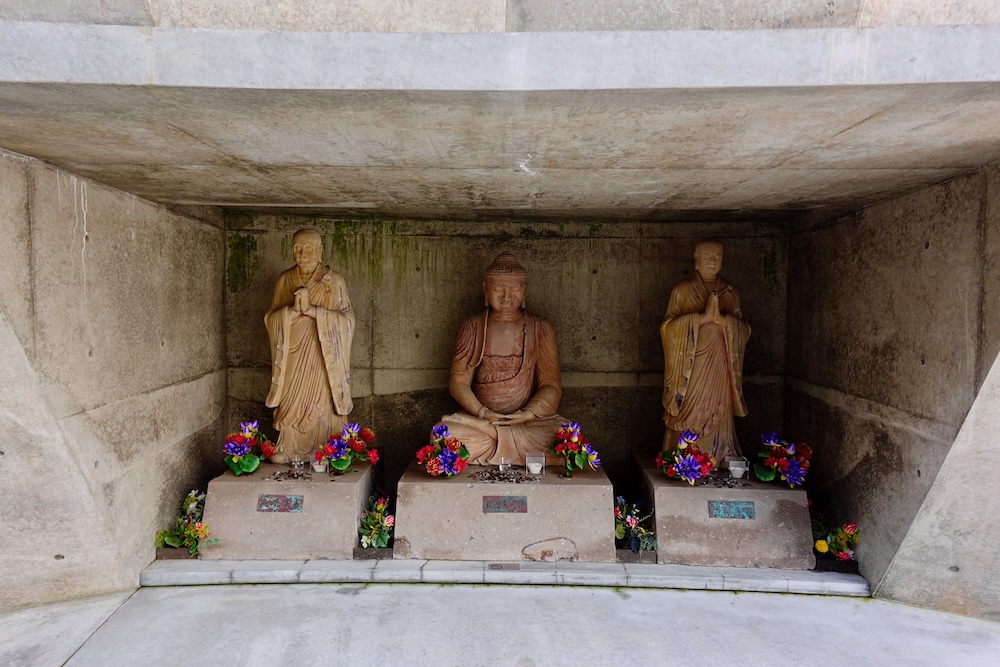
We spent most of our time around the three main attractions, but we also saw the actual burial areas. Our photographs include neat rows of engraved gravestones, flowers and several smaller Buddhist figures. We didn’t go exploring the graves in depth, and I wouldn’t suggest treating them as another set of attractions to tick off.
The cemetery asks sightseeing visitors to remain on permitted paths and to respect people visiting graves. That includes not climbing or touching monuments, entering restricted spaces, blocking roads or photographing from roadways. Drones are prohibited, and private memorial spaces aren’t public sightseeing installations. The official visitor information is worth reading, especially if you’re travelling with a camera and intend to spend time around the monuments.
I think the setting is part of what makes the place memorable. The enormous statues attract you here, but the ordinary gravestones and offerings remind you what the grounds are actually for. Both sides belong to the visit.
How to Get to Makomanai Takino Cemetery From Sapporo
Subway and Bus: The Way We Went
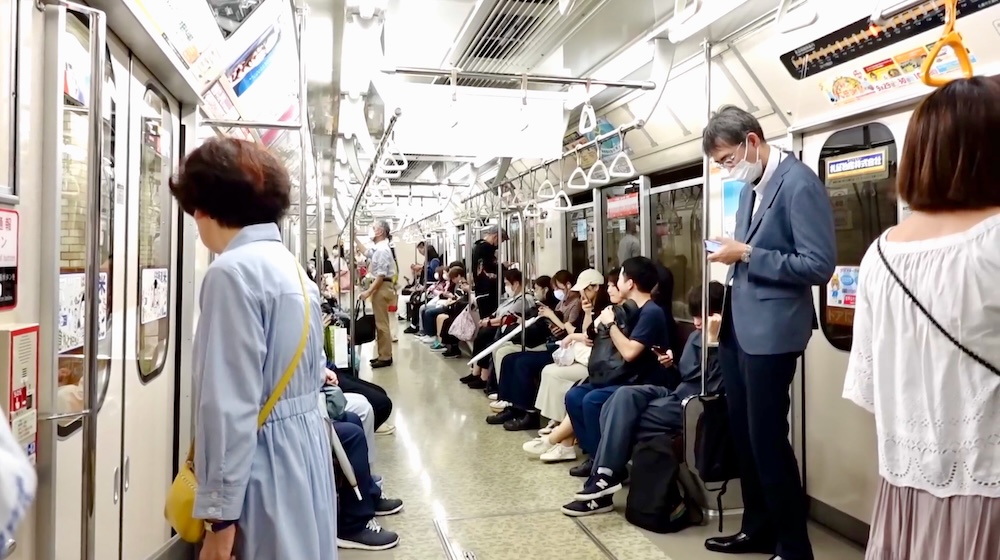
We did the whole journey independently. First came the Namboku subway line to Makomanai Station, its southern terminus, then bus 106 farther out toward the cemetery. The bus ride felt quite rural compared with our days in central Sapporo. I remember looking around and seeing forest and mountains, without much sign of nearby houses.
I also remember the less glamorous side of doing it ourselves: waiting between connections, making a couple of errors, and getting off one stop too early. I’m not sure which stop we used incorrectly, so I wouldn’t invent a story about exactly where we went wrong. The useful lesson is to check the stop name before the bus gets there, especially when the area looks unfamiliar and you’re excited to see the Moai.
There are two public bus services worth distinguishing from Makomanai Station. Shin 108 serves Atama Daibutsu-mae, closer to the Hill of the Buddha; Shin 106 serves Takino-toge, a roadside approach to the cemetery and Moai. They aren’t identical ways of arriving, and the best one depends partly on where you want to begin.
The published Shin 108 bus ride is approximately 25 minutes from Makomanai, with a ¥500 fare listed by the cemetery. More important than either number is the limited service: the schedule inspected for this route had only a handful of departures each way. A missed return bus could create a long wait. We learned firsthand that this was a day for paying attention to connections, not for assuming another bus would appear in ten minutes.
Check the live Chuo Bus departure and stop information for Makomanai Station and the cemetery visitor map before setting off. The normal services have been listed from bus stand 2, but temporary works and seasonal timetable changes can affect where you board. I would look up the return bus first and plan the actual sightseeing around it.
One particularly important restriction: the cemetery has a shuttle for people visiting graves, but ordinary sightseeing visitors aren’t permitted to use that service. You’ll need an authorized public bus, a car or other legitimate transport for your visit.
Driving or Going With a Tour
The published drive from JR Sapporo Station is approximately 40 minutes, depending on traffic. Designated visitor parking is available, although the cemetery identifies paid parking and the exact ordinary-car fee wasn’t sufficiently clear to pin down here. Check the official Hill of the Buddha access information for current arrangements rather than assuming the lot is free.
A car would remove the need to arrange the entire day around the bus timetable, especially if you’re pairing the cemetery with Sapporo Art Park or exploring other parts of Hokkaido. We didn’t drive, so I can’t offer a firsthand verdict on the road or parking experience. If driving fits a wider trip you’re already planning, you can compare rental cars in Sapporo before deciding whether the extra flexibility is worth the cost. Even with a car, you’ll still have walking to do at the cemetery.
There are bookable guided alternatives, although the ones I could verify are broader Sapporo days rather than tours promising a complete Buddha–Moai–Stonehenge visit. One full-day Sapporo sightseeing tour with the Hill of the Buddha uses a tour bus, visits several other city attractions and typically allocates about an hour to the Buddha; admission there is extra. Another option is an English-guided Buddha, Sapporo sightseeing and sake tour departing from Sapporo Station, with transport and attraction entry fees listed as included. That second option is a longer cultural day, not simply a ride to the cemetery.
Neither listing establishes that you’ll have time for all 33 Moai or the Stonehenge area. Check the actual itinerary and what is included before paying. If your main goal is to explore the whole cemetery at your own pace, independent transport or a car gives you more control than a multi-stop tour.
How Much Time Do You Need at the Cemetery?
I’d budget about 40 minutes to an hour on the grounds for a reasonably focused visit to the three headline monuments. That’s my recommendation looking back, not a precisely timed record of our outing. If you like taking photographs, want a longer look at the Buddha’s architecture, or prefer a slower walking pace, build in more time.
There was more walking than I’d expected. The Buddha’s 135-metre approach is only one part of the ground you’ll cover; you also need to move between the Moai and Stonehenge. Don’t confuse the relatively concentrated sightseeing area with three statues sitting beside the same parking lot. My legs had noticed the difference by the time we reached the last stop.
And remember that 40–60 minutes does not include getting there and back from central Sapporo. With a subway journey, a bus connection and the possibility of waiting for the next return departure, the overall outing takes a much bigger bite out of the day. If you’re choosing between the cemetery and another attraction, that transport commitment is the real trade-off.
There are restrooms and some visitor facilities on the wider grounds, including places to get refreshments, but they’re not necessarily beside every monument and some facilities have seasonal operations. The cemetery permits visitors to bring wheelchairs and strollers in applicable areas, though that doesn’t establish a fully step-free route through every attraction, and loaners aren’t provided. Anyone who needs a specific accessible path should confirm it directly with the operator before travelling.
Tickets, Hours and What Changes With the Seasons
The first distinction is between general cemetery access, which is free, and entry to the Hill of the Buddha’s visitor area, which has a separate charge. The Buddha admission is currently ¥1,000 per person, with children under 12 admitted free. That price took effect in April 2026, so older online guides showing a lower amount can mislead you. On-site ticketing is available, and the cemetery also provides information about advance tickets on its official Hill of the Buddha page.
The gates and the Buddha have different opening hours. The general cemetery grounds normally open from 7 a.m. to 7 p.m. in April–October and from 7 a.m. to 6 p.m. in November–March. Hill of the Buddha visiting hours are shorter: typically 9 a.m.–4 p.m. in April–October and 10 a.m.–3 p.m. in November–March. The Buddha is ordinarily closed on the mornings of April 22 and October 22 for memorial observances, and additional closures can occur for maintenance or weather. An open cemetery gate doesn’t mean the tunnel and Buddha are accessible.
Season changes the look of the place, too. The lavender hillside generally flowers around July; in the snow period, roughly November to late April, the water garden is usually left unfilled. We visited in September, so I can speak to our own experience then, not what it feels like to walk the grounds in deep winter. If you’re going for the lavender or travelling when snow and ice could affect access, check current conditions directly before making the journey.
Is Makomanai Takino Cemetery Worth Visiting?
I think so, and I’d make the journey again. The Hill of the Buddha is the one I’d prioritize if time were tight; its tunnel and the way the statue is revealed stayed with me more than anything else. The Moai are wonderfully odd, especially if you know the originals from Rapa Nui, and Stonehenge adds one more surprise. None of the three left me disappointed.
The qualification is the effort involved. If you’re only in Sapporo briefly and still haven’t explored its central sights, I wouldn’t pretend this is an easy little detour. But for photographers, architecture lovers or anyone who enjoys an attraction that makes you wonder how on earth it ended up here, it has plenty going for it.
We went on to Sapporo Art Park afterward, which made good use of being in this part of the city. I’d happily consider setting aside an additional Sapporo day for those two places instead of squeezing the cemetery into an already full itinerary. Just check the Art Park opening arrangements and the transport connection before committing to both.
Audrey deserves the credit for finding the place and keeping it a surprise. I got my Easter Island moment, an impressive Buddha, a turn on the gong and a lesson in checking rural bus stops more carefully. That’s a pretty good return on an outing that began with me having no idea where we were going.
Frequently Asked Questions
Is Makomanai Takino Cemetery an actual cemetery?
Yes. Makomanai Takino Cemetery is a functioning burial ground on the southern outskirts of Sapporo, not simply a tourist attraction. The Hill of the Buddha, Moai statues and Stonehenge replica occupy part of the grounds, alongside family graves and memorial spaces that visitors should respect.
How do you get to Makomanai Takino Cemetery without a car?
We took the Namboku subway line to Makomanai Station and continued by public bus. Shin 108 serves Atama Daibutsu-mae near the Hill of the Buddha, while Shin 106 serves Takino-toge near the Moai approach. Check the current Chuo Bus timetable and your return departure before travelling, since services are limited.
How long should I spend at Makomanai Takino Cemetery?
I’d allow approximately 40–60 minutes on the grounds for a focused visit to the Hill of the Buddha, Moai statues and Stonehenge. That’s my recommended sightseeing allowance, not a measured duration from our visit. It excludes the subway, bus connections and return journey from central Sapporo.
How much does it cost to visit Makomanai Takino Cemetery?
General access to the cemetery grounds is free, but the Hill of the Buddha’s visitor area has a separate admission charge. The article’s verified adult price is ¥1,000, with children under 12 admitted free. Check the cemetery’s current ticket information before travelling because admission arrangements can change.
Can visitors walk inside the Stonehenge replica?
No. The cemetery restricts entry to the interior of its Stonehenge replica. We viewed the stones from the permitted area because we couldn’t cross the grass to approach them. I used my camera’s zoom for closer photographs, and the restriction didn’t spoil the visit for me.
When is the best time to see lavender at the Hill of the Buddha?
The lavender-covered hillside generally flowers around July. We visited in September, so I experienced the statue and Tadao Ando’s architectural setting rather than peak lavender bloom. The Buddha is worth seeing outside the flowering season, but don’t assume the hillside will look purple throughout the year.
Is Makomanai Takino Cemetery worth visiting from central Sapporo?
I think so, particularly if you enjoy architecture, unusual monuments and photography. The Hill of the Buddha was my favourite, followed by the Moai and Stonehenge. The main drawback is the transport commitment: getting there by subway and bus takes planning, and there’s more walking than the photographs might suggest.
This guide is also available in Spanish. [Leé la versión en castellano: Cementerio Makomanai Takino: guía y opinión sobre la Colina del Buda, los moáis y Stonehenge en Sapporo]
This article contains affiliate links. If you book through one of these links, I may earn a commission at no extra cost to you.