
If you find yourself working as a teacher in the interior of South Korea and have yet to experience a summer here, get ready. A wall of heat and humidity unlike anything you have experienced before is coming.
You will probably have an air-conditioning unit in your apartment—you do have one, right?—and hopefully some relief at work. Private hagwons may be air-conditioned. Public schools can be a little more character-building. But eventually you still have to step outside to go home, buy groceries, or meet friends at the bar.
That is when the Korean summer grabs you by the shirt and reminds you who is in charge.
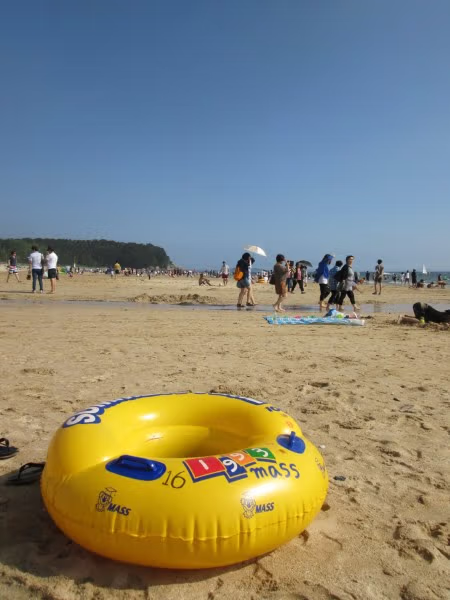
The soul-stealing mugginess will have you doing the unthinkable: cursing the sun and praying for rain just to cool things down. Do not laugh. Your time will come.
Fortunately, South Korea’s excellent transport network makes it fairly easy to escape the furnace-like interior on a free weekend. Head west and you will eventually reach a collection of beaches where your overheated body can spend a day doing very little beyond floating, eating, drinking, and slowly becoming human again.
South Korea’s most famous stretches of sand are usually associated with Busan or Jeju Island. Daecheon Beach, on the west coast in Boryeong, offers a more manageable alternative for anyone living in the centre of the country and not eager to spend half the weekend crossing Korea.
When I was teaching in the Cheonan–Asan area in 2013, I headed to Daecheon for a weekend to see what it was all about. The visit coincided with the beach’s official opening day that summer, so the town had a lively, celebratory atmosphere without yet feeling like the full midsummer circus.
What follows is not an exhaustive guide to every attraction in Boryeong. It is the story of one pleasantly strange June weekend involving countryside scenery, cocktails, seafood, midway games, terrible marksmanship, and one very good sunset.
Travelling to Daecheon Beach
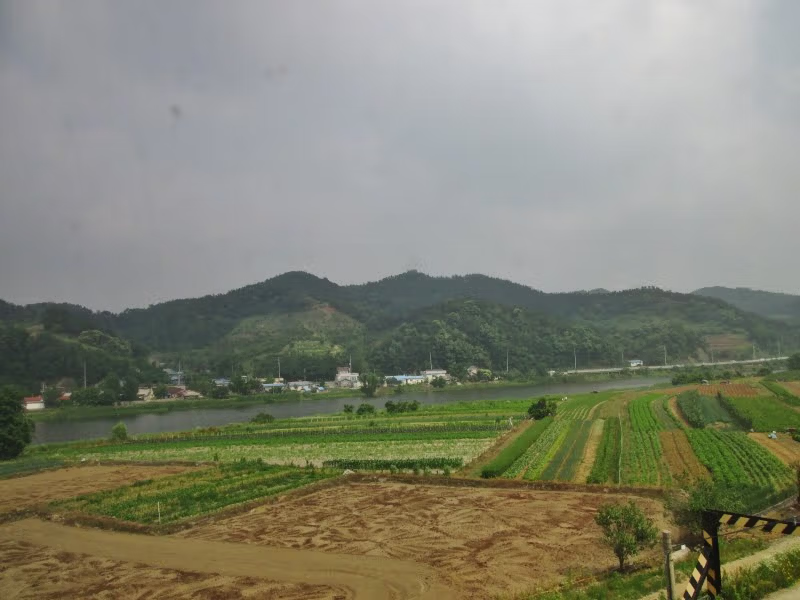
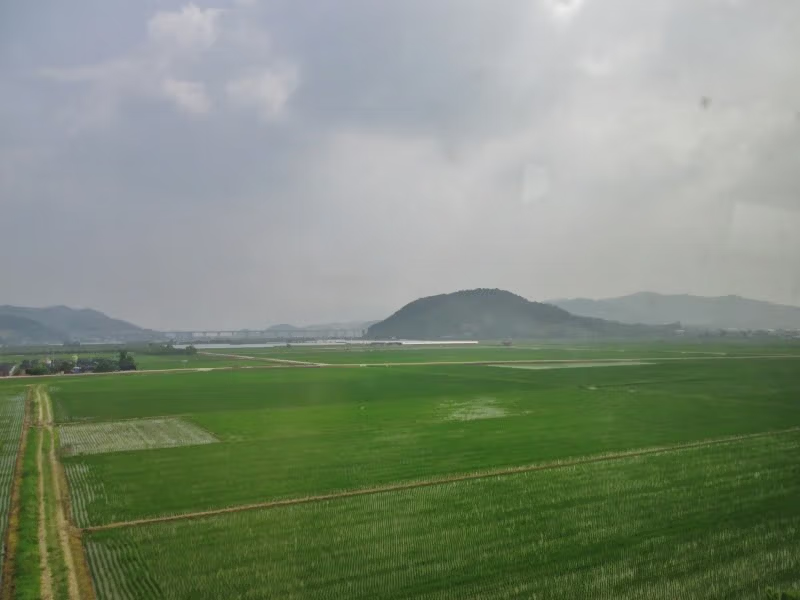
One advantage of taking the slower railway line towards Daecheon was being able to watch the Korean countryside unfold outside the window. Rice fields, low mountains, and small rural communities passed at a speed that allowed me to see them rather than reducing the entire journey to a green-and-blue blur.
That journey was part of the appeal. I was not flying to an island or embarking on some grand expedition involving laminated itineraries and heroic feats of packing. I was simply leaving the inland heat behind and watching the scenery become progressively more coastal.
As enjoyable as the train ride had been, it was time to explore what this distinctly Korean beach town had to offer.
Cocktails, Seafood and Beach-Town Energy
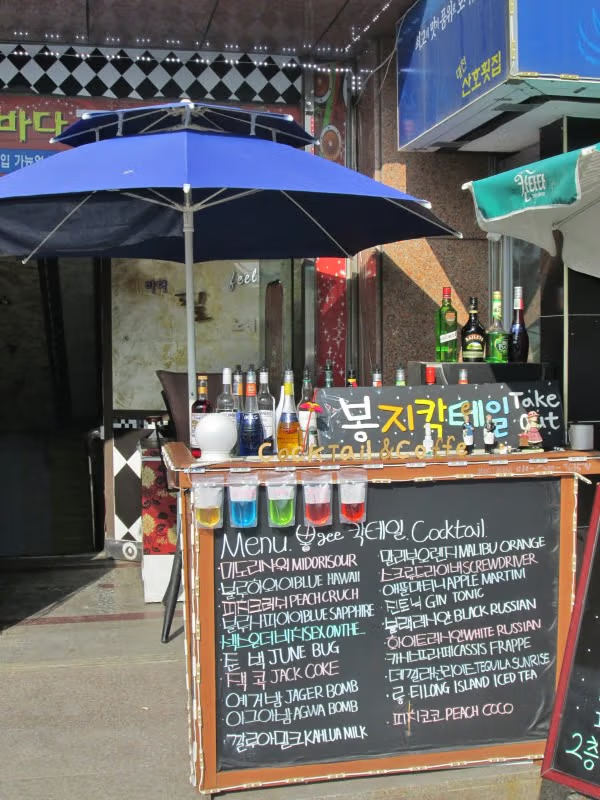
Korea is well known for its enthusiastic drinking culture, and Daecheon Beach was certainly no fortress of temperance. Cocktail stands and casual drinking spots were scattered around the main beach area, ensuring nobody had to travel far in search of something cold.
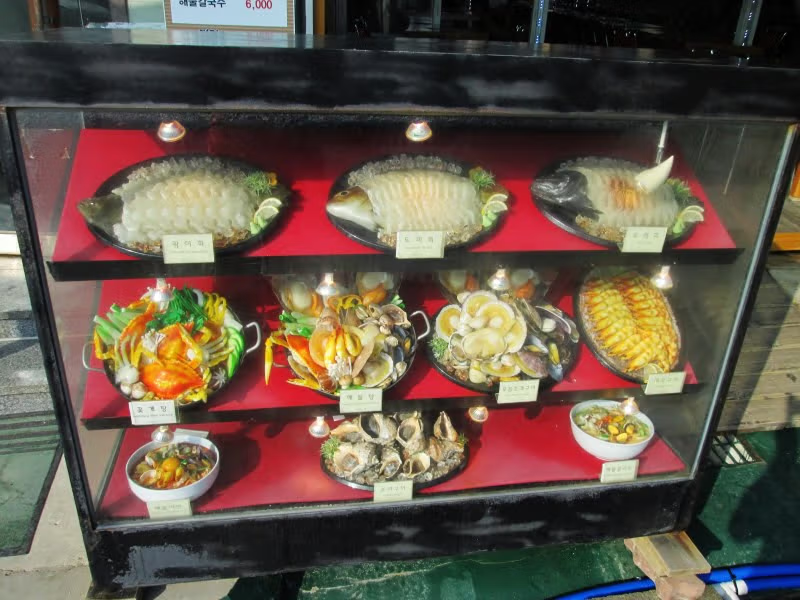
Seafood was equally difficult to avoid. Korea is surrounded by water on three sides, so fish and shellfish are never particularly hard to find, but the nearby port gave Daecheon an especially strong seafood presence. Restaurant displays along the main streets advertised substantial platters from the sea rather than dainty little portions arranged with tweezers.
The combination suited the town perfectly: cocktails, seafood, groups of friends, families carrying inflatable tubes, and visitors wandering between the restaurants and sand.
Daecheon did not feel glamorous or overly polished. It felt accessible, sociable, and slightly tacky in an endearing beach-resort sort of way. Sometimes that is exactly what you want. Not every coastal escape needs an infinity pool, a linen wardrobe, and a person using the word “curated” within five minutes of your arrival.
Testing My Nonexistent Shooting Skills
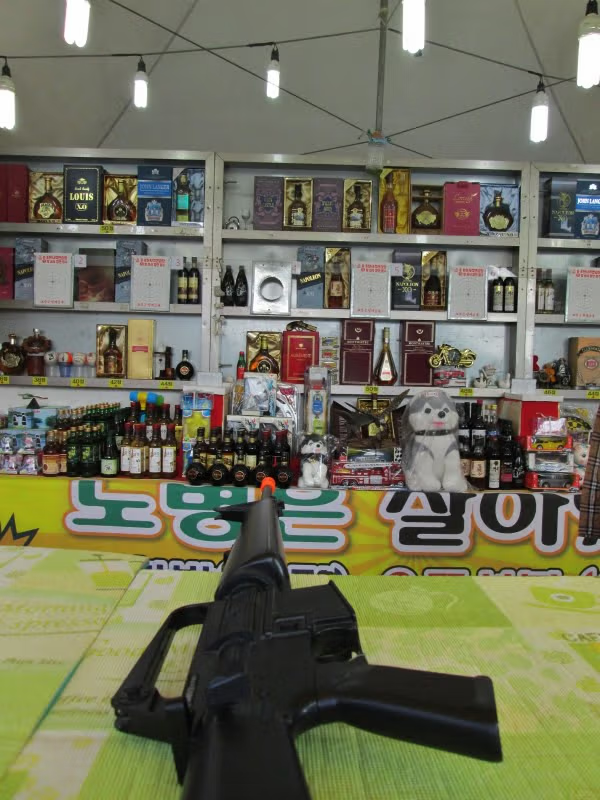
Because it was the beach’s opening day, a party atmosphere had taken over parts of the town. Midway-style games had appeared among the restaurants and drinking stands, and being the rugged manly man that I am, I decided to demonstrate my shooting skills.
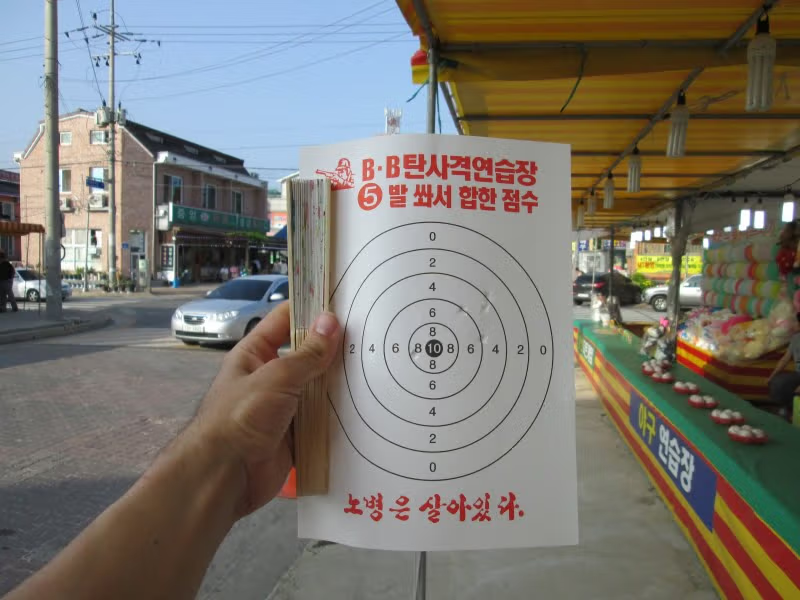
It turns out I had no shooting skills to demonstrate.
I missed badly on every attempt, managing to hit two sixes and a four. The man running the game eventually seemed to take pity on me and landed an eight at point-blank range so that my final score would look slightly less humiliating in front of my friends.
It was a kind gesture. It also did very little to disguise the obvious conclusion: in any situation requiring accuracy, calm nerves, or basic hand-eye coordination, everyone would be better off standing behind me rather than relying on me.
Sunset Over the West Sea
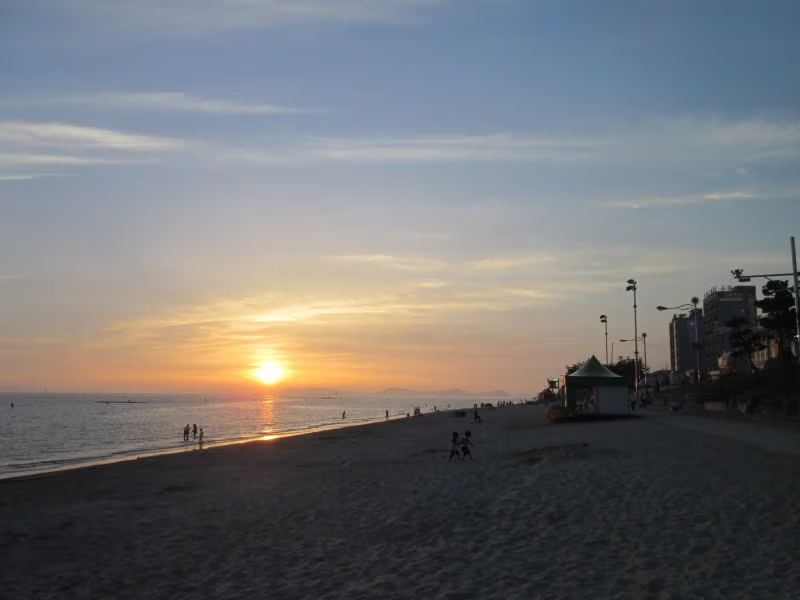
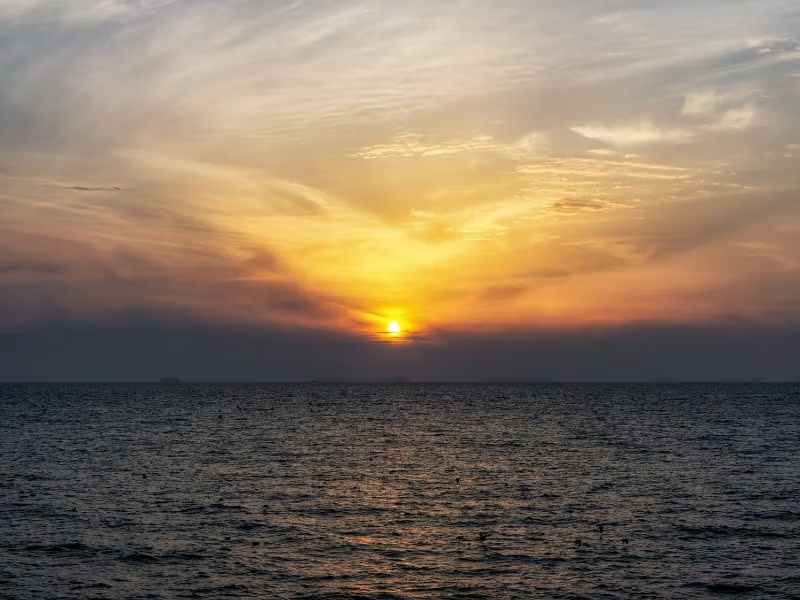
After a long day exploring the beach and surrounding town, the sun began to drop over the West Sea. Daecheon faces west, which gives it something many of Korea’s better-known east-coast beaches cannot offer: sunsets directly over the water.
The light stretched across the sea, the temperature finally became tolerable, and the entire trip settled into place. It was exactly what I had wanted from the weekend: an easy escape from the inland heat, a little bit of chaos, and enough sea air to make the approaching Korean summer seem survivable.
Daecheon may not have the tropical scenery of Jeju or the urban energy of Busan, but that is not really the point. For someone living in central South Korea, it was close enough to reach without turning the weekend into a logistical military campaign and different enough to feel like a proper break.
Planning a Daecheon Beach Weekend Today
Daecheon remains a useful beach escape precisely because it does not require a flight, a week of annual leave, or the organizational powers of a minor government department. For travellers based in Seoul or central South Korea, it can still work as a straightforward one- or two-night trip.
What Daecheon Beach Is Actually Like
Daecheon Beach is located in Boryeong, Chungcheongnam-do, on South Korea’s west coast. The Korea Tourism Organization describes it as the largest beach on the West Sea, extending for approximately 3.5 kilometres with a relatively gentle slope.
The visitor area is divided around Sunset Plaza and Mud Plaza, with restaurants, cafés, hotels, pensions, convenience stores, and seasonal attractions spread behind the beach. In other words, this is not a deserted strip of sand where you need to arrive carrying enough food and water to survive a small siege.
The main appeal is convenience. You can arrive, check in, walk to the sea, find dinner without research paralysis, and spend the evening watching the sun drop over the water.
For current facilities and local visitor information, consult the official Korea Tourism Organization listing for Daecheon Beach.
Getting to Daecheon Beach from Seoul
The two sensible public-transport options are train and express bus.
- By train: Daecheon Station is served by the Janghang Line. Check Korail for direct services from Yongsan Station or connections through central Korea. Daecheon is not a KTX station, despite what some older and suspiciously confident online guides may suggest.
- By express bus: Buses operate between Seoul’s Central City Terminal and Boryeong Bus Terminal. This can be the least mentally taxing option because the main portion of the journey does not require a railway transfer.
Allow roughly three hours or more from central Seoul to the sand once waiting times and the final local connection are included. The train station and bus terminal are in Boryeong rather than directly beside the beach, so you will still need a local bus or taxi.
A taxi is the easy answer when you are carrying bags, arriving late, or slowly dissolving in summer humidity. Local buses are cheaper, but check the route and schedule rather than standing hopefully beside the road and assuming the correct bus will eventually sense your presence.
Check current train schedules and ticket availability using Korail’s official reservation service. Book both directions early during summer weekends and the Boryeong Mud Festival. A beach beer becomes considerably less relaxing when you discover the final practical route home sold out several hours ago.
June, Peak Summer or the Mud Festival?
A June visit provides a calmer version of Daecheon. The weather may already be hot and sticky, but the town is generally less intense than it becomes during the busiest weeks of July and August. The sea can also be cooler, and supervised swimming arrangements depend on the official beach season.
The Boryeong Mud Festival changes the equation completely. It brings ticketed mud zones, concerts, family areas, enormous crowds, higher accommodation demand, and thousands of people enthusiastically covering themselves in sludge for entertainment.
For 2026, the official festival is scheduled from July 24 to August 9 at Daecheon Beach. Dates and operating arrangements change annually, so verify them through the official Boryeong Mud Festival website.
A normal Daecheon weekend and a festival weekend are almost two different holidays:
- Visit outside the festival for an uncomplicated beach break, seafood, walks, and sunsets.
- Visit during the festival because you actively want mud, music, crowds, and the possibility of discovering grit in places grit was never meant to reach.
Where to Stay Near Daecheon Beach
For a short trip, staying near the beach is usually worth it. You can walk to the sand, restaurants, cafés, and evening action without negotiating buses or paying for repeated taxi rides.
Central Boryeong can be cheaper or more available during peak dates, but it turns a lazy beach weekend into a small daily commute. That is not necessarily disastrous. It is merely less convenient, especially when you are returning late or carrying half the West Sea home inside your sandals.
Compare beach hotels and accommodation near Daecheon Beach on Booking.com.
Properties currently listed close to Daecheon Beach include the following. These are planning options based on location and current guest feedback—not hotels James or I am claiming to have personally stayed in:
- Hotel Wooyeon Flora — a beachfront option that has accumulated substantially more guest feedback than many of the smaller pensions in the area.
- Hotel Solaire — another beach-area property worth comparing for location, room type, and current pricing.
- Hound Hotel Daecheon Beach — a modern option close to the beach with sea-view rooms listed among its available categories.
Do not become too attached to a specific property until you have entered your actual dates. Prices and availability can change dramatically during the Mud Festival, national holidays, and prime summer weekends. A hotel that looks like a bargain on a random Tuesday in May may acquire delusions of grandeur in late July.
A Boryeong Day Tour from Seoul
Daecheon is easy enough to visit independently, but not everybody wants to spend part of a short Korea trip interpreting transport connections. There is currently a guided Boryeong day trip from Seoul combining the coast with the Daecheon Sky Bike, a mud foot bath, and Seongjusan Recreational Forest.
Check availability for the Boryeong Wellness Tour from Seoul on GetYourGuide.
This is not the same thing as attending the Boryeong Mud Festival, and it should not be booked under that assumption. It is better suited to travellers who want a structured day outside Seoul, round-trip transport, coastal scenery, and a few Boryeong attractions without organizing every moving part themselves.
Tour itineraries and availability can change, so read the current inclusions carefully. This is especially important with private-tour options, where attraction admissions may be handled differently from the standard group departure.
Tides, Swimming and the West Sea
Daecheon sits on Korea’s tidal west coast. The water can retreat a surprisingly long distance at low tide, leaving a broad stretch of damp, hard-packed sand behind it.
This can be interesting for walking and photography, but it also means the beach may look very different depending on when you arrive. Anyone imagining permanently turquoise water lapping politely against the same narrow strip of sand is preparing for the wrong coastline.
The beach’s gentle slope makes it approachable, but shallow water is not the same thing as harmless water. Follow posted instructions, designated swimming areas, flags, lifeguard guidance, and local announcements. This is particularly important outside the main supervised season or when visiting with children.
What Else Can You Do in Boryeong?
A weekend does not need a packed itinerary, but there are a few options when your skin has reached its personal limit for sun and salt:
- Daecheon Sky Bike: A pedal-powered rail-bike attraction with views of the coast and port.
- Boryeong Mud Experience facilities: Mud-themed exhibits and treatments that do not require visiting during the annual festival.
- Daecheon Port: A worthwhile stop for working-harbour scenery and more seafood.
- Seongjusan Recreational Forest: An inland change of scenery for travellers who want trees, trails, and a break from the beach strip.
- Nearby islands: Ferries leave from Daecheon Port, although an island excursion requires checking current schedules and deserves more planning than an impulsive late-morning decision.
Is Daecheon Beach Worth Visiting?
Daecheon makes the most sense when treated as an easy west-coast break rather than one of South Korea’s sacred, non-negotiable national highlights.
It is especially useful for people living in Seoul, Cheonan, Asan, Daejeon, or elsewhere in central Korea who want sand and sea without flying to Jeju or travelling all the way to Busan.
Its appeal lies in how uncomplicated it can be. Take a train or bus. Check into a room near the beach. Eat seafood. Wander around. Play an embarrassing game. Wait for sunset.
That is enough.
Daecheon is not the most dramatic beach in South Korea. It can be busy, humid, loud, and thoroughly unrefined around the edges. But those imperfections are part of its charm. It feels like a real domestic beach town rather than a resort assembled inside a marketing department.
For James in June 2013, it provided exactly what was needed: a temporary escape from the inland heat, a few entertaining failures, and a reminder that the coast was never impossibly far away.
Is Daecheon Beach worth visiting for a short South Korea getaway?
Daecheon Beach is especially useful for travellers based in Seoul or central South Korea who want an uncomplicated west-coast break without flying to Jeju or travelling to Busan. Its main appeal is simple access to the sand, seafood restaurants, beach accommodation and sunsets over the West Sea.
How do you get to Daecheon Beach from Seoul?
You can take a train from Yongsan Station on the Janghang Line to Daecheon Station, or an express bus from Seoul’s Central City Terminal to Boryeong Bus Terminal. Neither terminal is directly beside the beach, so the final leg requires a local bus or taxi.
Is it better to stay beside Daecheon Beach or in central Boryeong?
Staying near Daecheon Beach is usually more convenient for a short trip because the sand, restaurants, cafés and evening activity are within walking distance. Central Boryeong may offer more availability during peak dates, but it adds a bus or taxi ride each time you visit the coast.
What is the difference between visiting in June and during the Boryeong Mud Festival?
A June visit generally offers a calmer beach-town experience, although the sea may be cooler and supervised swimming depends on the official season. The Mud Festival brings ticketed mud zones, concerts, family areas, much larger crowds and stronger demand for accommodation and transport.
How long should you spend at Daecheon Beach?
Daecheon Beach works well as a one- or two-night trip. That is enough time to travel from Seoul or central Korea, enjoy the beach and seafood, watch a west-coast sunset and add a nearby attraction without turning the weekend into an overloaded itinerary.
What should visitors know about tides and swimming at Daecheon Beach?
Daecheon lies on South Korea’s tidal west coast, so the water can retreat a considerable distance at low tide. Visitors should follow posted instructions, flags, designated swimming areas, lifeguard guidance and local announcements rather than assuming the water is always open or supervised.
Editor’s note: This guest post was written by James Shannon after a June 2013 weekend at Daecheon Beach while he was teaching in South Korea’s Cheonan–Asan area. James’s firsthand story has been lightly polished, while the practical planning information near the end has been researched and updated separately by Nomadic Samuel.
About the Guest Writer
James Shannon contributed this guest post after teaching in South Korea and travelling through the country. His original external blog and social-media links are no longer active, so they have been removed from this updated version.
Images captured by you are really eyecatching. Your experience and these images are a perfect combo.
Nice view of Nature!!! I love south Korea specially their movies…. and dramas.. 🙂 🙂
Nice! Very inspiring and I have no doubt to take a trip to Daecheon soon..
Many of my friends are Korean and South Korea is a destination I always have wanted to explore, thanks for the heads up. No doubt when I am there, will drink some Soju on the beach!
Hi there! Great article and also an interesting beach! I too lived in South Korea for about a year and half and taught English there. Wow do I remember the humidity!
Currently I’m living in Brazil which is very humid but nothing compared to what I experienced in Korea. –Walking down the street completely soaked in sweat and miserable.
A trip to the beach is the perfect escape. We took a few beach weekends while living there. The beach culture is so different from what I’m used to, and I was amazed that so many South Korean’s do not know how to swim! They live on a penninsula, yet the majority of people don’t swim. I’m a water lover so it baffles me.
Thanks for the great article, and for making me nostalgic of my days teaching English in South Korea!
Cheers!
Elizabeth
It’s quite clear that nobody who has been to S.Korea complains about the internet speed as the statistics show they’ve got the fastest in the world. Regarding the humidity, I didn’t know they’re on this latitude for high humidity! Thanks for informing us. It’s always good to know before you travel there. I hate such weather particularly in summer.
Indeed, the internet speeds are amazing. Downloads and uploads and HD streaming are a joy. The best time to visit Korea is in the spring or fall.
Daecheon Beach has a well fame as far I know & backpackers often like to enjoy in the beach. The way I welcoming all tourists enjoying this one & probably it’ll be a memorable spot too.
Thanks again!
Daecheon is an interesting place, but I still prefer the Busan beaches. I went to a side beach really close to Daecheon and there was a really weird model shoot, with a bunch of 20-30 old Korean men taking photos of topless Korean girls. It was pretty weird.
Daecheon is a little empty for my taste, but worth a visit I guess.
Great post really! The rice fields were very fascinating that emphasized symbol of youth. What types of drinks they sold? Cocktails or Mocktails? Moreover, above all information and images were so informative & beautiful too.
Thanks James Shannon! I wish you’ll continuing your writing & sharing.
Best regards,
Saiful
I just returned from Vietnam where we spent several hours in the Incheon airport each way awaiting our connecting flights. Unfortunately, the airport was the only taste of Korea I got. ‘Next time I’ll be sure to book a long enough layover to get out and explore a little. Maybe even go to the beach!
Busan and vicinity is also a great place to go the beach in Korea (for those seeking the best urban beach experiences in Korea), but Daecheon rules for not being so crowded as the ones in the south!
Definitely is important to know where the beach is especially when it gets so humid.
Definitely man … Korea is the worst for humidity in the summer time … same latitude as the American South, heat index close to the 40’s in Celsius (in the 100’s in Fahrenheit). A trip to the beach fixes that!