
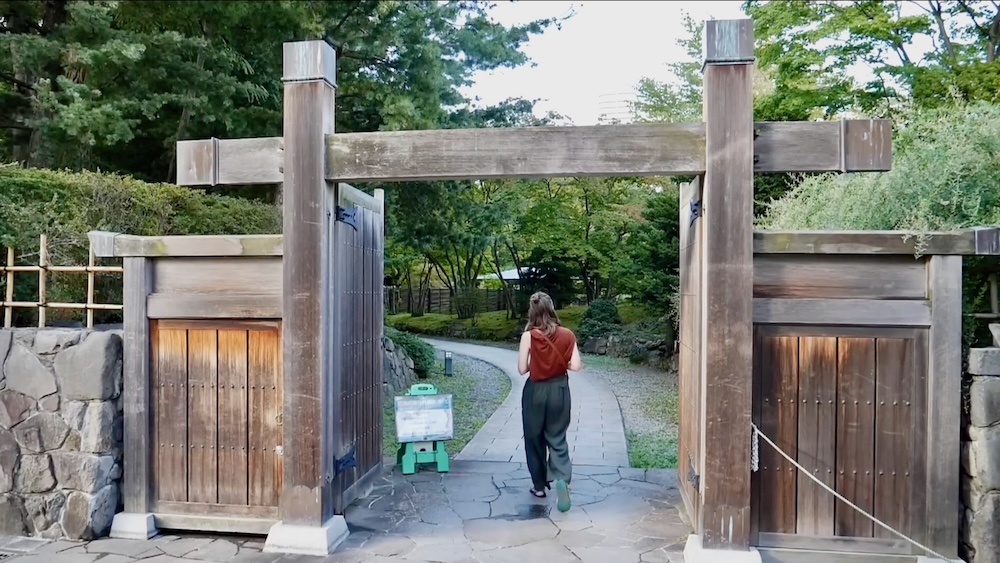
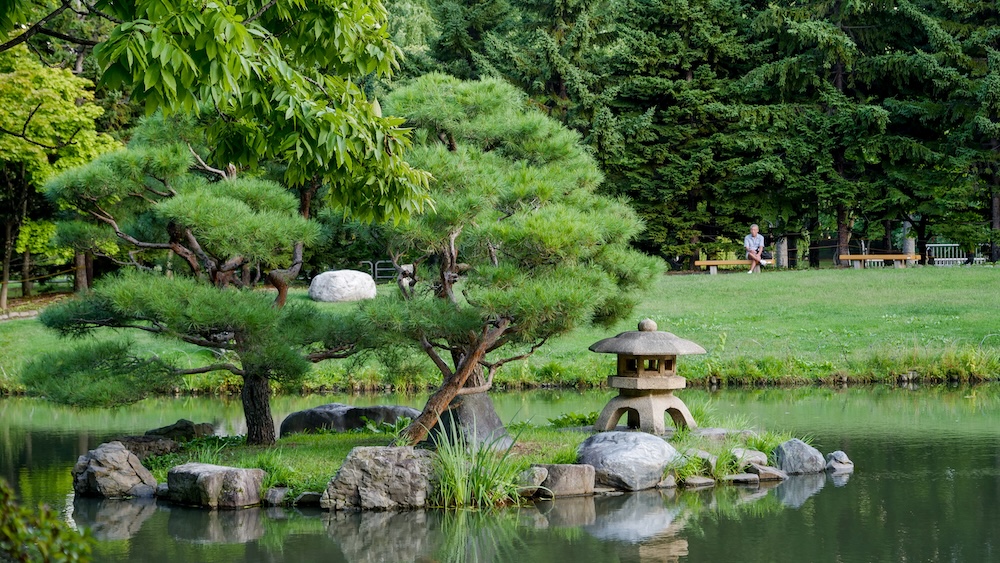
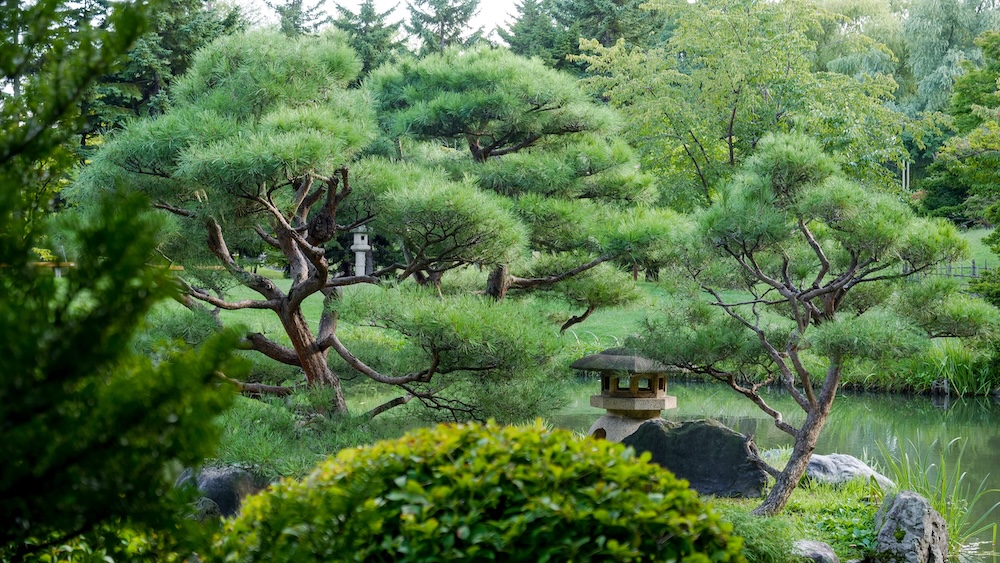
The entrance to Nakajima Park’s Japanese Garden doesn’t give much away. Audrey and I walked through the wooden gate, took a few more steps, and I was still wondering what we were supposed to be looking at. Then the garden opened up in front of us: sculpted pine trees, water, rocks and stone lanterns, all arranged with an almost ridiculous amount of care. For a place this carefully put together, it gave us very little warning.
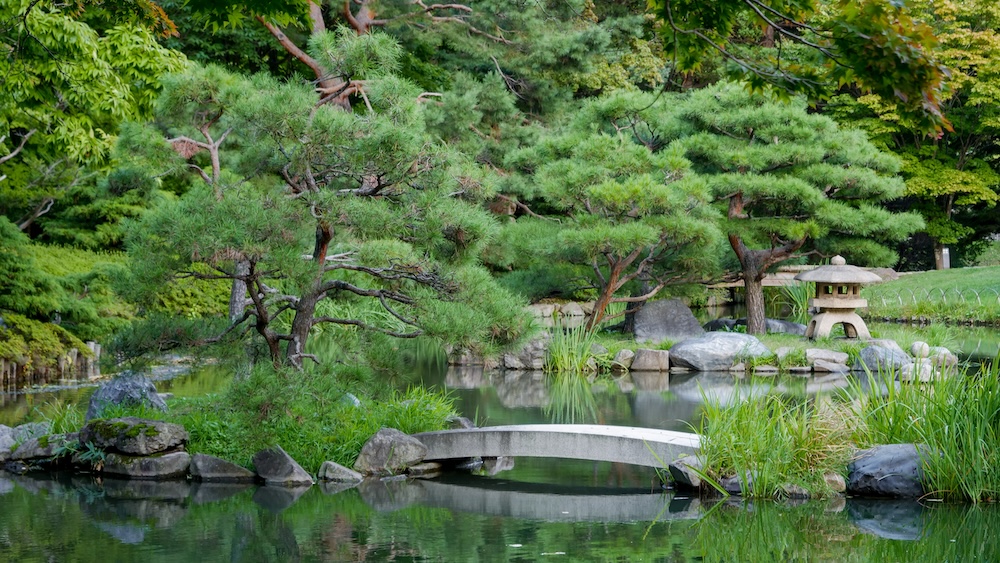
We didn’t have much time that day, but this became my favourite part of Nakajima Park. Audrey was just as taken with it, particularly how immaculate and harmonious everything felt. If you’re planning to visit, the one catch is timing: the Japanese Garden closes for winter, and its historic Hassoan Teahouse is generally something you admire from outside rather than walk into for tea.
Discovering the Japanese Garden Inside Nakajima Park
The garden opened in 1963, tucked within a park that otherwise feels like a regular part of everyday Sapporo. Around Shobu Pond, there are broader paths and open views; here, the landscaping feels more enclosed, and every change in perspective seems to reveal another small detail.
That slow reveal set the tone for the visit. Unlike a big open park where you can survey everything at once, this was a place to explore a few steps at a time. I don’t know whether the view unfolds in quite the same way from the other entrance, but from our approach the payoff was wonderful.
Audrey thought it was incredible. She was struck by the pristine planting and the way the different elements worked together without anything seeming out of place. I’m not normally someone who inspects every branch of a pine tree, but we were quite happy slowing down to do exactly that. We explored a decent section on foot before our time ran out, and the visit stayed with me long afterwards.

Ponds, Pine Trees, Stepping Stones and Squirrels
There’s plenty to appreciate once you’re properly inside. The pines have been shaped into broad, layered forms, some stretching over the water, while ornamental rocks and a small arched stone bridge break up the reflections in the pond. The garden also has twelve stone lanterns based on traditional designs. I liked how you could look at the same patch of water from a slightly different position and find something else worth photographing.
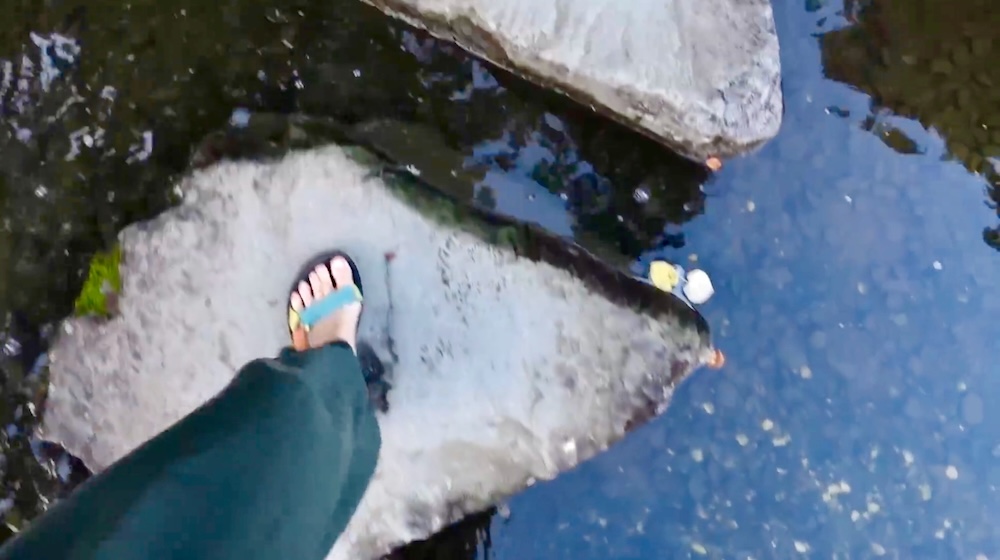
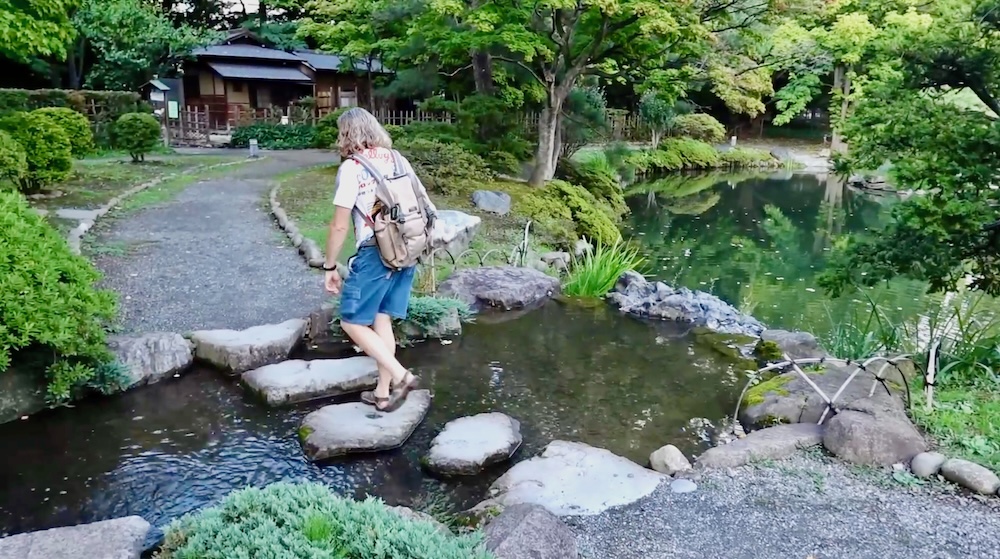
One of my favourite moments was crossing the large stepping stones set into the water. It was straightforward for me and a lot of fun, though I wouldn’t take that as a guarantee for every visitor or every set of conditions. Audrey and I also spotted a dark squirrel near the shrubs, along with a few others during our wander. They’re not an attraction you can schedule, of course, and it’s best to leave wildlife to find its own food.
The other thing I remember is the quiet. We weren’t sharing the paths with a crowd of people, and that helped enormously. Audrey found the garden tranquil and harmonious, and I understood exactly what she meant. You could pay attention to the shaping of the trees and the placement of the stones without feeling pushed along. It might be a different scene during peak autumn colour, but that was our experience.
Hassoan Teahouse: Can You Go Inside?
Hassoan is a tiny historic teahouse within the Japanese Garden, and its history goes back considerably further than the garden itself. Traditionally attributed to the tea master Kobori Enshu, who lived in the late sixteenth and early seventeenth centuries, it originally stood in Shiga Prefecture before being brought to Sapporo. Its name refers to its eight windows, and the building is protected as a National Important Cultural Property.
I remember wanting to explore Hassoan but thinking it was already closed when we reached that part of the garden. We were short on time, and I assumed arriving late might have been the problem. The important thing to understand, though, is that ordinary visitors can view Hassoan from outside but generally cannot enter its historic tea room. Even arriving first thing in the morning wouldn’t automatically get you through that door.
Occasional reservation-only tea experiences have taken place in Sanbun’an, the space adjoining Hassoan, but those are special events rather than a daily tea service. If sitting down for matcha is your goal, check the park’s announcements and make arrangements specifically for an advertised event. We didn’t take part in one, so I can’t review the experience; I just wish we’d had more time to appreciate the teahouse from the garden.
If you’d rather arrange a tea experience without relying on a special Hassoan event, another option is a kimono and matcha tea ceremony experience in Sapporo. This takes place at a separate venue in the Kita-Maruyama area, not at Hassoan, and includes kimono dressing, matcha preparation and traditional sweets. Audrey and I haven’t tried it ourselves, but it’s a bookable alternative if participating in a tea ceremony matters more to you than visiting this particular historic building.
Opening Season, Hours and Admission
The Japanese Garden is free to visit during its ordinary daytime season, but unlike the surrounding Nakajima Park, it doesn’t stay open all year. It generally opens from late April to early November, with normal hours of 9 AM to 5 PM. The season ended after November 3 in 2026, though that isn’t a fixed closing date for every year. Check the official Nakajima Park notices if you’re travelling around either end of the season.
Winter visitors can still explore the wider park; they just won’t be able to enter the enclosed garden. Also, free daytime admission doesn’t necessarily apply to special events. Autumn illumination evenings have sometimes used separate tickets and extended hours, so don’t assume that an event follows the regular access arrangements.
For an ordinary visit, there’s no admission fee to worry about. The thing I’d pay attention to is the closing time, especially if you’ve spent the afternoon elsewhere in Sapporo and are hoping to squeeze the garden in at the end.
How to Find the Entrance and Plan Your Visit
The Japanese Garden is inside Nakajima Park, near Hoheikan, the distinctive white-and-blue historic building. From Nakajima-koen Station on the Namboku subway line, Exit 3 makes a practical starting point; it’s roughly 400 metres to the Hassoan area. There are two entrances to the garden, so the gate you encounter depends on which part of the park you’re approaching from.
I’d allow around 20–30 minutes for a relaxed walk, with more time if you enjoy photographing the landscaping or want a closer look at Hassoan from outside. That’s my suggested allowance, not a stopwatch reading from our visit. The paths and stepping stones are also different propositions; I found the stone crossing easy, but if you need a step-free route, check the specific garden access arrangements rather than relying on my experience.
Audrey and I were staying near Nakajima Park, which made it easy to explore this part of Sapporo without travelling across town. If you like the idea of having the park and a subway station close to your accommodation, you can compare hotels around Nakajima Park. I wouldn’t choose a hotel solely to visit a small garden, but the wider park makes a lovely place to have on your doorstep.
For the rest of the park, including Shobu Pond and Hoheikan, I’ve put together a separate Nakajima Park Sapporo guide and review. I’d certainly include the Japanese Garden in that wider outing, and I would make an effort to get there while it’s open. Our visit was short, yet I can still picture the moment the garden opened up ahead of us. Next time, I’ll leave more room in the day to appreciate what was on the other side of that unassuming gate.
Frequently Asked Questions
Is Nakajima Park Japanese Garden worth visiting?
Absolutely. It was my favourite part of Nakajima Park, even though Audrey and I didn’t have much time there. The carefully shaped pine trees, ponds, stone lanterns and peaceful atmosphere made a lasting impression. Audrey was equally impressed by how immaculate and harmonious everything felt.
When is Nakajima Park Japanese Garden open?
The Japanese Garden normally opens from late April to early November, with regular daily hours of 9 AM to 5 PM. It closes over winter, although the wider Nakajima Park remains accessible. Exact seasonal dates can change, so check the official park announcements before visiting in spring or late autumn.
Is there an admission fee for Nakajima Park Japanese Garden?
Ordinary daytime admission is free during the garden’s opening season. However, special autumn illumination events have sometimes required separate tickets and offered extended evening hours. Don’t assume that admission arrangements for a special event are the same as for a regular daytime visit.
Can you go inside Hassoan Teahouse?
Normally, no. Visitors can admire the historic Hassoan Teahouse from outside, but its protected tea room isn’t generally open for walk-in visits. Occasional reservation-only tea experiences have taken place in the adjoining Sanbun’an. Audrey and I didn’t enter Hassoan or attend a tea ceremony during our visit.
How long should you spend in Nakajima Park Japanese Garden?
I’d suggest allowing approximately 20–30 minutes for a relaxed walk, with longer if you enjoy photography or want to appreciate Hassoan from outside. Our own visit was relatively short because of time constraints, but we still explored a decent section of the garden and found it thoroughly worthwhile.
How do you get to Nakajima Park Japanese Garden?
Take the Namboku subway line to Nakajima-koen Station and use Exit 3. The Hassoan area is roughly 400 metres away within Nakajima Park, near Hoheikan. The garden has two entrances. From the gate we used, the landscaping wasn’t immediately visible, but it opened up beautifully once we continued along the path.
Are the Japanese Garden stepping stones difficult to cross?
I found the large stepping stones easy and genuinely enjoyable to cross, and Audrey also crossed them during our visit. However, that’s our personal experience rather than a guarantee for everyone. If you require a step-free route or have specific mobility needs, check the garden’s access arrangements before visiting.
This guide is also available in Spanish. [Leé la versión en castellano: Jardín Japonés del Parque Nakajima: guía y reseña, temporada de apertura, casa de té Hassoan y cómo visitarlo]
This article contains affiliate links. If you book through one of these links, I may earn a commission at no extra cost to you.