
Honestly, our main reason for going to Otaru was logistics. It was our last stop in Hokkaido and the place to catch a ferry onward. Audrey and I took the train over from Sapporo, stayed one night in a small guesthouse, and left the next evening, and by then we’d both grown properly fond of the place. We didn’t do Otaru as a day trip, but we covered it the slow way, which turns out to be useful if you’re deciding whether a day trip from Sapporo is enough. We know what one day gets you, and we know what the extra night added. Below is how I’d plan a day trip now, when staying over is worth it, and how much of Otaru one day really covers.

Is One Day Enough in Otaru?
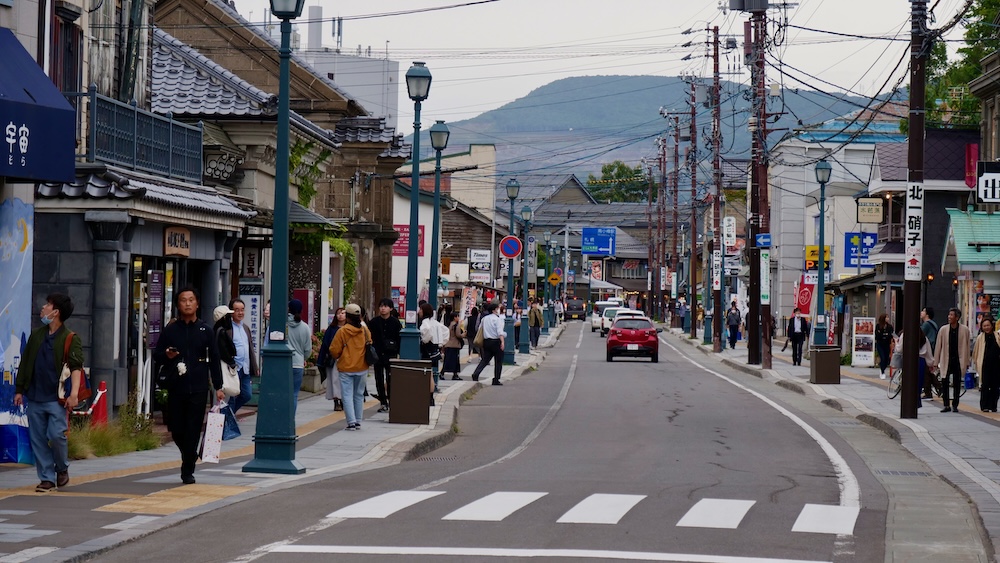
For the centre, yes. Otaru’s main sights cluster around the canal, the old warehouse district and Sakaimachi Street, and once you’re there everything is walkable. By the end of our stay, our verdict was simple: you only need about a day to properly explore it, because it’s compact and everything is focused on the centre. Audrey agrees, as long as the main central sights are what you’re after.
The limit matters, though. One day covers central Otaru, not all of it. The mountain viewpoint, the aquarium and the coast are separate outings, and if you want any of them you’ll need to choose one or give Otaru a second day. More on that below.
Getting From Sapporo to Otaru by Train
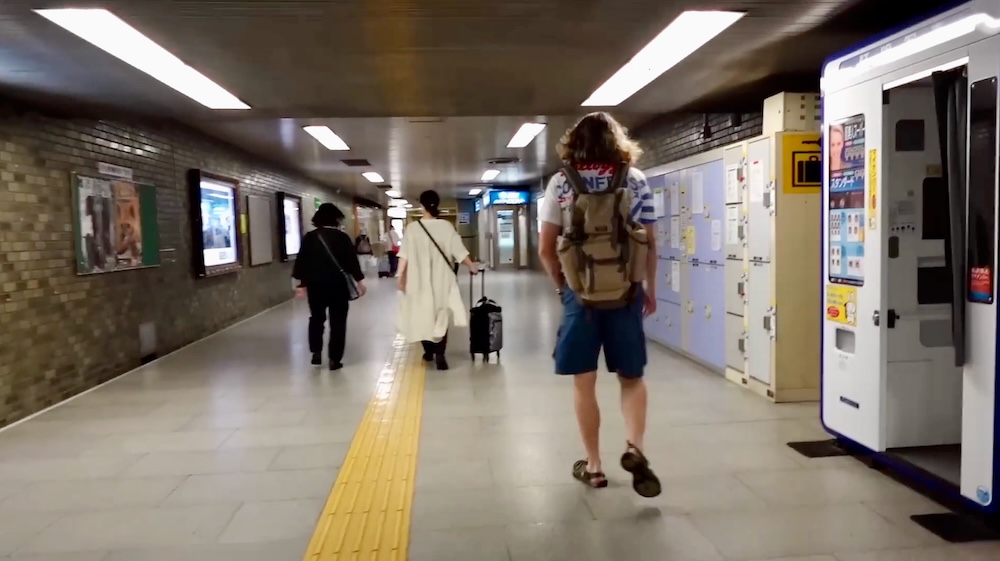
The train is the easy part. It felt more like a local commuter run than a tourist trip, and it was over quickly. Currently the JR rapid service takes about 32 to 36 minutes, the adult fare is ¥800 each way, and trains run roughly three times an hour, so you can turn up at Sapporo Station without worrying about a timetable. The Kosoku Otaru highway bus is a touch cheaper at ¥730 but takes nearly twice as long.
Our arrival was clumsier than yours needs to be. We had our bags, so the first order of business was dragging them to the guesthouse. It was a decent walk with some hills, and I remember thinking it was more tiring than it had any right to be. On a day trip you skip all that: leave your bags at your hotel in Sapporo, walk out of Otaru Station, and you’re at the canal in about ten minutes.
If you’re still choosing a Sapporo base with day trips like this in mind, staying central makes the morning departure painless. Odori is one short subway hop from Sapporo Station, and you can compare hotels around Odori in Sapporo if that’s the kind of base you want.
The train is simple enough that you don’t need a tour to get to Otaru. If you’d rather not handle any of the logistics yourself, though, there’s a guided Otaru and Hokkaido Shrine day trip from Sapporo that pairs Otaru with Hokkaido Jingu, the shrine on Sapporo’s western edge that we visited and loved. We haven’t taken this one ourselves.
Trains back to Sapporo run into the evening. Check the last convenient one before you sit down to dinner. I’d have no qualms about getting back into Sapporo at night.

Why the Canal Should Anchor Your Day
If you do one thing in Otaru, make it the canal, on foot and on the boat. Of everything we did, that’s what stuck with me most.
We stumbled into the cruise. After dinner we wandered down to the water around sunset, saw a boat about to leave, and bought tickets on the spot. Departures seemed frequent, and the trip took about 40 to 45 minutes. It goes well past the postcard stretch, out along the old industrial waterfront where canning factories and warehouses once handled the port’s cargo. Seeing that side of the city made the pretty part make more sense. Otaru was a working port long before it was a place for selfies.
Currently the day cruise costs ¥1,800 for adults and the night cruise ¥2,000, with children at ¥500. It loops from Chuo Bridge down to Asakusa Bridge and back, though the route can change with the weather and sea conditions. The commentary is in Japanese, with free audio guides in English, Chinese and Korean. Departure times shift month to month, and you can book on the Otaru Canal Cruise website up to 60 days ahead. That’s worth doing on a busy day, even if we got away with walking up.
The canal has a good backstory. It was finished in 1923 to ferry cargo between ships and warehouses. Once the port was modernised, it was nearly filled in for a road, until locals fought the plan for more than a decade. Half the waterway survived and was turned into the walking path you see today, which reopened in 1986.
What made our evening was the timing. The gas lamps come on at dusk, and the canal is a different place once they do. That’s the moment to build a day trip around, and when it arrives depends on the month. Around late June the sun sets near 7:20 p.m. By early October it’s around 5:20 p.m., and by late October about 4:30 p.m. In December it’s close to 4 p.m. In autumn and winter you get the lamps and still make it back to Sapporo for dinner. In summer, catching dusk means a late night.
How We’d Spend One Day
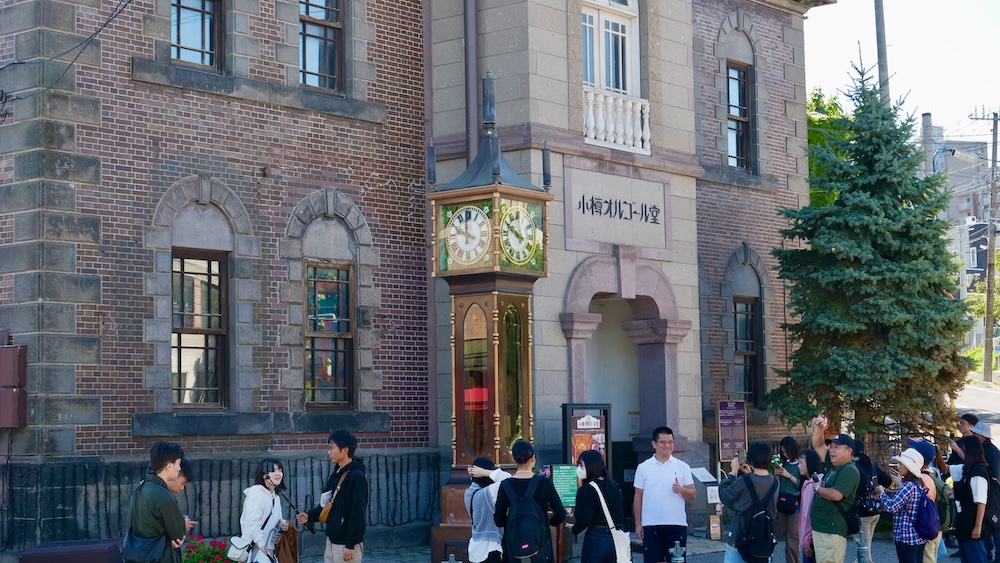
We did Otaru backwards from how I’d plan a day trip. We arrived around lunch, explored the warehouse district, had dinner at the brewery, cruised at sunset and saved Sakaimachi Street for the next morning. On a day trip, I’d flip that, and the reason is Kitaichi Hall. The lamp-lit café is currently open from 9:00 a.m. to 5:30 p.m., with last orders at 5:00 p.m., and staff light its lamps one by one at opening. You need to get there earlier in the day, and that pushes the canal to the end.
| When | What | Why |
|---|---|---|
| Morning | Train from Sapporo, then Sakaimachi Street, the Steam Clock and the music box shop | They’re close enough that we followed the music from one to the next |
| Late morning | Kitaichi Hall | It closes before dusk, and it was our favourite stop |
| Lunch | Somewhere in the centre | We had a cook-it-yourself beef cutlet set that was a lot of fun |
| Afternoon | The warehouse and glass district, and Otaru Beer if you want a drink | Easy to drift between the two |
| Late afternoon to dusk | The canal walk, then the cruise | Time it for the lamps coming on |
| Evening | Train back to Sapporo | Trains run into the evening |

A few notes on those stops. Kitaichi Hall is lit entirely by oil lamps, high-ceilinged and dim, and felt almost medieval. It may have been our favourite thing in Otaru, and we settled in to eat our cake and sip our iced coffee slowly. The Steam Clock is a quick, quirky stop if you catch it striking the hour. The music box place is more a giant shop than a museum. I walked every inch of it looking for an actual museum before working that out, but it’s still worth a look. The glass shops are beautiful, pricey and tightly packed, and I was very aware that one clumsy turn could become a two- or three-thousand-dollar souvenir. Otaru Beer, in a converted warehouse, felt like a little corner of Bavaria. The dark beer was a mighty fine pint and the warm pretzel was excellent, though the German-style food was forgettable.
What a Day Trip Leaves Out
A day trip gets you the centre and not much more. Otaru’s bigger outer sights each need a few hours, and trying to squeeze them in is where a day trip goes wrong. Pick one at most, or come back for a second day.
Mount Tengu is the mountain viewpoint above the city, about 20 minutes by bus from Otaru Station and then a short ropeway ride to the top. Currently the ropeway runs from 9:00 a.m. to 9:00 p.m. in the summer season (late April to early November) and until 8:00 p.m. in winter, and it closes for maintenance in April and November. A round trip is ¥1,800 for adults in summer and ¥2,000 in winter. Its night view is counted among Hokkaido’s three great night views, which makes it a natural add-on if you’re staying late anyway.
Otaru Aquarium is out on the coast at Shukutsu, about 28 minutes by local bus, and it needs 90 minutes to two hours. It’s seasonal; the most recent season ran from mid-March to late November, with adult admission at ¥1,800.
If you’ve seen photos of the Blue Cave, know that it changed recently. After a large rockfall at its entrance on July 17, 2025, boats stopped going inside, and the suspension is now indefinite. Coastal cruises still run along that stretch of coast, but they no longer enter the cave.
There’s also the option of looking further along the coast instead. A guided day trip combining Otaru, Yoichi Distillery and Cape Kamui on the Shakotan Peninsula covers ground that’s hard to reach on your own by train. Just expect less time in Otaru itself than if you’d gone independently, since the day is split across three stops. We haven’t done it, and we didn’t make it out to Yoichi or Shakotan on our trip.
We didn’t get to any of these. Each one would have meant cutting into the centre, which is why, for us, they’d be the reason to come back for a second day.

When Staying Overnight Is Worth It
The night in Otaru gave us two things a day trip wouldn’t. The first late afternoon and evening worked as an orientation: we got our bearings, ate, and caught the canal at dusk without watching the clock. The second day, with the ferry not leaving until evening, gave us almost a full day to finish things off while our bags sat at the guesthouse. More time, more comfort and less rushing.
We stayed at Plumhouse Guesthouse. Breakfast was a few things from a nearby convenience store, eaten back at the guesthouse with free tea and coffee in a communal tatami room full of colourful fans, with a kimono on the wall. That room was the best spot in the place, and the hosts couldn’t have been kinder.
If you’re deciding where to stay, the two practical choices are near Otaru Station, for the easiest trains, or near the canal, for evening atmosphere on your doorstep. You can compare hotels in Otaru, from the station area to the canal and decide which suits your evening. Overnight stays now carry a small lodging tax: from April 2026, it’s ¥300, ¥400 or ¥700 per person per night, depending on the room rate.
Day Trip, Day Trip Plus One Stop, or Overnight?
| Option | Time on the ground | Dusk canal | Outer attraction | Luggage | Best for |
|---|---|---|---|---|---|
| Day trip, autumn or winter | A full day | Easy, since sunset comes early | Skip | Leave it in Sapporo | First-timers based in Sapporo |
| Day trip, summer | A full day | Only if you stay late | Skip | Leave it in Sapporo | Anyone happy with a late train back |
| Day trip plus one stop | A long day | Possible if the stop is Mount Tengu at night | One, either Mount Tengu or the aquarium | Leave it in Sapporo | Early starters |
| Overnight | An evening plus most of a day | Yes, at your own pace | Room for one, or a slower centre | Leave it at your hotel | Anyone moving on from Otaru, or who wants a calm morning |
Whichever option you pick, it’s worth a quick look at what’s on offer before you go. You can browse current tours and activities in Otaru to see what’s running on your dates.
If Sapporo is your base and it’s your first visit, a day trip is enough. Do Sakaimachi and Kitaichi Hall early, save the canal for dusk, and in autumn or winter you’ll see the lamps come on and still be back for dinner. Stay overnight if the evening canal and an unhurried morning matter to you, if you want an outer attraction without rushing, or, like us, if Otaru is a stop on the way to somewhere else. Either way, I’d happily do everything we did again, starting with the canal.

Frequently Asked Questions
Is one day enough in Otaru?
For the centre, yes. We stayed overnight, and our verdict was that you only need about a day to properly explore it, because it’s compact and focused on the centre. One day covers central Otaru, not all of it: the mountain viewpoint, the aquarium and the coast are separate outings, so choose one or give Otaru a second day.
How long is the train from Sapporo to Otaru?
Currently the JR rapid service takes about 32 to 36 minutes, the adult fare is ¥800 each way, and trains run roughly three times an hour. The Kosoku Otaru highway bus is a touch cheaper at ¥730 but takes nearly twice as long. Our ride felt more like a local commuter run than a tourist trip.
What time should you see the Otaru Canal for the gas lamps?
Dusk, and when that arrives depends on the month. Around late June the sun sets near 7:20 p.m., by early October it’s around 5:20 p.m., by late October about 4:30 p.m., and in December close to 4 p.m. In autumn and winter you can see the lamps and still be back in Sapporo for dinner, while in summer catching dusk means a late night.
How much is the Otaru Canal cruise?
Currently the day cruise costs ¥1,800 for adults and the night cruise ¥2,000, with children at ¥500, and the cruise takes about 40 to 45 minutes. We walked up and bought tickets on the spot at sunset, but you can book on the operator’s website up to 60 days ahead. The commentary is in Japanese, with free audio guides in English, Chinese and Korean.
In what order should you do Otaru on a day trip?
I’d do Sakaimachi Street, the Steam Clock, the music box shop and Kitaichi Hall in the morning, then the warehouse and glass district, and finish with the canal walk and cruise at dusk. Kitaichi Hall is currently open from 9:00 a.m. to 5:30 p.m., with last orders at 5:00 p.m., so it has to come before the canal. We did it the other way round, over two days.
Can you add Mount Tengu or the aquarium to an Otaru day trip?
One at most. Mount Tengu is about 20 minutes by bus from Otaru Station, followed by a short ropeway ride, and the aquarium at Shukutsu is about 28 minutes by local bus and needs 90 minutes to two hours. We didn’t visit either, and for us they’d be the reason to come back for a second day.
Can you still visit the Blue Cave near Otaru?
Not inside it. After a large rockfall at the cave’s entrance on July 17, 2025, boats stopped going in, and the suspension is now indefinite. Coastal cruises still run along that stretch of coast, but they no longer enter the cave. We didn’t visit it.
When is staying overnight in Otaru worth it?
When the dusk canal and an unhurried morning matter to you, when you want an outer attraction without rushing, or when Otaru is a stop on the way somewhere else, as it was for us. Staying gave us an orientation evening and almost a full second day with our bags at the guesthouse. From April 2026, overnight stays carry a small lodging tax of ¥300, ¥400 or ¥700 per person per night, depending on the room rate.
This guide is also available in Spanish. [Leé la versión en castellano: Excursión de un día a Otaru desde Sapporo: ¿alcanza con un día? Tren, canal y opciones para quedarse a dormir]
This article contains affiliate links. If you book through one of these links, I may earn a commission at no extra cost to you.