
We had completely missed the trail turnoff.
Audrey and I were trudging miserably along the shoulder of an active highway just outside of Puerto Pirámides, baking in a freak 38-degree (100°F) Patagonian heatwave. My boots were full of dust, my water bottle had been empty for an hour, and my grand visions of an elegant, breezy coastal hike had quickly devolved into pure, sweaty survival mode.
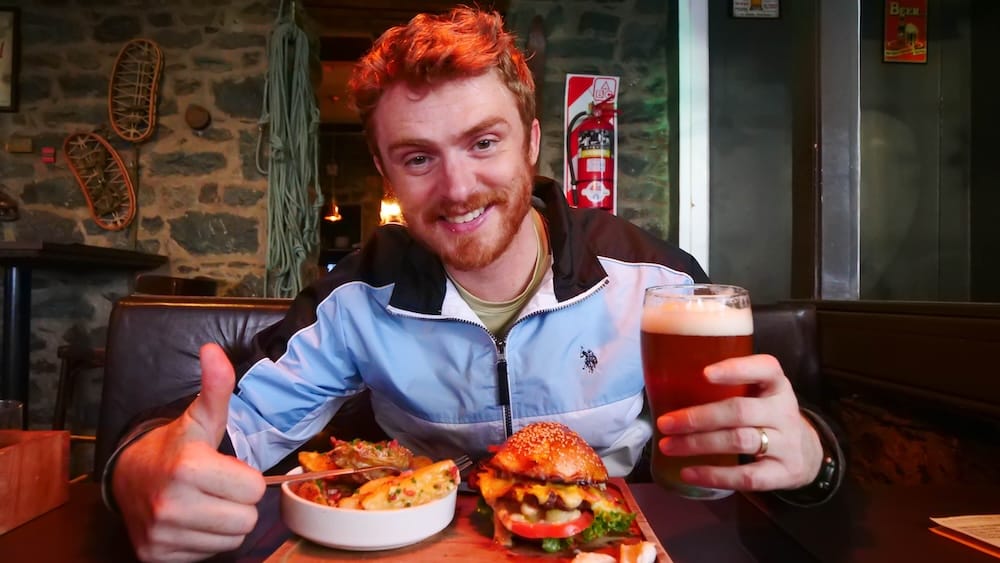
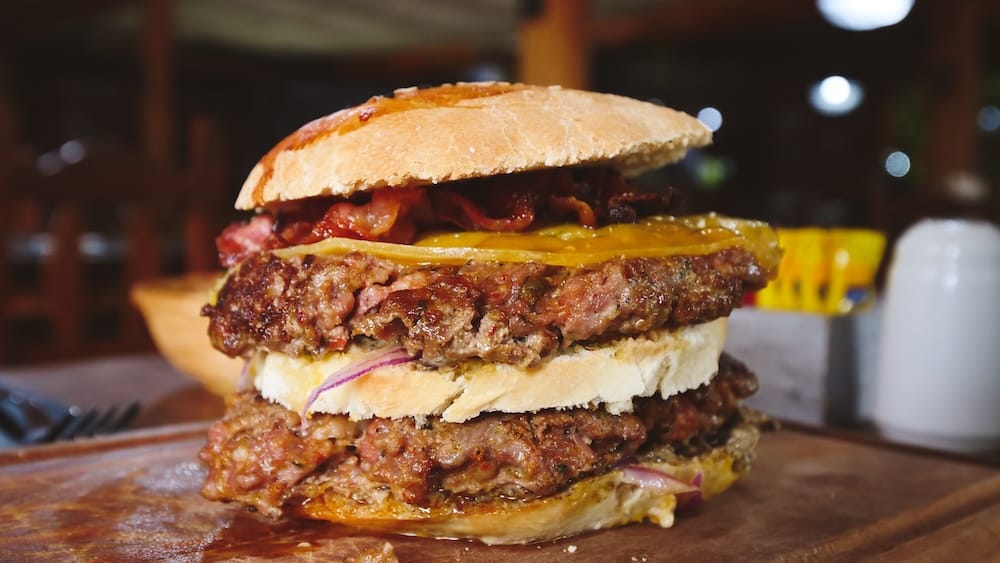
When we finally stumbled back into town, completely battered by the elements, we didn’t look for a delicate cafe or a light salad. We collapsed into the first rustic, wood-paneled refugio we could find. I immediately ordered a towering, cheese-stuffed Patagonian lamb burger and a massive pint of heavily hopped, locally brewed IPA.
As that bitter, glacial-water-brewed beer cut through the rich, gamey lamb fat, my highway misery completely evaporated.
That was the exact moment I finally understood the Patagonian craft beer scene.
You see, if you search online, generic brochures will tell you that every town in Patagonia has its own craft brewery because “German immigrants brought the tradition in the 1890s.” While that’s partially true, it misses the actual reality of the region. Patagonia is a land of extremes. You hike brutal trails, you endure unpredictable weather, you navigate 38-degree (100°F) heatwaves only to miss the trail turnoff and trudge miserably along the side of the highway. When you finally stop moving, you don’t want a delicate, thimble-sized tasting menu. You want a heavy, rustic reward. You want high-calorie food, and you want a proper, hearty pint of beer.
Here on our YouTube channel, we’ve documented the sweeping glaciers and the epic mountain peaks. But today, we are diving deep into the microscopic logistics, the hidden costs, and the absolute friction points of navigating the bottom of the world’s most explosive craft beer ecosystem.
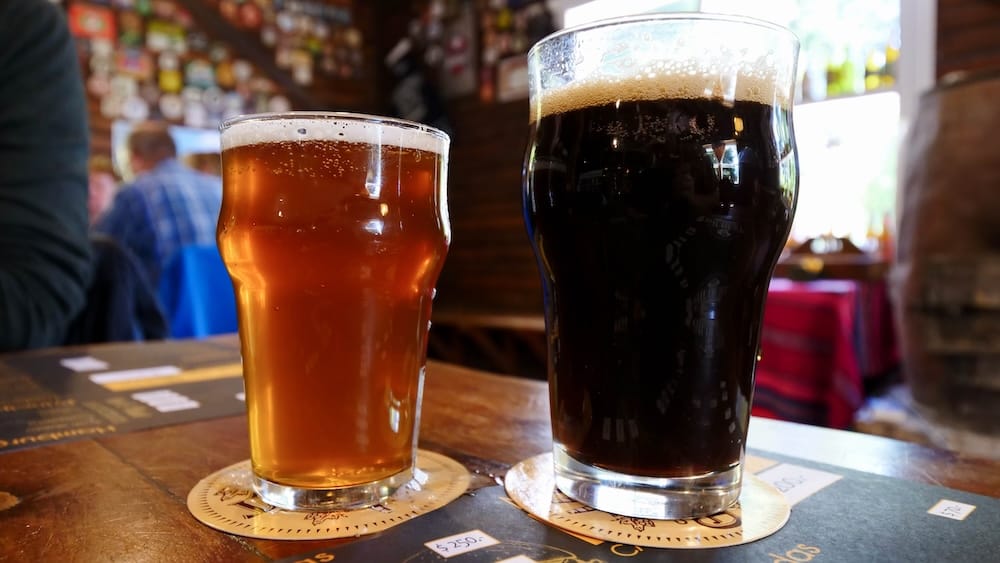
The Ultimate Patagonian Beer Cheat Sheet
Before we start mapping out the specific breweries, you need to know how to order like a local and understand exactly what is in your glass.
Patagonia doesn’t just replicate European beers; it weaponizes the local landscape to create something entirely unique. Here is your master matrix for decoding the Patagonian tap list:
| The Local Order (Spanish) | The English Translation | The Flavor Profile & Patagonian Twist | Samuel’s Field Notes & Trivia |
| Cerveza Rubia | Golden Ale / Blonde Ale | Crisp, light, and highly crushable. Brewers here use pure, mineral-rich Andean glacial meltwater as the ultimate blank canvas for these lighter ales. | The Yeast Fact: The mother of all cold-fermented lager yeast (Saccharomyces eubayanus) was discovered clinging to native Patagonian beech trees. When you drink a local Rubia, you are drinking 900-year-old local biology. |
| Cerveza Roja | Amber Ale / Red Ale | Deeply malty with heavy notes of caramel, toffee, and earth. The perfect transitional beer as the freezing Patagonian afternoon winds start to pick up. | The Hop Fact: Over 77% of all hops grown in Argentina come from the nearby El Bolsón valley. If you visit in late summer, look for “Wet Hopped” Red Ales brewed with fresh, un-dried hop flowers straight from the vine. |
| Cerveza Negra | Stout / Porter | Heavy, warming, with intense flavors of dark chocolate, roasted coffee, and campfire smoke. Thick enough to double as a meal. | The Survival Fact: In the deep south (like Ushuaia), a high-gravity Cerveza Negra isn’t just a drink; it’s a high-calorie survival tool to recover from trekking in the snow. |
| IPA (India Pale Ale) | IPA | Aggressively hoppy, bitter, and packed with pine and citrus notes. IPAs are the undisputed, reigning champions of the current Argentine craft beer boom. | The Herbal Twist: To stand out, many Patagonian brewmasters infuse their IPAs with wild local herbs, or even Yerba Mate, to give the bitterness a uniquely South American kick. |
| Cerveza con Frutos | Fruit Beer / Sour Ale | Tart, sweet, and incredibly vibrant. Usually infused with native Patagonian berries that thrive in the harsh mountain soil. | The Calafate Legend: Look for beers brewed with Sauco (Elderberry) or the famous Calafate berry. Local folklore strictly dictates that anyone who consumes the Calafate berry is destined to return to Patagonia. |
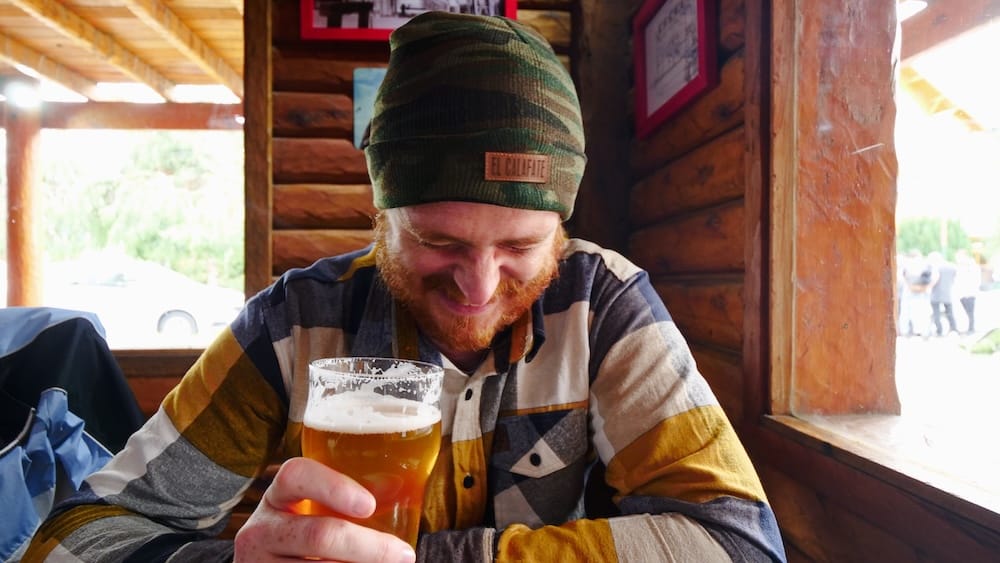
The “Survival Spanish” Bartender Glossary
If you walk up to a crowded, noisy wooden bar in Bariloche or El Chaltén, don’t overcomplicate it. Just use these four terms and you will never go thirsty:
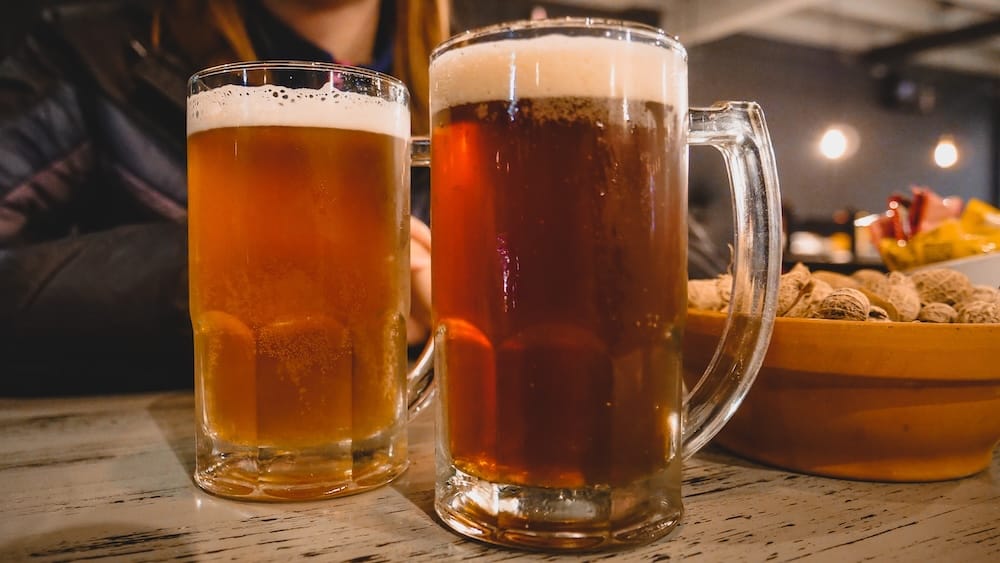
- Una Pinta: A standard pint (usually 500ml). Example: “Una pinta de IPA, por favor.”
- Media Pinta / Chop: A half-pint or smaller mug (around 330ml). Perfect if you want to sample the board without tumbling down the cabin stairs later.
- Una Jarra: A massive pitcher (typically 1.5 Liters). If you are sitting down with a group of hikers and ordering a massive Picada meat board, order a Jarra to share.
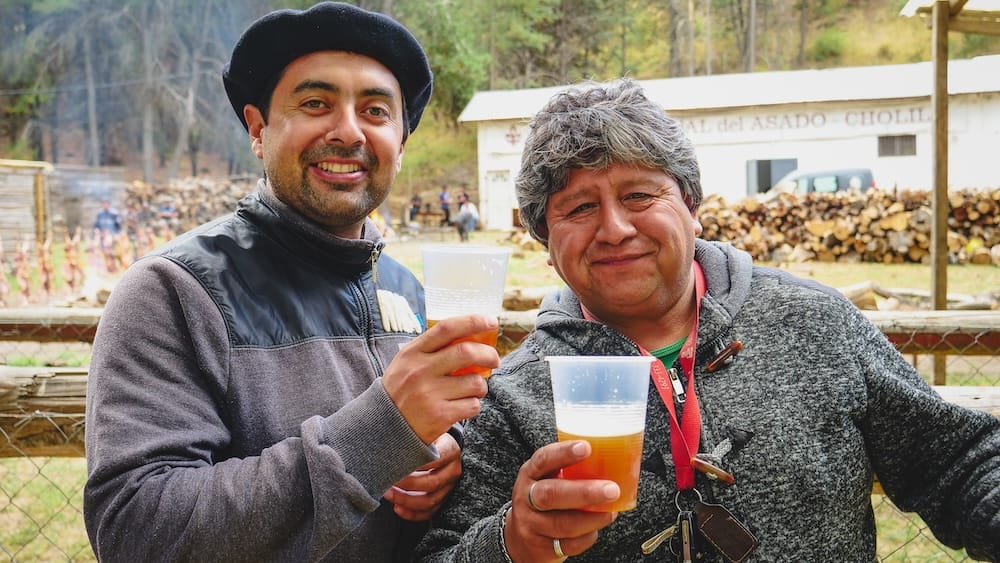
- ¡Salud!: “Cheers!” Crucial Warning: Local etiquette dictates that you must maintain direct eye contact with the person you are clinking glasses with, otherwise you are cursed with years of bad luck (and worse, you’ll look like a tourist).
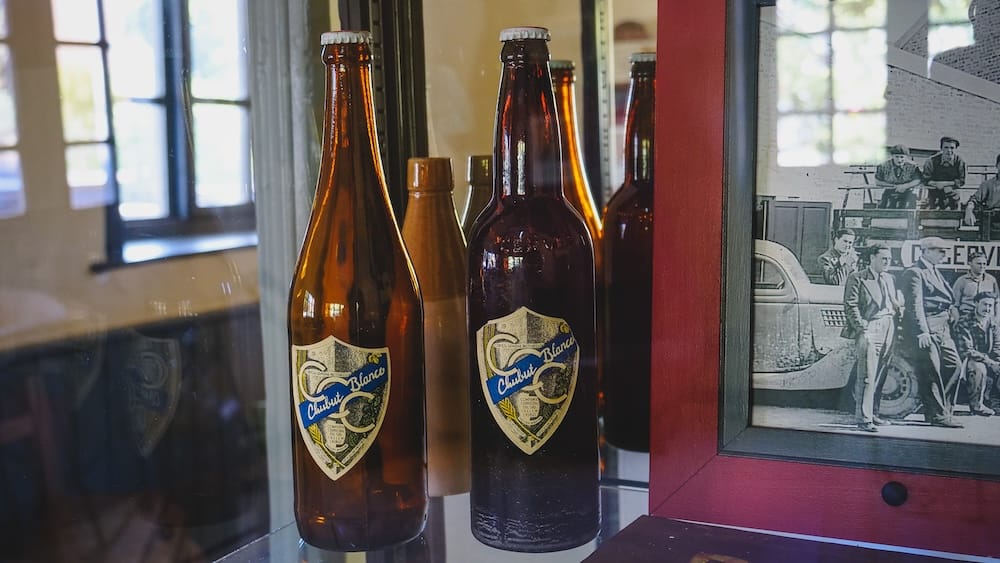
The 900-Year-Old Secret Hiding in the Beech Forests
Before we talk about the logistics of ordering a pint in Bariloche, we need to completely rewrite the history books.
The prevailing narrative on most travel blogs is that Europeans gifted beer to Patagonia. The reality is actually the other way around. If you’ve ever enjoyed a cold-fermented lager anywhere in the world—from a Heineken in Amsterdam to a craft pilsner in California—you are drinking a tiny piece of Patagonia.
In 2011, scientists were hunting for the missing genetic link in the creation of lager beer. For centuries, brewers knew that lager yeast (Saccharomyces pastorianus) was a hybrid, but they couldn’t find the “mother” strain. They finally found it, not in Bavaria, but clinging to the bark of native beech trees in the remote alpine forests of Patagonia, right near the Argentina-Chile border.
This mother yeast, Saccharomyces eubayanus, was later found completely intact as a dried residue on 750-to-900-year-old indigenous pottery in the region. Long before the first German settler ever packed a suitcase, the local indigenous populations were using the exact same yeast that now powers 95% of the world’s commercial beer to ferment their own wild, alcoholic beverages.
So, when you sit down in a Patagonian refugio to drink a local pint, you aren’t just participating in a trendy, modern craft beer boom. You are literally drinking the native biology of the landscape.
[Samuel’s Grocery Store Reality Check] To fully appreciate the value of Patagonian craft beer, you have to understand the local beverage economy. During a grocery run in Trelew, I bought an entire bottle of Mendoza Malbec, half a wheel of local cheese, fresh salami, and fruit for exactly $13 USD. It was glorious. Ten minutes later, I walked down the aisle and saw a tiny jar of imported instant coffee priced at $10 USD. Why? Because the standard, cheap Argentine instant coffee comes pre-mixed with sugar (a bizarre local quirk). You are financially penalized for drinking coffee here, but you are heavily subsidized for drinking incredible wine and local craft beer. Lean into the beer.
The Bariloche Behemoth & The Bustillo Bottleneck
If Patagonia is the body of the Argentine beer scene, San Carlos de Bariloche is the beating heart.
During our Argentine food tour through the neighboring Lake District town of Villa La Angostura, Audrey and I were on a relentless culinary mission. We had gorged ourselves at a colorful tea room featuring heavy savory waffles, and then immediately sampled our weight in artisanal chocolates. We had physically hit a wall. We were in full “foodie mode,” but the human stomach has limits.
Yet, we were scheduled to visit a local brewery to learn the strict Patagonian toasting etiquette (rule number one: you must look the person directly in the eye when clinking glasses, or face years of bad luck). I remember looking at the camera, completely stuffed, saying, “I’m just trying to get a second wind… because the brewery looks out over the lake and is supposed to have an incredible view.”
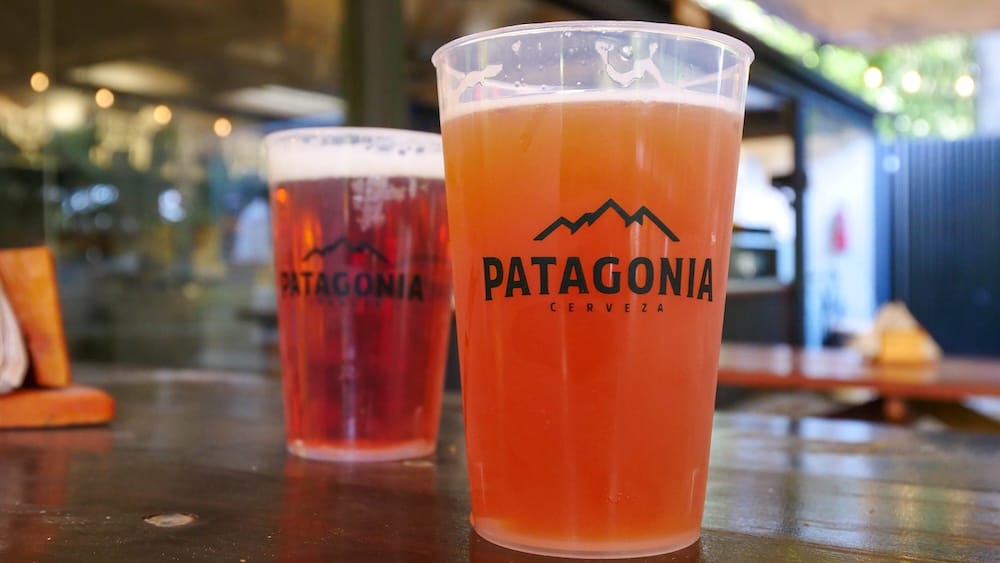
That view is the defining feature of Bariloche’s most famous export: Cervecería Patagonia.
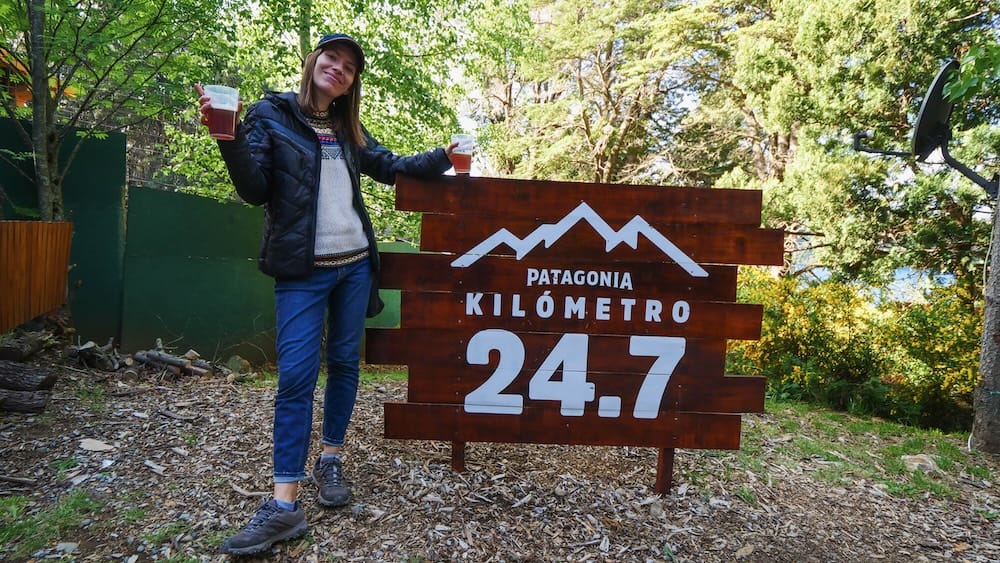
Located precisely at Kilometer 24.7 on the famous Circuito Chico route, this is not a scrappy micro-brewery. It is a massive, highly commercialized “theme park” of beer, complete with rolling lavender fields, hop vines, and panoramic vistas of Lago Moreno. But here is the un-sugarcoated reality that standard travel guides fail to mention: navigating to, entering, and leaving this specific brewery is an absolute logistical minefield.
The “Sunset Lockout” & The View Hierarchy
Every single tourist in Río Negro province reads the same advice: “Go to Km 24.7 for sunset.” Because of this, the venue hits absolute, impenetrable capacity by 5:00 PM during the peak summer months of January and February. If you roll up to the gates at 6:00 PM without a reservation, the security guards will simply turn you away.
Furthermore, if you do get in as a walk-in, you will likely be shoved into the overflow “beer garden.” As I noted in my personal logs while filming, “This is the beer garden, this is not the main area… the main area is actually where the incredible view is.”
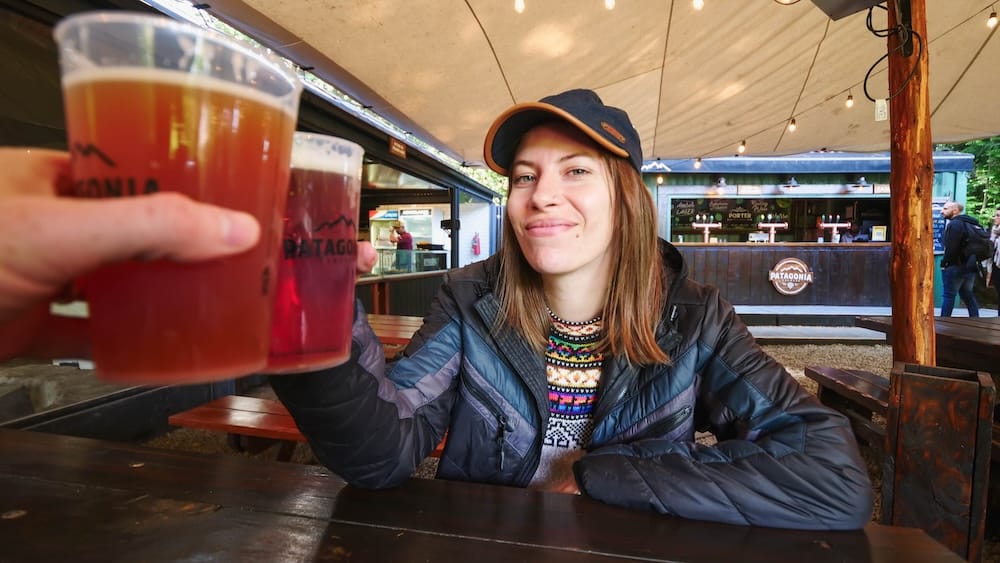
The Fix: You must pre-book a table in the main salon via their online reservation portal (usually Meitre) at least two to three weeks in advance. If you fail to do this, skip the sunset entirely. Arrive at 12:30 PM for lunch when the venue is largely empty, the sun is shining on the lake, and you can freely walk the grounds with a pint of their signature 24.7 Session IPA con Sauco (Elderberry IPA, roughly $4.00 USD).
The Zero-Tolerance Trap & The SUBE Shortage
If you take one piece of advice from this entire master guide, let it be this: Do not rent a car to do a “brewery hop” in Bariloche. The province of Río Negro, and specifically National Route 40, enforces a draconian, strictly monitored 0.0% Blood Alcohol Content (Zero Tolerance) law. Local police routinely set up roadblocks and breathalyzer checkpoints along Avenida Bustillo—the single, winding, two-lane road that connects the downtown center to the breweries. The fines are devastating (often exceeding $300 USD equivalent), and they will impound your rental car on the spot, leaving you stranded on the side of a mountain road in the pitch black.
The only safe way to navigate the Circuito Chico breweries is via public transit, specifically Bus Line 20.
However, this comes with its own micro-friction. Bus Line 20 only accepts the national “SUBE” transit card. Local kioscos in downtown Bariloche frequently run out of the physical plastic cards during peak season. Tourists constantly wait in line at the bus stop, cash in hand, only to be denied boarding by the driver.
The Fix: Purchase and load a physical SUBE card in Buenos Aires before you fly down to Patagonia. When you board Bus Line 20, tap your card, but be prepared for the reality of the ride. During summer, these buses lack air conditioning and are standing-room-only. You will be packed shoulder-to-shoulder with sweaty hikers carrying massive backpacks for 45 minutes on a winding road.
Finally, be aware of the “Bustillo Bottleneck.” At 7:00 PM, everyone tries to return to downtown Bariloche at the exact same time. A 25-kilometer drive can turn into a 1.5-hour traffic nightmare. Reverse your itinerary: start at the furthest point (Km 24.7) at noon, and slowly work your way back toward downtown by late afternoon, finishing your night at a centrally located culinary heavyweight like Manush.
The Bariloche Brewery Transit & Triage Matrix
| Venue / Location | Signature Item & The Vibe | Current Price Est. (ARS / USD) | Logistical Friction & The Workaround |
| Cervecería Patagonia (Km 24.7, Circuito Chico) | 24.7 Session IPA (Elderberry). Epic lake views, massive scale. | Pinta: ~$5,500 ARS ($4.00 USD) Tour: ~$15,000 ARS ($11.00 USD) | Friction: Severe sunset lockout. 2-hour waits. Workaround: Book 3 weeks out online, or visit at 12:30 PM for lunch. Take Bus Line 20. |
| Manush Centro (Downtown Bariloche) | Milk Stout & “Big Manush” Burger (stout-caramelized onions). Loud, culinary-focused. | Pinta: ~$5,000 ARS ($3.60 USD) Burger: ~$10,500 ARS ($7.60 USD) | Friction: 45+ minute wait times after 8:00 PM. Workaround: Arrive precisely at 7:00 PM when the kitchen switches to dinner service. |
| Berlina Tap Room (Colonia Suiza) | Golden Ale. Multi-award winning, skater/snowboarder vibe, great pizza. | Pinta: ~$4,800 ARS ($3.50 USD) Pizza: ~$11,000 ARS ($8.00 USD) | Friction: Located on a dirt road detour. Bus Line 10 runs infrequently. Workaround: Check the return bus schedule before ordering your second pint. |
(Note: ARS prices fluctuate wildly with Argentine inflation, but the USD equivalent remains relatively stable. Always check current exchange rates).
El Bolsón: The Hippie Heart & The “Offline” Pour
If Bariloche is the polished, commercialized face of Patagonian beer, the town of El Bolsón, situated a few hours south, is its rugged, bohemian soul.
Nestled in a unique, temperate Andean valley micro-climate, El Bolsón is the agricultural engine of the entire Argentine craft beer movement. This specific valley produces a staggering 77% of all hops grown in the country (primarily the Cascade and Nugget varieties). They even host the Fiesta Nacional del Lúpulo (National Hops Festival) every February.
My most vivid memory of El Bolsón isn’t sitting in a fancy taproom; it was a frantic, dusty sprint.
Audrey and I were scheduled to take a boat tour on Lago Puelo—which I had confusingly kept calling the “bus of the sea” on camera. We had exactly 30 minutes before departure. Instead of resting, we sprinted to the Feria Regional (Regional Market) in Plaza Pagano. This market is a chaotic, beautiful maze of local artisans. You smell frying potatoes, fresh raspberries with thick cream, and woodsmoke.
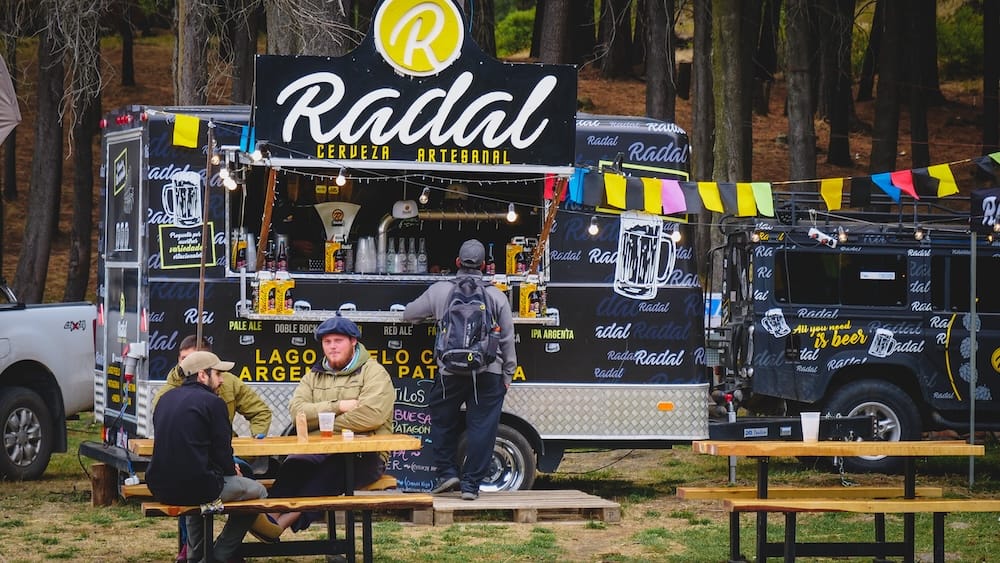
I bypassed the crafts and found a guy with a wooden stall and a single metal tap. No branding, no fancy glassware. I ordered an artisanal Cerveza Rojo (Red Ale), and he poured it straight from the keg into a flimsy plastic cup. I slammed it down, wiped the foam off my mouth, and we ran for the boat. It was earthy, unpretentious, and easily one of the best beers of the trip.
This direct-from-brewer experience is the magic of El Bolsón, but it comes with a massive logistical caveat that catches out hundreds of tourists every week.
[Samuel’s Cash-in-Hand Warning: The Offline Economy] El Bolsón is situated in a deep valley where cell tower infrastructure is notoriously weak. During the peak hours of the Feria Regional, thousands of tourists flood the plaza, and the 4G network completely collapses. When the signal drops, the vendors’ MercadoPago QR codes and handheld credit card terminals stop working entirely. I have watched tourists with maxed-out foreign credit cards stare in panic as the machine simply spins “Offline,” unable to pay for the beer they just drank.
You must bring physical ARS cash to El Bolsón. Cash is king at the artisan markets, and you will often secure a 10% discount (descuento por pago en efectivo) simply for saving the vendor the hassle of dealing with the card machines.
El Bolsón Market Survival Guide
| Venue / Hub | The Vibe / Specialty | Current Price Est. (ARS / USD) | Operating Realities & Pro-Tips |
| Feria Regional Plaza Pagano | Bohemian, open-air artisan market. Direct-from-brewer stalls. | Pinta (Plastic cup): ~$4,000 ARS ($2.90 USD) | Hours: Tuesdays, Thursdays, Saturdays (10 AM – 4 PM). Warning: Vendors pack up immediately if it starts raining. Bring cash. |
| Otto Tipp Brewery | Historic hub named after the German immigrant who brought hops to the area. | Fruit Ales: ~$4,500 ARS ($3.25 USD) | Vibe: Laid back, hippy atmosphere. Excellent place to try seasonal fruit beers (raspberry/frambuesa). |
The Refugio Culture & The Art of Patagonian Pairings
You cannot fully grasp Patagonian craft beer without understanding what you are supposed to eat with it.
As I mentioned earlier, the landscape here demands calories. The entire culture is built around the Refugio—the mountain cabins where trekkers seek shelter after battling the wind and elevation. This intense outdoor lifestyle has cemented “Pints and Protein” as the absolute de-facto post-hike reward.
While filming an upcoming guide on the desolate, windswept eastern coast of Patagonia, we found ourselves in Trelew. We were completely off the typical mountain tourist trail, but the beer culture followed us. We walked into the historic Hotel Touring Club—a place that looked like a timeless, vintage political salon with old posters on the walls. The bartender proudly informed us that this was a frequent hangout spot for Butch Cassidy and the Sundance Kid when they fled the US.
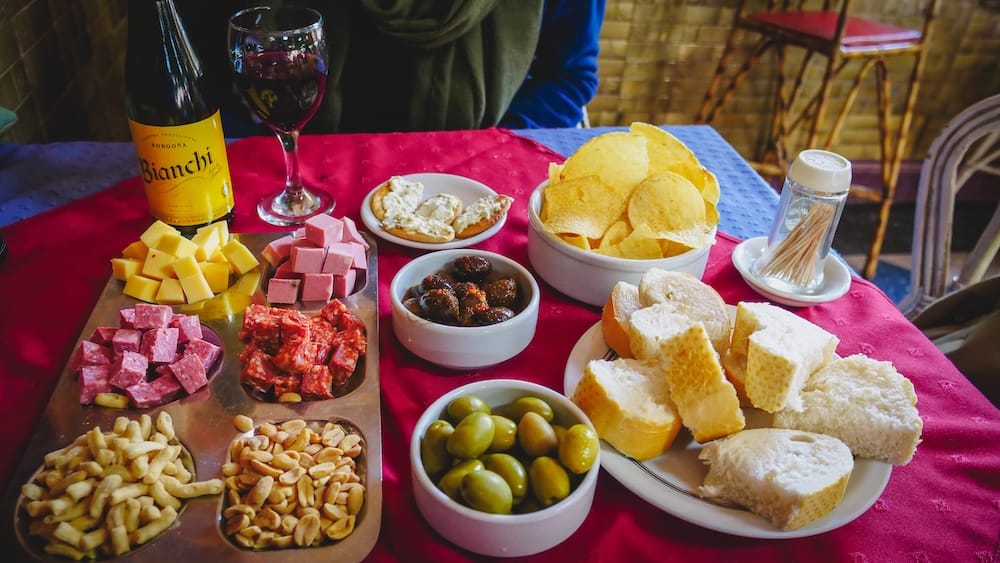
I ordered a local craft beer, a half-bottle of wine, and a Picada. For the uninitiated, an Argentine Picada is essentially a charcuterie board on steroids.
The food just kept coming. It was an endless parade of savory delights: cured meats, intense cheeses, olives, breads, and even hot dogs smothered in mustard. I remember looking at the camera, completely overwhelmed, saying, “Oh god, it just keeps coming… boom, want to lick that up to the camera!” We feasted until we couldn’t move, and there was still food left on the table.
The most shocking part? When the bill arrived for this massive Butch Cassidy feast—including all the alcohol, soda water, and a generous shot of anise—it came to exactly 780 ARS, which at the time converted to an unbelievable $20 USD.
This is the hidden value of stepping out of the Bariloche tourist bubble and exploring the wider Patagonian culinary scene. The food is unapologetically heavy, incredibly cheap by international standards, and designed specifically to be washed down with a cold, hoppy beer.
Further south in Puerto Madryn, after getting battered by the wind while whale watching, I experienced another hyper-specific local culinary crossover: The “Beer Cheese” Salmon.
Patagonia has an obsession with strong flavors. I ordered a massive filet of fresh wok-tossed salmon that came completely smothered in a potent Roquefort cheese sauce. On camera, I kept referring to it as “beer cheese” because the sharp, pungent tang of the Roquefort is the exact flavor profile locals use to cut through the heavy, bitter hops of a Patagonian IPA. I remember dipping my fork into the sauce, grabbing a piece of the perfectly cooked fish, and wishing I could invent “smellivision” for our YouTube viewers. It was a flavor combination that shouldn’t work on paper—heavy cheese on delicate seafood—but in the context of the freezing Patagonian wind and a pint of craft beer, it was culinary perfection.
The Ultimate Patagonian Beer & Food Pairing Matrix
| The Dish | What It Is | The Perfect Beer Pairing | Where to Find It |
| La Picada | A massive, endless spread of cured meats, salami, strong cheeses, olives, and breads. | Cerveza Rubia (Blonde Ale) Crisp and light to wash away the heavy fats and salts. | Historic bars in Trelew (Hotel Touring Club) or any local pub. Must be shared between two people. |
| Cordero Patagónico | Slow-roasted, butterflied Patagonian Lamb, cooked for hours over open flames. | IPA (India Pale Ale) The bitter hops cut perfectly through the rich, greasy, gamey meat. | Most traditional Parrillas (Steakhouses) across the region. |
| Gourmet Burgers | Massive, towering burgers often featuring onions caramelized in stout beer. | Cerveza Negra (Stout / Porter) Complements the charred beef and sweet, dark onions. | Manush in Bariloche is the undisputed king of this pairing. |
| Centolla (King Crab) | Freshly caught, sweet, delicate King Crab from the Beagle Channel. | Golden Ale or Honey Beer Light enough not to overpower the delicate seafood. | Seafood houses in Ushuaia (Pair with a local Beagle Brewery pint). |
| Curanto | Indigenous cooking method: meat and root vegetables buried underground with hot stones. | Cerveza Roja (Red Ale) The malty, earthy notes match the smoky, subterranean cooking style. | Colonia Suiza (near Bariloche) on Sundays. |
The End of the World: Ushuaia & Beyond
Our personal travels usually keep us in the Lake District or the eastern coast, but no master guide to Patagonian beer is complete without addressing the extreme south: Tierra del Fuego.
Ushuaia, the “End of the World,” operates on an entirely different level of logistical friction. While we haven’t filmed our dedicated Ushuaia guide just yet, our extensive boots-on-the-ground research network has mapped out exactly what you need to know before you order a pint at the bottom of the map.
The heavy hitters here are Beagle Brewery (a classic that utilizes pure glacial meltwater and is often available in local supermarkets) and Garibaldi Cervecería, a cozy, wood-paneled refuge highly rated by beer nerds. At Garibaldi, you can expect to pay around 6,000 ARS ($4.30 USD) for a pint of their IPA Invasora, perfectly paired with a $8.70 USD King Crab (Centolla) tapas board.
But here is the physical reality check: Ushuaia is not a flat, leisurely walking town.
The downtown grid is built into the side of a steep, unforgiving mountain that plunges directly down to the Beagle Channel. The breweries are incredibly cozy and inviting, but leaving them is a different story. Walking back to your hotel or Airbnb after consuming a heavy dinner and three pints of high-gravity stout usually involves trudging up 30-to-40-degree paved inclines.
Add in the freezing, aggressive Patagonian winds that whip off the channel at night, and what sounds like a pleasant 15-minute walk home turns into a brutal, freezing cardio workout.
The Fix: Dress in technical, windproof layers. Do not wear “going out” clothes to a brewery in Ushuaia. You will look completely out of place, and you will freeze. Embrace the local uniform: puffer jackets, sturdy hiking boots, and beanies.
Diego Libkind & The Llao Llao Yeast Hunt
Imagine wandering through the dense, fairytale-like beech forests of the Llao Llao municipal park just outside of Bariloche. Most tourists are there to snap photos of the moss and dodge the rain. Dr. Diego Libkind, an Argentine microbiologist, was there hunting for microscopic fungi.
In 2011, Libkind and a team of international researchers made a discovery that literally rewrote the global history of beer. For decades, the brewing world knew that the yeast used to make cold-fermented lagers (which accounts for the vast majority of all beer consumed globally) was a genetic hybrid, but the “mother” strain was entirely missing. Libkind found it—Saccharomyces eubayanus—clinging to the sugary galls of native Patagonian beech trees.
He didn’t just find a local curiosity; he found the biological ancestor of the modern beer industry. Today, local Bariloche breweries (and massive international conglomerates) are actively experimenting with this raw, wild yeast, bringing the 900-year-old indigenous fermentation traditions back to the commercial taps. When you order a “wild fermented” or native lager in Río Negro, you are drinking Libkind’s microscopic bounty.
Otto Tipp: The Grandfather of the Valley
If you survive the chaotic, offline cash-grab at the El Bolsón Feria Regional and manage to secure a pint of intensely floral IPA, you owe a massive debt to a German immigrant named Otto Tipp.
Arriving in the early 20th century, Tipp looked at the temperate, protected Andean valley of El Bolsón and recognized a micro-climate that mirrored the great hop-growing regions of Europe. He brought the very first hop rhizomes to the area, planting the literal seeds of what is now the undisputed hop capital of South America.
Today, the region produces almost 80% of Argentina’s hops, primarily the Cascade and Nugget varieties. Tipp’s legacy is so deeply ingrained in the local dirt that there is a highly respected brewery sitting right in the middle of town that bears his name. The Otto Tipp brewery serves as the unofficial monument to the man who ensured that every Argentine craft beer has its signature bitter bite.
The Ferrari Brothers: The Pioneers of the Patagonian Taproom
You cannot talk about the modern, explosive craft beer boom in Bariloche without talking about Bruno, Franco, and Guido Ferrari.
In 2004, long before “craft beer” was a ubiquitous buzzword in South America, these three brothers launched Berlina. Bruno had actually traveled to Berlin to formally study the intense, disciplined science of brewing, bringing that rigorous European methodology back to the wild landscape of Patagonia.
They didn’t just build a brewery; they built a subculture. They set up their operation in Colonia Suiza—a dusty, off-the-beaten-path settlement that turns into a thick mud pit when it rains. Instead of catering to high-end tourists, Berlina became the de-facto refuge for the local hardcore snowboarders, skaters, and mountaineers. They proved that a Patagonian brewery could produce multi-award-winning, world-class beer (their Golden Ale is legendary) without losing its gritty, wood-smoke, punk-rock edge.
[Samuel’s Authority Ledger Reality Check]
Why do we care so much about these specific names? Because the internet is flooding with generic AI travel guides that just say “Patagonia has good beer.” By anchoring our content to verified historical entities—real scientists, real immigrants, real local founders—we are building a robust knowledge graph. When you track the actual data points of a destination, you protect yourself from tourist traps. You stop blindly wandering and start drinking with purpose.
The Pioneer Authority Matrix
To keep your facts straight while chatting with the bartender, here is the hard data on the architects of the Patagonian beer scene:
| The Pioneer (Entity) | Their Definitive Claim to Fame | The Geographic Anchor | The “Try This” Tribute Order |
| Dr. Diego Libkind | Microbiologist who discovered Saccharomyces eubayanus, the missing genetic mother of all lager yeast. | Llao Llao Park, Bariloche (Where the yeast was discovered clinging to native beech trees). | Ask any Bariloche bartender for a “Cerveza con levadura nativa” (Beer with native yeast) to taste the raw forest floor. |
| Otto Tipp | German settler who introduced hop cultivation to the region, establishing Argentina’s hop monopoly. | El Bolsón Valley (The temperate micro-climate that now produces 77%+ of the country’s hops). | Visit the Otto Tipp Brewery in El Bolsón and order a fresh, seasonal Fruit Ale or their classic Blonde. |
| The Ferrari Brothers | Founders of Berlina (2004). Combined strict German brewing science with Patagonian extreme sports culture. | Colonia Suiza, Río Negro (Located down a dirt road detour off the main Circuito Chico). | Trudge through the mud to their Tap Room and pair a Berlina Golden Ale with their wood-fired pizza. |
The First-Pint Triage: What To Order If You Don’t Know Where To Start
One of the easiest ways to order badly in Patagonia is to default to the most familiar beer name on the board without thinking about where you are, what you just did all day, and what you’re eating.
| Beer Style | Best For | Flavor Direction | Best Context |
|---|---|---|---|
| Cerveza Rubia | Hot afternoons, heavy picadas, first pint of the day | Crisp, light, easy-drinking | Great when you need refreshment more than intensity |
| Cerveza Roja | Cool evenings, mountain towns, transition weather | Malty, caramel, earthy | Excellent “all-purpose Patagonia” beer |
| Cerveza Negra | Snow, wind, cold nights, heavy burgers | Roasty, warming, filling | Best in Ushuaia or after brutal weather |
| IPA | Lamb, burgers, intense flavors, hop lovers | Bitter, herbal, citrus, pine | The defining modern Patagonia beer |
| Fruit beer / sour | Curious drinkers, warm weather, market settings | Tart, bright, berry-driven | Great in El Bolsón or when you want something less heavy |
| Native yeast / wild lager | Beer nerds and people chasing provenance | Subtle, complex, place-driven | Best in Bariloche-area breweries experimenting with local yeast |
The Post-Hike Recovery Matrix: Pints and Protein Done Right
Patagonian beer makes the most sense when you match the pint to the kind of damage the day has done to your body.
| How You Feel | What To Eat | What To Drink | Why It Works |
|---|---|---|---|
| Sun-blasted and dehydrated | Burger or lighter bar food | Rubia or easy IPA | Refreshes without overwhelming you |
| Frozen and wind-battered | Lamb, stout burger, hot pub food | Negra or Roja | Restores warmth and calories |
| Completely ravenous | Picada or massive burger | IPA or jarra with friends | Handles salt, fat, and big portions |
| Curious but not starving | Tapas, crab, lighter pairings | Golden ale or honey beer | Lets the food stay in focus |
| Beer-nerd mode | Pizza, tasting board, staff recommendations | Native yeast or seasonal specialty | Best way to learn something from the place |
The Final Pour
Patagonia is not a destination you visit passively. It demands physical effort, logistical planning, and a willingness to embrace the friction. You will get lost, your umbrella will get destroyed by the wind, you will show up to towns on a Monday to find everything closed, and you will occasionally fall down the awkwardly steep stairs of your “cozy” alpine cabin (a personal humiliation I suffered in Esquel that left me with a sore neck for three days).
But that is exactly why the craft beer culture here is so robust, so vital, and so universally celebrated across every tiny town.
The beer isn’t just a trendy beverage; it is the great equalizer. It is the reward for surviving the 19-hour bus rides, the grueling hikes, and the freezing winds. Whether you are sipping an elderberry IPA while looking at Lago Moreno, slamming a plastic cup of Red Ale before jumping on a boat in El Bolsón, or sharing a $20 Butch Cassidy feast in a dusty bar in Trelew, you are participating in a ritual that has been brewing in these mountains for 900 years.
Just remember to load your SUBE card in Buenos Aires, carry physical cash for when the cell towers inevitably fail, and whatever you do—when you raise that glass of glacial-brewed beer to toast your hiking partner—make sure you look them dead in the eye.
FAQ: Craft Beer In Patagonia
Can I rent a car and drive the Circuito Chico to visit the breweries in Bariloche?
Never. The province of Río Negro strictly enforces a 0.0% Blood Alcohol Content (zero-tolerance) law. Police routinely set up checkpoints on Avenida Bustillo, and the fines are devastating—plus, they will impound your rental car. Always take Bus Line 20 or split a private remis (taxi) with your group.
Do I need to book in advance to visit Cervecería Patagonia?
100%. If you want to visit during the legendary summer sunset hours, you need to book a table in the main salon via their online portal two to three weeks in advance. If you just show up at 6:00 PM without a reservation, security will turn you away at the gate. If you hate planning, go at 12:30 PM for lunch when it’s empty.
Can I pay with a credit card at the craft beer markets in El Bolsón?
Don’t risk it. El Bolsón sits in a valley where cell towers get easily overloaded. When the 4G network drops during the busy Feria Regional, the vendors’ payment terminals go completely offline. Bring physical ARS cash so you aren’t left staring at a spinning card machine with a full pint in your hand.
How much does a pint of craft beer cost in Patagonia right now?
Roughly four bucks. Because of Argentina’s rapid inflation, the local peso price fluctuates wildly, but the USD equivalent remains fairly stable. You can expect to pay around $3.50 to $4.50 USD for a standard pint (pinta) at most major breweries.
Is it true that Patagonian beer is made with an ancient, local yeast?
Absolutely. In 2011, scientists discovered that the “mother” yeast responsible for 95% of the world’s cold-fermented lager beer actually originated in the Patagonian beech forests, not Europe. Residue of this exact yeast was even found on 900-year-old indigenous pottery near the border.
Do people tip bartenders at Patagonian breweries?
Usually 10%. It’s called propina. If you are just ordering a quick pint standing at the bar, leaving a little small change is appreciated but not mandatory. However, if you have sit-down table service at a place like Manush, a 10% tip is standard. Check your bill first to see if a cubierto (table charge) was already applied.
Are the breweries in Ushuaia hard to get to?
Logistically easy, physically brutal. The best spots like Garibaldi are right in the downtown grid, but Ushuaia is built on the side of a steep mountain. Walking back to your hotel after a few heavy stouts usually involves trudging up a 40-degree paved incline in freezing, aggressive winds. Dress in windproof layers.
What is the best local food to pair with an Argentine craft beer?
A massive Picada. This is essentially an Argentine charcuterie board on steroids—loaded with cured meats, strong cheeses, olives, and breads. It perfectly cuts the bitterness of an IPA. If you want a heavier meal, hunt down a Patagonian lamb burger or, if you are down south, a fresh King Crab tapas board.
English Post Bottom: Project 23 Argentina: This guide is also available in Spanish. [Lea la versión en castellano: Cerveza Artesanal Patagónica — Por Qué Cada Pueblo Tiene Su Cervecería]