
There’s a specific feeling that shows up a few hours after a long travel day in Patagonia, and nobody mentions it before your first trip. It isn’t quite tiredness. It’s more like a fog sitting behind your eyes — you can still check into a hotel, still order dinner, still hold a conversation, but small facts start slipping. You forget which country you woke up in that morning. You ask your partner a question they already answered. Audrey and I have hit this enough times, on enough separate trips down to Argentine Patagonia, that we’ve stopped chalking it up to bad luck and started planning around it instead.
That’s what this is actually about. Not whether Patagonia is worth the effort — obviously it is, or we wouldn’t keep going back — but what its scale and its weather do to a traveler over the course of a trip, and what we’ve learned, the slow way, about building enough slack into an itinerary that the fog doesn’t quietly take over the parts you actually came for.
The Math Nobody Warns You About
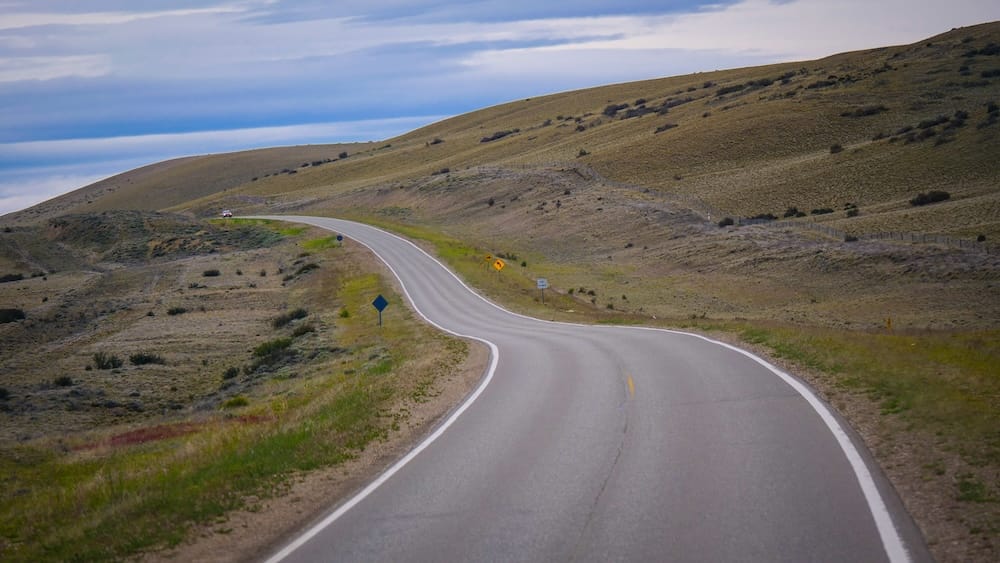
Most first-timers know Patagonia is big the way you know a number on a map is big — abstractly, until you’re the one sitting in a bus seat watching the same steppe scroll past for the sixth hour running. Our own trips have strung together a seventeen-hour overnight bus from Mar del Plata down to Puerto Madryn, a nine-hour overnight run from Trelew to Esquel, and, much further south, a combined bus-and-ferry day between El Calafate and Punta Arenas and on to Ushuaia that ran close to eleven and a half hours with the border stop included. None of that is unusual by Patagonian standards. A bus between El Calafate and Punta Arenas today still typically runs somewhere around nine and a half hours; the leg on to Ushuaia, ferry included, is still commonly ten to twelve. Try to connect Bariloche to El Calafate overland instead of flying and you’re looking at well over a full day on the road — which is exactly why almost nobody bothers.
What makes these numbers land differently than a similar drive somewhere else is that they’re rarely optional. There’s often no faster way sitting quietly on the same route, and the towns worth stopping in tend to sit a full transit day apart from each other. By the time we said out loud, somewhere between two overnight buses on one trip, that we needed to “travel slowly” from that point on, we weren’t being precious about pace. We were doing arithmetic.
What That Fatigue Actually Feels Like
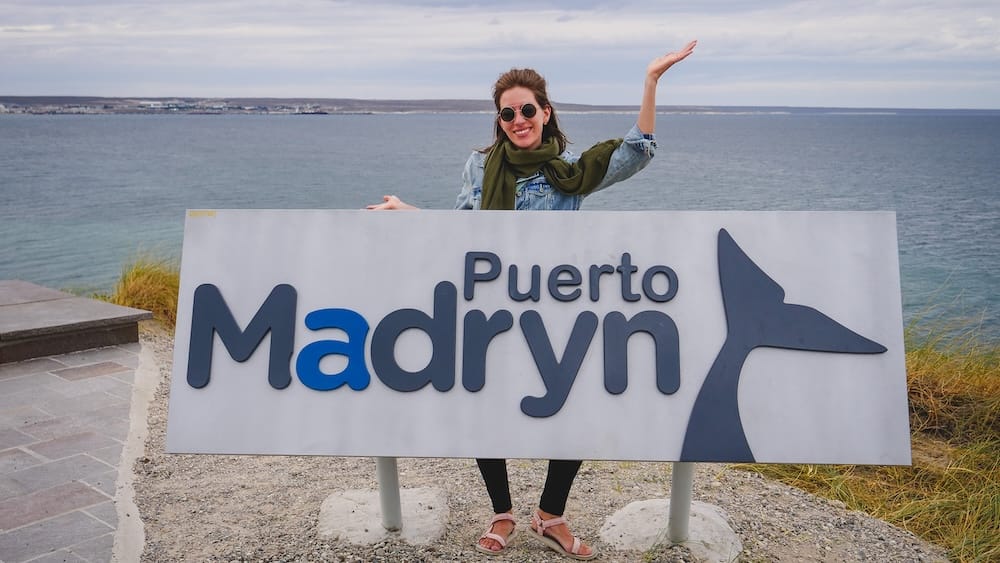
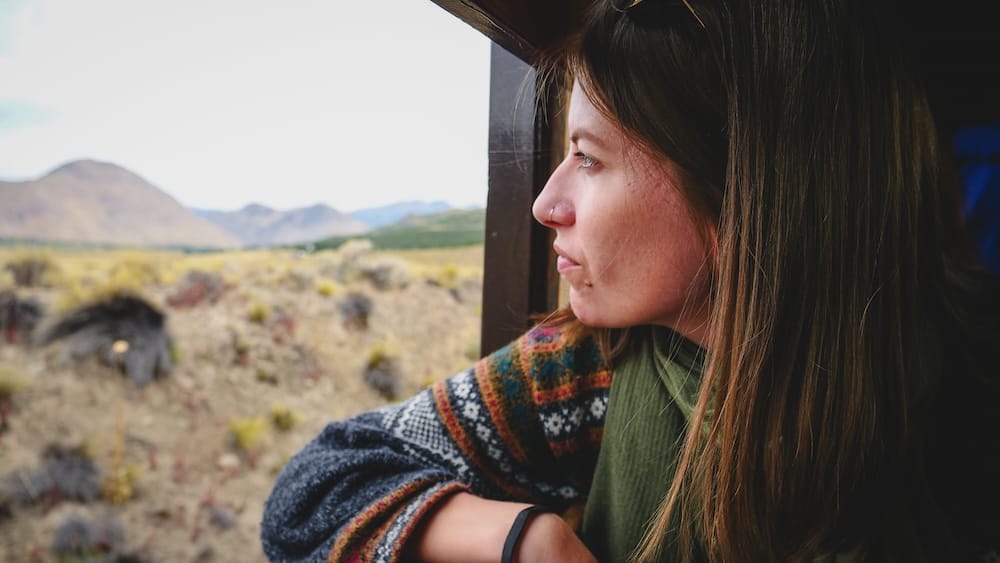
After the overnight bus into Puerto Madryn, we arrived disoriented even though we’d technically slept through most of it — it took a walk in the sun and a plate of food and a glass of wine before either of us felt properly human again. A similar overnight run into Esquel had us describing ourselves, without exaggeration, as being in “zombie mode” at six-thirty in the morning, running on maybe two or three hours of actual sleep. Neither of those was a disaster. They were ordinary Tuesdays, Patagonia-style.
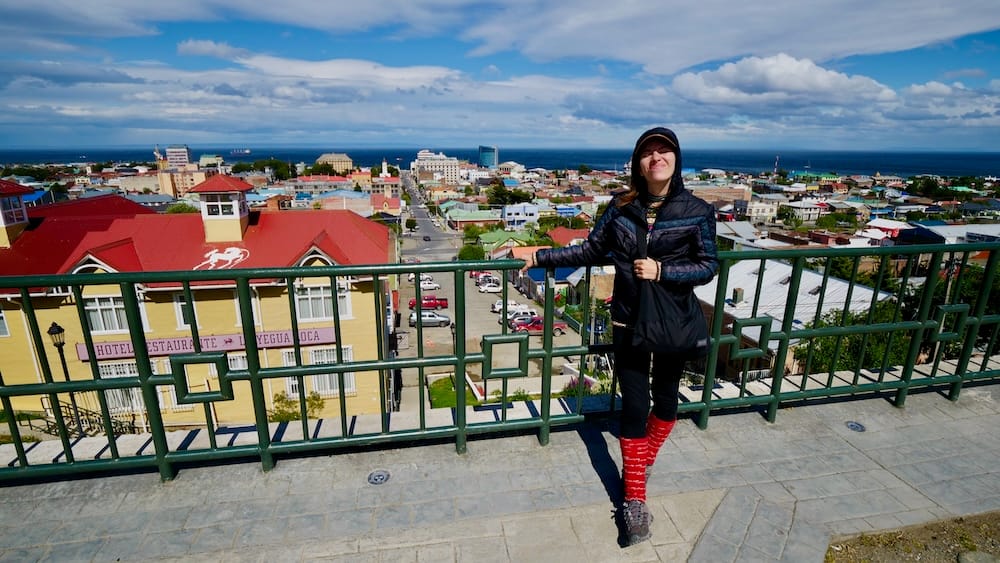
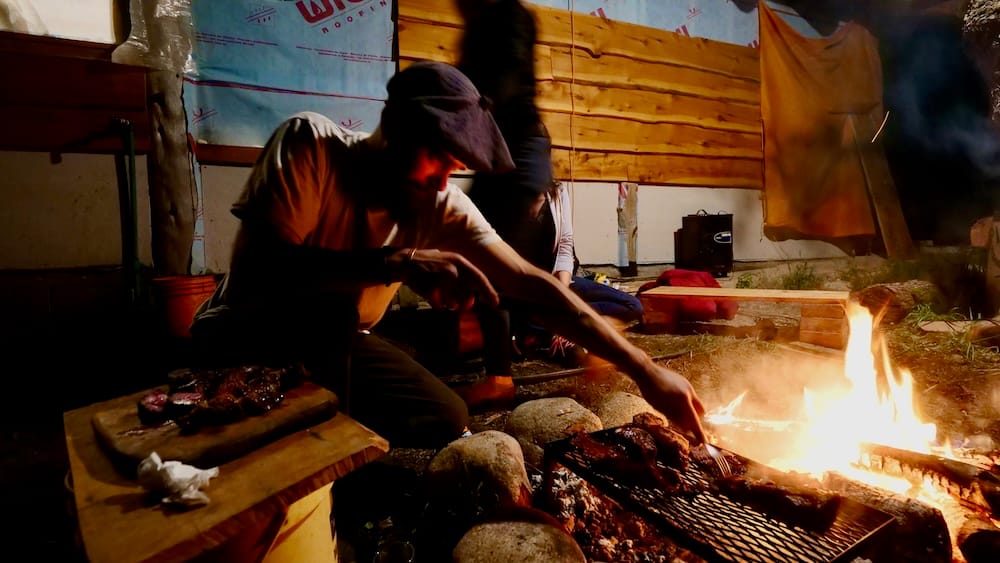
The clearest version of it happened much further south, on the road into Punta Arenas. We’d been on the move for close to three months by then with only the occasional real break, and by the time we sat down that evening we caught ourselves saying, almost in the same breath, that we just felt foggy — tired in a specific, head-behind-glass way that a nap alone wasn’t going to fix. So instead of trying to sightsee our way out of it, we built the evening around doing nothing: a fire, a bottle of wine we fought the cork on for a solid minute, food that didn’t require decisions. Deciding to do nothing took more discipline than it should have. Neither of us is naturally good at sitting still in a place we’ve traveled that far to see.
One thing we learned the hard way: not every long travel day costs the same. The overnight legs, where you’re at least horizontal through a few real hours of sleep, leave you groggy but recoverable. The full daytime ones don’t. Coming into Ushuaia after an eleven-hour combined bus, ferry, and border-crossing day with no real sleep in the middle of it, one of us — with a completely straight face — announced, several hours after leaving it, that we were currently in Chile. That’s not a comment on anyone’s intelligence. It’s what a full day upright in a bus seat does to two otherwise capable adults.
When the Plan Falls Apart
Fatigue is the predictable cost of distance, and it isn’t always just mental. On one especially long stretch of travel, our health wasn’t holding up either — colds, stomach bugs, the ordinary attrition of being on the road that long. We were, frankly, dropping like flies at various points, and the only sane response was to treat it as part of the deal rather than a crisis. The other half of this comes from everything else Patagonia doesn’t guarantee you: weather, opening hours, and our own mistakes.
We’ve made the mistakes ourselves, more than once. On one trip we were so sure our bus out of Río Gallegos left mid-afternoon that we’d arranged a late hotel checkout around it, and only discovered — reading the actual ticket that morning — that it left four hours earlier than we’d assumed. That cost us a frantic scramble rather than a lost day, but it taught us to treat our own memory of a departure time as something to double-check, not trust. The same stretch of the trip taught us to book excursions only a day or two out, once we could actually see the forecast, because the weather down there changes fast enough that booking further ahead just means booking blind. One first night in a wind-battered A-frame cabin near El Calafate was loud enough that we abandoned the upstairs bedroom entirely and slept downstairs on a pull-out sofa, fairly convinced the roof had other plans.
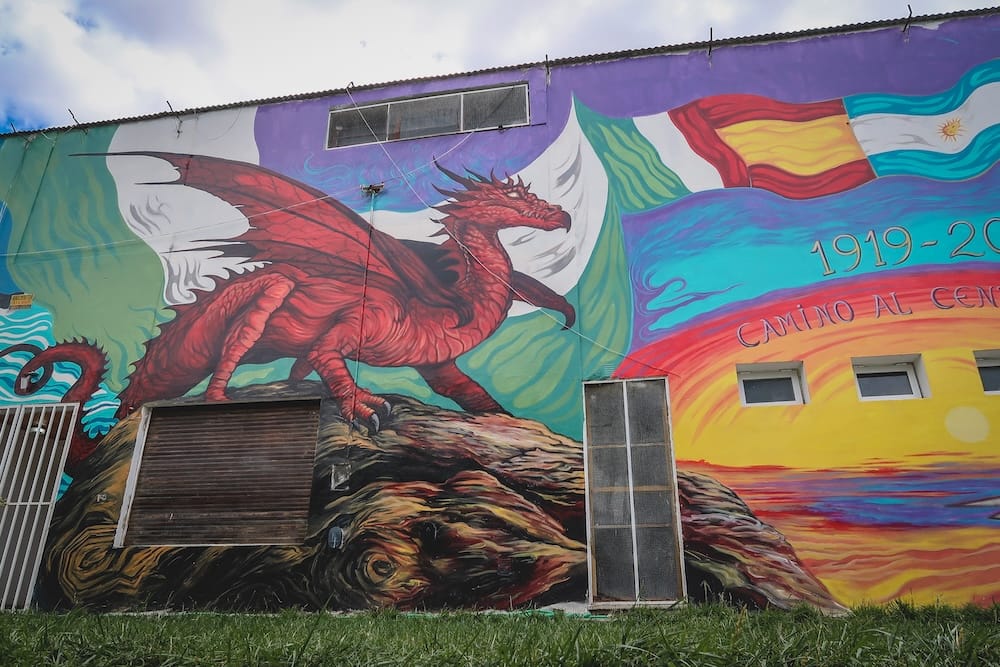
Small towns add their own unpredictability. In the Welsh-settlement towns of the lower Chubut valley — Dolavon among them — Mondays and Tuesdays are, by local pattern rather than bad luck, when almost everything shuts, restaurants included, on top of the usual siesta closure. We found that out on a day trip where every place we’d mapped in advance was locked up tight, and ended up wandering a nearly empty town, making friends with a pack of stray dogs, and lunching on gas-station peach juice and alfajores because it was the only thing open. It wasn’t the day we’d planned, and we put the footage up anyway — it’s a more honest picture of a Patagonian travel day than most of our polished ones.
Adaptation also runs the other way — toward places, not just around problems. We’d been warned off Comodoro Rivadavia by other travelers before we’d even arrived, painted as the one stop worth skipping on the coastal route. One good first day was enough to overturn that completely; it turned out to be one of the better introductions to a place we’ve had in Patagonia. Letting go of someone else’s verdict on a town turned out to be its own kind of flexibility.
None of those got solved by pushing through. Each one got solved by giving up on the original plan a little faster than pride wanted us to.
The Three-Day Minimum We Didn’t Believe In Until Fitz Roy
The advice we keep coming back to is embarrassingly simple to state and surprisingly easy to ignore while you’re actually building an itinerary: don’t switch towns every night, and build in more recovery time than feels necessary at the planning stage. We now treat three days as the real minimum for most Patagonian stops — the first one is functionally a write-off for arrival and settling in, which leaves two days that actually count. The longer a trip runs, the less that recovery time feels like a luxury.
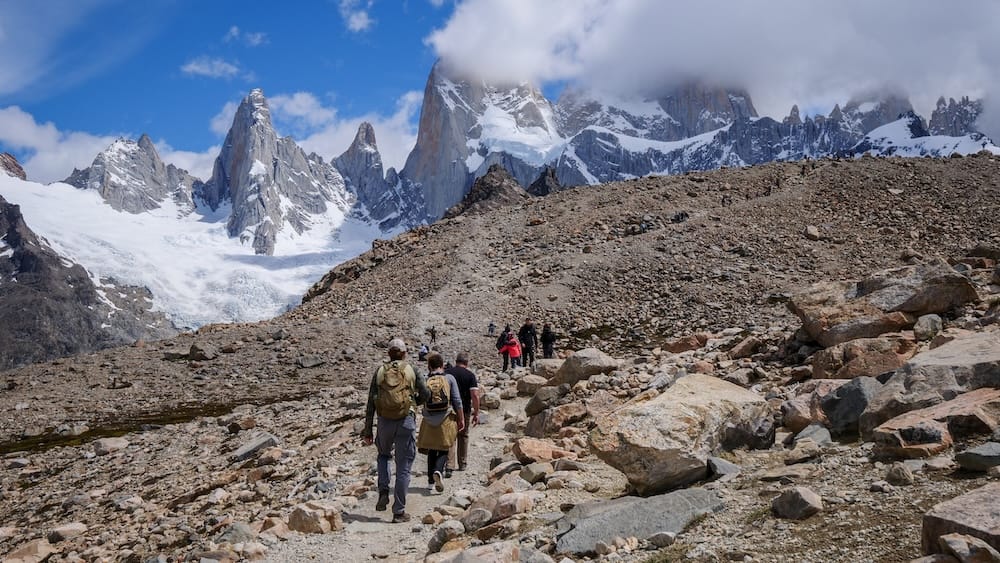
We learned this one physically, in El Chaltén, on back-to-back hikes that turned into an accidental lesson in pacing. We arrived underprepared — we’d spent the weeks before that trip prioritizing empanadas over cardio, and it showed. The hike out to Laguna de los Tres, beneath Mount Fitz Roy, is a genuine trek: something like twenty to twenty-five kilometers round trip with roughly eight hundred to twelve hundred meters of elevation gain, most of it stacked into one brutal final kilometer of loose scree. Somewhere in that last stretch, legs gone, I was seriously entertaining the idea of being carried out on a chair. We made it. I called it, on the spot, the best hike either of us had ever done. Audrey’s verdict took a beat longer and came with a condition — next time, she’d actually train for it first. We did the whole thing self-guided, which is entirely doable, but if a set pace and someone reading the weather for you sounds more appealing than our approach, browse guided treks to Laguna de los Tres — going with a guide who knows when to turn a group around is a perfectly legitimate way to see the same lagoon.
We also spent the entire next day doing nothing at all: no hike, no editing, not even a walk for food we had brought to us instead. Something like ten or twelve hours of sleep just to reset. A few days later we hiked out to Laguna Torre — a comparable distance, but with a much smaller elevation gain, most of it front-loaded early, and a long flat stretch after that. The difference showed immediately: there was no sense of urgency to that day, no clock we were racing, just an easy, almost relaxed few hours in the mountains. It’s a pairing enough guides now recommend doing in that order, precisely because one genuinely works as a recovery hike for the other. For us it wasn’t a hiking tip so much as physical proof of something we already half-suspected — exertion and recovery need to be planned as a pair, not left to sort themselves out afterward.
One thing that’s changed since our first trip: the park introduced a paid entry system for that northern trekking corridor back in October 2024, so if “just show up and hike for free” was part of your mental math, update it. Check the current entry requirements before you go, since the exact details tend to shift.
If you’re building El Chaltén into your own itinerary, the three-day minimum is worth taking seriously before you book, not after you arrive exhausted and wish you had. Browse places to stay in El Chaltén with that extra buffer night already worked into the reservation, rather than squeezing two big hikes and a travel day into the tight two-night stay most first itineraries default to.
Some Days Need Nothing On Them
Not every adjustment we’ve made came from getting knocked down first. On one trip through the Argentine Lake District, we blocked out a full week in El Bolsón with no filming plan at all — the honest version, not the kind where you say that and then still shoot ten hours of footage anyway. The camera never made it all the way out of the bag most days, but the stretch itself was about as unplanned and unhurried as anything we’ve done in Patagonia: visiting a few dogs and cats around town we’d gotten attached to, an easy flat hike with friends that asked nothing of anyone’s legs, a dance party that had no real reason to happen and happened anyway. It’s still one of our favorite stretches of any Patagonia trip, and none of it would show up on a highlight reel of things to do.
The reason it matters here isn’t nostalgia. Every other adjustment in this piece is reactive — something went wrong or wore us out, and we changed course in response. El Bolsón was the one time we built the slack in on purpose, before anything forced our hand, and it held up at least as well as any recovery day we backed into out of necessity. Somewhere around that stretch of the trip we noticed something shifting in us too — a genuine preference for small, quiet, unhurried towns over the bigger destinations, not as a consolation prize but as the actual draw. If you’re planning a longer Patagonia trip, it’s worth building in one stretch like that on purpose, rather than waiting for your body or the weather to make the decision for you.
What ties all of this together isn’t any single hike, bus ride, or empty Monday in a Welsh town — it’s learning to catch your own signal early enough to act on it, and, when you can manage it, building the slow stretch in before you need one.
| Signal | What it looked like for us | The adjustment |
|---|---|---|
| Fog after a long travel day | Disoriented, mixing up basic details, running on autopilot | Built an actually low-key evening in — no sightseeing, no agenda |
| Full-body soreness after a hard push | Couldn’t do anything the next day, slept ten-plus hours | Paired any big physical day with a deliberately easy one right after |
| A town that just isn’t cooperating | Everything closed, the plan collapsing in real time | Lowered the day’s expectations instead of forcing the original one |
| Weather turning before a booked excursion | Tours booked, then reshuffled or a room changed overnight | Kept bookings loose — a day or two out, never further |
| Feeling “out of rhythm” getting back into travel mode | Fumbling routines we used to do without thinking | Treated the first day or two of any leg as a soft landing, not full speed |
None of this makes Patagonia difficult, exactly. It just doesn’t let you fake your way through a bad itinerary the way some destinations do — the distance and the weather will find the gap eventually. The trips of ours that have actually worked weren’t the ones where we pushed the hardest. They were the ones with enough slack built in — an extra night here, an easy day tacked onto a hard one, a whole week with nothing planned when we could manage it — that when Patagonia asked something of us, which it always does, we still had something left to answer with.
Frequently Asked Questions
Why does travel in Patagonia feel more exhausting than other trips?
Distance is the real reason. The towns worth stopping in tend to sit a full transit day apart, with no faster option quietly waiting on the same route, so long overnight buses and combined bus-and-ferry days become normal rather than exceptional.
Is it better to take overnight or daytime buses on long routes?
Overnight, if you have the choice. We learned the hard way that daytime legs without real sleep leave you noticeably foggier than an overnight bus where you’re at least horizontal for a few hours.
How many days should I plan for each stop in Patagonia?
We now treat three days as a real minimum for most stops — one day to arrive and settle in, and two that actually count. Shorter than that and recovery time starts eating into the trip itself.
Is the hike to Laguna de los Tres beneath Fitz Roy difficult?
Yes. It’s roughly twenty to twenty-five kilometers round trip with somewhere between eight hundred and twelve hundred meters of elevation gain, most of it packed into one steep, scree-covered final kilometer. Going in undertrained made it considerably harder for us.
Is Laguna Torre an easier hike than Fitz Roy?
Considerably. It covers a similar distance but with far less elevation gain, most of it early on, followed by a long flat stretch. Enough guides recommend hiking it the day after Fitz Roy that it’s become an informal recovery hike for the harder trek.
Do you need to pay to hike in the Fitz Roy trekking area near El Chaltén?
As of October 2024, yes — the park introduced a paid entry system for that northern trekking corridor, which wasn’t the case on our earlier trips. Requirements shift, so it’s worth checking the current rules before you go rather than assuming free entry still applies.
Why were so many businesses closed when visiting Dolavon?
Dolavon is one of the Welsh-settlement towns in the lower Chubut valley, and Mondays and Tuesdays are, by local pattern rather than bad luck, when almost everything shuts on top of the usual siesta closure. We found that out by arriving on exactly the wrong day.
Is Comodoro Rivadavia worth visiting despite its reputation among other travelers?
We’d been warned off it before we even arrived, and one good first day was enough to overturn that completely. It ended up being one of the better introductions to a place we’ve had anywhere in Patagonia.
Project 23 Argentina: This article is also available in Spanish. [Leé la versión en castellano: El lado mental de viajar por la Patagonia: cansancio, ritmo y adaptación]
This article contains affiliate links. If you book through one of these links, I may earn a commission at no extra cost to you.