
Patagonia is an easy place to spend money on tours before you have worked out whether you need them.
Search for almost any glacier, lake, estancia or penguin colony and you will find a wall of excursions: premium cruises, full-day circuits, adventure packages, guided transfers and several products that appear to be the same outing wearing slightly different trousers.
Audrey and I have taken some Patagonia tours that were worth every peso. A few reached places we could not visit alone. Others removed a miserable amount of driving, supplied equipment we did not own or rescued us from activities we would have been hopeless at without instruction.
We have also visited some of Patagonia’s biggest attractions independently and enjoyed them more because nobody was moving us along.
That is the useful distinction.
This guide focuses on Argentine Patagonia, where we have firsthand experience with glacier cruises, wildlife circuits, boat excursions, estancia days, horseback riding, fly fishing, national parks and long drives into the steppe. I am not trying to crown one operator or assemble an enormous shopping list. I want to answer the more important question: which kinds of Patagonia tours actually deserve a booking?
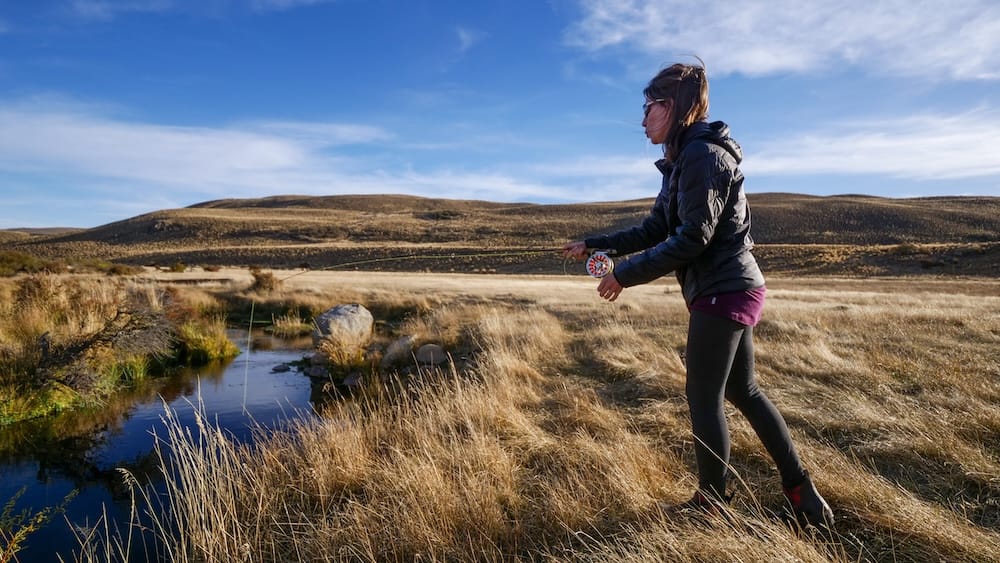
My rule for deciding whether a Patagonia tour is worth it
A spectacular place does not automatically require an organized excursion.
Perito Moreno Glacier remains spectacular whether you arrive with a guide, take a transfer bus or drive yourself. Fly fishing is different. Turning up beside a river with no tackle, no permit knowledge and a casting technique resembling a malfunctioning windmill is unlikely to produce a rewarding afternoon.
I look for four things.
The first is access. Does the tour reach somewhere that is unavailable—or painfully impractical—without its boat, vehicle, permit or controlled departure?
The second is transport. Does it remove a long, confusing or fragile journey where a missed connection could wreck the day?
The third is expertise and equipment. Does the activity depend on instruction, technical judgment, safety gear or equipment that most travellers will not be carrying around Patagonia?
The fourth is whether the booking materially changes the experience. A zodiac that brings you close to a sea-lion colony gives you something the clifftop viewpoint cannot. A guide who accompanies you along a walkway you could easily navigate alone may add context, but the underlying experience stays much the same.
Convenience counts. Patagonia is huge, the wind is vindictive and public transport has never shown much interest in my personal itinerary. I am perfectly willing to pay for an early pickup when it prevents a complicated day from collapsing.
Convenience just should not be confused with necessity.
Travellers who already know their dates can compare current tours and activity categories across Argentine Patagonia, but I would apply those four tests before choosing anything from the list.
Patagonia tours I would usually book
Full-day glacier navigation
Glacier products are especially good at making four different experiences look like minor variations of one tour.
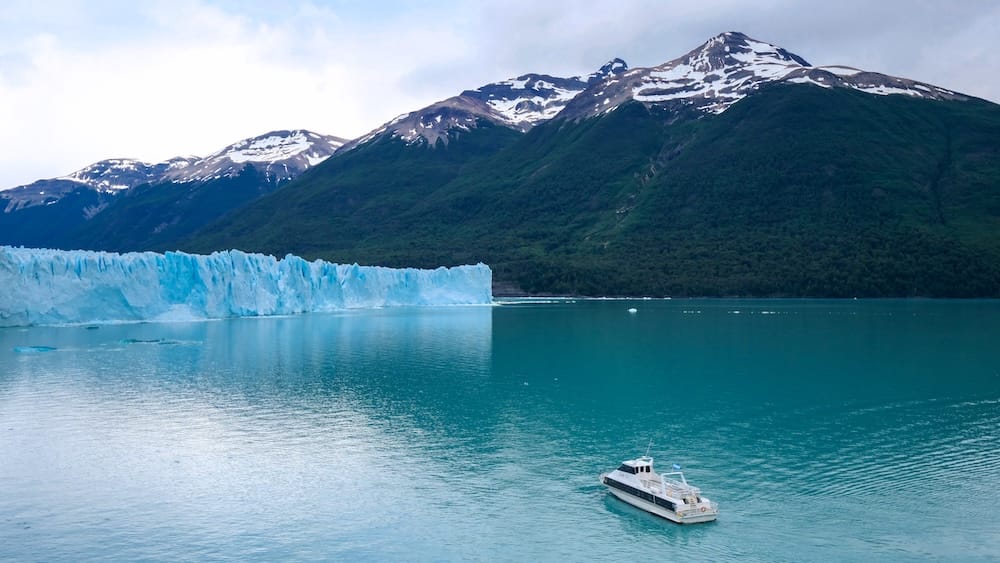
A Perito Moreno day can mean walking the boardwalks, taking a short boat ride beside one glacier face, spending most of the day navigating among several glacier sectors or joining a technical ice trek. Those outings do different jobs.
Audrey and I visited the Perito Moreno boardwalks after arranging our own return transport from El Calafate. We could wander, backtrack, wait for the ice to crack and linger at whichever viewpoint looked active. We did not need anyone to guide us through the walkway system.
Our full-day glacier cruise was another animal entirely.
That excursion collected us, brought us to the port and carried us deep into the lake system. We saw several glaciers from the water, moved between indoor and outdoor decks, ate onboard and made a landing away from the main road-accessible viewpoints. The scenery kept stacking up until we were both running out of useful things to say.
It was a splurge. It also remains one of the best excursions we have taken anywhere.
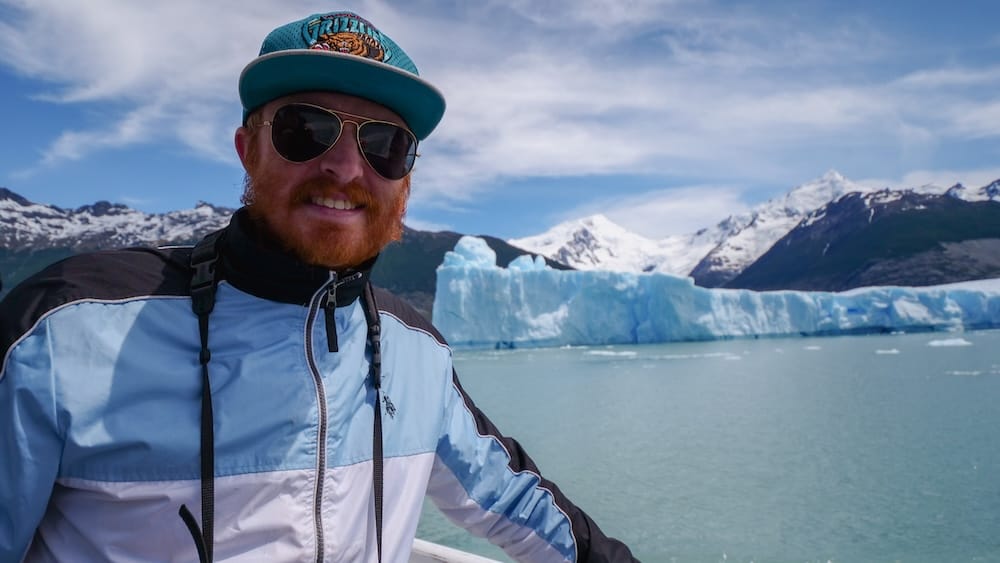
The key is that we had not paid for a deluxe version of the boardwalks. We had bought lake access, several glacier perspectives, a full day of navigation and all the logistics wrapped around it.
The current activity that most closely matches the format we experienced is the Glaciers Gourmet full-day cruise from El Calafate. Its present route and inclusions should still be checked against your date rather than assumed to be identical to our historical trip.
Some full-day departures use Punta Bandera, roughly 47 kilometres from El Calafate. Depending on the product, the transfer, park admission and meals may be included, optional or separate. Routes can also shift with wind, visibility and floating ice. A cruise company can organize the boat; it cannot negotiate with Patagonia’s weather.
A short navigation beside Perito Moreno is a more conditional purchase. It may be worthwhile for the low water-level perspective, especially if you are already visiting the walkways. I would not treat it as mandatory merely because it is available.
Because the current glacier products solve quite different problems, it is worth taking a moment to compare glacier cruises, walkway transfers and technical glacier activities rather than choosing whichever product appears first.
Verdict: book a full-day glacier navigation when the lake journey itself is a priority. Consider a short cruise as an addition to the boardwalks rather than an automatic upgrade.
Ice trekking
Audrey and I have not walked on the glacier, so this is not a personal review.
It is still one of the easiest categories to classify.
Ice trekking relies on controlled access, specialist guides and technical equipment. You are not paying someone to stand beside you while you complete an activity you could otherwise organize alone. The organized component is what makes the activity possible.
Eligibility, age limits, fitness requirements and operating seasons vary. Those details need to be checked against the exact product rather than absorbed from a generic “glacier tour” description. A current example combining the ice walk, boat transfer and glacier access is this Perito Moreno trekking-and-cruise excursion.
Verdict: book it if walking on the ice is a major goal and you meet the current requirements.
Península Valdés wildlife circuits
Península Valdés is where the map begins making a stronger argument than the sales copy.
Puerto Pirámides is the only town inside the protected area, but the important wildlife sites are scattered around the peninsula. Caleta Valdés and Punta Norte are each roughly 75 to 80 kilometres from Puerto Pirámides, much of the route on gravel. A full circuit from Puerto Madryn can push toward 400 kilometres before you get back to your hotel.
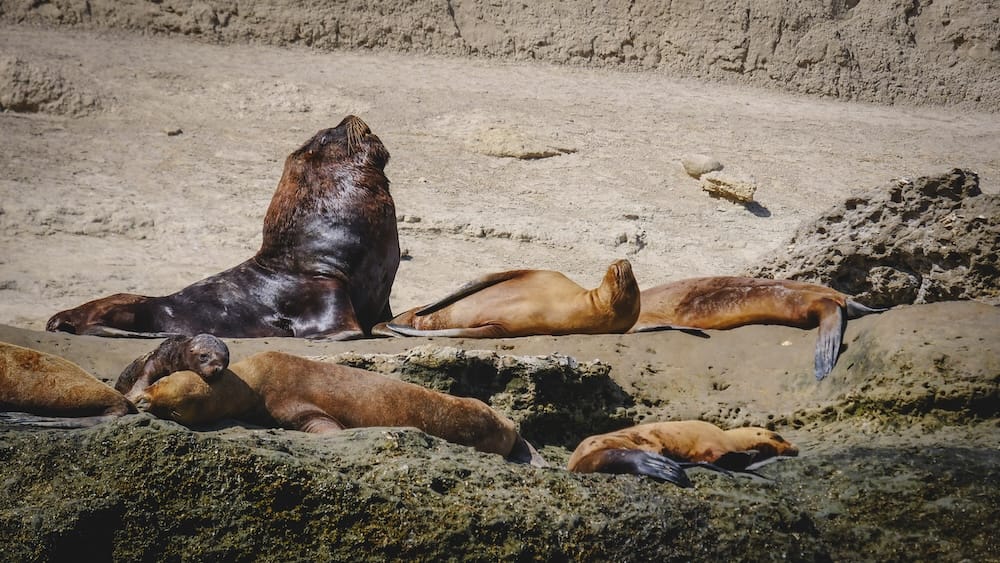
Audrey and I joined tours that connected interpretation centres, isolated coastal lookouts, elephant seals, sea lions, penguins and Estancia San Lorenzo. The guides added context, but the vehicle was doing heroic work in the background. We could look out the window instead of spending the entire day monitoring fuel, road conditions and distances.
The most worthwhile upgrade was an optional zodiac trip.
We had already seen the sea lions from land. From the water, the colony became noisier, closer and far more animated. That short boat ride did not repeat the same encounter from a different seat. It changed it.
The mistake is choosing the longest itinerary instead of choosing the animal and season first. Southern right whale departures from Puerto Pirámides are seasonal. Penguins, elephant seals and the famous orca behaviour at Punta Norte follow different windows. No ethical operator can guarantee that a wild animal will appear on schedule, let alone hurl itself into a documentary sequence because your van arrived at 2:15.
Current products range from land-only circuits to whale-inclusive days and seasonal penguin routes, so compare Península Valdés wildlife tours by route and departure point rather than assuming they all cover the same ground.
Self-driving remains possible. It suits travellers who are comfortable with long gravel distances and who understand which section of the peninsula matches their month. Anyone choosing that route can compare rental cars in Puerto Madryn, but the rental conditions, tyre coverage and permission for gravel roads matter more here than simply finding the smallest vehicle.
For a first visit from Puerto Madryn, however, a strong circuit solves enough transport friction to justify the booking.
Verdict: book a land circuit when it connects several remote wildlife areas in one day. Book the boat when the boat is the only way to get the perspective or species encounter you want.
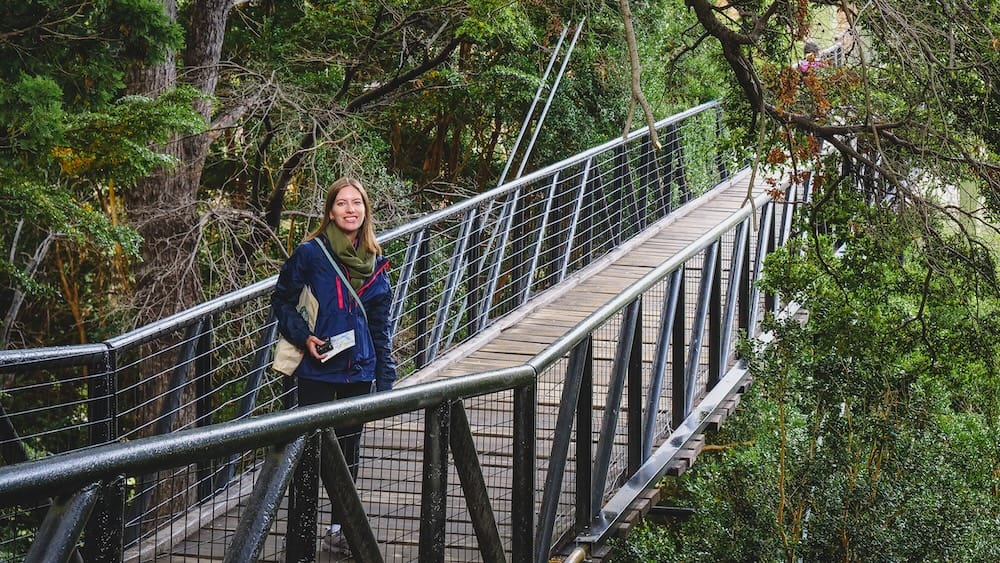
The Alerzal Milenario excursion in Los Alerces
Los Alerces National Park taught us why “you need a tour” can be true for one part of a place and nonsense for the rest of it.
Audrey and I travelled into the park independently from Esquel. Once there, we joined the Lago Menéndez navigation and guided walk to the ancient alerce forest. The boat and controlled route were not decorative extras. They were the access system.
That does not mean Los Alerces as a whole requires a tour. The park has roads, beaches, viewpoints, ordinary trails and self-guided areas. You can explore much of it independently and reserve the organized excursion for the forest sector that needs it.
The awkward part is that transport into the park and access to the Alerzal are separate problems. Services from Esquel can be limited outside the busiest periods, and the forest excursion should be reserved before reaching Puerto Chucao. On our visit, missing the return bus would not have been a charming extension to the day. It would have been a logistical ambush.
Travellers who prefer to control their own park day can compare rental cars in Esquel. That still leaves the controlled navigation to book separately, and the current road conditions should be checked before accepting any rental vehicle.
Los Alerces also went through serious fires in early 2026, followed by staged reopenings and recovery work. Check the current park access and closure information shortly before travelling.
Verdict: book the Lago Menéndez and Alerzal Milenario excursion if the ancient forest is your goal. Do not pay for a complete guided park day merely because one protected sector requires organized access.
Rafting and technical ice activities
I have not rafted in Argentine Patagonia, but I would not try to turn it into an independent outing.
Current Manso River excursions commonly combine long transfers, wetsuits, helmets, buoyancy equipment, instruction and guided river navigation. Those are not little benefits sprinkled on top. They are the working parts of the day.
Travellers considering it can compare current rafting trips, departure points and activity formats before deciding whether the transfer time and physical demands fit the itinerary.
The same logic applies to technical glacier activities. When access, equipment and professional guidance are inseparable from the experience, the booking decision is straightforward.
That does not mean every traveller should do them. Fitness, cold tolerance, medical restrictions and comfort in moving water matter. “Adventure” is not a useful measure of suitability. The actual conditions are.
Verdict: book rafting and technical ice activities through a properly structured excursion, or choose something else.
Activities where the guide is part of the experience
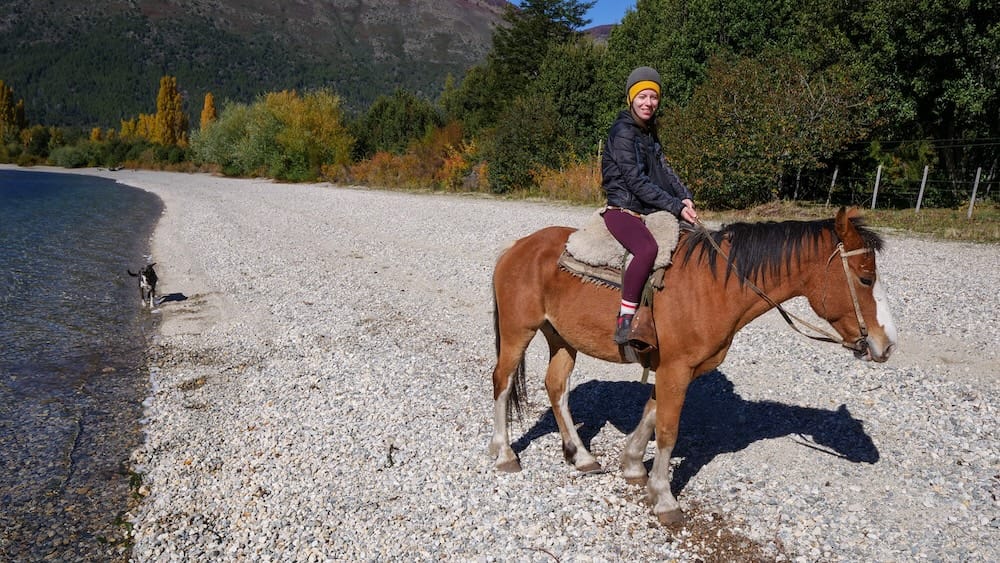
Horseback riding
Most visitors cannot organize a Patagonia horse ride independently, which makes the first decision simple. The harder question is whether a particular ride is managed well.
Audrey and I joined a guided outing near Bariloche with pickup, prepared horses, helmets and a route suited to inexperienced riders. We appreciated the helmets. We had previously been on rides where the safety system appeared to consist of pointing toward the horse and assuming the two of you would work matters out privately.
This one felt controlled. The pace was manageable, the terrain suited the group and we did not need previous riding experience.
I would not extend that verdict to every horse trek. Patagonia has short family rides, estancia outings, steep routes, long steppe journeys and multi-day trips. “Beginner-friendly” means very little unless the operator explains what beginners actually receive.
Before booking, I would check the terrain, duration, rider-to-guide ratio, helmet policy, mounting assistance, age and weight limits, and what happens if somebody becomes uncomfortable halfway through. The current horseback-riding options around Bariloche include several formats, so the shortest or cheapest ride is not automatically the right fit.
Verdict: book horseback riding when it is an activity you genuinely want, but choose by support and terrain rather than the prettiest mountain backdrop.
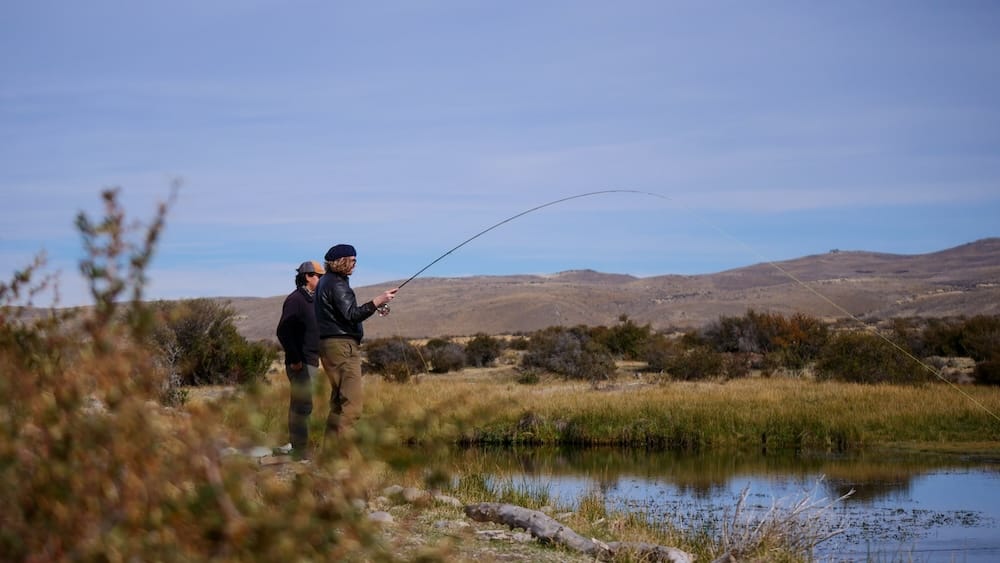
Fly fishing
Our first attempt at fly fishing would have been ridiculous without a guide.
It was occasionally ridiculous with one.
Audrey adapted faster and caught the first trout. My casting was stiff and robotic. I missed several chances before finally landing one, while our guide kept adjusting my technique and placing us where two complete beginners had a reasonable chance of success.
That instruction was the experience. Without it, we would have spent the day waving expensive equipment at Patagonia.
Our Estancia Tecka stay was hosted, so I cannot use it to judge whether a current lodge package is worth its full price. I can say that specialist instruction transformed fly fishing from something we could watch into something we could actually do.
Fishing regulations change by season and location. The available Patagonia-wide rules cover permits, methods and local exceptions, but the next season should always be checked rather than copied from an old trip report. Use the current Patagonia fishing regulations before planning.
Experienced anglers may need only a local guide, legal access or transport to specific water. Beginners are buying a wider package: instruction, equipment, location knowledge and help staying inside the rules.
Verdict: book a guide if you are new, unequipped or unfamiliar with the local water. Do not assume that means you also need a luxury lodge package.
Kayaking
Kayaking refuses to fit neatly into one box.
A short rental on calm, managed water has little in common with an exposed lake crossing, coastal wildlife route or river journey. The word is the same. The demands are not.
Audrey and I planned to kayak at Puerto Pirámides, but the stands were already packing away their equipment when we arrived. You win some; you misjudge the operating hours on others. We did not paddle, so I cannot tell you how that outing felt.
Some designated waters in Argentine Patagonia allow independent kayaking. That does not make independent rental the right choice everywhere. Wind, waves, current, water temperature, distance from shore and the ability to handle a capsize matter more than whether you have sat in a kayak once at summer camp.
Guided kayaking earns its price when the environment is exposed, remote, coastal, river-based or close to glaciers. On calm managed water, a simple rental may be enough. The current Patagonia kayaking and canoe trips cover very different environments, so inspect the route rather than treating them as interchangeable rentals.
Verdict: consider the setting before the product. Book guidance when the water adds real technical or environmental risk.
Tours that mainly package convenience
This is the murky middle.
These excursions may be excellent. They can remove transport, feed you, introduce the place and stop the day from becoming a pile of bookings. The question is whether you are buying access—or paying to have an independently possible experience compressed into a schedule.
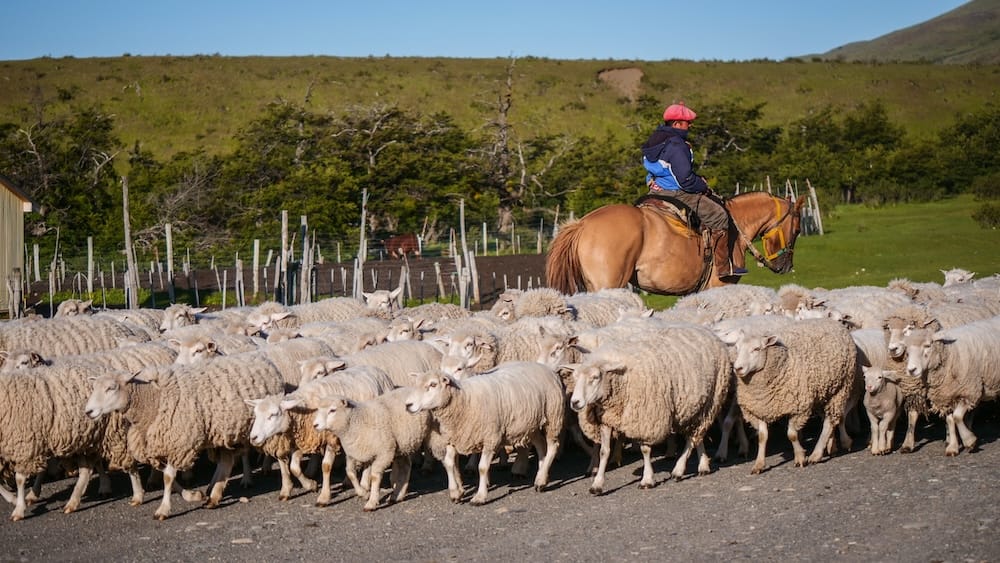
Estancia day visits
Our Nibepo Aike day began with a long transfer from El Calafate and bundled ranch interpretation, sheep-farming demonstrations, walking, food and dinner into one organized programme. We were with a group, and the day moved according to the estancia’s timetable.
We loved it. By the end, Audrey and I were calling it one of the best days of the trip.
That enthusiasm does not turn every estancia day into a compulsory booking.
The format works best for travellers who want a concentrated introduction to rural Patagonia without arranging a car or committing to an overnight stay. Transport is a substantial part of the value. So are the meal and the fact that the ranch activities are organized around your visit.
The compromise is depth. A day excursion gives you selected pieces of estancia life in a tidy sequence. It is not the same as waking up on the property, experiencing the empty hours between activities or adjusting to the rhythm of a working ranch.
Current programmes can also separate the country day, transfers and horseback riding rather than bundling everything together. Read the inclusions carefully instead of assuming the photograph of a horse means you will be riding one. Travellers interested in the current version can check the present Nibepo Aike day excursion and its available options.
Verdict: consider an estancia day when you want the transport, food and structured introduction. Book an overnight stay instead when the setting itself is the reason you are going.
Scenic boat trips from reachable ports
A boat may be the only way to reach an island while still giving you too little time at the place you care about most.
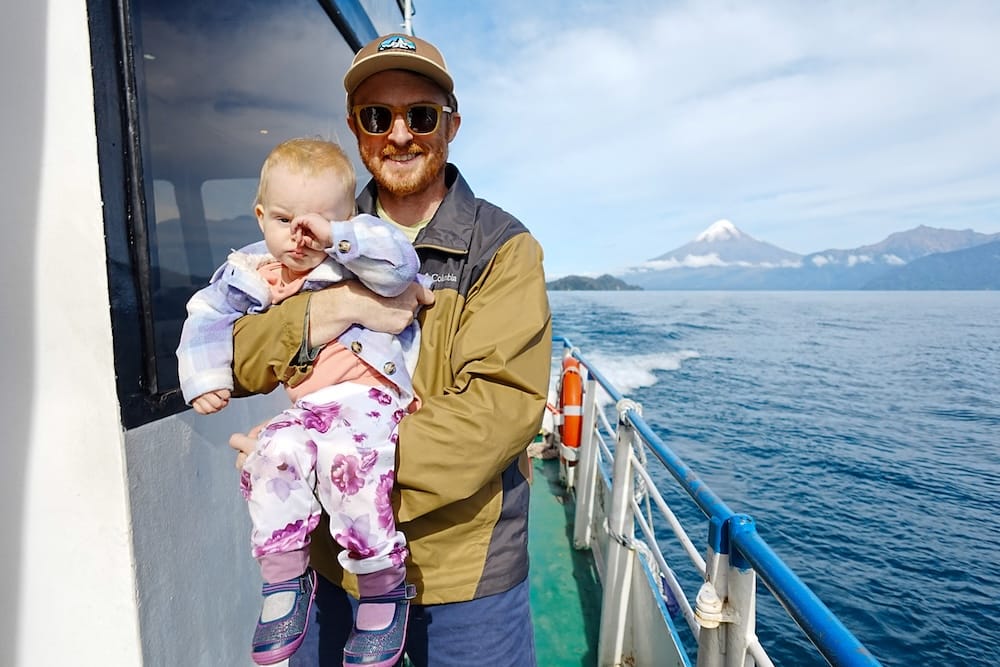
Our Nahuel Huapi excursion from Bariloche is a good example. We reached Puerto Pañuelo by public transport, boarded the navigation and visited Victoria Island and the Arrayanes Forest. We enjoyed being on the lake, and the catering upgrade felt worthwhile on a long outing.
The Arrayanes stop felt rushed.
One current operator still allocates roughly 45 minutes to the forest on its published itinerary. That is enough for a controlled look, but it is not much time if the forest is the main reason you booked.
The independent alternative from Villa La Angostura offers more control, but it is not a casual stroll. The land route is about 11 kilometres each way and is treated as a medium-to-high difficulty outing. Travellers combining the trail with a boat return need to secure that return before setting off.
This is why “independent is better” can become its own kind of lazy advice. Better pacing is useful only when you have the fitness, time and transport to make it work.
Current departures vary in length, pickup arrangements and time allocated ashore. Compare Victoria Island and Arrayanes Forest excursions by the time spent at each stop rather than judging them only by the total tour duration.
Verdict: consider the cruise for island access and an easy packaged day. Look at the Villa La Angostura approach when the Arrayanes Forest itself is your priority and you can handle the longer route.
Piedra Parada and remote road days
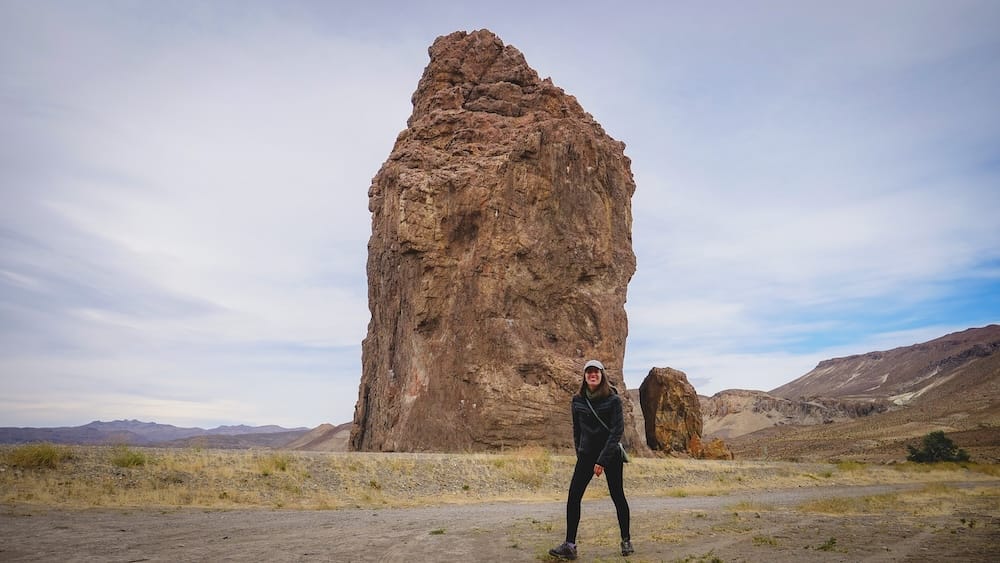
Piedra Parada sits around 127 kilometres from Esquel, with a long gravel section and limited services once you are outside the city. Our excursion included hotel pickup, the drive, interpretation, a canyon walk, food and the relief of not having to navigate the steppe ourselves.
I was glad we booked it.
The landscape changed for hours, and being able to look out the window instead of worrying about tyres, fuel and whether the rental agreement considered that road a personal insult improved the day.
Piedra Parada is still independently reachable with a suitable vehicle and preparation. That keeps it out of the automatic-book category.
The same caution applies to 4×4 tours. Some genuinely enter terrain that ordinary rental cars cannot. Others use the vehicle as costume while following a route a careful driver could manage.
Ask what the 4×4 actually changes:
- Is the road restricted?
- Is special clearance necessary?
- Would a standard rental be permitted and insured?
- How much of the outing happens inside the vehicle?
- What is the backup when weather turns the route ugly?
The current 4×4 tours across Argentine Patagonia include genuinely different kinds of outings, which makes the route description far more important than the vehicle in the title.
Verdict: consider remote road tours when they remove a drive you do not want to manage. Book a 4×4 only when the vehicle and route knowledge unlock something meaningful.
National-park day tours and transfer packages
Many Patagonia park excursions combine two things that do not always need to stay together: transport and guidance.
At Perito Moreno, the transport was useful. Once Audrey and I reached the boardwalks, we were happier controlling the visit ourselves. At Los Alerces, reaching the park independently was the awkward part, while one specific boat-and-forest excursion genuinely required booking.
That pattern repeats across the region. Sometimes the right purchase is a full guided day. Sometimes it is merely a return transfer. Sometimes a rental car gives you the strongest day because the infrastructure is straightforward and your pace matters more than interpretation.
A full tour earns its price when it solves fragile transport, controlled entry or a complicated route. If the main attraction has a clear road, marked trails and visitor facilities, pay attention to what the guide actually adds. The current national-park tours in Argentine Patagonia are most useful when compared by transport, stop duration and access rather than by the number of attractions named in the title.
Verdict: consider a tour when transport threatens the day. Otherwise, buy only the logistical help you need.
The famous Patagonia experience I would still do independently
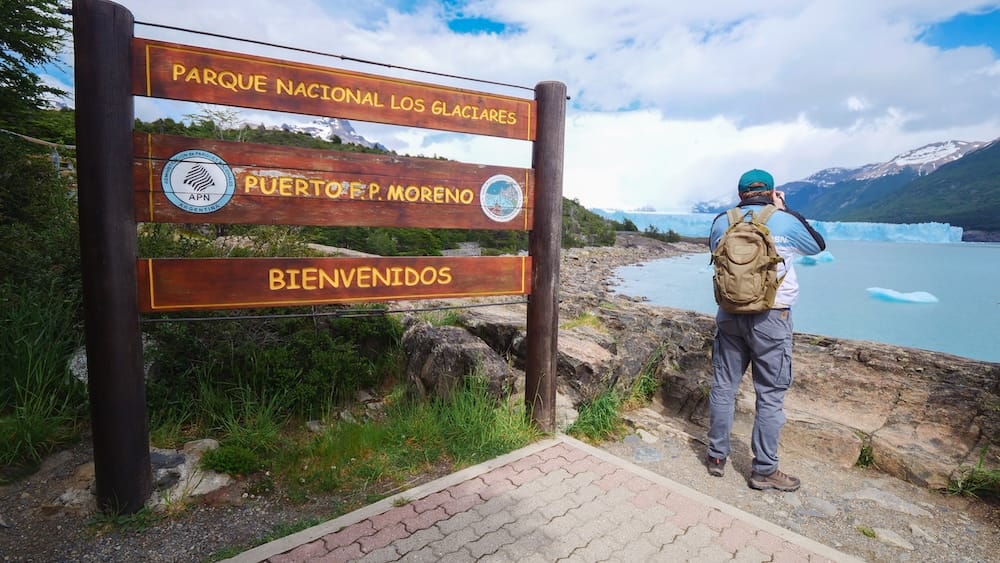
Perito Moreno’s boardwalks are the clearest answer.
The viewpoint system has food, toilets, sheltered areas and identified accessible infrastructure. Once we arrived, we did not need a guide to tell us which direction to face. The glacier handled that.
We followed the walkways, doubled back, waited when the ice became noisy and changed our route whenever another section looked promising. That freedom was the point.
A transfer remains useful for travellers without a car. A guided product may also suit somebody who wants the geology explained or prefers every movement organized. But the existence of those products does not make the boardwalks a tour-dependent attraction.
Travellers wanting full control over the day can compare rental cars in El Calafate. Before booking, check whether the rental terms fit the roads on the wider itinerary rather than choosing a car solely for the glacier day.
The same principle applies to ordinary town walks, museums and clearly marked park trails. Check current opening hours, registration requirements and return transport. Then go at your own pace.
There is no prize for booking every possible activity in Patagonia. There is also no prize for performing logistical gymnastics merely to prove you travelled independently.
Book, consider or do independently?
| Tour category | My default verdict | What the booking actually buys | Main trade-off |
|---|---|---|---|
| Full-day glacier navigation | Book | Lake access, several glacier sectors, vessel and port logistics | Expensive, long and weather dependent |
| Ice trekking | Book | Controlled ice access, specialist guides and equipment | Eligibility and physical demands |
| Península Valdés wildlife circuit | Book | Transport between remote wildlife sites | Long day in a vehicle |
| Whale or specialist wildlife boat | Book | Boat-only access or perspective | Weather and sightings remain uncertain |
| Los Alerces Alerzal excursion | Book | Navigation and controlled ancient-forest access | Transport into the park is a separate problem |
| Rafting | Book | Equipment, instruction and river logistics | Cold, physical demands and long transfers |
| Horseback riding | Book carefully | Horse, route, equipment and supervision | Quality and beginner support vary |
| Beginner fly fishing | Book | Instruction, gear knowledge and local access expertise | A full lodge package may be unnecessary |
| Kayaking | Consider | Guidance and equipment on exposed or technical water | Calm managed water may not require a tour |
| Estancia day visit | Consider | Transfer, meal, interpretation and structured activities | Compressed group experience |
| Scenic island cruise | Consider | Boat-only island access and simple logistics | Fixed stops can feel rushed |
| Piedra Parada or remote-road day | Consider | Removes a long gravel drive | Independent access remains possible |
| 4×4 excursion | Consider | Potential off-road access and route knowledge | The vehicle may be more branding than necessity |
| Perito Moreno boardwalks | Do independently | A transfer may still solve transportation | A full guide often reduces flexibility |
| Ordinary trails and urban sights | Do independently | Usually very little beyond commentary | Check current access and return logistics |
The table is a starting point, not a commandment. A few details can flip the verdict.
What changes the answer for your trip
Your month matters more than the tour rating
Wildlife products are only as useful as the season. A beautifully reviewed Península Valdés circuit cannot manufacture whales, penguins or orca behaviour outside the relevant window.
Start with the animal you hope to see. Then choose the route and product.
Weather has a similar effect on boats, paddling and technical activities. Our glacier cruise benefited enormously from calm conditions and broad visibility. That does not mean a cloudy cruise is a waste. It means the value is partly exposed to something nobody can guarantee.
Your base changes the amount of transport you are buying
A Península Valdés day from Puerto Madryn solves a different problem from a boat departure when you are already sleeping in Puerto Pirámides.
A Punta Bandera cruise requires reaching a port outside El Calafate. A Piedra Parada outing begins with a long drive from Esquel. Bariloche lake excursions may leave from Puerto Pañuelo rather than the city centre.
Hotel pickup sounds like a minor inclusion until the meeting point is 40 kilometres away at an hour when public transport is decorative.
The best base can make an expensive transfer less valuable. The wrong base can make it the most useful part of the booking.
For the tour families covered in this guide, the most useful accommodation searches are places to stay in El Calafate for glacier departures, accommodation in Puerto Madryn for Península Valdés circuits, hotels and apartments in Esquel for Los Alerces and Piedra Parada, and places to stay in Bariloche for lake cruises, riding, kayaking and rafting.
Fitness and accessibility vary inside the same attraction
Perito Moreno has accessible infrastructure, but that does not make every walkway, transfer and boat equally suitable. The park’s mobility chair for the walkway circuit requires a companion.
The Arrayanes Forest can be seen on a tightly timed boat stop or reached through a much longer land route. Those two versions lead to the same place and demand completely different days.
Product pages are often good at showing the destination and less enthusiastic about explaining the walk from the vehicle, the boarding steps, the saddle time or how your legs will feel afterward.
Check the exact format, not the attraction name.
Fixed pacing can be the hidden cost
The organized day may run perfectly and still hurry the part you wanted most.
That happened to us at the Arrayanes Forest. The boat gave us access, but the clock kept the visit shallow. Perito Moreno produced the opposite feeling because we controlled the pace.
Before booking, look for the time allocated at the main stop rather than the total tour duration. A twelve-hour excursion can still give you forty-five minutes at the reason you chose it.
Fragile itineraries make tours more valuable
Independent travel becomes less appealing when one missed boat, bus or controlled departure could force an unplanned overnight stay.
We felt that at Los Alerces. We also lost our chance to kayak in Puerto Pirámides because we arrived as the equipment was being packed away.
When you have spare days, a little uncertainty can be part of the trip. When tomorrow’s bus leaves at dawn and there is no second chance, paying somebody to coordinate the day begins to look less like laziness and more like competence.
Which Patagonia tours are actually worth booking?
The best Patagonia tours are the ones that change what you can reach or what you are capable of doing.
I would pay for the glacier cruise again. I would book the Península Valdés circuit, the protected Los Alerces navigation, beginner horse riding and specialist fishing instruction. I would use organized rafting or technical ice access because the guide and equipment are built into the activity.
I would think harder before paying for a 4×4 label, a generic national-park tour or a scenic excursion with a short stop at the place I cared about most.
And I would still visit the Perito Moreno boardwalks independently.
That is the rule I would carry into any Patagonia itinerary: book the tour when it unlocks access, removes serious transport friction or supplies skills and equipment you genuinely need. Consider it when it mainly makes the day easier. Stay independent when freedom is one of the best parts of the experience.
Patagonia does not reward the traveller who books the most products. It rewards the traveller who knows which problems are worth paying to remove.
Frequently Asked Questions
Which Patagonia tours are most worth booking?
The strongest bookings are tours that unlock access, solve serious transport, or supply skills and equipment you cannot reasonably provide yourself. Full-day glacier navigation, dispersed wildlife circuits, controlled ancient-forest access, rafting and technical glacier activities fit that test best.
Is a tour necessary for Perito Moreno Glacier?
No. I would visit the boardwalks independently or use a transfer if transport is the only problem. A full-day glacier cruise earns its place because it creates a separate lake-based experience, while ice trekking requires controlled access and specialist equipment.
Is a Península Valdés wildlife tour worth booking?
Usually, especially from Puerto Madryn. The wildlife sites are widely dispersed, the gravel distances are long, and a boat can provide a perspective that land viewpoints cannot. Self-driving still works for travellers who understand the season and route.
Do you need a tour for Los Alerces National Park?
Most of the park can be explored independently. The Lago Menéndez and Alerzal Milenario excursion is different because the boat and controlled guided route provide the access. Current park conditions should be checked before travelling.
When is guided kayaking worth booking in Patagonia?
Guidance becomes more valuable when the water is exposed, remote, coastal, river-based or close to glaciers. A simple rental may be enough on calm managed water, but the route and conditions matter more than the activity label.
Is an estancia day trip worth booking?
Consider it when you want transport, a meal, rural interpretation and several organized activities in one day. It is a convenient introduction to estancia life, but it does not replace the slower experience of staying overnight on the property.
Project 23 Argentina: This guide is also available in Spanish. [Leé la versión en castellano: Mejores excursiones en la Patagonia: ¿cuáles realmente vale la pena reservar?]
This article contains affiliate links. If you book through one of these links, I may earn a commission at no extra cost to you.