
Audrey and I were standing like absolute dodo birds on a perfectly manicured wooden boardwalk, watching the exact same unique, cinnamon-barked tree pass us for the third consecutive time.
The sun was out, the air in the ancient forest felt crisp, and according to the glossy brochures we picked up at the port, we were supposed to be enjoying a seamless afternoon in the wilderness. Instead, we were caught in an accidental loop inside the Arrayanes Forest of Villa La Angostura. We had blindly followed a trail sign toward town, missed a subtle transition point, and managed to march ourselves into a glorious, self-contained circle.
Disney magic? Not quite. More like a classic case of independent travel reality breaking through the polished tourism narrative.
Patagonia has a funny way of doing that. It lures you in with images of jagged granite peaks bathed in golden hour light, but the moment you step off the main grid, it happily tests your patience, your wardrobe, and your logistics. When your primary plan shatters due to a 100 km/h wind shear, a transport strike, or a sudden policy change, throwing a tantrum won’t save your trip. Knowing exactly how to pivot will.

The Illusion of the Free Wilderness and the New Gatekeepers
For over a decade, independent trekking forums have recycled the exact same unshakeable gospel: you can walk right out of your hostel in places like El Chaltén and step onto world-class mountain trails without spending a single peso.
That era is officially over.
If you show up at the trailheads expecting free, unrestricted access, you are going to meet a very rigid wall of administrative reality. The Administration of National Parks (APN) has clamped down hard on the Los Glaciares network. Checkpoints are now actively stationed at the primary access portals, including Los Cóndores, Base Fitz Roy, and the Río Eléctrico entry tracks.
The entry fee is no longer a polite suggestion. International visitors are hit with a mandatory entry fee, and the enforcement is digital.
[PRIMARY TRAIL FAILURE]
No Mobile Signal at Checkpoint -> QR Code Won't Load
          │
          ▼
[THE SOVEREIGN PIVOT]
Pre-purchase the APN FlexiPass online -> Screenshot Barcode -> Print Physical Backup
The absolute breakdown point for most travelers isn’t the cost itself; it’s the infrastructure. The local 4G network in these mountain hub towns is notoriously choked by tourist volume. If you arrive at the ranger station planning to pull up your confirmation email or purchase a ticket on-site using live cellular data, you will be met with a spinning loading wheel and a polite but firm denial of entry.
[Samuel’s Barcode Warning]
Do not trust your phone to save you at a Patagonian park gate. Buy your multi-day FlexiPass via the official online portals before you leave your hotel Wi-Fi, screenshot the high-resolution barcode to your camera roll, and carry a physical, wrinkled paper printout in your pack liner. If the digital scanners go down—and they do—rangers demand the hard copy. No paper, no barcode, no trek. Brutal.
The math doesn’t lie. To map out your baseline operational costs for the standard routes, keep this real-time financial framework handy:
The 2026 Southern Park Infrastructure Matrix
| National Park Sector | Mandatory Entry Fee (International) | Operational Access Rules | Primary Friction Point | Post-Hike Triage Priority |
| Los Glaciares (El Chaltén Trails) | $50,000 ARS per entry (approx. €50) | Pre-booked online validation mandatory. 50% discount on consecutive Day 2 entry if validated within 72 hours. | Cellular chokepoints block live digital ticket purchases at trailheads. | High (Secure the FlexiPass bundle before arrival) |
| Perito Moreno Glacier (El Calafate Gate) | $50,000 ARS base fee | Vehicle entry portals open precisely at 8:00 AM. Fees are strictly excluded from local tour transport prices. | Massive tour bus queues create 2-hour delays at the physical payment windows between 10:00 AM and 2:00 PM. | Medium (Arrive via private Remis at 7:45 AM to beat the buses) |
| Torres del Paine (Chilean W/O Circuits) | Dynamic Route Tiers (Via PasesParques.cl) | Route-specific ticketing. Mandatory matching of trail barcodes to physical passport numbers at every interior junction. | [Researched Only] Permanent closure of traditional wild campsites. Zero tolerance for unbooked itinerary deviations. | Critical (Book private platform vouchers 4-6 months out) |
When the Gales Force a Valley Retreat
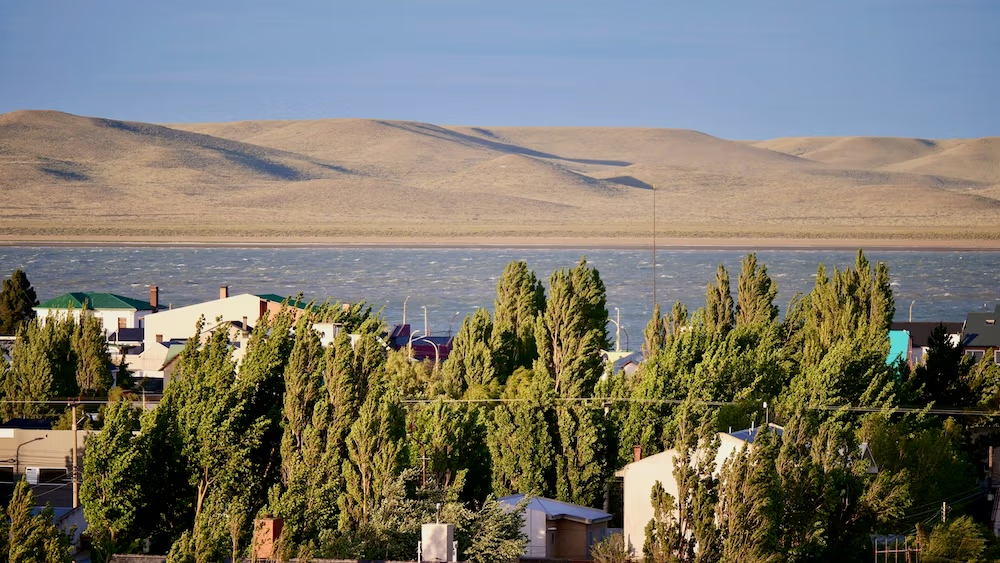
You can pack the most expensive, brand-new technical shell on the market, but when a true Patagonian wind alert screams through the mountains, the high-altitude trails become an entirely different beast.
Audrey and I learned this lesson the hard way while running errands in town during a sudden climate shift. We watched a lightweight, cheap consumer umbrella get instantly turned inside out, snapped into a useless tangle of metal wires, and rendered entirely dead by a single mountain gust.
The wind factor here is relentless.
When wind speeds cross the 90 km/h threshold at the exposed treeline, rangers at the high-altitude checkpoints—such as Campamento Poicenot—will physically block the final vertical moraine scramble to Laguna de los Tres. If you have spent months dreaming of staring at Mount Fitz Roy, getting stopped at the 9-kilometer mark is an emotional gut punch.
But a closed summit doesn’t mean a wasted day.
[HIGH-ALTITUDE CLOSURE]
Fitz Roy Moraine Blocked by 100 km/h Winds
          │
          ▼
[LOW-VALLEY DETOUR]
Pivot East to Laguna Capri Connector Loop
          │
          ▼
[ENVIRONMENTAL PAYOFF]
Old-Growth Lenga Canopy Blocks the Gale -> Hike Saved
Instead of trekking all the way back to town defeated, you need to execute an immediate low-valley pivot. The connector trail leading east toward Laguna Capri or the path cutting to the Chorrillo del Salto waterfall sit entirely below the primary wind shears. These routes wind deep through old-growth Lenga forests. The dense canopy acts as a massive, natural windbreak, absorbing the brunt of the gale and allowing you to log a high-impact trekking day in absolute safety while the ridges above are getting hammered.
Quick-Fire Stats: The Wind-Alert Pivot Options
- Laguna de los Tres Scramble: Price: Included in Park Pass | Time: 8–10 hours | Altitude Gain: 1,000m | Status: Exposed to instant wind closure.
- Laguna Capri Forest Loop: Price: Included in Park Pass | Time: 3–4 hours | Altitude Gain: 350m | Status: Protected wind-contingency route.
- Chorrillo del Salto Track: Price: Included in Park Pass | Time: 2–3 hours | Altitude Gain: Minimal | Status: Low-altitude storm fallback.
Navigating the Financial Realities of the Backcountry
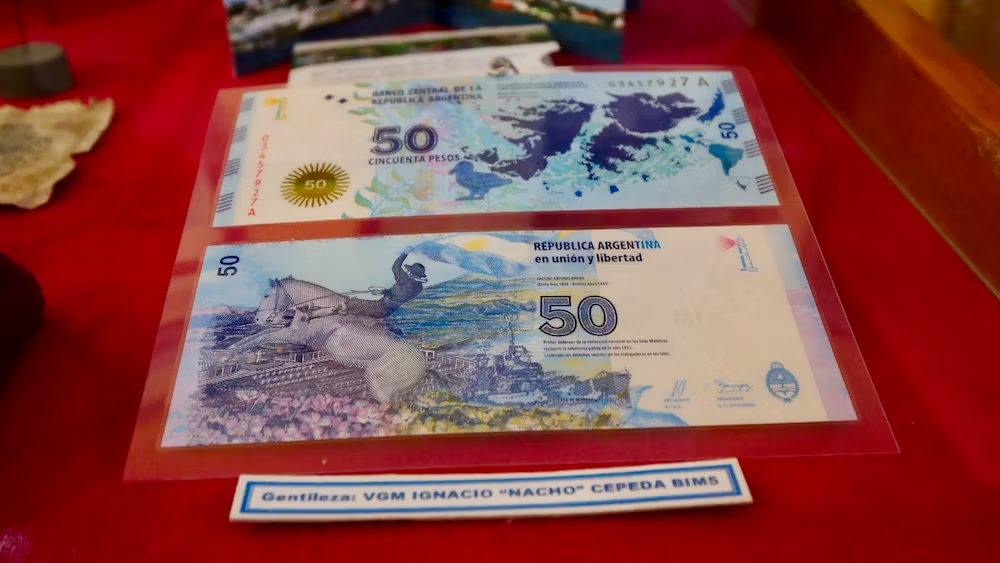
Independent travel guides love to rave about how seamless global digital banking has become, but relying purely on international plastic in remote southern towns is a fast track to getting stranded.
While official national park gates theoretically sport modern credit card terminals, the satellite connections in these deep mountain valleys routinely drop out for hours at a time. Furthermore, the microscopic logistical hurdles are what catch you off guard: the local private shuttle drivers linking the Laguna Amarga gate to the Central sector in Torres del Paine do not take credit cards. The remote gear rental shops charging for mandatory trekking pole replacements? Cash only.
Then there is the puzzle of Argentine currency infrastructure.
ATM networks in southern hubs are notoriously under-stocked and regularly run completely dry of paper notes during peak seasonal transitions. If you rely on a foreign debit card to pull cash on a Friday afternoon, you might find yourself staring at an empty machine with a pocketful of useless plastic.
[Samuel’s Cash-in-Hand Warning]
Always secure hard currency using your card via the electronic MEP rate system or via verified cash exchanges while you are in major regional distribution centers like El Calafate or Bariloche before heading up into isolated mountain villages. Keep an unshakeable emergency reserve of $50,000 ARS stashed safely away in a waterproof pack liner. Treat this cash as a survival tool, reserved exclusively for emergency park transit, last-minute gear rentals, or a sudden change of itinerary.
To help navigate these ground-level transaction frictions without losing your mind, use this quick-reference checklist for independent tracking:
- Intra-Park Shuttles: Card Acceptance: Zero | Requirement: Hard local currency only.
- Town Outdoor Gear Rentals: Card Acceptance: Variable | Requirement: Cash deposits frequently required to skip high card processing surcharges.
- Backcountry Refugio Snacks: Card Acceptance: Low | Requirement: Offline transaction slips used; high failure rate with foreign bank chips.
- Regional Terminal Taxis: Card Acceptance: Zero | Requirement: Absolute cash-only baseline.

The Monday Meltdown and the Gas Station Sanctuary
One of the most jarring shocks for independent travelers moving through the smaller, off-the-beaten-track Patagonian settlements is the absolute sanctity of the regional siesta and local business patterns.
Audrey and I found ourselves caught in a total infrastructural standstill during a day trip to the remote town of Dolavon. We had carefully plotted a list of local restaurants and historic flour mills on our digital maps, only to discover a completely dead town when we stepped off the bus.
It was a Monday.
Whoops!
In the interior outposts, Mondays and Tuesdays are treated as a collective operational dead zone. Every dining spot we approached was locked tight, with zero signs of life inside the kitchens. We spent hours wandering past empty red-brick facades, tracking down bakeries that were supposed to be open, only to face blank windows and closed doors.
[EXPECTATION]
Immersive Cultural Lunch at a Historic Patagonian Flour Mill
          │
          ▼
[REALITY COGNITIVE SHOCK]
Total Monday Siesta Lockdown -> Every Local Venue Closed
          │
          ▼
[THE EMERGENCY RECOVERY]
The Highway Gas Station -> Grapefruit Soda, Alfajores, and Wi-Fi
How did we survive? Audrey and I ended up spending the thick of the afternoon hanging out at a local highway gas station.
It was literally the only establishment open in the entire geographic grid. We sat on plastic chairs, cheered ourselves up with cold bottles of bittersweet Paso de los Toros grapefruit soda, and split a three-layered, meringue-coated alfajor to get a quick hit of sugar.
It was an absolute failure of a tourist day, but it turned into the ultimate non-tourist guide to reality.
If you are traveling through these regions without an open-ended, slow-travel schedule, scheduling your major transitions or village visits on a Monday or Tuesday is an immediate gamble. If you do it anyway, expect zero commercial support.
The Interior Settlement Contingency Guide
| Destination Focus | Peak Operational Window | The Monday / Tuesday Reality | Emergency Backup Option | Effort vs. Reward |
| Gaiman (Welsh Culture Hub) | Wednesday to Sunday, 2:00 PM – 7:00 PM | 90% of traditional tea houses are completely dark. | Independent historical walking loops along the river banks. | 7 / 10 (High reward if timed strictly for afternoon tea) |
| Dolavon (Remote Mill Tracks) | Friday to Sunday, 11:00 AM – 3:00 PM | Total commercial shutdown. | The highway service station kiosk (supplies, basic Wi-Fi, snacks). | 4 / 10 (Skip entirely on Mondays/Tuesdays) |
| Trelew Central Grid (Museum Hub) | Wednesday to Saturday, Standard Hours | Eerily quiet on Sundays; dining spots prioritize private family gatherings. | Historic café spaces like the Touring Club (Butch Cassidy’s old hangout). | 6 / 10 (Excellent for paleontology fans) |
Overcoming Trail Disorientation and the Dodo Bird Error
When you spend hours filming, shooting photography, and managing digital assets on the move, your brain naturally stops paying close attention to basic trail markers.
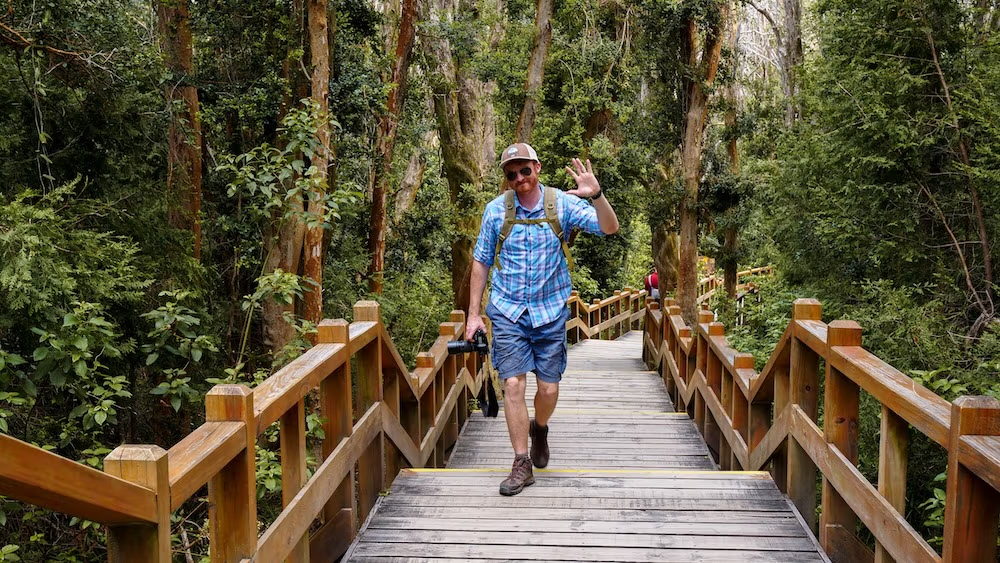
That is exactly how we ended up transforming a standard, heavily managed day trip into a classic comedy of errors. While exploring the world-famous cinnamon-colored pathways of the Arrayanes Forest inside the national park, we got so distracted capturing beautiful views that we fell into a total trance.
We missed a basic trail transition.
Instead of breaking off onto the main 12-kilometer overland tracking route back to the port of Villa La Angostura, we managed to walk a perfect, continuous circle right back onto the crowded tourist boardwalk, feeling like absolute dodo birds.
[THE BOARDWALK LOOP]
Blindly Walking the Main Forest Circle
          │
          ▼
[THE HIDDEN EXIT PORTAL]
Locate the Unmarked Rope Gate Barrier
          │
          ▼
[THE ROUTE CONVERT]
Unclip Rope -> Step Onto the 12km Overland Dirt Track to Town
The microscopic detail that generic travel brochures completely omit is the physical architecture of that trail exit. To transition from the tourist boardwalk onto the rugged backcountry hiking trail back to town, you have to actively seek out a seemingly restricted rope barrier across a dirt path. You have to physically unhook the rope gate, step through, and re-secure the latch behind you.
If you don’t know it’s there, your brain automatically filters it out as a closed ranger track, and you’ll spend your afternoon walking in expensive, frustrating circles.
[The Foodie Reality Check]
If you make it past the rope gate and commit to the 12-kilometer trek back, you are going to burn some serious calories over a three-hour march across uneven, root-choked terrain. Do not make the mistake of setting out empty-handed. Stop at the tiny, mountaintop log cabin tea room nestled just 100 meters from the forest pier before you hike. Skip the delicate snacks and order a giant, decadent slice of traditional Rogel cake—a towering mountain of crisp pastry layers, packed tight with thick dulce de leche and topped with a heavy mountain of sweet meringue. It is pure sugar overload, but it provides the exact fuel matrix your body needs to crush the final steep slopes before town.
The Heavy Gear and Multi-Generational Ground Truth
Mainstream travel content loves to emphasize flexibility, but it systematically sugarcoats the physical demands of Patagonian terrain. If you are moving through these southern regions carrying professional camera rigs, or traveling with a young family, the ground infrastructure presents an unforgiving set of challenges.
Consider the layout of local transit towns. The steep, unpaved gravel hills of El Chaltén and the cracked, uneven, high-curbed pathways of Puerto Natales will systematically destroy standard multi-directional rolling luggage wheels within a single afternoon. If you try to drag a generic spinner suitcase from the bus terminal to your cottage, you will find yourself carrying it by the side handle within three blocks. Backpacks or heavy-duty all-terrain duffels are the absolute baseline requirement here.
[TRANSIT REALITY]
Cracked Pathways & Unpaved Gravel Streets
          │
          ▼
[GEAR FAILURE POINT]
Standard Multi-Directional Spinner Suitcase Wheels Snapping
          │
          ▼
[PRO WORKAROUND]
Heavy-Duty Backpacks or Rugged All-Terrain Duffels Only
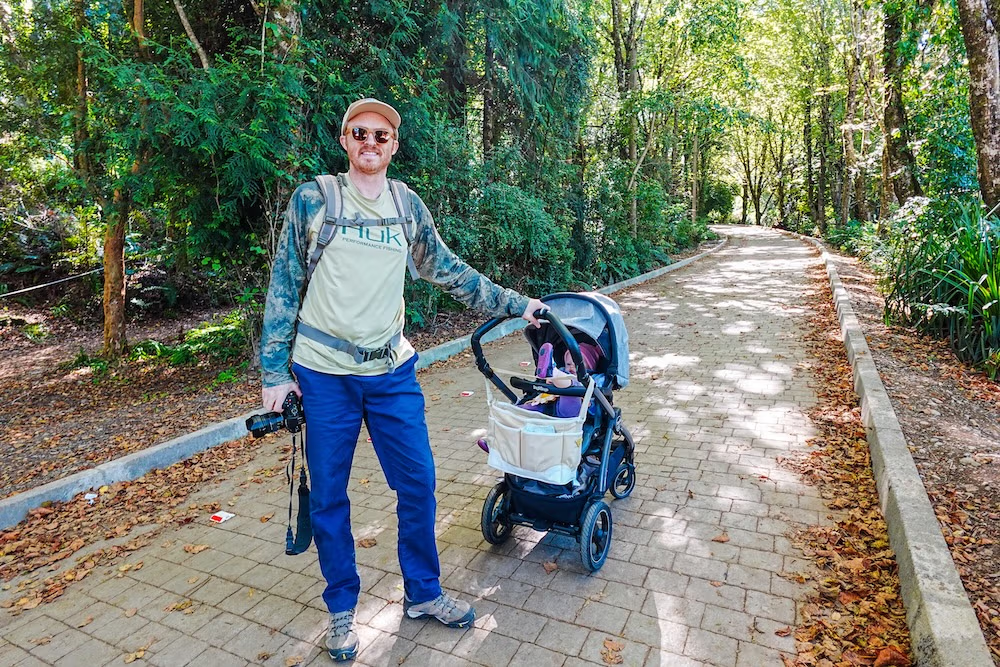
For families traveling with young children, the narrative requires an even sharper reality check. Standard strollers are an absolute liability anywhere past the main avenue pavement of El Calafate. Even the highly accessible Perito Moreno Glacier network features miles of beautifully maintained wooden and steel-grated boardwalks, but those exact steel grates feature narrow gaps that will easily swallow and seize up small stroller wheels casters.
If you are tackling these landscapes with a toddler, a premium, framed hiking backpack carrier equipped with an integrated sunshade is simply non-negotiable.
The same level of caution applies to your creative gear. Patagonian valley winds don’t just feel cold; they carry a fine, highly abrasive glacial dust that will happily wreck delicate electronics.
If you are exposed on an open moraine track during a sudden blow, executing a hasty lens change on a mirrorless body is a massive gamble—that fine grit will settle straight onto your sensor or jam up the internal gears of your lens barrels. Keep a clear UV protective filter locked onto your threads at all times, wrap your camera body in a fitted silicone protective sleeve, and always weight down your tripod legs with your primary pack to keep a sudden 90 km/h squall from sending your premium rig crashing into the granite scree.
Mastering the Overland Recovery Playbook
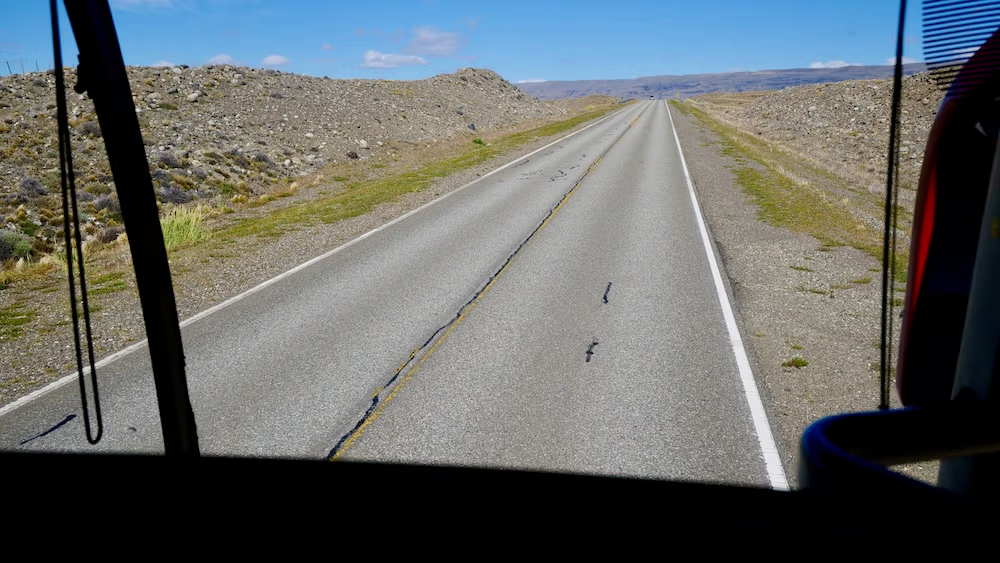
When your primary transport chain snaps—whether it’s a missed connection at an interior hub or a sudden mechanical breakdown along Route 40—understanding the local transport culture is your only way out.
Long-distance bus travel throughout the south operates on a highly rigid schedule during peak season, and tickets routinely sell out days in advance. If you miss your designated departure window, waiting around the terminal for the next scheduled public bus can trap you in an expensive logistical vacuum for up to 24 hours.
[THE HUB TRANSIT SNAPPAGE]
Missed the Rigid Daily Public Bus Connection
          │
          ▼
[THE TERMINAL CONVERT]
Identify Independent Hiker Groups -> Form a Tactical Micro-Collective
          │
          ▼
[THE FINANCIAL PIVOT]
Hire a Private "Remis" Taxi -> Split the Fare Four Ways -> Journey Preserved
Your immediate fallback option is to skip the public ticket counter entirely and look for the local private transport system known as a Remis. These are fixed-rate, unmetered private taxis that operate out of dedicated agencies or right off the terminal floor.
If you find yourself stranded at a gateway terminal like Laguna Amarga or Puerto Natales, do not try to walk the dusty highway shoulder. Instead, actively scout the terminal floor for other independent travelers, form a tactical four-person micro-collective, and approach a Remis driver to split a direct, private run to your destination.
When you divide the cost across four passengers, the financial surcharge over a standard public bus ticket is surprisingly minimal, and it instantly preserves your daytime trekking window.
To see exactly how these overland connections, gear pivots, and food breakdowns play out visually across the region, make sure to check out our YouTube channel, where we have broken down our exact routes through the south. You can also tune into our video on this topic to watch our firsthand attempts at navigating these exact village closures and trail detours in real time.
What We Missed But You Shouldn’t: Alternative Route Mapping
When you are independent planning across a region as vast as the Argentine Lake District and Southern Chile, you are inevitably going to run out of time and leave some stunning routes untamed. Maintaining a highly analytical approach to your itinerary means identifying the exact alternative paths that can serve as powerful backups when your primary targets are blocked.
If a sudden border closure or a transport lockout prevents you from making the classic overland crossing from El Calafate down into the Chilean W-Trek corridors, do not waste your travel window attempting to force a broken land connection. Instead, pivot your entire geography north or deep south toward the under-utilized water routes.
[THE ROUTE 40 BORDER BLOCK]
Customs Delays or Land Transit Strikes
          │
          ▼
[THE MARITIME ESCAPE]
Fjord Excursions via Balmaceda & Serrano Glacier Routes
          │
          ▼
[THE RESULT]
Travel Window Preserved via Coastal Waterways
For travelers stranded on the Chilean side of the archipelago, bypassing the congested overland bus routes entirely in favor of the maritime channels is a phenomenal move. The deep-water fjord navigations operating out of the coastal networks offer direct, high-impact day access to the stunning faces of the Balmaceda and Serrano Glaciers. This alternative route delivers incredible glacial views and dense forest tracking without requiring you to clear international land customs or rely on volatile highway infrastructure.
On the Argentine side, if the high-altitude tracks around Mount Fitz Roy are completely closed off by a multi-day storm system, the ultimate alternative route points straight toward the historical ranch networks of Estancia Cristina. Accessed via specialized navigation vessels launching from Punta Bandera across the waters of Lake Argentino, this historic outpost opens up private, low-altitude valley tracking trails that remain highly accessible when the primary mountain circuits are completely locked down by ice and wind.
To help map out your structural options when your primary route shatters, use this comprehensive alternative routing matrix to guide your next move:
The Backcountry Route Contingency Framework
| Primary Intended Route | The Failure Point | The Alternative Blueprint | Logistical Access Metrics | Researched Validation Status |
| Fitz Roy Moraine Track (Laguna de los Tres) | High-altitude gale alerts closing the upper treeline checkpoints. | Estancia Cristina Valley Trails via Lago Argentino navigation. | Requires a specialized morning boat launch from Punta Bandera hub. | Verified Ground Backup |
| Overland Land Border Crossing (Calafate to Natales) | Custom house strikes, road blockages, or severe vehicle breakdowns. | Balmaceda & Serrano Fjord Excursions via coastal maritime vessels. | Direct departures out of Puerto Natales maritime docks. Cash required for onboard snacks. | Verified Ground Backup |
| Torres del Paine Central Track (The W-Trek Corridor) | Catastrophic platform campsite closures or booking system failures. | Independent Day-Trekking Model utilizing early-morning direct Remis runs. | Strict coordination with the 6:30 AM gateway parking windows required. | [Researched Only] (CONAF path validation tier) |
| The Full Multi-Day O-Circuit (Macizo Corridors) | Sudden unseasonal blizzards triggering emergency park evacuations. | Low-Altitude Protected Loops (Mirador Cóndor or Cuernos tracks). | Accessible directly from the main park transit drop-off points. | [Researched Only] (PasesParques.cl route tier) |
The Patagonia Failure Stack: What Actually Breaks First
Most Patagonia planning advice treats failure as a single event: bad weather, a missed bus, a closed trail, or a sold-out campsite. On the ground, it almost never works that neatly.
The real problem is the stack.
One small failure triggers the next one. A wind alert closes the upper trail. That pushes everyone onto the same lower route. The shuttle fills. You miss the return bus. The ATM is empty. Your phone battery is dying. Suddenly, the problem is no longer “we didn’t reach the viewpoint.” The problem is “we are cold, hungry, cash-light, and two towns away from our backup lodging.”
This is why Patagonia rewards travelers who think in layers instead of wish lists.
The Patagonia Failure Stack
| Failure Layer | What Breaks | Common Traveler Mistake | Recovery Move | Best Backup Asset |
|---|---|---|---|---|
| Weather | Wind, rain, ice, visibility, exposed ridgelines. | Trying to force the original hike because “we came all this way.” | Drop elevation immediately and pivot to forest, valley, waterfall, or town-based routes. | Downloaded offline trail map plus one low-altitude route pre-saved. |
| Access | Park gates, QR codes, barcodes, checkpoints, campsite permits. | Assuming a phone signal will appear exactly when needed. | Screenshot every barcode, print the important ones, and keep them in a dry pack liner. | Physical paper backup. |
| Transport | Public buses, shuttles, border transfers, terminal connections. | Waiting passively for the next official departure. | Find other stranded travelers and split a private Remis or shuttle before the day disappears. | Cash reserve plus willingness to team up. |
| Money | ATMs, card terminals, foreign bank chips, offline payment systems. | Relying on plastic in small mountain towns. | Secure cash in El Calafate, Bariloche, Puerto Natales, or another major hub before moving deeper. | Emergency cash envelope. |
| Food | Restaurant closures, siesta hours, Monday shutdowns, remote kiosks. | Assuming Google Maps hours reflect reality. | Carry one boring but reliable emergency meal and treat open gas stations like tactical infrastructure. | Snacks, water, and zero culinary ego. |
| Gear | Suitcase wheels, stroller casters, lens sensors, tripod stability, cheap umbrellas. | Packing for airport convenience instead of Patagonian ground conditions. | Use backpacks, rugged duffels, wind layers, camera protection, and child carriers instead of delicate rolling systems. | Durable gear that can take abuse. |
The trick is not to predict every possible disaster. You can’t. The trick is to keep each failure from cascading into the next one. A closed trail is annoying. A closed trail plus no cash, no food, no signal, and no transport is how a beautiful travel day turns into a logistical faceplant.

The Patagonia Pivot Rule: Downgrade the Ambition, Preserve the Day
When a plan collapses in Patagonia, the worst instinct is to treat the day as ruined.
That is usually emotional nonsense.
The correct move is to downgrade the ambition while preserving the day’s core value. If the summit is gone, preserve the forest. If the border crossing is broken, preserve the glacier experience. If the restaurant plan fails, preserve the local reality. If the public bus disappears, preserve the travel window.
You are not surrendering the trip. You are changing the shape of the win.
The Ambition Downgrade Framework
| Original Travel Win | Failure Event | Emotional Reaction | Smarter Pivot | What You Still Salvage |
|---|---|---|---|---|
| Iconic viewpoint | Wind blocks the final ascent to Laguna de los Tres. | “The whole hike was a waste.” | Switch to Laguna Capri, Chorrillo del Salto, or protected Lenga forest trails. | A real hiking day, safer conditions, and a less crowded route. |
| Perfect cultural lunch | Dolavon shuts down on a Monday. | “There is nothing to do here.” | Walk the town slowly, photograph the quiet facades, then retreat to the gas station sanctuary. | A more honest read on local rhythms. |
| Classic overland route | Bus, border, or shuttle chain snaps. | “We are stranded.” | Build a four-person traveler micro-collective and hire a Remis. | Your travel day and onward itinerary. |
| Postcard glacier plan | Weather or transport blocks the main mountain corridor. | “We picked the wrong base.” | Pivot toward lower-altitude navigation routes, estancia trails, or fjord excursions. | Glacier scenery without forcing a broken mountain plan. |
| Easy family boardwalk day | Stroller wheels fail on grates, gravel, or steps. | “This destination is impossible with kids.” | Switch to a framed child carrier and shorten the route. | A manageable version of the original outing. |
This is the mental switch that saves Patagonia trips. Stop asking, “Can we still do the perfect version?” Start asking, “What version of this day still gives us something meaningful without turning us into frozen, broke, exhausted dodo birds?”
Restoring the Narrative and Moving Forward
Independent travel isn’t a math problem to be solved with perfect precision; it’s an active exercise in environmental adaptation. When the wind strips the pack cover right off your bag, or a remote mountain village enters a total lockdown for a siesta, your primary itinerary ceases to matter. What matters is your willingness to drop the rigid expectations of a polished brochure, laugh at the absurdity of the situation, and seek out the local workaround.
[THE PATAGONIAN REALITY CIRCLE]
Rigid Planning -> Climate Fricton -> The Pivot -> Authentic Discovery
The moments where your travel plan completely shatters are almost always the exact windows where the real adventure sneaks through the cracks. They force you to slow down, sit at a rustic wooden table, split a massive plate of comforting local pasta, or find yourself hanging out at an isolated roadside service station with a cold grapefruit soda in hand.
Pack the right technical wind layers, protect your camera sensors from the valley dust, secure your hard currency well before you step into the mountain hills, and always keep a physical backup of your barcode vouchers handy.
The rest of the journey is just Patagonia doing what it does best: rewriting your story on the fly.
Lace up those broken-in trekking boots, double-check your pack liner, download our upcoming destination guides to lock down your regional safety nets, and get out there on the tracks. We will see you out on the trails. Happy trails.
Frequently Asked Questions
Can I buy my National Park entry tickets with cash at the park gates?
Nope. The Administration of National Parks (APN) has gone entirely digital for the El Chaltén and El Calafate sectors. You must purchase your tickets or multi-day FlexiPass online before arrival. Park rangers do not keep cash drawers at the trail portals, and because mobile data is non-existent at the trailheads, trying to buy them on your phone at the gate will leave you stranded.
What happens if I get caught stealth camping inside Torres del Paine?
Expulsion. Chile’s forestry commission (CONAF) has zero tolerance for illegal camping. Rangers actively audit digital and physical barcodes at interior trail junctions, and anyone caught pitching an unauthorized tent or utilizing closed wild sites will be immediately fined, escorted out of the park by law enforcement, and potentially deported.
Are restaurant menu prices in Patagonia inclusive of everything?
Depends. If you are ordering pasta in Argentina, be prepared for a quirky cultural hurdle: you are often billed one fee for the plain pasta dough and a completely separate, additional fee for the accompanying sauce. This mandatory sauce surcharge can easily double the price of your dinner. Always check the line-item breakdowns on the menu.
Can I use a standard lightweight stroller on the Perito Moreno boardwalks?
Never. While the glacier pathways are beautifully manicured, the entire network is constructed from steel-grated steps and wooden platform transitions. Small stroller wheel casters will catch in the metal gaps instantly, jarring your toddler and seizing up the wheels. A framed hiking backpack carrier is absolutely mandatory for families here.
Do public buses running between El Bolsón and Lake Puelo cross provincial borders seamlessly?
Absolutely not. Because El Bolsón sits in Río Negro and Lake Puelo is located in Chubut, local transit regulations often force a bizarre vehicle swap. Your bus will drive straight to the provincial boundary line, where all passengers must physically disembark with their gear and board a separate vehicle run by the same company to continue into the park.
Can I safely swap camera lenses while trekking through the wind-exposed river valleys?
Don’t do it. The relentless Patagonian valley winds carry an incredibly fine, abrasive glacial dust that you won’t even notice until it is too late. Executing an open lens swap on a mirrorless or DSLR body mid-trek is a fast track to settling grit directly onto your sensor or seizing up the internal focusing gears of your lens barrels.
What should I do if my long-distance public bus connection breaks down or is canceled?
Pivot immediately. Public bus frequencies are incredibly rigid, and waiting for the next scheduled connection during peak season can leave you stranded for 24 hours. Your best bet is to find a few independent travelers on the terminal floor, form an impromptu micro-collective, and split the cost of a private “Remis” taxi to your destination.
Is it worth taking a day trip to smaller interior towns like Dolavon on a Monday?
Skip it. Smaller interior Patagonian outposts enter a total commercial and cultural lockdown on Mondays and Tuesdays for the regional siesta. If you show up on these days, every historic site and local restaurant will be shut tight, and you will find yourself spending your afternoon eating pre-packaged alfajores at a highway gas station.
Project 23 Argentina: This guide is also available in Spanish. [Lea la versión en castellano: Cómo reaccionar cuando tu plan en la Patagonia se va al demonio]