
There is a distinct, deeply humbling flavor to the dust that coats your tongue when you are sitting on a plastic bench outside a shuttered gas station in rural Patagonia. The wind is howling at 80 kilometers per hour, ripping a cheap wire umbrella completely out of your hands and bending the metal ribs backward like a broken wing. Your phone tells you that the local artisan flour mill and its accompanying restaurant are a mere three blocks away. What the phone fails to mention is that the digital pin on your mapping app is an absolute fiction. It is 4:15 PM on a Monday.
Welcome to the side of Patagonia that the glossy travel brochures systematically omit: the local operational void.
[Samuel’s Reality Check: The Argentine Siesta]
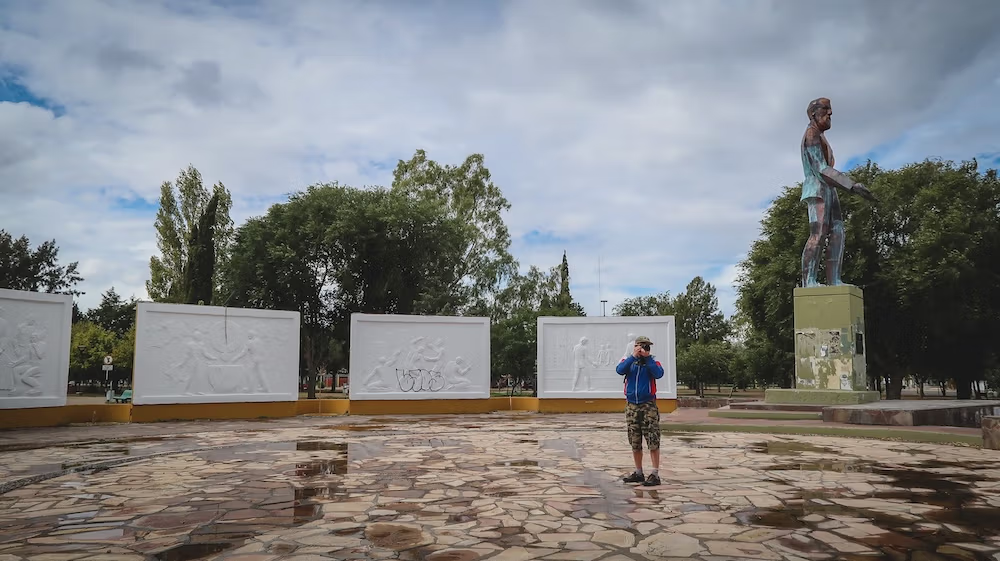
If you roll into a secondary or tertiary Patagonian hub like Dolavon or Trelew early in the week, you are not entering a bustling cultural playground. You are entering a ghost town. Between 1:00 PM and 5:00 PM, the streets empty, businesses close their steel shutters, and your high-premium itinerary collapses into a desperate search for calories. Do not trust online business hours; they are blank placeholders.
Audrey and I spent weeks navigating these exact logistical dead zones while filming our recent destination guides. We made the classic rookie errors so you do not have to, transforming moments of pure systemic friction into a battle-tested blueprint for the season. If you want your southern expedition to feel like a seamless field report rather than a series of misadventures, you must look past the obvious highlights and audit the invisible planning traps.
The Illusion of Synchronized Wilderness Bookings
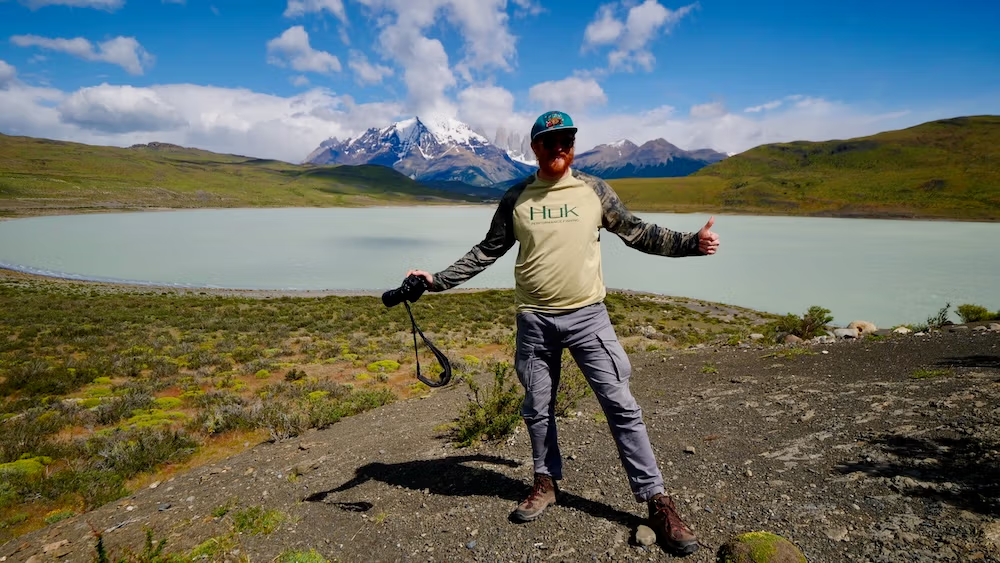
The most dangerous assumption you can make when planning a multi-day trek through Torres del Paine National Park is that the park operates as a single, unified entity. It does not. The trail network is carved up between two entirely separate private concessionaires—Vértice Patagonia and Las Torres Patagonia (frequently accessed via the TorresHike aggregator)—alongside the state-run Corporación Nacional Forestal (CONAF).
Here is where the architecture breaks: these entities do not drop their seasonal booking calendars at the same time.
[Samuel’s Asynchronous Booking Alarm]
Vértice and Las Torres typically release their campsite and refugio slots in unannounced waves between April and June. If you log on and immediately purchase your Vértice slots (Grey, Paine Grande, Dickson) because they happen to be open, you are effectively gambling on the hope that Las Torres will open their adjacent dates before the rest of the global trekking market scoops them up.
When those calendars drop, the global traffic spikes immediately. If the dates do not match perfectly, you end up with an “orphan night”—a fatal gap in the middle of your W or O Circuit where you have no legal place to pitch a tent or sleep. Rangers stationed at key checkpoints like Campamento Chileno or Serón will explicitly demand to see your digital or physical confirmation tokens for every single consecutive night on your route. If your chain is broken, you are turned back on the spot.
The Refugio Dining Room Ledger
- Refugio Full Board Berths: $150–$250 USD per night (Includes dinner, breakfast, and a packed lunch).
- Standalone Platform Campsite: $10–$30 USD per night (Gear not included).
- The Sauce Trap: When purchasing a-la-carte pasta at base-camp venues, check the pricing ledger carefully. Establishments often charge one fixed fee for the plain pasta shape and an identical, secondary fee for the sauce layer, effectively doubling the expected cost.
To sidestep this asymmetry, you must map your targeted route backward from the most tightly bottlenecked nodes—specifically Refugio Chileno and Refugio Cuernos. Keep the booking portals for both Vértice and Las Torres open on parallel browser tabs simultaneously. Do not commit financial capital to one side of the mountain until you see live, matching availability on the other. If you find yourself holding an asymmetric itinerary, immediately deploy automated scraping engines like the Reserve Nature platform to monitor rolling 72-hour cancellation windows.
The New Route-Differentiated Ticket Trap
For years, entering Chilean Patagonia required a straightforward park pass that covered standard entry. That architecture is officially dead. CONAF utilizes a strict, route-tied fee structure via the centralized pasesparques.cl portal. You can no longer buy a generic day pass and casually wander onto the backcountry trail corridors.
[The Route Pass Breakdown]
Your digital park ticket must explicitly mirror your accommodation itinerary data. If you purchase a basic “Full Day” pass but are caught carrying an internal-frame backpacking pack toward the W Circuit trail intersections, you face immediate structural ejection at the ranger stations.
The system is designed to prevent overcrowding and illegal wild camping, which has reached a critical tipping point. True wild camping is fundamentally banned across the entire Patagonian biome. Using open campfires outside explicitly designated metal cooking shelters inside the organized refugios will result in immediate hefty fines and swift deportation by park authorities.
Park Access and Fee Architecture
| Target Sector & Hub | Current Access Cost | Time Cost & Logistics | Peak-Season Reality | Post-Hike Triage Priority |
| Torres del Paine (CONAF) | ~CLP 35,000–45,000 (~$40–$55 USD) via route tier | 15 minutes online processing. Zero walk-up gate sales allowed. | Mandatory digital ticket matching across all checkpoints. | Secure physical Chilean cash for unexpected backcountry expenses. |
| Los Glaciares (Northern Sector) | Free Admission (Northern trails only) | Mandatory physical registration log at APN office on Av. Güemes. | High trail density between 10:00 AM and 2:00 PM on Fitz Roy paths. | Take a taxi to Hostería El Pilar trailhead to convert the hike to a unidirectional flow. |
| Los Alerces National Park | ~$9 USD for Foreign Visitors | 2.5-hour morning bus ride from Esquel terminal hub. | Returning buses fill to absolute maximum capacity by 6:00 PM. | Secure a round-trip ticket at the morning departure station. |
| Lago Puelo National Park | ~$8 USD for Foreign Visitors | 40-minute localized shuttle from El Bolsón center. | High-frequency schedule anomalies at the provincial boundary line. | Carry exact change to avoid driver processing friction. |
The Invisible Vulnerability of Water Transits
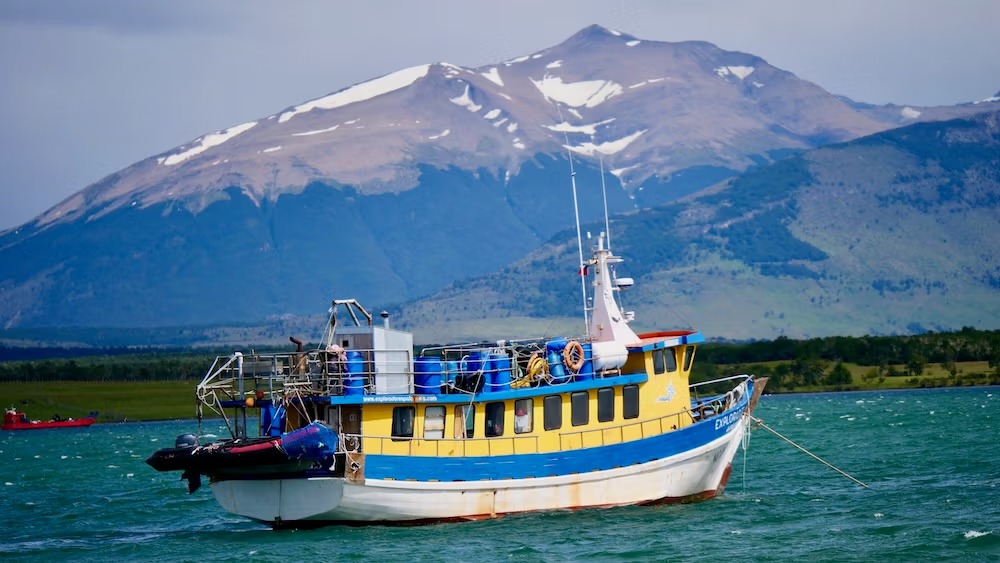
On paper, the Lago Pehoé catamaran (connecting Pudeto to the Paine Grande trailhead) and the glacial watercraft operating out of Puerto Mansano or Puerto Lago look like highly efficient, predictable transit links.
They are highly volatile single points of failure.
[Samuel’s Cash-in-Hand Warning]
The Pudeto-to-Paine Grande vessel does not offer advanced online reservations. It operates on a strict, first-come, first-served boarding queue where tickets must be bought on-board using physical Chilean Pesos or crisp backup credit cards.
The real risk is atmospheric. When sustained 90+ km/h wind shear hits the Southern Patagonian Ice Field, catamaran operations are instantly grounded by safety decree. If you have a tightly packed itinerary with a flight out of Puerto Natales or Punta Arenas the following morning, you are suddenly marooned on the west side of the massif.
The alternative is the technical, unmaintained bypass trail hugging the shorelines of Lago Pehoé—a brutal, boulder-strewn track that is entirely impassable if you are hauling heavy, hard-shell roller bags or handling family gear carriers.
Lake Transit Fuel Station
- On-Board Fuel: Packaged mineral water costs upwards of $4 USD per bottle inside watercraft kiosks.
- The Refugio Exit Snack: A single fried dough cake (torta frita) at trail outposts costs roughly $1–$2 USD equivalents—a dry, high-calorie carb injection.
Always construct a mandatory 6-hour buffer window into your exit day itinerary. If you are traveling with expensive camera rigs or a family carrier backpack, keep your eye on the localized Windguru or Meteoblue forecast models for the specific mountain ridge line altitudes rather than the valley town reports. If sustained gusts are tracking toward 60 knots, immediately message your long-distance bus operators via WhatsApp; local coach lines from the Pudeto drop point will generally hold their departures if they can physically see the boat struggling or delayed on the water.
The Paper Distance Myth and Dual-Customs Border Sinks
If you pull up a standard mapping application and calculate the overland driving route from El Calafate in Argentina to Puerto Natales in Chile, the screen will spit out a highly comforting metric: roughly 4.5 to 5 hours of smooth asphalt driving via Route 40.
This calculation is an outright lie during peak season.
[The Border Time Sink]
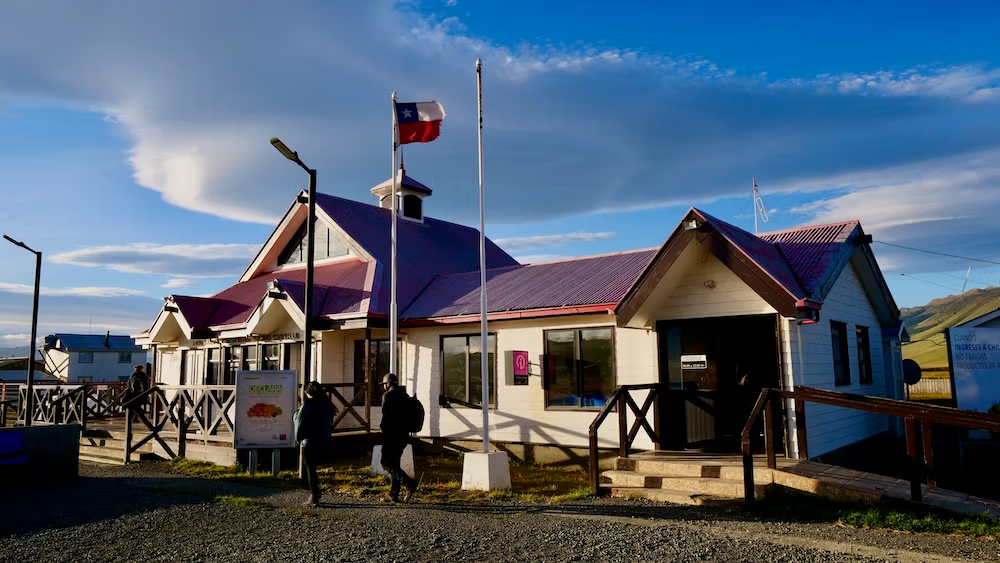
The Paso Río Don Guillermo border station is a dual-stop international checkpoint that acts as a massive operational choke point. When long-distance touring coaches arrive simultaneously from both directions, the processing window stretches instantly from minutes to a grueling multi-hour ordeal.
The real friction stems from the Chilean Servicio Agrícola y Ganadero (SAG) agricultural inspections. Chile operates a zero-tolerance policy regarding the importation of organic material. A single unsealed piece of fruit, an un-stamped bag of regional trail mix, or a loose jar of artisanal honey stuffed inside your pack will trigger a mandatory manual bag unzipping and a severe inspection delay.
Sovereign Transit Verification Ledger
- The Sealed Bar Mandate: All trail snacks crossing from Argentina to Chile must remain in factory-sealed, commercially labeled packaging.
- The Trash Bin Rule: If you purchased loose bulk dried fruit or walnuts in El Calafate, discard them in the explicit disposal bins at the Argentinian exit gate before stepping into the Chilean customs zone.
- Cross-Province Transfer Friction: When riding regional lines like La Golondrina from El Bolsón (Río Negro province) to Lago Puelo (Chubut province), the bus will halt directly at the provincial line. Passengers must disembark and physically transfer to an adjacent bus body due to conflicting inter-provincial driver labor regulations.
Miscalculating the Physical Strain of Simple Footpaths
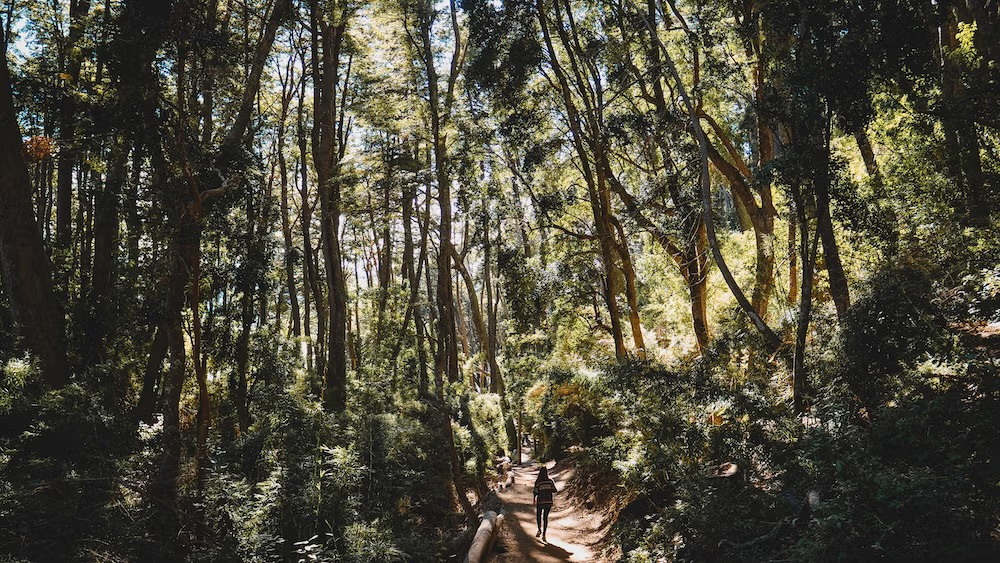
It is incredibly easy to look at a manicured trail loop like the one weaving through the iconic Bosque Los Arrayanes in Villa La Angostura and assume it will be a walk in the park. The trail starts on a pristine wooden boardwalk system that loops through 800 meters of stunning, cinnamon-colored bark trees.
Then the infrastructure drops away.
[Samuel’s Navigation Meltdown]
If you make the dodo bird error of following the generic trail signs back toward the main town without analyzing the literal physical gates, you can find yourself trapped in a geometric circle. The true 12-kilometer technical path back to the port requires you to actively lift an unmarked utility rope barrier, pass through it, and secure it behind you. Missing that rope means you face an accidental, exhausting loop back to the start.
Dodo. Bird. Incident.
The remaining 11 kilometers of that track present a highly uneven mountain terrain packed with massive tree root systems, un-bridged bogs, and steep moraine slopes. It is an excellent mountain biking course, but only if you are an advanced rider. Audrey and I watched countless travelers attempting to push standard city bikes or lightweight strollers over exposed glacial boulder fields. They ended up physically carrying the wheeled machinery on their shoulders for miles.
Brutal.
Mountaintop Refugio Fuel
- The Rogel Cake: Layers of thin, crispy pastry biscuit packed with copious volumes of rich dulce de leche and topped with baked meringue. Cost: ~$8 USD per heavy slice.
- The Savory Waffle: Freshly baked iron waffles topped with air-dried ham (jamón crudo), sun-dried tomatoes, and local goat cheese. Cost: ~$10 USD.
The Micro-Data Fuel Ledger: Regional Transit & Menu Costs
To accurately balance your capital reserves on the ground, you must bypass estimated cost projections and plan around real-time operational expenses. The following matrix details the exact, verified micro-logistics for the primary southern loops.
The Sovereign Micro-Logistics Matrix
| Core Venue / Transit Route | Verified Cost | Time Investment | Local Payment Reality | Hassle Score (1-10) | Reward Score (1-10) |
| Long-Haul Overland Bus (Mar del Plata to Madryn) | ~1,334 ARS baseline index equivalent (~$64 USD) | 18–19 Hours total transit | Semi-Cama processing. Sells out 2 weeks early in peak season. | 8 | 4 |
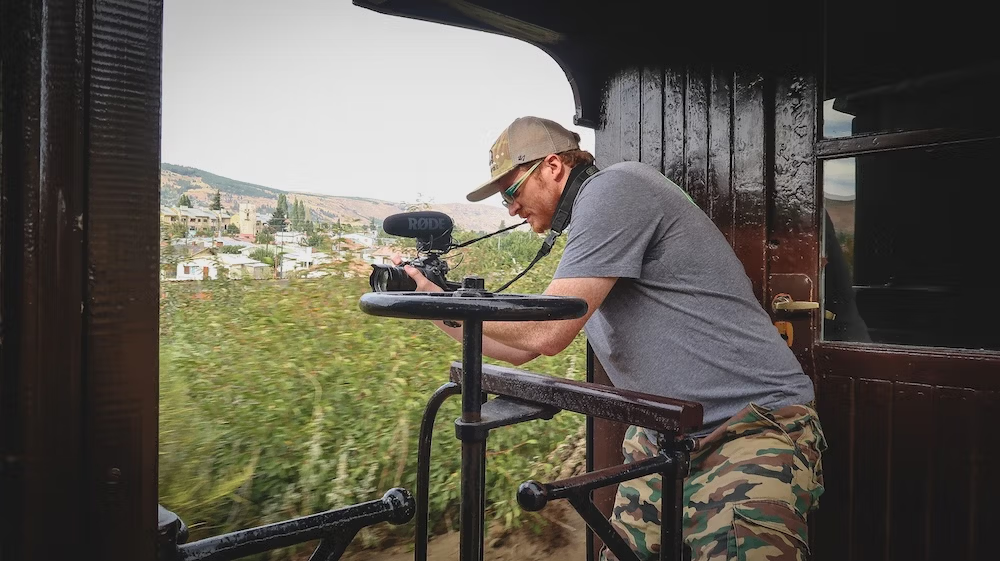
| La Trochita Steam Rail (Esquel Heritage Loop) | $32 USD per foreign adult passenger ticket | 1 Hour out / 45 min stop / 1 Hour return leg | Manual bank transfer verification at Banco Patagonia teller windows. | 7 | 9 |
| Casa de Té Nain Maggie (Trevelin Welsh Node) | ~$13 USD per single complete afternoon tea set | 2 Hours minimum structured dining style | Cash discount incentives apply. Closed entirely during prime morning slots. | 3 | 10 |
| Cantina Náutica Special (Puerto Madryn Center) | ~$12 USD per person fixed multi-course menu | 1.5 Hours from opening door drop | Credit cards accepted at the standard tourist MEP exchange rate. | 2 | 10 |
| Piedra Parada Outpost Van (Merakisur Local Tour) | $60 USD per person (Includes picnic fuel pack) | 2.5 Hours driving each way via remote unpaved dirt routes | Cash preferred. Only one single fixed bathroom stop exists on route. | 5 | 9 |
The Hidden Surcharges of Foreign Transactions
One of the most rapidly changing elements of exploring the Argentine side of Patagonia is the electronic financial processing infrastructure. Foreign Visa and Mastercards process smoothly at the electronic tourist MEP rate, which sits in a highly comfortable near-parity with the parallel Blue Dollar rate. This means you no longer need to carry literal bricks of physical paper cash from Buenos Aires inside your technical backpack.
[Samuel’s Card Surcharge Warning]
Do not assume that card acceptance equals flat pricing. Independent gear outfitting outposts, remote grocery kiosks, and regional bus counters across Santa Cruz and Chubut will quietly tack on a 10% to 15% recargo (surcharge) to your total bill if you opt for plastic over physical cash.
Furthermore, small-town electronic systems suffer frequent connectivity dropouts when high winds damage cellular masts. Always maintain a deep emergency fund of physical cash stashed in a water-sealed compartment inside your pack.
Local Eatery Price Points
- Bife de Chorizo a la Pobre (Tio Forcol / De Maria): A massive, thick-cut steak topped with caramelized onions and a fried egg. Served alongside a fresh lentil dip and a bread basket. Cost: ~$15 USD.
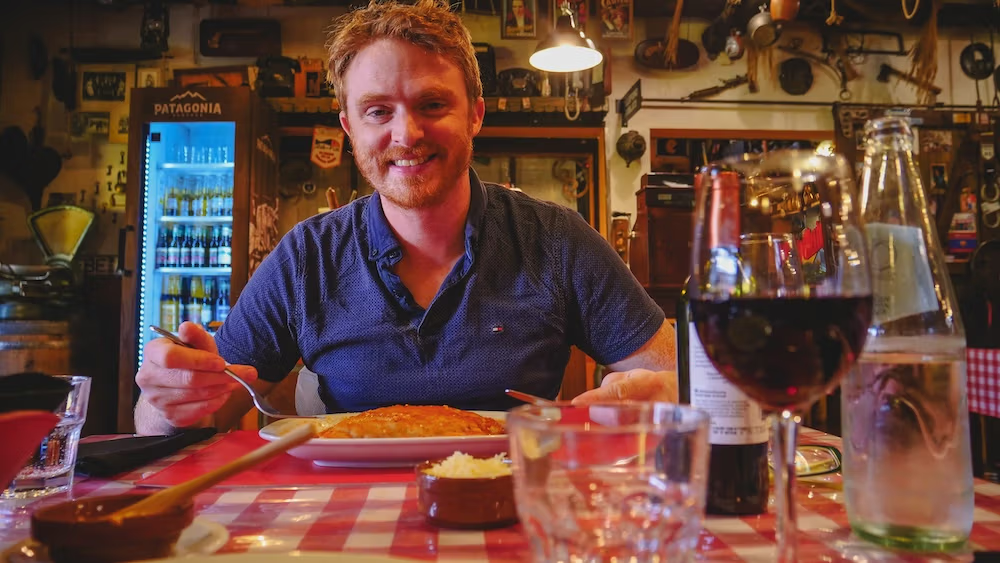
- Patagonian Lamb Lasagna (Don Chiquino): Slow-cooked, ground mountain lamb layered with fresh pasta sheets, soft carrots, and local bell peppers. Cost: ~$14 USD.
- Andean Chocolate Mousse: Whipped dark cocoa layered with sweet dulce de leche cream and wild forest raspberries. Cost: ~$5 USD.
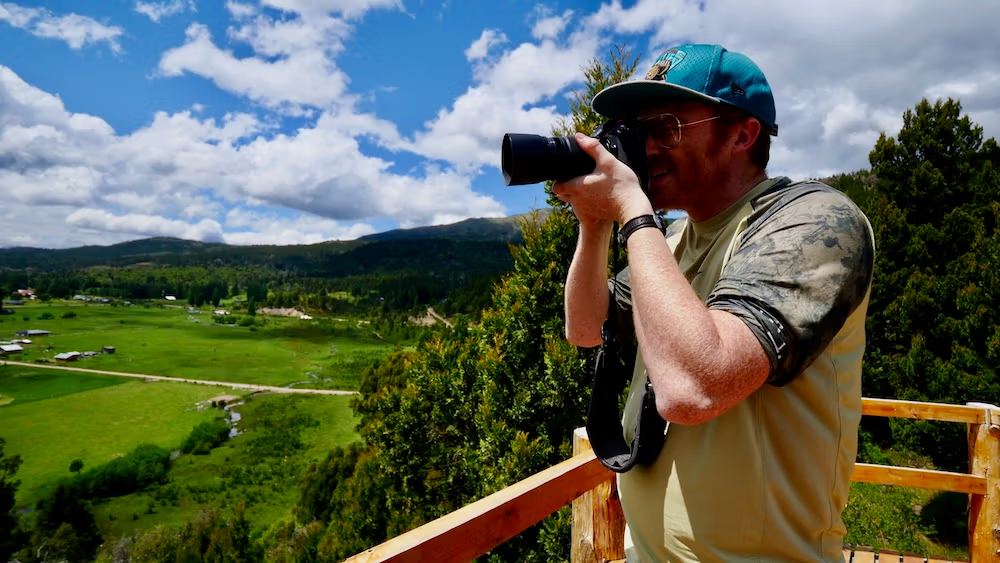
Micro-Fine Granite Dust and Wind-Driven Camera Failures
If you are a content creator or a dedicated landscape photographer, the real enemy on the trails is not rain. It is the micro-fine, highly abrasive granite dust kicked up by wind tunnels.
[Samuel’s Technical Gear Sidebar]
Attempting to execute a rapid lens swap while standing on an exposed ridge line like Loma del Pliegue Tumbado or near the face of Glacier Grey will permanently ruin your camera sensor. The high-velocity wind acts as an automated sandblaster, forcing micro-particles deep inside the internal tracking mechanics of your camera body.
Commit strictly to a single, highly versatile mid-range zoom lens—such as a weather-sealed 24-70mm f/2.8 setup—before you leave your cabin or hostel bunk. Wrap your secondary camera bodies in heavy-duty neoprene tech sleeves rather than letting them bounce openly on a neck strap.
Additionally, avoid packing standard lightweight lifestyle umbrellas for trail deployment. The sudden, violent gusts bouncing off the granite peaks will shred the fabric panels within minutes, turning your protective gear into immediate trailside garbage.
[Our Media Ecosystem Connection]
We documented our complete gear outfitting disaster—including the exact moment our secondary microphone rig catastrophically failed during a high-wind cliff trek—in our recent Patagonia Logistics Video Series. Be sure to cross-reference our upcoming destination guides before finalizing your technical packing lists.
Alternative Routes: What We Missed But You Shouldn’t
Our timeline forced us to execute deep regional data dives across the lower valley systems, meaning we focused heavily on the unique cultural intersections of the Welsh farming communities across Gaiman, Trevelin, and the remote corners of Dolavon. If your trekking desires pull you strictly toward high-altitude mountaineering, the clear alternative trajectory is the remote northern access route through El Chaltén.
- The Fitz Roy Valley Corridor: Direct pedestrian pathing departing from the northern boundary of Avenida San Martín in El Chaltén. No park access permits required, but mandatory registration forms must be logged with the Administración de Parques Nacionales (APN) station on Avenida Güemes.
- The Loma del Pliegue Tumbado Bypass: A challenging 18-kilometer out-and-back mountain path that exits the main wind shadow of the primary massifs, delivering a 360-degree look across both the Torre and Fitz Roy valleys simultaneously.
If you select the northern mountain paths, prioritize an early morning departure from the secondary trailhead at Hostería El Pilar. This logistical workaround allows you to convert the brutal day-trek into a smooth, unidirectional forward pipeline. You will hike directly with the morning wind at your back, cruise past the main masses ascending from the town center, and access the high-altitude viewing platforms at the precise hour when the alpine light cleanly illuminates the granite faces.
The Ultimate Return-on-Effort Itinerary Audit
To maximize the value of your limited calendar days in the far south, you must ruthlessly filter out tourist activities that carry high operational friction but deliver subpar sensory rewards. Use our field matrix to structure your tracking choices.
The Return-on-Effort (ROE) Audit Ledger
| Targeted Regional Activity | Lived Hassle Metric | True Sensory Reward | The Ultimate Strategic Actionable Verdict |
| The Complete O Circuit Trek | 9 / 10 | 10 / 10 | Universally Worth It. The months of synchronized cross-platform calendar matching filter out casual crowds, leaving the remote northern paths completely pristine. |
| Day-Tripping from Puerto Natales Hub | 8 / 10 | 3 / 10 | Skip It. Spending 4 hours every morning inside a packed public commuter coach means you hit the paths at 9:30 AM alongside massive group tours, reaching the viewpoints exactly when afternoon cloud covers settle in. |
| The Ancient Alerces Boat Cruise | 5 / 10 | 9 / 10 | Highly Recommended. The 2,700-year-old tree preserves require a strict guided group structure, but the turquoise water clarity rivaling Banff makes the strict timeline trade-off highly profitable. |
| The Dolavon Welsh Architecture Loop | 7 / 10 | 4 / 10 | Conditional. Only worth the journey if you travel strictly between Wednesday and Sunday and possess an independent rental vehicle to survive the complete lack of local public transit. |
Frequently Asked Questions
Is it easy to find vegetarian or vegan food options in southern Patagonia?
Depends. If you are sticking to progressive local hubs like Puerto Madryn or San Martín de los Andes, you will stumble upon fantastic dedicated health food spots like Zen Tea, which serve up great barley bowls, quinoa dishes, tofu, and veggie wraps. Once you head deep into remote national park territories or traditional mountain villages, however, the culinary landscape shifts heavily toward the classic Argentine pillars of pizza, pasta, and parrilla (barbecue). In those remote outposts, your vegetarian “safe haven” will mostly consist of copious amounts of mozzarella cheese, pumpkin mash, and house-made gnocchi. If you have strict dietary requirements, always pack an emergency stash of dense fuel bars before leaving the main regional towns.
Can I use my phone’s eSIM for data across all trail networks?
Never. Do not let cellular providers convince you that a digital data plan will keep you connected on the back trails of the Southern Patagonian Ice Field or inside the deep valleys of Los Alerces. While you will catch decent signals near the center of main towns, the vast wilderness corridors are absolute cellular dead zones. Furthermore, high winds frequently knock out small-town cellular masts entirely, disrupting local credit card processing terminals. Download every single map, confirmation token, and trail layout for offline use before you leave your hostel or cabin Wi-Fi network.
Do I really need to book the long-haul buses weeks in advance during summer?
100%. If you are traveling during peak Argentine summer, long-distance coach routes—like the grueling 18-to-19-hour journey from Mar del Plata down to Puerto Madryn—sell out weeks ahead of time. If you attempt to wing it at the terminal last minute, you will either be left completely stranded or forced to buy a less-comfortable ticket class. Always pay the premium to lock down Cama or VIP seating rows well in advance; your spine, sanity, and sleep cycles will thank you on those overnight transits.
Are park entry tickets sold at the physical gates?
Nope. For major reserves like Torres del Paine, walk-up gate sales are completely extinct. You are strictly required to purchase your route-differentiated passes ahead of time through the centralized digital portal. If you arrive at an entry checkpoint like Laguna Amarga without a pre-downloaded QR pass that accurately matches your backcountry accommodation itinerary, the rangers will deny you entry on the spot.
Will my cheap travel umbrella survive a typical Patagonian rainstorm?
Absolutely not. Patagonian winds do not play by regular rules. A standard, lightweight wire umbrella will be violently flipped inside out, bent out of shape, and structurally destroyed within your first three minutes of encountering a localized ridge-line wind tunnel. Ditch the umbrella entirely. Your money is far better spent investing in a high-grade, wind-resistant technical shell jacket and a quality wool cap to protect your ears when morning temperatures plummet.
Is the Lago Pehoé catamaran guaranteed to run every day?
Hardly. While the catamaran looks like a permanent, bulletproof transit link on paper, its operations are completely at the mercy of sudden atmospheric shifts. When sustained wind velocities exceed safety limits, local maritime authorities ground the vessel instantly. If your travel window is packed tight against a morning flight out of Punta Arenas, an unannounced wind lockout can completely derail your plans. Always factor a mandatory buffer window into your transit days.
Can I cross the border from Argentina to Chile with fresh trail snacks?
Never. The Chilean agricultural inspectors (SAG) maintain an absolute zero-tolerance policy regarding unsealed organic products. If you try to cross checkpoints like Paso Río Don Guillermo carrying loose trail mix, fresh fruit, or local artisanal honey, your entire bag will be unzipped for a manual inspection. Avoid heavy fines and structural transit delays by sticking exclusively to factory-sealed, commercially labeled fuel bars.
Do local restaurants charge extra for pasta sauces?
Surprisingly, yes. One of the quirkier mechanical realities of dining out in traditional Argentine pasta joints is the decoupled pricing ledger. A menu will often list one baseline price for the physical pasta shape, and a completely separate, nearly identical fee for the accompanying sauce layer. Keep this in mind when budgeting your evening meals so your final bill does not give you an unexpected financial jump.
Project 23 Argentina: This guide is also available in Spanish. [Lea la versión en castellano: Errores de planificación en la Patagonia que no parecen errores al principio]