
Downtown Calgary caught me off guard because I expected the usual big-city formula: office towers, traffic, a couple of obvious landmarks and then a gradual realization that all the interesting stuff requires getting on transit.
That was not how our visit unfolded.
For Audrey and I this was our first proper attempt to explore the city. Once we started walking, we kept finding reasons not to stop. Chinatown led into the commercial core. The +15 sent us through buildings instead of around them. Devonian Gardens somehow put a tropical garden several floors above the street. Calgary Central Library turned out to be one of the nicest libraries I have visited anywhere. Then, just when downtown was starting to feel convincingly urban, Prince’s Island Park and the Bow River blew the whole thing open again.
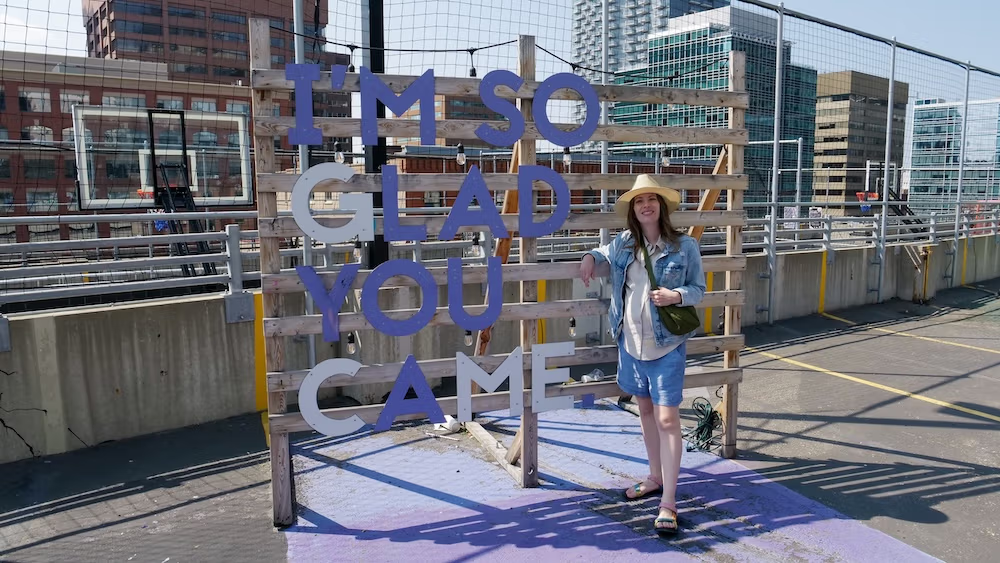
That last transition probably explains what I liked most about central Calgary. There is a substantial skyline, but the city rarely made me feel trapped inside it.
One geographic clarification helps before you start walking. Chinatown, East Village, Eau Claire and Beltline are distinct communities rather than extensions of the Downtown Core. Calgary groups them within its wider central-city planning area, and from a visitor’s perspective they fit together naturally enough that you can explore several of them in one outing. I just would not flatten everything into “downtown” and pretend the neighbourhood distinctions do not exist.
My approach would be simple: pick a few architectural stops, eat somewhere you actually care about, and leave enough room in the day to reach the river. Downtown Calgary rewards a bit of wandering far more than an aggressive checklist.
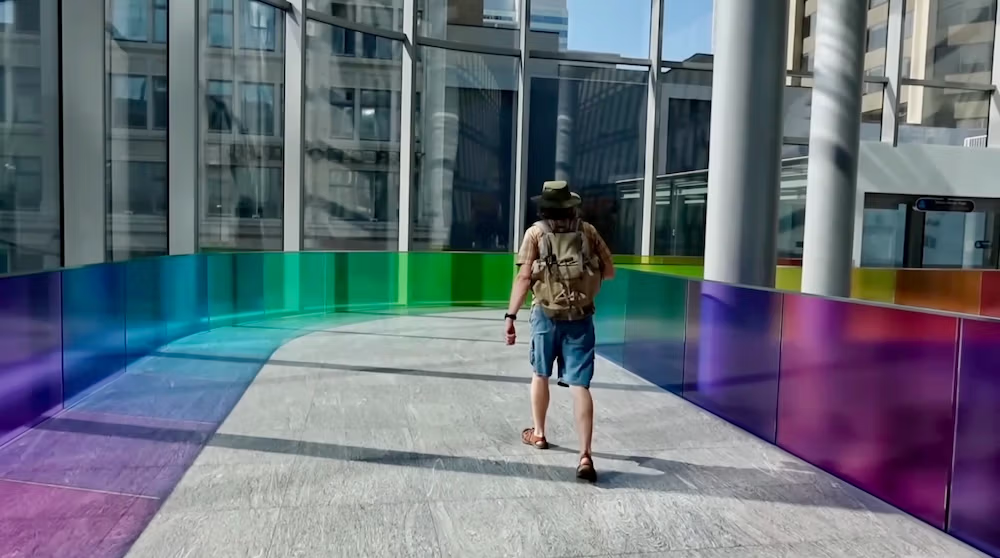
Start with the fact that central Calgary is genuinely easy to explore on foot
We walked an enormous amount during this trip.
In fact, before heading farther south to Heritage Park, we had done virtually all of our central sightseeing on foot. Audrey summed it up nicely at the end of the trip when she said Calgary almost felt like a smaller city that you could cover by walking.
Obviously, that does not mean all of Calgary is pedestrian paradise. The city spreads out dramatically once you leave the centre, something that becomes very obvious from Calgary Tower. But the places most visitors are likely to combine around the Downtown Core, Chinatown, East Village, Eau Claire and the nearby part of Beltline are clustered surprisingly well.
That matters because central Calgary is best when the movement between places becomes part of the experience. You are not constantly emerging from underground stations, orienting yourself and disappearing again. We could notice murals, stumble into public spaces and change our plans because something looked interesting.
Calgary Transit currently maintains a Free Fare Zone along the downtown 7 Avenue CTrain corridor between Downtown West–Kerby and City Hall/Bow Valley College. I would treat that as a useful backup rather than the backbone of a downtown day. If your feet are finished, great. Otherwise, walking is part of what makes this area work.
Where I would stay if walking downtown is the priority
Because so much of this guide works on foot, I would care more about staying centrally than being beside one specific attraction. I do not have a Calgary hotel from this trip that I can personally recommend by name, so I would rather be honest about that than randomly crown one because it has a nice lobby photo. If you want to keep Chinatown, Stephen Avenue, the +15, Calgary Tower, Eau Claire and East Village within practical reach, you can compare current hotels in Downtown Calgary and choose according to where you expect to spend most of your time.
Downtown architecture is more interesting when you mix old Calgary with the new stuff
One of my mistakes during our trip was not thinking of Calgary as an architecture destination beforehand.
Central Calgary does not have one neat architectural identity. That is precisely what makes it fun to explore. Historic sandstone commercial blocks coexist with glass towers, enclosed pedestrian bridges, elaborate Chinese architecture, a botanical garden inside a shopping centre and a public library that somehow became one of my favourite stops in the city.
Stephen Avenue gives you the Calgary that predates the towers
Stephen Avenue is one place I would pay more deliberate attention to on another visit.
We spent plenty of time downtown, but I cannot pretend Audrey and I conducted some scholarly survey of its heritage buildings. We did not. Still, it fills an obvious gap if you are interested in architecture because so much of what impressed us elsewhere was modern.
Stephen Avenue is a National Historic Site, with nearly three dozen commercial buildings from Calgary’s 1880–1930 Sandstone Era. You can actually see an older version of the city here instead of treating Calgary as though somebody switched it on when the first glass tower went up.
The eastern stretch between 1 Street SE and Centre Street also went through major reconstruction in 2025–26, with that phase substantially completed by the end of June 2026.
I would not turn Stephen Avenue into an architectural endurance test. Walk it, pay attention to the older façades, maybe stop for something to eat, and let it do what good streets do: make the journey between destinations more interesting.
If you would rather have someone connect the architectural dots for you, there is a current three-hour guided Downtown Calgary walking tour that covers Stephen Avenue, Central Library, the +15, Calgary Tower and Devonian Gardens. We did not take this tour ourselves. The route is roughly 7.5 kilometres, so I would choose it because you want a guided introduction to downtown, not because you are trying to avoid walking.
Calgary Central Library deserves more than a quick photo outside
Calgary Central Library was one of those attractions I would probably have underrated if somebody had handed me a list before the trip.
A library?
Sure. Lovely. Books. Chairs. Perhaps a stern printer.
Then we went inside.
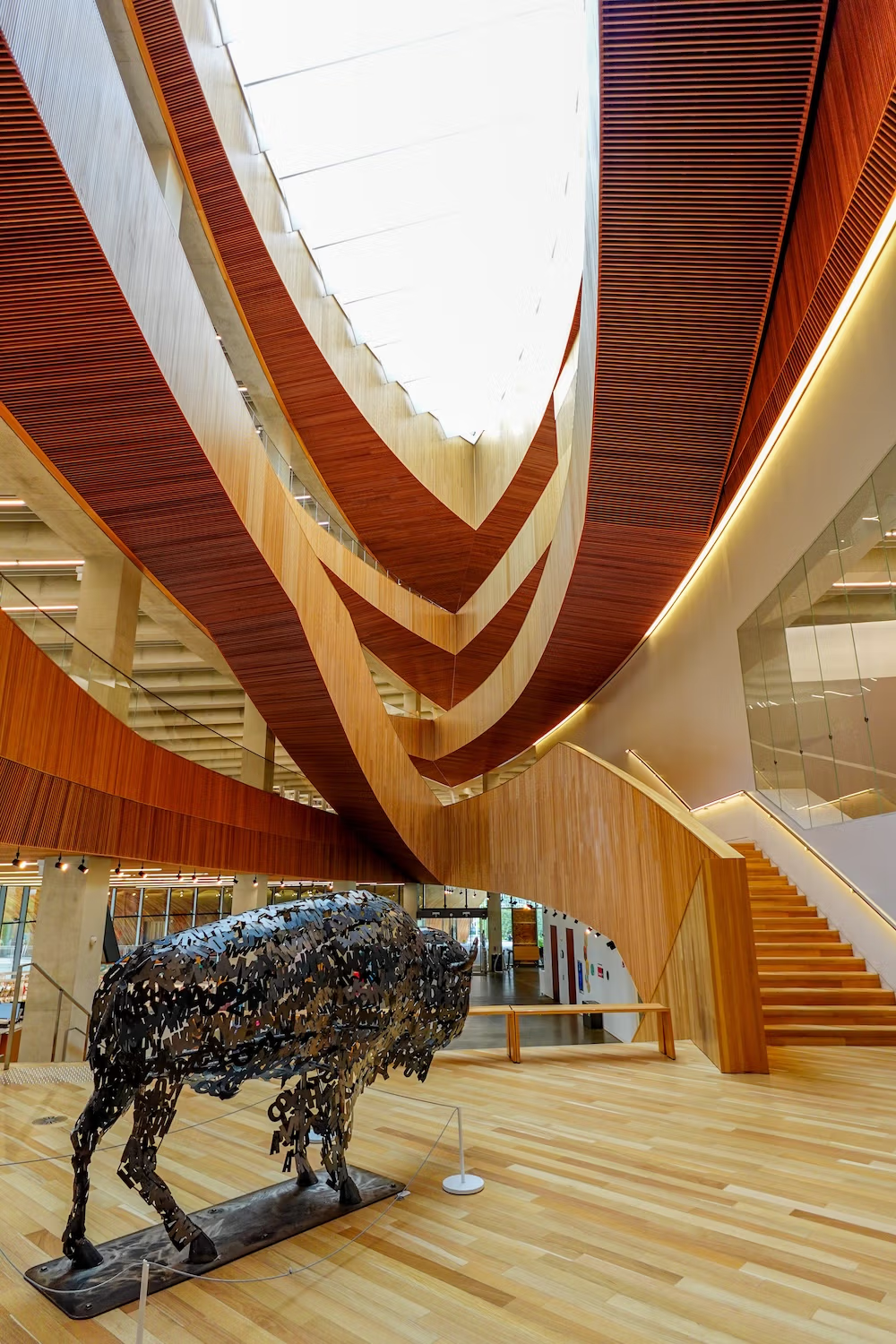
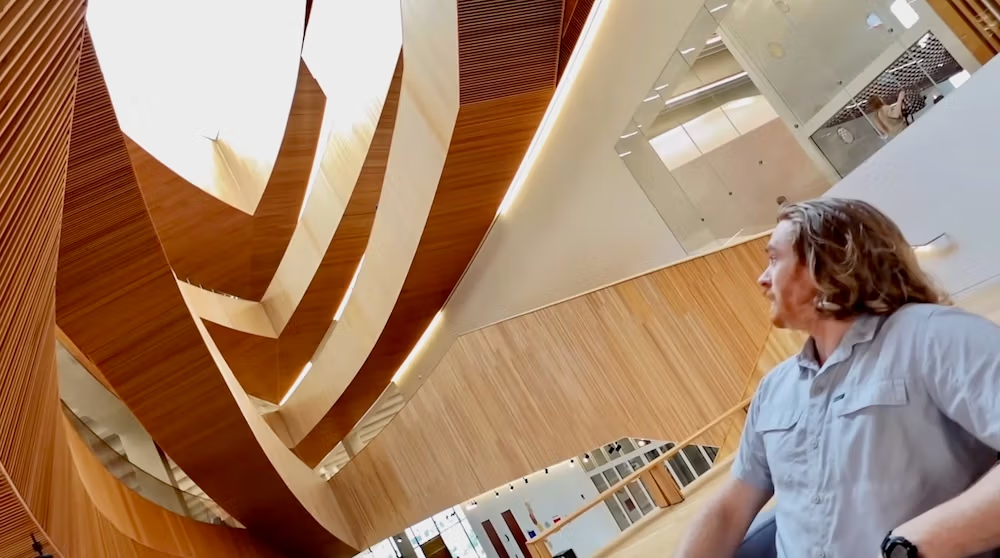
The building immediately stopped feeling like something we were visiting because it happened to be free and started feeling like an attraction in its own right. There is so much wood, so many sweeping curves and open levels, and such a dramatic central atrium that I kept looking around rather than doing anything remotely library-like.
I remember saying it was one of the nicest libraries I had visited anywhere in the world. I still mean it.
That may also be the point where I officially became the kind of traveller who gets excited about municipal libraries, but there are worse things that can happen to a person.
Central Library is at 800 3 Street SE, directly east of City Hall, so it slots easily into a central walking day. Visitor access is free, and free public tours run at selected times. Audrey and I wandered through independently, which worked perfectly well for us.
Sunday opening hours are shorter than the rest of the week, so check the current schedule if you are planning to arrive later in the day.
What I would not do is skip the interior because you have already photographed the building outside. The inside is the reason my opinion of the place became so strong.
The +15 is infrastructure until you accidentally spend half the morning exploring it
Calgary’s +15 system sounds utilitarian when you describe it badly.
Elevated pedestrian walkways connect downtown buildings.
There. I have successfully made one of Calgary’s strangest urban features sound like a fire-code amendment.
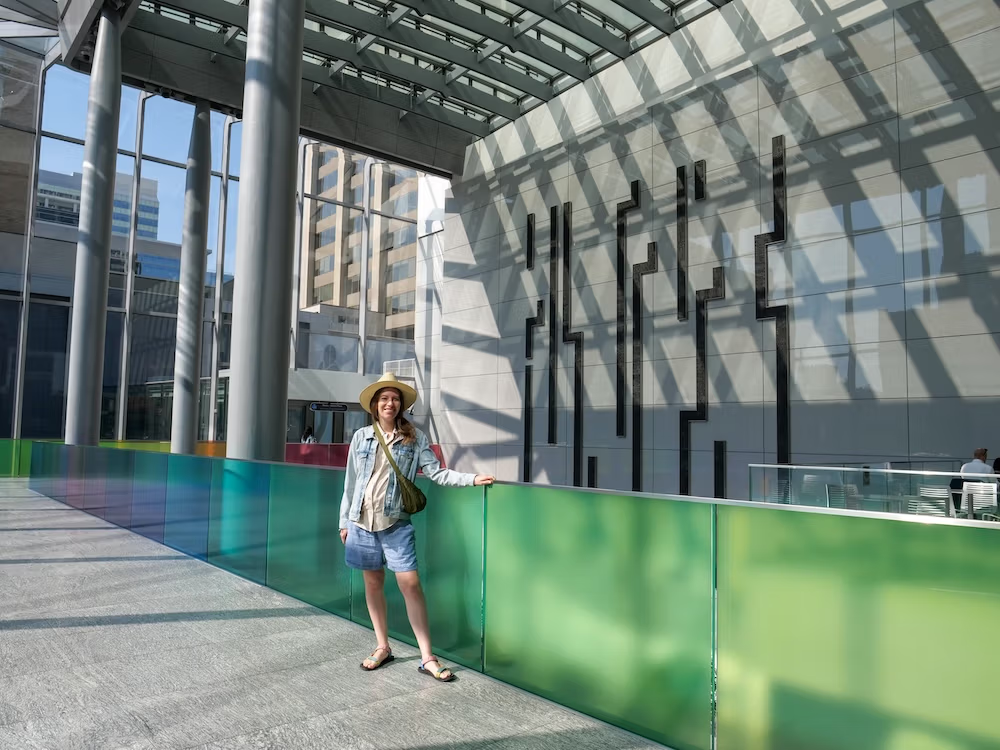
In reality, Audrey and I ended up spending most of a morning wandering sections of it.
The system currently has 86 bridges, more than 16 kilometres of elevated walkways and connections to more than 100 buildings. That scale explains why it stopped feeling like a corridor and started behaving like a parallel version of downtown.
We crossed enclosed bridges, passed through commercial buildings, found food courts and shops, came across public art and generally tried to work out where we had ended up. It was summer, so the air conditioning felt fantastic, and being above some of the traffic and honking at street level was surprisingly pleasant.
I have not used the +15 during a Calgary winter, and I am not going to retrofit snowdrifts into a summer memory. Still, its cold-weather usefulness is obvious.
The complication is that this is a network rather than a single attraction. Standard hours are generally 6 a.m. to 9 p.m. on weekdays and 9 a.m. to 7 p.m. on weekends and statutory holidays, but individual bridges can close earlier and construction periodically knocks sections out of service.
If you are wandering aimlessly, that can be part of the fun. If you genuinely need a particular connection, use the current City of Calgary +15 map and service information.
Our version of getting lost was recreational.
Your version may involve February.
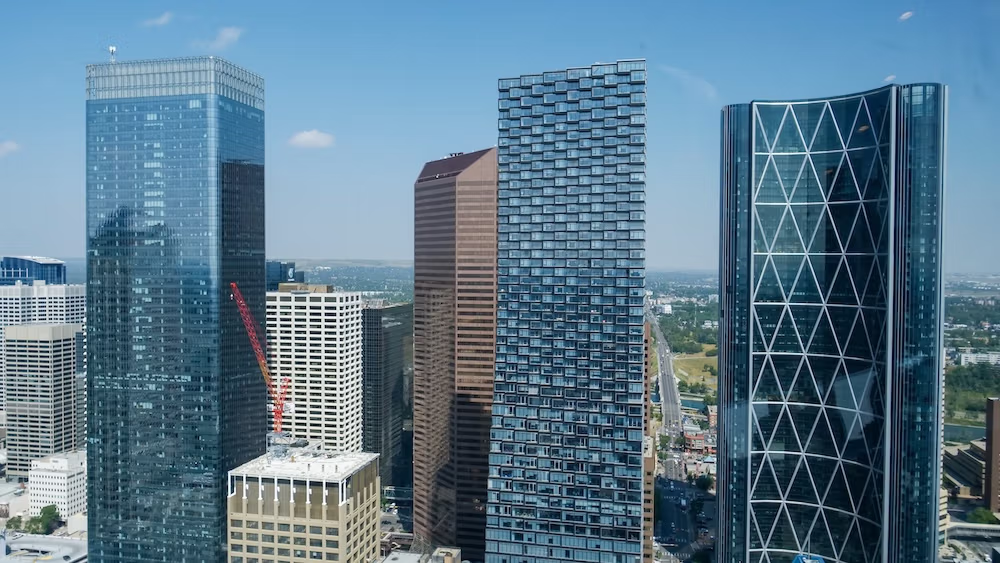
Calgary Tower helps you understand how quickly the city spreads out
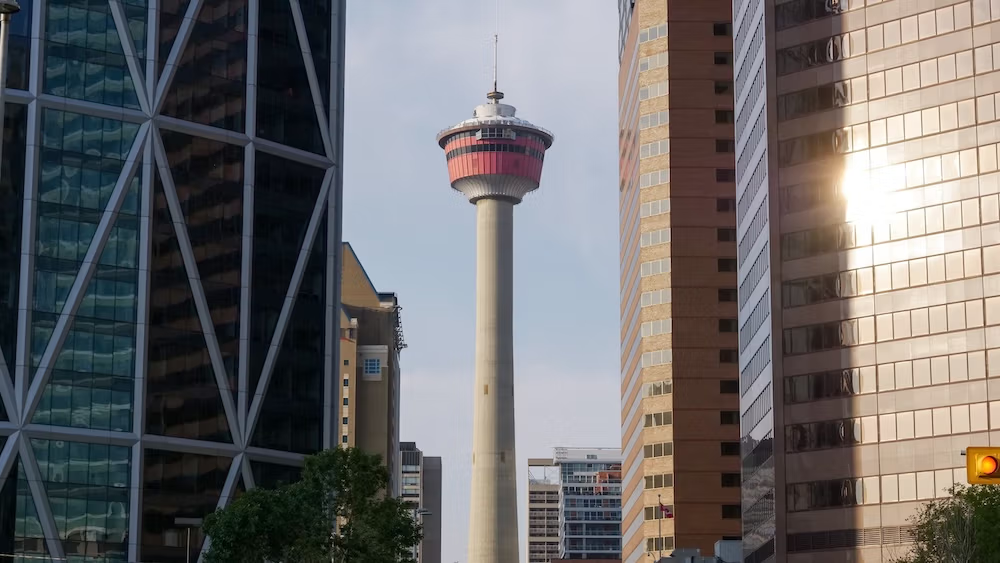
We did go up Calgary Tower, and although it has an obvious tourist-attraction quality to it, the view gave me useful context for everything we had been walking through.
The high-rise cluster is surprisingly concentrated. Look away from that core and Calgary spreads outward rapidly, with lower buildings, houses, parks and greenery taking over.
We could also see the Rocky Mountains off in the distance.
Barely.
There was enough haze during our visit that we did not really bother trying to capture them properly on video.
That is the trade-off with Calgary Tower. The observation deck is indoors, but the attraction still depends heavily on what is happening outside. I would consider it if the visibility looks worthwhile rather than treating it as compulsory simply because you are downtown.
The detailed price-versus-view calculation belongs in a dedicated Calgary Tower visit, but geographically it is easy to fold into a central day. If you want the Tower to be part of a broader guided architecture outing without spending the whole time on foot, a current Calgary Tower and urban skyline experience combines Tower admission with central architecture and skyline stops. We did not take this tour, so I would treat it as a planning alternative rather than one of our personal Calgary recommendations.
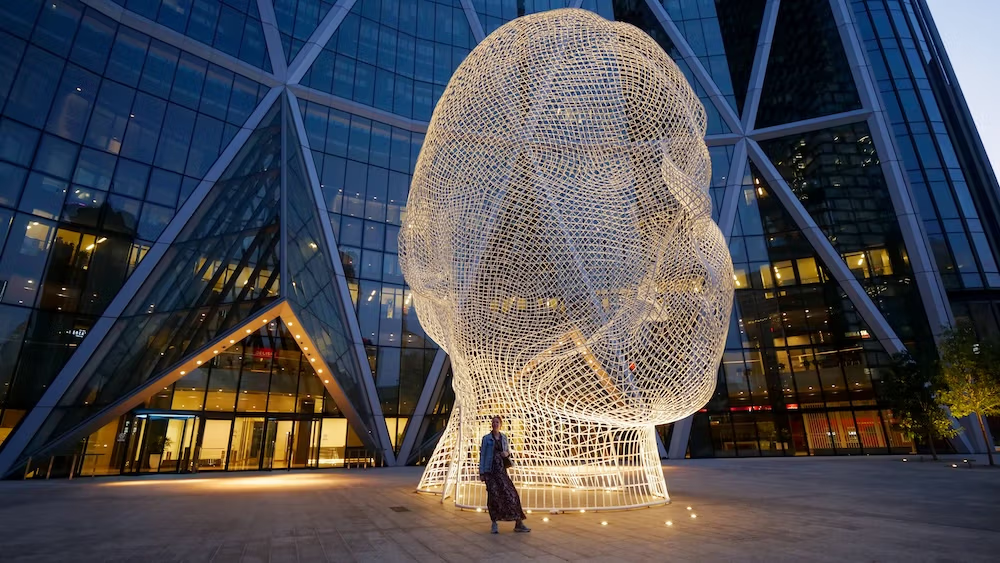
Wonderland is a quick detour; Studio Bell is a commitment
A couple of places we did not properly experience ourselves are useful because they occupy opposite ends of the time-commitment spectrum.
Wonderland, outside The Bow at 110 6 Ave SE, is a 12-metre wire sculpture shaped like a human head. If you are nearby, it is an easy public-art stop rather than something that needs its own afternoon.
Studio Bell, home of the National Music Centre, is entirely different. We did not visit, but it is worth knowing about if you want a substantial cultural attraction in East Village. The 160,000-square-foot building is composed of nine curved interlocking towers, and the experience inside is a full paid museum rather than an architectural drive-by.
Current adult admission is $24.50, with regular public hours generally around 10 a.m. to 5 p.m., though schedules can vary. If you decide this is where you want to spend a larger chunk of your downtown day, you can check current Studio Bell general admission tickets.
That difference is more useful than me pretending to rank two places I have not personally compared. Wonderland might be a ten-minute diversion. Studio Bell can take a serious bite out of your afternoon.
Plan accordingly.
Calgary has a habit of putting public space where I was not expecting it
The biggest reason central Calgary never wore me down was how often the built environment opened up.
Sometimes that happened in extremely Calgary ways.
Trees appeared several floors above a shopping centre. A rooftop parking garage became a park. Then the commercial core gave way to Eau Claire and, finally, a 20-hectare island park beside the Bow River.
Those breaks matter.
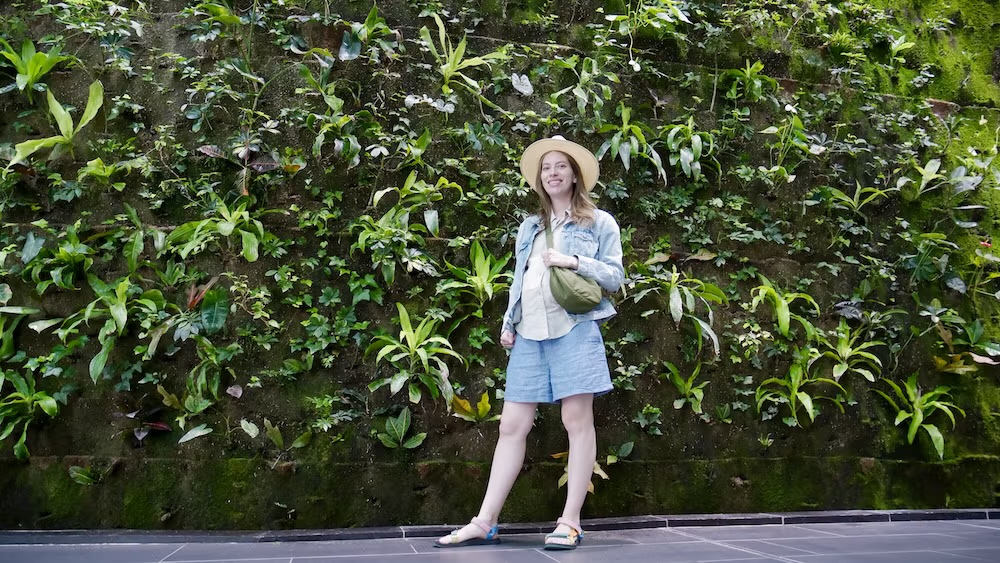
Devonian Gardens is still one of the stranger urban gardens I have visited
Devonian Gardens occupies about one hectare on Level 4 of The CORE.
That sentence is worth reading twice.
A hectare of garden.
On Level 4.
We stepped inside and found trees, tropical plants, ponds, fish, seating and a glass ceiling pulling natural light into the space. I am used to cities having good green spaces. I was considerably less accustomed to somebody taking one of those green spaces and stuffing it into the upper levels of a downtown shopping complex.
I loved the idea.
Audrey looked more prepared for it than I did. I told her she seemed dressed for a jungle excursion.
“I’m ready. I’m dressed for it.”
Apparently Devonian Gardens demands expedition attire.
We visited during summer and appreciated escaping the heat for a while. I can easily understand why the space becomes even more appealing during Calgary’s colder months, but that was not our experience and I would not pretend otherwise.
You also do not need to linger here for hours. Walk through, enjoy the greenery, sit down if you need a break and continue exploring downtown.
It earns its place because it is genuinely unusual, not because you need another item for the itinerary.
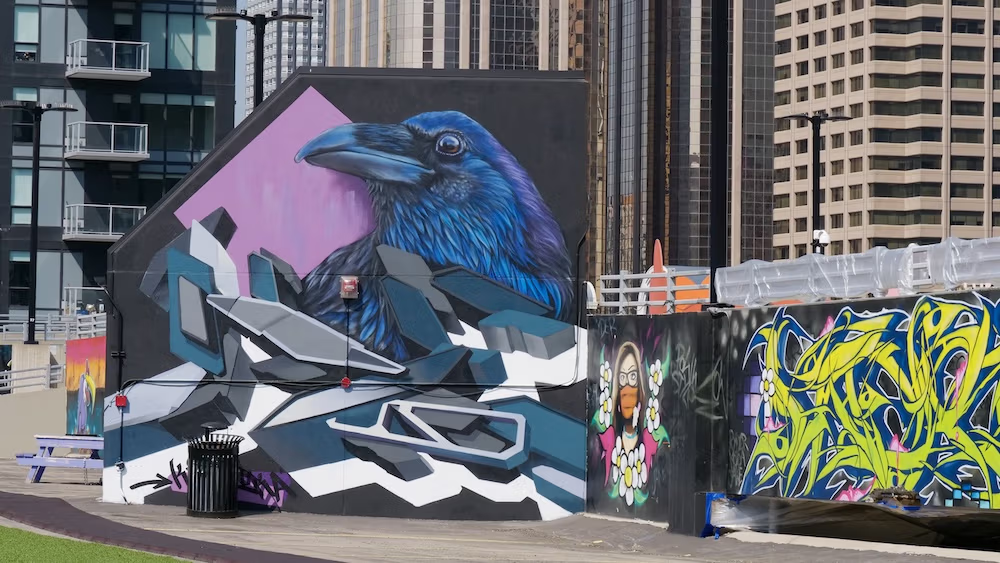
High Park is worth the short Beltline detour if rooftop spaces are your thing
High Park sits on top of City Centre Parkade at 340 10 Ave SW, which puts it in Beltline rather than Downtown proper.
We went up and found one of the more playful public spaces from our trip: swings, colourful furniture, art installations and broad views toward Calgary Tower and the surrounding skyline.
Audrey described it as quirky and fun. That fits.
Our main problem was actually finding the thing.
The public entrance is on 10 Ave SW, and the elevator takes you to Level 6. Once we figured that out, everything became considerably easier.
We happened to have the rooftop almost entirely to ourselves, but I would not assume that is normal. We got lucky.
High Park is also easy to skip if your time is limited. Central Library, Chinatown or Prince’s Island would all rank above it for me. If you like photography, public art and oddball urban spaces, though, it is a fun detour that does not feel like another conventional attraction.
Eau Claire Plaza has changed since our trip
Eau Claire is one area where our own experience is no longer enough because the public space has been substantially redesigned.
The new Eau Claire Plaza reopened in summer 2025 with new gathering areas, pathways, seating, play spaces, an urban beach area and the restored Eau Claire Lumber Company building.
I did not experience that version of the plaza.
Its usefulness here is geographical. Eau Claire now forms part of the transition between the commercial core and Prince’s Island Park, so you can move toward the river without feeling like downtown simply stops at an arbitrary line.
I would treat the plaza as part of the walk rather than another attraction requiring a separate block of time.
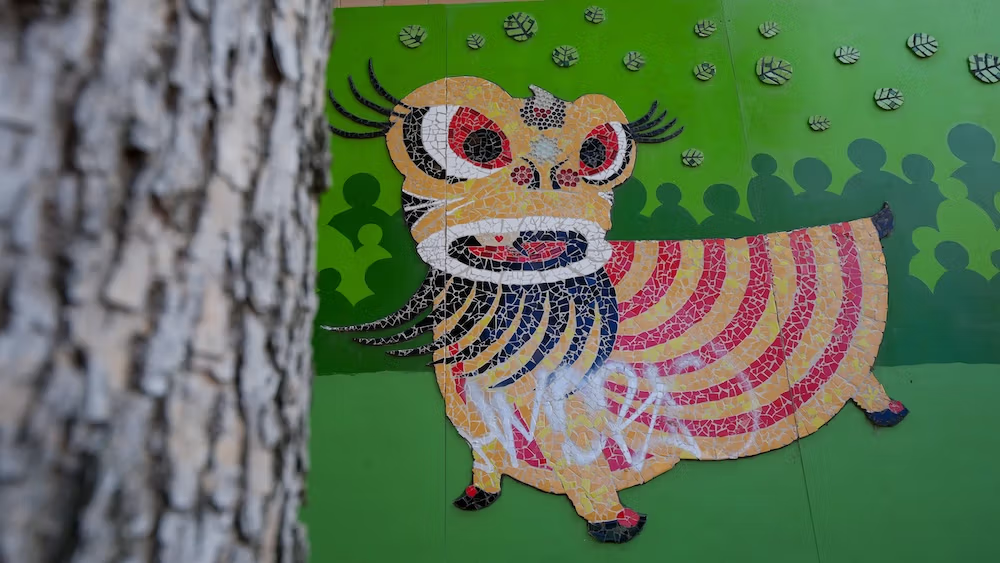
Chinatown is where the downtown day stops feeling corporate
Calgary’s Chinatown gave our central sightseeing a completely different texture.
The Chinese Cultural Centre was only a few blocks from where we were staying, so we walked over and explored the elaborate central hall before heading downstairs into the Chinese Artifacts Museum.
The museum had displays that included replicas of terracotta warriors, clothing and material connected to Chinese-Canadian history and Calgary’s Chinese community. It was small enough that we could absorb it as part of a wider Chinatown visit rather than surrendering half the day.
When Audrey and I visited, the museum was free and donations were optional.
That is no longer current.
Admission now costs $5 per person, while children six and under enter free. Current museum hours are 10 a.m. to 5 p.m., with last entry at 4:30 p.m., except statutory holidays.
Five dollars still makes it a very low-commitment cultural stop, but I would rather tell you the current reality than send you marching through the door clutching an old promise of free admission.
We also visited Sien Lok Park and spent enough time walking Chinatown that the neighbourhood became more than somewhere we went to eat.
That said, the food certainly helped.
Food matters more when you still have several kilometres of walking left
A downtown food guide can become useless very quickly if it turns into fifty restaurant names arranged by cuisine.
I care more about where eating fits the day.
We had several good central meals in Calgary, but I would plan them differently now simply because I have learned what happens when Audrey and I order lunch with the enthusiasm of people who have apparently forgotten we still intend to walk afterward.
If you would rather make food one of the structured activities of the day instead of choosing your own stops, there is also a current downtown Calgary food tour with four food-and-drink pairings. It runs for about 2.5 hours over roughly 1.5 kilometres around the downtown and Stephen Avenue area. We did not take this tour, and it is a different food experience from the Chinatown meals we chose ourselves, but it can make sense if you want the eating and the city orientation bundled together.
Silver Dragon worked perfectly for Chinatown, right up until we ordered half the menu
Silver Dragon remains one of the easiest firsthand meals for me to recommend around central Calgary.
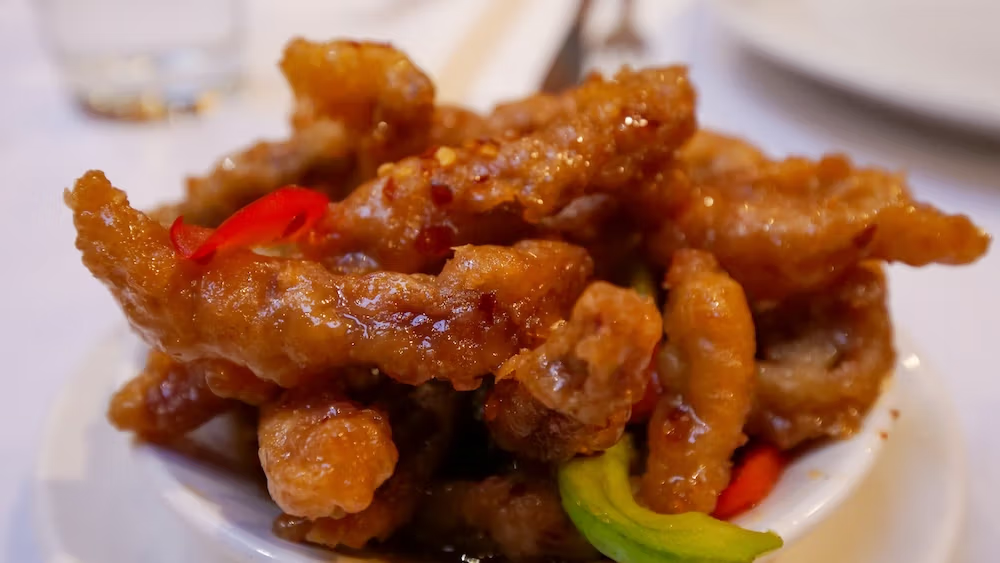
We went for dim sum and also ordered ginger beef, something I was especially excited to have in Calgary. I used to eat ginger beef regularly when I lived in Edmonton and attended the University of Alberta, so this was one of those dishes loaded with old associations before I even took a bite.
The Calgary version delivered what I wanted: tender beef, crispy edges and that sweet, tangy sauce I remembered.
Then came the dim sum.
Five orders.
For two people.
At the beginning of the meal this seemed perfectly sensible.
Near the end, less so.
The next time we went for dim sum in Calgary, we deliberately dropped the order to four items because we did not want a food coma instead of an afternoon of sightseeing.
That is a stupidly simple lesson, but useful travel advice often is.
Silver Dragon is still operating at 106 3 Ave SE in Chinatown and continues to offer dim sum. Menus change, so I would check what is currently available rather than expecting our exact meal to have been preserved in amber.
Sometimes bubble tea is enough
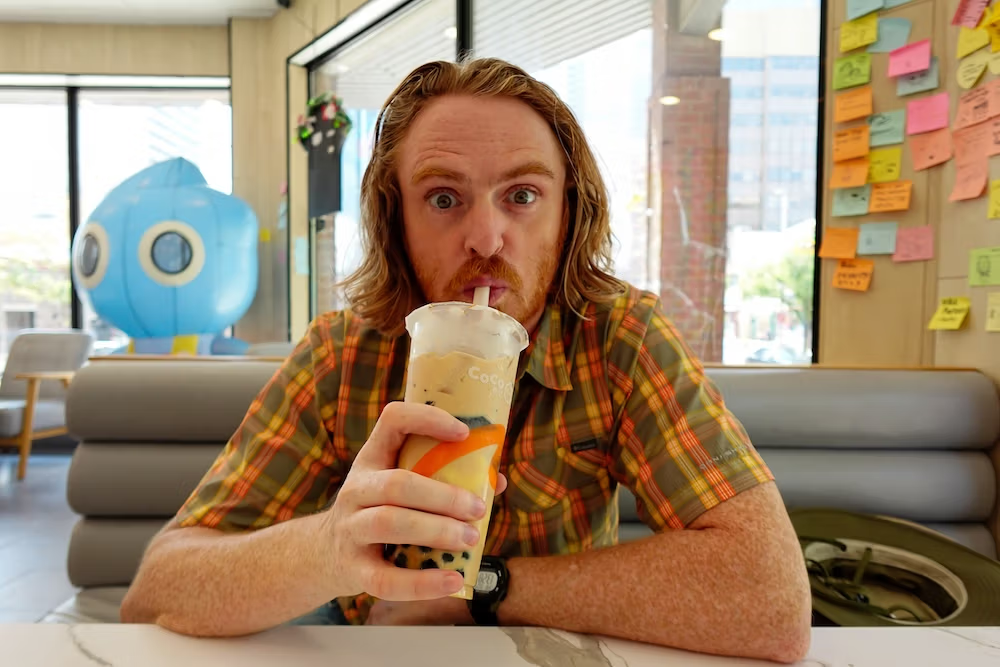
We also stopped at CoCo for bubble tea while walking around Chinatown.
It was summer, we were hot, and a cold drink plus a short sit-down break was exactly what we needed.
I ordered pearl milk tea with reduced sugar. I had already learned through years of enthusiastically drinking bubble tea around Asia that I am happier at about 30% sugar than at full sweetness.
That is the kind of food stop I appreciate on a sightseeing day because it does not consume the day.
Not every meal needs to become content.
Sometimes the correct culinary experience is fifteen minutes in air conditioning with tapioca pearls.
The Beltliner was worth walking into Beltline for brunch
The Beltliner is another firsthand favourite, although it sits at 243 12th Avenue SW in Beltline rather than inside Downtown Core.
We went for brunch.
Audrey ordered savoury. I went in the opposite direction with a French toast that looked as though somebody had decided normal French toast was suffering from a dangerous shortage of indulgence.
It was decadent and delicious.
Because we wanted both sweet and savoury, we shared the dishes, which is generally our preferred strategy whenever two menu items are arguing with each other for our attention.
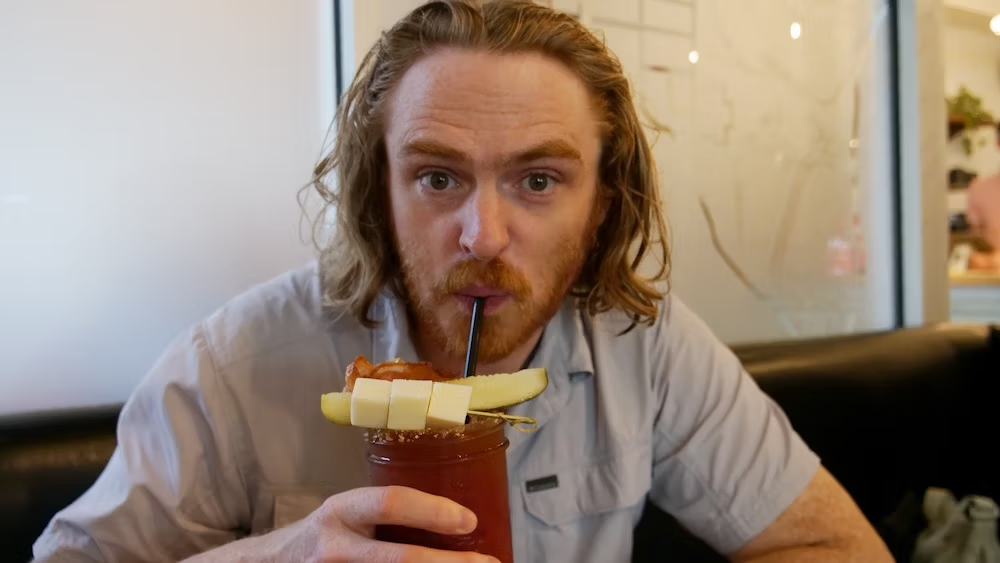
Then we ordered a Caesar.
Mine came with spicy gin and enough garnish to make an early alcoholic drink feel considerably more ambitious than my normal breakfast routine.
I left full and extremely satisfied.
I would not promise our exact dishes are still on the current menu, but the restaurant remains open. If brunch is a priority, I would happily make the short detour south.
River Café makes sense if your day is heading toward the Bow
River Café is the one researched dining option I would add because its location solves a practical problem.
It is directly on Prince’s Island and currently serves lunch, dinner and weekend brunch.
We did not eat there, so I cannot give you a personal verdict on the food.
What I can tell you is that if you are structuring your day around the river rather than Chinatown, stopping for a meal without leaving Prince’s Island has an obvious appeal.
That is enough reason to know it exists.
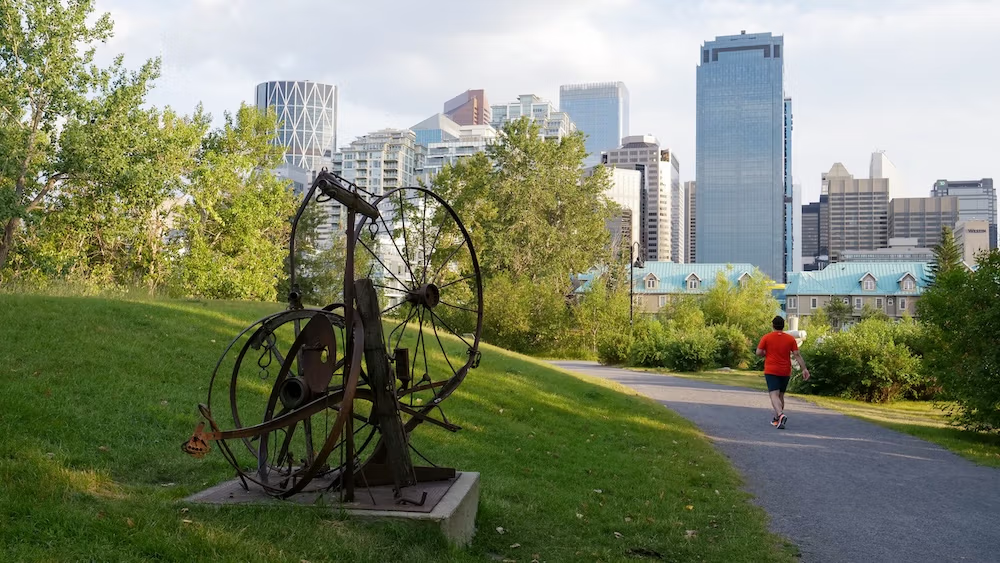
Prince’s Island Park is where Calgary won me over
Central Library may have been the architectural surprise of the trip.
Prince’s Island Park did something bigger.
It changed how Calgary felt.
Audrey and I walked through the park on a summer weekend around sunset, and the place had an easy energy to it. People were cycling and walking. We saw wedding parties doing photos. Musicians were playing. At one point someone was dancing flamenco.
I am not suggesting Calgary provides a violinist and flamenco dancer every time you enter the park.
That was just our evening.
But the setting itself explains why people gather there.
Prince’s Island is about 20 hectares, immediately beside downtown, and that scale is important. This is not a decorative little rectangle of grass surrounded by traffic. Once you are inside it, there is enough space for the city to loosen its grip.
Audrey called it such a pleasant surprise.
I remember thinking about how relaxed Calgary felt for a large city. We had just spent days around office towers and busy streets, yet the centre never seemed to suffocate us.
Prince’s Island had a lot to do with that.
If you are deciding whether to squeeze one more paid attraction into your day or spend that time walking through the park, I would take the park surprisingly often.
Follow the Bow River instead of rushing to another attraction
Once you reach the river, keep walking.
This may be the least complicated recommendation in the article.
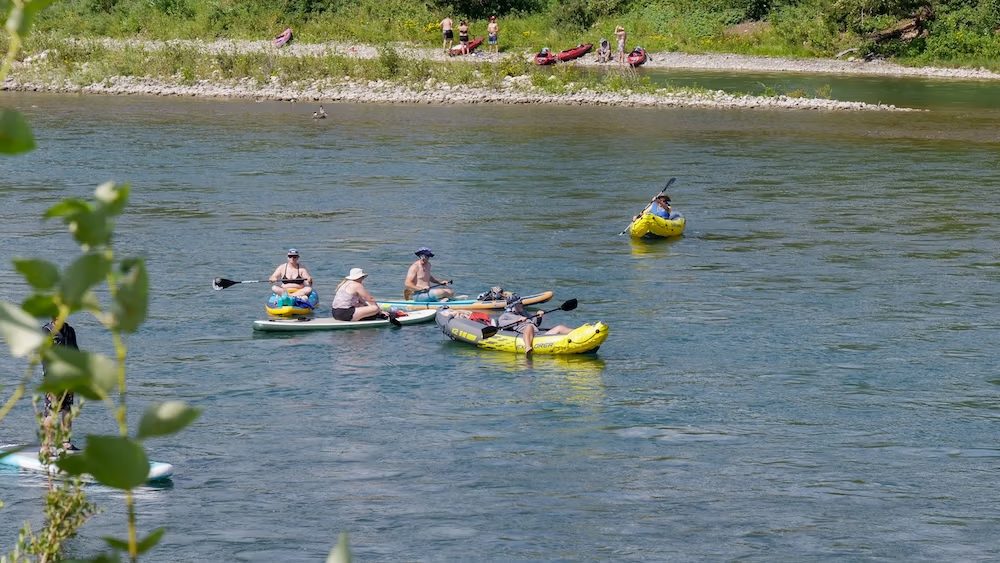
On another hot summer day, Audrey and I followed the Bow while making our way toward The Confluence. The river was full of activity. We watched people rafting, paddling and floating downstream and were definitely tempted to join them.
We did not.
So I have no secret rafting wisdom to impart here.
What we did experience was how naturally the river fits a central Calgary day. You can spend hours around towers, museums and restaurants and then change the entire mood simply by reaching the water.
If you like this part of Calgary but would rather cover more ground than a river walk allows, a current three-hour Calgary city and Bow River bike tour follows the river and includes areas such as Prince’s Island Park, Eau Claire, Peace Bridge and The Confluence. Bike and helmet are included. Audrey and I did not take the tour; we explored these areas on foot, so I would see it as an alternative for someone who wants to cover more of the river corridor in one outing.
There are two broad directions I would consider rather than insisting on one definitive loop.
West gives you Prince’s Island and Peace Bridge
Peace Bridge is an obvious western extension from the Prince’s Island area.
The red pedestrian bridge is one of Calgary’s most recognizable pieces of riverfront design, and the contrast between the bridge, water and downtown skyline makes this one of the easier scenic walks to justify.
Current flood-barrier work on the north side of the Bow can affect nearby pathway sections and create temporary detours. Peace Bridge and the Prince’s Island pedestrian bridge remain open, but I would not trust a rigid route written years ago.
Calgary maintains a live pathway and bikeway map, which is considerably more useful when construction is shifting around than me immortalizing one set of turns.
East gives you East Village and The Confluence
The other direction takes you through East Village.
The Jack & Jean Leslie RiverWalk follows the river edge through the area with dedicated space for pedestrians and cyclists, providing a natural continuation toward The Confluence at 750 9 Avenue SE.
That is the direction Audrey and I followed on one of our walks.
The historic site itself was still operating under the Fort Calgary identity when we visited. We found the museum small but interesting, though today the site operates as The Confluence and the visitor experience has evolved.
For this downtown guide, I would treat it as an optional endpoint.
You do not need to enter a museum just because your walk happens to finish beside one.
The Bow River is allowed to be the attraction.
Two classic downtown recommendations are temporarily missing
Central Calgary is changing enough that older itineraries can send you toward places that are not currently visitable.
The biggest example is Olympic Plaza, which closed in January 2025 for redevelopment and is expected to remain closed through 2028.
So if you see it presented elsewhere as a normal current downtown stop, save yourself the detour.
Glenbow is another one to keep off a 2026 itinerary. The museum is currently targeting a 2027 reopening in the JR Shaw Centre for Arts & Culture.
Both may eventually become important central stops again.
Right now, there is enough else to do without sightseeing through construction fencing.
How much Downtown Calgary can you realistically fit into one visit?
I would rather divide central Calgary by time and interest than hand you a rigid route.
A fixed walking itinerary looks wonderfully tidy until you spend an extra hour inside the library, order too much dim sum or discover that the pathway you wanted is being rebuilt.
If you have two or three hours
Pick a lane.
For architecture, I would walk part of Stephen Avenue, explore the core and go inside Central Library. A little +15 wandering can fit naturally if the entrances line up with where you are going.
If culture and food interest you more, Chinatown can fill the time far more pleasantly than sprinting between unrelated landmarks.
If the weather is beautiful and you have spent enough of your trip indoors, go directly toward Eau Claire, Prince’s Island and the Bow.
Two hours is not enough time to become an expert on Downtown Calgary.
It is enough time to enjoy it.
If you have half a day
This is where central Calgary becomes much easier to mix.
You can combine a significant architecture stop with Chinatown and lunch, or spend the first part of the outing around the commercial core before shifting toward Prince’s Island and the river.
If Studio Bell is important to you, treat it as a major component rather than wedging it between six other stops. A real museum has a way of destroying beautifully optimistic itinerary arithmetic.
Half a day also gives you enough breathing room to stop eating before you are uncomfortably full.
I learned that one for you.
If you have most of a day
Then I would make sure you experience both versions of central Calgary.
Spend part of the day in the built city: Stephen Avenue, the +15, Chinatown, Central Library, whichever architecture interests you most.
Eat properly.
Then stop chasing attractions and head toward the river.
That second half is what prevents Downtown Calgary from becoming a procession of interiors and towers. Eau Claire, Prince’s Island and the Bow give the day a completely different rhythm.
You do not need to fill every available hour.
Calgary is surprisingly good when you leave gaps.
What I would do differently next time
When we arrived, I still had Calgary filed mentally as a city associated with its airport, the Stampede and the road toward the Rockies.
By the time we left, downtown had become one of the reasons I wanted to come back.
Central Library was better than I expected. The +15 was stranger and more entertaining than expected. Chinatown gave us some of our favourite meals. Audrey loved how much of the centre we could cover on foot without feeling exhausted. And Prince’s Island Park helped crystallize something I had been noticing throughout the trip: Calgary has a substantial skyline without making you feel permanently trapped underneath it.
There is a lot of open space for a big city.
That mattered to me.
If I explored Downtown Calgary again, I would probably spend less energy thinking about how many attractions I could fit into the day. I would give Stephen Avenue more attention, happily revisit Central Library and Chinatown, eat a little less dim sum before a long walk, and protect even more time for the river.
Walk until something looks interesting.
Eat before you become irritable.
Look up at the buildings.
And whatever else you do, do not leave central Calgary before you have seen what happens when the towers finally reach the Bow.
Frequently Asked Questions
Is Downtown Calgary easy to explore on foot?
Yes, for the central sights we covered. Audrey and I did virtually all of our central Calgary sightseeing on foot before heading farther south to Heritage Park, though Calgary becomes much more spread out beyond the centre.
How much time should I allow for Downtown Calgary?
With two or three hours, I would choose one focus such as architecture, Chinatown or the river. A half day lets you mix categories, while most of a day gives you time for both the built core and the Bow River.
What is Calgary’s +15 and can visitors use it?
The +15 is a network of 86 bridges and more than 16 kilometres of elevated walkways connecting over 100 downtown buildings. Standard hours are generally 6 a.m. to 9 p.m. on weekdays and 9 a.m. to 7 p.m. on weekends and statutory holidays, but individual bridges can close earlier.
Is the Chinese Artifacts Museum in Calgary still free?
No. It was free with optional donations when Audrey and I visited, but current admission is $5 per person, while children six and under enter free.
Is High Park in Downtown Calgary?
Not technically. High Park is in the Beltline at 340 10 Ave SW, so I treat it as a short detour from Downtown proper rather than pretending the neighbourhood boundary does not exist.
Can you walk along the Bow River from downtown Calgary?
Yes. From the central riverfront you can head west toward Prince’s Island Park and Peace Bridge or east through East Village toward The Confluence. Current construction can affect pathway sections, so I would check Calgary’s live pathway map before relying on a rigid route.
Are Olympic Plaza and Glenbow open right now?
Not for a 2026 downtown itinerary. Olympic Plaza closed in January 2025 for redevelopment and is expected to remain closed through 2028, while Glenbow is targeting a 2027 reopening.
This guide is also available in Spanish. [Leé la versión en castellano: Guía de Downtown Calgary: arquitectura, parques, comida y paseos junto al río]
This article contains affiliate links. If you book through one of these links, I may earn a commission at no extra cost to you.