
Everyone who’s spent any time in Alberta knows the phrase “ginger beef” the way they know “double-double” or “Cowtown” — a piece of local shorthand that gets nodded at more than actually explained. Ask someone to describe what’s on the plate and you mostly get “it’s Chinese food, but sweeter,” which is true in the way “it’s a car, but red” is true. I’ve eaten a lot of ginger beef in my life, in more than one city, over more than a decade, so I want to actually answer the question: what is this dish, and is it worth ordering when you’re in the city that invented it?
What’s Actually On the Plate
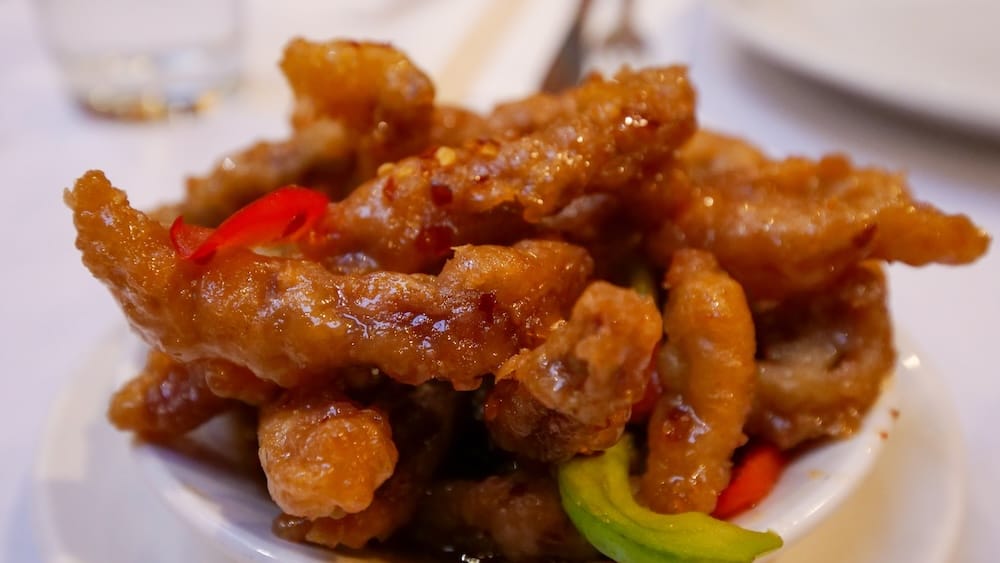
Ginger beef starts with beef cut into thin strips — traditionally flank steak, sometimes sirloin — coated in a simple batter of cornstarch, flour, and egg, then deep-fried until the outside turns crisp and golden. That batter is doing real work: it’s the reason the texture holds up the way it does, crunchy on the outside while the meat underneath stays tender rather than turning tough or chewy. Once it’s fried, the beef gets tossed in a sauce built from soy sauce, sugar, vinegar, chili, ginger, and garlic, usually with julienned carrots and strips of pepper worked in for colour and a little crunch of their own. The result is sticky, sweet, a little sour, with enough heat to notice without taking over — and that crispy shell soaks up the sauce almost like a sponge, the reason the dish disappears off a shared plate faster than it should. Order it anywhere in the city and that’s roughly what you’re getting. The details shift a little from kitchen to kitchen — the sweetness climbs or drops, the heat gets dialed up or down — but the underlying architecture holds: crispy shell, tender beef, a sauce doing most of the talking.
There’s a detail worth knowing that tends to get left out of the shorthand version: by most accounts, the original 1970s recipe barely had any actual ginger in it. Diners apparently assumed the sauce’s spiciness came from ginger, started asking for it by that name, and the name outlived the truth of the ingredient list. Modern versions, including what I ate in Calgary, generally do include real ginger now — the name just didn’t start out as literally accurate, a funnier origin story for a name than most dishes ever get.
Not the Same as Szechuan Beef
If you’ve had Szechuan beef before, ginger beef will look and taste familiar, and that’s not a coincidence. Ginger beef is often described as a westernized, milder cousin of Szechuan beef — same basic idea of battered, deep-fried beef in a spicy-sweet sauce, but toned down on the heat and built out with julienned carrots that Szechuan beef typically skips. If you know one, you basically know the shape of the other; the difference is more about degree than category. Order Szechuan beef expecting a real kick and you’ll get one. Order ginger beef expecting the same fire and you’ll be pleasantly surprised at how approachable it actually is — probably part of why it caught on so hard in a province that’s never exactly been famous for chasing spice.
Ordering It at Silver Dragon
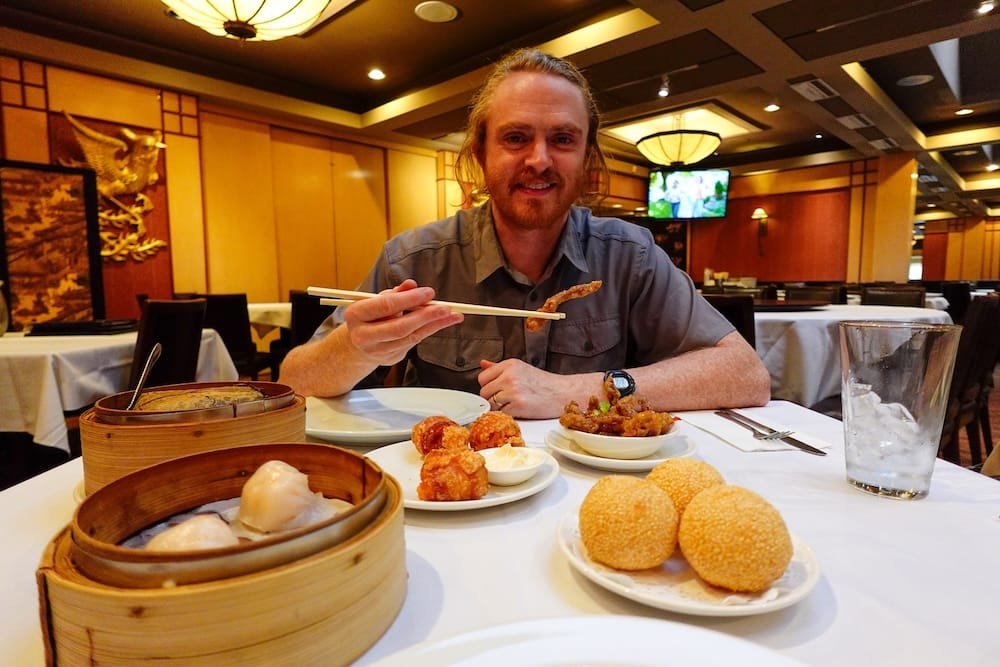
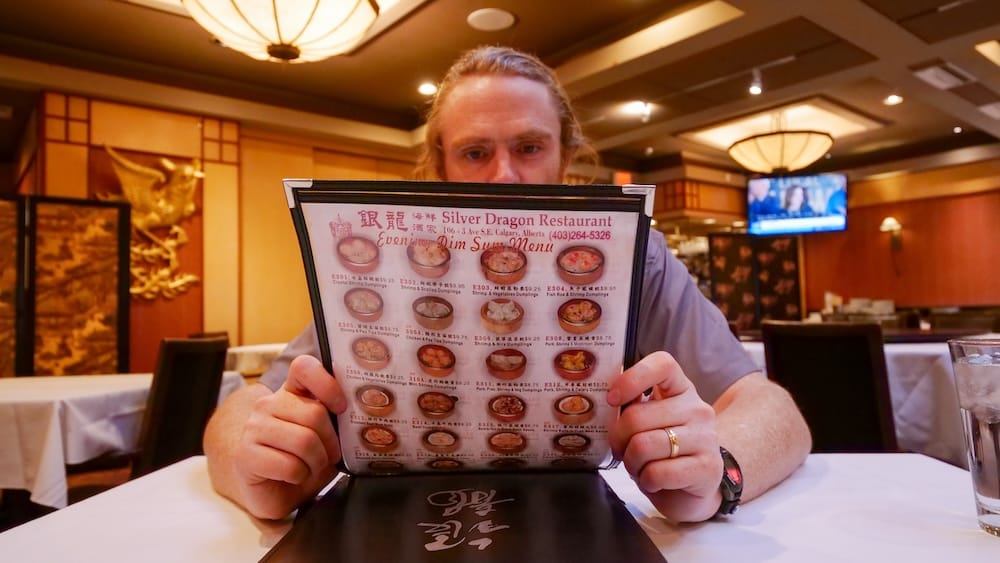
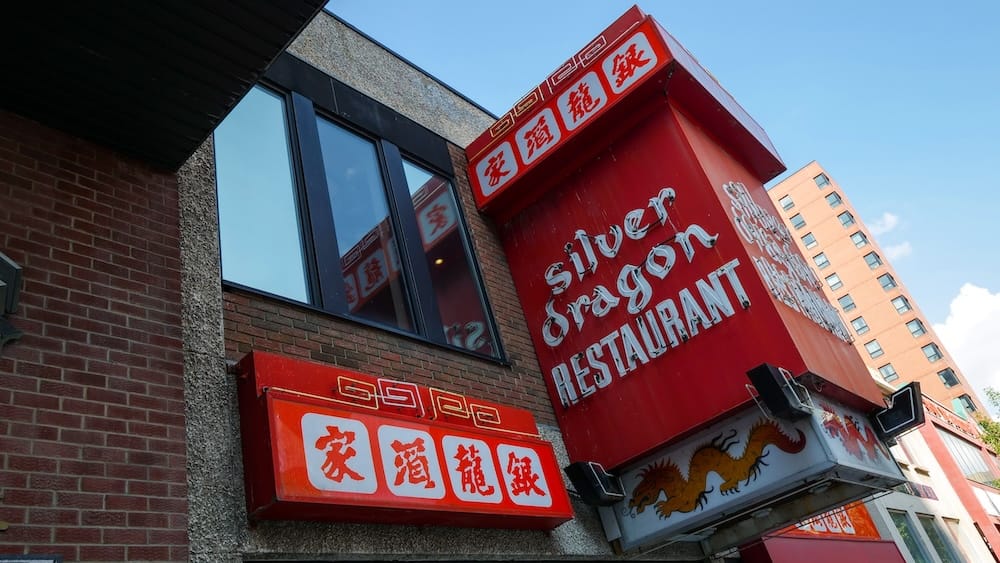
I ordered mine at Silver Dragon, in the middle of Chinatown, as part of a bigger dim sum spread on my first night in the city. It came out tender under that crackling batter, coated in a sauce that split the difference between sweet and sour exactly the way it’s supposed to, and it tasted exactly the way I remembered it. That’s not faint praise. When you’ve built up years of expectation around a dish, “exactly as good as I remembered” is a harder bar to clear than a first impression ever is. I’d half expected some regional drift — a sweeter sauce, a different cut of beef, some Calgary-specific tweak my Edmonton palate wouldn’t recognize. There wasn’t one. It was the same dish, doing the same thing, just further south.
If you’d rather have a guide walk you through several of Calgary’s signature dishes in one sitting instead of building your own restaurant-by-restaurant itinerary the way I did, it’s worth knowing the city runs a downtown tasting circuit that covers a handful of local specialties beyond just this one plate. You can compare what’s included on Calgary’s downtown food-tasting tour if that sounds like an easier way in.
Why It’s Worth Trying Here
That Edmonton palate came from somewhere specific. I lived there for years before I ever set foot in Calgary, and ginger beef became a genuine ritual, not just a meal. I’d go jogging down by the River Valley or loop past the Legislature, and if I wanted to go all-in on the calories afterward, I’d extend the run all the way to Chinatown and go devour a mountain of a plate of it. It was technically meant to be something you’d share. It never was. I ate the whole thing myself more times than I’d like to admit, and sometimes I’d even order it without rice, just the beef, straight carnivore, because at that point the rice was only slowing me down.
Years after that, I moved to South Korea to teach English, about as far from the University of Alberta and the Legislature grounds as a life can get. And there, at Korean-Chinese restaurants, I found tangsuyuk — crispy deep-fried pork or beef in a sweet-and-sour sauce, a dish Chinese immigrant communities in Korea built to fit Korean tastes the same way Chinese immigrant cooks in Calgary built ginger beef to fit Alberta’s. The first time I had it, it stopped me for a second, in a way I genuinely didn’t see coming over a plate of food in a country I’d moved to for entirely unrelated reasons. It wasn’t the same dish. But it hit the same note, crispy and sweet and a little sharp, and it pulled Edmonton right back into a restaurant on the other side of the planet.
That’s the real reason I’d tell you to order ginger beef in Calgary, more than any trivia about where it was invented. It’s a dish that’s followed me between two completely unconnected chapters of my life — university jogs in Alberta, teaching years in Korea — without me ever planning for it to. Most dishes don’t do that. This one has, twice, in two different languages, and eating it again in the city where it started felt less like ticking off a local specialty and more like closing a loop I didn’t know was still open.
Frequently Asked Questions
What is ginger beef actually made of?
Ginger beef is made from thin strips of beef, traditionally flank steak, coated in a batter of cornstarch, flour, and egg, then deep-fried until crisp. The fried beef is tossed in a sauce built from soy sauce, sugar, vinegar, chili, ginger, and garlic, usually with julienned carrots and strips of pepper mixed in.
Is ginger beef spicy?
It has a noticeable but mild heat rather than a strong kick. The sauce is sticky and sweet with a little sourness, and the spice level is generally more approachable than dishes like Szechuan beef.
What’s the difference between ginger beef and Szechuan beef?
Ginger beef is often described as a westernized, milder version of Szechuan beef. Both are battered, deep-fried beef in a spicy-sweet sauce, but ginger beef is toned down on heat and typically includes julienned carrots that Szechuan beef usually skips.
Does ginger beef actually contain a lot of ginger?
Not necessarily as much as the name suggests. By most accounts, the original version of the dish in the 1970s barely contained any actual ginger, and diners mistook the sauce’s general spiciness for ginger flavour. The name stuck even though modern versions, including what’s served today, do generally include real ginger.
Where can you try ginger beef in Calgary?
I ordered mine at Silver Dragon in Chinatown, as part of a dim sum spread, and it’s one of several Chinatown restaurants that still serve it regularly.
Is ginger beef actually from Calgary?
Yes, it’s a Chinese-Canadian dish that originated in Calgary. This article focuses on what the dish actually is and whether it’s worth trying rather than the full history behind its invention.
Why does the author recommend trying ginger beef in Calgary?
Beyond the trivia of where it was invented, I have a genuine personal history with the dish going back to my years living in Edmonton, and I later found a similar dish, tangsuyuk, while teaching English in South Korea. Trying it again in Calgary connected two unrelated chapters of my life in a way I didn’t expect.
This article is also available in Spanish. [Leé la versión en castellano: Ginger beef en Calgary: qué es y por qué deberías probarlo acá]
This article contains affiliate links. If you book through one of these links, I may earn a commission at no extra cost to you.