
Our first dim sum meal in Calgary Chinatown ended with the kind of problem I create for myself surprisingly often while travelling: I wanted to try everything, so we ordered almost everything that sounded good, and then discovered that our stomachs had not been consulted during the planning process.
Five dishes for two people looked perfectly reasonable when we ordered them at Silver Dragon. Somewhere between the sticky rice, har gow, bacon-wrapped shrimp, sesame balls and a plate of ginger beef, that confidence disappeared. By the end I was full enough that the rest of Calgary suddenly felt very far away.
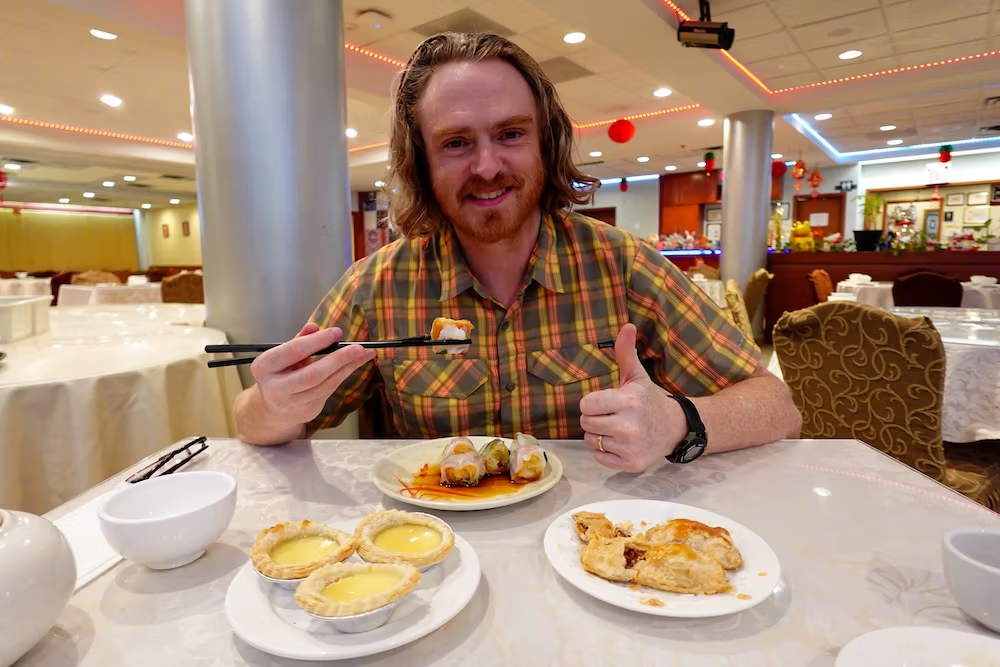
We did learn. When Audrey and I went for dim sum again, we ordered four different dishes instead of five and deliberately avoided simply repeating our favourites. That second meal ended up being one of the most useful parts of eating our way around Chinatown because it showed me how much variety you can get here without treating every meal like an endurance event.
That is how I would approach Calgary Chinatown now. Dim sum deserves the biggest chunk of your appetite, ginger beef is the dish I would seek out for its specifically Calgary and Chinese-Canadian connection, and bubble tea or a bakery snack makes a lot of sense once another table full of dumplings starts sounding more punishing than appealing.
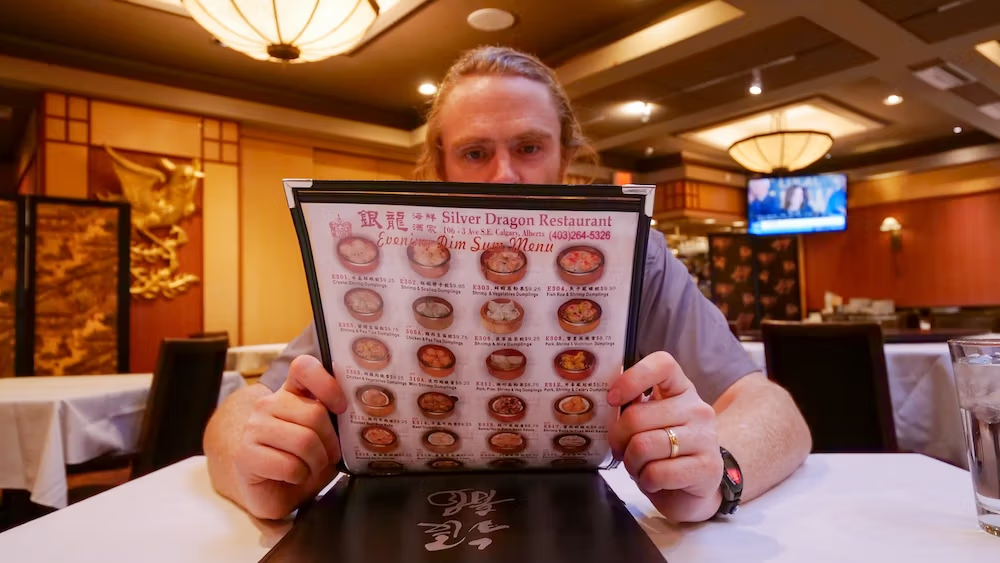
What I’d Prioritize Eating in Calgary Chinatown
Calgary Chinatown is compact enough that it is tempting to think of it as one food stop. I think that undersells it.
Our own visit covered three fairly different experiences. We ate dim sum twice, tried ginger beef at Silver Dragon, and stopped at CoCo for bubble tea while exploring the neighbourhood. They all fit comfortably under the umbrella of eating in Chinatown, but they come from different culinary traditions and serve different purposes during a day out.
Dim sum was easily the most substantial part of our experience. If I had time for only one proper sit-down meal in Chinatown, that is where I would spend it. You can share several dishes, mix familiar favourites with something new and turn one meal into a fairly broad introduction to Cantonese flavours and textures.
Ginger beef deserves separate attention because it has a particularly strong Calgary connection. I had eaten the dish for years before this trip, mostly while living in Edmonton, but trying it in Calgary gave it a different context.
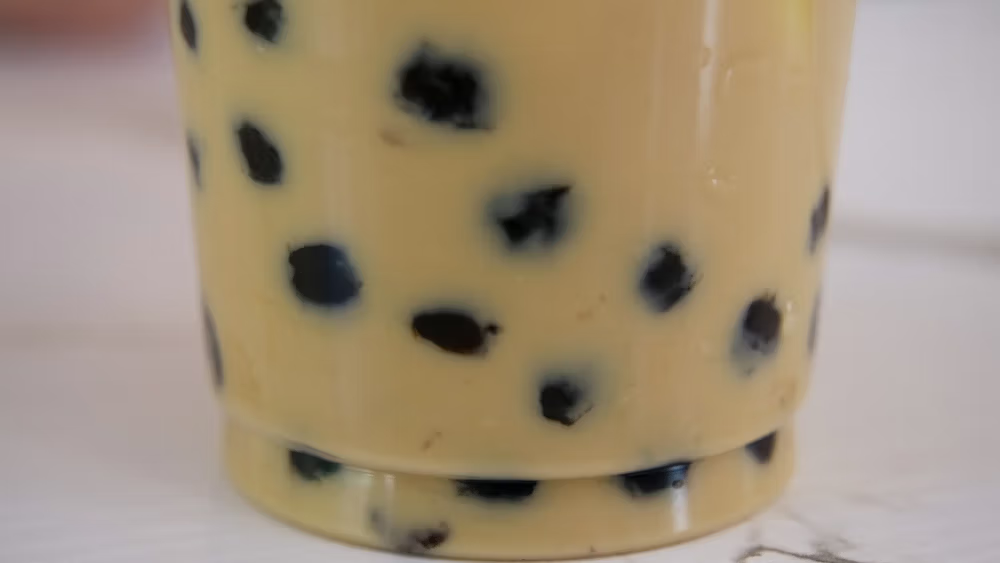
Bubble tea played a much less dramatic role. That was precisely why it worked. After heavier meals and a lot of walking, something cold that did not require another restaurant table was welcome.
I would not try to make all three equally important. They are not. Dim sum is the meal; ginger beef is the local Chinese-Canadian story worth knowing; bubble tea is the lighter counterweight.
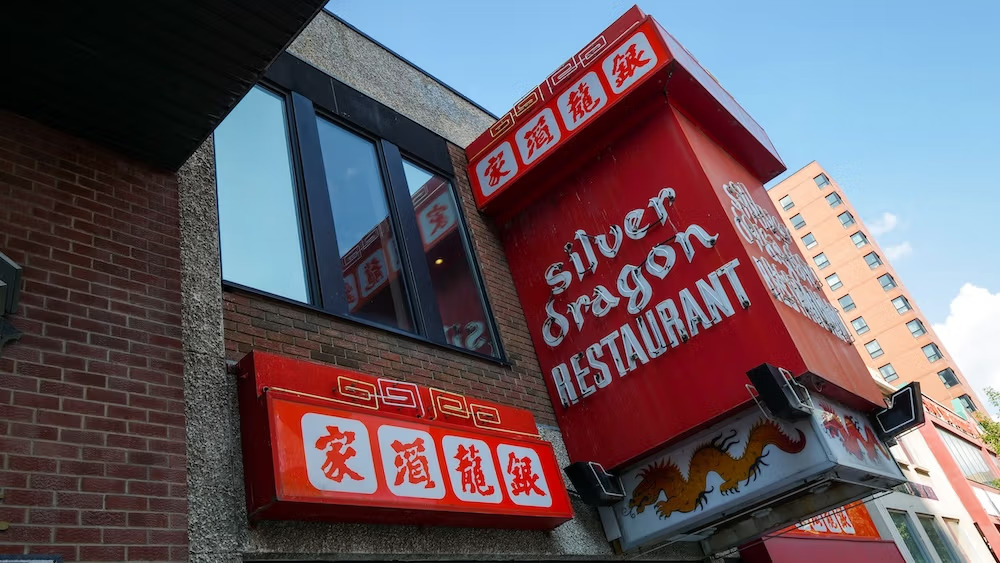
Silver Dragon: Our First Dim Sum Meal
Silver Dragon has been part of Calgary Chinatown since 1966, and it is still operating on 3 Avenue SE. Dim sum and ginger beef remain part of what the restaurant is known for, which makes it an especially logical place to begin if you want both a traditional shared meal and one of Calgary’s most recognizable Chinese-Canadian dishes.
We managed to turn our visit into quite a spread.
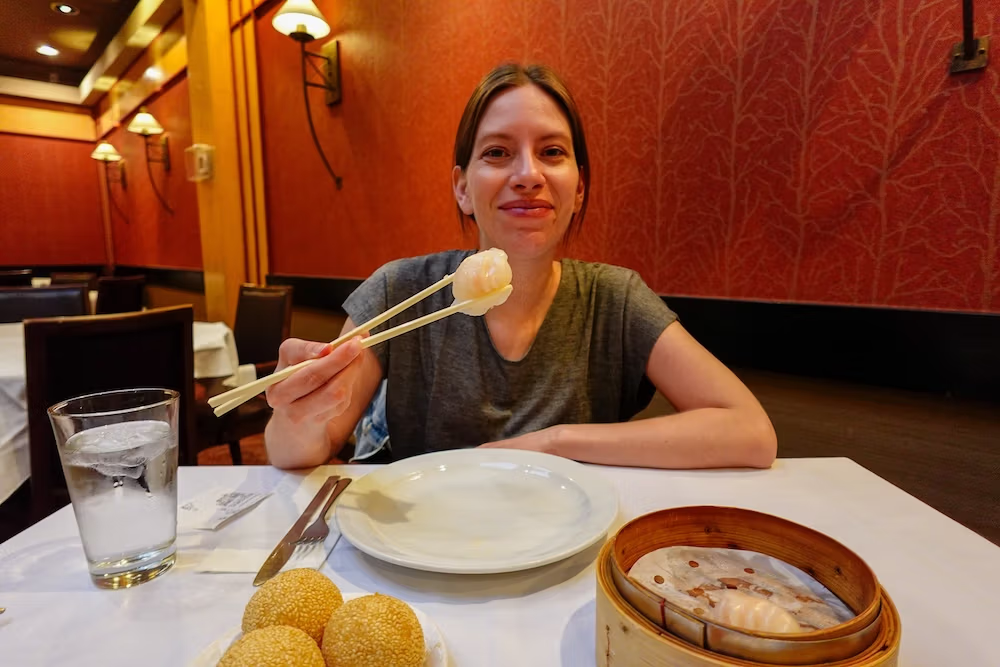
There was har gow, which is exactly the kind of dim sum Audrey and I have ordered over and over again on our travels. The translucent wrappers and plump shrimp filling make them dangerously easy to demolish early in a meal, before you have properly accounted for everything else coming to the table.
We also ordered bacon-wrapped shrimp, something less familiar to us. The contrast was the fun part: soft shrimp inside, much crispier bacon around the outside. Handling it with chopsticks was less dignified. At some point the battle became less about technique and more about getting the food into a human mouth by whatever method still seemed available.
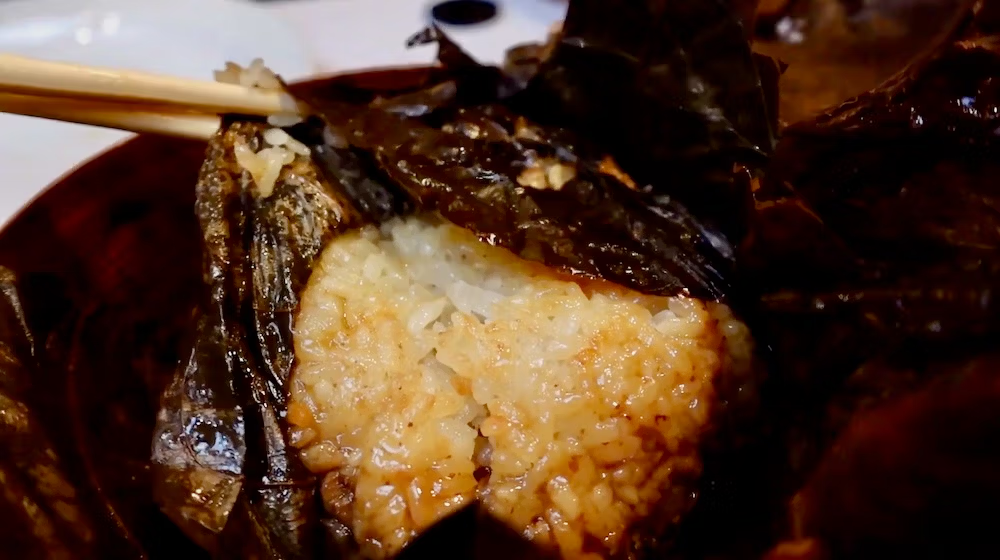
Sticky rice wrapped in lotus leaf was another favourite, although it was also where our ordering strategy started to reveal its flaws. Dumplings can create the illusion that you are merely sampling little bites. Sticky rice does not participate in that illusion. It is dense, filling and very capable of reminding you that you already ordered four other things.
We saved the sesame balls for the end. Crispy outside, soft and sweet inside, they worked nicely as dessert even though the concept of needing dessert after this particular meal was already questionable.
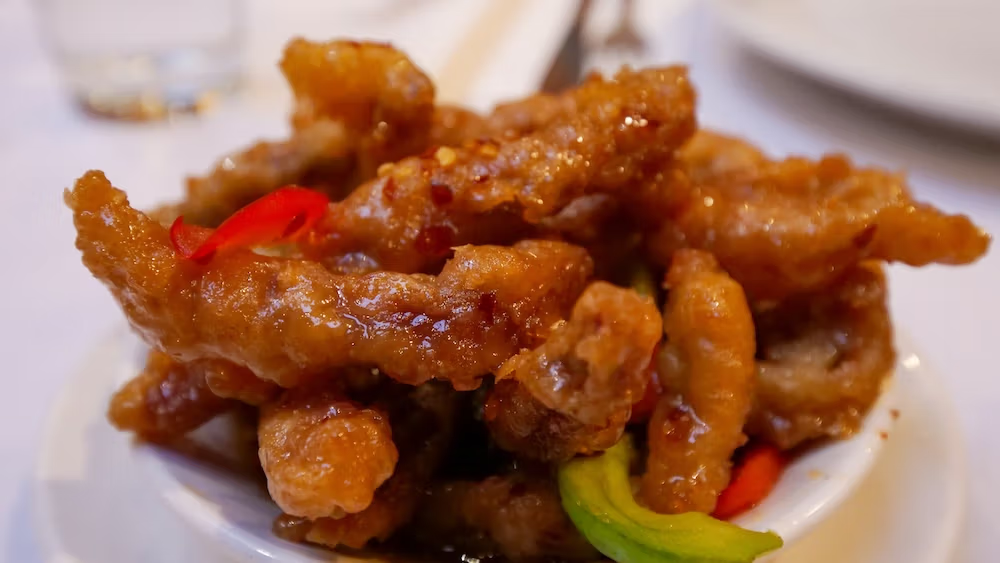
Then there was the dish I had specifically wanted to eat in Calgary: ginger beef.
Ginger Beef Was the Dish I Came Looking For
Ginger beef was never going to be a novelty for me.
When I lived in Edmonton and studied at the University of Alberta, I ate a ridiculous amount of it. There were periods when I was probably having ginger beef twice a month. Crispy strips of beef coated in that sweet, tangy sauce became one of those foods I strongly associated with Chinese takeout in Alberta.
So when we reached Calgary, I wanted to try it in the city most closely associated with the dish.
The Silver Dragon version gave me exactly what I had hoped for. The beef was tender inside, crisp on the outside and covered with that familiar sweet-and-sour style sauce. My reaction was basically immediate: this tasted as good as I remembered ginger beef tasting.
The local history gives the dish more meaning than I had appreciated when I was inhaling containers of it as a university student.
Ginger beef is widely traced back to Calgary’s Silver Inn and chef George Wong, who adapted crispy fried beef for local diners with a sweeter sauce. That fits into a much larger Chinese-Canadian restaurant tradition in which immigrant cooks adjusted dishes for the ingredients, customers and business conditions they encountered in Canada.
That does not mean every plate of ginger beef is some profound historical experience. Sometimes fried beef is simply fried beef and you are hungry.
But if you are going to eat it anywhere, Calgary is a particularly appropriate place to do it.
The dish also helps explain why I would not lump everything in this article into one vague category of “Chinese food.” Dim sum, Chinese-Canadian restaurant classics and bubble tea have different histories. They just happen to coexist very comfortably within the same neighbourhood.
The Problem With Ordering Dim Sum While Excited
By the latter part of our Silver Dragon meal, I was running into a problem entirely of my own making. I was very full.
Five dishes had sounded modest enough at the beginning because dim sum encourages optimistic arithmetic. One more basket? Fine. One plate of beef? Obviously. Sticky rice? We love sticky rice. Something sweet at the end? We have come this far.
The individual decisions are innocent. The table they create is not.
This mattered because Audrey and I were not spending the rest of the afternoon lying down somewhere. We were exploring Calgary, walking around downtown and trying to fit quite a lot into a short visit.
A magnificent lunch followed by three hours of wishing for elastic-waist trousers is not necessarily ideal travel planning.
Fortunately, we had another dim sum meal coming.
Our Second Dim Sum Meal at Chinese Cultural Centre Cuisine
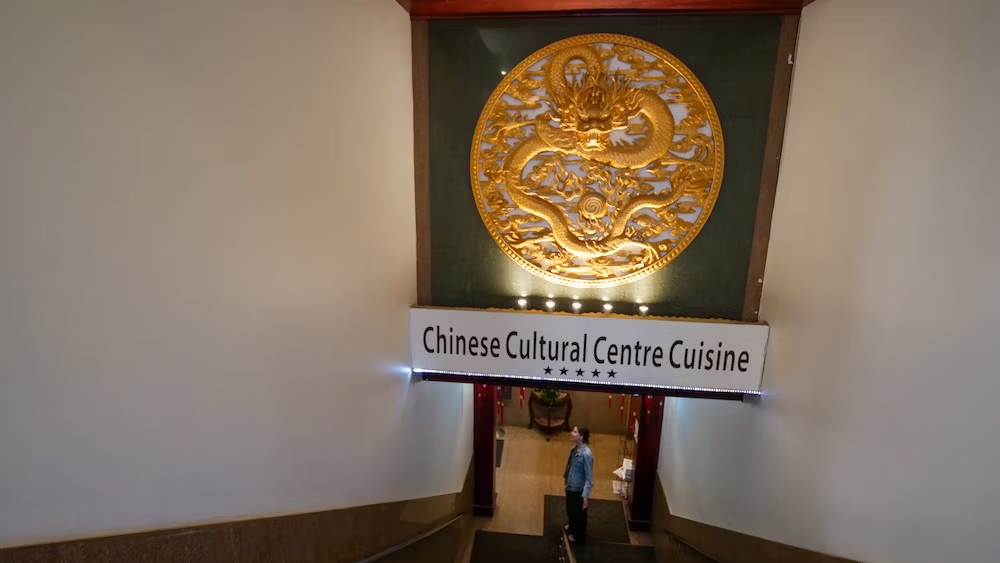
Our second round took place at Chinese Cultural Centre Cuisine, the restaurant in the basement of the Calgary Chinese Cultural Centre.
When we visited, we went in the morning and treated it as dim sum breakfast. I would not build a current itinerary around that exact timing, because the restaurant is now listed as serving lunch and dinner and operating details can change. The important part for us was not the hour anyway. It was that we approached the meal differently.
This time we ordered four dishes, and we tried to make them different from what we had already eaten at Silver Dragon.
That simple choice made the second meal far more interesting.
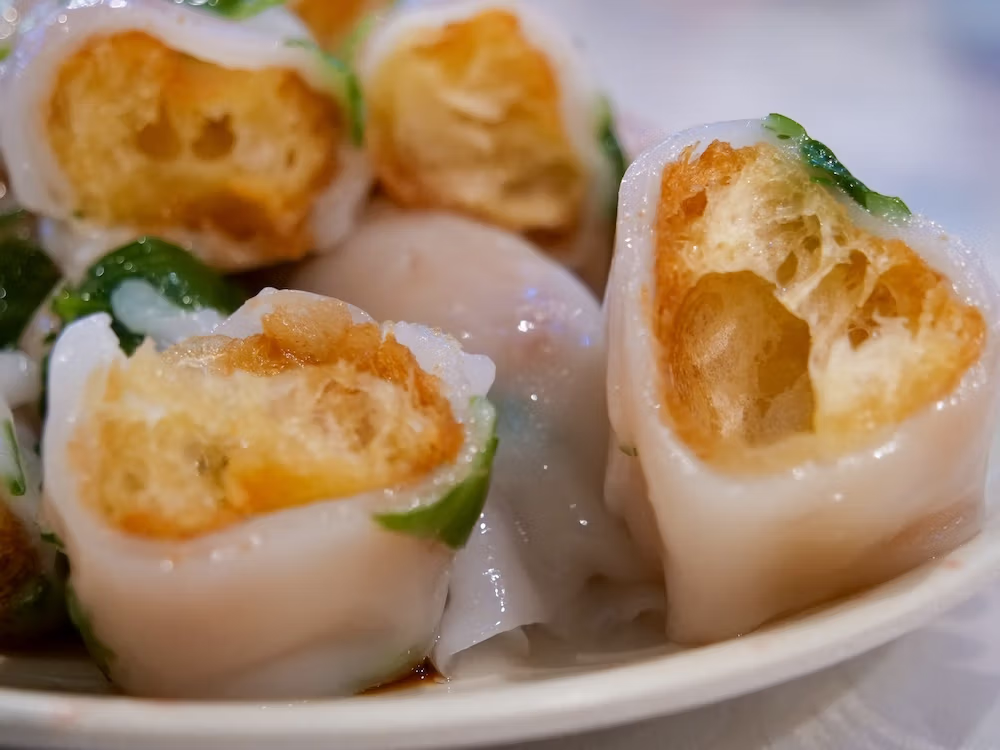
We had a shrimp rice roll, with the soft rice noodle wrapped around generous pieces of shrimp. We also tried a rice roll wrapped around fried dough, which was new for us and probably the most interesting texture contrast of the meal. The outside was soft and slightly chewy while the centre stayed crisp.
Then came the barbecued pork pastry.
This was one of those dangerous foods where the combination of flaky pastry, savoury filling and warmth creates immediate overconfidence about how many you could eat. The reaction at the table was strong enough that it entered “possibly my favourite dim sum ever” territory.
The egg tarts followed the same general theme of pastry causing us problems in the best possible way. They arrived warm, with soft custard in the middle and buttery, flaky pastry outside. Both the tarts and the pork pastries tasted especially fresh.
Four dishes were still a proper meal. We were not nibbling on celery.
But compared with the previous outing, the amount felt much better suited to a day when we still wanted to explore afterward.
What I’d Do Differently When Ordering Dim Sum for Two
I would not take our experience and turn it into a rule that two people should always order four dishes.
That would be absurd. A basket of three dumplings is not nutritionally equivalent to a parcel of sticky rice or a plate of ginger beef, and people arrive with wildly different appetites.
What I would take from our two meals is that dim sum makes over-ordering unusually easy because each individual addition looks so harmless.
If you are sightseeing afterward, I would start slightly more conservatively than your stomachless menu-reading brain wants to. Share a few things. See where you are. Add another dish if you are still hungry.
The ability to share is one of dim sum’s biggest advantages for travellers. Audrey and I could try a much wider range of food than if we had each ordered a single entrée, and our second meal became better precisely because we resisted simply ordering the same favourites again.
I would also mix weights. If you are ordering sticky rice or a large meat dish, you probably do not need to behave as though those are equivalent to adding one more dumpling basket.
Most importantly, leave room for the rest of Chinatown.
I say that as someone who did not.
Bubble Tea at CoCo: A Much Lighter Assignment
After two dim sum meals, bubble tea starts to look positively athletic.
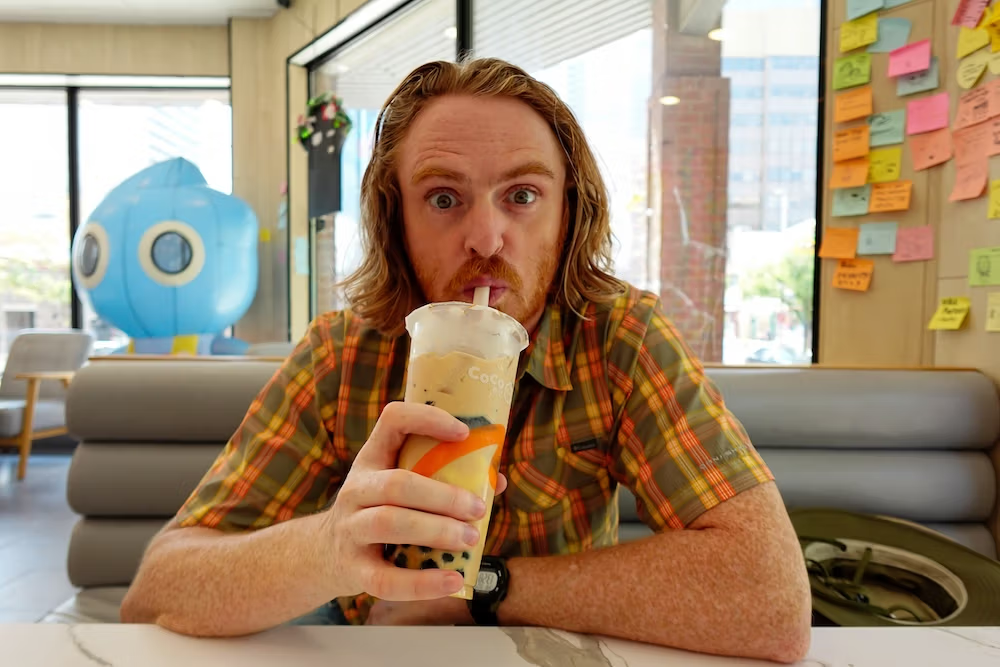
We stopped at CoCo Fresh Tea & Juice, which still has a Chinatown location on 3 Avenue SE, for something cold while we were out sightseeing.
One of our drinks was called 3 Guys. The name sounds like the beginning of a story your parents would rather you did not tell at dinner, but it is an actual CoCo menu item made with pearls, pudding and grass jelly.
We also had pearl milk tea.
Our sweetness preferences were very different. One drink was ordered at the regular level, while the other was cut down to 30 percent sugar with less ice.
That lower-sugar approach came from experience. We had gone through enthusiastic bubble-tea phases on previous trips in Hong Kong, Taiwan and Japan, and extremely sweet drinks could become a bit much for us after a while. Reducing the sugar simply suited our tastes better.
I would not turn that into health advice or pretend 30 percent is some magic number. Drink the sugar level that makes you happy.
What I liked most about the CoCo stop was how easily it fit into the day. We were in Calgary during summer, we had already been walking and sightseeing, and something cold and refreshing was far more appealing than sitting down for another serious meal.
There was also some minor drink spillage at the table, because apparently international travel experience does not eventually confer basic beverage-handling competence.
You would think it might.
Chinese-Canadian Classics Aren’t the Same Thing as Dim Sum
Chinese food in Canada has a complicated enough history that calling everything in Chinatown “Chinese-Canadian food” would flatten several very different traditions.
Dim sum grew out of southern Chinese, particularly Cantonese, food culture. The dumplings, rice rolls and shared tea-table format existed long before Calgary.
Bubble tea belongs somewhere else again. Pearl milk tea emerged from Taiwan’s tea-drink culture in the 1980s before becoming an international phenomenon.
Chinese-Canadian cuisine developed through a different process. Chinese immigrants running restaurants across Canada adapted what they cooked to local ingredients and local tastes, creating or popularizing dishes that became fixtures of Chinese restaurants here even when they would look quite unfamiliar on a menu in China.
That tradition includes foods such as chop suey, egg foo young, sweet-and-sour pork and chicken balls served with sweet-and-sour sauce.
We did not eat all of those during this particular Calgary trip, so I am not going to pretend to review them. They are useful context because they show where ginger beef fits.
Ginger beef is not simply a traditional Chinese dish that Calgary happened to become famous for serving. Its identity is Chinese-Canadian, and its Calgary origin story makes it especially relevant here.
That is what I would prioritize if you want one dish with a specifically local connection.
A Few Other Chinatown Food Stops We Didn’t Visit
Our meals only covered part of Calgary Chinatown, and there are several other current places worth knowing about if you want a different style of food. We did not personally eat at the places below, so treat them as researched alternatives rather than personal recommendations.
U & Me
U & Me is useful if you want Chinese food later in the evening. It serves Cantonese food and dim sum and is known as a late-night Chinatown option.
I would check its current hours before heading over rather than relying on an old closing time, but it fills a different role from the meals we had.
Rainbow Bakery
Rainbow Bakery makes sense when what you really want is a bun or bakery snack rather than another full restaurant meal.
We did not get there ourselves, but I like the role it plays in a food plan. Not every stop needs to involve forty-five minutes at a table and another confrontation with the limits of your digestive system.
Calgary Court
Calgary Court offers Hong Kong café-style food, including things like wonton noodle soup, milk tea and baked pork chop with rice.
Again, we did not eat there, but if you have multiple meals in Chinatown, it gives you a substantially different direction from simply going for dim sum again.
Try Again Beverage House
Try Again Beverage House is another current Chinatown option for bubble tea, milk tea and fresh-fruit drinks.
We only tried CoCo, so I cannot compare the two. I would simply keep it in mind if you want another drink stop rather than repeating our exact route.
Want to Explore More of Calgary’s Food Scene?
Chinatown is the part of Calgary’s food scene I am focusing on here, but it is obviously not the whole thing. If food is a major reason for your trip and you would rather have somebody organize a broader tasting route, there is currently an Iconic Eats of Calgary Food Tour through downtown. We did not take this tour, and it does not focus on Chinatown, so I would see it as a separate experience rather than a replacement for eating your own way around the neighbourhood.
The current tour runs for about 2.5 hours over roughly 1.5 kilometres, with four food-and-drink tasting stops around downtown and Stephen Avenue. If that sounds more appealing than building another meal plan from scratch, you can check current availability for the Iconic Eats of Calgary Food Tour.
How I’d Eat My Way Around Calgary Chinatown Next Time
If I went back tomorrow, I would not make a huge restaurant checklist. I would make appetite decisions.
For a proper meal, I would start with dim sum. It was the richest part of our Chinatown food experience, and sharing dishes gave Audrey and me far more variety than ordering separate mains ever could.
I would make sure ginger beef appeared somewhere, partly because I genuinely like it and partly because Calgary is one of the few places where eating the dish comes with a meaningful local story.
Then I would stop pretending every food break needs to be a full meal.
If we were still exploring, bubble tea or a bakery snack would be enough. If we had another day, that would be the time to come back for more dim sum or try something completely different such as Hong Kong café food.
That is the biggest thing I learned from our two dim sum meals. The first time, we ordered five dishes and ended up absolutely stuffed. The second time, we ordered four different dishes, got another range of flavours and still had some enthusiasm left for Calgary when we walked out the door.
I would happily eat both meals again.
I would just stop trying to defeat Chinatown in a single sitting.
Frequently Asked Questions
Is Calgary Chinatown good for dim sum?
Yes. Dim sum was the strongest part of our own Chinatown food experience. Audrey and I ate it twice at two different restaurants, which let us mix familiar favourites with dishes we had not tried before.
What Chinese-Canadian food should I try in Calgary Chinatown?
Ginger beef would be my priority. I already loved the dish from my years living in Edmonton, and trying it in Calgary added a local connection because the dish is widely traced back to the city.
How many dim sum dishes should two people order?
There is no universal number because portion sizes and appetites vary. Five dishes left Audrey and me very full, while four different dishes worked better for us when we still wanted to explore Calgary afterward.
Can you get bubble tea in Calgary Chinatown?
Yes. We stopped at CoCo Fresh Tea & Juice for bubble tea while sightseeing, and the article also mentions Try Again Beverage House as another current option that we did not personally try.
Can I still copy our breakfast timing at Chinese Cultural Centre Cuisine?
I would not assume so. We ate there in the morning during our visit, but its current listing describes lunch and dinner service, so check the latest hours before planning around an early meal.
Did we personally eat at every place mentioned in this guide?
No. Silver Dragon, Chinese Cultural Centre Cuisine and CoCo are part of our firsthand experience. U & Me, Rainbow Bakery, Calgary Court and Try Again Beverage House are shorter researched alternatives that we did not personally visit.
This article contains affiliate links. If you book through one of these links, I may earn a commission at no extra cost to you.
This guide is also available in Spanish. [Leé la versión en castellano: Guía gastronómica del Chinatown de Calgary: dim sum, bubble tea y clásicos chino-canadienses]