
Paint Pots was exactly the kind of stop that worked well on our family road trip through Kootenay National Park: enough of a walk to get us out of the vehicle, distinctive enough that it didn’t feel like another interchangeable mountain viewpoint, and short enough that we could still keep moving afterward.
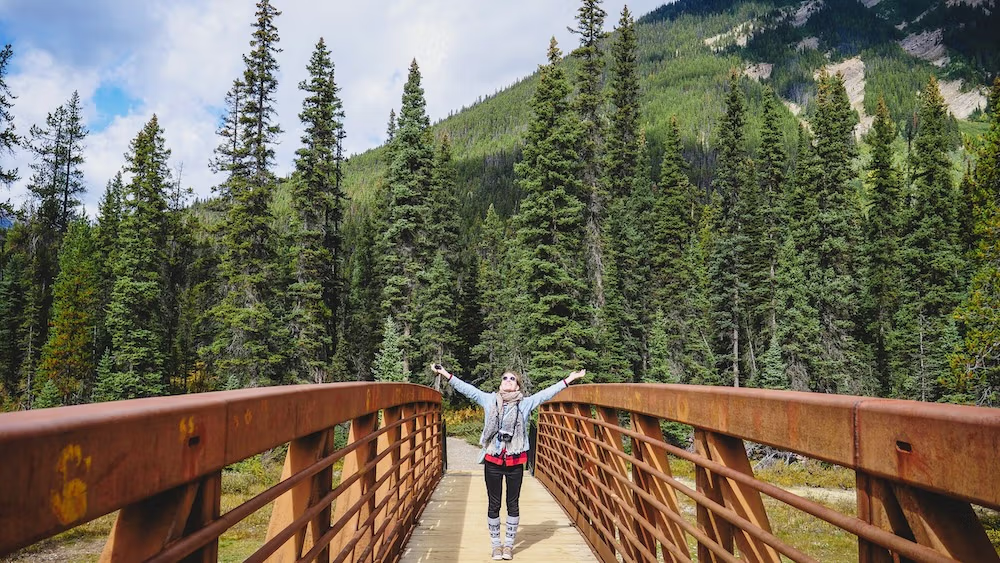
We arrived with a packed picnic, let Togo stretch his legs and ate before setting off toward the Paint Pots. At the time we casually called it “a little walk in the woods,” which gets the first part of the experience about right. You cross the river, head into the forest and follow a modest trail without any major climbing. Then the surroundings start to change. Rusty orange and yellow tones creep into the ground, the forest gives way to a more open landscape, and eventually you reach the iron-rich mineral springs themselves.
That progression is the reason I remember Paint Pots more clearly than the statistics might suggest. This isn’t a big Rocky Mountain hike, and I wouldn’t pretend that it is. The current route is only about 2 kilometres return, yet the destination is strange enough that the walk earns its place in a Kootenay road-trip day.
Paint Pots Trail at a Glance
| Planning detail | What to expect |
|---|---|
| Location | Kootenay National Park, British Columbia |
| Trail length | About 2 km return |
| Official walking time | About 40 minutes return |
| Elevation | Roughly 35 m of gain |
| Difficulty | Rated Easy |
| Main experience | River crossing, forest trail, ochre terrain and three iron-rich mineral springs |
| Facilities | Parking, picnic tables and washrooms at the day-use area |
| Dogs | Currently permitted on leash and under control |
| Longer option | Continue toward Marble Canyon on a separate 2.9 km one-way connector |
| Time I would allow | Around 1 hour for the basic stop; longer if picnicking or lingering |
The important number for me isn’t really the 2 kilometres. It’s the roughly one-hour block. That’s enough time for Paint Pots to feel like an actual stop rather than a photograph from beside the road, without forcing you to sacrifice a large part of a Kootenay sightseeing day.
What the Walk to Paint Pots Is Actually Like
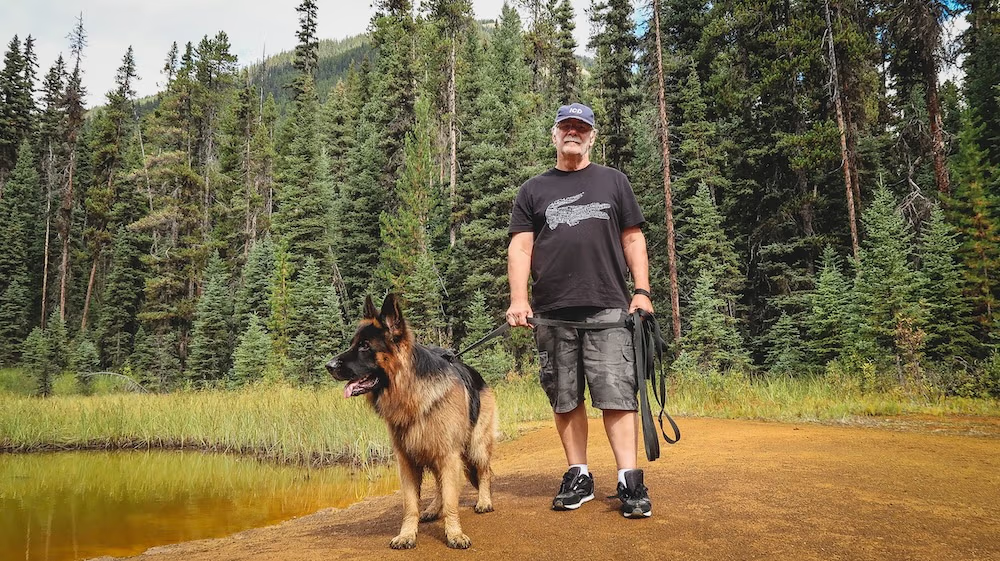
Our stop began with lunch, which was probably the most road-trip thing imaginable. We had bananas, crackers, cheese, salami, peppers, grapes, peanuts, olives and other bits and pieces spread out for a light picnic, while Togo got busy investigating yet another new corner of the Canadian Rockies.
Keeping the meal fairly small turned out to be sensible because we were heading straight into more outdoor activity. There was some joking that a huge lunch would have been more conducive to a siesta than hiking, which is hard to argue with when you’ve spent several days eating your way between lakes, trails and viewpoints.
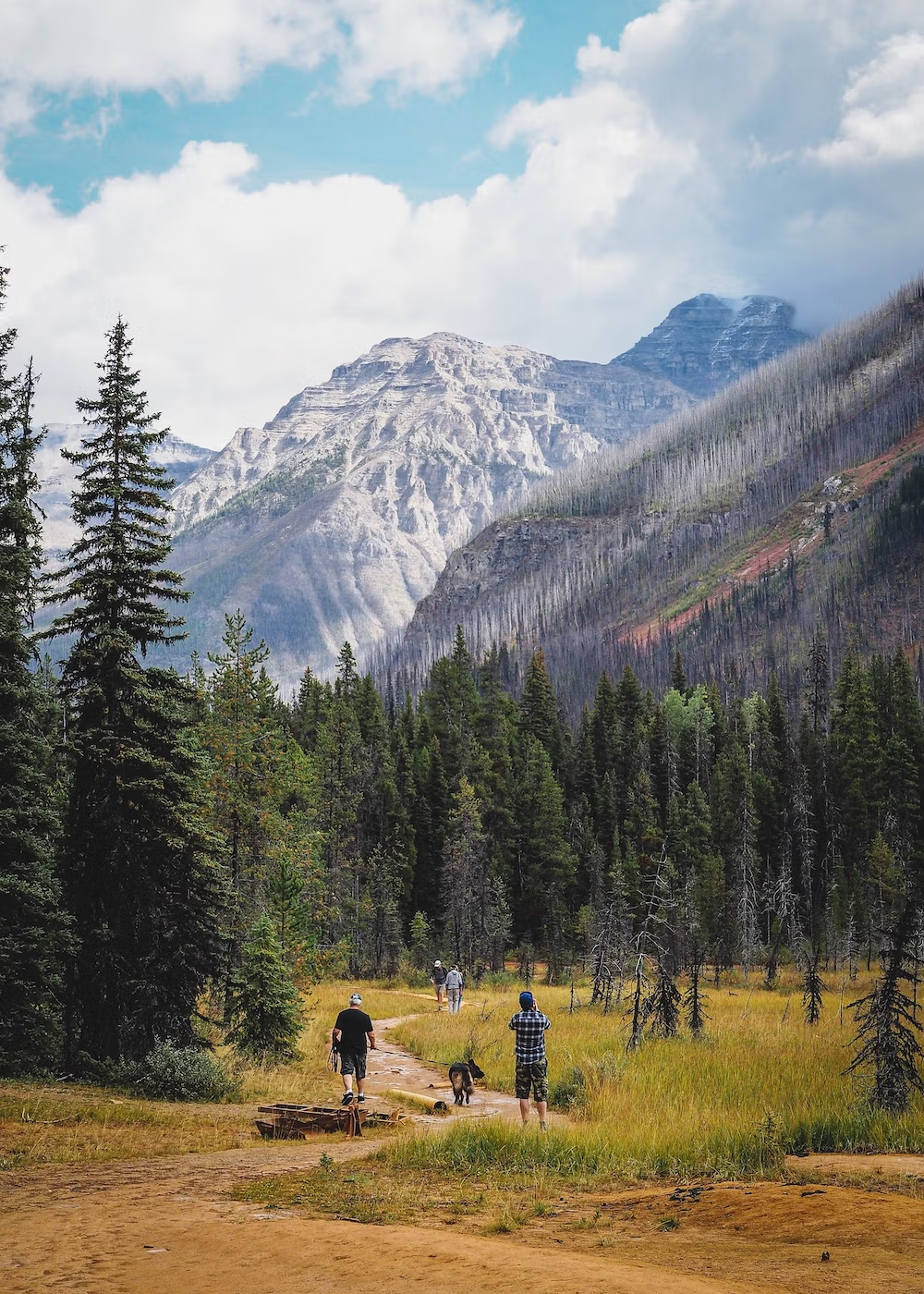
Once we started walking, the route developed in a way that made the destination more satisfying. We crossed the bridge and continued into the forest rather than immediately seeing the Paint Pots from the parking area. For a while, it felt like a normal woodland trail, and that made the eventual change in colour stand out more when the ground began shifting toward orange and ochre.
The modern trail also has considerably more raised boardwalk than it did historically. Around 175 metres of boardwalk were added as part of improvements to sections that had suffered from poor and muddy conditions. That doesn’t mean you are guaranteed clean shoes—wet weather can still turn parts of the route sloppy—but it makes the most sensitive and troublesome sections easier to negotiate.
This is one of those walks where the journey is simple enough that you don’t spend much mental energy worrying about the hike itself. You can actually notice what’s changing around you.
The Landscape Gets Weirder Near the Paint Pots
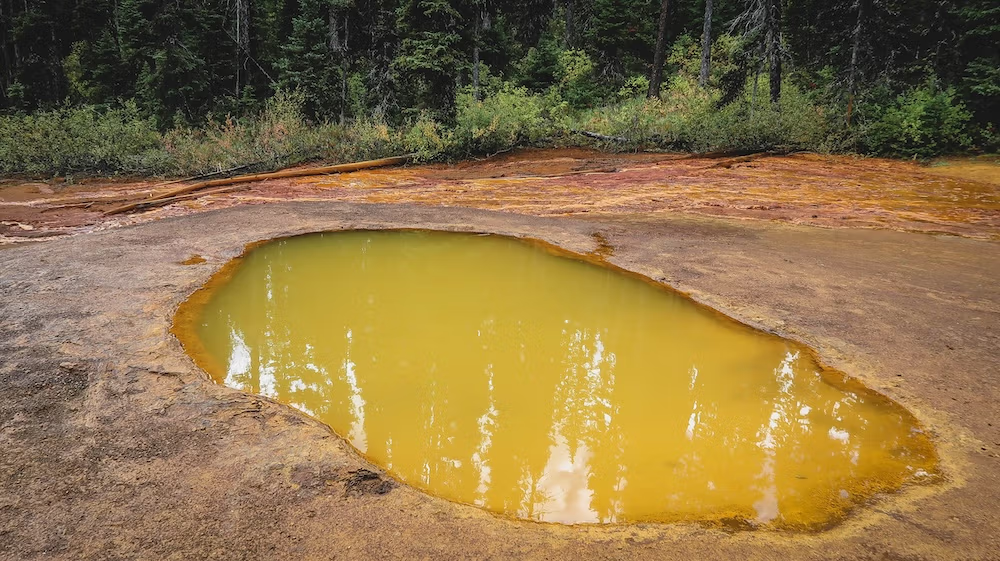
The Paint Pots aren’t huge, and I think expectations matter here. If you arrive anticipating another Lake Louise-sized spectacle, you’re setting up a comparison that makes no sense. What makes this place interesting isn’t scale; it’s how odd the landscape becomes.
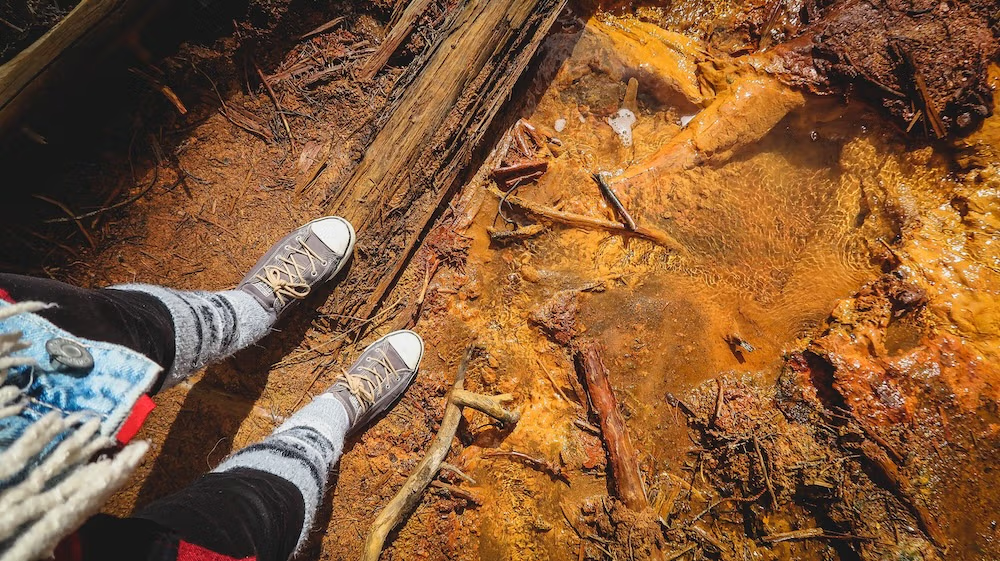
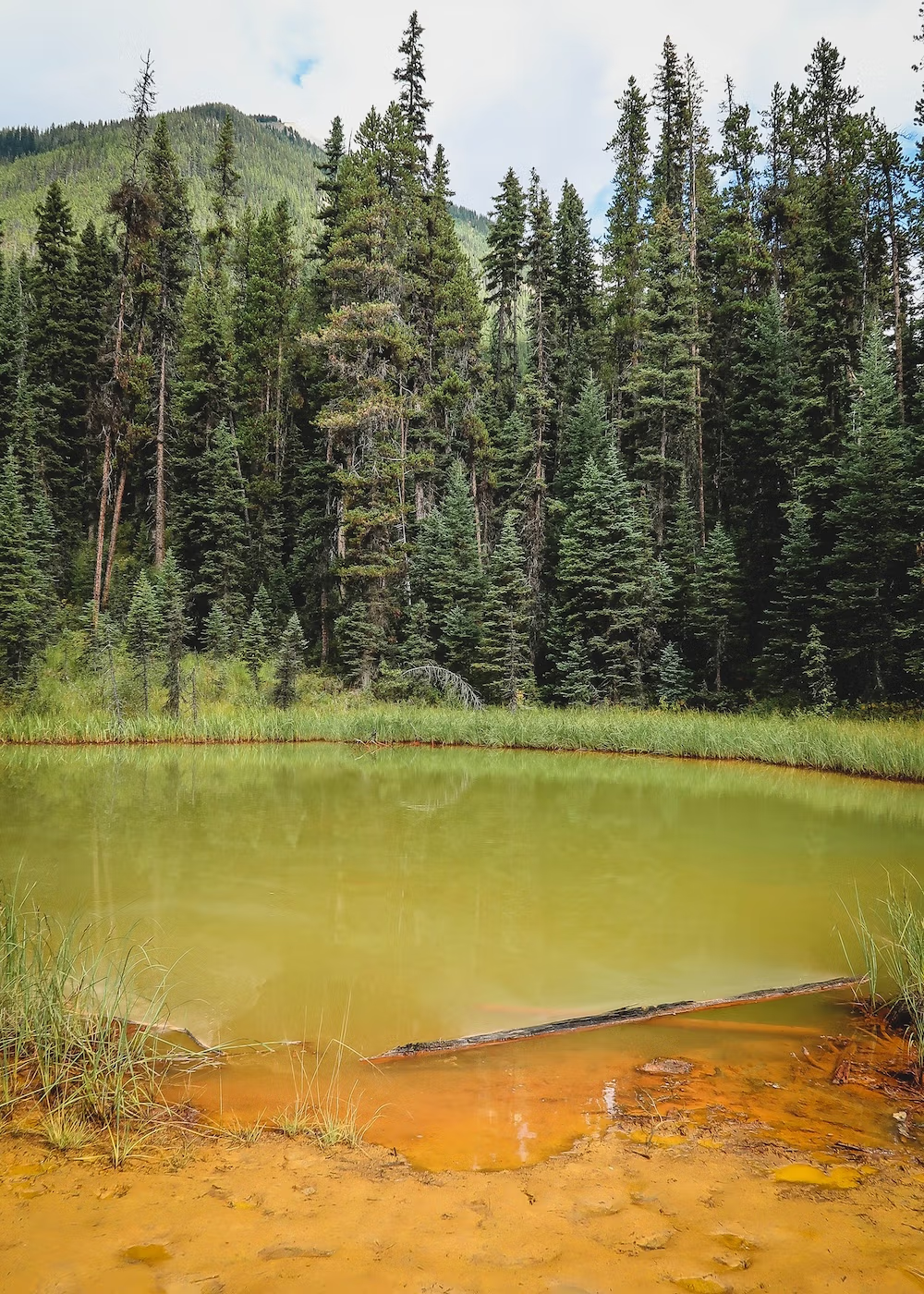
There are three iron-rich mineral springs surrounded by ochre-stained earth. Reds, oranges and yellows dominate the ground, while the pools and surrounding mineral areas can introduce greenish tones as well. We had been talking about the strange colours before reaching them, but they still felt unusual once we walked into the open area and could see how dramatically the soil differed from the forest we had just crossed.
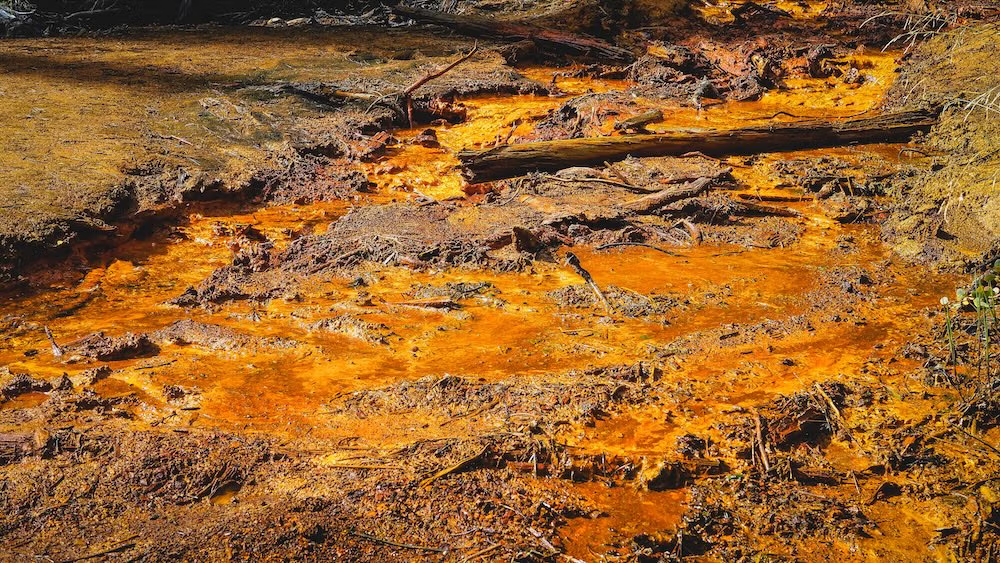
The iron-rich springs are the key to the colouring, and the ochre here also has a much deeper history than its modern role as a hiking attraction. The Paint Pots and wider Ochre Creek area lie within lands traditionally used by the Ktunaxa and Secwépemc peoples, and ochre from this area has been gathered as pigment for generations.
That context gives the site more substance. It isn’t simply a collection of funny-coloured puddles beside a trail, even if the first visual reaction is basically, “Why is the ground orange?”
I also wouldn’t get too hung up on trying to explain every shade you see with one tidy chemistry lesson. The useful thing for a visitor is understanding that iron-rich mineral springs and ochre deposits are responsible for the defining rusty landscape. Beyond that, I’d rather spend my time actually looking at the place.
Is the Paint Pots Trail Easy?
Paint Pots is currently rated as an Easy trail, and with roughly 2 kilometres of walking and only about 35 metres of elevation gain, it is certainly modest by Rocky Mountain standards. That matched our experience. We weren’t treating this as one of the demanding hikes of the trip, and our discussion at the time was more about whether we wanted to keep exploring farther than whether we could physically manage the Paint Pots themselves.
Still, “easy” is a category rather than a guarantee for every person. The route involves natural trail surfaces, a bridge and boardwalk sections, and wet conditions can make the ground less straightforward. I also wouldn’t label the entire route wheelchair accessible or universally stroller-friendly based on the information currently available. If mobility is an important factor for your group, check the latest conditions and accessibility information before going rather than assuming that short automatically means barrier-free.
For most able walkers, though, the commitment is small.
How Much Time Should You Allow?
The official walking estimate is around 40 minutes return. In practice, I’d give Paint Pots about an hour if your goal is simply to walk out, see the springs and return without rushing. That extra buffer matters because the 40-minute figure is walking time, not an appointment; you’ll probably stop at the river, take photographs, look around the springs and spend at least a few minutes wondering how everything got so orange.
If you’re having lunch there, the outing expands easily. The day-use area currently has picnic tables and washrooms, so Paint Pots can do double duty as a meal stop and a short hike, which is basically how we approached it.
That combination worked particularly well for our itinerary because we had several places we wanted to visit that day. We weren’t looking for Paint Pots to occupy half a day, and it didn’t need to. We got the walk, reached the geological feature and still had plenty of road trip left afterward.
You Can Extend the Hike, but You Don’t Have To
During our visit we noticed that there were other trails and different route lengths in the area, but we consciously decided not to continue much farther. We already had a busy day, and our main goal had been to see the Paint Pots.
There are still longer possibilities if the short route feels insufficient. The most relevant extension connects Paint Pots with Marble Canyon and runs roughly 2.9 kilometres one way, with about two hours suggested for the return outing depending on pace and direction. The broader trail system also feeds into considerably longer backcountry routes.
We didn’t hike those extensions, so I don’t have a personal verdict on them. More importantly, I don’t think you need one to answer the basic Paint Pots question. If you’ve come specifically for the mineral springs, reaching them and turning back is a complete visit. Continuing onward becomes a different hiking decision rather than the missing second half of the Paint Pots experience.
Winter changes the outing considerably. A currently listed guided snowshoeing trip to the Paint Pots departs from Banff and provides a guide, snowshoes and hiking poles for a roughly 3-kilometre winter route. We didn’t do this tour, so I can’t give it a firsthand verdict, but it is a practical option if snowshoeing is the point of your visit rather than simply walking the standard trail. You can check the current Paint Pots snowshoeing tour on Expedia.
Practical Details That Matter
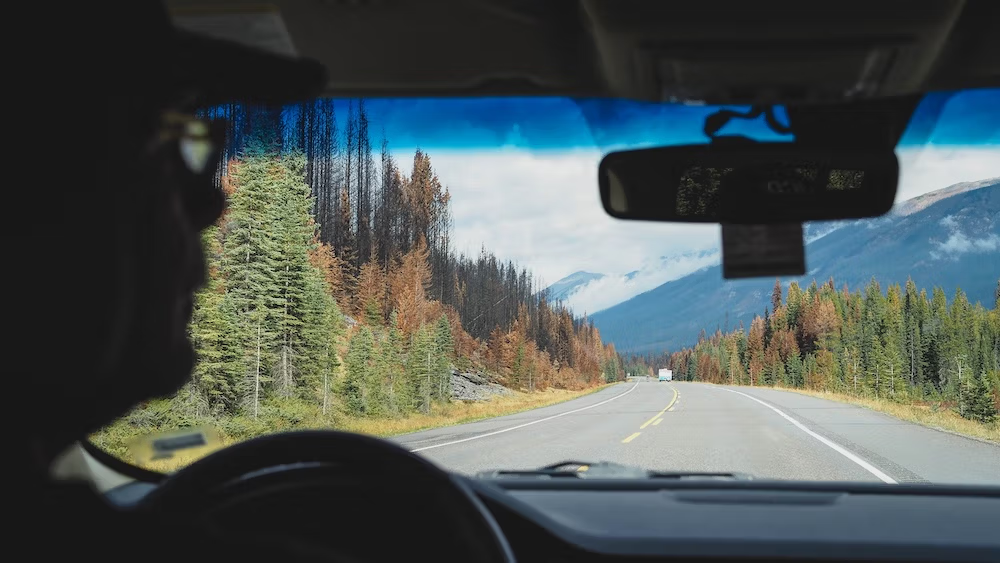
Paint Pots sits along Highway 93 South in Kootenay National Park, with a day-use parking area at the trailhead. Parking, picnic tables and washrooms make it a straightforward place to stop during a driving day, but you shouldn’t expect the wider park to function like a serviced resort corridor.
There are no fuel stations or food services inside Kootenay National Park, and cellular or Wi-Fi coverage should not be counted on. That makes the basics surprisingly important: bring water and food if you need them, have your route available offline, and don’t wait until you’ve lost your signal to figure out where you’re going next.
Normal national-park entry requirements apply, while fees and temporary promotions can change. Road and trail conditions can change too, especially around weather events and seasonal maintenance, so this is one of the places where checking the live Parks Canada information shortly before your drive is genuinely useful rather than administrative busywork.
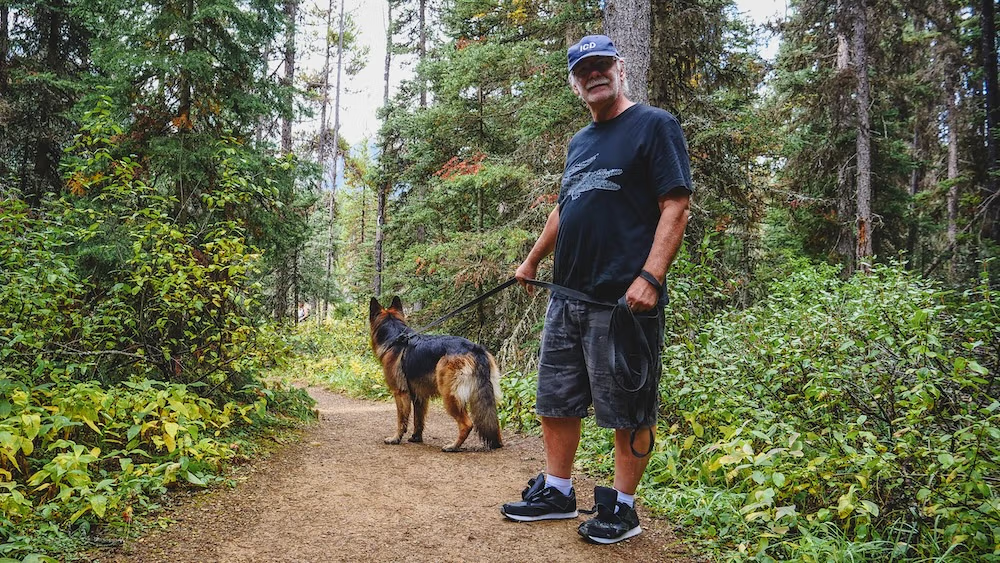
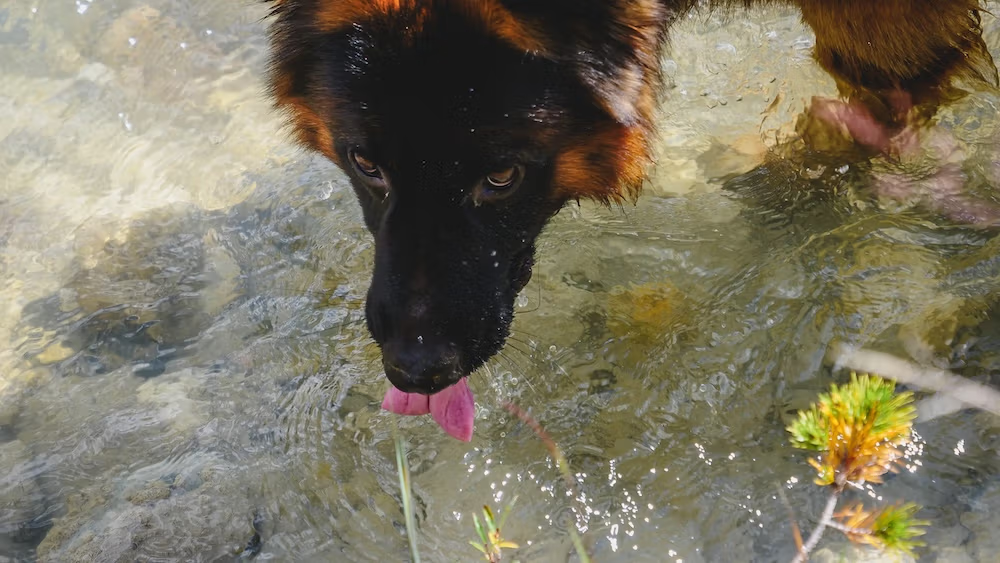
Dogs are currently allowed on the Paint Pots trail when leashed and controlled. Togo came with us on our family road trip, but I wouldn’t use an old photograph of him happily exploring the Rockies as permanent pet-policy documentation. Rules change, and wildlife considerations matter.
The same goes for bears. We were far more casual about the possibility of spotting wildlife on that older trip than I would frame the advice now. In Kootenay National Park, current guidance is to stay alert, make noise when appropriate, keep dogs controlled and carry accessible bear spray. Seeing wildlife can be a great part of travelling through the Rockies; deliberately trying to engineer a close encounter is another matter entirely.
You can check the current Kootenay National Park trail conditions before your visit.
Is Paint Pots Worth the Stop?
For me, Paint Pots works best as part of a Kootenay National Park road trip rather than as the single attraction around which I’d build an enormous detour.
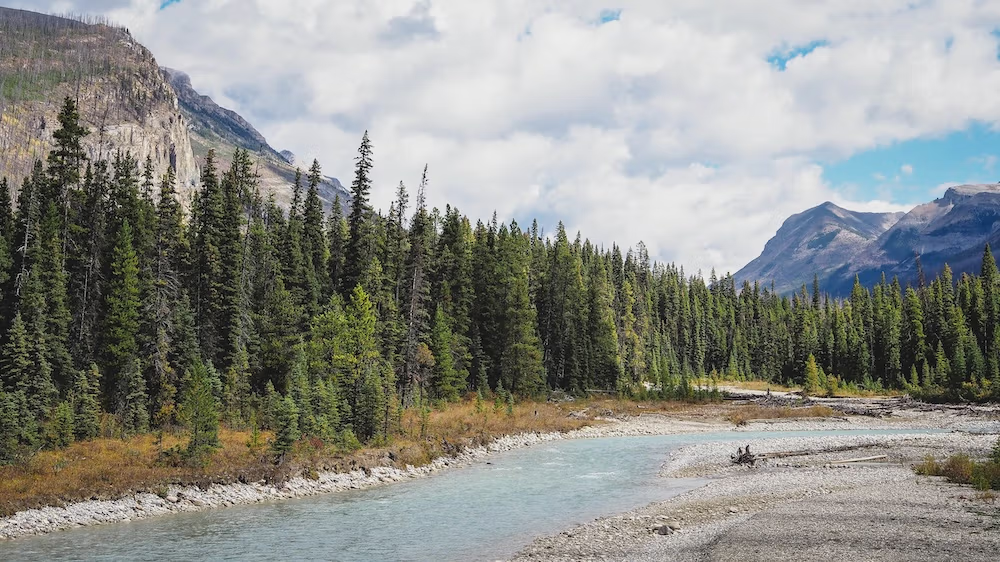
The commitment is tiny compared with many hikes in the Rockies: roughly 2 kilometres, minimal elevation and around 40 minutes of official walking time. Yet the route still gives you several distinct environments as you cross the river, walk through forest and emerge into this peculiar orange mineral landscape.
We deliberately kept our own visit compact because there was more we wanted to see that day, and I don’t look back on that as cutting Paint Pots short. Quite the opposite. We gave it the amount of time it needed.
If you’re already driving Highway 93 South, I’d stop. Have a picnic if the timing works, stretch your legs, walk out to the springs and enjoy one of the stranger little landscapes in Kootenay National Park before getting back on the road. It doesn’t need to become a major hiking accomplishment to be worthwhile.
Frequently Asked Questions
How long is the Paint Pots Trail?
The Paint Pots Trail is about 2 kilometres return, with an official walking estimate of roughly 40 minutes. I would allow about an hour for the basic stop so you have time to look around without rushing.
Is the Paint Pots Trail difficult?
Paint Pots is rated as an Easy trail and has roughly 35 metres of elevation gain. The route still includes natural trail surfaces, a bridge and boardwalk sections, and wet conditions can make parts of it less straightforward.
What do you see on the walk to the Paint Pots?
The route crosses the river, passes through forest and gradually reaches orange and ochre-stained terrain. The main destination is a group of three iron-rich mineral springs surrounded by the unusually coloured landscape.
Can dogs go on the Paint Pots Trail?
Dogs are currently allowed on the Paint Pots Trail when kept leashed and under control. Togo joined us on our family road trip, but I would still check the current park rules before visiting because wildlife and pet regulations can change.
Can you extend the Paint Pots hike?
Yes. The most relevant extension connects Paint Pots with Marble Canyon and runs roughly 2.9 kilometres one way, with about two hours suggested for the return outing depending on pace and direction. We did not hike that extension.
Is Paint Pots worth stopping for?
For me, Paint Pots makes the most sense as a compact stop while already driving through Kootenay National Park. I would not build an enormous detour around it, but the short walk and unusual ochre landscape make it an easy stop to justify on Highway 93 South.
This guide is also available in Spanish. [Leé la versión en castellano: Guía del sendero Paint Pots: qué esperar en el Parque Nacional Kootenay]
This article contains affiliate links. If you book through one of these links, I may earn a commission at no extra cost to you.