
Before my six-day trip with Banff Trail Riders, food was pretty low on my list of concerns. I was thinking about how my body would handle several days in the saddle, whether I would get along with my horse, what the weather might throw at us and just how remote Sundance and Halfway Lodges would feel. Food seemed like the easy part, and I assumed it would be functional: keep the riders fed, keep everybody moving and get on with the adventure.
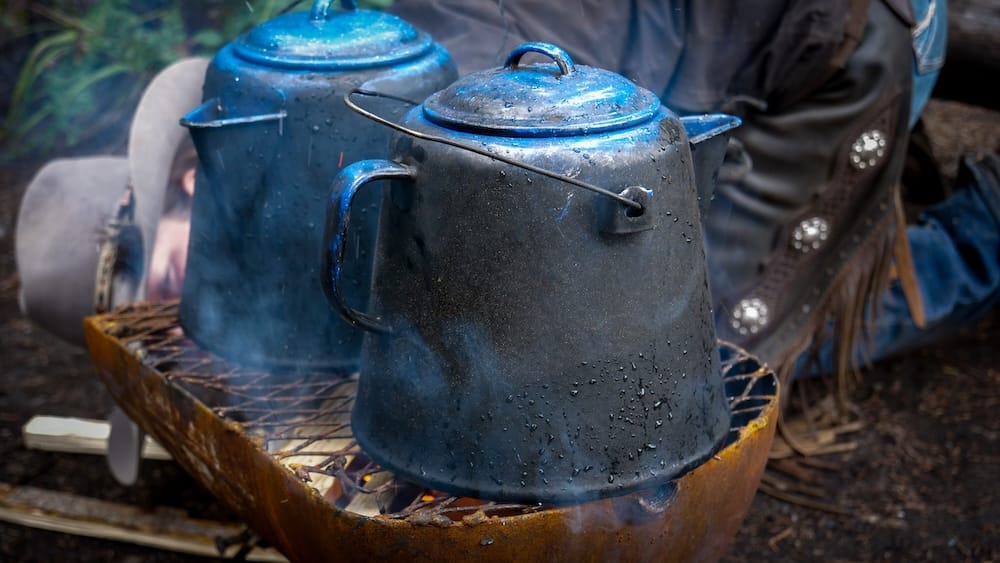
That expectation lasted roughly until my first proper lunch.
By the end of the trip, food had become one of the highlights. We ate steaks and burgers cooked outside, substantial hot breakfasts before long riding days, home-style dinners at the lodges and desserts that felt almost comically decadent for somewhere this remote. In the evenings, dinner naturally stretched into wine, conversation and hanging around the table together.
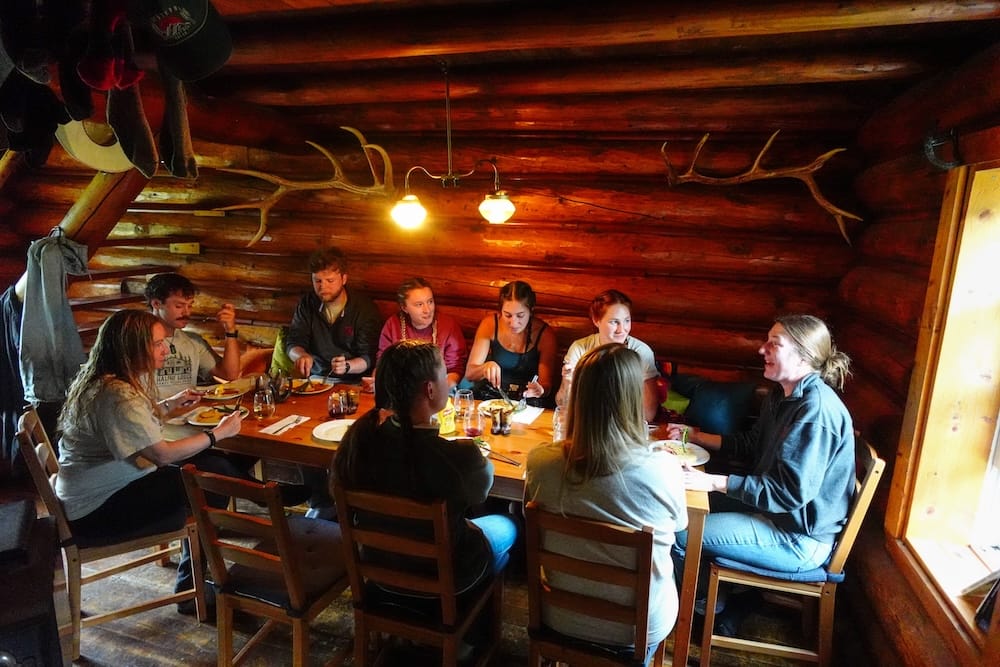
I also rediscovered something I had forgotten about horseback riding: it makes me incredibly hungry. After our first stretch in the saddle, I remember thinking how much of an appetite I had worked up, so fortunately nobody was trying to carry us through six days on trail mix and optimism.
The easiest way to understand the food is to think of it as three different experiences: outdoor trail meals, Sundance Lodge and Halfway Lodge. All three worked for different reasons, but if you’re forcing me to pick a winner, Halfway gets it.
| Food setting | What I experienced | What stood out |
|---|---|---|
| Outdoor meals | Grilled steak, burgers, sandwiches, picnic food, coffee and snacks | The grilled meat lunches were my favourites, while packed food made sense on remote days |
| Sundance Lodge | Hot breakfasts, multi-course dinners, desserts and communal dining | Much more substantial than I expected from a backcountry lodge |
| Halfway Lodge | Huge breakfasts, hearty dinners, desserts, wine and communal meals | My favourite food of the trip, with a genuinely home-cooked feel |
If this is exactly the kind of experience you’re considering, you can check current availability for the six-day Halfway Lodge horseback trip. That’s the full multi-day format I experienced, rather than one of Banff Trail Riders’ shorter rides.
What eating on a backcountry horseback trip was actually like
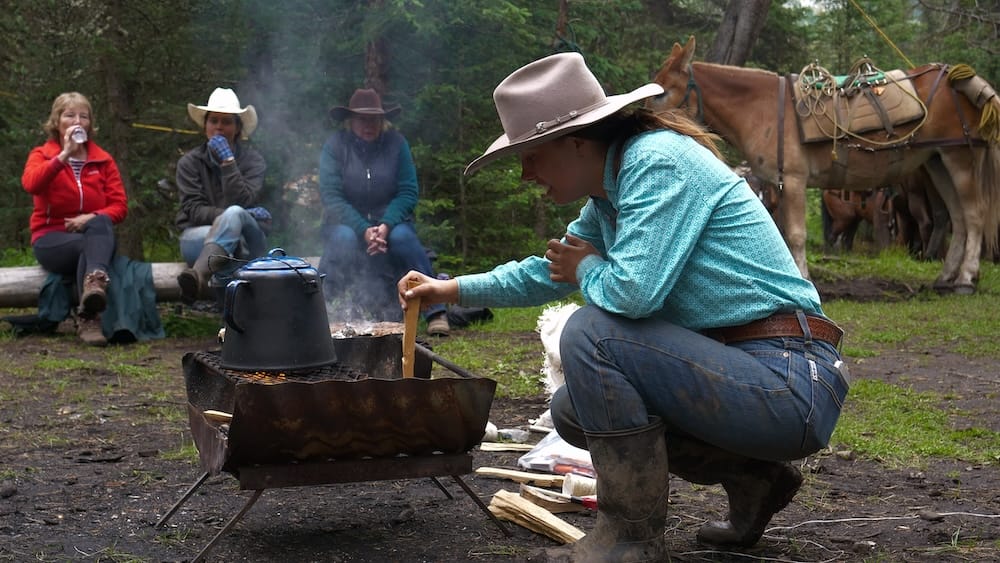
This was not six days of eating the same thing in slightly different locations. Sometimes we stopped along the trail and the guides cooked lunch outside, while on other days we carried picnic food because the route took us somewhere that made a full cookout impractical. Then there were the lodge meals, which were another experience entirely: hot breakfasts before riding, proper dinners at the end of the day and communal tables where everybody sat down together.
That variety kept food interesting. If every lunch had been a cold sandwich and every dinner the same giant pot of stew, I probably would have stopped thinking about meals after Day 2. Instead, I started looking forward to eating almost as much as I looked forward to getting off the horse.
The six-day trip is still fully catered, but I would not treat the exact dishes from my experience as a fixed menu. Sundance uses a rotating seasonal menu, and food can change from one departure to another. The examples here are what I actually ate, not a promise that somebody is currently waiting at Halfway Lodge with your future pork chop.
Horseback riding gave me a serious appetite
Horseback riding does not necessarily look exhausting from a distance. You’re sitting down, after all, so how hard can that be? Quite hard on the appetite, apparently.
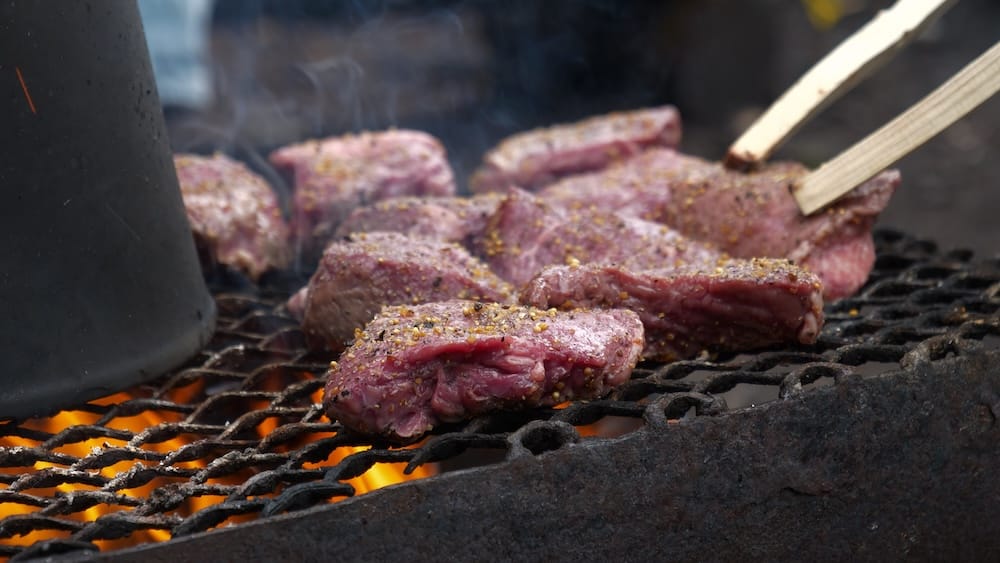
After our first riding stretch, we stopped near Healy Creek and ate steak, potato salad, cowboy coffee and a giant cookie. I had forgotten how hungry riding made me, and at that moment the meal felt less like a pleasant extra and more like exactly what my body had been waiting for.
That pattern continued through the trip. Big breakfasts made sense before spending hours in the saddle, lunch never felt incidental, and dinner became the reward at the end of the day. During my trip, portions were generous and I could grab more food when I wanted it, so I never finished a meal wondering whether there was a secret second dinner hidden somewhere in the kitchen.
I would keep that in the realm of my own experience rather than calling it an official unlimited-seconds policy, but I certainly never felt underfed.
How does all this food get so far into the backcountry?
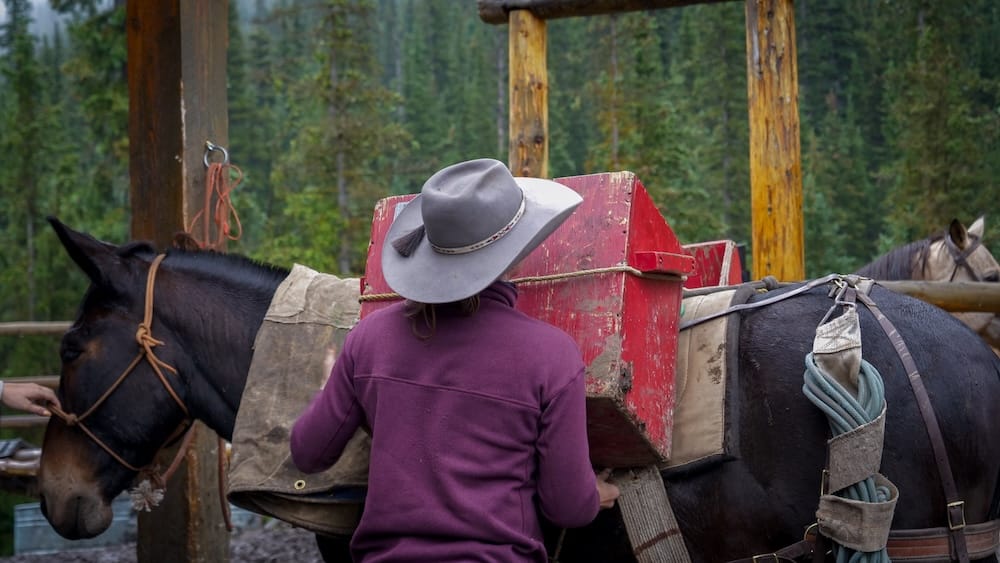
One thing that made the lodge meals more impressive was understanding how remote the whole setup actually was. Banff Trail Riders uses backcountry packers and mule strings to move groceries and other supplies between the lodges, with food travelling alongside baggage, bedding, propane and the rest of what is needed to keep these places functioning.
That is worth remembering when you’re sitting at Halfway eating a proper dinner. This is not a restaurant in Banff where a delivery truck can pull up behind the kitchen every morning, and it also explains why meal planning needs some structure. When groceries are being packed into the backcountry, there is naturally less room for improvising completely different meals at the last minute.
Outdoor meals: grilled steak wins, but packed food has a job
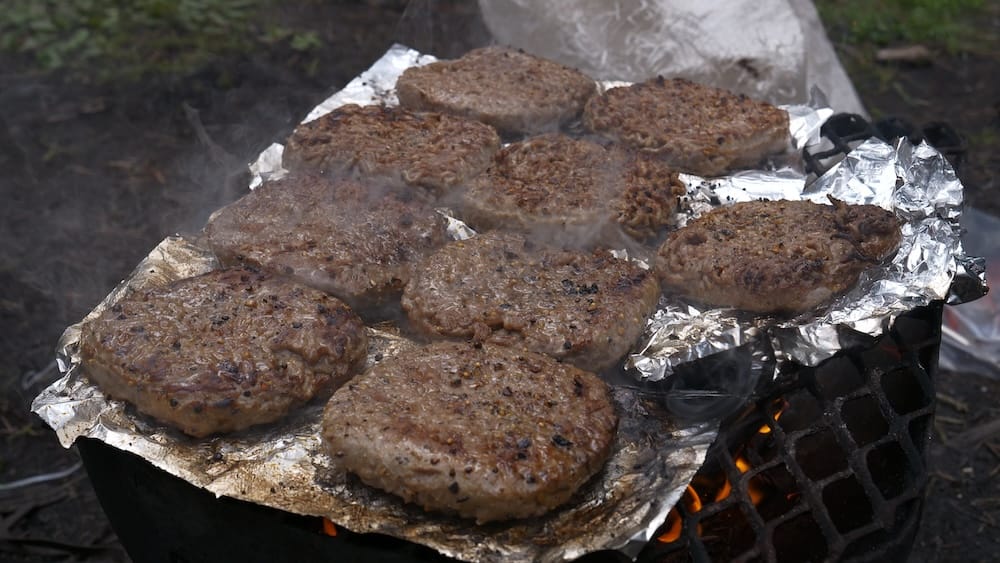
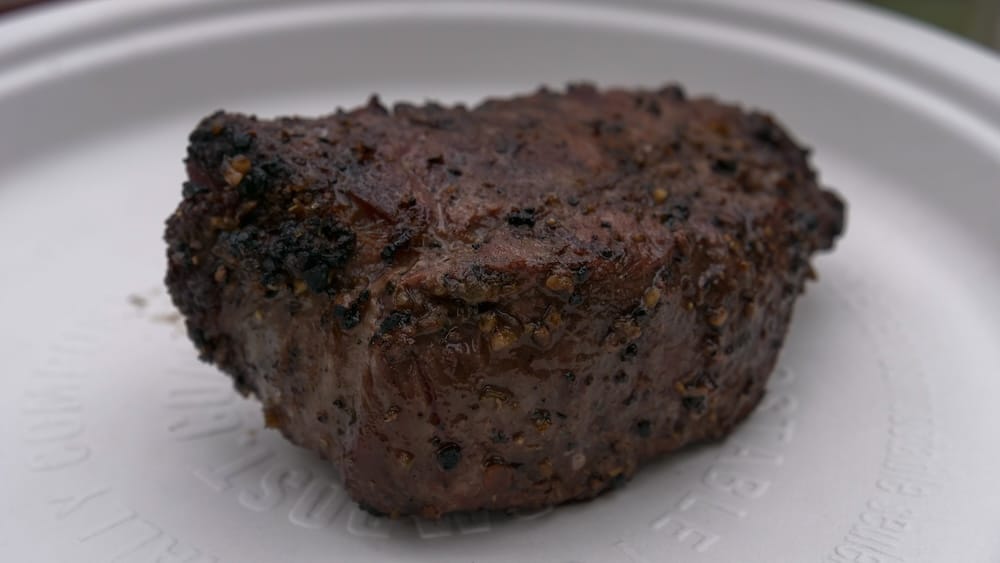
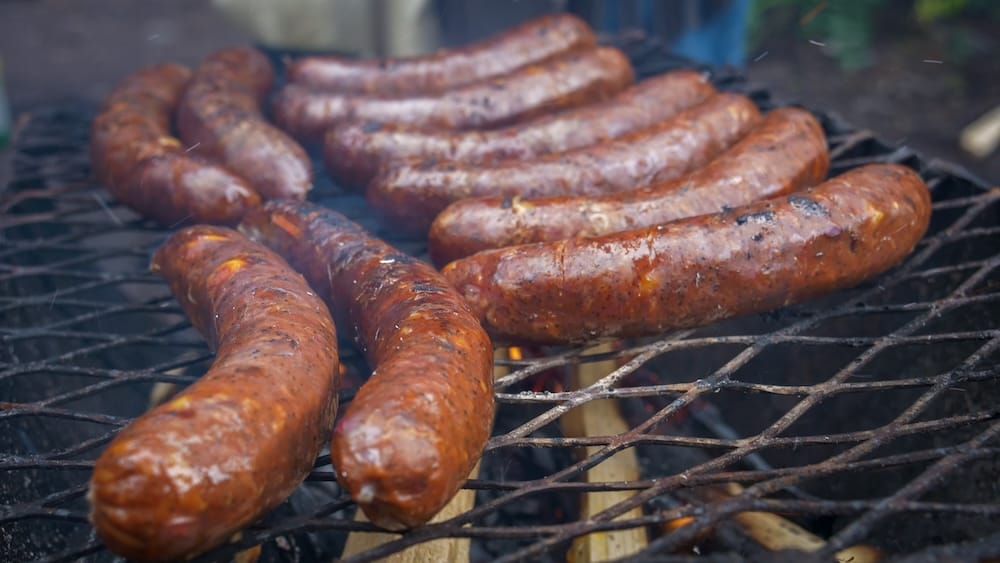
My favourite trail lunches were not difficult to identify. The first big one was steak, potato salad and cowboy coffee, while another day we stopped during the ride and had grilled burgers with chips and Snapple, followed by coffee mixed with hot chocolate.
Those lunches were fantastic, partly because the food itself was good and partly because there is something deeply satisfying about watching meat cook outside when you’ve already spent hours on a horse. The current itinerary still includes different types of trail meals, including an outdoor cookout and picnic-style lunches, so the basic format remains varied. What I would not do is assume every cooked lunch will be exactly what I had; steak and burgers were highlights from my trip, not permanent menu promises.
Packed lunches were less exciting—and I was completely fine with that
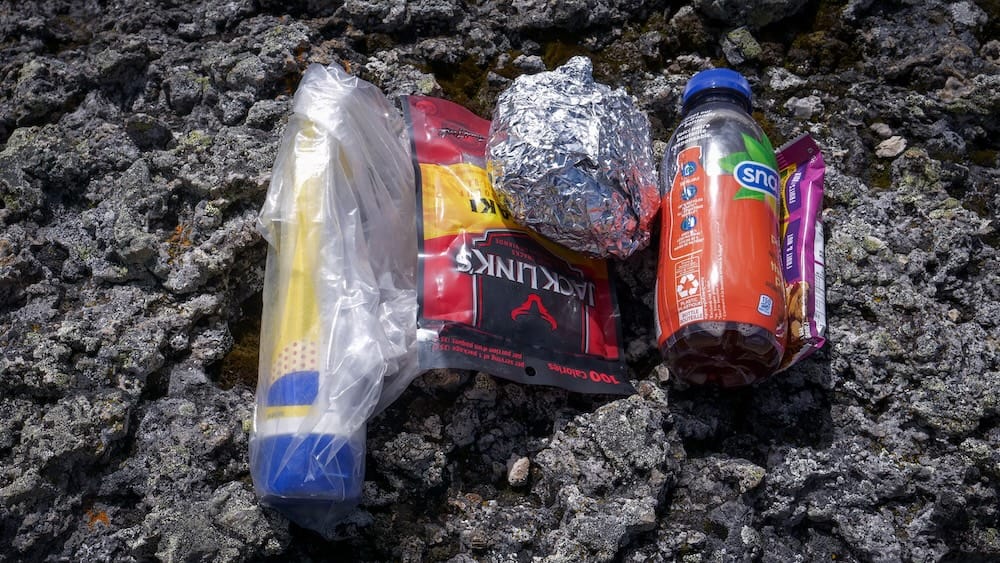
Some days were simply better suited to portable food. For Allenby Pass, we prepared sandwiches before leaving and carried things like jerky, granola bars and drinks. On another riding day I had a deli-meat sandwich with extra bacon, while our Lake Matthias hiking day involved a picnic once we reached the lake.
Was a sandwich as exciting as grilled steak? No. I’m not going to insult the steak by pretending otherwise, but judging those meals purely by what was on the plate misses the bigger picture. Allenby was the biggest mountain riding day of my trip, and Lake Matthias took us deep into a remote basin on foot. In those situations I would much rather eat practical food somewhere spectacular than have the day’s route compromised because lunch needed to happen beside a grill.
For me, that was the correct trade-off: the grilled lunches won on food, while the packed lunches helped make some of the best days possible.
Sundance Lodge food was far better than I expected
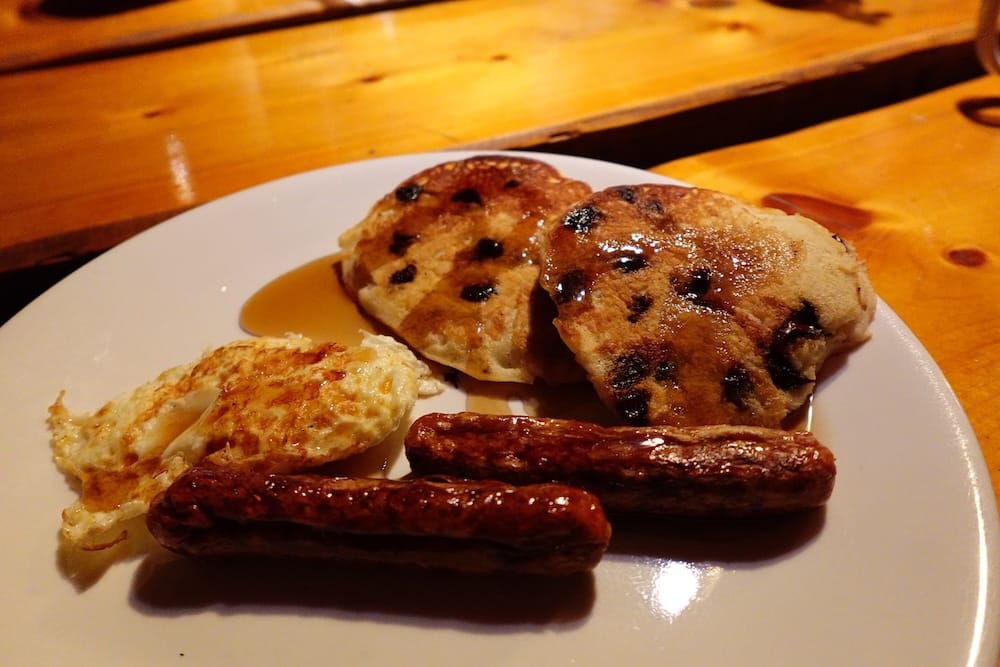
Sundance was where my original idea of “backcountry food” really started to fall apart. One morning we had potatoes, eggs, bacon and homemade chocolate-chip muffins, and on my final morning there breakfast included eggs and pancakes absolutely drowned in syrup. Nobody was pretending breakfast needed to be restrained.
After several hours of riding the previous day and another full day ahead, that kind of meal made sense. It was warm, substantial and satisfying without feeling like somebody had designed a sports-nutrition spreadsheet and forgotten that food should also taste good.
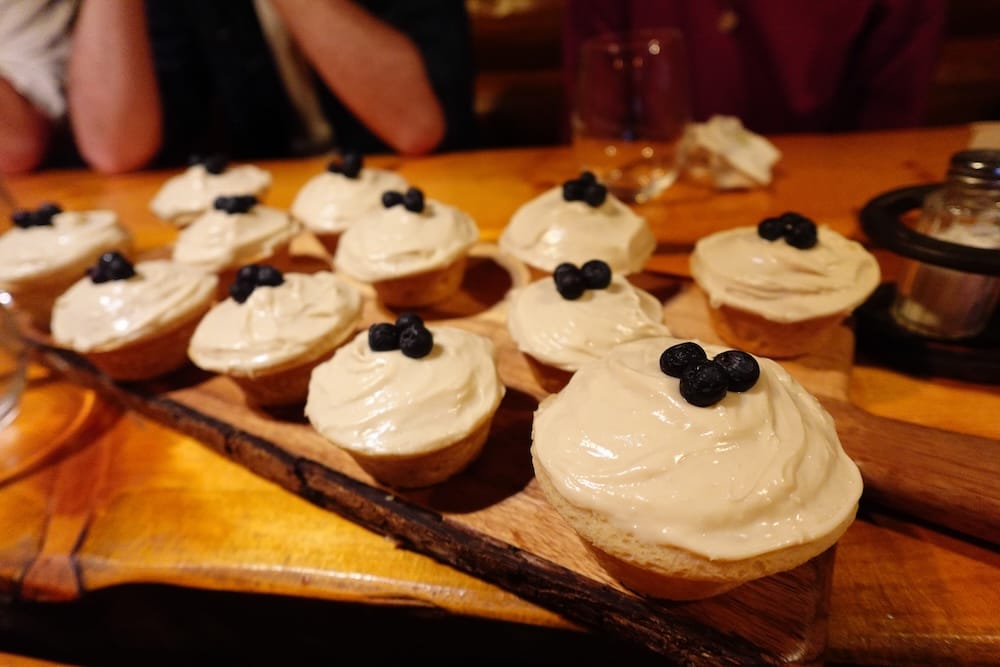
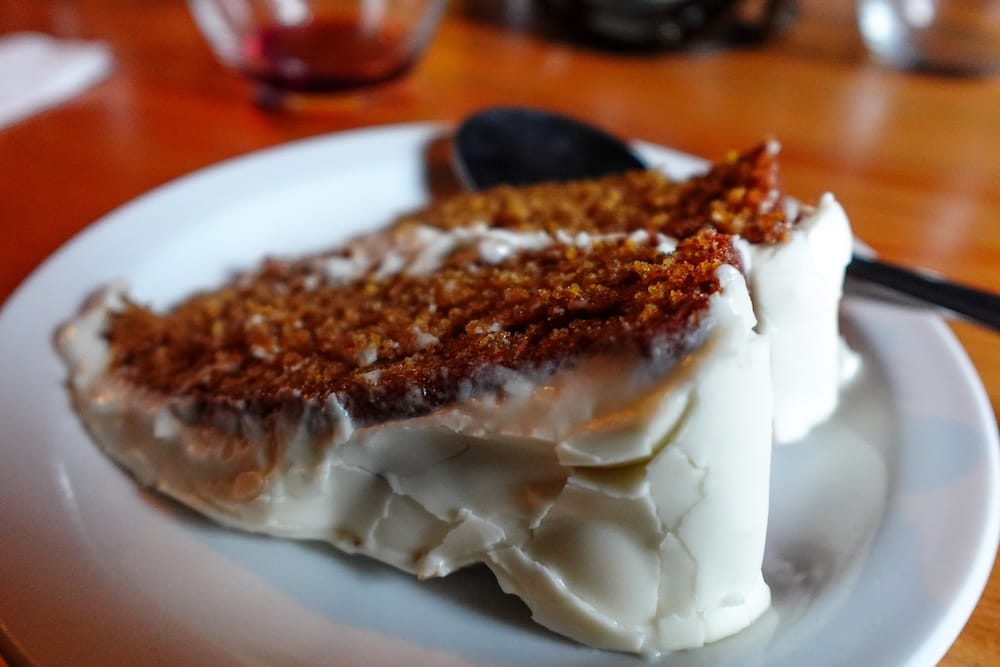
Dinner pushed things even further. One Sundance meal included soup and salad, then salmon, rice and garlic bread, followed by a cupcake with cream-cheese topping. When I came back to Sundance later in the trip, dinner was brisket, Yorkshire pudding, roasted potatoes and carrots, followed by an apple-crumble muffin. I had never eaten an apple-crumble muffin before, but I was willing to continue the relationship.
The current Sundance menu rotates seasonally, so individual dishes will change. What stuck with me was not one specific plate anyway; it was the fact that this felt like proper lodge cooking rather than survival food dressed up for tourists.
The communal table mattered too
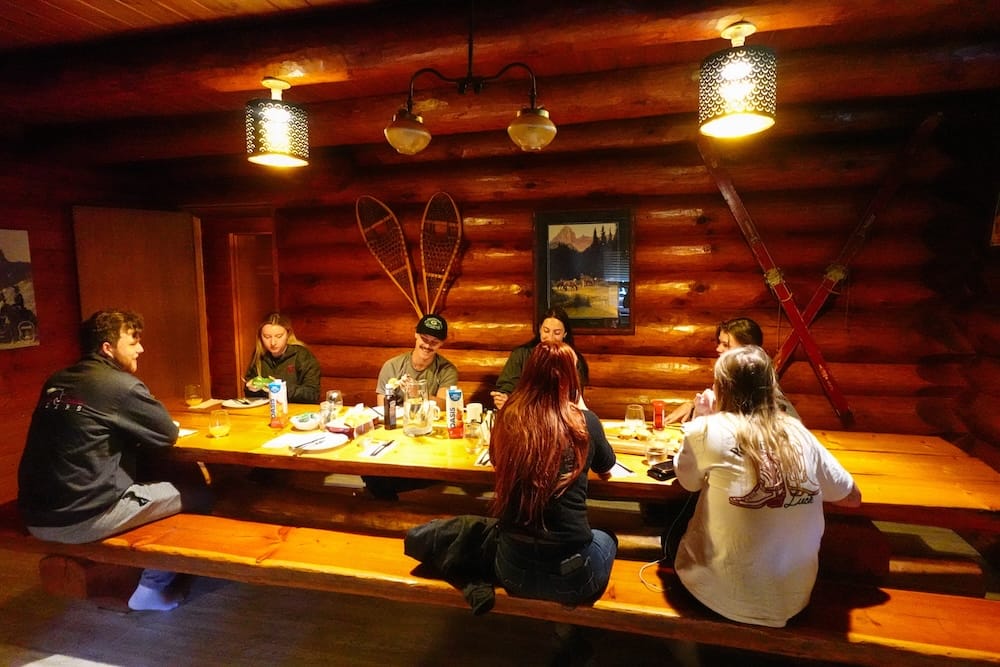
Sundance also introduced the social side of eating that became more important as the trip went on. Everybody gathered around a large log table for meals, and dinner rarely felt like a quick transaction. People lingered while we talked about the day’s riding, the horses, the weather, whatever had happened on the trail and whatever nonsense came up once everyone had eaten enough to relax.
That changed how I remember the food. If the exact same salmon dinner had been handed to me alone on a tray, it still would have tasted good, but it would not occupy the same place in my memory. The communal part was half the point.
Halfway Lodge was my clear food winner
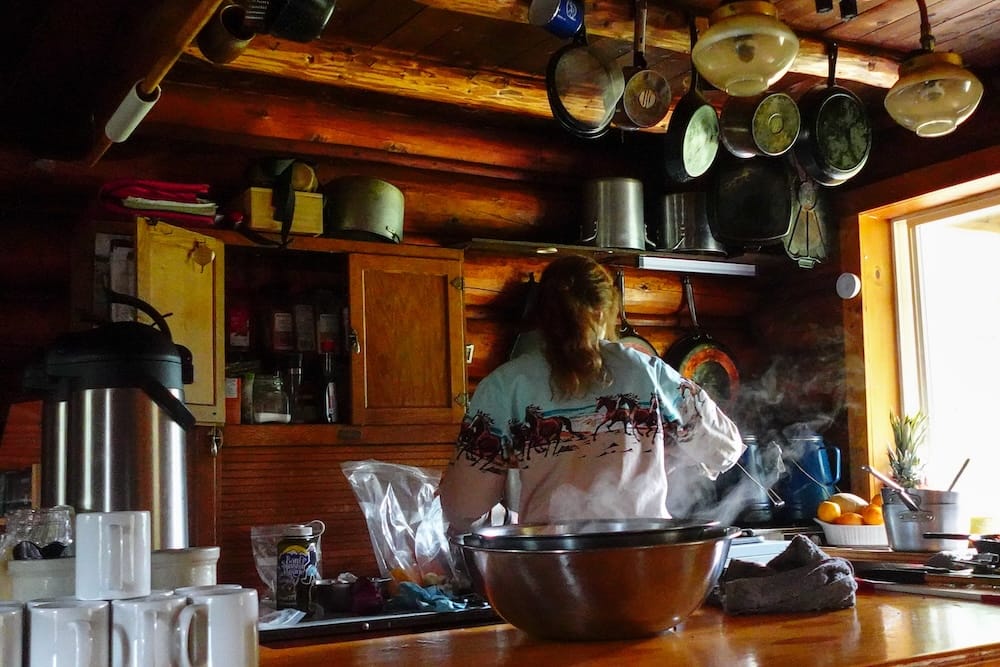
I really liked the food at Sundance, but I liked Halfway more. The difference was not that Halfway suddenly became some kind of fine-dining lodge in the wilderness; it was almost the opposite. The meals felt closer to what you would hope somebody might cook for you at home when they know you’ve been outside all day and intend to make absolutely sure you leave the table full.
One breakfast before Allenby included three cups of coffee, chocolate-chip banana pancakes, scrambled eggs and a pork chop. Another morning started with French toast, maple syrup and bacon, which is the sort of breakfast I can get behind when the day’s transportation has four legs.
The dinners had a real home-cooked feel
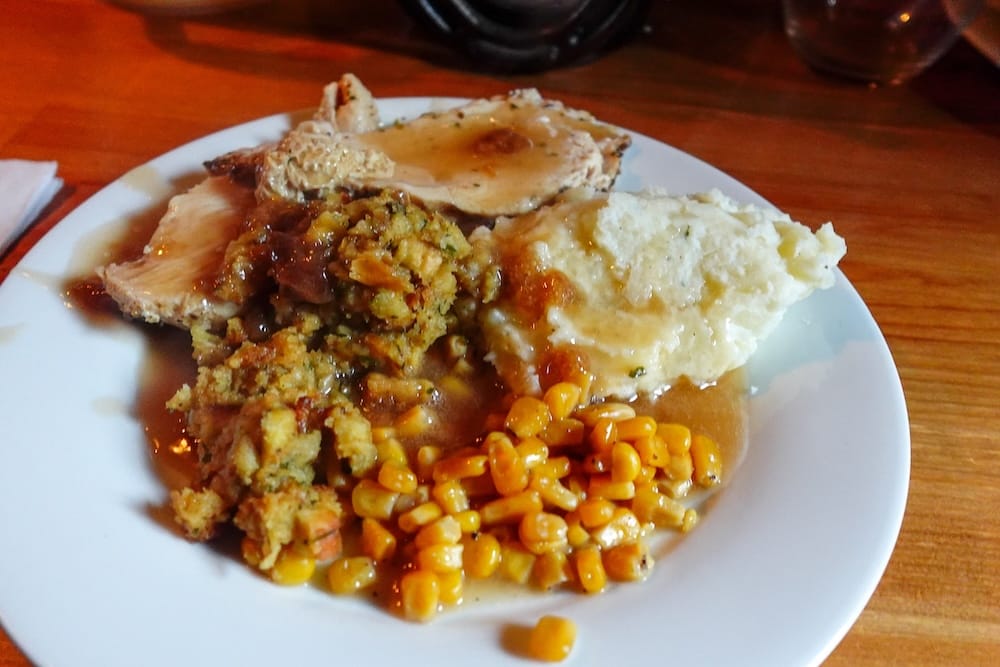
One night we had turkey, gravy, potatoes and stuffing. It was basically a full comfort-food dinner in the middle of the Banff backcountry, and I remember thinking that nothing had been spared. Another evening started with potato-leek soup and Caesar salad with bacon, followed by chicken and ravioli, then chocolate cake and wine. On another night we had glazed ham with scalloped potatoes.
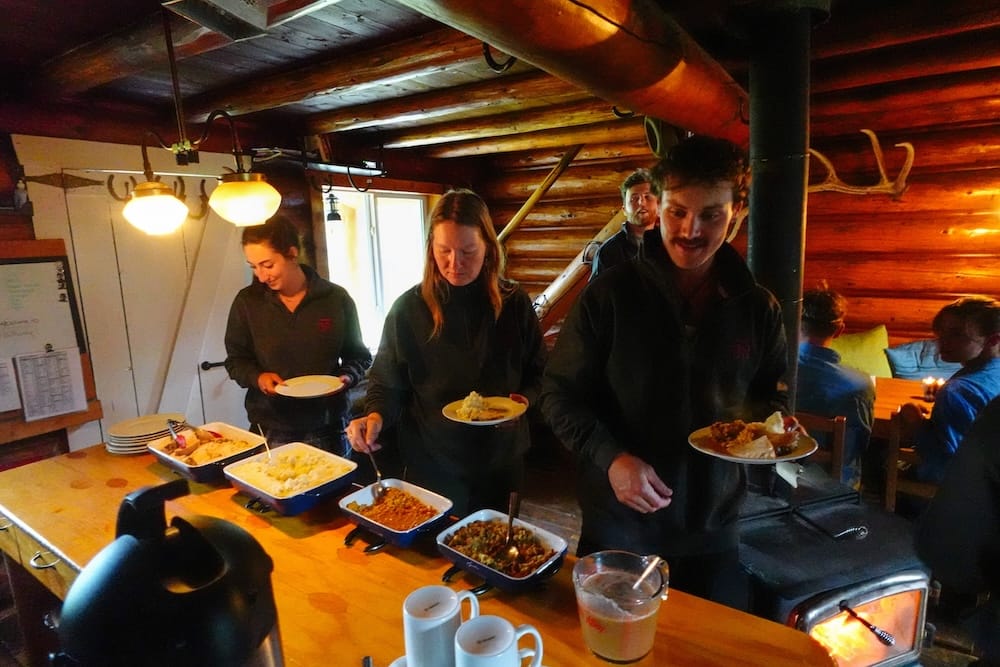
This is what I mean when I say the Halfway food felt like grandma’s special recipes. I’m not claiming anybody’s grandmother was actually responsible for the menu; it just had that quality—familiar, generous, home cooked and seemingly designed around the belief that hungry people should be properly fed.
That suited Halfway perfectly. The lodge itself felt more remote and rustic than Sundance, so sitting down to this kind of dinner created a funny contrast: you had spent the day riding deep in the mountains, and then suddenly there was hot food, wine and dessert waiting at the table. I loved it.
Halfway also understood dessert
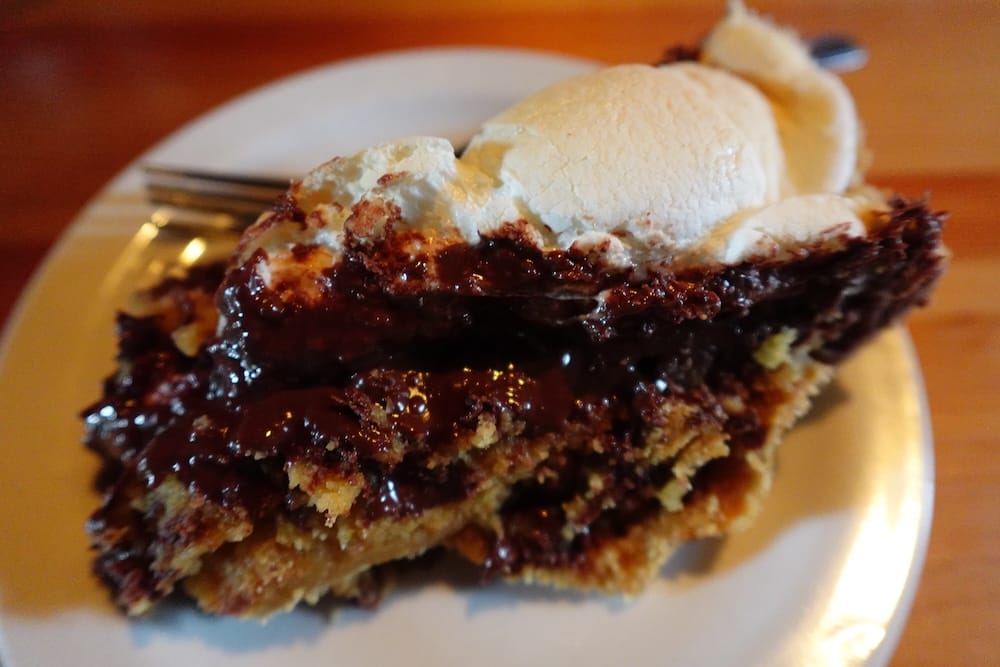
The s’more bake has not left my memory. It was something like a thick chocolate-chip-cookie base with melted marshmallow on top, and at the time I called it possibly the most decadent dessert of the entire trip. I stand by that assessment.
There was chocolate cake on another night too, so by this point any remaining fantasy I had about nobly roughing it in the Canadian wilderness had been thoroughly destroyed—and I was perfectly okay with that.
Food, wine and conversation became part of lodge life
Some of my strongest food memories are not about individual dishes at all; they’re about what happened after the food arrived. At Halfway, the kitchen, dining area and common room flowed together around the wood stove, so we’d eat, have drinks, talk and swap stories without any reason to rush elsewhere because there really wasn’t anywhere else to go.
That is one of the pleasures of being somewhere this remote. The day’s riding is done, the horses are resting and nobody is disappearing into town for the next attraction, so you stay put and enjoy the evening.
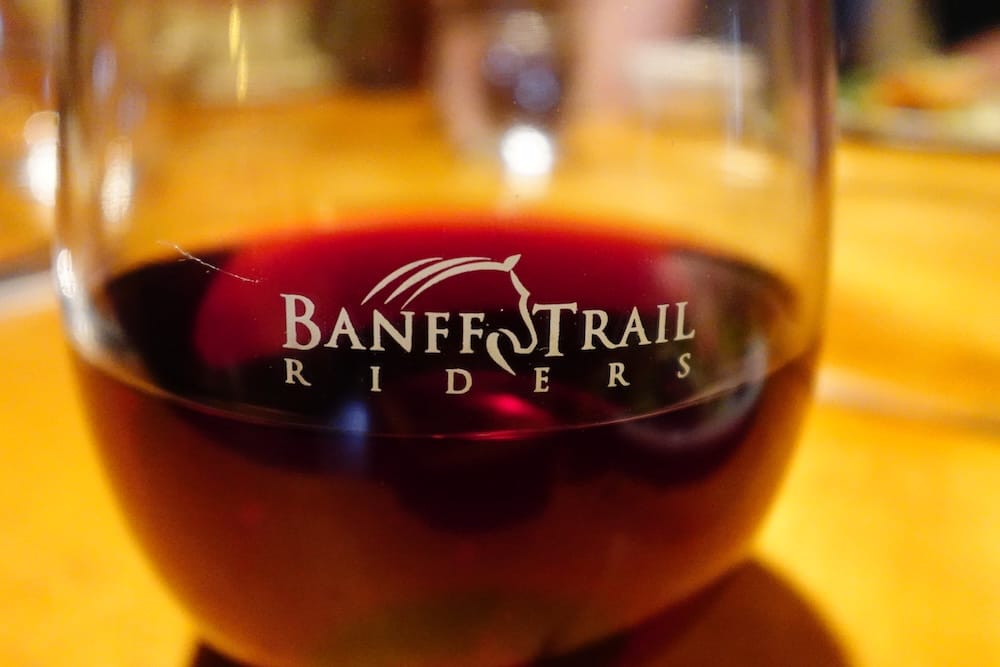
Wine was part of that experience for me, but I would not interpret that to mean alcohol is included with the trip. Banff Trail Riders currently sells a limited selection of alcohol at both Sundance and Halfway.
Our final evening at Sundance followed the same basic rhythm. Dinner eventually turned into hanging around together and playing Spoons, a card game I had never played before. I was atrocious during the practice rounds, somehow improved rapidly and eventually won. From disaster to champion in one evening—I’m not giving the brisket full credit for that turnaround, but I’m also not ruling it out.
What about dietary restrictions?
This is the one part of the food experience where my personal usefulness drops considerably. I eat basically everything, so I did not need a special menu and wasn’t paying close attention to how dietary accommodations worked during my trip.
The current setup is much clearer. Banff Trail Riders lists four backcountry menu choices: Backcountry Deluxe, Vegetarian, Vegan and Gluten Free, with Vegan and Gluten Free options carrying an additional charge.
Those choices are important because the kitchens are remote and resources are limited. Requests outside the set menus are not something travellers should assume can be accommodated, and the kitchens contain common allergens including dairy, wheat, soy, sesame, mustard, garlic, tree nuts, peanuts and eggs or egg products.
If you have a serious allergy or dietary requirement that goes beyond choosing one of the established menus, this is something I would sort out before committing to the trip rather than hoping it can be improvised once you’re already in the backcountry. You can check Banff Trail Riders’ current food and dietary information before booking because these details can change.
My Banff Trail Riders food verdict
I went into this trip expecting food to be one of the practical necessities of spending six days on horseback, but it became one of the pleasures. The grilled steak and burgers were my favourite outdoor lunches, while the packed meals made sense on days when going deeper into the mountains mattered more than having the fanciest possible lunch. Sundance surprised me with how substantial the cooking was, and Halfway won me over with dinners that felt genuinely home cooked.
Food also became something bigger than the dishes themselves. It was hot breakfast before heading out, dinner after being in the saddle all day, wine around the table, conversation by the stove and the strange pleasure of realizing that somewhere this remote could still feed you extremely well.
By the end, I wasn’t merely satisfied with the food. I was actively looking forward to the next meal, and I would have happily stayed at the lodges a few extra nights just to keep eating.
If the food experience described here sounds like your kind of trip and you’re already considering the full backcountry itinerary, you can see current dates and availability for the six-day Halfway Lodge trip.
Frequently Asked Questions
What kind of food did I eat on the six-day Banff Trail Riders trip?
My trip included grilled outdoor lunches, packed trail food, hot lodge breakfasts, substantial dinners, desserts, coffee and wine. The exact dishes varied by setting, with Sundance and Halfway Lodges providing the most substantial meals.
Are the meals the same on every Banff Trail Riders trip?
No. The dishes in this article are examples from my own trip, not a fixed menu for every departure. Sundance uses a rotating seasonal menu, so future guests should expect the specific meals to vary.
Was there enough food after long days of horseback riding?
During my trip, yes. Portions felt generous, I could grab more food when I wanted it, and I never felt underfed after riding. I would treat that as my experience rather than an official unlimited-seconds policy.
Which had better food, Sundance Lodge or Halfway Lodge?
I ate very well at both, but Halfway Lodge was my clear food winner. The meals there felt especially generous and home cooked, which suited the more remote and rustic lodge setting.
Can Banff Trail Riders accommodate dietary restrictions?
The current backcountry menu choices listed in the article are Backcountry Deluxe, Vegetarian, Vegan and Gluten Free, with Vegan and Gluten Free options carrying an additional charge. Requests outside the set menus should not be assumed to be available, and the kitchens contain common allergens.
Is wine included with the backcountry trip?
Wine was part of my own lodge evenings, but I would not assume alcohol is included. The article notes that Banff Trail Riders currently sells a limited selection of alcohol at Sundance and Halfway.
This article is also available in Spanish. [Leé la versión en castellano: Reseña de la comida de Banff Trail Riders: ¿qué se come en una travesía a caballo por el backcountry?]
Disclosure: My six-day trip was hosted as part of a partnership with Banff Trail Riders. The departure also included other content creators. All experiences and opinions described here are my own.
This article contains affiliate links. If you book through one of these links, I may earn a commission at no extra cost to you.