
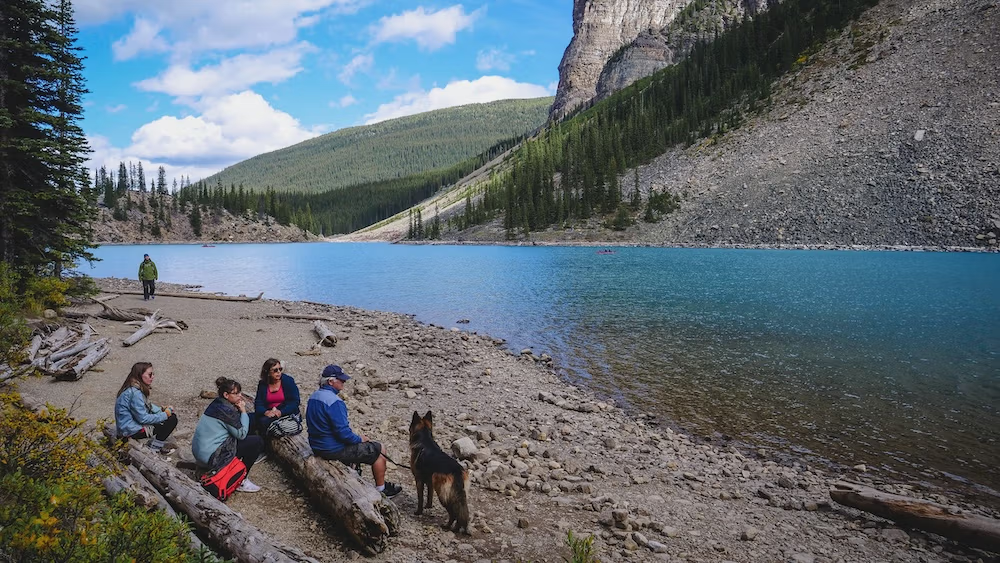
“Multigenerational” gets used to describe any trip with more than two generations in it, as if that covers one kind of situation. It doesn’t. Audrey and I have traveled to Banff with her parents twice, years apart, and the group looked nothing alike either time. The first was a week-long road trip with both her parents, before we had kids. The second was a single guided day with her dad and our daughter Aurelia, then a toddler. Same province, same couple making the call, completely different trip. What actually changed between those two — and why — is a more useful guide than a generic “grandparents and grandkids” checklist, because it isn’t really about which activities everyone can supposedly enjoy together. It’s about matching the format of the trip to who’s actually in the car.
What “Multigenerational” Has Meant for Us, Twice
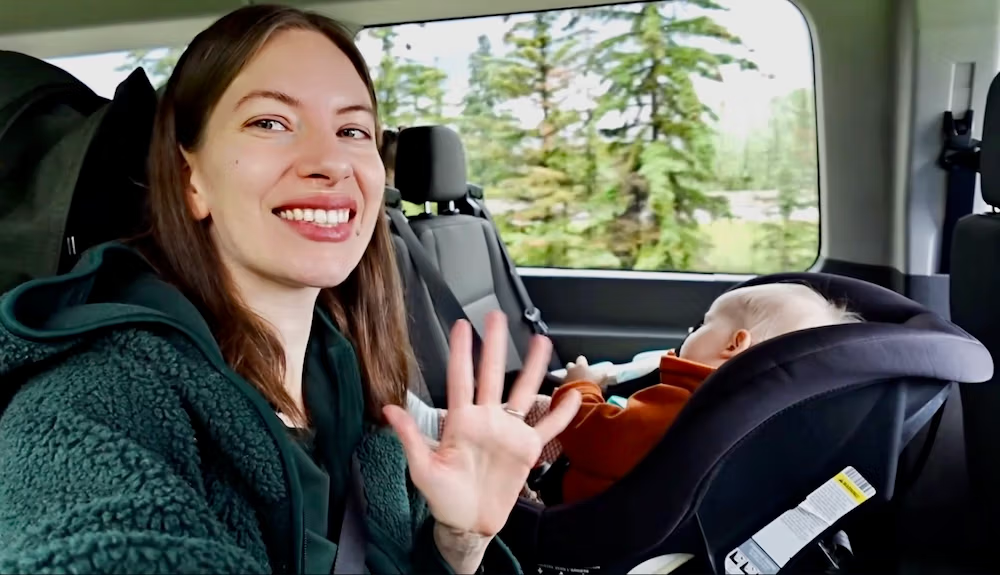
On the first trip, it was Audrey and me plus her mother and father — no kids yet, four capable adults each managing their own day. On the second, years later, it was Audrey and me plus her father, Daniel, and our toddler daughter, Aurelia. Audrey’s mother wasn’t part of that second trip. What matters is that “multigenerational” meant something structurally different each time. Once, it meant four adults who could each look after themselves. The second time, it meant a toddler who needed carrying and a grandparent who needed paced breaks, traveling alongside two parents trying to make the day work for both of them at once.
When Everyone Could Set Their Own Pace
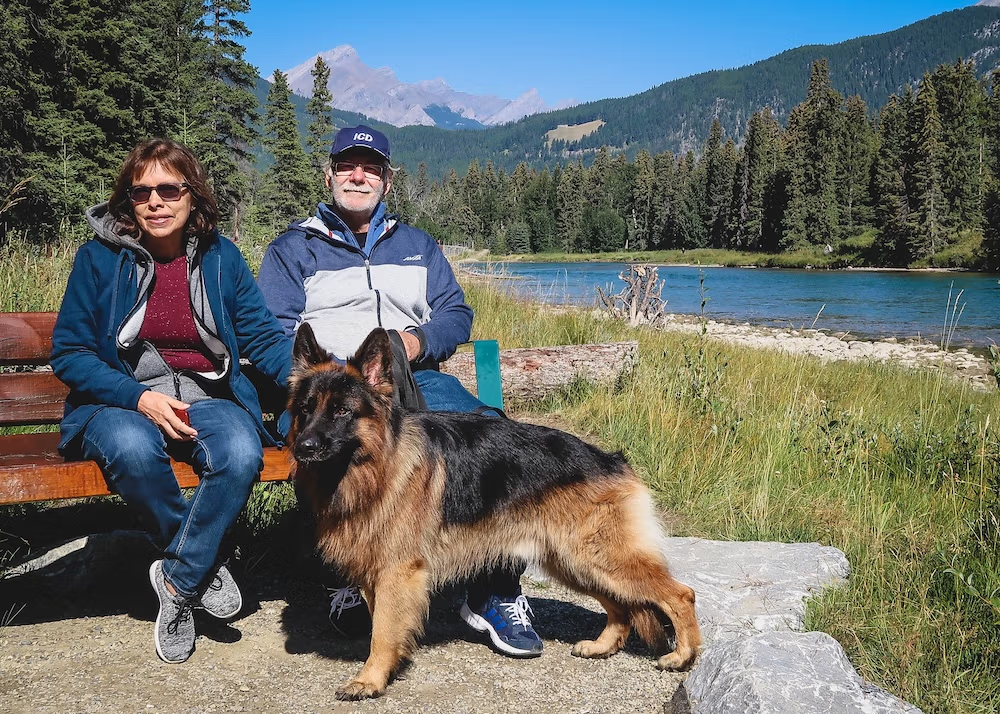
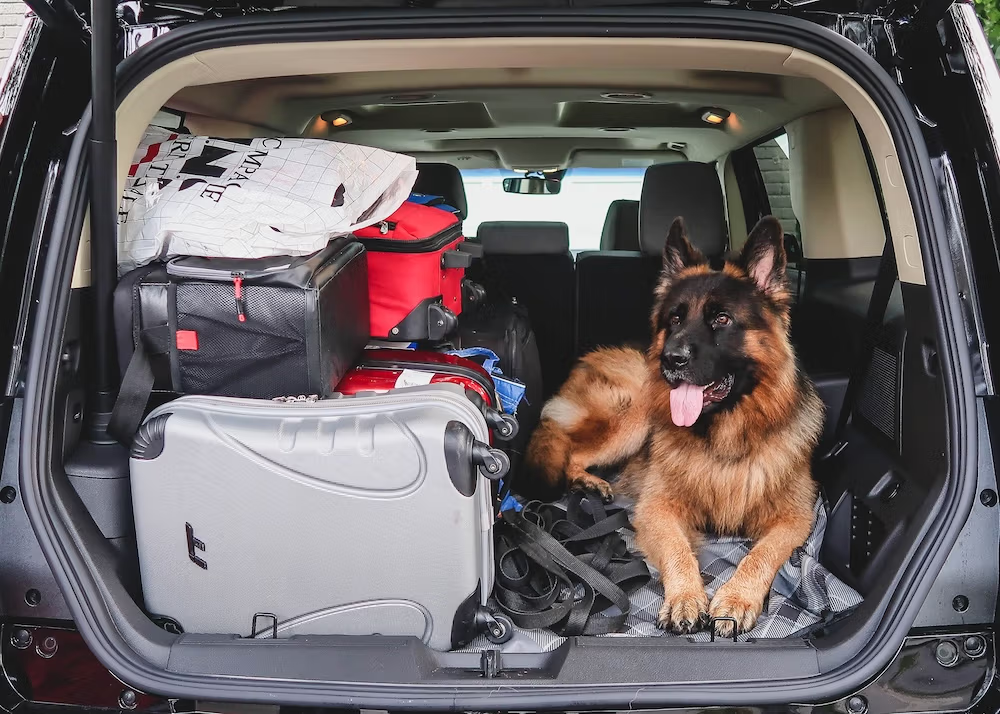
The road trip was a real undertaking before we’d even reached Alberta — four and a half days of driving from Ontario, our dog Togo riding along for the whole thing. We had a full week in the Rockies once we arrived, splitting time between Alberta and British Columbia, and the entire trip ran on independent logistics: we drove ourselves everywhere, picked our own stops, and adjusted the plan as we went. Audrey’s dad had wanted to visit the Rockies for years, and when I asked him about it on camera at the time, his answer was about as simple as it gets. Yeah, that’s true, he said. I always wanted to come. That’s the kind of unforced enthusiasm you get when nobody in the group needs anything special accommodated — everyone just shows up and has a good time.
Not that the trip was friction-free. At a lookout in Kootenay, Audrey’s parents realized they’d forgotten Togo’s collar and ended up improvising a leash wrapped around his body, since every dog in the park has to stay leashed. It’s a small memory, but it’s the right kind of small — an ordinary logistics hiccup that four independent adults sort out in five minutes and then forget about. Nobody needed extra rest, nobody’s pace held anyone else up, and our days at Lower and Upper Kananaskis Lakes — hiking, picnicking, letting Togo splash around in water cold enough that I was surprised he didn’t seem to mind — ran exactly the way you’d expect an able-bodied group of four to run them: at whatever speed felt right in the moment.
What Changed: A Toddler and One Grandparent, Not Two Independent Adults
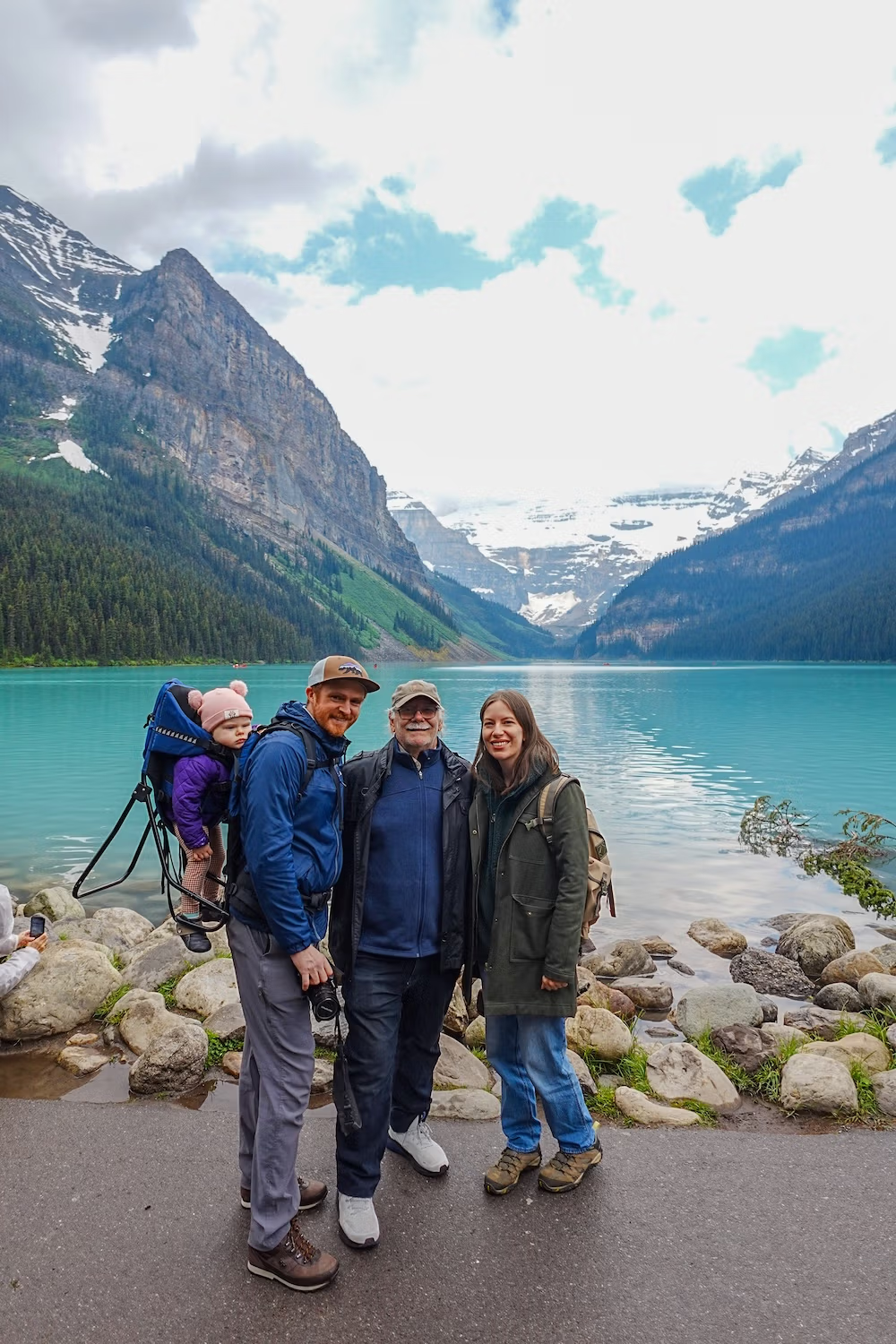
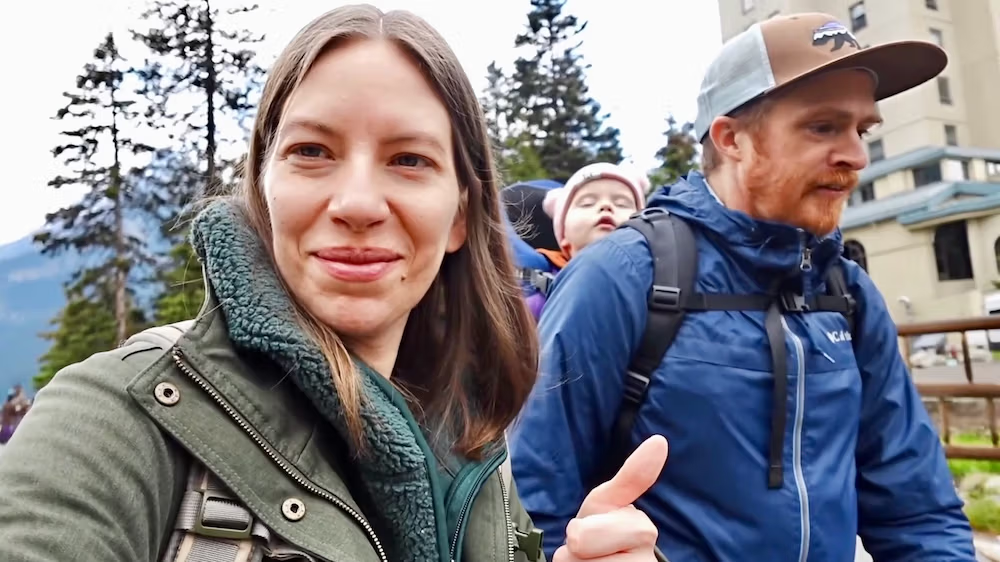
Years later, the group looked completely different. Audrey and I traveled with her father, Daniel, and our daughter, Aurelia, then a toddler, on a single private guided day around Lake Louise and Moraine Lake. I’ve written elsewhere about what that day actually involved — carrying Aurelia up the Fairview Lookout climb in a backpack carrier while Daniel worked his way up the same trail at his own pace, needing a few breaks along the way. The short version that matters here is this: for the first time, the people in our group weren’t just moving at different speeds out of personal preference. One of them physically needed to be carried, and the other genuinely needed rest breaks built into the day rather than offered as an afterthought.
Why the Format Had to Change Too
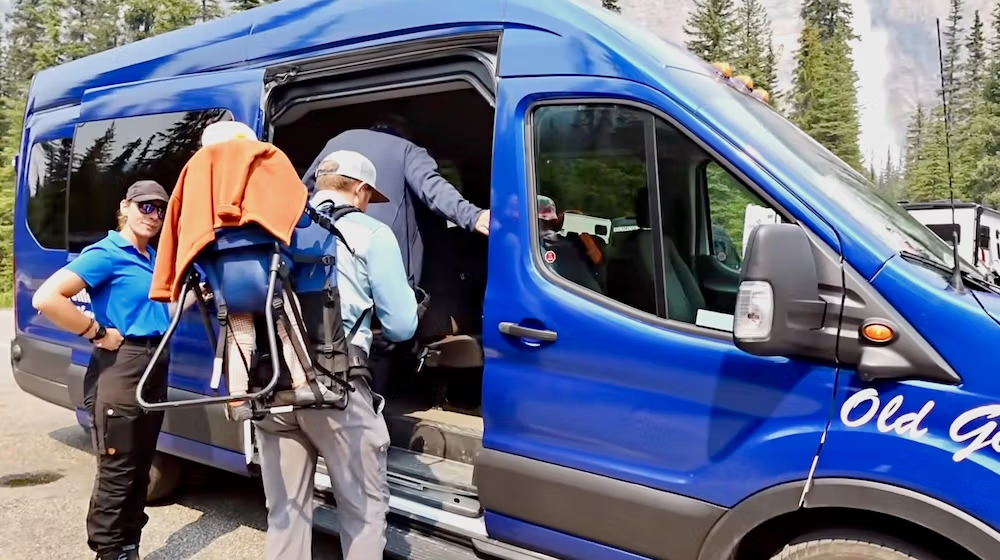
This part took me a while to connect properly, so let me lay it out plainly. The road trip worked as a self-drive trip because everyone in the group could manage their own logistics. The guided day worked as a guided day for the opposite reason — because nobody in that second group could, or should have had to, manage everything themselves. A toddler can’t drive herself anywhere and doesn’t negotiate a shared itinerary. A grandparent pacing himself up a steep trail needs the group’s schedule to bend around him, not the other way around. Self-drive travel is genuinely great when a group can share the logistical load; the moment that stops being true, the same freedom that made the first trip so easy starts creating friction instead. One thing that comes up constantly in family road-trip advice is bringing a second vehicle specifically so someone can leave early once the group’s needs pull apart — which is really just an admission, dressed up as a tip, that self-drive gets more complicated, not less, the further apart everyone’s pace gets. Going private for a single guided day sidestepped all of that: it let someone else absorb the logistics, so our actual job for the day was responding to Aurelia and Daniel, not simultaneously driving, navigating, and rebuilding the plan every time one of them needed something. If a similar day sounds like the right fit for your own group, you can see current availability for a private Lake Louise and Moraine Lake day before deciding whether it’s worth the premium over driving yourselves.
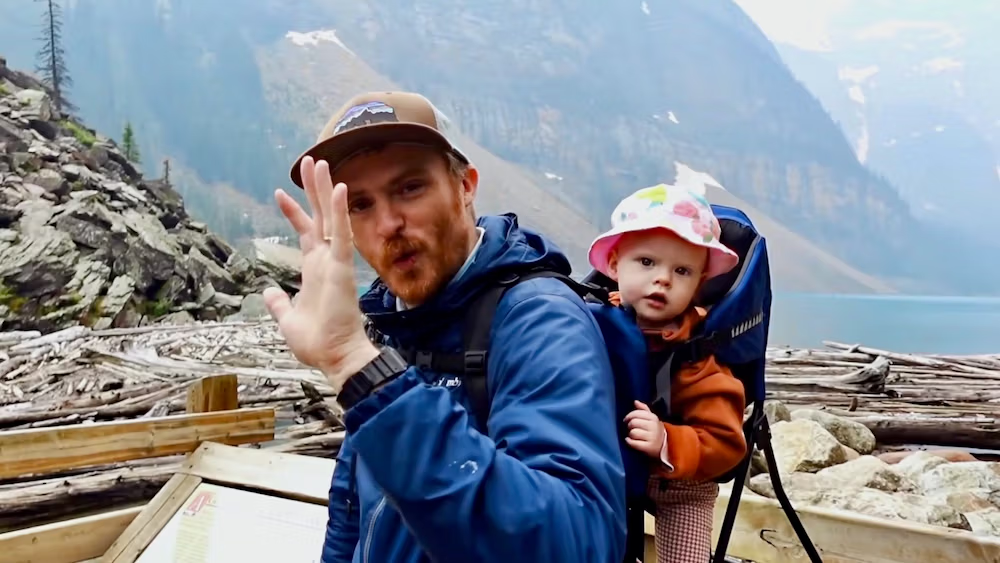
There’s a scheduling pattern underneath this too, one I only noticed once I started comparing the two trips directly. Mornings work for both a toddler and an older adult for roughly the same reason — it’s usually when a small child’s alertness and an older adult’s energy are both near their peak — while afternoons are better reserved for rest, whether that means a nap or just sitting down for a while. It’s a small thing, but it means the toddler and the grandparent in a group aren’t actually working against each other on a well-structured day. More often than not, they’re quietly on the same schedule, even if nobody planned it that way.
Sizing Up Your Own Group Before You Decide
If you’re trying to figure out whether your own Banff trip should be self-drive or guided, I wouldn’t start with a list of activities everyone might enjoy — that’s the part every generic multigenerational guide already covers. I’d start with a few honest questions about the group itself:
- Can everyone realistically manage their own pace for a full day, or is there someone — young or old — whose needs will keep changing what the rest of the group can do?
- Is there a napper in the group, and does your plan actually protect that window, or is it just hoping the timing works out?
- Does anyone need paced rest breaks on a climb or a long walk, and if so, will a group tour actually wait for that, or will your family end up quietly holding everyone else up?
- Could your group realistically manage with one vehicle for the day, or would you need two so someone can leave early?
If most of those answers point toward “everyone’s roughly fine,” a self-drive trip will probably feel like the freedom ours did the first time. If even one or two point the other way, that’s usually the moment to consider a private or guided day instead of assuming independence will work out. It isn’t a judgment on anyone’s fitness or energy — it’s just recognizing that a trip built for four capable adults and a trip built around a toddler and a grandparent are solving different problems, even when the destination is the same lake. If your checklist points toward guided, it’s worth taking a look at what’s actually out there before you commit either way — you can browse current guided and private Banff National Park tours and filter for the private option if that’s what your group’s pace calls for.
What We’d Actually Tell Other Families
Neither trip beat the other. Both worked, on their own terms, for the group we actually had at the time. What I’d tell another family is that the format isn’t a decision you make once and reuse. Our own group changed between those two trips — new people joined, others didn’t, and the needs riding along in the car were nothing alike — and the format changed right along with it. If your family’s multigenerational trips keep looking different from each other, that isn’t a planning failure. It’s usually just proof the group itself keeps changing, and the smartest thing you can do is let the format change with it instead of forcing the same approach onto a group that’s stopped matching it.
Frequently Asked Questions
What’s the difference between the two Banff trips in this guide?
The first was a week-long, self-drive road trip with Audrey’s parents, before we had kids. The second, years later, was a single private guided day with Audrey’s father, Daniel, and our toddler daughter, Aurelia. Same province, completely different group and format.
Should a multigenerational trip to Banff be self-drive or guided?
It depends on your group. A self-drive trip works well when everyone can manage their own pace and logistics. A guided or private day tends to work better once the group includes someone who needs carrying, paced rest breaks, or accommodations the rest of the group would otherwise have to build around.
Why did a private guided tour work better with a toddler and a grandparent?
It removed the logistics burden from us. Someone else drove, navigated, and adjusted the day, so our actual job was responding to Aurelia’s and Daniel’s needs instead of simultaneously managing the road and rebuilding the plan every time someone needed something.
How do I know if my group needs a guided tour instead of driving ourselves?
Ask a few honest questions: can everyone realistically keep the same pace for a full day? Is there a napper whose window needs protecting? Does anyone need paced rest breaks on a climb or long walk? Could the group manage with one vehicle, or would you need two so someone can leave early? If several answers point away from “everyone’s fine,” a guided or private day is usually the better fit.
Do a toddler and a grandparent actually have compatible schedules on a trip like this?
More often than you’d expect. Mornings tend to suit both a toddler’s alertness and an older adult’s energy, while afternoons work better for rest on both ends. On a well-structured day, they end up quietly on the same schedule even without planning it that way.
Is one trip format better than the other for multigenerational travel?
No. Both trips worked on their own terms for the group we actually had at the time. The point isn’t that guided beats self-drive — it’s that the right format depends on who’s in your group, and that can change from one trip to the next.
This guide is also available in Spanish. [Leé la versión en castellano: Guía de viaje multigeneracional a Banff: qué funcionó con una nena y un abuelo]
This article contains affiliate links. If you book through one of these links, I may earn a commission at no extra cost to you.