
Hakodate fooled us a little when we first arrived.
Before visiting, I had mentally filed it as a stop on the way north through Hokkaido. I knew there were some worthwhile sights, we had several days to look around, and I figured the city would be fairly straightforward once we were on the ground. What I underestimated was not the number of attractions so much as the geography connecting them.
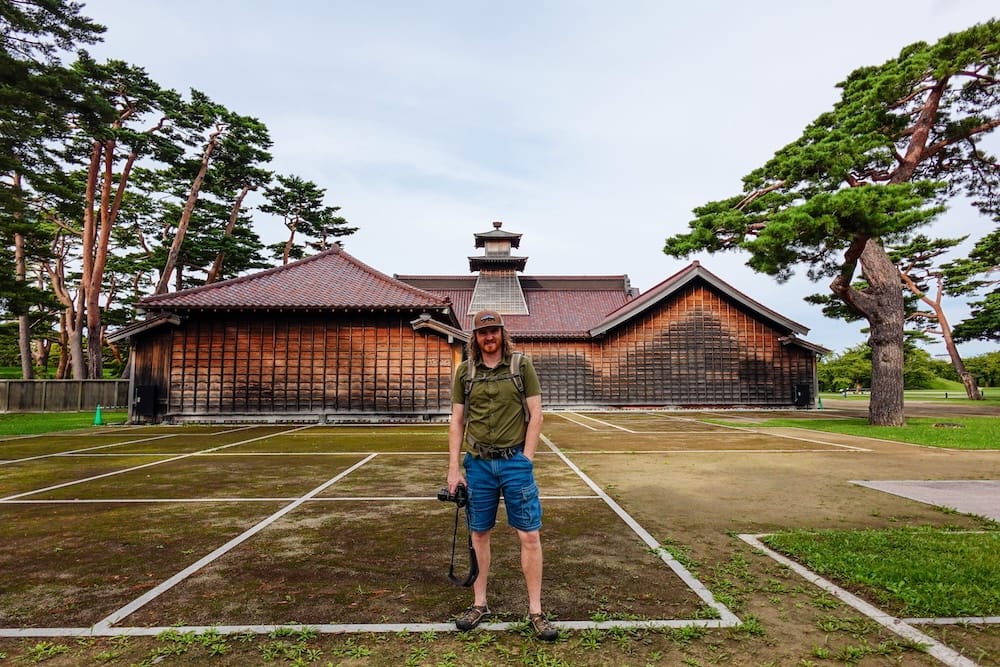
Hakodate is very pleasant to explore on foot, but that does not mean everything sits inside one compact sightseeing centre. You have Hakodate Station and the Morning Market, the waterfront and Bay Area, the hills and historic streets of Motomachi, Mt. Hakodate, and then Goryokaku in a different part of the city. Yunokawa stretches the visitor map farther east again.
We understood this much better after riding up Mt. Hakodate. Until then, Audrey and I had mostly been experiencing the harbour side of the city. From above, Hakodate suddenly looked far bigger and more varied than the place we thought we had been walking around.
That ended up being the most useful lesson from our first visit. Hakodate is not difficult to navigate, but it becomes much easier once you understand how its pieces fit together. Walk a lot, because this is a great city for it, but use the tram before your legs become collateral damage. Save some energy for Motomachi’s hills, leave room for weather and meals, and do not assume two places are close simply because they both appear on the same Hakodate map.
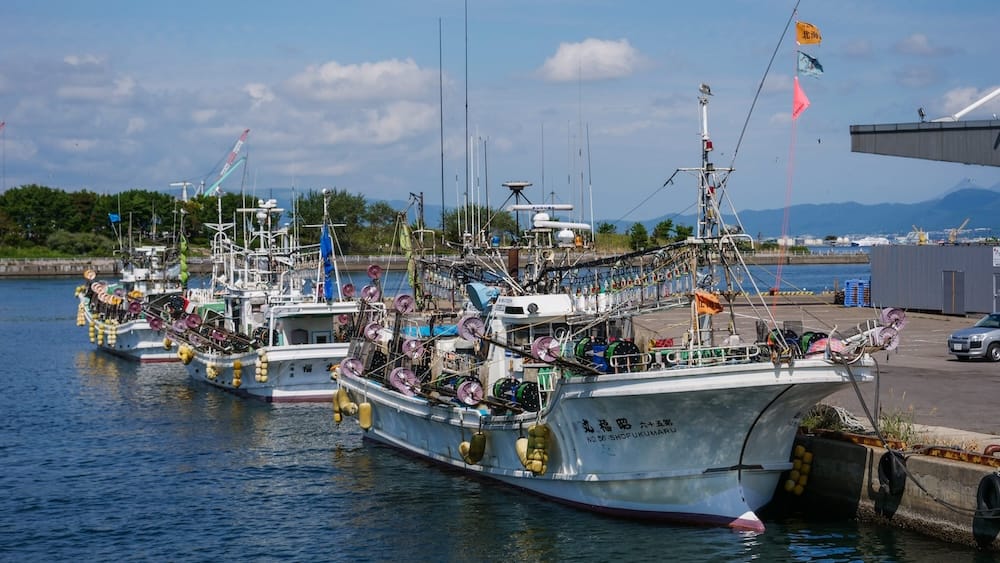
Understand Hakodate’s Geography Before You Plan Anything Else
The easiest way to make sense of Hakodate is to forget about individual attractions for a moment and think in sightseeing areas. You do not need to memorize neighbourhood boundaries; a rough mental map is enough.
| Area | What it means for a first visit | How to approach it |
|---|---|---|
| Hakodate Station & Morning Market | Arrival hub, market and easy early-day sightseeing | Very walkable |
| Bay Area & Waterfront | Harbour walks, warehouses and maritime attractions | Naturally connects with the station area |
| Motomachi & Mt. Hakodate | Historic streets, churches, slopes and Ropeway access | Walk once there, but expect hills |
| Goryokaku | Fort, park and tower in a separate part of the city | Treat as its own sightseeing block |
| Yunokawa | Onsen and accommodation district farther east | Relevant if staying there; not part of our firsthand visit |
The station, Morning Market and waterfront are the easiest pieces to connect. Hakodate Morning Market sits essentially beside Hakodate Station, and from there you can continue toward the harbour and Bay Area without feeling as though you are repeatedly crossing the city.
As you move west, the terrain changes. Motomachi climbs away from the waterfront toward Mt. Hakodate, and this is where you find the famous slopes, churches, historic architecture, harbour viewpoints and lower access to the Ropeway. It feels like a coherent sightseeing area, but a decidedly hillier one.
Goryokaku is different. It is not another attraction you casually add to a Motomachi walk because you still have forty-five minutes to spare. From Hakodate Station, the tram ride toward Goryokaku-koen-mae takes roughly 17 minutes, followed by around 13 minutes on foot to the main fort and tower area. That is hardly a cross-country expedition, but it is enough separation that it deserves its own chunk of your day.
There is also one naming trap worth knowing before you arrive: JR Goryokaku Station is not beside Goryokaku Park. I can absolutely imagine glancing at a map on a first trip, seeing the matching names and assuming otherwise.
Shinkansen passengers have another geographical distinction to understand. The Hokkaido Shinkansen reaches Shin-Hakodate-Hokuto, not central Hakodate Station. The Hakodate Liner connects the two in roughly 20 minutes, with the current one-way fare at ¥440.
None of this is particularly complicated. The advantage is simply knowing the shape of the city before you start stringing attractions together. Most of Hakodate is also very manageable independently, but if you would rather spend part of your first visit with someone else handling the routing and context, you can compare current guided tours in Hakodate. I would view a guide as a convenience rather than a requirement here.
Hakodate Is Walkable, but You Do Not Need to Prove It
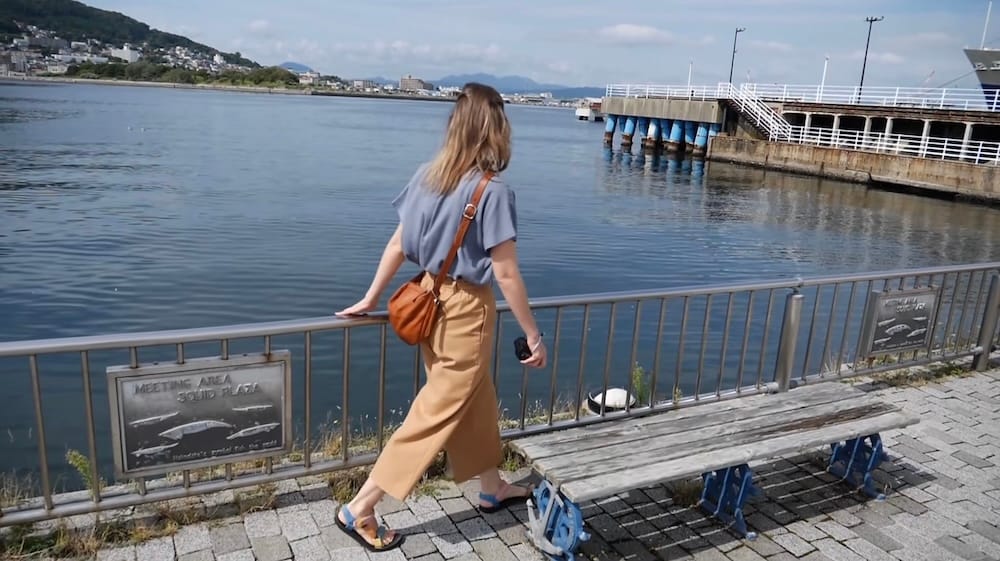
At one point during our trip, I described Hakodate as one of the most pedestrian-friendly Japanese cities we had visited. I still stand by the spirit of that impression because walking here was genuinely enjoyable. We wandered along the harbour, moved between waterfront attractions, climbed through Motomachi and regularly ended up somewhere we had not particularly planned to visit.
The important qualification came almost immediately afterwards: Hakodate is also surprisingly spread out. Those ideas work together. Walking is excellent within a sightseeing area, while the tram becomes useful when moving between areas starts consuming too much time or energy.
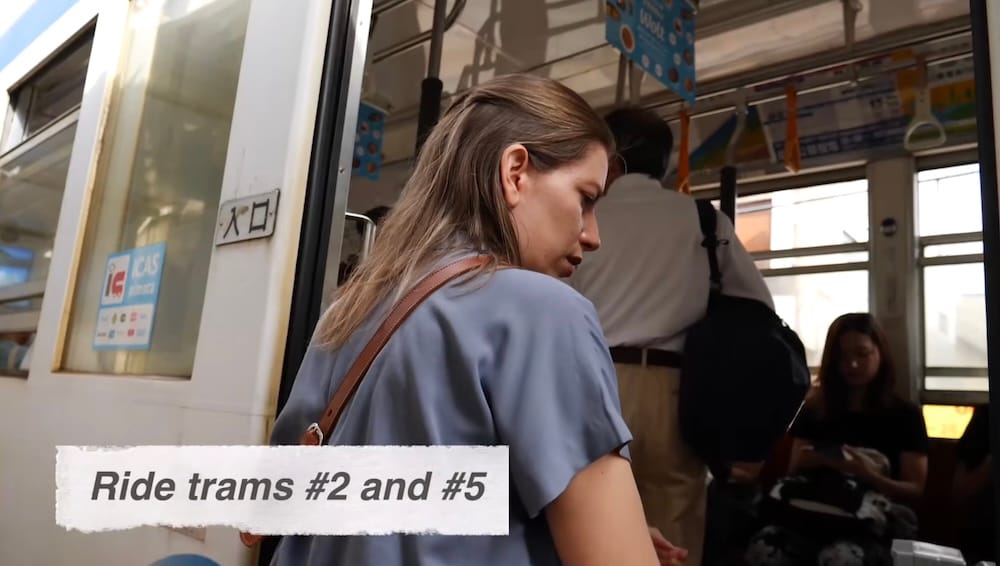
That was basically how our visit unfolded. Our hotel was away from the main centre, with tram lines 2 and 5 running nearby, so we used them repeatedly to get into town. Once we reached somewhere like the waterfront or Motomachi, walking made much more sense.
The tram had another benefit that became obvious once we started tackling western Hakodate: it saved our legs for the hills.
Current adult tram fares are ¥250 to ¥300 depending on the distance travelled. The one-day tram pass is currently ¥800, while a 24-hour tram pass costs ¥1,130, and compatible IC cards including Suica, PASMO and Kitaca can be used.
I would not automatically buy a pass just because one exists. If your day is concentrated around the station, waterfront and nearby western sights, you may spend long stretches walking and use the tram only a couple of times. If you are crossing between several parts of the city, the calculation changes.
The more useful rule is simpler: do not walk everywhere just because you technically can. Hakodate rewards walking, but there is no prize for arriving at the steepest part of your day with cooked legs.
The Motomachi Hills Are Not Decorative
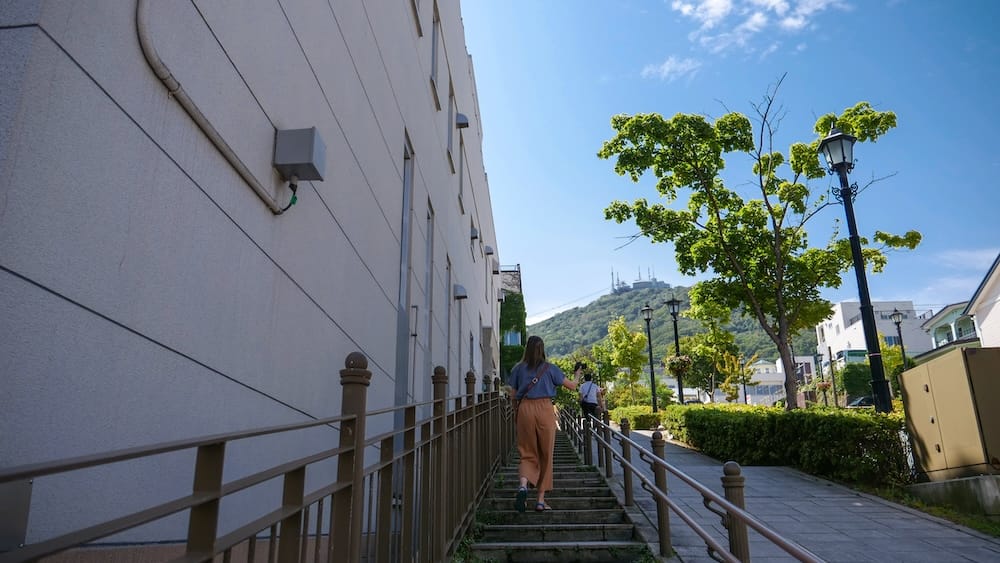
Maps are especially bad at communicating one thing about western Hakodate: elevation. The streets around Motomachi rise from the waterfront toward Mt. Hakodate, and there are 19 recognized sloping streets in this part of the city. They vary in gradient and appearance, but hills are built into the neighbourhood rather than being one isolated obstacle you encounter at Hachimanzaka.
We certainly felt them. When we reached Hachimanzaka, it was hot and humid, and the climb started becoming its own running commentary. At one point all I seemed capable of contributing was, “The heat, the heat, the heat.”
We had been living around the Rocky Mountains, which apparently had not turned us into elite humid-weather urban climbers.
The view back toward the harbour made the effort worthwhile, but the experience gave me a useful distinction for first-time planning: being comfortable walking long distances on flat ground is not the same as enjoying repeated uphill sightseeing. You can cover plenty of waterfront kilometres and still find Motomachi tiring, particularly if the weather is warm.
That is another reason I would avoid overloading western Hakodate with timed stops. Walking here is part of the sightseeing. You want room to climb at a normal human pace, stop for views and wander between buildings without treating each block as a transfer that has to be completed on schedule.
If mobility is a concern, look closely at the exact routes you intend to use rather than relying on a general description of Hakodate as walkable. Our experience tells me the hills are real; it does not allow me to make a blanket accessibility judgment for everyone.
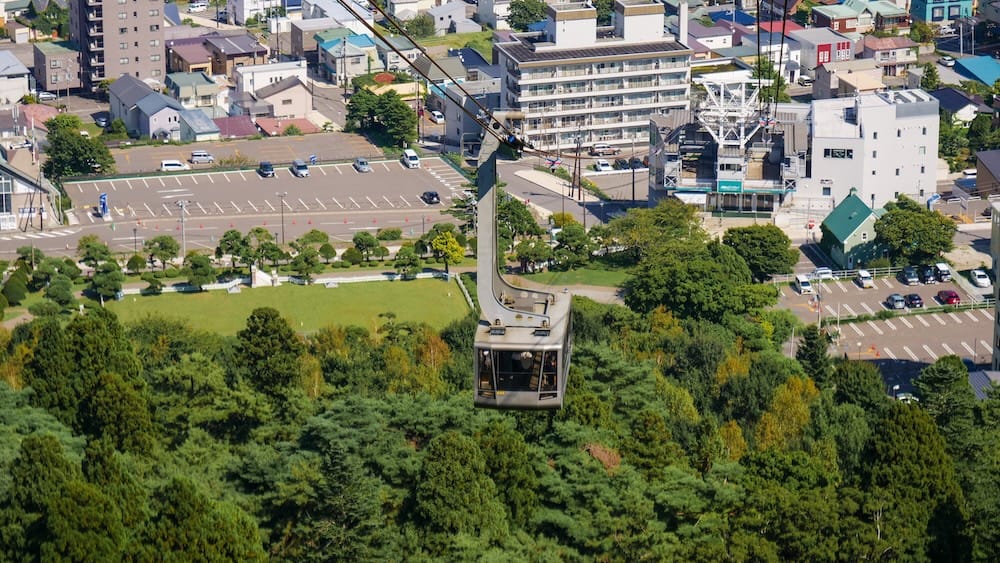
Mt. Hakodate Made the City Click for Us
Mt. Hakodate is famous as a viewpoint, but one of the most useful things it gave us happened in broad daylight: perspective.
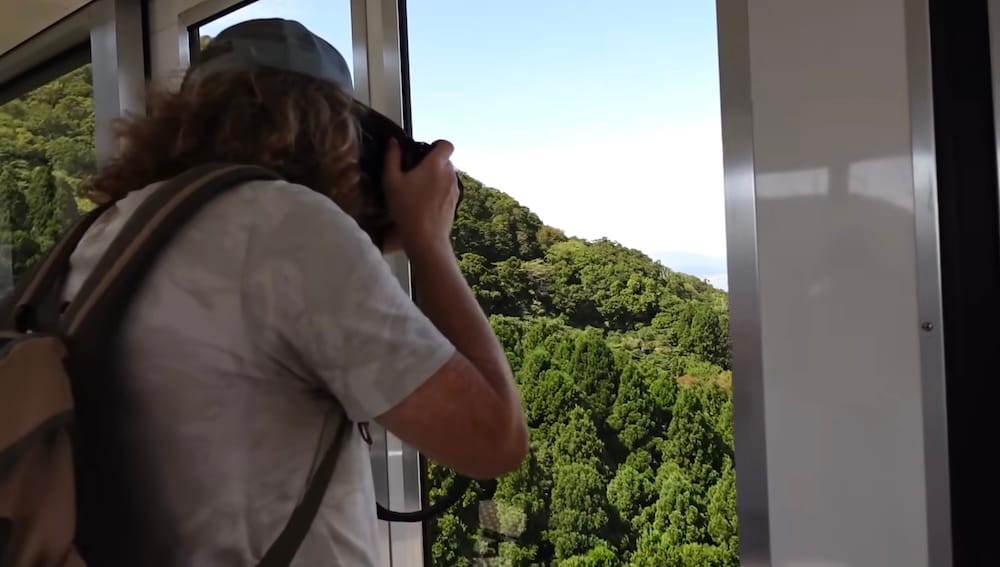
We took the Ropeway up in clear weather. The journey itself lasts only around three minutes, and the current adult round-trip fare is ¥1,800. Once we reached the top, Audrey and I realized how incomplete our mental picture of Hakodate had been.
Until then, most of our experience had been around the port and harbour side. From the summit we could suddenly see another coastline, mountains in the distance, built-up areas extending farther than expected and farmland beyond them. That was when Hakodate made more sense to me as a city.
For a first visit, I think that is an underappreciated value of Mt. Hakodate. It is obviously somewhere to enjoy the view and take photographs, but it also shows you the shape of the place you have been exploring at street level.
Our visit was entirely during the day, so I cannot give a personal verdict on the famous night view or pretend we experienced the sunset crowds. Those are separate considerations.
If you like the idea of seeing this western side of Hakodate with more historical context rather than piecing the route together yourself, a current guided historic-port and Mt. Hakodate Ropeway tour combines the waterfront, Motomachi, Hachimanzaka and the Ropeway. We explored these areas independently, so I am treating it as an available guided alternative rather than something we personally used.
What I would do either way is check the current access situation shortly before visiting. Ropeway operations can be affected by weather and scheduled maintenance, while road access to the summit has seasonal and time-of-day restrictions, including a winter closure.
This is exactly the kind of detail that ages quickly in travel articles. The mountain will still be there; the way you can get up it may need a current check.
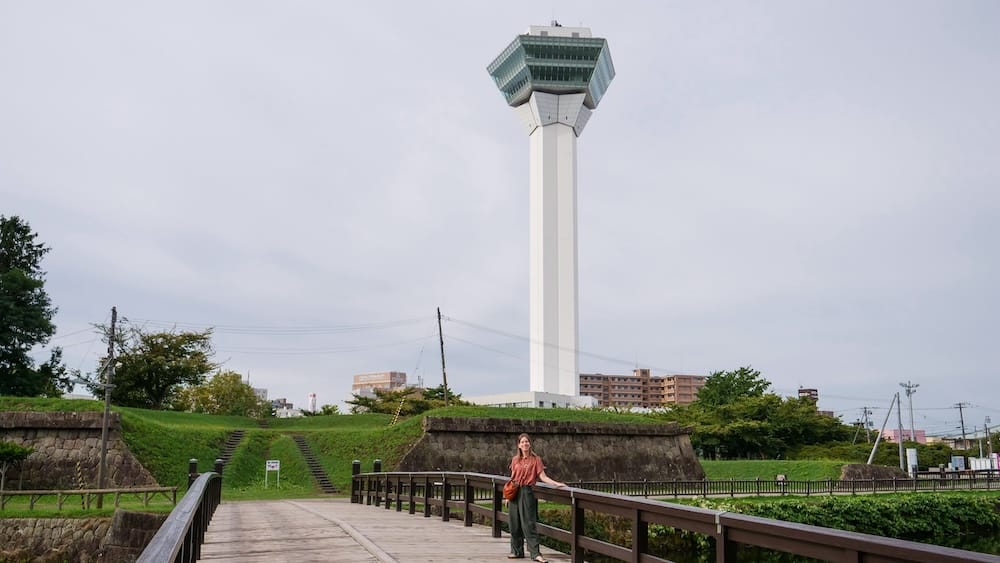
Goryokaku Deserves Its Own Part of the Day
Goryokaku also taught us something about Hakodate’s geography, just from the opposite direction. We arrived early enough that the tower had not opened yet, so we first wandered through the park at ground level. That turned out to be a good sequence because we had time to cross the bridges, walk around the fortifications and see the space functioning as both an attraction and an everyday city park.
We saw schoolchildren cycling through, along with people out walking and jogging. That ordinary local use stuck with me because it kept Goryokaku from feeling like a monument sealed off from the city around it.
When the tower opened, we went up expecting the obvious attraction to be the star-shaped fort below. It was, but I was surprised by how much of Hakodate we could see beyond it, including the harbour in the distance. The perspective was completely different from Mt. Hakodate.
I would not treat the two viewpoints as substitutes. Mt. Hakodate looks across the long sweep of the city from the western end, while Goryokaku places you inland with the fort directly beneath you and the rest of Hakodate spreading around it.
Current adult admission to Goryokaku Tower is ¥1,200, with the operator currently listing standard hours from 9:00 to 18:00.
For this article, though, the bigger point is not whether you should pay for one tower, two towers or seventeen hypothetical towers. It is that Goryokaku belongs in its own sightseeing block. Trying to mentally attach it to Motomachi and the waterfront makes Hakodate look more compact than it really is.
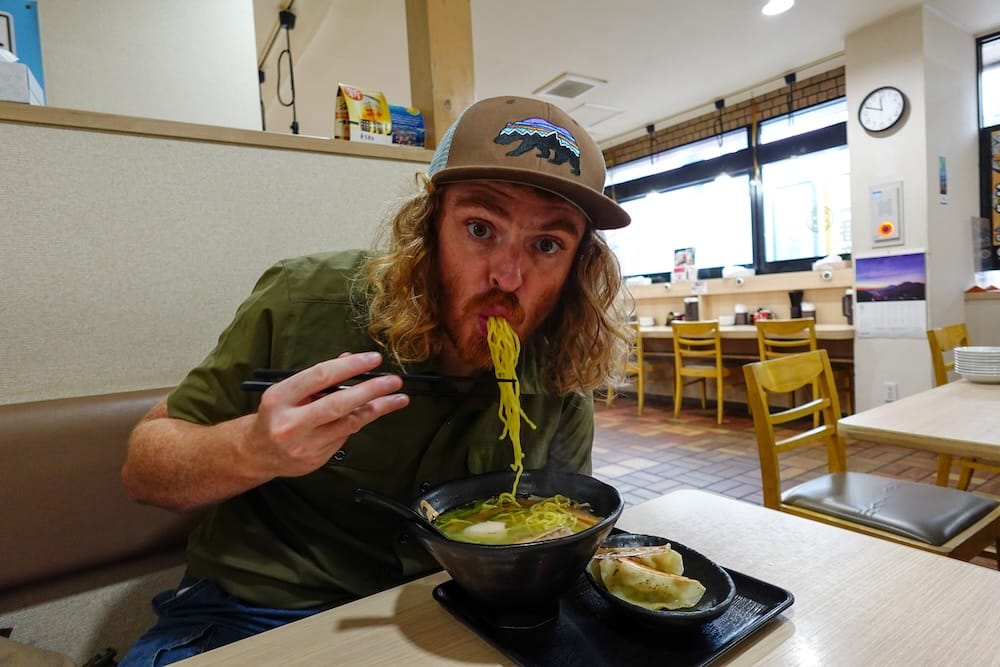
Weather Can Reshape the Day Without Ruining It
We saw several versions of Hakodate weather during our visit. There was the hot and humid day when Motomachi felt like exercise, a rainy day that pushed us indoors, and a bright clear morning around Goryokaku when visibility could hardly have been better. The weather changed what we did, but it did not derail the trip.
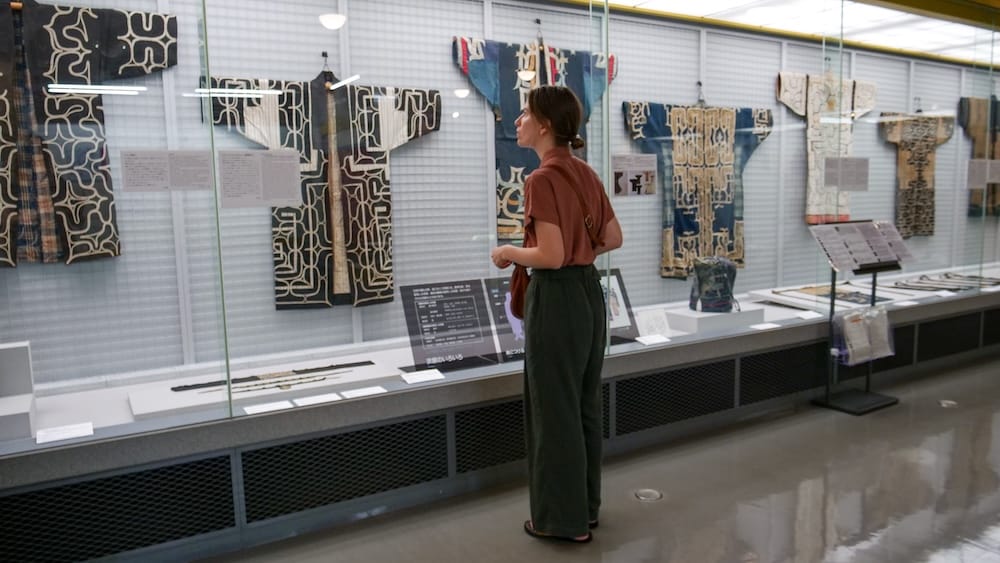
On the rainy day, we leaned into museums. We visited the Museum of Northern Peoples, which I enjoyed far more than expected considering I am not someone who naturally constructs vacations around museum opening hours.
We also visited a small museum focused on Hakodate’s fishing and maritime connections, where Audrey tried a fishing-boat simulator. Three minutes of rocking around was enough to leave her feeling dizzy, so I think both of us were relieved that nobody had designed the authentic three-hour edition.
Then there was ramen, which becomes an even more convincing life choice when it is raining outside.
I would not copy our rainy day stop for stop. Hakodate has enough indoor material that it deserves its own proper rainy-day plan. The useful lesson for a first visit is to avoid locking every attraction to a specific hour too far in advance.
Think in categories instead. Keep some outdoor sightseeing for clear conditions, know which museums or historic interiors could move into a wet period, and stay flexible with Mt. Hakodate if visibility is poor.
Hakodate also has strong seasonal variation, so our hot weather, rain and clear skies describe one visit rather than the city’s climate in general. Winter would create a completely different walking and transport equation.
A little flexibility goes a long way here.
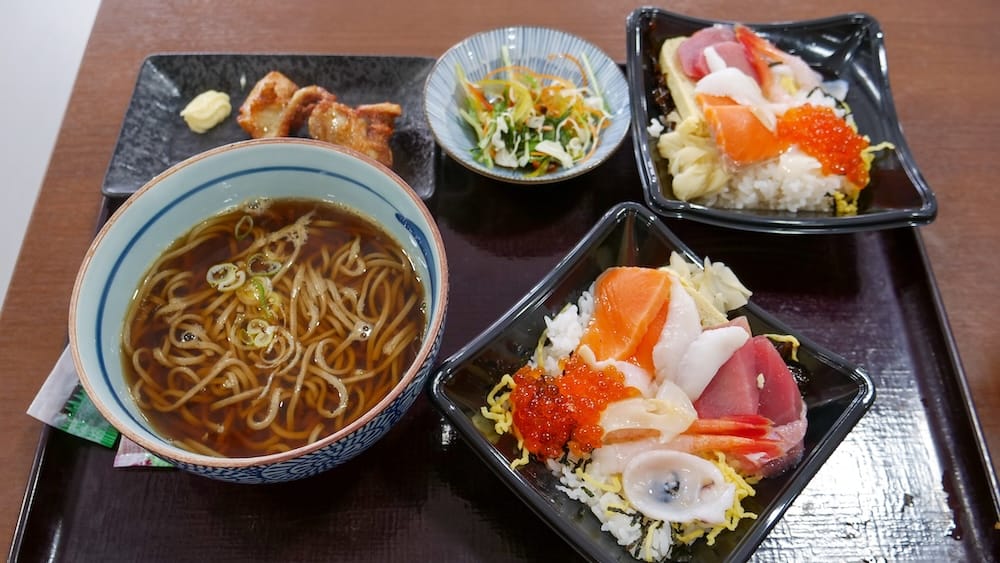
Food Fits Into the Geography Instead of Fighting It
One thing I liked about Hakodate was how naturally food could fit into the sightseeing day. Hakodate Morning Market is the clearest example because it sits essentially beside Hakodate Station, around a minute away on foot. You do not need to build a culinary expedition around it; it can simply be breakfast at the beginning of the day.
We went in expecting seafood and quickly realized the market was larger than we had thought. We kept walking, found another food section and ended up sitting down for a seafood breakfast.
There were enormous crabs and fish on display, sashimi being prepared and the unmistakable smell of seafood everywhere. I loved it. Someone who hates the smell of fish may produce a slightly less poetic review.
The market broadly operates from early morning into early afternoon, but individual shops and restaurants keep their own schedules. That matters if you are planning to eat at one particular place rather than simply wandering in and seeing what is open.
We explored the market independently, which worked well for us. If you would rather have someone help navigate the stalls, explain what you are looking at and build tastings into the visit, there is also a current Hakodate Morning Market tour with seafood tastings. The listed experience is about 1.5 hours and includes guided market exploration with food tasting, making it a more structured alternative to simply wandering in hungry as we did.
Food also worked nicely around the rest of our sightseeing. On the rainy day, we had shio ramen, which was one of the local dishes we specifically wanted to try.
That meal also produced one of those minor travel moments where technology seems to be helping you right up until the point you realize you still have no idea what you are doing. The ticket machine had an English option. Audrey and I nevertheless managed to fumble our order and ended up with two salt-ramen variations instead of the two different styles we thought we had selected.
Fortunately, we liked both bowls, so our punishment for incompetence was delicious ramen.
At another restaurant, staff found us an English picture menu and explained the ordering system. I would not turn those two experiences into a grand statement about how easy or difficult Hakodate is without Japanese, but they are a fair reminder that language support can vary from place to place.
The bigger planning point is that food does not have to compete with sightseeing here. Morning Market fits naturally around the station. A bowl of ramen can rescue a wet afternoon. Other meals can anchor whichever part of the city you happen to be exploring.
Where You Stay Changes the Way Hakodate Feels
I cannot give you a firsthand ranking of Hakodate’s main hotel areas because we did not stay in several neighbourhoods and compare them against one another. What I can say is that our own location clearly changed the way we moved around.
We were based away from the main centre, so having tram lines 2 and 5 nearby mattered. We used them repeatedly. Had we been staying beside Hakodate Station or around the Bay Area, some of those journeys would simply have disappeared.
That is worth remembering when you are staring at hotel listings and everything appears to be “in Hakodate.” Accommodation is spread across distinct areas including Hakodate Station, Motomachi/Mt. Hakodate, Goryokaku and Yunokawa. A station-area hotel gives you easy access to trains and Morning Market. A western base puts you closer to Motomachi and the waterfront. Goryokaku creates a different centre of gravity, while Yunokawa places you farther east in the city’s onsen district.
We did not stay in Yunokawa, so I would not pretend to know what it feels like as a base. For the same reason, I would rather point you toward the full inventory than manufacture a hotel recommendation we never tested. You can compare current Hakodate hotels and locations on Booking.com, then judge each property against the part of the city you expect to use most.
The question I would ask is more practical than “Which neighbourhood sounds nicest?”
Which part of Hakodate am I going to travel to repeatedly from this hotel?
That answer tells you much more about how your days will actually work.
Leave More Slack Than the Map Suggests
Hakodate creates a mild travel-planning trap because it is easy to keep adding one more thing. Morning Market, waterfront, Motomachi, Ropeway, Goryokaku, museum, dinner. Written in a list, none of those sounds particularly demanding.
The friction appears between them. You walk farther than expected, wait for a tram, climb a hill, stop because the harbour looks good, spend longer over lunch, duck inside because it starts raining, or discover that a museum you thought would take twenty minutes is actually interesting.
Sometimes you find an entire ship.
After visiting the Morning Market, Audrey and I were wandering around the waterfront without much of a plan when we came across the enormous Mashu-maru docked in the harbour. We decided to investigate and discovered that it was a museum inside a former railway ferry.
It became one of our favourite spontaneous finds in Hakodate. Part of what made it enjoyable was that we had enough room in the day to say, essentially, “What is that thing? Let’s go inside.”
Our three days in Hakodate were action-packed, and by the end we both felt that we could have stayed longer. That does not mean every visitor needs three days, and it certainly does not mean you need to start negotiating a one-week lease. It means Hakodate has enough spread and enough depth that I would not plan it as an exercise in maximum attraction density.
Leave some slack. You may end up using it on something you did not know existed when you arrived.
What I Would Check Shortly Before a First Trip
Most of the useful things to understand about Hakodate are fairly durable. Motomachi will still have hills. Goryokaku will remain separate from the waterfront. Staying farther from the centre will still create more transportation needs than staying beside the places you want to visit.
A handful of details are much more changeable. I would check current tram fares and pass options if I expected to ride repeatedly, rather than assuming an older travel article still has the correct numbers. I would also check Mt. Hakodate Ropeway operations shortly before going because weather, scheduled maintenance and seasonal road restrictions can change the available access.
If Goryokaku Tower matters to your day, confirm the current opening hours. If you want breakfast at a particular Morning Market restaurant, check that business rather than relying on the market’s general hours. And if you are arriving by Shinkansen, remember that the train reaches Shin-Hakodate-Hokuto before you connect into central Hakodate.
You do not need to micromanage the city before arrival. In fact, I think Hakodate is better with a little room for improvisation. What helps most is understanding the framework underneath the trip.
That is the part I wish I had grasped sooner. Hakodate is wonderfully walkable in sections, easy to explore independently, and connected by a tram system that removes much of the friction from moving around. It is also larger, hillier and more geographically varied than we expected.
Once that clicks, planning becomes much simpler: group nearby sights together, ride when walking stops making sense, keep some flexibility for weather and meals, and leave enough empty space in the day for Hakodate to surprise you.
That last part worked out rather well for us.
Frequently Asked Questions
Is Hakodate walkable for first-time visitors?
Hakodate is very enjoyable on foot, especially within the station, waterfront and Motomachi areas, but the city is more spread out than it first appears. I would combine walking with the tram rather than trying to cover every sightseeing area on foot.
Do you need to use the tram in Hakodate?
You can do a lot of sightseeing on foot, but the tram becomes useful when you move between separate parts of the city or want to save your legs for Motomachi’s hills. We used routes 2 and 5 repeatedly because our hotel was outside the main centre.
How should first-time visitors divide Hakodate for sightseeing?
A practical mental map is Hakodate Station and Morning Market, the Bay Area and waterfront, Motomachi and Mt. Hakodate, and Goryokaku as a separate sightseeing block. Yunokawa sits farther east and matters particularly if you stay there.
Is Goryokaku close to Motomachi and the waterfront?
Not really. From Hakodate Station, the tram toward Goryokaku-koen-mae takes roughly 17 minutes, followed by around 13 minutes on foot to the main fort and tower area. I would give Goryokaku its own block of time.
Is Mt. Hakodate worth visiting during the day?
Our Ropeway visit was during daylight, and that was when Audrey and I finally understood how much larger and more geographically varied Hakodate was than we had imagined. I cannot give a personal verdict on the famous night view because we did not experience it.
What should you check shortly before visiting Hakodate?
Recheck current tram fares and pass options, Mt. Hakodate Ropeway operations and access, Goryokaku Tower hours, and the opening hours of any specific Morning Market restaurant you plan to visit. Shinkansen travellers should also remember that trains arrive at Shin-Hakodate-Hokuto before connecting into central Hakodate.
This guide is also available in Spanish. [Leé la versión en castellano: Hakodate para quienes visitan por primera vez: qué saber antes de ir]
This article contains affiliate links. If you book through one of these links, I may earn a commission at no extra cost to you.