
“Free things to do” lists can get a little ridiculous if you stretch the definition far enough. Stand outside a museum without going in? Free. Walk past a restaurant without eating? Also free. Refuse to open your wallet while staring longingly through a window? Congratulations, another budget attraction.
Hakodate does not need that kind of padding.
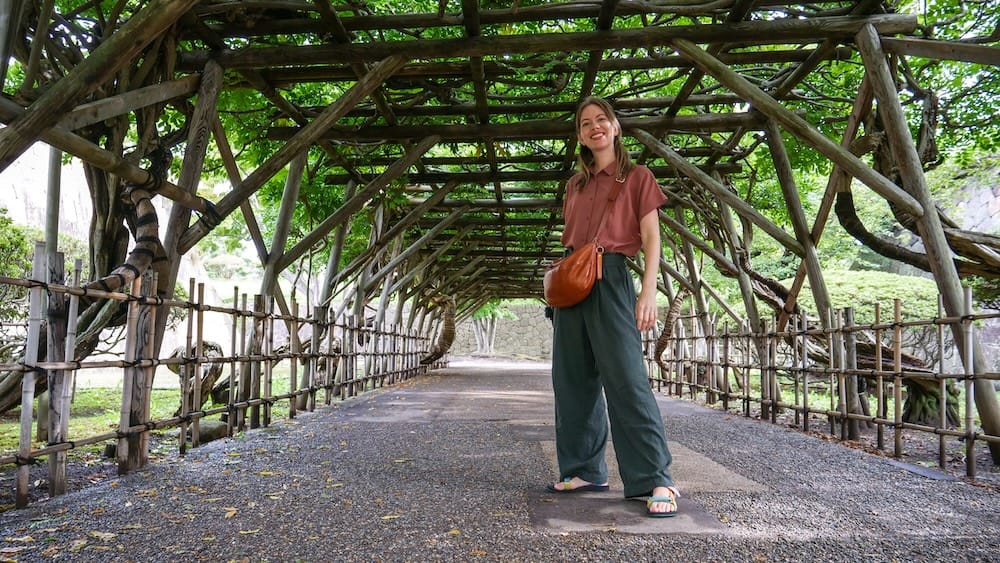
Audrey and I spent plenty of money during our visit. We rode the Mt. Hakodate Ropeway, went up Goryokaku Tower, entered museums, toured historic buildings and ate our way through seafood, ramen, sushi and burgers. At the same time, some of the most enjoyable parts of Hakodate cost us nothing: walking along the harbour, climbing the slopes of Motomachi, looking at historic architecture and exploring Goryokaku Park before the tower had even opened.
That is the standard I am using here. The sightseeing experience itself needs to be available without an admission fee. You might pay for a tram to reach it, buy lunch nearby or decide that an optional paid component looks worthwhile once you arrive. None of that disqualifies the free part.
More importantly, I am not going to pretend every zero-yen activity is equally good. Some of these are substantial experiences I would happily include even on a trip with no budget restrictions. Others make sense because they fit naturally into a walk you are already doing.
| Free experience | What you can do without paying | Optional paid extra |
|---|---|---|
| Goryokaku Park | Walk the fort, bridges, moat and grounds | Goryokaku Tower |
| Motomachi | Walk the slopes and see historic architecture | Some interiors |
| Hachimanzaka | Climb the slope and enjoy harbour views | Nothing required |
| Motomachi Park | Park, views and historic setting | Nearby paid attractions |
| Hakodate waterfront | Harbour walking and views | Mashu-maru museum |
| Kanemori Red Brick Warehouses | Walk and browse the complex | Shopping, food and drinks |
| Hakodate Morning Market | Browse stalls and seafood displays | Food and activities |
| Old Public Hall | See the exterior and surrounding setting | Paid interior |
| Mt. Hakodate | Hike to the summit | Ropeway and other transport |
| Yunokawa footbath | Use the public footbath | Other onsen experiences |
| Cape Tachimachi | Coastal viewpoint | Nothing required |
Goryokaku Park Is Worth Visiting Even Without the Tower
Goryokaku is probably the cleanest example in Hakodate of a genuinely worthwhile free attraction sitting directly beside a paid one.
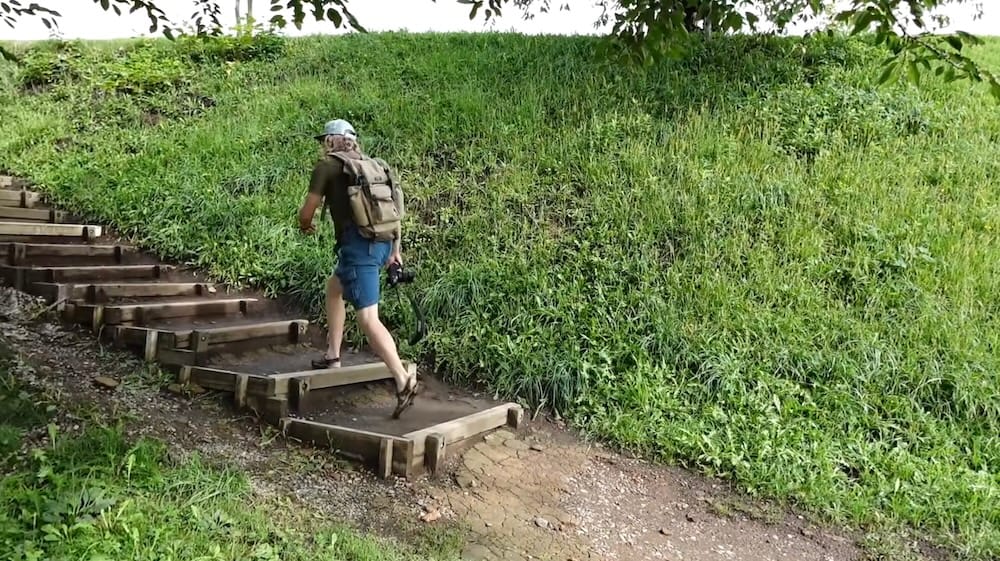
Audrey and I arrived early enough that Goryokaku Tower had not opened yet, so rather than stand around waiting, we started exploring the park. That turned out to be a much better use of the morning because we crossed the bridges, walked beside the moat, explored the fortifications and eventually found our way onto a higher section of the walls where we could look back down toward the water.
What I remember most, though, was how normal the park felt. Schoolchildren were riding bicycles through the grounds while other people were walking and jogging. Goryokaku obviously has major historical importance, but at ground level it did not feel like some fenced-off monument that exists purely for visitors. It felt like a very nice city park that happens to sit inside a star-shaped fort.
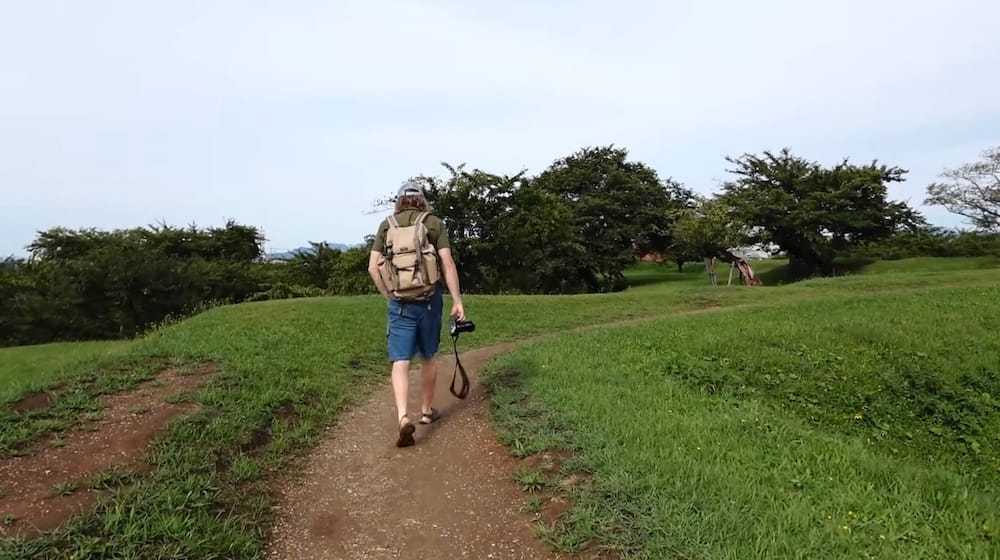
The park is currently free to enter, while Goryokaku Tower is a separate paid attraction costing ¥1,200 for an adult. By the time the tower opened, we had already had a proper visit rather than simply killing time until we could pay for the “real” thing.
We did go up the tower afterward, and I am glad we did. Seeing the star shape from above changes the perspective completely and also gives you much broader views across Hakodate. I would never argue that the tower adds nothing just because the park is free.
The useful distinction is that Goryokaku Park stands on its own. If your budget is tight, you can walk the fort and leave without feeling like you only saw the waiting room.
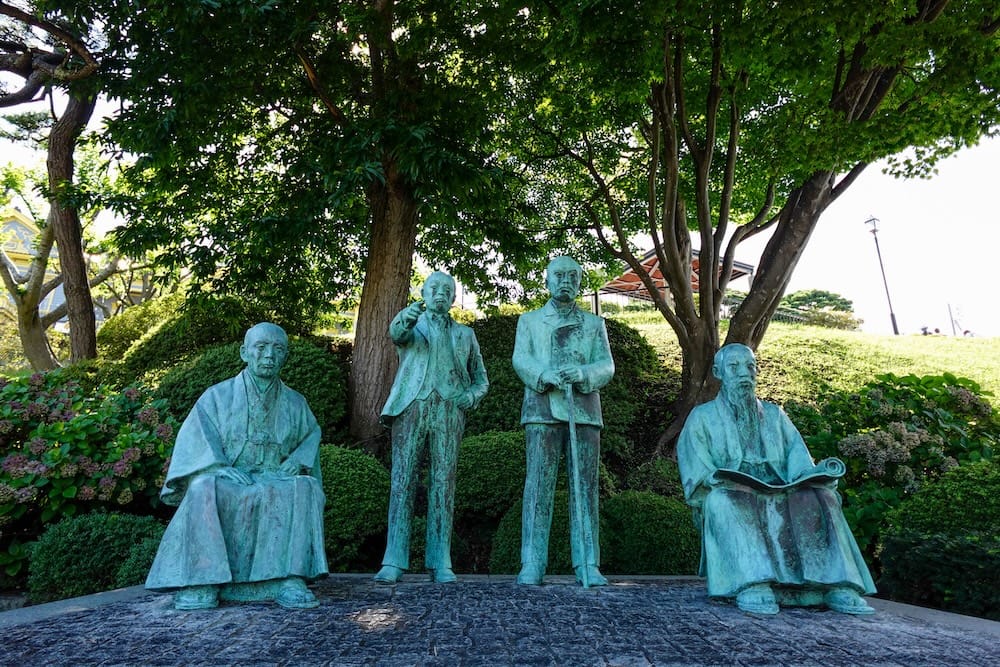
Motomachi Is Hakodate’s Best Free Walking Area
Motomachi is where this article becomes much more interesting than a list of parks with no admission fee. You have historic streets, slopes, harbour views, churches, Western-influenced architecture and small public spaces packed into one area. Once you are there, a large part of the experience is simply walking.
There is one catch. Hakodate apparently forgot to make Motomachi flat.
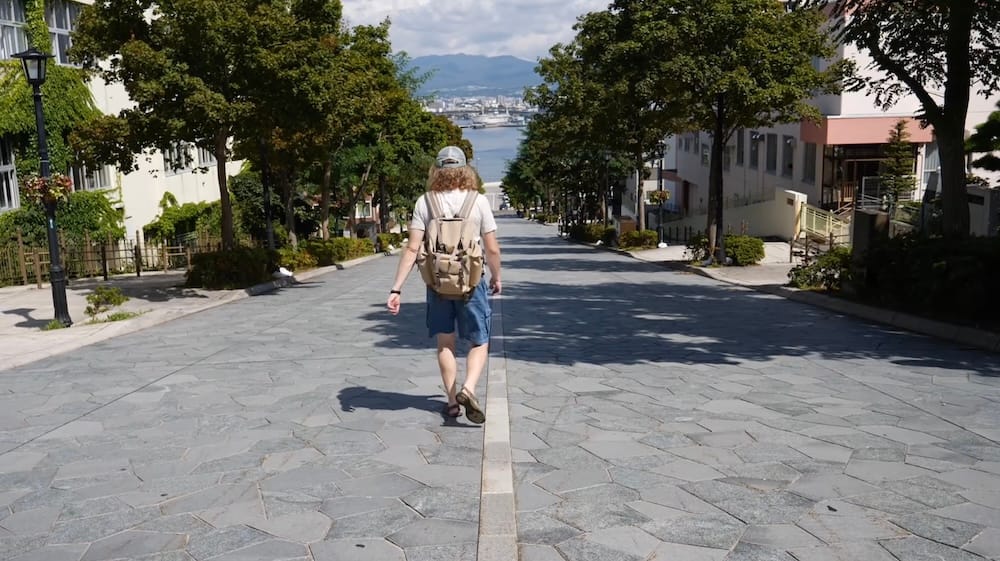
Hachimanzaka Costs Nothing Except Your Legs
Hachimanzaka was the slope we most deliberately climbed for the view, and we happened to tackle it on a hot and humid day. Somewhere on the way up, my contribution to our travel commentary had deteriorated to: “The heat, the heat, the heat.”
We had been living around the Rocky Mountains, which apparently had not transformed us into elite humid-weather hill climbers.
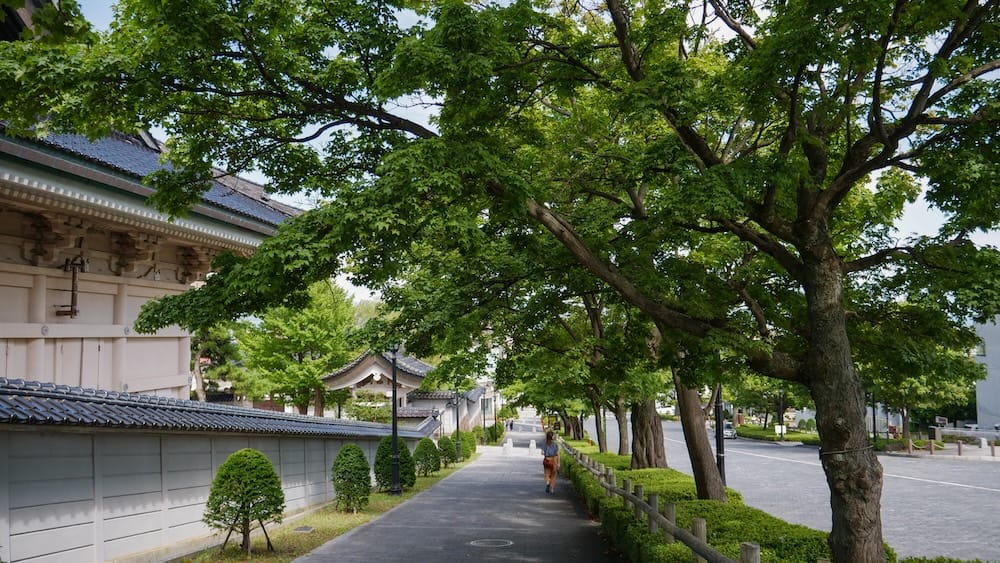
The reward is the classic view back down the long street toward the harbour. Hakodate has a larger network of slopes running between the foot of Mt. Hakodate and the port, but Hachimanzaka works particularly well on a first visit because it fits so naturally into a larger Motomachi walk.
It is also a good reminder that free sightseeing can still cost you energy. A distance that looks insignificant on a map becomes more noticeable after you have already spent a few hours walking around the waterfront and then start climbing uphill. I would still rather walk it than skip it; I just would not arrive after crossing half of Hakodate on foot and expect my legs to be impressed by my budgeting skills.
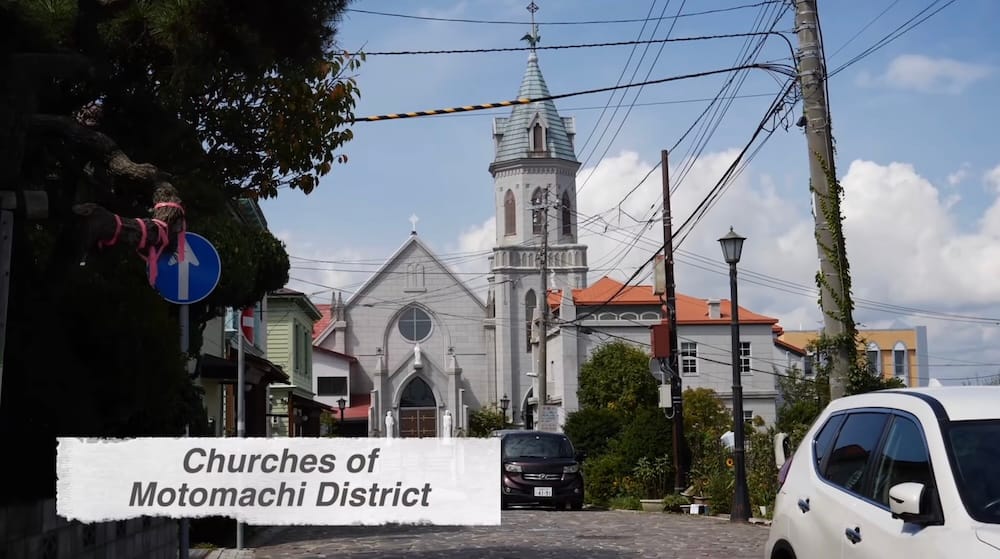
The Motomachi Churches Are Worth Seeing for the Architecture Alone
Audrey and I also walked through the church area, including Hakodate Orthodox Church, Motomachi Roman Catholic Church and Hakodate St. John’s Church. Even without entering every building, this is one of the most visually distinctive parts of Hakodate. The cluster gives Motomachi a very different feel from the modern commercial streets lower down around the harbour.
If you are trying to make the day completely free, I would plan around the architecture first rather than assuming every church interior has the same access arrangement. Motomachi Roman Catholic Church currently lists free admission when visitor access is available. Hakodate Orthodox Church currently asks for a ¥200 donation for interior visitation. St. John’s Church has differing published visitor arrangements, so I would not build a plan around guaranteed walk-in interior access without checking shortly before you go.
They are also active religious buildings, not museum displays, so worship schedules take priority over sightseeing. For me, that does not weaken their place on this list. Some travellers genuinely love architecture, and Motomachi gives you plenty to look at without needing an admission ticket.
Motomachi Park Is an Easy Place to Slow Down
Motomachi Park was not something Audrey and I had constructed a big sightseeing plan around. We passed through while making our way back downhill toward the waterfront, and that is probably the right level of expectation.
The park gives you another harbour perspective, some space after walking the slopes and a natural link between several of the historic buildings in the area. It remains a public park with free access. I would not tell you to cross Hakodate specifically for Motomachi Park, but when you are already walking the district, it is an easy place to stop for a while and look back toward the bay before continuing downhill.
Not every good travel experience needs a ticket booth and ninety minutes blocked off on your itinerary.
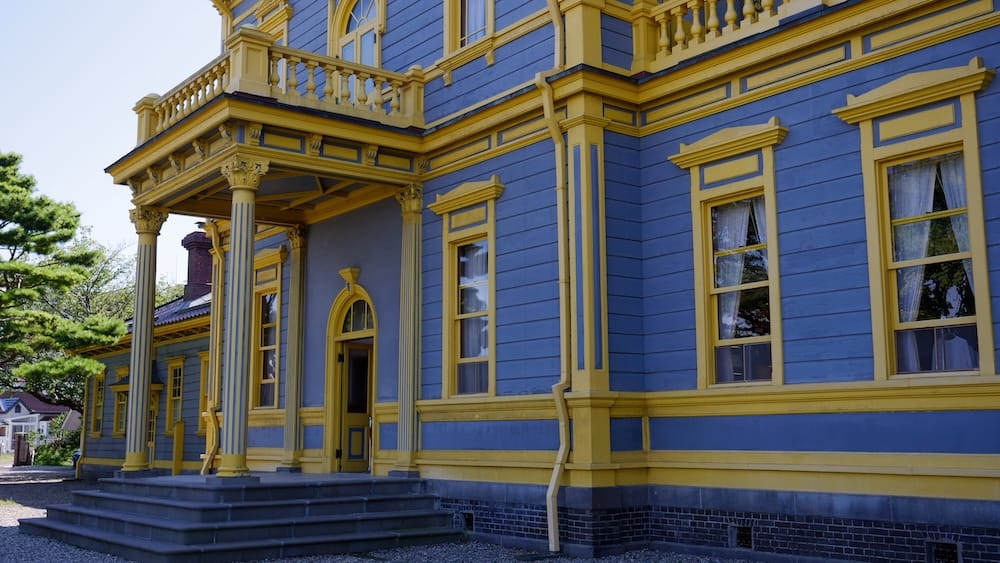
You Can Appreciate the Old Public Hall Without Going Inside
The Old Public Hall of Hakodate Ward is hard to miss once you are in this part of Motomachi. Its blue exterior with yellow-gold detailing is considerably more theatrical than the average municipal building.
We paid to go inside and enjoyed wandering through the historic rooms, but the building still contributes plenty to the free walking experience from outside. That is where I would draw the line clearly: the interior is not free, with current adult admission at ¥300, while seeing the architecture and its setting above the harbour as you explore Motomachi is.
If the exterior scratches your architectural itch, keep walking. If it makes you curious about the interior, the paid visit is there.
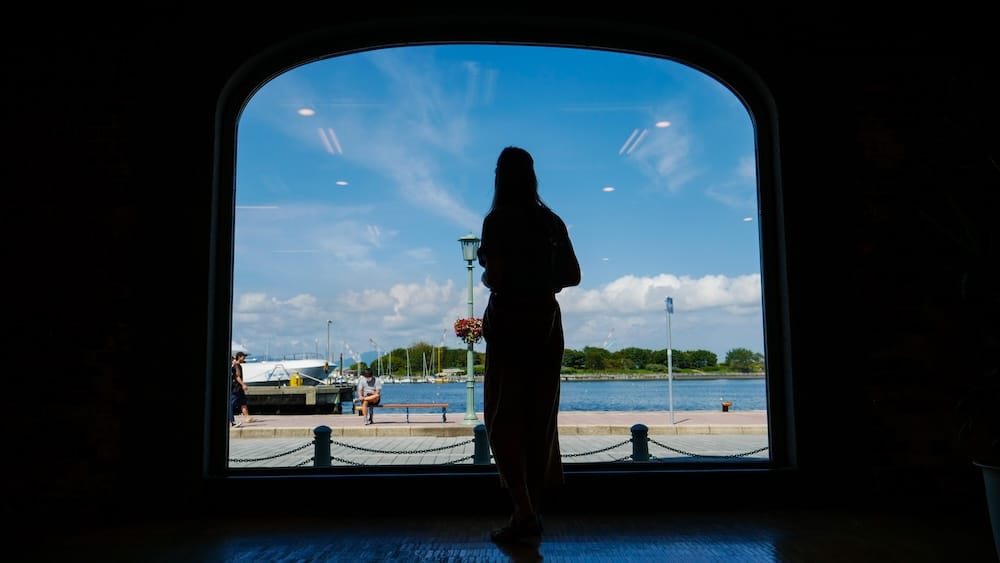
Walk the Waterfront Without Treating It as Dead Space Between Attractions
Some of my favourite moments in Hakodate happened when we were not really trying to accomplish anything. After visiting the Morning Market, Audrey and I wandered around the harbour without much of a plan or, frankly, a particularly strong sense of direction. Then we came across an enormous ship.
That ship was Mashu-maru, the former railway ferry preserved on the waterfront. We eventually paid admission and went aboard, and it became one of our favourite spontaneous discoveries in Hakodate. But the reason I mention it here is not to sneak a paid museum onto a free list. The harbour walk itself created the discovery.
Hakodate is a port city where the waterfront deserves to be treated as part of the sightseeing rather than pavement you endure between ticketed attractions. You have ships, open water, working harbour scenery and the visual transition from the station area toward the brick warehouses and historic western districts. Mashu-maru is also impressive from outside even if you have no intention of paying to enter.
This is the sort of wandering Hakodate does very well. Leave yourself a little space in the day and something tends to appear.
Sometimes it is an entire ship.
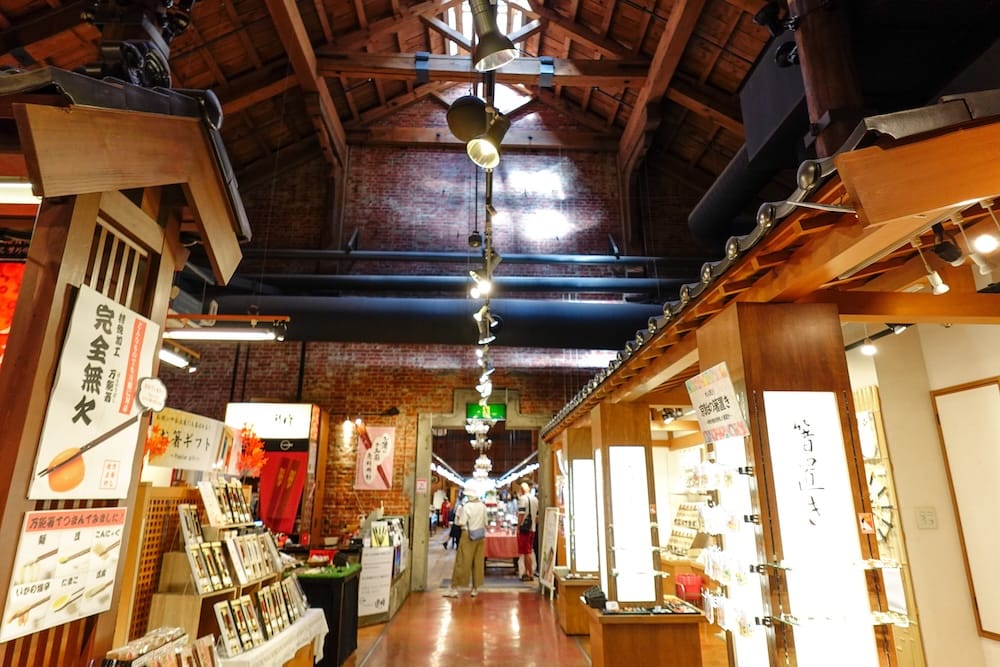
Browse the Kanemori Red Brick Warehouses Without Shopping
Continuing along the waterfront brings you to the Kanemori Red Brick Warehouses, and the complex is currently free to visit.
Obviously, “free to visit” and “everything inside is free” are not remotely the same thing. These are commercial buildings filled with shops, restaurants, souvenirs, sweets and plenty of opportunities to separate you from your yen.
Audrey and I wandered through without needing the place to become a major shopping expedition. The old warehouse exteriors, harbour setting and interiors make it an easy addition to a waterfront walk even if you are not hunting for souvenirs. I think Kanemori works best when you refuse to over-plan it: walk around the buildings, go inside if something catches your eye, look at the waterfront and move on when you are ready.
If an ice cream somehow appears in your hand, I am afraid your perfect free day has been compromised. You will recover.
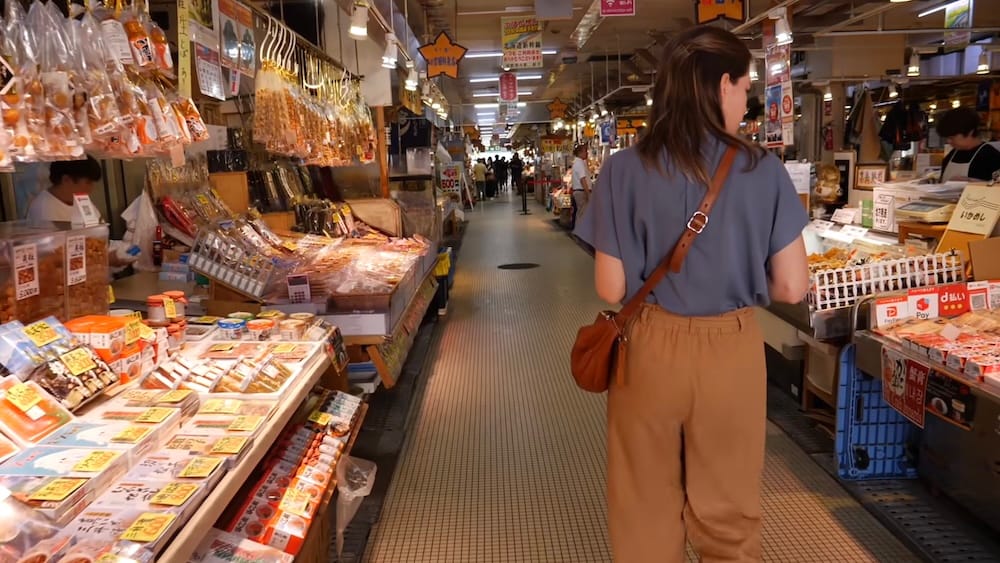
Hakodate Morning Market Is Still Worth Browsing if You Do Not Eat There
I would absolutely include Hakodate Morning Market on a free-things list, even though our seafood breakfast became one of the memorable food experiences of our stay. The market has value before you buy anything.
When Audrey and I first arrived, we thought we had seen the main section. Then we kept going and discovered more stalls and another larger food area. The whole place was considerably bigger than we expected.
There were huge crabs, large fish, seafood being prepared and vendors surrounded by all kinds of marine products. Then there is the smell. I love the smell of seafood and the sea, so for me that added to the experience. If the scent of fish makes you want to reverse direction immediately, you and I may have slightly different rankings for this one.
The market contains roughly 250 shops across about three hectares. General operating hours currently begin around 5:00 or 6:00 in the morning depending on the time of year and run into the early afternoon, although individual businesses keep their own schedules.
Food costs money. Shopping costs money. The squid-fishing activity costs money. Walking through and looking around does not require you to buy breakfast just because we did.
For a traveller staying near Hakodate Station, this is one of the easiest free experiences to add because you barely have to alter your route.
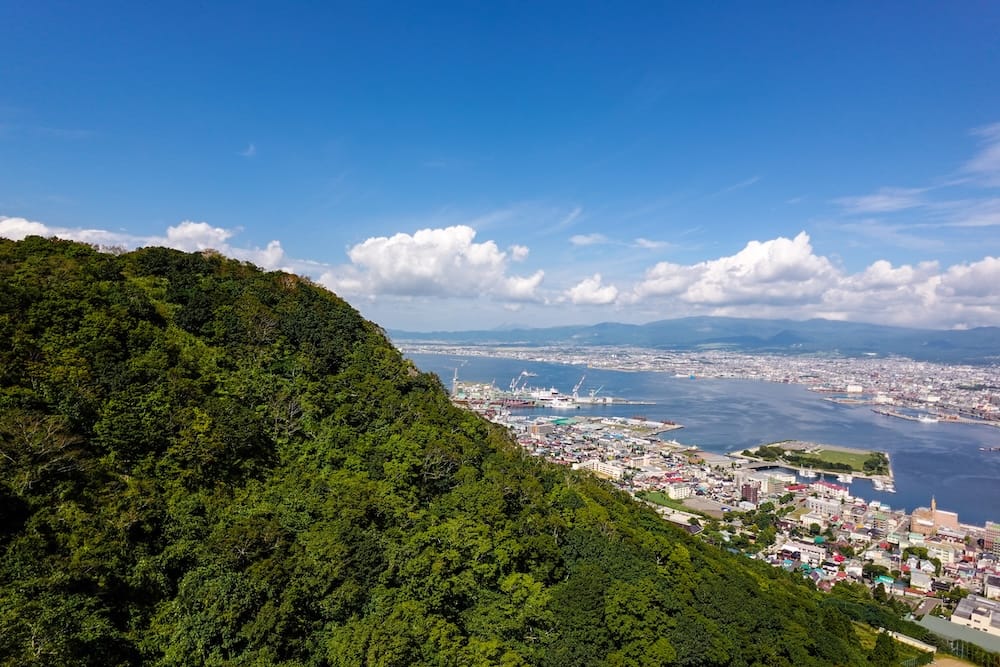
You Can Hike Mt. Hakodate Instead of Paying for the Ropeway
This is one of the strongest free options in Hakodate that Audrey and I did not personally try. We rode the Ropeway to the summit, so I cannot tell you what hiking Mt. Hakodate felt like or pretend to have opinions about which trail is most enjoyable.
There is, however, a legitimate free way up. Mt. Hakodate has a network of hiking trails with varying levels of difficulty. The main walk from the Mt. Hakodate Fureai Center to the summit observatory takes roughly an hour, while the broader mountain contains 11 hiking trails rather than one universal “Mt. Hakodate hike.”
That distinction matters because an approximate one-hour route does not mean every trail is an easy one-hour stroll. Current access information also continues to list hiking during the period when the summit road closes to vehicles for winter. That said, trail conditions are obviously more consequential than a road timetable, and the city publishes current trail information along with warnings about natural hazards.
Check conditions before you go.
I would also resist framing hiking as the clever traveller’s way to avoid wasting money on the Ropeway. We took the Ropeway and loved the experience, particularly the changing city views on the way up and the perspective from the summit. Walking simply gives you another option if you have the time, fitness and inclination.
Yunokawa Has a Free Public Footbath
The Yunokawa Hot Spring Footbath Retreat is another experience we did not personally use, but it earns a place because it adds something completely different to this list. You can soak your feet for free near the Yunokawa-onsen tram stop. Current hours are 9:00 to 21:00 except for scheduled maintenance closures, and the footbath is only about a minute from the stop.
That sounds particularly appealing after spending several hours climbing Hakodate’s hills.
The geography is the catch. Yunokawa sits farther east than the main waterfront and Motomachi sightseeing areas, so I would not cross the whole city solely because I had discovered the intoxicating concept of free feet. If you are staying in Yunokawa, exploring that side of Hakodate or already passing through the district, it becomes a much easier addition.
Since we did not use the footbath ourselves, I cannot tell you how relaxing it feels or whether you will emerge with spiritually renewed toes. The practical case is simpler: it is free, close to the tram and gives you a small taste of Hakodate’s hot-spring side without booking an onsen stay.
Cape Tachimachi Gives You a Different Coastal View
Cape Tachimachi is the other researched free stop I would seriously consider if you have extra time. Audrey and I did not visit it, so this is not one of my personal Hakodate recommendations based on experience. What makes it useful for this article is that it provides a coastal landscape quite different from the harbour scenery around central Hakodate.
The cape sits at the southeastern end of Mt. Hakodate, roughly a 15-minute walk from the Yachigashira tram terminus. In clear conditions, views can extend across the Tsugaru Strait toward Aomori.
There is no admission charge for the viewpoint itself, but I would check access shortly before going because seasonal road restrictions and weather can affect the approach. This is also a more deliberate outing than strolling through Motomachi Park or wandering into the warehouses; you have to want to go there.
For that reason, I see Cape Tachimachi as a good extra rather than something every first-time visitor should shoehorn into a packed day simply because it costs nothing.
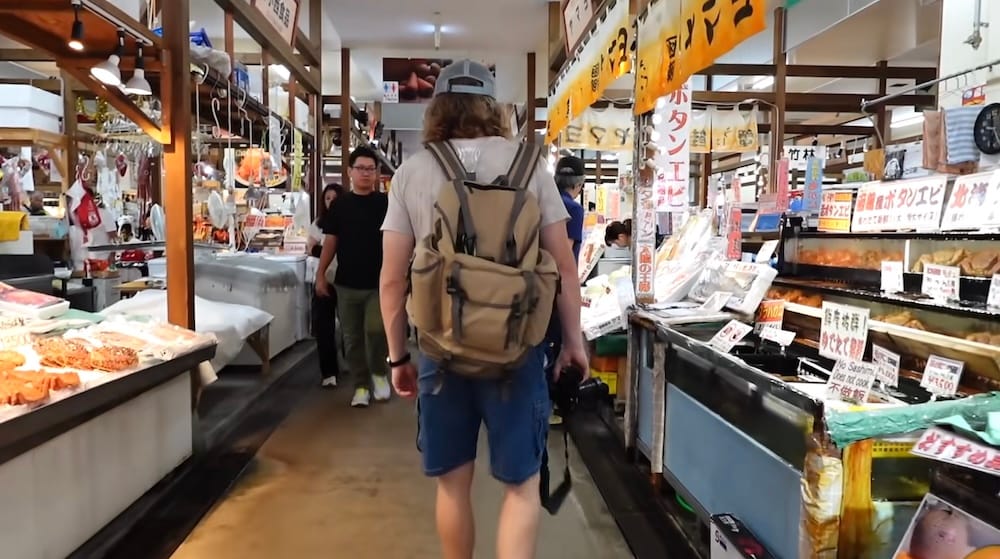
Do Not Try to Walk Every Free Attraction in One Day
The easiest mistake with an article like this is looking at eleven things that cost nothing and deciding the logical response is to connect all eleven on foot.
Hakodate will punish that enthusiasm.
We found the city extremely pleasant to walk, but also much more spread out than we expected. The useful way to approach these free sights is by cluster rather than by trying to create one heroic zero-yen march across the city.
Hakodate Station and the Morning Market naturally belong together. From there, the waterfront, Kanemori Red Brick Warehouses and much of Motomachi can form one broad western-Hakodate sightseeing area. Goryokaku sits separately. Yunokawa is farther east, while Cape Tachimachi and a Mt. Hakodate hike require their own deliberate chunks of time and energy.
There is also nothing wrong with paying for transportation between free attractions. We used Hakodate’s trams repeatedly during our stay because they allowed us to save our legs for the parts of the city where walking actually added something—particularly the hills.
If I were trying to keep sightseeing costs very low, I would prioritize Goryokaku Park and the waterfront–Motomachi area first. Between them, you get fortifications, city-park life, harbour scenery, historic streets, churches, architecture, slopes, markets and a surprising amount of Hakodate without needing to pay an admission fee.
After that, I would choose according to geography and effort rather than chasing a bigger list: hike Mt. Hakodate if you genuinely want a hike, use the Yunokawa footbath if you are already heading east, or add Cape Tachimachi if another coastal view is worth the extra trip.
That is what makes Hakodate particularly good for free sightseeing. You do not have to convince yourself that paid attractions are a scam or spend the day avoiding every café, museum and ticket booth on principle. There is simply a lot of Hakodate you can experience before anybody asks you to pay for it.
Frequently Asked Questions
Is Goryokaku Park free to visit?
Goryokaku Park is free to enter, while Goryokaku Tower is a separate paid attraction that currently costs ¥1,200 for an adult. We enjoyed walking the fort, moat and grounds before the tower even opened.
Can you explore Motomachi in Hakodate for free?
Yes. Walking Hachimanzaka, exploring the historic streets, seeing the church architecture and stopping at Motomachi Park can all form part of a free Motomachi walk. Some interiors have separate access arrangements or fees.
Is Hakodate Morning Market free to visit?
You can browse Hakodate Morning Market without paying admission. Food, shopping and activities such as squid fishing cost extra, but walking through the seafood stalls and market aisles is free.
Can you hike Mt. Hakodate for free?
Yes. Mt. Hakodate has a network of hiking trails, and the main walk from the Mt. Hakodate Fureai Center to the summit observatory takes roughly an hour. Audrey and I used the Ropeway, so we did not personally test the hike.
Is the Yunokawa footbath free?
The Yunokawa Hot Spring Footbath Retreat is free to use and is about a minute from the Yunokawa-onsen tram stop. Current hours are 9:00 to 21:00 except for scheduled maintenance closures.
Can you walk all of Hakodate’s free attractions in one day?
I would not try to connect every free attraction on foot. Hakodate is pleasant to walk but more spread out than we expected, so it makes more sense to group the waterfront and Motomachi together, then treat Goryokaku, Yunokawa and the other outlying stops separately.
This guide is also available in Spanish. [Leé la versión en castellano: Mejores cosas gratis para hacer en Hakodate]