
If you only have time for one major viewpoint in Hakodate, I would choose Mt. Hakodate. It gives you the classic panorama, helps you understand how the city fits between the water and surrounding landscape, and the Ropeway ride is part of the experience rather than merely transportation to the top.
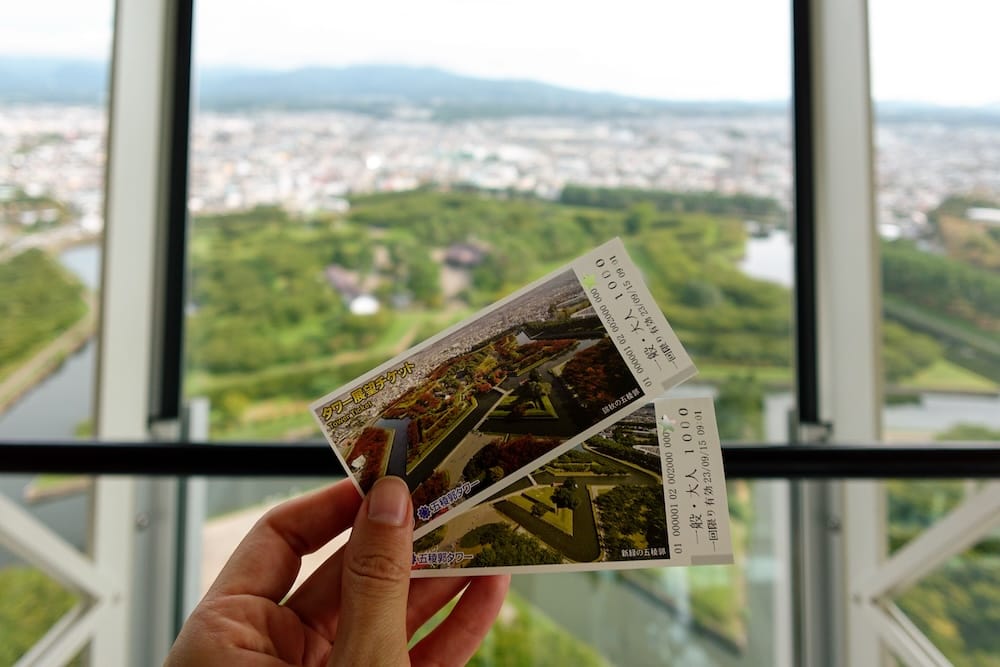
That answer became clearer only after Audrey and I visited both viewpoints. Beforehand, I assumed Mt. Hakodate would deliver the big city panorama while Goryokaku Tower would mainly be useful for photographing the star-shaped fort. That seriously undersold Goryokaku. Once we were at the top, we could see the fort beautifully, but we also had a tremendous view across Hakodate toward the harbour and surrounding mountains.
The two viewpoints ended up doing different jobs. Mt. Hakodate was more useful; Goryokaku Tower was more unexpected. One helped me understand Hakodate as a city. The other gave me a vantage point I hadn’t realized I wanted until I was standing there.
That is also why I think visiting both is worthwhile if you have the time and budget. I just wouldn’t necessarily cram them into the same day, particularly if you want to enjoy both in daylight rather than race across Hakodate collecting observation decks.
| Comparison | Mt. Hakodate | Goryokaku Tower |
|---|---|---|
| Main visual payoff | Big-picture geography of Hakodate | Star fort plus broad city panorama |
| Experience getting up | Scenic Ropeway ascent | Conventional elevator ride |
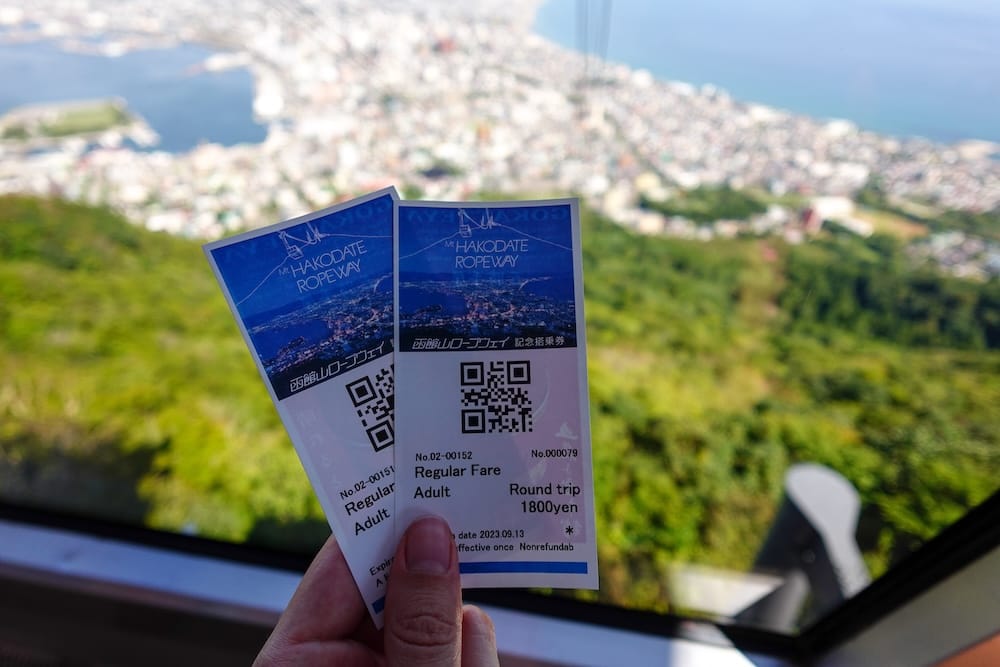
| Current adult cost | ¥1,800 Ropeway return | ¥1,200 Tower admission |
| Height context | Mt. Hakodate is 334 m above sea level | Upper observation deck about 90 m above ground |
| Best fit | First-time visitors, classic panorama, Motomachi sightseeing | Fort interest, unusual perspective, Goryokaku-area sightseeing |
| Evening potential | Ropeway normally operates into the evening | Regular hours currently end at 18:00 |
| Our experience | Daytime | Daytime |
Mt. Hakodate Is Better for Understanding Hakodate
The strongest memory I have from Mt. Hakodate is not simply thinking the view was beautiful. It was realizing Audrey and I had been walking around Hakodate without really understanding how the city was laid out.
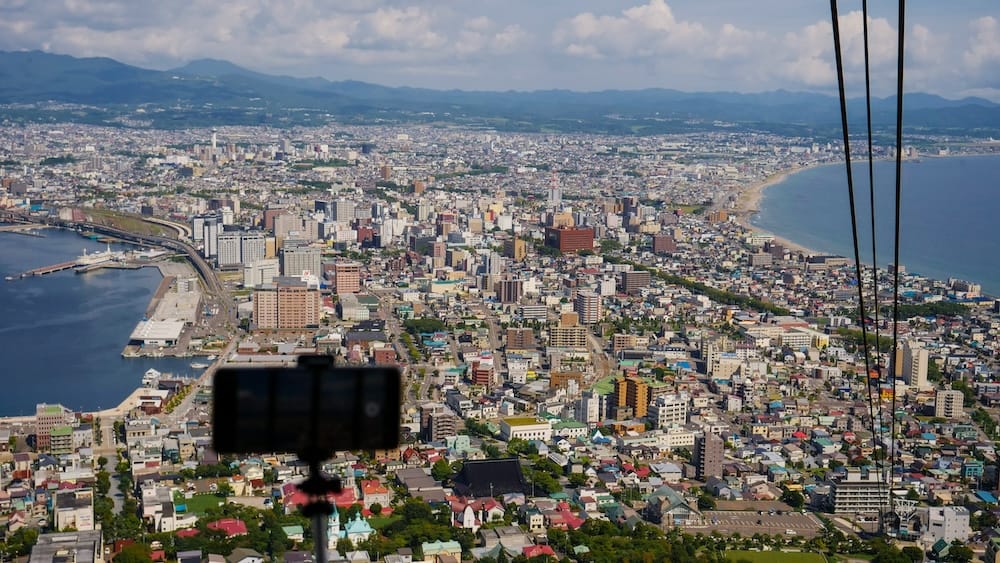
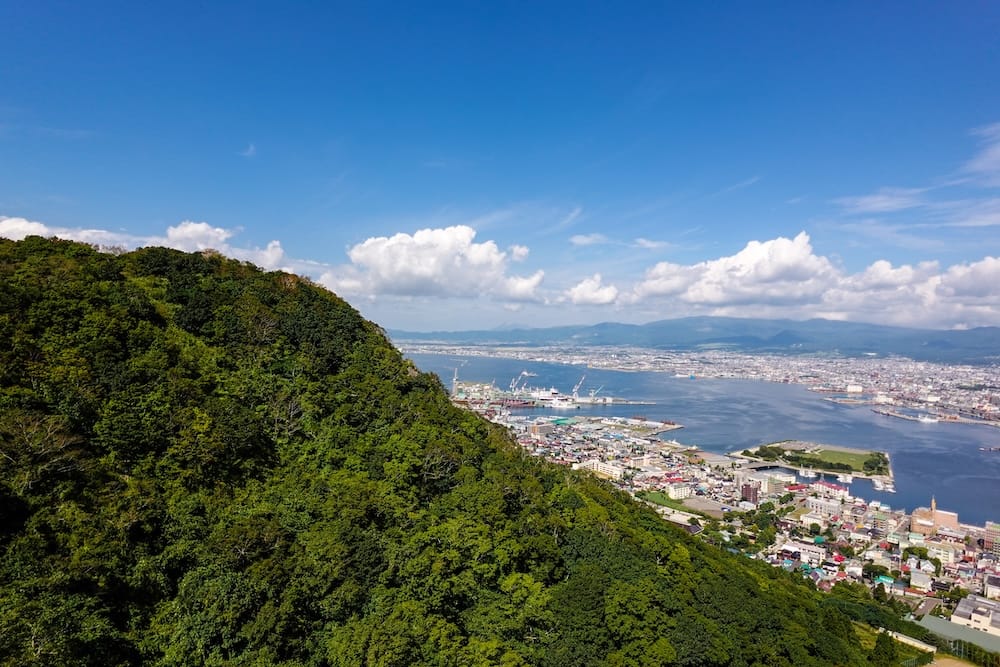
Most of our sightseeing up to that point had centred on the harbour, waterfront and historic western side of Hakodate. At street level, that made the city feel relatively compact. Once we rode the Ropeway up the mountain, the scale changed dramatically. We could see the harbour on one side, another coastline on the other, ships on the water, mountains in the distance and more open-looking land beyond the dense urban area.
My reaction was basically: how did we have so little idea what this place actually looked like?
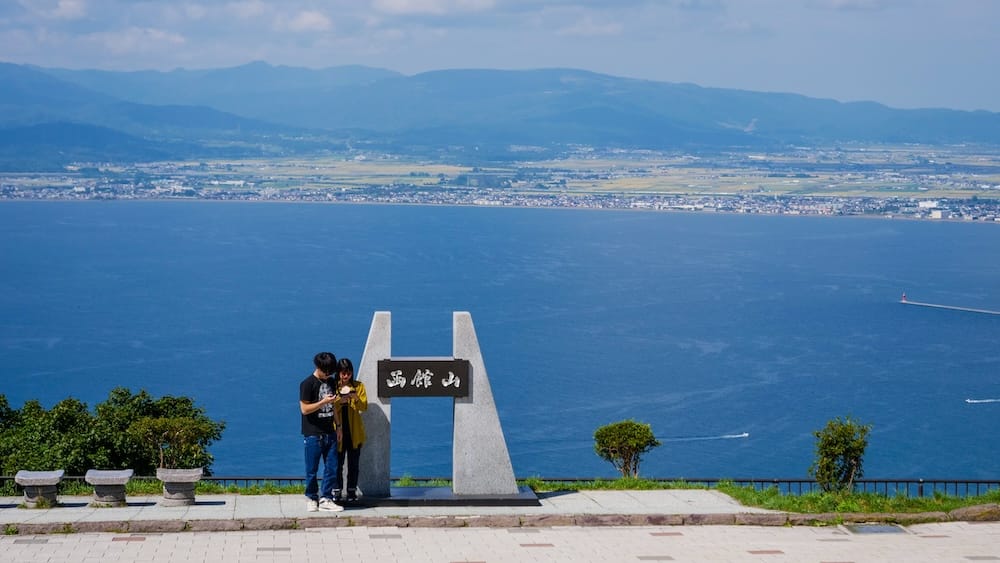
Mt. Hakodate rises 334 metres above sea level, which is enough height to turn the city into something you can read geographically rather than just experience one neighbourhood at a time. That is what makes it the more useful viewpoint for me. You are not looking primarily at one monument or district. You are looking at Hakodate itself.
If somebody had just arrived and asked me to show them where they were, this is the viewpoint I would choose.
Goryokaku Tower Is the View I Didn’t Expect to Like This Much
Goryokaku Tower worked on me differently because my expectations were much narrower. I wanted to see the famous star-shaped fort from above, and I assumed that would more or less be the entire point of going up.
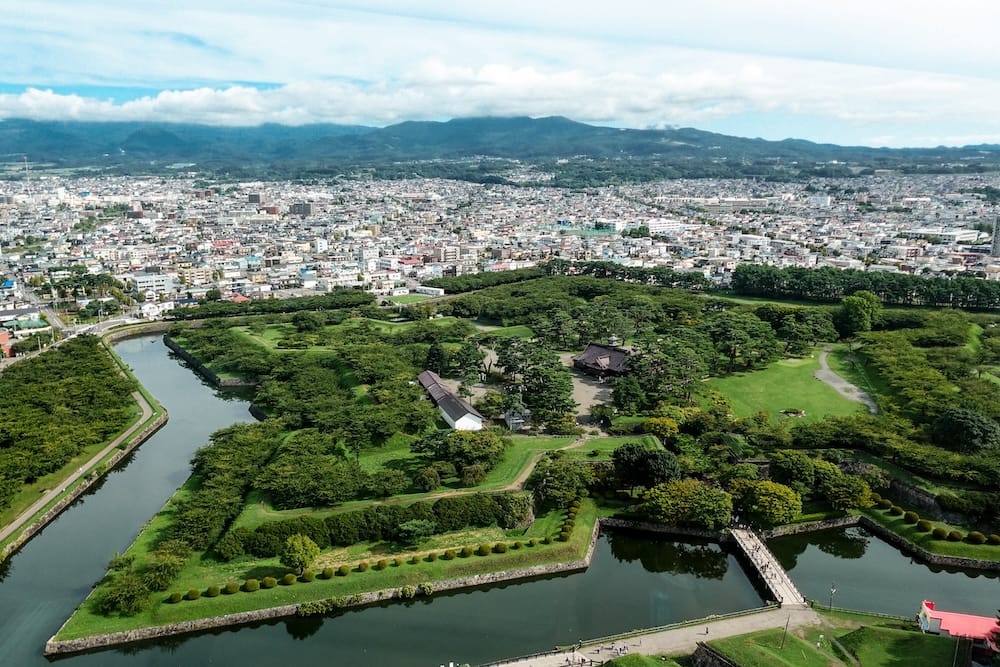
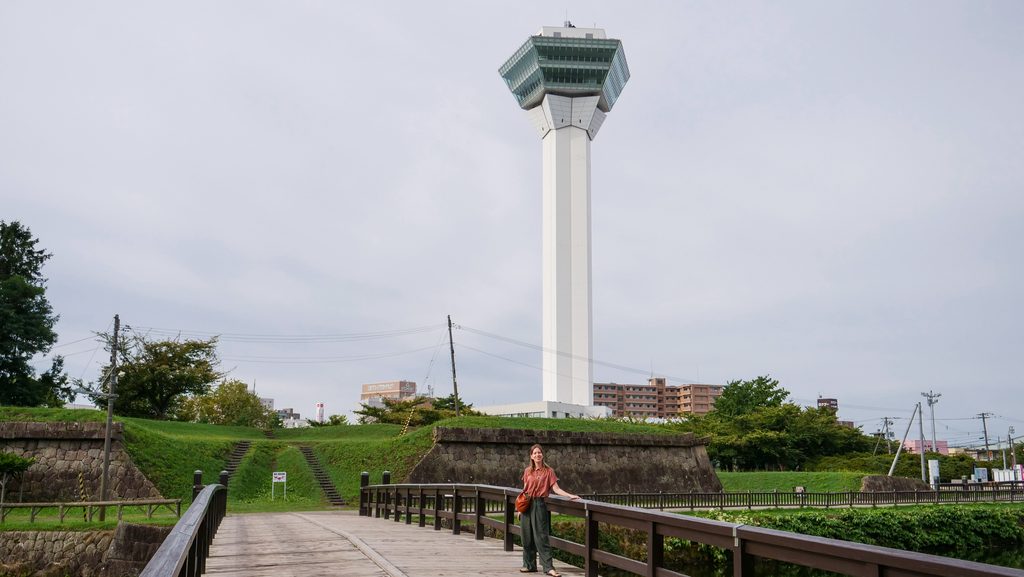
At ground level, Goryokaku is surprisingly difficult to understand as a complete geometric shape. You can cross the bridges, walk beside the moat and move through the park, but you are standing inside something too large to appreciate all at once. From the Tower, the five-pointed design suddenly becomes obvious.
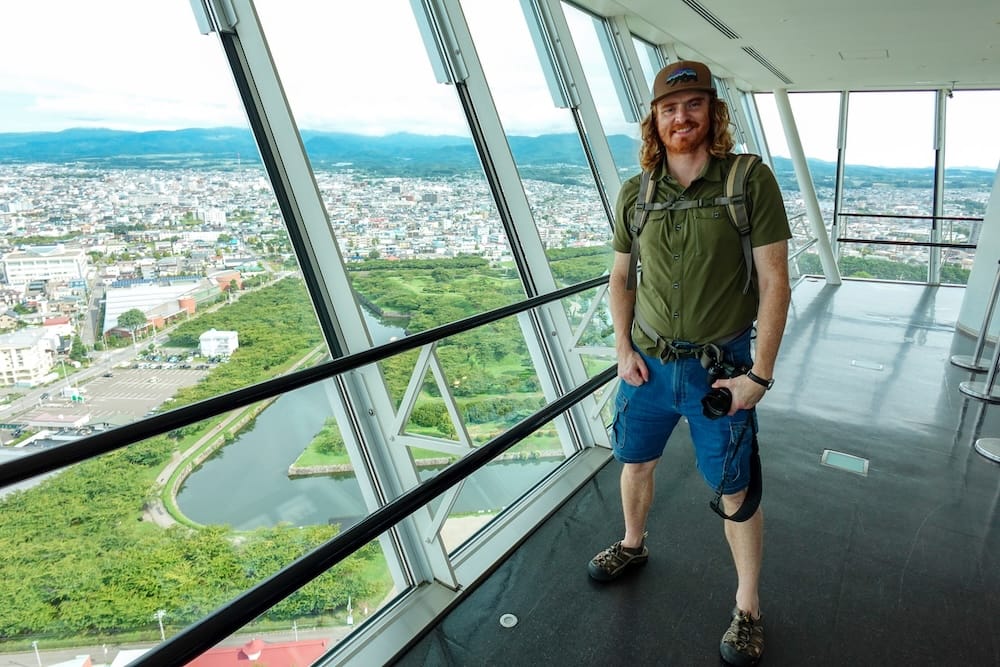
That alone makes the observation deck worthwhile if Goryokaku is an important part of your Hakodate plans. The upper deck sits roughly 90 metres above ground inside a tower reaching 107 metres, so you are high enough to make sense of the fort without being so distant that it becomes a tiny shape below you.
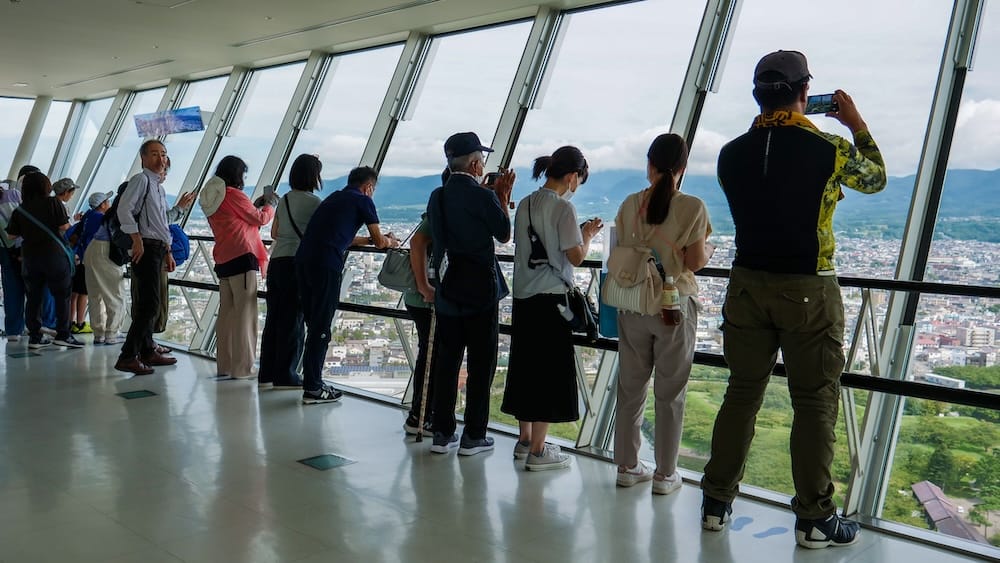
What caught Audrey and me off guard was everything beyond the fort. We had almost comically good weather that morning—sunshine, blue skies and excellent visibility—and could see a huge amount of the surrounding city, including the harbour in the distance. I remember thinking we had gone up expecting a fort view and somehow received another Hakodate panorama as a bonus.
That is why I would call Goryokaku the more unique viewpoint. Mt. Hakodate delivered the grand city panorama I hoped it would. Goryokaku Tower gave me something I hadn’t realized would be quite so interesting.
If you already know you want to go up the Tower and prefer to visit independently, you can check current Goryokaku Tower ticket availability. If the history of the fort is as important to you as the panorama, another current option is to see the Goryokaku Star Fort and Tower guided history tour, which combines the park, historical interpretation and Tower observation deck. We explored Goryokaku independently, so I’m presenting those as planning alternatives rather than tours we personally took.
The Ropeway Ride Gives Mt. Hakodate an Extra Dimension
If you compare only photographs taken at the top, you miss part of Mt. Hakodate’s appeal.
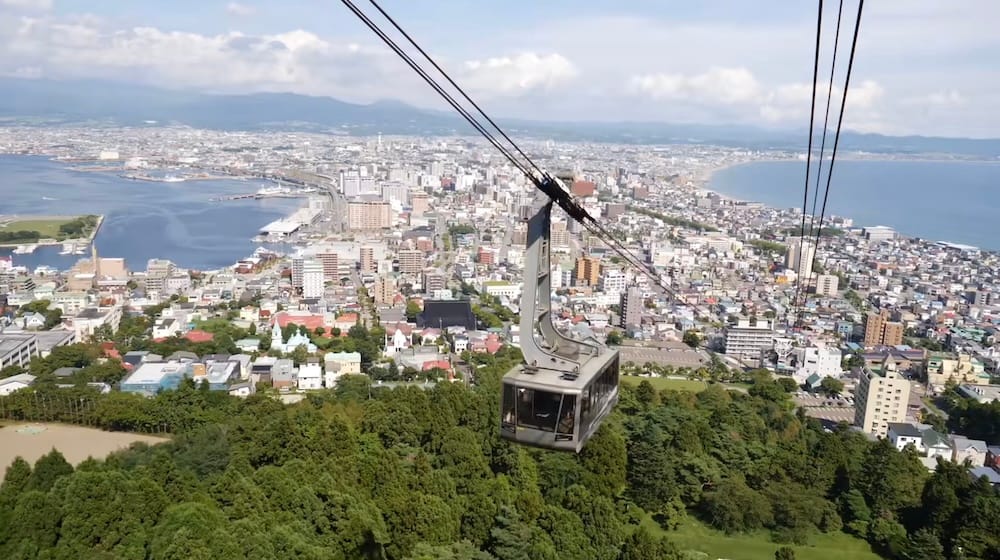
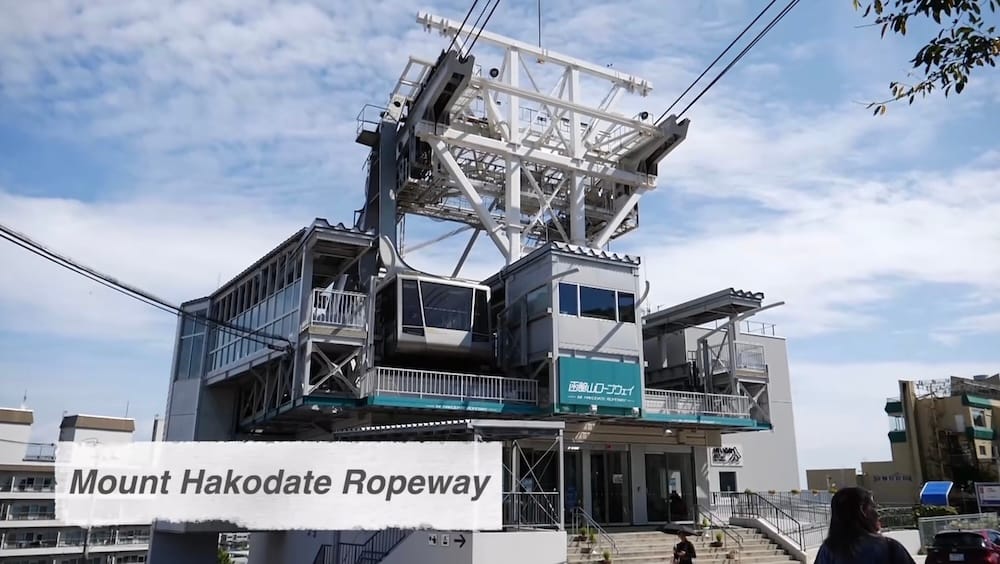
The Ropeway journey takes roughly three minutes, and I loved the way the city revealed itself while we climbed. Buildings gradually shrank, the coastline became more obvious and the pieces of Hakodate started arranging themselves into one coherent landscape. The ride was short, but it contributed a lot to the experience.
It also made the price feel different to me. The current adult round-trip Ropeway fare is ¥1,800, while Goryokaku Tower admission is ¥1,200. On paper, Mt. Hakodate costs ¥600 more, but you are not simply paying extra to stand at a higher viewpoint. The Ropeway is part of what you are buying.
Goryokaku’s ascent is much more conventional: enter the tower, take the elevator, arrive at the observation level. Nothing wrong with that whatsoever. The reward just happens at the top rather than unfolding on the way there, and for me that gives Mt. Hakodate another small advantage when somebody is choosing only one experience.
Mt. Hakodate Fits More Naturally Into a First-Time Hakodate Trip
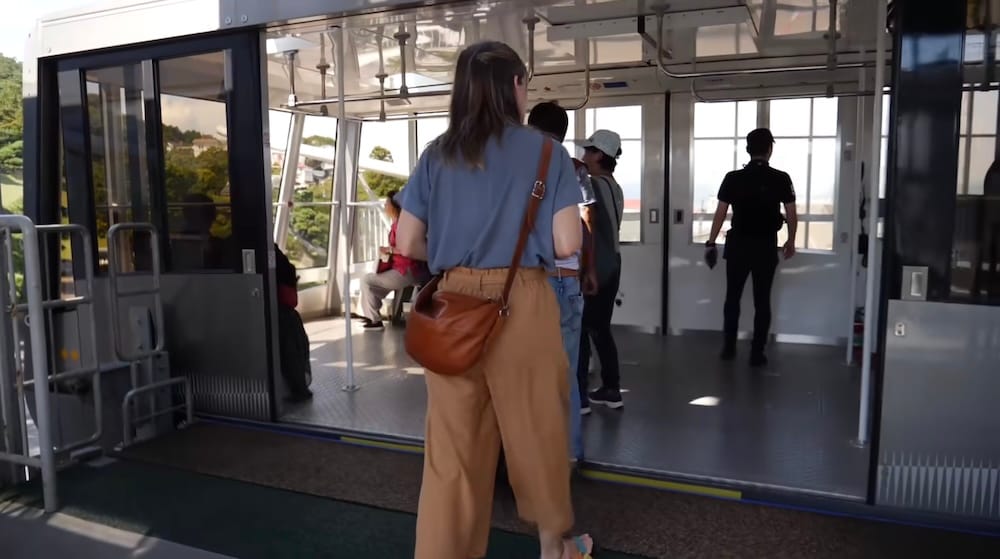
The location difference matters almost as much as the scenery. Mt. Hakodate sits beside Motomachi and the historic western side of the city, which makes it easy to connect with places many first-time visitors are already likely to explore. Audrey and I spent time around the churches, historic buildings, slopes and waterfront in this part of Hakodate, so going up the mountain felt like an extension of the same sightseeing area rather than an isolated trip across town.
If you would rather connect those western Hakodate sights with the Ropeway on a guided outing, there is currently a tour combining the historic port area and Mt. Hakodate. You can check the Historic Port Walk and Mt. Hakodate Ropeway tour. We did not take this tour; we explored the area independently.
From Hakodate Station, one common approach is a short tram ride to Jujigai followed by roughly ten minutes of walking to the Ropeway base. That walk is not exactly prairie-flat. Hakodate has some proper slopes, and on the hot, humid day we were exploring the area, my highly sophisticated commentary eventually deteriorated into variations of “the heat, the heat, the heat.”
Goryokaku is a different sightseeing zone. From Hakodate Station, getting to the Tower by tram and then walking takes roughly 30 minutes, and Mt. Hakodate and Goryokaku Tower themselves are about 10 kilometres apart. They are not two attractions you casually wander between.
That said, geography can reverse my recommendation. If your hotel is around Goryokaku and you can simply walk to the Tower, I would take that seriously. There is no award for adding cross-city transport to your vacation because somebody on the internet declared one viewpoint the winner. If staying near the fort appeals to you, you can compare hotels near Hakodate Goryokaku rather than choosing your accommodation as though every sightseeing day has to begin around Hakodate Station.
Cost and Time of Day Can Change the Decision
For the standard versions Audrey and I experienced, the current adult cost of doing both is ¥3,000 before local transport: ¥1,800 for the return Mt. Hakodate Ropeway and ¥1,200 for Goryokaku Tower.
I think that is reasonable if viewpoints are important to you because you are not paying twice for the same scene. But if you want to cut one paid attraction, Mt. Hakodate gives you the broader payoff while Goryokaku offers the more specialized one.
Time of day creates an even clearer difference. Goryokaku Tower currently operates from 9:00 to 18:00, with last admission shortly before closing. Mt. Hakodate Ropeway normally runs much later: from April 20 through September 30, it currently operates from 10:00 to 22:00, with the last ascent at 21:30; from October 1 through April 19, it operates from 10:00 to 21:00, with the last ascent at 20:30.
So if your specific goal is an elevated night view, Mt. Hakodate is the practical choice between these two.
I want to keep one boundary clear, though: Audrey and I saw Mt. Hakodate during the day. I cannot personally tell you whether the night experience is better, and I would not treat daylight as some consolation prize anyway. For us, being able to distinguish the coastlines, neighbourhoods, ships and wider geography was exactly what made the mountain so useful.
We Were Lucky With the Weather at Both
There is one reason I hesitate to speak too confidently about how expansive either view will look when you visit: we had excellent visibility. Our Mt. Hakodate visit was clear enough that we could see a huge amount of the surrounding geography, while at Goryokaku the weather was so good that we were basically laughing about our luck. Blue sky, sunshine, distant visibility—the whole deal.
Obviously, viewpoints cannot control the weather. Mt. Hakodate also has an extra operational variable because strong winds, maintenance or other conditions can affect Ropeway service, so if the mountain is important to your day, it is worth checking current operations rather than assuming everything is running normally.
Goryokaku Tower is a more conventional enclosed observation experience, which means you are not standing exposed to the elements once inside. That still does not make it immune to bad visibility. A very nice window looking into a cloud is still a window looking into a cloud.
When I Would Choose Mt. Hakodate
For most first-time visitors with room for only one elevated viewpoint, I would pick Mt. Hakodate. Choose it if you want the classic Hakodate panorama, if understanding the city’s overall geography matters to you, or if you are already spending time around Motomachi and western Hakodate. I would also give it an edge if you care about the experience of getting to the viewpoint, because the Ropeway ride genuinely added something for us instead of merely transporting us from bottom to top.
It is also the obvious choice between these two if your priority is seeing Hakodate after dark, provided current Ropeway operations and weather cooperate. Most of all, Mt. Hakodate gave me the stronger sense of where Hakodate actually is. That is hard to beat on a first visit.
When I Would Choose Goryokaku Tower
I would pick Goryokaku Tower when the fort itself is one of your main reasons for visiting Hakodate. Walking through Goryokaku Park gives you the atmosphere and scale of the place, but seeing it from above finally makes the geometry understandable.
I would also lean toward Goryokaku if you are staying nearby. A traveller who can walk over from a hotel in the area has a completely different practical calculation from somebody making a dedicated cross-city trip.
And then there is the simple fact that Goryokaku was more surprising. If you tend to enjoy strange or unexpected vantage points more than famous panoramas, I can see why you might prefer it. The Tower takes something enormous and confusing at ground level, turns it into a perfect star beneath you, and then reveals far more of Hakodate beyond the fort than I expected.
It never felt like the consolation prize.
Is It Worth Visiting Both Mt. Hakodate and Goryokaku Tower?
Yes, if your time and budget allow it. That was essentially our reaction as soon as we reached the top of Goryokaku Tower. We had already been up Mt. Hakodate, yet the second viewpoint did not feel repetitive. The perspective was so different that the obvious conclusion was to visit both.
I still agree with that. Mt. Hakodate showed us how Hakodate fits together geographically; Goryokaku Tower showed us how the fort fits inside Hakodate. One pulls the city apart into coastlines, harbour, mountains and urban scale, while the other keeps you closer to the city and puts the star fort at the centre of the scene.
What I would not do is force both into the same day just to say you checked them off. They sit in different parts of Hakodate, and if you want daylight views from both, I would rather let each fit naturally into the sightseeing around it. Mt. Hakodate pairs well with Motomachi and western Hakodate; Goryokaku deserves its own portion of the trip.
If you truly have room for only one, choose Mt. Hakodate. If Goryokaku itself fascinates you, you are staying nearby, or you simply prefer the more unexpected viewpoint, choose Goryokaku Tower.
If you have enough time for both, though, I would stop treating them as competitors. I made that mistake before we visited them. Hakodate gave us two genuinely different ways to understand the same city.
Frequently Asked Questions
Which viewpoint should I choose if I only have time for one?
I would choose Mt. Hakodate for most first-time visitors. The panorama helped me understand Hakodate’s overall geography, the Ropeway ride added to the experience, and it fits naturally with sightseeing around Motomachi and western Hakodate.
Are Mt. Hakodate and Goryokaku Tower redundant?
No. Mt. Hakodate gave us the bigger geographic picture of Hakodate, while Goryokaku Tower made the star-shaped fort understandable from above and still delivered a surprisingly broad city view.
Which viewpoint is better for a night view?
Mt. Hakodate is the practical choice between these two for an elevated night view because the Ropeway normally operates much later than Goryokaku Tower. Audrey and I visited Mt. Hakodate during the day, so I cannot personally compare the daytime and nighttime experiences.
How much does it cost to visit both viewpoints?
For the standard experiences described in this article, the current adult total is ¥3,000 before local transport: ¥1,800 for a return Mt. Hakodate Ropeway ticket and ¥1,200 for Goryokaku Tower admission.
Can you visit Mt. Hakodate and Goryokaku Tower on the same day?
You can, but I would not force both into one day just to check them off. They sit in different parts of Hakodate, and I would rather pair Mt. Hakodate with western Hakodate sightseeing and give Goryokaku its own portion of the trip.
Which viewpoint is better for understanding Goryokaku Fort?
Goryokaku Tower is the clear choice for understanding the fort itself. From ground level the full star shape is difficult to appreciate, while the observation deck makes the geometry immediately understandable.
This article is also available in Spanish. [Leé la versión en castellano: Mt. Hakodate vs Goryokaku Tower: ¿qué mirador deberías elegir?]
This article contains affiliate links. If you book through one of these links, I may earn a commission at no extra cost to you.